The Burning Bush
~1280 BCE traditional · Exodus composed ~6th century BCE · Mount Horeb (Sinai), the Midian wilderness
Contents
Moses, forty years a shepherd in exile, leads his flock to Mount Horeb and finds a bush wrapped in fire that will not burn. A voice names itself. A reluctant man becomes a prophet.
- When
- ~1280 BCE traditional · Exodus composed ~6th century BCE
- Where
- Mount Horeb (Sinai), the Midian wilderness
He is eighty years old when the bush catches fire.
Forty years in Egypt as a prince, forty years in Midian as a shepherd — the math of it is biblical, which is to say deliberate. The man who will become the greatest prophet in Israel’s memory has spent exactly half his life running from Egypt and exactly half his life learning to be nobody in particular. He tends the flocks of his father-in-law Jethro. He knows the hills around Horeb the way a man knows the rooms of a house he cannot leave. He is not looking for anything. He has stopped looking for things.
This is, perhaps, the precondition.
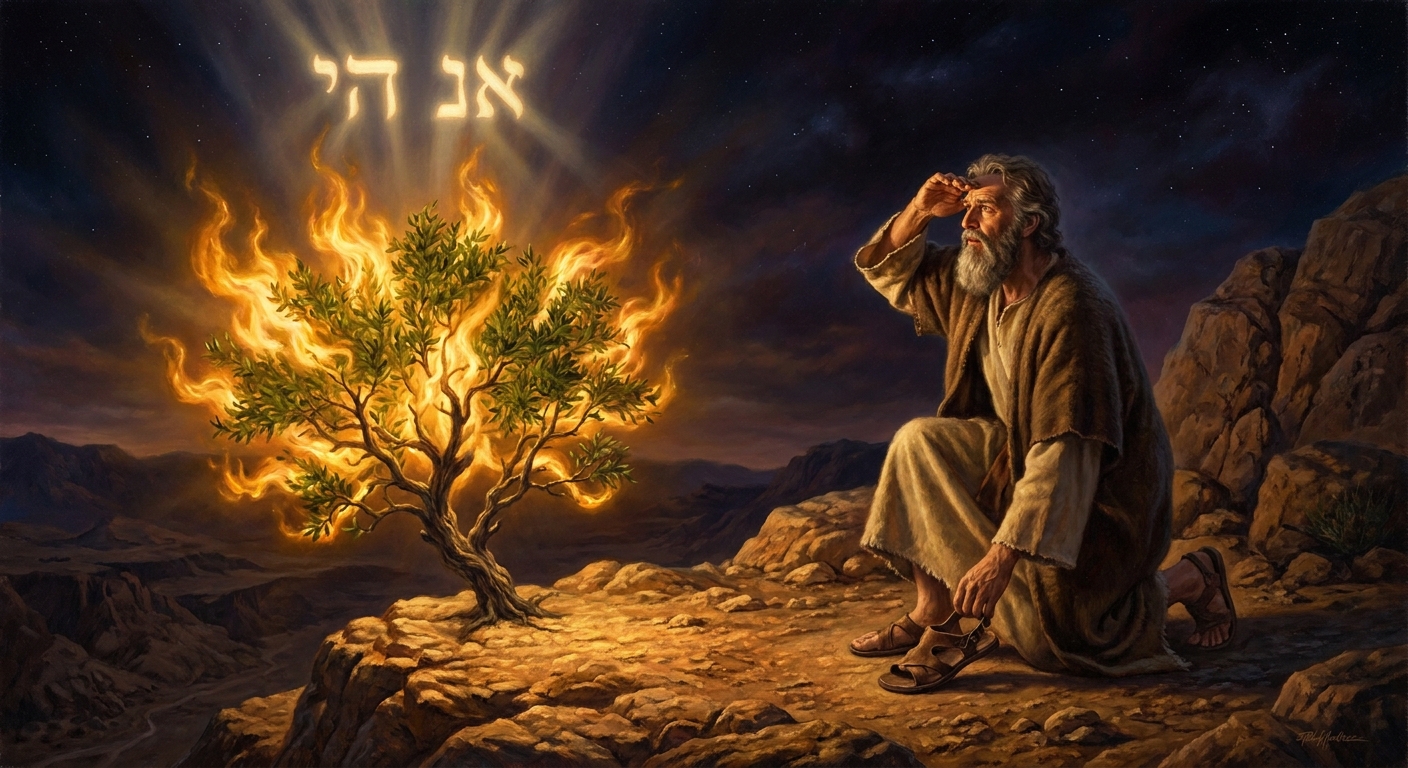
The bush is not large. Later traditions will make it cosmic, a pillar of fire visible for miles, the sky split open and angels descending in formation. But the text in Exodus is quieter than that. A bush. Fire. And Moses, turning aside to look.
“He turned aside to see.” That verb is everything. He could have not turned. The flocks needed tending. He was eighty years old and had given up on the kind of life where you turn aside to look at strange things. But he turns — and the moment he turns, the voice speaks. Not before. The turning is the act of faith, not the vision.
“Moses, Moses.”
His name twice, the biblical grammar of urgency, the way you call a child who is about to walk into traffic. He answers: Hineni. Here I am. The most loaded phrase in the Hebrew Bible — Abraham said it when God called him to sacrifice Isaac; Jacob said it when his father called him blind in the dark. Hineni means: I am present. I am available. Whatever comes next, I have not run.
“Come no further. Remove your sandals from your feet. The ground on which you stand is holy ground.”
He removes them. The earth beneath his feet is not different from the earth he has walked on for forty years. But now it has been named, and the naming changes what it is.
Then the introduction.
“I am the God of your father, the God of Abraham, the God of Isaac, the God of Jacob.”
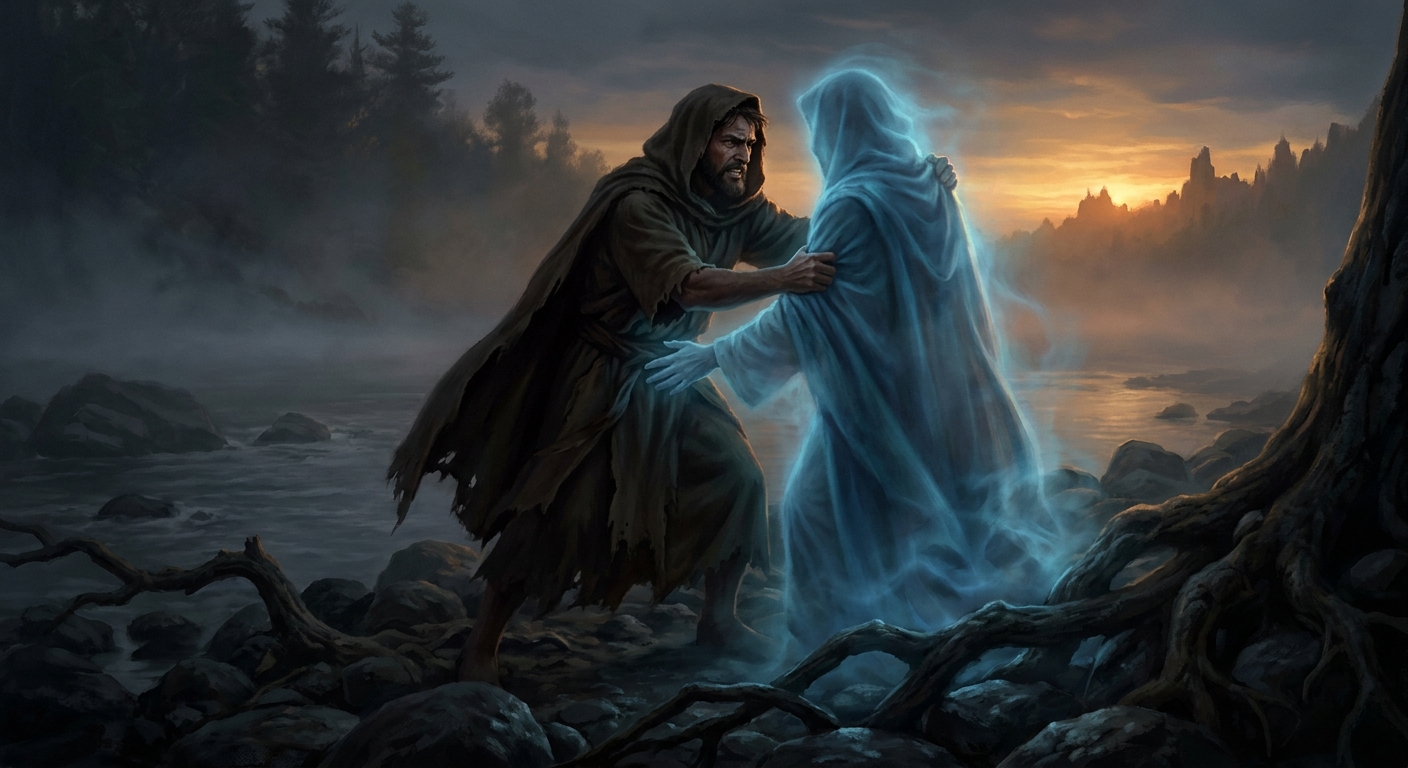
Moses hides his face. He is afraid to look at God. This is the correct response. In every tradition that has ever produced a reliable witness, the first reaction to genuine encounter with the divine is not awe or exaltation — it is fear. The mystics call it the fear that is also love; the rabbis call it yirat shamayim, the fear of heaven. What it feels like, from the inside, is: whatever I thought I was, I am less than that.
The voice continues. It has seen the suffering of the people in Egypt. It has heard their cry. It knows their pain — and here the Hebrew does something strange and irreducible: God does not say I have observed or I have recorded. The verb is yada, to know, the same word used for intimate knowledge, the knowledge of a body, the knowledge that leaves a mark. I know their suffering. Not from a distance. From inside.
“I am sending you to Pharaoh to bring my people, the Israelites, out of Egypt.”
Now comes the argument.
Moses does not say yes. He has been in the wilderness for forty years and he has learned something the Egyptian prince never knew: he is not sufficient for this. Who am I that I should go to Pharaoh? Who am I that I should bring the Israelites out of Egypt?
The voice does not answer the question directly. It never does. Instead: I will be with you. And then a promise folded inside a promise — when you have brought the people out, you will serve God on this mountain. Not if. When. The outcome is already written. Moses just has to walk into it.
But Moses has another question, and this one is the one that cracks the world open.
“When I come to the Israelites and say to them, ‘The God of your fathers has sent me to you,’ and they ask me, ‘What is his name?’ — what shall I say to them?”
He is asking for the name. He is standing at a burning bush in his bare feet asking the voice in the fire to tell him what to call it. This is either the bravest thing in the Bible or the most naive, and it may be both.
The answer comes back in three layers.
First: Ehyeh asher ehyeh. I AM THAT I AM. Or: I will be what I will be. Or: I cause to be what I cause to be. The verb hayah — to be — in its first-person imperfect, which in Hebrew is also its future tense, which means the name is not a noun but a verb, not a label but an act. God names himself as the act of being itself, pure and without qualification, the ground under all grounds.
Second, condensed: Ehyeh. I AM. Tell them I AM sent you.
Third, the name that will never again be spoken aloud: YHWH. Four letters. The Tetragrammaton. Consonants only, no vowels, because vowels are breath and breath runs out. Maimonides will spend half the Guide for the Perplexed trying to explain what this name points at and will conclude, essentially, that it points at everything that cannot be pointed at. The rabbis will call it HaShem — the Name, as if there were only one — and will not say it outside prayer. When the Second Temple falls and the High Priest dies, the pronunciation will be lost. A name that is also an absence. A word that is also a silence.
Moses argues three more times.
He will not be believed. He cannot speak well. Please send someone else. Each time the voice answers, each time Moses finds a new angle of refusal, and each time it becomes clearer that the argument is not really about competence. It is about a man who has spent forty years becoming small, who has trained himself out of the habit of mattering, who built a life in Midian precisely because it was a life where nothing would be required of him. He married Zipporah. He learned the hills. He was nobody, and nobody was a comfortable thing to be.
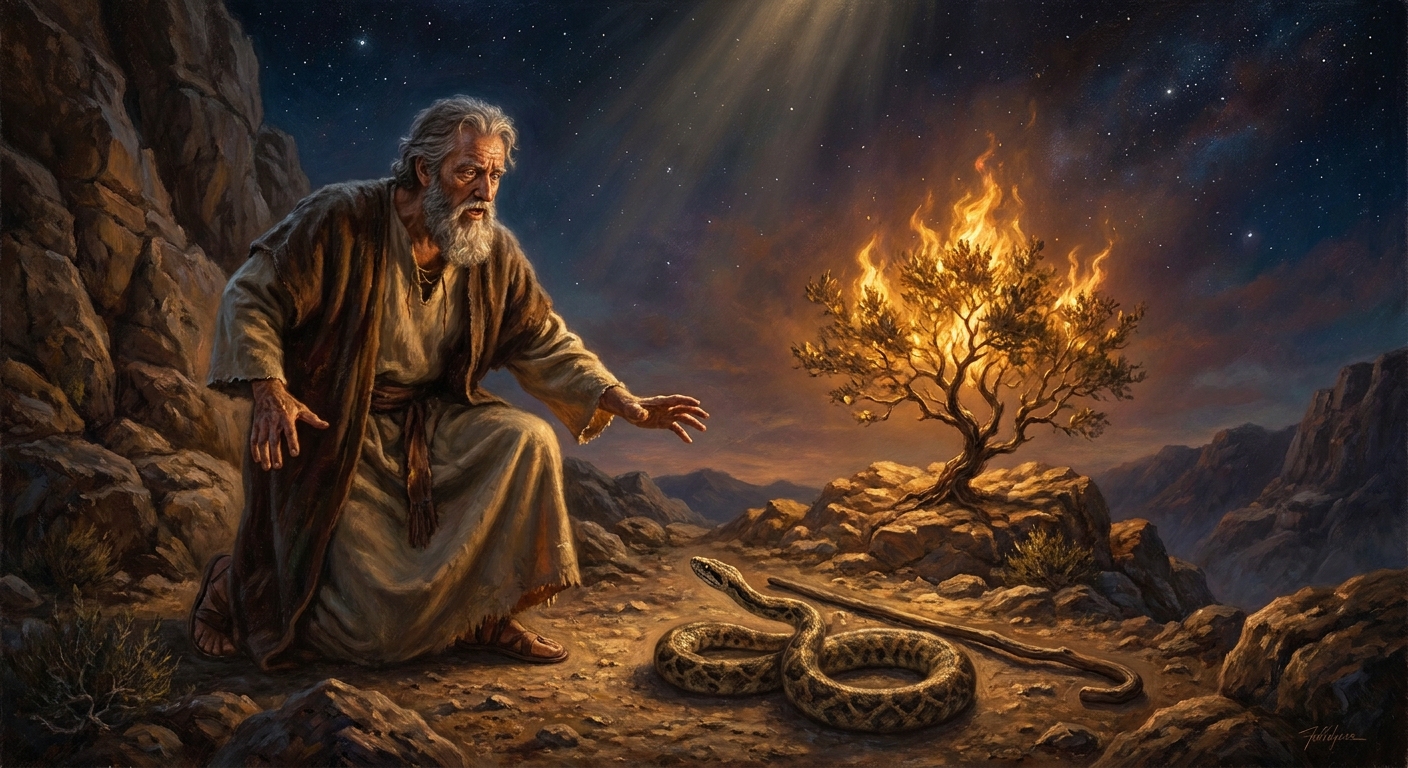
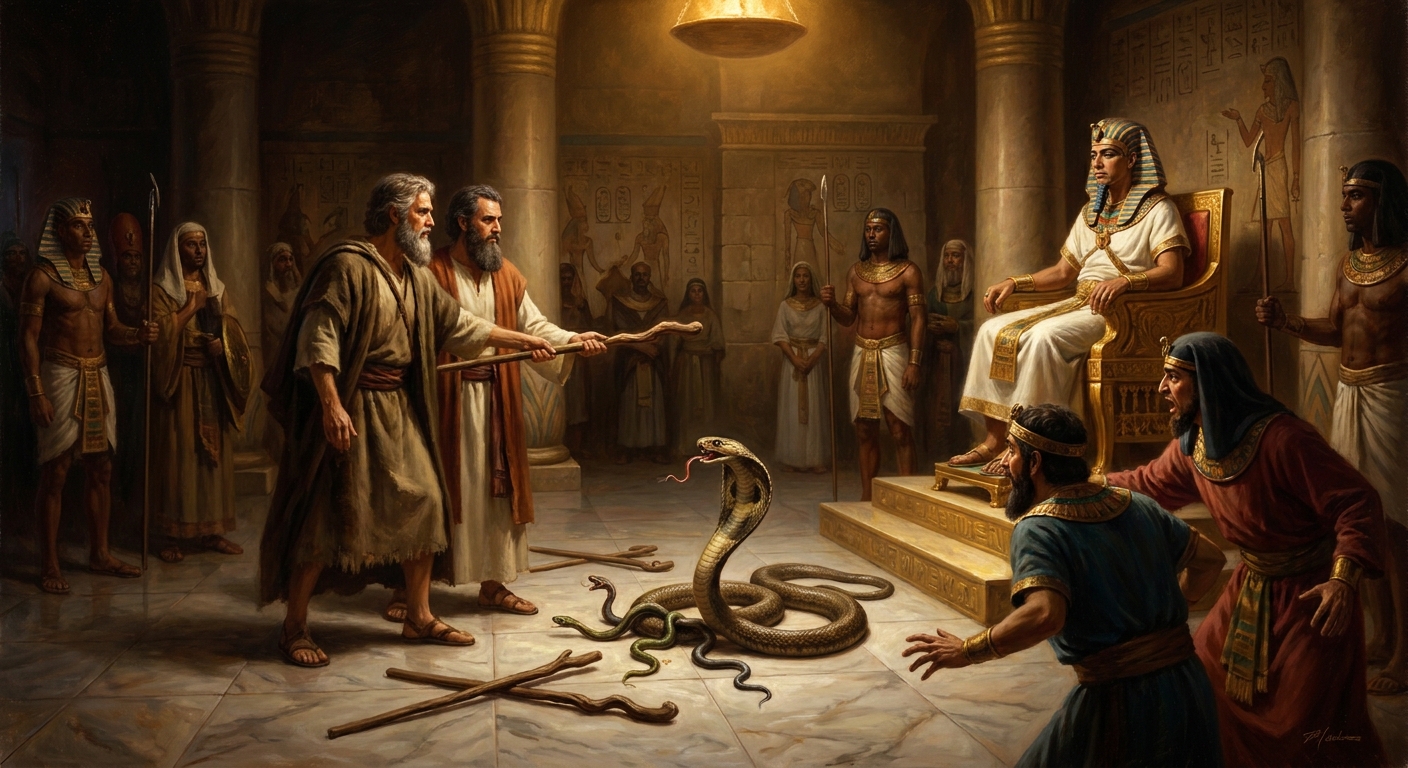
The voice is not moved. It gives him signs — the staff that becomes a serpent and back again, the hand turned leprous and healed — and it gives him Aaron, his brother, to speak for him. But it does not give him a way out. There is no way out. The burning bush does not choose the confident or the powerful or the articulate. It chooses the man who spent forty years in the wilderness learning exactly what he would need to know, even though he didn’t know he was learning it.
The reluctant prophet shoulders the staff. He goes back to Jethro to ask permission to leave. He says only: Let me go back to my kinsmen in Egypt. He does not tell Jethro about the bush.
Some things you carry alone, at least for a while.
The name Ehyeh asher ehyeh has no settled translation. Robert Alter renders it “I Will Be-Who-I-Will-Be.” The Septuagint flattens it to ego eimi ho on, I am the one who is — and this is what Maimonides builds his entire theology on: God as pure existence, Being itself, the one thing that cannot not-be. Avivah Gottlieb Zornberg reads the name as a promise of presence rather than a declaration of essence: I will be with you in whatever way I will be with you. Martin Buber hears it as a refusal to be defined: I am not giving you a handle. I am giving you a direction.
The bush burned and was not consumed because what was in it was not fire. What was in it was the source of fire. You can no more consume the source of a thing than you can eat the hunger that made you hungry.
Moses went down from Horeb to Egypt. He was eighty years old. He had forty more years of work ahead of him.
Scenes
Moses removes his sandals at the edge of the holy ground — the first act of submission before the fire that will not consume
Generating art… The staff flung to the dust becomes a serpent; Moses flees, then is commanded to take it by the tail — power only belongs to the man who grabs the dangerous end
 Generating art…
 The shepherd-turned-prophet stands before the throne of Egypt: the reluctant man who asked five times to be sent elsewhere, now sent precisely here
 Generating art…
 Echoes Across Traditions
Entities
- Moses
- YHWH
- Aaron

Sources
- Exodus 3 (Robert Alter trans., *The Five Books of Moses*, 2004)
- Maimonides, *Guide for the Perplexed* I.63 — on the Tetragrammaton as pure being
- Avivah Gottlieb Zornberg, *The Particulars of Rapture: Reflections on Exodus* (2001)
- Martin Buber, *Moses: The Revelation and the Covenant* (1946)