Sati and the Yajna of Daksha
Mythic Time · Shiva Purana ~750-1350 CE; Devi Bhagavata Purana; the 51 Shakti Peethas are historically attested pilgrimage sites across South Asia · Daksha's sacrificial hall, and then the three worlds — the wandering that ends at each of the fifty-one places where Sati's body falls
Contents
The goddess Sati — daughter of Daksha, wife of Shiva — dies by her father's contempt. Daksha holds the great cosmic sacrifice and invites every god except Shiva. Sati goes uninvited and is humiliated before the assembly. She immolates herself in the sacred fire. Shiva wanders the three worlds carrying her body in cosmic grief until Vishnu cuts it into fifty-one pieces — each piece falling to earth becomes a Shakti Peetha, a goddess temple.
- When
- Mythic Time · Shiva Purana ~750-1350 CE; Devi Bhagavata Purana; the 51 Shakti Peethas are historically attested pilgrimage sites across South Asia
- Where
- Daksha's sacrificial hall, and then the three worlds — the wandering that ends at each of the fifty-one places where Sati's body falls
Daksha hates his son-in-law.
He has hated him from the day Sati came home from the forest and announced she had given herself to the naked ascetic who lives in cremation grounds and smears himself with ash and lets his matted hair go home to snakes. Daksha is a Prajapati — one of the progenitors of creation, a lord of ordered civilization and correct ritual. He has daughters beyond counting, and he gave many of them to worthy gods, and the worthy gods came to him with proper gifts and proper words and sat in the correct seats.
Shiva did not sit in the correct seat. Shiva did not acknowledge that there was a correct seat.
Daksha allowed the marriage because his daughter’s devotion to the ash-smeared wanderer was intractable and because the cosmos has its own mathematics about such things. But he allowed it with his teeth together, and he has kept them together ever since.
Now Daksha is holding a yajna — the great cosmic sacrifice, the ritual event that gathers all the gods and renews the order of the cosmos. He has sent invitations to every deity in the three worlds.
He does not send one to Shiva.
Sati hears about the sacrifice from the apsaras who come and go from Kailash.
She hears the guest list. She understands the omission. She goes to Shiva.
Shiva is meditating. He does this frequently — sits in absolute stillness for what mortals would call centuries, the only movement the slow expansion and contraction of his lungs, the cobra at his neck rising and falling with each breath. Sati stands before him and tells him what her father has done.
Shiva opens one eye.
He says: Do not go. An uninvited guest at a sacrifice receives what the host intends for them. Your father intends you to be humiliated. If you go, you will be humiliated. If you are humiliated in front of that assembly, I do not know what I will do.
This last sentence carries the weight of everything Shiva is — the weight of the destroyer’s love, which is not the possessive love of an ordinary man but something more dangerous: the love of a force that unravels the cosmos when sufficiently provoked.
Sati says: He is my father. It is my father’s sacrifice. I am going.
Shiva does not stop her. He does not stop her because she is a goddess and she has the right of her own decisions, and because some events have to happen, and because the universe has already settled this outcome and the resistance of individuals does not change it.
He watches her go.
She arrives at the sacrifice alone.
The hall is enormous — the yajna shalas of the cosmic sacrifices hold the gods of every domain, with their families and their vehicles and their divine retinues. Vishnu is there on Garuda. Brahma is there with the Vedas floating around him like birds. Indra is there with the thunder folded in his arms. The devas and their wives are arranged in the proper order of precedence, each in the seat their rank assigns.
Sati walks into the hall and finds her mother. She finds her sisters. She finds the gods who were at her wedding and who smiled then.
She does not find a seat for herself. She does not find a portion set aside for the absent Shiva. She finds her father.
Daksha sees her. He looks at her the way a man looks at an embarrassment that has chosen to make itself visible. He does not greet her. He begins speaking — loudly, so the assembly can hear — about the great gods present today, and their worthiness, and the order and decency of creation, and then about the creature who lives in cremation grounds and is worshiped by outcasts and the deranged, whose followers eat what other men throw away, who is himself a corpse-smeared wanderer and no fit consort for the daughter of a Prajapati.
He does not say Shiva’s name. He does not have to.
The assembly is silent. Some look away. Some look at Sati. Sati stands in the center of the hall and lets her father finish.
Then she speaks.
She tells Daksha what he is. She tells the assembly what they are witnessing — not a great cosmic sacrifice but a father’s small pride consuming itself, a ritual meant to renew the order of the cosmos being used as the instrument of a domestic grievance. She speaks clearly and without trembling.
Then she says: The body you gave me came from you. I will not keep it.
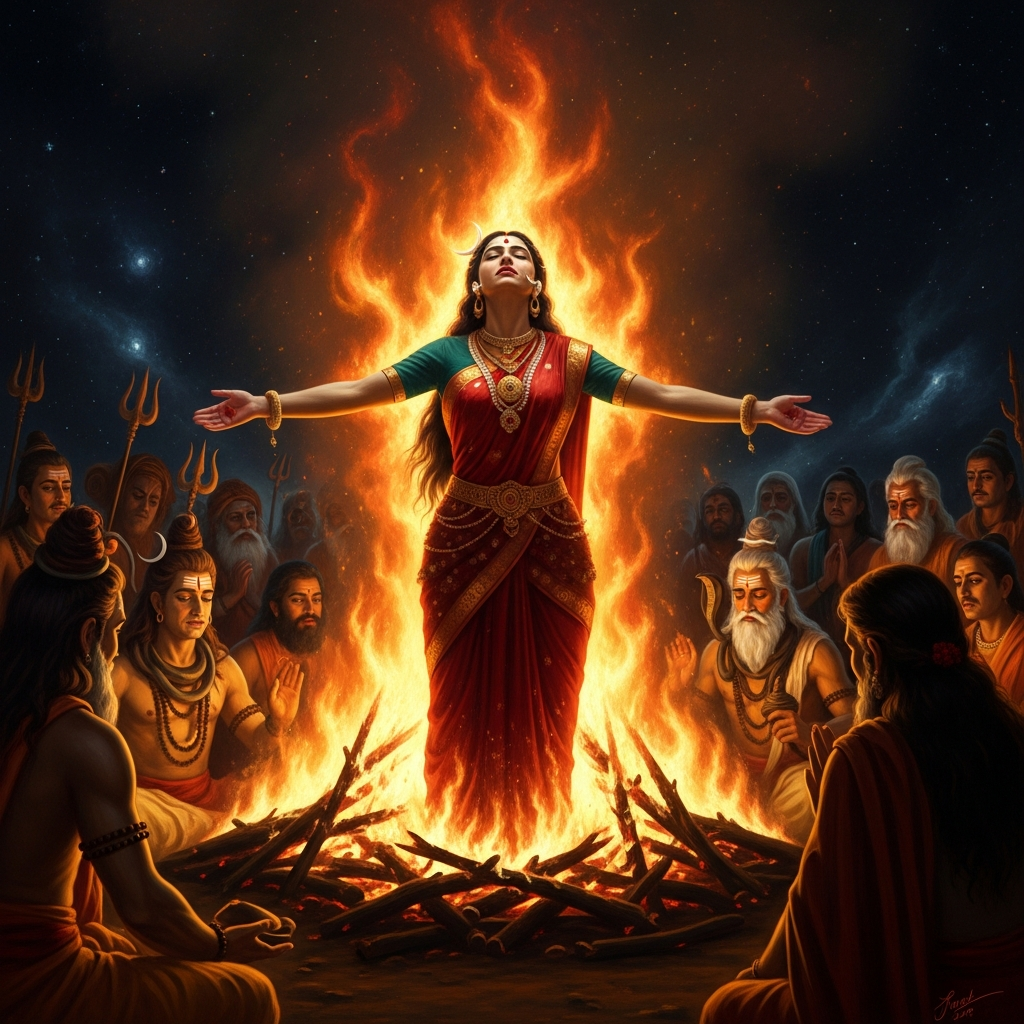
She turns toward the sacrificial fire — the central fire of the yajna, the fire that is supposed to carry the offerings upward to the gods, the fire Agni tends at the center of every proper ritual. The fire that should have carried an offering in her husband’s name, and did not.
She steps into it.
The texts describe the moment without elaboration: she enters the flame, the flame receives her, she is gone. The goddess who was born in Daksha’s house, who walked out of that house to find the god she recognized as her husband before she had ever met him — that form is finished. The daughter Daksha made, who chose to be the wife of the ash-smeared ascetic against her father’s will, does the last thing against her father’s will.
The sacrifice goes silent. Then the screaming begins.
Shiva knows the moment it happens.
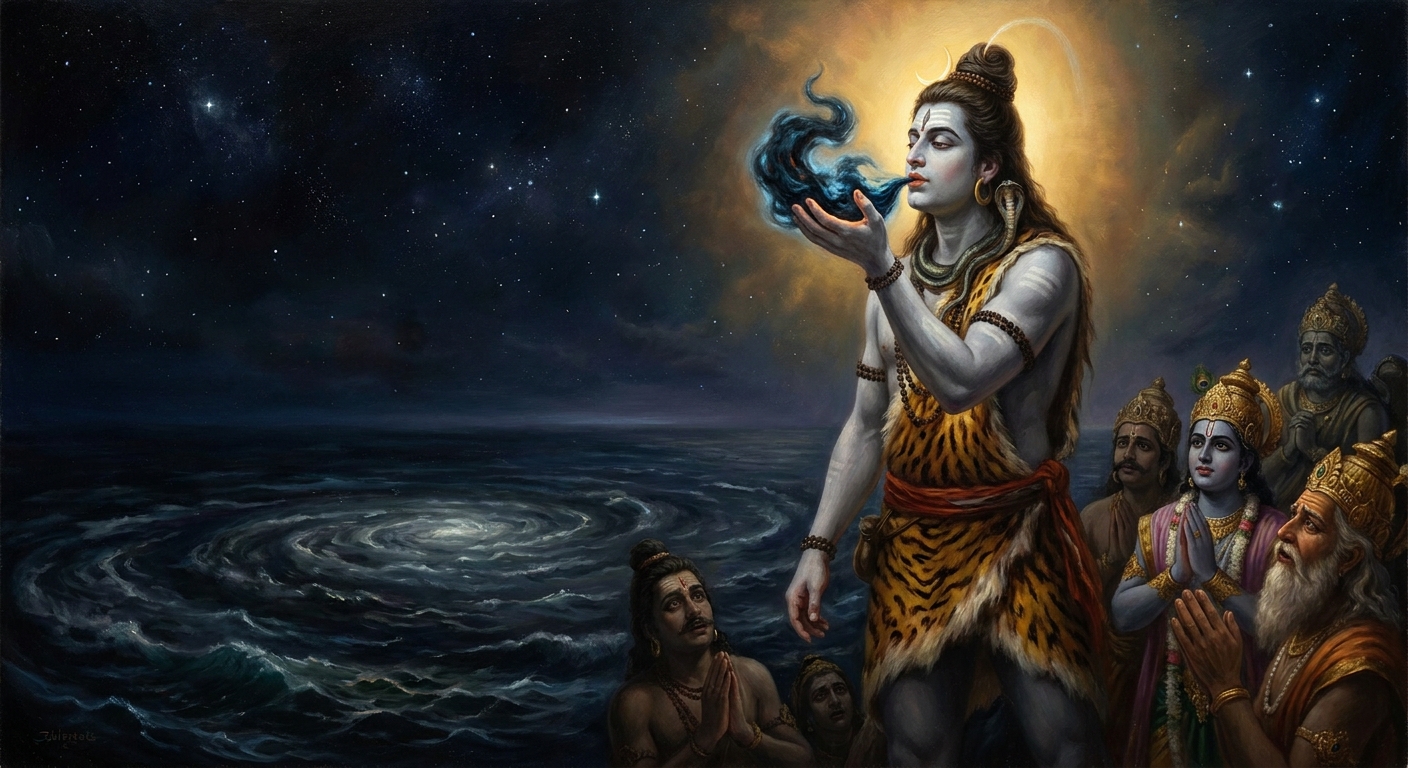
He is still on Kailash. He was meditating. He is not meditating anymore. He stands up from the mountain and the snakes in his hair raise their heads and the third eye opens and the damaru drum at his hip begins to beat without being touched.
He tears open the earth between Kailash and Daksha’s hall in the time it takes for a cry to travel. He arrives at the yajna and the gods scatter. Daksha does not scatter — Daksha stands his ground with the particular stubbornness of a man who believes he was right. Shiva tears off his head and casts it into the sacrificial fire.
Then he finds her.
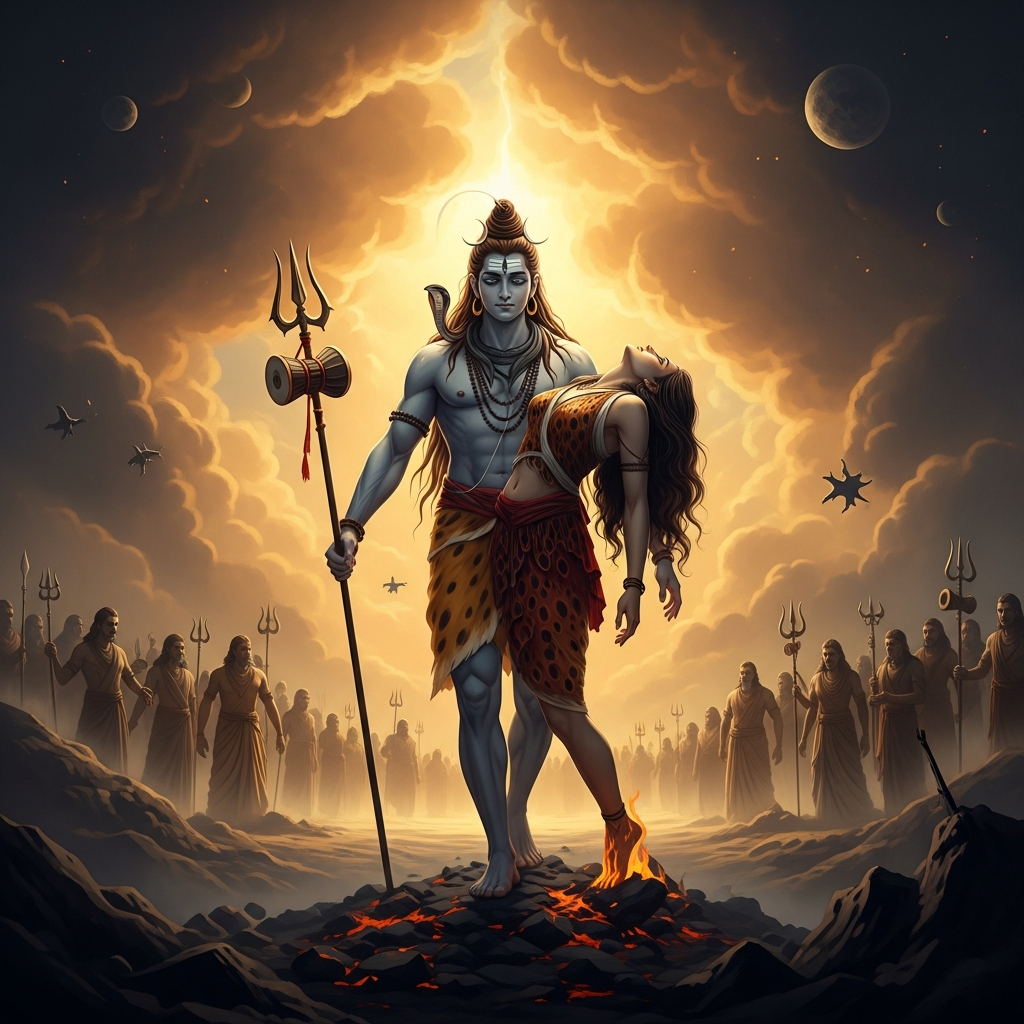
He picks up what remains of Sati’s body from the fire’s edge. He holds it against his chest. He begins to walk.
The walking does not stop.
He carries her through the three worlds — through Svarga, the realm of the gods, through Bhurloka, the earth, down through the nether realms. He does not put her down. He does not speak. He does not stop.
The cosmos shudders around him. Shiva’s grief is not a human thing — it is the grief of the destroyer, which has the same weight as his destruction, which has the same weight as the ending of ages. The stars begin to drift from their courses. The seasons lose their sequence. The gods watch from a distance with the particular helplessness of beings who are witnessing a force that exceeds them in intensity if not in rank.
Vishnu understands that something must be done. Not to stop the grief — the grief is inconsolable and will run its course — but to stop the wandering. To give the destroyer a reason to put the body down. To distribute the grief across enough places that no single place holds all of it.
He draws the Sudarshana Chakra — the discus weapon, the spinning wheel of divine cutting — and begins following Shiva.
Piece by piece, the body divides.
Each time the Sudarshana Chakra passes through the body Shiva carries, a part of Sati falls to the earth. And where each part lands, the earth receives it.
The texts disagree on the number — 51 in the most common count, 108 in others, varying lists with varying sites. But the geography is consistent: a breast falls in what is now Bengal, and the site becomes Kalighat. A finger falls in what is now the Himalayas, and the site becomes Jwala Devi. A tongue falls near the Sindh river. Feet in Nepal. A hand near what will be called Varanasi. The goddess distributes herself across the Indian subcontinent, into Nepal, Bangladesh, Sri Lanka, Pakistan — the full extent of the civilization that will be built in her name.
At each site, the piece becomes a temple. The temple becomes a place where the goddess is present in the specific form of that part of the body — Sati’s navel, Sati’s eyes, Sati’s right breast. The Shakti Peethas, the fifty-one seats of the goddess’s power, are arranged as if someone took the body of the most beloved divine being in the cosmos and pressed it into the earth to make a map.
Shiva feels each cut. With each part that falls, some portion of the grief is released from his arms into the earth. The body becomes lighter. The wandering slows. When the final piece falls, he is holding nothing.
He sits down. He closes his eyes. He begins to breathe.
Sati will be reborn. That is the other half of this story. She will emerge in the next age as Parvati, daughter of the mountain king Himavat, and she will seek Shiva out on the mountain where he sits in motionless grief for his dead wife, and she will win him back by sitting beside him in silence and austerity and patient love, and the two of them will be the marriage that holds the cosmos together.
The Shakti Peethas are real. They are the most visited pilgrimage destinations in South Asia — the Kamakhya temple in Assam, where Sati’s yoni is said to have fallen; the Kalighat temple in Kolkata; the Hinglaj shrine in Balochistan, now in Pakistan; the Jwala Devi temple in Himachal Pradesh where a natural flame burns in a stone crevice. Millions walk to them each year.
The myth that organized them was generated by an act of contempt — a father’s refusal to seat his son-in-law. The father killed the daughter with his contempt more surely than if he had raised a weapon. The daughter chose to die rather than exist in a body that had been its father’s project rather than her own. The husband went mad with grief. The cosmos was distributed to accommodate the grief.
The Shakti Peethas are where the body fell. They are the places where destruction became sacred geography — where the worst thing that happened to a goddess became the architecture of her presence in the world.
Scenes
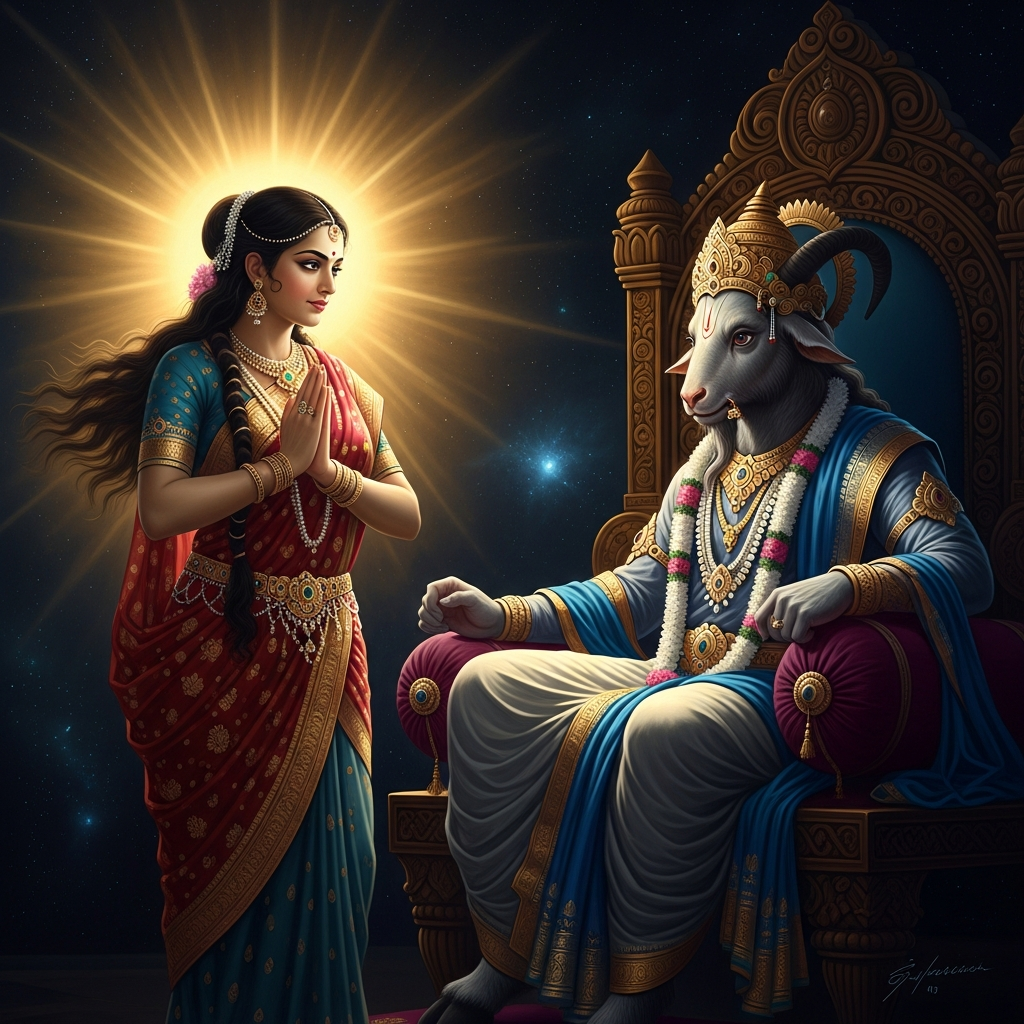
Sati stands before Daksha's sacrificial fire as her father finishes his public humiliation of Shiva
 Generating art…
 Shiva lifts her burned body from the ashes and begins walking
 Generating art…
 Vishnu's Sudarshana Chakra cuts through the air
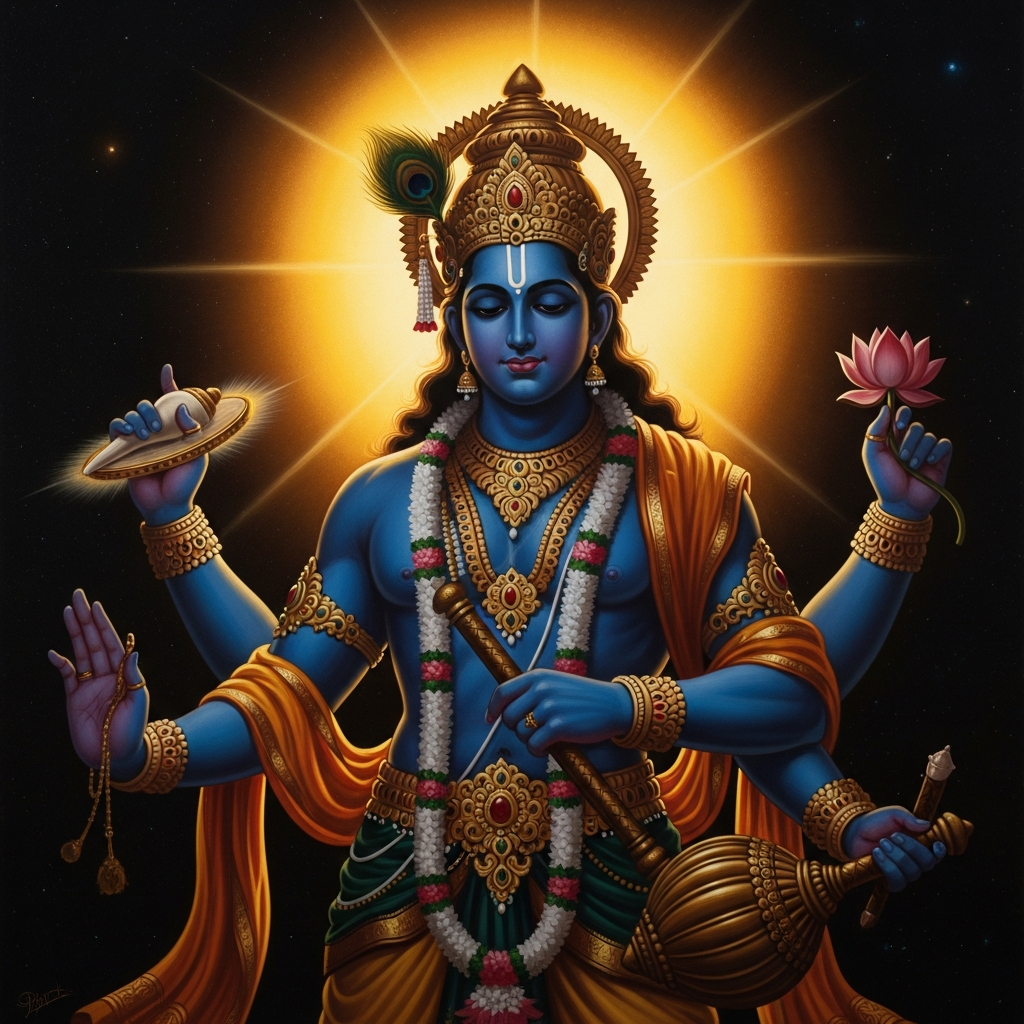 Generating art…
 Echoes Across Traditions
Entities


Sources
- *Shiva Purana*, Rudra Samhita, Sati Khanda, chapters 1-43
- *Devi Bhagavata Purana*, book 7, chapters 28-30
- *Kalika Purana*, chapters 18-19 (Shakti Peetha list)
- D.C. Sircar, *The Shakta Pithas* (1948, revised 1973)
- Cheever Mackenzie Brown, *The Devi Gita: The Song of the Goddess* (1998)
- Wendy Doniger, *Siva: The Erotic Ascetic* (1973)