Ragnarök: The Twilight of the Gods
Mythic Time · the prophesied end, recorded in Vǫluspá c. 10th century CE · Asgard, the Bifrost, the plain of Vigrid, and the new earth that rises after
Contents
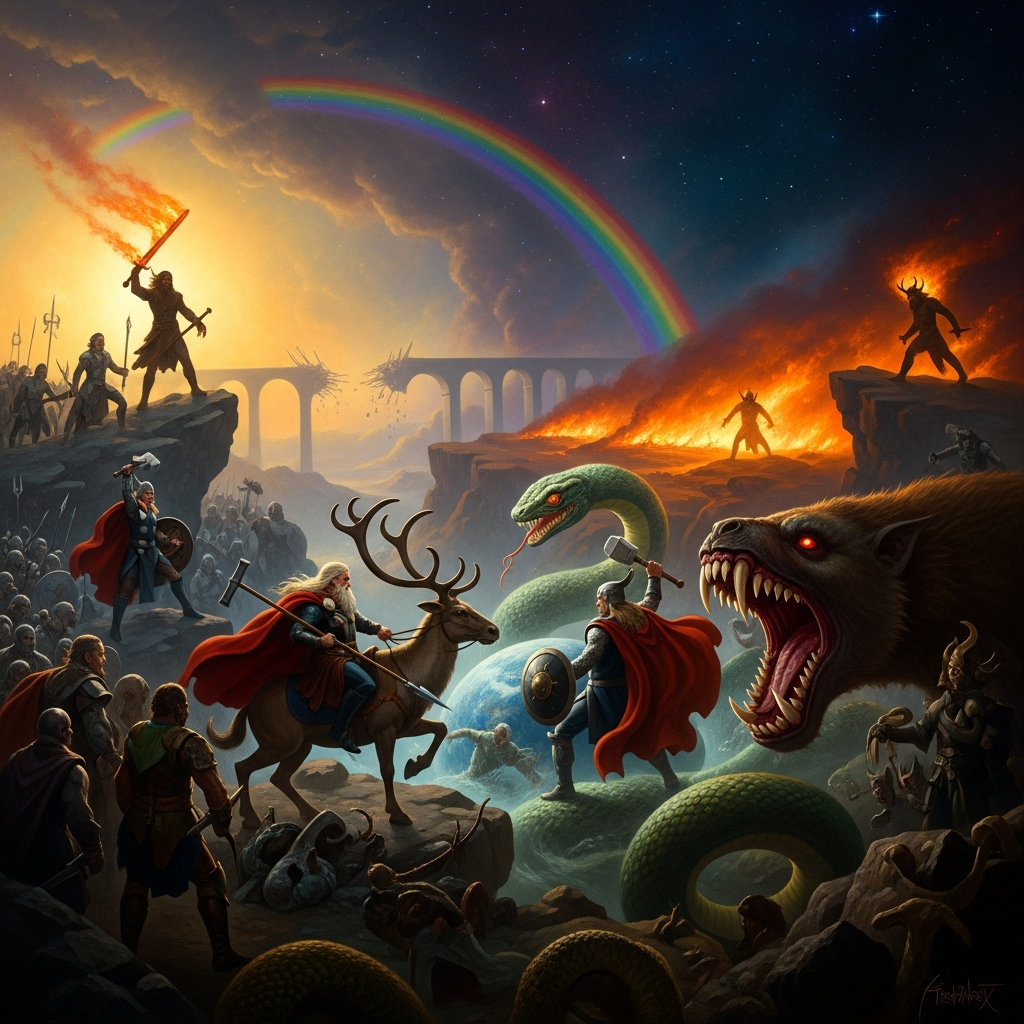
The wolf breaks his chain. The serpent rises from the sea. Heimdall lifts the Gjallarhorn and the rainbow bridge ignites under Surt's army of fire. Odin is swallowed; Thor dies of venom; the earth burns and sinks. Then a green shore rises from the water and the survivors gather at Idavoll.
- When
- Mythic Time · the prophesied end, recorded in Vǫluspá c. 10th century CE
- Where
- Asgard, the Bifrost, the plain of Vigrid, and the new earth that rises after
The cock Gullinkambi crows in Asgard.
The cock Fjalar crows in Jotunheim. A third cock, soot-red, crows in the hall of Hel. Three cries answer each other across the Nine Realms in the same breath, and every god who hears them knows the calendar has run out. Fimbulwinter has already lasted three years without summer between. Brothers have killed brothers in Midgard. The wolves Sköll and Hati have caught the sun and the moon and swallowed them. The stars go out one by one, the way candles go out in a hall when no one is left to tend them.
Heimdall stands on the Bifrost.
He has stood there since the bridge was built, watching, never sleeping, his hearing so keen he could hear grass grow on a hillside and wool grow on a sheep. He lifts the Gjallarhorn — the horn that has waited beneath the roots of Yggdrasil for this hour — and he blows.
The note travels through every realm at once.
Fenrir’s chain breaks.
Gleipnir was forged from impossible things — the sound of a cat’s footstep, the beard of a woman, the roots of a mountain, the sinews of a bear, the breath of a fish, the spittle of a bird — and held the wolf for an age while he grew. Now the impossible gives way. The wolf rises. His upper jaw scrapes the sky. His lower jaw drags the earth. Flame pours from his eyes and nostrils. He has been waiting for this moment the way a wound waits to open.
In the deep, Jörmungandr stirs.
The Midgard Serpent has lain coiled around the world’s circumference since Odin threw him into the sea, biting his own tail, holding the human world together by encircling it. Now he releases his tail. The seas rear up. Tidal waves roll across every coast of Midgard. The serpent climbs onto land and his venom poisons the air for leagues around him. Where he passes, no living thing breathes for long.
Loki sails from the east in a ship made of dead men’s fingernails.
Surt comes from the south.
He has waited longer than any of them — since before Ymir, since before the gods named themselves, in the burning south where Muspelheim has flickered at the edge of every cosmology like a fever no one would diagnose. He carries a sword brighter than the sun the wolves have eaten. Behind him ride the fire-giants, an army of flame in the shape of men. They reach the Bifrost.
The rainbow bridge cannot bear them. It was built to be beautiful, not to be defended. Under their hooves it shatters into seven colors of falling glass, and the colors fall into the void, and the void receives them, and the road between Asgard and Midgard is closed forever.
Surt rides on.
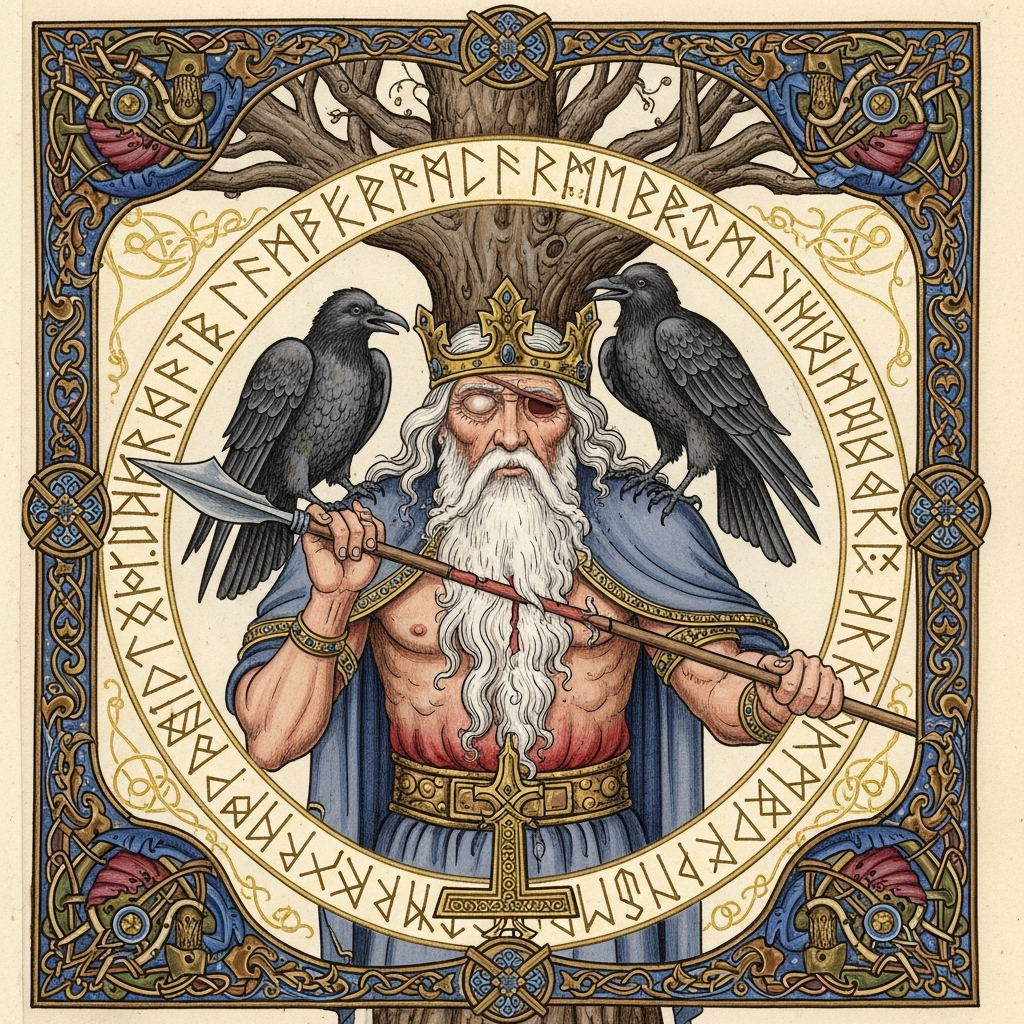
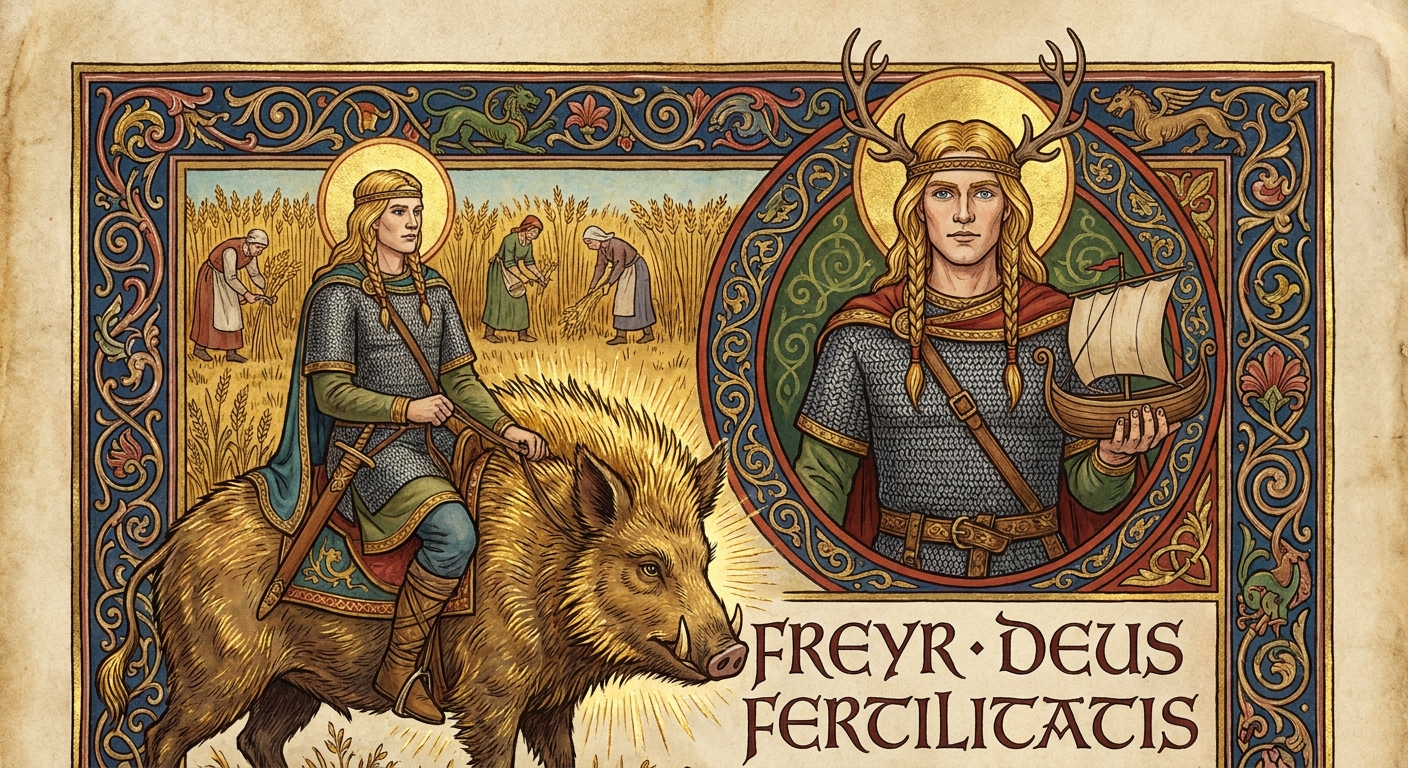
The Æsir muster on the plain of Vigrid — a field a hundred leagues across, prepared since the beginning for exactly this. Odin in his golden helm, spear Gungnir in hand, eight-legged Sleipnir beneath him. Thor with Mjölnir. Tyr one-handed. Frey without his sword, the sword he gave away for a giantess long ago, a debt now collected by fate. Heimdall. Vidar the silent. Behind them rides the army of einherjar — every warrior who died well in every battle since battles began, hauled out of Valhalla’s benches for the last fight any of them will ever have.
The two armies meet.
Odin goes for the wolf.
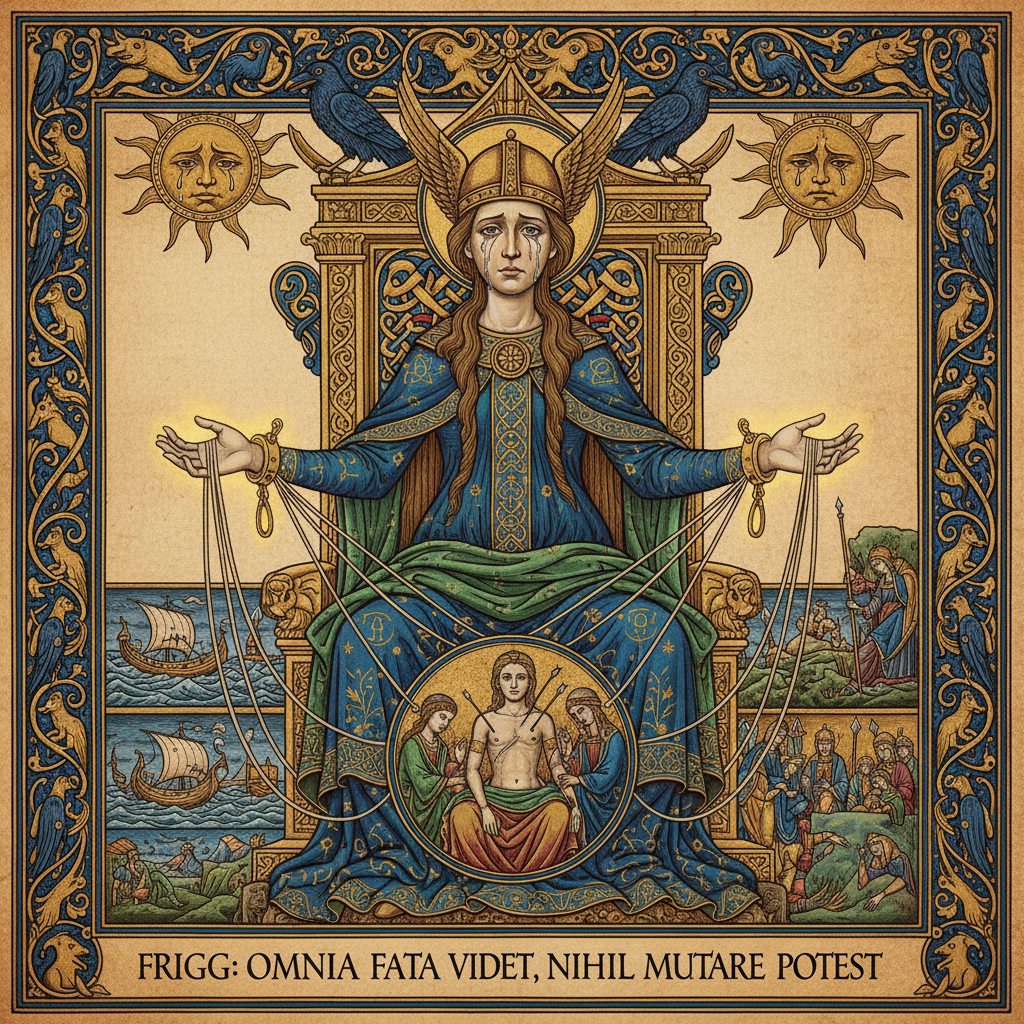
He has known this would be the shape of his ending since the Norns first cast his thread. Fenrir was his foster-son before he became his executioner; Odin chained him knowing the chain would break, knowing the wolf would come for him on this day in this field. He charges anyway. The All-Father, who hung nine nights on the tree to read the alphabet of fate, rides into the jaws he has already read.
Fenrir swallows him whole.
Vidar, Odin’s silent son — the god who has spoken in none of the eddas, who has waited his whole existence for one task — steps forward. On his foot is a shoe made from every leather scrap every cobbler in every age has ever cut from the heel and toe of a boot, accumulated since time began for this moment. He plants the shoe in Fenrir’s lower jaw. He grips the upper jaw with his hand. He tears the wolf apart from the inside.
It is the first vengeance, and it is exact, and it is too late.
Thor finds Jörmungandr.
They have circled each other across two earlier myths — Thor lifting the serpent disguised as a cat, Thor fishing for him with an ox-head — and now there is no disguise and no fishing line. Mjölnir comes down on the serpent’s skull. Bone shatters. The world’s ring breaks. Jörmungandr dies in the mud at Thor’s feet.
Thor walks nine paces.
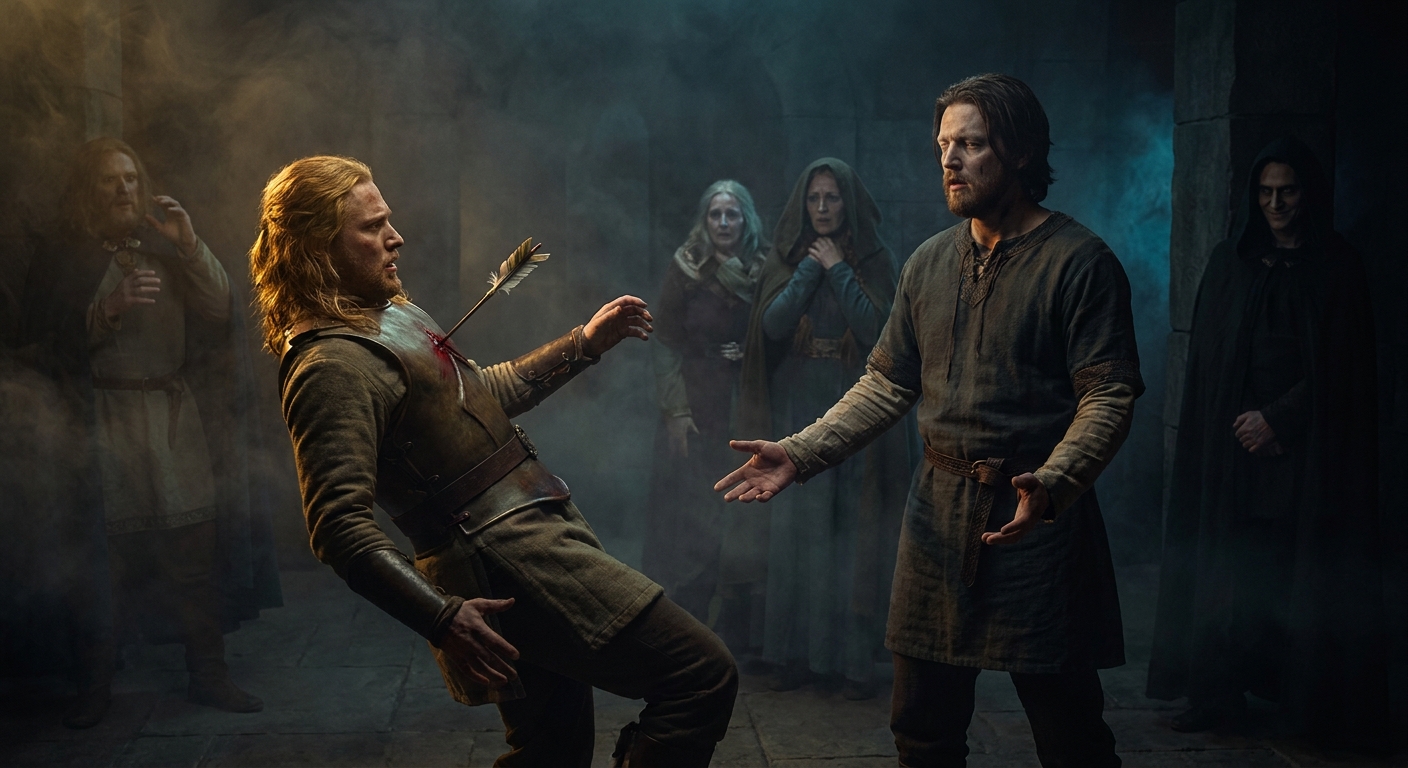
On the ninth step, the venom catches up. The poison the serpent breathed at the moment of his death has filled Thor’s lungs. The thunder-god falls beside the body of the thing he killed. They die together, slayer and slain, the two of them collapsed in a single ruin.
Loki and Heimdall meet in single combat. They have hated each other since the morning of the world. They kill each other. Tyr kills the hound Garm and is killed by him. Frey, swordless, falls to Surt.
The field empties.
Surt swings his sword across the world.
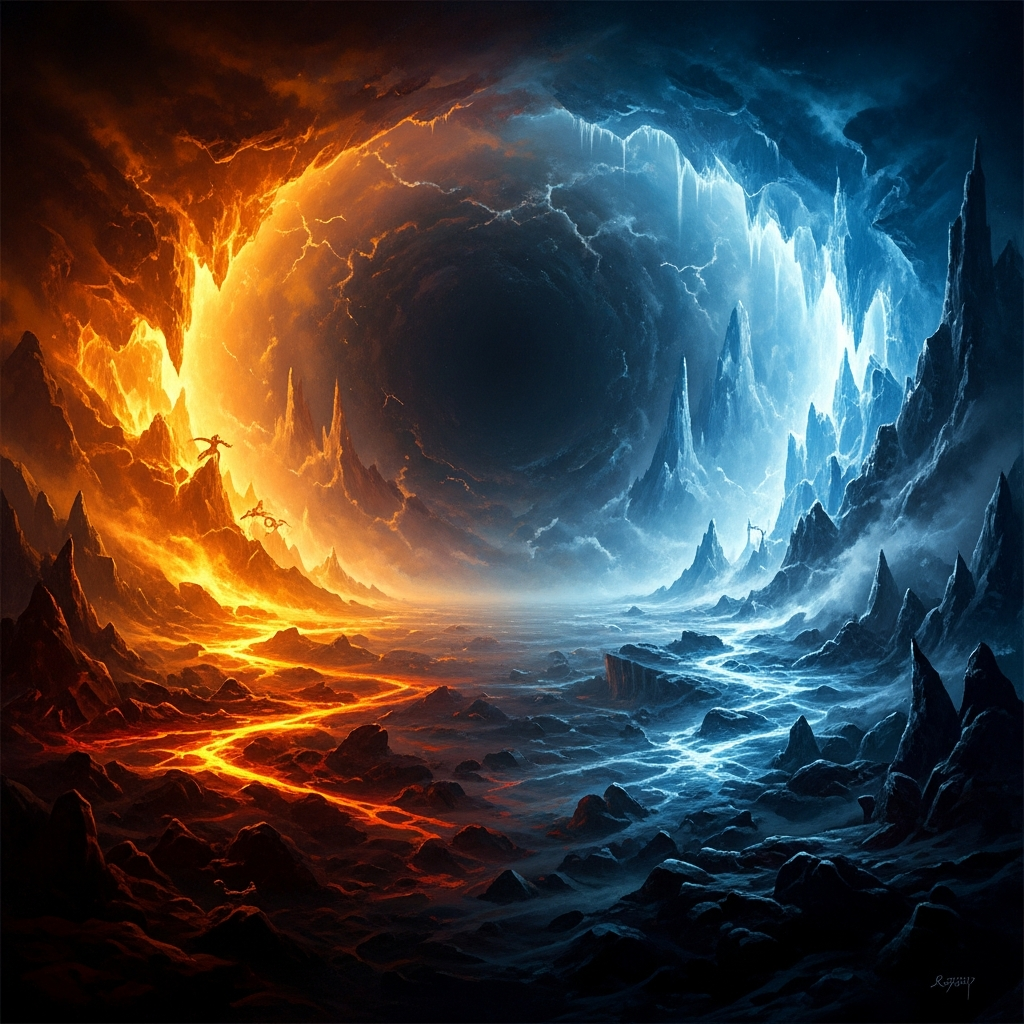
Fire takes everything that has not already been broken. Asgard burns. The halls of the gods melt. Yggdrasil shudders to its lowest root, the roots crack, the cosmic tree groans like a ship breaking apart in a storm. The mountains of Midgard sink. The seas boil. The stars that the wolves did not eat fall out of the sky like sparks falling out of a fire that has finished consuming a beam.
The earth slides into the sea.
There is no audience for this. The gods who could have witnessed it are dead. The seeress who prophesied it speaks from outside time. The fire dies down because there is nothing left to burn. The water closes over the place where the world was. For a long time — a length of time that has no measure because no one is left to measure it — there is only black sea, and the black sea is also the black sky, and the two are indistinguishable.
Then a green shore rises.
It comes up out of the water the way a body surfaces — slowly, dripping, certain. The grass on it is grass that has never been walked on. Eagles fly over a waterfall that did not exist a moment ago. Fields of unsown grain ripen where no plow has ever cut.
Vidar walks onto the shore. Vali, his half-brother, walks beside him. Magni and Modi, the sons of Thor, carry their father’s hammer between them — Mjölnir survived the burning, because some things are too dense for fire. Baldur returns from Hel, where he has been waiting since Loki had him killed; Höðr, his brother and unwilling killer, returns with him. Hænir is there. The names of a few others.
They gather at Idavoll, the shining-plain, where the gods first met when the world was new. They find golden chess-pieces in the grass — the pieces the old gods used to play with, the same pieces that were in the grass at the world’s beginning, returned now as if no time has passed.
Two humans have survived. Líf and Lífþrasir hid in the wood Hoddmímir during the burning. They come down out of the trees. They are the second Adam and the second Eve, but no one calls them that, because the Norse do not need a vocabulary for what is obvious: the world is starting again, and starting again is what the world does.
Above them, a new sun rises. The old sun’s daughter, born before her mother was eaten, takes her mother’s path across a sky that has been re-stitched while no one was watching.
The Vǫluspá ends here, almost. The seeress sees one more thing she will not name — a dark dragon, Niðhöggr, flying up from the under-fells with corpses on his wings — and then she sinks. She has said what she came to say. She does not stay to be questioned.
Ragnarök is the only end-of-the-world story in the major mythologies in which the gods are not the protagonists. They are the prey. The wolves come for them. The serpent comes for them. The fire comes for everyone. Their courage is real and their courage is futile and the futility is the point: in a universe that is going to end, the only honorable thing is to go to the field anyway.
The new world that rises has fewer gods, fewer humans, less light, less noise. Whether this is consolation or warning is the question Snorri leaves open. The Norse leave it open too. They were not in the business of cleaning up their endings.
Echoes Across Traditions
Entities


Sources
- *Vǫluspá* (the Seeress's Prophecy), Codex Regius c. 1270
- Snorri Sturluson, *Prose Edda*, Gylfaginning 51 (c. 1220)
- *Vafþrúðnismál* 17-18, 50-53
- Anthony Faulkes (trans.), *Edda* (1987)
- Carolyne Larrington (trans.), *The Poetic Edda* (1996)