Combat Profile
Eternal Wheel of Dharma
Each Tirthankara in sequence reveals the path to moksha anew, allowing souls to attain liberation regardless of cosmic age or cycle.
Omniscient Succession
The 24 Tirthankaras collectively embody perfect knowledge across infinite time, ensuring that enlightenment is always accessible to those who seek it.
None -- all are liberated beyond the reach of harm
“As birds returning to a lake, the Tirthankaras appear in their appointed ages — crossing the ocean of existence, and building the ford so that others may follow.”
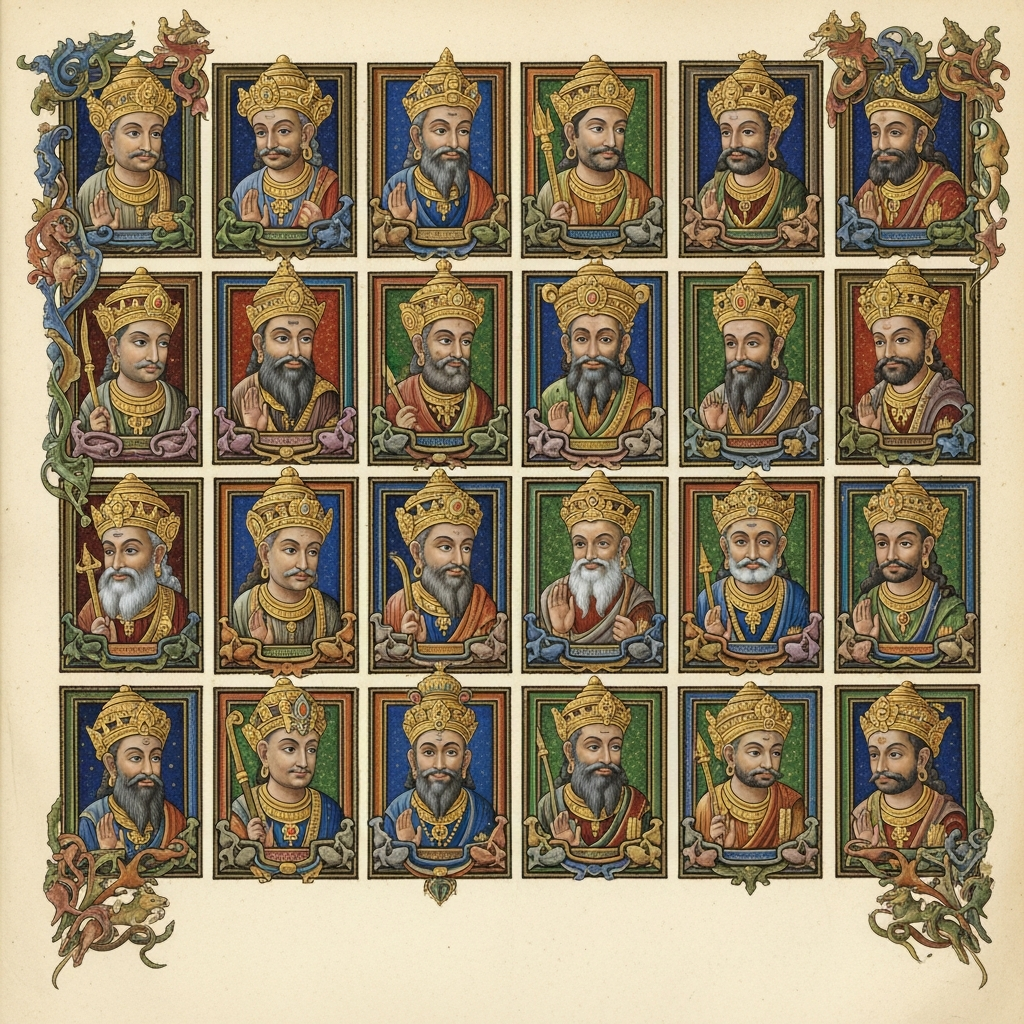
Lore: The Jain cosmos runs in vast cycles, each divided into ascending (utsarpini) and descending (avasarpini) half-cycles. In the current descending half-cycle — the age of decline — 24 Tirthankaras have appeared, beginning with Rishabhadeva and ending with Mahavira. Each appeared at a specific moment in cosmic history when the path to liberation had faded from memory. Each achieved omniscience and taught the tirtha — the four-fold community of monks, nuns, laymen, and laywomen — before achieving final liberation.
The Tirthankaras are listed in canonical order: Rishabhadeva (Adinatha), Ajita, Sambhava, Abhinandana, Sumati, Padmaprabha, Suparshva, Chandraprabha, Pushpadanta (Suvidhi), Shitala, Shreyansa, Vasupujya, Vimala, Ananta, Dharma, Shanti, Kunthu, Ara, Malli (the 19th, who in the Svetambara tradition is female — a point of contention with the Digambaras), Munisuvrata, Nami, Nemi (Arishtanemi, said to have been the cousin of Lord Krishna), Parshva, and Mahavira.
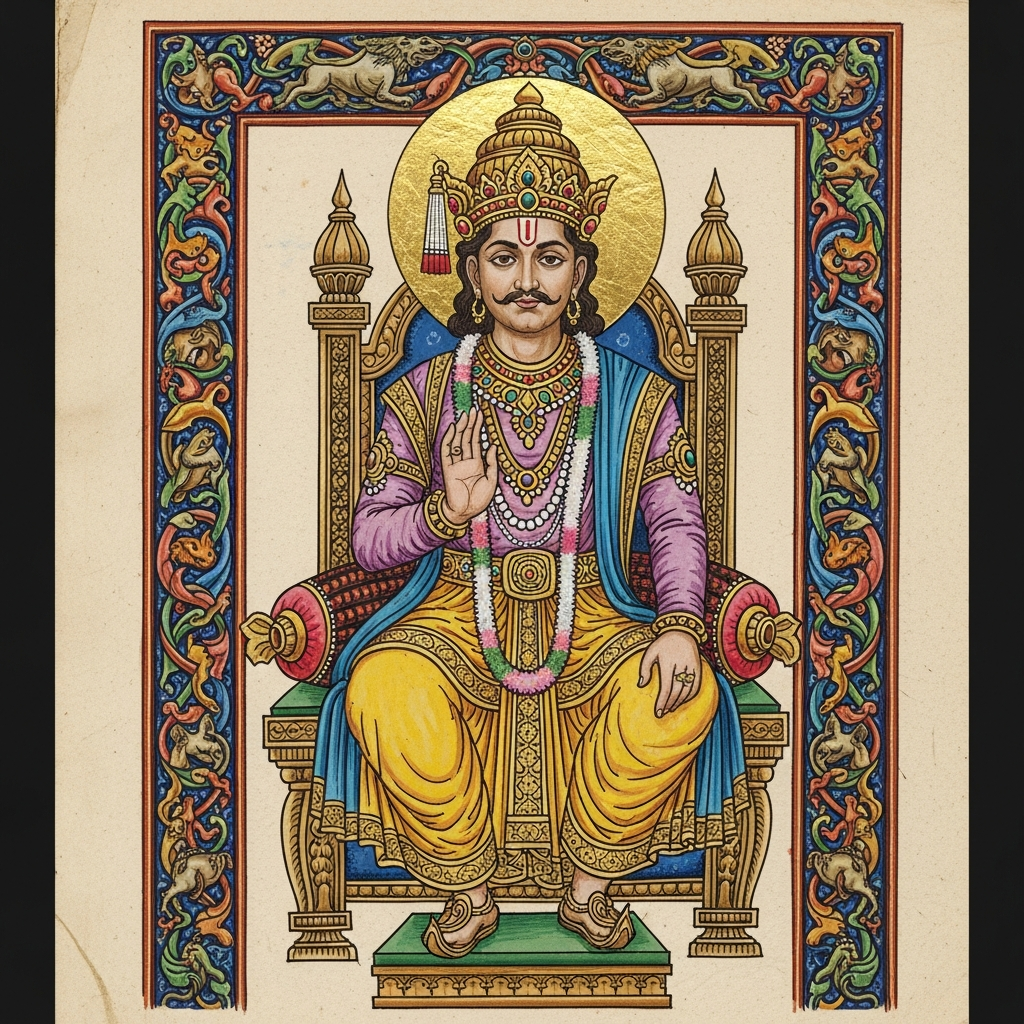
None of them can be prayed to for worldly benefit. They have transcended all engagement with the world below. Jains venerate them not as gods who might intervene but as models — proofs that the path works. Jain temples contain elaborate and beautiful images of the Tirthankaras, seated in meditation or standing in the kayotsarga posture, identifiable by their individual symbols (lanchanas): Rishabhadeva by the bull, Parshva by the cobra, Mahavira by the lion. The act of contemplating a liberated soul is itself meritorious — not because the soul knows you’re there, but because the contemplation reshapes the contemplator.
Parallel: The ten avatars of Vishnu (the Dashavatara) — a lineage of divine appearances across cosmic ages, each suited to the needs of the time. The prophetic lineage of the Bahá’í Faith — Abraham, Moses, Jesus, Muhammad, the Báb, Bahá’u’lláh — each building on the last. But the Tirthankaras are not a progressive revelation building toward something greater. Each restores the same truth. The cosmic cycle is not a ladder upward but a wheel, and liberation is available in every age to anyone willing to walk the path.
2 min read
The cosmic clock itself; each Tirthankara appears only once per cosmic half-cycle
*Kalpa Sutra*; *Tattvartha Sutra* (Umasvati); Paul Dundas, *The Jains*