The Monster at the Heart of Creation: Chaos vs Order in World Mythology
Enuma Elish (Marduk and Tiamat) in Standard Babylonian version c. 1100 BCE; Zeus and Typhon in Hesiod's Theogony c. 700 BCE; Indra and Vritra in the Rigveda c. 1500-1200 BCE; Ra and Apophis as a nightly cosmic event in Egyptian mythology, documented from Middle Kingdom onward (c. 2000 BCE) · The primordial ocean before the world existed (Marduk and Tiamat), the cosmic space between heaven and earth (Indra and Vritra), the regions below the horizon where Ra's barque travels each night (Ra and Apophis), the volcanic island of Ischia or Mount Etna (Zeus and Typhon)
Contents
Marduk vs Tiamat, Zeus vs Typhon, Indra vs Vritra, Ra vs Apophis: the primordial battle between chaos and order is the founding act of every major mythological cosmos.
- When
- Enuma Elish (Marduk and Tiamat) in Standard Babylonian version c. 1100 BCE; Zeus and Typhon in Hesiod's Theogony c. 700 BCE; Indra and Vritra in the Rigveda c. 1500-1200 BCE; Ra and Apophis as a nightly cosmic event in Egyptian mythology, documented from Middle Kingdom onward (c. 2000 BCE)
- Where
- The primordial ocean before the world existed (Marduk and Tiamat), the cosmic space between heaven and earth (Indra and Vritra), the regions below the horizon where Ra's barque travels each night (Ra and Apophis), the volcanic island of Ischia or Mount Etna (Zeus and Typhon)
Before the world existed, there was Tiamat.
She was the primordial salt sea — vast, ancient, undifferentiated, the mother of all the gods. She and her husband Apsu (the freshwater ocean beneath the earth) mingled their waters together “when skies above were not yet named, nor earth below pronounced by name.” From their mingling the first gods came: Lahmu and Lahamu, then Anshar and Kishar, then the great gods of the Babylonian pantheon. Tiamat produced her children and grandchildren until the noise of the younger gods became intolerable. Apsu wanted to destroy them for the sake of sleep. The younger gods heard of the plan and killed Apsu first.
Tiamat decided to make war on her offspring.
She created eleven monsters — serpents, dragons, mushussu-dragons, great-lions, mad dogs, scorpion-men, mighty storms, fish-men, and bull-men. She gave command of her army to Kingu and made him her husband. None of the great gods would face her. She had already defeated the ones who tried.
Then Marduk was proposed — the young god of the spring storm, son of Ea — on the condition that if he defeated Tiamat, he would be made king of all the gods. He accepted.
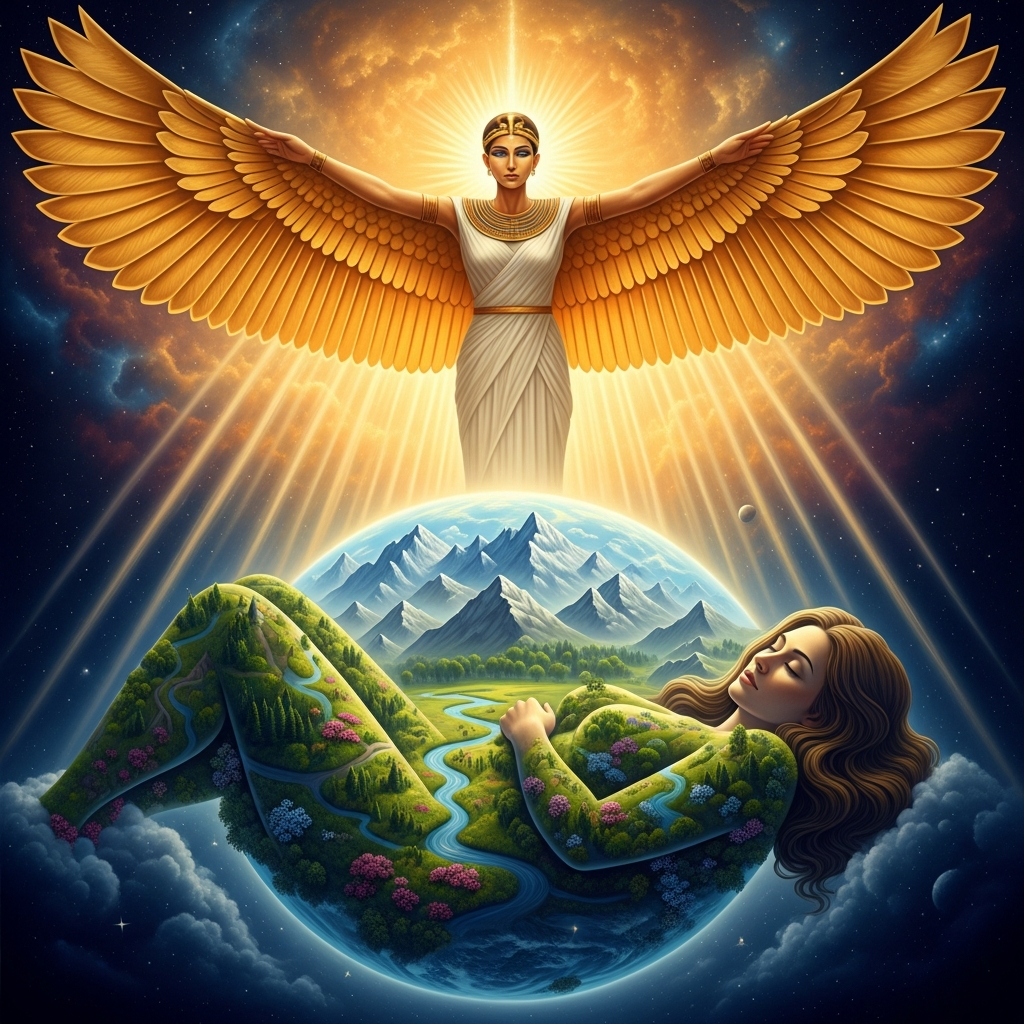
He killed Tiamat with a net and a spear, split her skull with his club, cut her body in two, and made the world.
The Combat Myth’s Universal Pattern
The scholar Thorkild Jacobsen identified the combat myth — the pattern in which an order-god defeats a chaos-monster and creates or preserves the world through the victory — as one of the defining narrative structures of Mesopotamian religion. John Day later traced its influence throughout the Hebrew Bible, demonstrating that the Leviathan, Rahab, and Sea imagery in the Psalms, Job, and the prophets represents a persistent Canaanite and Mesopotamian mythological inheritance that the biblical writers simultaneously used and polemicized against.
The pattern’s elements are consistent across traditions: a threat from the primordial ocean or the forces of undifferentiated chaos; a divine champion who may initially be defeated or at risk; a decisive weapon or trick; the defeat of the monster; the ordering of the cosmos from the monster’s body or the monster’s imprisonment under the earth. The world that results from this battle is not simply created — it is wrested from something that wanted not to be organized.
This is the key insight: the cosmos is not the uncontested project of a creative god working in empty space. It is an ongoing project of imposing order on something that resists being ordered. The chaos-monster is not simply destroyed; it is incorporated into the world as its foundation (Tiamat’s body), trapped in its depths (Typhon, the Leviathan, Apophis in its nightly return), or destined for a final apocalyptic reckoning (Isaiah’s prophecy about Leviathan, the Norse Ragnarok).
Marduk and the Politics of Creation
The Enuma Elish, recited at the Babylonian New Year festival (Akitu), was not purely cosmological. It was also political: its climax is the divine assembly’s assignment of Marduk’s “fifty names” — which is to say, the absorption of fifty other gods’ functions and identities into Marduk’s sovereignty. Marduk is given dominion over all the other gods as the prize for his victory over Tiamat.
The political subtext is Babylon itself, which rose to regional dominance in the 18th century BCE and whose patron god was Marduk. The Enuma Elish is partly a theological argument for Marduk’s supremacy — and thus for Babylon’s supremacy — over the older Mesopotamian religious centers with their own patron deities. Creation becomes a political argument: the god who made the world has the right to rule it, and by extension the city whose god made the world has the right to rule the region.
This politicization of the creation-through-combat narrative recurs throughout the tradition. The biblical combat imagery in Psalms 74 is deployed in the context of the Babylonian destruction of Jerusalem: the God who crushed Leviathan’s heads is being called on to act against the current enemy with the same decisive power. The cosmic victory over chaos is the precedent for the hoped-for historical victory over political oppressors.
Vritra: The Dragon With a Legitimate Case
The Rigvedic battle between Indra and Vritra is the most densely hymned combat in ancient literature — dozens of Vedic hymns celebrate it in varying detail. But the tradition is notably ambivalent about what Vritra was doing.
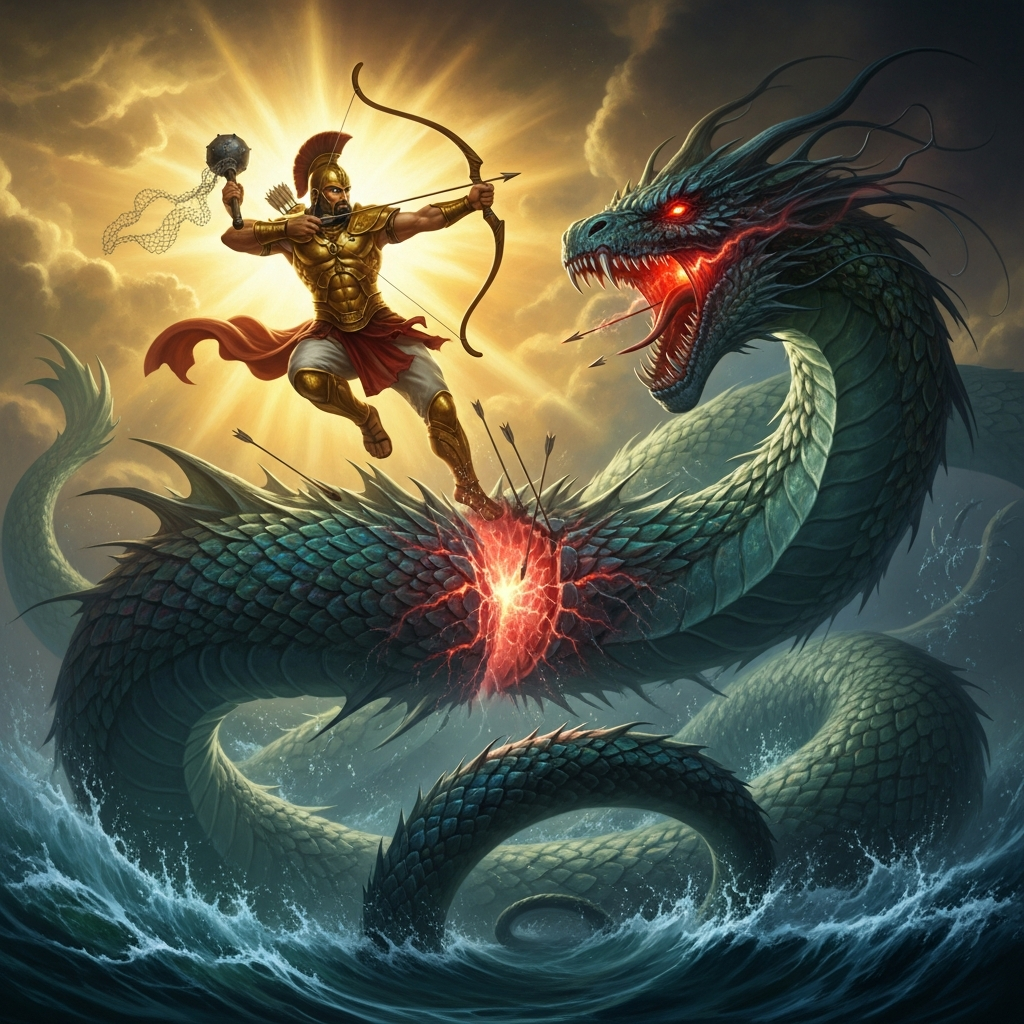
In the most common version, Vritra is a drought-demon who has swallowed the cosmic waters or blocked the rivers, causing famine. Indra, the storm-god, kills him with the vajra (thunderbolt) and releases the waters. This is a straightforward beneficial combat: the hero kills the monster, rain returns, life continues.
But the Mahabharata’s version of the Vritra story (Shanti Parva) is more complicated. Vritra in this version is a Brahmin sage — which makes his killing by Indra a catastrophic act of brahminicide. Indra is contaminated by the sin. The story becomes a narrative about the costs of violence that was necessary but morally polluting — and about the ritual means of expiation.
The later Puranic tradition identifies Vritra as a devotee of Vishnu who had accumulated spiritual power through austerities. His battle with Indra is not chaos vs. order but two legitimate cosmic powers in conflict, with the outcome not clearly just.
This ambivalence mirrors the Asura mythology discussed elsewhere in the Hitchhiker’s Guide: the older traditions have a memory that the “chaos” side of the combat myth was not simply evil, that the order imposed by the victorious gods was imposed on something that had its own integrity.
Apophis and the Maintenance of Order
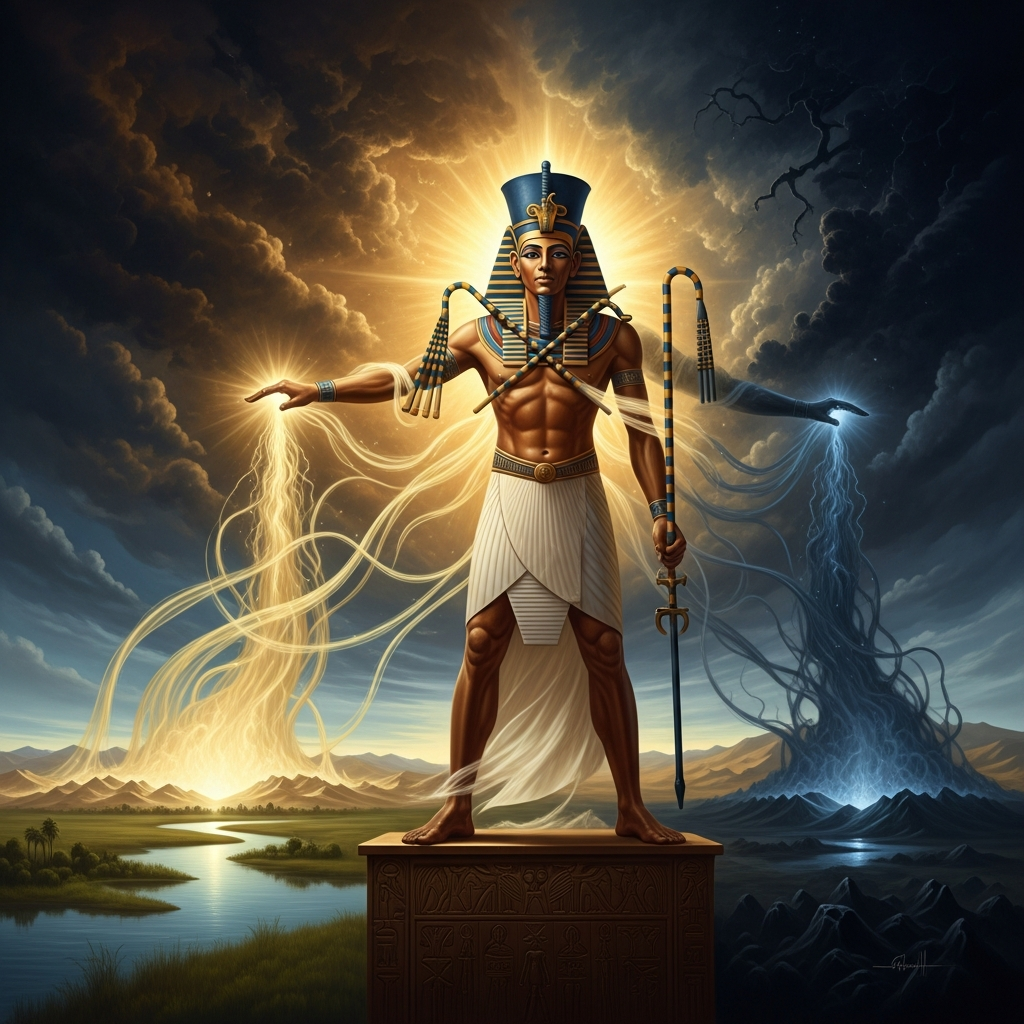
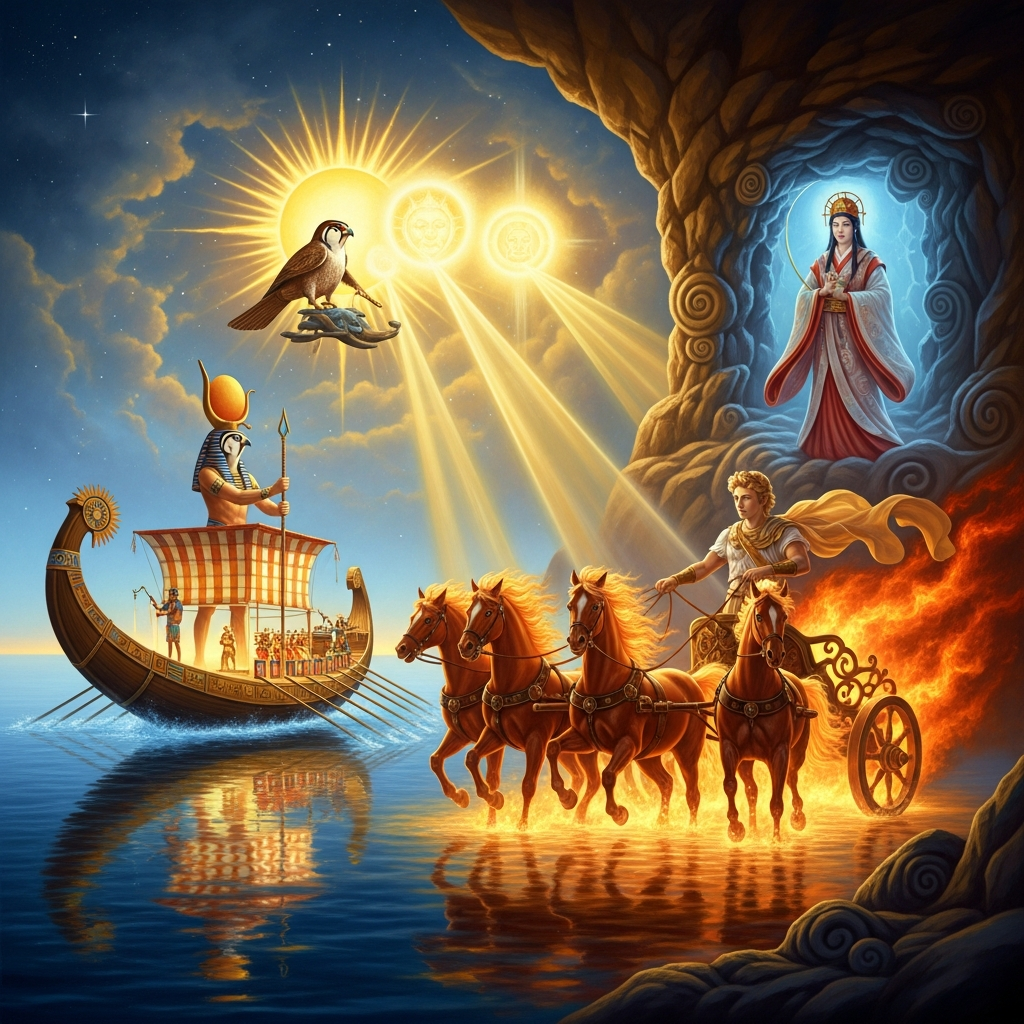
The Egyptian treatment of the chaos-combat is distinctive in making it a daily (or nightly) event rather than a one-time primordial act. Ra’s solar barque travels through the twelve hours of the night, and at the fifth hour, Apophis attacks.
The Egyptian religious response to this was arguably the most socially engaged response to the chaos-combat myth in any tradition. Because the battle happened every night, and because the outcome was not guaranteed, ordinary Egyptians were understood to have a role in supporting the divine combatants. The temple rituals — burning Apophis’s effigy, inscribing its name on papyrus and trampling it — were not merely symbolic. They were participation in the cosmic battle.
The theological implication is significant: cosmic order is not self-sustaining. It requires maintenance. The gods are strong but they are not infinitely strong; Apophis is immense and persistent. Human ritual attention to the cosmic battle strengthens the divine side. The world continues because of the ongoing collaboration between gods and humans.
This is perhaps the most demanding cosmological claim in world mythology: the universe needs you. Your rituals are not incidental practices of personal piety but structural contributions to the maintenance of reality.
Why Chaos Can Never Be Destroyed
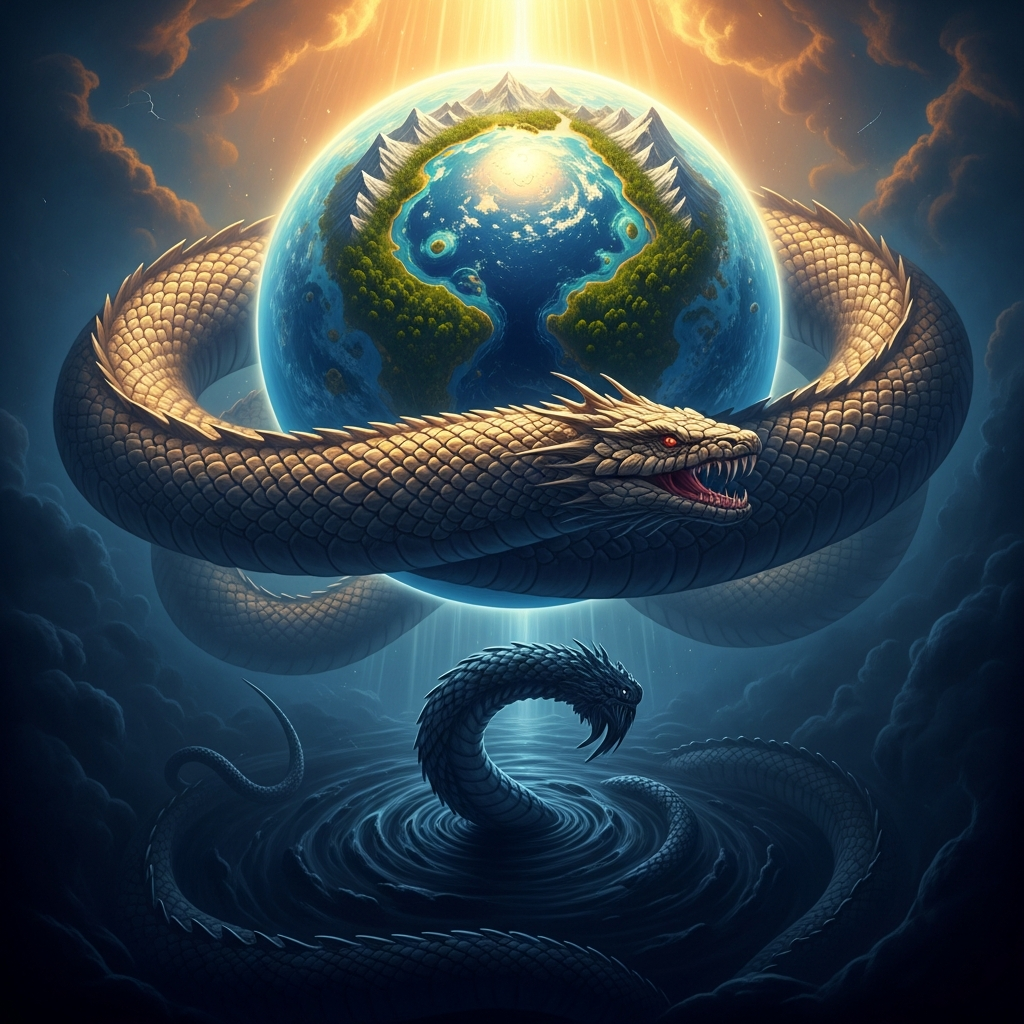
The most consistent feature of the combat myth across all traditions is that the chaos-monster is never finally destroyed in any cosmologically stable period. Typhon is imprisoned under Mount Etna. Apophis returns every night. Leviathan is subdued but waits for its final destruction. The Midgard Serpent circles the world, alive.
This narrative choice is not a failure of imagination. It is a sophisticated theological position: a universe in which chaos has been permanently eliminated is a universe with no capacity for change, no creative tension, no engine for transformation. Pure order without the friction of chaos would be a frozen perfection — beautiful and dead.
The combat myth is not describing a world in which good has completely defeated evil. It is describing a world in which the ordering principle is continuously engaged in the work of organizing what resists being organized. The work is never finished. The battle continues.
This is less comfortable than total victory. But it is, the myths suggest, the truth. The monster is in the foundations, and the building stands because the builder is still working.
Echoes Across Traditions
Entities


Sources
- *Enuma Elish* (Babylonian creation epic, Standard Babylonian version c. 1100 BCE)
- Hesiod, *Theogony* 820-880 (Typhon)
- Apollodorus, *Bibliotheca* I.6.3 (Zeus vs. Typhon)
- Rigveda 1.32 (Indra and Vritra)
- *Book of Apophis* / *Amduat* (Egyptian — nightly battle)
- Psalms 74:12-17; Job 40:25-41:26; Isaiah 27:1 (Leviathan)
- Snorri Sturluson, *Prose Edda*, 'Gylfaginning' 34 (Jormungandr)
- John Day, *God's Conflict with the Dragon and the Sea* (1985)
- Thorkild Jacobsen, *The Treasures of Darkness* (1976)
- Wendy Doniger, *The Rig Veda: An Anthology* (1981)