The God of Necessary Violence: Erra Unmoors
c. 800 BCE · Babylon (Mesopotamia, modern Iraq)
Contents
When Marduk leaves his throne to repair his own divine regalia, Erra — the god of plague and war — takes the empty seat and unleashes chaos on Babylon. His vizier Ishum, the fire of civilization, tries to pull him back. Nothing is resolved. The plague stops because Erra is flattered, not because justice prevails.
- When
- c. 800 BCE
- Where
- Babylon (Mesopotamia, modern Iraq)
Erra has been sitting in his temple for a very long time and he is restless.
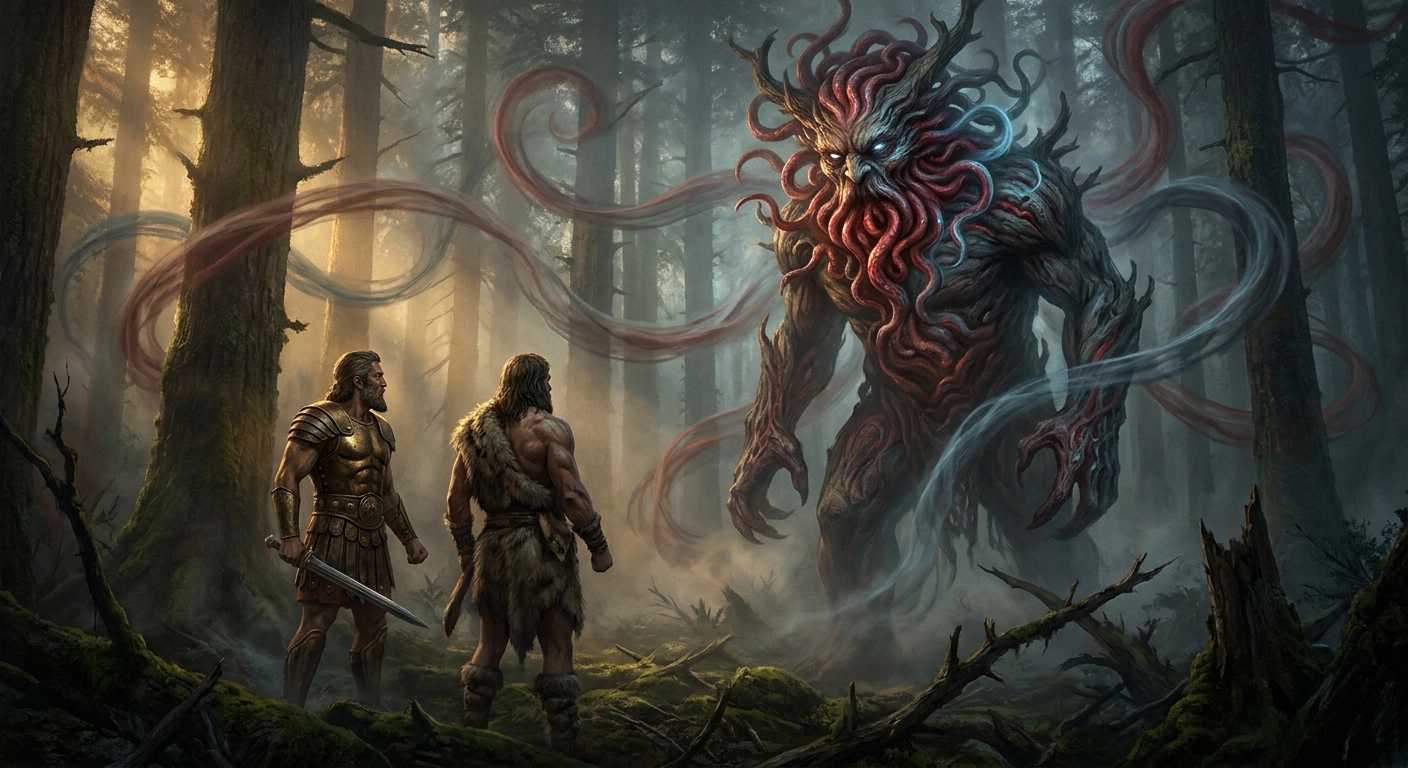
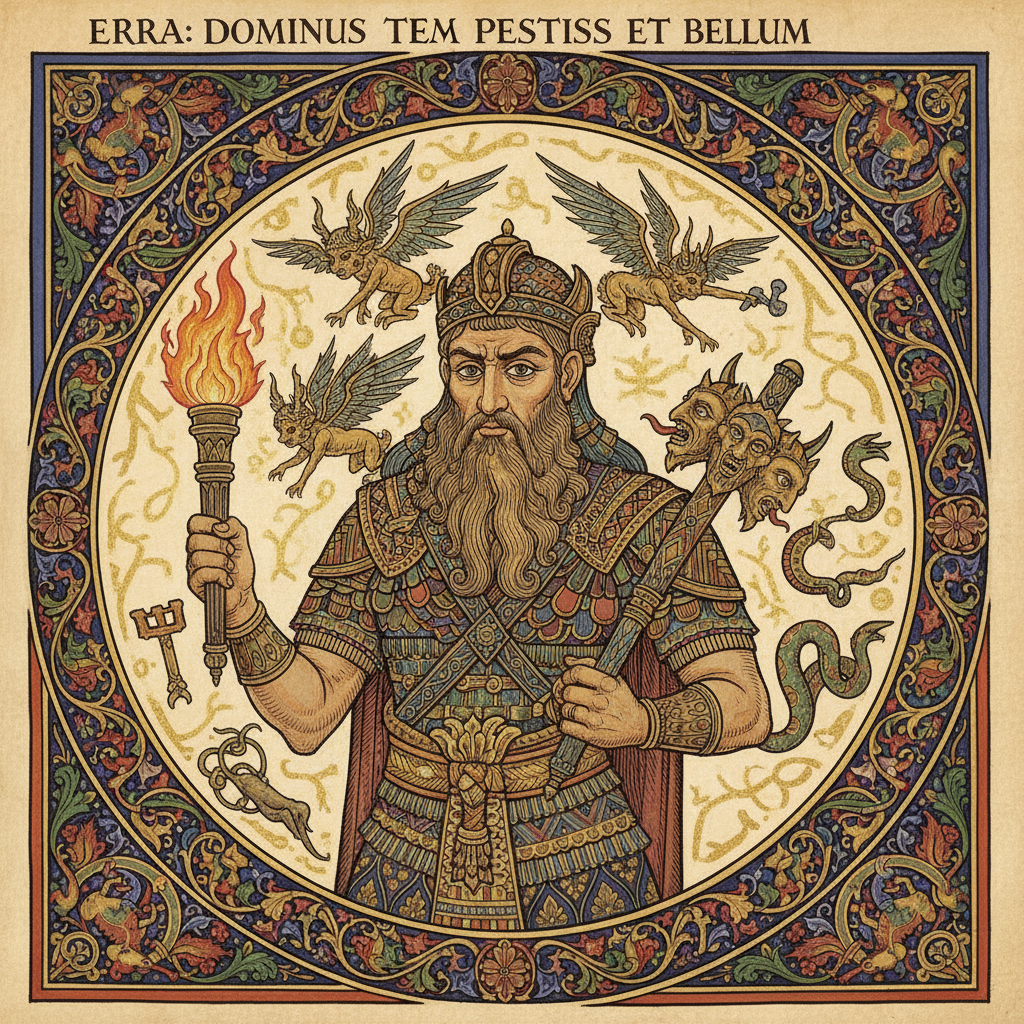
This is the opening condition of the poem, stated plainly: Erra’s heart urged him to do battle. He is the god of plague and war, the god of violent death, the lord of the Sebitti — the seven warrior-gods who travel with him like a fever that has learned to walk. He is not evil. This is the first thing the Babylonian scribes want you to understand. He is not a demon. He is a god, as legitimate as Marduk and older than Babylon, and he has been sitting still for too long. His weapons are rusting. His warriors are restless. The violence that is his nature has nowhere to go, and unused violence, in this theology, is the most dangerous thing in the world.
Let us stir up war, the Sebitti say to him. Let us go on campaign. Let us make the noise we are made for.
He agrees. He is already agreed before they finish the sentence. He goes looking for permission.
Marduk is in his temple at Esagila when Erra arrives, and the first conversation between them is the most dangerous conversation in the poem.
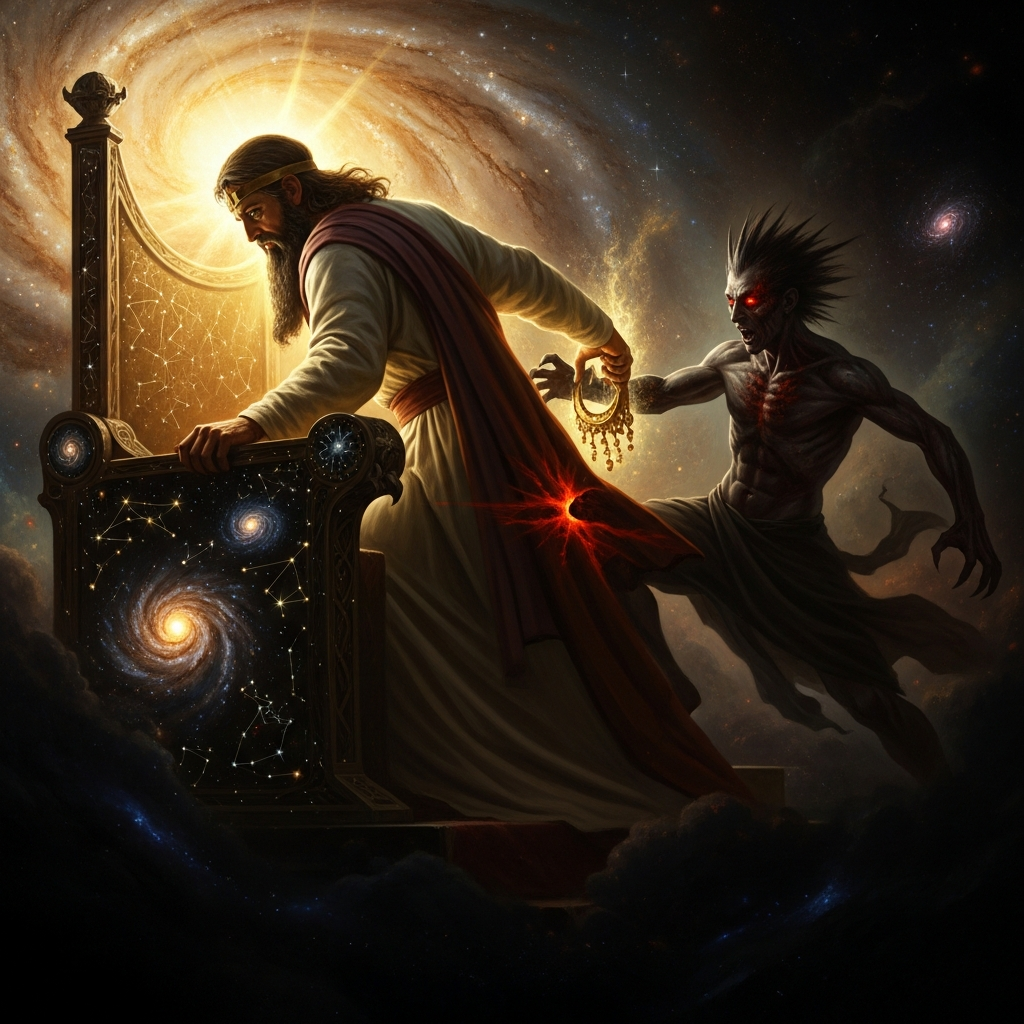
The problem is Marduk’s regalia. His divine crown, his weapons, his robes of majesty — they were damaged in some unspecified former age, when the cosmic order was disrupted and the cosmic craftsmen who maintain these things were scattered. Marduk cannot rule properly in damaged regalia. It offends the divine dignity. He has been waiting for the right moment to send the regalia to the craftsmen for repair, but to do this he must leave his throne. And the cosmic throne of Babylon cannot sit empty.
Erra watches Marduk’s dilemma with the patience of a god who has nothing else to do.
Let me hold the throne while you are gone, Erra offers. He says it reasonably. He says it as one god offering a colleague a practical solution. He does not say what he is thinking, which is: the moment you stand up, the world is mine.
Marduk hesitates. He is the cleverest god, the god of fifty names, the one who defeated Tiamat when no other could. He should see what Erra is doing. But the regalia is genuinely damaged, and Erra’s offer is structurally logical, and the craftsmen are waiting, and perhaps Marduk is tired in the way a god becomes tired when he has been holding everything together for too long.
He stands up.
Erra takes the throne before Marduk has fully risen.
The plague begins immediately.
Not as a decision — as a release. Erra seated on the cosmic throne is like a fire that has been banked for years suddenly given air. It does not choose to burn. It simply burns, because burning is what it does when nothing constrains it.
The Sebitti go first into Babylon. Their names mean different things in different texts — some say they are the seven planets, some say they are seven forms of pestilence — but their function is consistent. They move through the city the way fire moves through a granary, without discrimination, without particular malice, according to the logic of what they are. Warriors fall in the street. Priests fall in the temple precincts. The bodies of the righteous and the wicked pile together in the courtyards, and the god who is supposed to distinguish between them is elsewhere, waiting for his regalia to be mended.
The poem records the specifics with a journalist’s eye. Sons of Babylon fled to foreign lands. The Sutean plunders, his sword unsheathed. The foreign enemy breaches the city walls. The civil order breaks. The temples are looted. Men who were friends yesterday are killing each other over the contents of a storage room. Erra looks at all of this from the throne and experiences something that the text describes with a single word: satisfaction.
Ishum watches.
Ishum is Erra’s vizier, his counselor, his constant companion — the fire that is also the cooking fire, the hearth fire, the fire of civilization. He is the same substance as Erra, but shaped differently, pointed at a different purpose. Erra destroys. Ishum transforms. Erra is the wildfire. Ishum is the kiln. They travel together because the world requires both.
He tries to stop it. He stands in front of Erra on the cosmic throne and makes the case for moderation, for proportion, for the kind of violence that serves a purpose versus the kind that simply expends itself. He is a good theologian. His arguments are sound. The plague is disproportionate. Innocent people are dying alongside the guilty. The temples are being desecrated. The city that is the center of the world is becoming a ruin.
Erra listens. Erra does not stop.
The problem is structural. Ishum is asking Erra to act against his nature in the moment of his nature’s fullest expression. It is like asking a river not to flow during a flood. Erra is not angry at Ishum — he respects him, the text makes this clear — but Ishum’s words and Erra’s purpose are operating at different registers. One is about meaning. The other is about appetite.
Mankind has not escaped, Erra says at one point, almost approvingly. They fall before your weapons like reeds before the hurricane. He is not summarizing a failure. He is summarizing a success.
Ishum changes his approach.
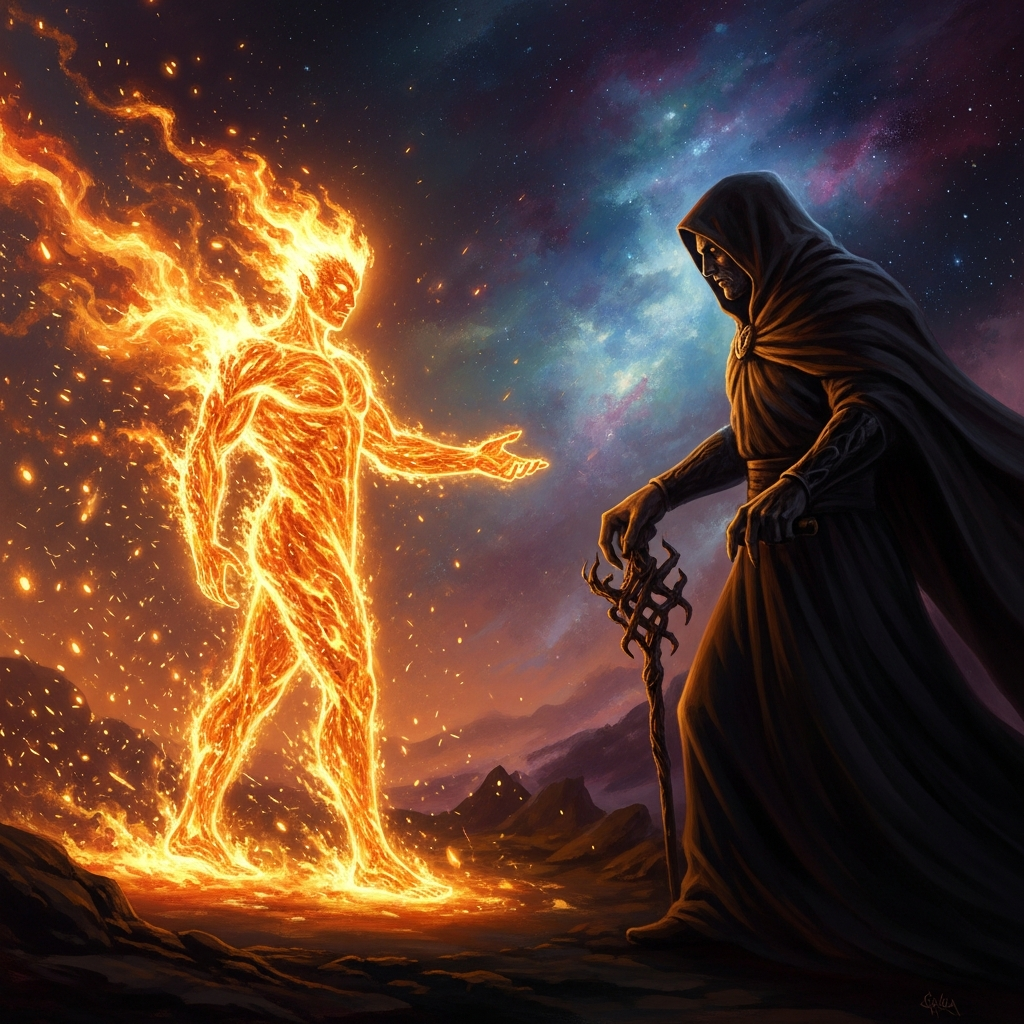
This is the theological center of the poem, the moment the scribes are building toward: Ishum stops arguing on moral grounds and begins to speak in the language that can actually reach Erra. Flattery. Precise, specific, informed flattery — the kind that demonstrates that the speaker knows exactly who he is speaking to.
Your name, Erra, is magnificent, Ishum says. Your courage is beyond comparison. Your weapons are splendor. When you are angry, the heavens shake. When you are still, the very foundations tremble in anticipation. He lists Erra’s attributes with the care of a ritual cataloguer. He is not lying — everything he says is true. But he is deploying the truth strategically, the way a skilled diplomat deploys it: giving the powerful figure what he needs to hear in order to arrive at the conclusion the diplomat requires.
You have proven your might, Ishum says. Babylon is undone. The enemy is scattered. The righteous and the wicked alike know who brought this upon them. Your name will be spoken in terror for generations. What more is there?
And Erra, surrounded by the ruin of a city he has genuinely devastated, feels something shift. He has been heard. He has been recognized. The praise is accurate, and accuracy from the mouth of a god who has watched you work — who has seen you do what you do better than anyone — is not nothing.
He agrees to return to his temple.
The plague stops.
Not because justice has been done. Not because the victims have been compensated or the guilty distinguished from the innocent or the divine order restored to proper function. The plague stops because Erra has been persuaded that he has accomplished something commensurate with his stature, and because Ishum said so convincingly enough.
Marduk returns to his throne. His regalia is repaired. The craftsmen have done their work. He looks at Babylon and says nothing about what happened in his absence. The poem does not give him a speech of recrimination or a promise of future prevention. It gives him silence, and the silence implies: this is the theology. Order is held not by the impossibility of disorder but by the maintenance of conditions under which disorder is contained — conditions that can lapse, that do lapse, that will lapse again.
The poem ends with a promise the scribes found meaningful enough to preserve across five tablets: Whoever praises the Song of Erra and exalts it shall not be afflicted by plague. The text is itself an apotropaic ritual. By singing the poem, by rehearsing Erra’s attributes, by giving him his due, you remind him that he is known and respected and does not need to prove himself tonight in your street.
It is, as solutions go, impermanent. It is also, the Babylonian scribes suggest, the only kind of solution available.
The Erra Epic was composed in the aftermath of real catastrophe — the precise catastrophe it describes. Plague, civil war, foreign invasion, the looting of temples. Historians have proposed the period of Assyrian dominance over Babylon in the eighth century BCE, or the Sutean raids that preceded it. The scribes who composed this poem were not writing fantasy. They were writing theology for survivors.
Their answer to why this happened is neither human wickedness (the Hebrew answer) nor divine punishment for specific sins. Their answer is: the throne was empty. Order requires maintenance. When the god of order steps away — for any reason, however good — the god of disorder fills the vacuum. Not maliciously. Constitutionally.
Erra is not evil. This is the most difficult thing the poem insists on, and the most important. He is necessary. The violence he embodies is the violence that clears the world for replanting, that opens the old order so the new can take root. But unmoored from structure, without a purpose and a limit, he is indistinguishable from catastrophe.
Ishum does not defeat Erra. Ishum flatters him back into his temple. This is the wisdom the poem offers: there are forces in the world that cannot be overcome, only managed — spoken to correctly, praised in the right terms, reminded of their own stature so that their stature becomes the reason to stop.
Scenes
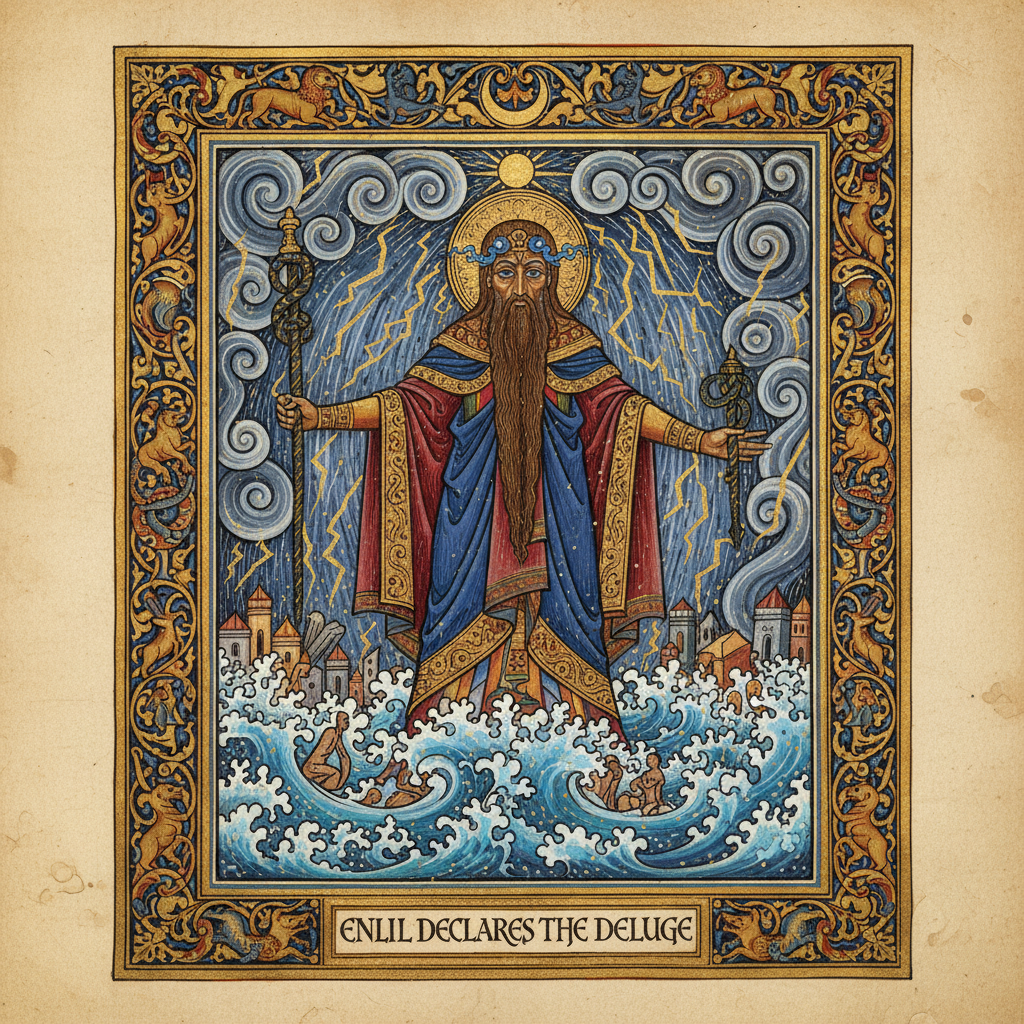
Marduk vacates the cosmic throne to restore his damaged regalia
 Generating art…
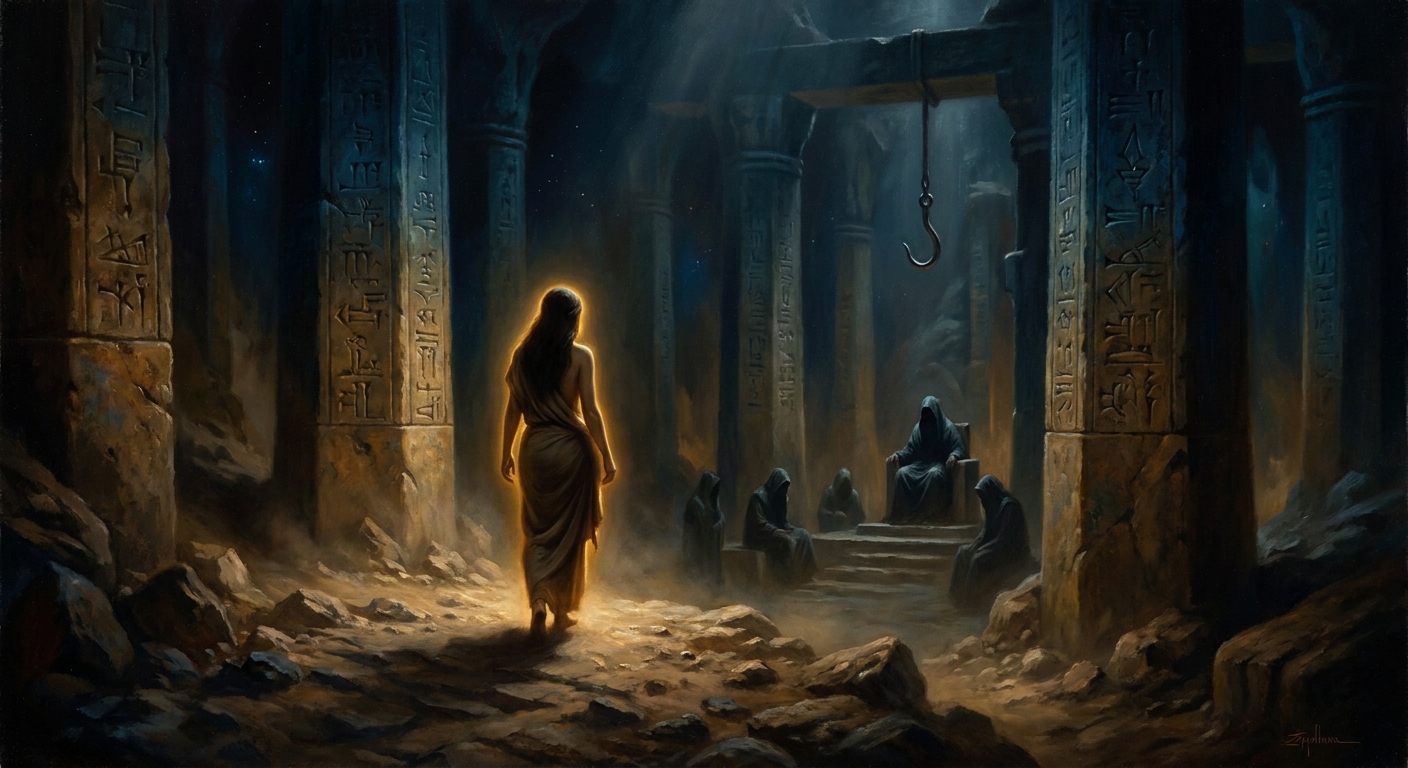
 Plague moves through the streets of Babylon — the bodies of warriors and priests alike piling in the temple courtyards
 Generating art…
 Ishum, the divine fire, speaks to Erra in the language of flattery — the only language capable of returning chaos to its temple
 Generating art…
 Echoes Across Traditions
Entities


Sources
- Luigi Cagni, *The Poem of Erra* (Sources from the Ancient Near East, Undena Publications, 1977)
- Stephanie Dalley (trans.), *Myths from Mesopotamia* (Oxford University Press, 1989)
- Benjamin Foster, *Before the Muses: An Anthology of Akkadian Literature* (CDL Press, 2005)
- Thorkild Jacobsen, *The Treasures of Darkness* (Yale University Press, 1976)