Mahavira's Five Fistfuls
c. 569 BCE · winter, the second day of the dark half of Margashirsha · the Jnatrikhanda grove outside Kundagrama (modern Bihar), beneath an ashoka tree
Contents
A prince walks out of his palace at thirty, sits beneath an ashoka tree, and pulls his own hair out in five fistfuls — the silent founding gesture of Jain ascesis.
- When
- c. 569 BCE · winter, the second day of the dark half of Margashirsha
- Where
- the Jnatrikhanda grove outside Kundagrama (modern Bihar), beneath an ashoka tree
The palace sleeps.
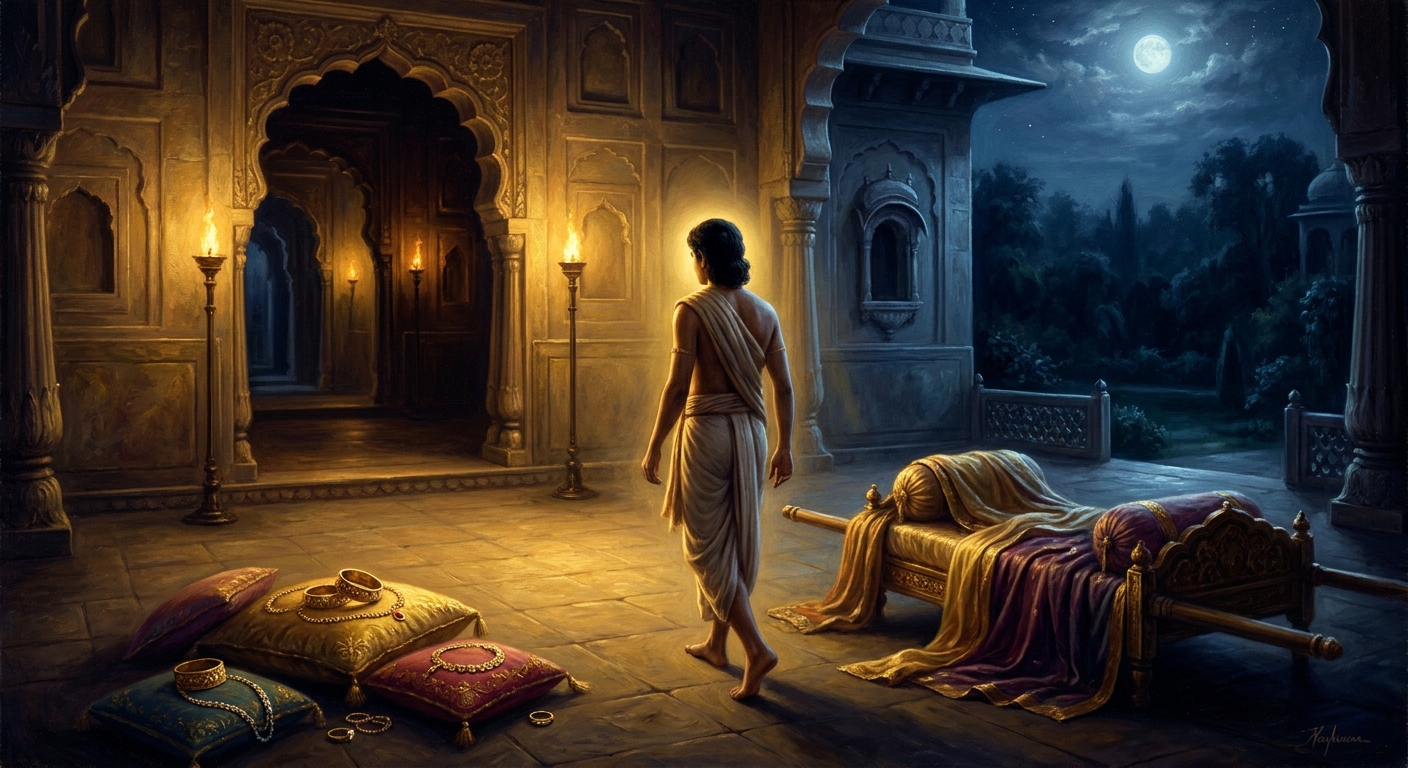
He is thirty years old. His parents, who took the vow of sallekhana — ritual fasting unto death — two years ago, are gone. The kingdom is his brother’s now. His wife and daughter sleep in chambers he has already mentally left. He sits up. He removes his rings, his earrings, the gold cord at his throat. He places them on the silk in a small careful pile, the way a man returns borrowed tools.
He does not wake anyone. There is no one to forbid him.
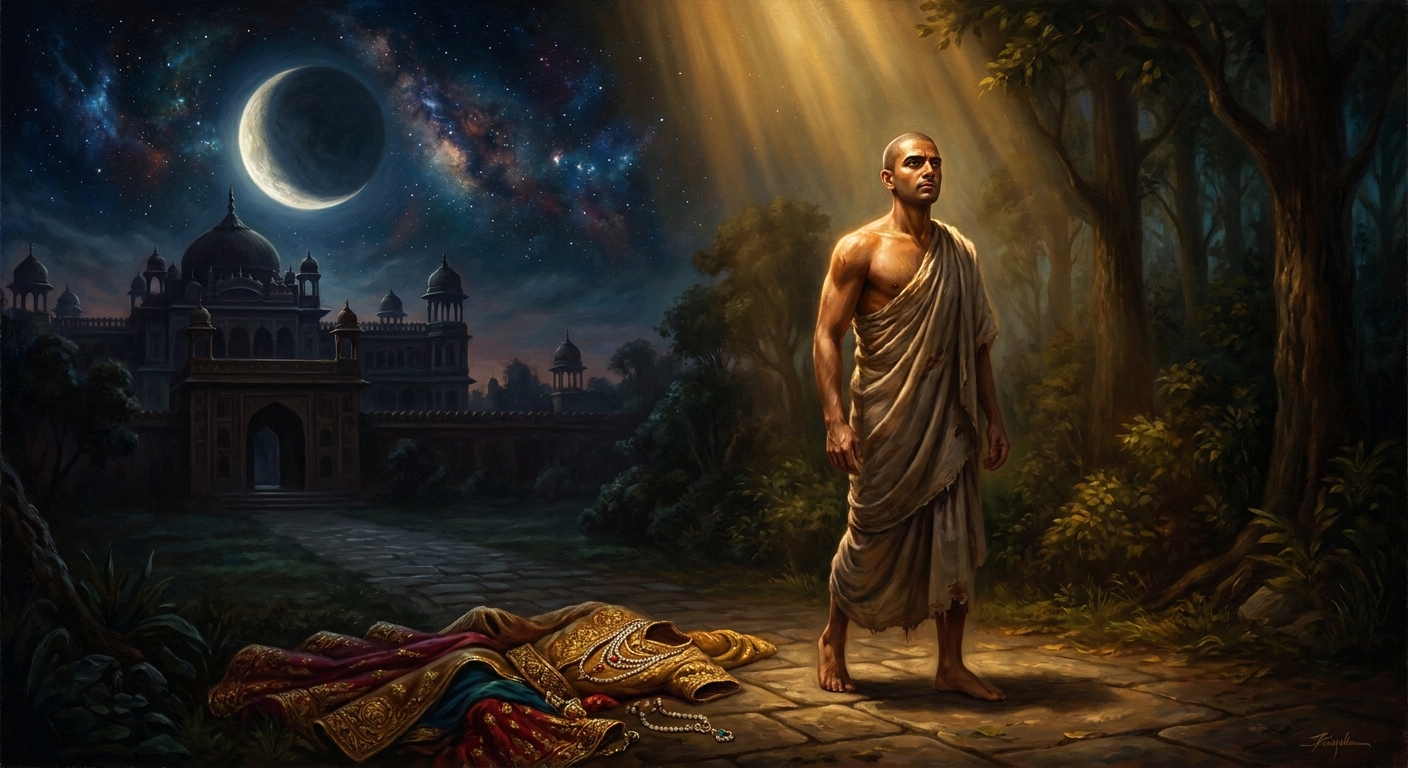
He walks out of Kundagrama under a winter moon. The guards see him and do not stop him; later they will not be able to say why. He carries nothing. He is, for the first time in his life, unowned.
He stops beneath an ashoka tree in the Jnatrikhanda grove.
The grove is silent in the way only forests can be at the bottom of the night — the silence that has weight. He sits on the bare ground. He removes his outer robe and folds it. He removes his inner robe and folds it. He sits naked beneath the tree, his back straight, his breath slowing, the cold beginning its work on his skin.
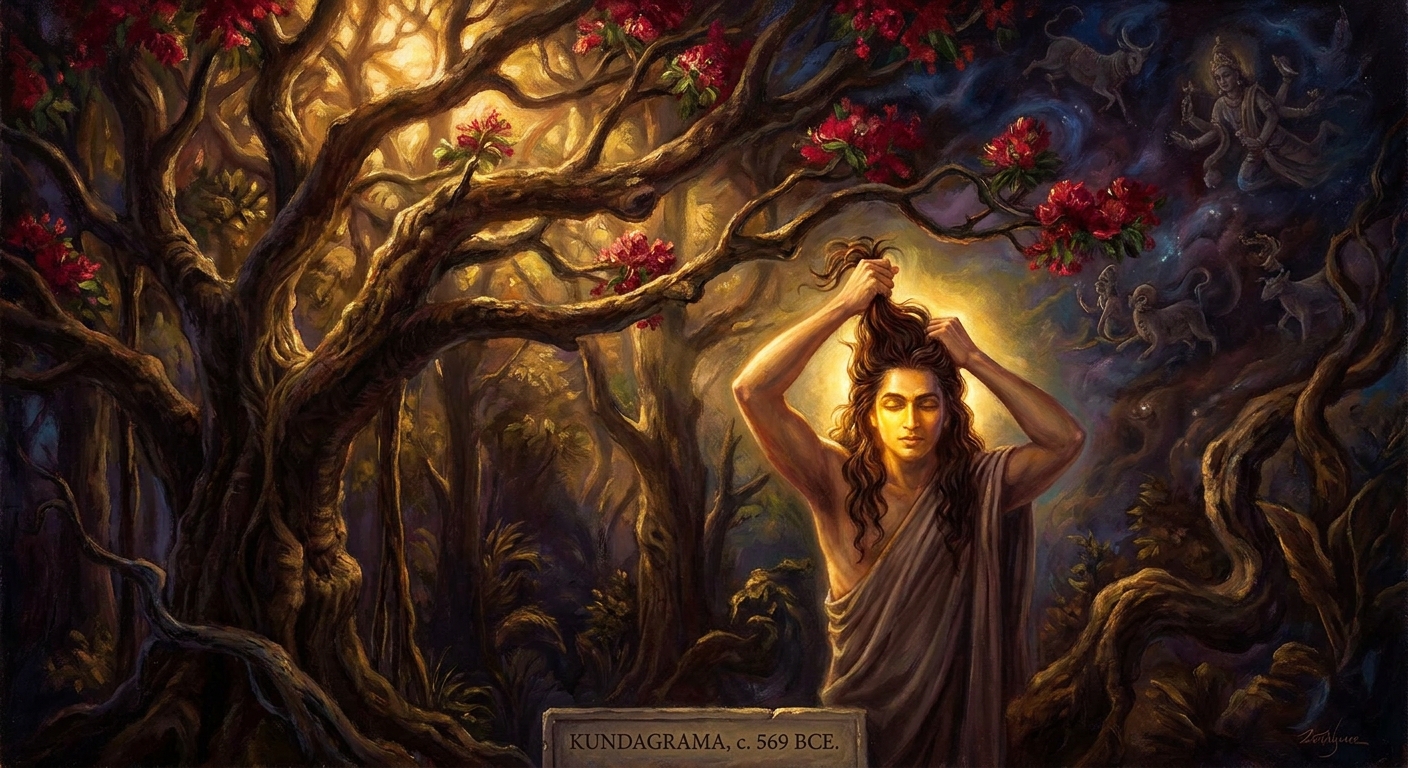
Then he reaches up, takes a fistful of his own hair, and pulls.
Once. Twice. A third time, a fourth, a fifth — five fistfuls, torn out at the root, the scalp raw and bleeding by the end. The texts are exact about the number. Every Jain monk for the next twenty-six centuries will repeat this gesture at ordination. Panca-mushti loca. The five-fisted plucking. No razor. No assistant. No mercy.
The sky, the Kalpa Sutra says, opens.
Indra descends — king of the gods, who has come for every Tirthankara before him and will come for none after — and catches the falling hair in a diamond bowl before it touches the ground. He carries it to the Milk Ocean and offers it there. The cosmos is paying attention. The cosmos will not interfere.
Vardhamana, who from this night will be called Mahavira — Great Hero — does not look up. He has begun the vow. He will not speak for nearly the entire next twelve years. He will not wear clothing. He will eat only what is offered without his asking, and only if the giver has not killed for him, prepared specially for him, or held an unkind thought toward him while preparing it. He will sleep where he stands. He will let insects bite him without brushing them away. He will let villagers spit on him, set dogs on him, drive nails into his ears — all of which the texts record, in detail, as having happened.
He has, in five fistfuls, made himself nothing.
The twelve years pass like a slow drowning.
He walks across Magadha and Anga and Vajji and the kingdoms whose names are now archaeological. He stands in the rain. He stands in the sun. He fasts for six months at a stretch and breaks the fast on a single handful of cold rice. He is mistaken for a beggar, a madman, a corpse, a demon. In the village of Ladha the children pelt him with stones, and he counts the stones the way a man counts his breaths — slowly, deliberately, without resentment.
He is burning off karma. Every Jain text is precise about this. Karma is not metaphor; it is substance, fine particles clinging to the soul like soot, accumulated over uncountable lifetimes. You do not pray it off. You do not have it forgiven. You burn it off, with the heat of austerity, the way a smith burns slag out of iron. The body is the forge. The pain is the fuel.
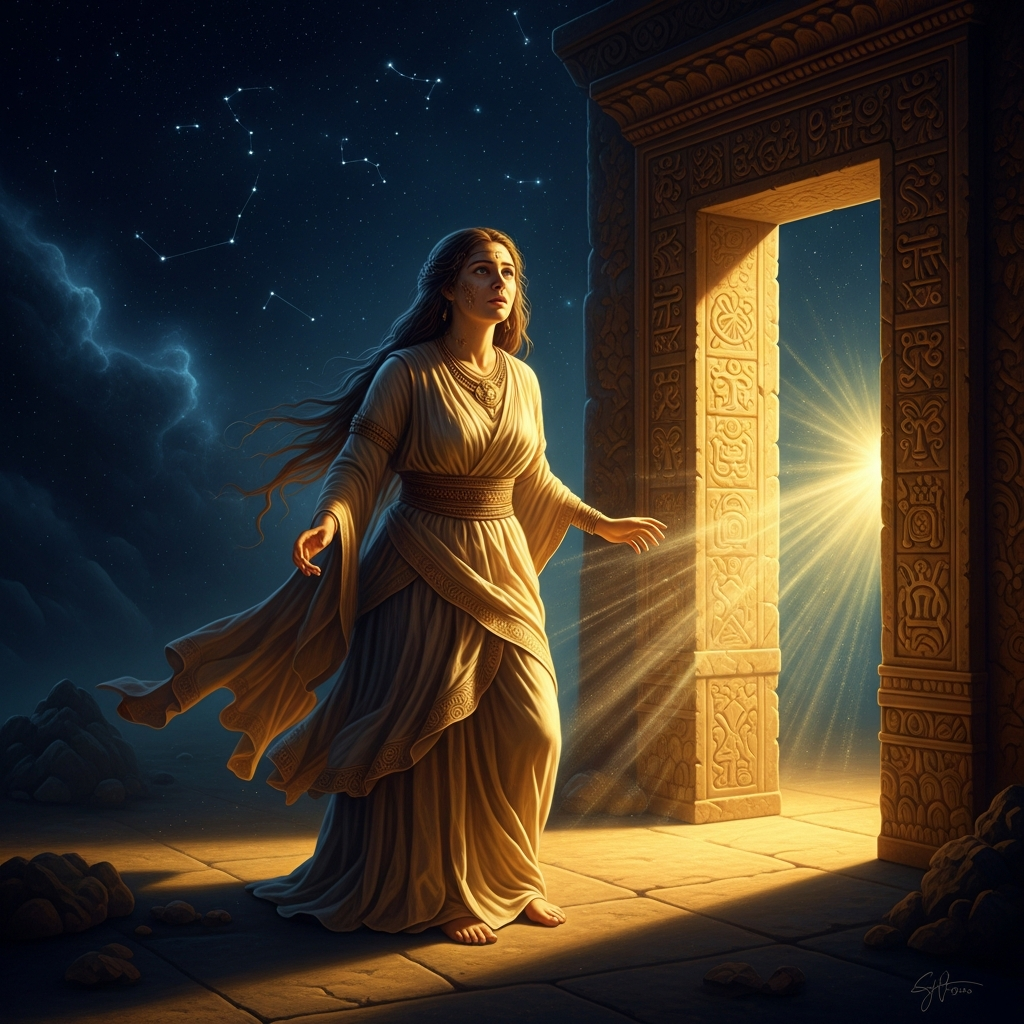
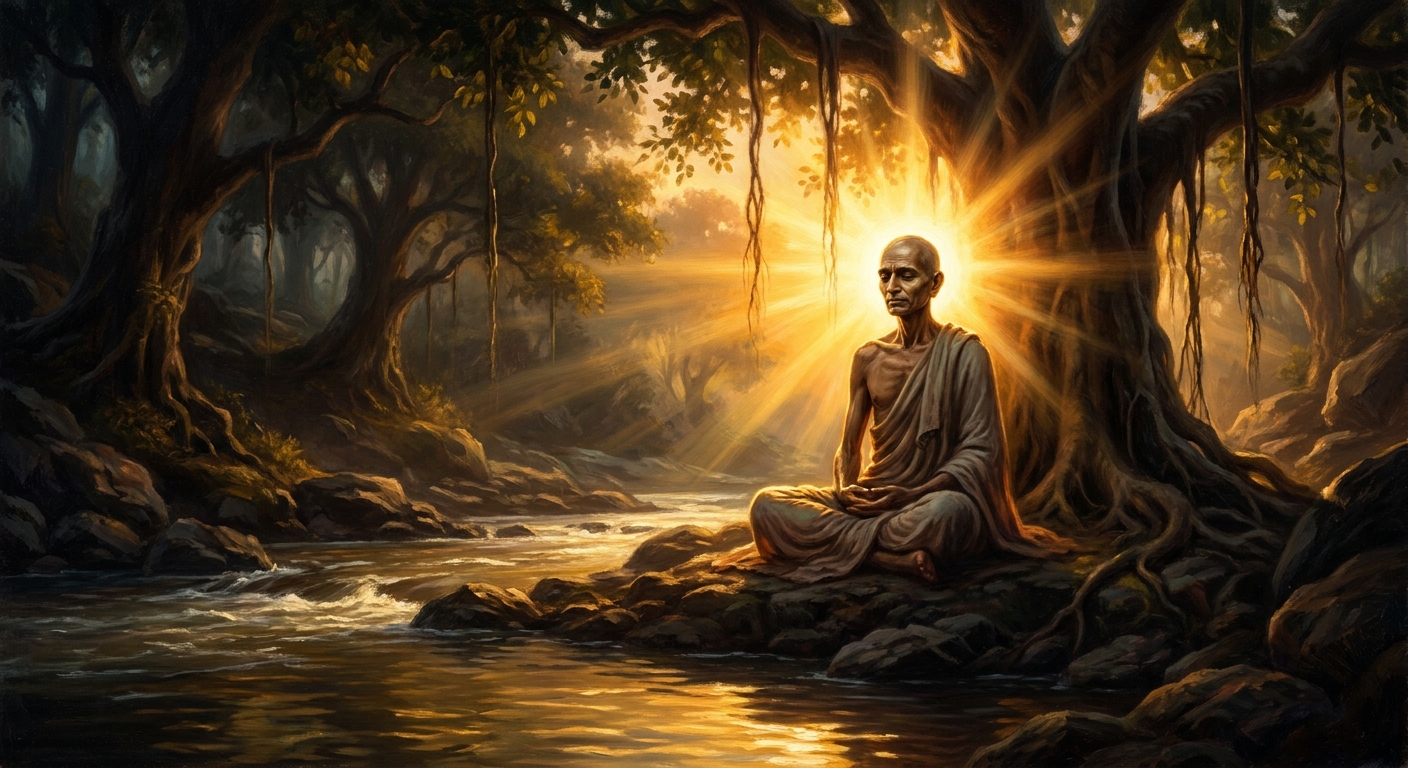
The thirteenth year, on the bank of the Rijupalika river, beneath a sala tree, in a field belonging to a householder named Samaga, squatting in the godohika posture with the heels under the buttocks and the heat of the sun on the crown of the head, in the second watch of a day in the second month of summer — the texts are this exact, because the moment is the hinge of Jain history — kevala-jnana breaks over him.
Omniscience.
Not vision. Not insight. Total knowledge. Every soul in every realm, every karma-particle on every soul, every past life of every being, every future moment of every world — all of it, simultaneously, without effort, like a window opening in a wall he had not known was a wall.
He sees the entire cosmos at once and does not flinch.
He has paid for it. The price was twelve years of his own skin.
Jainism’s claim, made on this night and never withdrawn: liberation is not given. It is taken — by force, against the body, at terrible cost. There is no grace. There is no savior. The Tirthankaras do not save anyone; they only show, by their own example, that the river can be crossed.
Mahavira’s five fistfuls are still pulled, every year, by every new Jain monk and nun who takes ordination. They do it themselves. They do it without anesthetic. They do it because the gesture is the doctrine: nothing matters that you have not paid for in your own pain.
Two and a half millennia later, Jain monks still walk naked across India, still sweep the ground before each step to avoid crushing an insect, still die by sallekhana when the body’s usefulness ends. The grove has moved, but the tree is the same.
Scenes
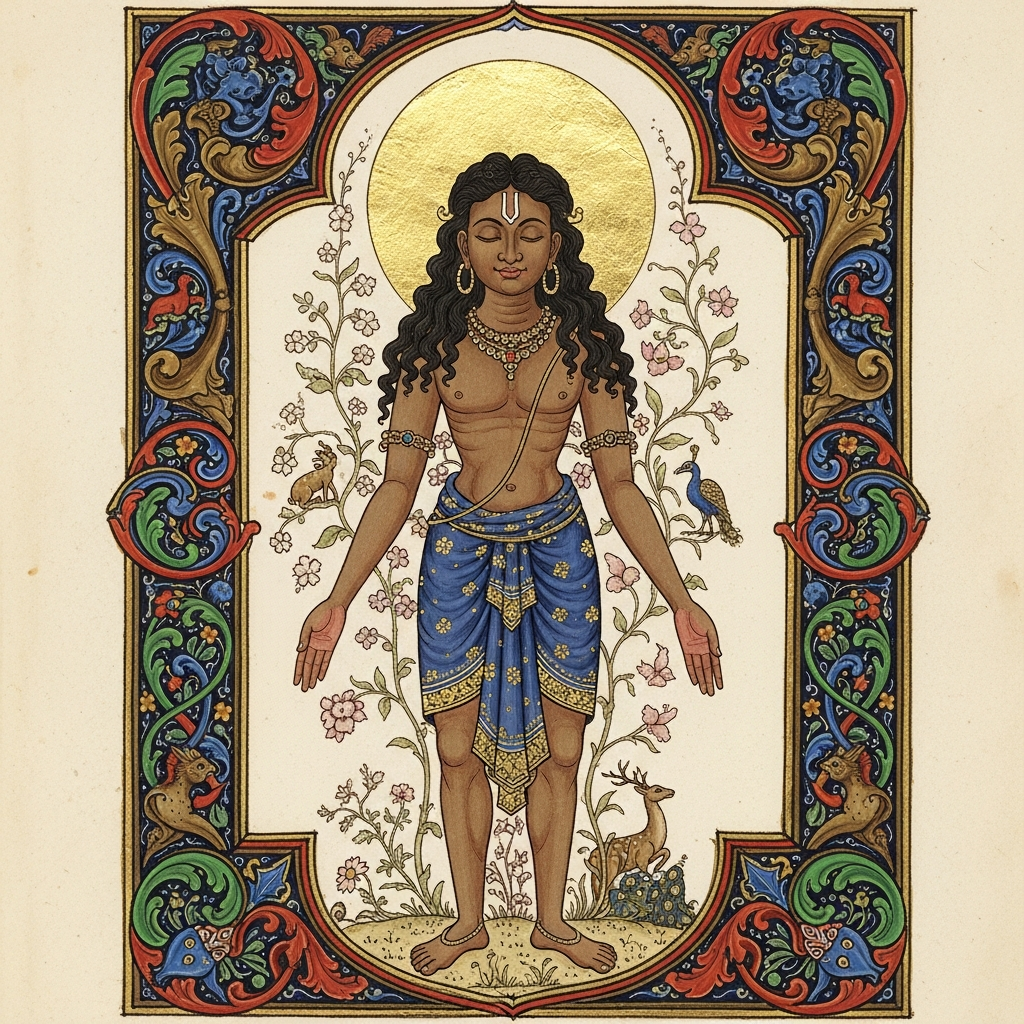
The prince walks out of Kundagrama at midnight, palanquin abandoned, jewelry left on the silk
 Generating art…
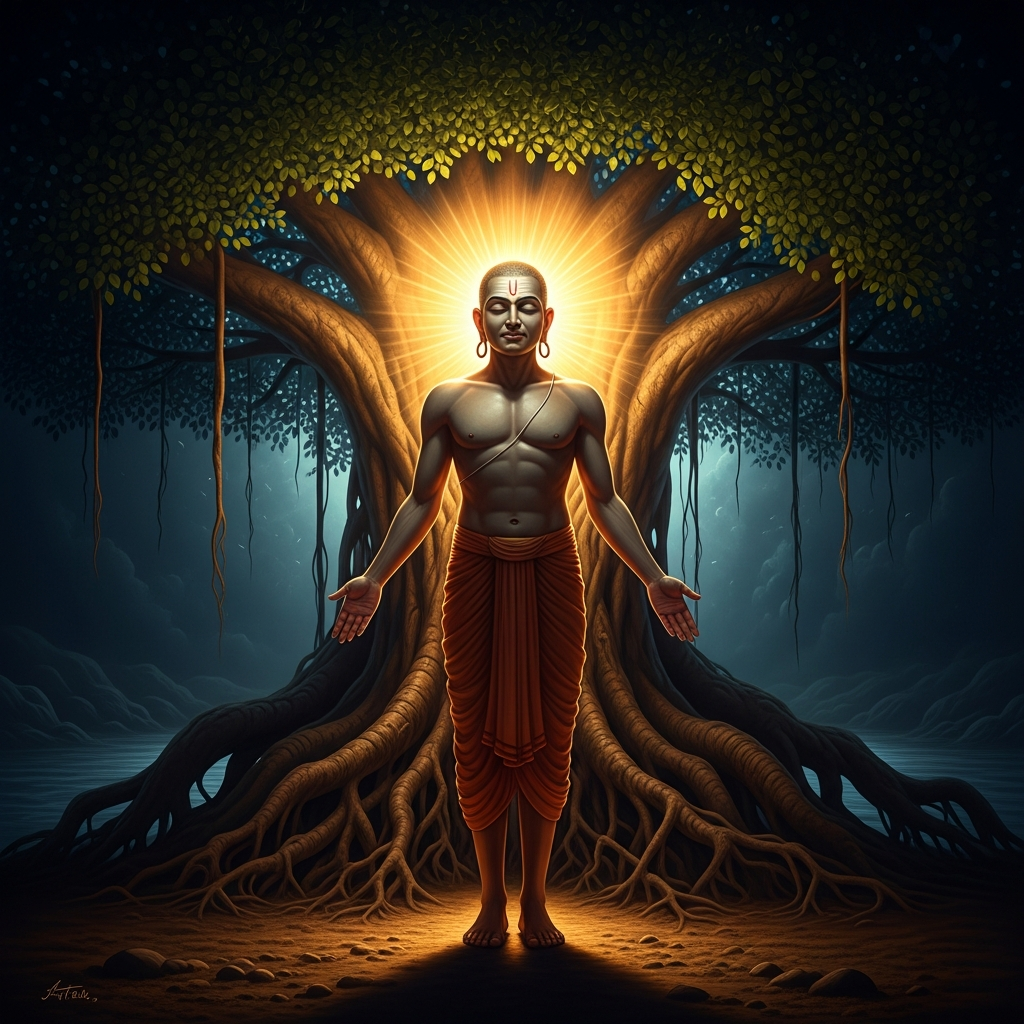
 Beneath the ashoka tree, Vardhamana pulls out his own hair in five fistfuls — the gesture every Jain monk still repeats at ordination
 Generating art…
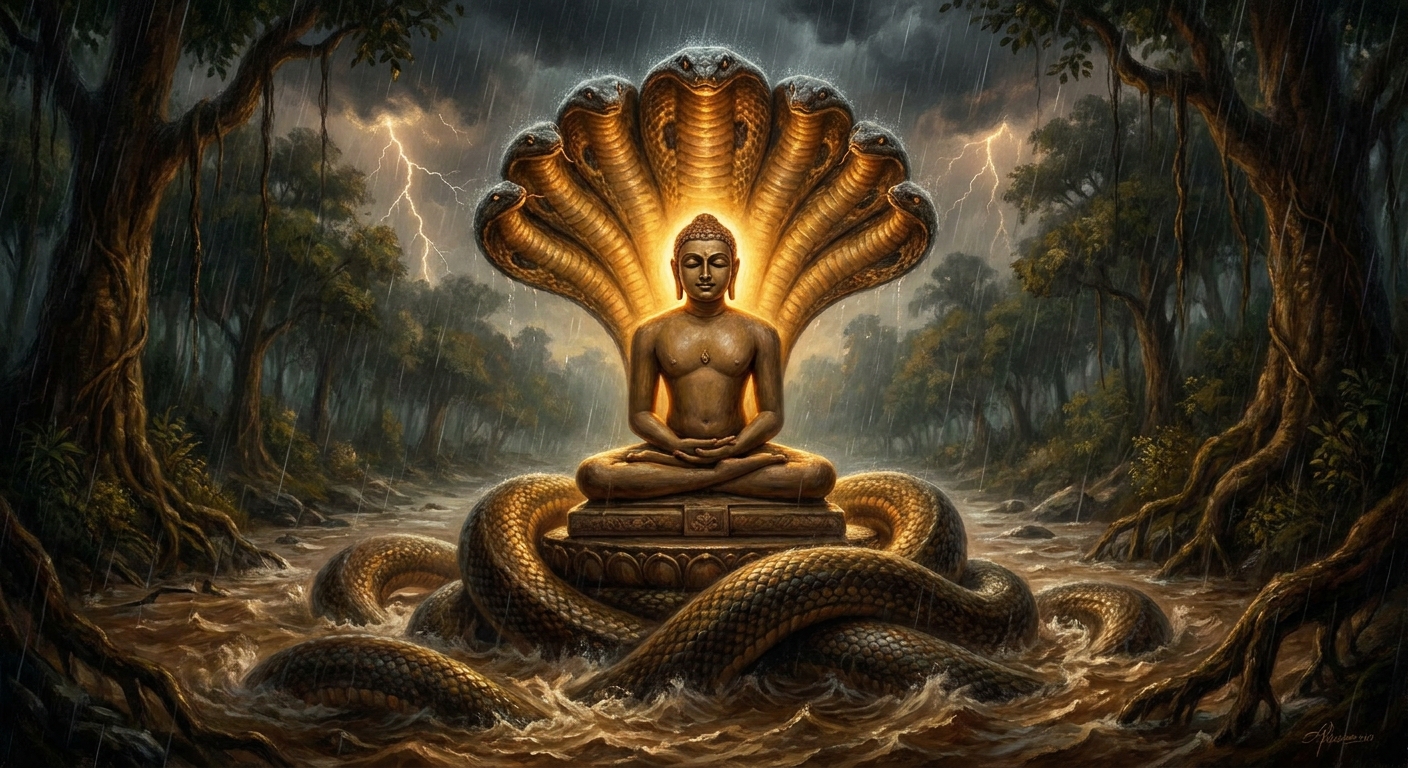
 Twelve years later, on the bank of the Rijupalika, omniscience breaks over him like sunrise
 Generating art…
 Echoes Across Traditions
Entities


Sources
- *Acaranga Sutra* 1.7-9 (oldest surviving account of Mahavira's renunciation)
- *Kalpa Sutra* (Bhadrabahu, c. 4th century BCE; Hermann Jacobi trans., *Sacred Books of the East* vol. 22, 1884)
- Paul Dundas, *The Jains* (Routledge, 1992; 2nd ed. 2002)
- Padmanabh S. Jaini, *The Jaina Path of Purification* (1979)
- Kristi L. Wiley, *Historical Dictionary of Jainism* (2004)