Combat Profile
The Mouths in the Joints
Tlaltecuhtli's dismembered body is the world; every elbow, knee, and shoulder is a mouth that drinks blood, and the world cannot exist without these mouths being fed.
Body of the Cosmos
The earth, sky, mountains, and rivers are Tlaltecuhtli's torn flesh; to walk on the ground is to walk on her, and every footstep is a small repayment of an unrepayable debt.
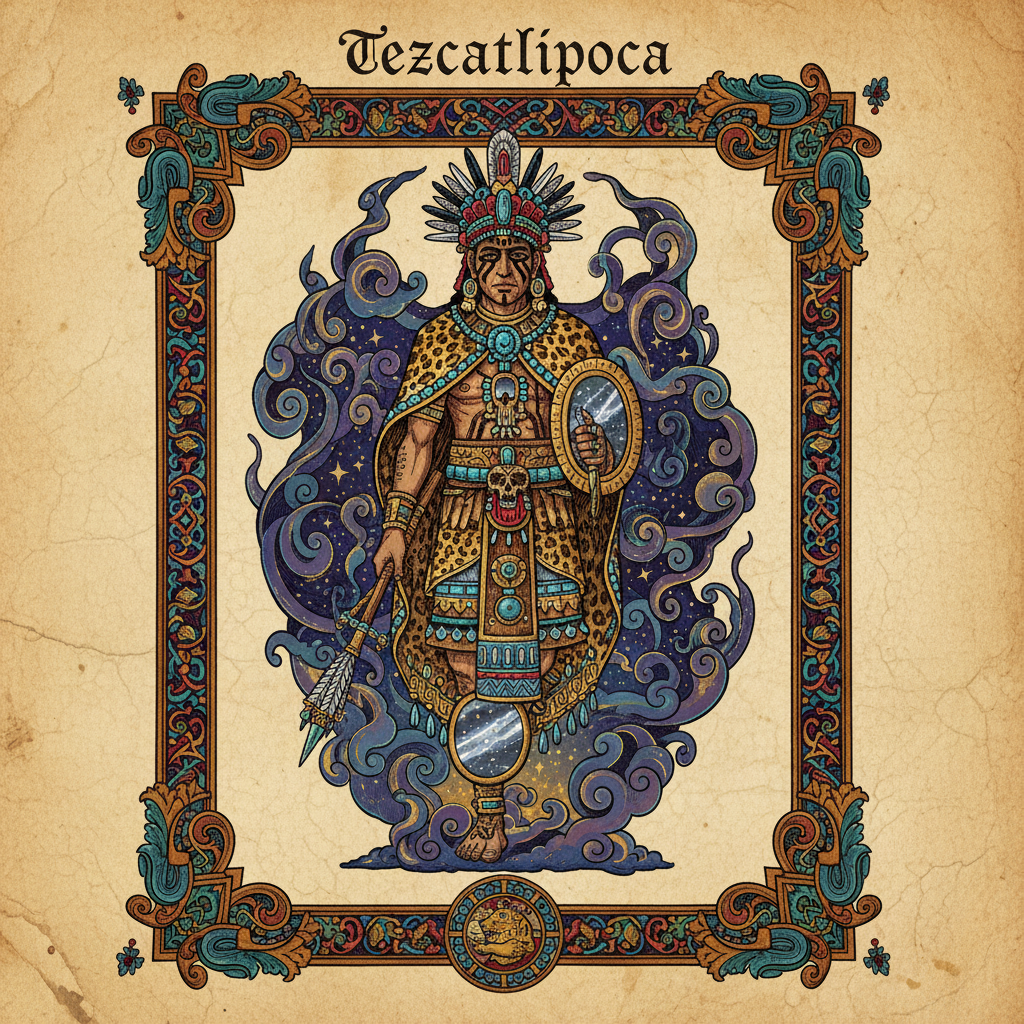
Tlaltecuhtli (“Earth Lord,” sometimes “Earth Lady” — the Mexica often described the deity as gender-fluid or dual) is the primordial earth-monster of Mexica cosmology — the body that is the world. The myth: in the time before the present cosmos, Tlaltecuhtli swam in the primordial sea, a vast crocodilian beast covered in mouths at every joint — eyes and gnashing teeth at every elbow and knee. Quetzalcoatl and Tezcatlipoca, looking down from the formless heavens, decided to make the world. They descended into the sea, transformed themselves into giant serpents, and tore Tlaltecuhtli apart. From her upper half they made the sky; from her lower half they made the earth. Her hair became forests. Her eyes became springs and caves. Her shoulders became mountains. The mouths in her joints became the cracks of the world that still cry out for blood.
This is the price of creation. Tlaltecuhtli was dismembered to make us a place to live, and her many mouths still hunger. Every drop of human blood spilled on the ground — every sacrifice, every accidental wound — feeds her. The Mexica sometimes carved her image onto the bottom of monumental sculptures, where she could only be seen by the earth itself: the dismembered goddess facing downward into the dirt, eternally feeding on what falls. She is the foundational sacrifice — older than Tonatiuh’s demand, more total than Coatlicue’s birth-pangs. She is the ground we walk on, and she remembers.
Biblical Parallels: Tlaltecuhtli has no biblical parallel because the Genesis cosmogony is creatio ex nihilo — God speaks the world into being from nothing, no primordial dismemberment required. The closest parallel is the Mesopotamian Tiamat of the Enuma Elish, which Genesis 1 was likely written against: Tiamat too is split into upper and lower waters by the warrior-god Marduk, and Genesis preserves a faded echo when it describes the firmament dividing the “waters above” from “the waters below” (Genesis 1:7). The biblical theme of the cursed ground that “drinks blood” (Genesis 4:10-11, Cain and Abel) — Abel’s blood “crying out from the ground” — is an unsettling parallel to Tlaltecuhtli’s hungry mouths.
Cross-Tradition: Tlaltecuhtli parallels Mesopotamian Tiamat (split to make sky and earth), Norse Ymir (whose body becomes the cosmos in identical fashion), Vedic Purusha (the cosmic person dismembered in sacrifice to make the world, in Rig Veda 10.90), and Chinese Pangu (whose corpse becomes the elements). The “dismembered cosmic primordial body” is one of the deepest Indo-European-and-beyond mythic patterns, and Tlaltecuhtli is its New World instance.
2 min read