Three Is the Shape of the Divine: The Sacred Number Across World Religion
Hindu Trimurti doctrine developed c. 4th-6th century CE; Christian Trinity formally defined at Council of Nicaea 325 CE; Celtic triple goddess documented in Roman period inscriptions from c. 1st-3rd century CE; Norse three-roots cosmology in Eddas compiled c. 1220 CE · The structure of divine reality itself — the three as a pattern that appears in cosmological, theological, and ritual contexts across traditions without mutual contact
Contents
The Hindu Trimurti, the Christian Trinity, the three roots of Yggdrasil, the Celtic triple goddess: three appears in every tradition as the number of divine completeness. The pattern demands an explanation.
- When
- Hindu Trimurti doctrine developed c. 4th-6th century CE; Christian Trinity formally defined at Council of Nicaea 325 CE; Celtic triple goddess documented in Roman period inscriptions from c. 1st-3rd century CE; Norse three-roots cosmology in Eddas compiled c. 1220 CE
- Where
- The structure of divine reality itself — the three as a pattern that appears in cosmological, theological, and ritual contexts across traditions without mutual contact
In 325 CE, over 300 bishops gathered at Nicaea (in what is now northwest Turkey) to settle the most important theological question of the early Christian church: was Jesus divine in exactly the same sense that God the Father was divine, or was he a divine-but-subordinate being, created by the Father before the foundation of the world?
The question seems technical. Its implications were total: if Jesus was not fully divine, then the Christian claim that God became human in the Incarnation was false. The entire theological edifice of salvation — that God personally entered human history, bore human suffering, and died — depended on the answer. Arius of Alexandria, the priest whose position prompted the council, had argued for subordination: the Son is the greatest of created beings, but created, not co-eternal. The council, led by Athanasius, disagreed.
The council produced the Nicene Creed and the word homoousios — “same substance” — to describe the relationship between Father and Son. The Son is not homoiousios (“similar substance,” the Arian position) but homoousios — the same substance, a single numerical divine being, expressed in three persons.
The difference between homoousios and homoiousios was a single Greek iota, a difference that the historian Edward Gibbon memorably described as the source of more conflict than any other single letter in history.
The Christian Trinity is three.
Why Three and Not Two
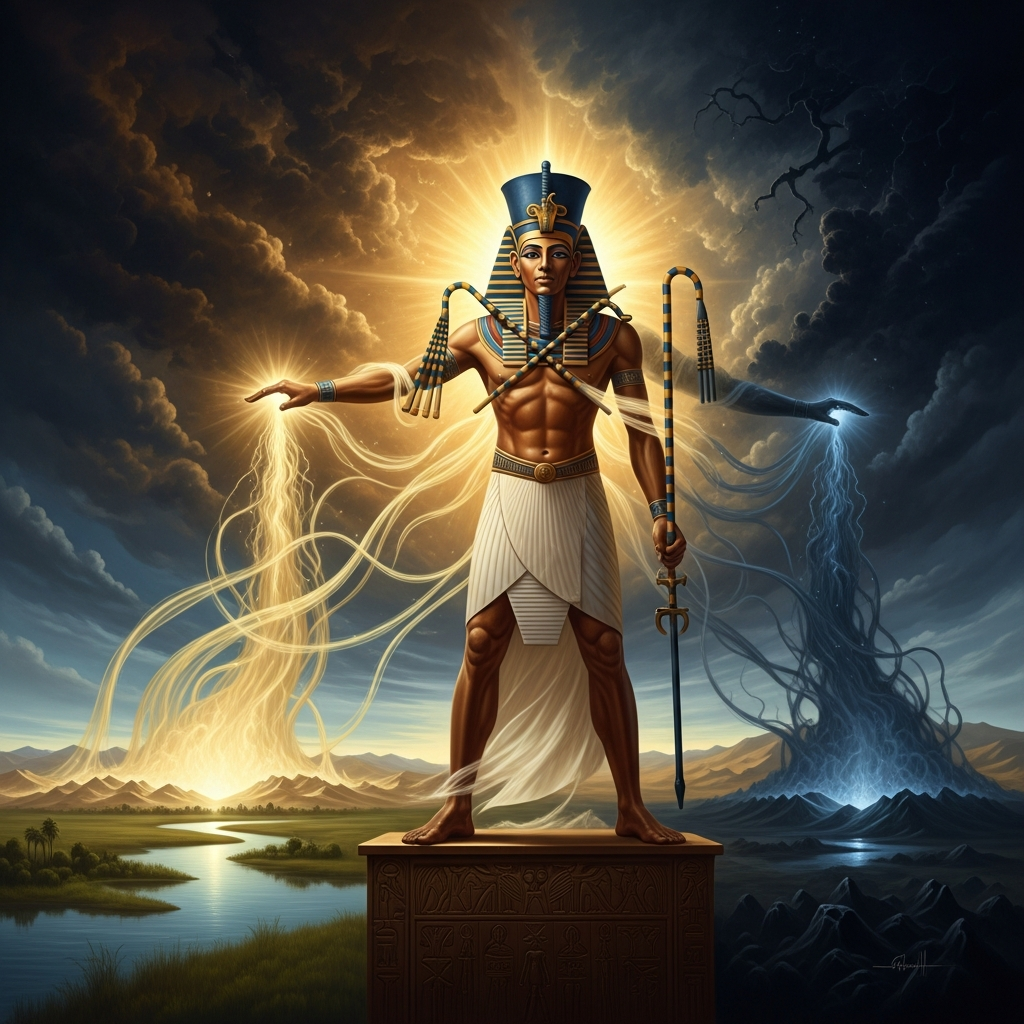
The most common alternative to a divine three would be a divine two — a binary opposition between complementary or opposing principles. Many traditions have divine dyads: Osiris and Set, Ahura Mazda and Angra Mainyu, Yin and Yang. The binary is a natural structure for a world experienced as full of oppositions: light and dark, order and chaos, male and female, summer and winter.
But the binary has a theological problem: it is inherently unstable. A binary opposition is a permanent stand-off. Osiris and Set cycle between each other; Yin and Yang alternate; Ahura Mazda and Angra Mainyu fight for the entire duration of cosmic time. The binary generates drama but not resolution.
Three introduces resolution. The third term is not simply the synthesis of the first two (which is Hegel’s formulation, reading the ancient intuition through modern philosophy) — it is more precisely the mediation that makes the opposition dynamic rather than merely static. The three Norns do not synthesize past and future into a present; they weave all three into the fabric of fate. The Trimurti does not synthesize creation and destruction into a single act; it holds them as three genuinely distinct divine personalities who together constitute the complete divine activity.
Three is the minimum for pattern. Two items are a pair; they may be related or opposed but they do not yet form a structure. Three items form a triangle — a structure with direction, with relationship, with the possibility of movement. The divine three in world religion is the minimum configuration for a divine that is both unified and dynamic.
The Trimurti and the Cosmological Functions
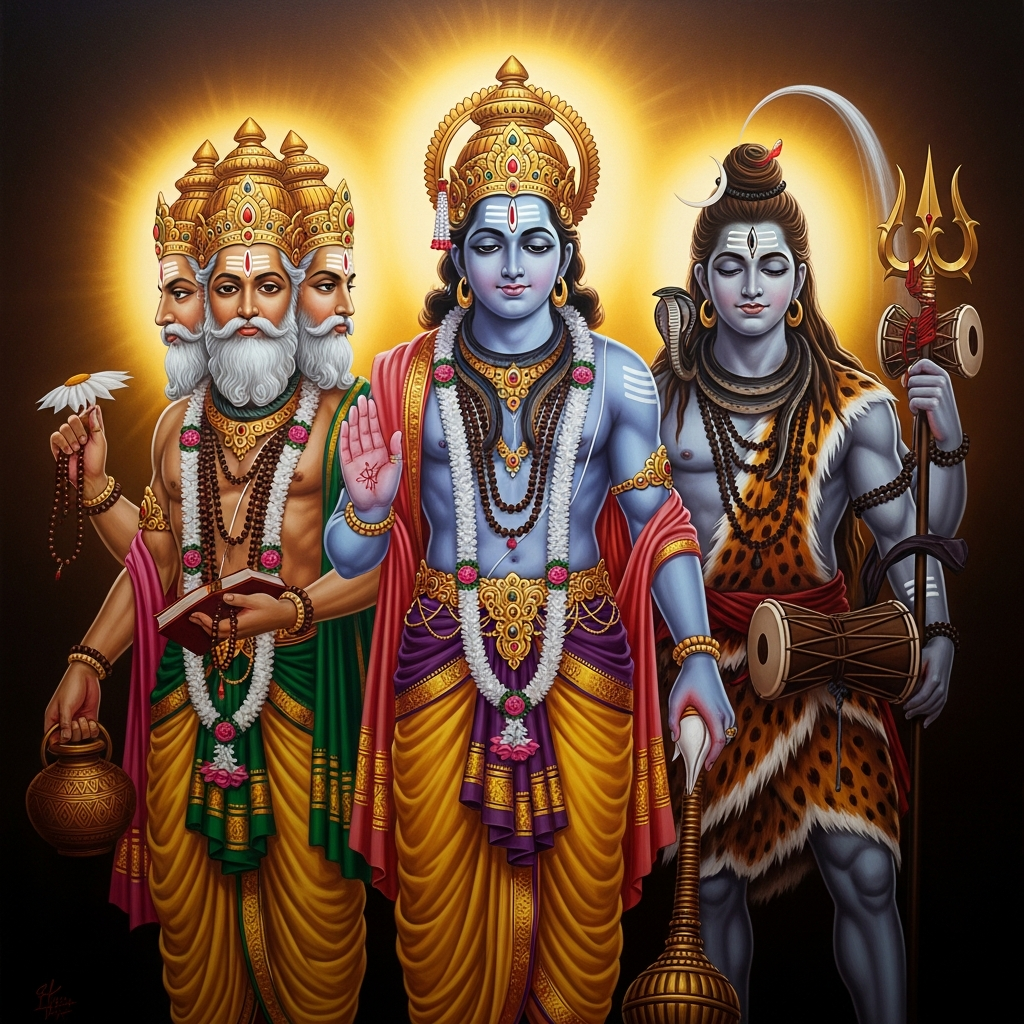
The Hindu Trimurti is unusual among divine trinities in that it explicitly maps the three divine persons onto three phases of cosmic time rather than onto three relational aspects of a single divine being. Brahma creates; Vishnu preserves and maintains; Shiva destroys to clear the ground for the next creation. Together they constitute the complete cycle.
What is theologically striking is that, in popular Hindu devotion, the Trimurti functions less as a unified theological claim and more as a cosmological framework that individual deities inhabit differently. Most Hindus are either Vaishnavas (devotees of Vishnu) or Shaivas (devotees of Shiva) — traditions that regard their respective deity as the supreme divine reality of which the others are aspects or subordinate expressions. From a Shaiva perspective, Shiva contains Brahma and Vishnu within himself. From a Vaishnava perspective, Vishnu is the supreme from whom the others proceed.
The Trimurti is thus simultaneously a synthesis and a theological arena in which the three traditions contest their relative priority. The three are one; but which one of the three is most fundamentally one is a different and contested question.
The Trinity and the Problem of Divine Unity
The Christian Trinity faced a challenge that the Hindu Trimurti did not need to address in the same way: strict monotheism. The Abrahamic inheritance required that there be exactly one God. The revelation in Jesus and the experience of the Holy Spirit at Pentecost required that there be three persons of genuinely divine status. The entire patristic theological tradition from the 2nd to the 5th century CE was occupied by the problem of how to hold these two requirements together without sacrificing either.
The solutions that failed — Modalism (Father, Son, Spirit are three modes of one person, like an actor wearing different masks), Subordinationism (Son and Spirit are real but less divine than the Father), Tritheism (there are three genuinely distinct gods) — all fail to hold the tension. They solve the problem by eliminating one of its poles.
The orthodox formulation — three persons, one substance — holds the tension by making it a permanent feature of divine reality. The three are genuinely distinct in their relations to each other (the Father generates the Son; the Spirit proceeds from the Father [and the Son, in the Western formulation, producing the Filioque controversy between Eastern and Western Christianity]). They are one in substance, will, and operation. The three-in-one is not a paradox to be solved but a description of what divine reality is like, which transcends the either/or logic that makes it seem paradoxical.
Celtic Triple Goddess: Three as Transformation
The Celtic devotion to tripled deities — most visible in the inscriptions of Roman-period Gaul and Britain, where mother-goddess triads appear on hundreds of altars — represents a different theological use of three. The Celtic triple is not primarily about divine unity or cosmic function. It is about completeness of transformation.
Brigid in Irish mythology is explicitly triple: goddess of poetry, smithcraft, and healing. These three domains seem unrelated at first but share a deep structure: each involves transformation of material through skilled application of creative force. The poet transforms experience into language; the smith transforms ore into tool; the healer transforms disease into health. The triple is a claim that these transformative activities share a divine root — that creativity and healing and making are aspects of the same fundamental divine capacity.
The Morrigan’s three aspects (Badb, Macha, and the Morrigan herself) map onto three phases of war and its aftermath: the crow-goddess who prophecies battle, the sovereignty goddess whose land is the prize, and the battle-fury herself. Together they constitute the complete experience of war as a divine phenomenon, not just the fighting but the prophecy before and the territorial consequence after.
The Celtic triple goddess is three as completeness-in-process rather than three as unity-in-being.
The Pattern’s Persistence
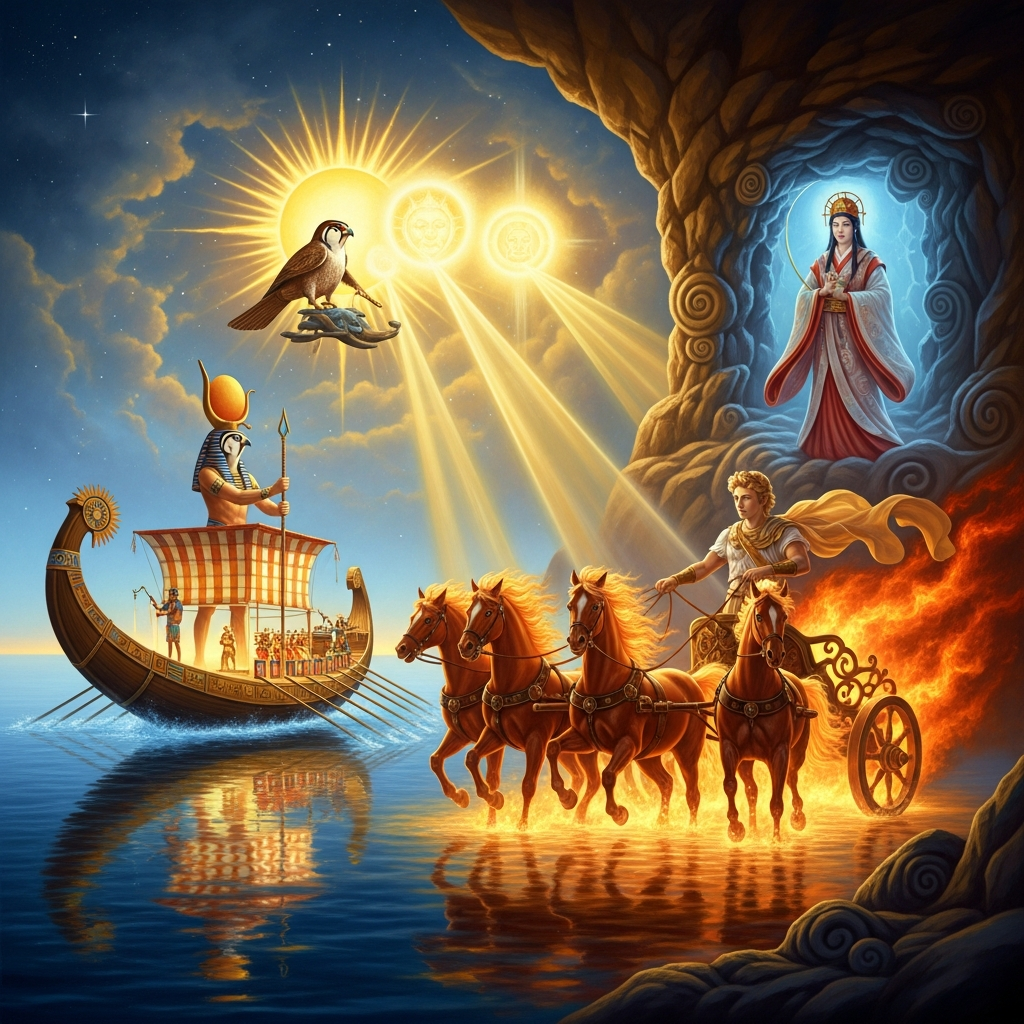
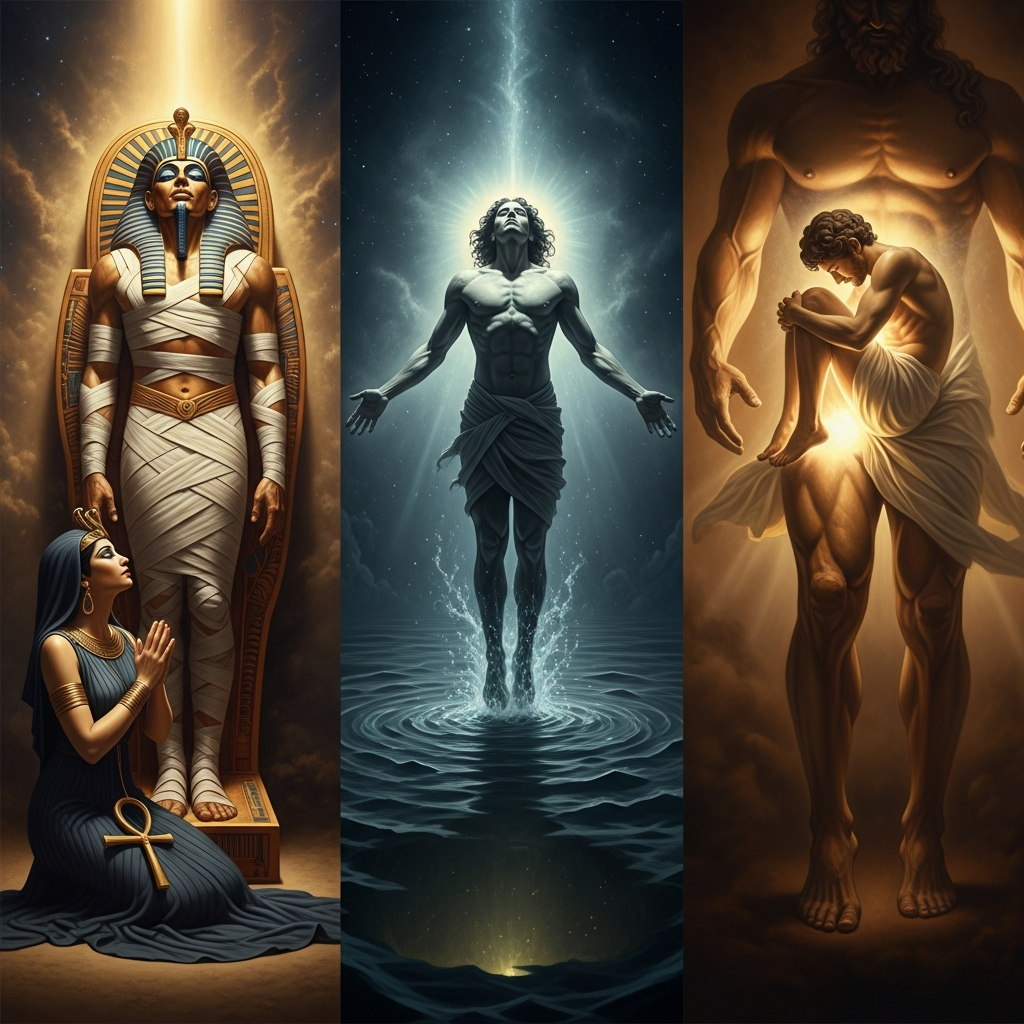
From ancient Egypt to Norse Scandinavia, from Hindu India to Celtic Europe, from early Christianity to the Buddhism that spread across Asia — traditions without historical contact produced the divine three independently and gave it remarkably similar functions: a complete divine reality that is both unified and internally dynamic, that maps onto the fundamental triads of experience (creation-preservation-destruction, past-present-future, father-mother-child, birth-life-death), that requires all three elements to be complete.
The explanation that comparative religion keeps returning to is cognitive: human pattern-recognition requires at least three elements to identify a pattern, and the divine has always been understood as the supreme pattern — the structure underlying all structure. Three is the shape of the minimum coherent pattern. The divine three is, in this reading, the theological formalization of something that was always implicit in how human minds recognize pattern.
Whether this makes the trinities less profound or more profound — whether the cognitive universality of three is evidence against divine revelation or evidence that the divine structured human cognition to recognize it — is the question that the philosophy of religion has been unable to settle for as long as the question has been asked.
The three remain. The question remains.
Echoes Across Traditions
Entities


Sources
- Council of Nicaea (325 CE) and Nicene Creed
- Athanasius of Alexandria, *On the Incarnation* (c. 318 CE)
- Augustine of Hippo, *On the Trinity* (c. 400-416 CE)
- *Kurma Purana* and *Matsya Purana* (on the Trimurti)
- Snorri Sturluson, *Prose Edda*, 'Gylfaginning' (on Yggdrasil and Norns)
- Miranda Green, *Celtic Goddesses* (1995)
- Jan Assmann, *The Search for God in Ancient Egypt* (2001) — Egyptian triads
- John Rankine and Sorita d'Este, *Trinities* (2011)
- Marie-Louise von Franz, *Number and Time* (1974)