Norse Mythology: The Nine Worlds, the Gods, and the End That Isn't
Sources compiled 9th–13th century CE · oral tradition reaching back to the Migration Age · Scandinavia — Iceland, Norway, Denmark, Sweden; the cosmology is literally the entire world-tree
Contents
A comprehensive guide to Norse mythology — the Nine Worlds on Yggdrasil, Aesir vs. Vanir, the Jotnar, key narratives, and why Ragnarok is a beginning as much as an ending.
- When
- Sources compiled 9th–13th century CE · oral tradition reaching back to the Migration Age
- Where
- Scandinavia — Iceland, Norway, Denmark, Sweden; the cosmology is literally the entire world-tree
The tree holds everything.
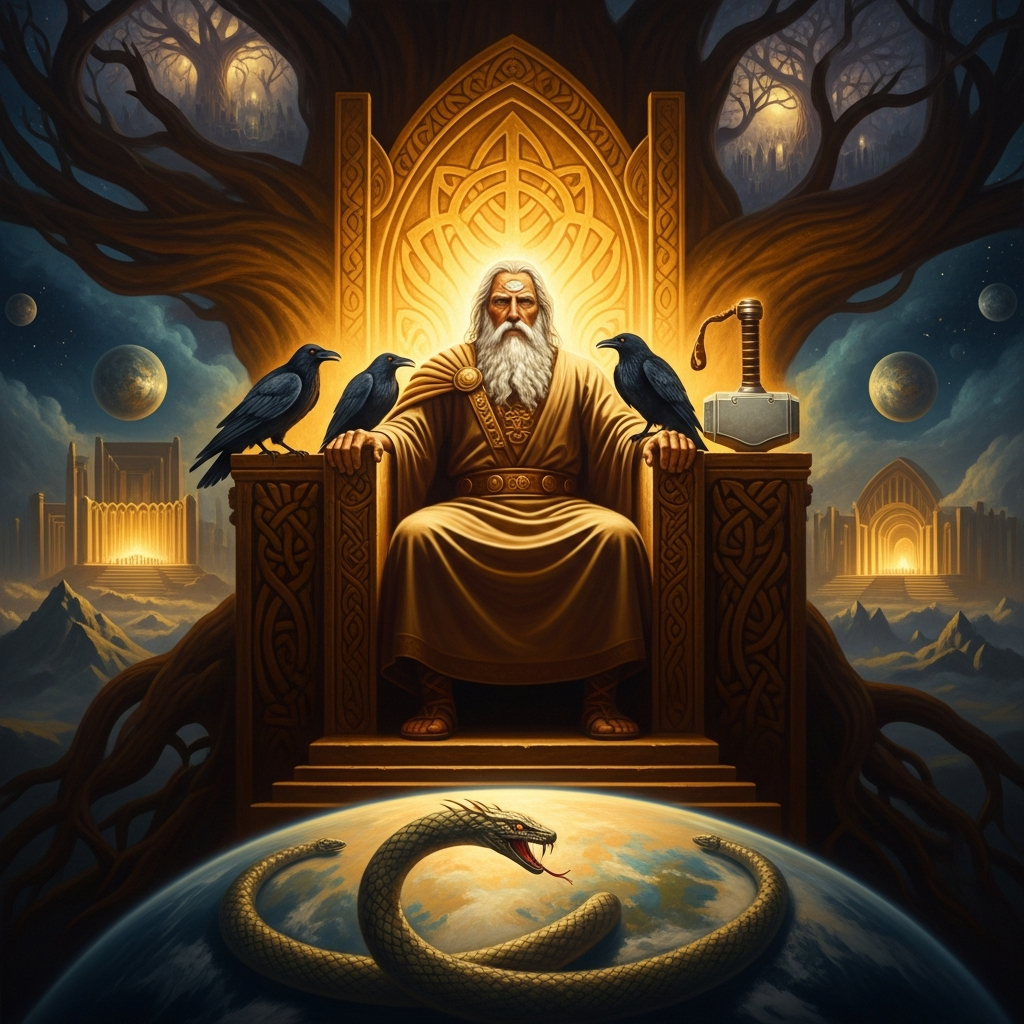
Yggdrasil — the ash that connects the nine worlds — is not a metaphor. In Norse cosmology it is the structural fact of the universe, the axis around which all realms turn, the root-system that keeps the worlds from flying apart into chaos. Its three roots drink from three wells: one at Asgard, fed by the spring of Urd where the Norns weave fate; one at Jotunheim, fed by Mimir’s well of wisdom, where Odin traded his eye for a single drink; one in Niflheim, fed by the spring Hvergelmir, gnawed by the serpent Nidhogg who has been eating the root since the beginning and will finish the job at the end. The tree is always almost dying. It is tended constantly — the Norns water it with white clay, the eagle on its crown and the serpent at its roots exchange insults through a squirrel named Ratatoskr — and it holds anyway, which is perhaps the point. The cosmos in Norse thought is not given. It is maintained, barely, against forces that want to end it.
The Nine Worlds
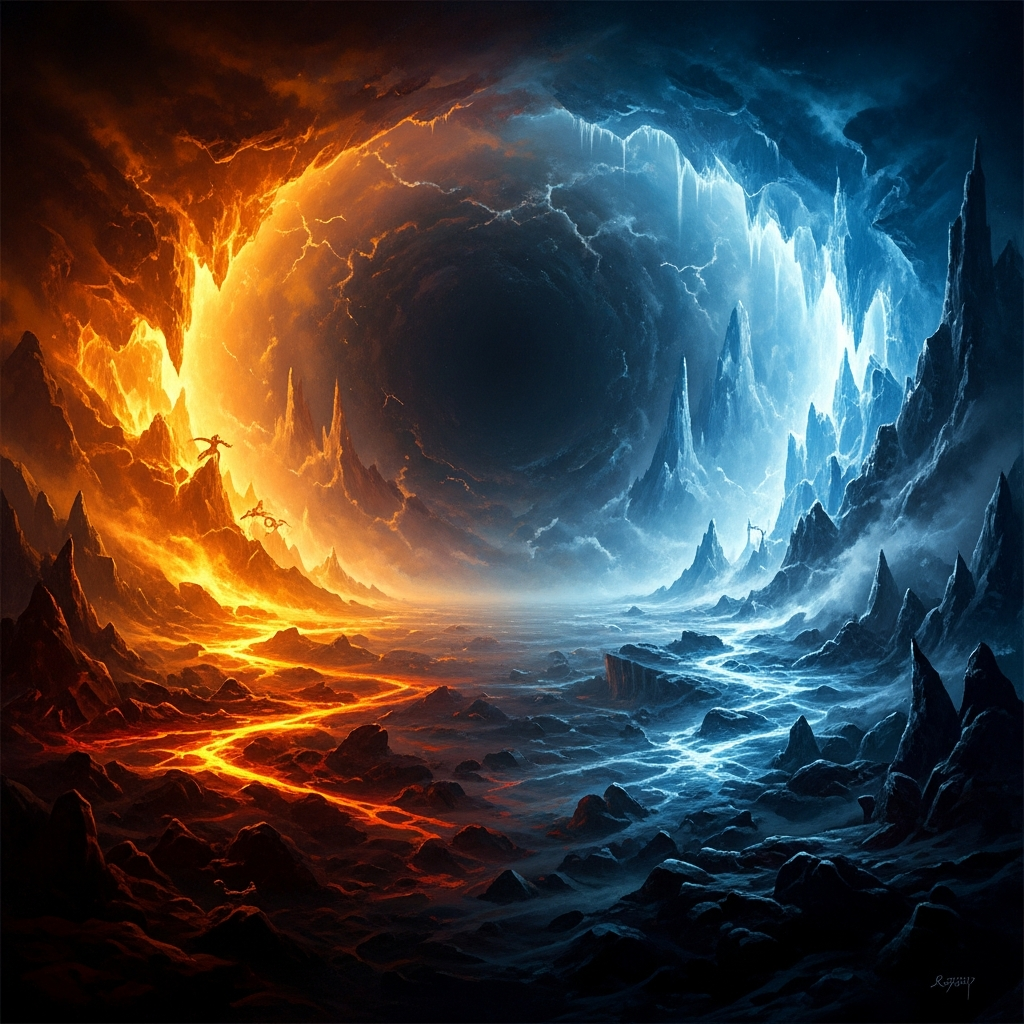
The worlds on and within Yggdrasil are not abstract metaphysical planes. They are places with climates, populations, and borders. Asgard sits at the crown — home of the Aesir gods, walled heavily, connected to Midgard (the human world) by Bifrost, the rainbow bridge. Midgard occupies the middle ring, encircled by Jormungandr, the World Serpent, who has grown so large he grips his own tail. Beneath Midgard lies Niflheim, realm of primordial ice, and adjacent to it is Muspelheim, realm of fire — the two poles whose collision first sparked existence. Jotunheim houses the giants. Alfheim holds the light elves. Svartalfheim (or Nidavellir, in some sources) is the realm of the dwarves, craftsmen who made Odin’s spear, Thor’s hammer, and Freyr’s ship. Helheim is the domain of Hel, daughter of Loki, who receives the dead who did not fall in battle — the majority of the dead, in other words. Vanaheim is the homeland of the Vanir gods.
These nine are in constant contact with one another. Gods visit Jotunheim. Giants attend events in Asgard. The boundaries are permeable, contested, and frequently violated. This is not a cosmos organized into neat hierarchies — it is a cosmos organized into ongoing disputes.
The Aesir and the Vanir
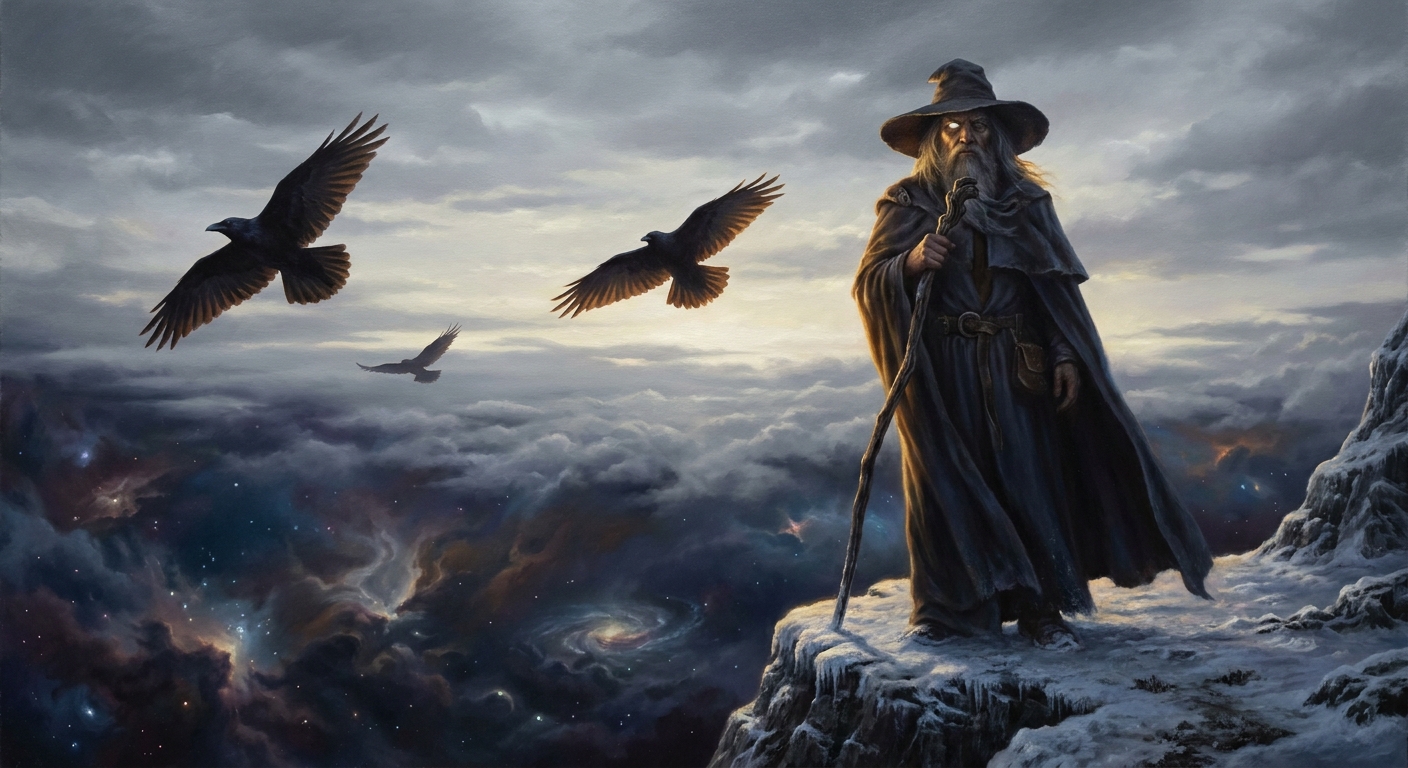
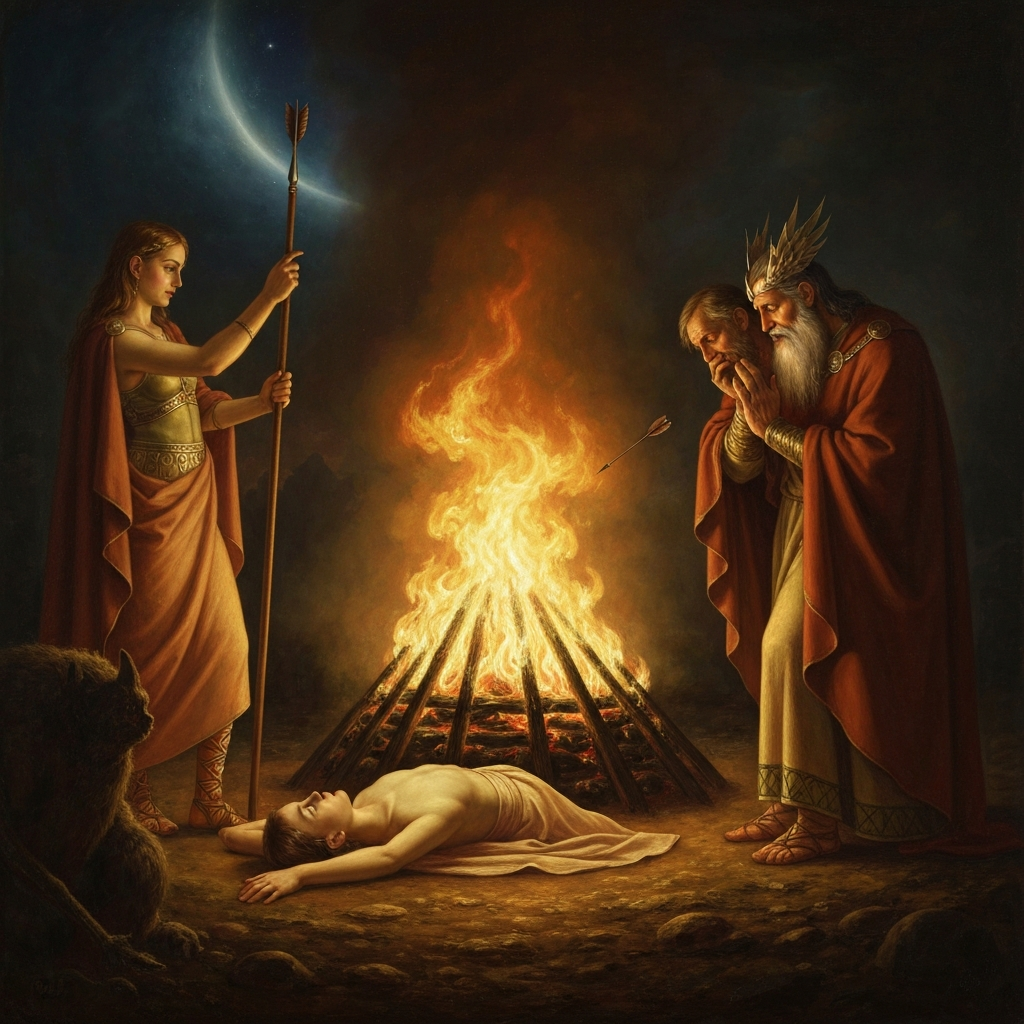
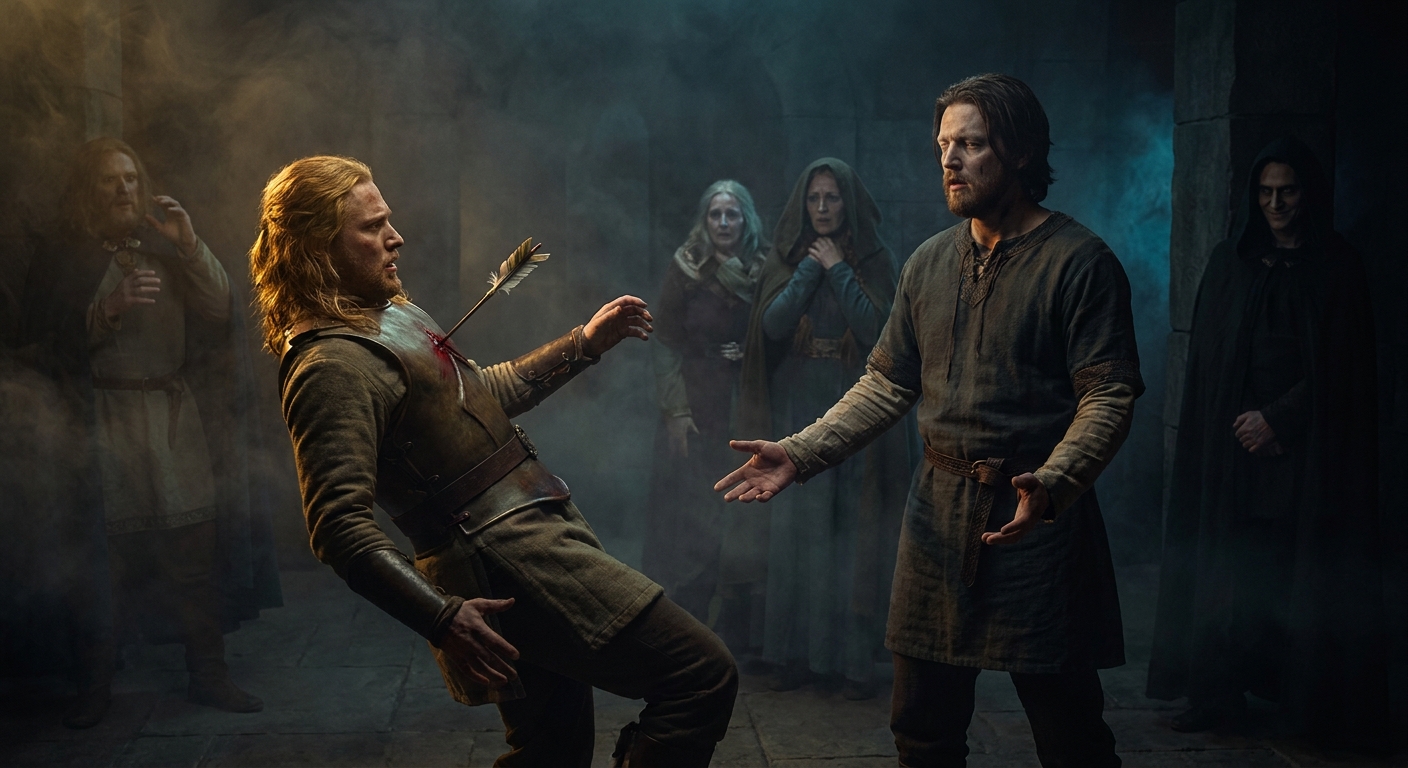
Norse mythology contains two groups of gods, and the distinction matters. The Aesir — Odin, Thor, Frigg, Tyr, Baldr, Heimdall, and the rest — are gods of war, sovereignty, wisdom, and the things that matter when you are a warrior aristocracy trying to hold a coastline. Odin is the Allfather: one-eyed, staff-bearing, attended by two ravens (Huginn, Thought; Muninn, Memory) who fly the nine worlds each day and report back. He is the god of wisdom, war, death, and poetry — an unusual combination that makes more sense when you understand that in the Norse world, the skald who could compose a perfect verse about a battle was as important as the warrior who won it. Thor is Odin’s son, the thunder-god who hammers Jotnar on behalf of both gods and humans, impulsive and enormously strong, beloved in a way that the more remote Odin never quite is. Frigg is Odin’s wife, keeper of fate’s secrets (she knows what the Norns have written but does not speak it). Tyr is the god of law, justice, and single combat, who proved his nature by letting Fenrir bite off his hand so the wolf could be bound. Baldr, Odin and Frigg’s son, is so beautiful and beloved that the world itself agreed not to harm him — all things swore an oath — and his death by mistletoe, the one thing Frigg forgot to ask, is the event that sets Ragnarok in motion.
The Vanir are older, wilder, and associated with fertility, the sea, and the turning of the seasons. Freyr controls rain and sunshine, and his absence plunges the world into the Fimbulwinter that precedes Ragnarok. Freyja — often conflated with but distinct from Frigg — is the goddess of love, war, and seidr magic; she receives half of all warriors who die in battle, her hall Folkvangar receiving those Odin’s Valkyries do not take. Njord is their father, god of the sea and harbors. The Aesir and Vanir fought a war, then traded hostages (Freyr and Freyja went to Asgard; Mimir went to Vanaheim), then merged into a single pantheon. The war is remembered, the merger is celebrated, but the distinction between the two divine families is never entirely erased.
The Jotnar: Enemies and In-Laws
The giants are not simply monsters. They are the opposing principle to cosmic order — older than the gods, larger, representing entropy, wildness, and the unshapable depths from which existence was carved. Yet the gods and giants are also kin. Odin’s mother was a giantess. Thor’s mother was a giantess. Loki, Odin’s blood-brother and constant companion, is a giant. Many of the gods have giant lovers, giant wives, giant children. The boundary between order and chaos in Norse mythology is genealogical as much as moral, and it is deliberately, structurally blurred. The giants are the adversaries the gods fight, yes — but they are also the grandparents of the gods. You cannot kill chaos entirely. You cannot marry into it entirely. The only viable strategy is to stand at the edge and hold the line while acknowledging that the line runs through your own family.
Odin’s Sacrifices
Odin does not receive wisdom. He purchases it, at prices that keep escalating. He hung himself on Yggdrasil for nine days, wounded by his own spear, starved, in order to discover the runes — the letters that are also the forces that shape reality. He gave his eye to Mimir for a single drink from the well of cosmic knowledge. He wanders Midgard in disguise, old man with a staff and a wide-brimmed hat, gathering information about the worlds, because even the Allfather cannot know what his ravens alone can tell him. He sleeps badly. He knows more than he lets on about how this ends. The image of Odin is not a triumphant king-god. It is something closer to a detective who has worked the case for centuries and understands that solving it will not prevent the murder.
Loki’s Arc
Loki begins in the myths as Odin’s companion, useful, creative, dangerous in precisely the right amounts. He is the agent who gets the gods out of situations and into new ones. His blood-bond with Odin suggests the two are theological counterparts — order and chaos, perhaps, or wisdom and cleverness, which are not the same thing. But the myths trace a gradual darkening. Loki’s children — the wolf Fenrir, the serpent Jormungandr, the half-dead Hel — are imprisoned or cast to the margins by gods who fear what they represent. Loki himself grows more resentful, until the death of Baldr, which he engineered, crosses a line. He is bound beneath a mountain, a serpent dripping venom onto his face, his wife Sigyn catching the drops in a bowl and emptying it — the earthquakes happen when she turns away and drops fall. He waits there until Ragnarok, when he breaks free and pilots the ship of the dead against the gods he once called family.
Ragnarok: Ending as Grammar
Ragnarok is known. The Norns wrote it. Odin has read the seeress’s prophecy. The sequence is fixed: three years without summer (Fimbulwinter), the breaking of bonds, Fenrir swallowing Odin, Jormungandr killing Thor (who takes nine steps and falls), Loki and Heimdall killing each other, Freyr dying because he gave away his sword. The sun is eaten. The stars fall. The seas rise.
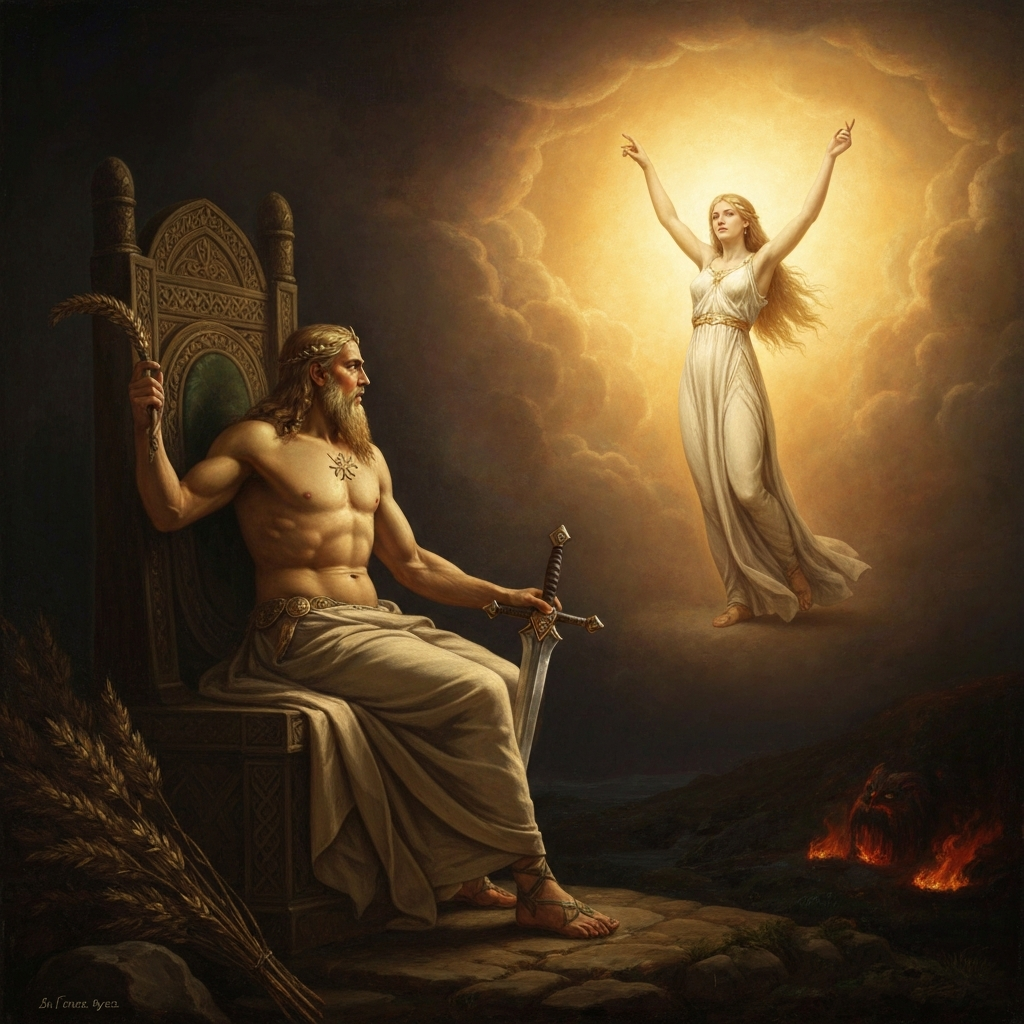
And then — crucially — the world resurfaces. Green and warm. Grain already growing on untended fields. Surviving gods finding the golden game-pieces they used to play with before everything ended. Baldr returns from Helheim. A woman and a man hidden in the World Tree emerge and repopulate the earth. The cycle begins again.
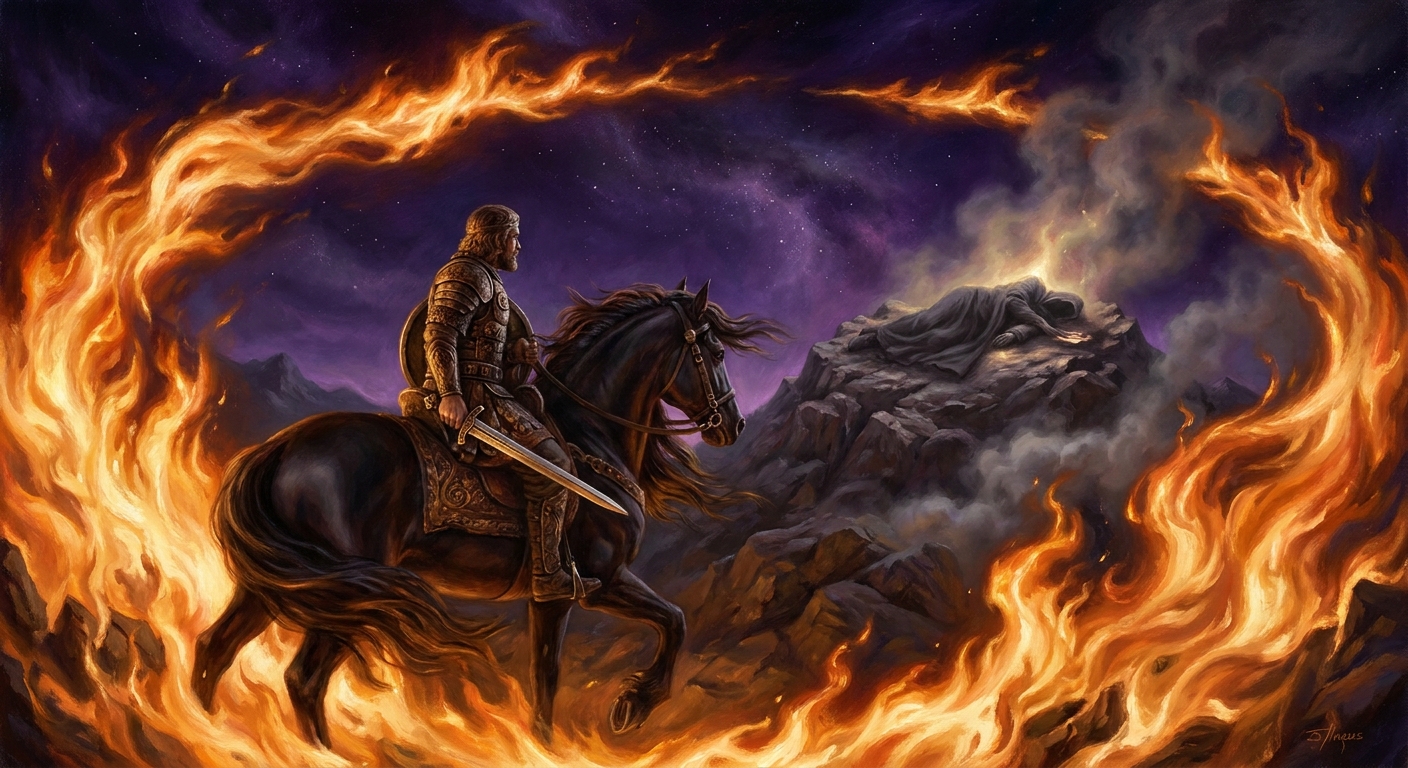
Ragnarok is not the end of Norse mythology. It is Norse mythology’s central claim about the structure of existence: things end, and ending is not the final word. What matters is how you face what is coming — not because courage changes the outcome, but because it is the only response that means anything. You drink with your companions. You keep your oaths. You pick up the hammer. And when the wolf opens his jaws, you walk toward them.
What We Know and What Was Lost
The Prose Edda and Poetic Edda, our two primary sources, were compiled in Christian Iceland seven centuries after the Viking Age’s height. Snorri Sturluson, the Prose Edda’s author, was a Christian scholar salvaging pre-Christian material he understood to be poetically and historically important. He was not a believer. The Poetic Edda’s older poems were already fragmentary when collected. We have almost nothing from continental Germanic practice, the Anglo-Saxon tradition is partially preserved in Beowulf and glossaries, and the Norse material itself is filtered through at least two hundred years of Christian cultural overlay. Much was lost — deliberately, in some cases, as missionaries preferred ash-heaps to manuscript rooms.
What survives is enough to show a theological imagination of unusual depth: a cosmos that is temporary by design, gods that are mortal by fate, a concept of heroism stripped of all metaphysical consolation and still found worth having. That is not an accident of transmission. It was the point.
The deeper reason Norse mythology resonates — past the hammer pendants and the Marvel films — is that it takes a position most mythological systems refuse to take: that awareness of inevitable loss does not make action meaningless. It makes action the only thing that has meaning. In a cosmos that ends, in a life that ends, the choice is not between winning and losing. It is between showing up and not showing up. The Norse gods show up. That is their entire theology.
Echoes Across Traditions
Entities


Sources
- Snorri Sturluson, *Prose Edda* (Gylfaginning, Skáldskaparmál, Háttatal) — c. 1220 CE
- *Poetic Edda* (Codex Regius) — compiled c. 1270 CE, poems likely 9th–11th c.
- Neil Price, *Children of Ash and Elm: A History of the Vikings* (Basic Books, 2020)
- John Lindow, *Norse Mythology: A Guide to Gods, Heroes, Rituals, and Beliefs* (Oxford, 2001)
- Rudolf Simek, *Dictionary of Northern Mythology* (D.S. Brewer, 1993)
- Jesse Byock (trans.), *The Prose Edda* (Penguin Classics, 2005)