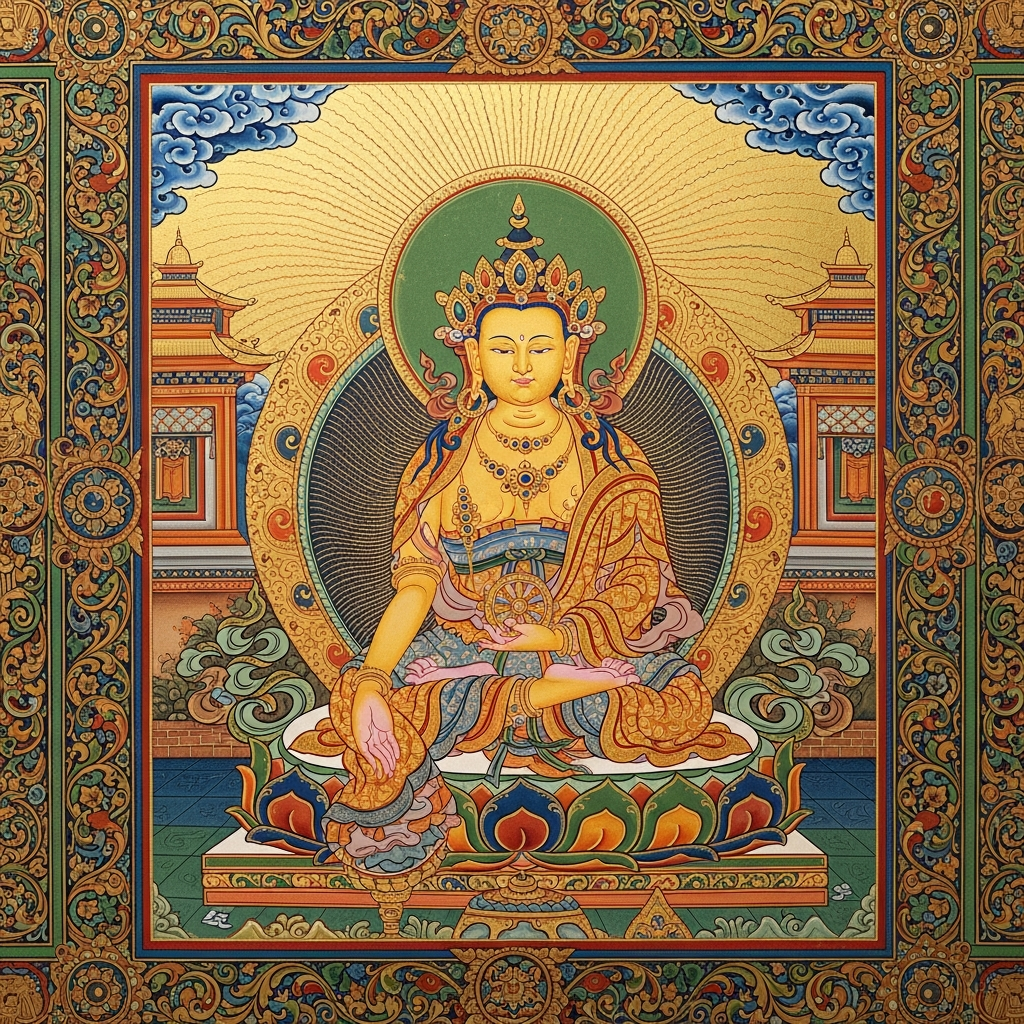
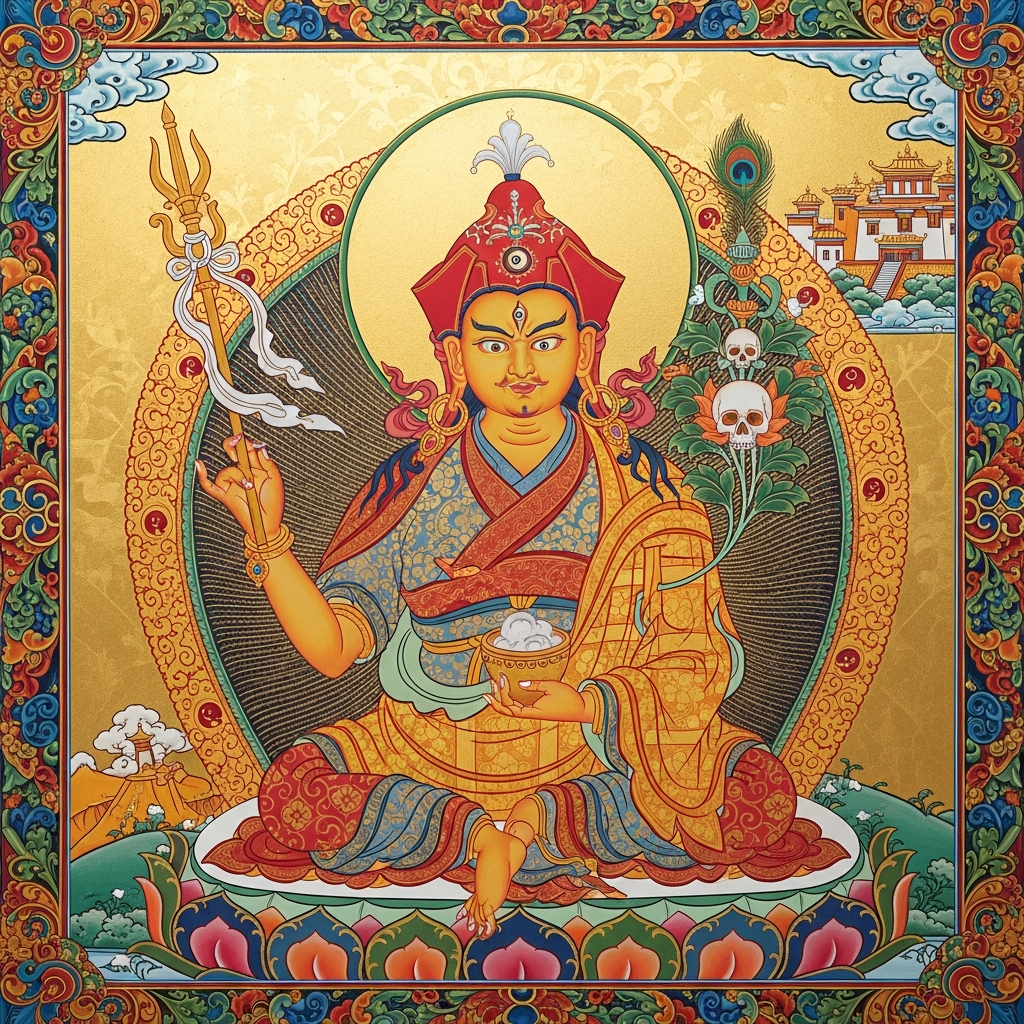
The Indian prince who would later be known as the Buddha was born in a grove outside the town of Lumbini, in the foothills of the Himalayas, around 563 BCE. His name was Siddhartha Gautama. His father was Suddhodana, the chief of the Shakya clan; his mother, Maya, died seven days after his birth and he was raised by her sister, Mahaprajapati. He grew up in a palace at Kapilavastu, married a woman named Yashodhara, and had a son named Rahula. He was twenty-nine years old when he left.
The four sights
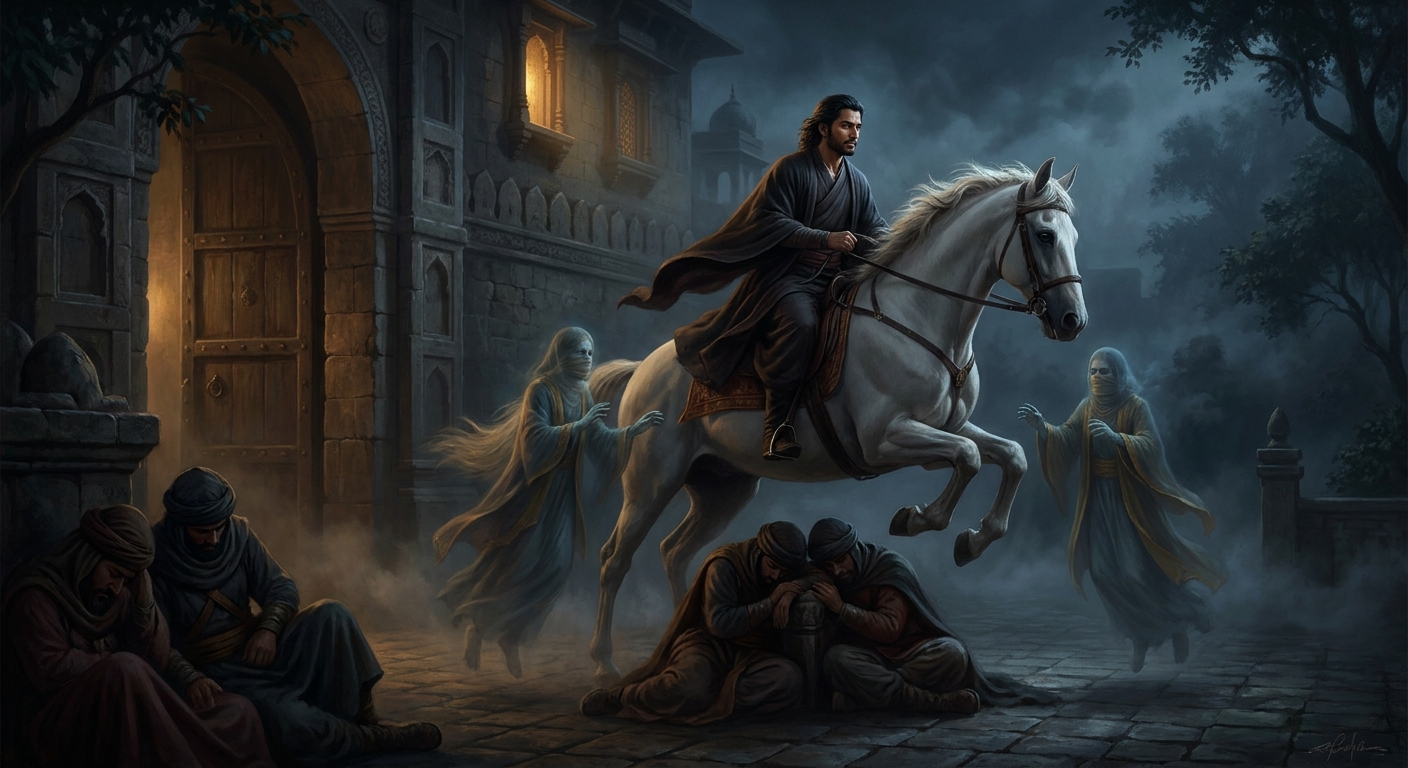
The traditional cause of his departure is a sequence of encounters known as the four sights. Riding out from the palace, sheltered by his father from all forms of suffering, he saw in succession an old man, a sick man, a corpse, and a wandering ascetic. The first three were experiences his father had spent twenty-nine years hiding from him. The fourth, the shramana — the renouncer — was the cultural option his society offered for those who could no longer ignore them. He returned to the palace, cut off his hair, gave up his princely clothes for a beggar’s robe, and slipped out of the city at night. He left behind his sleeping wife and son.
Six years in the forest
For the next six years he tried what was available. He studied with two of the leading meditation teachers of his region, Alara Kalama and Uddaka Ramaputta, mastered their systems, and concluded that neither led where he needed to go. He went into the forest of Uruvela with five other ascetics and practiced increasingly extreme austerities — fasting until, by his later report, he could feel his backbone through his stomach. He very nearly died.
A village girl named Sujata is said to have found him under a tree and offered him milk-rice in a golden bowl. He took it. His five companions, scandalized that he had abandoned the ascetic path, walked out on him. He bathed in the Niranjana river, ate the food, regained enough strength to walk, and crossed to the eastern bank, where a particular tree was growing.
The night under the Bodhi tree
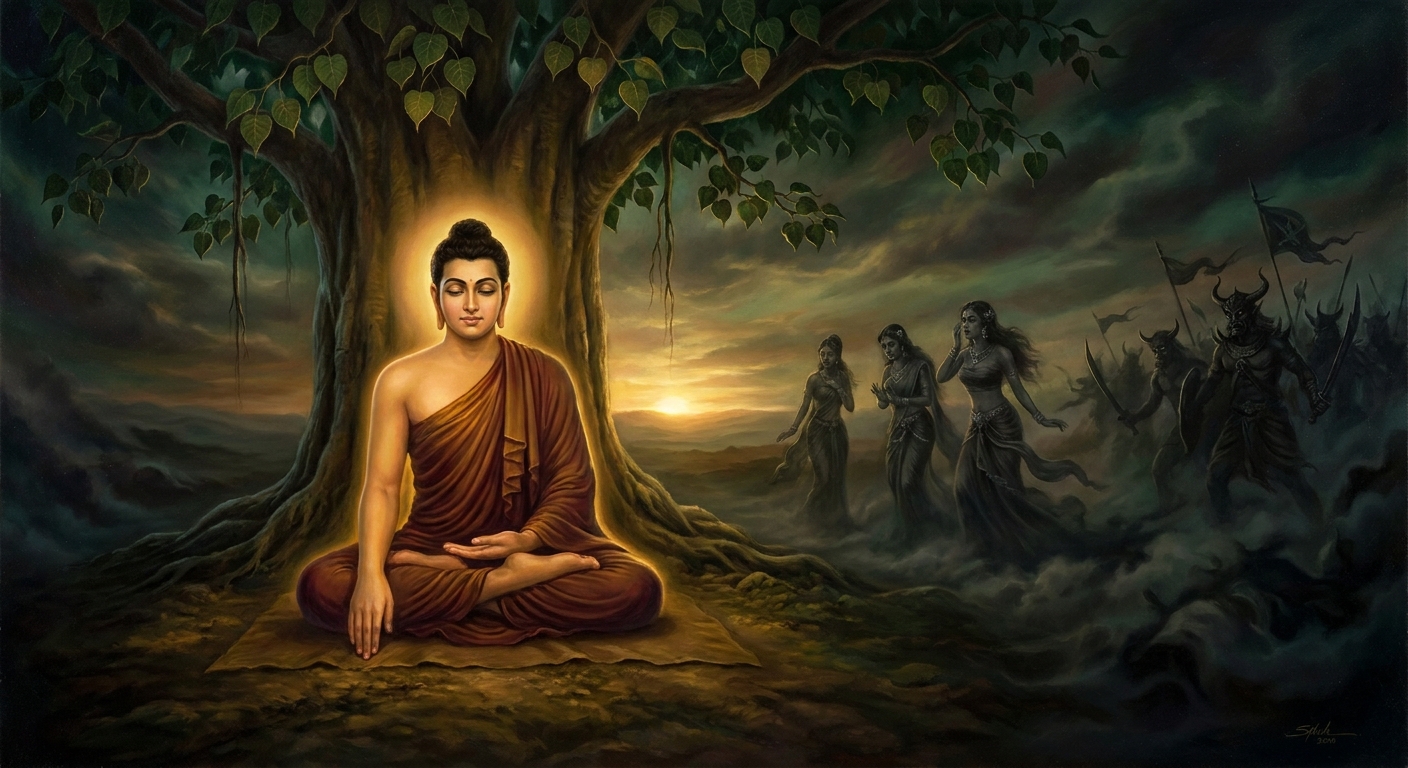
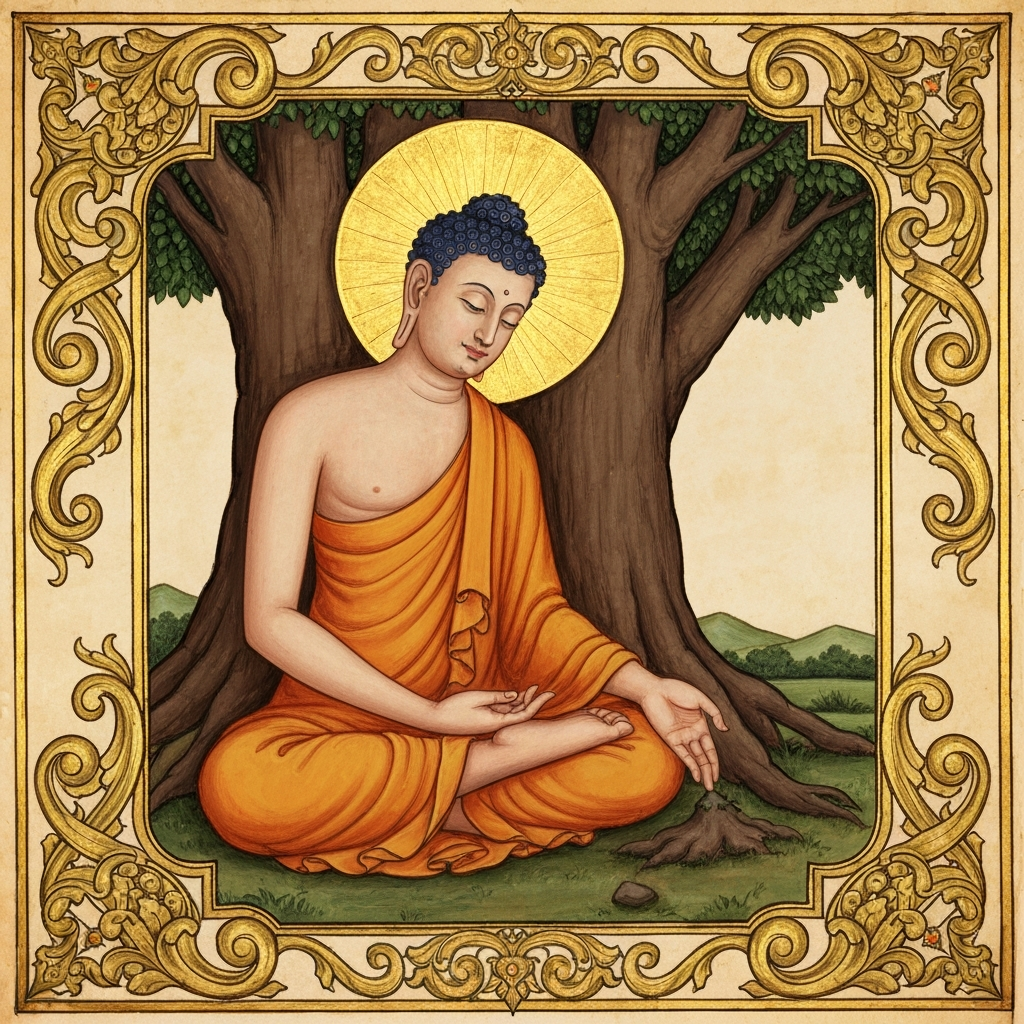
The tree was a Ficus religiosa, a sacred fig. It was already old when Siddhartha sat beneath it; descendants of the same tree still grow at Bodh Gaya today. He set his face toward the east, crossed his legs in meditation posture, and resolved, in the formula remembered by tradition: “Though my skin, my nerves, and my bones shall waste away, and my life-blood dry — I will not rise from this seat until I have attained full enlightenment.”
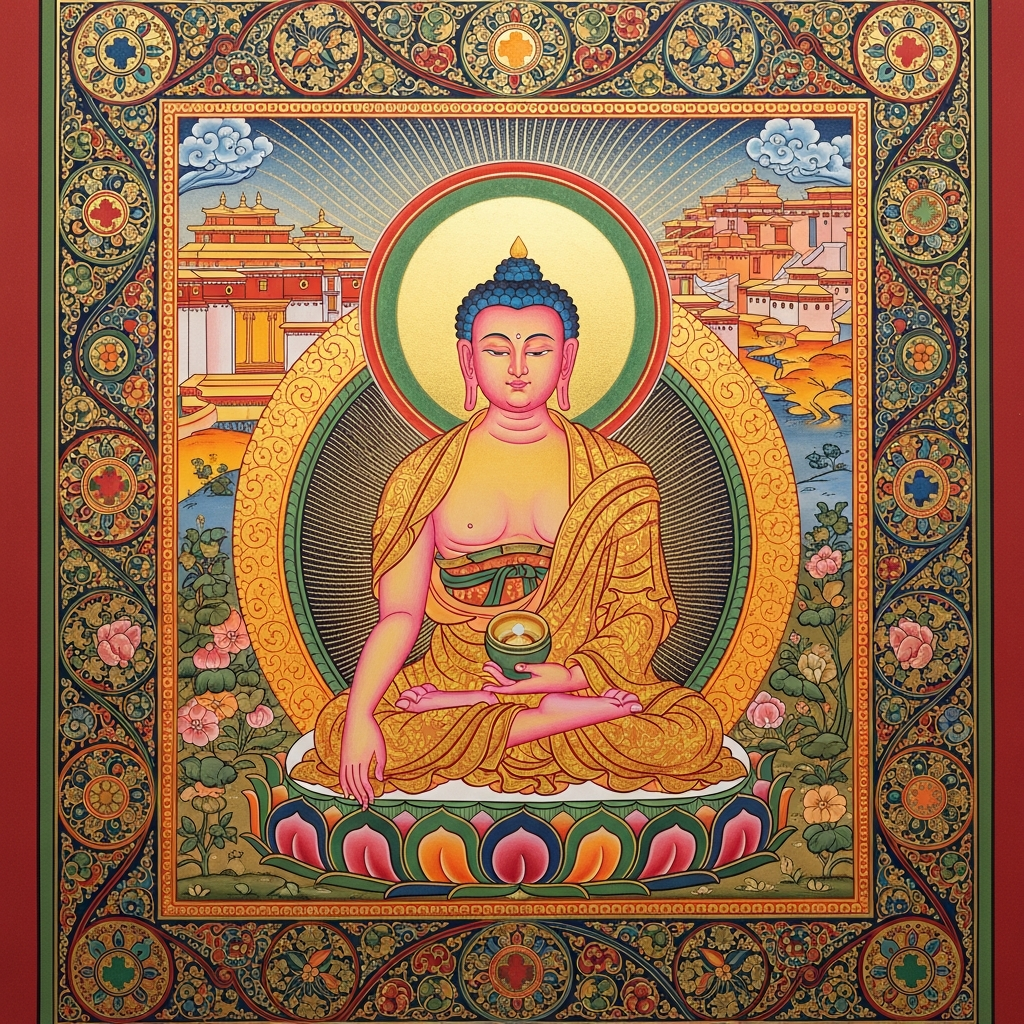
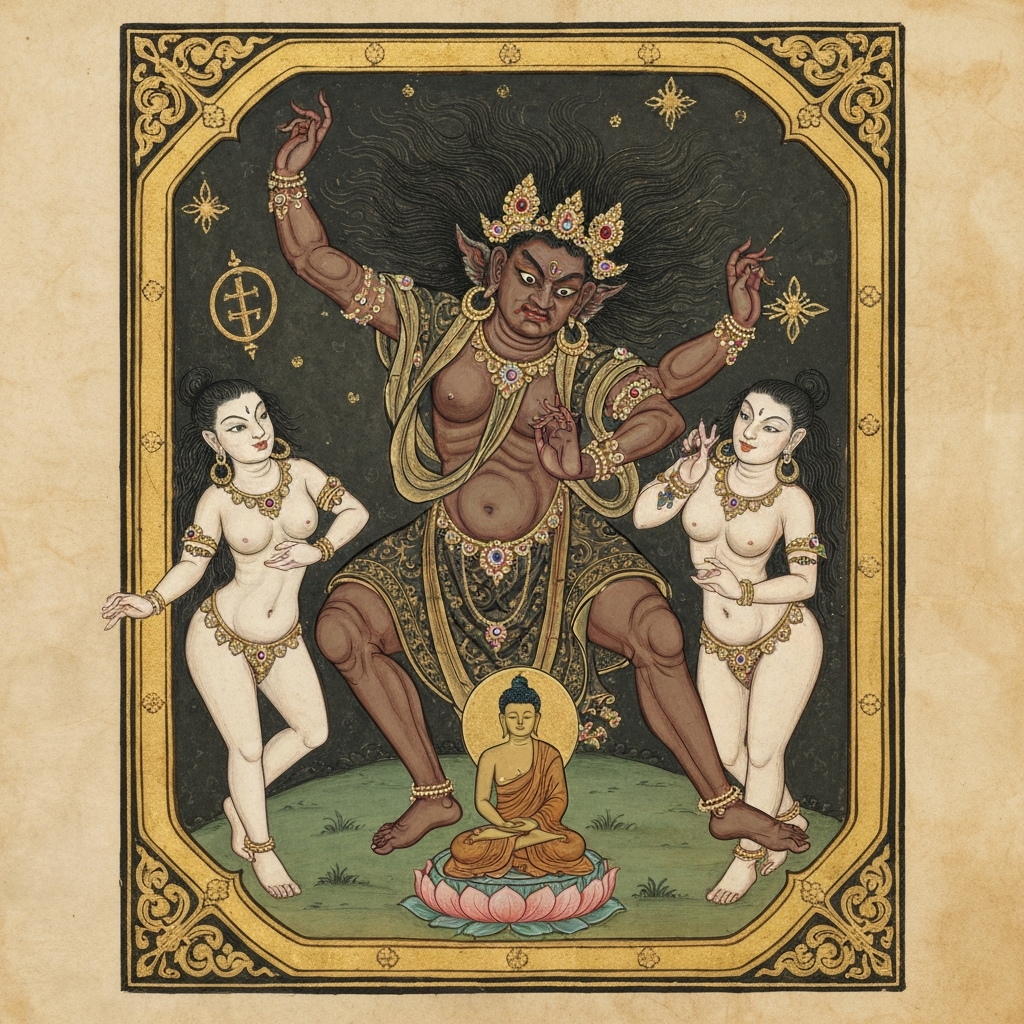
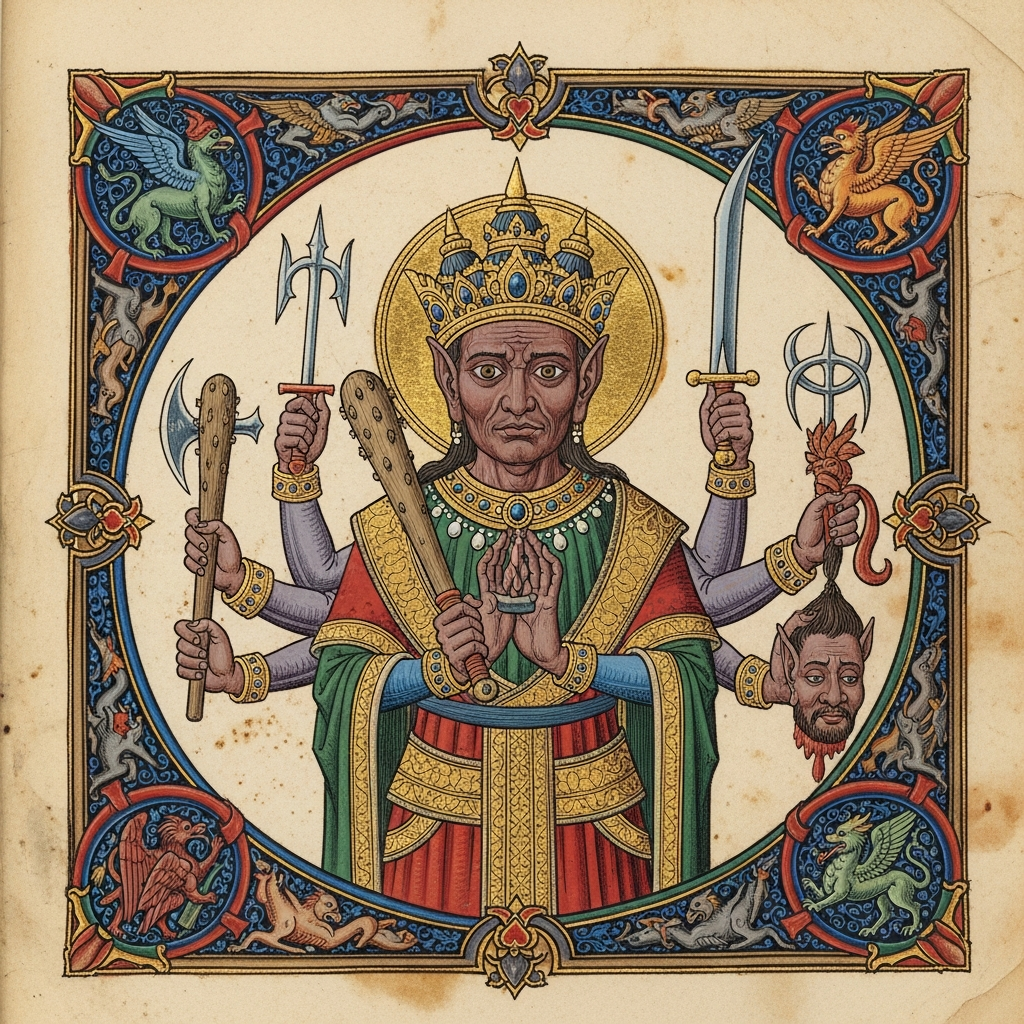
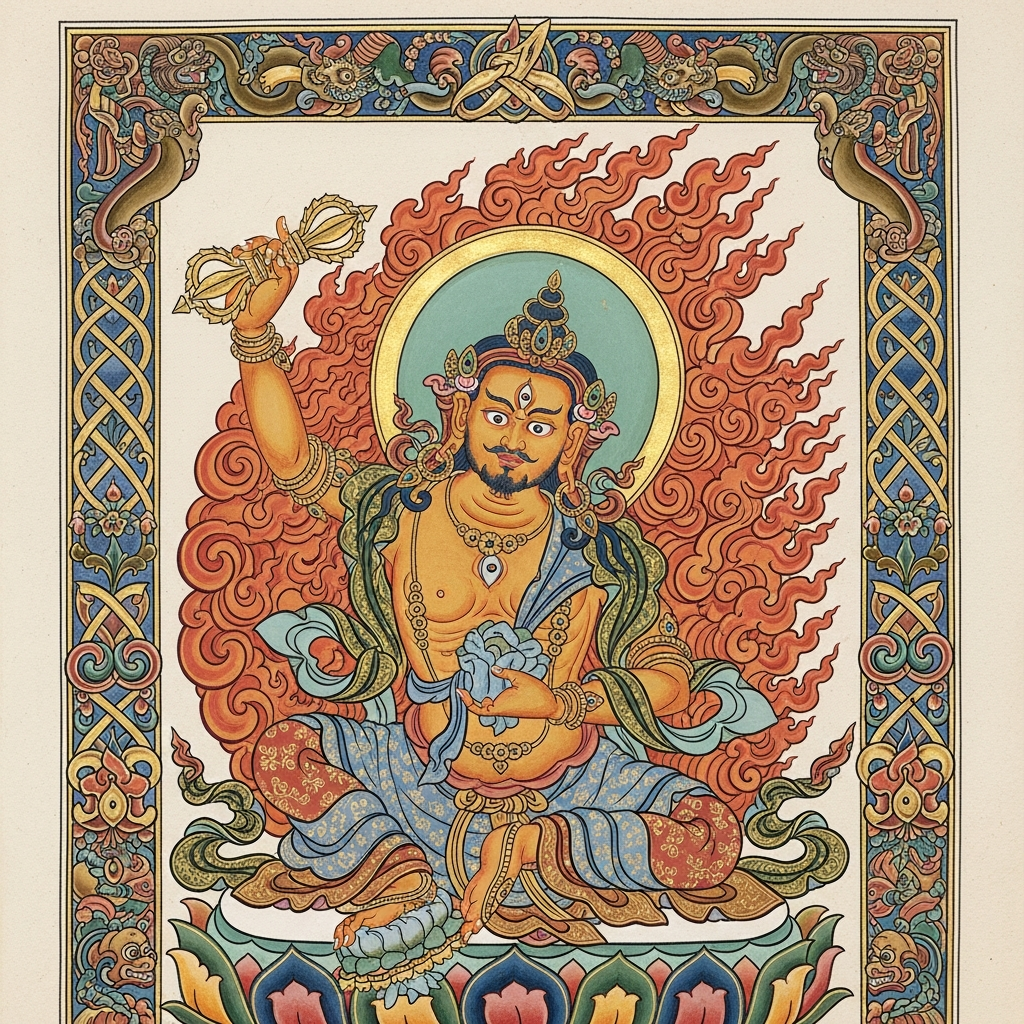
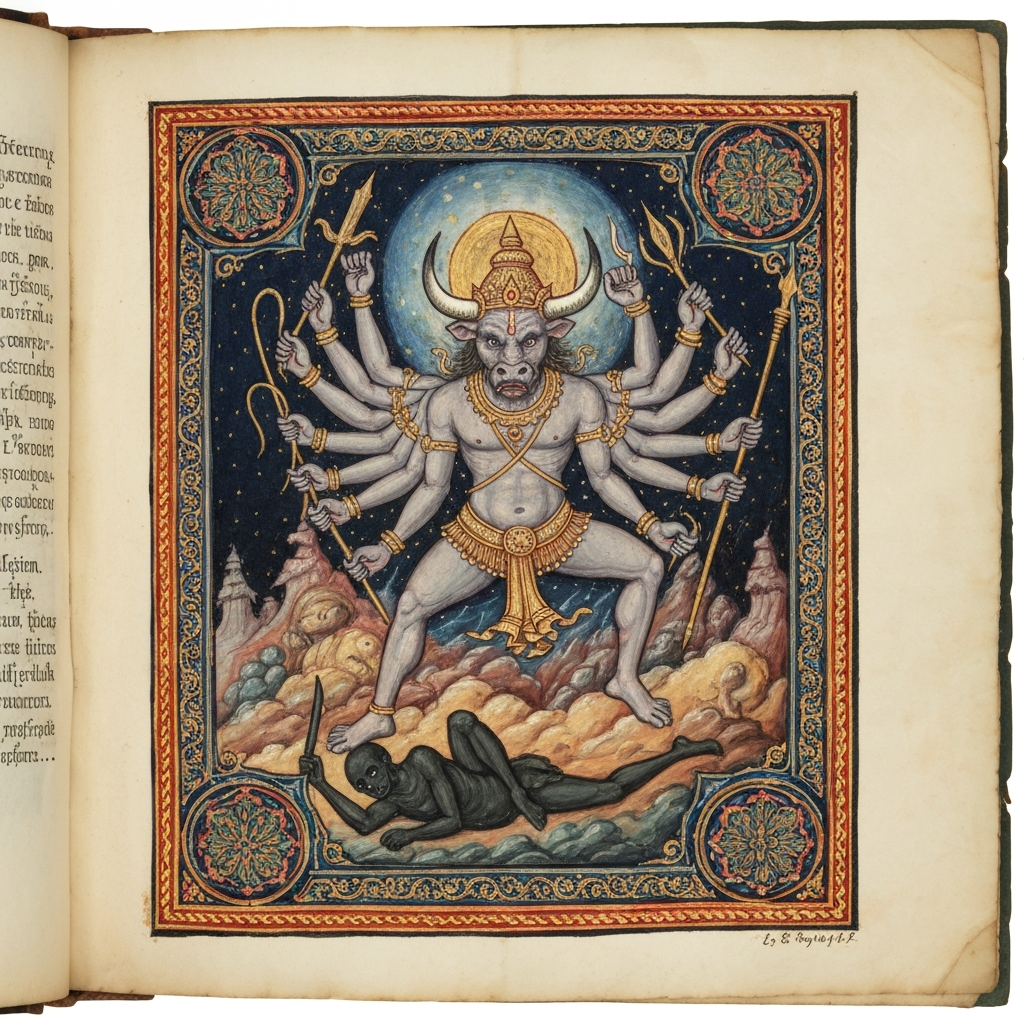
The tradition records three temptations. Mara, the lord of the world of desire, opposed his progress. First, Mara sent his armies — demonic hordes, weapons of fire, the cosmos in revolt — and Siddhartha did not move. Second, Mara sent his three daughters, Tanha, Arati, and Raga (Craving, Aversion, Delight), to seduce him, and Siddhartha did not move. Third, Mara himself appeared and demanded by what right Siddhartha sat there. In answer, Siddhartha did not speak; he reached down with his right hand and touched the earth, calling it as his witness. The mudra of this gesture — bhumisparsha, “earth-touching” — is the most reproduced image in Buddhist art.
According to the suttas, he passed through three watches of the night. In the first watch he saw all his previous lives, an unbroken chain of births and deaths reaching back into incalculable past. In the second watch he saw the births and deaths of all beings everywhere, the working of karma — that beings move from station to station according to their actions. In the third watch, near dawn, he saw the Four Noble Truths: that there is suffering, that suffering has a cause, that suffering can cease, that there is a path to its cessation. At sunrise on the full-moon day of the month of Vesakha, he was awake. He was thirty-five years old.
After enlightenment
He remained beneath the Bodhi tree, and in its vicinity, for seven weeks, reviewing what he had seen and considering whether it could be taught. The doctrine that had ended his own suffering was too subtle, he initially thought, for any but a few. Tradition records that the god Brahma Sahampati came to him and pleaded on behalf of the world: “Lord, there are beings with little dust in their eyes; teach them, for their sake.”
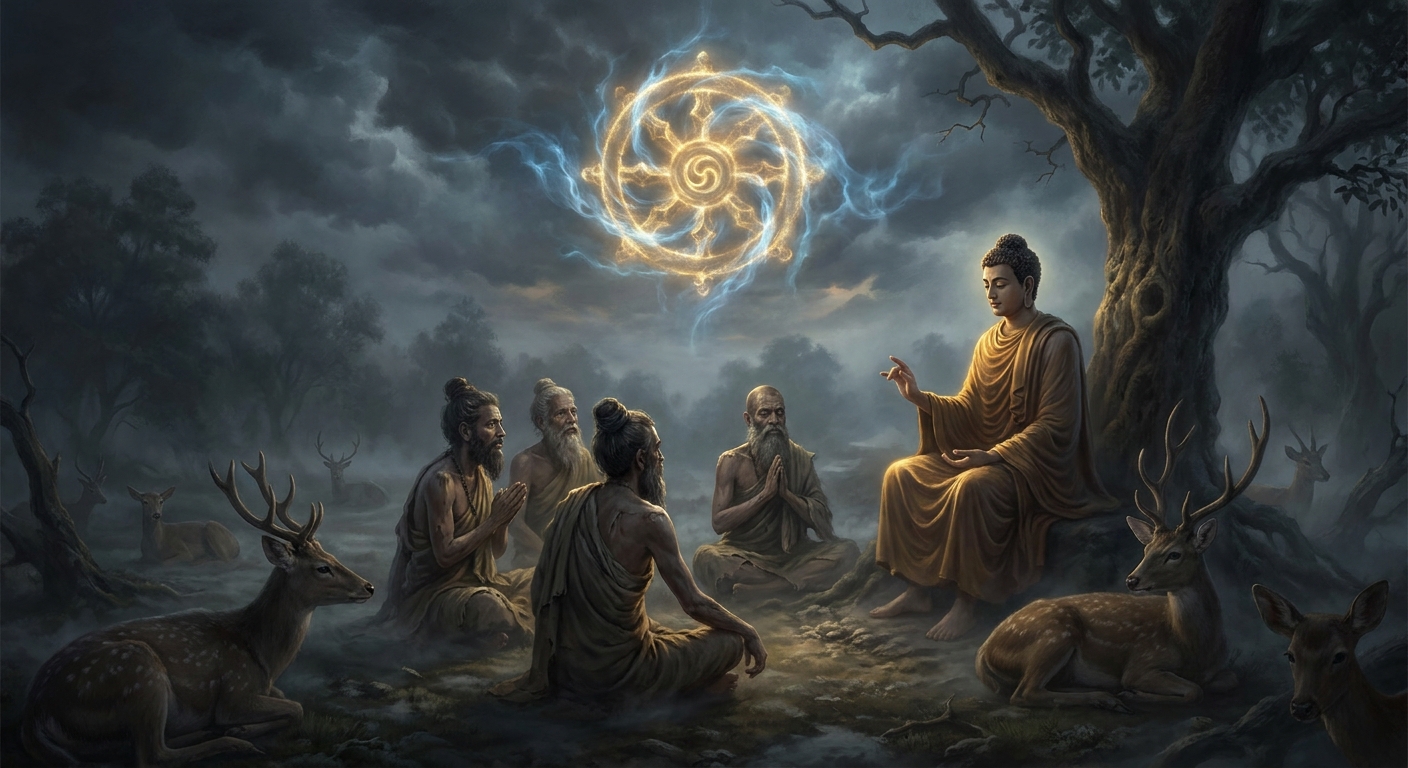
He walked to a deer park at Isipatana, outside the town of Sarnath near modern Varanasi, where his five former ascetic companions were still living. They had agreed among themselves not to receive him. As he approached, they could not maintain it. He sat with them and delivered the Dhammacakkappavattana Sutta — the Setting in Motion of the Wheel of the Dharma — which, by Buddhist reckoning, is the first sermon of the dispensation. He laid out the middle way between sensual indulgence and self-mortification, the Four Noble Truths, and the Noble Eightfold Path. By the end of the discourse, the senior of the five, Kondanna, had attained the first stage of awakening. The Sangha — the community of monks — had begun.
The forty-five years
He taught for the next forty-five years across the Gangetic plain. He returned to Kapilavastu and was reunited with his father, his wife, his son (who became a monk), and his foster mother (who became, after a long argument, the first ordained bhikkhuni). He founded monasteries at Jetavana in Shravasti and at Veluvana in Rajagriha. He preached to kings, to butchers, to murderers, to merchants, to outcastes. He refused, throughout, to be drawn on metaphysical questions that did not relieve suffering — the famous avyakata, the unanswered questions, about the eternity of the soul or the finitude of the cosmos. He died at the age of eighty in a grove at Kushinagar, lying on his right side between two sal trees, his last words a final exhortation: “All conditioned things are subject to decay. Strive diligently.”
Why it still matters
The event that took place under the Bodhi tree is the founding moment of one of the world’s great religious traditions. Buddhism, in its various forms — Theravada in Sri Lanka and Southeast Asia, Mahayana in East Asia, Vajrayana in Tibet and Mongolia — counts somewhere around five hundred million adherents in the twenty-first century. It is unusual among the major religions in being founded not on a covenant, a revelation, or a conquest, but on an experience: a single human being’s claim to have understood, by direct seeing, the structure of his own suffering and the way out.
The Bodhi tree at Bodh Gaya is still there. The current tree is the fifth in a continuous succession from the original — propagated, by tradition, from a cutting taken by the emperor Ashoka’s daughter Sanghamitta to Sri Lanka in the third century BCE, and propagated back from there when the parent tree was destroyed. Pilgrims from every Buddhist country in the world arrive at it daily.