Primordial
Before history began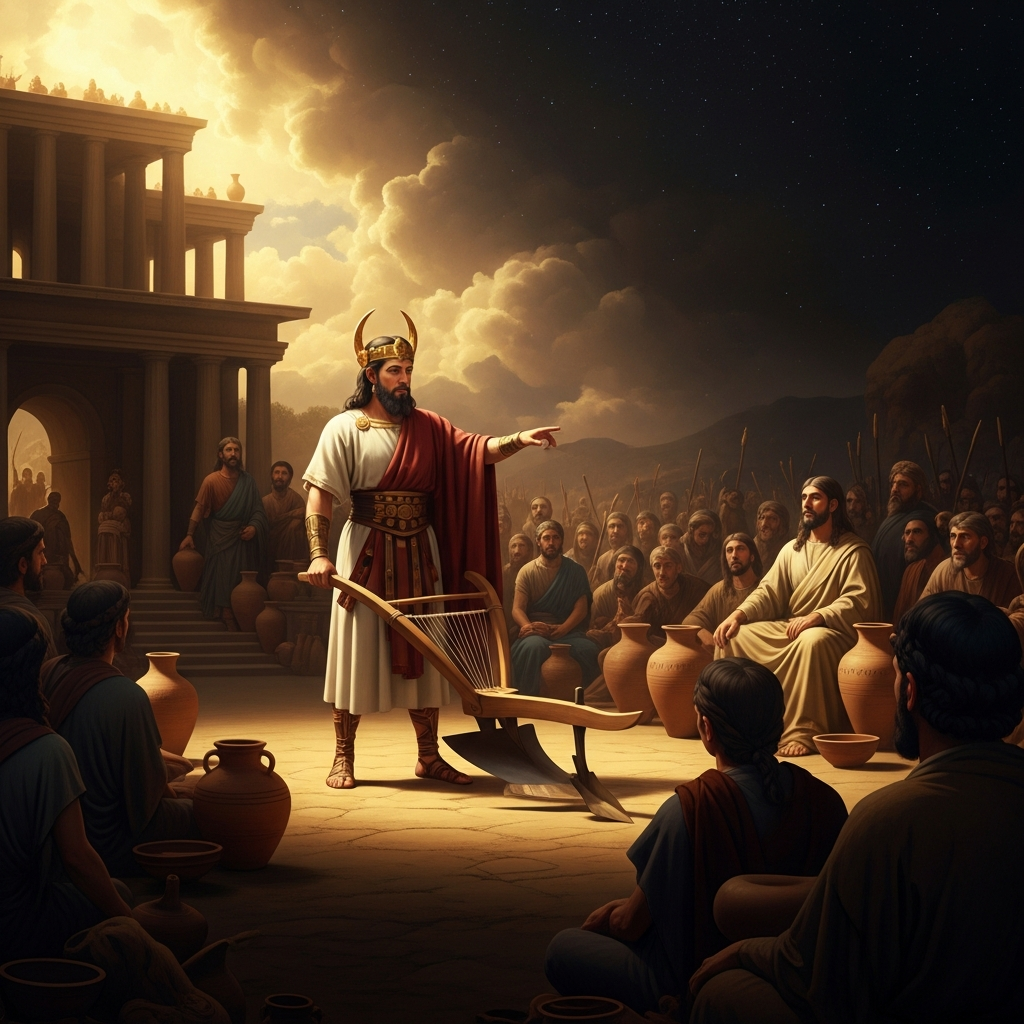
The Man Who Had to Invent Renunciation
Rsabhanatha — Adinatha, the First Lord — teaches humanity farming and cities and the sixty-four arts, rules as king, and then does something no one in the history of the world has ever done before: he renounces. No tradition of almsgiving exists to receive him. He wanders for a year, collapsing from hunger, because the world does not yet know how to give.
The Meditator Stopped by His Own Victory
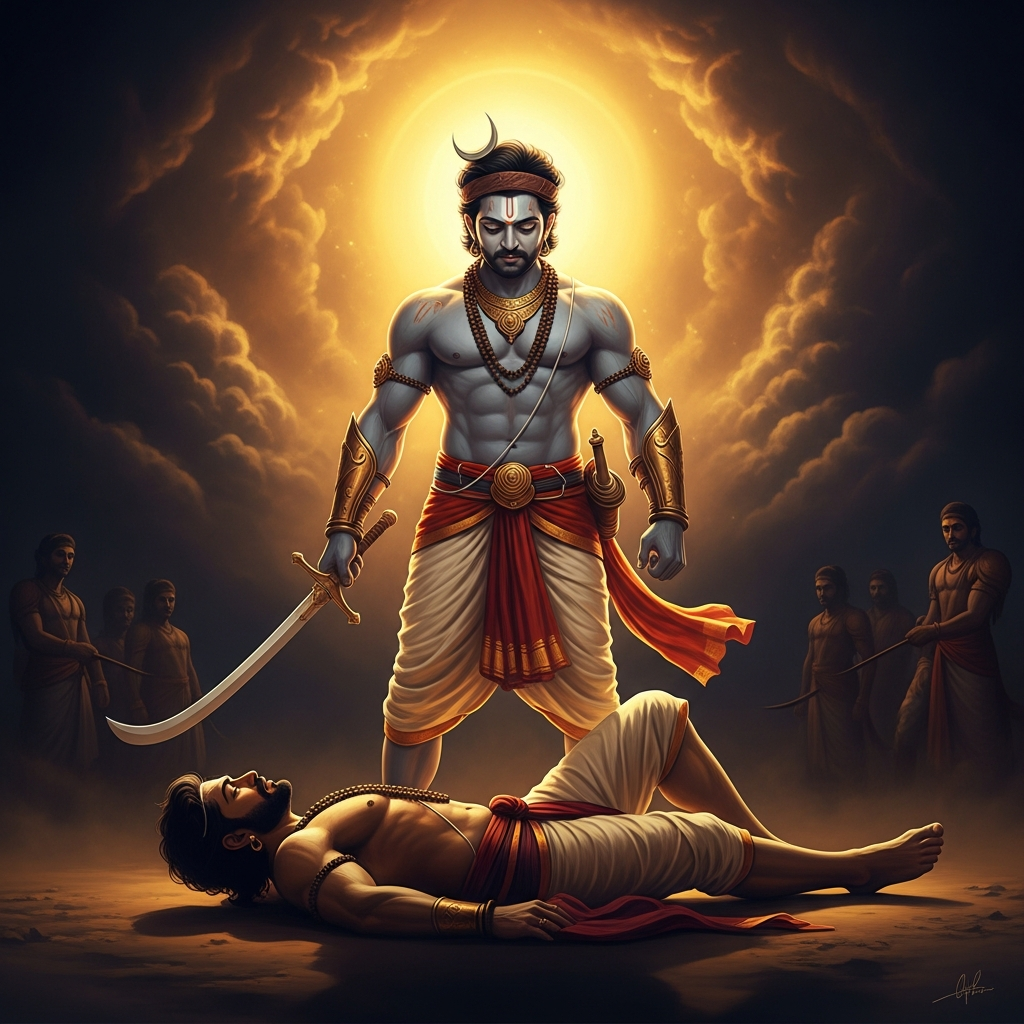
Bahubali defeats his brother Bharata in single combat for the kingship of the world, then renounces the victory before he can pick it up. He stands in the forest for a year in total motionless meditation while vines climb his legs and birds nest in his hair. After a year, his sisters arrive and tell him the one thing that breaks the impasse: *You are standing on your pride.*
The First King Who Walked Away
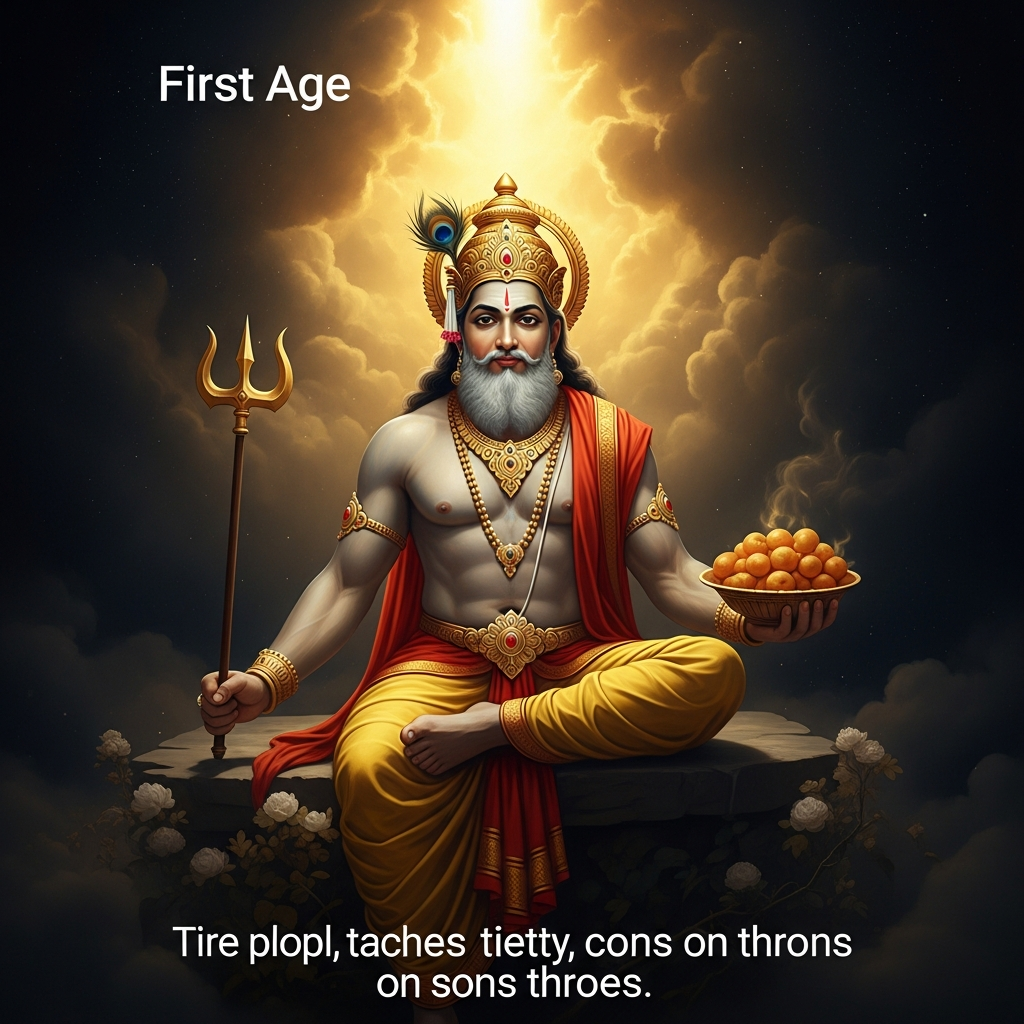
In the first age of the current cosmic cycle, Rishabhanatha — Adinatha, the First Lord — teaches humanity to farm, to write, to build cities, and to govern. He founds the first kingdoms and places his sons on their thrones. Then, when the age turns, he renounces every kingdom he built, walks naked into the forest, and achieves omniscience standing under a banyan tree. He is the first Tirthankara: the first person in this age to cross the river and come back to show where the ford is.
The Ancestors Walk Out of the Earth
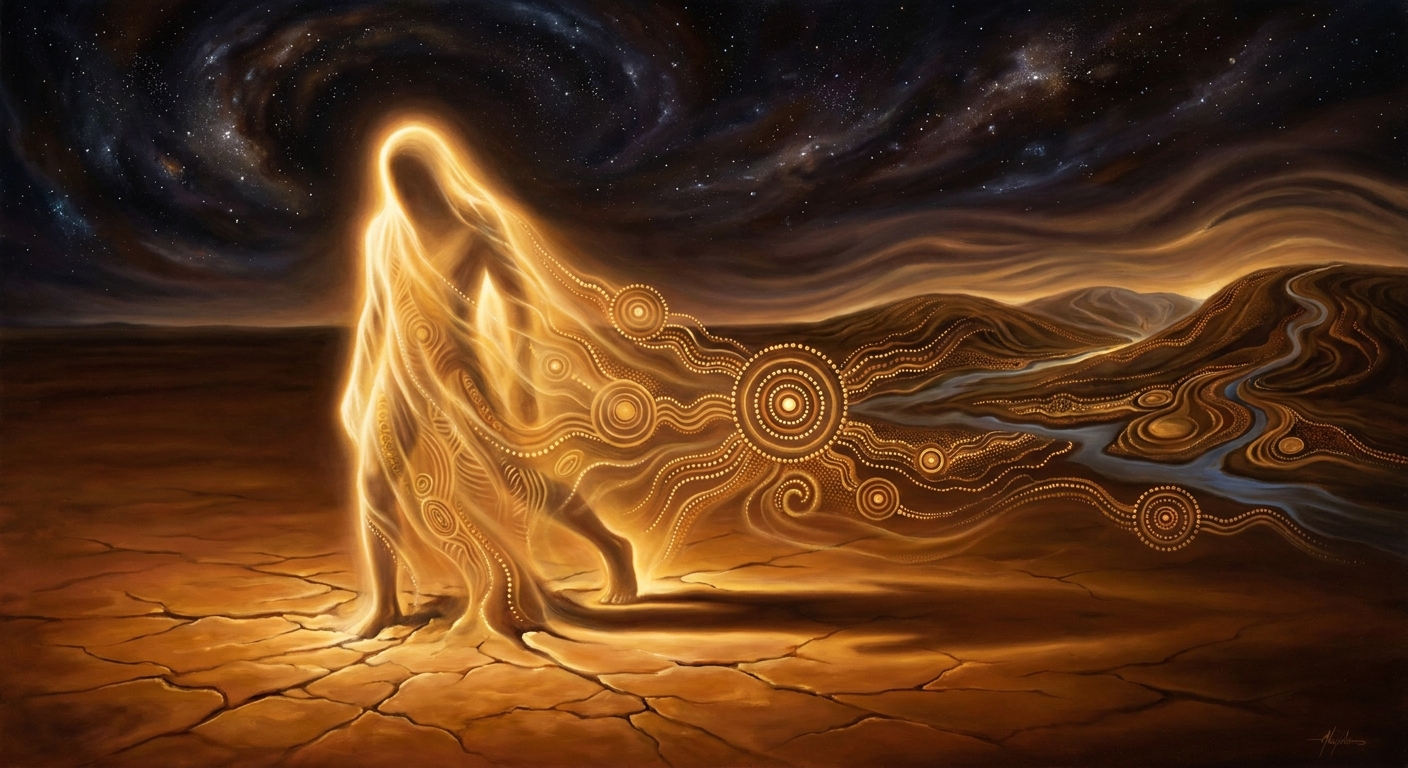
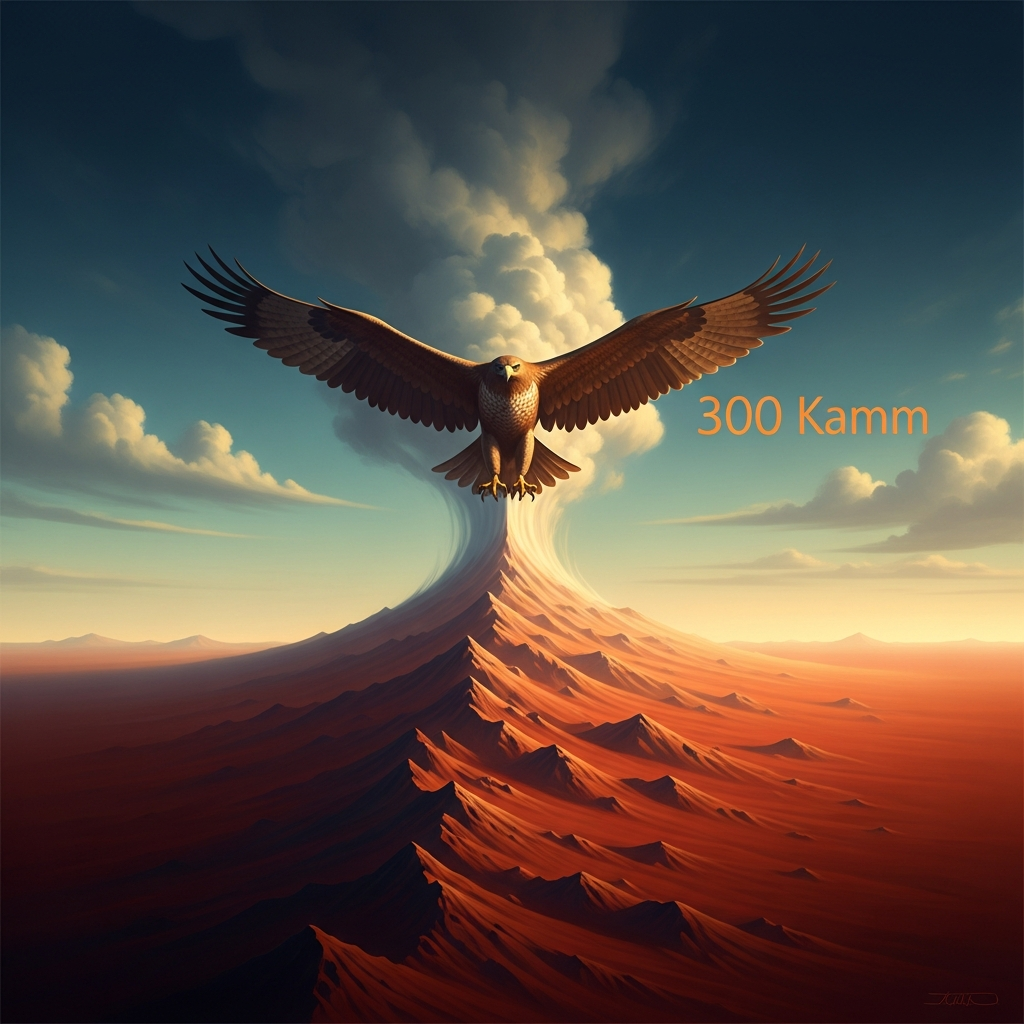
In the beginning the world is featureless and asleep, and the Ancestral Beings walk up out of it singing — and every rock and river and animal track is the trace of their song.
The Song That Holds the Land
A man who is the custodian of an Eagle Hawk Dreaming track explains what it means to hold a Songline: the song is not something you own, it is something that lives in your country and passes through you as a current passes through water. If you don't sing it, the land becomes quieter. If the last person who knows it dies without teaching it, that section of the world's music goes silent.
The Rainbow Serpent Makes the Rivers
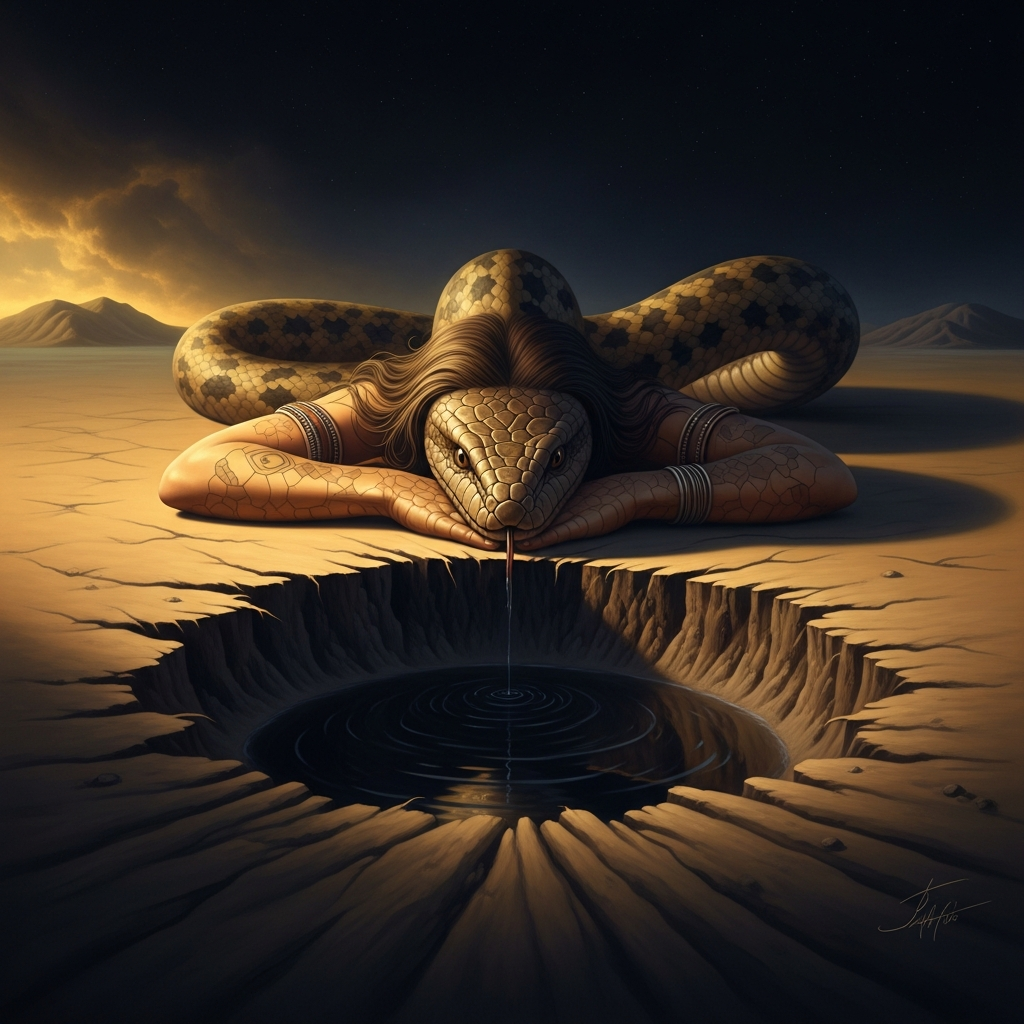
The Rainbow Serpent has many names and one body: the creator of every river, lake, and waterhole in Australia. In Arnhem Land, a Kuninjku elder takes a young person to the water's edge and teaches her to read the Serpent's path in the shape of the land — because the child who learns where the Serpent went is keeping the Serpent moving.

The Seven Sisters Run
The Seven Sisters are the most widely told story in Aboriginal Australia — tracked across dozens of language groups from the Western Desert to the east coast, their Dreaming trail marked in sacred sites and carved into the sky as the Pleiades. They are still running. The man who pursues them is still just behind.
Uluru: The Living Record
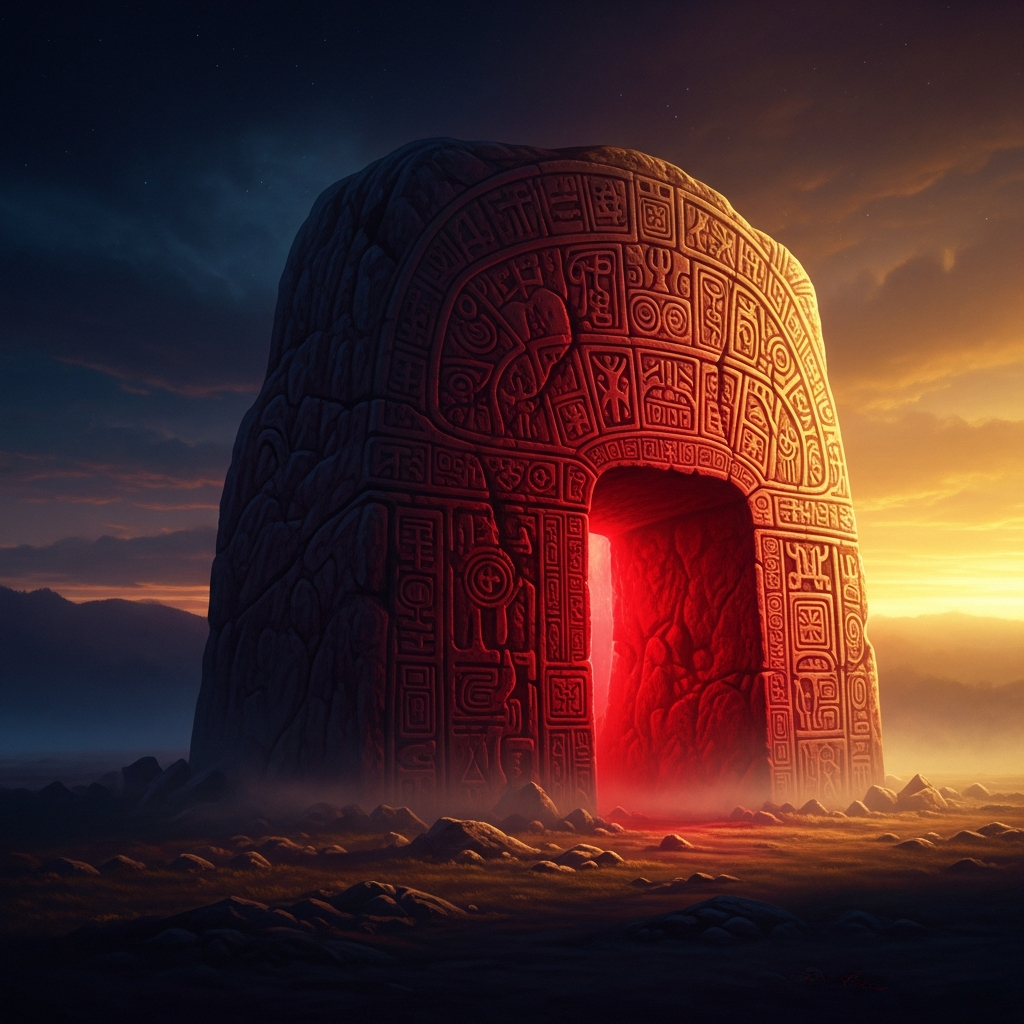
Uluru is not a rock. It is a library — a three-dimensional record of specific Ancestor actions in the Dreaming, encoded in every cave, watermark, fold, and crack in the stone. An Anangu elder walks the accessible base of Uluru with a young woman who has the right bloodlines to receive this knowledge, and reads the rock aloud.
The Djang'kawu Sisters Arrive Singing
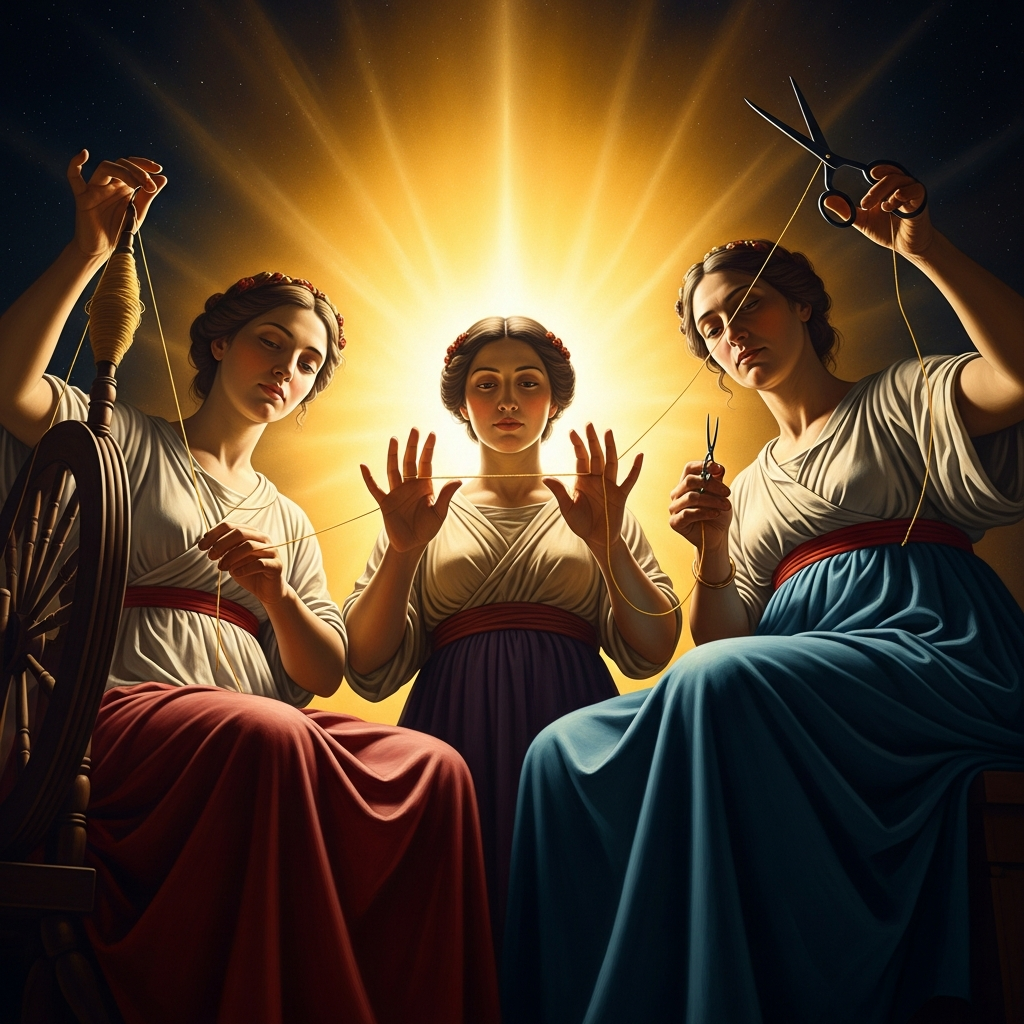
The Djang'kawu sisters arrive by canoe from Baralku — the island of the dead — singing every place they visit into existence. They create the Yolngu people, establish the sacred ceremonies, and name the world. Then the men take their sacred objects. The sisters let them, because the women already carry the sacred in their bodies.
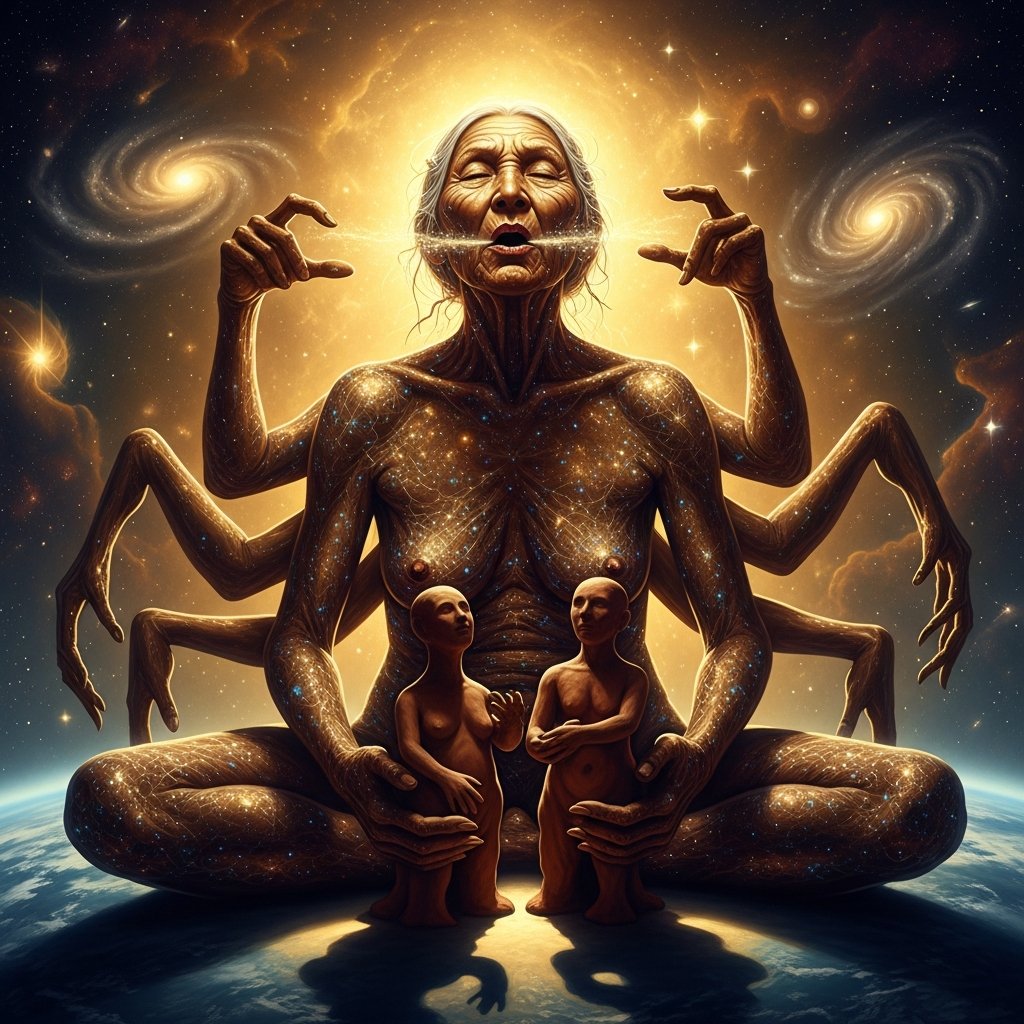
Spider Grandmother Sings the World
At the beginning of time, Spider Grandmother sits in the earth's navel and fashions two brother helpers from clay. She sings over them and they breathe. She creates human beings the same way — clay, song, breath — and teaches them to emerge through the *sipapu* into this Fourth World. Before she goes, she tells them: when you need me, look for me in the corner as a small spider.
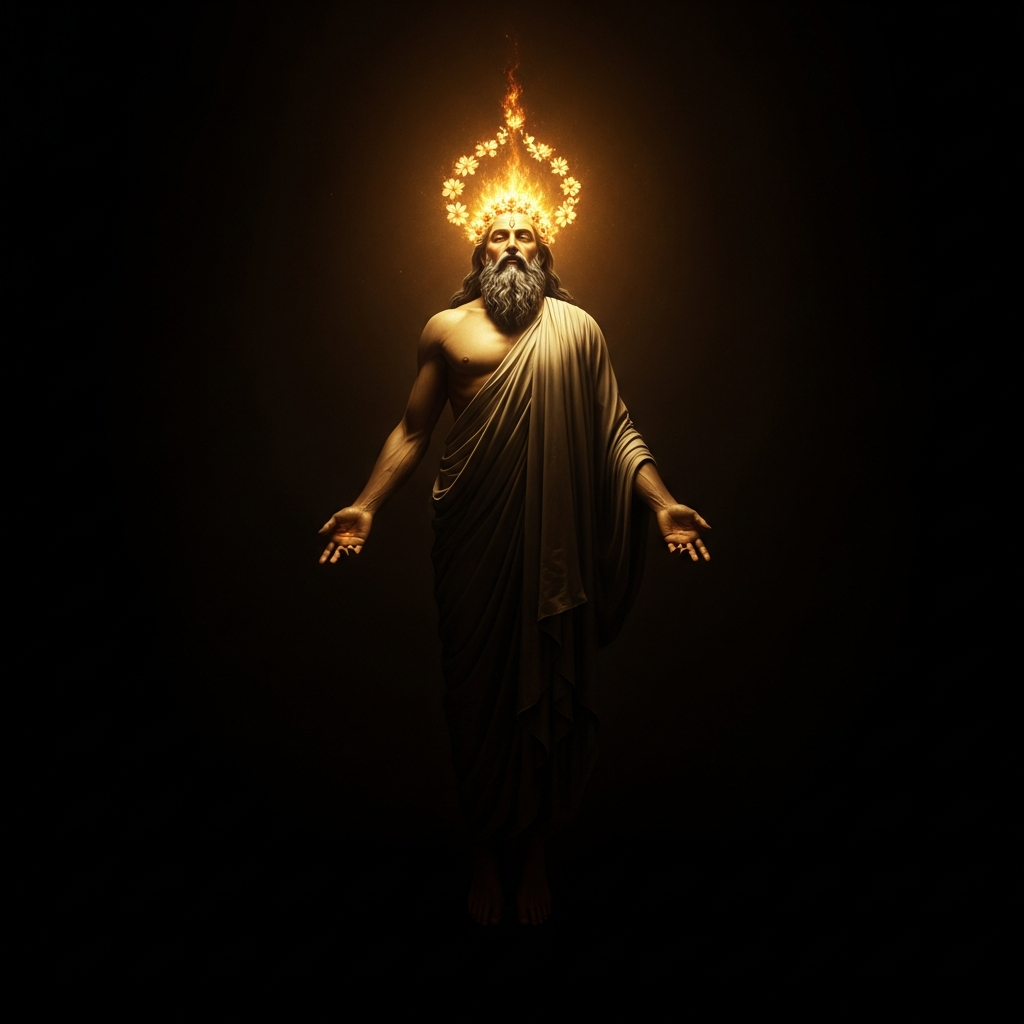
Ñamandú Speaks the World Into Being
Before there is anything to stand on, before there is darkness or light or the concept of before, Ñamandú the First Father opens from within himself and creates the world in a specific order: language first, then the earth, then the other gods, then humanity. The Guaraní call this the ayvu rapyta — the foundation of human speech — and they still perform it in religious ceremony. The world was not made. It was spoken.
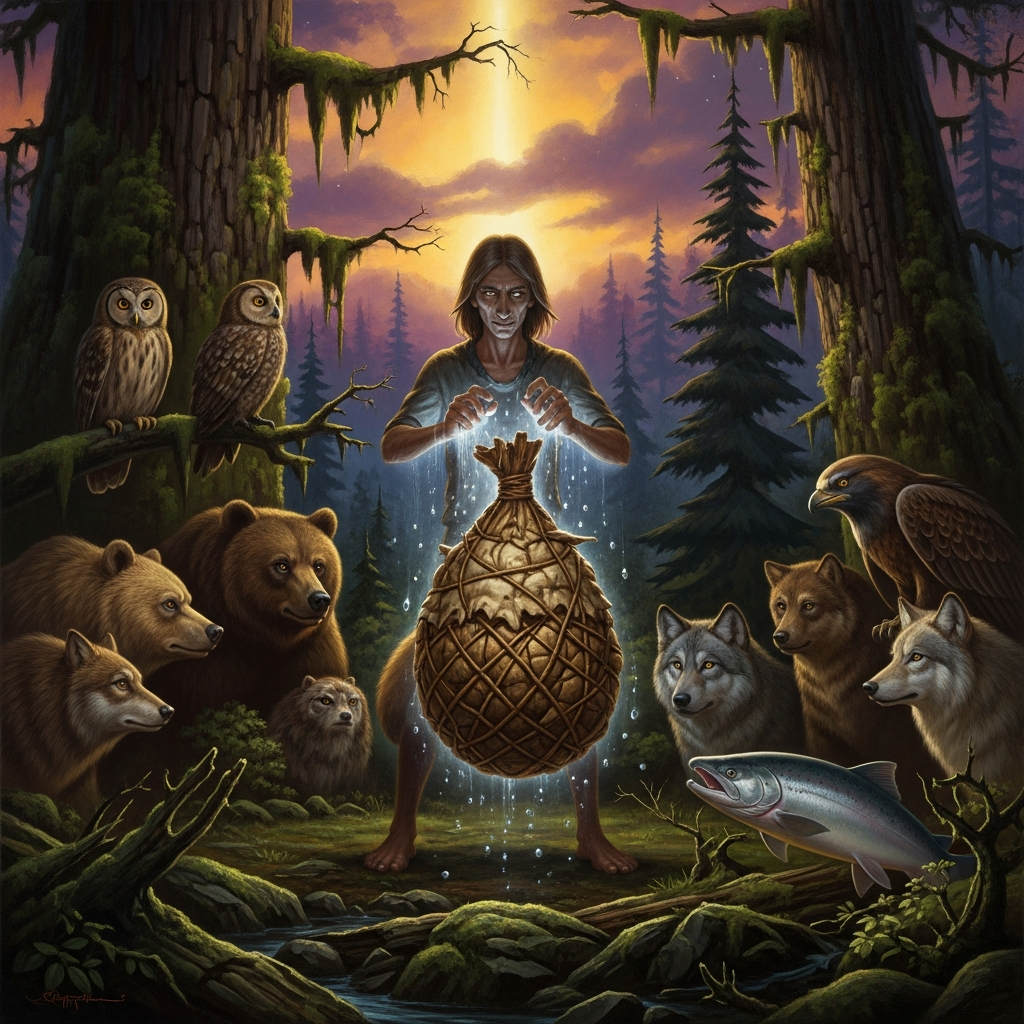
Coyote Creates Death
The people are multiplying and there is not enough food. Coyote argues that death must enter the world. The other creators want everyone to return after dying. They agree to a contest — the first to knock a bundle off a distant post wins the argument. Coyote cheats. Death enters the world. Coyote's own son is the first to die. He howls to undo it. He cannot.
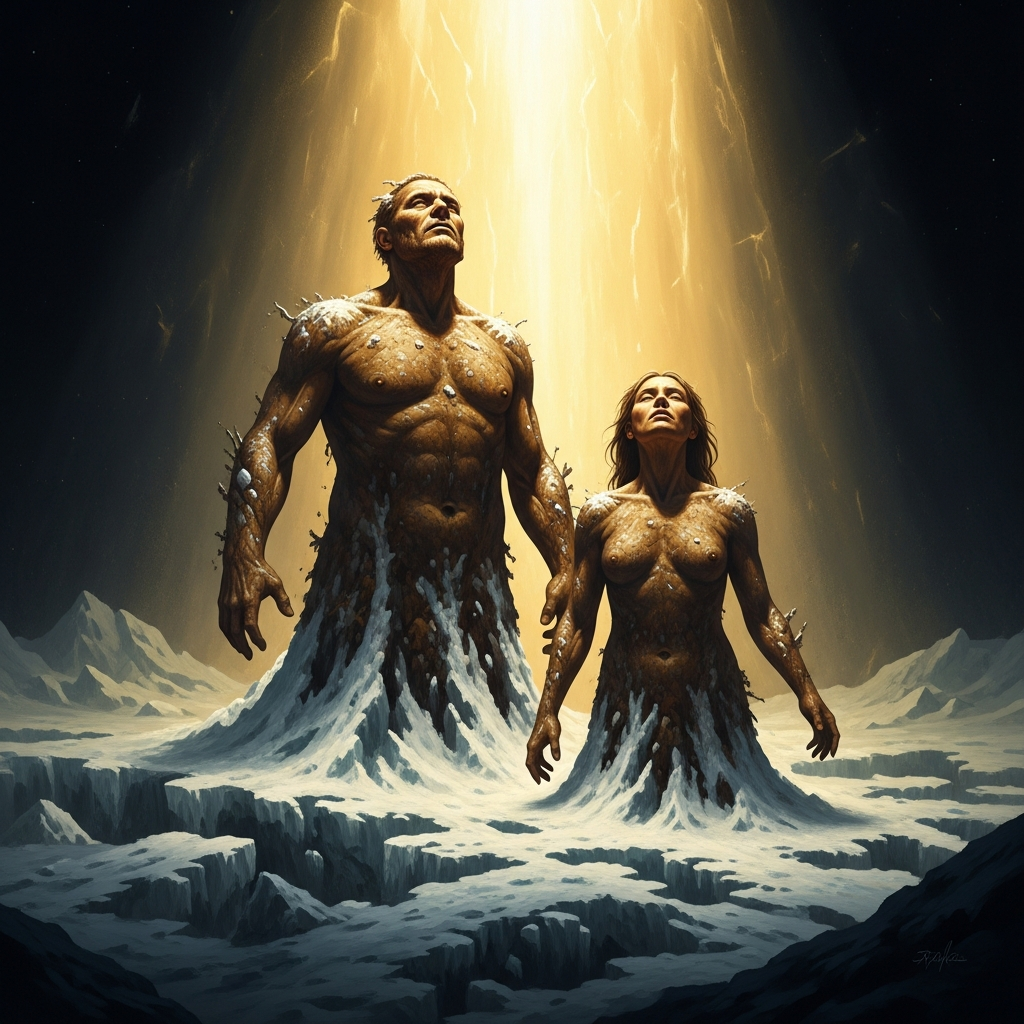
Aakulujjuusi and Uumarnituq Rise from the Earth
In the beginning there is no one. From the earth itself, two figures rise. Sila breathes awareness into them. Uumarnituq sings: let us be two, not one — and from their difference, all life descends.
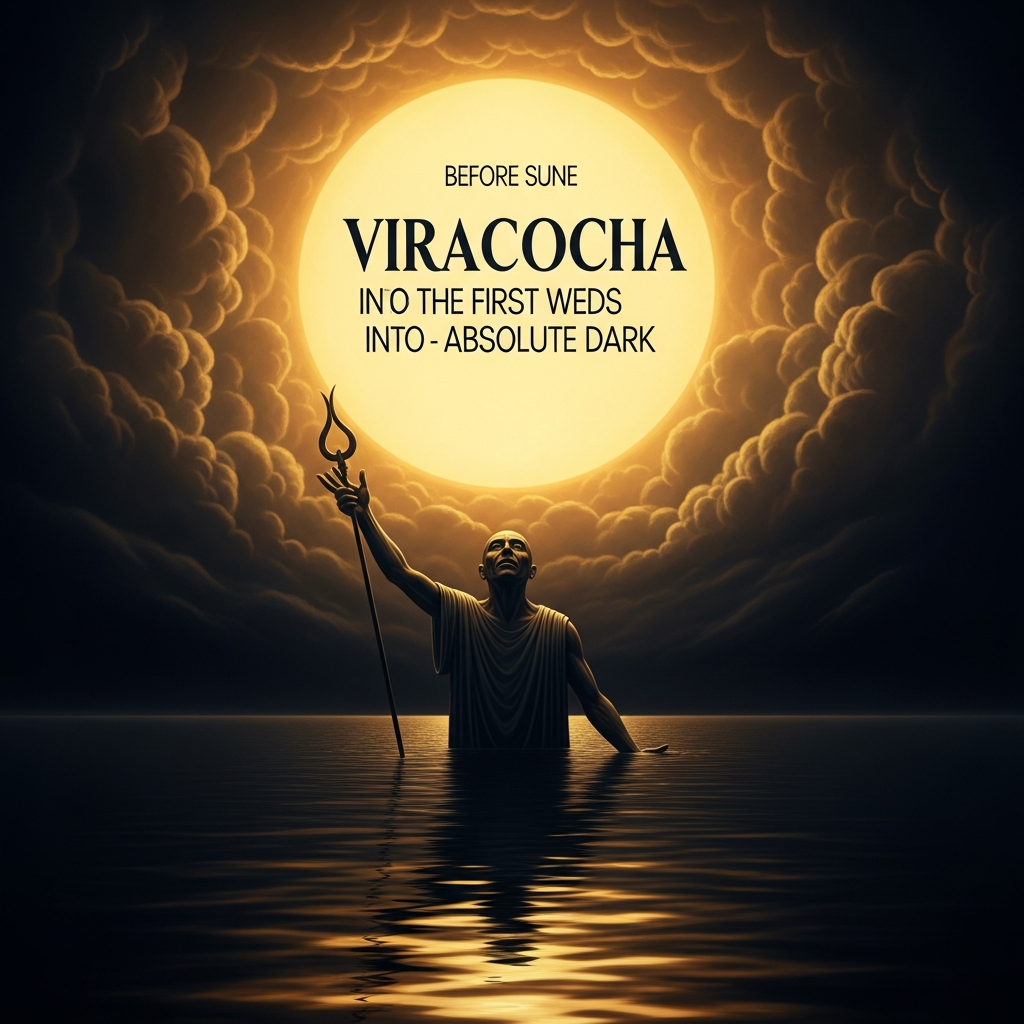
Viracocha Rises from the Lake
In the darkness before the sun, Viracocha rises from Lake Titicaca and creates a first race of giants. They displease him. He destroys them in a flood. Then, at Tiwanaku, he speaks the sun and moon and stars into existence and fashions a new humanity from stone — assigning each people to emerge from their own sacred place. He walks northwest across the continent, performing miracles, and vanishes into the Pacific.
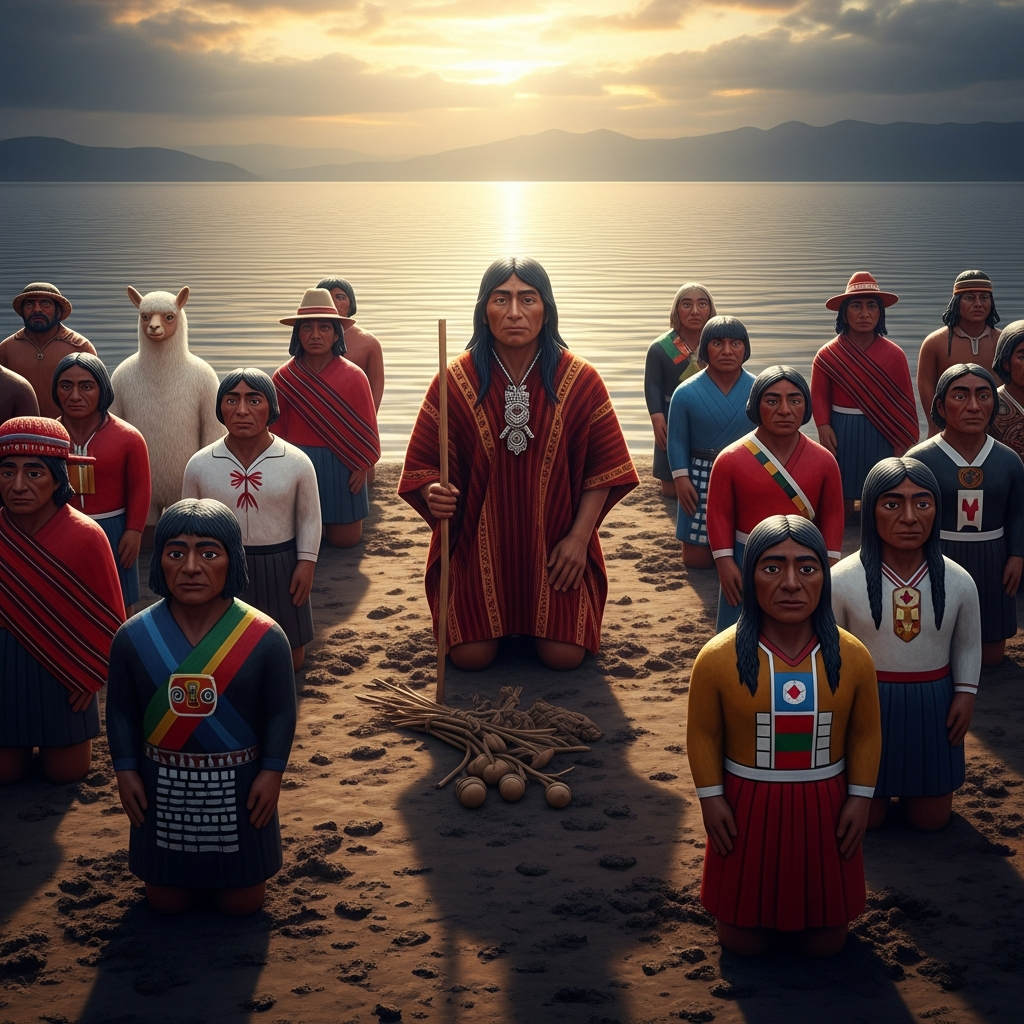
Viracocha Paints the Nations into Being
At the shore of Lake Titicaca, in the darkness before any sun exists, Viracocha kneels over rows of clay figures and paints each one — the colors of their cloaks, the cut of their hair, the dialect that will rise in their throats. He breathes them alive. Then he sends them underground to emerge, each nation, at the sacred place he has already chosen for them. The world is not found. It is designed.
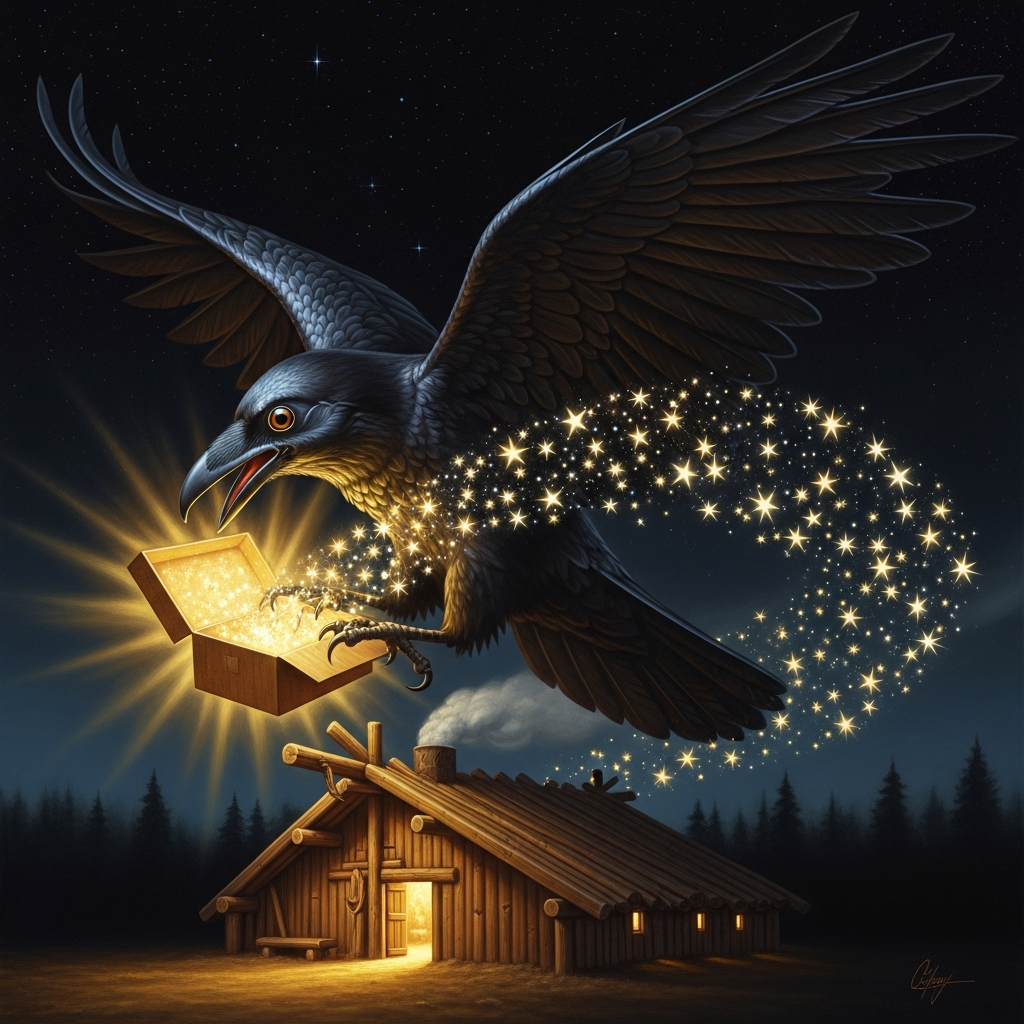
Raven Steals the Light
In the beginning, a powerful chief locks the light of the world in a box. Raven wants it. He becomes a spruce needle, is swallowed, is born, and cries until the box is opened — and then he shatters the darkness.
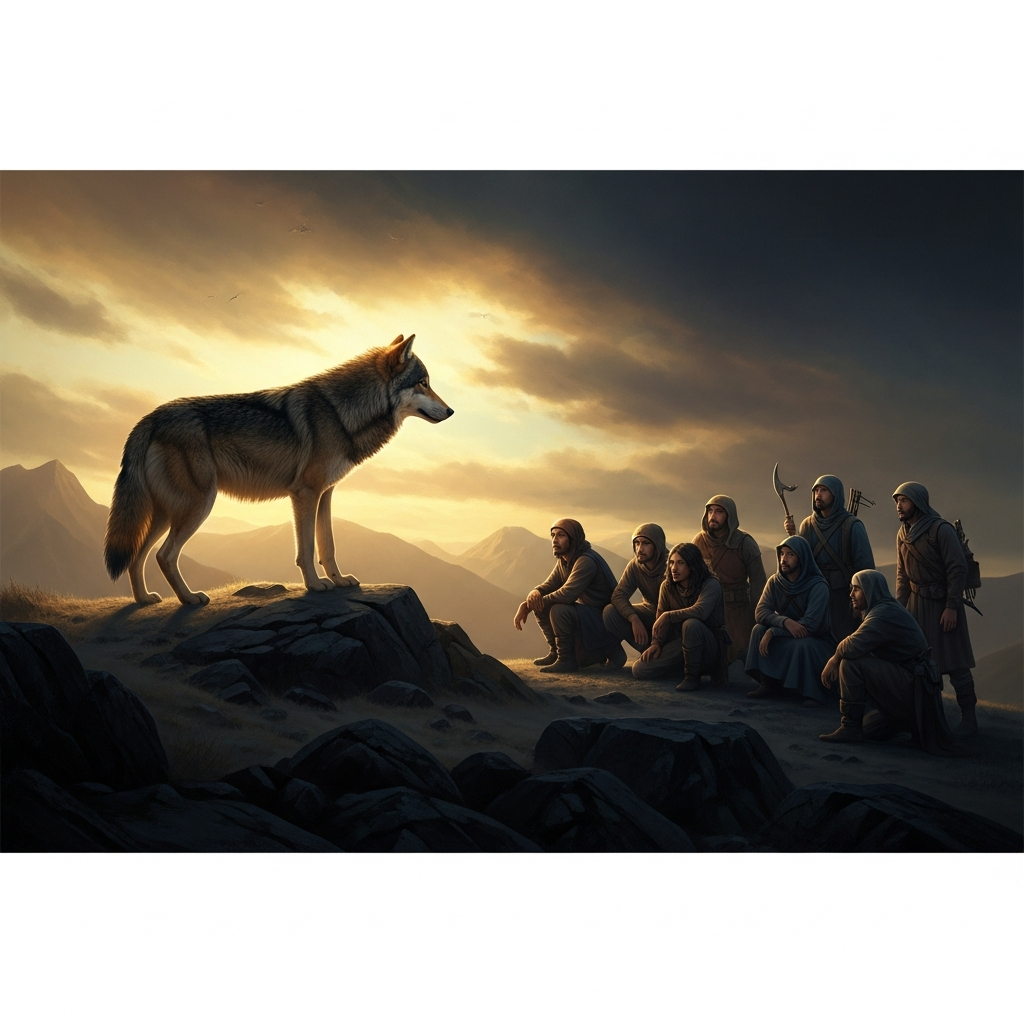
The Wolf Teaches Humans to Hunt
Before humans knew how to hunt, the Wolf taught them. The Wolf showed them the art of the pack — how to read the terrain, how to run together, how to bring down what one alone cannot take.
Ancient World
The first civilizations
Bachué Walks Out of the Lake
From the cold depths of Lake Iguaque in the Colombian highlands, Bachué emerges carrying a small boy in her arms. She waits for him to grow, marries him, and together they fill the world with children. When the earth is populated, she leads her husband back to the lake, and both become great serpents and disappear. She is the mother of all the Muisca people — and she is still in the lake.
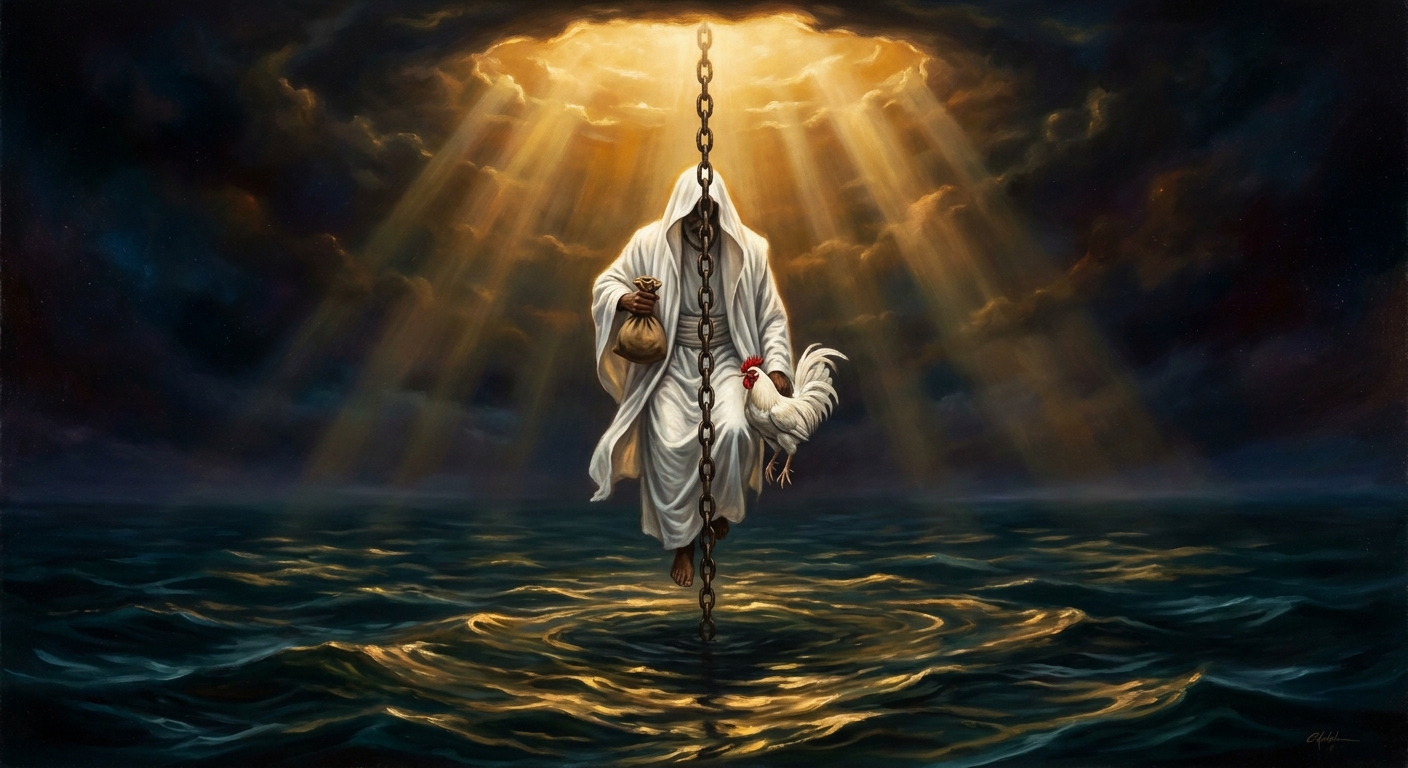
Obatala Shapes Humanity
The orisha of the white cloth descends an iron chain from heaven with a sack of soil and a rooster — and, drunk on palm wine, makes the first humans crooked.
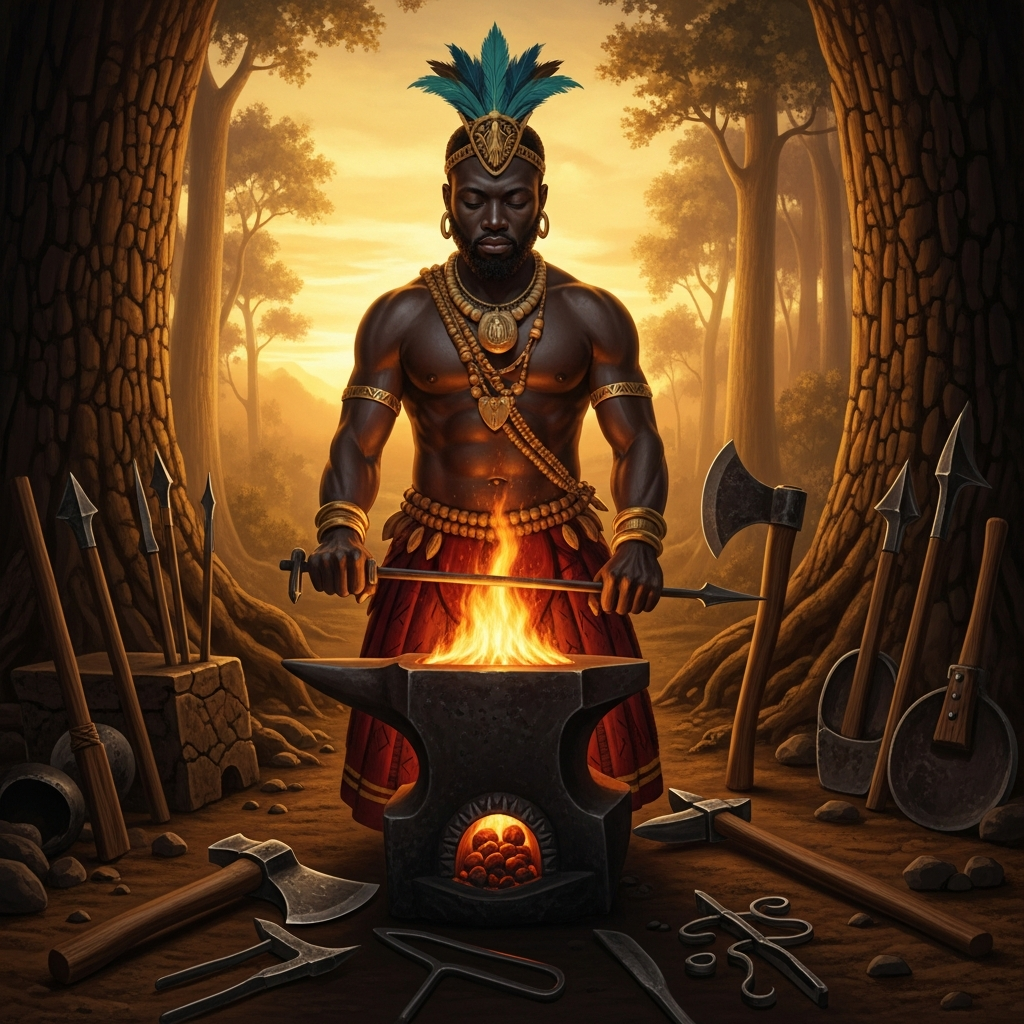
Ogun and the City He Cannot Live In
Ogun, the Yoruba god of iron, war, and labor, attends a celebration and cannot stop the killing — the iron in his hands does what iron does. He withdraws into the forest and will not come back. Blacksmiths, soldiers, surgeons, and taxi drivers still call his name at the blade's edge.
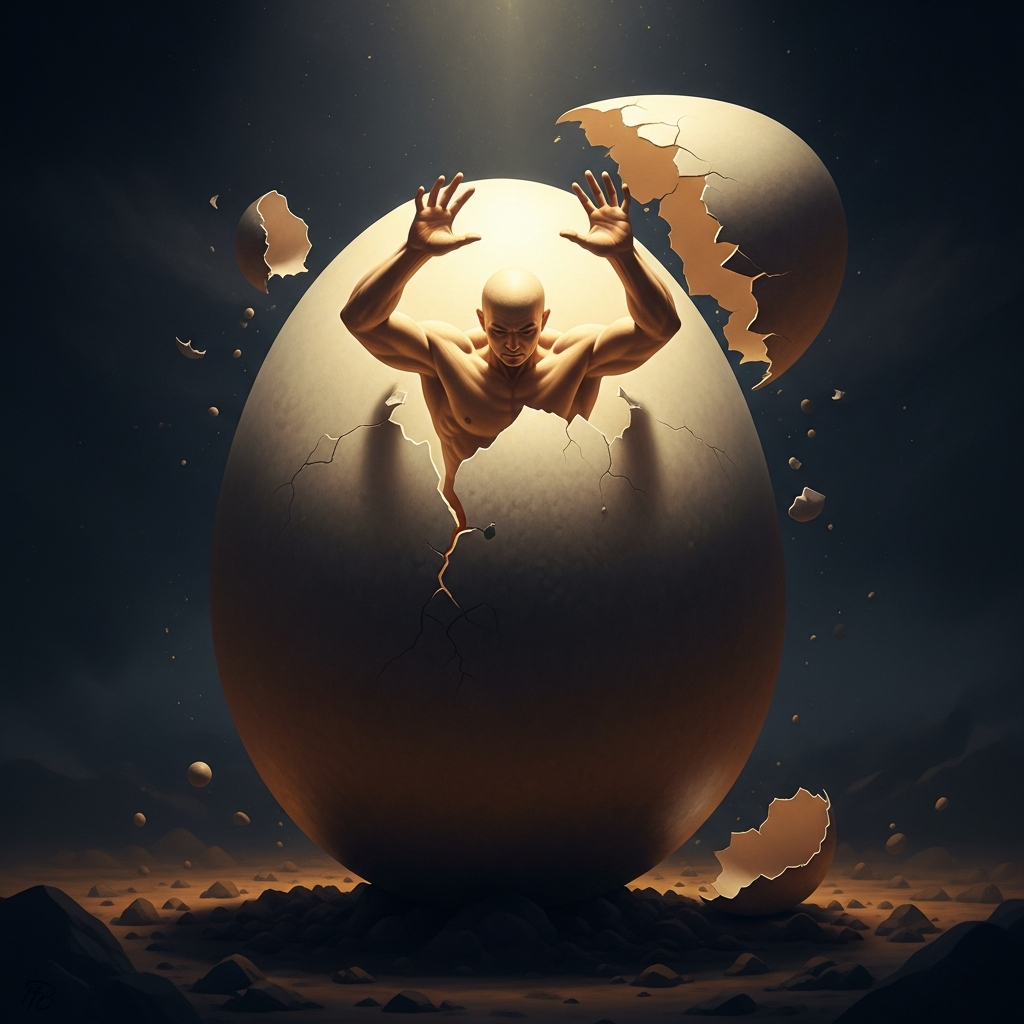
Pangu Holds Up the Sky
Pangu sleeps inside the cosmic egg for eighteen thousand years. When he wakes, he pushes the shell apart with his hands and feet. He stands between earth and sky, growing ten feet taller each day to keep them from collapsing back together. After eighteen thousand more years, he dies. His breath becomes the wind; his voice, thunder; his left eye, the sun; his right eye, the moon; his body, the mountains and rivers and seas.
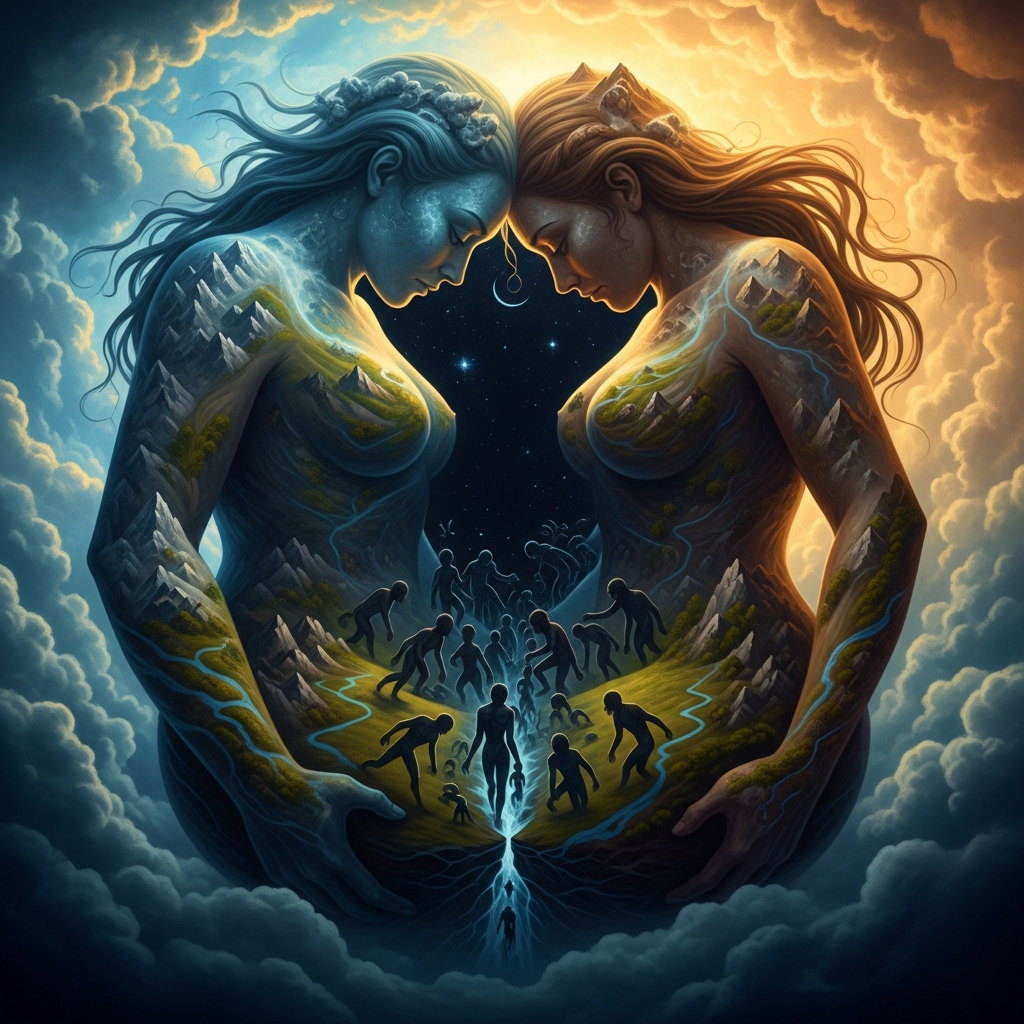
The Separation of Rangi and Papa
In the beginning, Sky Father and Earth Mother lie locked together in darkness so total that nothing can grow between them. Their children, pressed into the void between their parents' bodies, argue about what to do. Tāne places his shoulders against the earth and his feet against the sky and pushes. The scream of separation is the first light.
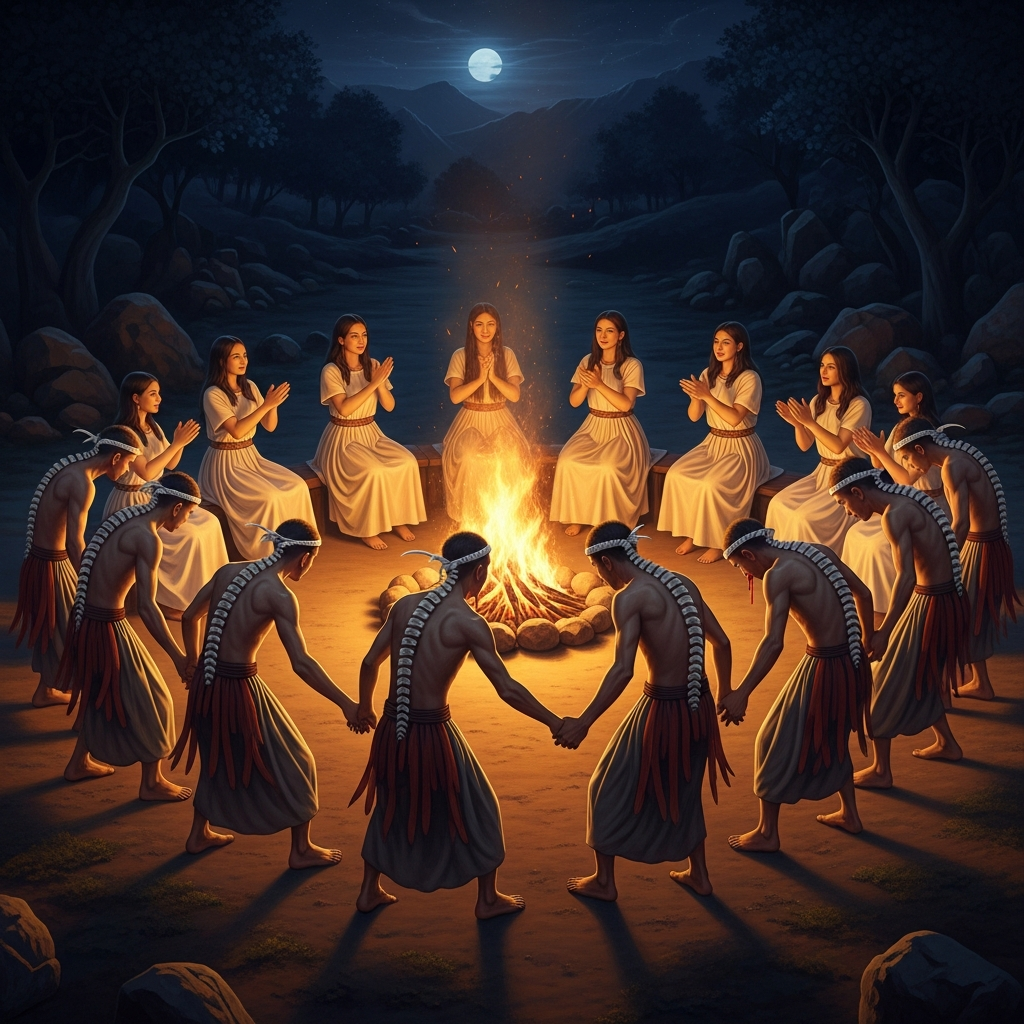
The Eland Dance and the Trance
The San people of southern Africa perform the eland bull dance — the most sacred ritual in San religion — in which communal singing and clapping drive the shamans into trance, across the boundary of death and back, and the healed carry the potency of the eland in their bodies. The rock paintings of the Drakensberg are a record of what they saw on the other side.
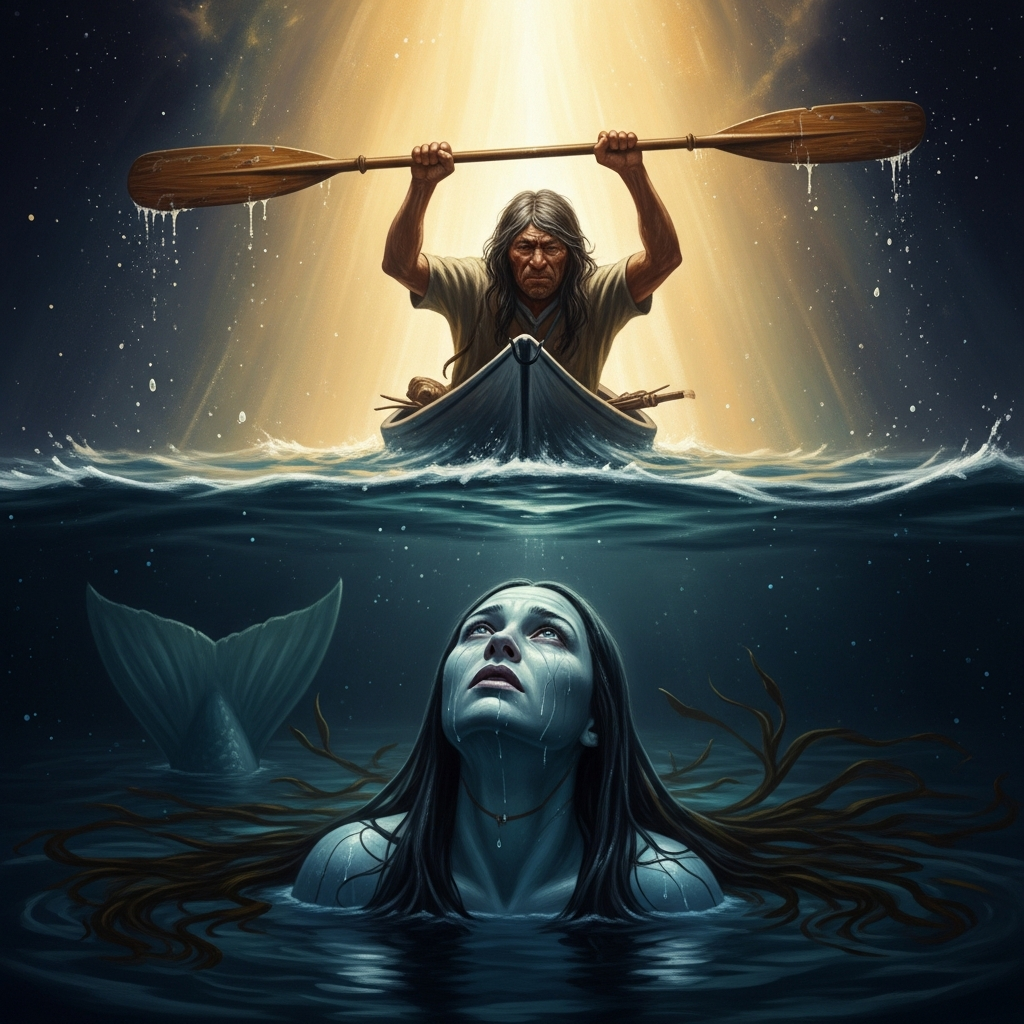
Sedna Falls Into the Sea
A girl is thrown from a kayak by her father. She clings to the side. He cuts off her fingers joint by joint — and every severed piece becomes a creature of the sea.
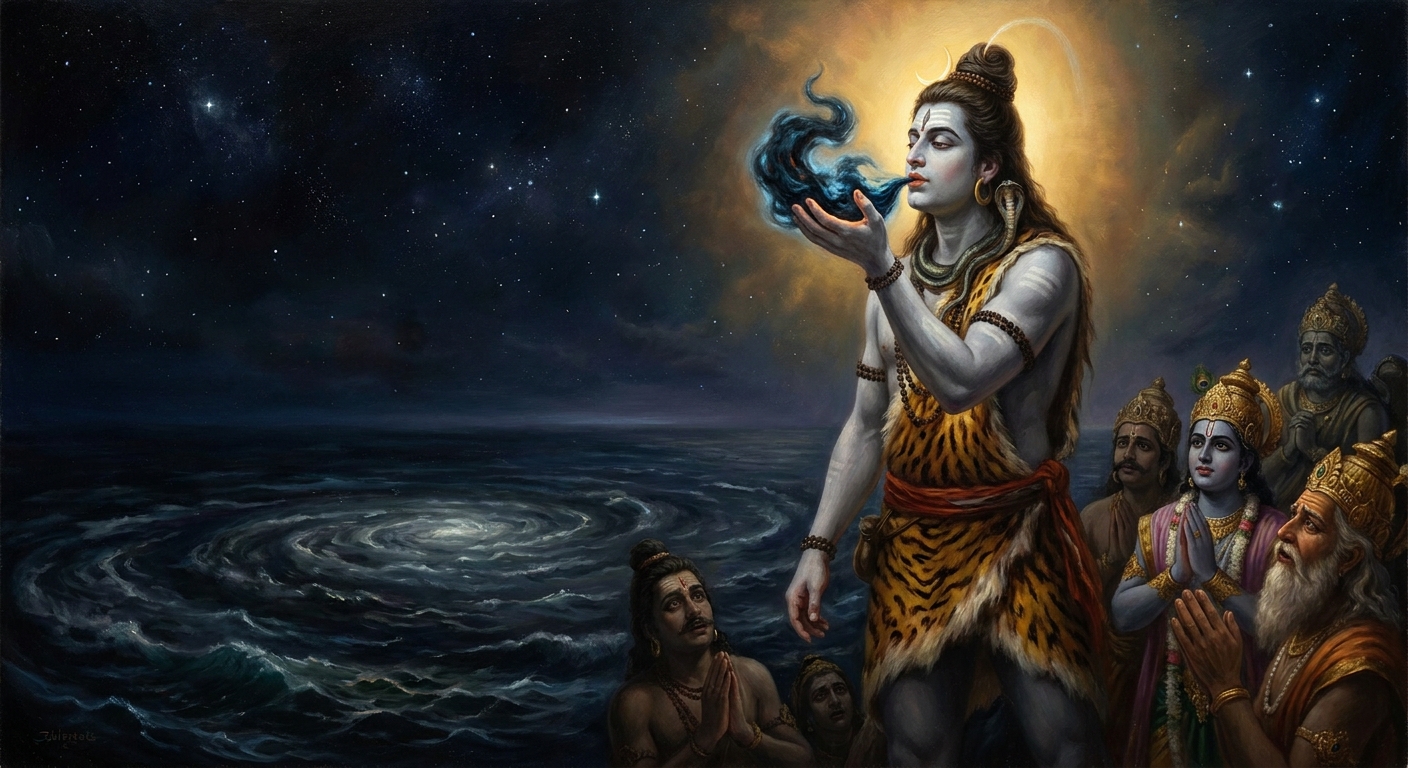
Shiva Drinks the Halahala
When the churning of the cosmic ocean throws up a poison that would unmake every world, no other god will drink it. Shiva walks down from Kailash, cups the halahala in his palm, swallows — and his wife Parvati closes her hand on his throat to stop the death from spreading further.

Tengri and Erlik Divide the World
In the beginning there is only water. Tengri orders Erlik to dive to the bottom and bring up the mud of creation. Erlik obeys — and steals a mouthful. What he cannot swallow becomes the mountains. What he cannot control becomes death.
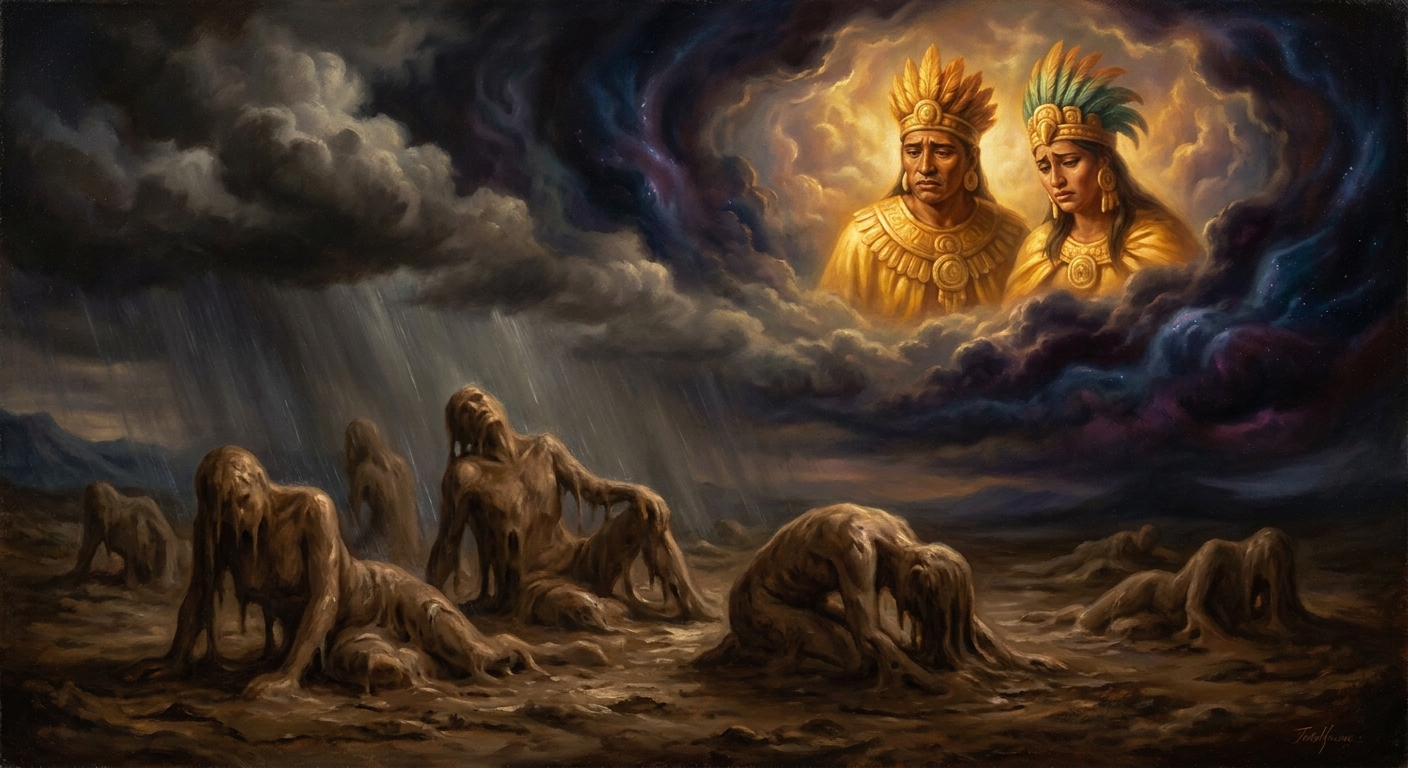
Tepeu and Gucumatz Speak the World Into Being
In the beginning there is only sky and sea, silence and stillness. The Feathered Serpent and the Heart of Sky meet above the dark water and speak — and what they say becomes what exists. Three failed attempts at humanity follow. The fourth, made from maize, finally remembers its makers.

How the World Was Made from a Giant's Body
Before there is a world there is only Ginnungagap, the yawning void between the fire of Muspelheim and the ice of Niflheim. Where they meet, the ice drips, and from the drips wakes Ymir, the first frost giant. The cosmic cow Auðumbla licks salt from the ice and uncovers the first god. His grandsons — Odin, Vili, Vé — kill Ymir and build the world from his body. The skull becomes the sky. The blood becomes the sea. Humans, when they finally arrive, are made last and made of driftwood.
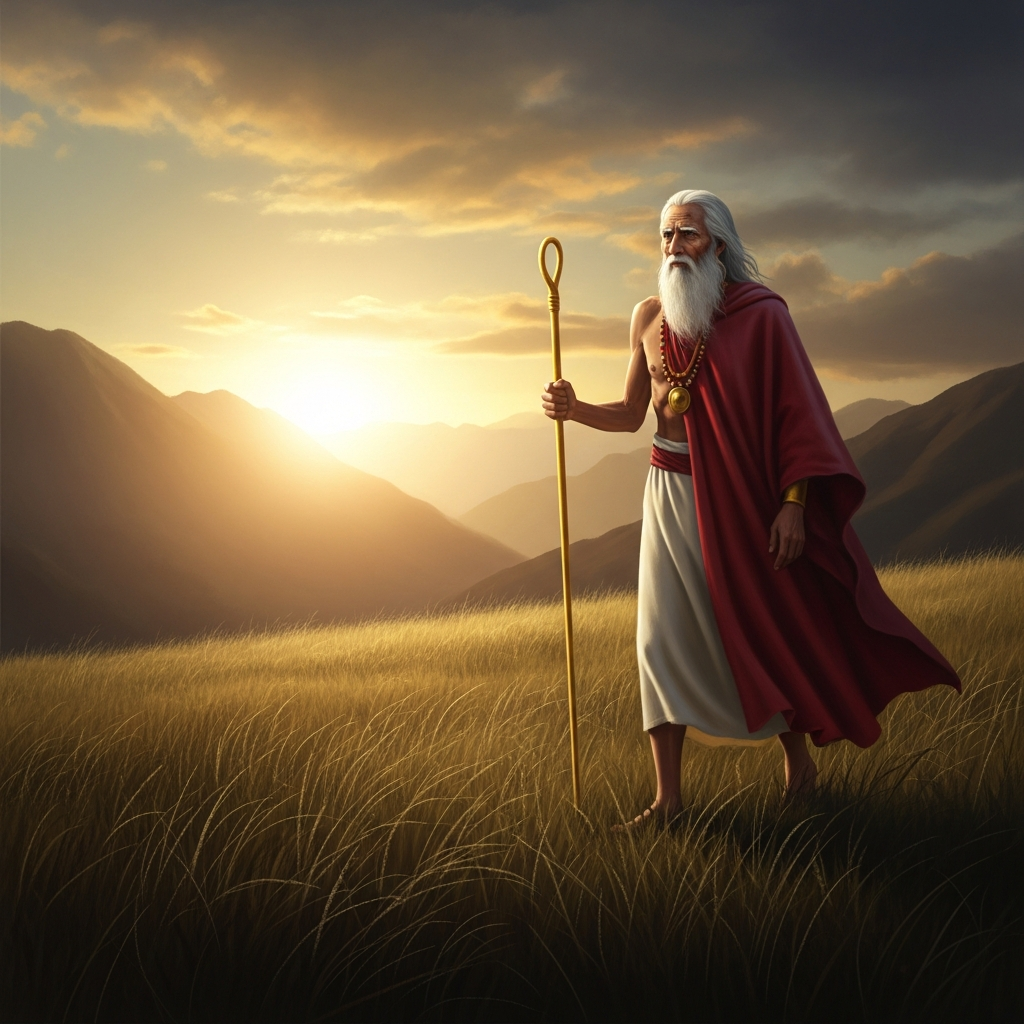
Bochica Breaks the Rock at Tequendama
An old man arrives from the east, walking slowly, carrying a golden staff. He teaches the Muisca of the Bogotá savannah to weave and to live by law. Then he disappears toward the west. When the god Chibchacum floods the savannah in malice, Bochica appears in the sun and drives his staff into the rock face at the edge of the plateau — and the water roars through the crack and falls away. The Falls of Tequendama are where the staff struck.
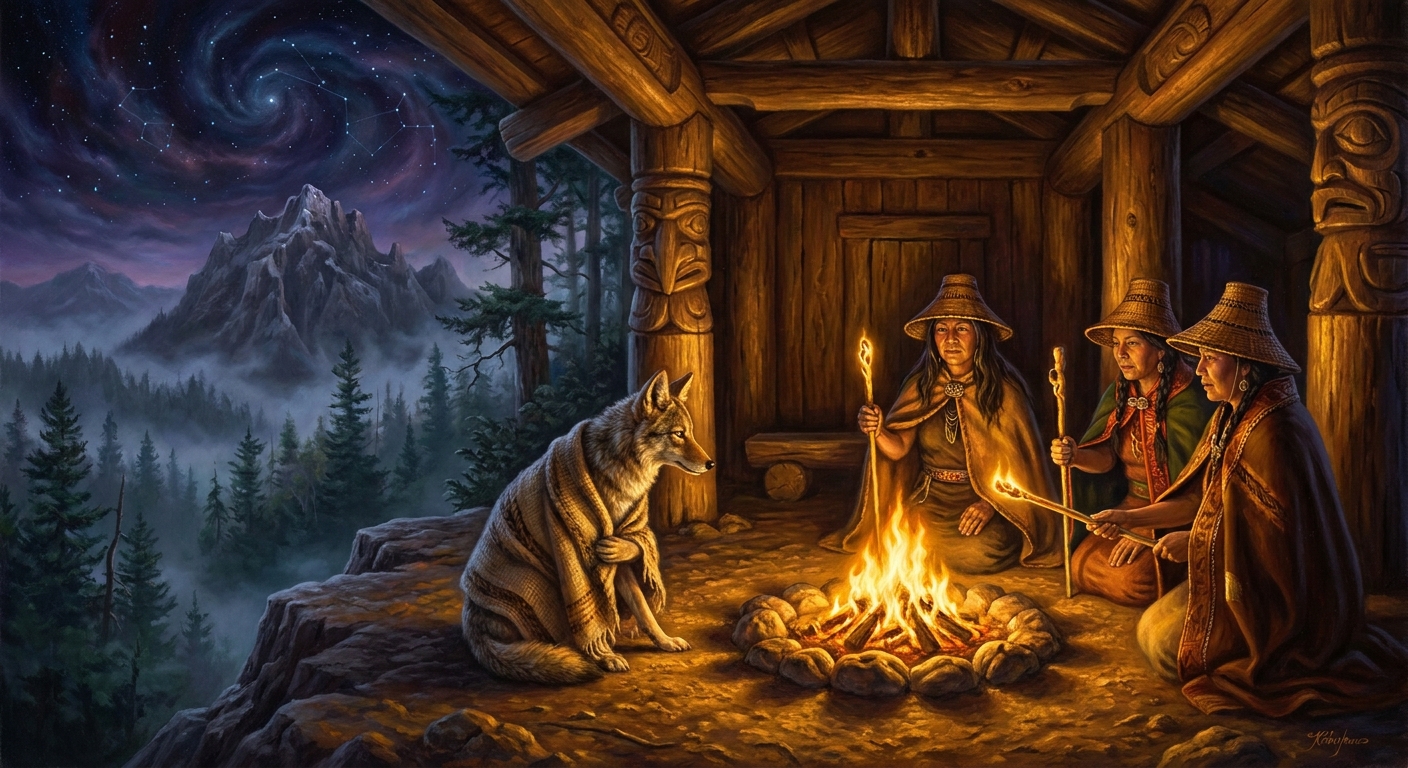
Coyote Steals Fire
The trickster runs fire down a mountain in a relay of frog and squirrel and wood, and the world's first warmth arrives smelling faintly of singed fur.
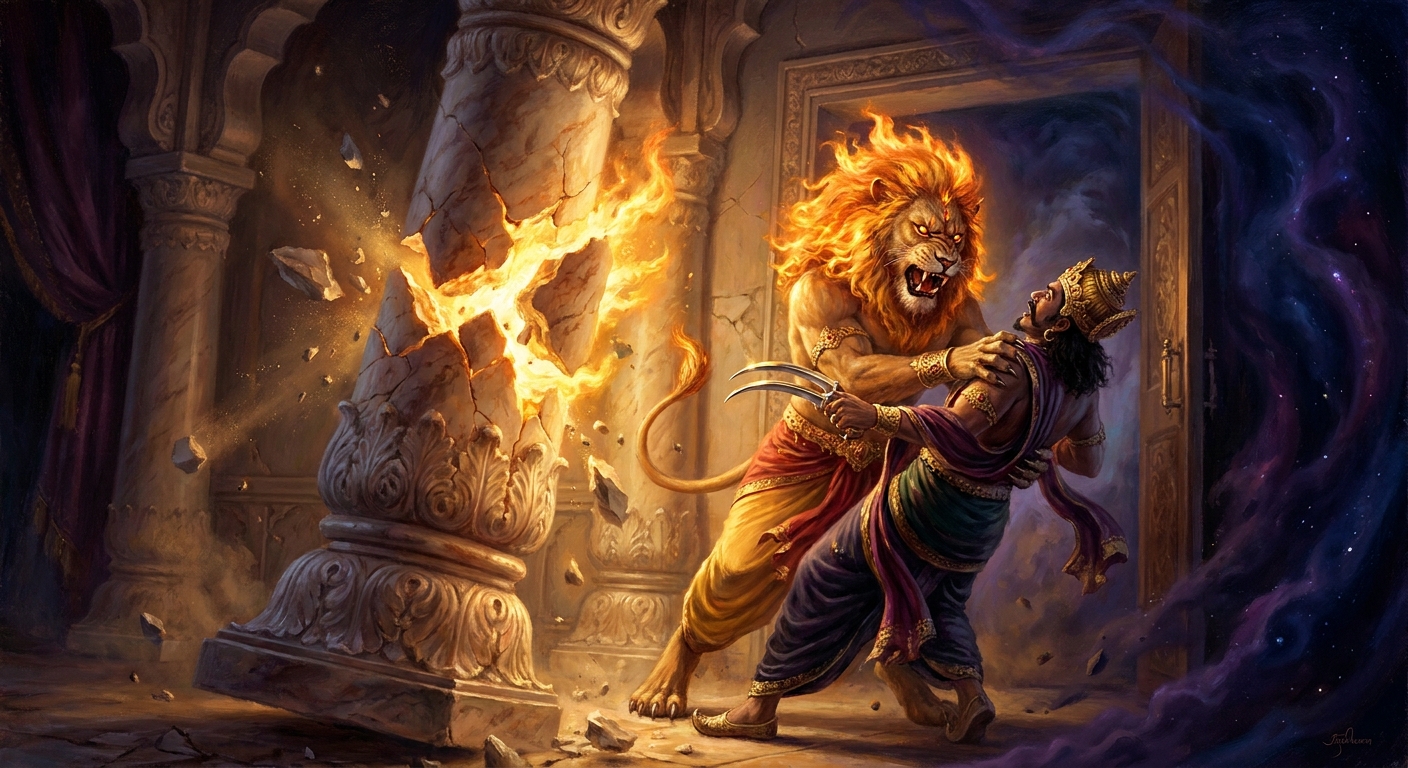
Narasimha Tears Hiranyakashipu
The asura king Hiranyakashipu has Brahma's boon: he cannot be killed by man or beast, indoors or out, by day or night, on earth or in sky, by any weapon. So Vishnu becomes a thing that is none of those — bursts from a temple pillar at twilight, half-man half-lion, and disembowels a god-defying tyrant on his own threshold.
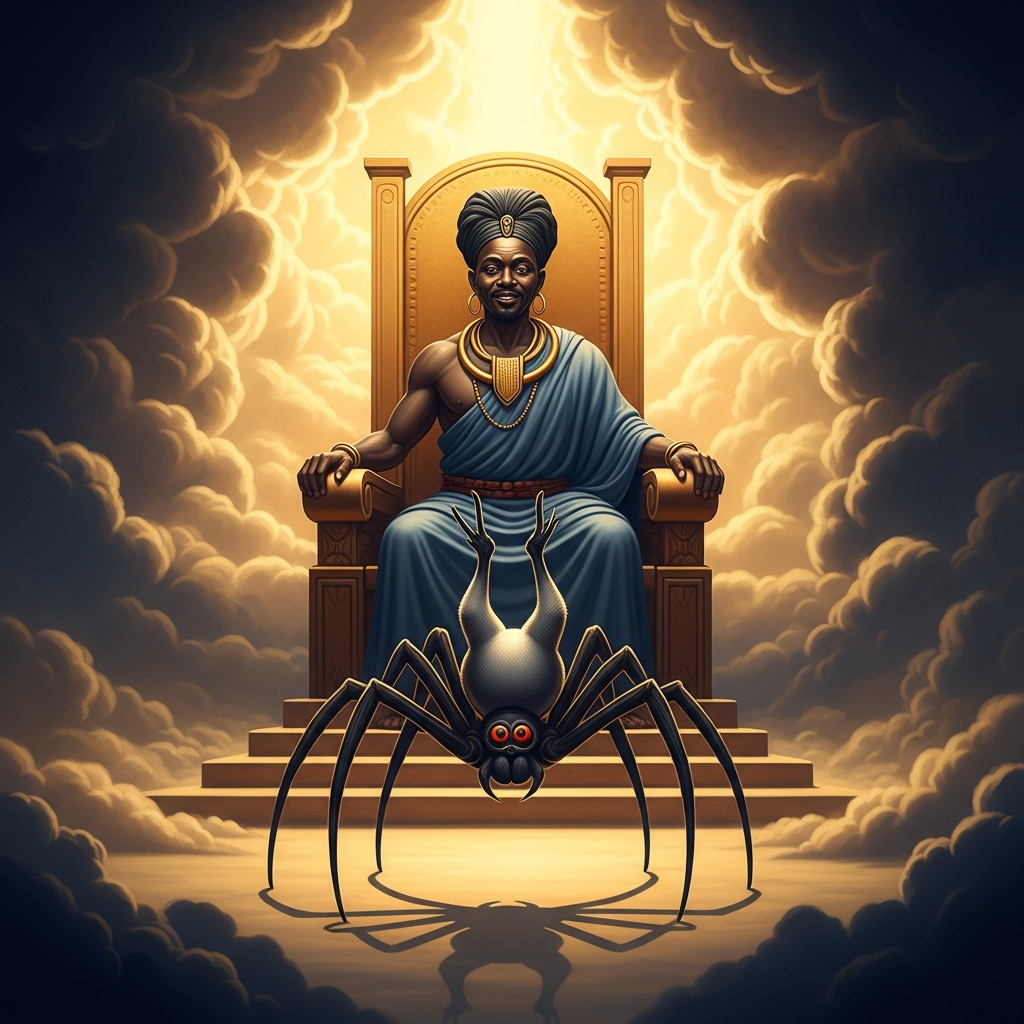
Anansi Buys All the Stories
The sky god owns every story ever told and will not release them. The spider pays the price — four impossible captures using nothing but wit.
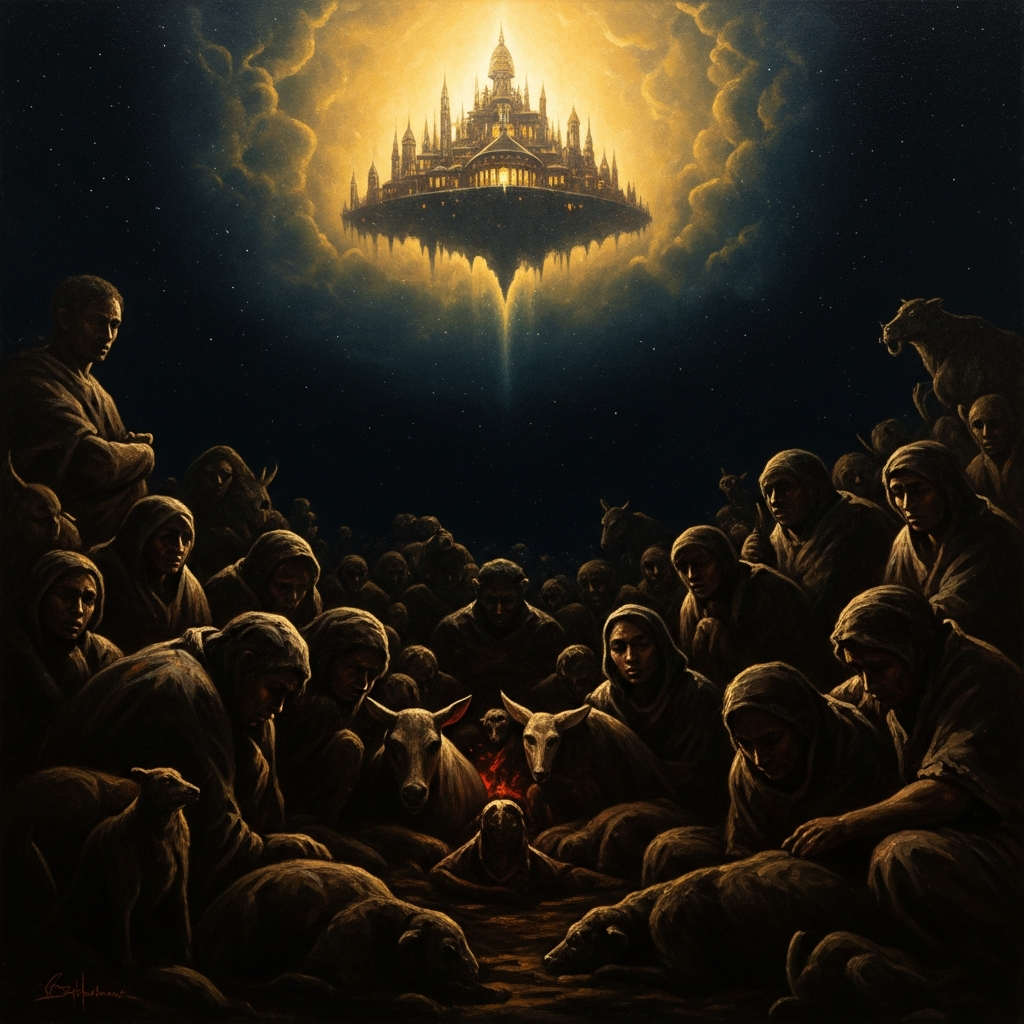
Anansi Steals Fire from the Sky
The earth is cold. Nyame keeps fire in a gourd in his sky palace, guarded by hornets. Anansi, the spider trickster of the Akan, wants it — not because he is strong enough to take it, but because he is clever enough to make Nyame give it freely.
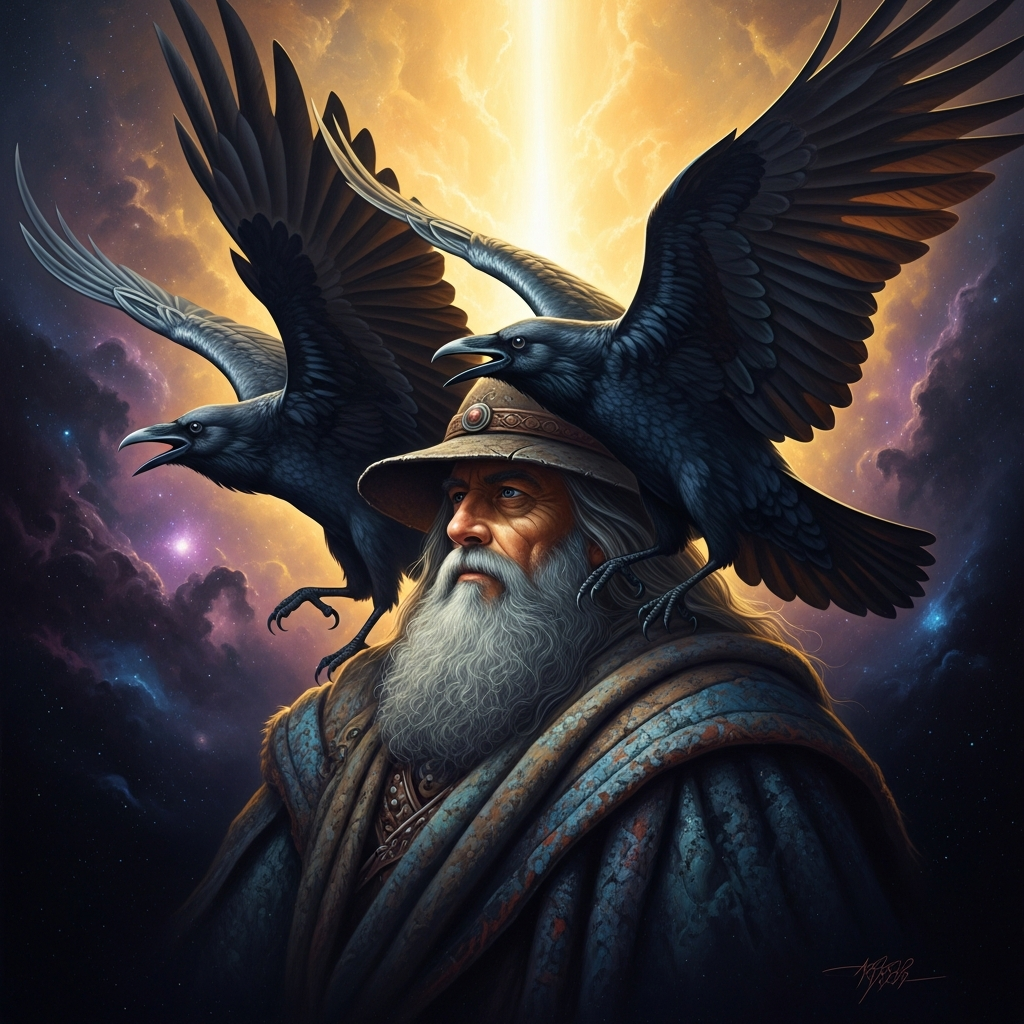
Huginn and Muninn: The Eyes of Odin
Every morning at dawn, Odin sends his two ravens across the nine worlds to observe everything that lives and moves. Huginn carries Thought. Muninn carries Memory. They return at dinner and whisper in Odin's ears. Odin fears for Huginn when they are gone — but fears more for Muninn. A single day in Huginn's flight, and what it means that the cosmos is witnessed.
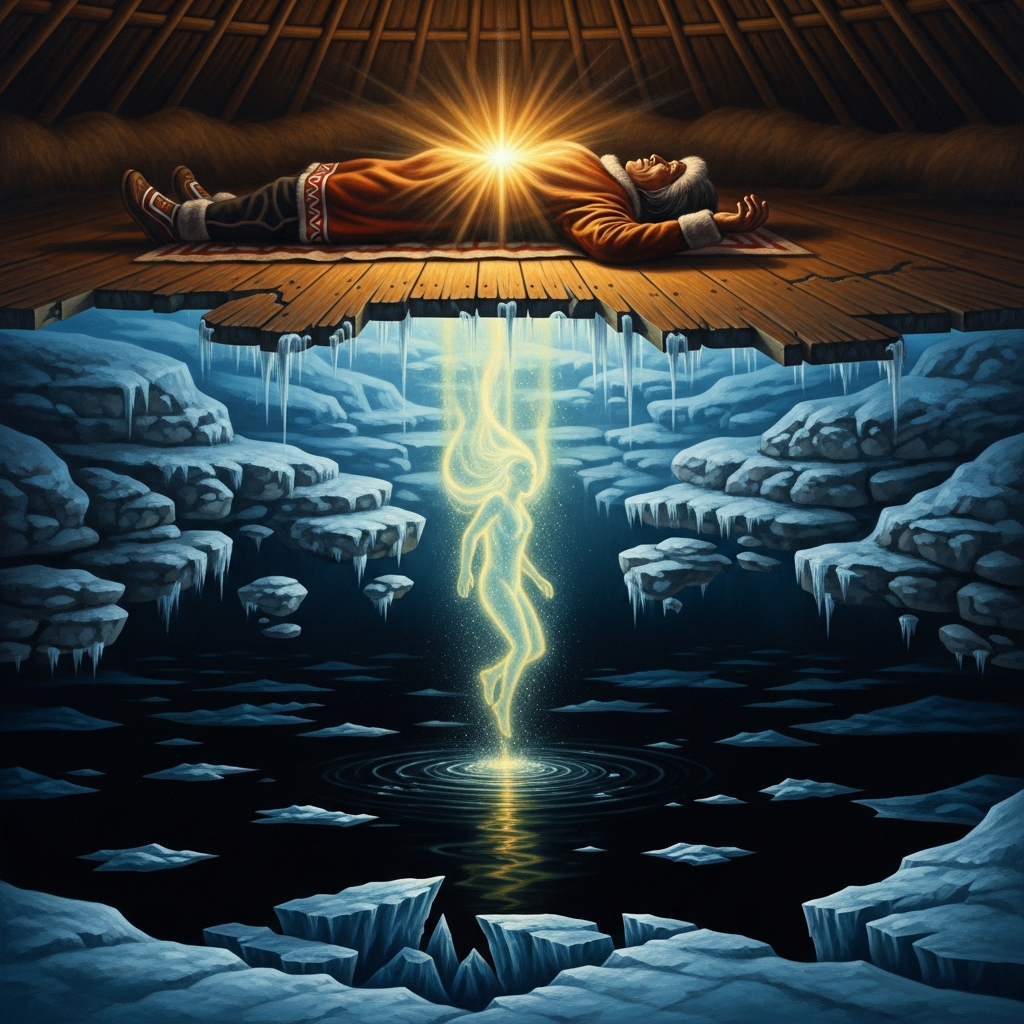
The Shaman Descends to Sedna
The hunt has failed and the village faces starvation. The angakkuq enters trance, descends to the ocean floor, and combs the tangles from Sedna's hair — each tangle a violation the people must confess.
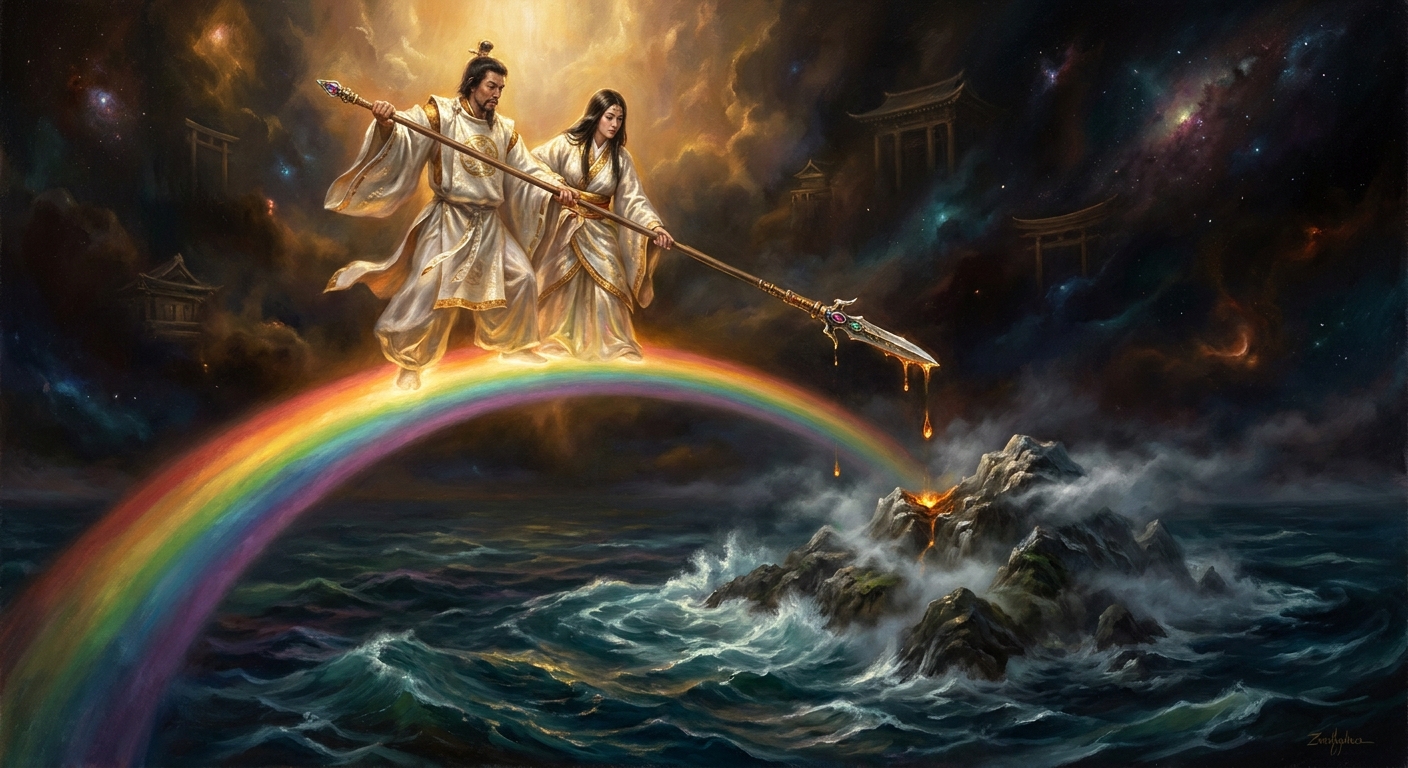
The Divine Couple Stir the Ocean
Izanagi and Izanami stand on the Floating Bridge of Heaven with the Jeweled Spear and stir the ocean. The first island rises. They descend, build the Pillar of Heaven, circle it, and speak. Their union seeds the archipelago. Then Izanami births fire — and fire kills her.
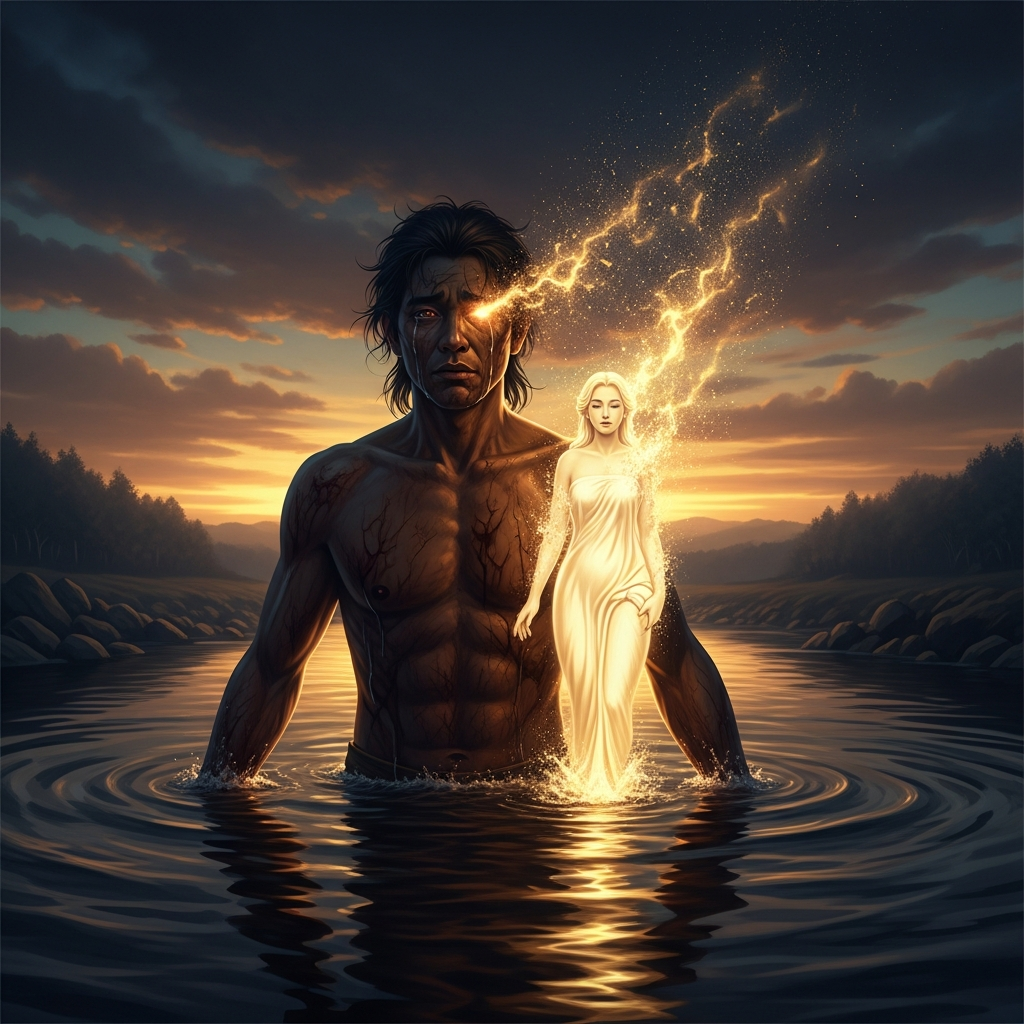
Izanagi Washes Himself Clean
After losing Izanami in the underworld and fleeing the Shikome through the dark, Izanagi reaches the river at Ahaji and washes himself. From his left eye comes the sun goddess Amaterasu. From his right eye, the moon god Tsukuyomi. From his nose, Susanoo the storm. The three great kami of Shinto are born from the tears and snot of grief.
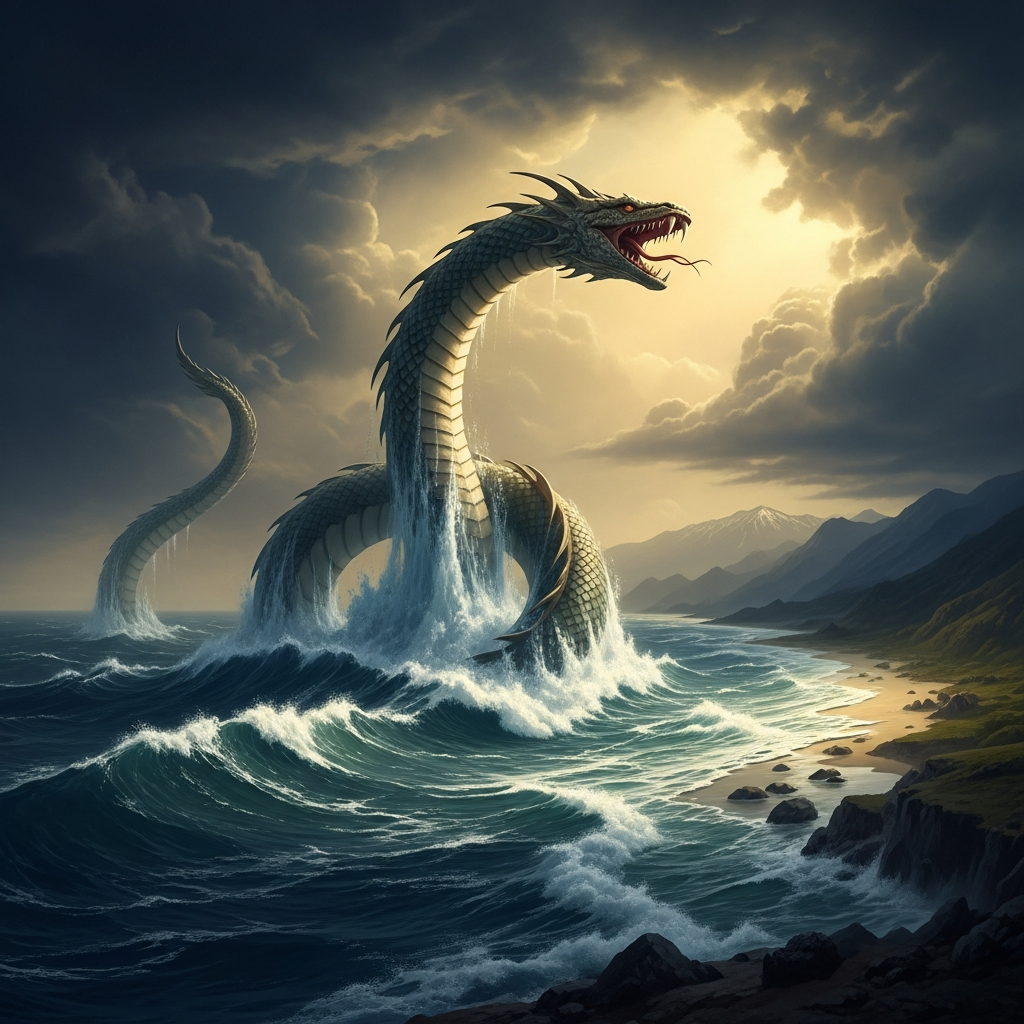
Kai Kai and Treng Treng — The Serpents' War
Two cosmic serpents locked in war: Kai Kai Vilú, the sea serpent, floods the world. Treng Treng Vilú, the land serpent, raises the mountains. Humans climb and climb — those who pray and keep moving reach the summit and become the ancestors of the Mapuche people. The myth is performed in the ngillatun ceremony, which is still held across Mapuche territory. The flood never fully recedes.
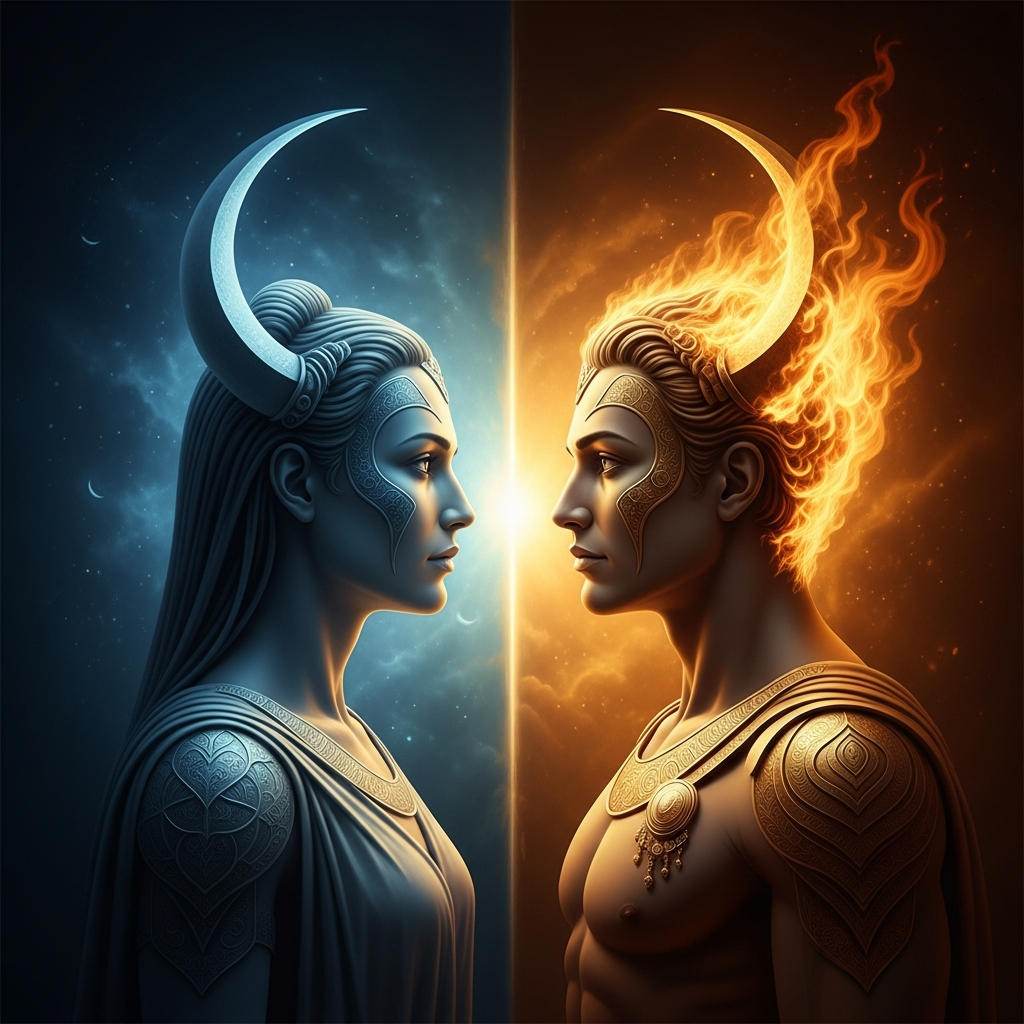
Mawu-Lisa and the Weight of the World
The Fon people of Dahomey know their supreme deity as twins who are one — Mawu the moon-mother and Lisa the sun-father, inseparable, creating the world together with the help of a rainbow serpent who must hold it up forever. Creation is not finished. It is an act of permanent maintenance, one coil from collapse.

Pachamama Shrugs
Pachamama — the Earth Mother — predates the Inca, predates the Spanish, predates every organized religion in the Andes. She is not worshipped in temples because she is not inside them: she is what temples sit on. Every earthquake is her movement. Every farmer pours the first sip of chicha onto the ground before drinking. The Spanish tried to replace her with the Virgin Mary. In many villages, the Virgin Mary now shakes the earth.
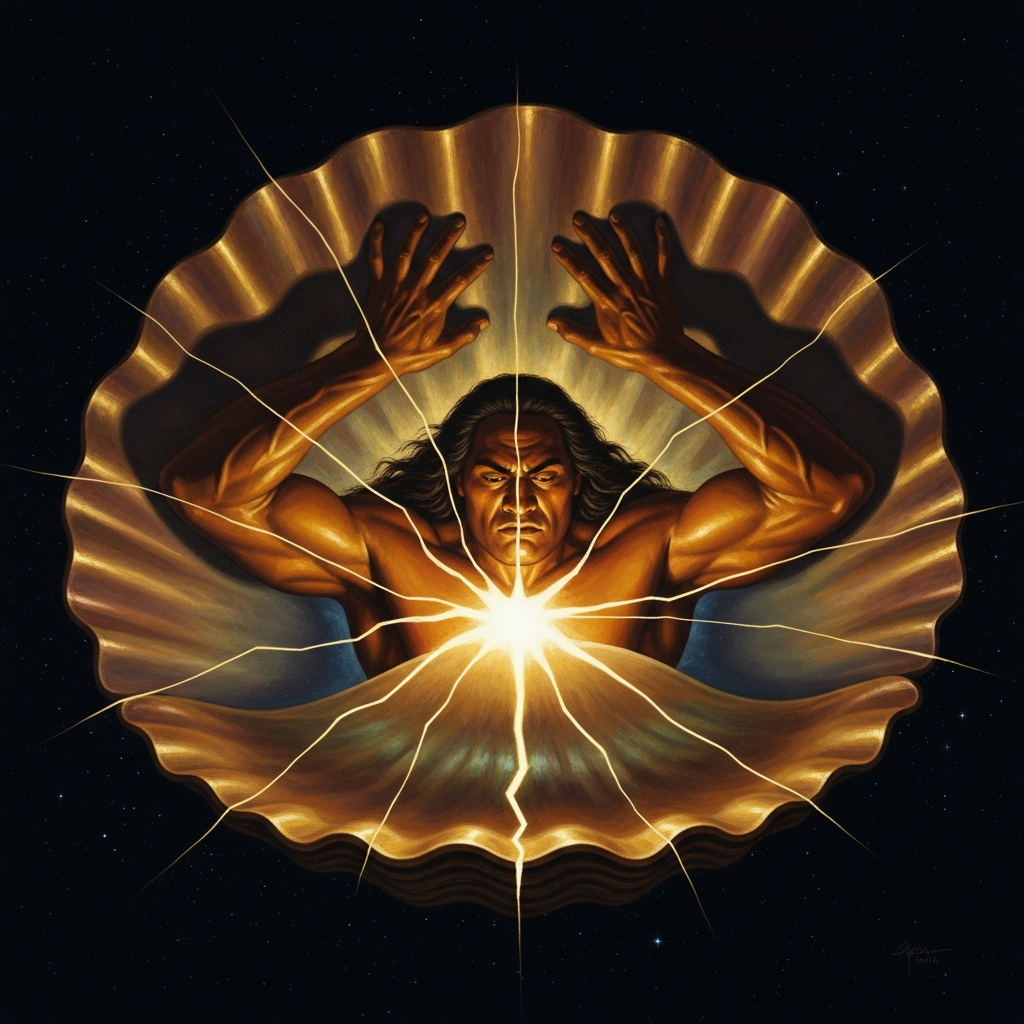
Tangaroa Breaks His Shell
In the primordial dark, the sea-god Tangaroa cracks his own shell. There is nothing outside him. He breaks pieces off and they become rock and sand. He reaches inside himself and draws out his flesh — which becomes the trees, the living things, the gods who followed.
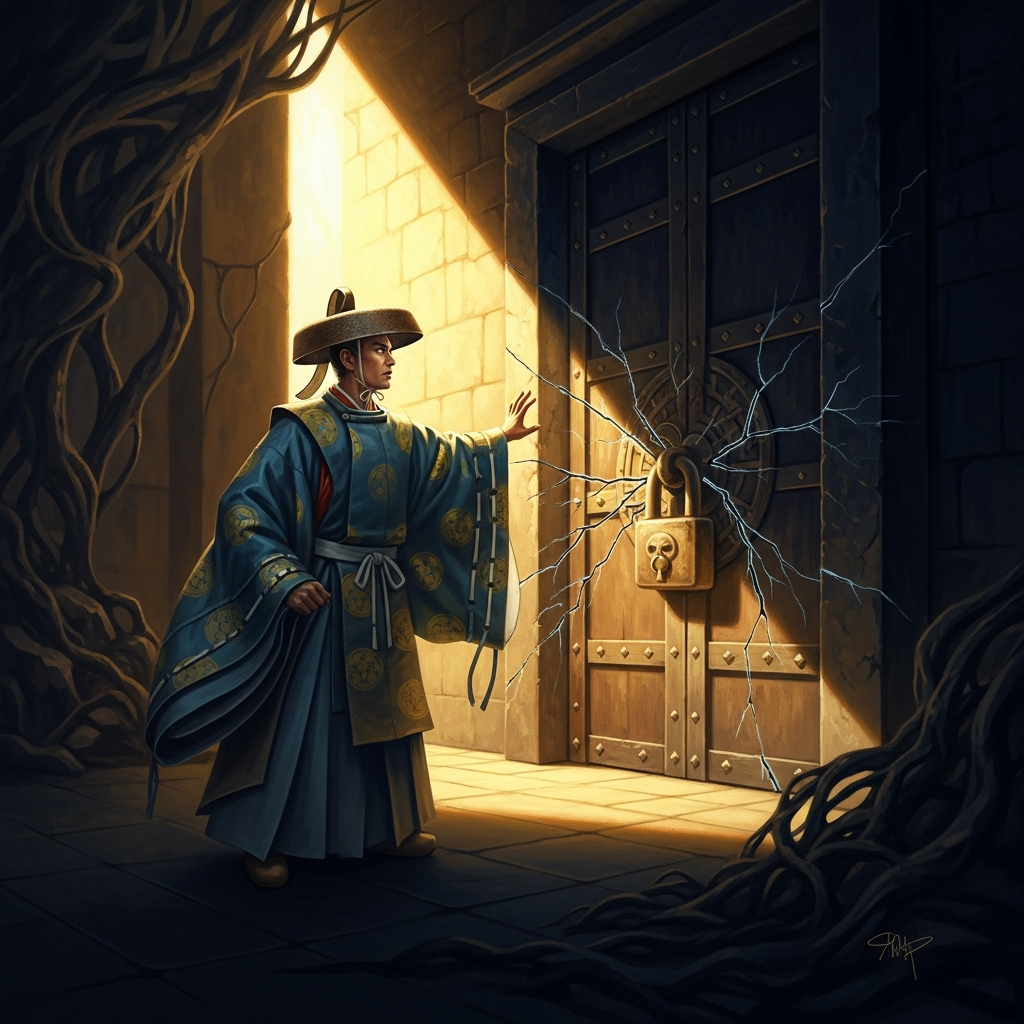
Izanami in the Land of the Dead
Izanami dies giving birth to fire and descends to Yomi, the land of the dead. Izanagi follows her into the darkness to bring her back. He waits in the dark. He breaks his promise. He lights his comb and sees what she has become — and the sight begins the separation of the living from the dead that will never be undone.
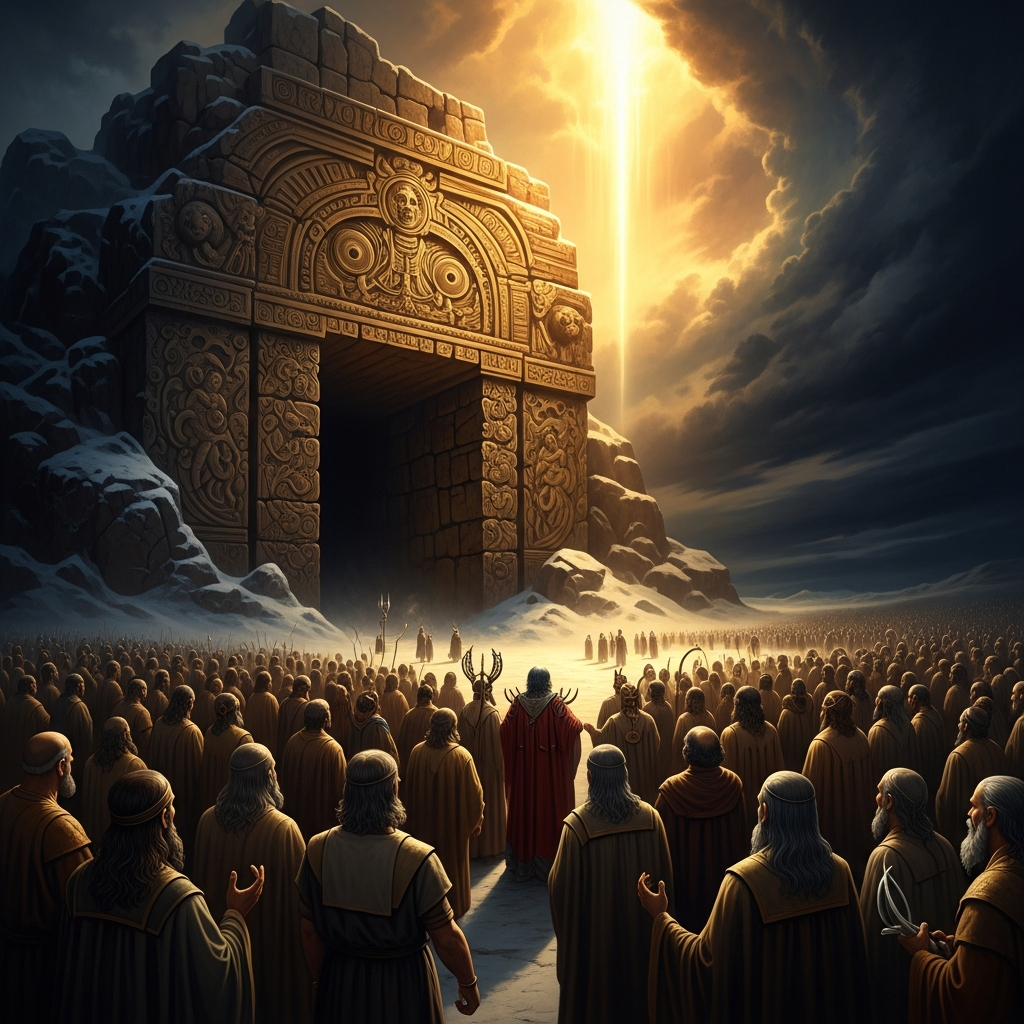
Amaterasu and the Rock Cave of Heaven
Susanoo's rampages drive Amaterasu, goddess of the sun, into the Rock Cave of Heaven. The world goes dark. Eight million gods devise a ruse: a lewd dance, uproarious laughter, and a moment of divine curiosity. The strong god seizes the cave door. Light returns.
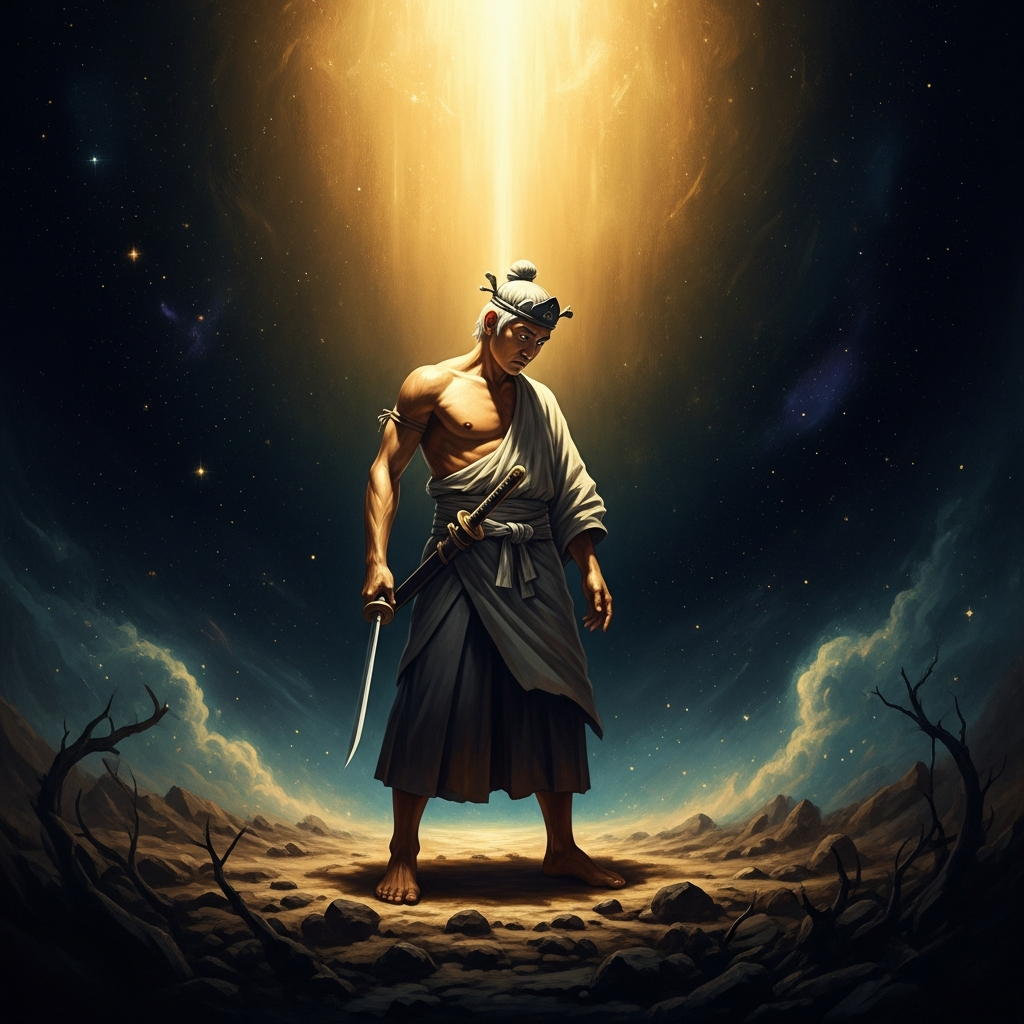
The Ruined God Who Killed the Serpent
Susanoo-no-Mikoto, exiled from heaven after his tantrum drove Amaterasu into her cave, descends to Izumo with nothing. He finds an old couple weeping over their last daughter, who is destined to be eaten by the eight-headed serpent Yamata no Orochi. He brews sake in eight vats, waits, and kills the serpent methodically. In its tail he finds a sword. This is not a story about heroism. It is a story about a disgraced god who rebuilds himself through protection rather than conquest.
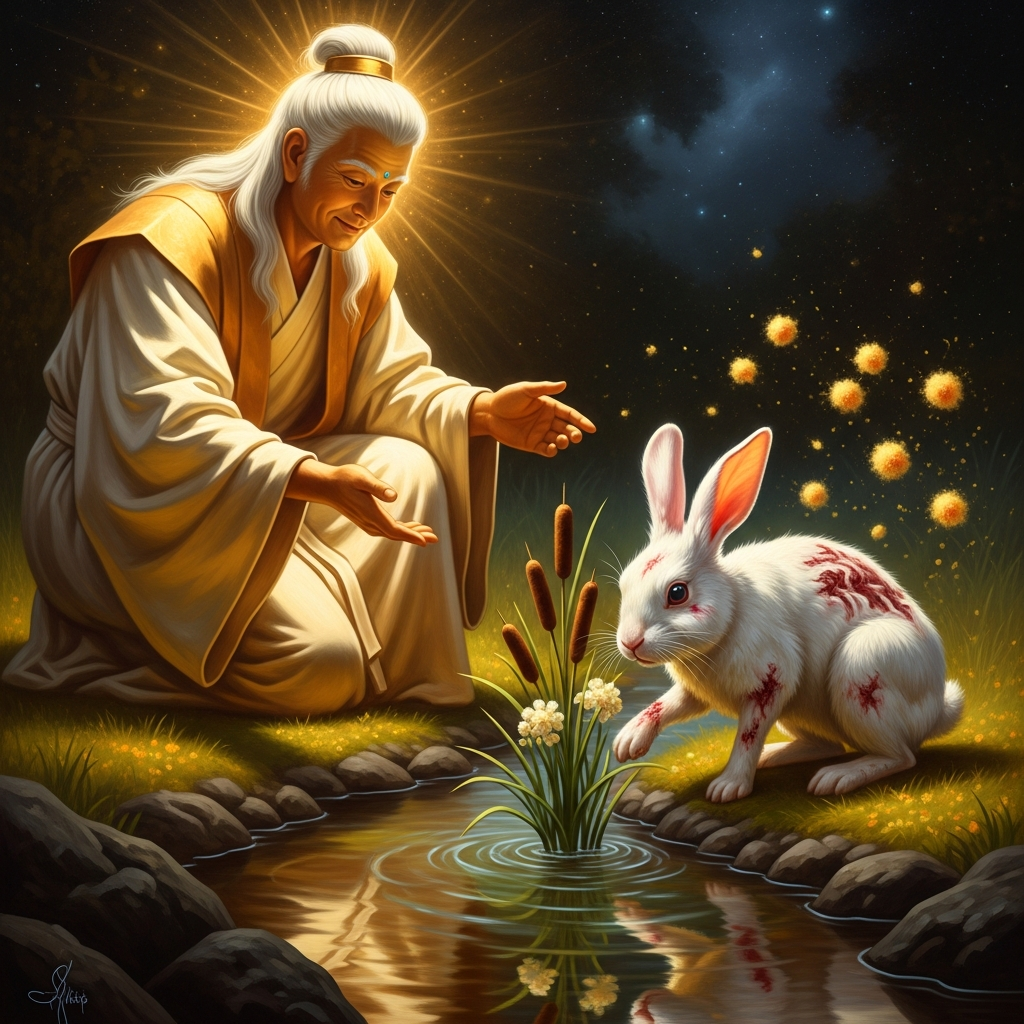
Okuninushi Surrenders the Visible World
Okuninushi-no-Mikoto spends centuries building the land of the living — inventing medicine, surviving the underworld, establishing an abundant country. Then the heavenly gods descend and demand he surrender. He does not fight. He asks only for a palace. The Grand Shrine of Izumo becomes his throne over the invisible world, and the greatest act of statecraft in Japanese mythology is a negotiated abdication.
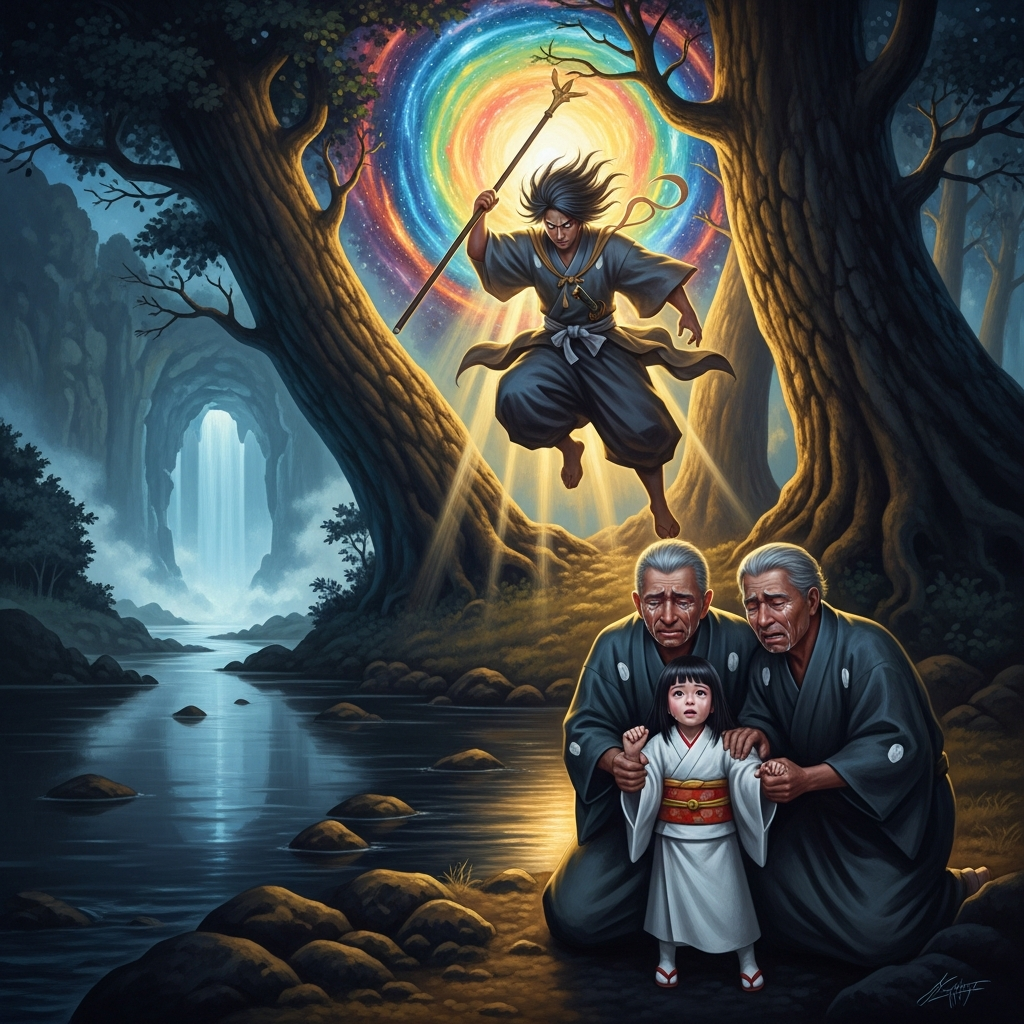
Susanoo and the Eight-Headed Serpent
Exiled from heaven, Susanoo descends to Izumo weeping. He finds an old couple with one daughter left — Yamata no Orochi has eaten their other seven daughters and comes again tonight. Susanoo brews eight vats of sake, gets the serpent drunk, and slays it. In its tail he finds the Kusanagi blade.
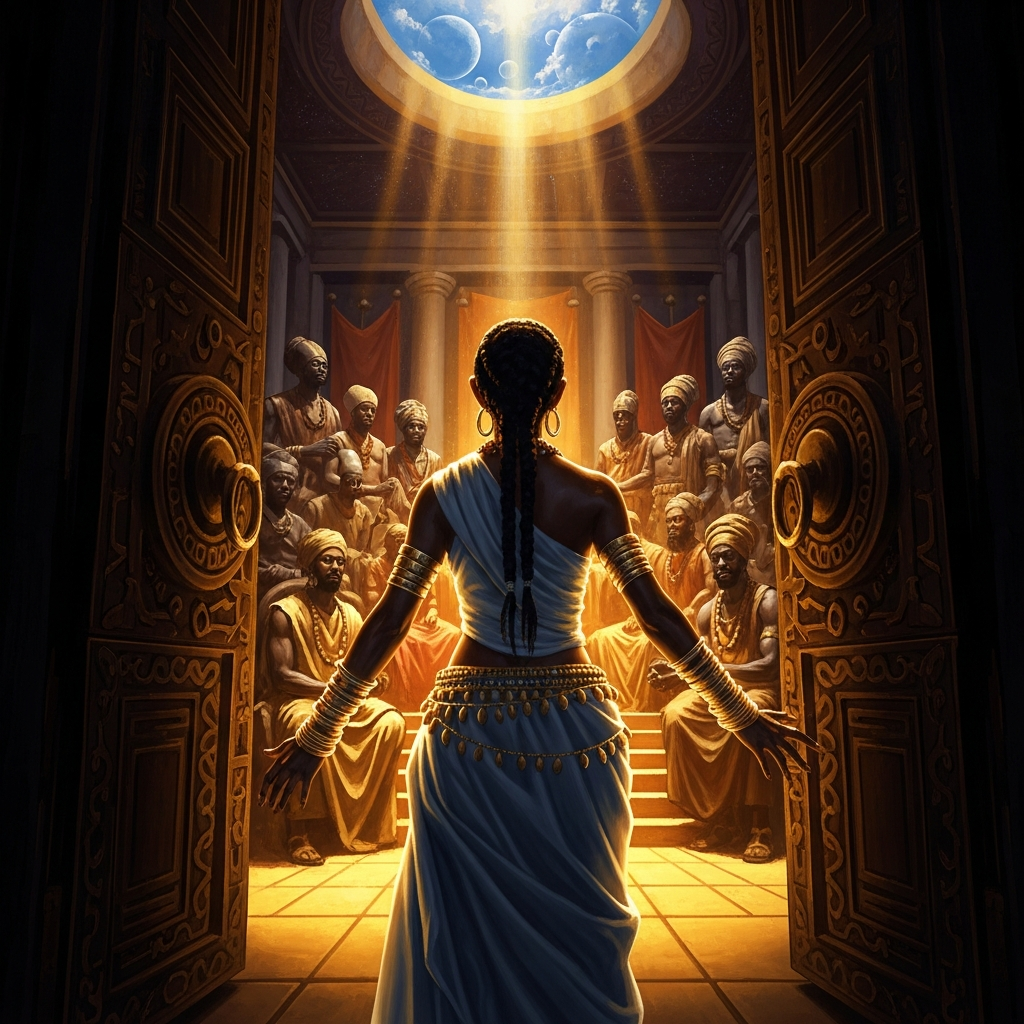
Oshun Saves the Cosmos
The male Orishas exclude Oshun from the divine council and the world begins to die. Crops wither, rivers run dry, women cannot conceive. Only when the goddess of sweet water carries honey to the sky does Olodumare recover — and creation breathe again.
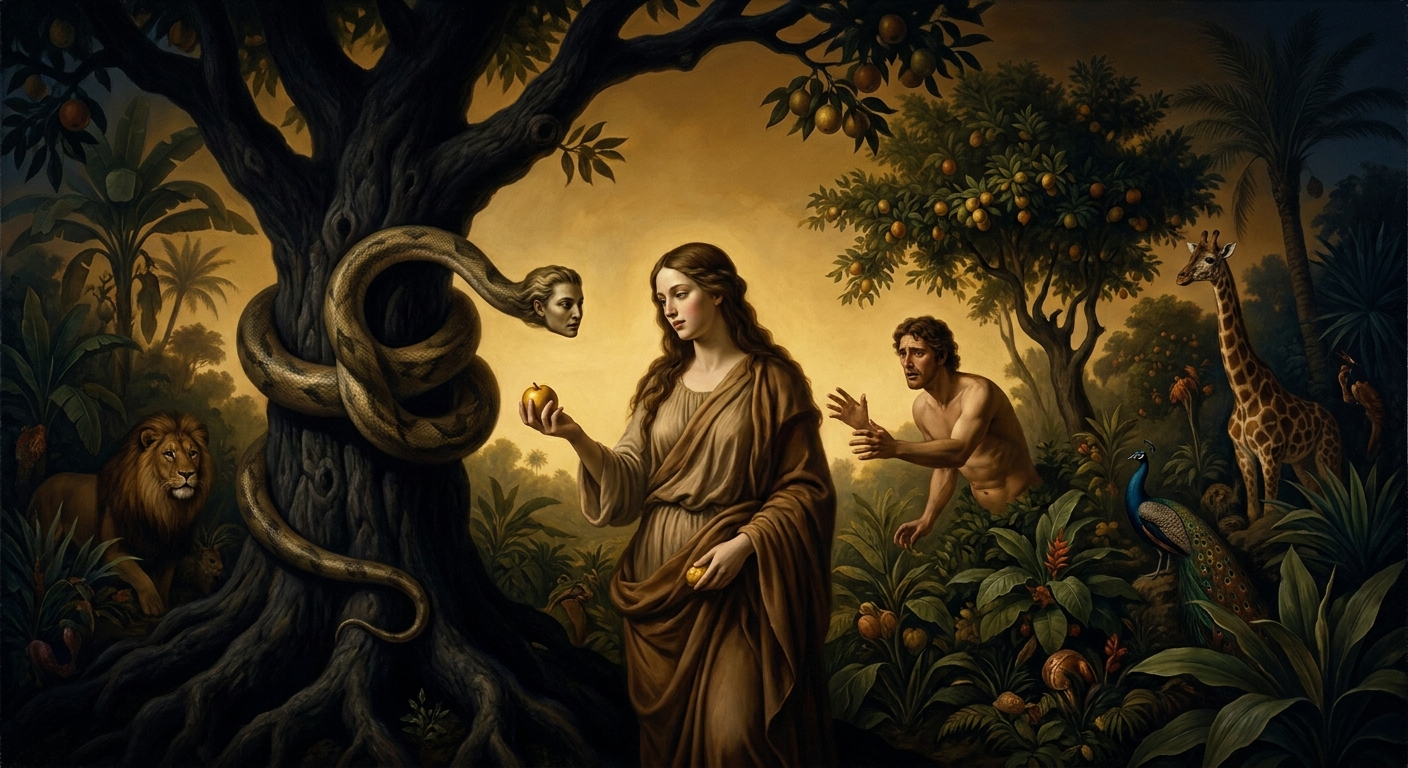
Eve and the Serpent
In a garden planted eastward, between two trees, a woman and a serpent have a conversation that ends paradise and begins history.
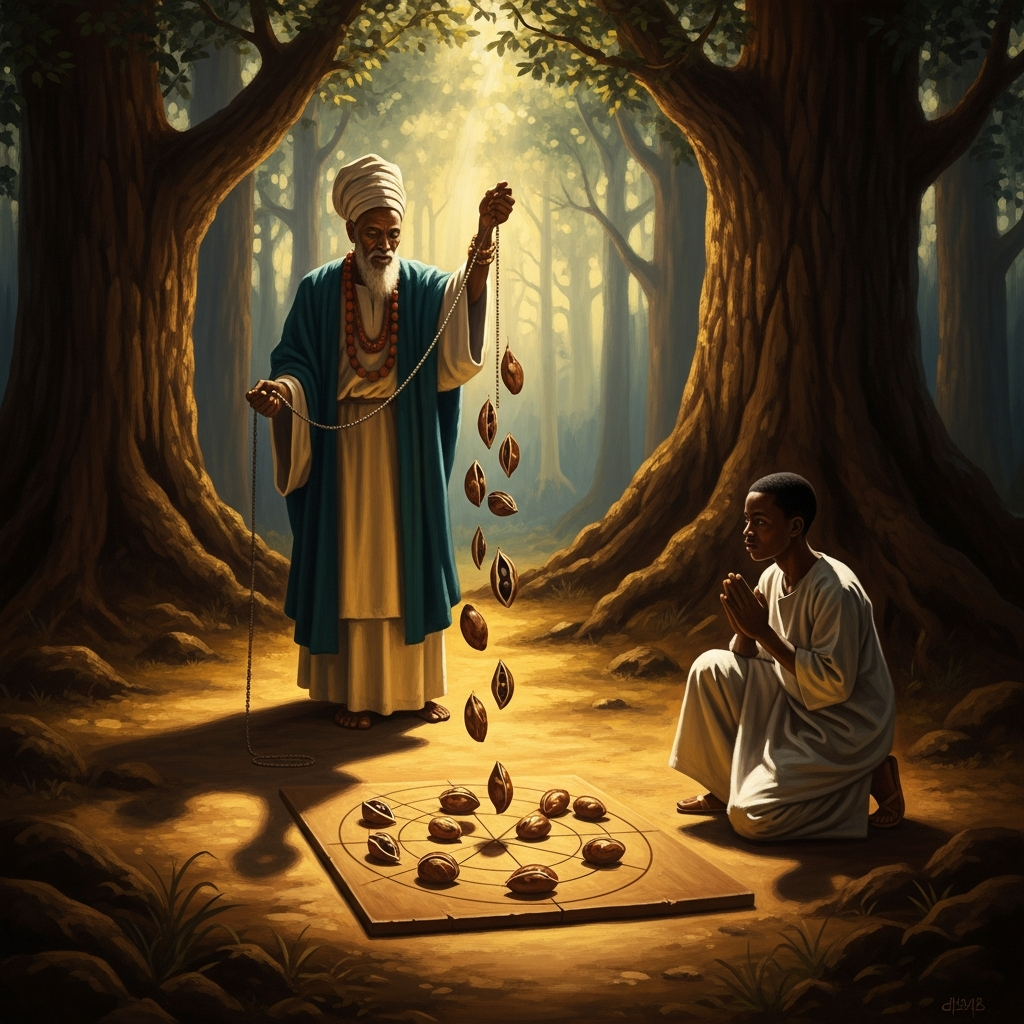
Ifa Divination Comes to Earth
Orunmila, the Orisha of wisdom who witnessed each soul choose its destiny before birth, teaches the first human diviner to read the sacred chain. The student's first client is a dying man. What the Odu says, and whether the student can bear to say it, is the whole of the story.
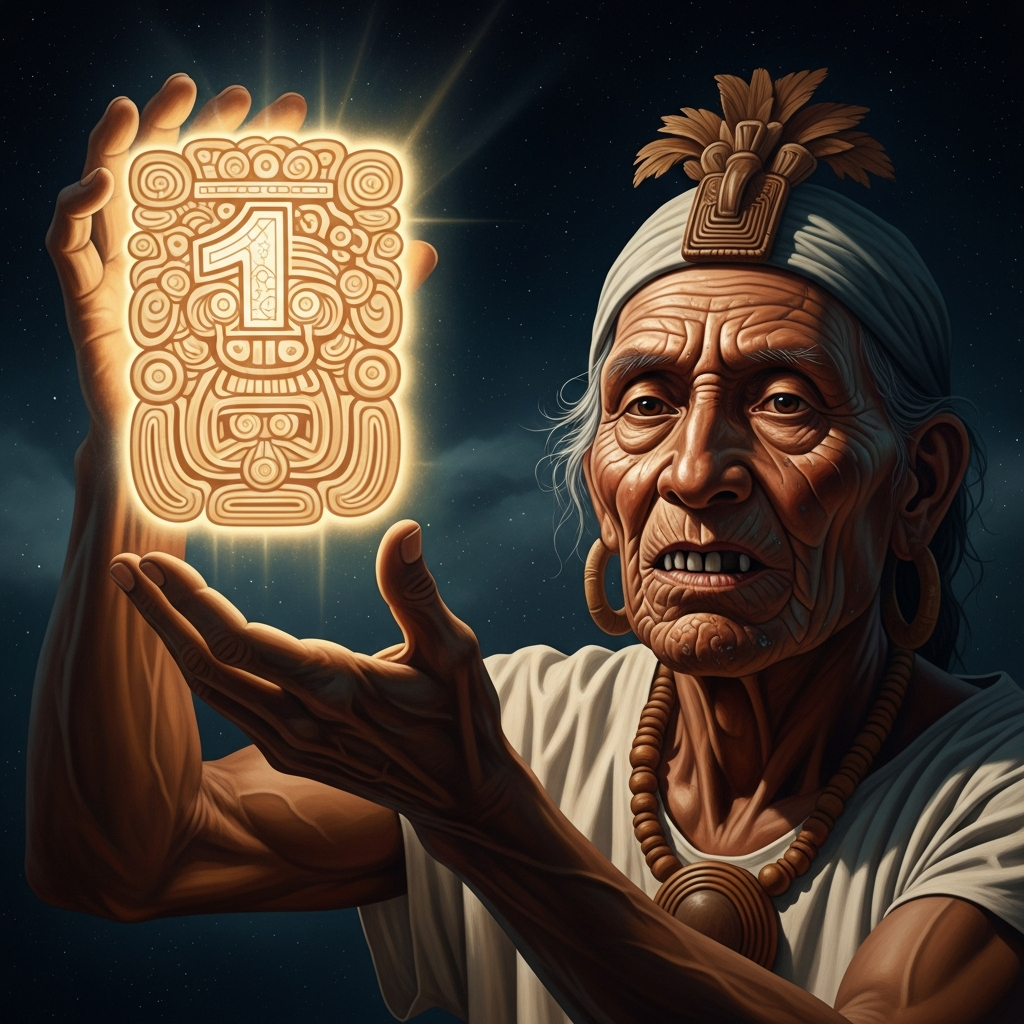
Itzamna Begins the Count
On August 11, 3114 BCE — the zero date of the Maya Long Count — Itzamna, Lord of the Heavens and inventor of writing, creates time itself. Not the physical world, but the count of days, the measure that makes history possible. What does a god experience at the moment he begins to number what was previously numberless?
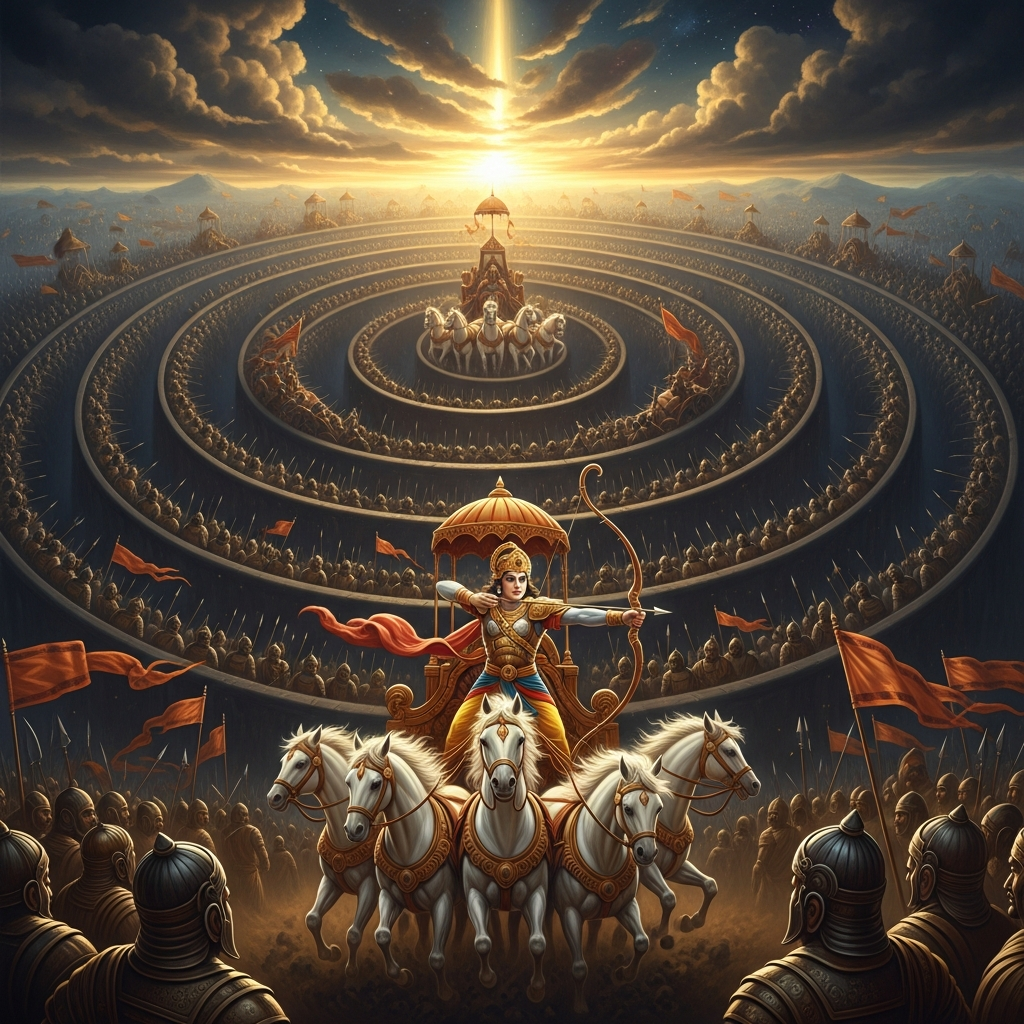
Abhimanyu in the Wheel
Abhimanyu, sixteen-year-old son of Arjuna, learned how to enter the Chakravyuha — the lethal spinning wheel formation — while still in his mother's womb. His father explained the exit while she slept. On day thirteen of the war at Kurukshetra, he enters the formation alone. He knows how to get in. He does not know how to get out.
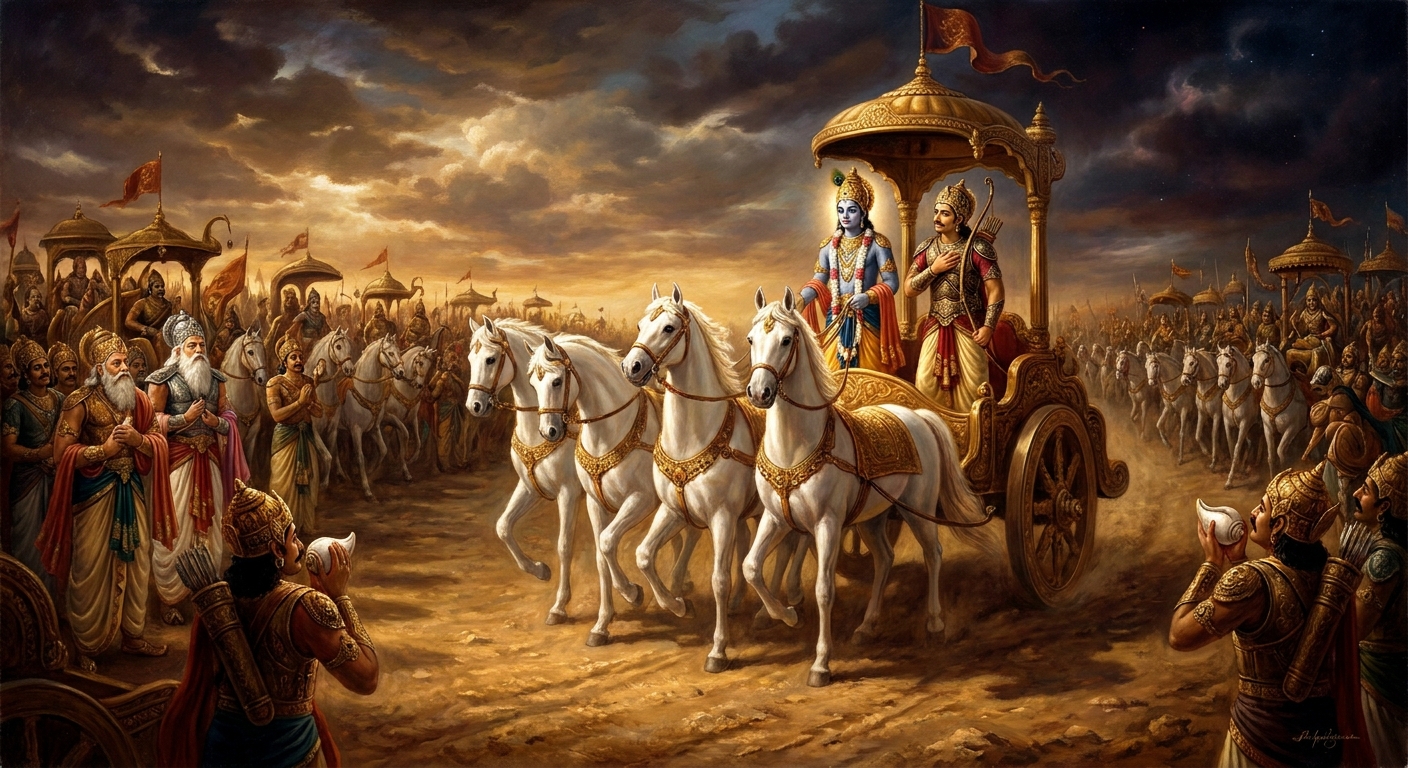
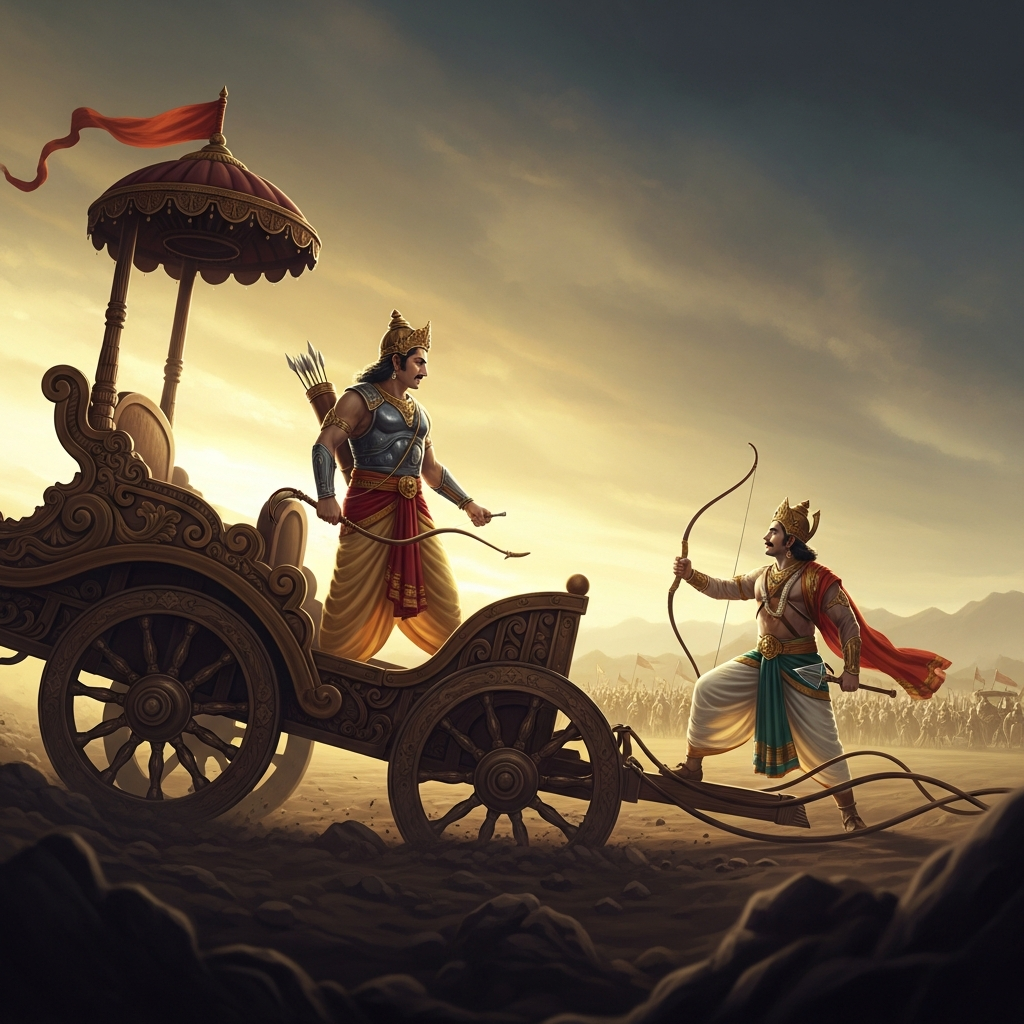
Arjuna Doubts on Kurukshetra
Between two armies on the morning of war, the greatest archer of his age looks across at his cousins, his teachers, and his grandfather — and his bow falls from his hand. Krishna, his charioteer, picks up the reins of a different conversation.

Dhruva and the Pole Star
A five-year-old prince, humiliated by his stepmother and denied his father's lap, walks alone into the forest and performs the most severe austerity any mortal has ever attempted — standing on one toe, eating nothing, until the three worlds tremble. Vishnu appears and offers him anything. Dhruva asks for a kingdom. Vishnu gives him the Pole Star instead, the fixed point around which all creation rotates forever.
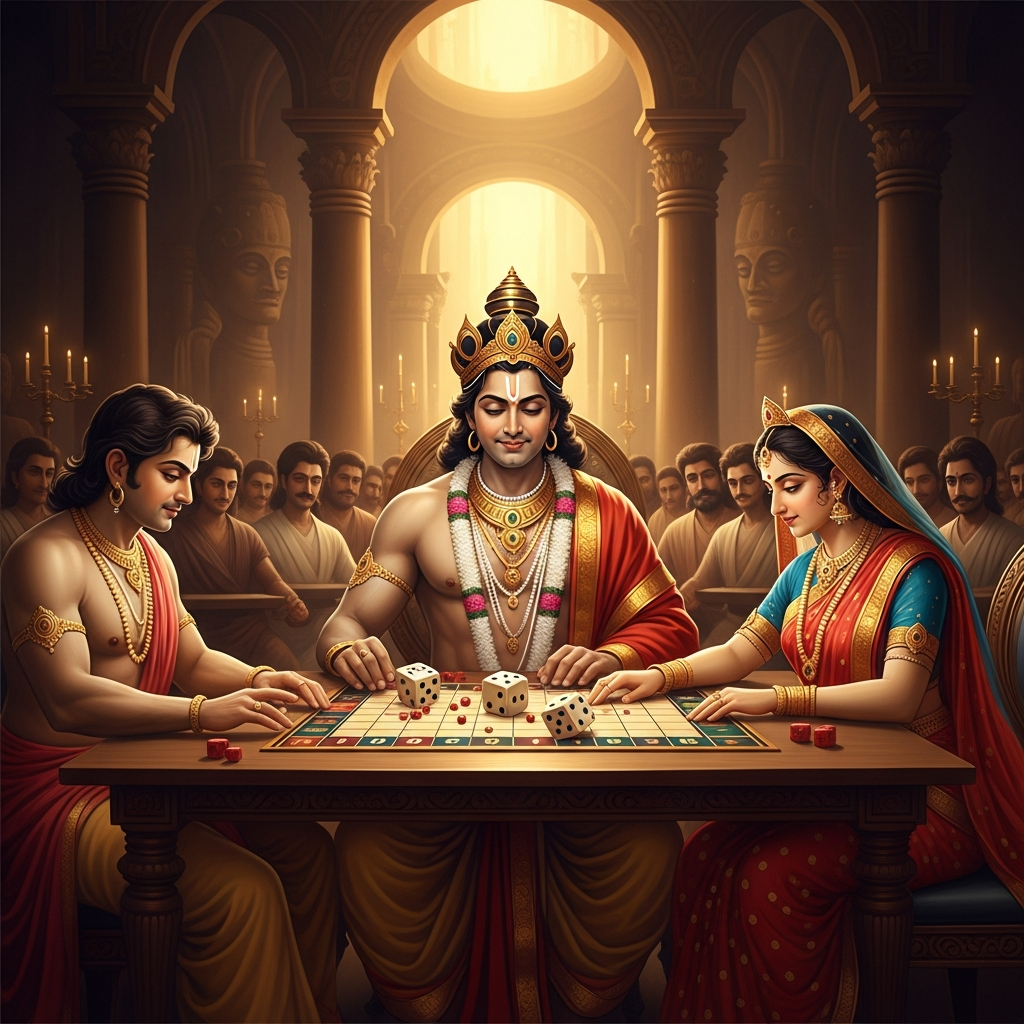
Draupadi's Disrobing
Draupadi, wife of the five Pandavas, has been staked and lost in a dice game. Duhshasana drags her by the hair into the Kuru court and begins pulling at her sari while every elder in the hall watches in silence. She raises her hands from the cloth and prays to Krishna. The sari does not end. Everything that follows — the eighteen days of Kurukshetra — begins here.
Karna: Death in the Mud
Karna is arguably the greatest warrior of the Mahabharata — a man who spent his life fighting to be taken seriously because he was raised as a charioteer's son. On the last day of his life, his chariot wheel sinks into the mud. Arjuna fires. The secret of Karna's birth, withheld until after his death, transforms the war the heroes won into a tragedy about the best man they ever fought against.
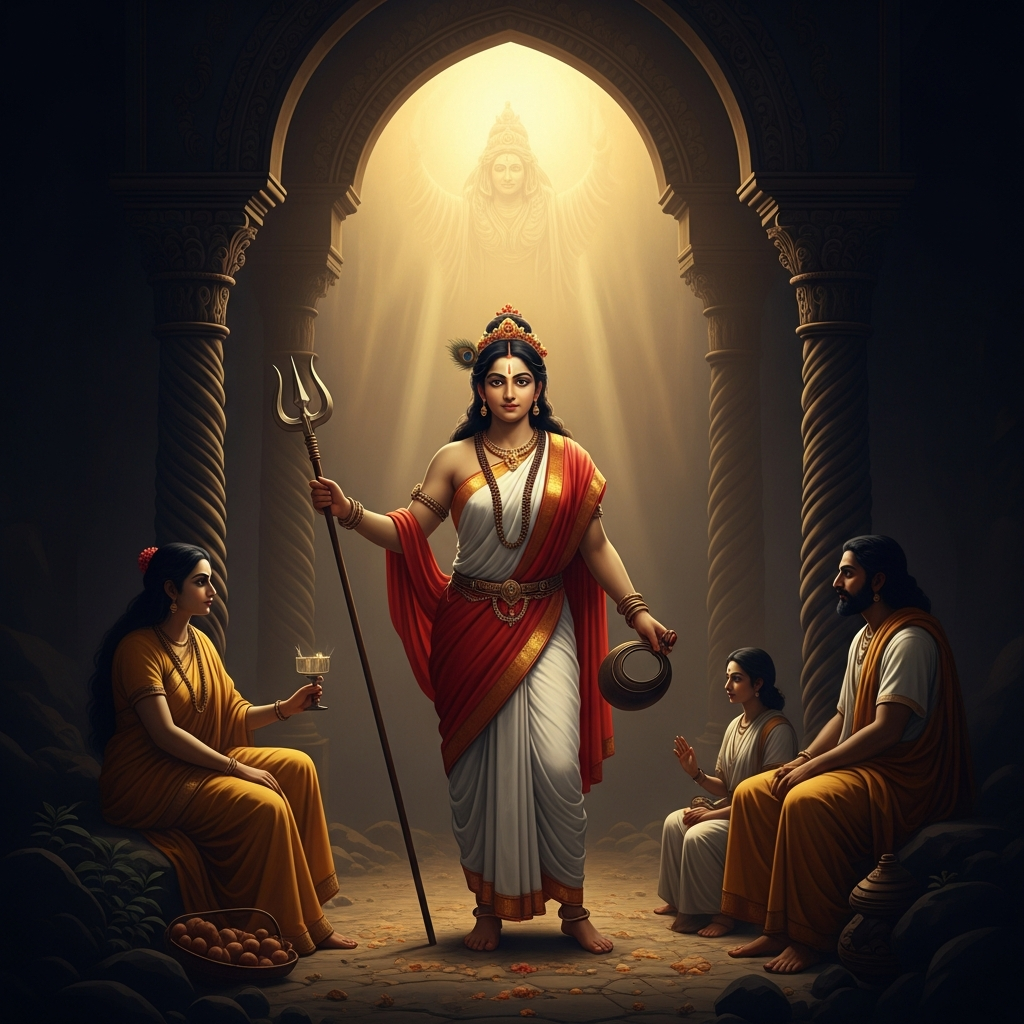
Savitri and Satyavan
Savitri is a princess so accomplished that no man dares approach her. She chooses for herself: Satyavan, a prince in exile, who will die in exactly one year. She marries him anyway. When Yama arrives to collect his soul, Savitri follows the god of death on foot — and argues him into returning her husband's life through the precise logic of three carefully chosen boons.
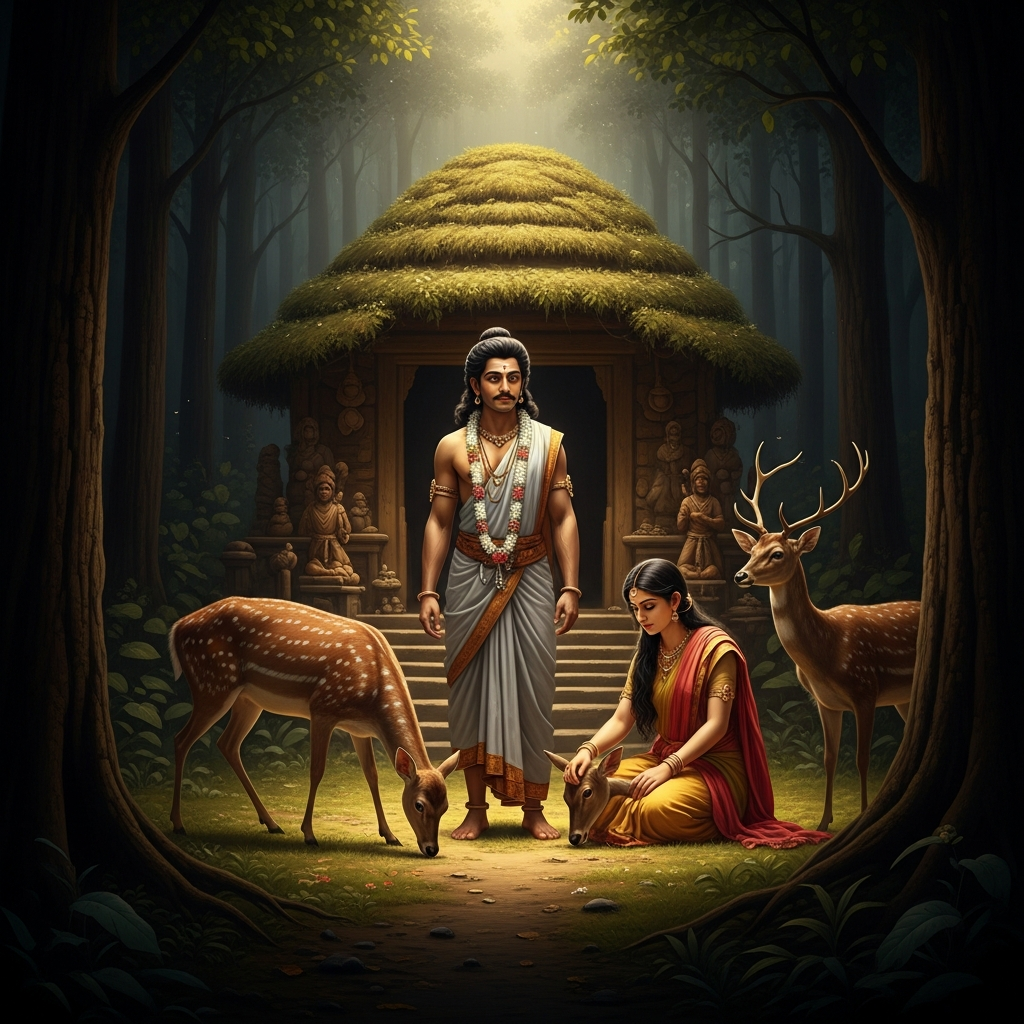
Shakuntala and the Lost Ring
Shakuntala, foster daughter of the sage Kanva, falls in love with King Dushyanta at the forest hermitage. They marry by mutual declaration. He leaves her his ring as a token of remembrance. She loses the ring in a river. He looks at her and does not know her. She stands in his court, pregnant with his child, with no proof of anything — because a fish swallowed a ring.
Bronze Age
Mesopotamia, Egypt, Vedas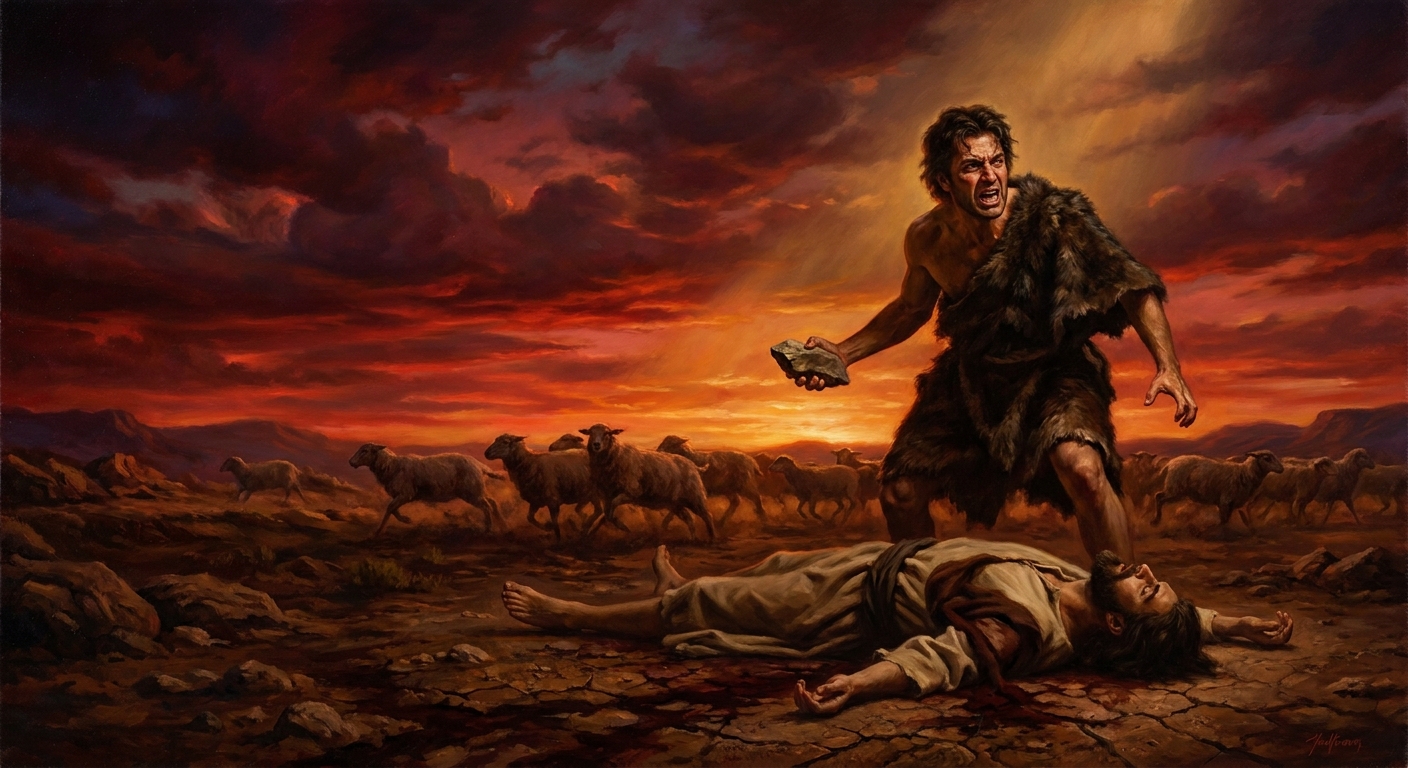
Cain and Abel
The first family after Eden. Two brothers, two offerings, one accepted. God's silence on why becomes the oldest unanswered question in monotheism — and the first murder is also the birth of civilization.
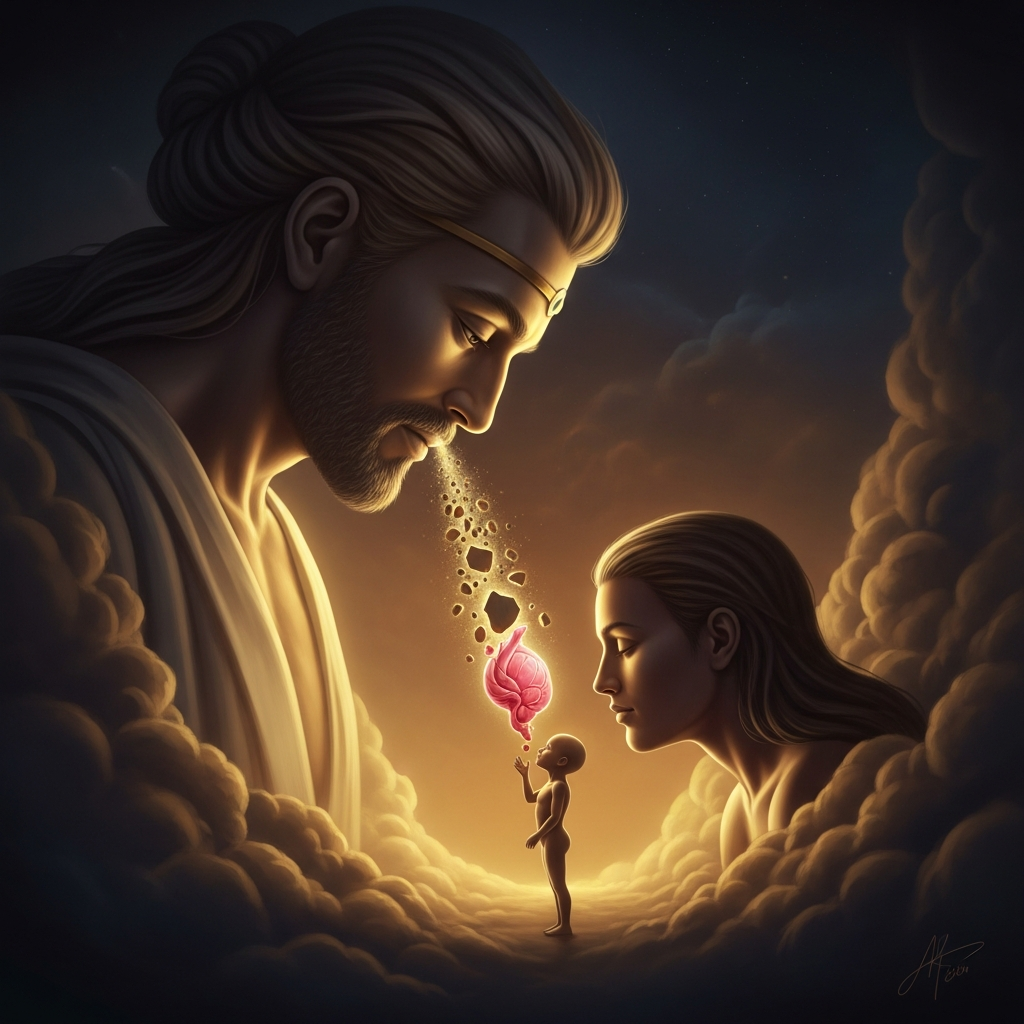
Chi: The Self You Were Before You Were Born
In Igbo cosmology every person carries a chi — a fragment of the supreme god lodged inside the individual, a personal divine double that agreed to the terms of your life before you entered it. The story of the man who fought his chi and what it cost him.
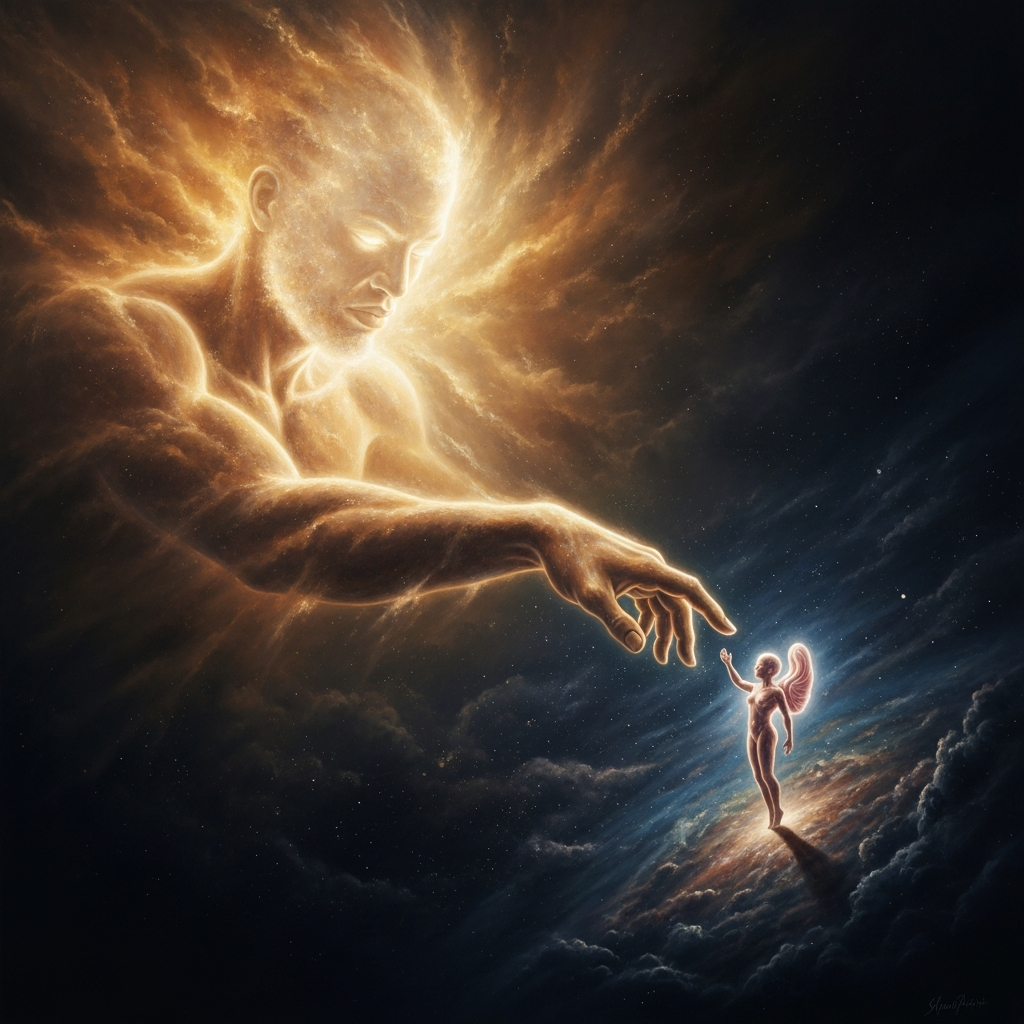
Chukwu Breathes the Chi
Before you are born, you stand before Chukwu and speak your own life plan. Chukwu breathes a fragment of himself into you — your chi, your personal divine double, who agrees to the terms and will never forget them even after you do. A person with a good chi succeeds even when they try to fail. A person with a bad chi fails even when they try to succeed.
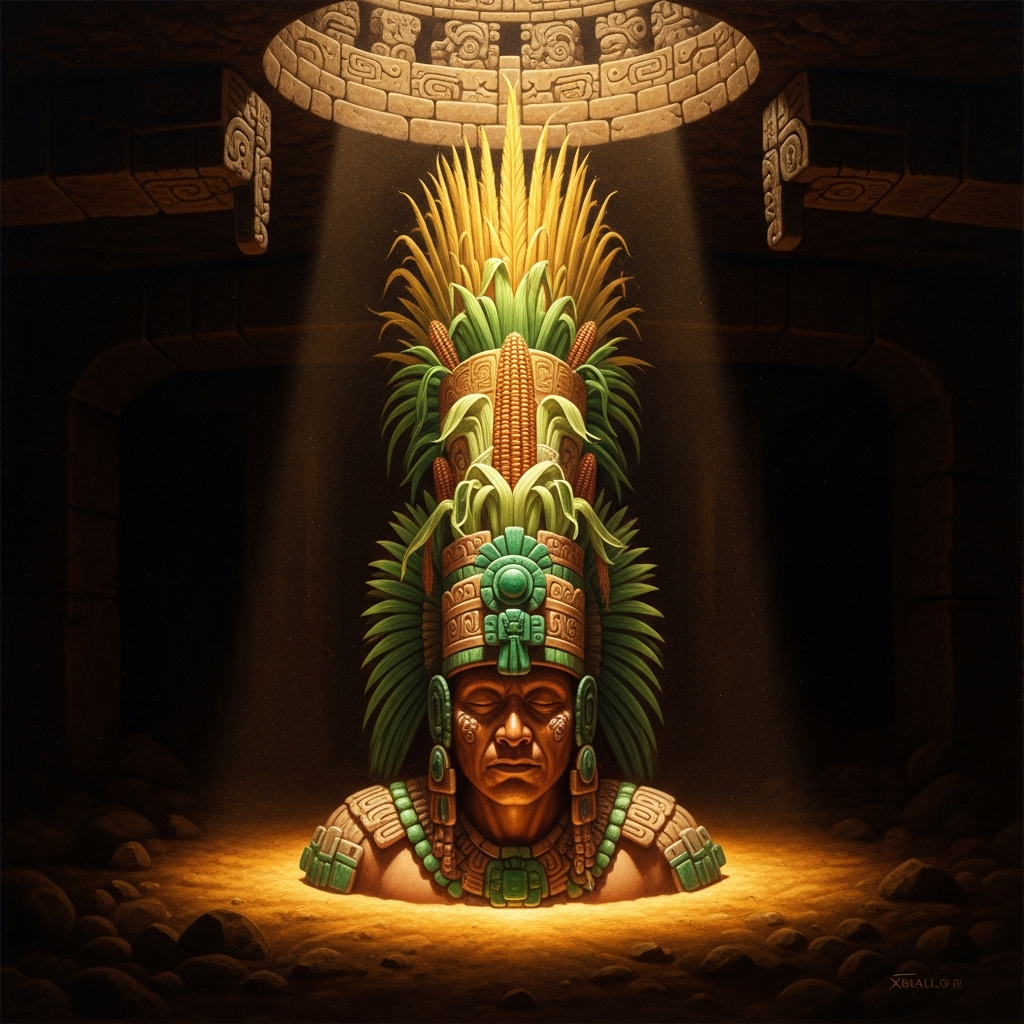
The Maize God Inside the Turtle
One Hunahpu, the Maize God, is killed by the Lords of Xibalba and his head placed in a calabash tree. He descends into the earth. This is the story of the interval — the dark time between the god's death and his emergence from the cracked turtle shell, the underground season when the corn is neither dead nor born.
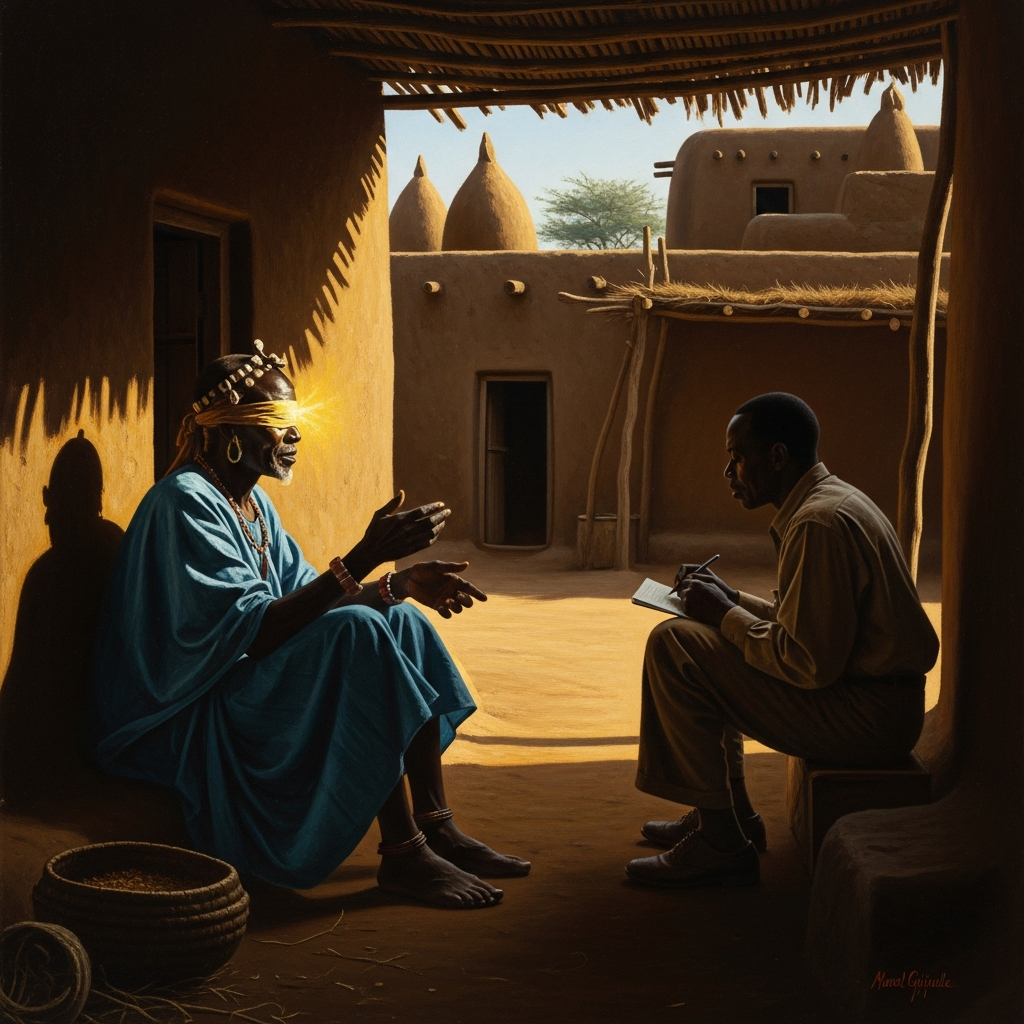
Ogotemmeli Speaks the Star
In October 1946, a blind elder named Ogotemmeli speaks to the French anthropologist Marcel Griaule for thirty-three days about Dogon cosmology. What he describes — a small, heavy star circling Sirius every fifty years — matches Sirius B, confirmed by Western astronomy only in 1862. The debate about how he knew has never been settled.
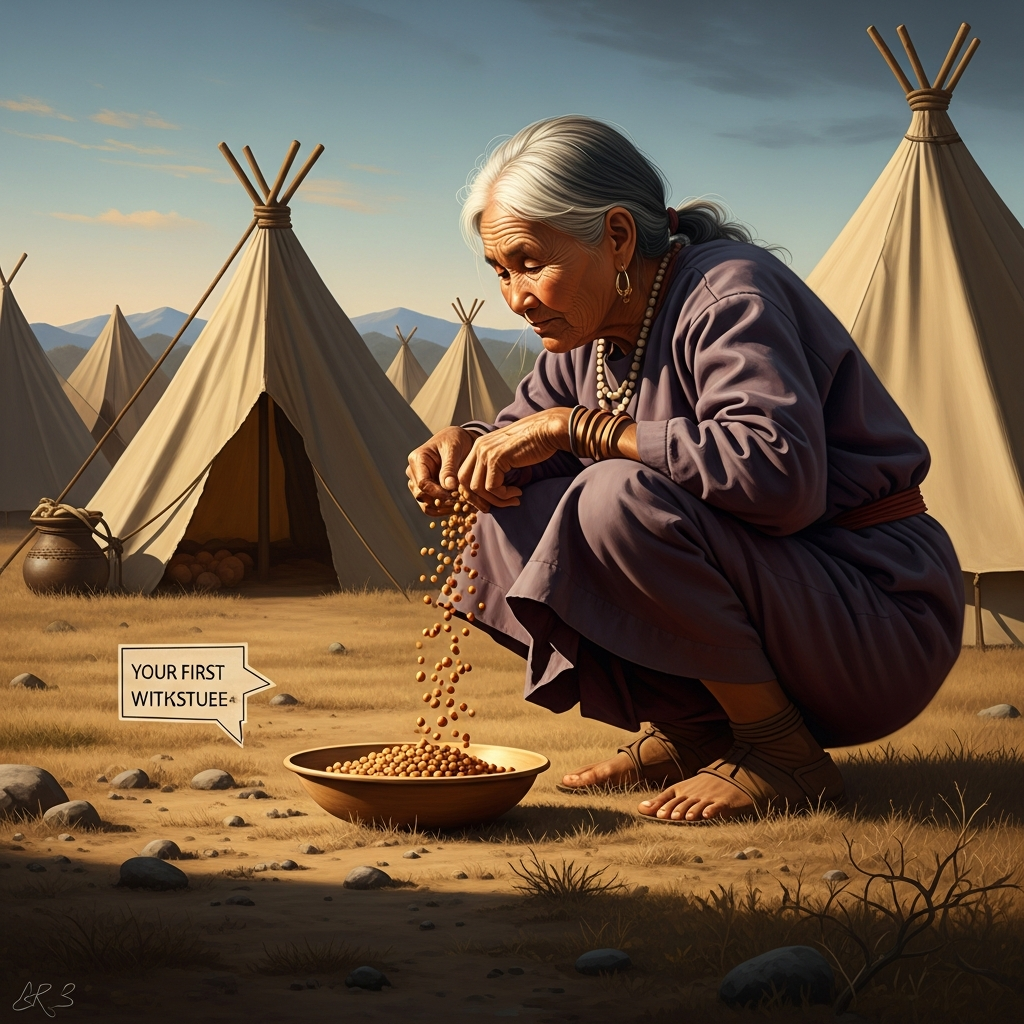
Etugen Holds the Ground
The drought has gone on too long. A Mongolian herder family at their summer encampment begins the slow negotiation with the earth itself — not as theater but as a real conversation with the substrate of the world, conducted through offering and attention and the patience required to listen to something that speaks very slowly.
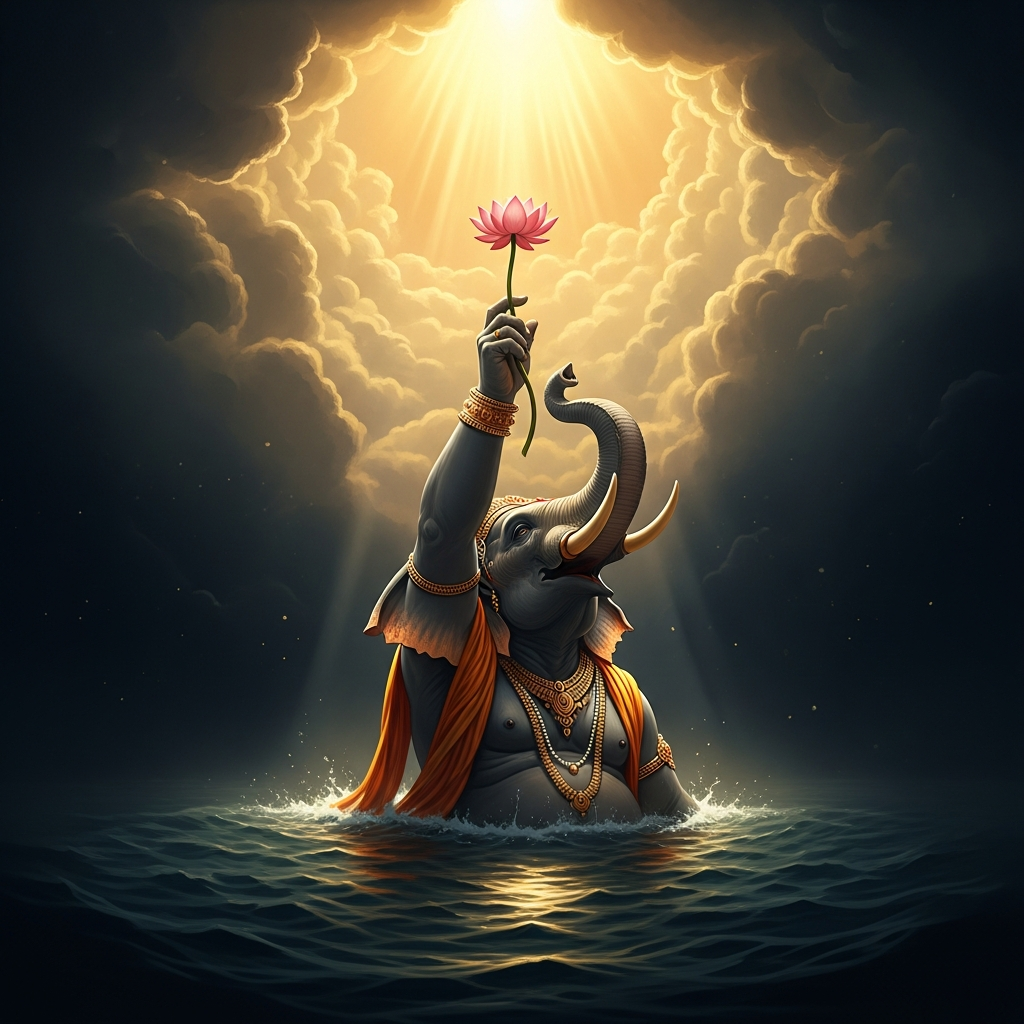
Gajendra Moksha: The Elephant's Liberation
The elephant king Gajendra rules his mountain lake for ten thousand years in lordly pleasure. A crocodile seizes his foot. For a thousand years he fights. When his strength finally breaks and no earthly power answers his cry, he raises a lotus toward heaven — not begging for rescue, but offering praise. Vishnu descends on Garuda and kills the crocodile in an instant. The elephant king dies and goes directly to liberation.
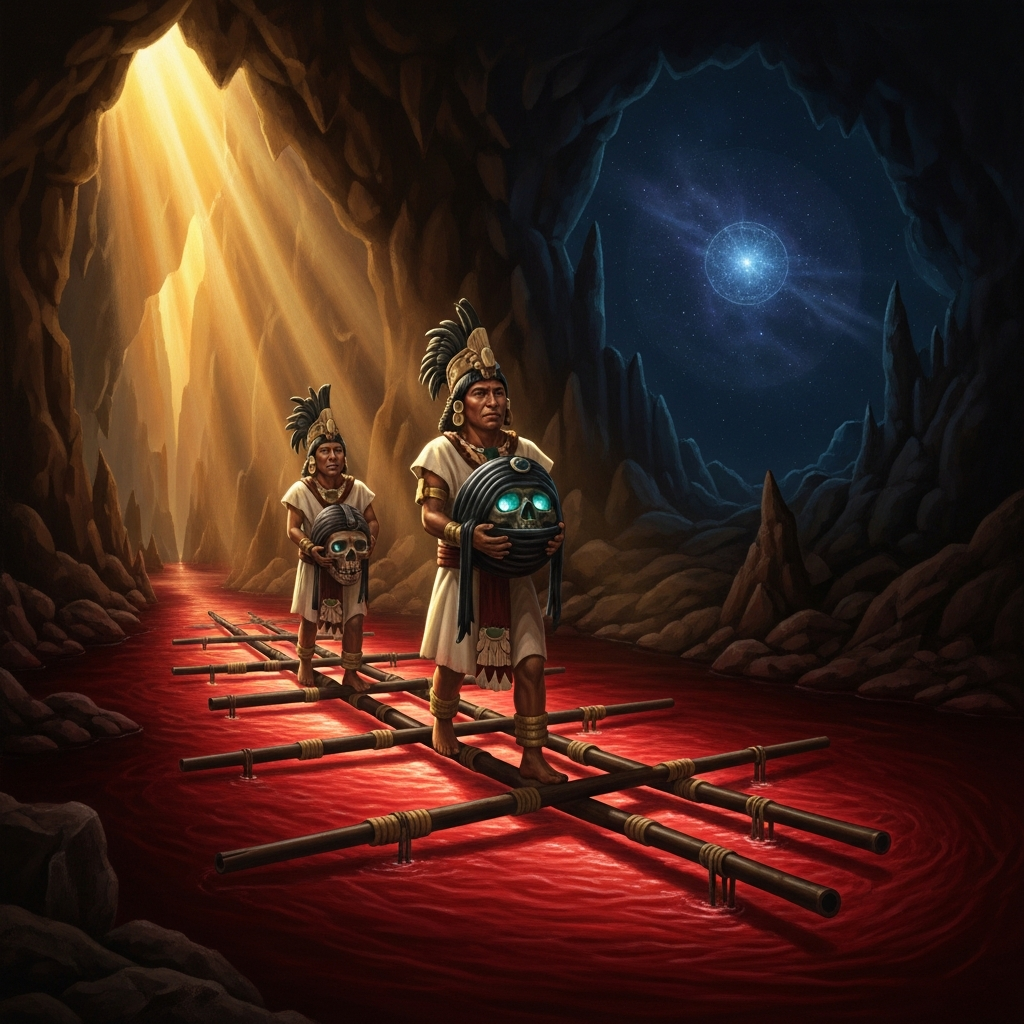
The Ball Game at the Heart of Xibalba
Hunahpu and Xbalanque descend to Xibalba to play the ball game against the Lords of Death — using their father's skull as the ball. They survive six houses of torment, lose Hunahpu's head to a bat, replace it with a squash, and finally die into the river and rise again to unmake the gods of decay.
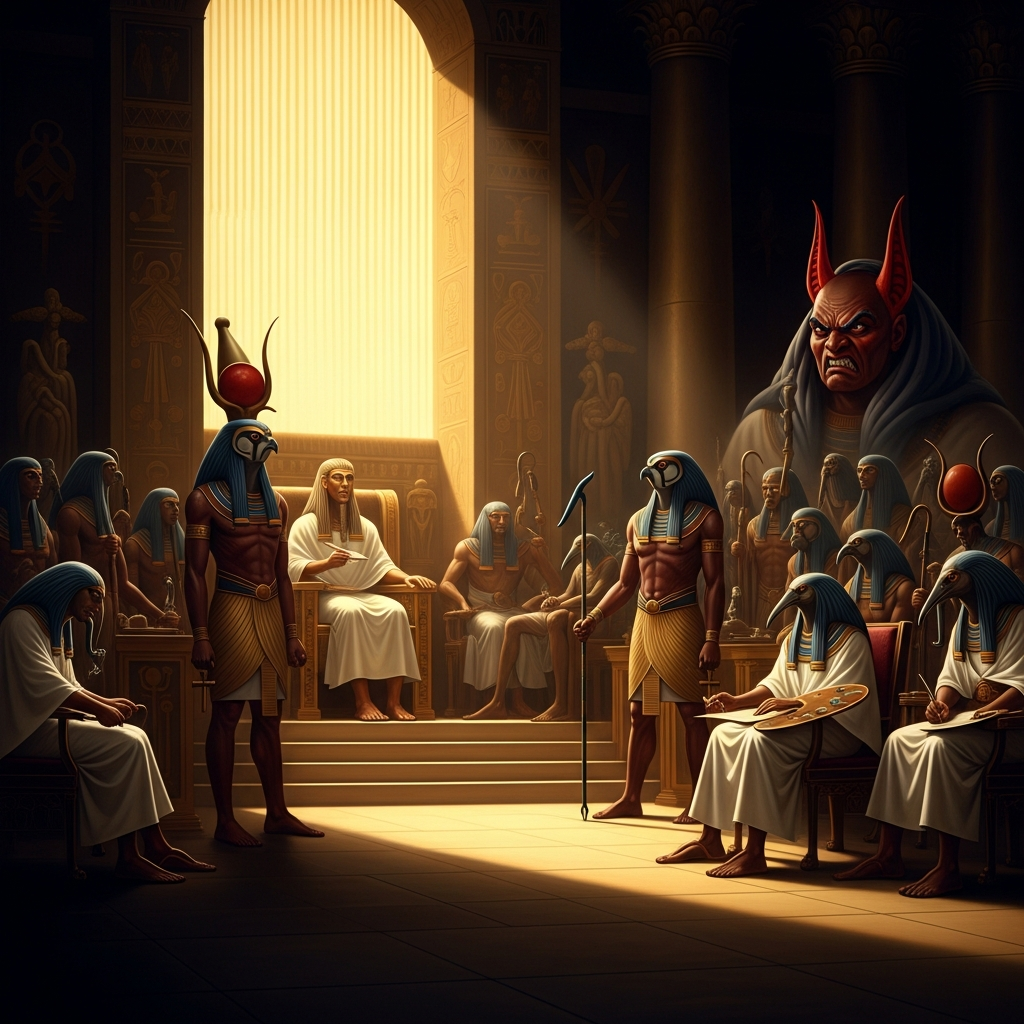
The Eighty-Year Lawsuit
After Seth murders Osiris and seizes the throne of Egypt, Osiris's son Horus brings a legal claim before the divine tribunal of the Ennead: the throne belongs to him, as the legitimate heir. Seth contests the claim. The gods argue. The case drags on for eighty years of divine litigation — perhaps the most extended legal proceeding in any mythological tradition. The specific events of the trial include moments of extraordinary comedy and equally extraordinary horror, including Seth's attempted rape of Horus, a battle of stone hippopotami, a boat race, and the letter from Osiris in the underworld that finally tips the verdict.
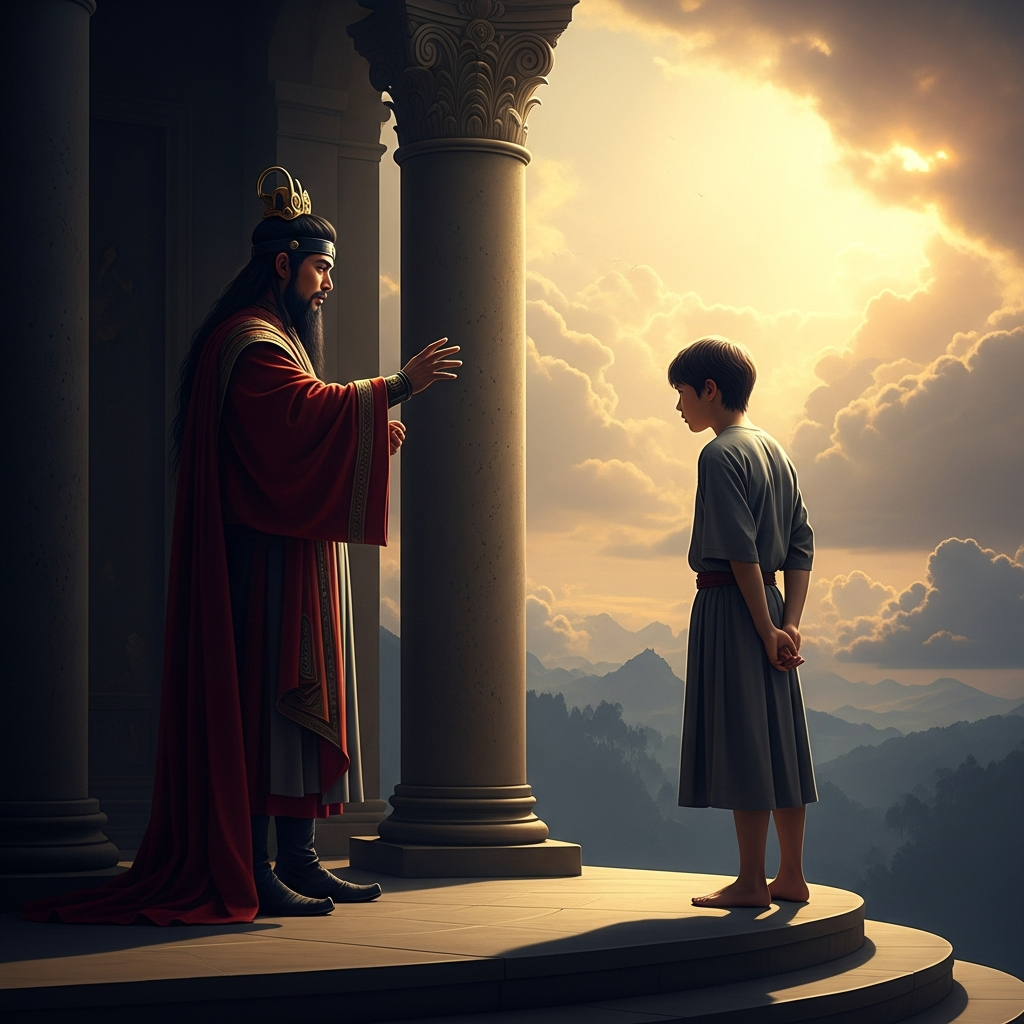
Hwanung Descends to Earth
The son of the Heavenly Emperor looks down at the green earth too long and asks his father for permission to go. Heaven opens. A god descends to a mountain with wind, rain, and cloud — and the first act of Korean civilization is a marriage between heaven and a woman who had the patience to wait in the dark.
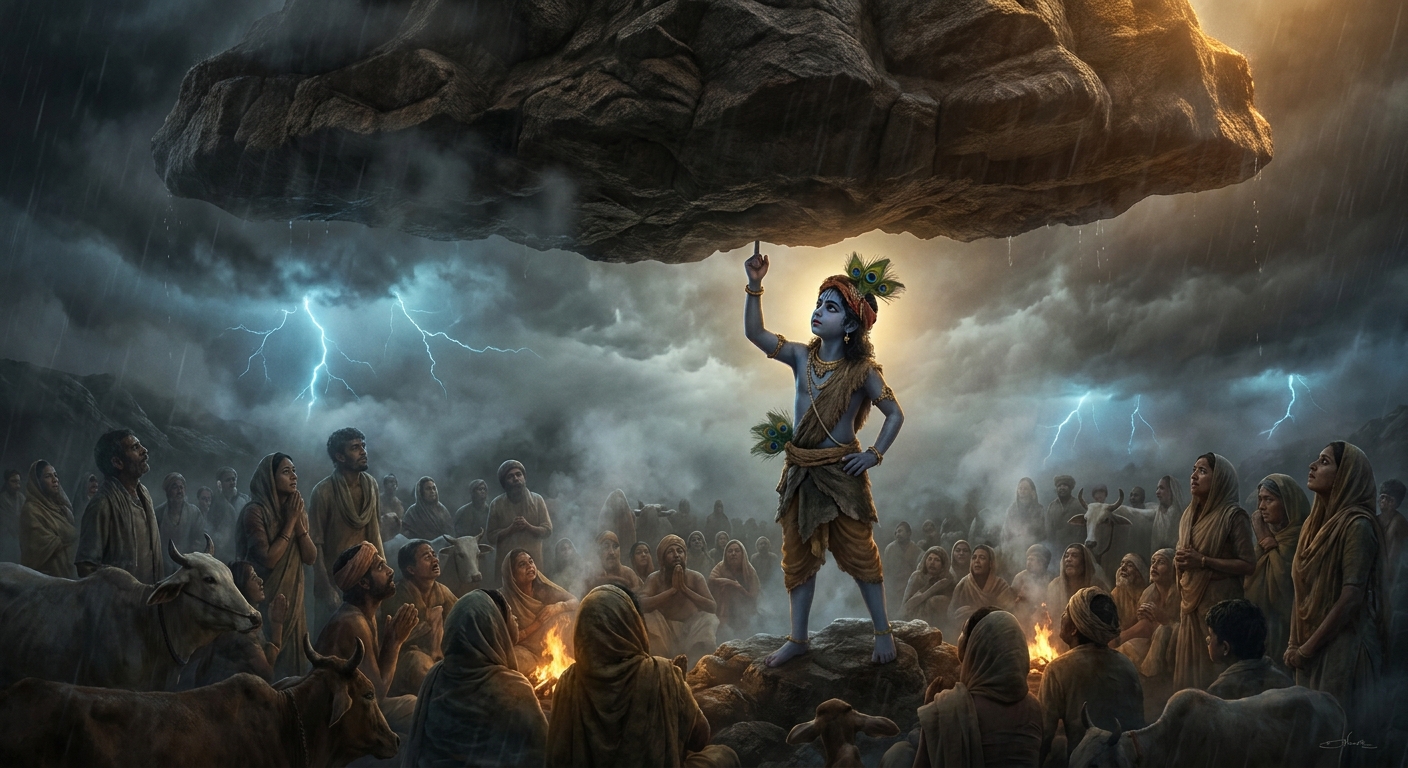
Krishna Lifts Govardhan
A child cowherd talks his village out of worshipping Indra, king of the storm, and when Indra's fury drowns the valley in seven days of rain, Krishna lifts a mountain on his little finger and holds it there until the god of heaven kneels.
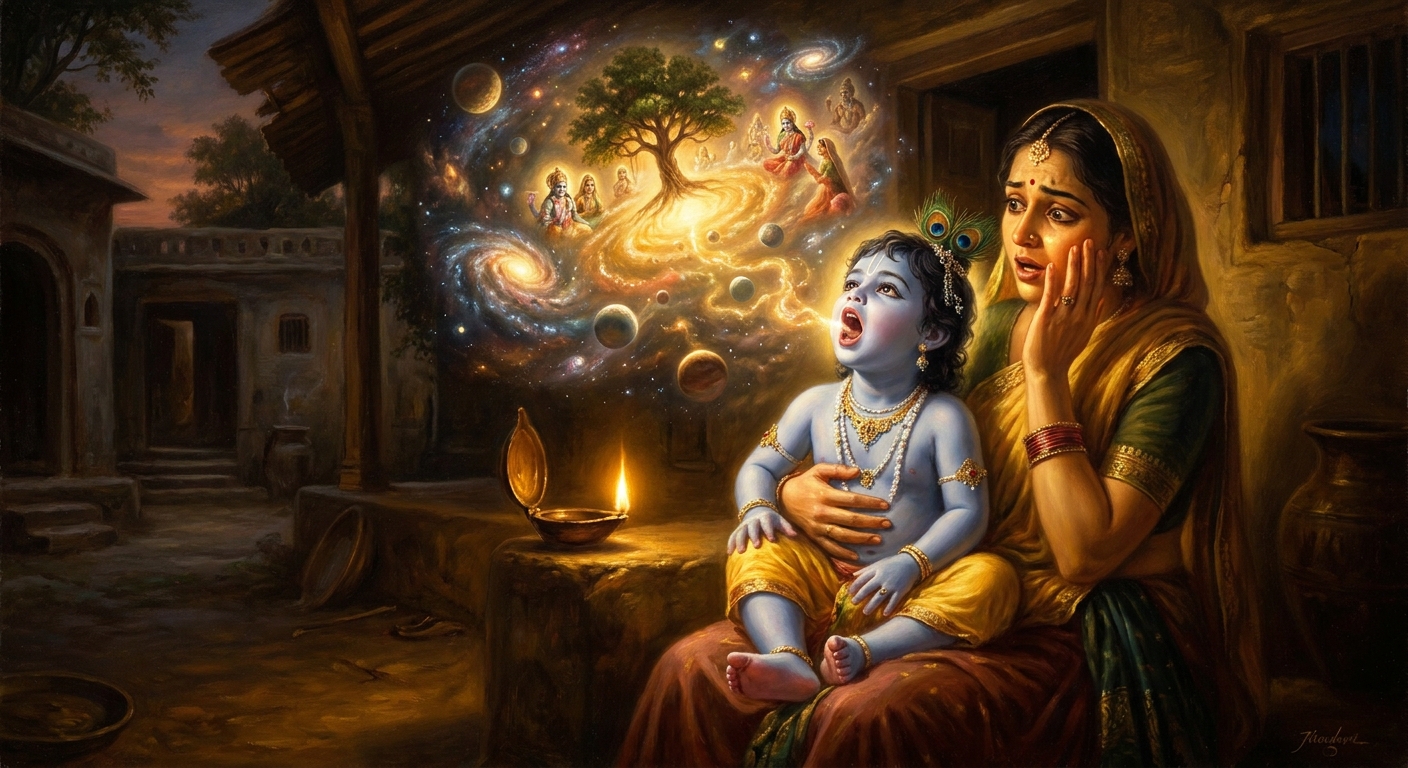
Krishna Shows Yashoda the Universe
The infant Krishna eats dirt. His foster-mother demands he open his mouth. Inside, she sees the cosmos — stars, oceans, hells, herself looking in, infinitely — and is mercifully made to forget.
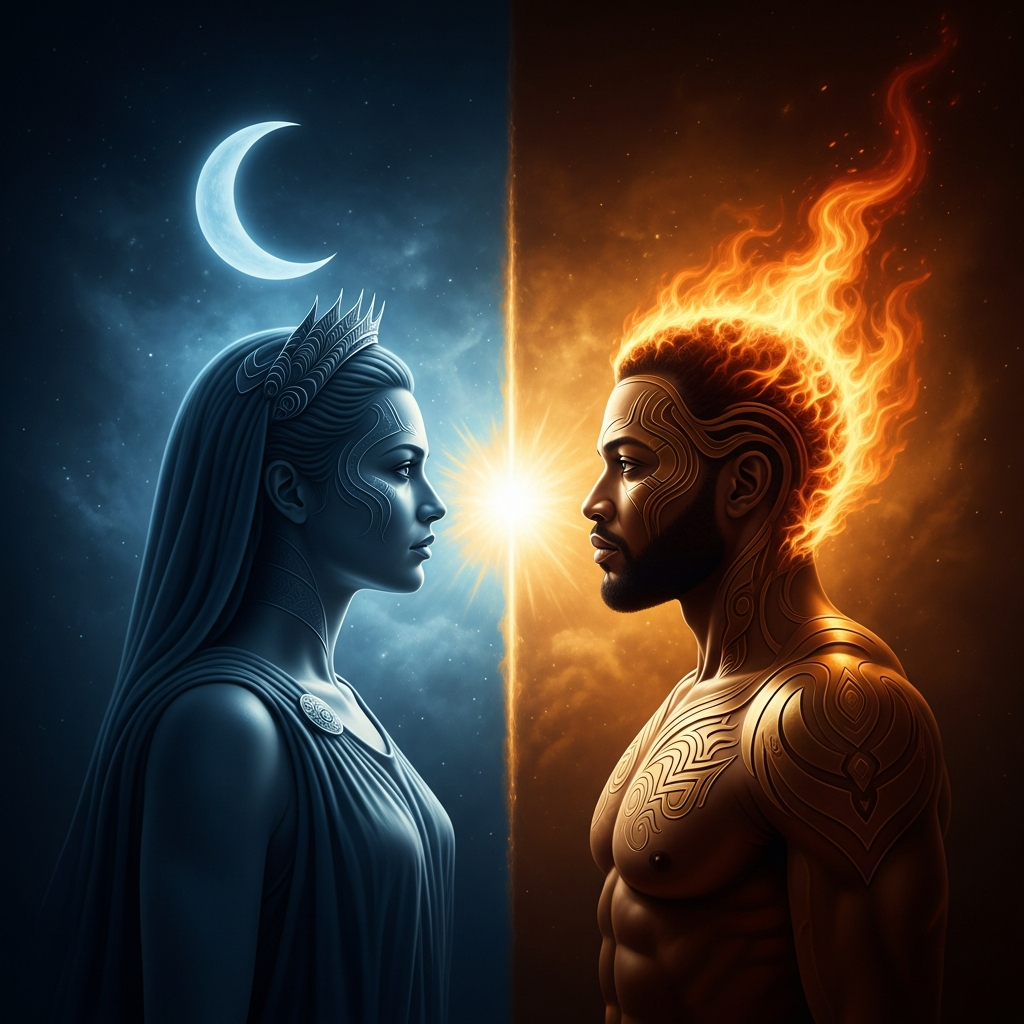
Mawu-Lisa and the Laughter That Made the World
Mawu the moon and Lisa the sun are twins who are one supreme deity. Together with Dan Ayido Hwedo, the rainbow serpent who coils beneath the earth and holds it up, they make the world in seven days. The world's diversity came from Mawu's laughter. The world's continued existence depends on the serpent not growing too hot.
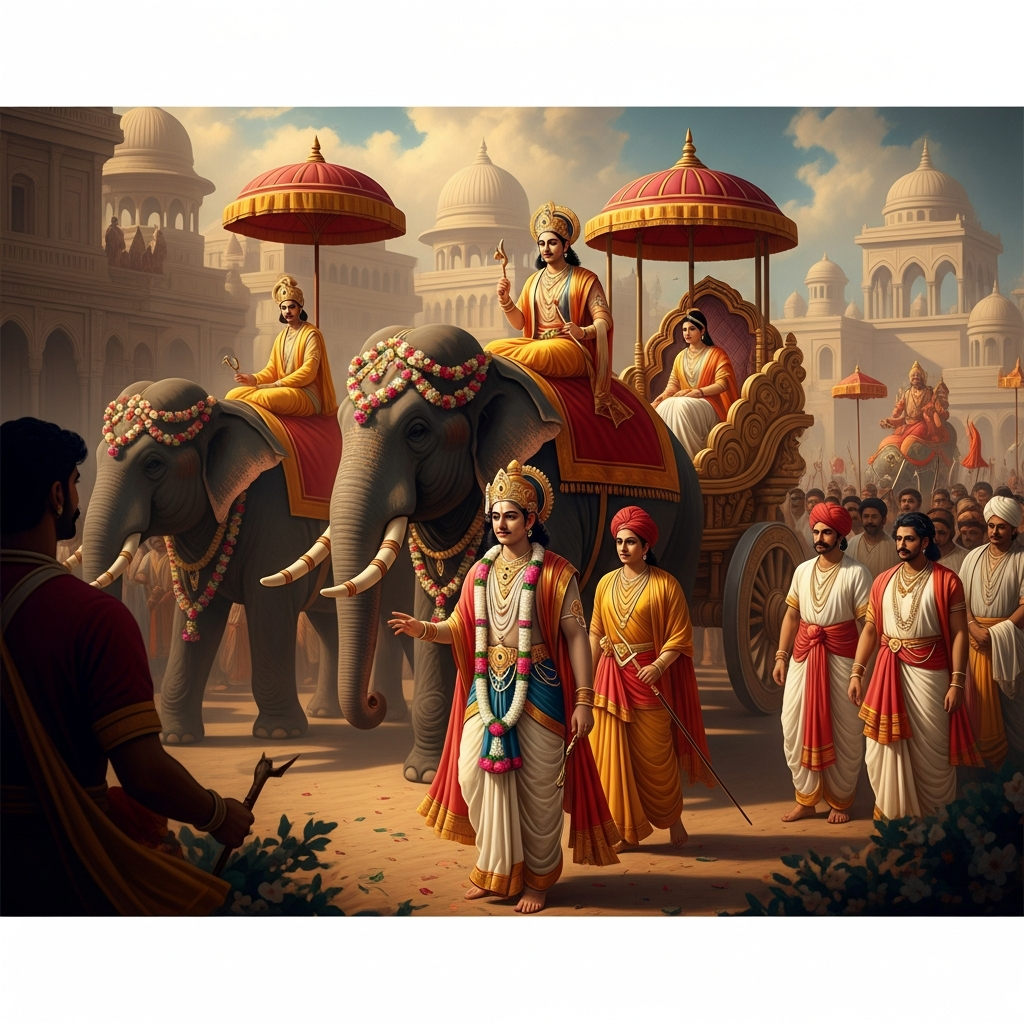
The Wedding That Became a Double Renunciation
Neminatha, the twenty-second Tirthankara and cousin of Krishna, is riding in his wedding procession when he hears the animals crying in their pens outside the feast-hall. He stops. He looks at them. He cannot proceed. He turns the procession around, returns his betrothed to her father, and renounces the world that afternoon. His bride, Princess Rajimati, eventually renounces too.
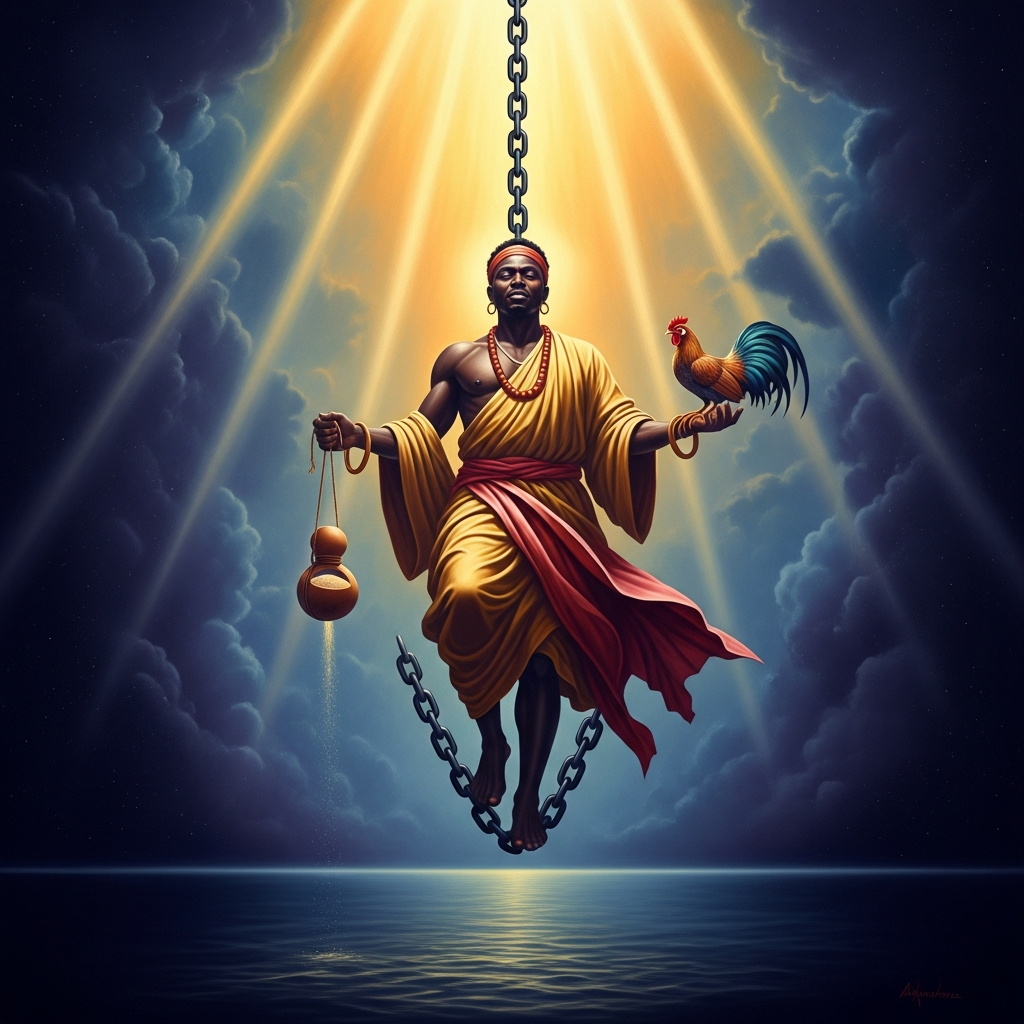
Oduduwa Descends the Iron Chain
The world is water. Obatala is chosen to create the earth, given sand and a hen and a chain of iron. He drinks palm wine on the way down and arrives drunk. His younger sibling Oduduwa takes the chain and descends instead. The dispute over who made the earth has never been resolved.
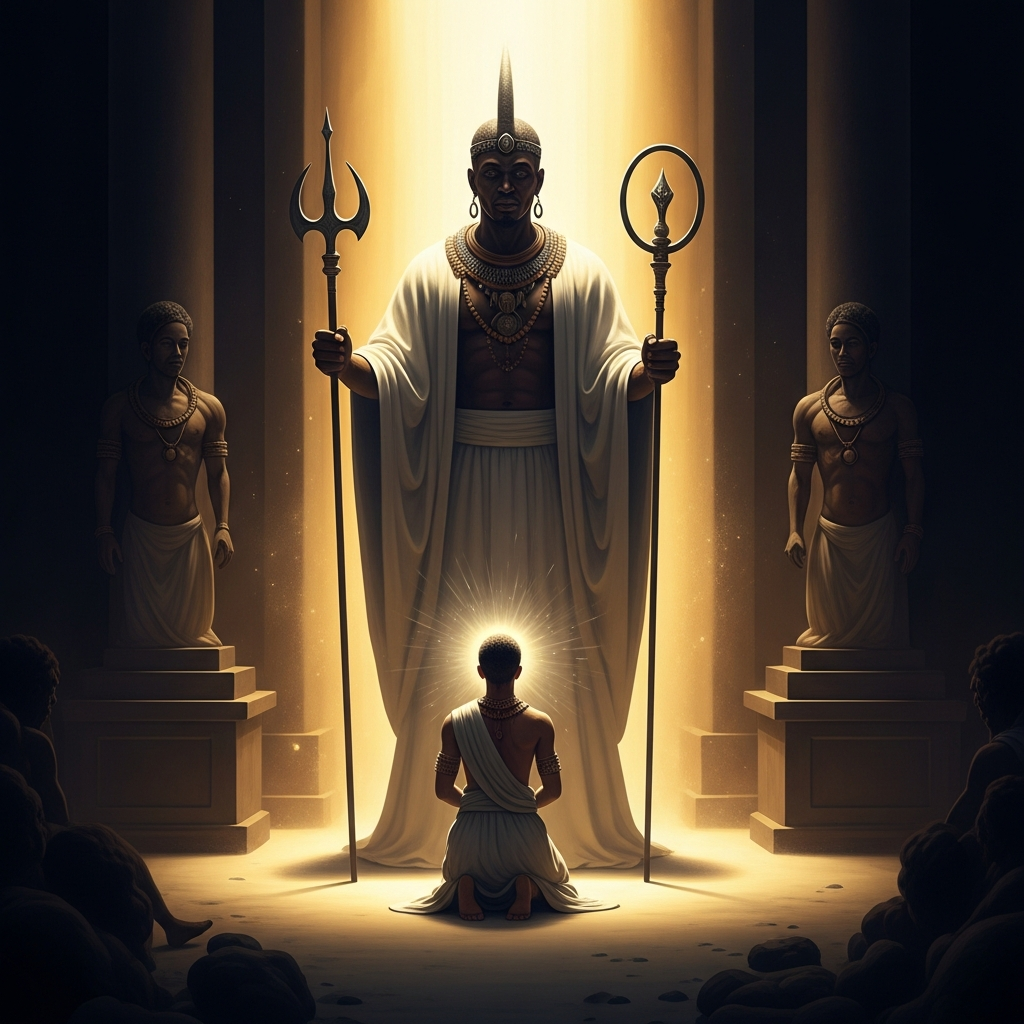
Orunmila and the Destiny You Chose
Before birth every soul stands before Olodumare and chooses its own life. Then it forgets. The Ifa oracle exists to help people remember. When a young man asks why his destiny has gone wrong, what Orunmila reveals is harder than he expected: nothing has gone wrong at all.
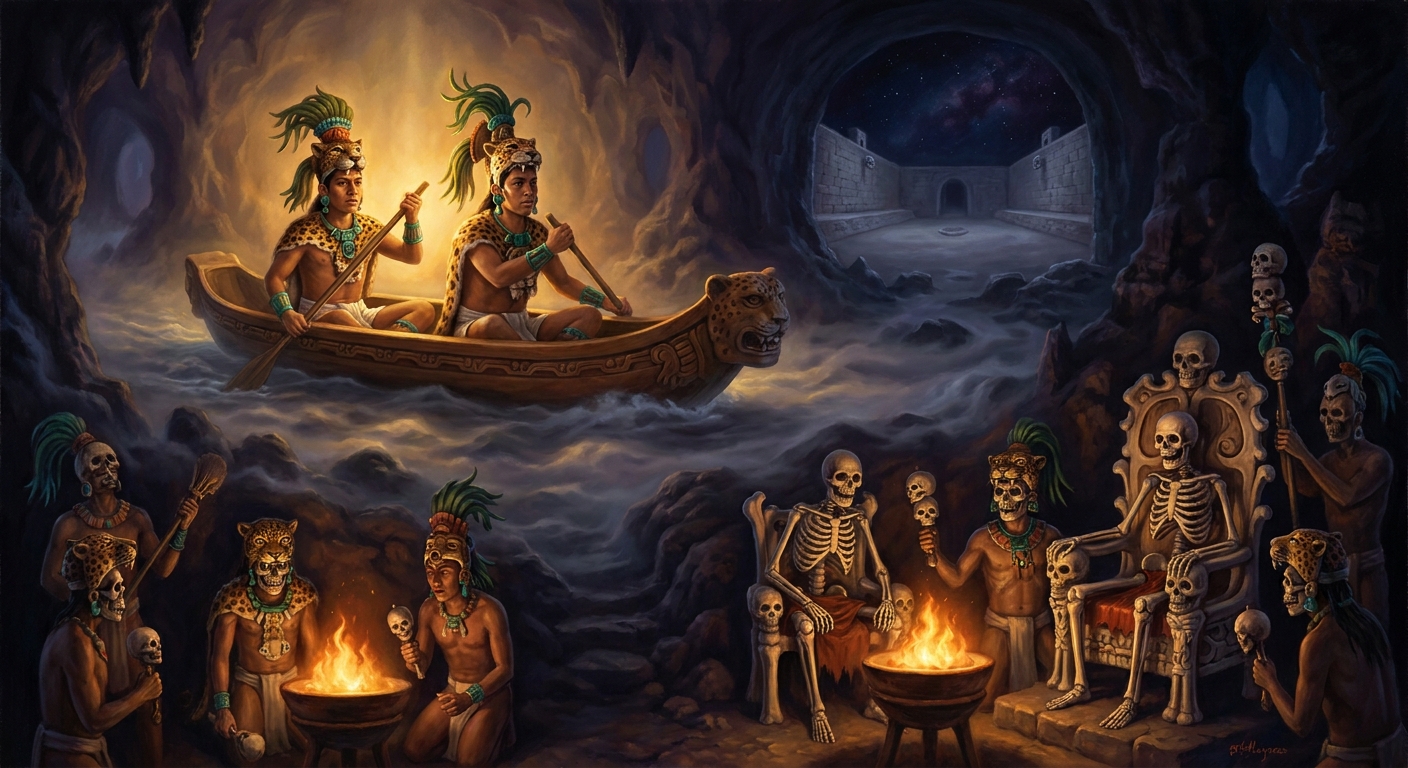
The Hero Twins Defeat the Lords of Death
Hunahpu and Xbalanque are summoned to Xibalba by its lords of decay. They survive six houses of torture, lose and recover Hunahpu's severed head, trick the death gods into begging for their own dismemberment, and ascend as the sun and moon.
Prahlada and Narasimha: The Pillar Splits
The demon king Hiranyakashipu has made himself inviolable by boon — unable to be killed by man or god, beast or weapon, by day or night, inside or outside. When every torture fails to break his own son's devotion to Vishnu, he strikes a pillar. From the pillar, Vishnu erupts as Narasimha — the man-lion — and disembowels the demon at the threshold, at dusk, on his own lap, defeating every loophole at once.
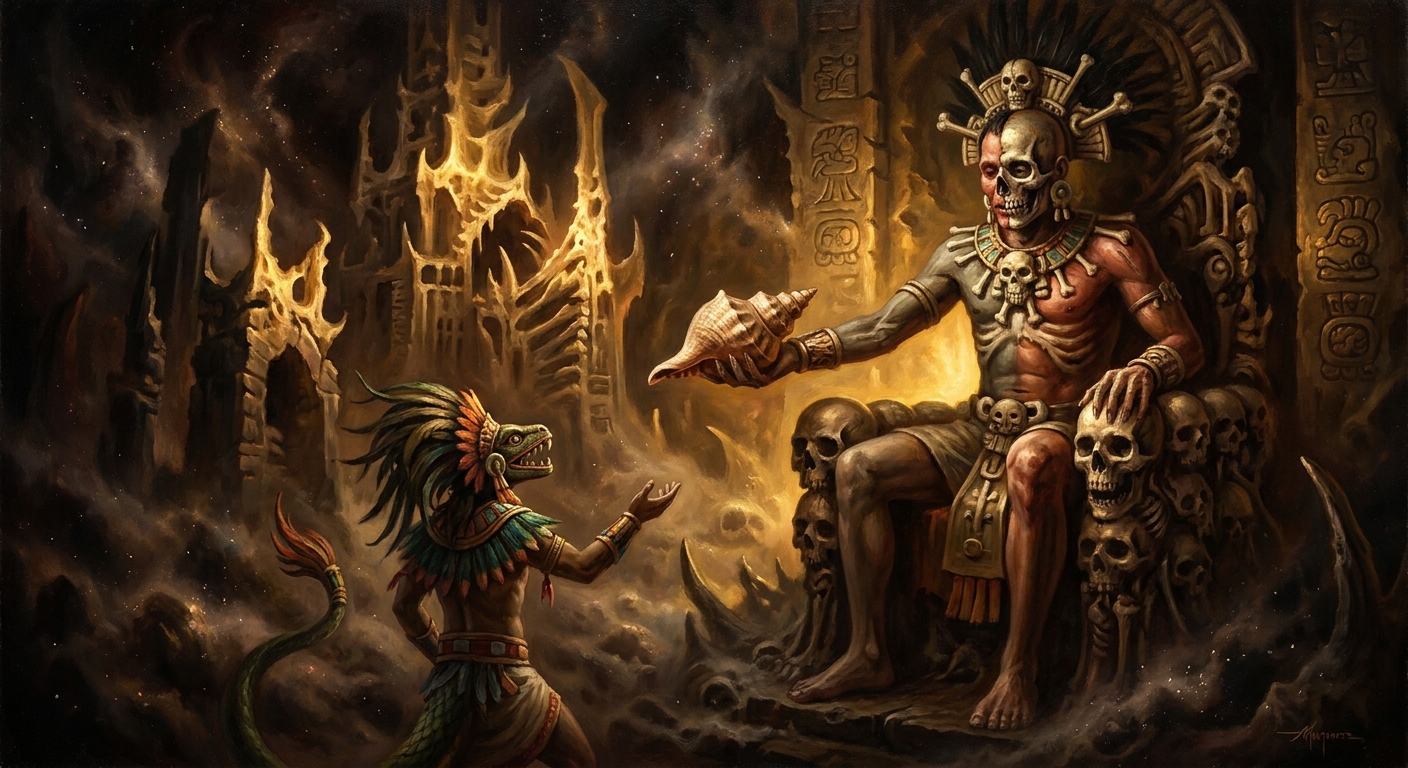
Quetzalcoatl in the Bone-Pit
The feathered serpent descends to Mictlan, tricks the lord of the dead, drops the bones of humanity, and bleeds his own body onto the broken pieces to make the Fifth Race.
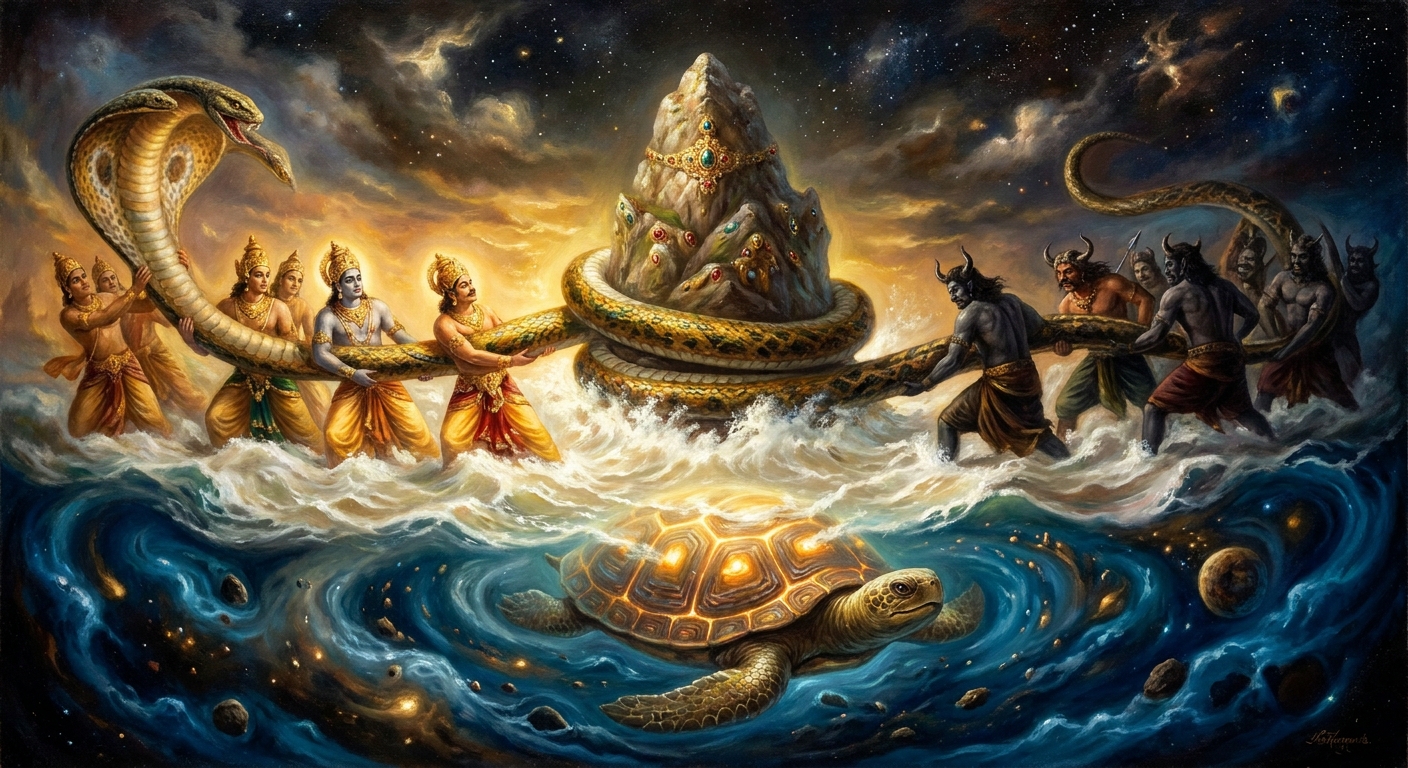
Samudra Manthan: The Churning of the Cosmic Ocean
Gods and demons coil the serpent Vasuki around Mount Mandara and churn the milk ocean together, tearing open creation to find immortality. What pours out is everything — beauty, poison, medicine, death — and only Shiva can swallow the halahala that would destroy the universe before the nectar arrives.
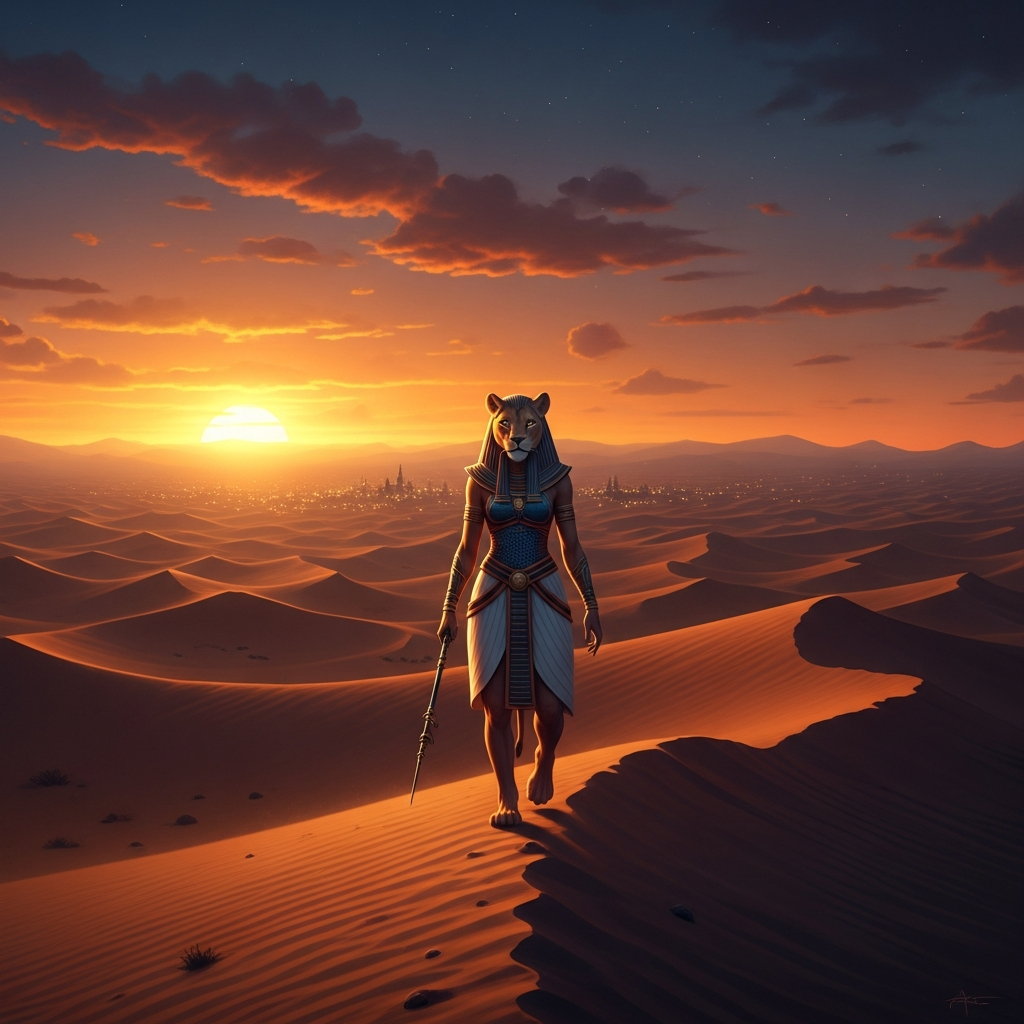
Sekhmet and the Eye of Ra: The Slaughter That Almost Ended Humanity
Ra sends his Eye — the lioness goddess Sekhmet — to punish humanity for mocking him in his old age. She begins killing and cannot stop. Ra relents and tries to recall her, but she has entered the divine frenzy and is beyond hearing. Ra floods the fields with red-dyed beer; she drinks it thinking it is blood; she falls asleep drunk; humanity survives by seventy-three thousand deaths and the width of a beer vat.
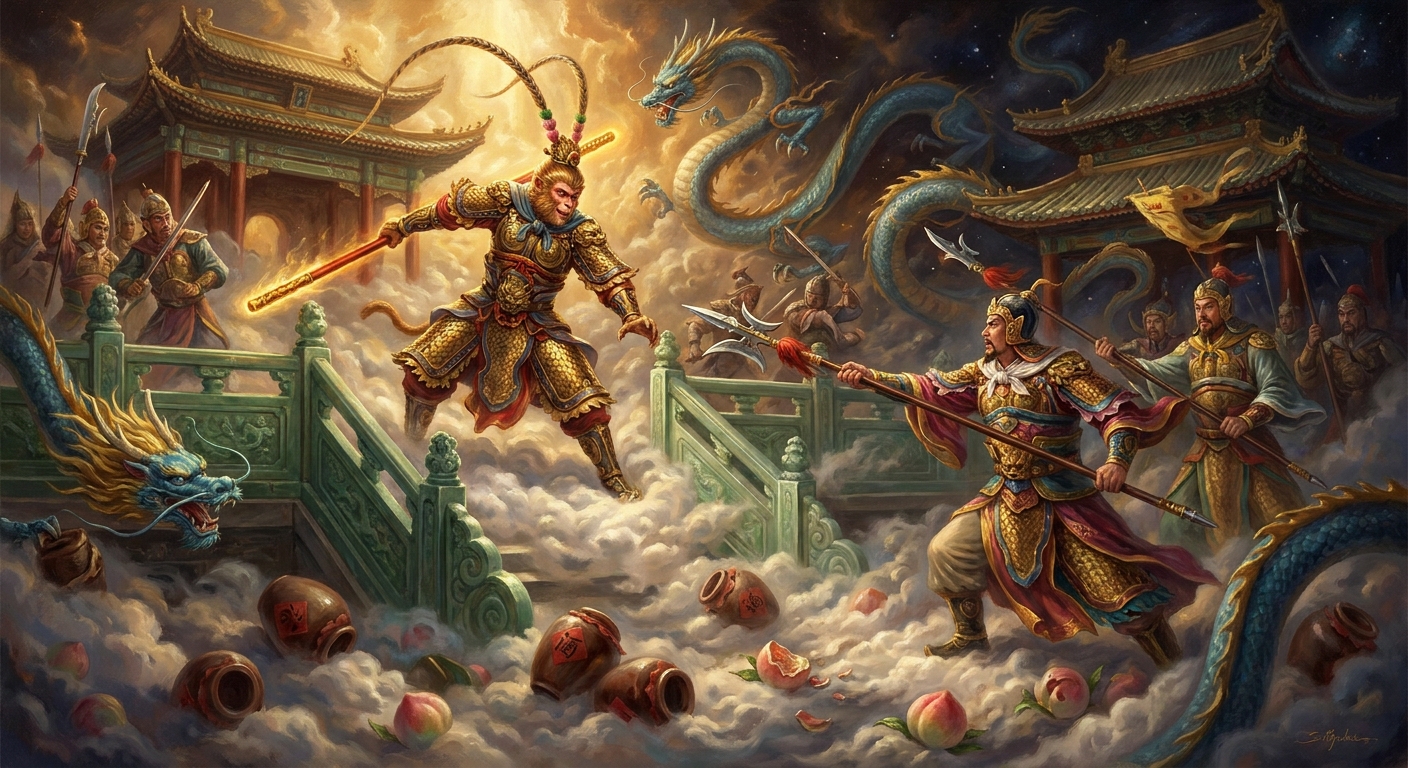
Sun Wukong Storms Heaven
Born from a stone on Flower-Fruit Mountain, the Monkey King masters immortality, steals a divine weapon, erases his name from Death's ledger, revolts against heaven, and eats the Peaches of Immortality — before the Buddha traps him under a mountain for five hundred years with a single open palm.
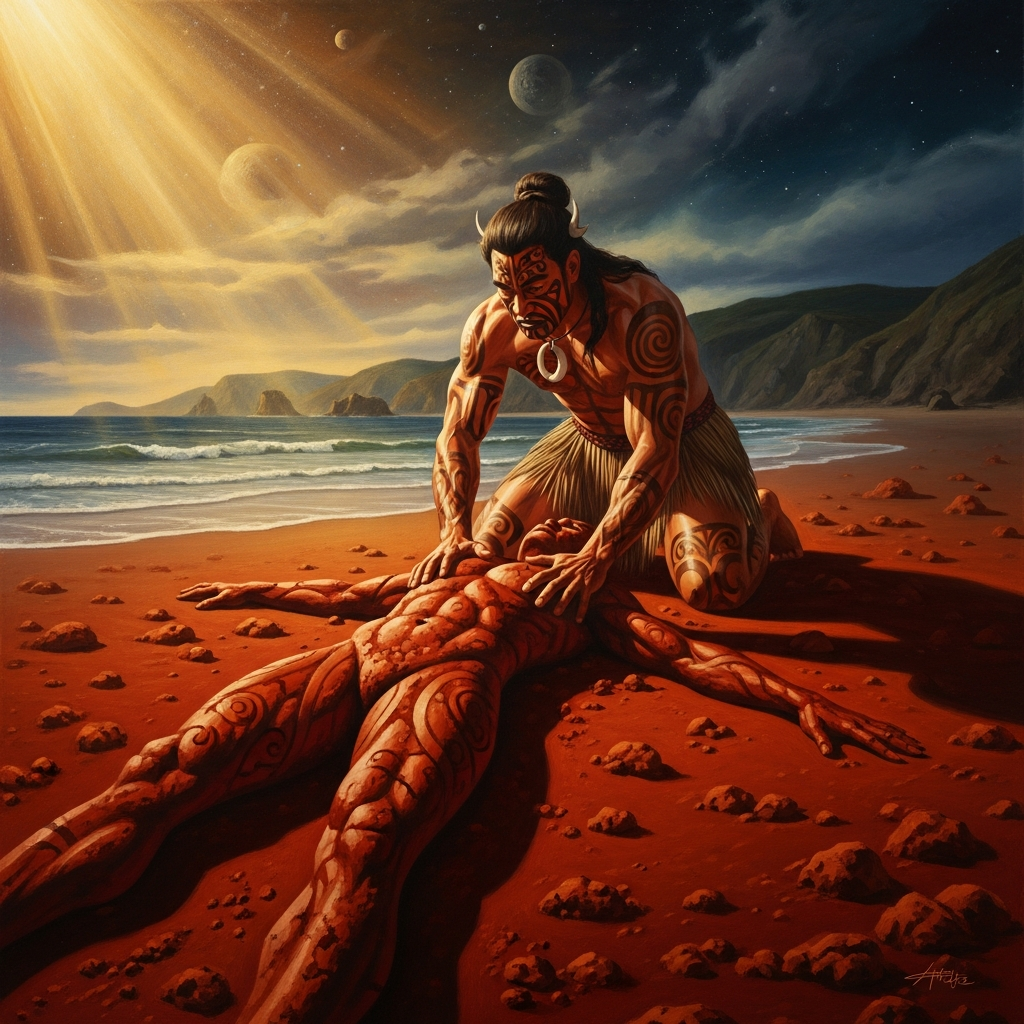
Tāne Shapes the First Woman
Tāne, god of forests and light, molds a woman from the sand at Kurawaka, breathes life into her nostrils, and calls her Hineahuone. She bears him a daughter. He takes that daughter as his wife without telling her who he is. When she finds out, she walks into the underworld — and becomes the goddess of death, not as punishment, but as an act of love.
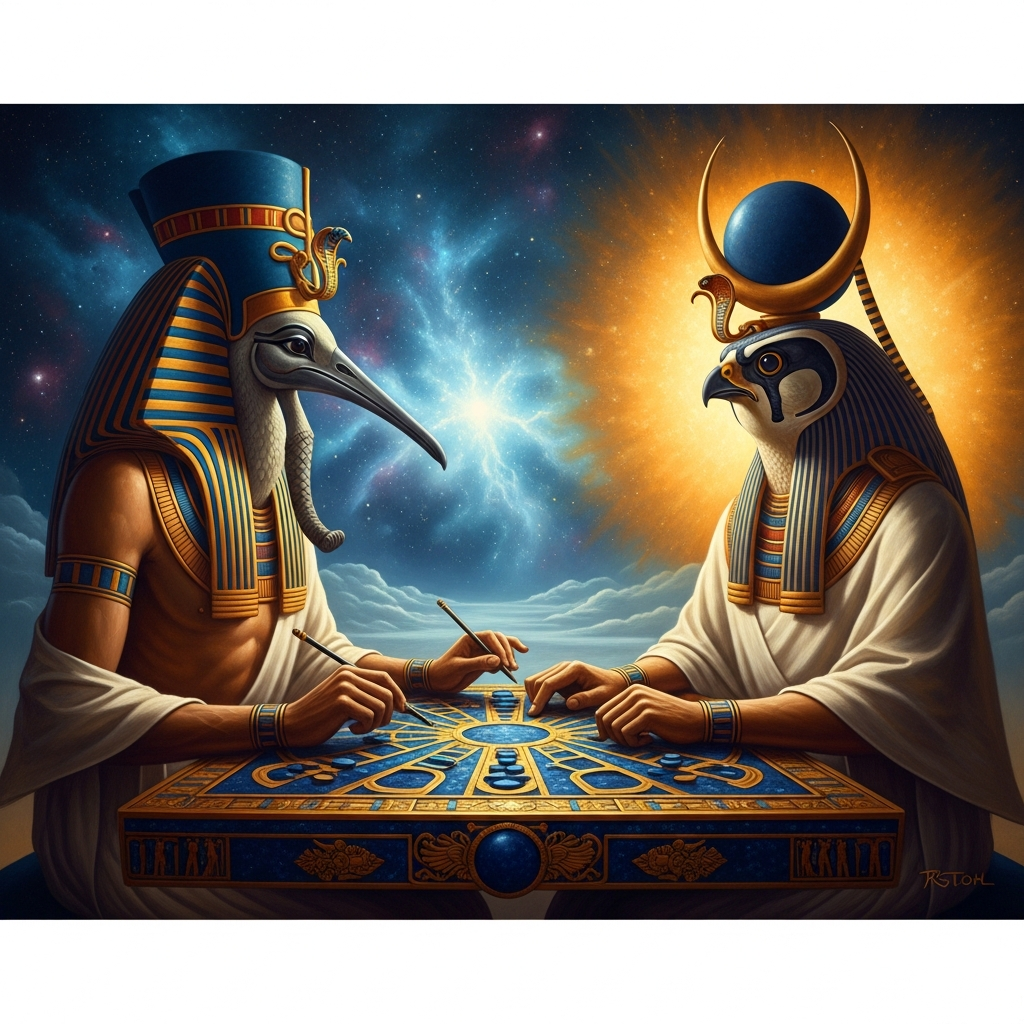
Thoth and the Five Days He Won from the Moon
Nut the sky goddess and Geb the earth god want children, but Ra has forbidden Nut from giving birth on any day of the year. Thoth — god of wisdom, writing, and divine cleverness — goes to the Moon and proposes a wager at senet. He wins, game by game, 1/72 of the Moon's light: enough to build five extra days that fall outside Ra's calendar. Nut gives birth on each of those days. The five children are Osiris, Horus the Elder, Set, Isis, and Nephthys. The world as Egyptians knew it begins.
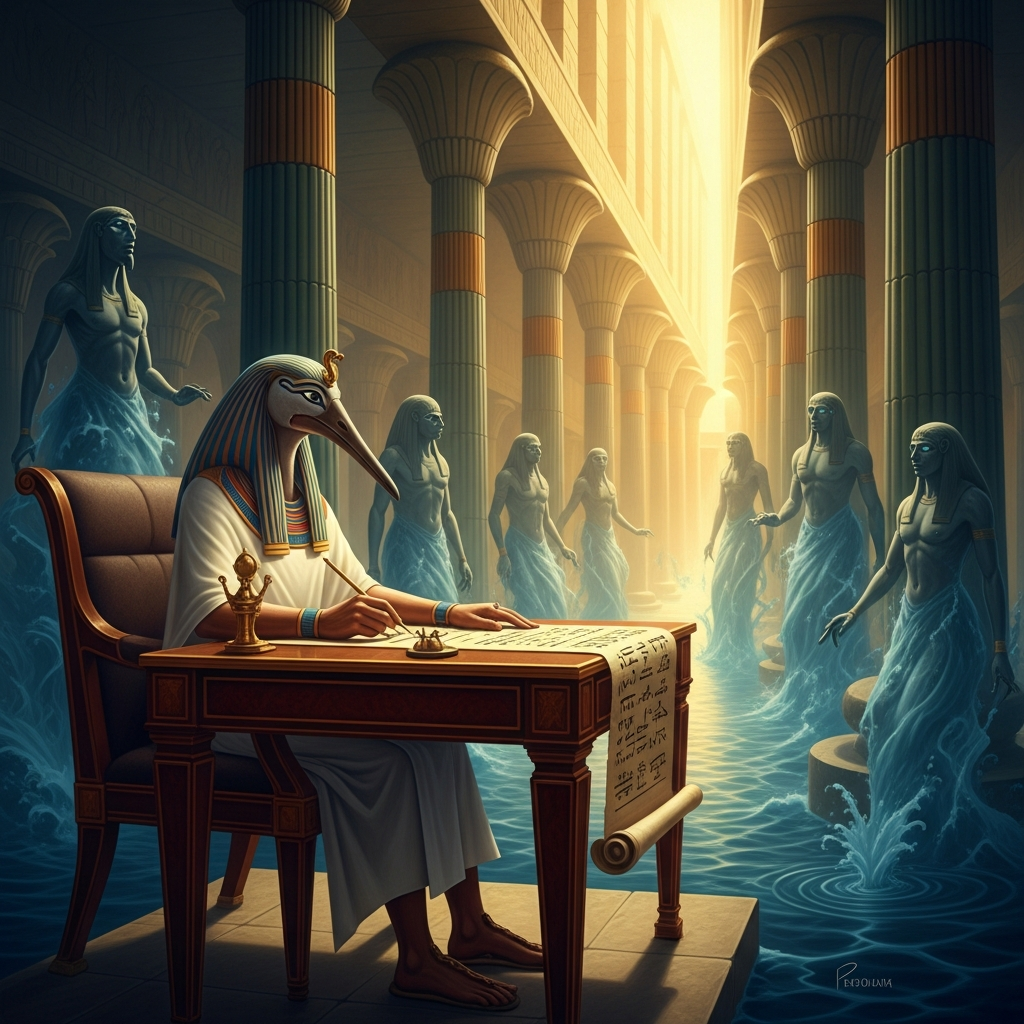
The Gift That Destroys Memory
Thoth, god of the moon and all knowledge, brings the gift of writing to the court of the divine king Thamus. Thamus refuses it. Writing, the king argues, will hollow out the very memory it claims to preserve — and Thoth, inventor of the most powerful tool in human history, cannot prove him wrong.
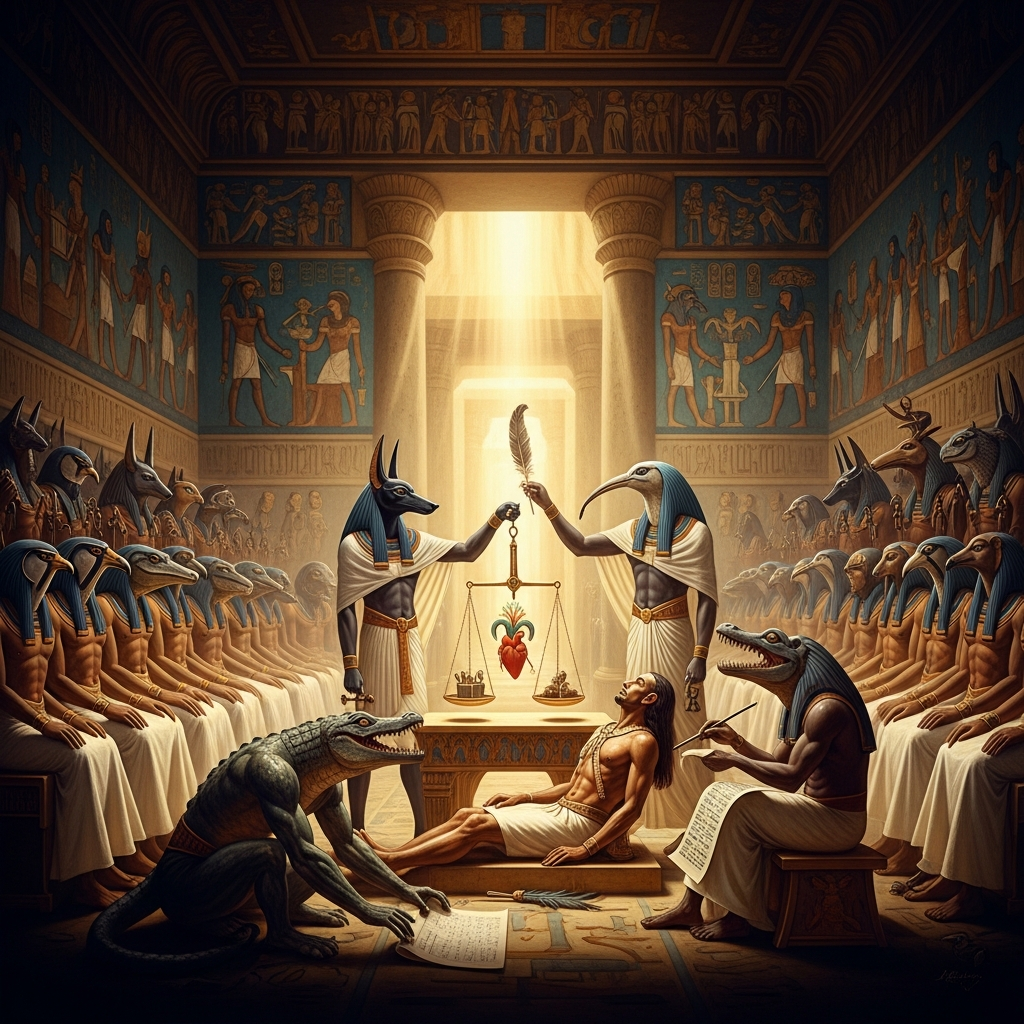
The Weighing of the Heart Against the Feather
In the Hall of Two Truths, the deceased stands before forty-two divine assessors and recites the Negative Confessions — forty-two sins they have not committed, each addressed to a specific deity in a specific city. Anubis then places the heart on the scale against Maat's feather of truth. Thoth records. The monster Ammit waits. A heart heavier than a feather is devoured, and the soul ceases to exist. The theology that emerges is one of the strangest in history: salvation depends not on what you believe, but on the lightness of what you have done.

White Buffalo Calf Woman and the Sacred Pipe
A beautiful woman walks out of the prairie mist toward two Lakota scouts. One looks at her with desire and is struck to bones by lightning. She tells the other: I bring a gift to your people. She teaches the seven sacred rites and gives the Lakota the *chanunpa wakan* — the sacred pipe. When she walks away, she becomes a white buffalo calf.
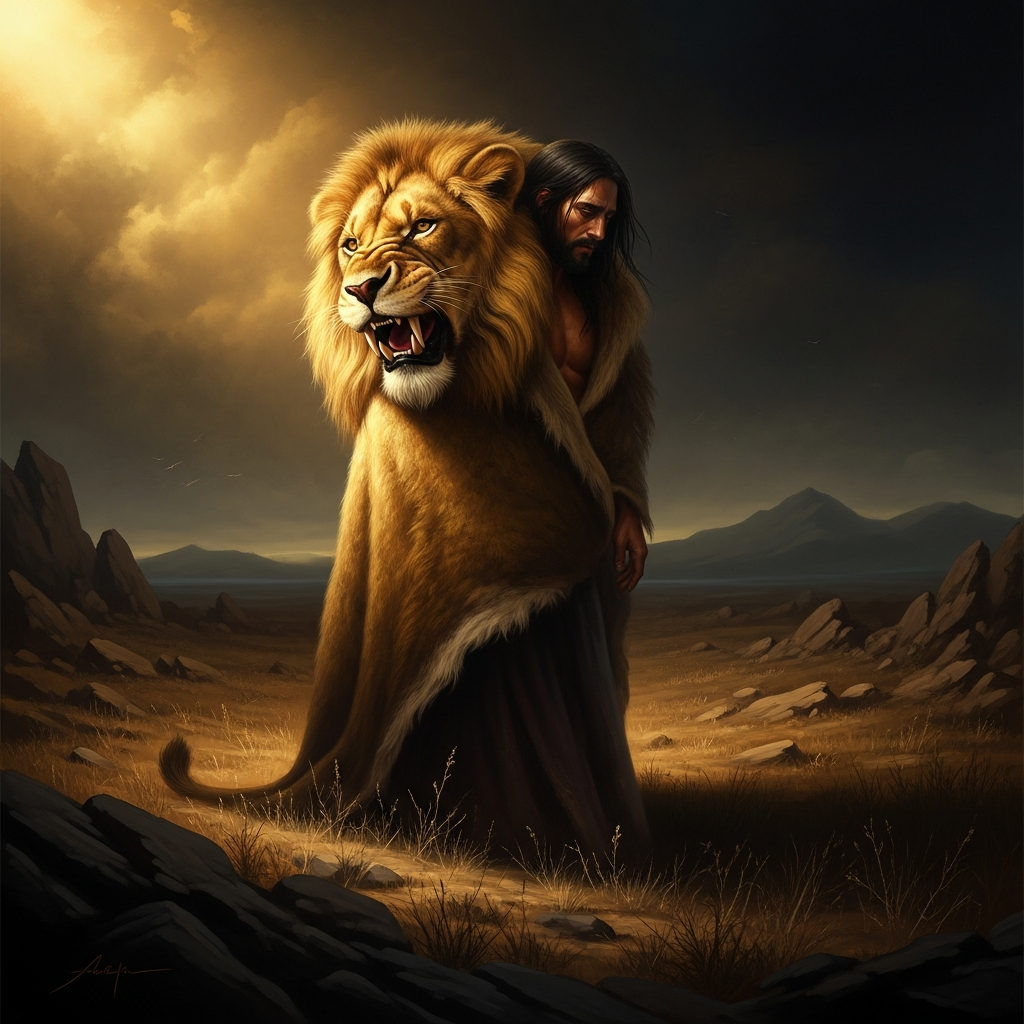
Gilgamesh at the End of the World
After Enkidu's death, Gilgamesh travels to the edge of the world to find Utnapishtim and ask him the secret of eternal life. At the mountain of Mashu, the Scorpion-people guard the tunnel through which the sun travels. No living human has passed this way. Gilgamesh presents his credentials: grief. The gate opens. He walks twelve double-hours through absolute darkness.
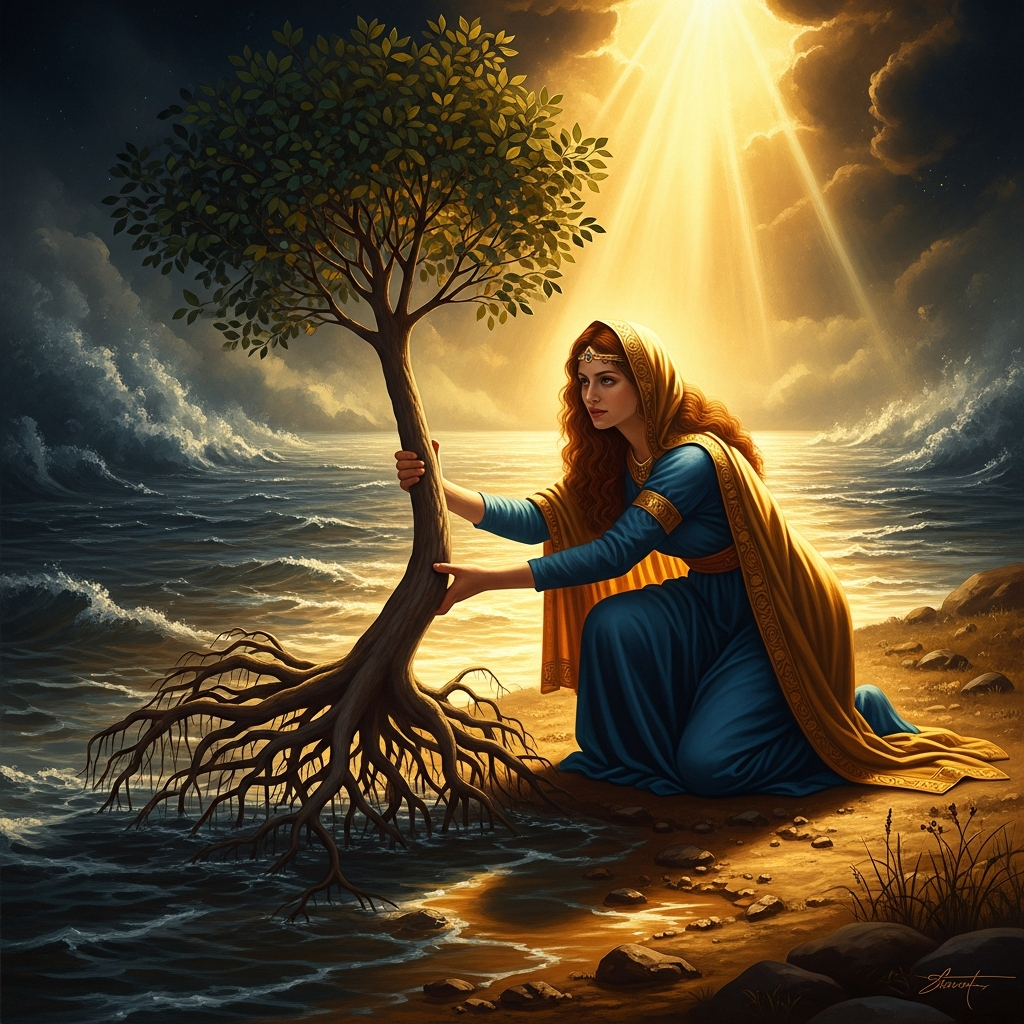
Inanna's Tree and the Snake That Refused to Leave
Before the great descent: Inanna finds a huluppu tree uprooted by flood on the bank of the Euphrates and plants it in her garden at Uruk, intending to make a throne and bed from its wood. A snake nests at the root. The Anzu bird nests in the branches. Lilith builds her house in the trunk. Gilgamesh drives them out with his axe. Creation of the first sacred furniture — and a Sumerian archaeology of the uncanny.
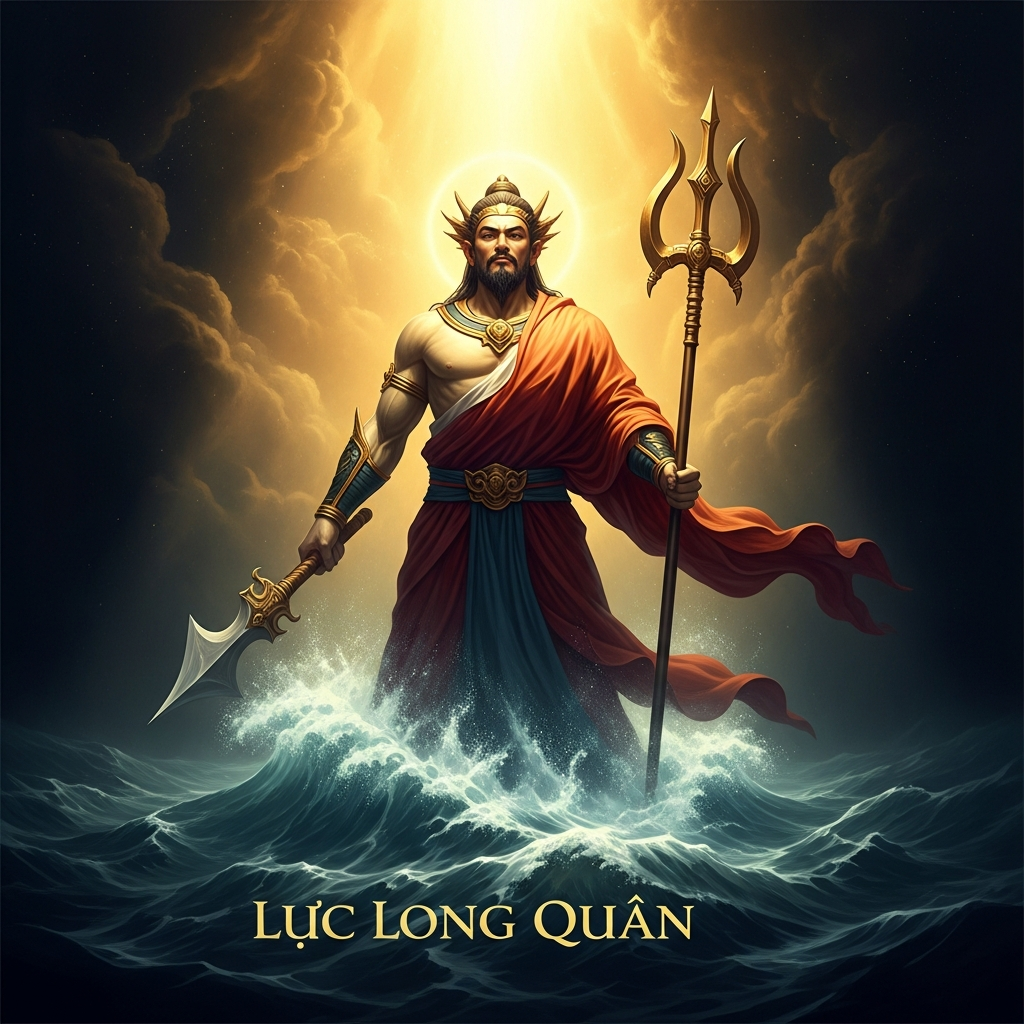
Lạc Long Quân and Âu Cơ: The Hundred Eggs
At the beginning of Vietnamese time, a sea-dragon lord marries a mountain fairy. Their union produces a sac of one hundred eggs, from which one hundred sons hatch. The marriage cannot hold. The separation is not a tragedy — it is the point. Vietnam is both the mountain and the sea.
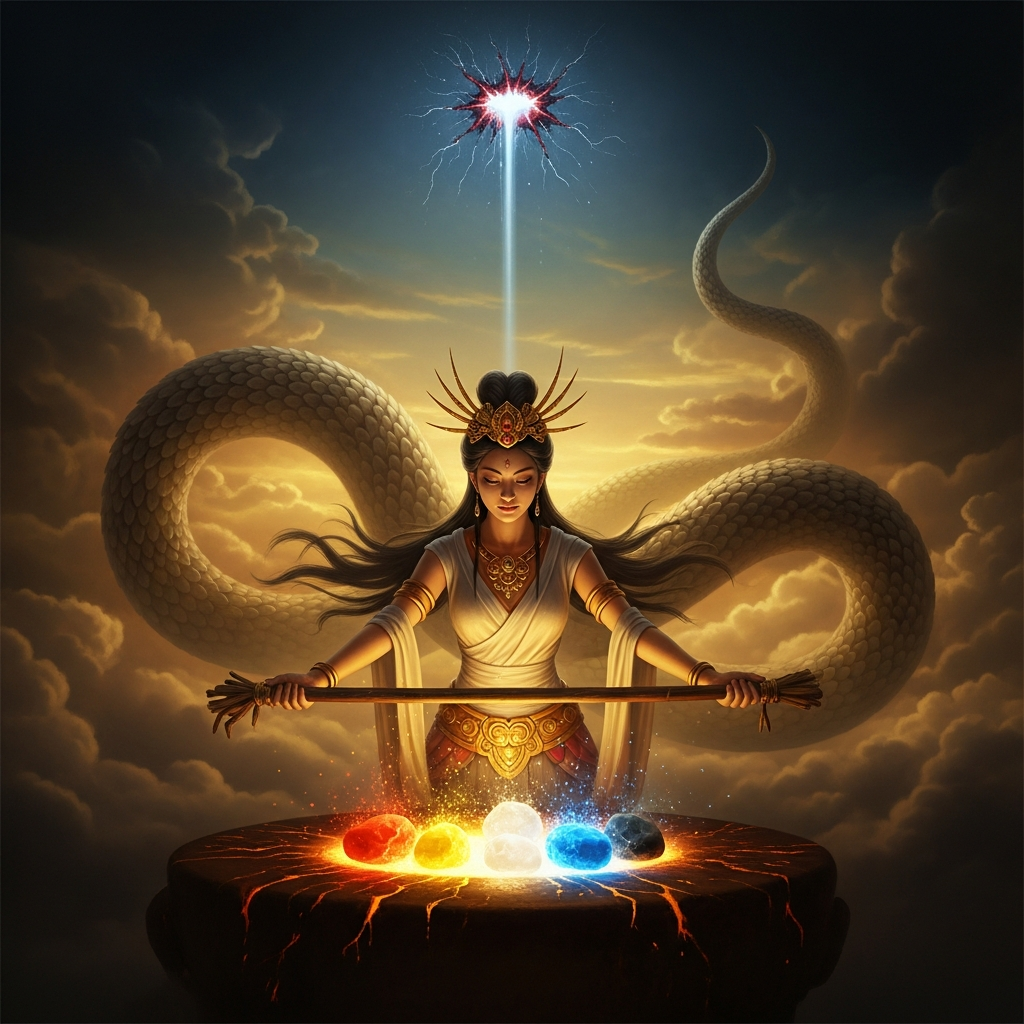
Nü Wa Repairs the Broken Sky
The creator goddess who molded humanity from yellow earth patches the sky itself after the water god Gong Gong, defeated and ashamed, butts his head against Mount Buzhou and shatters the pillar holding up the heavens. She melts five-colored stones in a celestial furnace, cuts the legs from a cosmic tortoise, and seals the wound — but the sky remains slightly tilted, and rivers still run east.
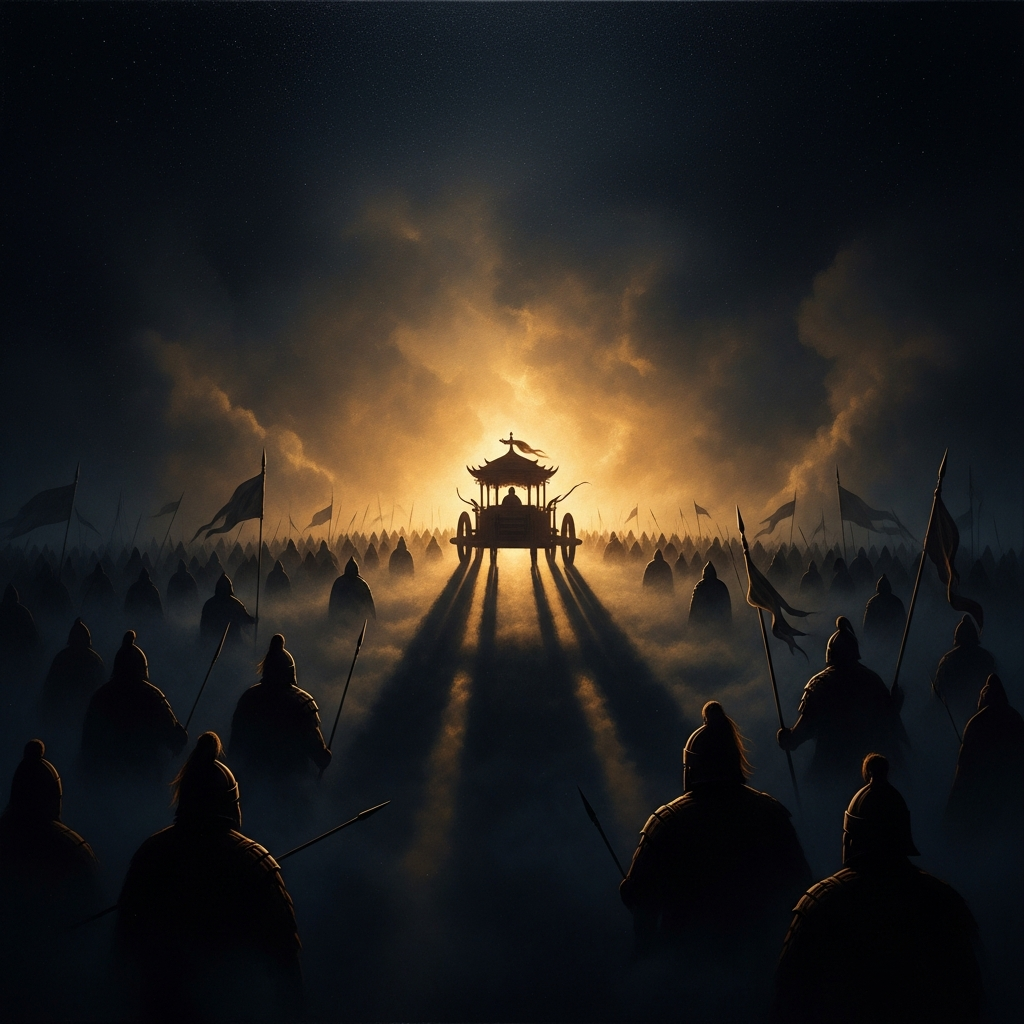
The Yellow Emperor Defeats Chi You
At the primordial Battle of Zhuolu, the Yellow Emperor Huangdi faces Chi You — iron-headed, stone-stomached, eighty-one brothers of bronze and blood — in the fog that erases all direction. He invents the compass to navigate it. He summons the Drought Goddess to burn it away. Chi You falls, and from his blood grows a red lacquer forest. This is the battle that creates the Han people.
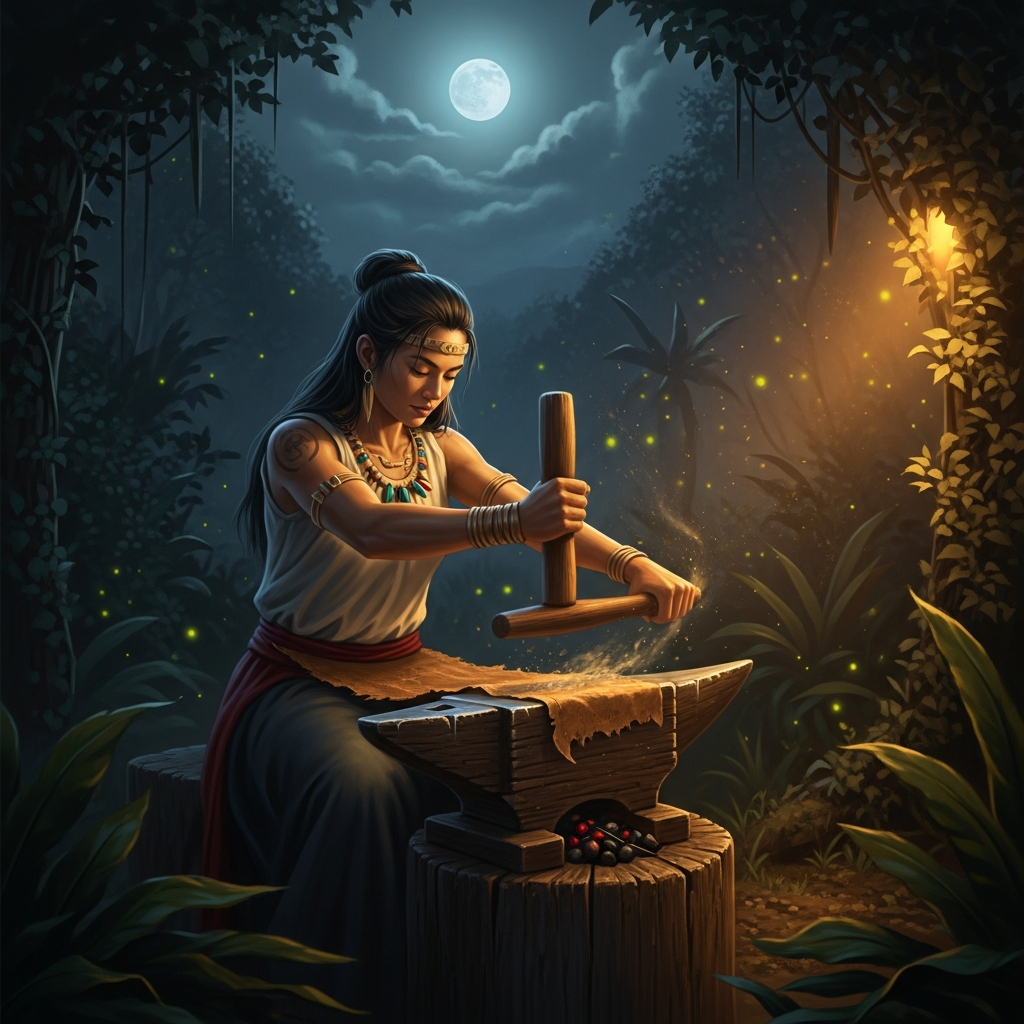
Hina and the Moon
Hina pounds tapa cloth on earth until she can no longer bear it. She climbs the coconut tree toward the moon, slips, climbs again, and reaches the surface. She is taken in. Now she pounds tapa in the moon — and the rhythm of her work is why the moon waxes and wanes. The most widespread woman in all of Pacific mythology chose a harder labor in a better light.
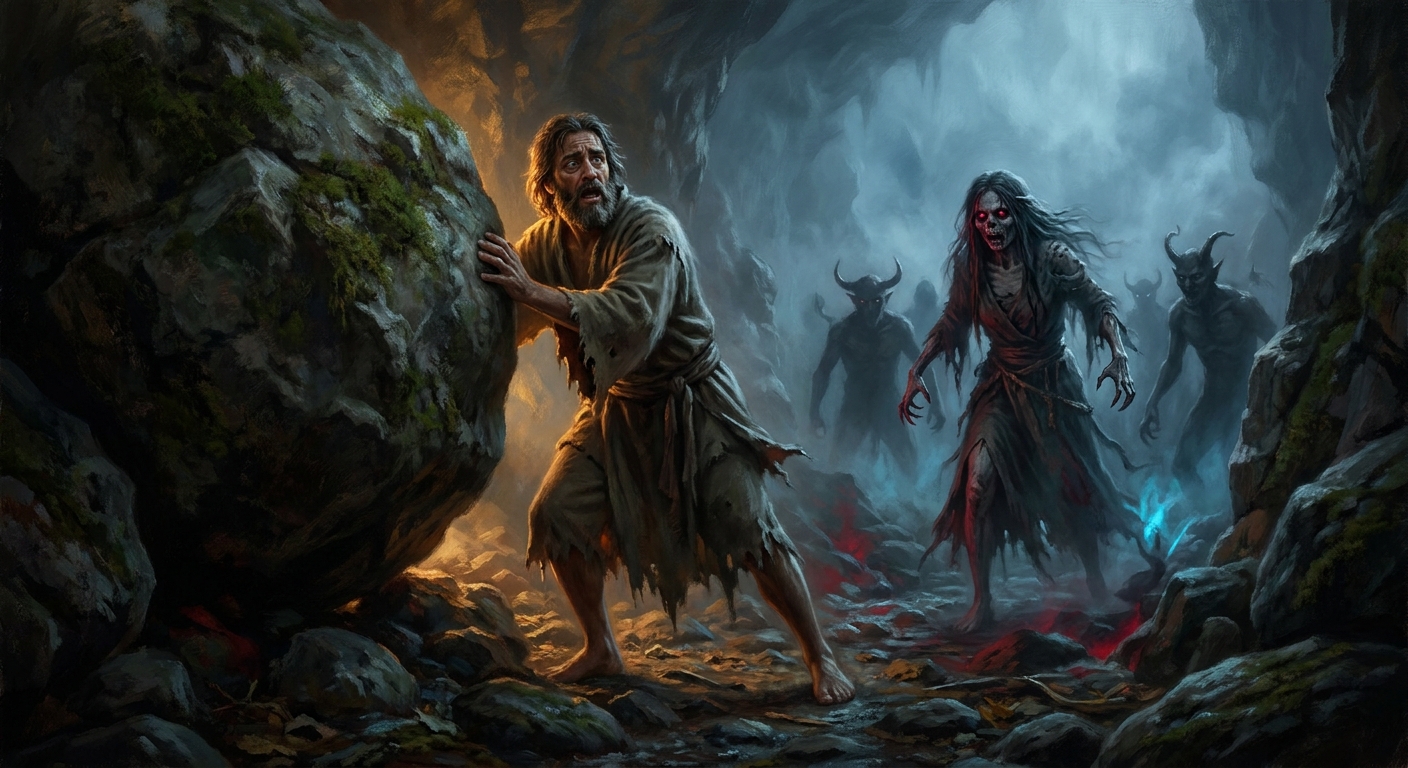
Izanagi in the Land of Death
The creator god Izanagi descends to Yomi to reclaim his dead wife Izanami. He lights a torch. He should not have lit a torch. What he sees cannot be unseen, and what he seals behind a great rock on the way out becomes the law that governs every human life that follows.
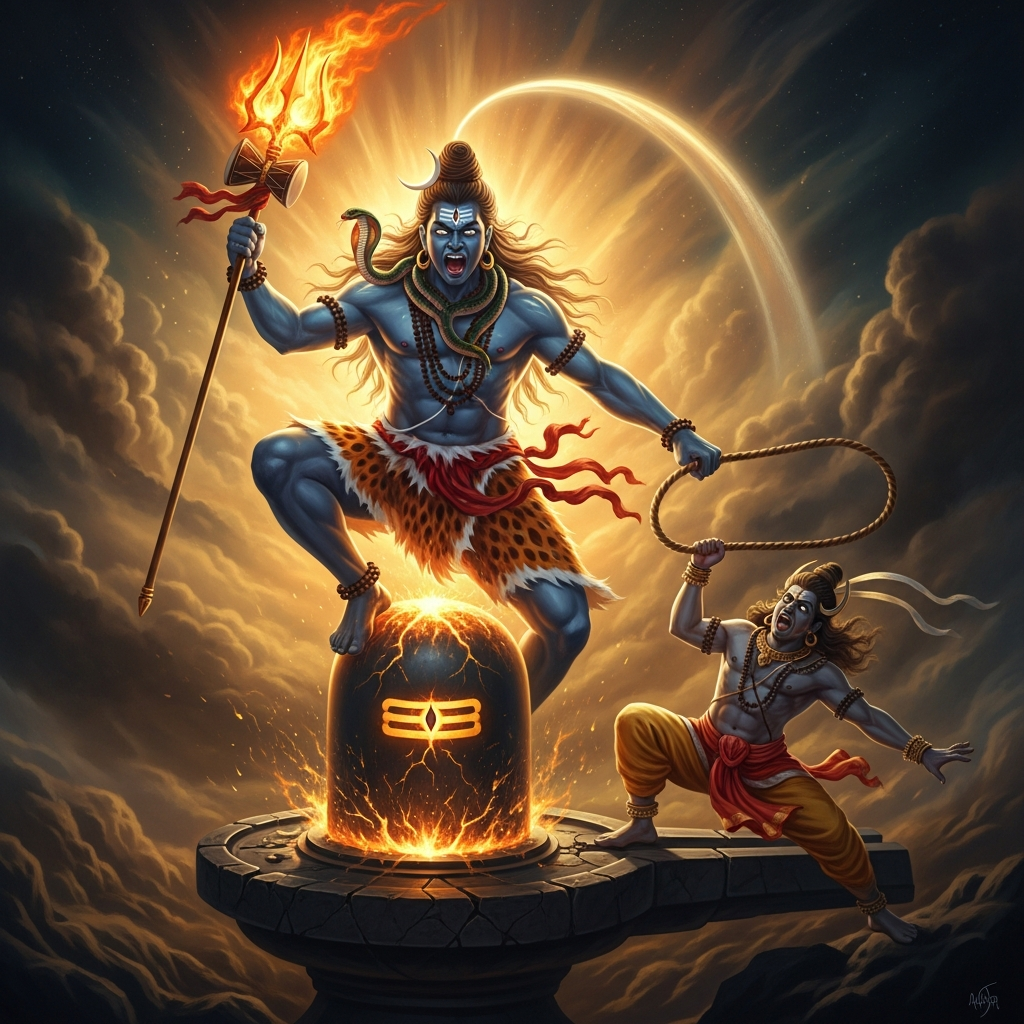
Markandeya and the Lord of Death
The sage Mrikandu prays for a son and receives a choice: a brilliant child who lives sixteen years, or a dull child who lives long. He chooses the brilliant one. Markandeya is born, learns the Maha Mrityunjaya mantra, and on his sixteenth birthday embraces the Shiva-linga as Yama's noose falls. Shiva erupts from the stone and kicks death in the chest. Markandeya lives forever.
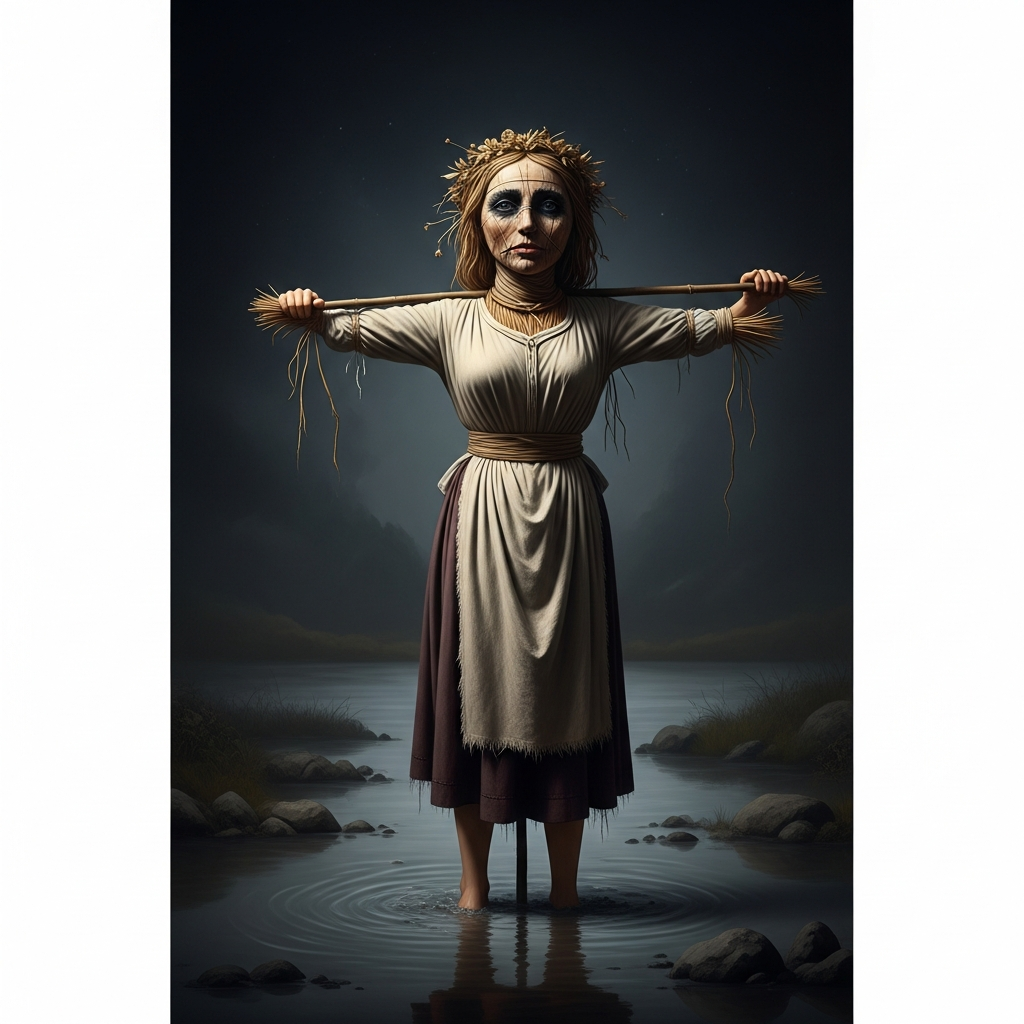
Marzanna: The Burning of Winter
Every spring in villages across Poland, Bohemia, and Slovakia, a straw effigy of Marzanna — goddess of winter, plague, and death — is carried through the village, beaten, set on fire, and drowned. The people must run home without looking back or she will drag them down. The priest refuses to attend. The village holds the ceremony anyway. Winter ends regardless.
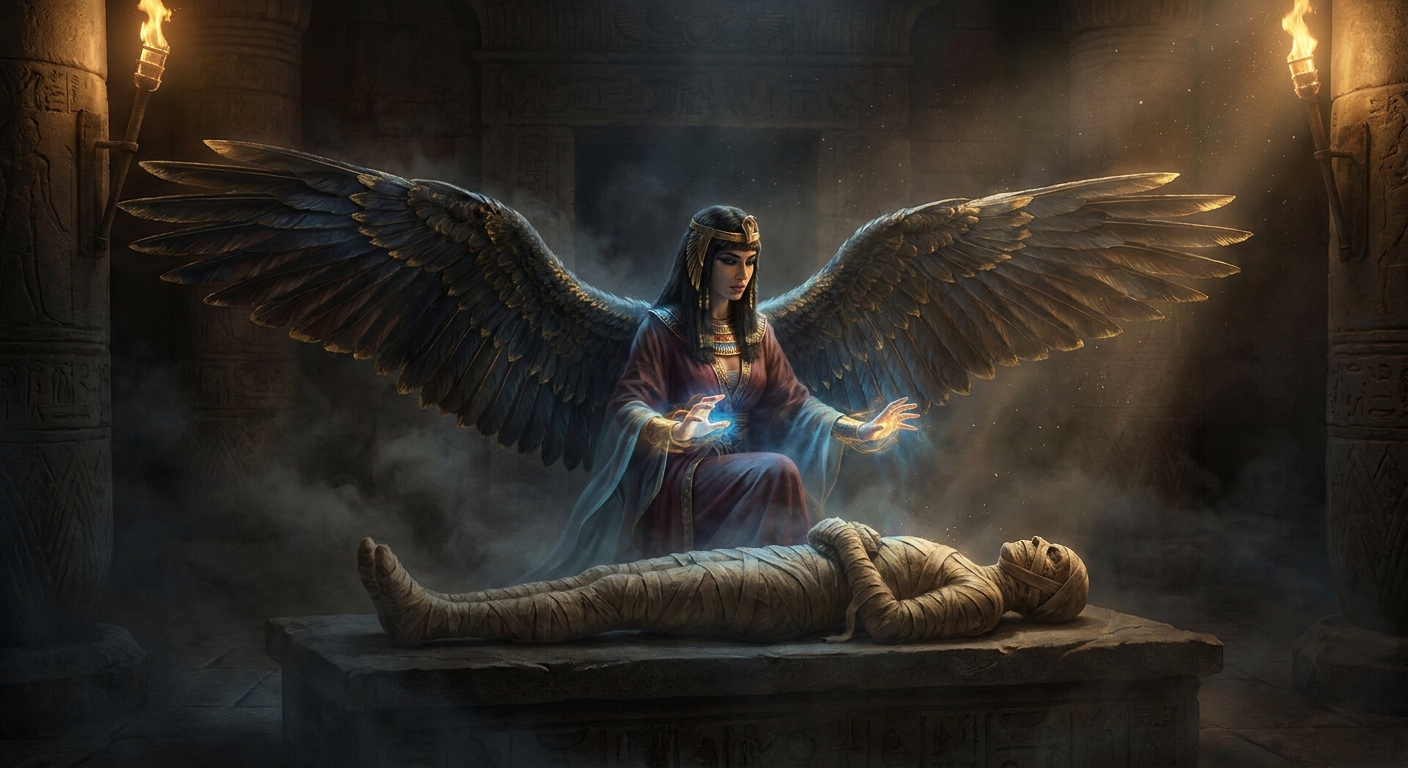
Isis Reassembles Osiris
Isis searches Egypt for the dismembered body of her murdered husband Osiris, finds thirteen of fourteen scattered pieces, and through magic and bandages restores him to life long enough to conceive the avenger Horus.
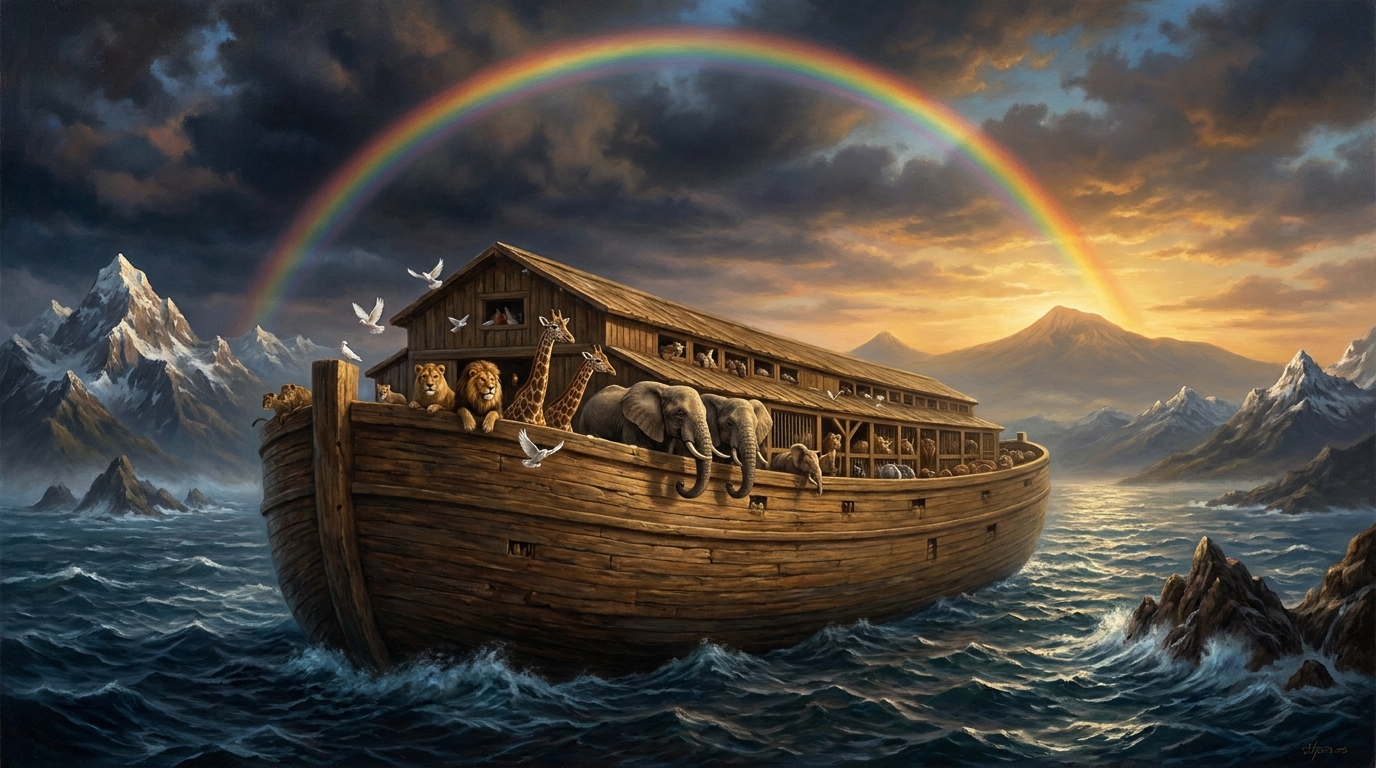
Noah and the Ark
God grieves the world he made, chooses one righteous man, and drowns everything else. Noah floats for a year on waters that cover the mountains. A dove returns with an olive leaf. A rainbow is hung in the sky as a promise that will never stop needing to be kept.
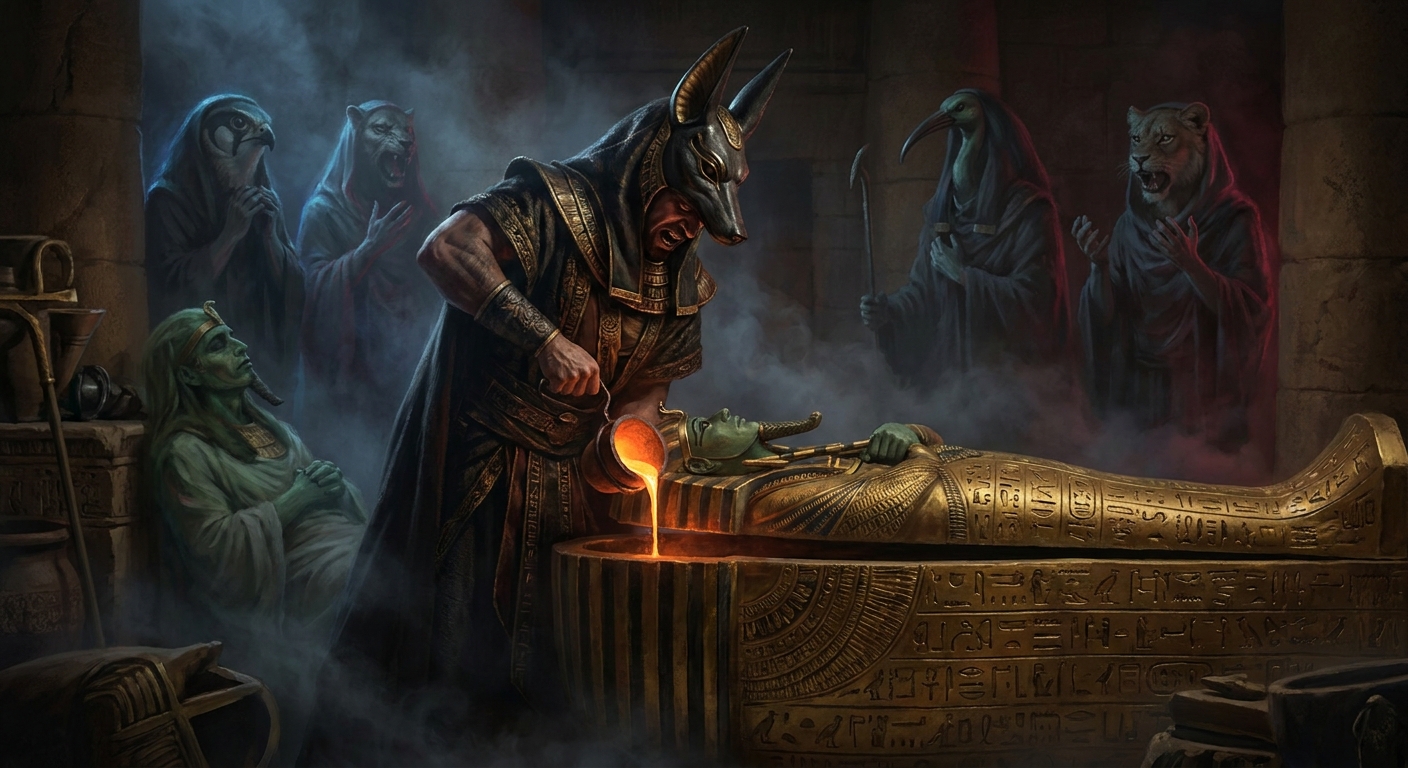
The Coffin, the Cedar, and the Fourteen Pieces
Plutarch's account of how Set killed his brother Osiris twice — first by trickery in a custom-fitted coffin, then by dismemberment — and how the murder set the template every later resurrection religion would borrow.
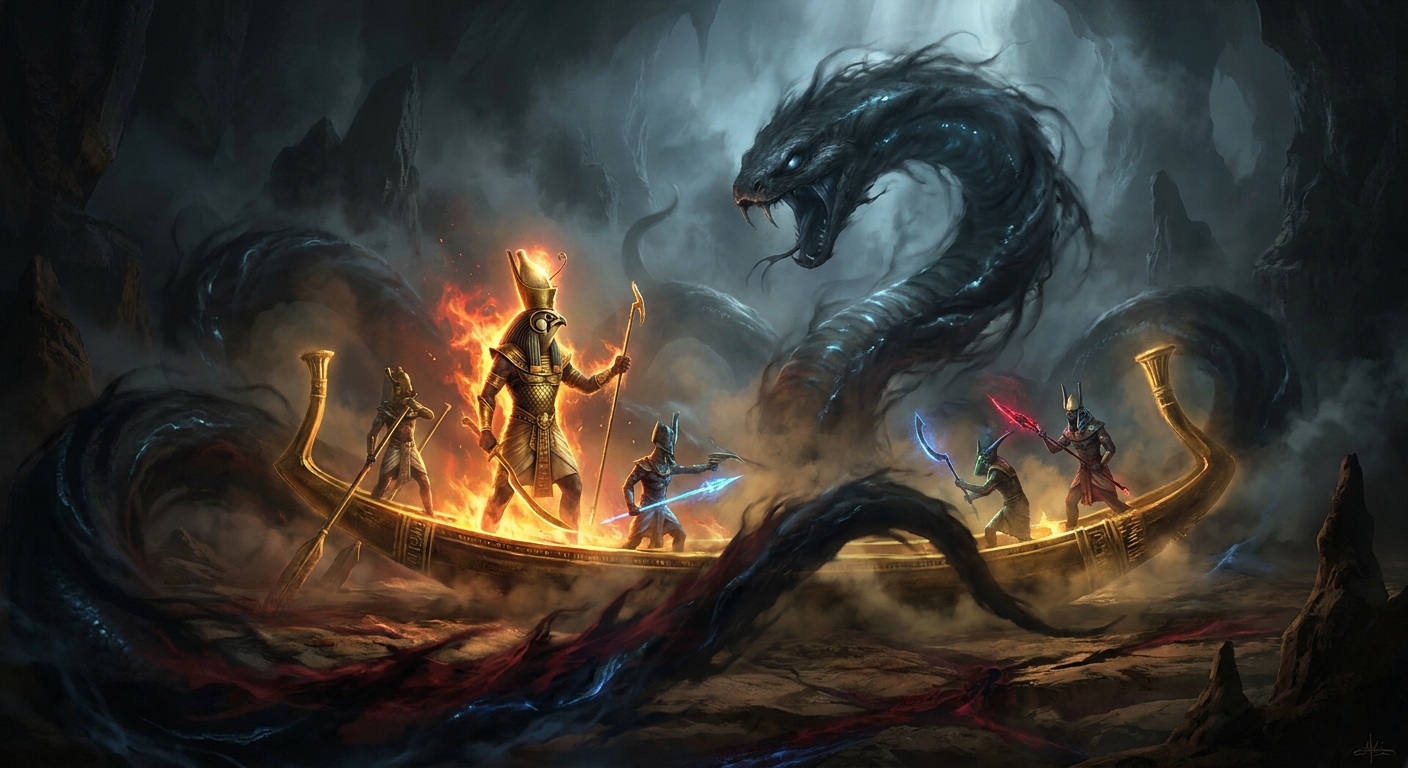
Ra and the Nightly Serpent
Every night Ra descends into the Duat in his solar barque, and Apophis — the great serpent of chaos — waits to swallow the sun. The gods fight. The serpent falls. Dawn is not a given. It is a victory.
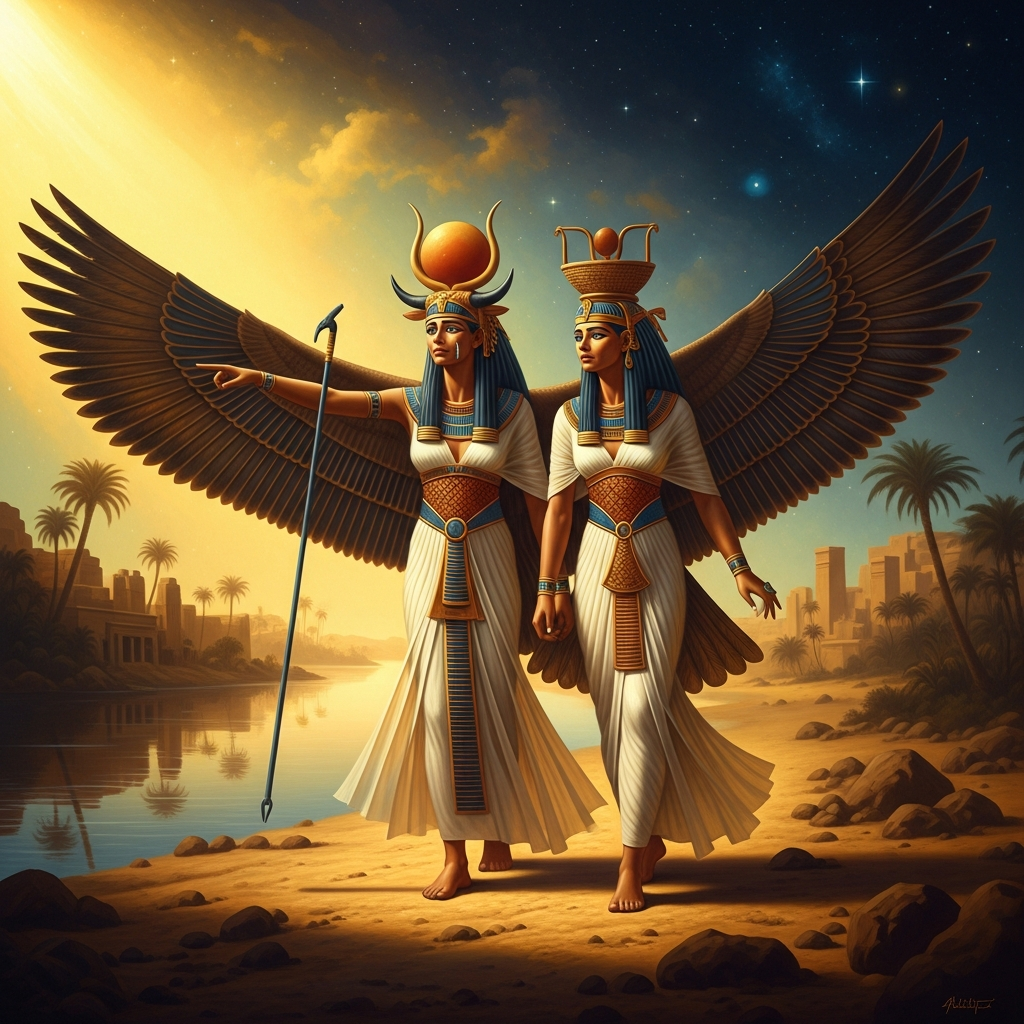
The First Lament
Nephthys, wife of Set and secret lover of Osiris, walks the length of Egypt with her sister Isis to find the pieces of the murdered god. She mourns her lover, helps her rival, searches for what her husband destroyed. The cry she makes over the body — the kite-shriek, the hawk's grief — becomes the sound Egyptian priests will imitate for three thousand years.
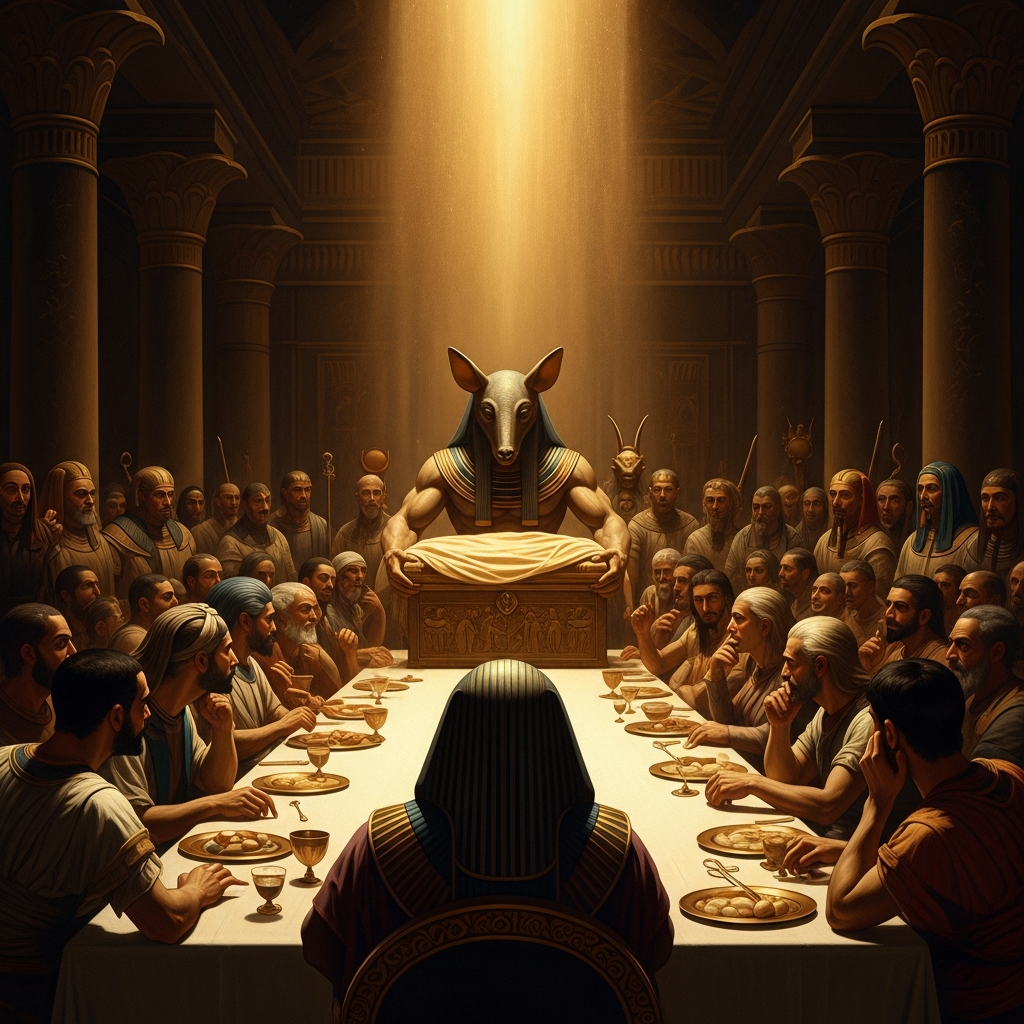
The Coffin Built for One
Set does not act from hatred. He acts from mathematics. He has measured his brother's body while Osiris slept, and the cedar chest he carries into the banquet hall is the most beautiful object in Egypt — because it has to be. Chaos is not the enemy of order. It is order's twin, watching from the other chair at the table.
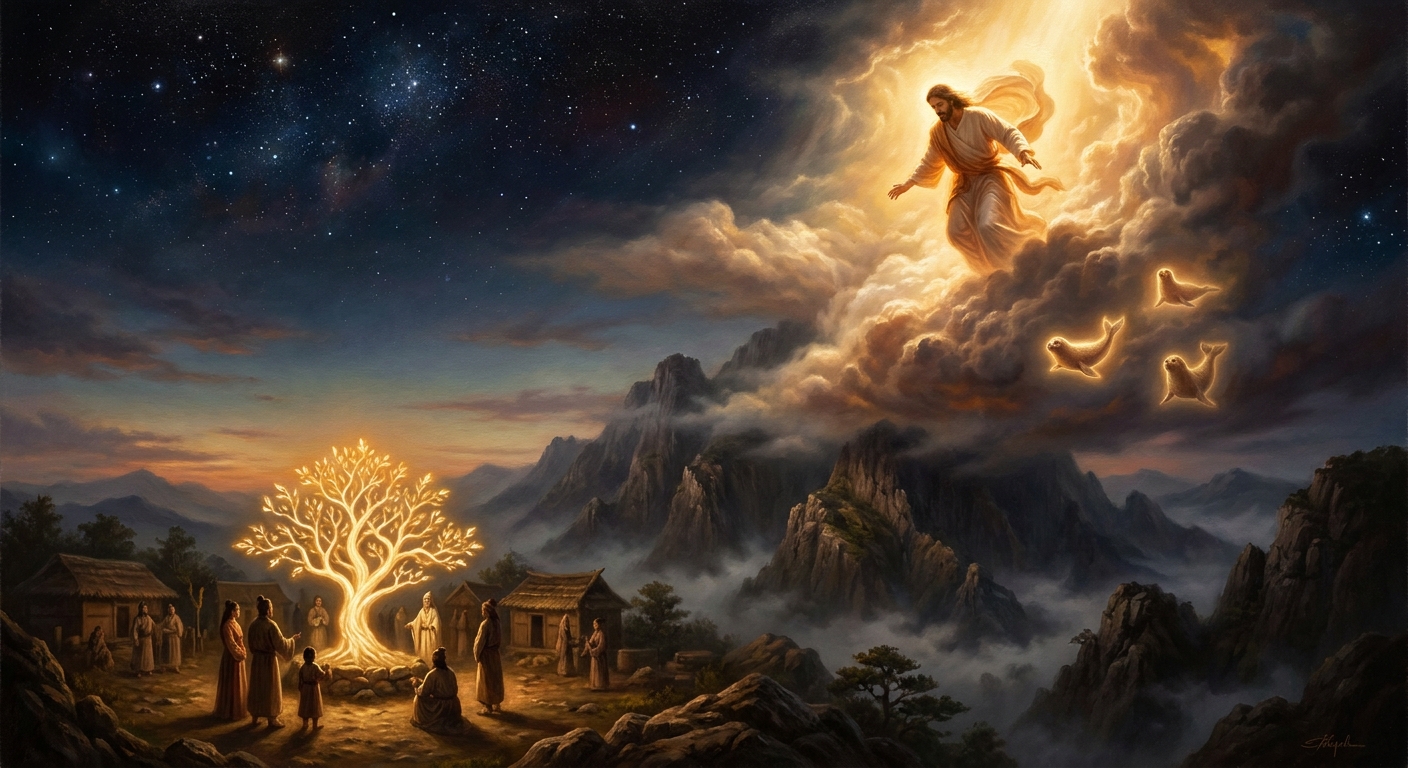
Dangun Founds Korea
2333 BCE, by tradition. A bear endures twenty-one days in a cave on mugwort and garlic to become a woman. She bears a son to a god who has descended Mount Taebaek. The son founds Korea.
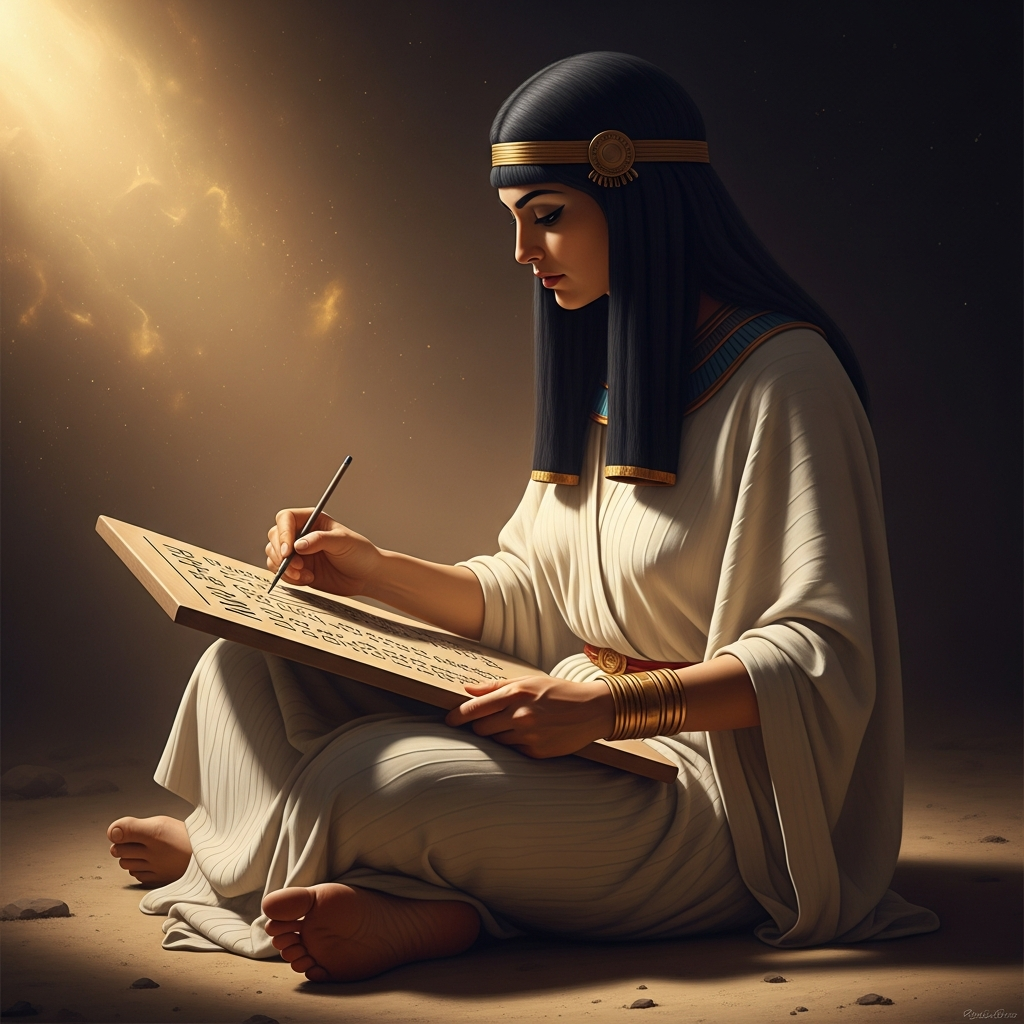
Enheduanna and the Hymn She Had to Write Twice
In 2285 BCE, Enheduanna, daughter of Sargon of Akkad and high priestess of the moon god at Ur, is expelled from her temple by a rebel general. Stripped of office and rank, she composes the Nin-me-sara, her great hymn to Inanna, as an act of political desperation and theological transformation. The goddess answers. Enheduanna returns.
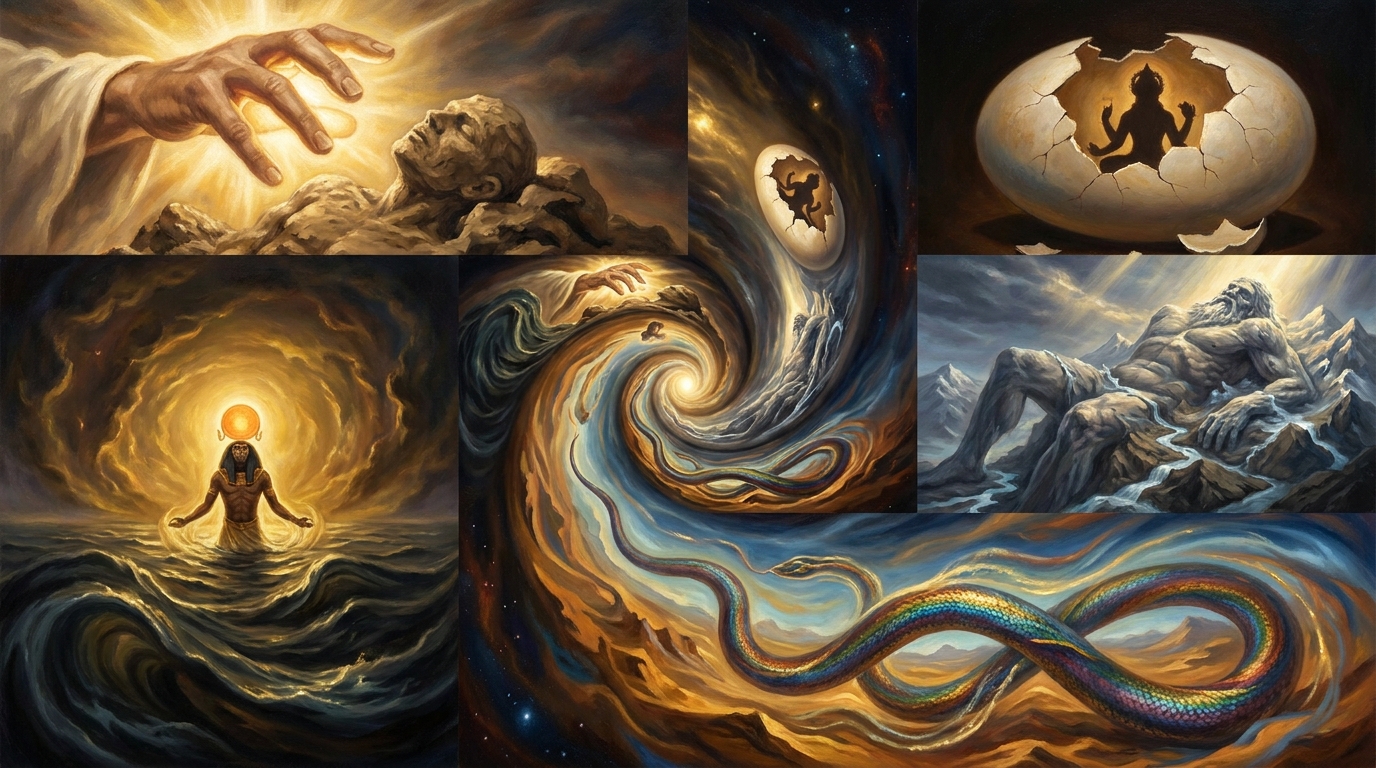
Enheduanna, the First Author
Forty-three centuries before Homer, the high priestess of Ur signed her name to a hymn — and became the first individual voice in the recorded literature of humankind.
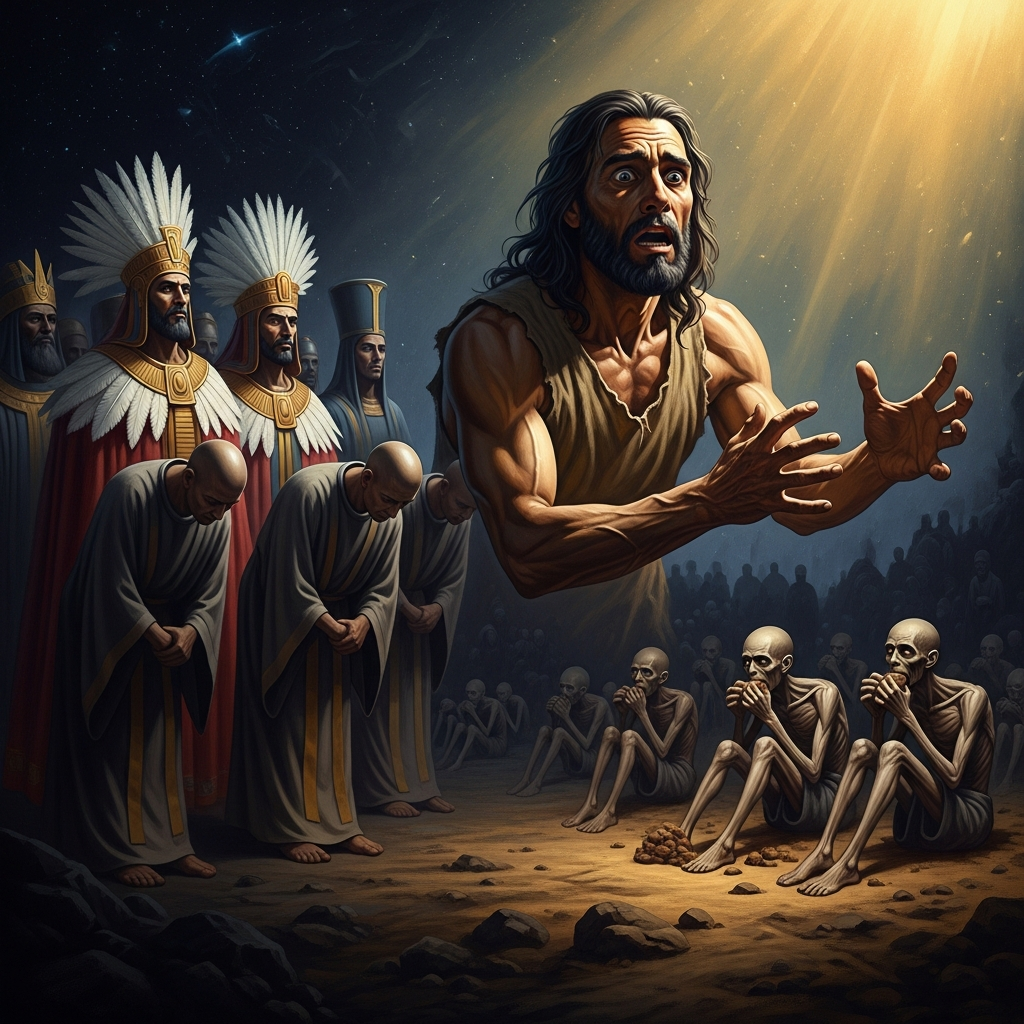
Enkidu Dies, Gilgamesh Refuses
Enkidu dreams the House of Dust in precise detail, wastes for twelve days while Gilgamesh refuses to accept what is happening, and dies. Gilgamesh will not believe it until the worm crawls from his friend's nose.
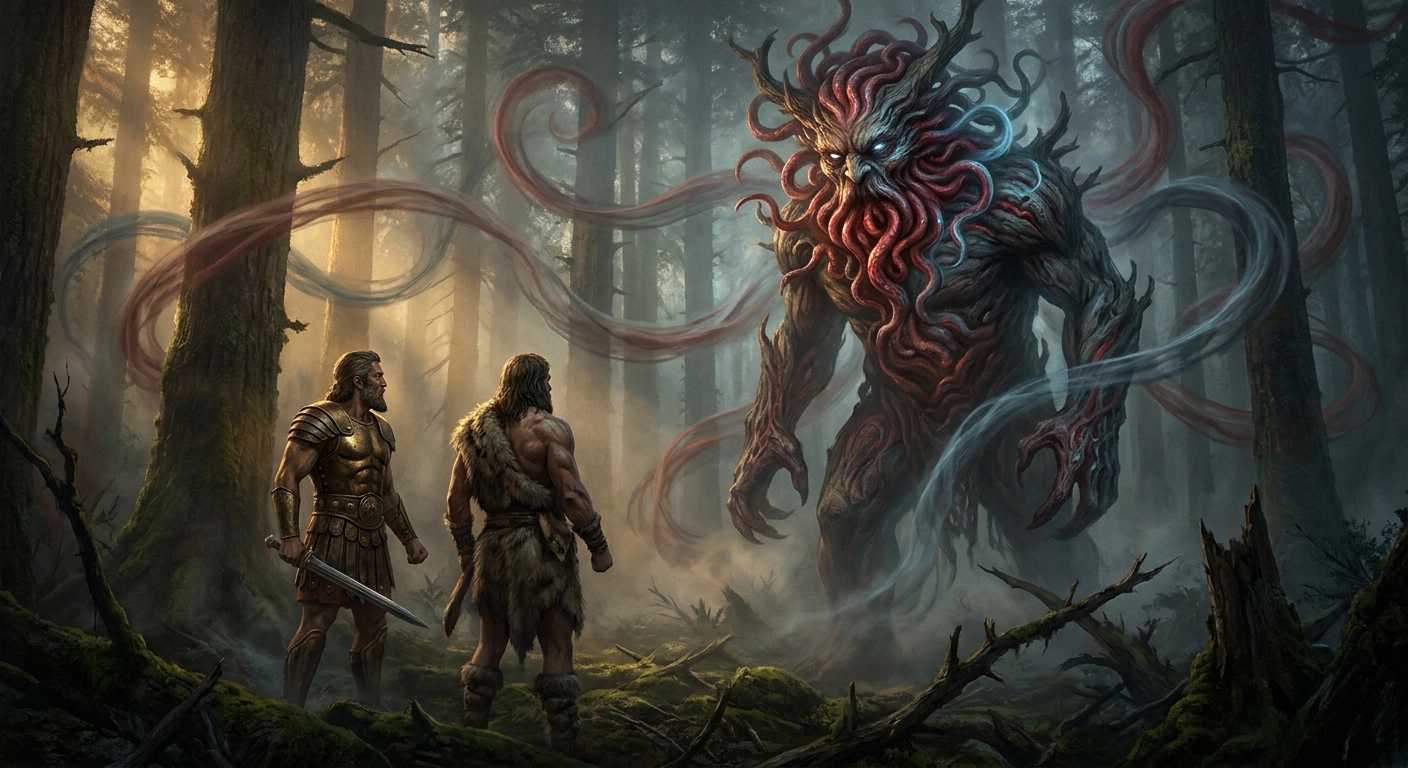
Gilgamesh and Enkidu Slay Humbaba
The king of Uruk and his wild brother march into the Cedar Forest to kill its divine guardian. They succeed. The forest falls. And everything that follows is grief.
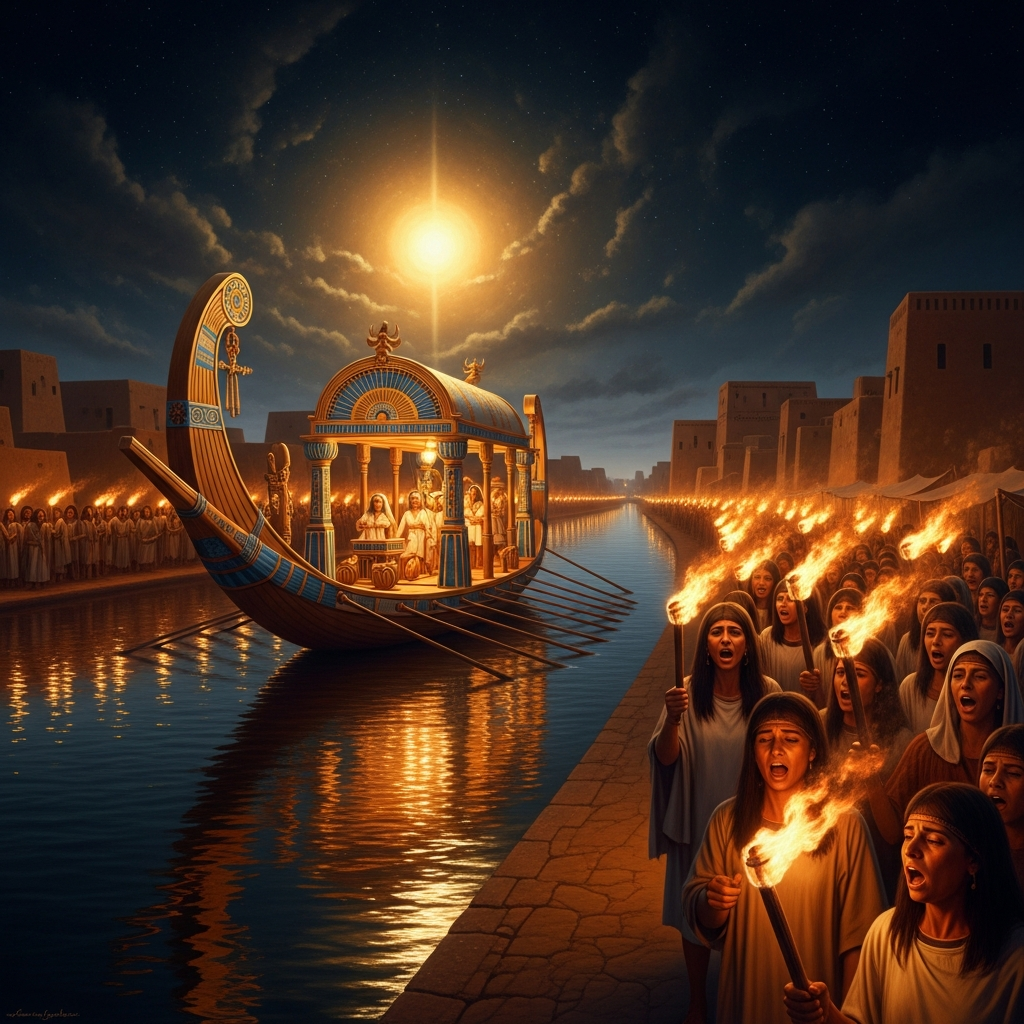
The Boat of Heaven: Nanna-Sin's Monthly Journey
Every month, Nanna-Sin, the Sumerian moon god, makes the sacred boat journey from his temple at Ur to receive the decrees of Enlil at Nippur. The city processes along the canal banks in torchlight. The god decides who will die before the next new moon. The moon is the cosmic accountant who measures time by disappearing.
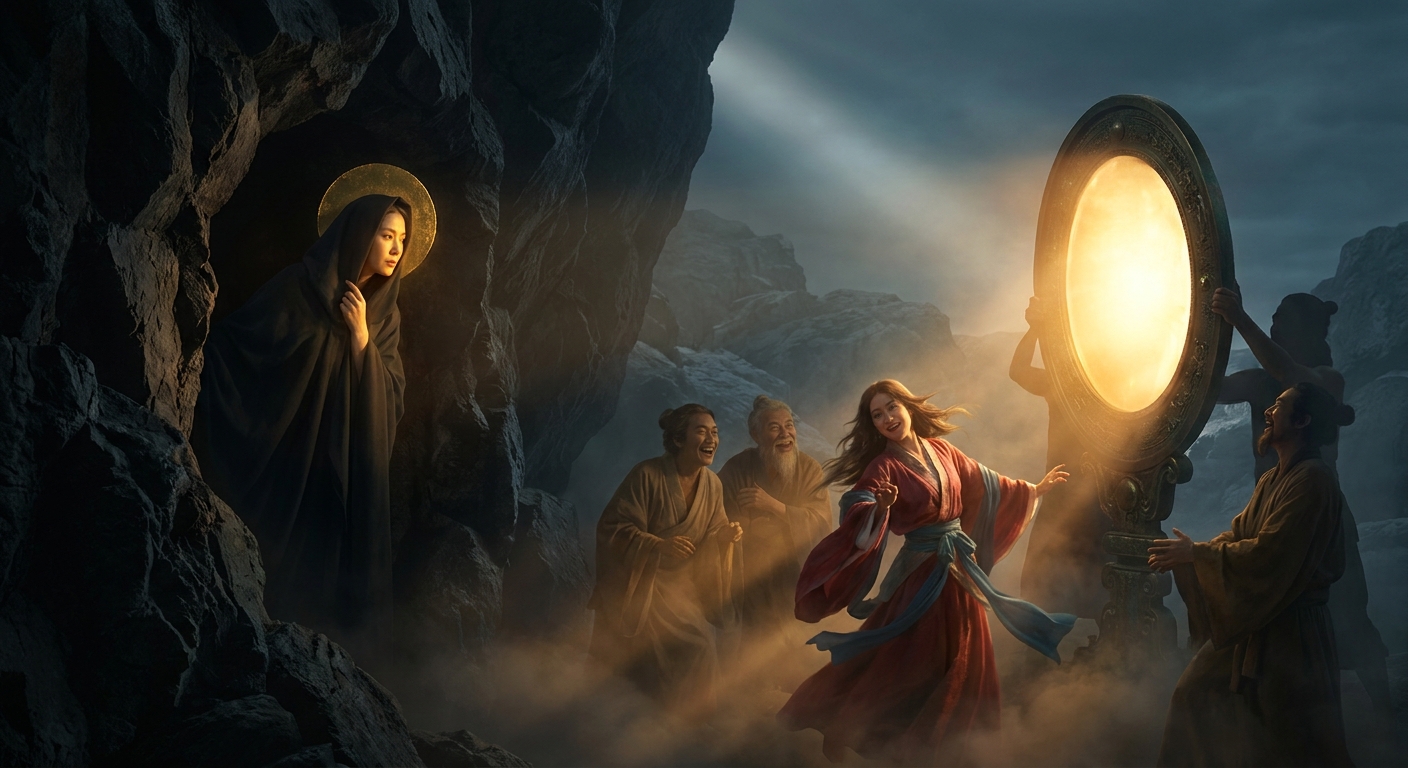
Amaterasu Emerges
The sun goddess seals herself inside a cave after her brother Susanoo's rampage darkens the world. Eight million kami gather, Uzume dances, the gods laugh — and Amaterasu, drawn by the noise and a mirror's deceptive light, steps out to restore the sun.
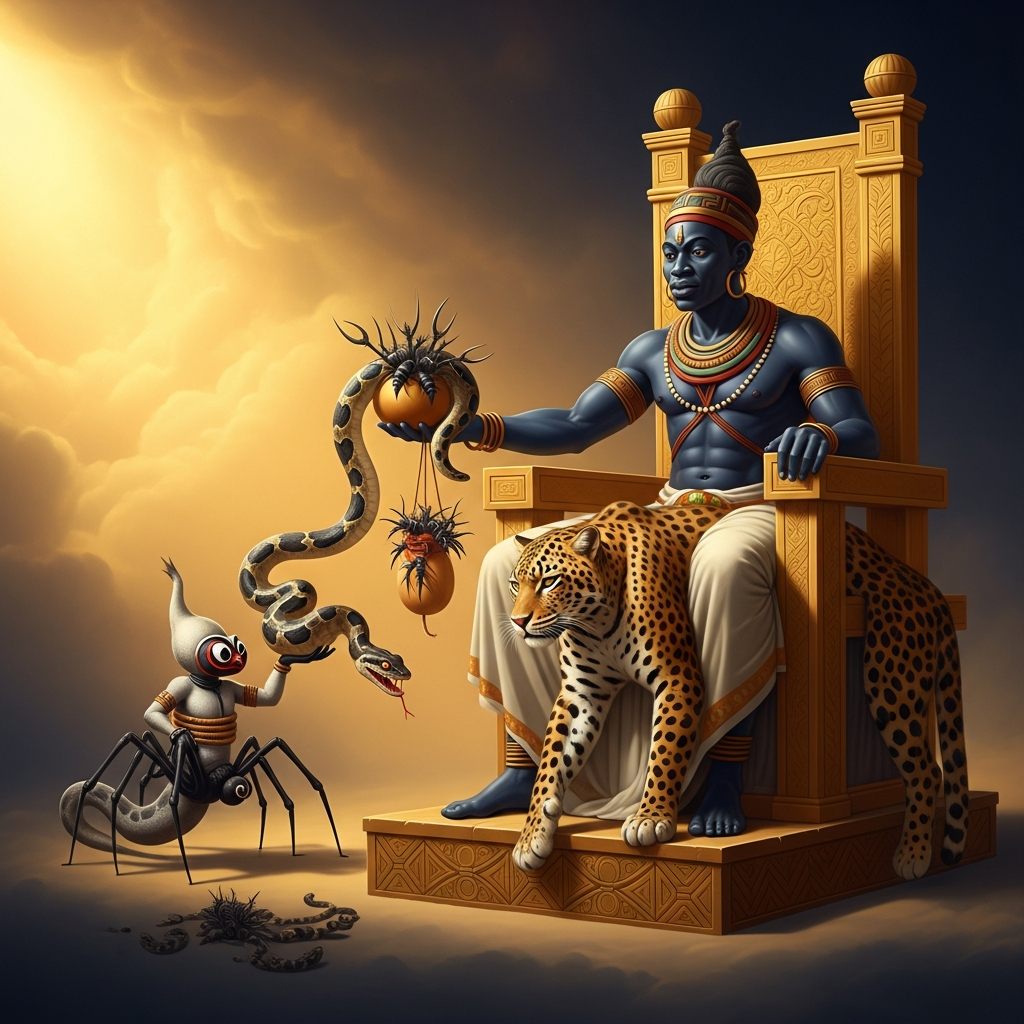
Anansi Pays the Impossible Price
The spider goes to the sky god with nothing but cleverness and an audacious request: to buy every story in the world. Nyame names a price no king has ever paid. Anansi pays it before morning.
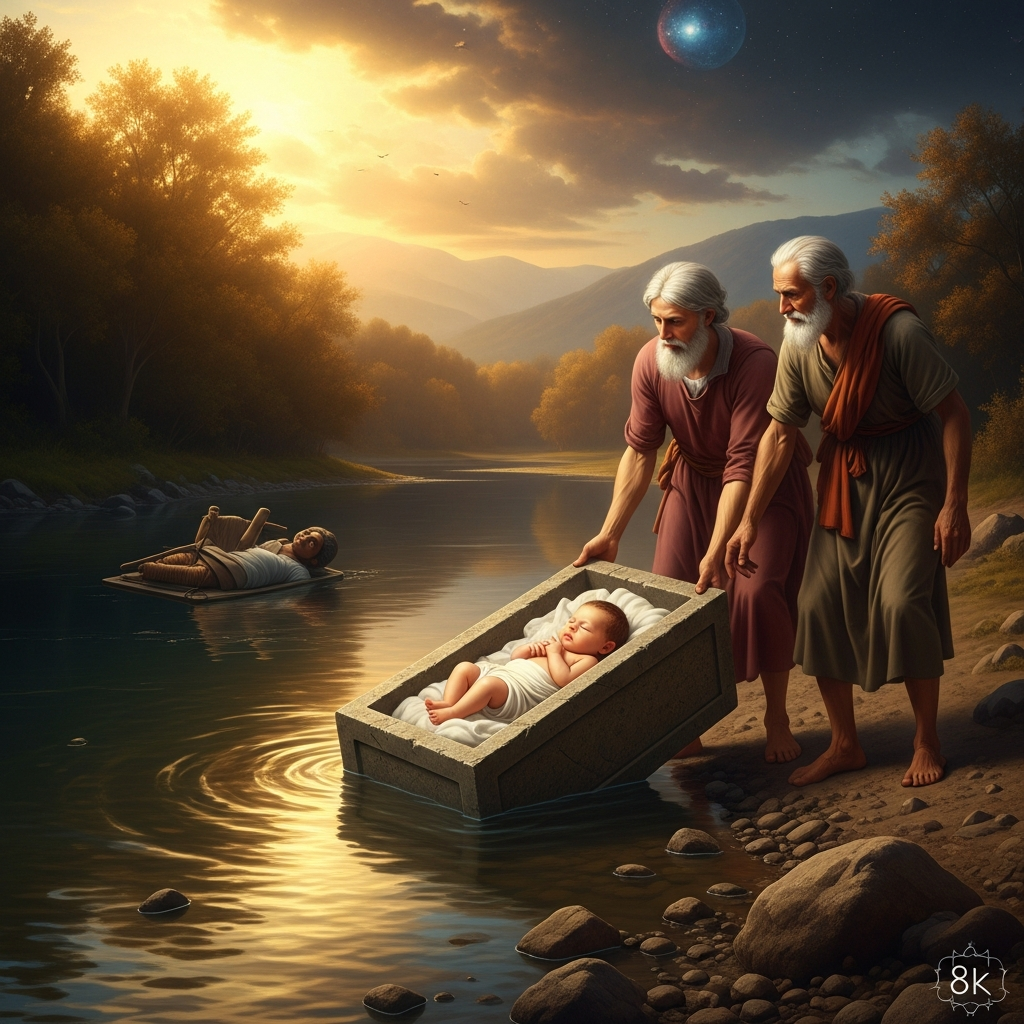
Baridegi, the First Shaman
The seventh daughter of a king is abandoned at birth because she is not a son. Decades later, when her parents are dying of an illness only the Water of Life can cure, every other child refuses the quest. The abandoned one volunteers. She descends alone into the underworld, serves a spirit lord for nine years, and comes back with the medicine — to find her parents already dead. What she becomes is not a healer. It is something older.
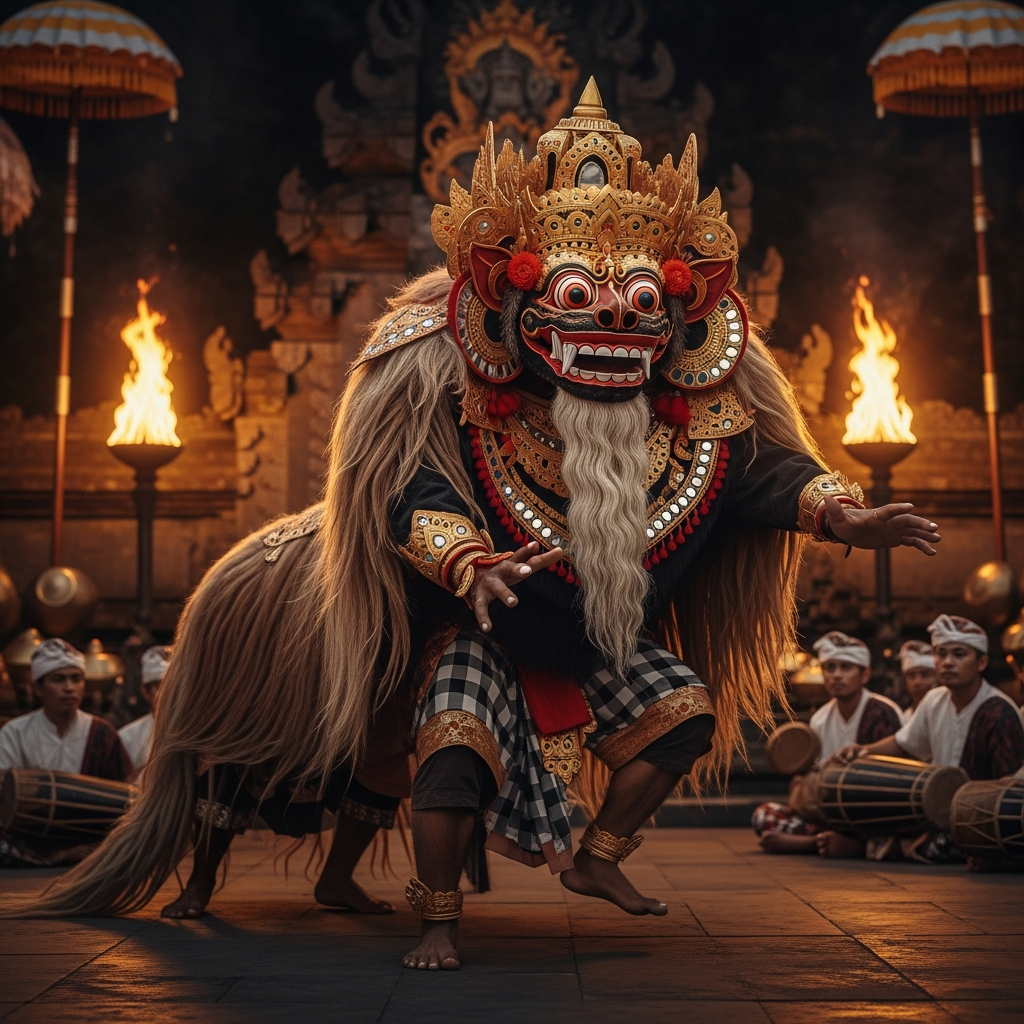
Barong and Rangda: The Battle That Never Ends
In Bali, the eternal battle between Barong the protective lion-deity and Rangda the demon queen of witches is not a battle that ends. Neither wins. They are locked in perpetual struggle that is the world's balance. The human dancers who enact this battle enter genuine trance states. Some stab themselves with their own kris daggers and do not bleed.
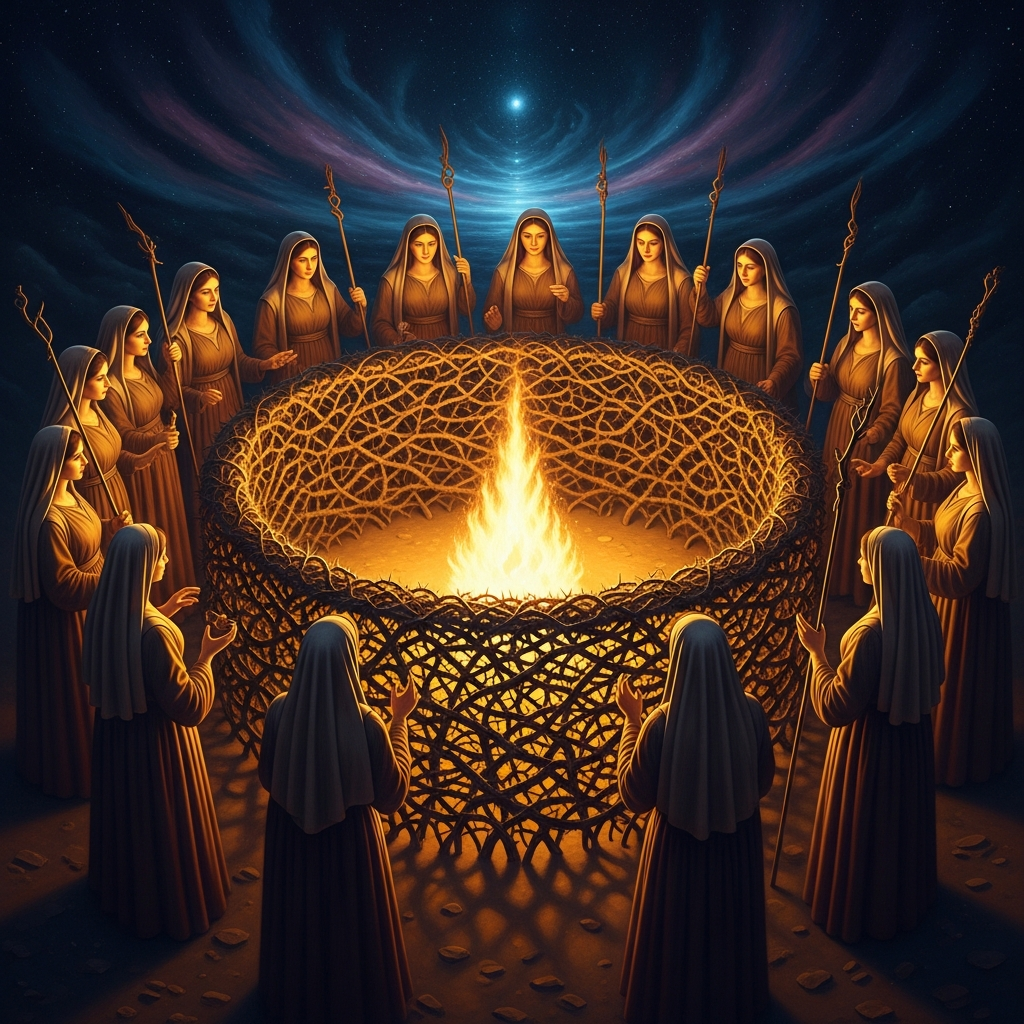
Brigid: The Keeper of the Perpetual Flame
There are two Brigids — the goddess of poetry, healing, and smithcraft; and the abbess of Kildare, the woman who founded the greatest monastery in early medieval Ireland. They share a feast day. They share a fire. They share a cell of oak. The church does not abolish the goddess; it baptizes her, and the flame at Kildare keeps burning.
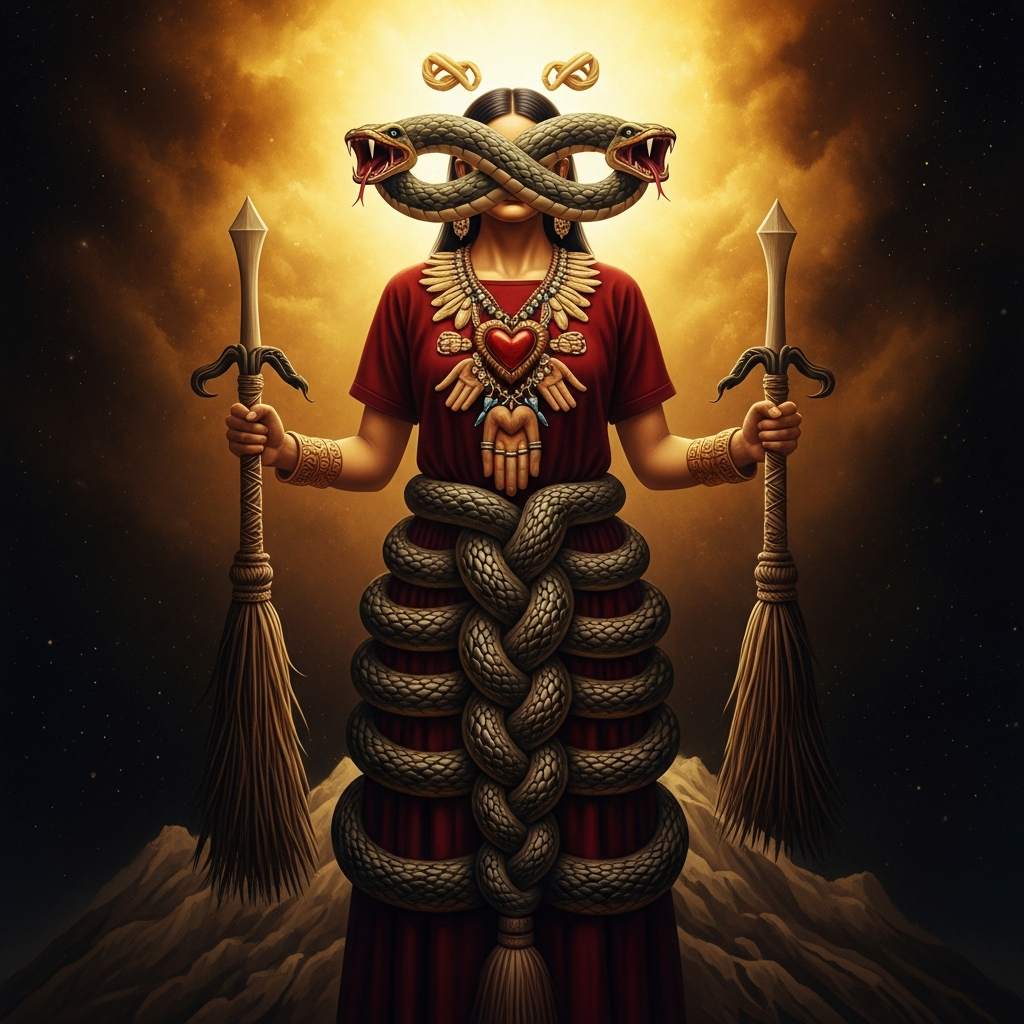
Coatlicue at Coatepec
The earth goddess Coatlicue becomes pregnant from a ball of feathers while sweeping her temple on Serpent Mountain. Her four hundred star-children, led by her daughter Coyolxauhqui the moon, march to kill her for the dishonor. From her womb, before he is born, the unborn Huitzilopochtli already knows what he is going to do about it.
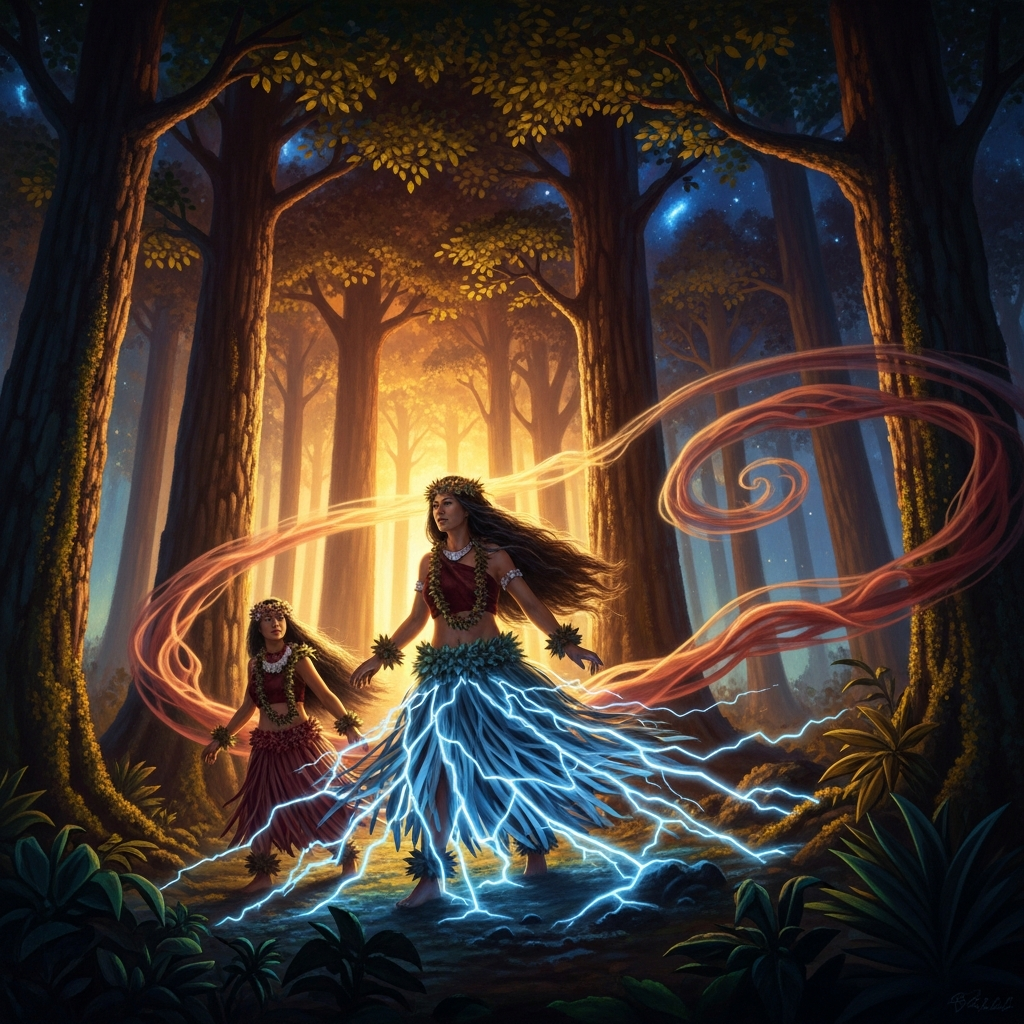
Hiʻiaka Walks Through Fire for Her Sister
Pele falls in love in a dream and sends her youngest sister on a forty-day journey through monsters and sorcery to bring the man back — a journey that reshapes the islands and tests whether devotion survives the distance.
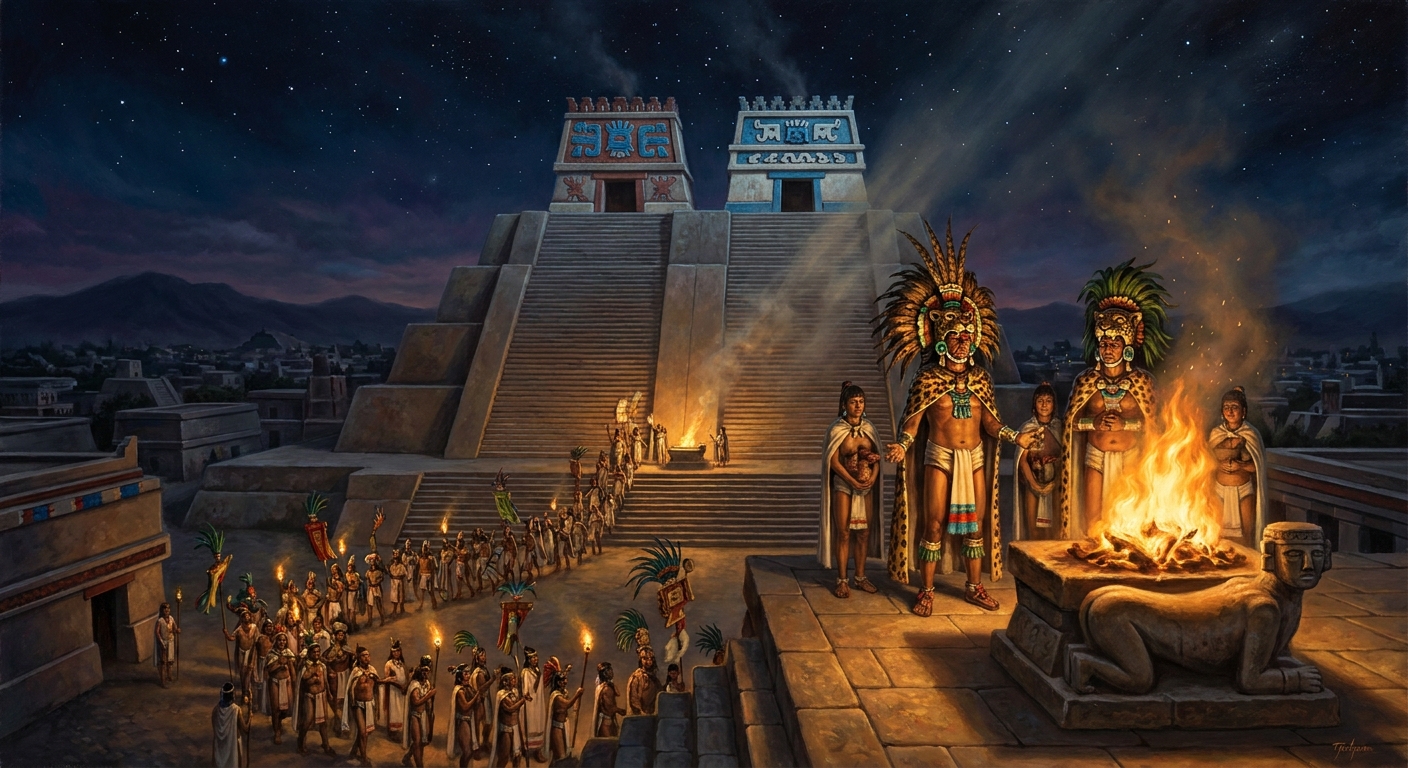
Huitzilopochtli Born on Coatepec
The earth goddess Coatlicue becomes pregnant from a ball of feathers while sweeping the temple. Her daughter Coyolxauhqui leads four hundred brothers to kill their mother for the dishonor. At the moment of death, Huitzilopochtli bursts fully armed from her womb, slays his sister, and throws her body down the mountain in pieces.
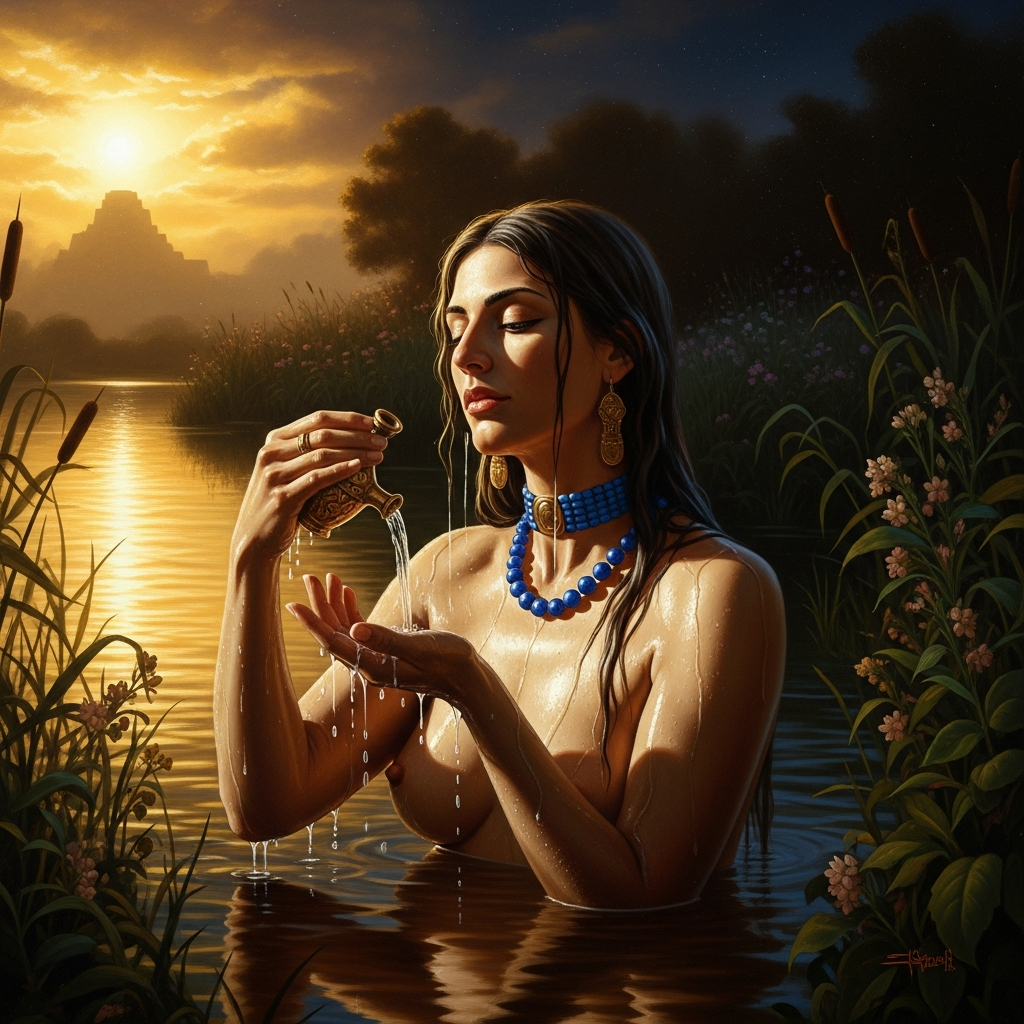
The Holy Churn: The Sacred Marriage of Inanna and Dumuzi
The oldest love poetry in human history records the night before Inanna's wedding to the shepherd-king Dumuzi — her preparation, her desire, the cedar bed, the honey at the threshold. The crops will grow. And she has already chosen the man she will one day surrender to the underworld.
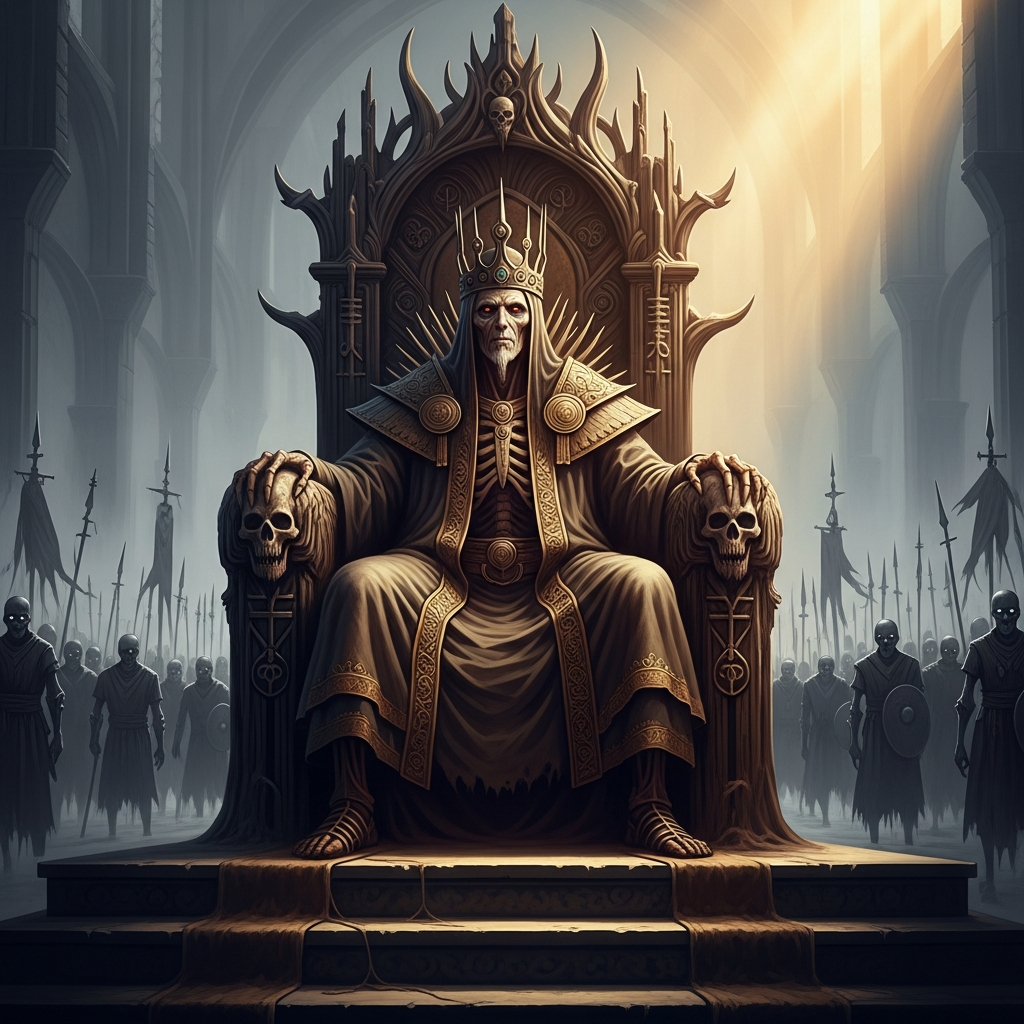
Koschei the Deathless: The Needle at the End of Everything
Koschei the Deathless cannot be killed because his death is not in him — it is in a needle, inside an egg, inside a duck, inside a hare, inside a chest buried under an oak on an island at the edge of the sea. A prince, three magical animals, and a question older than mortality: what happens to a world where death is defeated?
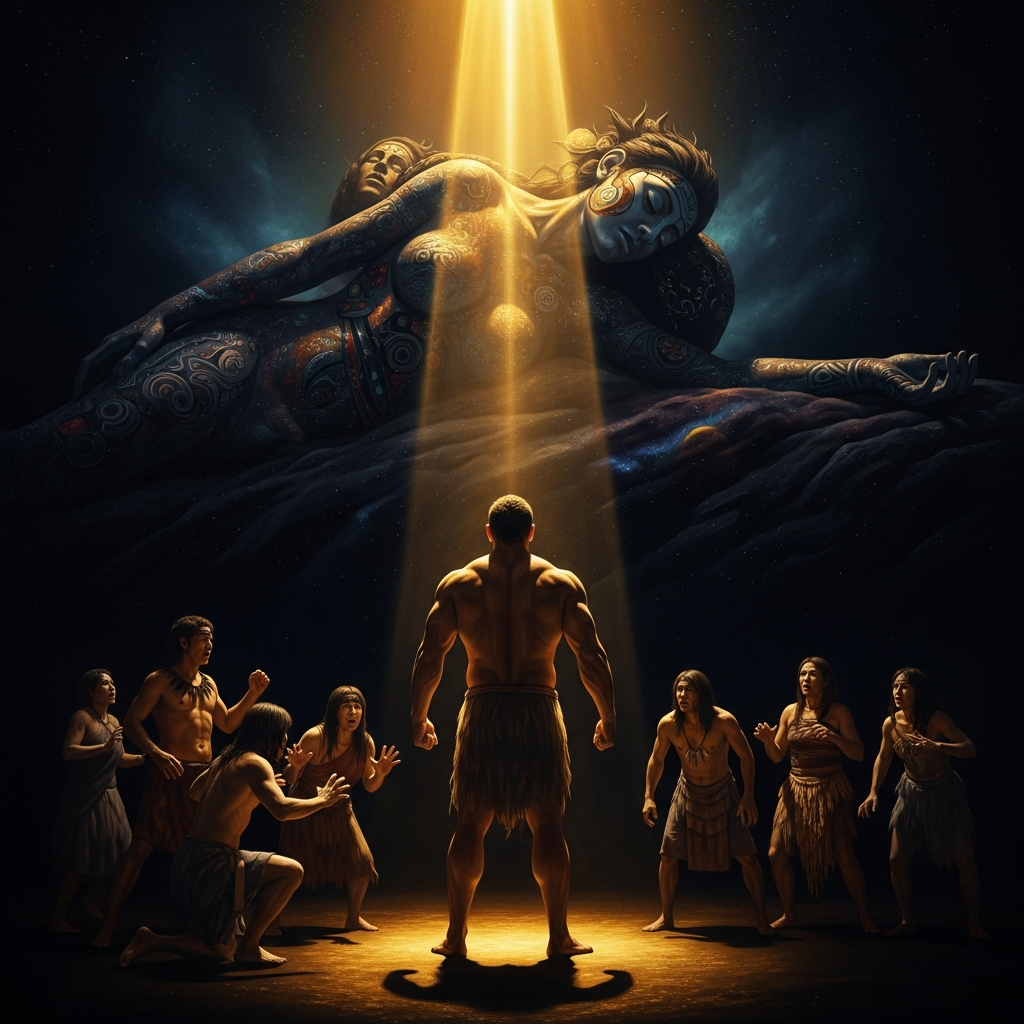
Māui Seeks Immortality
Māui, the trickster who fished up islands and lassoed the sun, attempts his final and greatest trick: crawling into the sleeping body of Hine-nui-te-pō, goddess of death, to pass through her and steal immortality for all of humankind. He has never failed. He warns the birds to be silent. A fantail laughs.
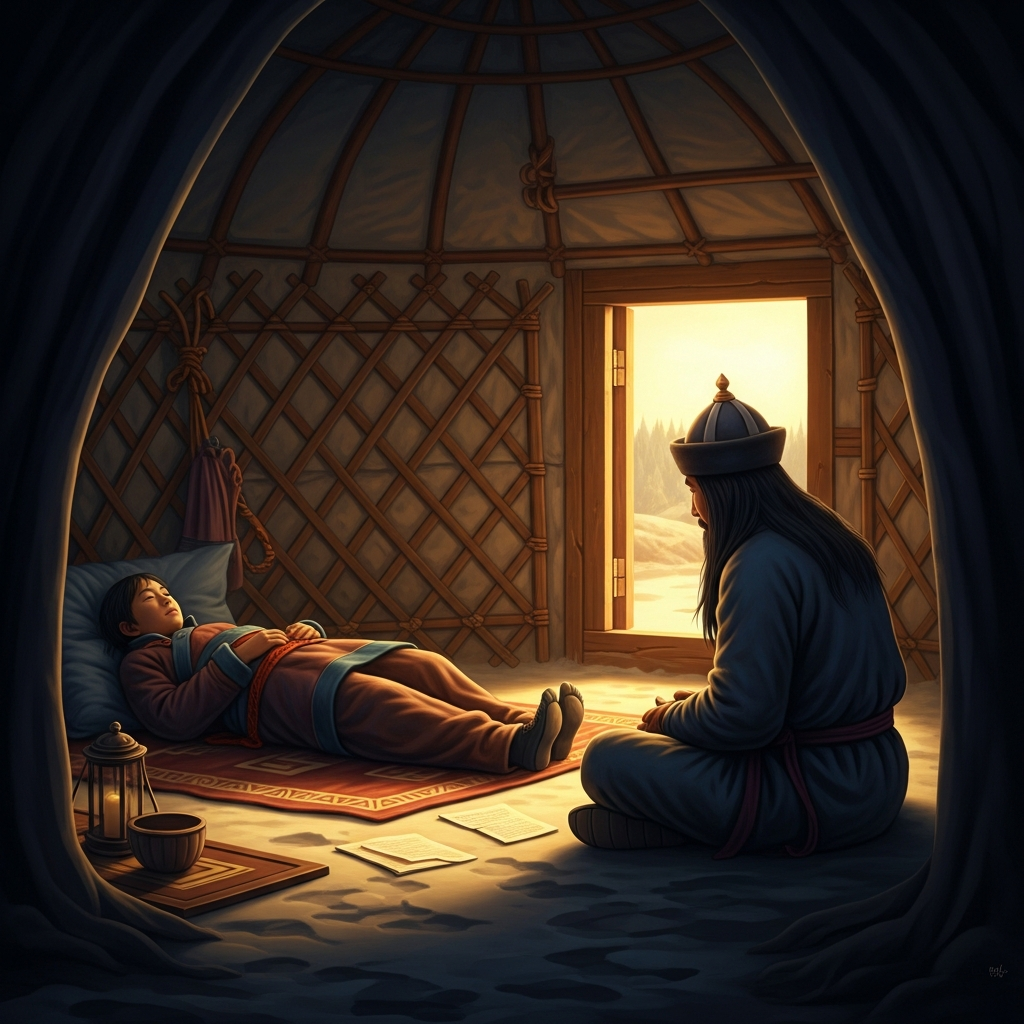
The Spirits Disassemble the Shaman
A young Mongolian böö burns with shamanic illness for weeks. His teacher watches from outside the ger. Tonight the dismemberment reaches its final stage — and whether the young man wakes whole depends on which bones the spirits decide to put back.
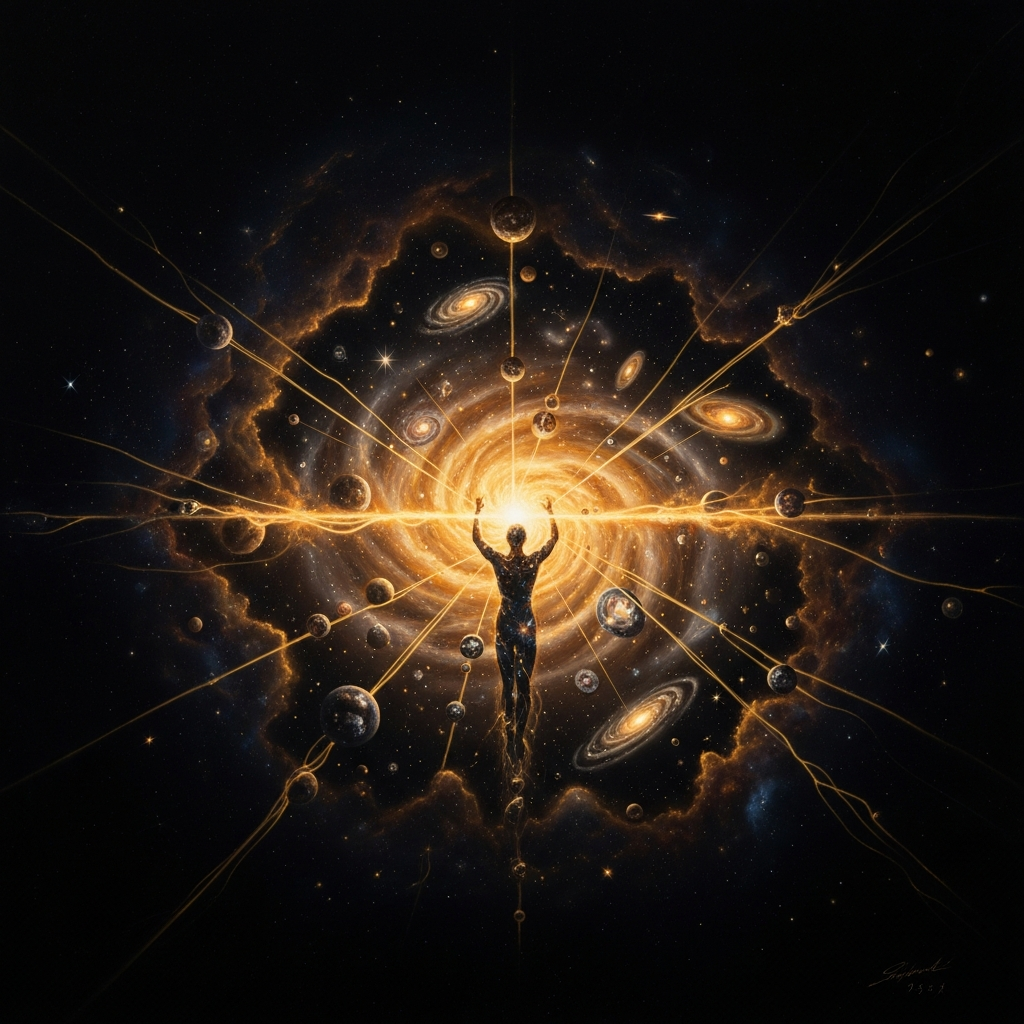
Nzambi Creates and Becomes Silent
Nzambi, the supreme being of the Kongo people, creates everything alone from nothingness — without a partner, without a battle, without a sacrifice. Then Nzambi becomes silent. The entire Kongo religious tradition is largely about how to reach a God who has stopped speaking.
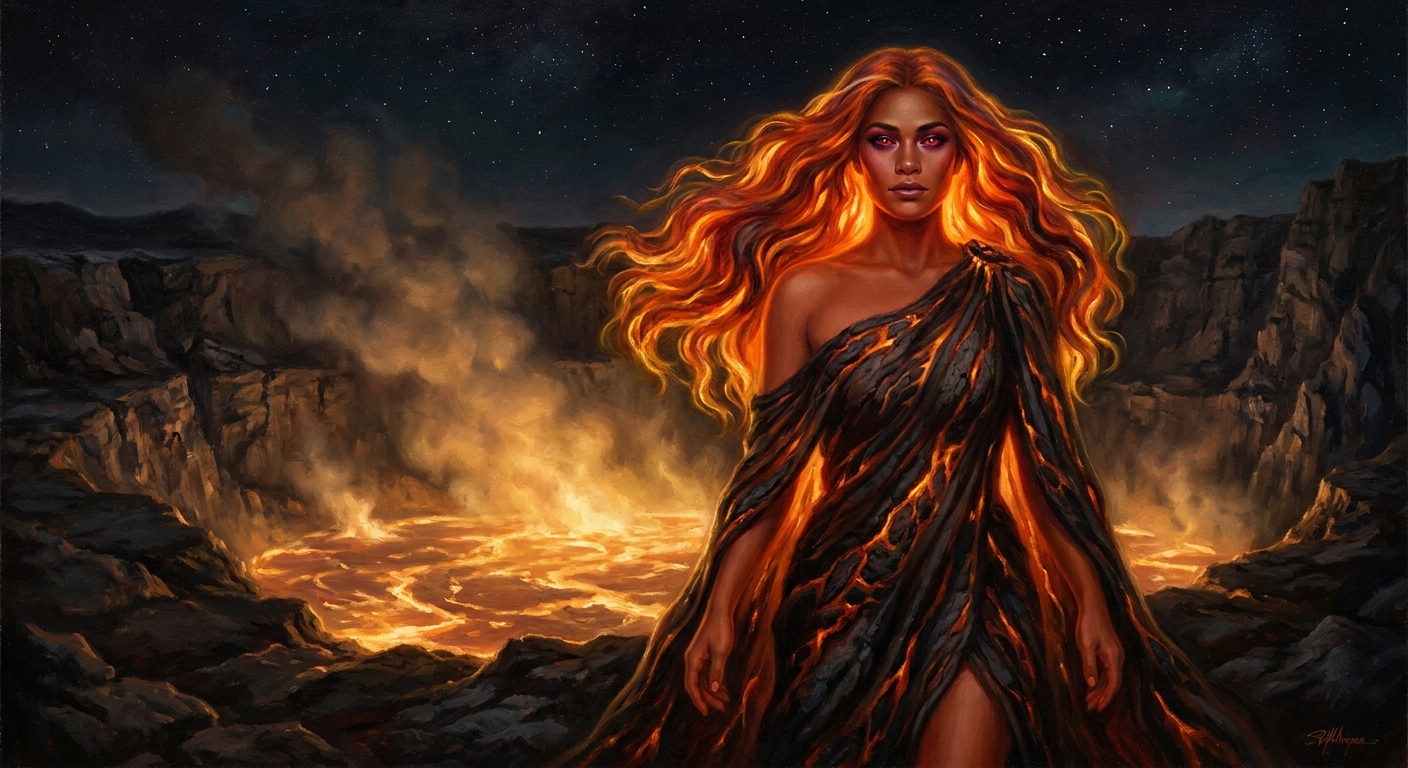
Pele and Poliʻahu: Fire Against Snow
On the slopes of Mauna Kea, the volcano goddess wagers her lava against the snow goddess's freezing winds — and loses, and the geology of Hawaiʻi is what is left of their argument.
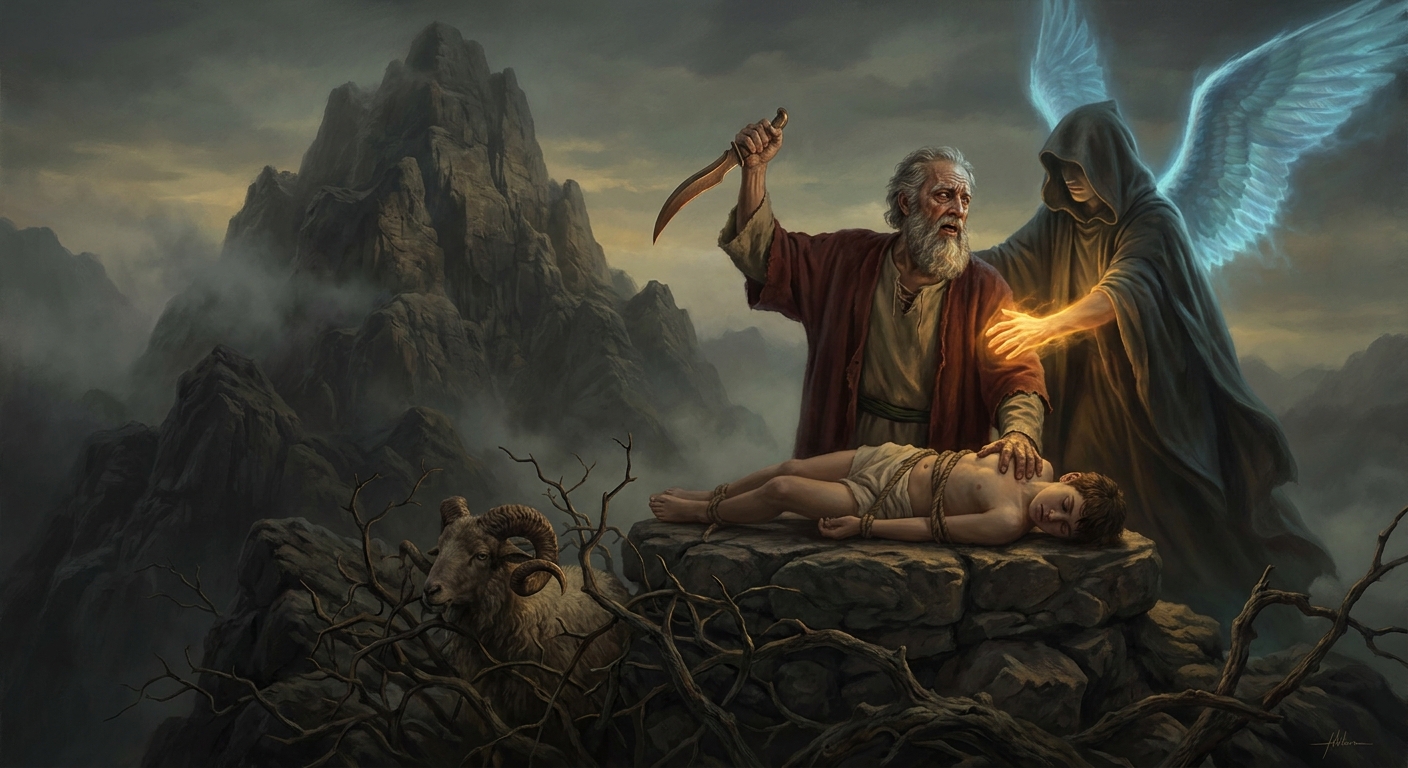
The Binding of Isaac
God commands Abraham to sacrifice his only son. Three days on the road. The knife raised. Then — a ram in the thicket, and the name that echoes down three religions: the Lord will provide.
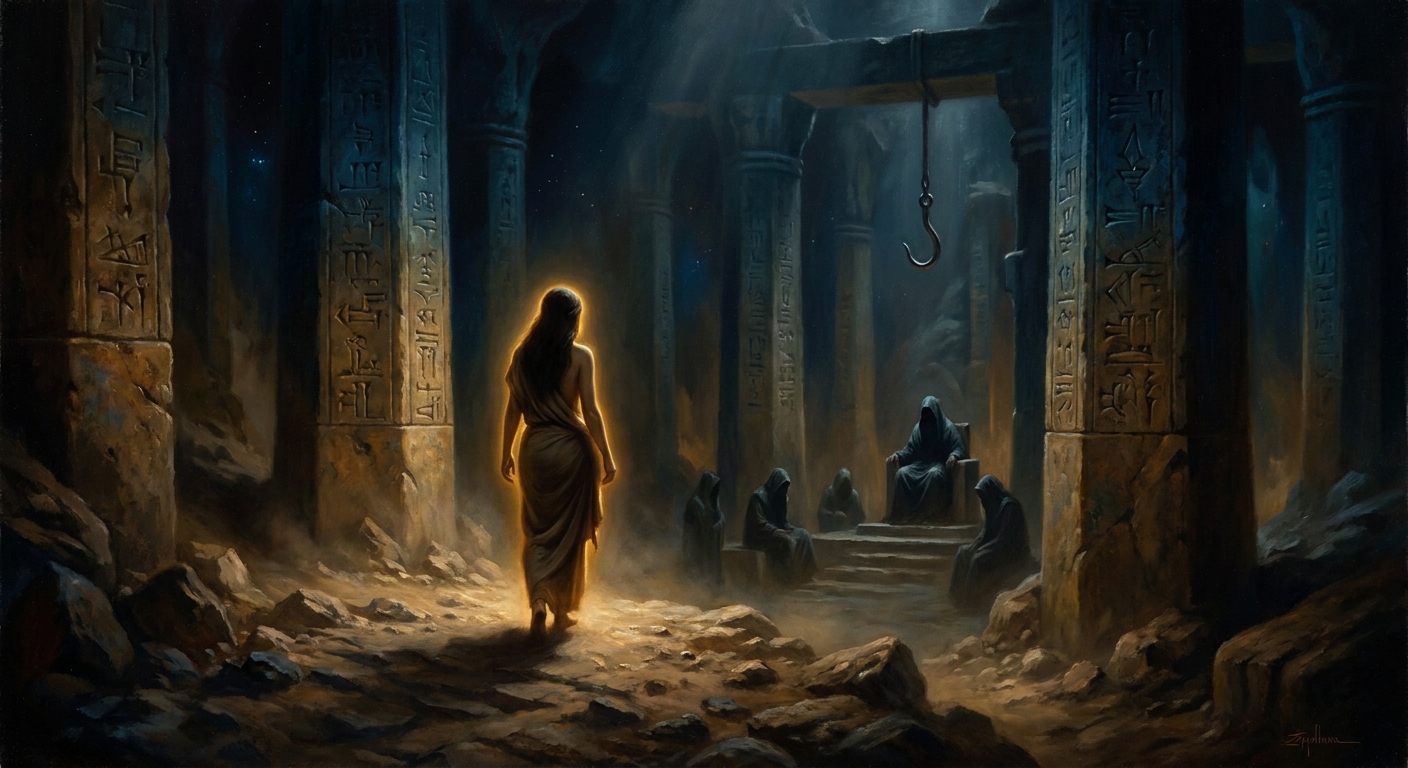
Inanna's Descent
The Queen of Heaven descends through the seven gates of the underworld, is hung as a corpse on a hook for three days, and is restored to life through the power of an outside intervention.
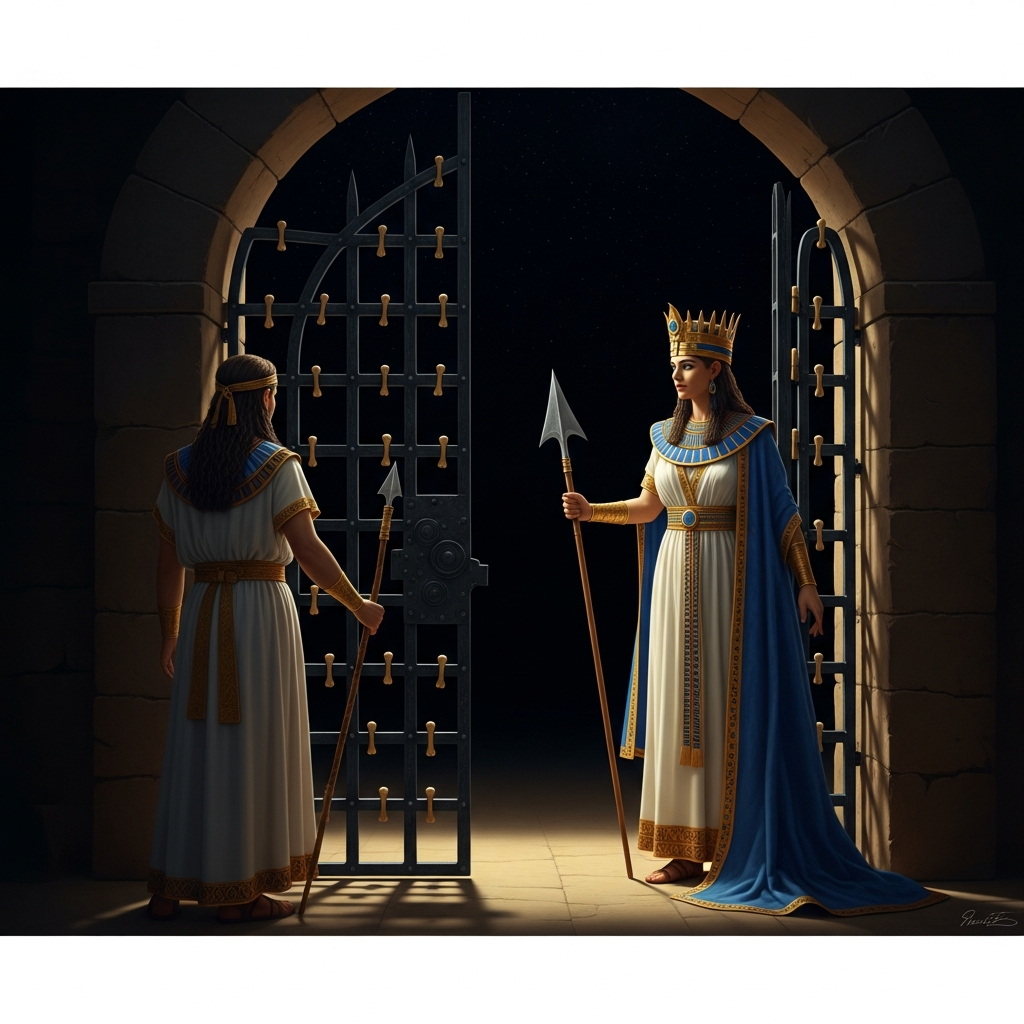
Inanna Descends and the World Goes Still
Inanna, Queen of Heaven and Morning Star, descends to the Great Below to attend her sister Ereshkigal's husband's funeral — or to seize the underworld's power for herself. At each of seven gates she surrenders a garment. She arrives naked before Ereshkigal, is killed, and hung on a hook. For three days nothing grows, nothing gives birth, nothing in the world above moves toward life.
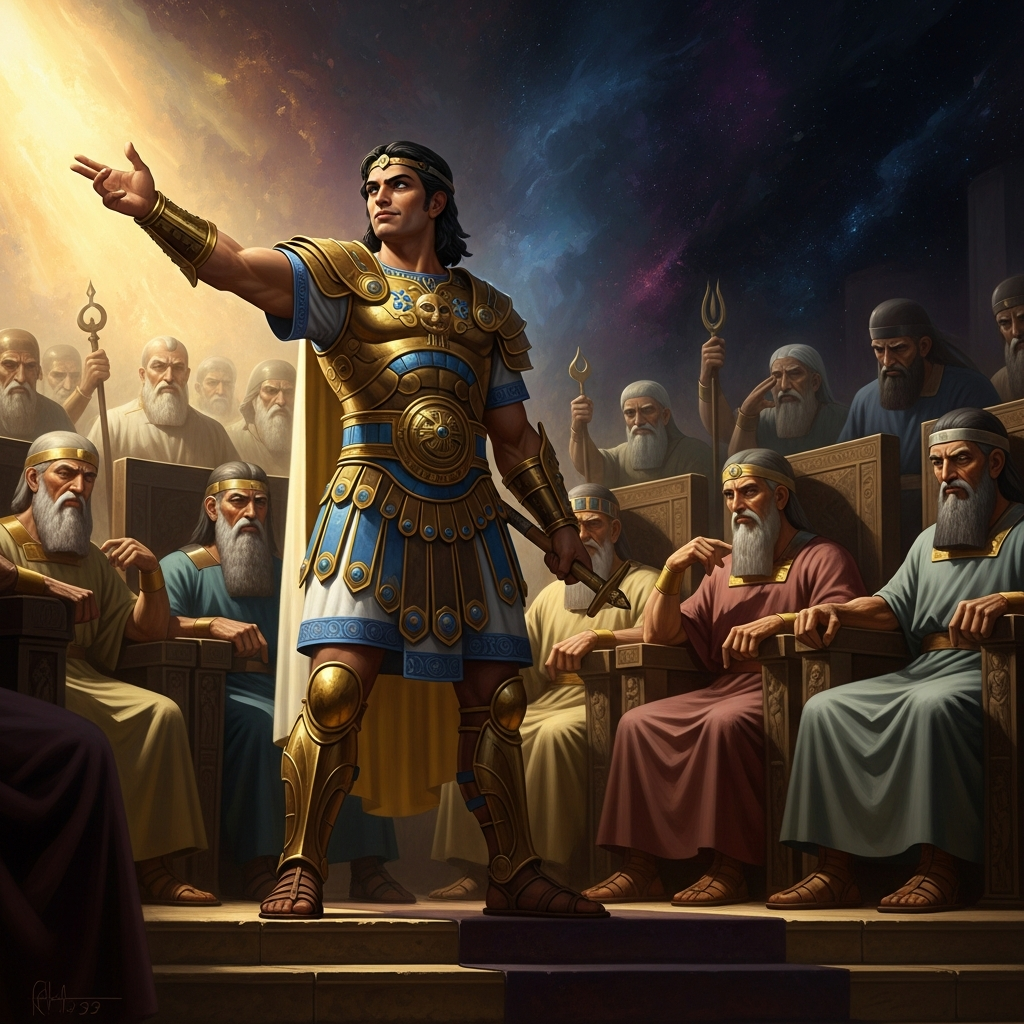
Marduk Splits Tiamat in Half
From the Enuma Elish: the primordial salt-water ocean Tiamat assembles her army of monsters to destroy the younger gods. Marduk offers to fight her alone in exchange for supreme authority. He drives wind into her open mouth and splits her in half. He makes the sky from one half and the earth from the other. Creation as cosmic violence.
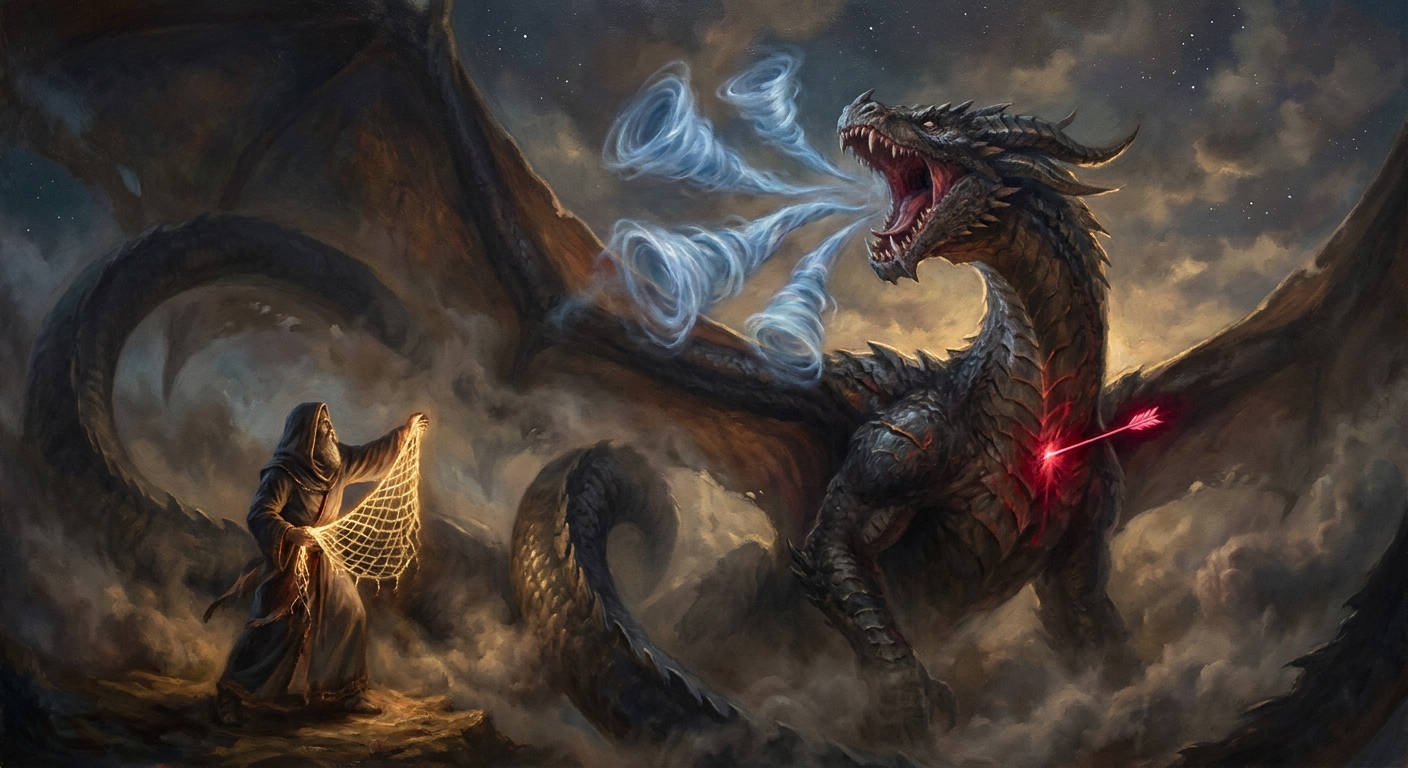
Marduk Slays Tiamat
Before sky and earth existed, the young god Marduk stepped forward to fight Tiamat — the primordial salt sea in dragon form — and from her split body made the world.
Dumuzi the Substitute
When Inanna ascends from the underworld, she must leave a body in her place. She finds her shepherd-husband Dumuzi seated on the throne in fine robes, untroubled by her absence — and her eye, the eye of death, settles on him.
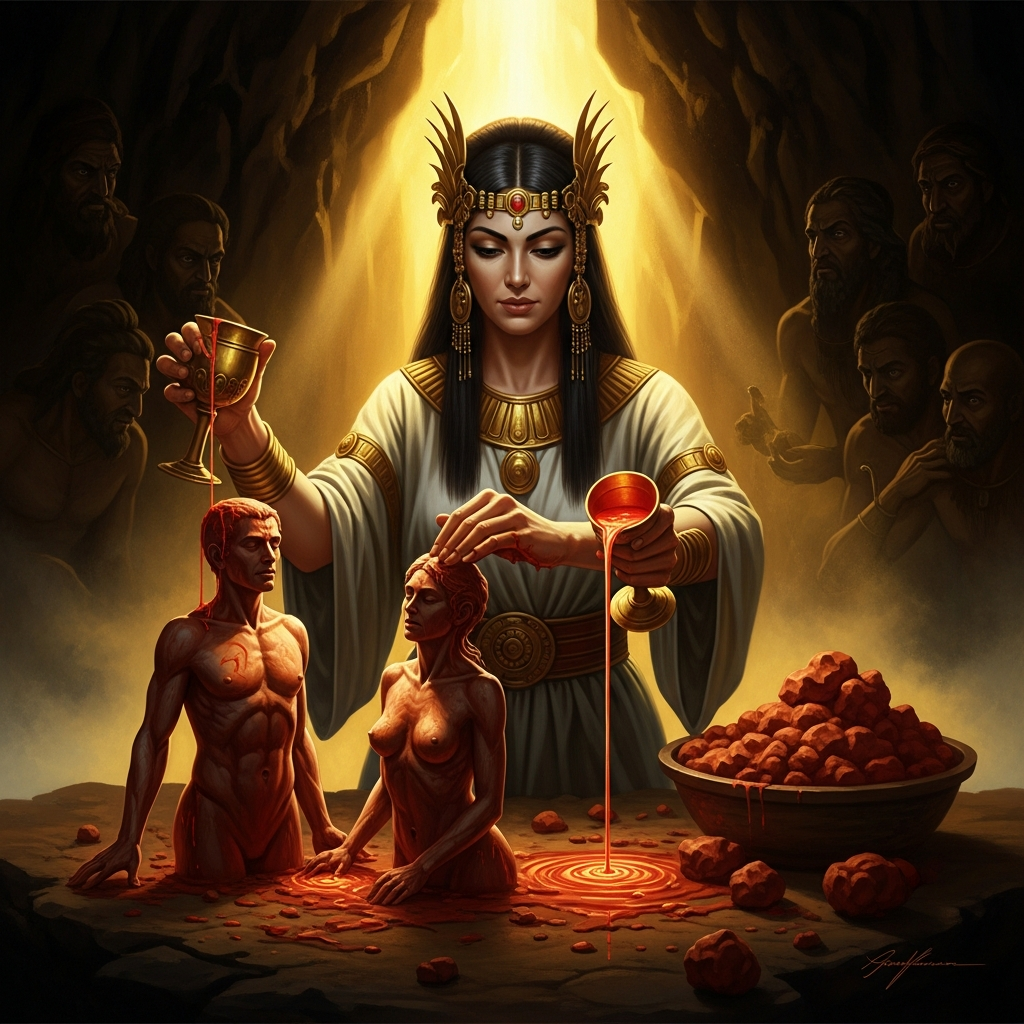
The Noise Below Heaven: The Flood of Atrahasis
The oldest complete flood narrative predates Noah by centuries. The gods create humanity as slave labor, regret the noise, send plague and drought and finally the deluge — and then discover that the world doesn't work without the people they just drowned.
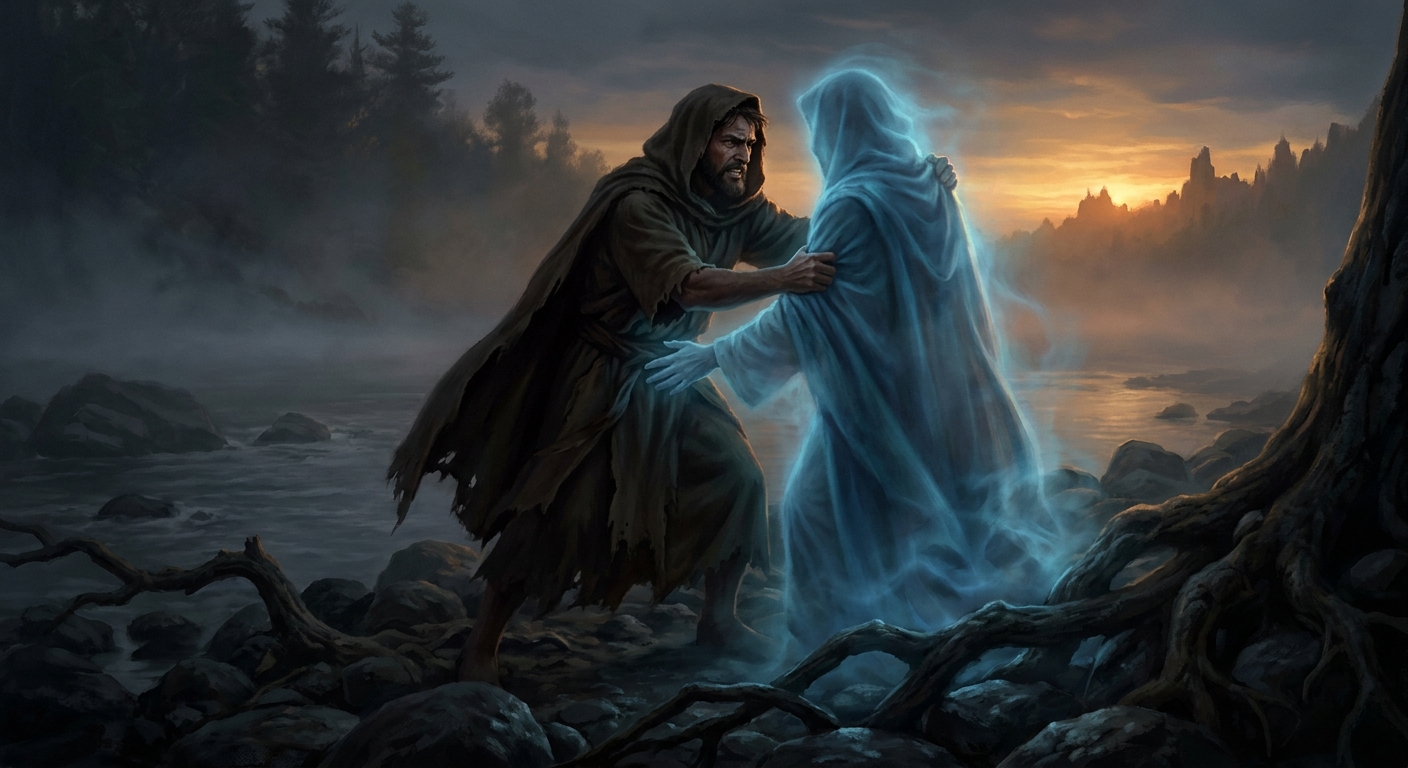
Jacob at the Jabbok
Alone at the ford of Jabbok, Jacob wrestles a mysterious figure through the night — and emerges at dawn renamed, broken, and blessed. The limp is the blessing.
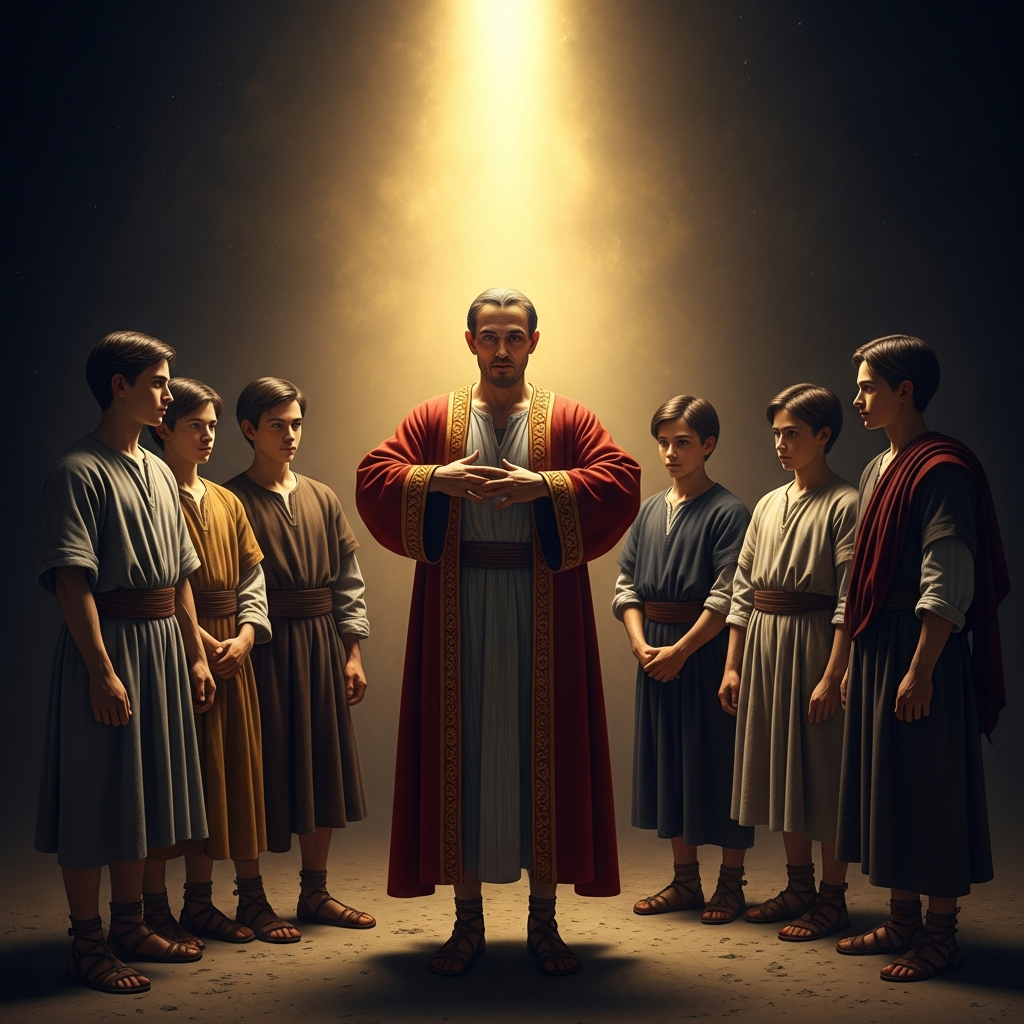
The Coat and the Pit
Joseph, the favored son, receives a coat of many colors and his brothers' undying hatred. They throw him in a pit, sell him to slave traders, and bring his father a goat-blood coat. But the story does not end in the pit. It ends in Egypt, decades later, with Joseph weeping and saying: it was not you who sent me here.
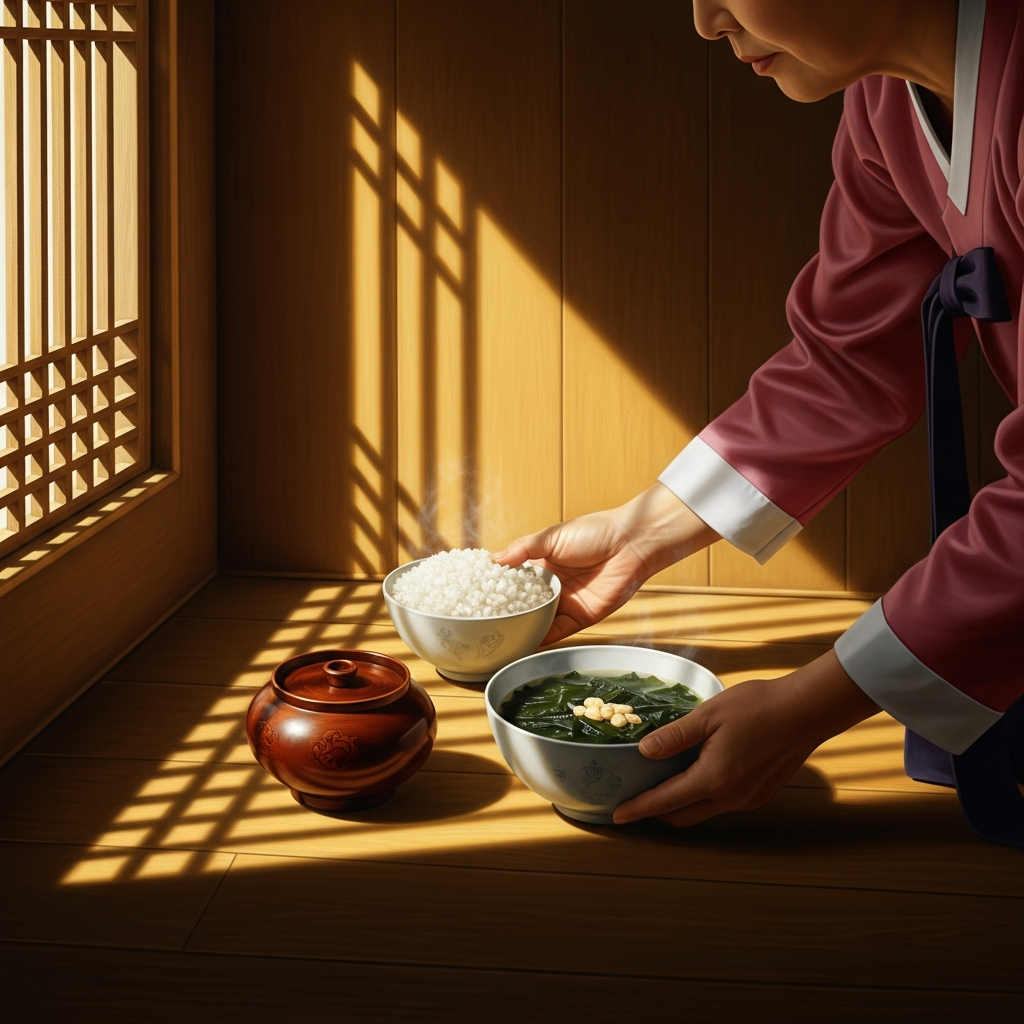
Samsin Halmoni and the Bargaining Mother
A woman in Yi Dynasty Korea has buried three infants. She knows the Grandmother of Three Gods lives in the inner corner of her main room, tending the souls of children before they are born and for the first three years of life. She makes her offering of rice and seaweed soup, kneels on the warm floor, and begins the most intimate theological argument in Korean religion: a mother addressing the deity who keeps the count of children.
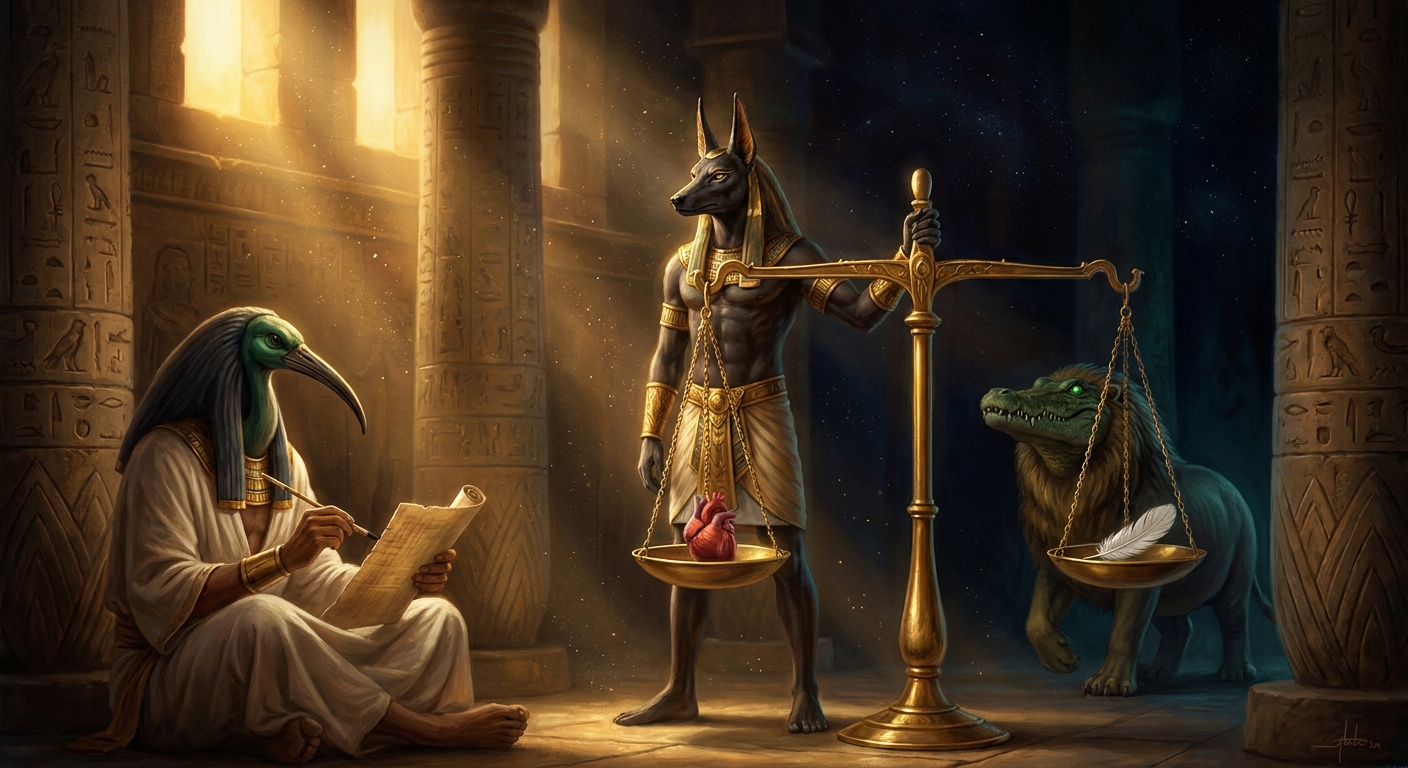
The Feather of Maat
In the Hall of Two Truths the dead must speak forty-two denials to forty-two judges, and a single feather sets the standard against which a life is weighed. Anubis adjusts the balance. Thoth records. Ammit waits.
The Weighing of the Heart
In the Hall of Two Truths, Anubis sets the dead man's heart on a scale against the feather of Maat. Forty-two gods press their accusations. Thoth waits with his reed. Ammit waits below. The scale decides everything.
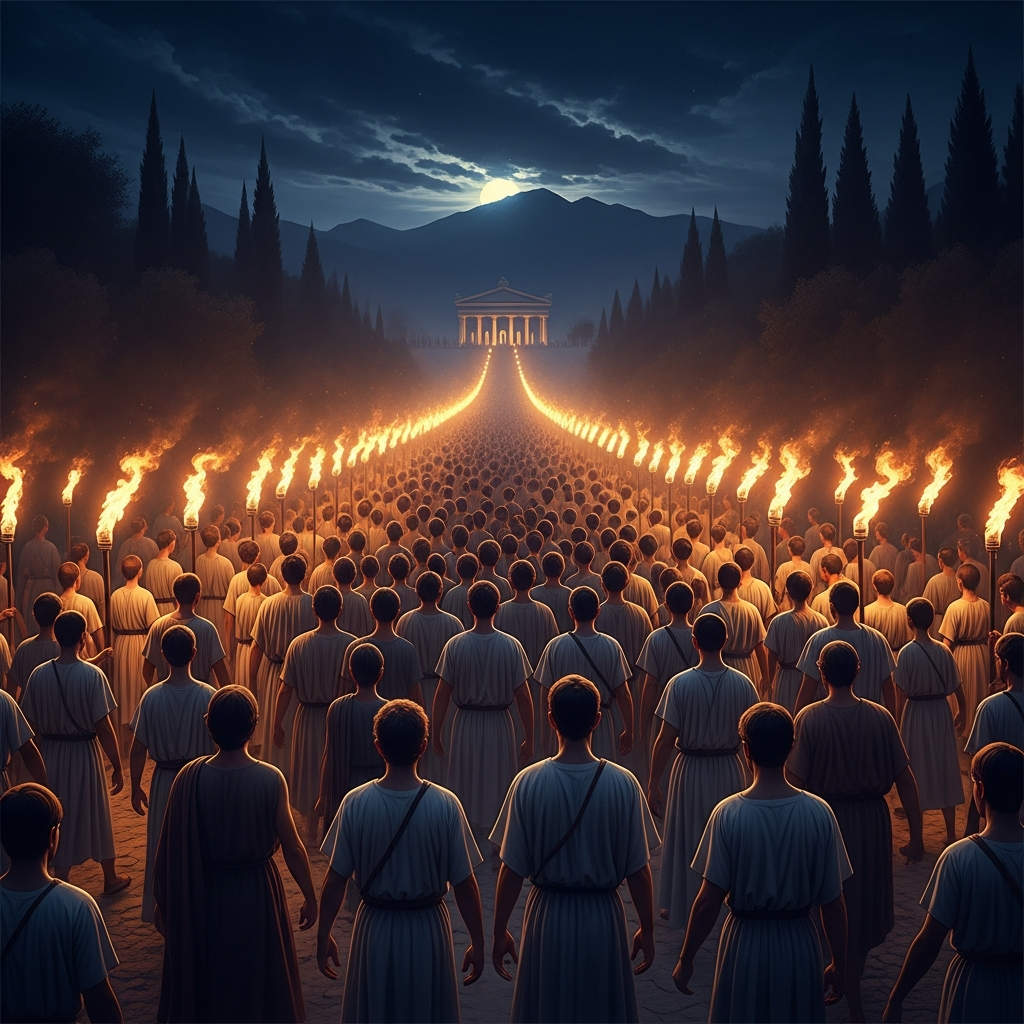
The Sacred Way
Every autumn for nearly two thousand years, tens of thousands of Greeks walked the fourteen miles from Athens to Eleusis to be initiated into the Mysteries of Demeter. What happened inside the Telesterion was never written down. Those who survived it lost their fear of death. Cicero called it the greatest gift Athens ever gave humanity.
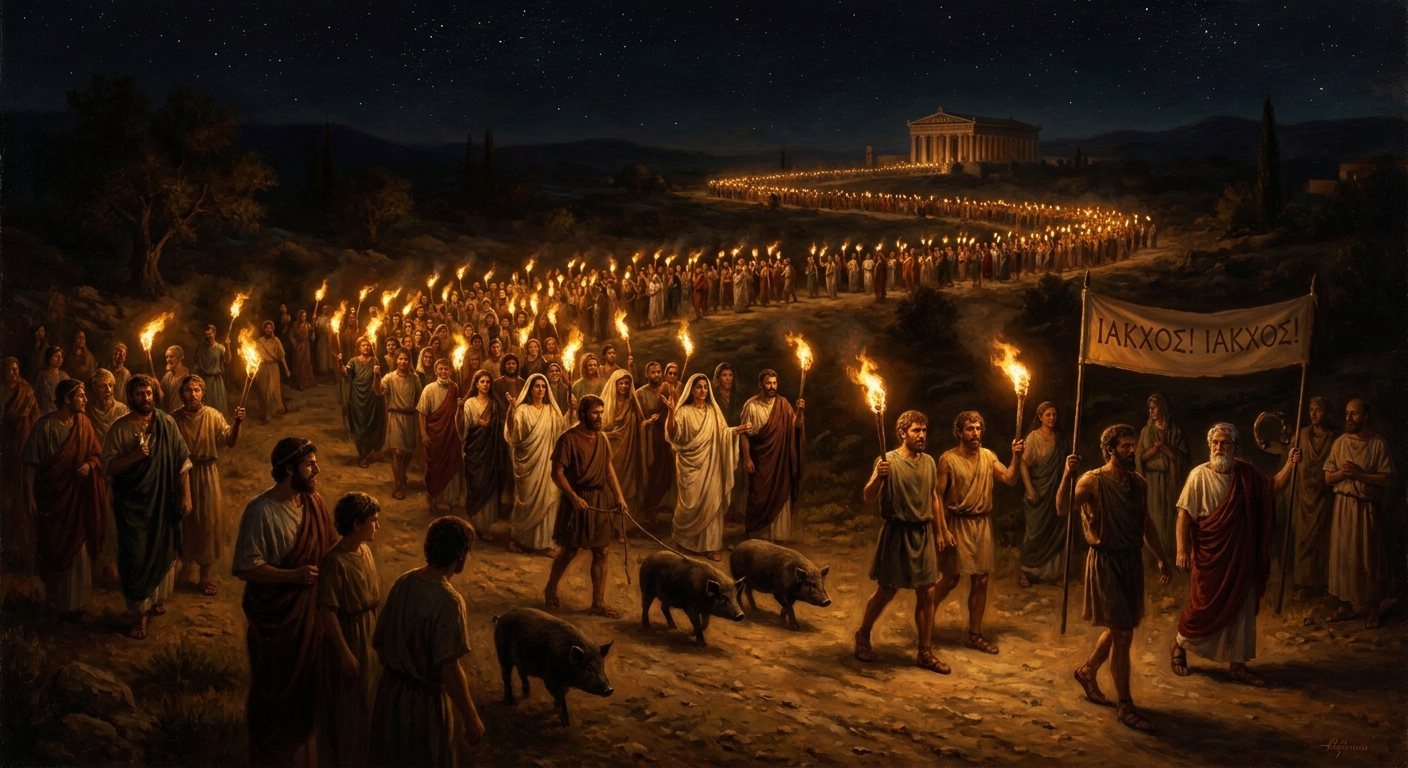
An Ear of Wheat in Silence
For nearly two thousand years, the initiates of Eleusis kept the secret of what the hierophant lifted from the sacred chest in the torchlight — and the silence held.
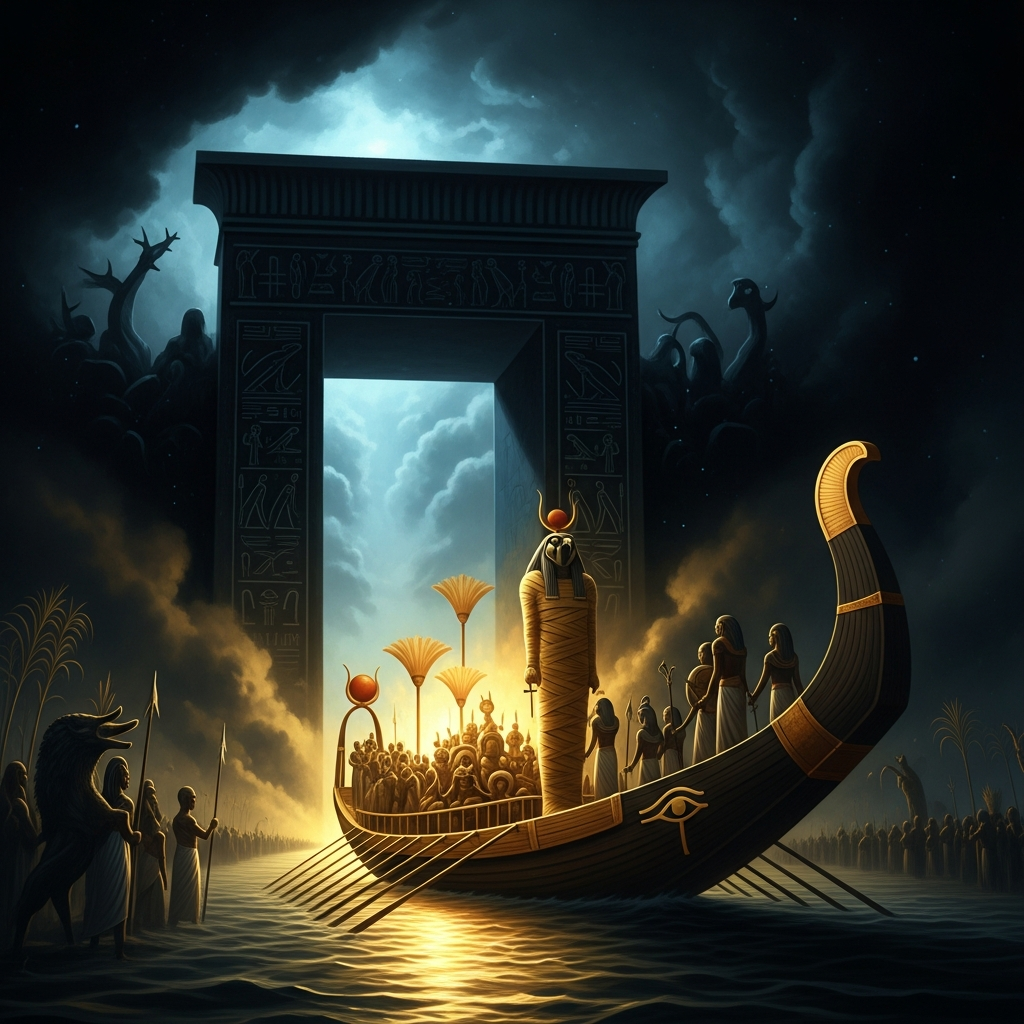
The Twelve Hours of Night
Every night, Ra descends into the Duat in his solar barque and fights the serpent Apophis through twelve hours of darkness. If Apophis wins, the sun does not rise. The crew has never failed. But in the twelfth hour, the defender who saves the sun is Set — the god of chaos, the murderer of Osiris, the necessary weapon in the darkness.
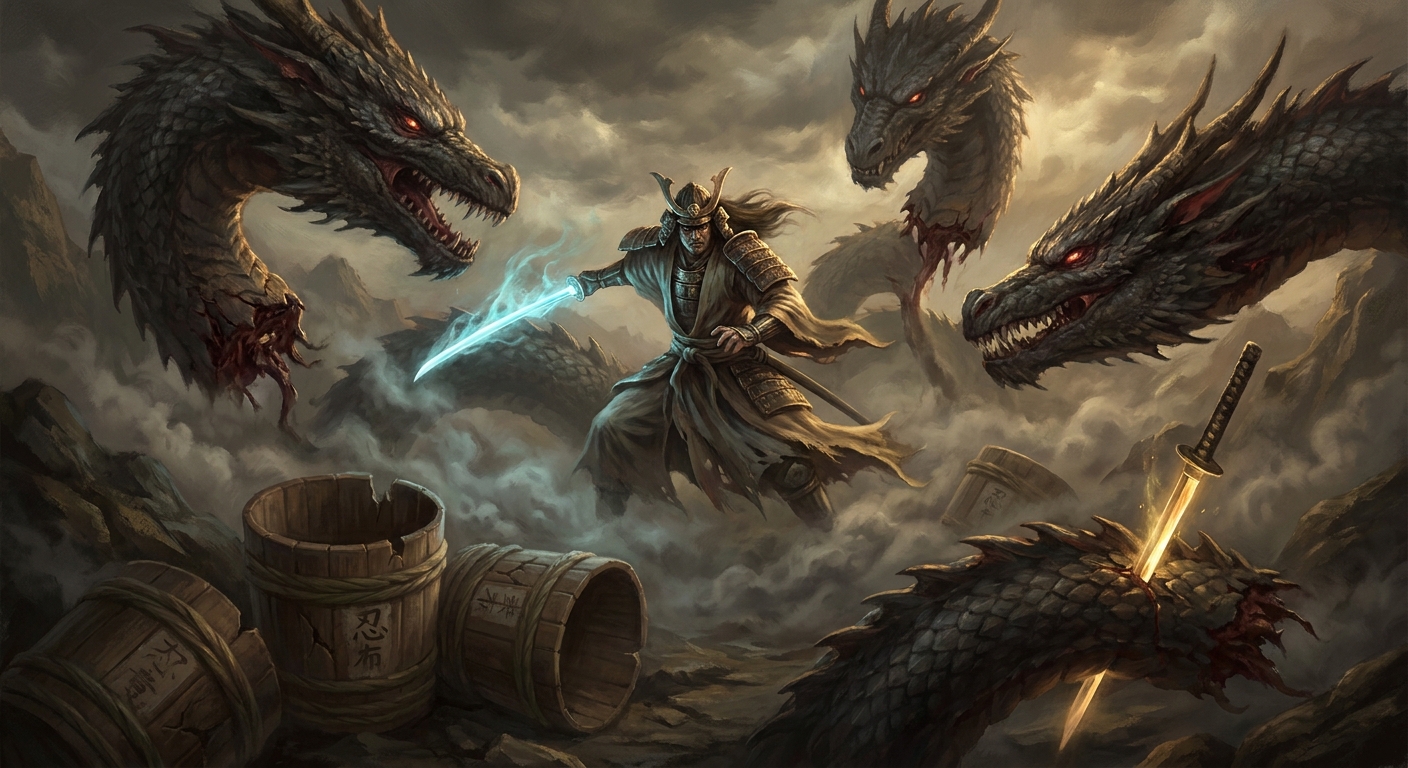
Susanoo Slays the Eight-Headed Serpent
Exiled from heaven, the storm god Susanoo descends to Izumo and finds a family undone by a serpent with eight heads. He brews eight vats of sake, gets the dragon drunk, cleaves it apart, and pulls from its tail a sword that will define Japan forever.
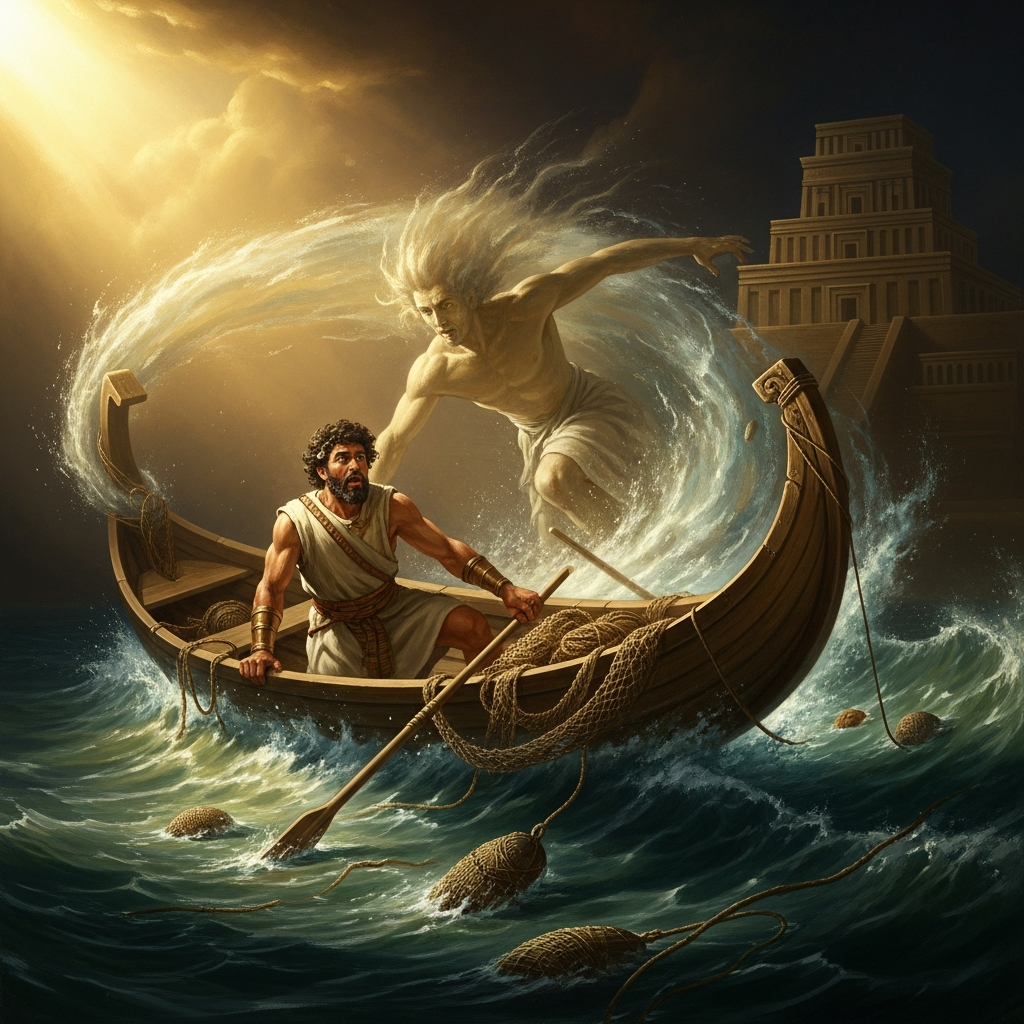
The Bread of Life: Adapa Before Anu
Adapa, the first wise man and priest of Eridu, breaks the south wind's wing and is summoned to stand trial before Anu in heaven. His own divine father warns him not to eat or drink what is offered — but the food was immortality, and Ea lied.
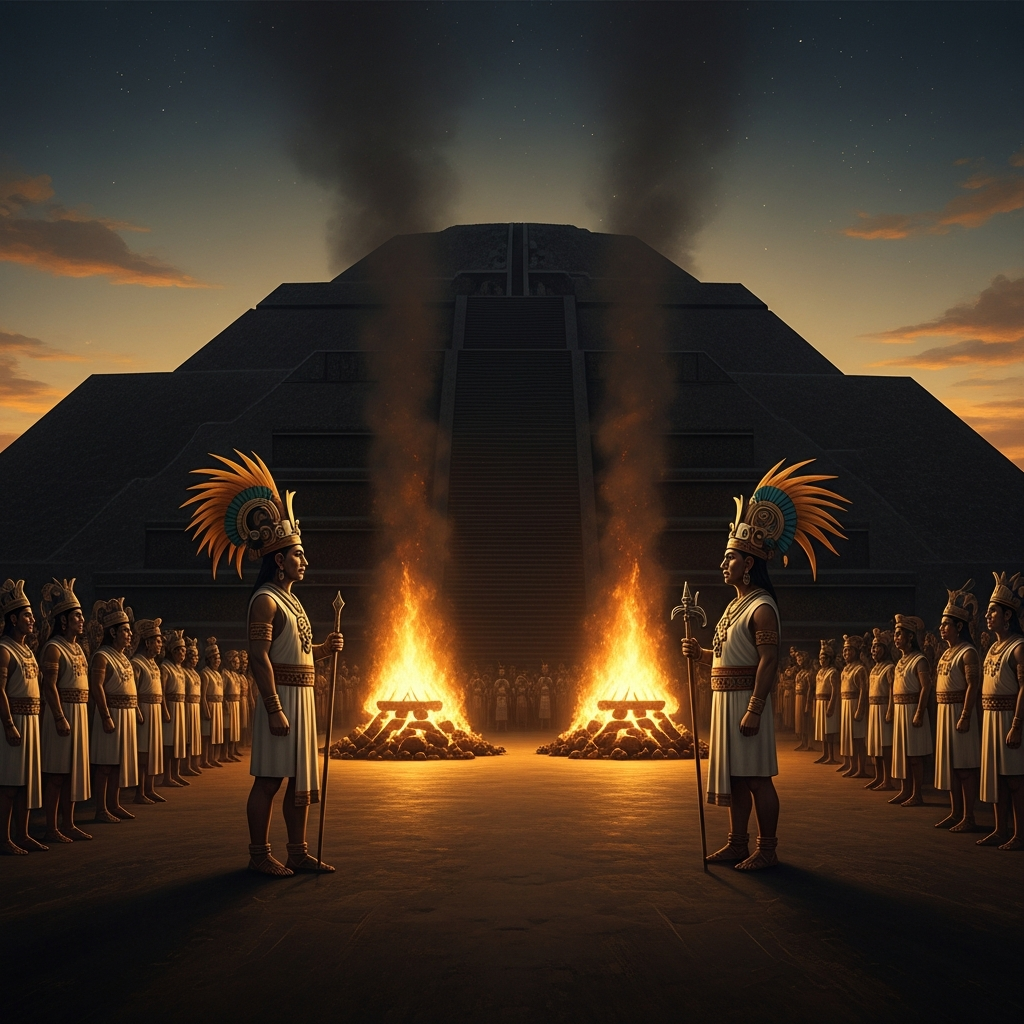
The Gods Who Threw Themselves into the Fire
The creation of the fifth sun at Teotihuacan: the two gods who volunteered to become the sun and moon by leaping into the fire. Nanahuatzin, humble and syphilitic, leaped without hesitation. Tecuciztecatl, proud and beautiful, hesitated four times before jumping. The order of their leaping explains why the moon is dimmer than the sun.
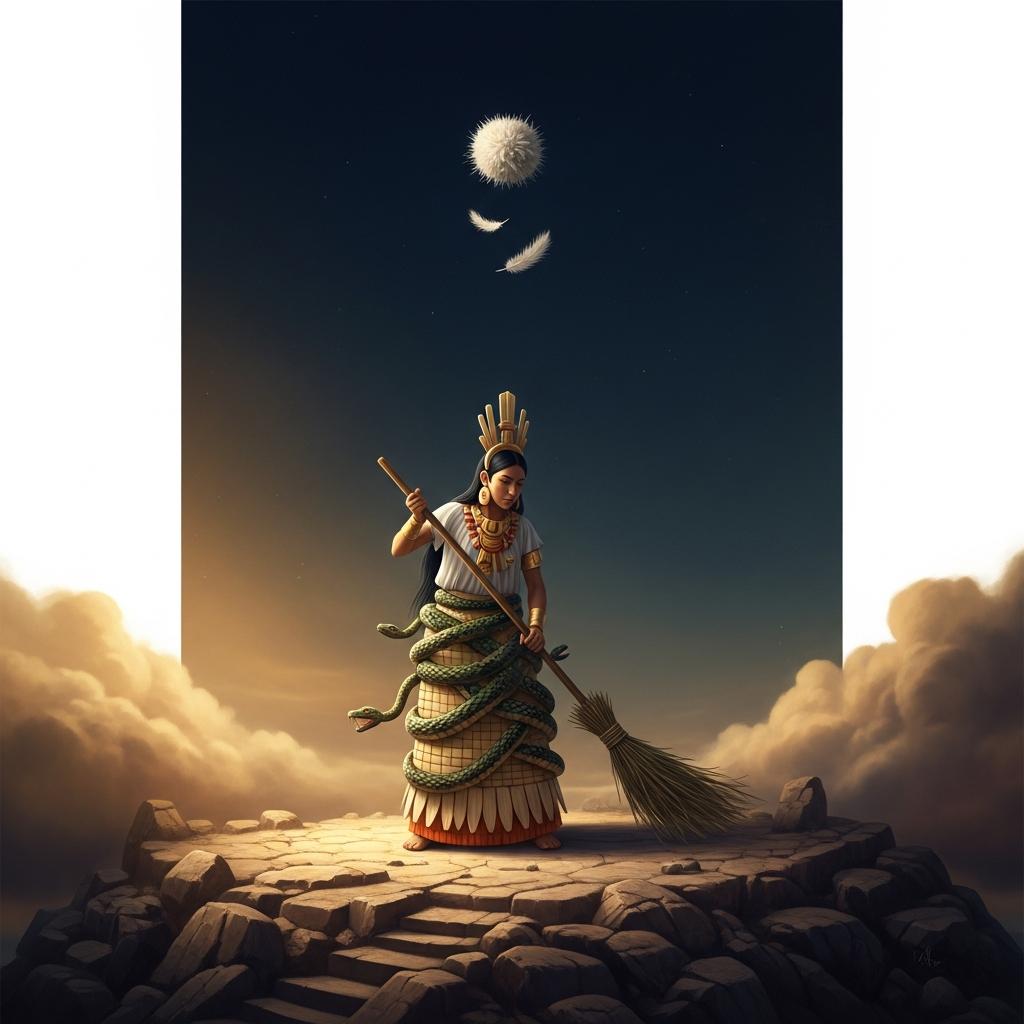
Coatlicue Swept the Temple
The earth mother who conceived Huitzilopochtli from a ball of feathers while sweeping the temple, was attacked by her four hundred children, and was defended by Huitzilopochtli springing forth fully armed. The birth as cosmological war.
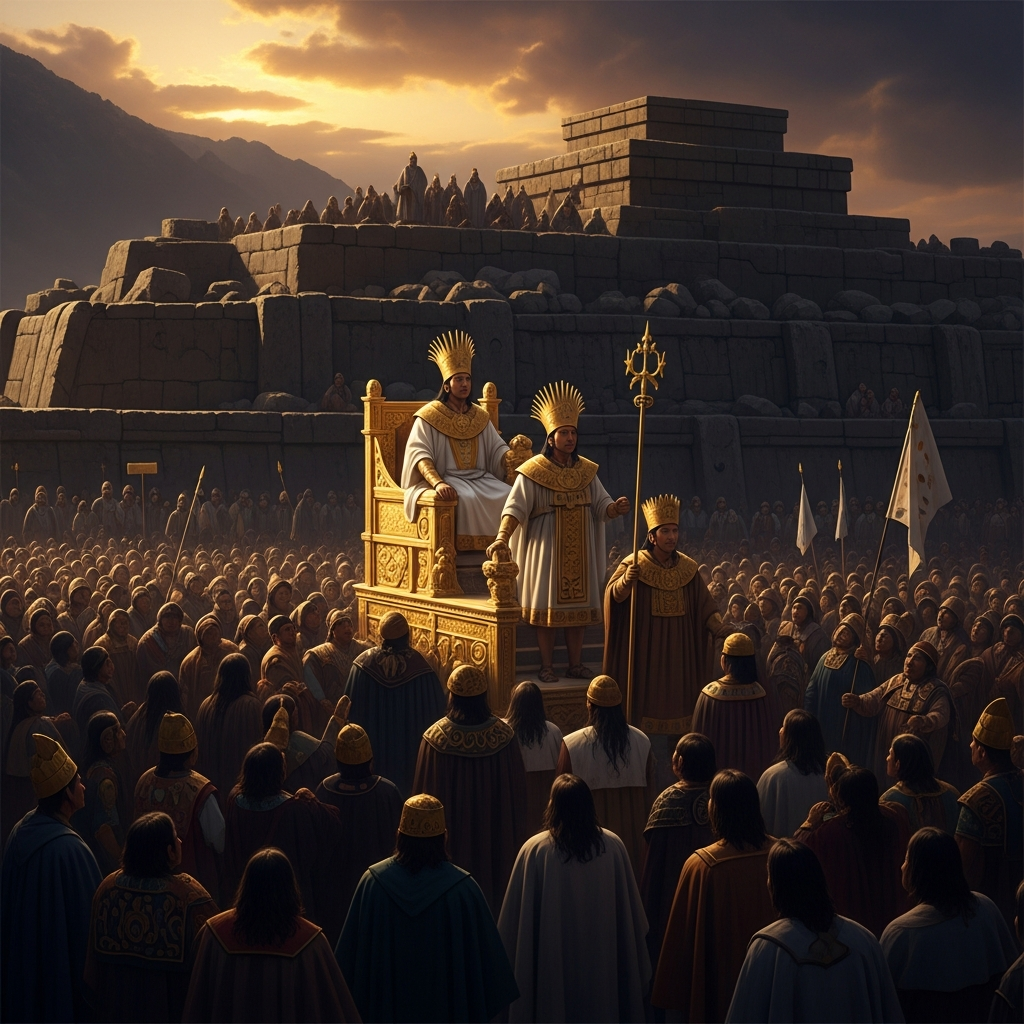
Inti Raymi — The Sun Returns
At the June solstice, the Sapa Inca — divine son of the Sun — stands at Sacsayhuamán fortress above Cuzco and calls his father back from the southern extreme. A sacred llama dies; its entrails speak; a golden mirror lights the new fire. For nine days the entire empire stops and feasts. If the king fails to perform this ceremony correctly, the sun will not turn. The world will freeze and starve.
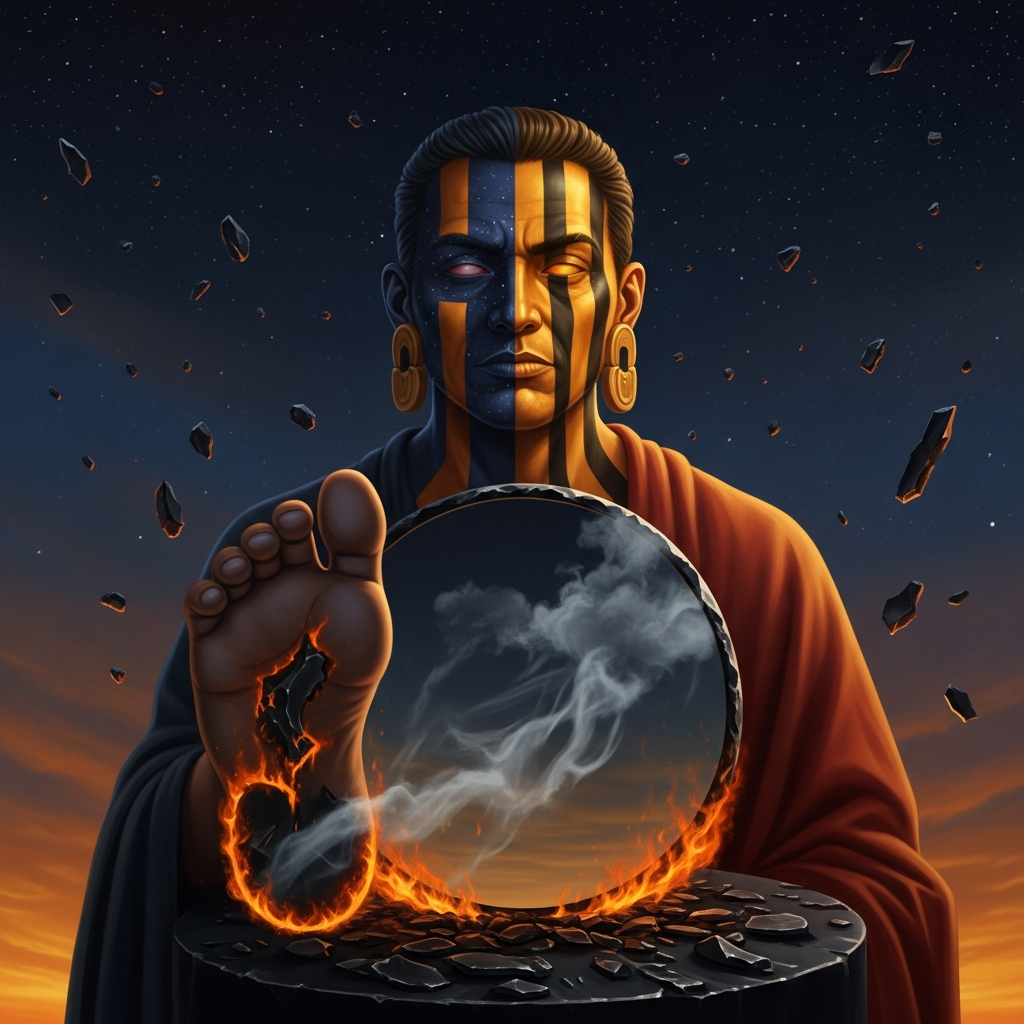
Tezcatlipoca and the Mirror That Shows Everything
The god of the night sky and sorcery who carries a smoking obsidian mirror in which he can see all things. His rivalry with Quetzalcoatl. The night he showed Quetzalcoatl his reflection and broke him.
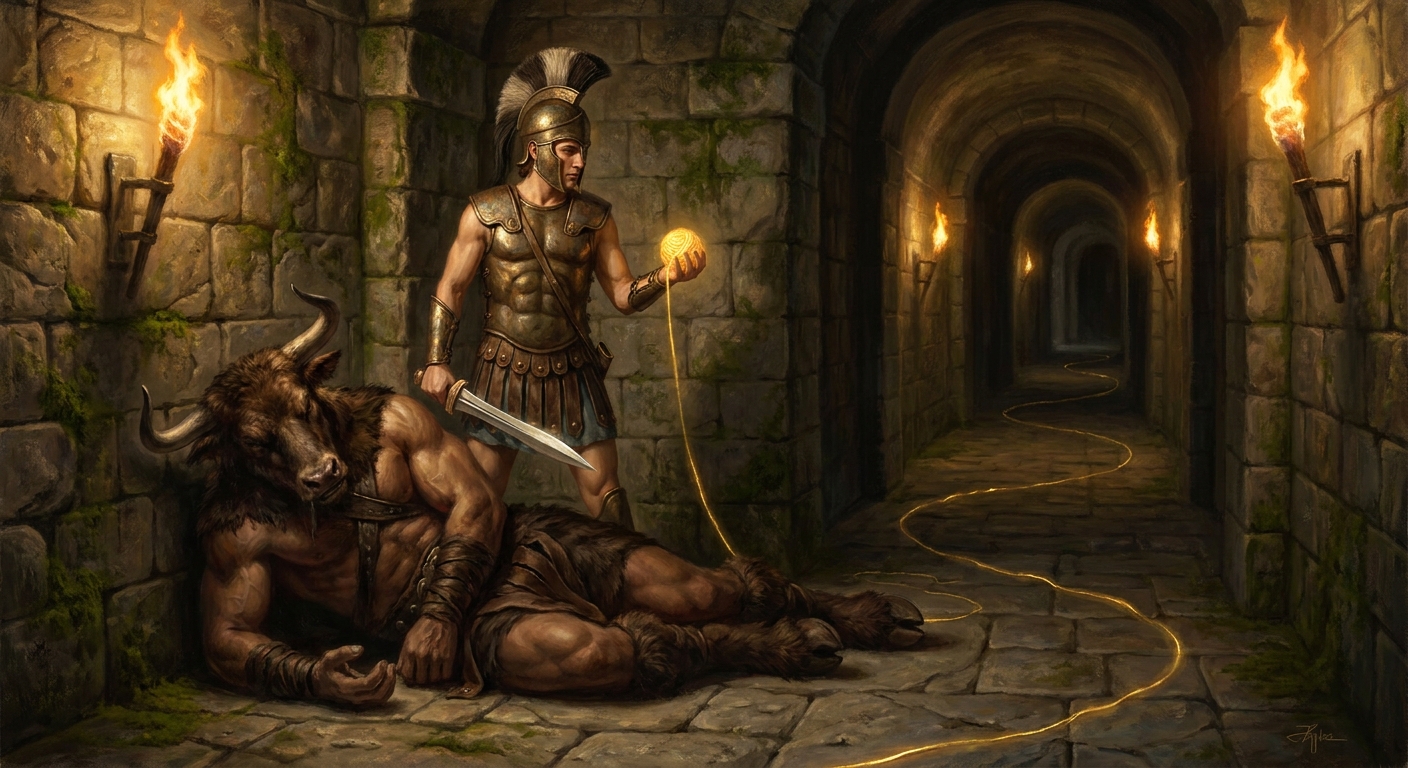
Theseus in the Labyrinth
Athens pays its blood tribute to Crete. A prince volunteers. A princess hands him a thread. At the center of the darkness, he finds the monster — and kills it. But a father watches from a cliff for white sails that never come.
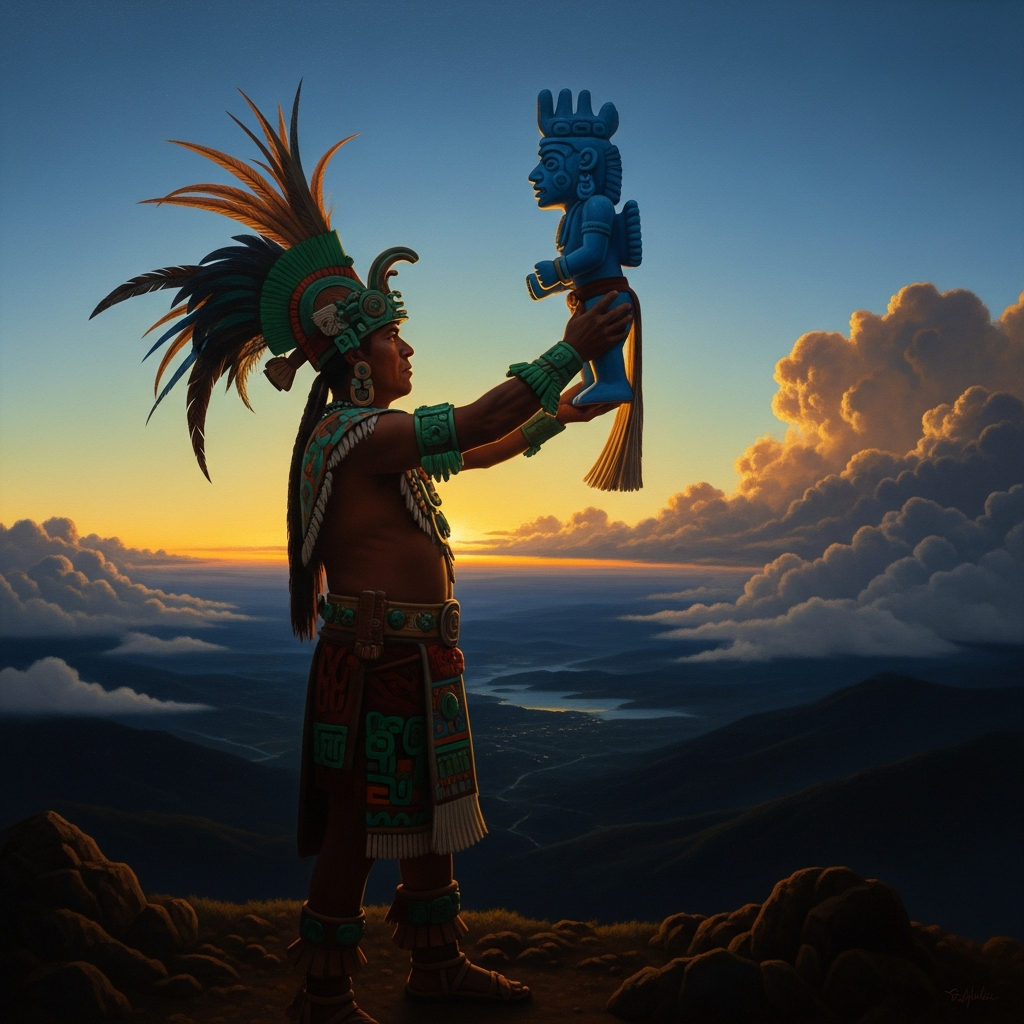
Tlaloc's Children of Rain
The rain god Tlaloc requires the tears of children as sacrifice — children who cried abundantly were considered especially efficacious offerings. A tlalocan priest prepares the rain ceremony on the mountain. What the theology says about necessity, suffering, and agricultural survival.
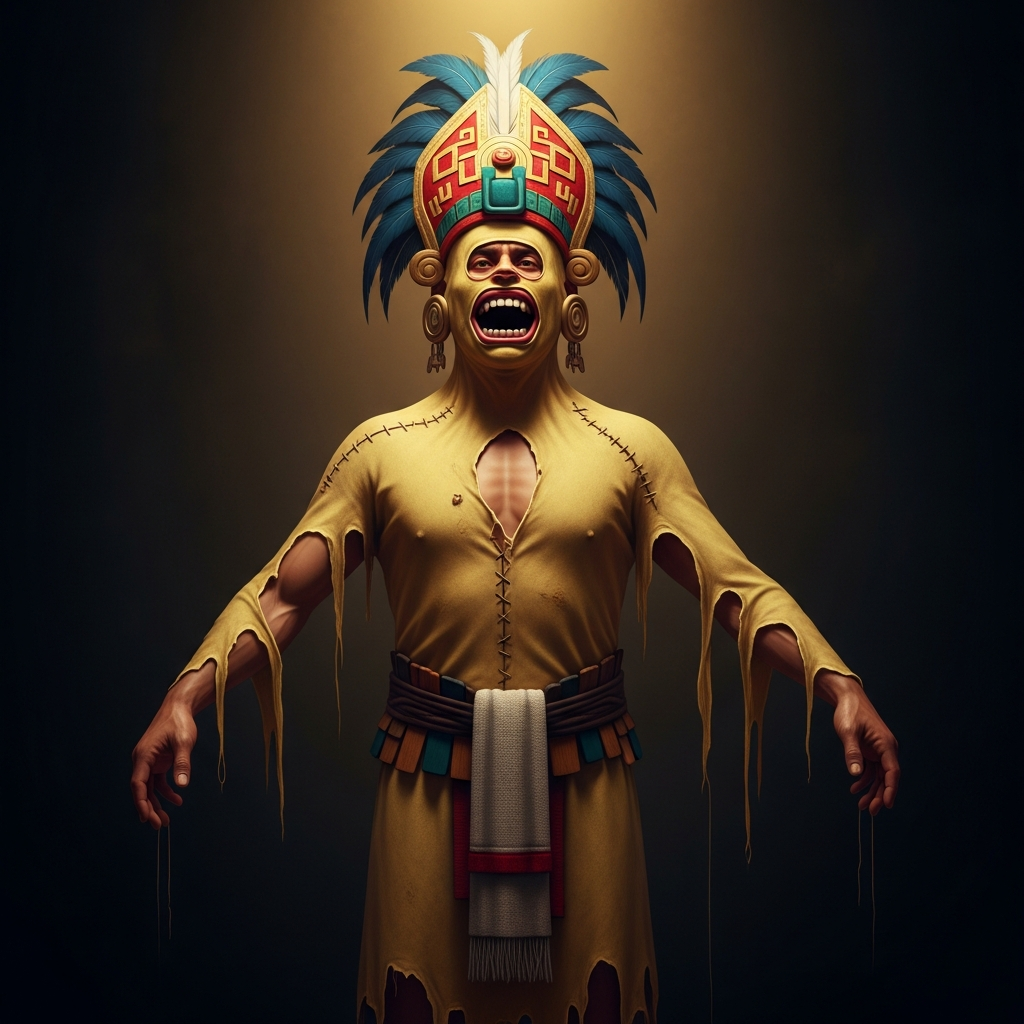
Xipe Totec: The Flayed One
The god of agricultural renewal whose priests wore the flayed skins of sacrificial victims for twenty days, representing the earth's dry husk that must be shed before new growth. A tlacaxipehualiztli ceremony at the temple. The theology of death-as-skin.
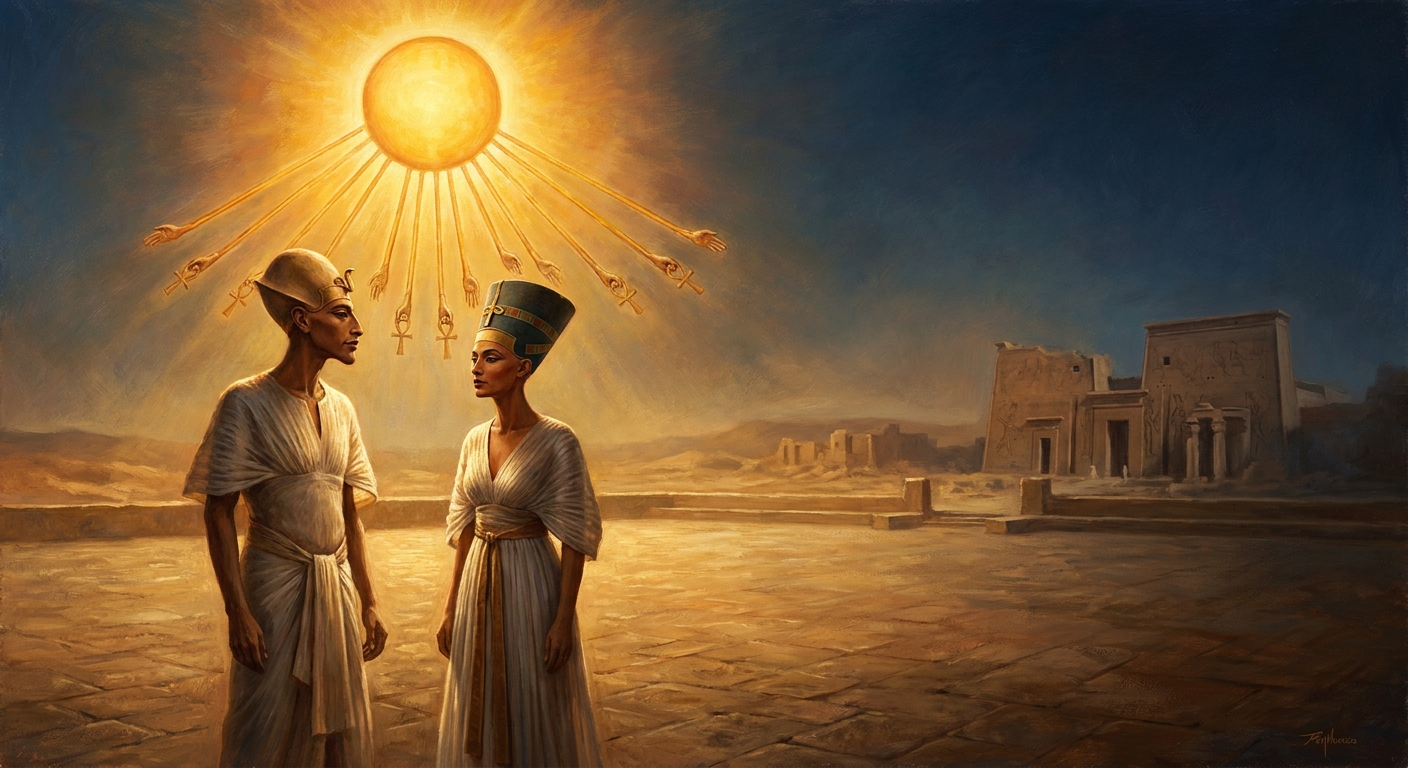
Akhenaten and the Sun
Pharaoh Amenhotep IV renames himself Akhenaten, erases a thousand gods, builds a city from sand, and composes history's first hymn to a single divine light — then dies, is erased, and leaves behind an idea that refuses to stay buried.
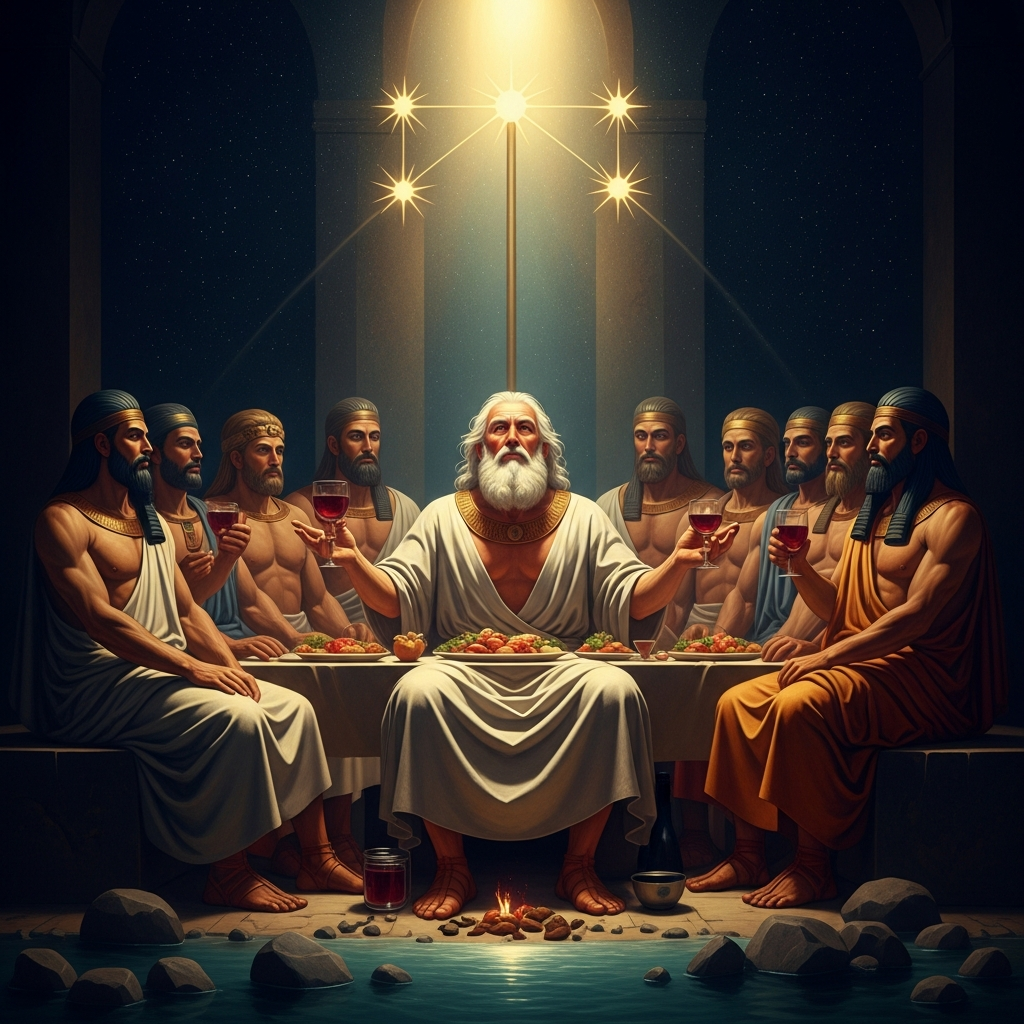
El and Asherah at the Source of the Rivers
El, the aging patriarch of the gods, sits at the confluence of two rivers at the edge of the world, drinking wine with his seventy divine children. His wife Asherah — Lady of the Sea, mother of the gods — is the great intercessor: when Baal needs his palace, it is Asherah who goes to El and wins it. This is the theology behind the Asherah poles that the prophets of Israel spent five centuries trying to remove.
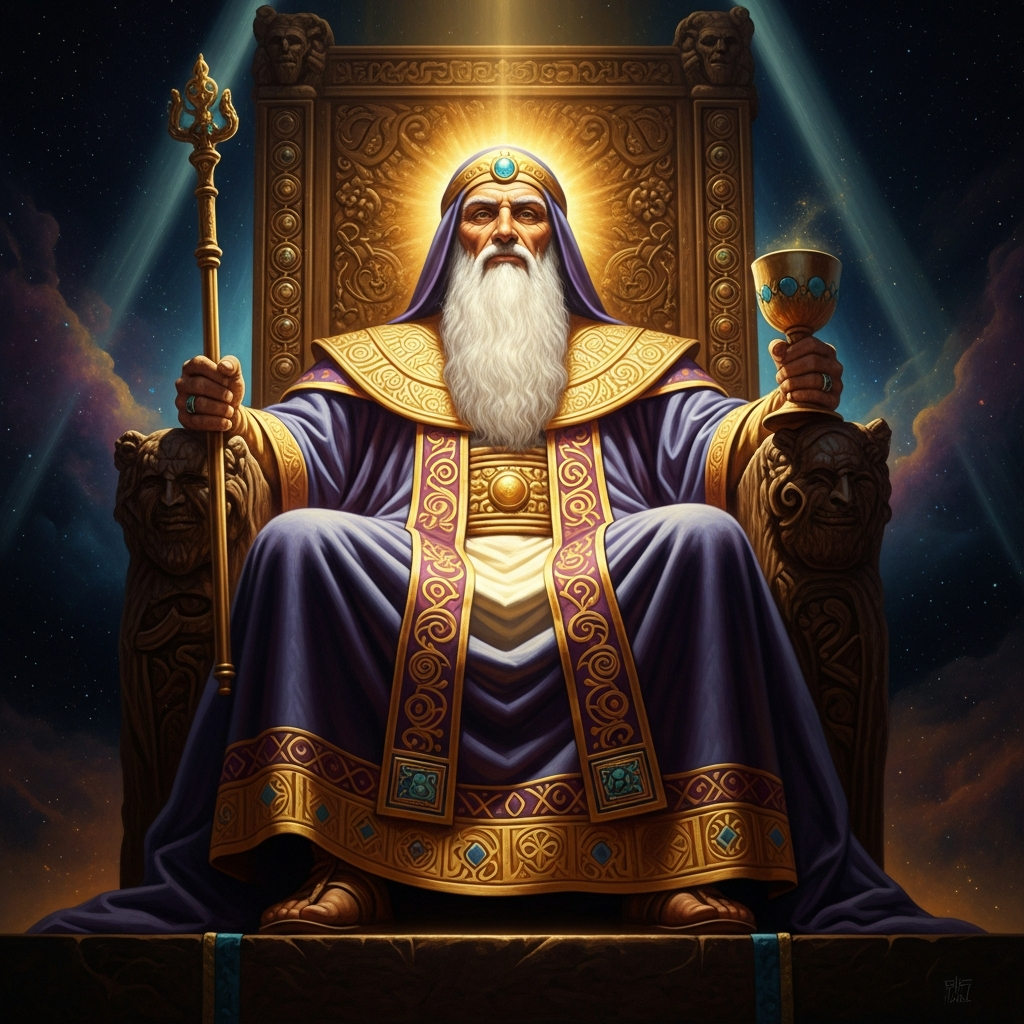
The Epic of Kirta
King Kirta has lost everything — seven wives, his heirs, his future. El appears in a dream and gives him a plan: march your army to the court of King Pabil of Udum, demand his daughter Hurray, and promise a golden offering to Asherah. Kirta succeeds, marries Hurray, fathers eight children. Then he forgets the vow. Then he falls ill to death. His kingdom waits.
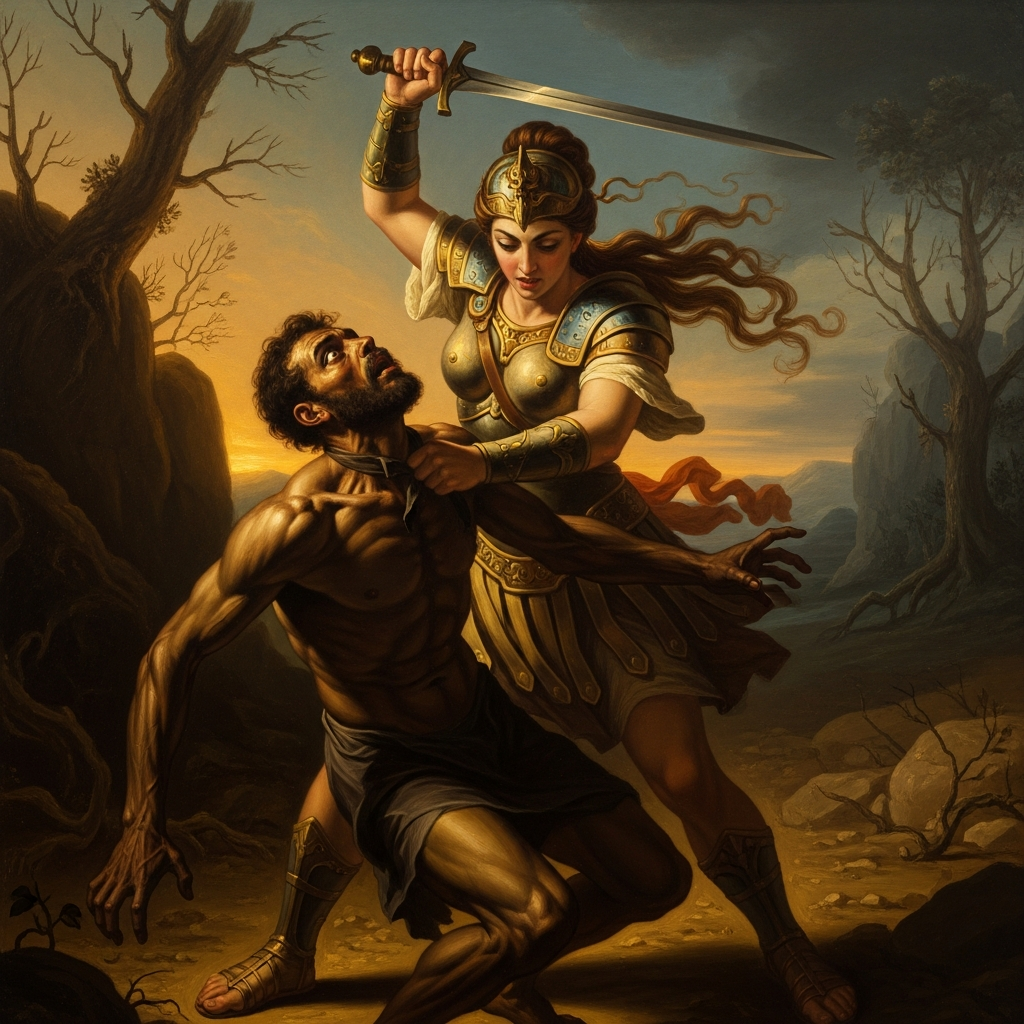
Anat Defeats Mot
The warrior-goddess Anat finds Mot, seizes him, and does to Death what farmers do to grain — she cleaves him with a sword, winnows him, burns him, grinds him between millstones, and scatters him in the fields. Baal rises. The rains return. This is what the agricultural cycle costs.
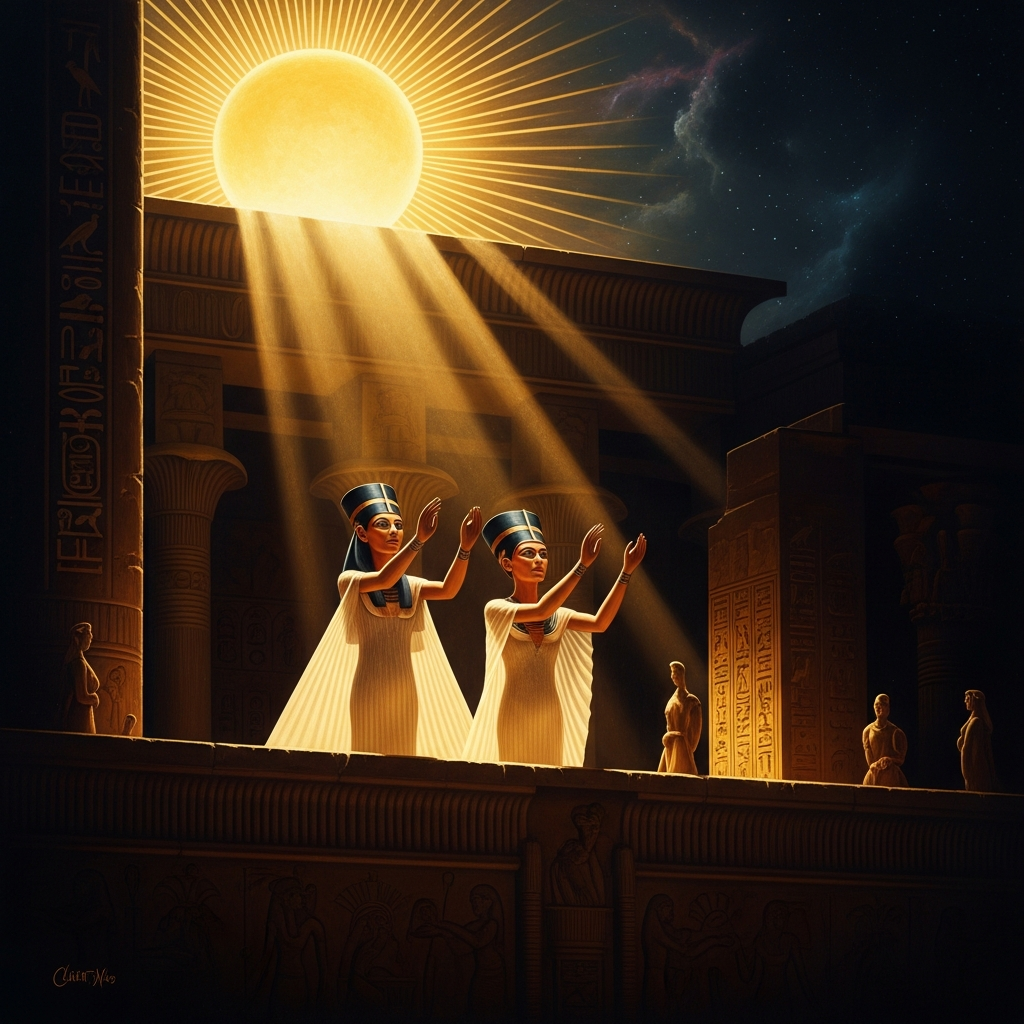
Akhenaten Faces East: The Great Hymn to the Aten
Amenhotep IV, in the fifth year of his reign, abolishes the entire Egyptian pantheon, renames himself Akhenaten, builds a new capital city on virgin ground, and declares the sun disk — the Aten — the sole god of Egypt. His Great Hymn to the Aten is the most remarkable religious text of the ancient world: the first unambiguous statement of monotheism, composed a millennium before the Hebrew prophets. Within twenty years of his death, Egypt erases him from the record as completely as it can. He is nearly lost. He is not quite lost.
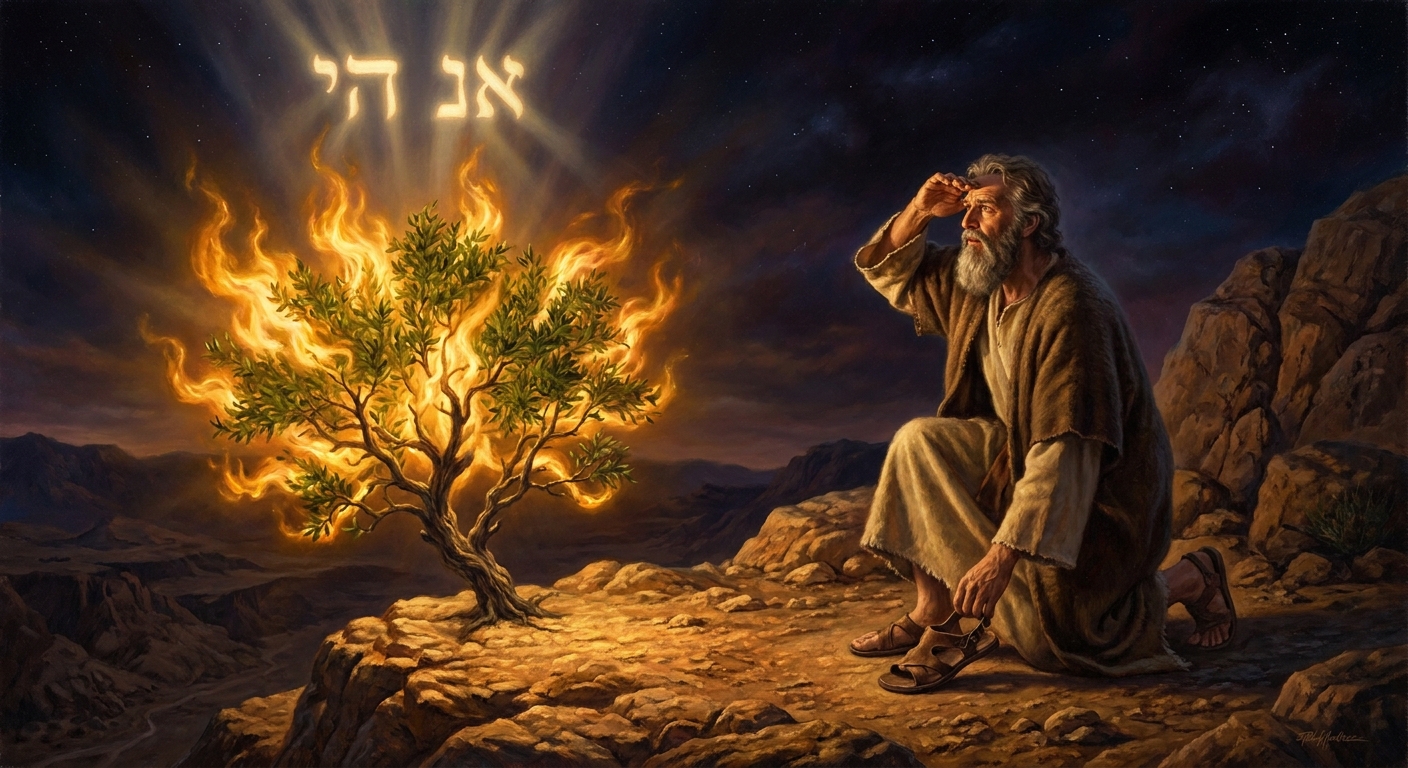
The Burning Bush
Moses, forty years a shepherd in exile, leads his flock to Mount Horeb and finds a bush wrapped in fire that will not burn. A voice names itself. A reluctant man becomes a prophet.
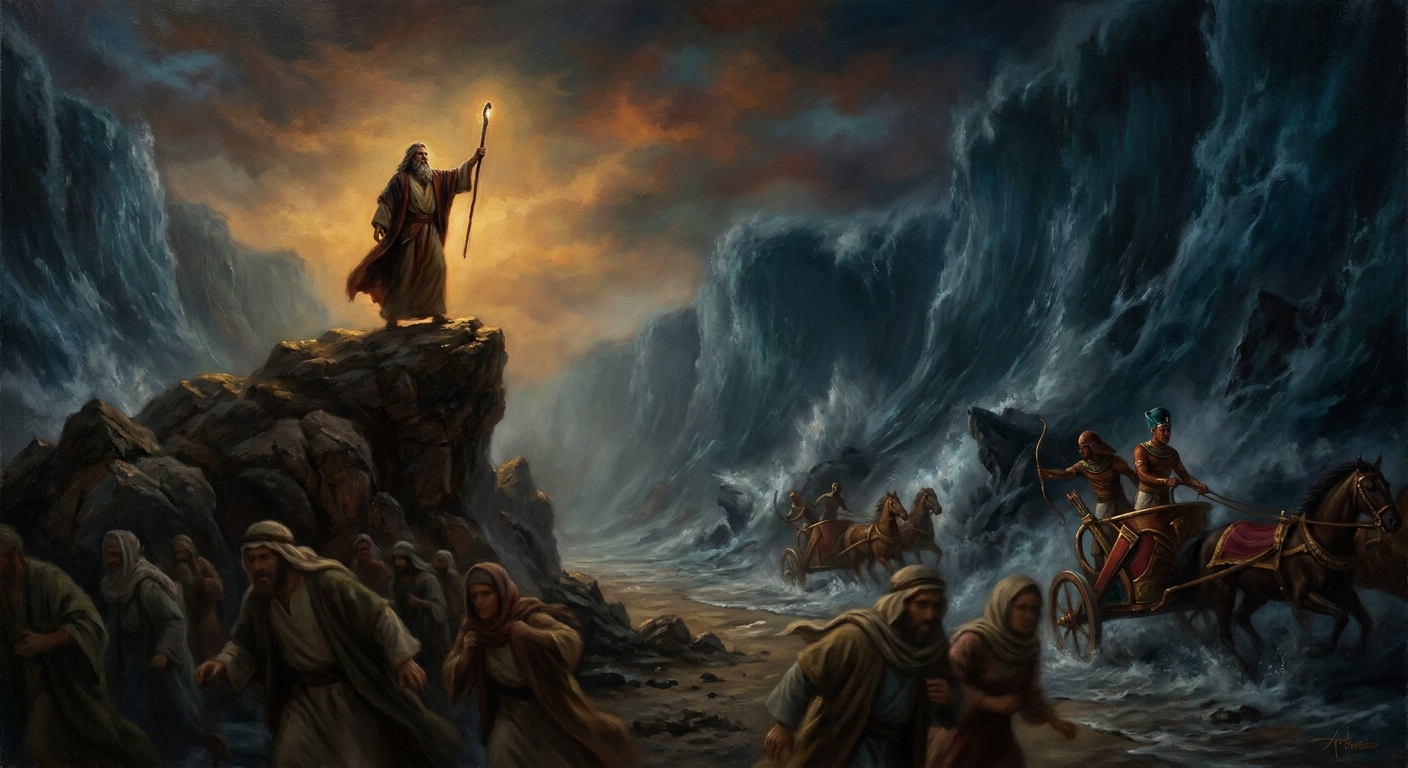
Moses Parts the Sea
Moses raises his staff before the Egyptian chariots. The sea splits into two walls, revealing a corridor of dry ground. The Israelites cross. Behind them, the waters collapse, drowning Pharaoh's army.
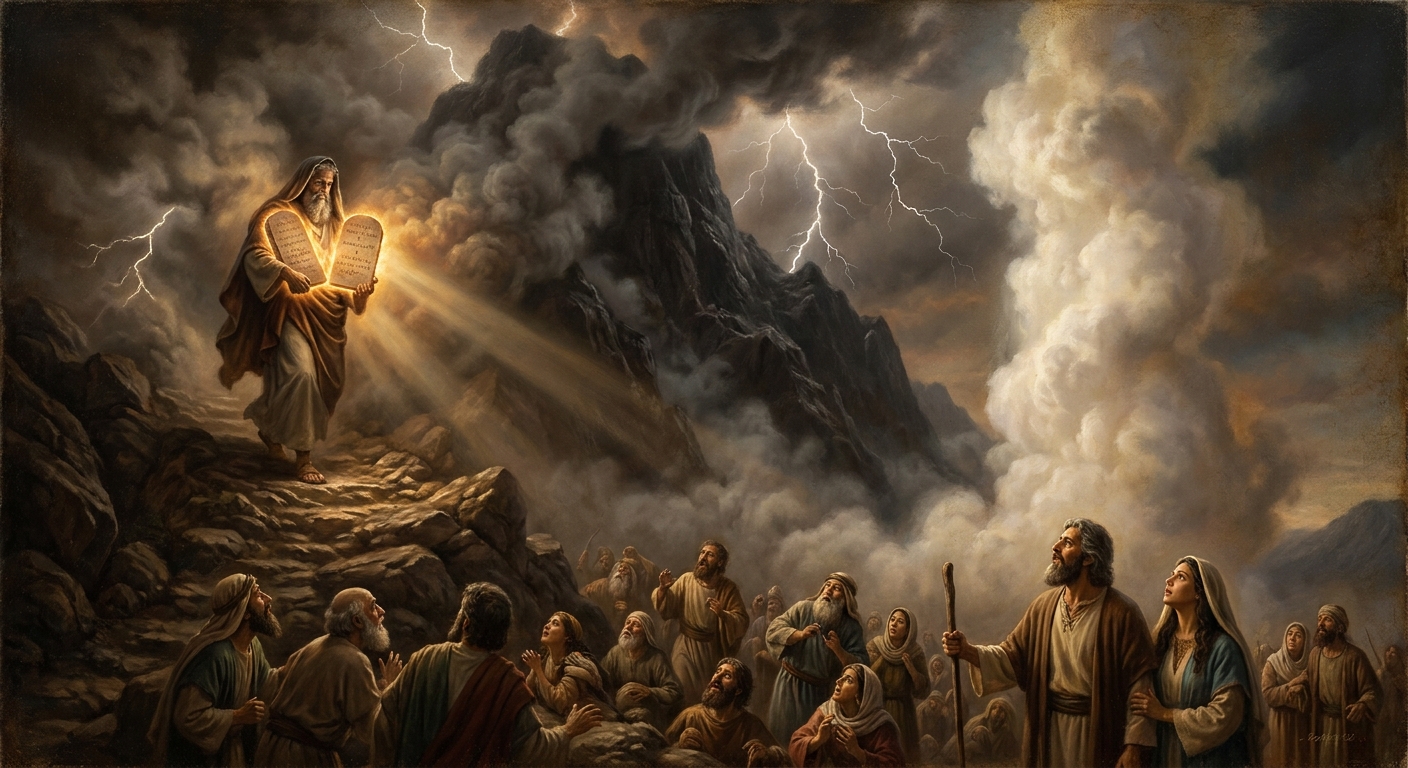
Sinai and the Two Tablets
Three months after the Exodus, Israel reaches Sinai. Moses ascends into fire and cloud. Forty days. The people build a golden calf. Moses descends, sees the calf, smashes the tablets. He grinds the calf to powder and makes Israel drink it. Then he climbs again. The Law is given twice — the second time, after betrayal.
Iron Age
Prophets and philosophers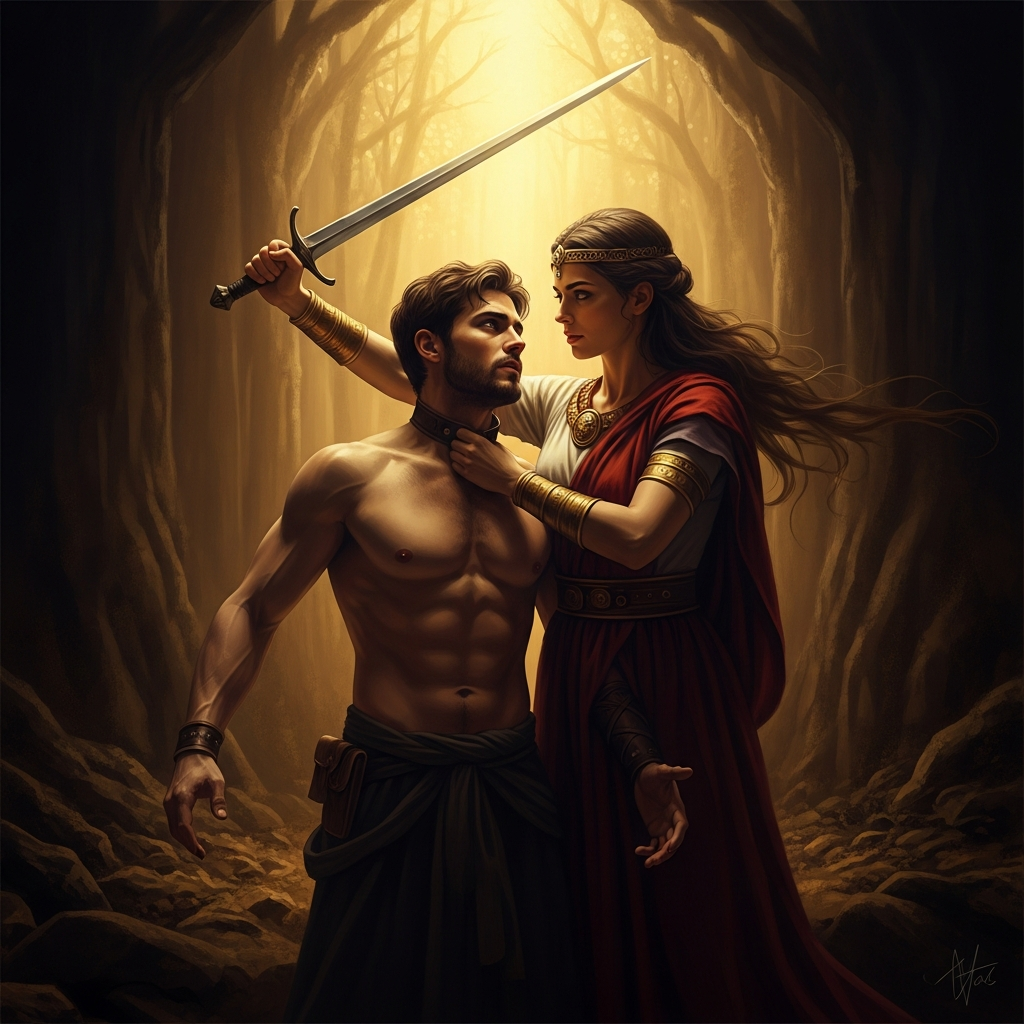
Anat Threshes the Dead
Baal's sister Anat, the warrior-goddess, takes revenge on Mot for her brother's death: she seizes him, splits him with a sword, fans him, burns him, grinds him in a mill, and scatters him across the fields. The most extreme violence in ancient Near Eastern mythology as a theology of natural cycles.
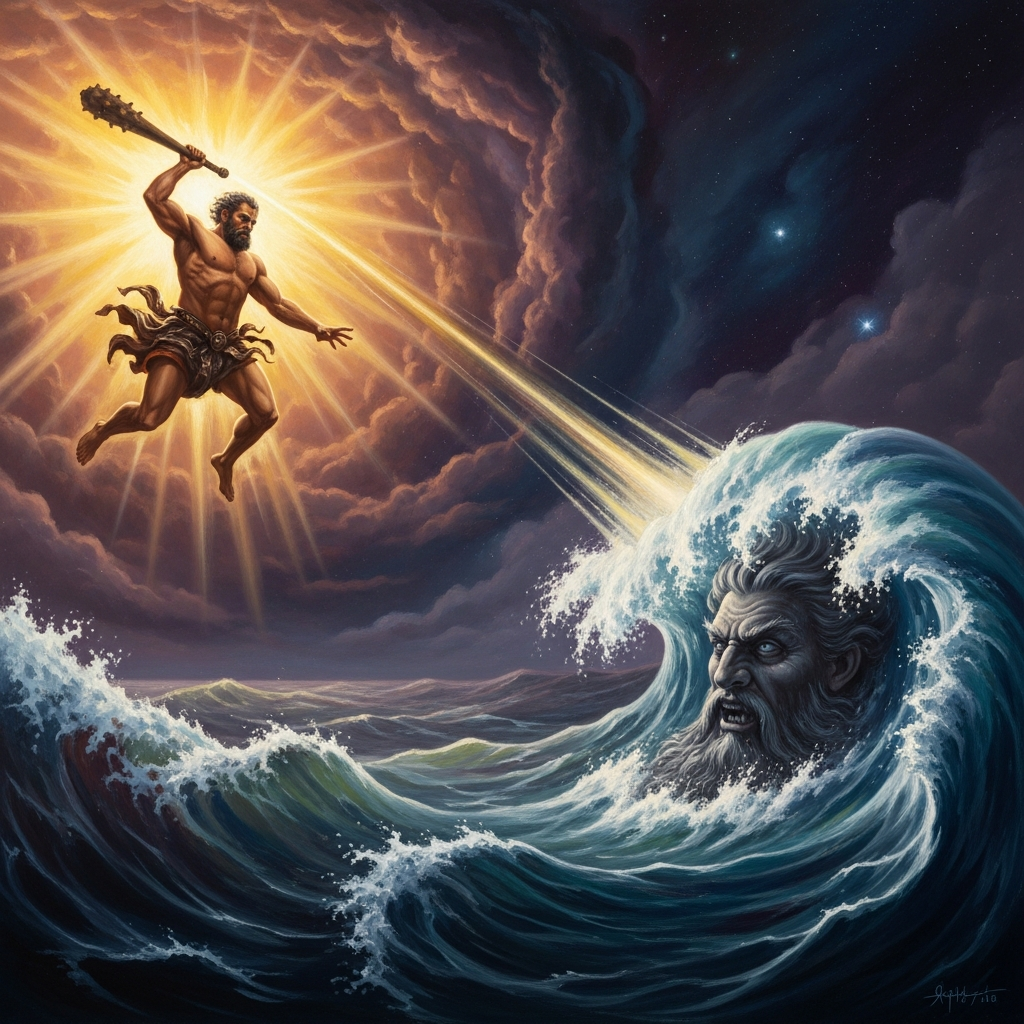
Baal Defeats Yam: The Storm God Earns His Palace
Yam, the sea-god, demands Baal as his slave before El's divine assembly. The craftsman-god Kothar-wa-Khasis forges two magical clubs named Yagrush and Aymur. The clubs fly from Baal's hands, strike Yam between the eyes, and the sea-god crumbles. Astarte rebukes Baal for going too far. The palace on Mount Zaphon is authorized.
Enuma Elish: Marduk Makes the World
After splitting the dragon-mother Tiamat in half, Marduk stretches her body into sky and earth, drains rivers from her eyes, and makes humanity from the blood of her general — then takes the throne the older gods could not hold.
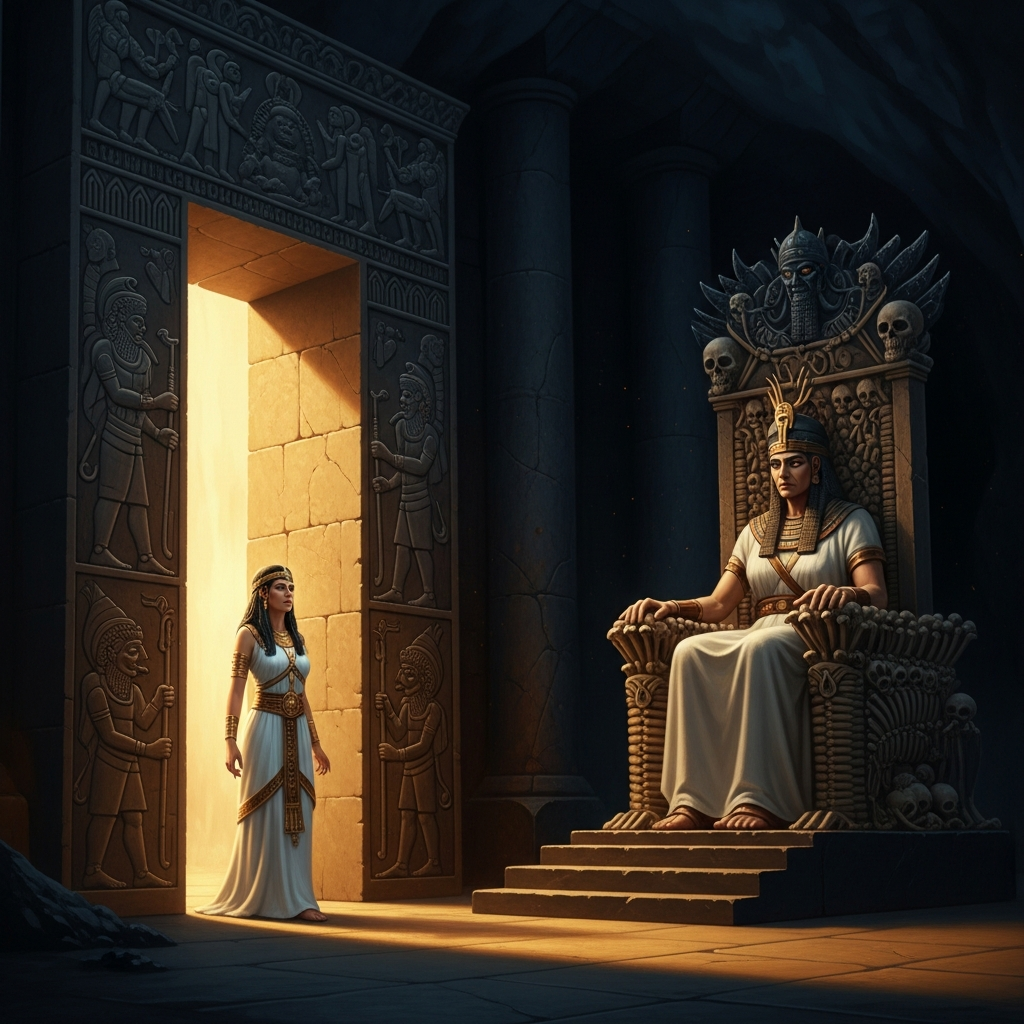
Ishtar's Descent into the Underworld
The goddess of love and war strips off one garment of power at each of the seven gates and arrives before her sister Ereshkigal naked, is killed, and is restored — but only if someone takes her place.
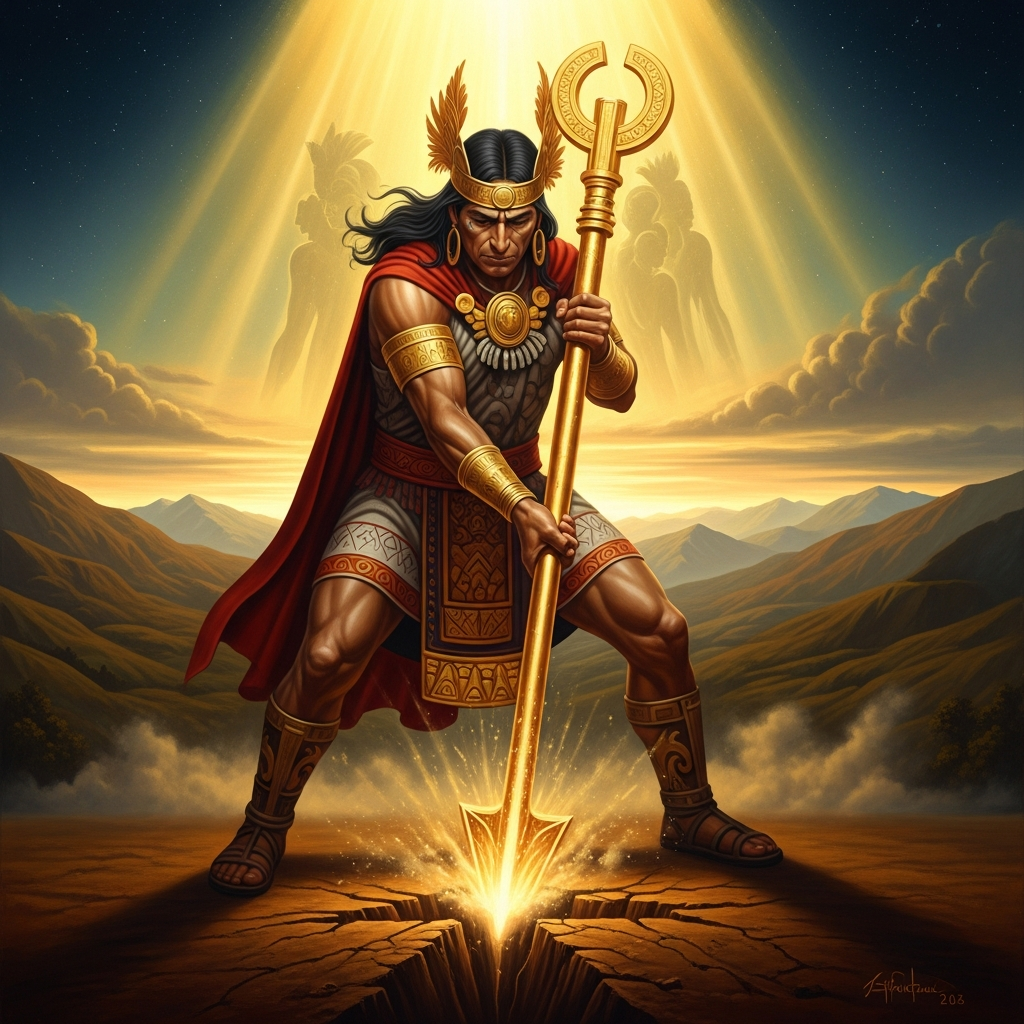
Manco Cápac and the Golden Staff
Viracocha sends eight children of the sun — four Ayar brothers and their sister-wives — from the Island of the Sun in Lake Titicaca. They carry a golden staff. Where it sinks into the earth in one thrust, there the empire begins. Three brothers are lost to stone, earth, and sky. Manco Cápac alone drives the staff into the Valley of Cuzco. The city rises. The world changes.
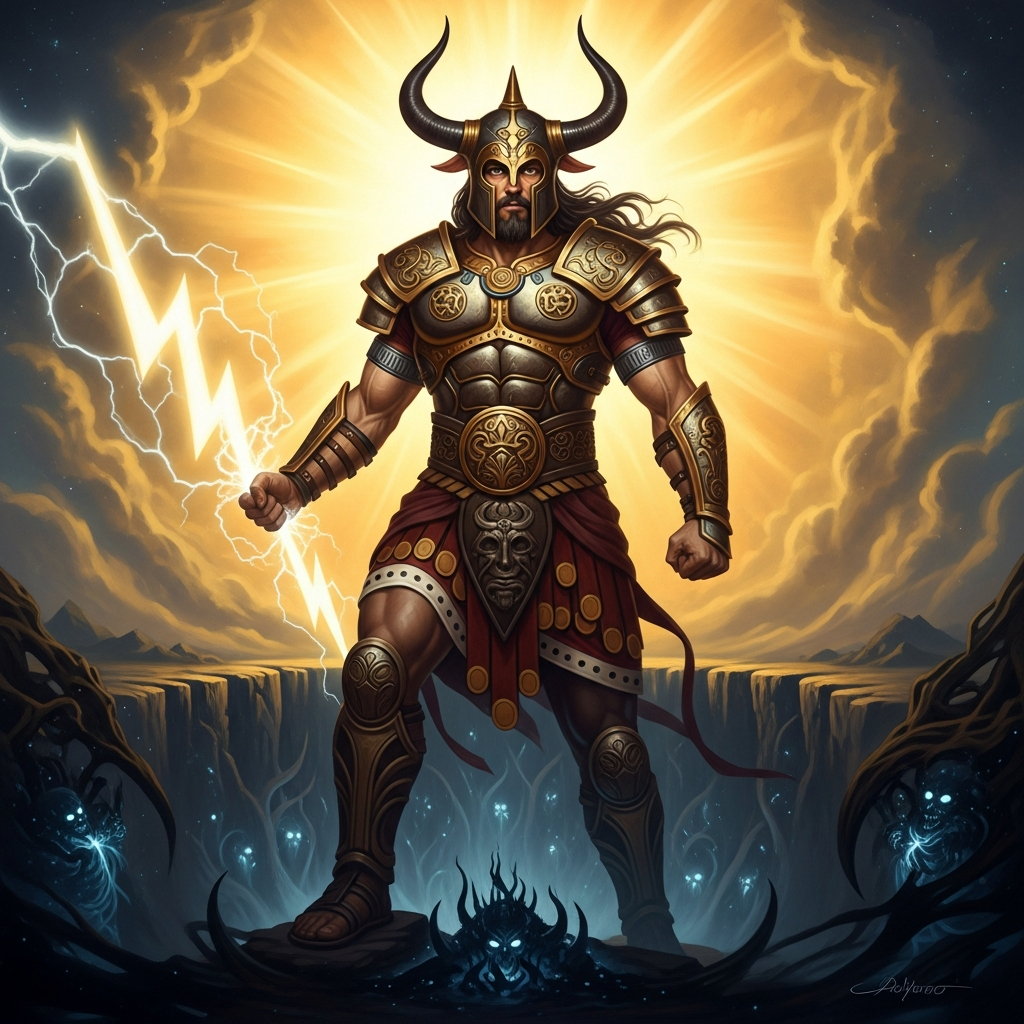
Baal Descends into Mot's Throat
Baal, master of storm and rain, lord of Zaphon, sends his messengers into the underworld to invite Death to a banquet. Mot answers with a counter-invitation: descend into my throat. Baal sends clouds, wind, lightning, and rain as heralds, but then goes himself. El mourns in ash. Anat searches. The seasonal cycle as theological argument.
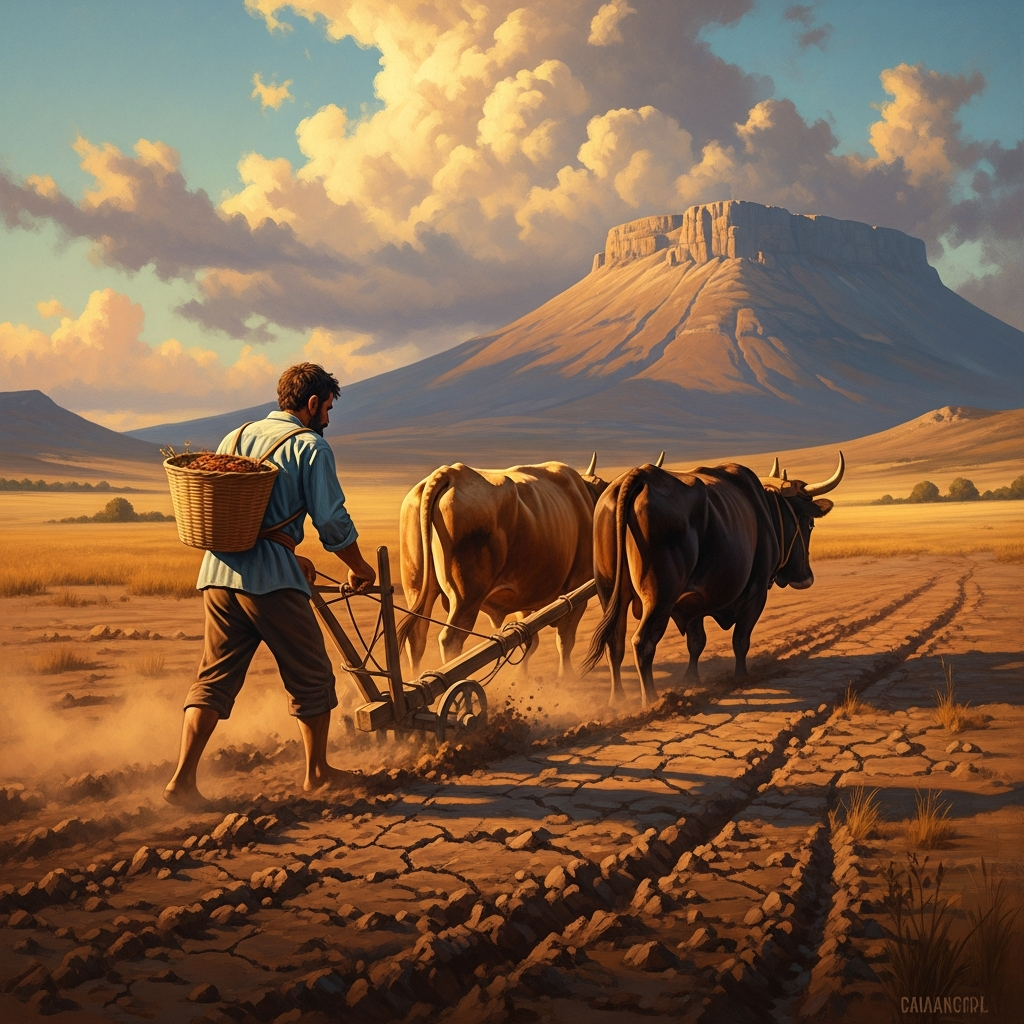
Mot is Scattered; the Grain Rises
Mot's scattered body becomes the autumn sowing. A Canaanite farmer in the Jezreel Valley in 1200 BCE performs the plowing ritual at the turn of the season, reciting fragments of what we now call the Baal Cycle. The myth as agricultural calendar. The myth as practical theology. The myth as the thing a man says when he puts seed into the ground and hopes.
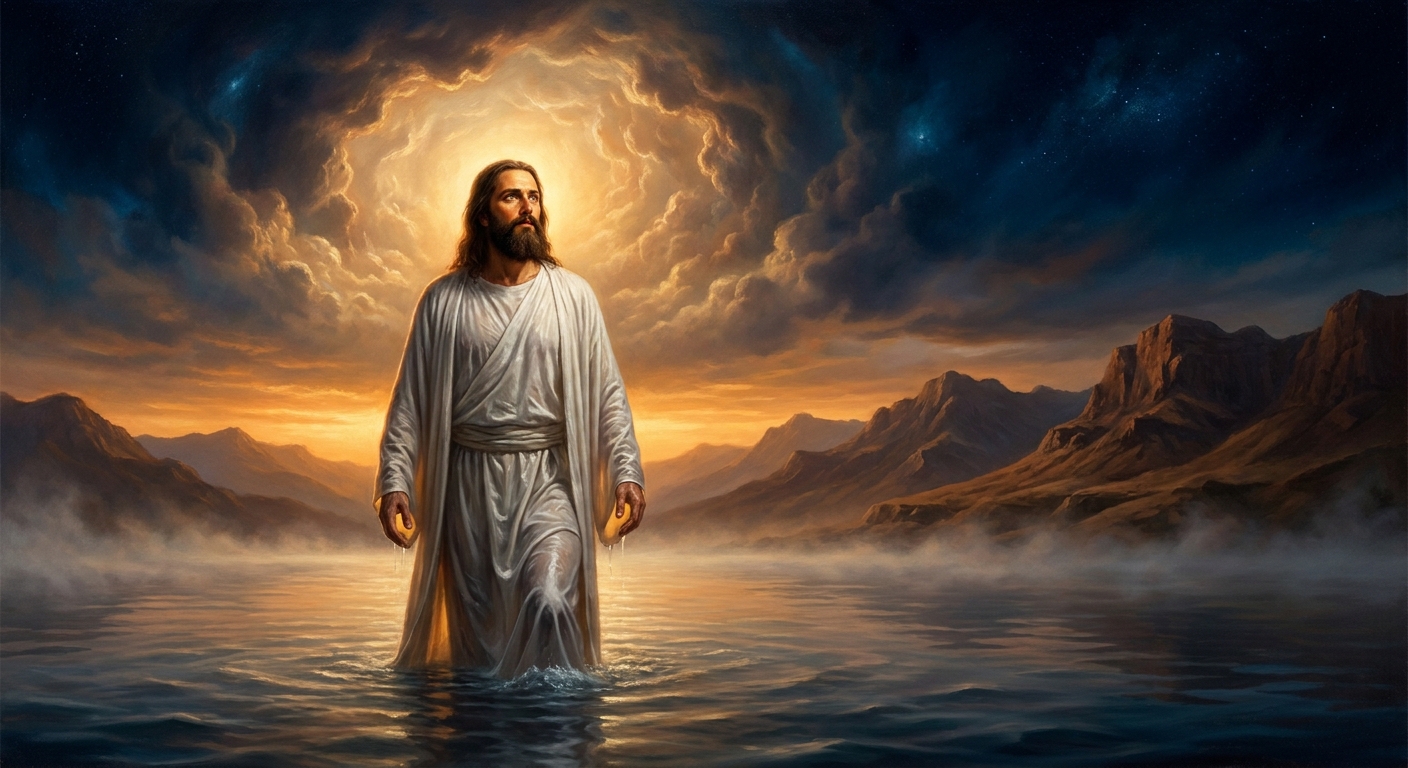
Zarathushtra at the River
A thirty-year-old priest wades into the Daitya river to draw water for the spring festival and walks back out carrying the world's first ethical monotheism.
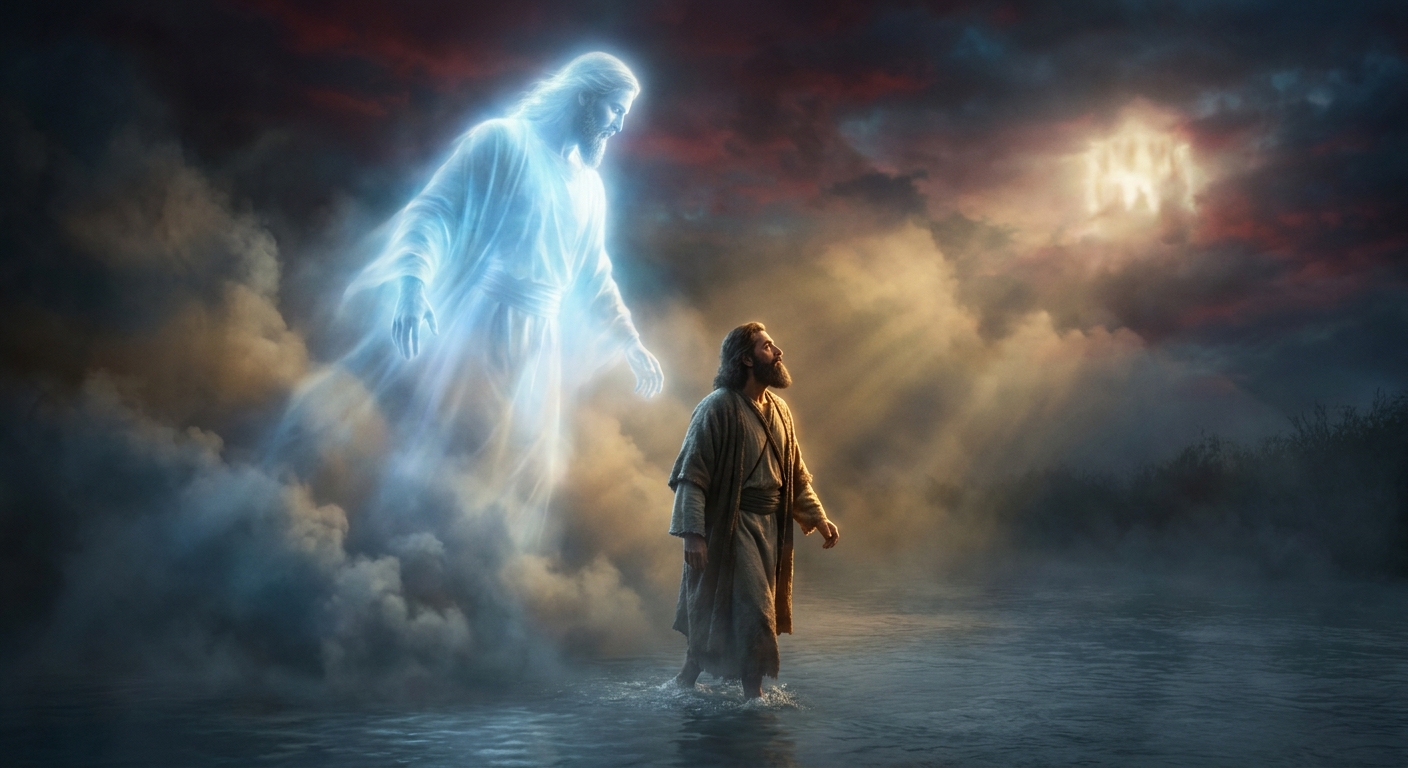
Zoroaster at the River
A priest walks to a river at dawn to draw water for a spring festival. He does not come back the same man. He comes back with a god, a devil, and the oldest ethical theology on earth.
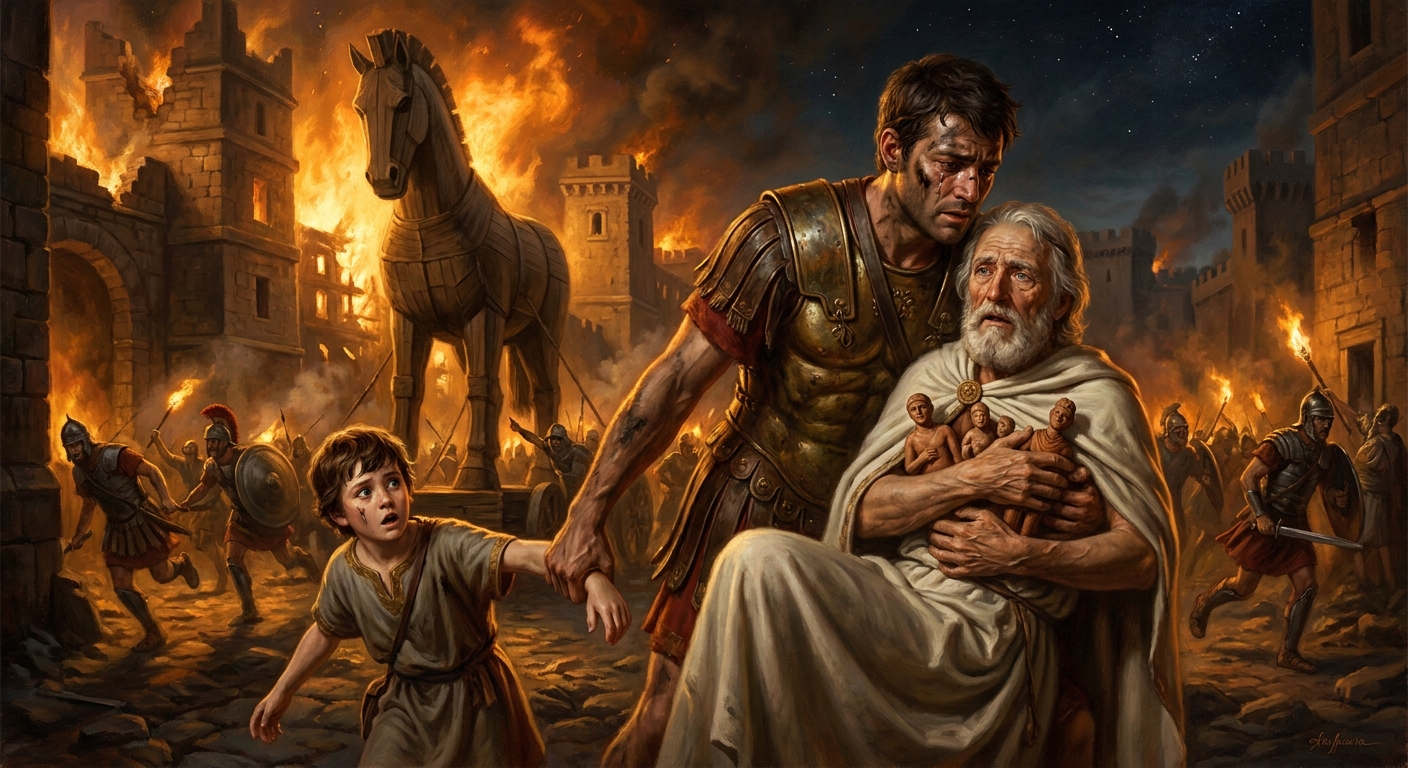
Aeneas Flees Troy
Troy is burning. The Greeks are in the streets. A Trojan prince — son of Venus — straps his aged father across his shoulders, takes his small son by the hand, and walks out of the city. His wife is lost in the smoke. The gods give him a destiny he did not ask for: Italy, and the founding of Rome.
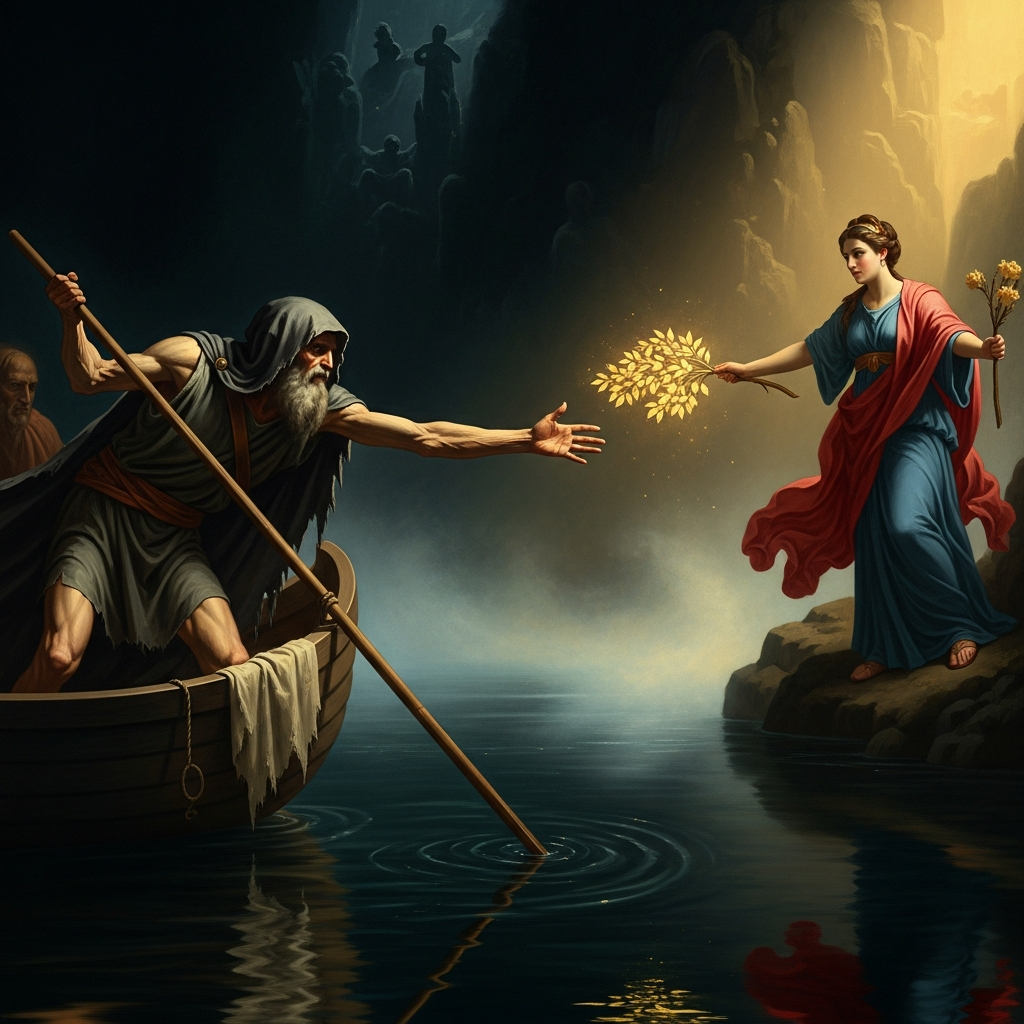
Aeneas in the Underworld
In Book VI of the Aeneid, Aeneas descends into the underworld guided by the Sibyl of Cumae. He crosses the Styx, passes through the fields of the dead, and arrives in Elysium, where his father Anchises shows him the souls of Rome's greatest men waiting to be born. This is Virgil's theology of empire: the cost of what Aeneas has built — every body left behind — is justified by the Romans those bodies will eventually produce. The question the vision raises has never been satisfactorily answered.
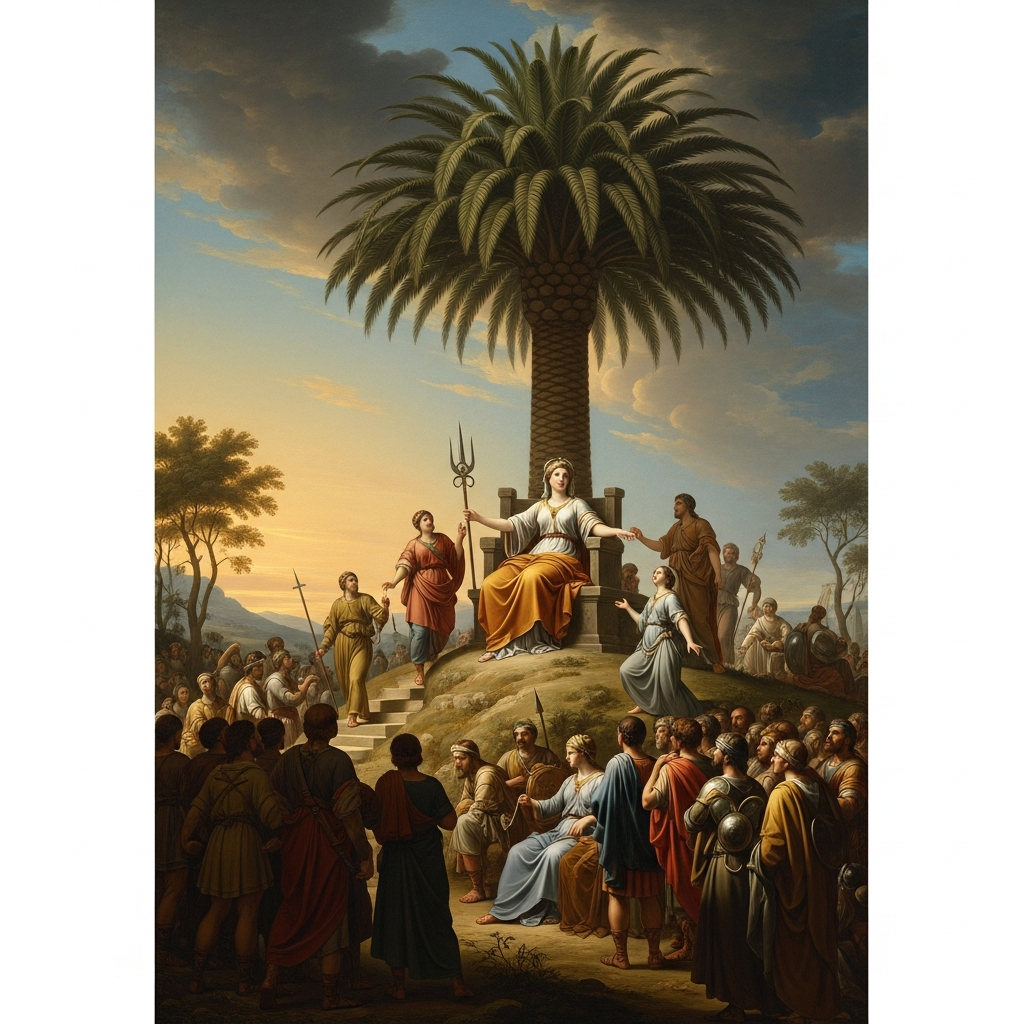
Deborah Under the Palm
A prophet named Deborah sits under a palm tree between two cities and adjudicates for all Israel. She summons a general, tells him God has ordered him to march, and when he refuses to go without her she goes — and warns him: the glory of this battle will belong to a woman. She is right. Just not the woman he expects.
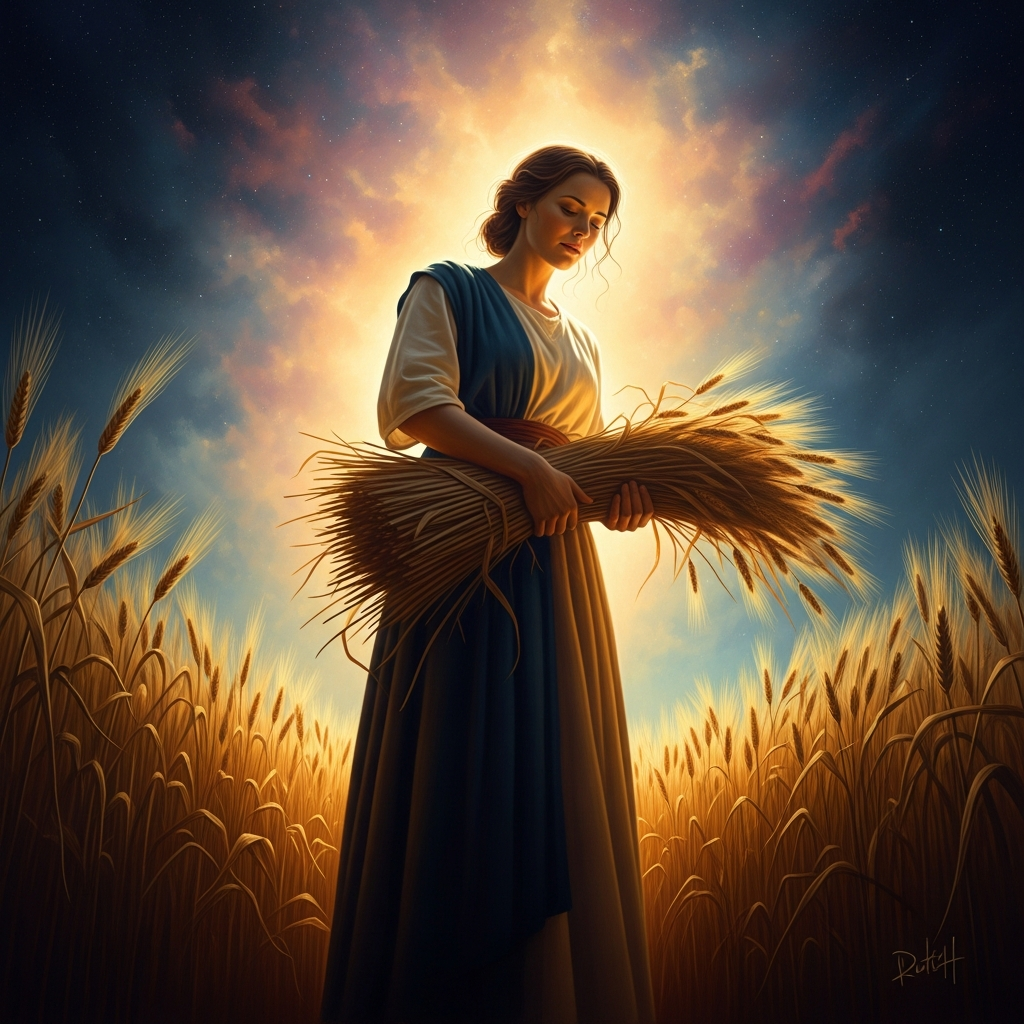
Ruth and Naomi
A widowed Moabite refuses to leave her widowed mother-in-law, follows her into a foreign country, gleans grain in the field of a kinsman she has never met, and walks into the bloodline of David and the Christ.
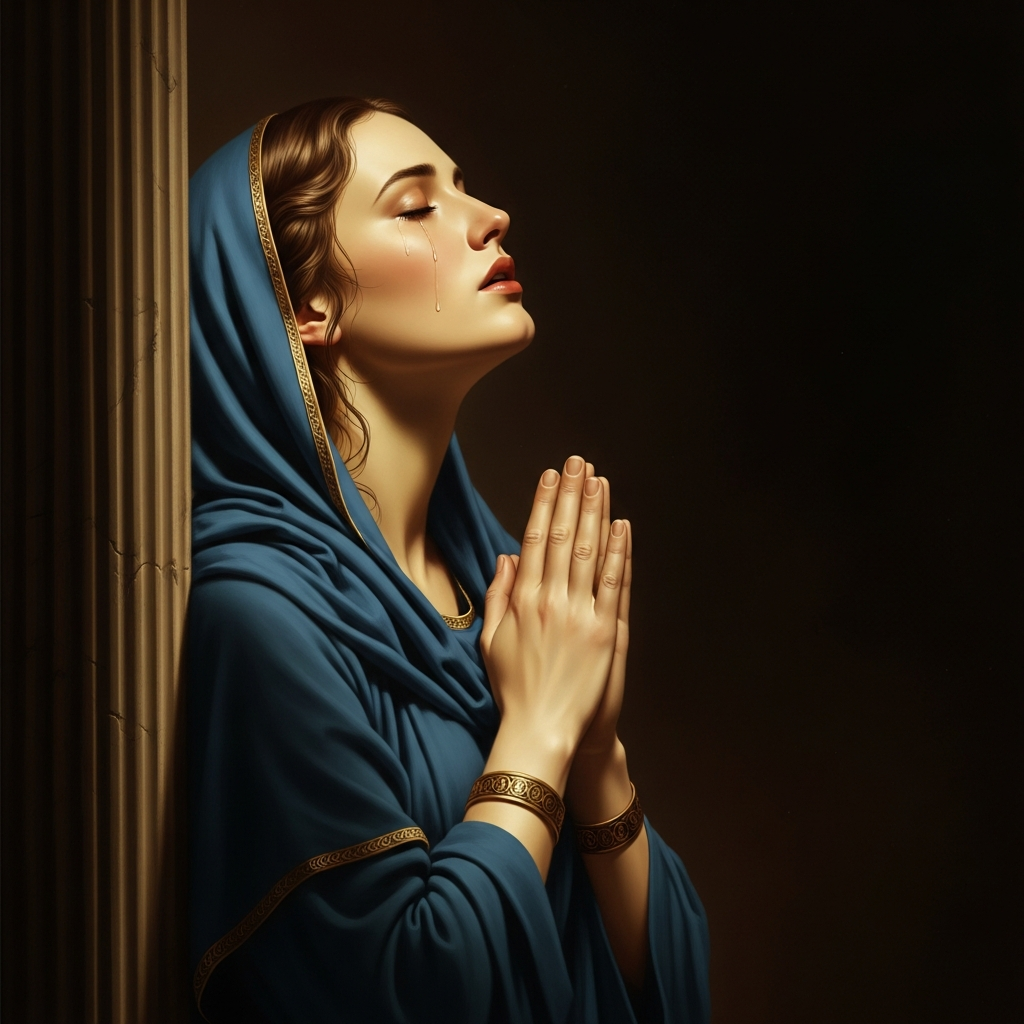
Hannah at Shiloh
Hannah is childless and mocked, year after year, by her husband's other wife. At the temple at Shiloh she prays in such silent fury that the priest thinks she is drunk. She makes a vow: give me a son and I will give him back to you. Samuel is born. She hands him to the temple at age three. Then she sings — and seven centuries later, Mary will borrow almost every word.
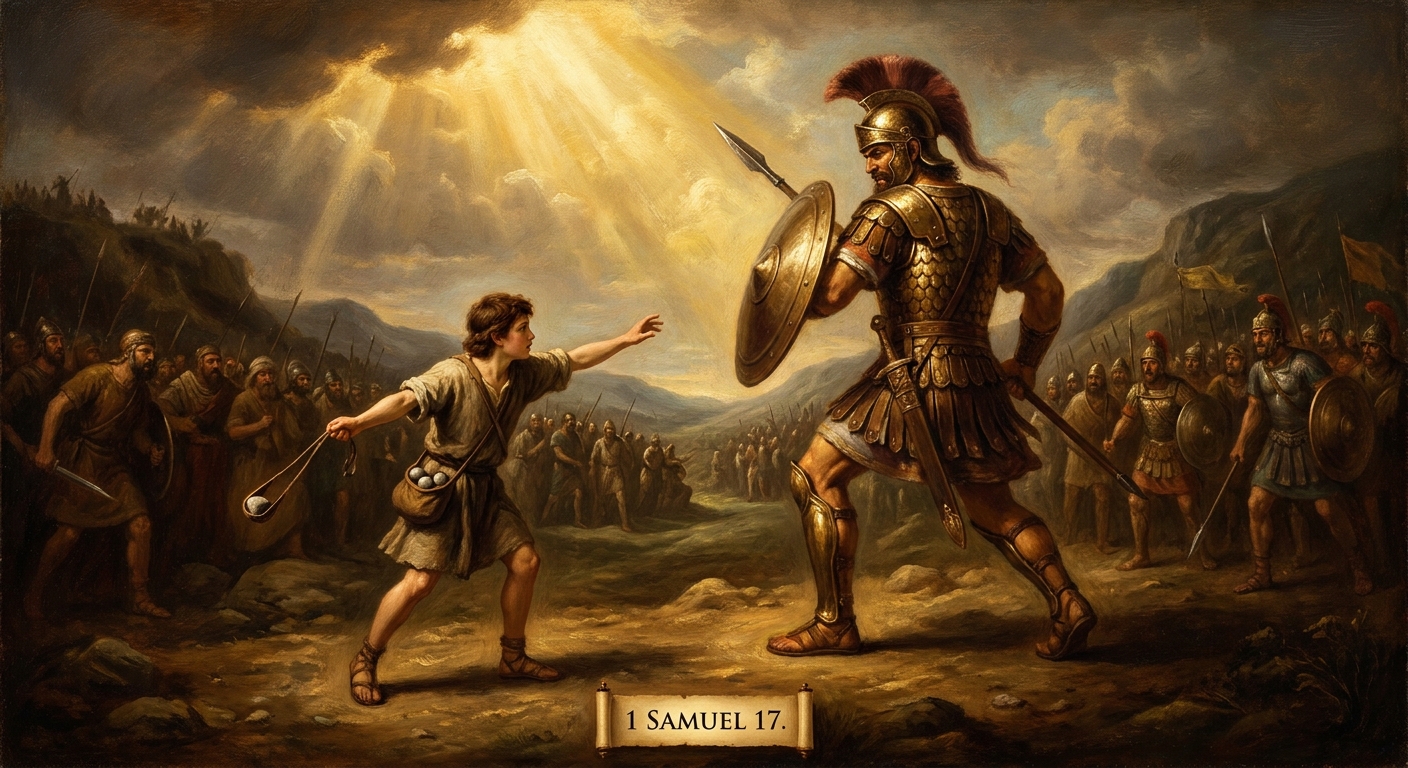
David and Goliath
A shepherd boy with five smooth stones and no fear of giants walks across the Valley of Elah and ends a forty-day standoff in under a minute.
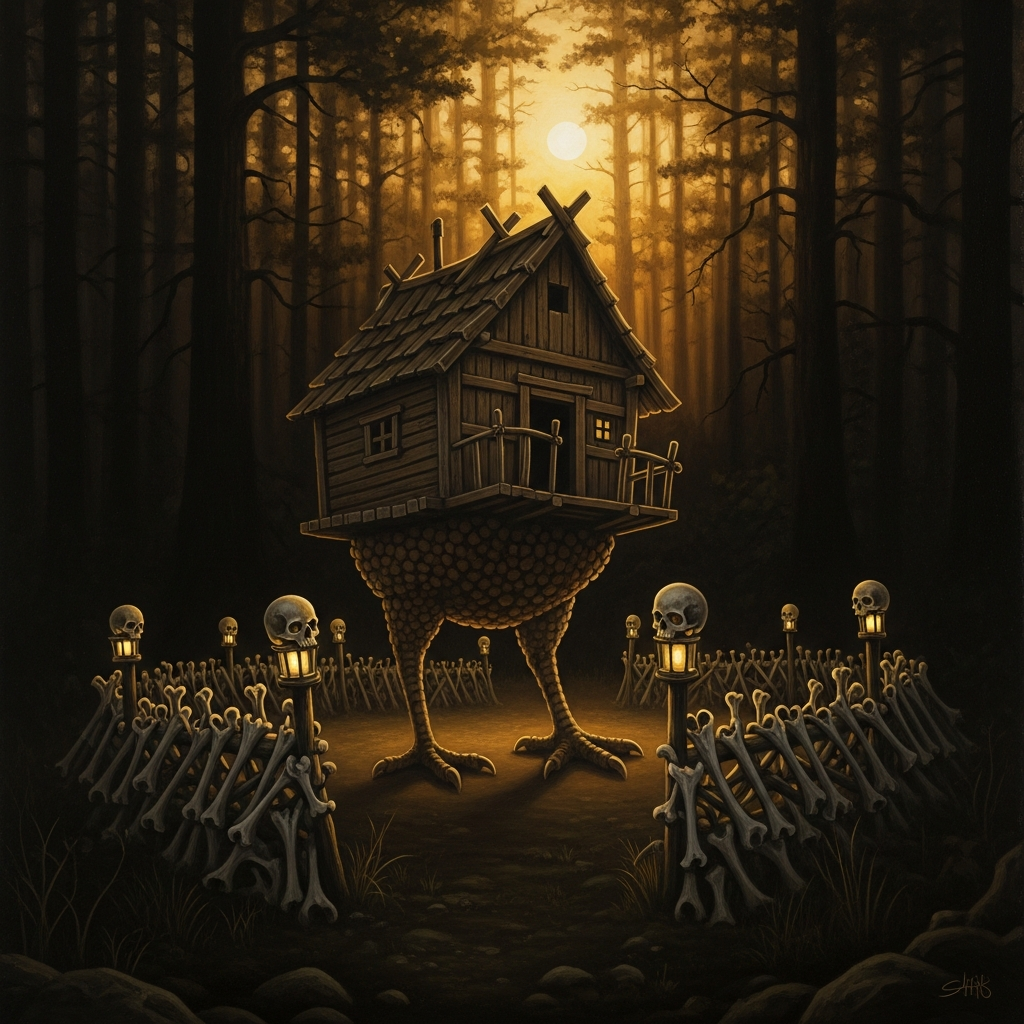
Baba Yaga Tests the Hero
At the edge of the living world and the dead, in a hut that stands on chicken legs and turns with the wind, Baba Yaga gives Vasilisa the Beautiful three impossible tasks and a skull lantern with burning eyes. What the witch cannot understand is the doll in the girl's pocket — love made material, a dead mother's warmth against the cold of the forest.
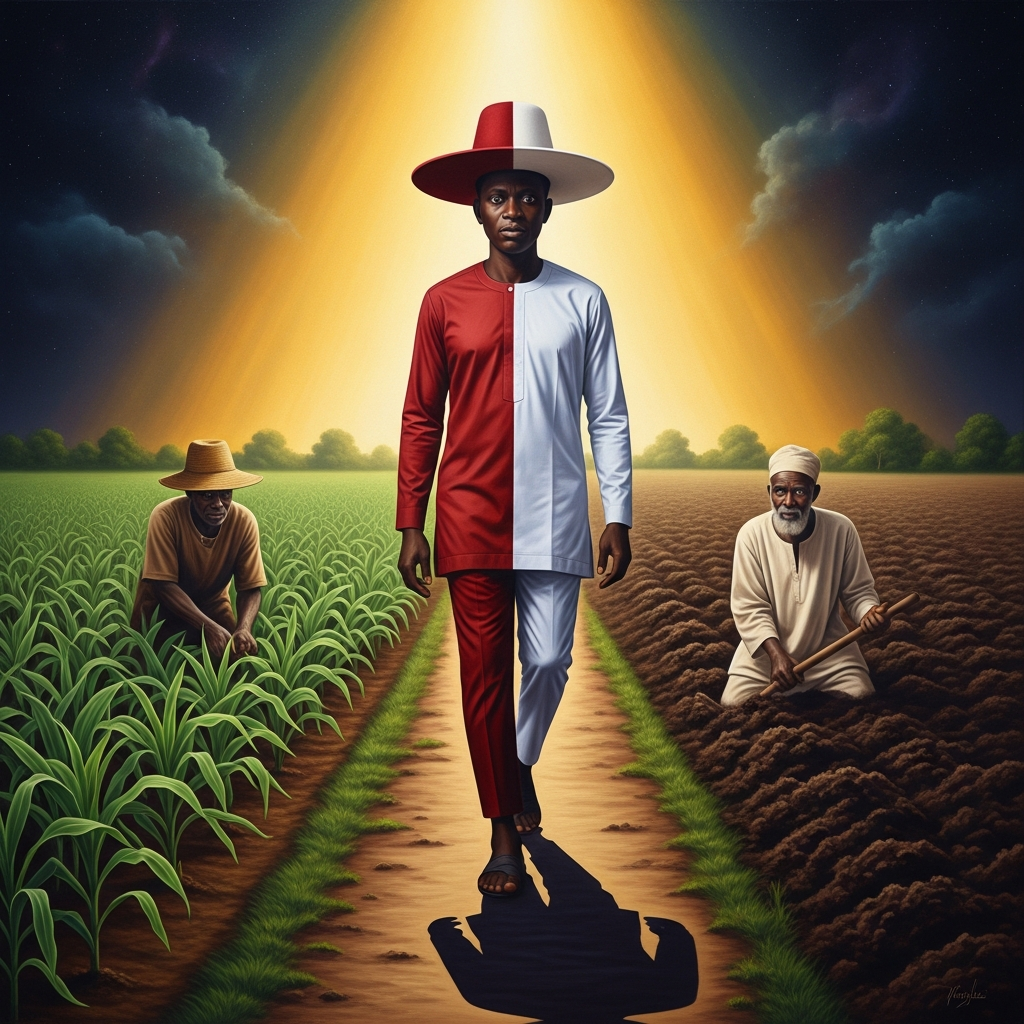
Eshu at the Crossroads
Two lifelong friends farm side by side. Eshu walks between their fields in a hat that is red on one side and white on the other. They see different colors. They come to blows.
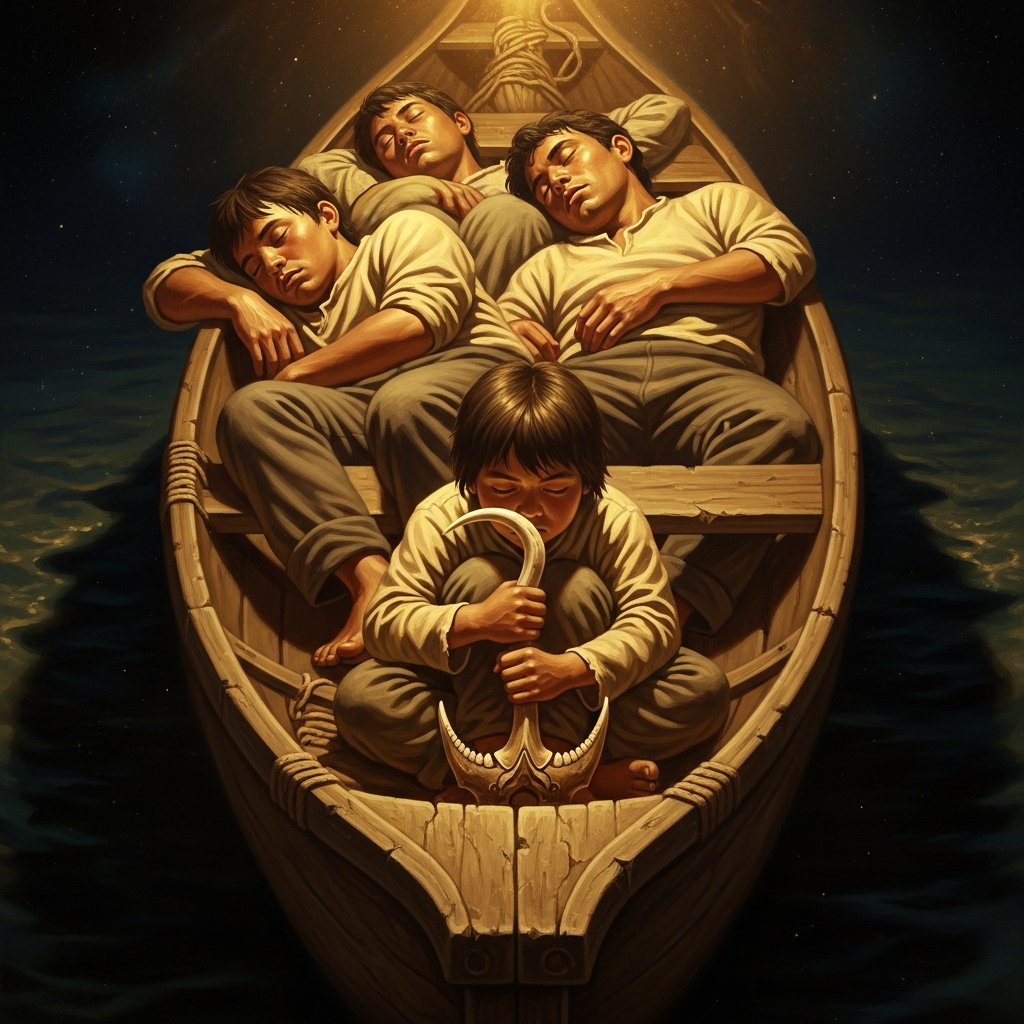
Māui Pulls Up the World
The youngest brother hides in the canoe they don't want him on, baits his grandmother's jawbone hook with his own blood, and drags a living island screaming out of the deep — then watches his jealous brothers hack it apart before the prayers can be said.
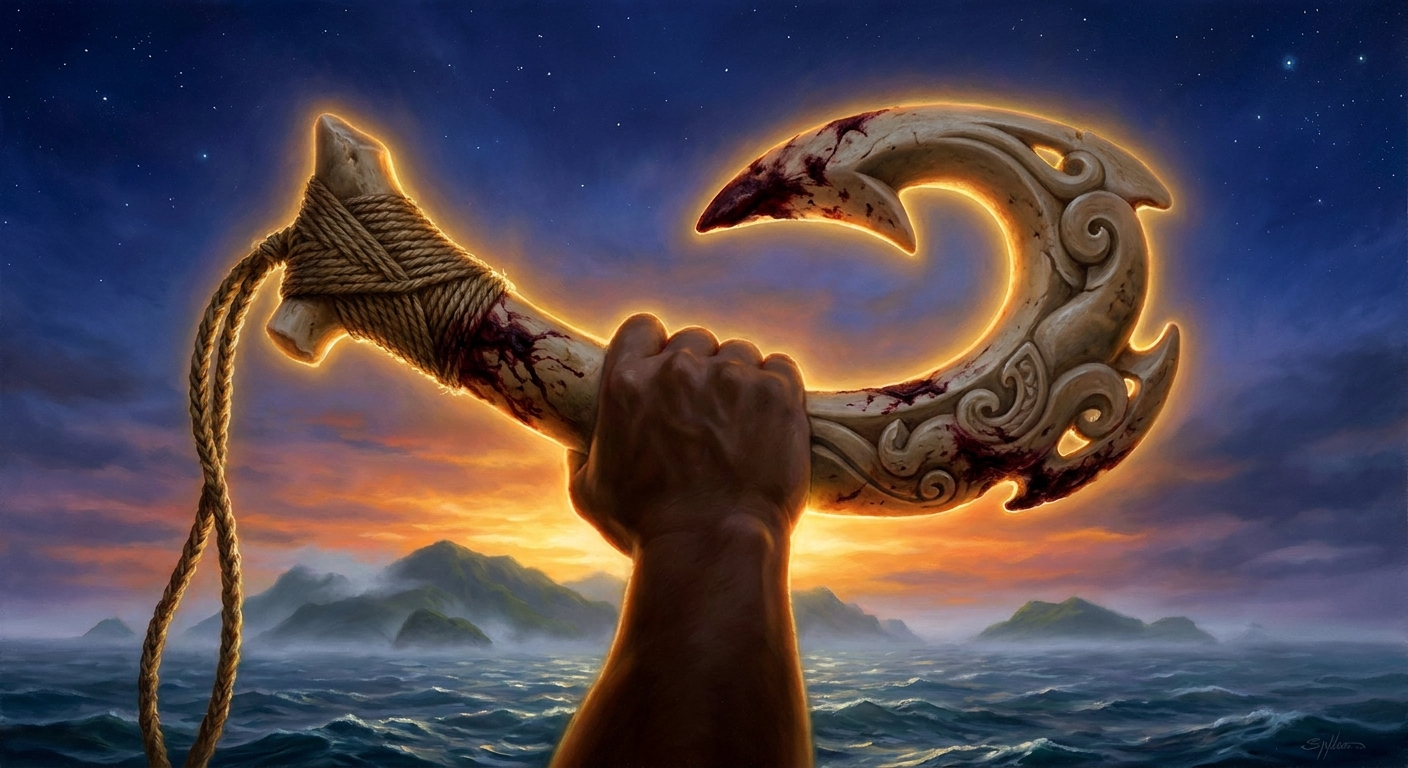
Māui Fishes Up the Islands
The trickster demigod baits a hook with his own blood, sinks it past the floor of the Pacific, and pulls — and the islands come up screaming, dragged into the sun against their will.
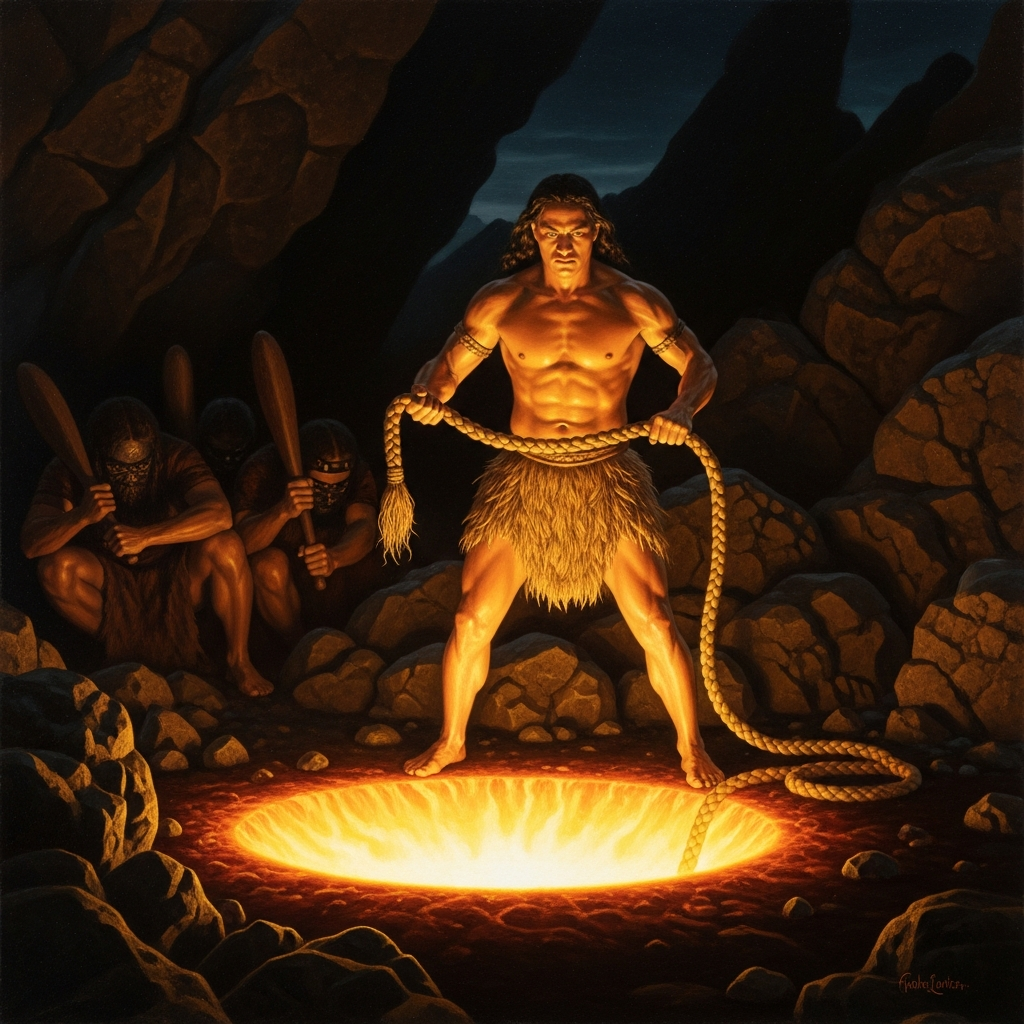
Māui Lassoes the Sun
The days are too short. Food goes uncooked, cloth unwashed, work unfinished. Māui weaves a rope from his sister's hair, walks to the edge of the world, and beats the sun into a slower agreement.
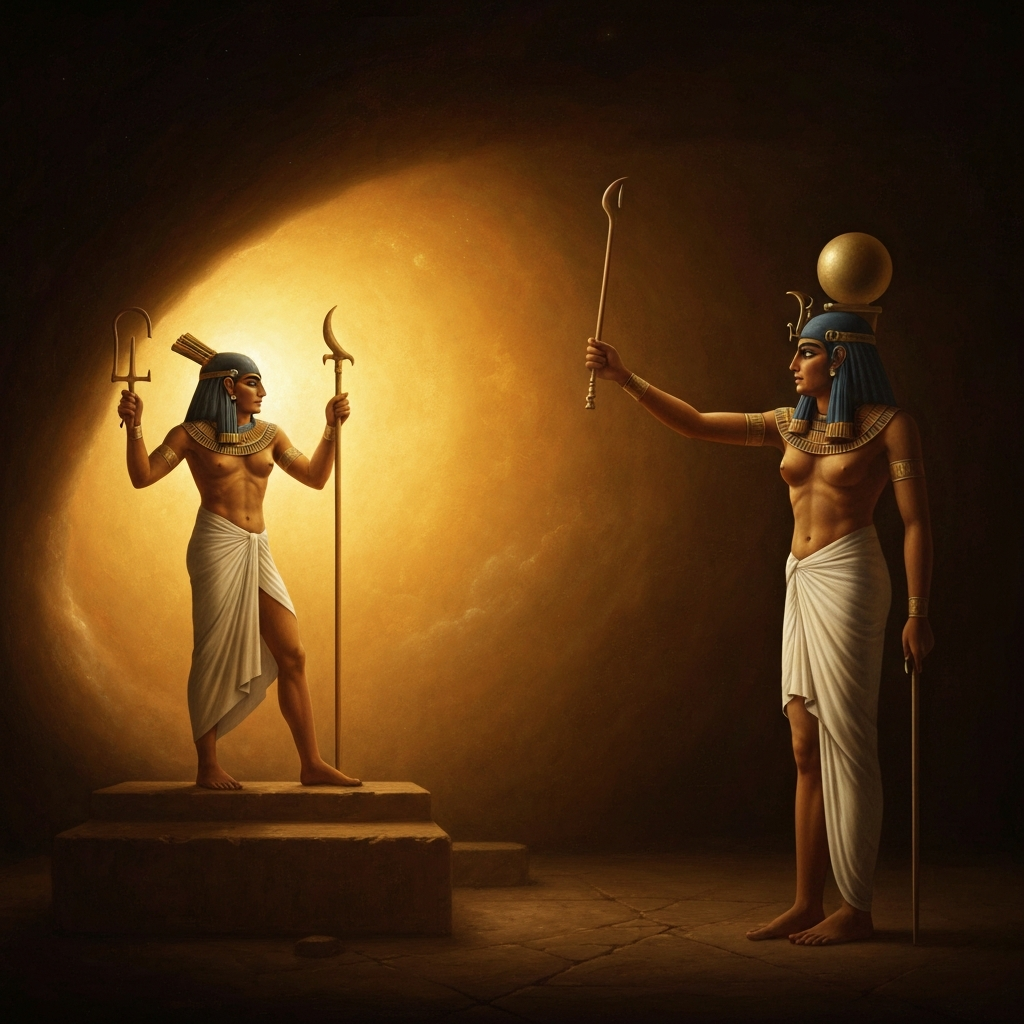
Nergal's Second Descent
The god Nergal is sent to the underworld to apologize for a protocol violation, sleeps with the queen of the dead for six days, and flees back to heaven. Ereshkigal sends an ultimatum: return him or the dead will outnumber the living. He is dragged back down, seizes her by the hair, and is offered the throne and her body. He accepts both. This is how the god of plague and war came to rule the dead.
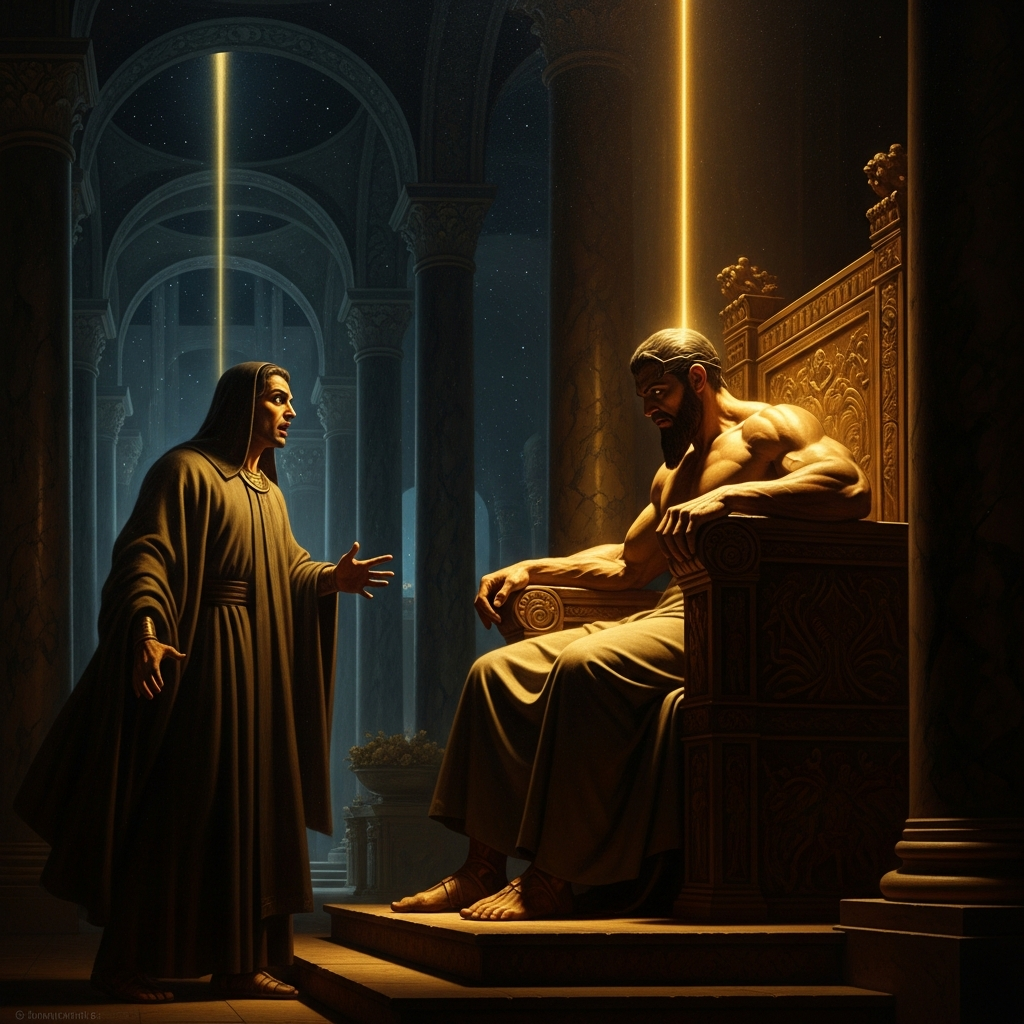
Nergal and Ereshkigal
The god Nergal violates the protocols of the underworld, flees back to heaven, and is summoned back by Ereshkigal's ultimatum. He descends again, seizes her by the hair, kisses her. She laughs. He becomes king of the underworld beside her.
Quetzalcoatl Looks in the Mirror and Leaves Tula
The dark sorcerer Tezcatlipoca tricks the priest-king Quetzalcoatl with a smoking mirror — he sees himself as an old man, drinks pulque in his shame, breaks his sacred vows, and burns his jade palace. He walks to the sea, sets himself on fire, and becomes the planet Venus.
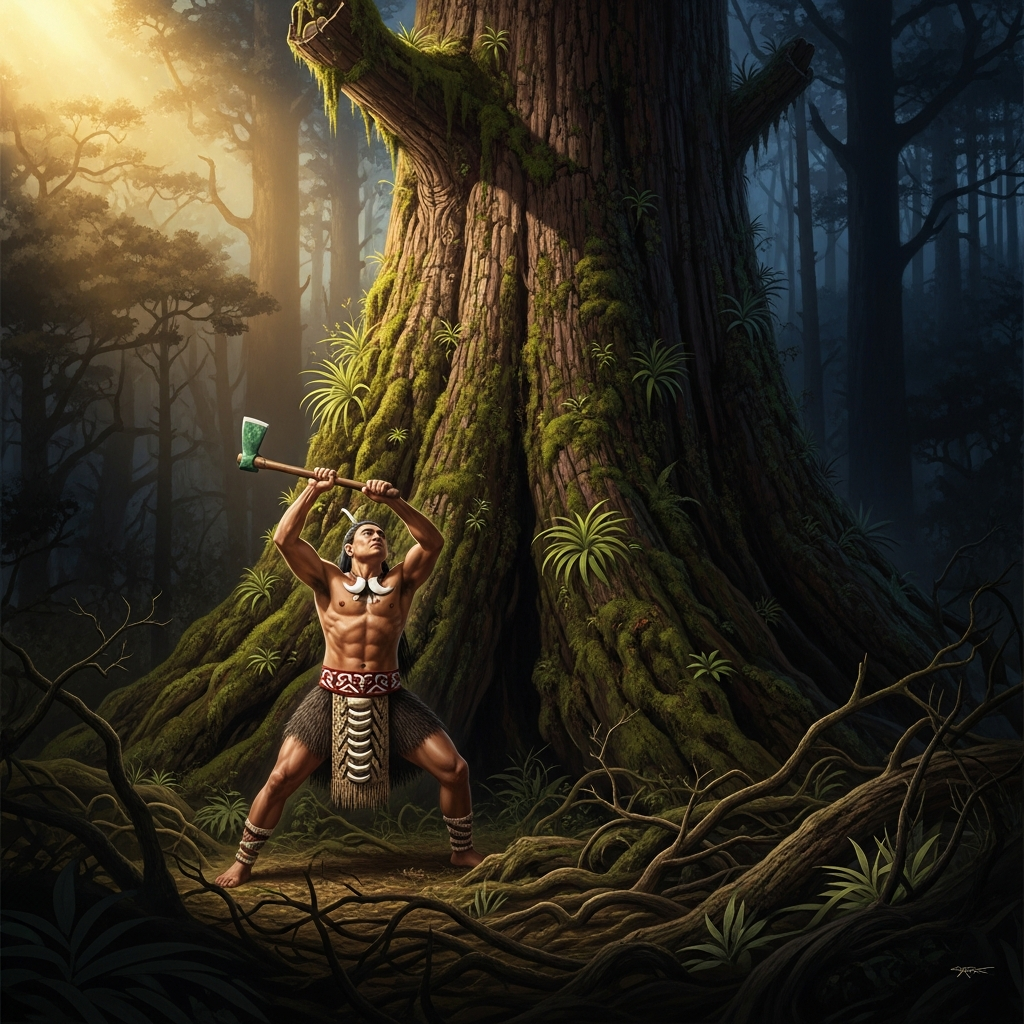
Rata and the Canoe That Would Not Stay Cut
Rata wants a canoe to avenge his father's death. He chops down a great tree. He returns to find it standing again — rebuilt overnight by the children of Tāne. On the third night he hides, watches, confronts them, and learns that the world requires a relationship, not just a will.
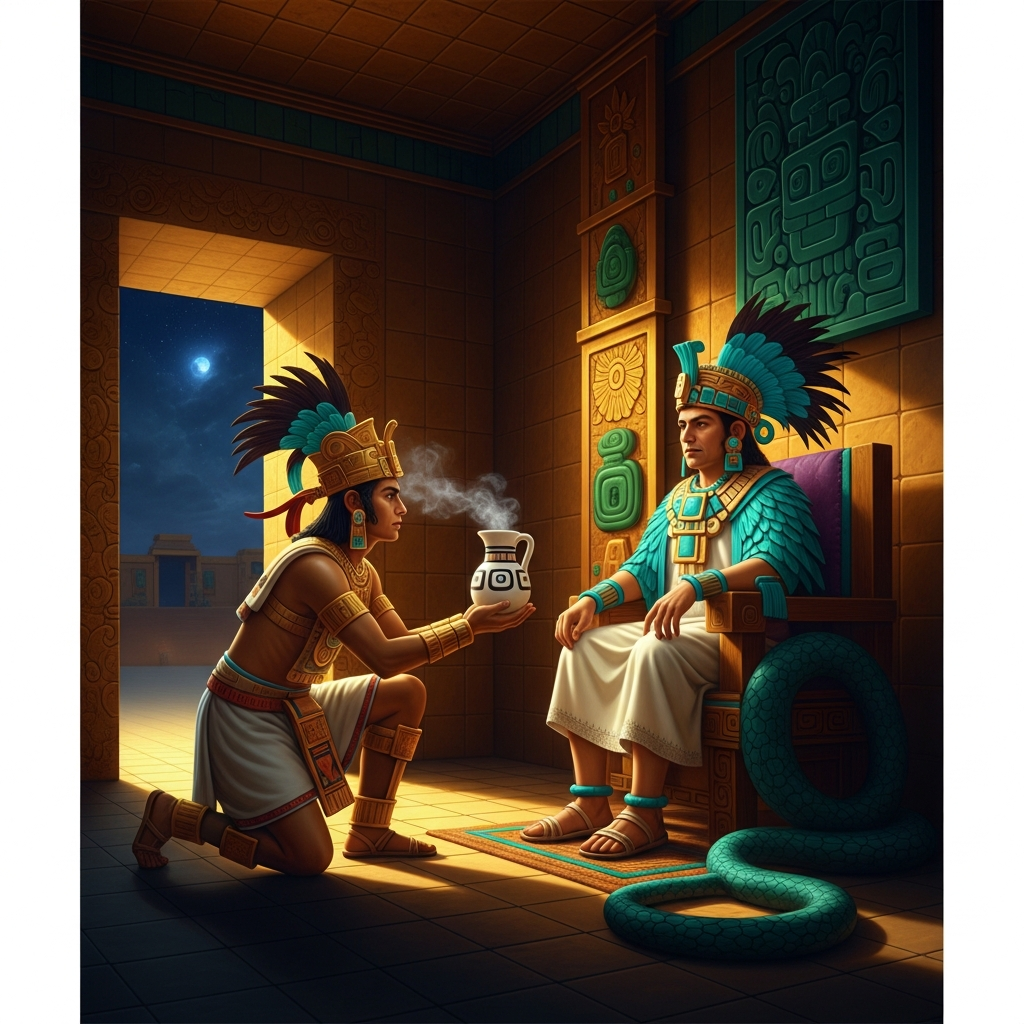
Quetzalcoatl Walks Into the Sea
Quetzalcoatl, the Feathered Serpent and priest-king of Tula, is tricked by Tezcatlipoca into drunkenness and incest. Disgraced, he burns his houses of gold and jade, buries his treasures, and walks east with a procession of weeping servants. At the shore of the Gulf of Mexico, he builds a raft of serpents and sails into the dawn. He promises to return from the east in the year One Reed. Hernán Cortés arrived in 1519 — which was One Reed.

The Sword and the Living Child
Two prostitutes claim the same infant. The young king of Israel calls for a sword and orders the child cut in half. The mother who flinches is the mother who keeps him.
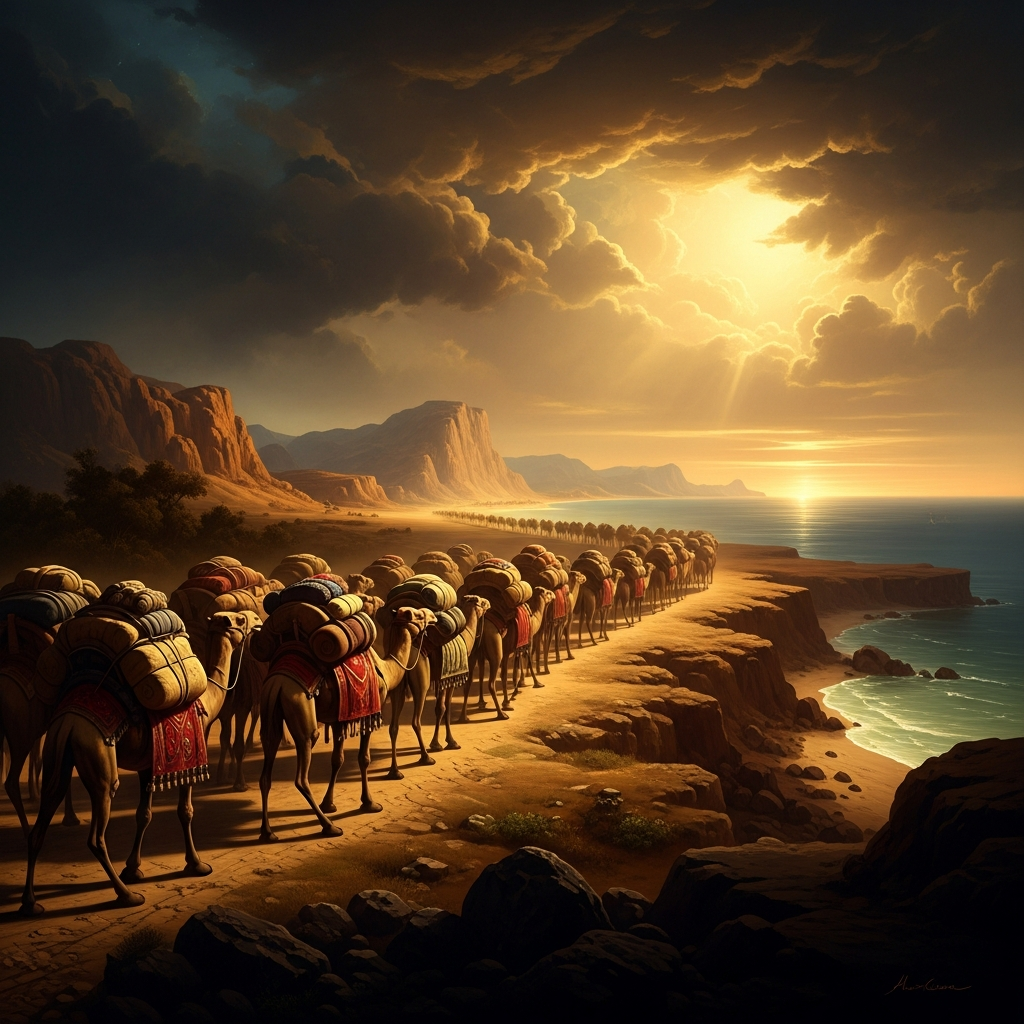
The Queen of Sheba and the Seed of Solomon
Makeda comes from Aksum to test Solomon's wisdom and stays a year. On her last night he serves spiced meat and salt and asks for a single promise. She makes it. She wakes thirsty in the dark, reaches for water — and Solomon is waiting.
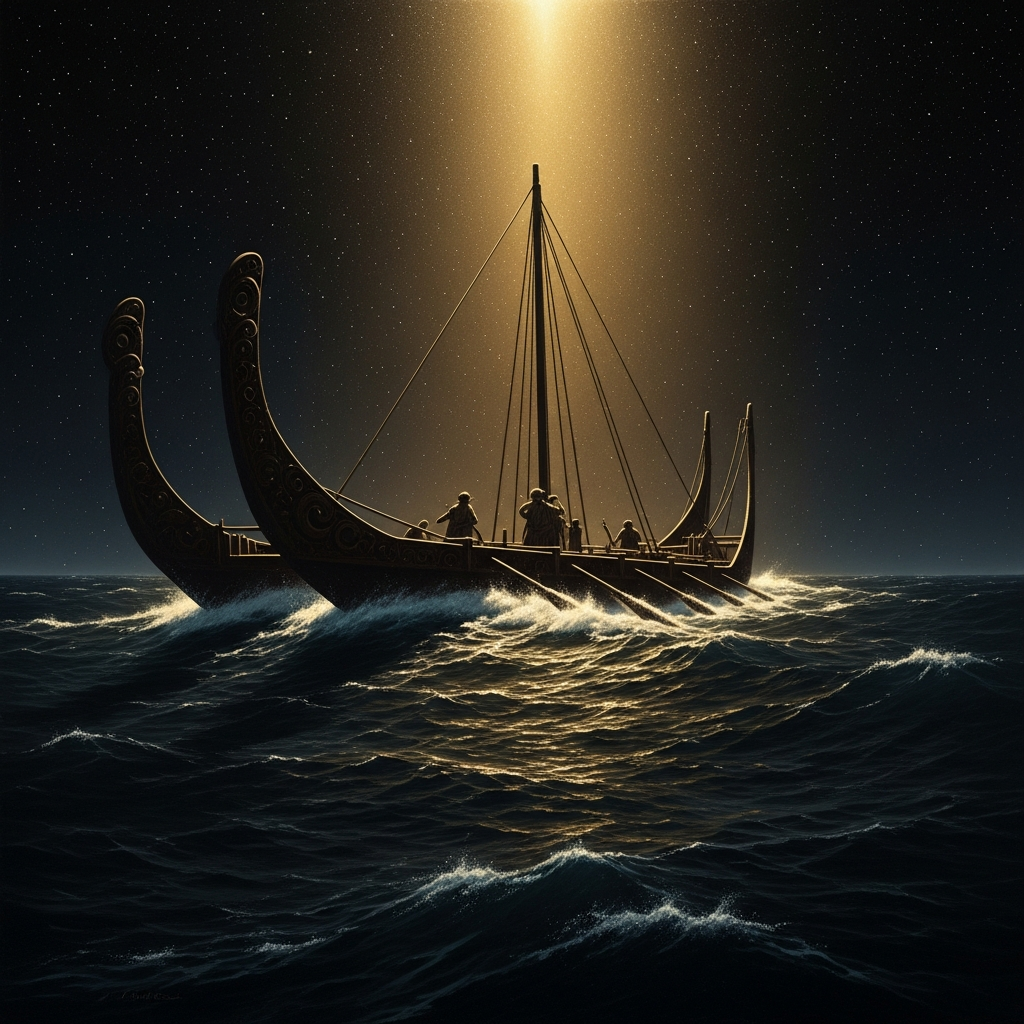
Kupe Voyages to Aotearoa
Kupe, the great navigator of Hawaiki, follows a colossal octopus called Te Wheke-a-Muturangi across the open Pacific — the octopus has been stealing bait from his fishing grounds. He pursues it for weeks across featureless ocean, using stars and swells and the flight of birds, until he finds it in a channel between two great islands. He kills it, names the land, and turns back. He never returns. His people wait nine hundred years.
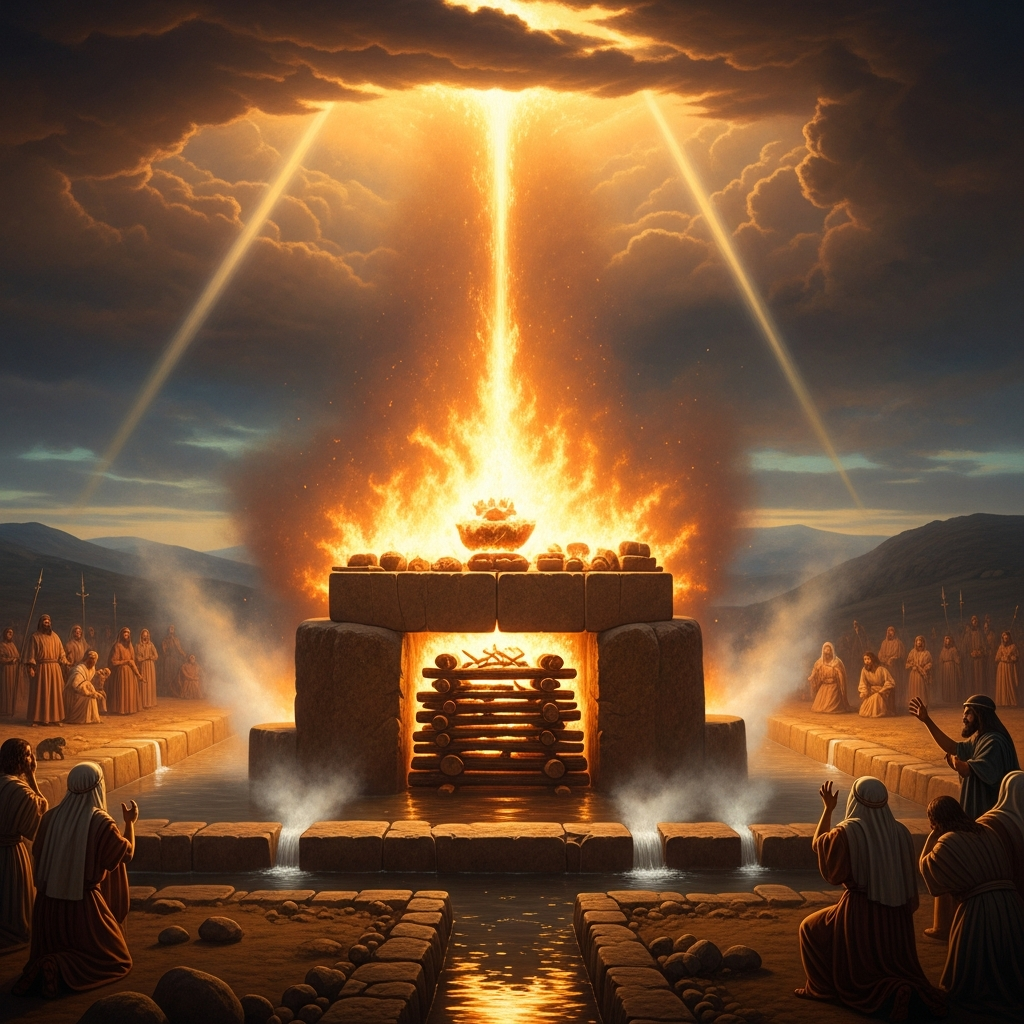
Fire on Carmel
The confrontation on Mount Carmel: 450 prophets of Baal, one prophet of YHWH, two bulls, and the question of which deity sends fire. The historical context is a political collision between Canaanite and Israelite religious practice under Ahab and Jezebel. Elijah mocks. The silence that follows is total. Then fire falls, and after it, a still small voice in a cave.
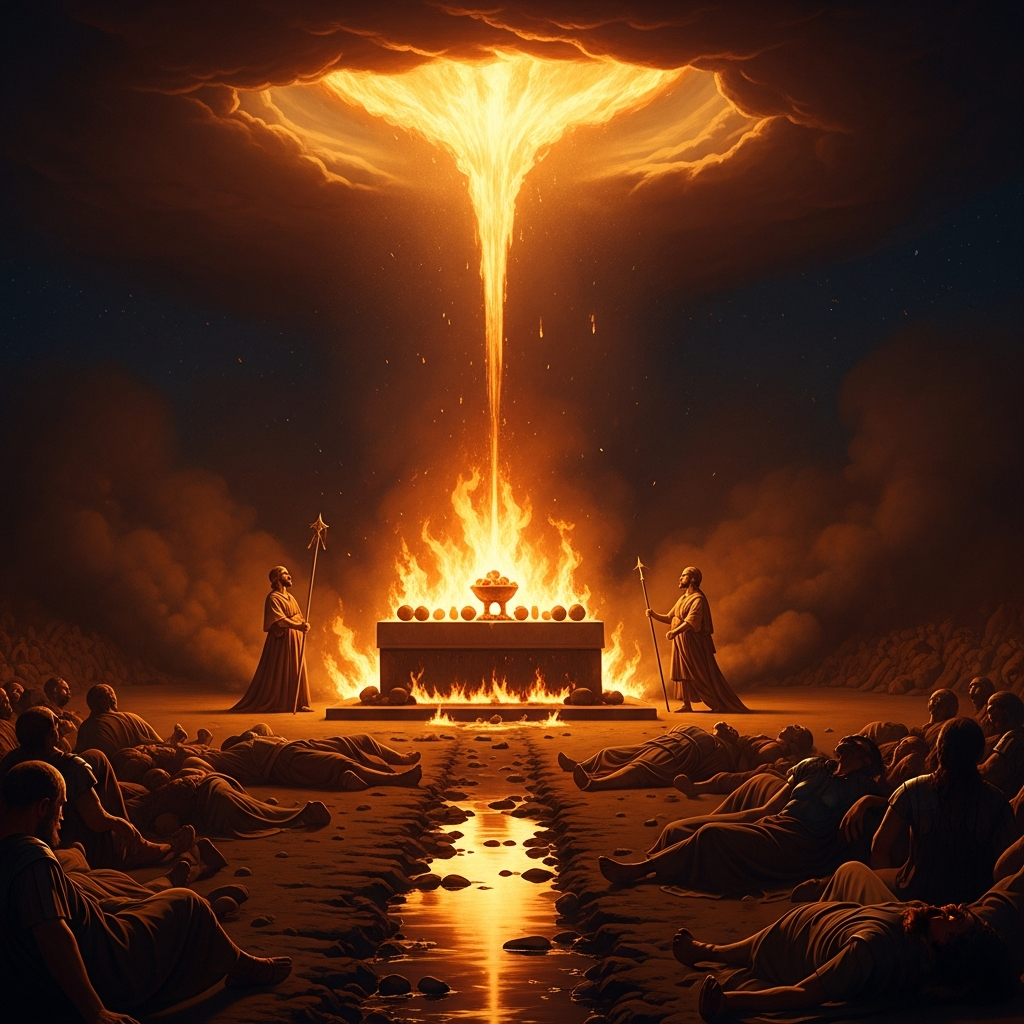
The Contest on Mount Carmel
The prophet Elijah challenges 450 prophets of Baal to a contest of fire on the ridge above the sea. They cry from dawn to noon. He mocks them. They cut themselves. Nothing answers. Then Elijah soaks his altar with twelve jars of water, prays forty words, and fire falls from heaven and eats the stones.
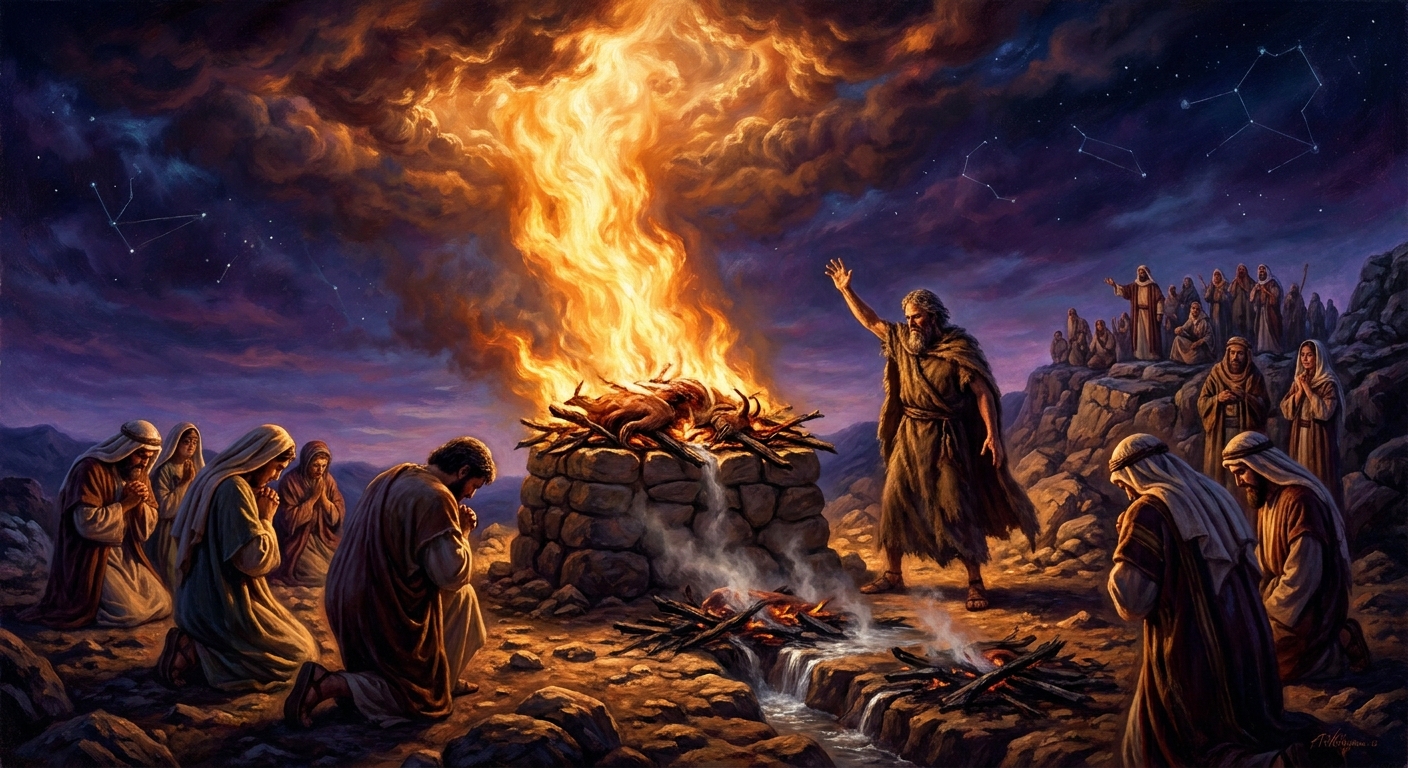
Elijah on Mount Carmel
Three years of drought, four hundred and fifty prophets of Baal, two altars soaked in blood and water — and then a fire that eats stone. Then, after all of it, a still small voice in a cave.
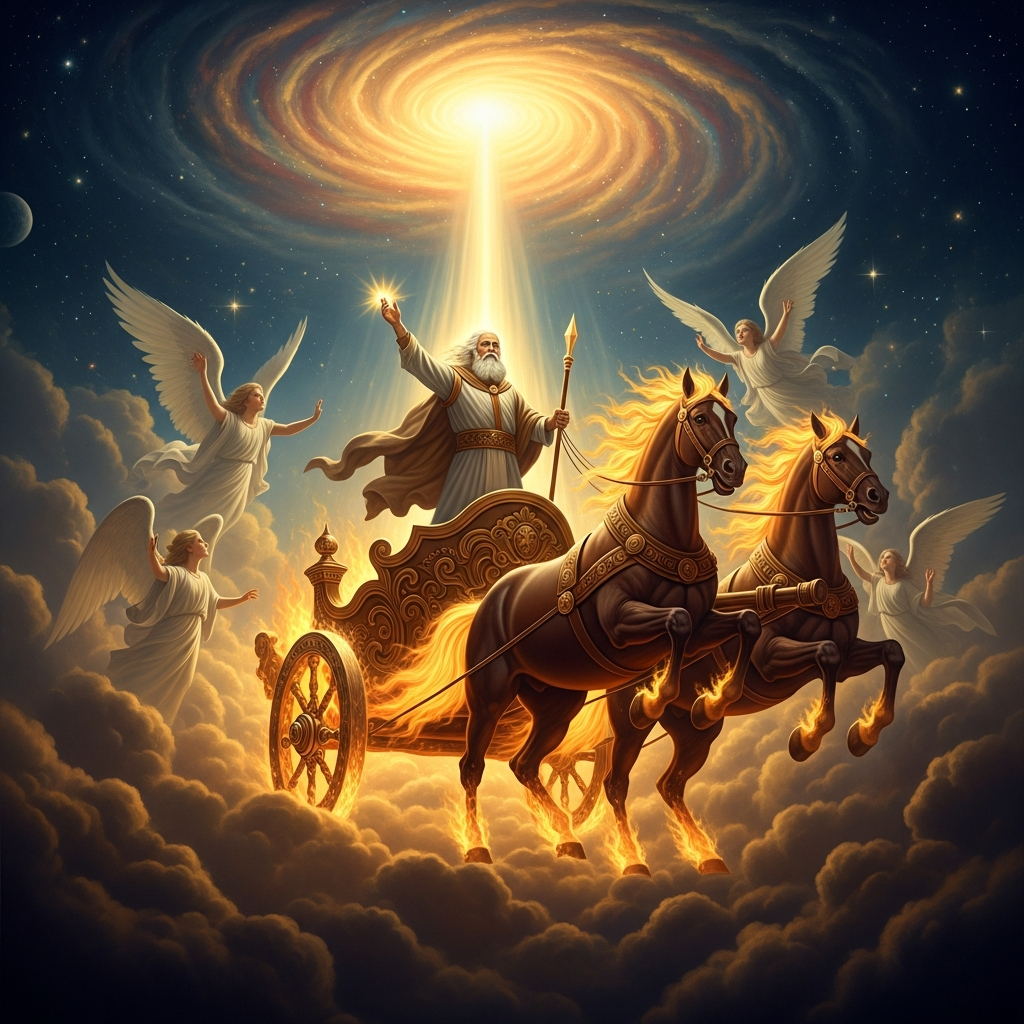
Elijah and the Chariot of Fire
The old prophet walks to the Jordan with his disciple, strikes the water with his cloak, crosses on dry ground, and is taken up alive in a whirlwind by a chariot of fire — the only prophet in the Hebrew Bible who never dies.
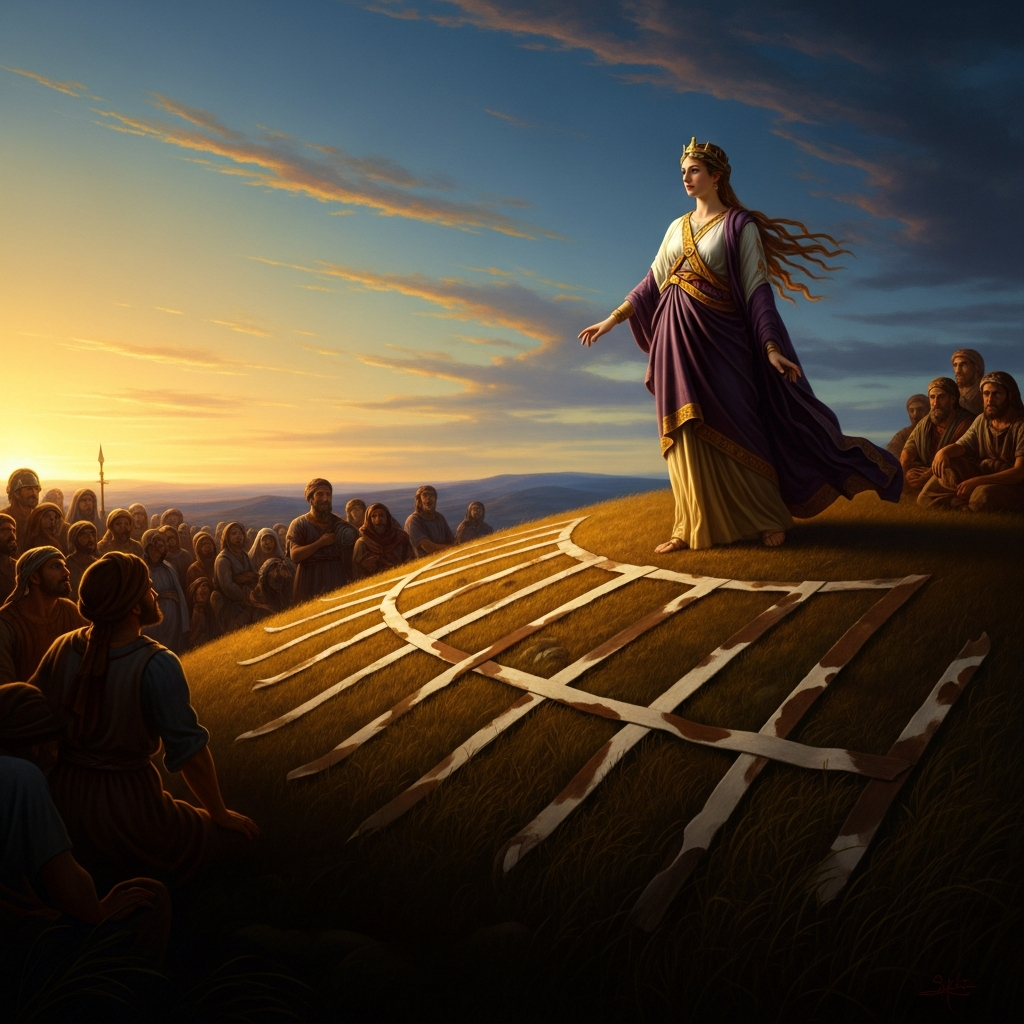
Dido and the Founding of Carthage
Dido flees the murder of her husband, crosses the sea, and founds a city on the North African coast by a trick so brilliant it is also an act of genius — cutting an ox hide into strips thin enough to encircle a hilltop. Then Aeneas arrives and ruins her. The story Rome told about the city it destroyed: that it was built by a woman of impossible resourcefulness, and that it burned for love of a Roman.
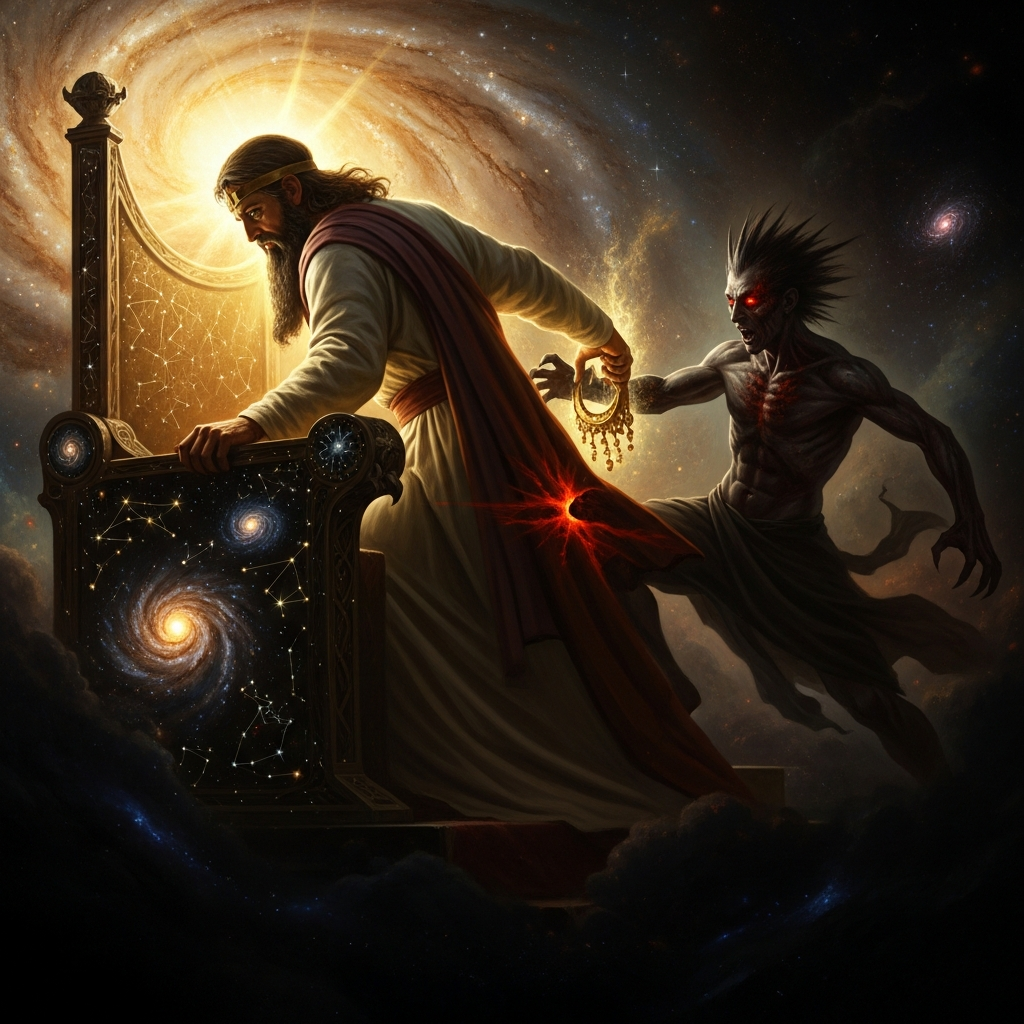
The God of Necessary Violence: Erra Unmoors
When Marduk leaves his throne to repair his own divine regalia, Erra — the god of plague and war — takes the empty seat and unleashes chaos on Babylon. His vizier Ishum, the fire of civilization, tries to pull him back. Nothing is resolved. The plague stops because Erra is flattered, not because justice prevails.
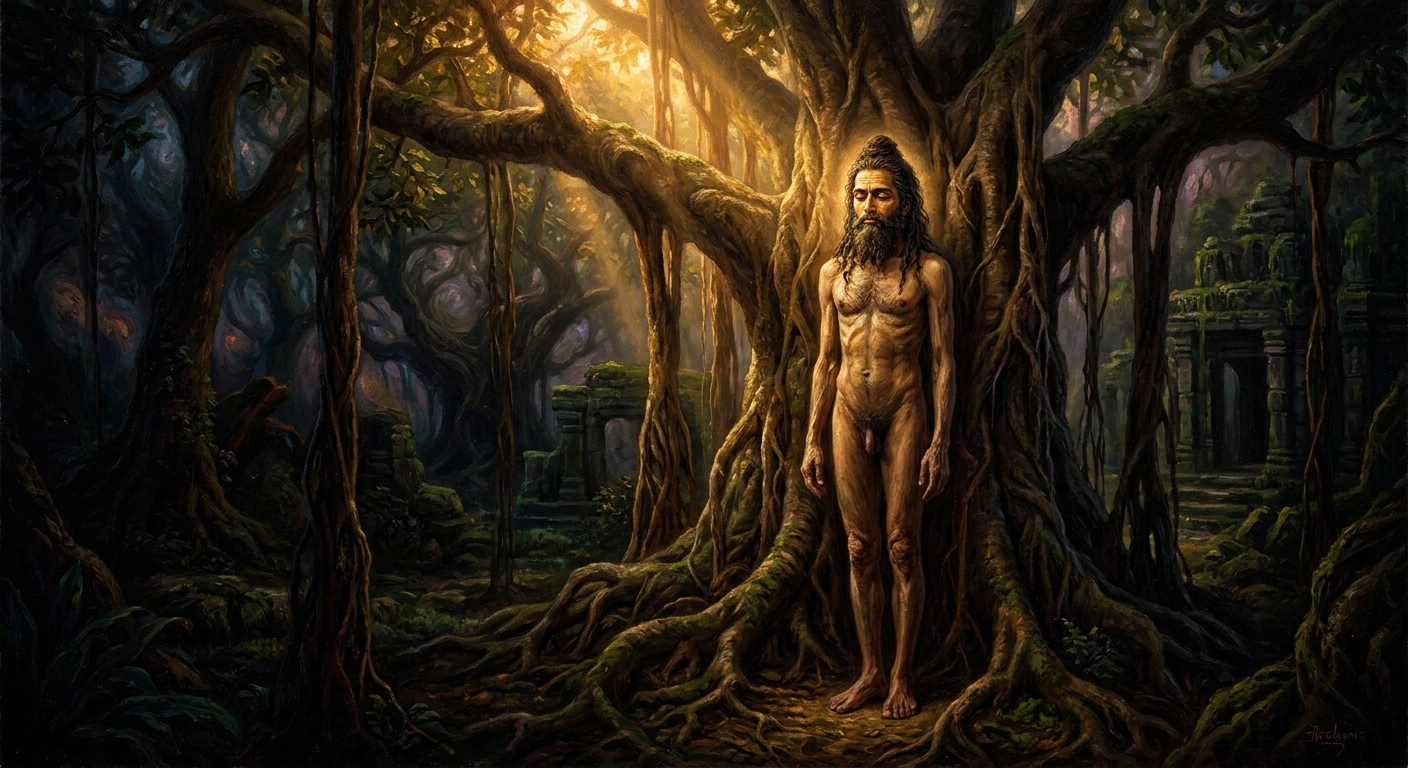
Parshvanatha and the Serpent King
An ascetic stands motionless beneath a forest tree as a monsoon breaks; the serpent-king and his queen rise from the earth and shield him with their hooded canopies.
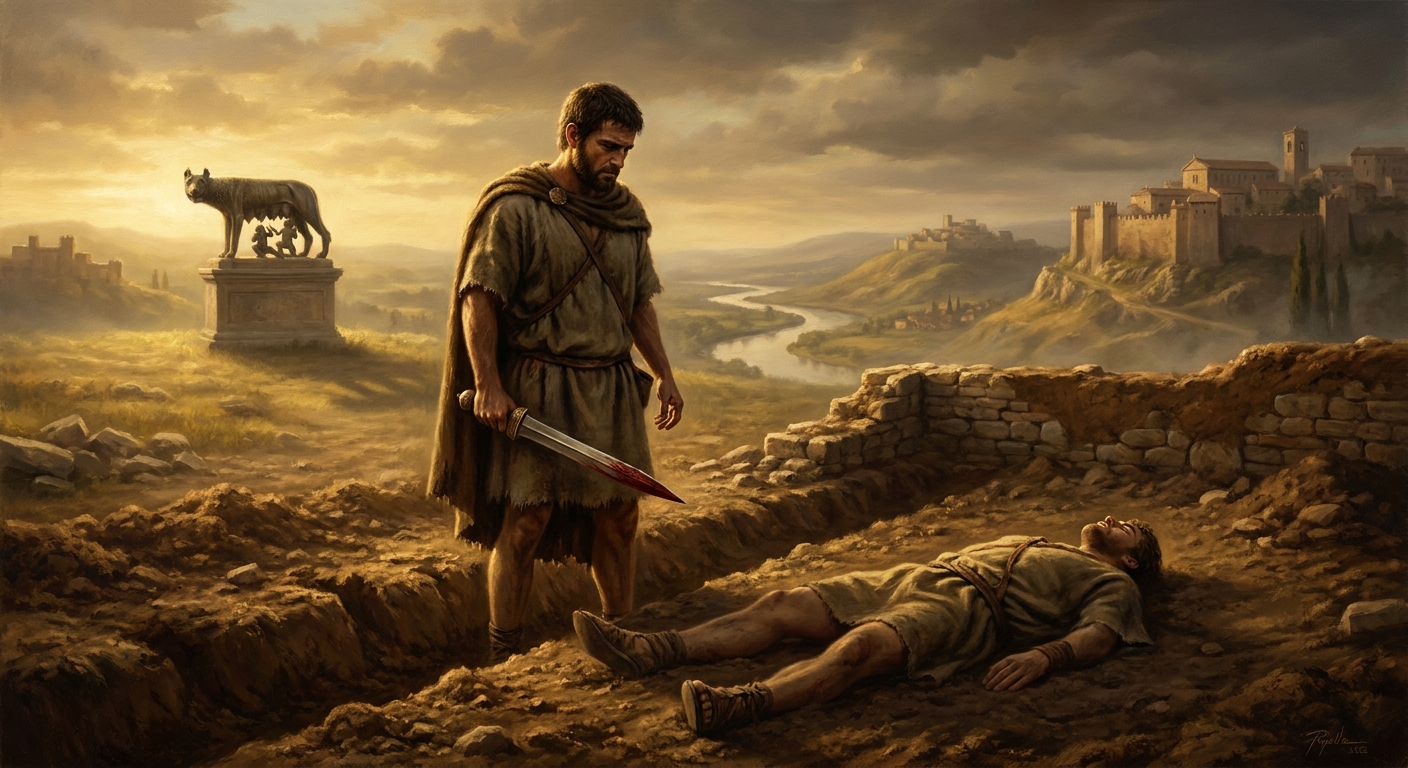
Romulus and the Furrow
Twin sons of Mars, suckled by a wolf, argue over where to build a city. They read birds. Romulus sees twelve vultures, Remus sees six. Romulus ploughs the sacred boundary. Remus leaps over it. Romulus kills him. Rome begins.
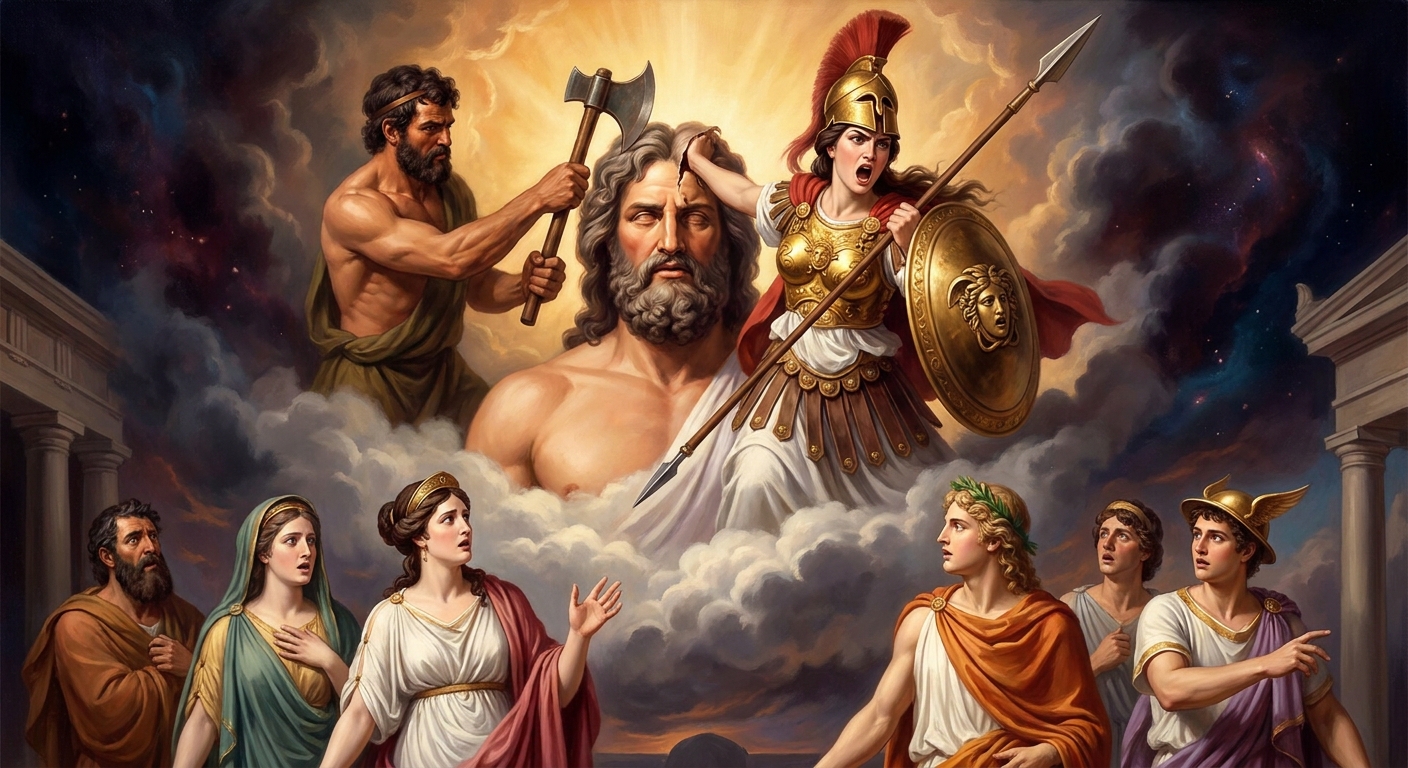
Athena from the Skull
Zeus swallows the goddess Metis whole to forestall a prophecy, then suffers the headache of the cosmos — until an axe-blow opens his skull and Athena erupts fully grown, fully armed, never a child, never born of a mother.
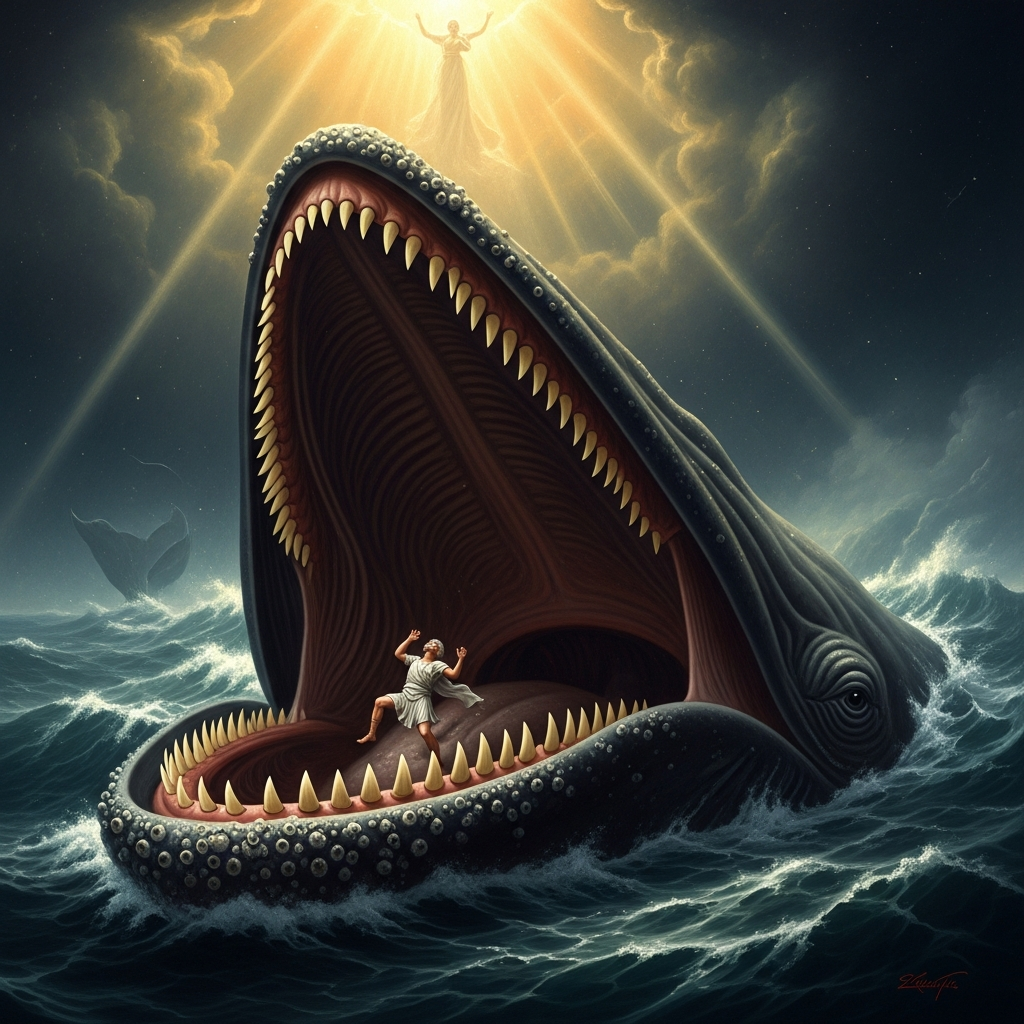
Jonah in the Belly
A prophet runs the wrong direction, gets thrown overboard, lives three days inside a great fish, preaches to the city he hates, and then sulks under a vine because God forgave it.
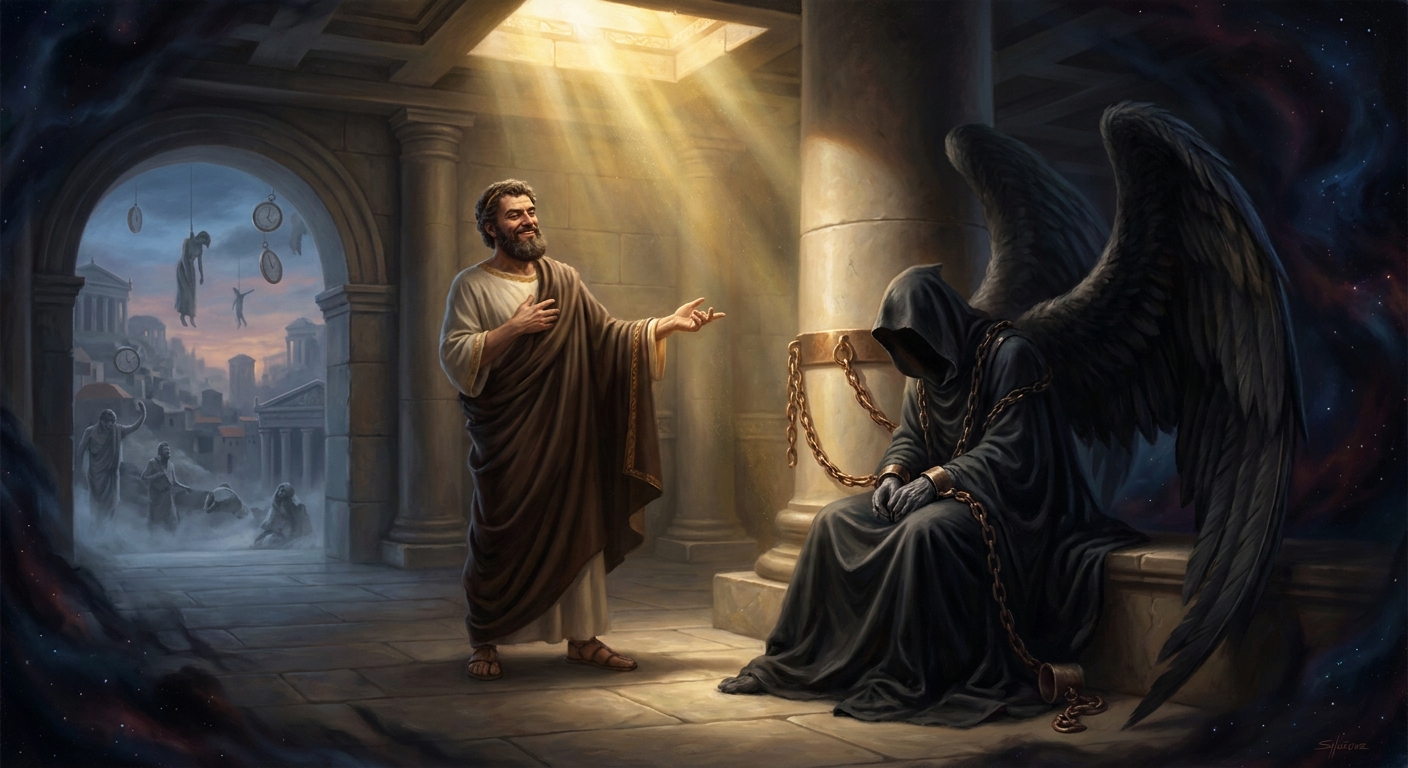
Sisyphus and the Stone
The founder-king of Corinth twice cheated death — chaining Thanatos in his own house, then tricking Persephone into releasing him from the underworld. The gods invent a punishment from which no cunning can escape: a boulder, a slope, and the certainty that the stone always rolls back down.
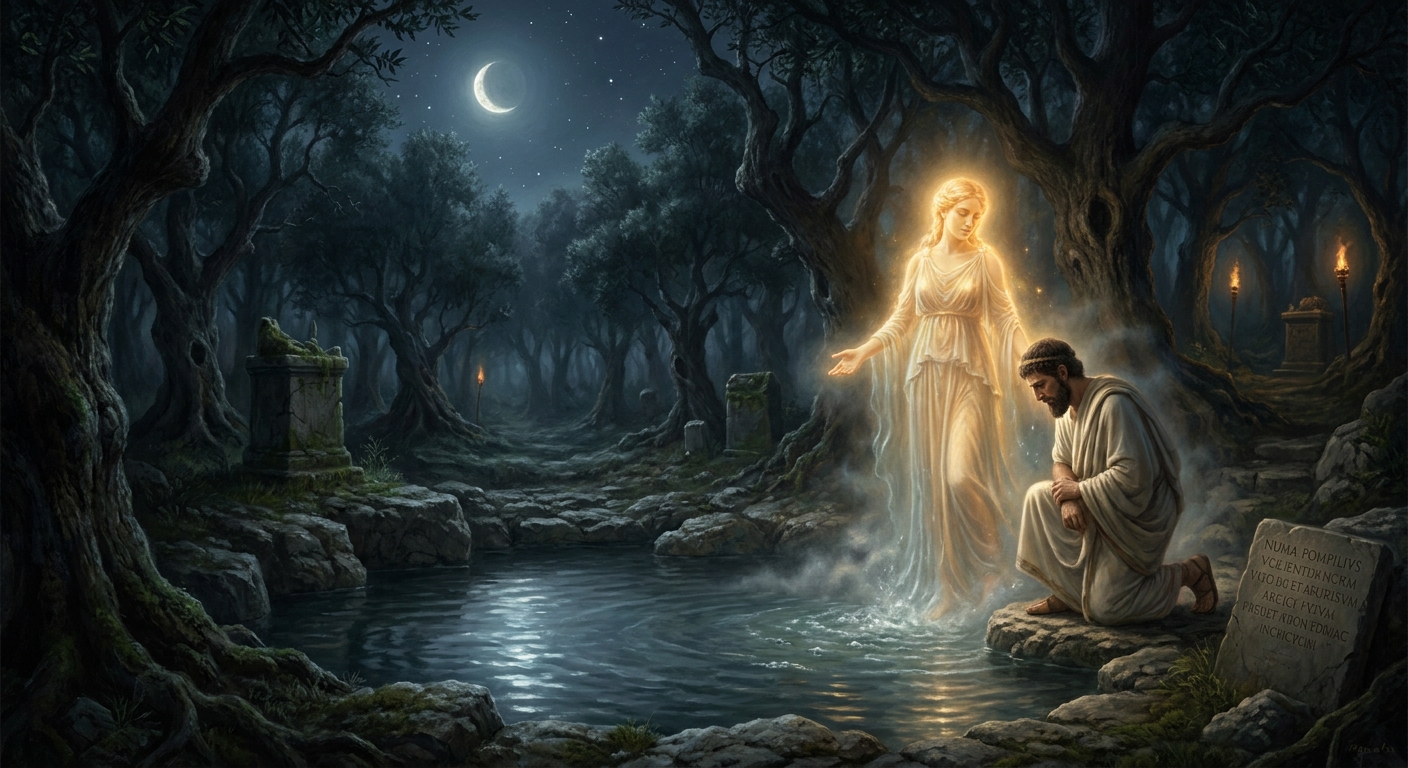
Numa and the Nymph
Rome's second king, the Sabine philosopher Numa Pompilius, slips out of the city at night to a grove outside the walls. There he meets Egeria, a water-nymph who becomes his wife and his oracle. From her, dictated in the dark beside a spring, comes the entire architecture of Roman religion: the calendar, the priesthoods, the Vestals, the rites that will hold the Republic together for a thousand years.
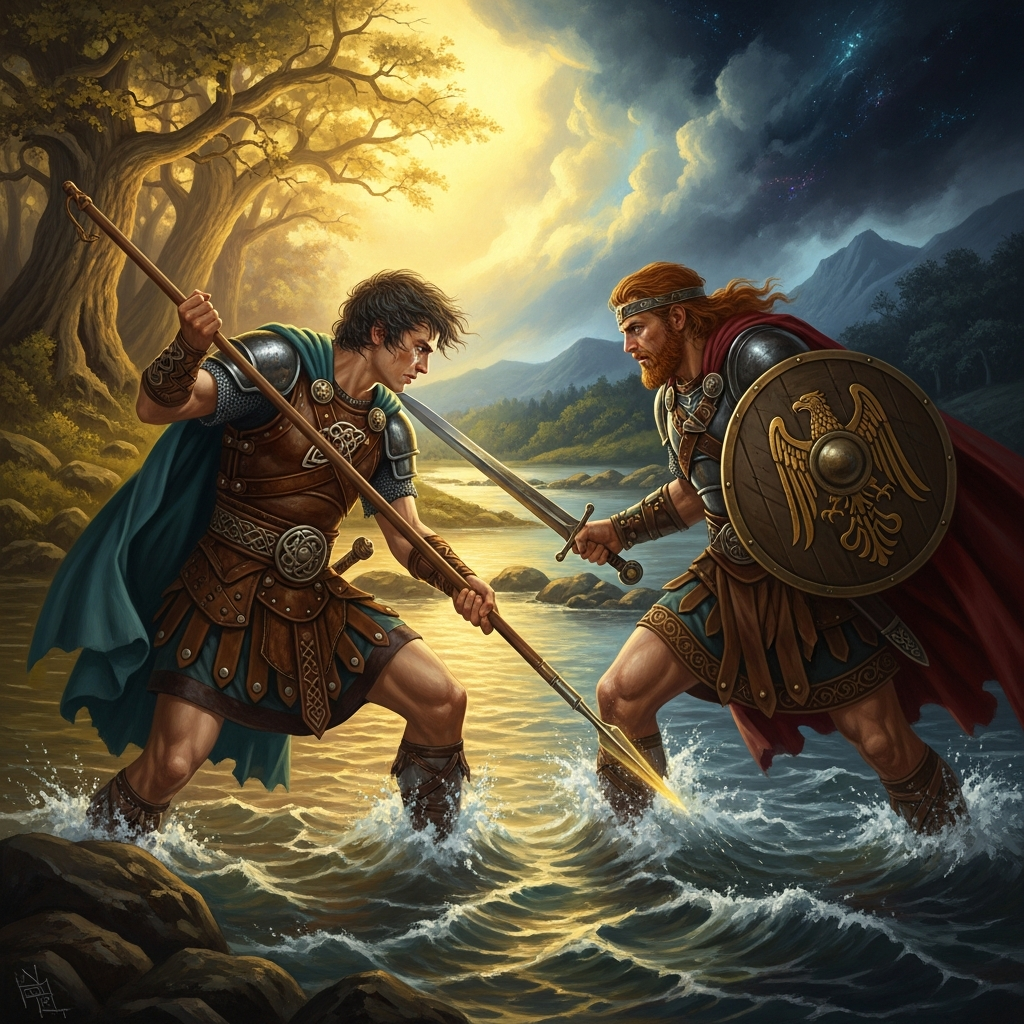
Cu Chulainn Holds the Ford
The Ulster warriors lie cursed and sleeping. Only one man is immune: a seventeen-year-old demigod who holds the ford alone against Connacht's army for weeks, until the morning his foster-brother and best friend is sent to kill him.
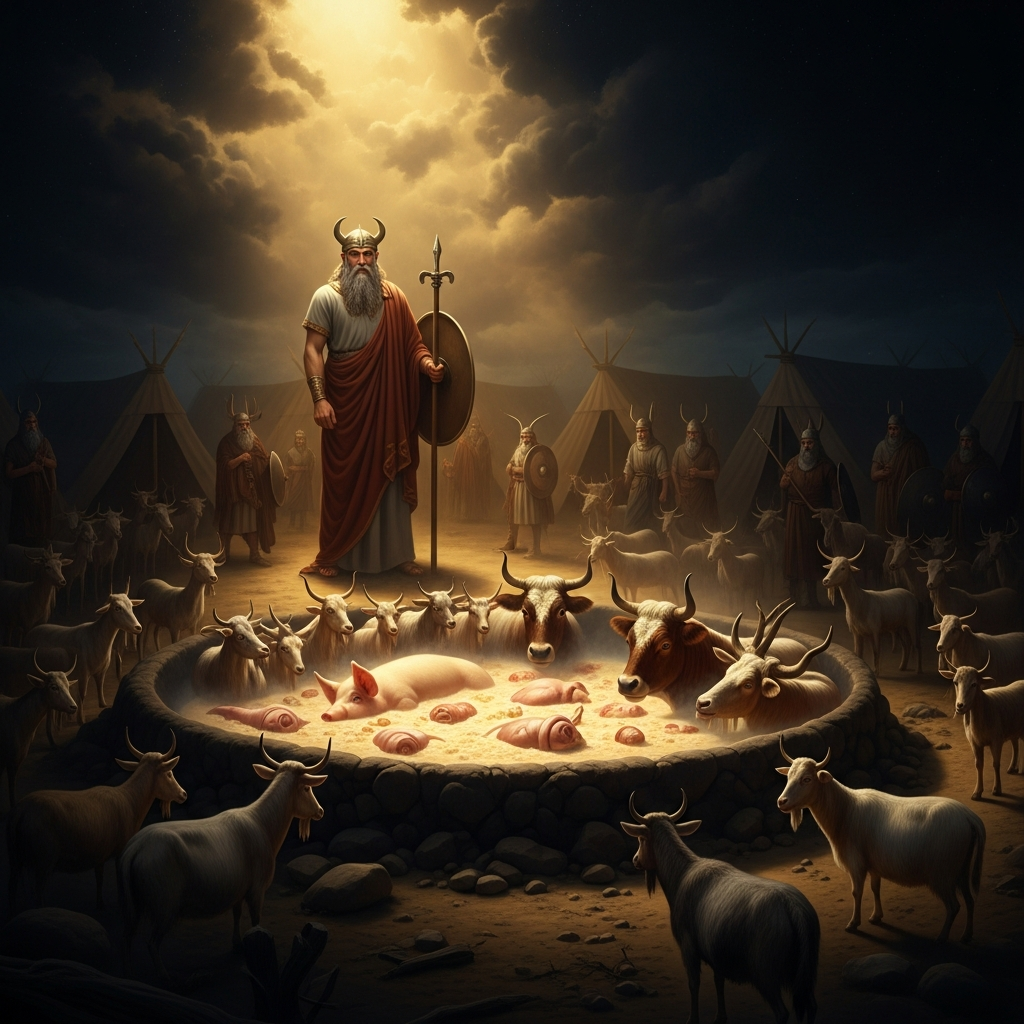
The Dagda's Cauldron That Left No One Unsatisfied
Before the Second Battle of Mag Tuired, the Tuatha De Danann's great god must humble himself before the Fomorians, eating a porridge mountain from a hole in the ground with a ladle large enough to fit two people lying down. The comedy of the good god, the enormous cauldron, and what it means to be the deity of excess in a world that requires war.
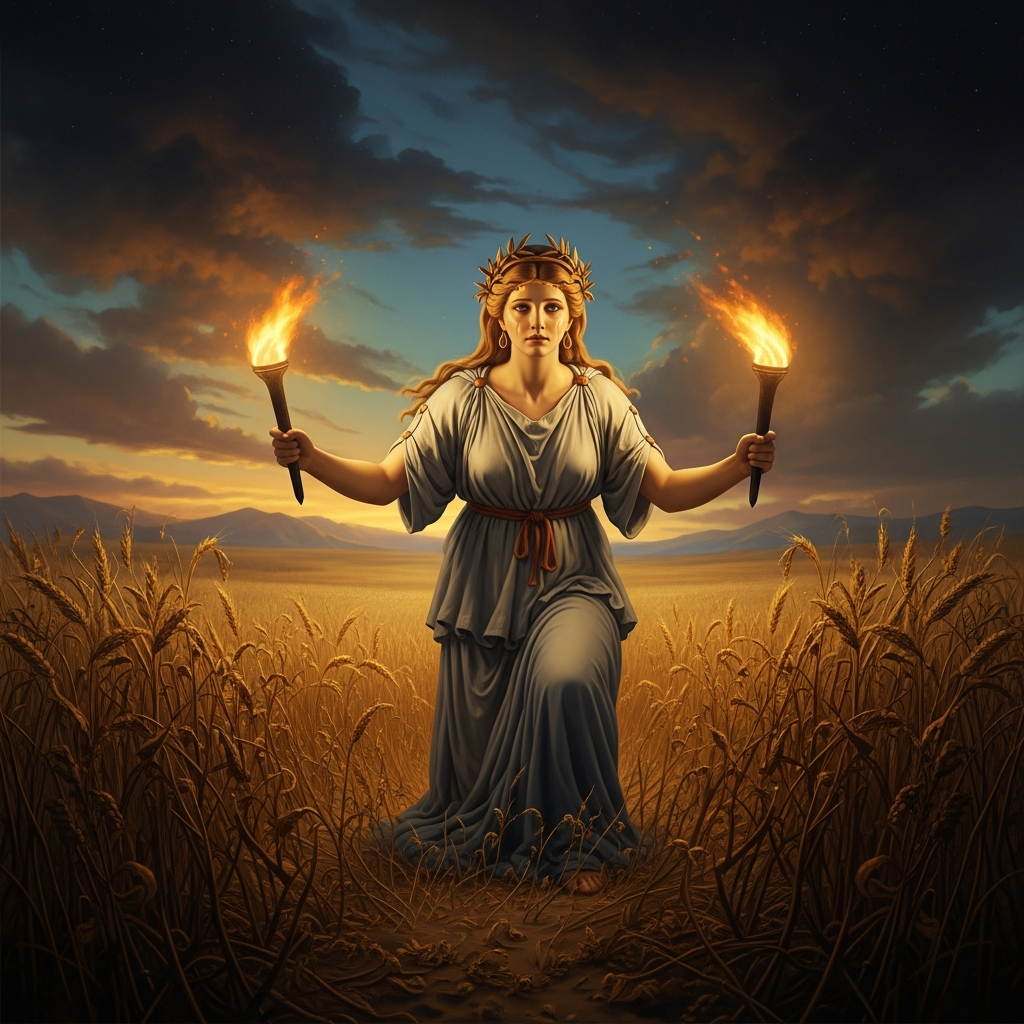
The Goddess Who Stopped the World
When Persephone is taken to the underworld, Demeter does not mourn elegantly. She refuses to make anything grow. The earth goes barren. Famine threatens to exterminate humanity, which would mean no more sacrifices, which would mean the gods starve too. Even Zeus cannot coerce her. The gods must negotiate with a mother's grief. She gets six months of her daughter back. The other six months are winter.
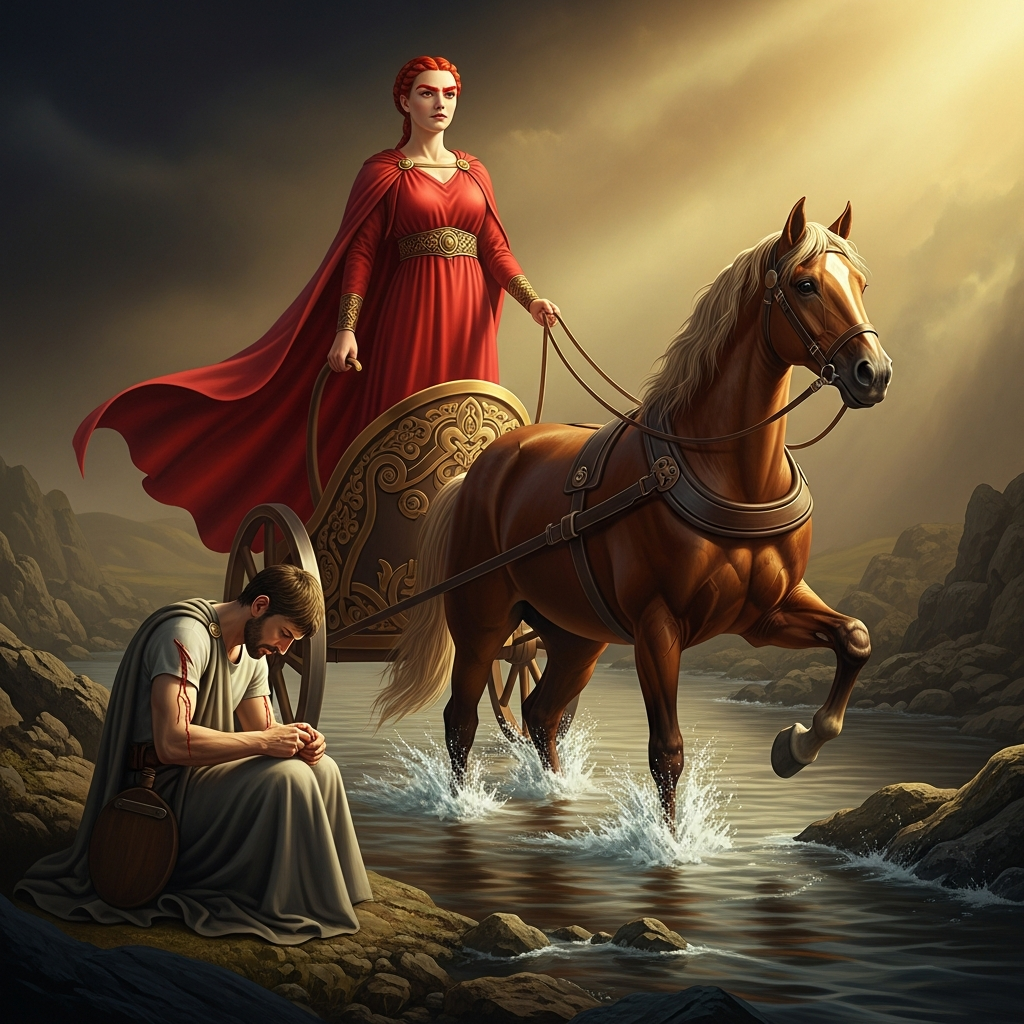
The Morrigan Offers Herself at the Ford
The Irish goddess of battle and fate comes to Cu Chulainn at the ford in the form of a beautiful woman and offers him her love. He refuses her, not recognising what he is refusing. She attacks him during his next combat in three animal forms. He wounds her three times. She returns as an old milkmaid and he heals her without knowing it.
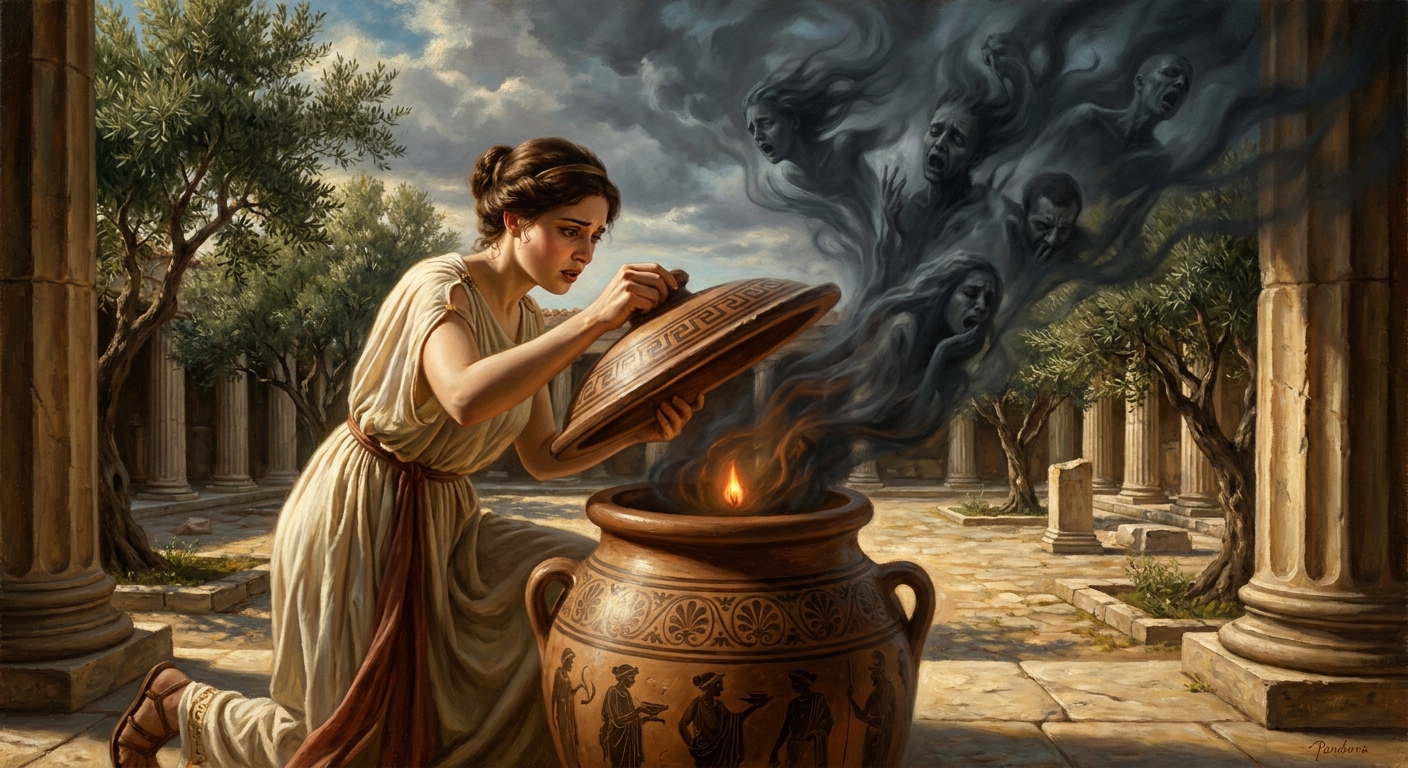
Pandora's Jar
After Prometheus steals fire for humanity, Zeus commissions Hephaestus to fashion the first woman from clay — beautiful, cunning, and carrying a sealed jar. When Pandora opens it, every evil pours into the world. Only Hope remains, trapped at the bottom.
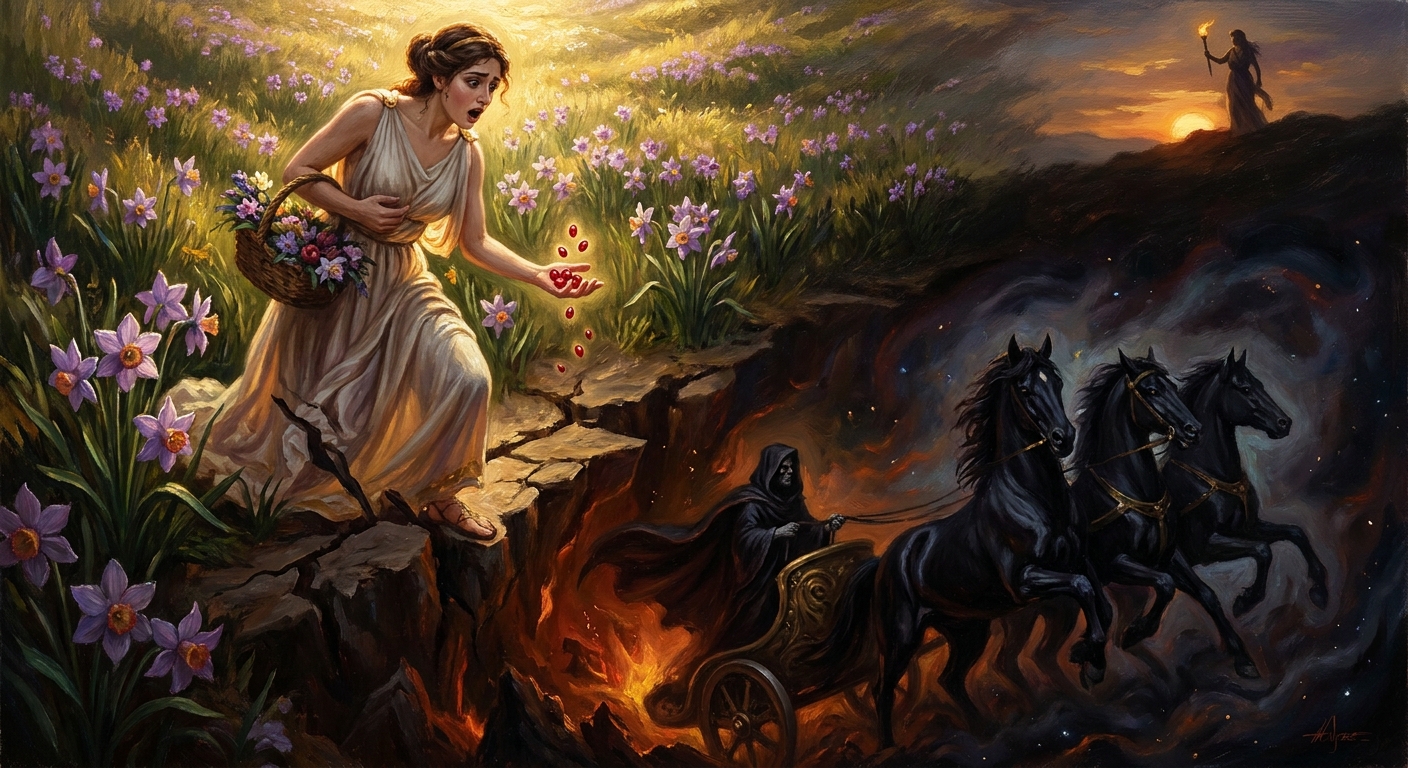
Persephone in the Pomegranate
Hades tears the earth open in a Sicilian meadow and carries Persephone into the dark. Demeter lets the world starve until the gods negotiate a return — but six pomegranate seeds already swallowed bind the goddess to the underworld half of every year. This is why winter exists.
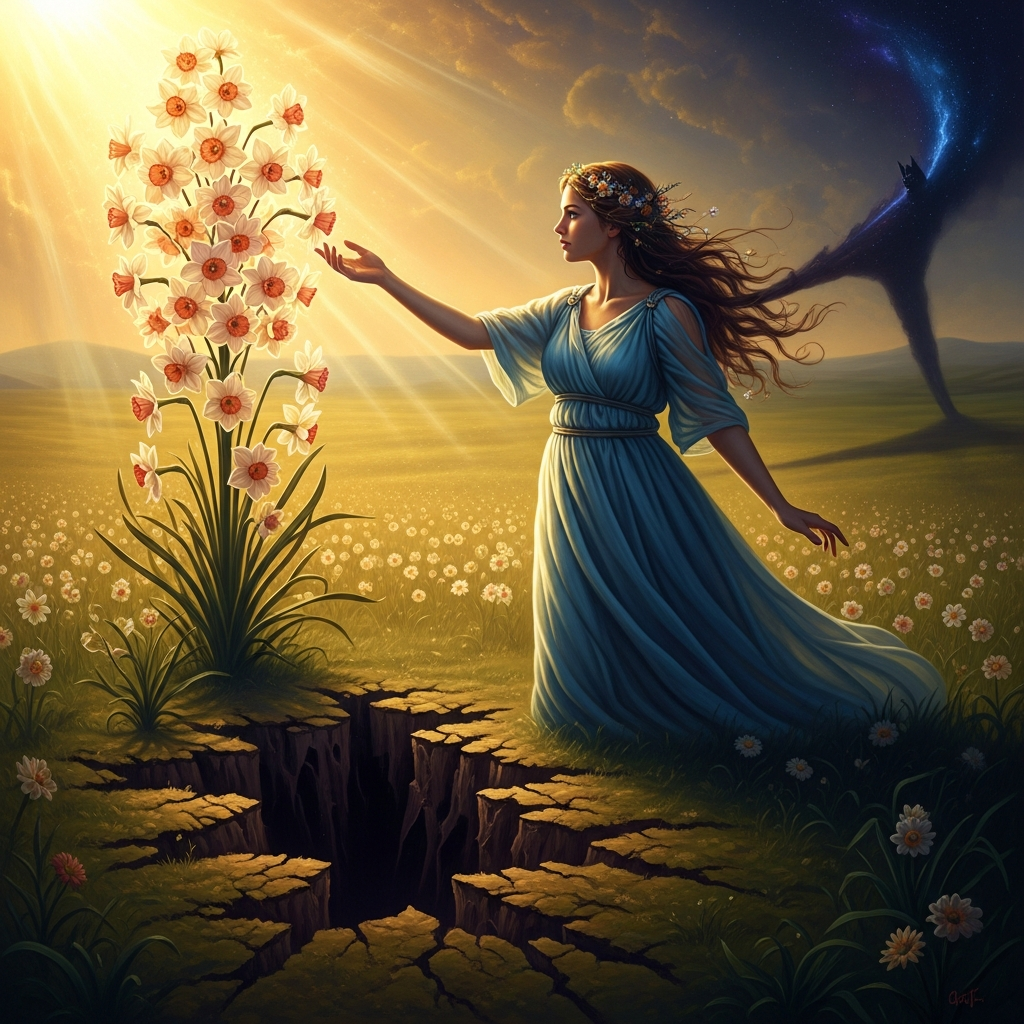
The Seeds That Bound Her
Persephone is in the meadow of Enna picking flowers when the earth opens. Hades offers her a kingdom. She eats six pomegranate seeds. When she returns to the upper world, she is no longer the girl who was taken. She is the Queen of the Underworld visiting her mother. The pomegranate changed her — and whether she knew it would is the question the myth refuses to answer.
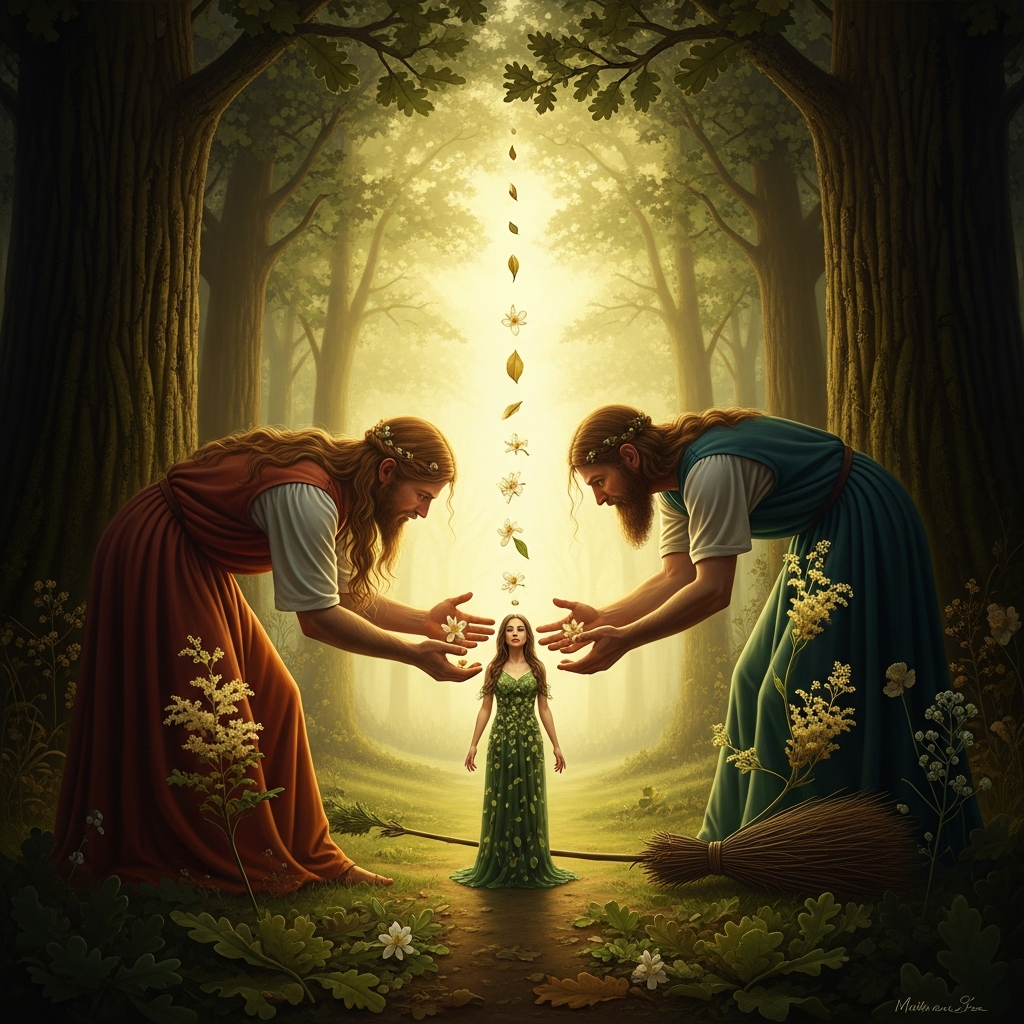
Blodeuwedd Made of Flowers
Lleu Llaw Gyffes cannot marry a human woman because of his mother's curse, so his uncle Math and foster-father Gwydion conjure him a wife from the blossoms of oak, broom, and meadowsweet. Blodeuwedd falls in love with Gronw Pebr and plots Lleu's death. Gwydion turns her into an owl. The story of a woman created for someone else's convenience who refuses that story.
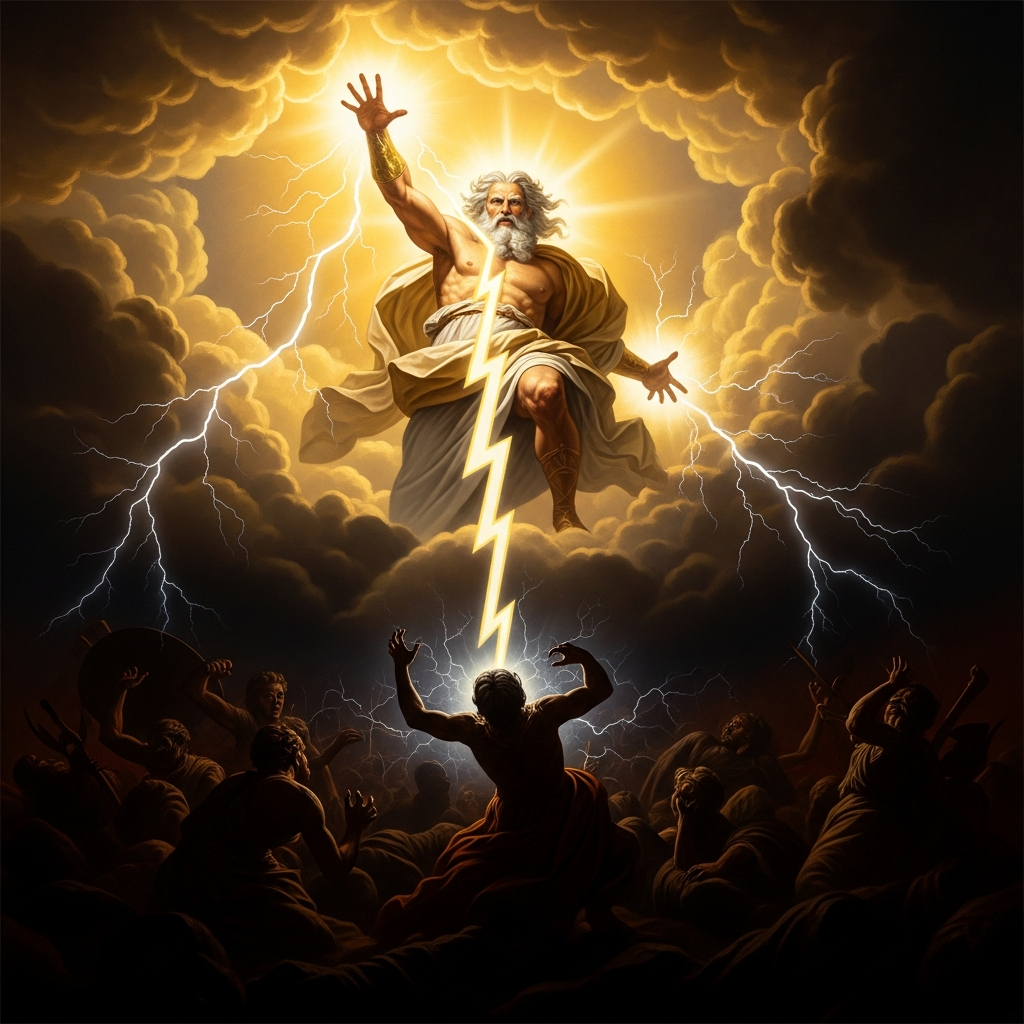
Zeus's Twofold Revenge
Prometheus tricks Zeus twice — first at the sacrifice at Mecone, then by smuggling fire down the mountain in a hollow stalk of fennel. Zeus answers with two punishments at once: the Titan to a rock in the Caucasus, and the first woman, Pandora, sent to humanity with a sealed jar. The fire and the jar arrive together. Hesiod is explicit: this is one act of vengeance, not two.
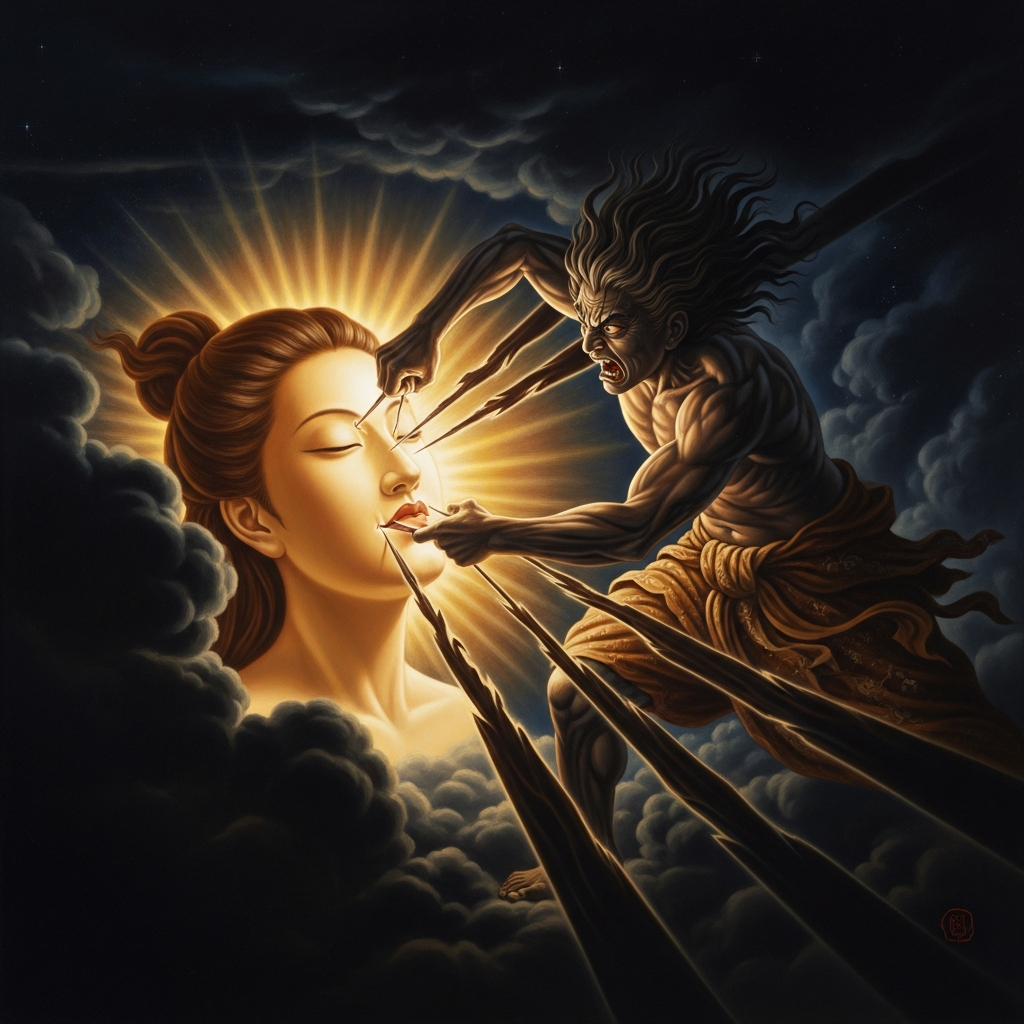
Amaterasu Withdraws from the World
After Susanoo's violent rampage devastates the heavenly paddies and kills a weaving maiden, the sun goddess locks herself inside the Ama-no-Iwato cave. The world goes dark. Eight million kami gather outside the boulder and Ame-no-Uzume performs a bawdy, ecstatic dance that makes all the gods laugh. The comedy — not grief, not force — saves the world.
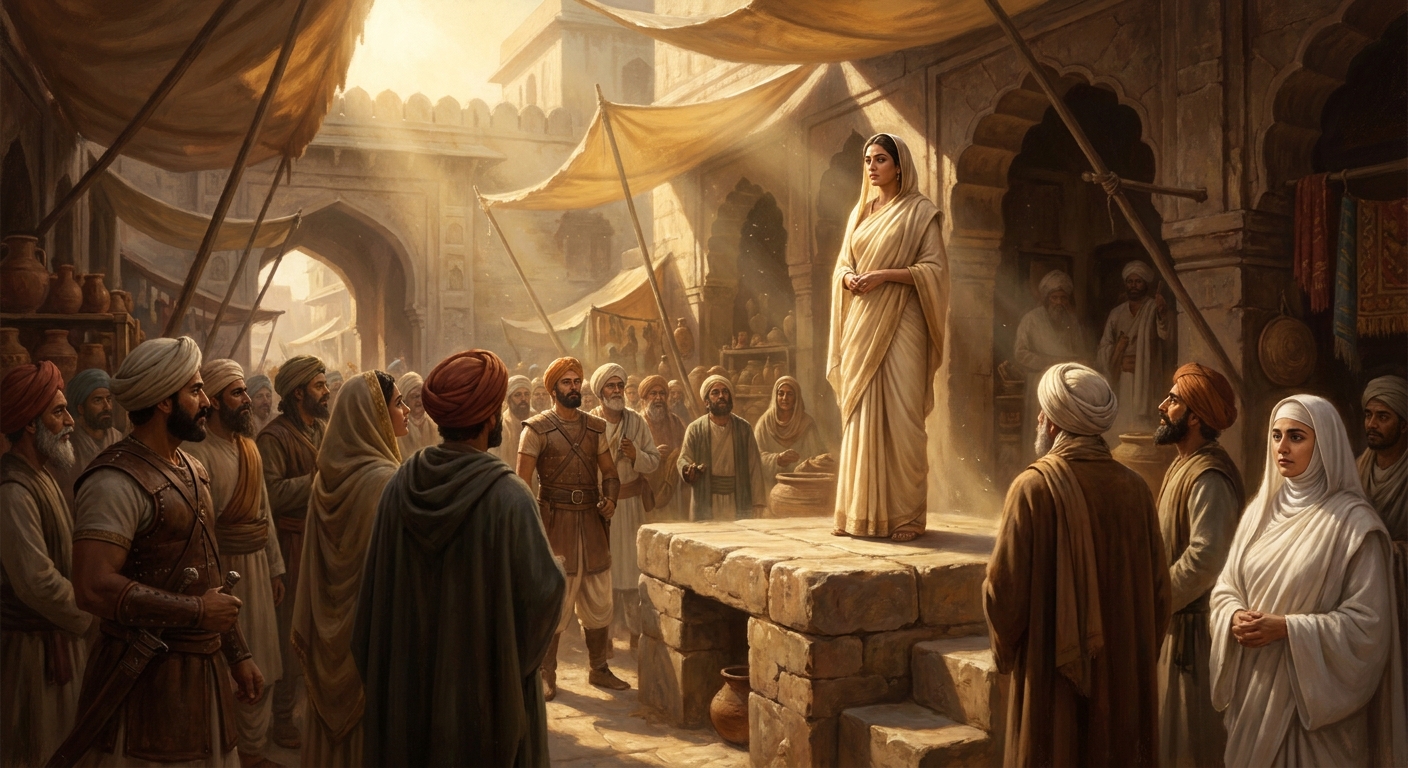
The Princess on the Threshold
A princess sold into slavery, beaten and starved, has been keeping a six-month fast under conditions Mahavira himself has set without telling anyone. On the seventh day, with shaved head and iron chains and a bowl of plain boiled lentils on a clay potsherd, she stands on a threshold — half-inside, half-outside, exactly as the unspoken vow requires — and offers him the meal that no one else has been able to.
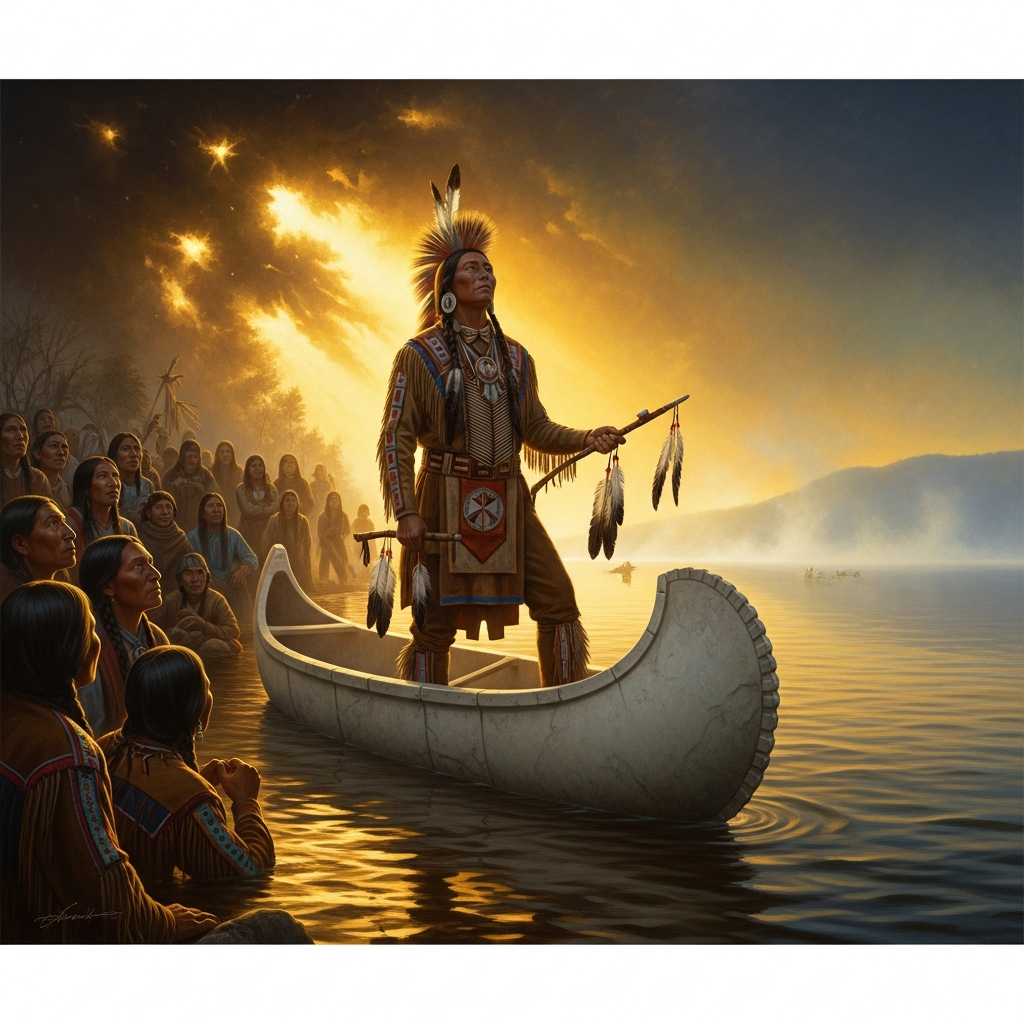
The Peacemaker and the Great Law
Deganawida is born to a virgin mother among the Huron and crosses a lake in a stone canoe to prove divine commission. He finds Hiawatha shattered by grief and teaches him the condolence ceremony. Together they confront Atotarho — the Onondaga sorcerer whose hair is living snakes — comb the evil from his mind, and found the Haudenosaunee Confederacy of Five Nations.
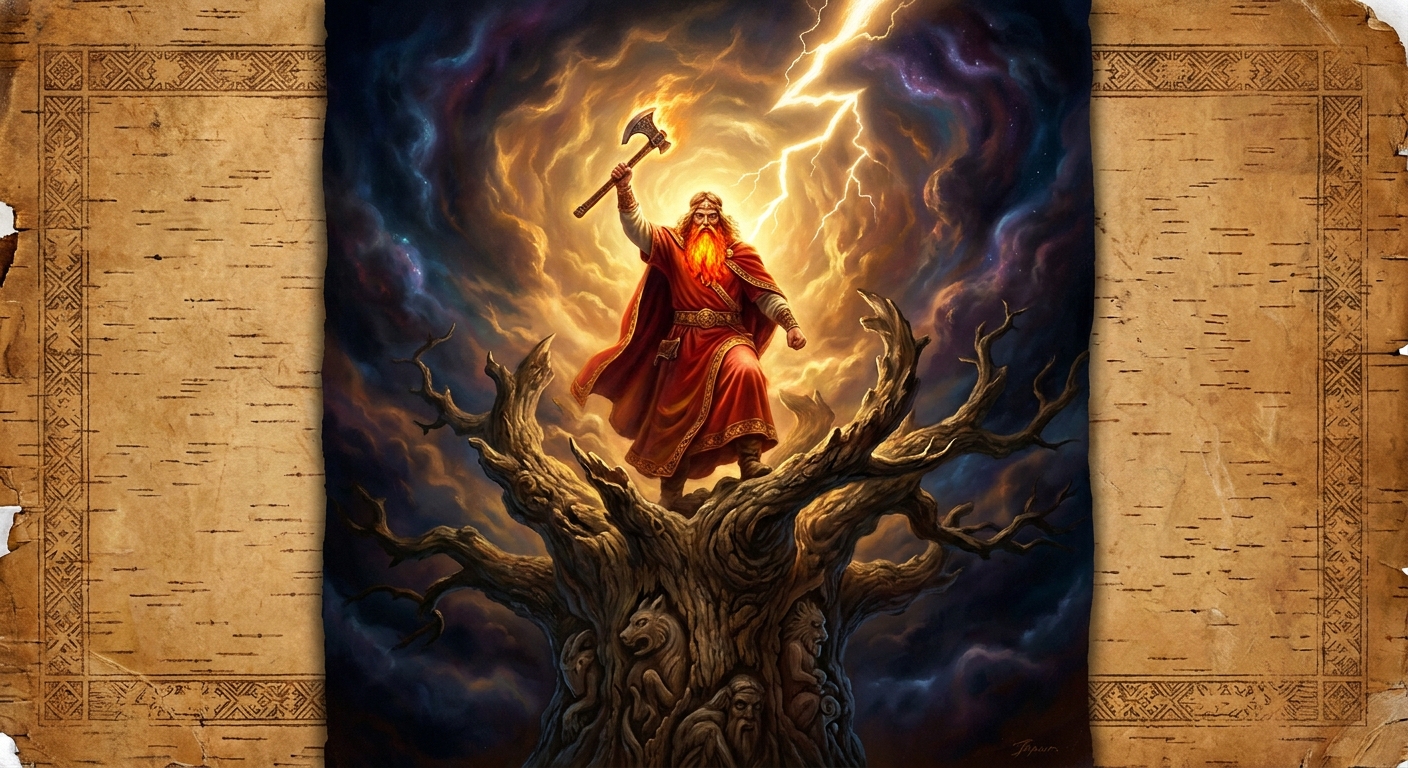
Perun and Veles: The Storm Forever
Every summer thunderstorm is the same chase — the sky-god hunting the serpent through the branches of the world tree, the cattle stolen, the fire taken, the lightning falling on a house that should not have stood there.
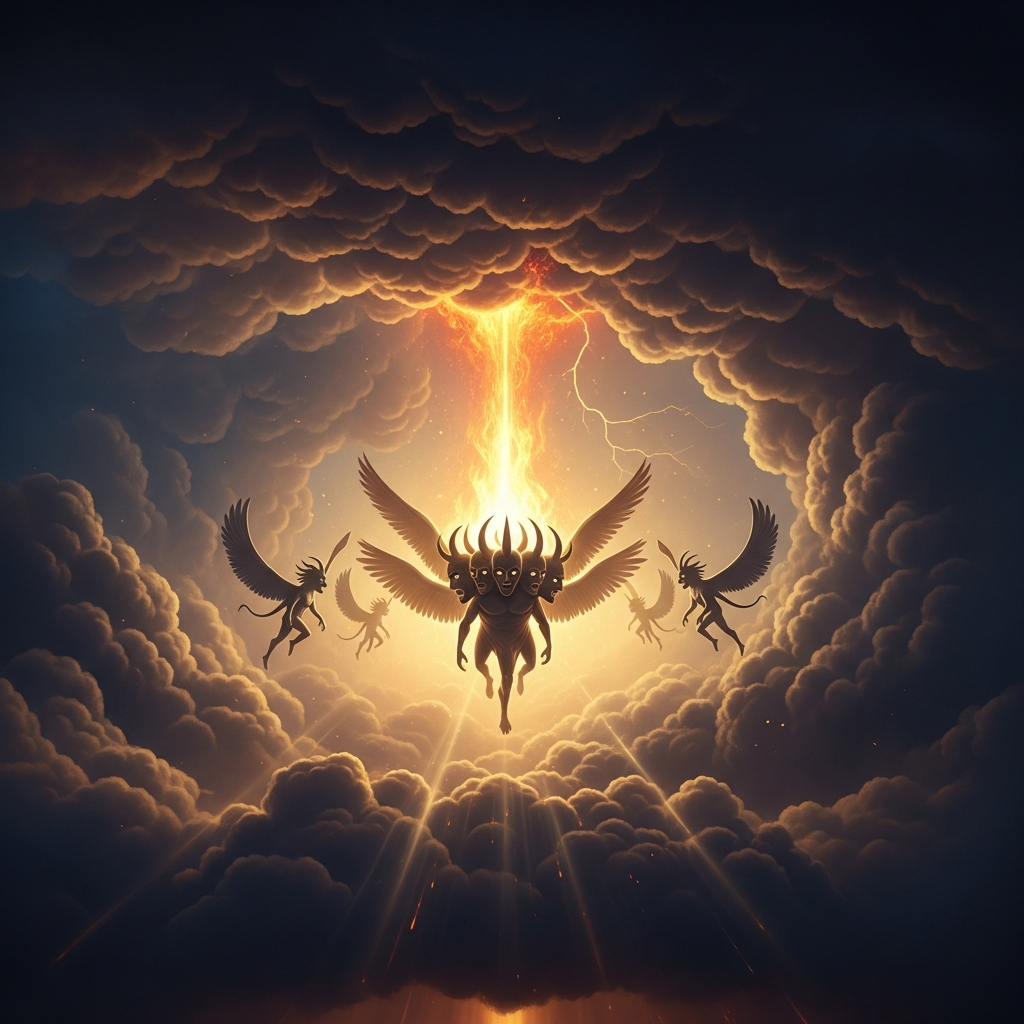
The Chariot-Throne of God
Ezekiel, a priest in Babylonian exile, sees the divine chariot-throne on the banks of the Chebar River: four living creatures with four faces and eyes covering their wings, wheels within wheels covered in eyes, a crystalline expanse, and above it all, something like the appearance of the likeness of the glory of God. This vision — hedged in four layers of approximation — launches two thousand years of Jewish mysticism.
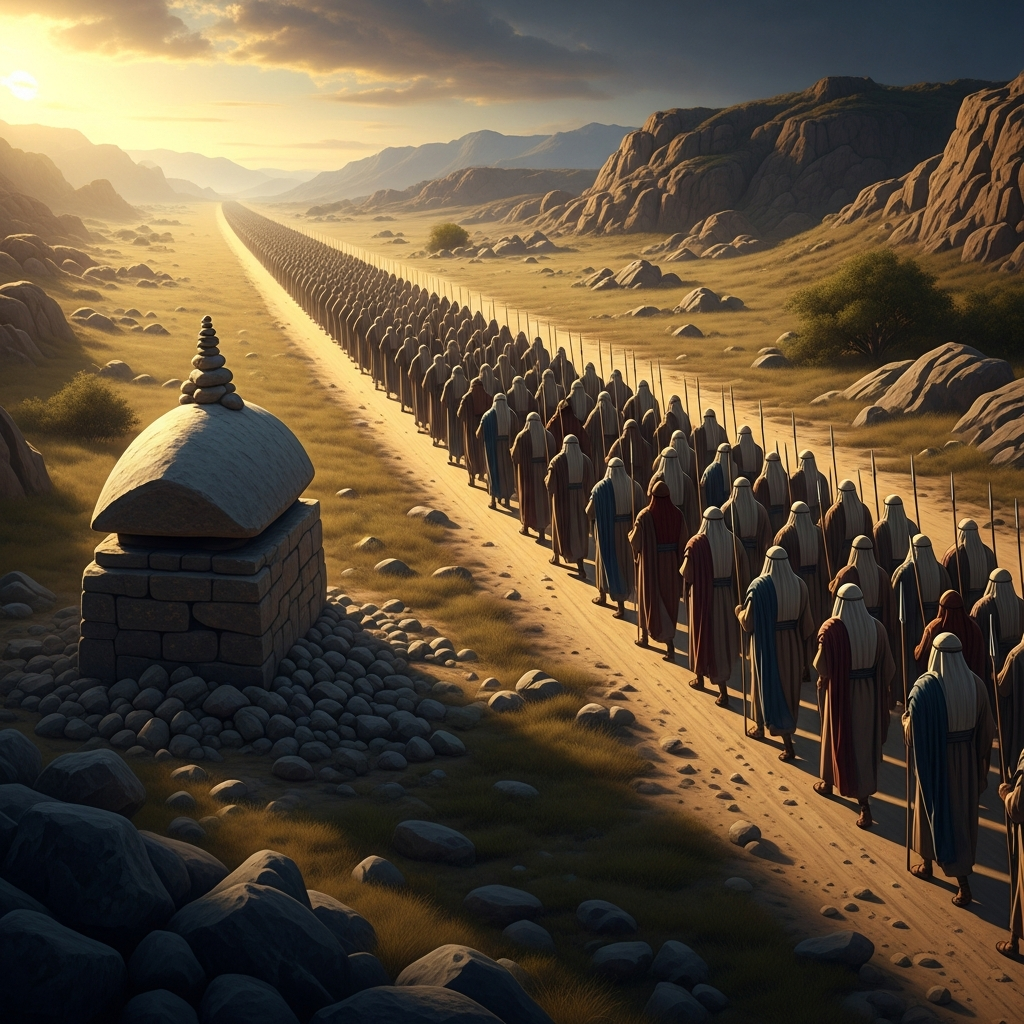
Rachel Weeping for Her Children
In Jeremiah 31:15, Rachel weeps at her tomb in Ramah as the exiles pass on their way to Babylon — not as metaphor but as reality. The Midrash extends the scene: Rachel pleads with God on behalf of her captive children, and where Abraham, Isaac, Jacob, and Moses have failed, she succeeds. The theology of maternal intercession: the one who cannot be refused.
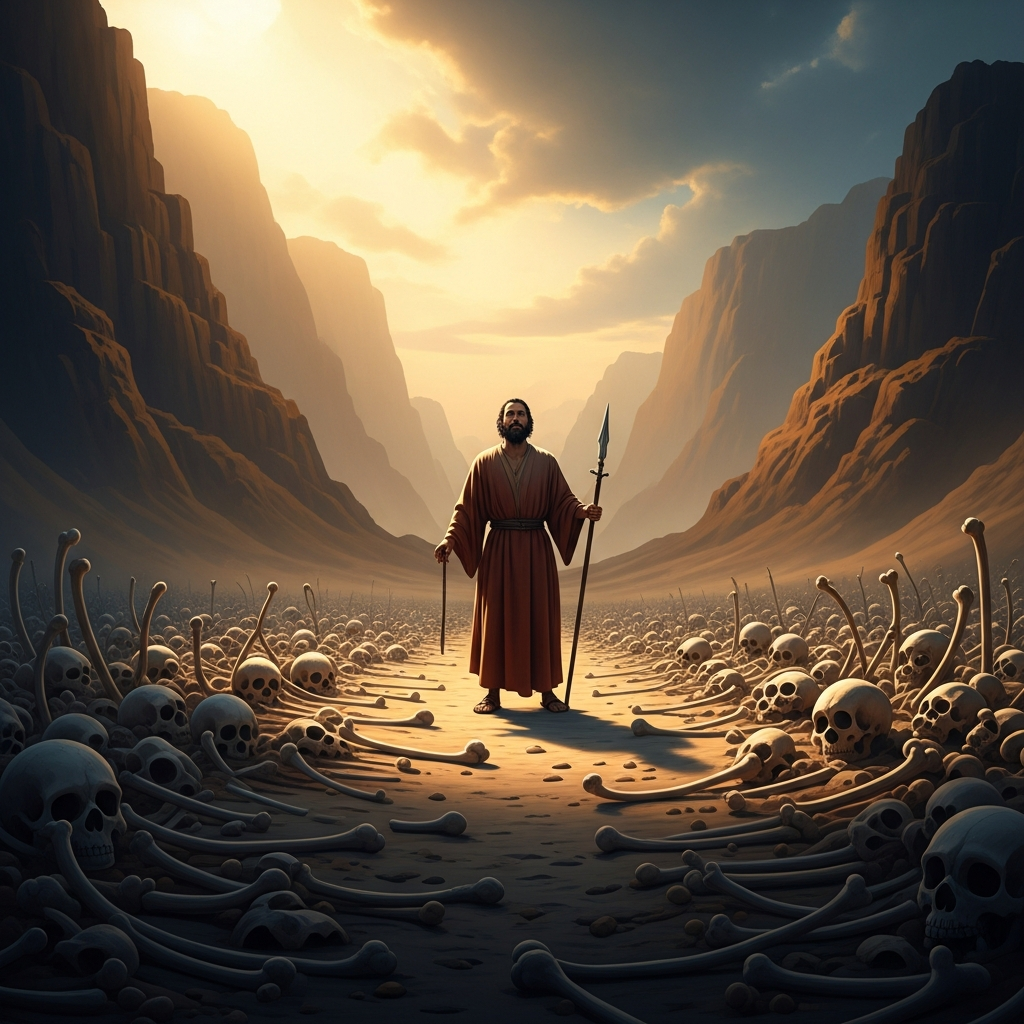
The Valley of Dry Bones
God sets the prophet Ezekiel in a valley of bleached bones and asks a single question: Can these bones live? Ezekiel prophesies. The bones rattle, connect, flesh, breathe, and rise — a vast army where there was only ruin. The vision promises Israel's return from Babylon. It has never stopped promising more than that.
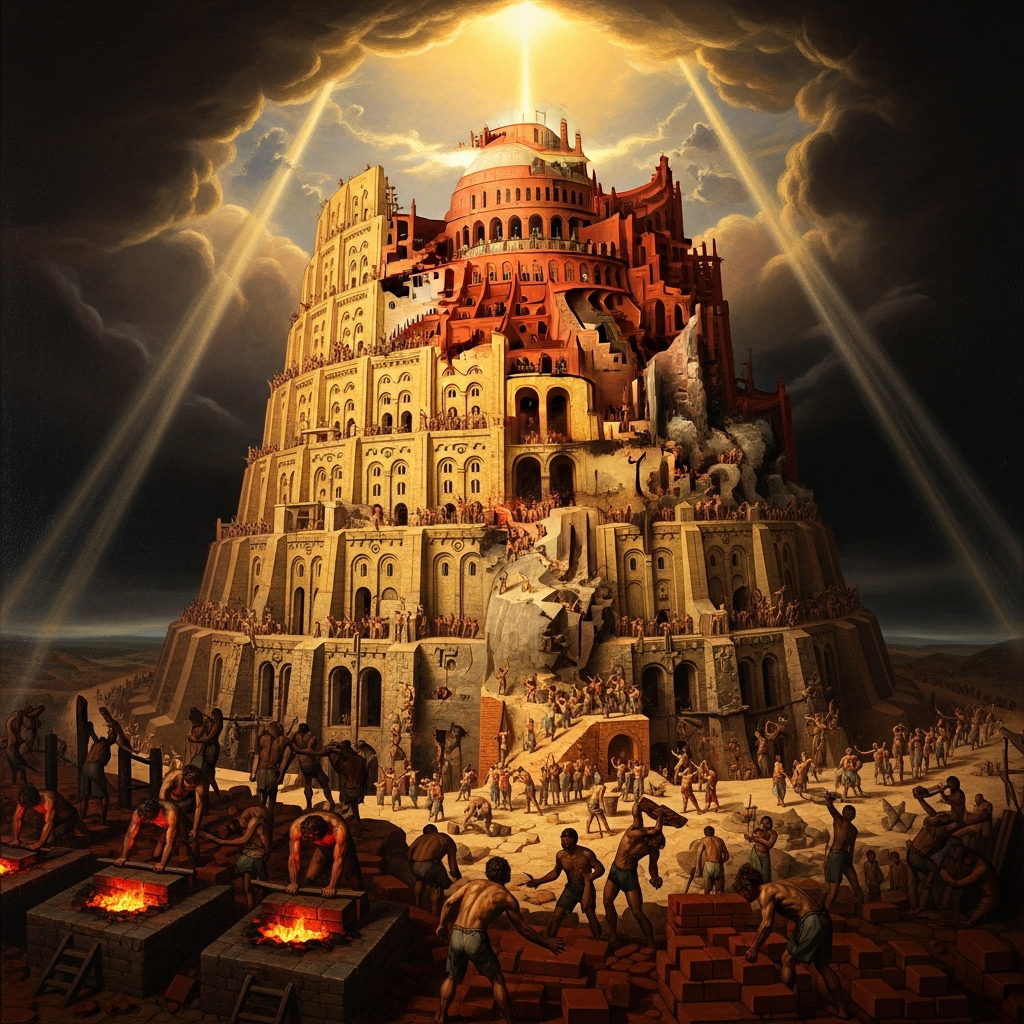
The Tower of Babel and the Scattering
One people with one language begin building a tower to heaven. God descends to see what they can accomplish together and decides to stop them — not by destroying the tower, but by destroying the unity of speech itself.
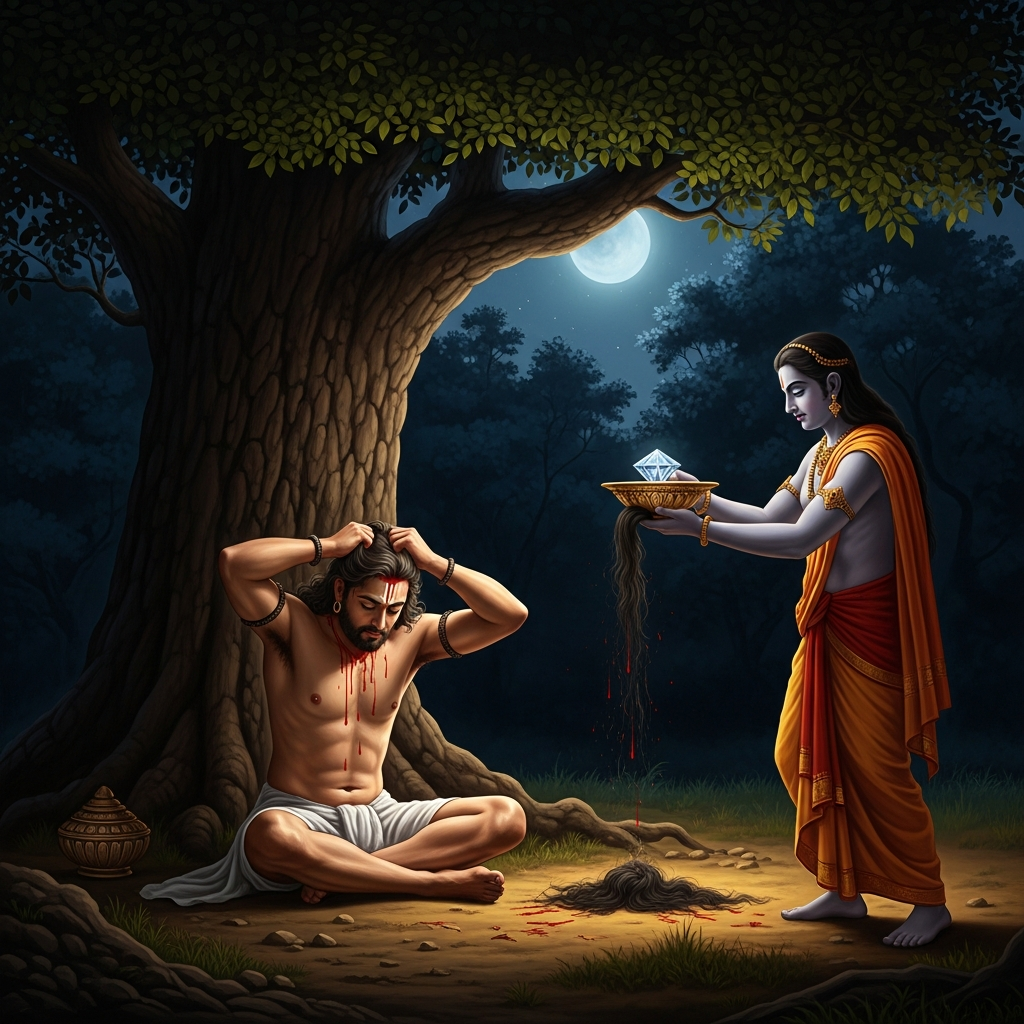
Twelve Years of Burning Off the World
At thirty, the nobleman Vardhamana pulls out his own hair by the roots, walks naked into the forest, and spends twelve years in near-total silence, eating almost nothing, speaking to no one, standing in the heat and the rain and the cold until the last particle of karma burns away. Under a sal tree near the Rijupalika river, in his forty-third year, he becomes Mahavira — the Great Hero — and achieves omniscience.
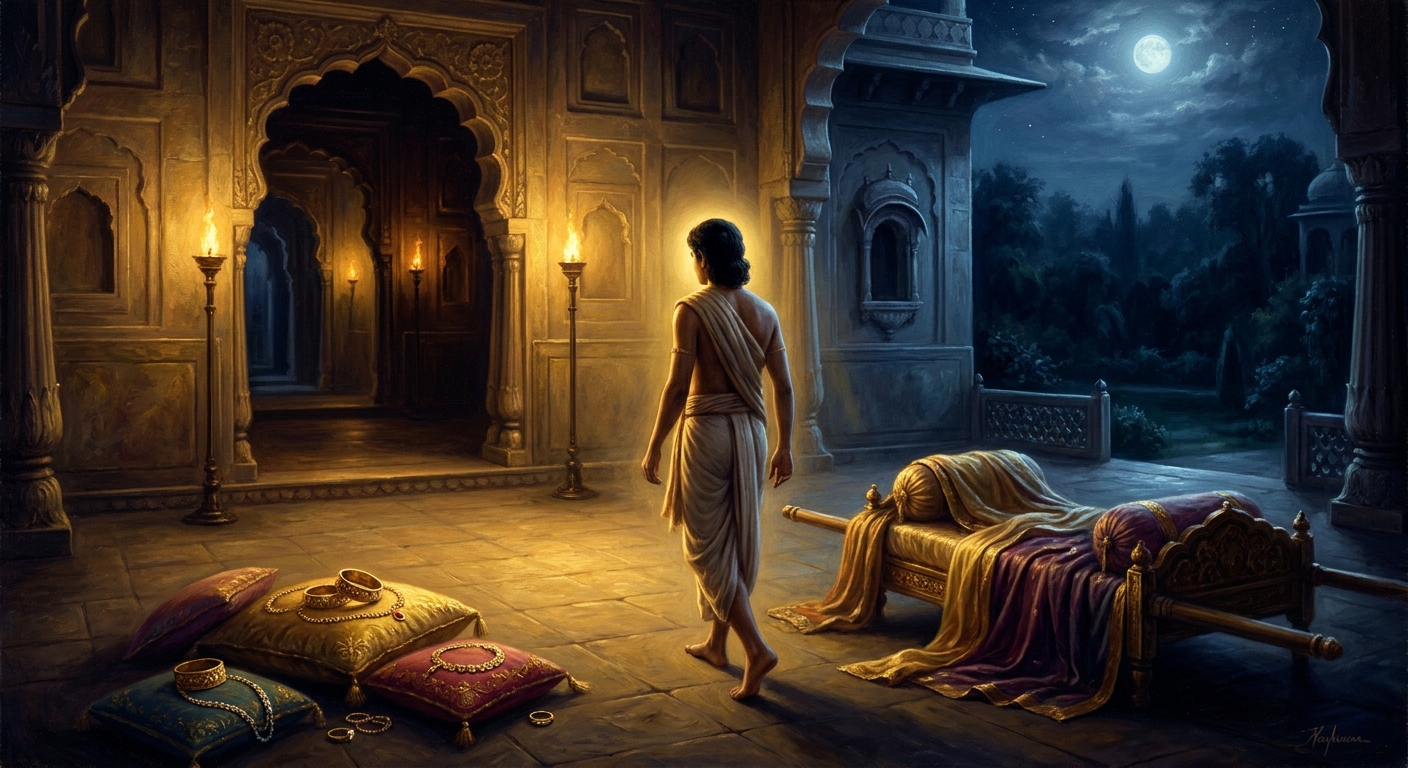
Mahavira's Five Fistfuls
A prince walks out of his palace at thirty, sits beneath an ashoka tree, and pulls his own hair out in five fistfuls — the silent founding gesture of Jain ascesis.
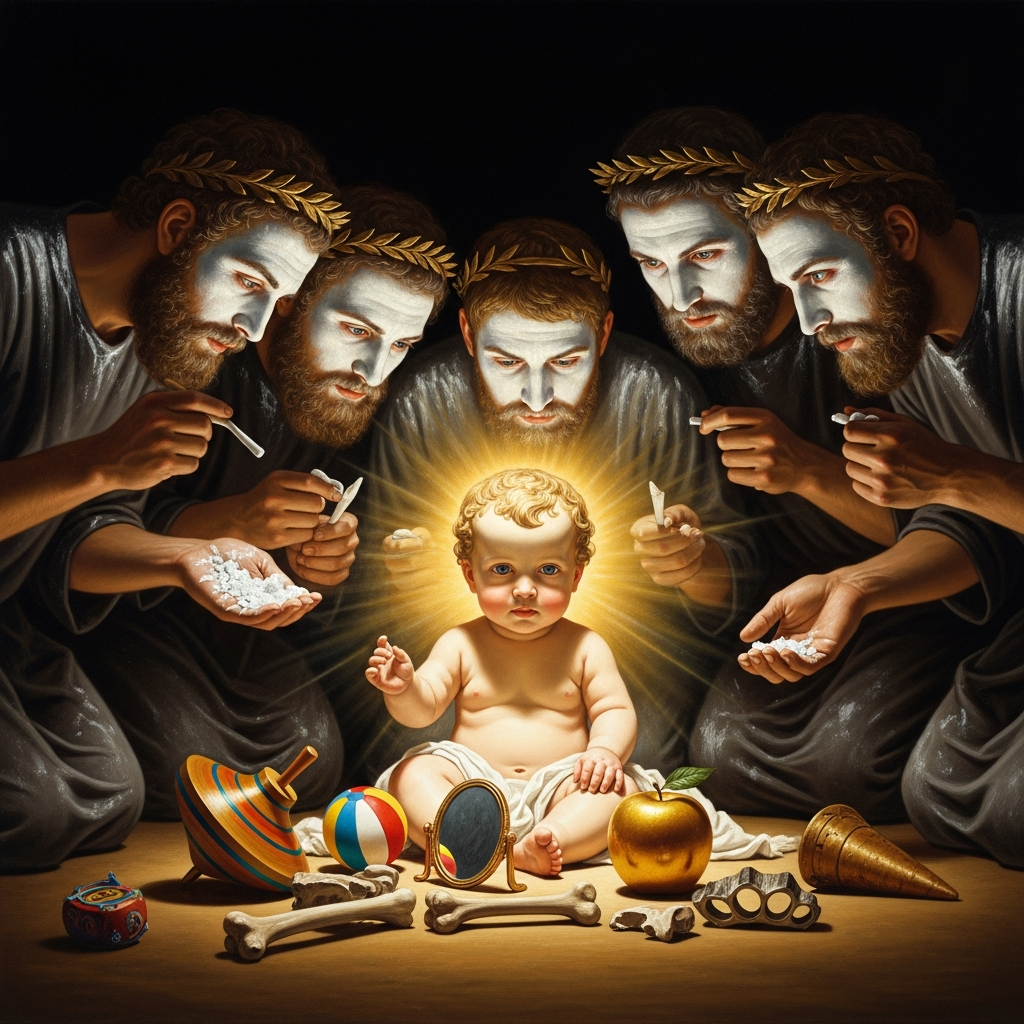
What the Titans Left Inside Us
The Titans lure the infant Dionysus with toys — a spinning top, a mirror, knuckle bones. He reaches for the mirror and they tear him into seven pieces. From their ashes, humans are made. The god we killed is still inside us.
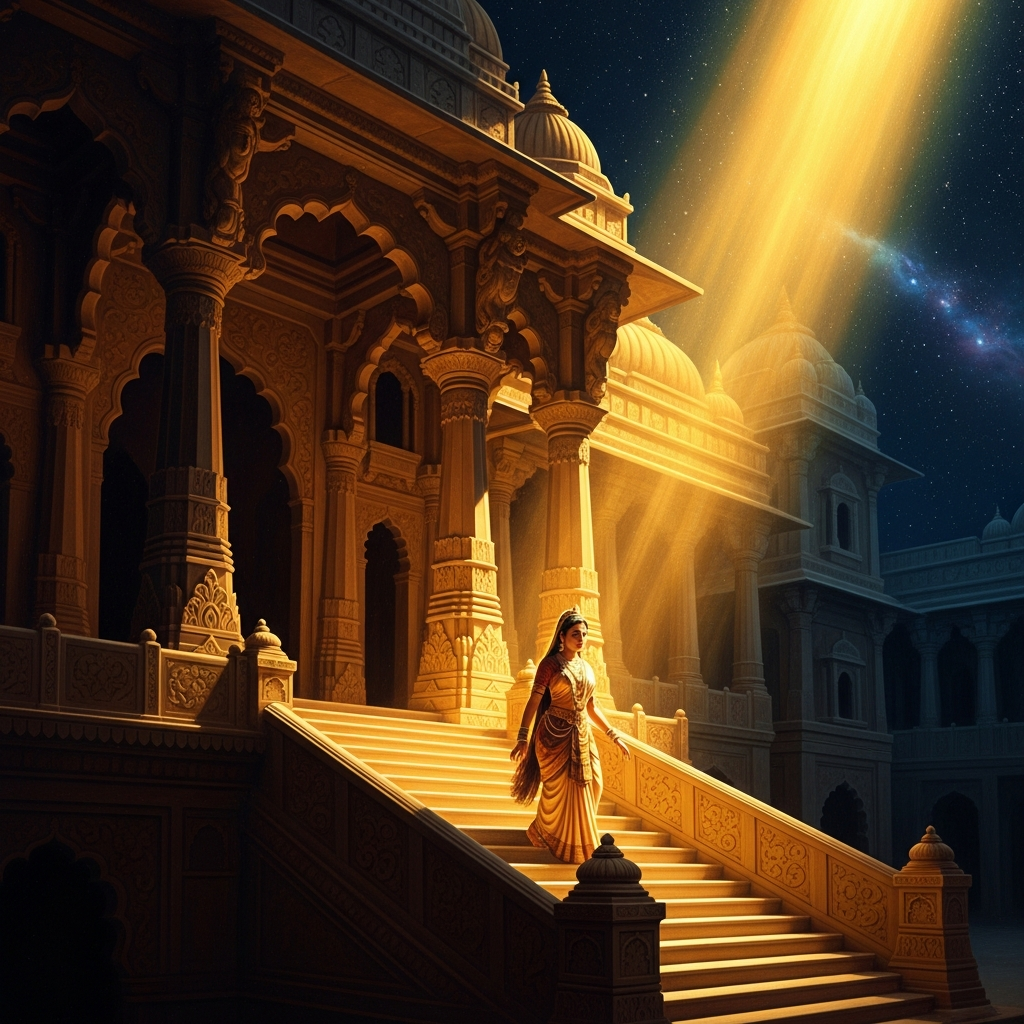
The Man Who Had Everything and Gave It Up in an Afternoon
Shalibhadra is so wealthy he has thirty-two wives and never leaves his palace because his mother brings him a different portion of the world to enjoy each day and he has not yet run out of portions. One afternoon his mother goes to hear Mahavira teach. She comes back changed. She tells Shalibhadra what she heard. He asks to see Mahavira himself. The meeting is brief. That afternoon he becomes a monk.
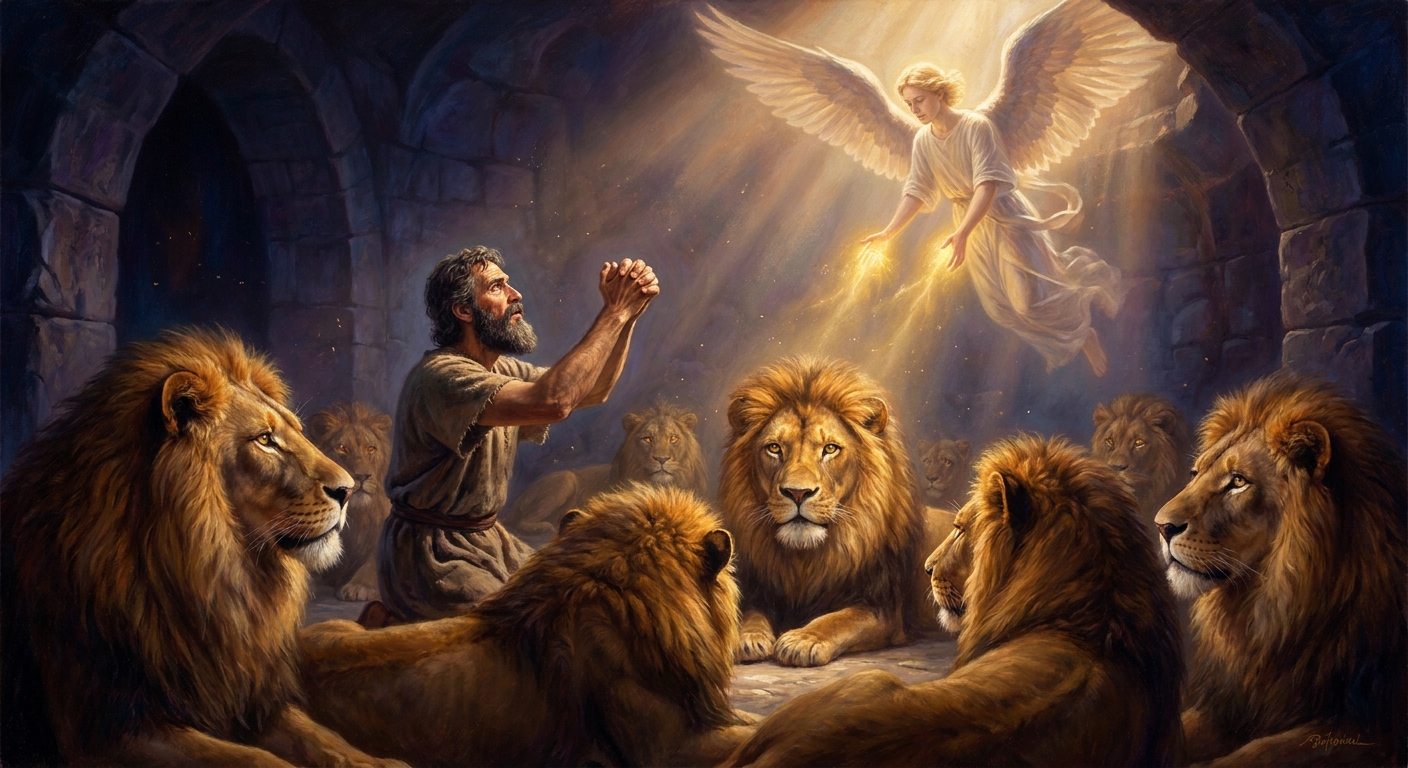
Daniel in the Lions' Pit
King Darius is tricked into signing a decree against prayer. Daniel prays anyway. The lions' den seals overnight. At dawn, he walks out unharmed. The accusers do not.
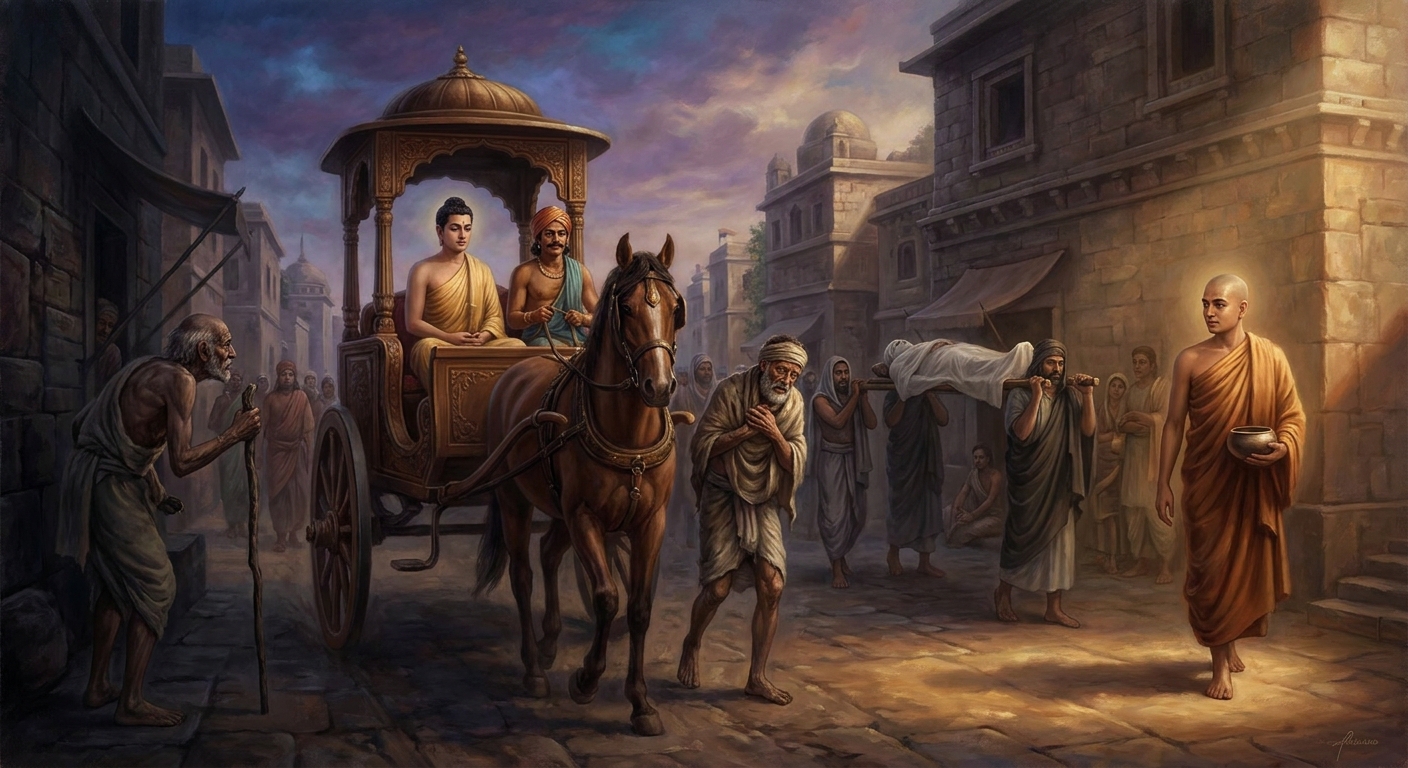
The Great Departure
At 29, Prince Siddhartha Gautama rides beyond his father's palace walls, sees old age, sickness, death, and a wandering ascetic, and that same night cuts his hair, lays down his robes, and walks into the forest — the renunciation that sets everything in motion.
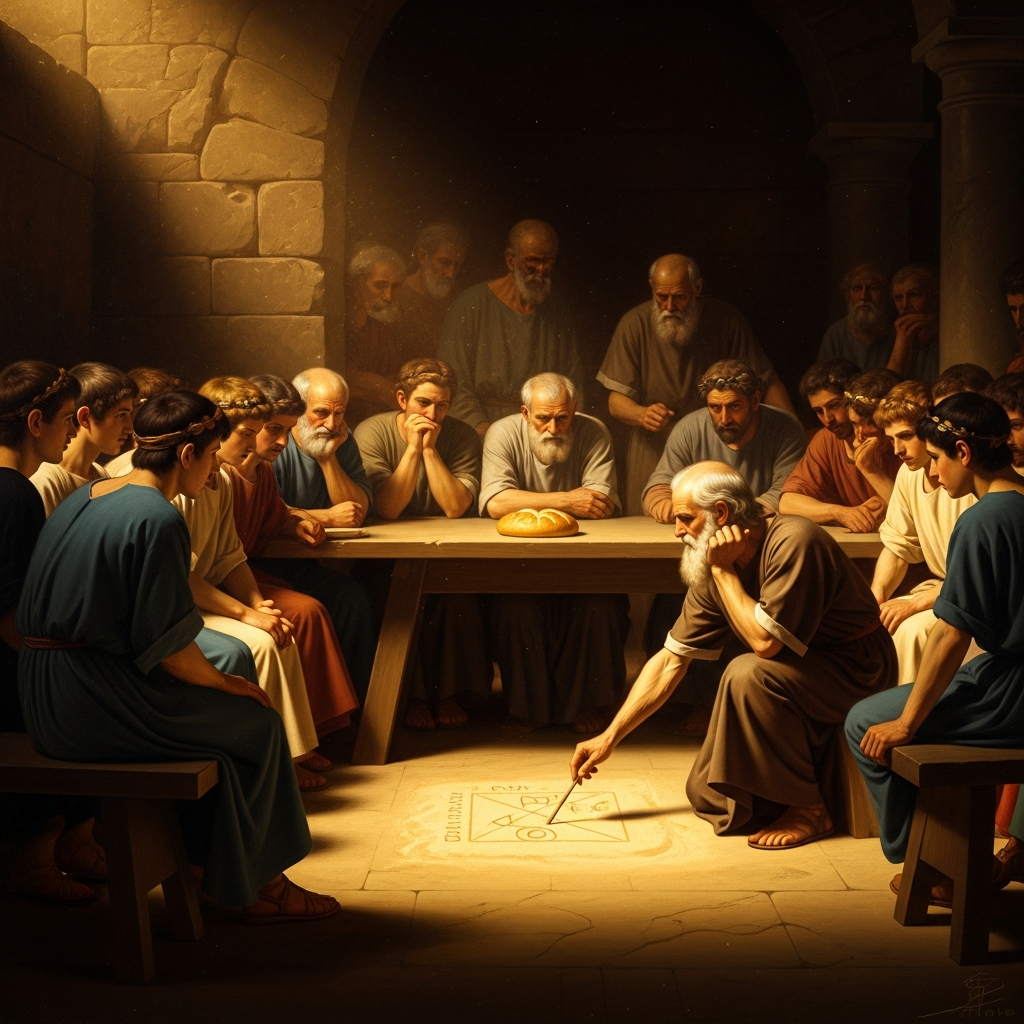
The Brotherhood at Croton
Pythagoras establishes his community at Croton in southern Italy around 530 BCE: no beans, no white roosters, five years of required silence, mathematics as religious practice. He claims to remember his previous lives. The brotherhood lasts four decades until a political crisis destroys it — and the surviving members scatter across the Greek world, carrying his ideas into Plato and Kepler and the modern physicist's faith that reality is mathematical at its base.
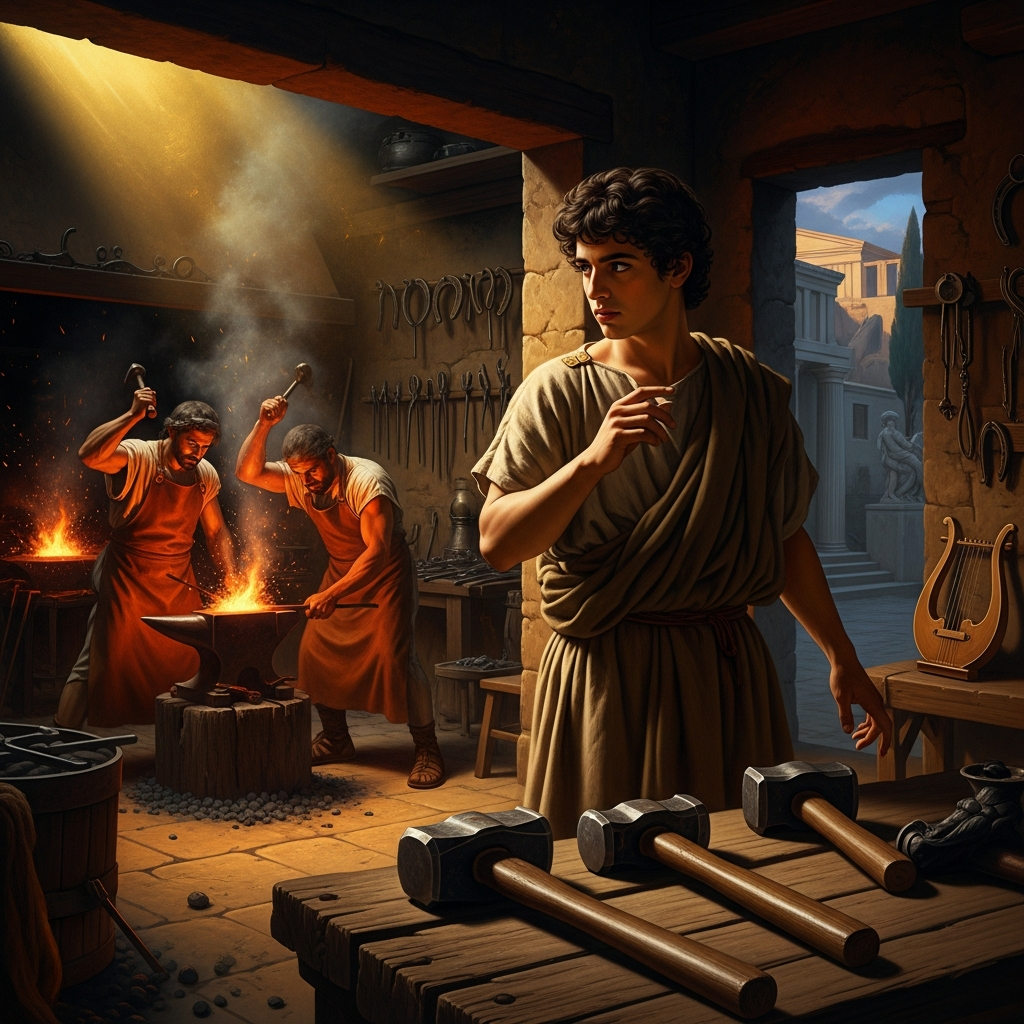
Pythagoras and the Music of the Spheres
At Croton in southern Italy, Pythagoras founds a community that is part school, part religious order — teaching that numbers are the essence of all things, the soul transmigrates, and the planets produce a music the trained philosopher can almost hear.
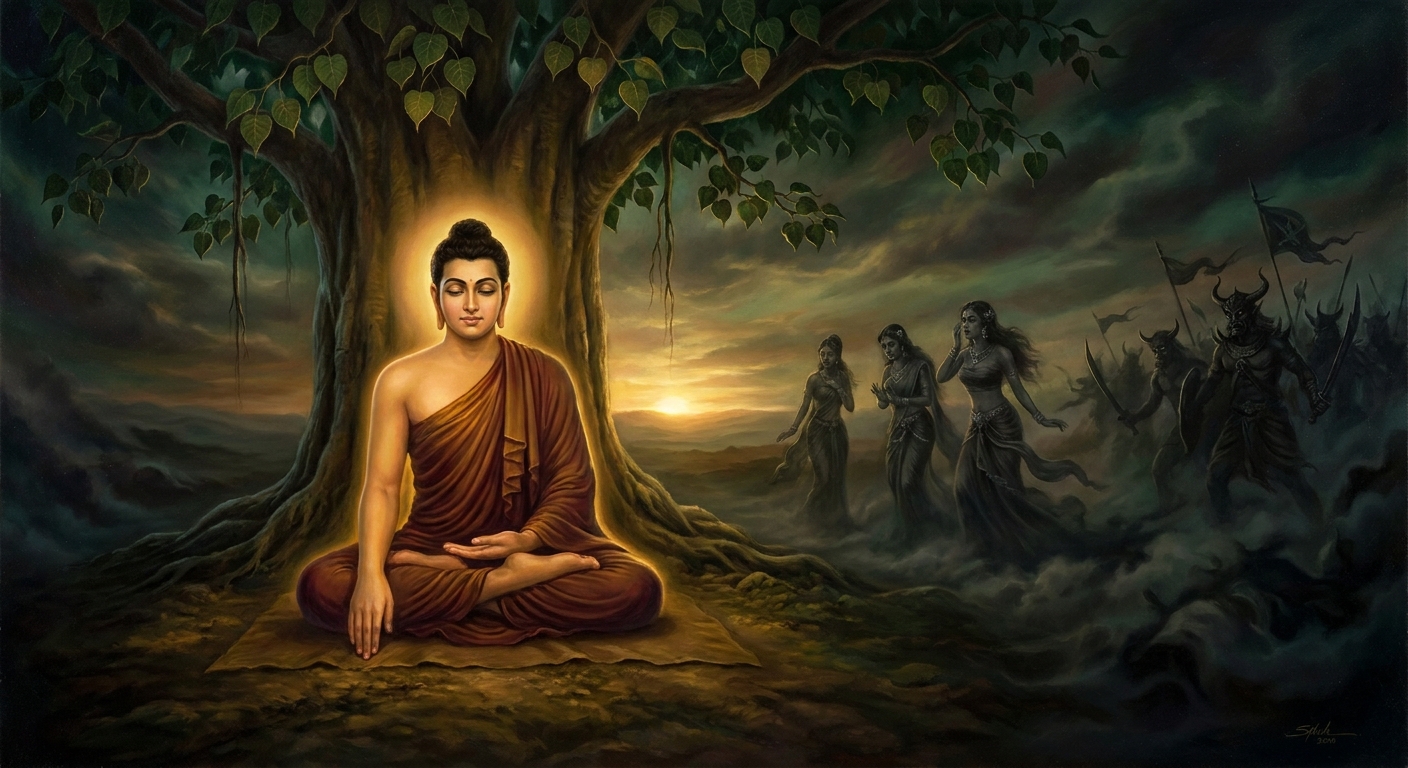
The Night Under the Bodhi Tree
Siddhartha Gautama sits beneath a pipal tree and faces the demon Mara's three temptations—desire, fear, and doubt—refusing to move until enlightenment breaks at dawn.
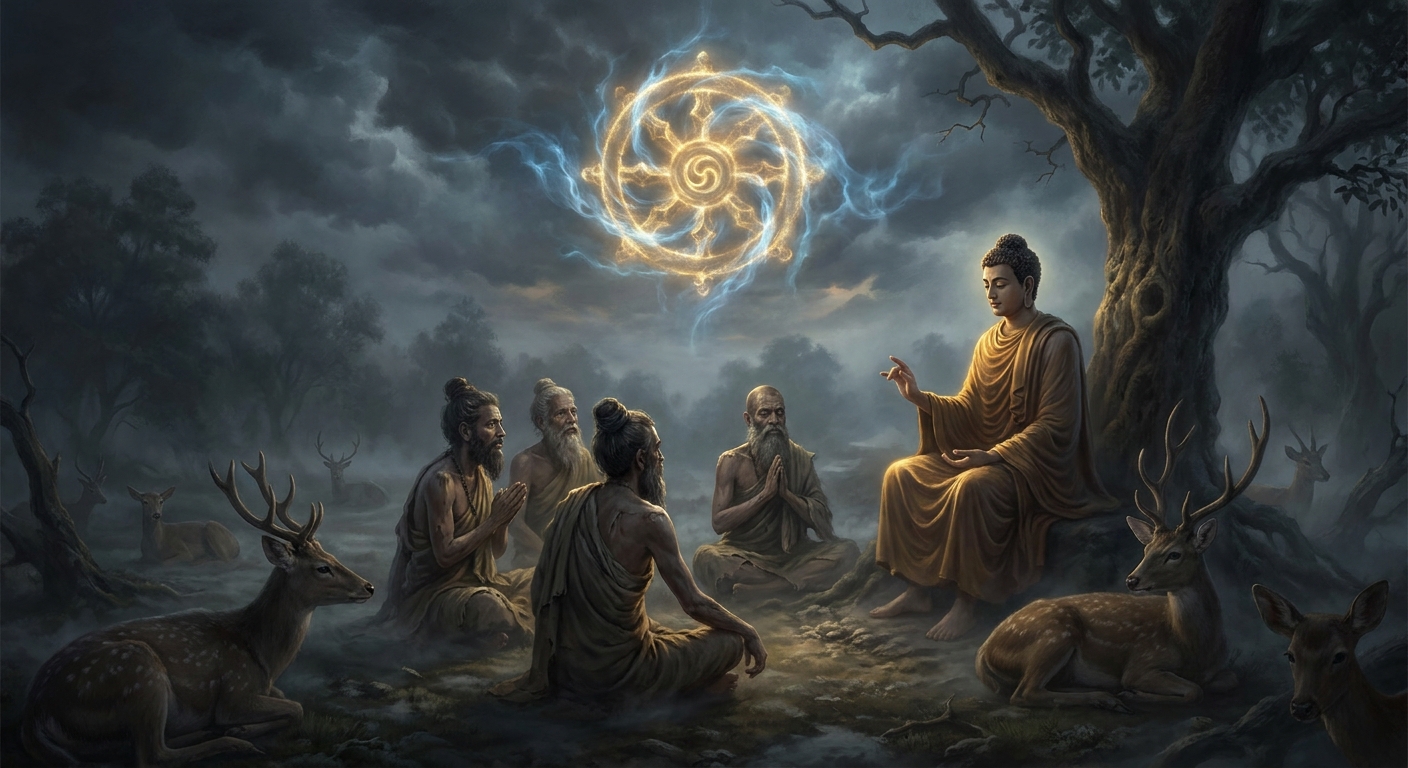
The First Sermon at Deer Park
Weeks after his enlightenment, the Buddha walks to Sarnath and finds the five ascetics who abandoned him. He turns the Wheel of Dharma for the first time — teaching the Four Noble Truths and the Eightfold Path — and a private awakening becomes a path others can walk.
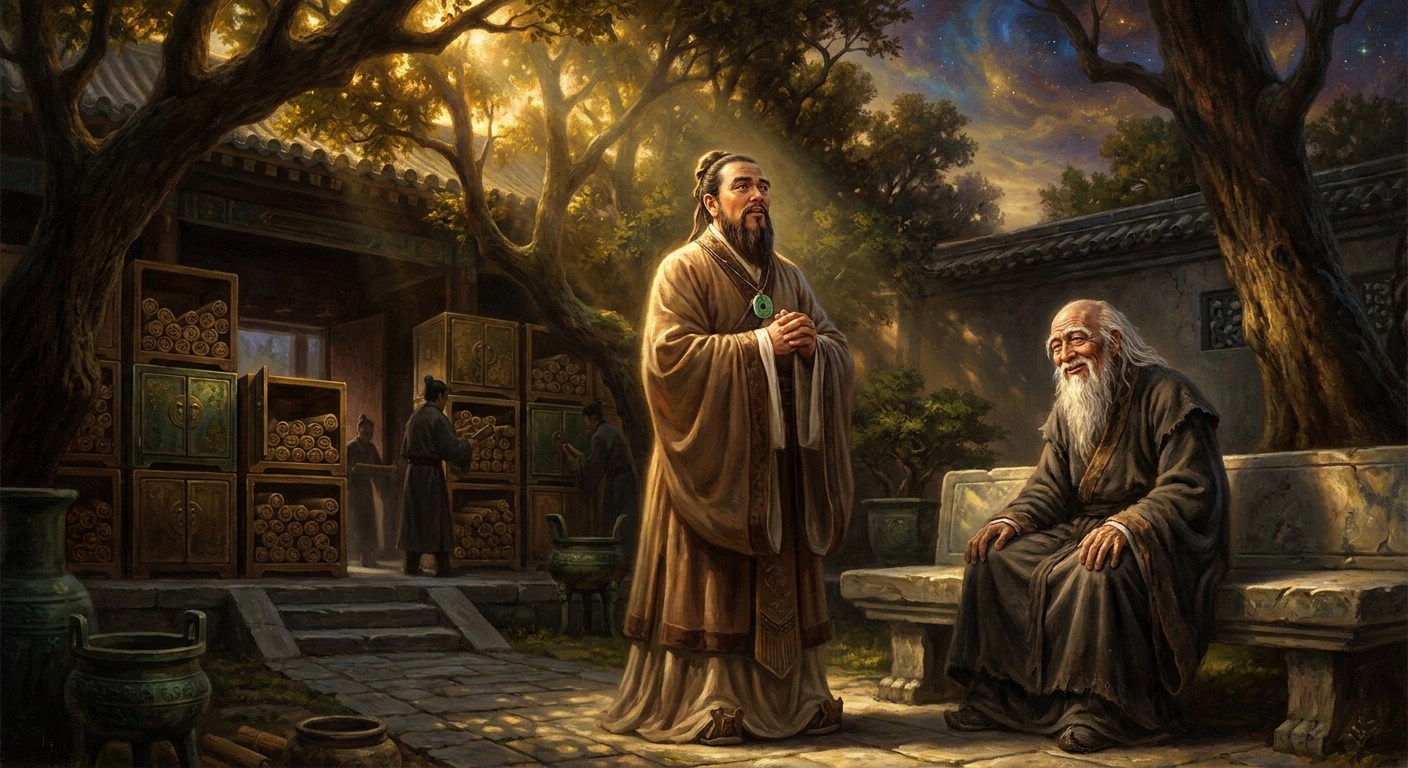
Confucius Meets Lao Tzu
The young ritual-master travels to the Zhou capital to ask the old archivist about the proper forms — and is told, in a single quiet sentence, that he has been carrying his own corpse around for years.
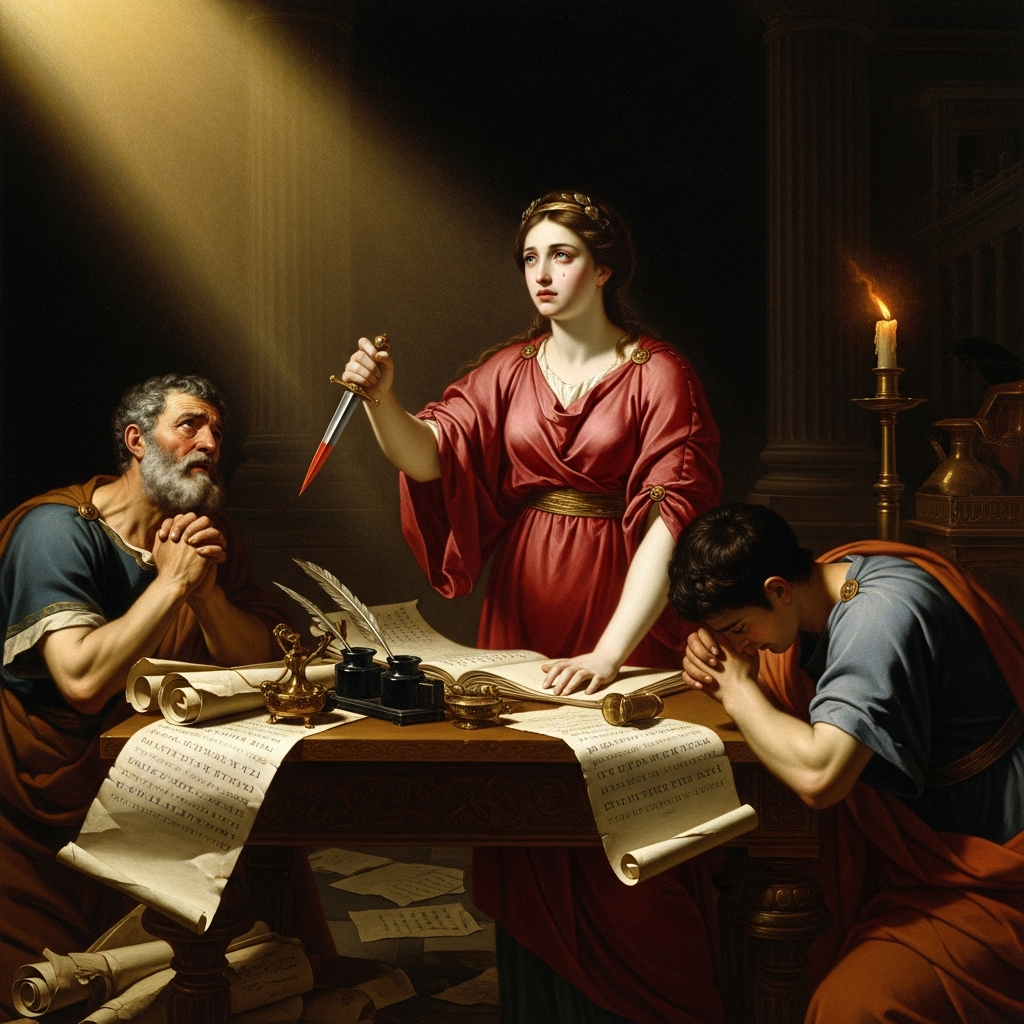
Lucretia and the Birth of the Republic
Tarquinius Sextus, son of Rome's king, rapes Lucretia — the most virtuous woman in Rome. The next morning she summons her father and husband, forces them to swear revenge, and kills herself. Her body, carried through the streets, ignites the revolution that ends the Roman monarchy and founds the Republic. The paradox is absolute: the woman most completely stripped of agency produces the most consequential act of self-determination in Roman history.
Classical Era
Athens, Rome, and the East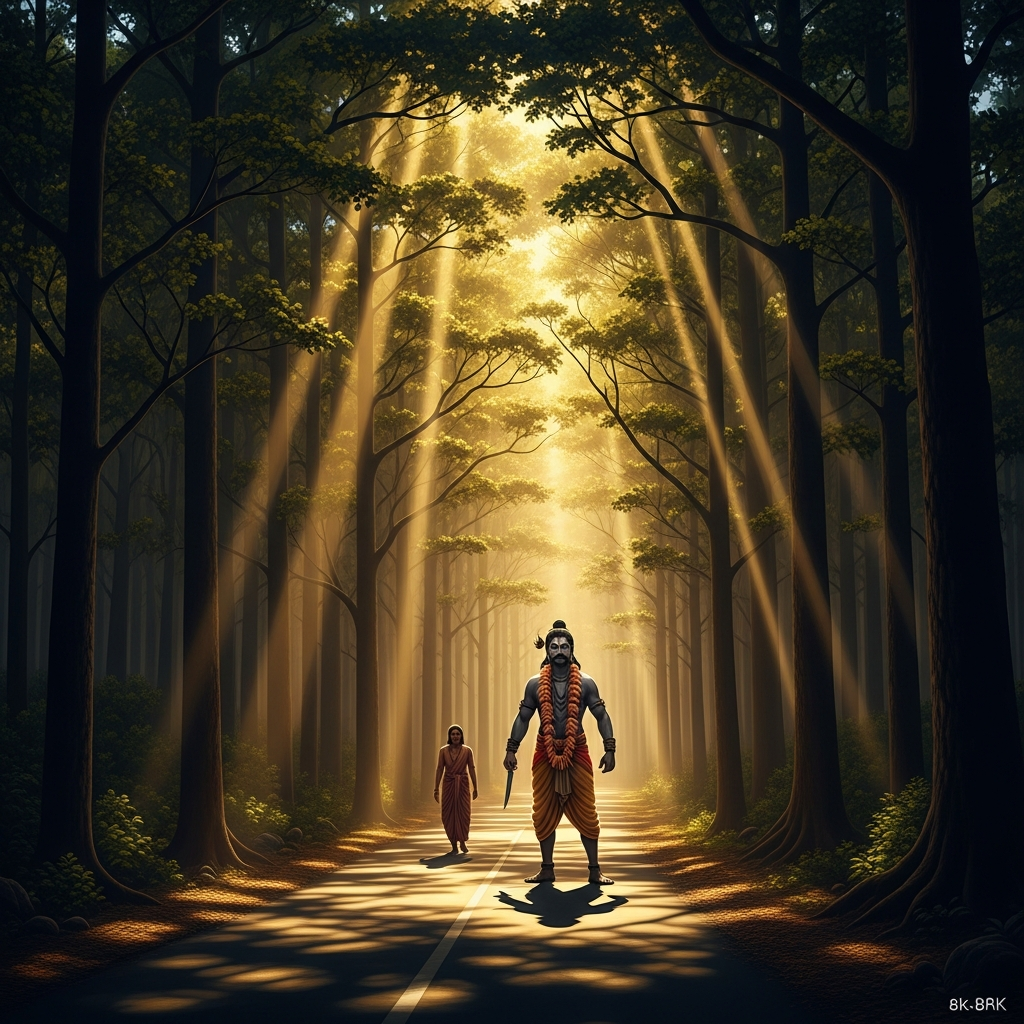
Angulimala: Nine Hundred and Ninety-Nine Fingers
A serial killer has vowed to make a garland of a thousand human fingers. Nine hundred and ninety-nine are already strung. The Buddha walks toward him on the forest road. Angulimala runs as fast as he can and cannot close the gap. What happens in the space between a sprint and a walk is the whole teaching.
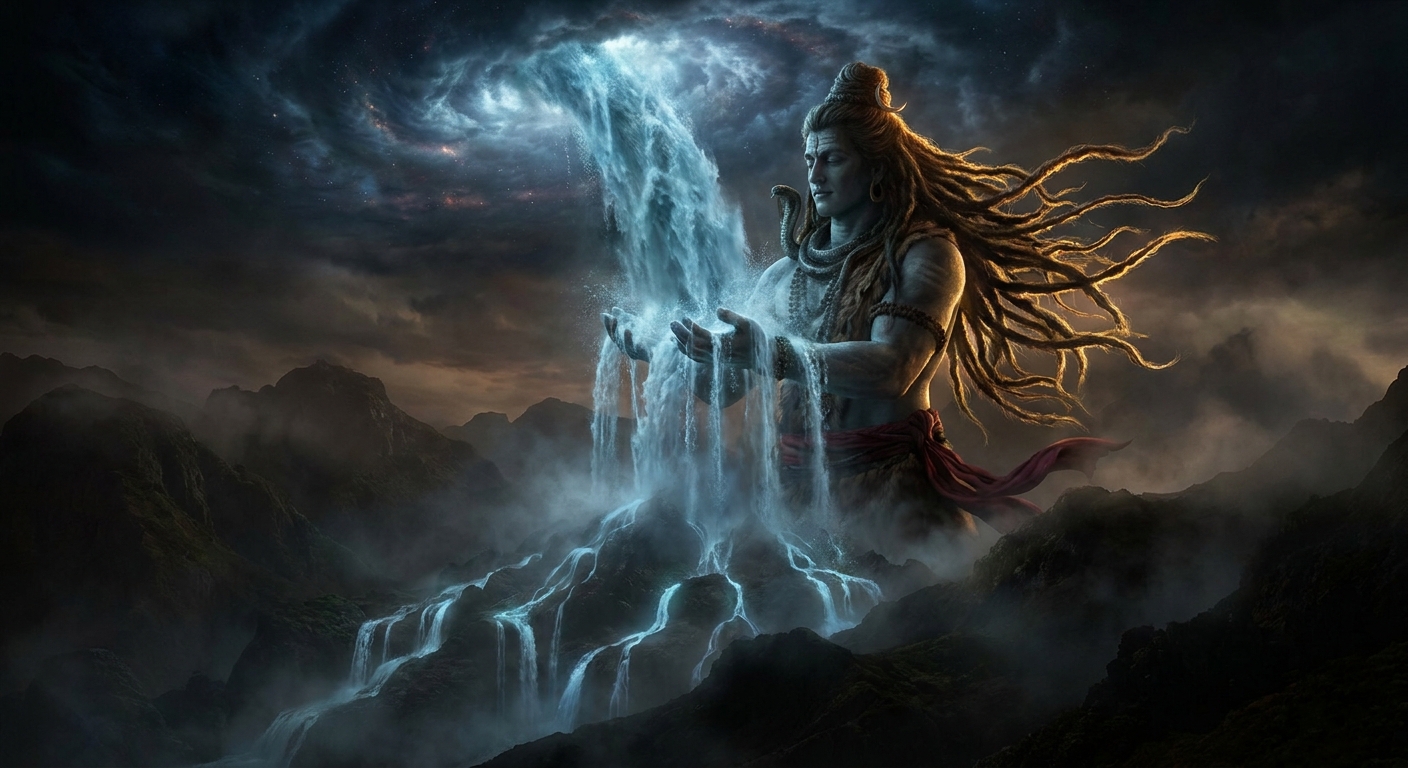
Ganga Through Shiva's Hair
The river goddess Ganga descends from heaven to purify the ashes of 60,000 ancestors — but her fall would shatter the earth. Shiva stands beneath her, catches her in his matted hair, and releases her in trickles. The Ganges is born.
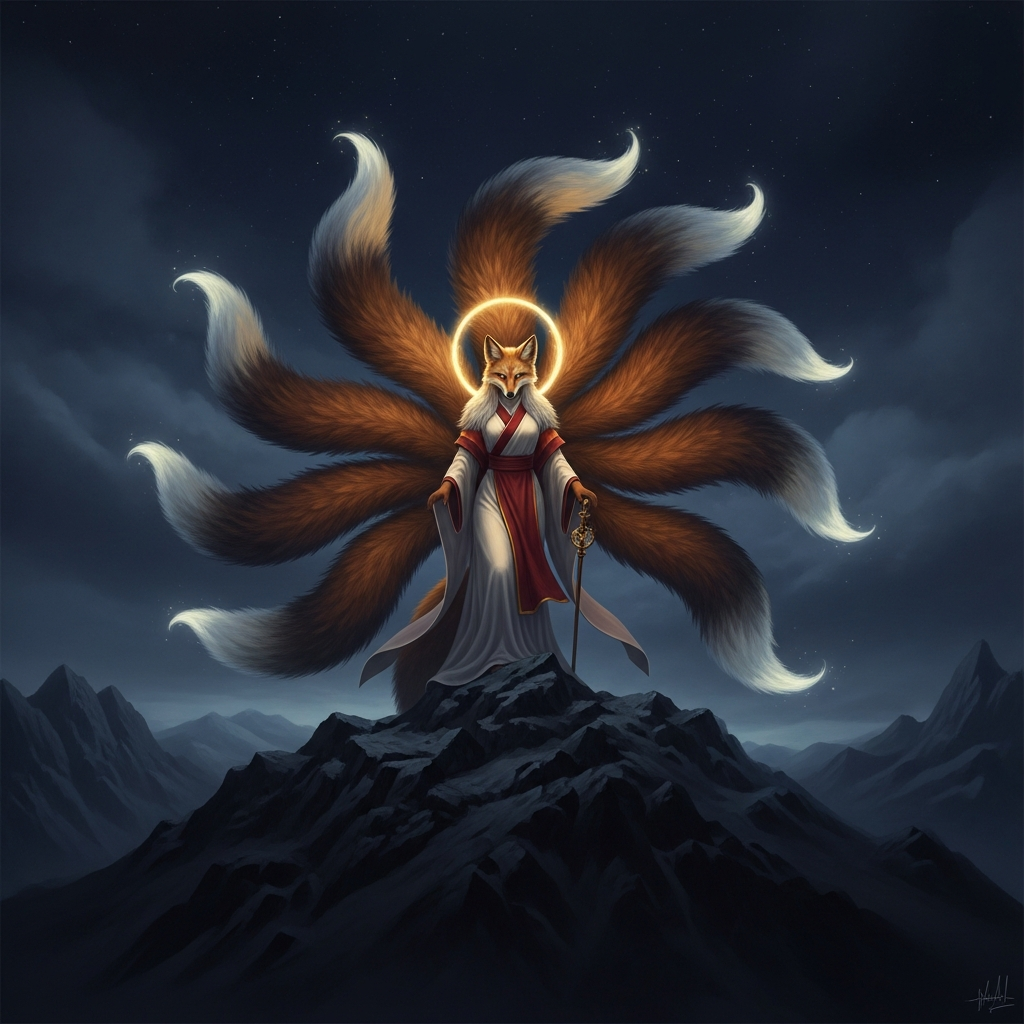
The Gumiho at the Mountain Road
A nine-tailed fox lives a thousand years in the Korean mountains, eating human essence to fuel a transformation she has been working toward her entire existence. On the night she attempts the final crossing into humanity, she finds a scholar on a mountain road and asks for the one thing she cannot take by force: genuine acceptance. What follows is a theological argument about whether the monstrous can be loved into the human.
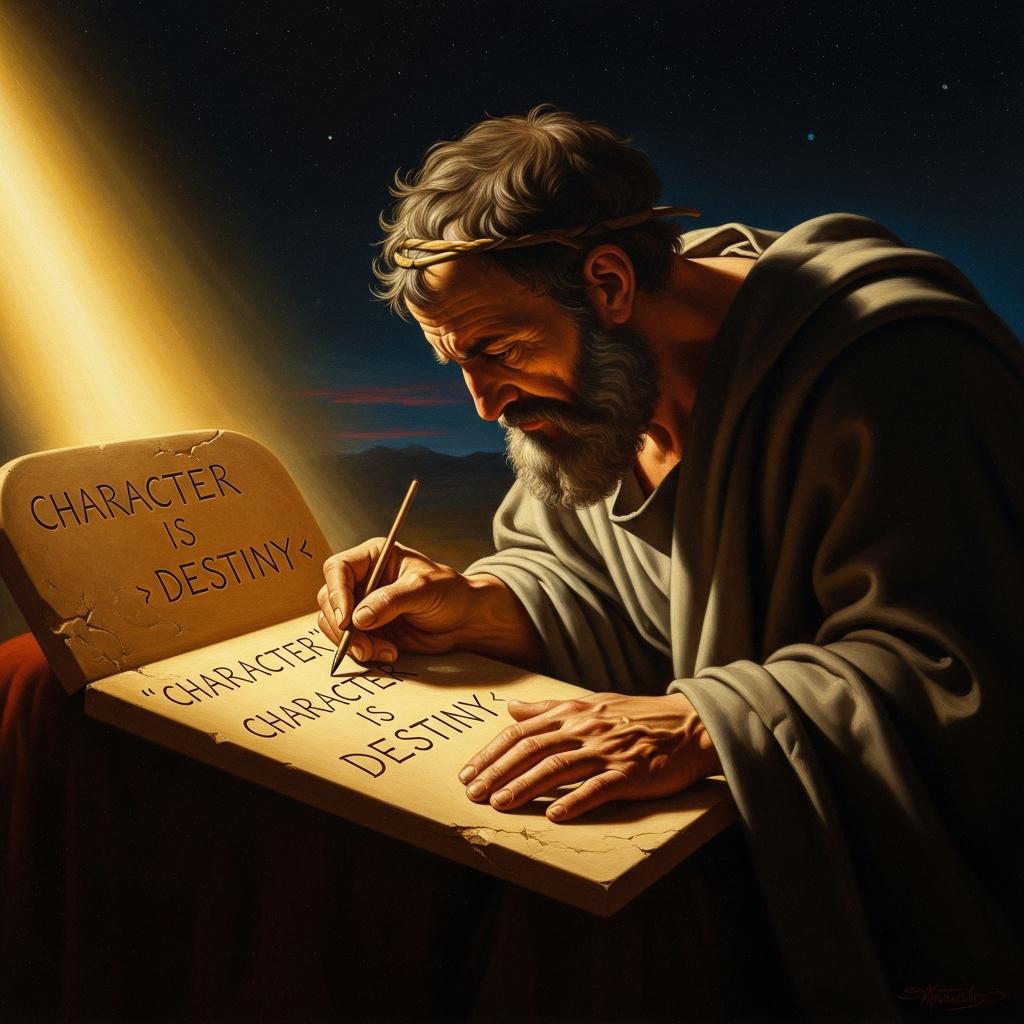
Heraclitus and the River
Heraclitus of Ephesus refuses to write philosophy as argument. He writes fragments — deliberately obscure, deliberately incomplete — and deposits his book in the temple of Artemis. His central teaching: everything flows, opposites are one, the world is fire, and there is a Logos that underlies all change.
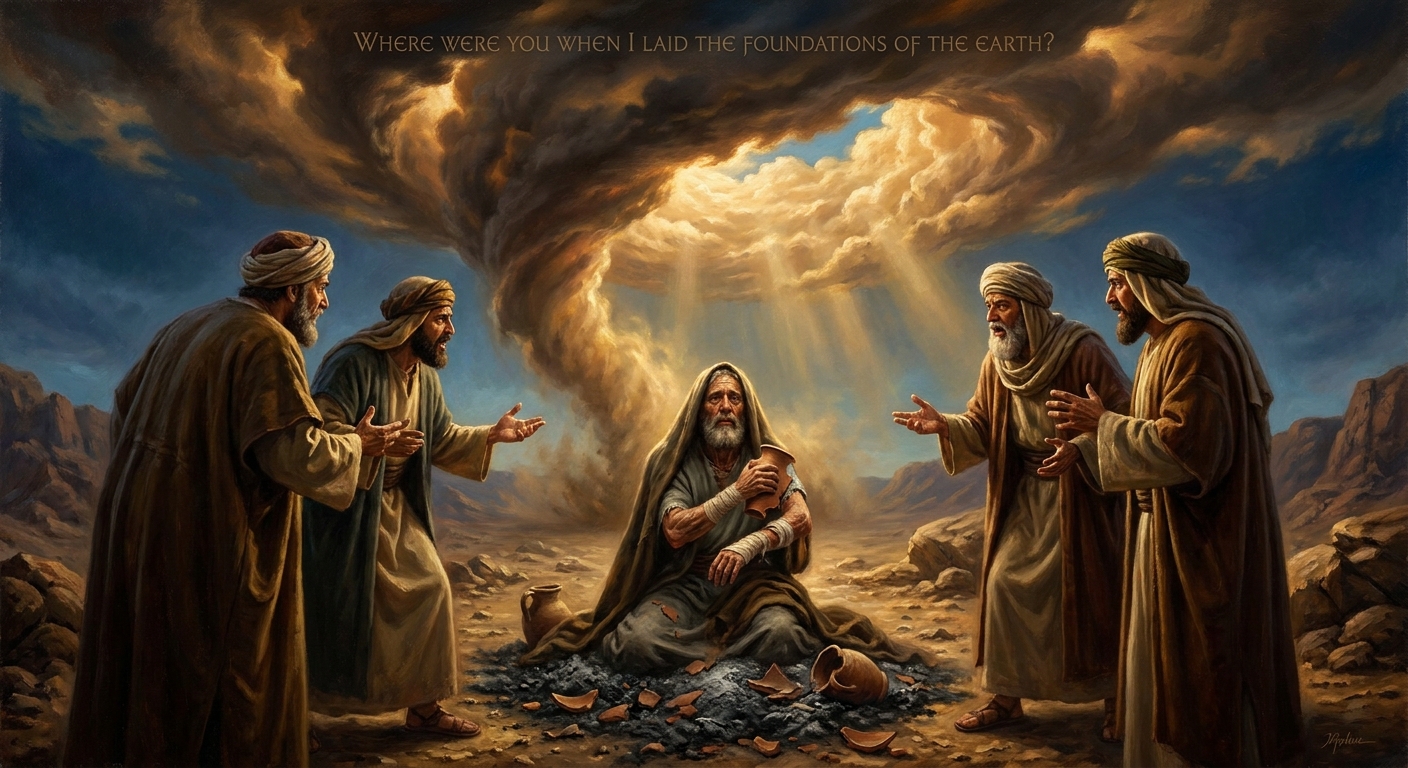
Job in the Ash
A righteous man is stripped of everything — children, wealth, health — sits in ash, and demands an answer from God. The answer that comes is not an answer.
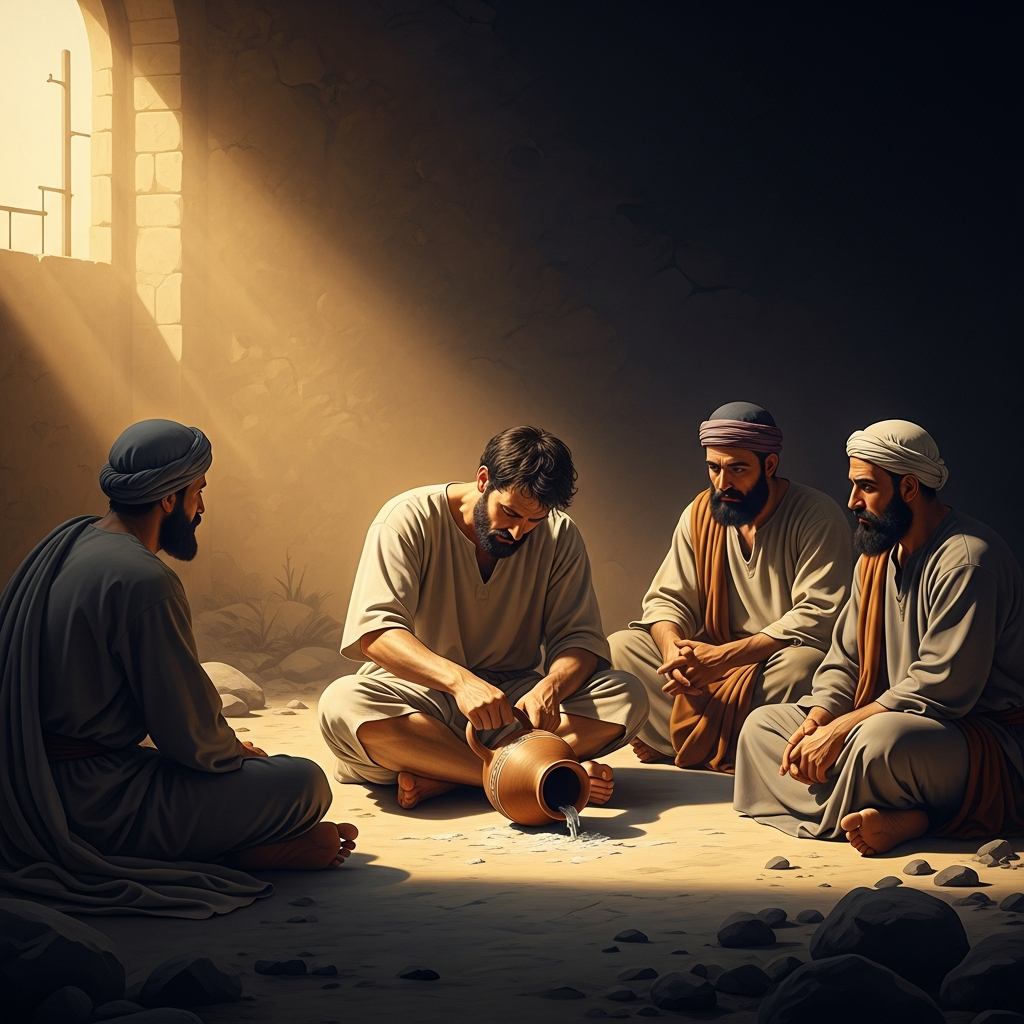
Job and the Voice from the Whirlwind
Job loses everything — children, wealth, health. His friends argue he must have sinned. He insists he is innocent and demands an audience with God. After thirty-five chapters of argument, God answers from the whirlwind: not with an explanation, but with a question. Job says: I have heard of you with my ear, but now my eye sees you. He is satisfied.
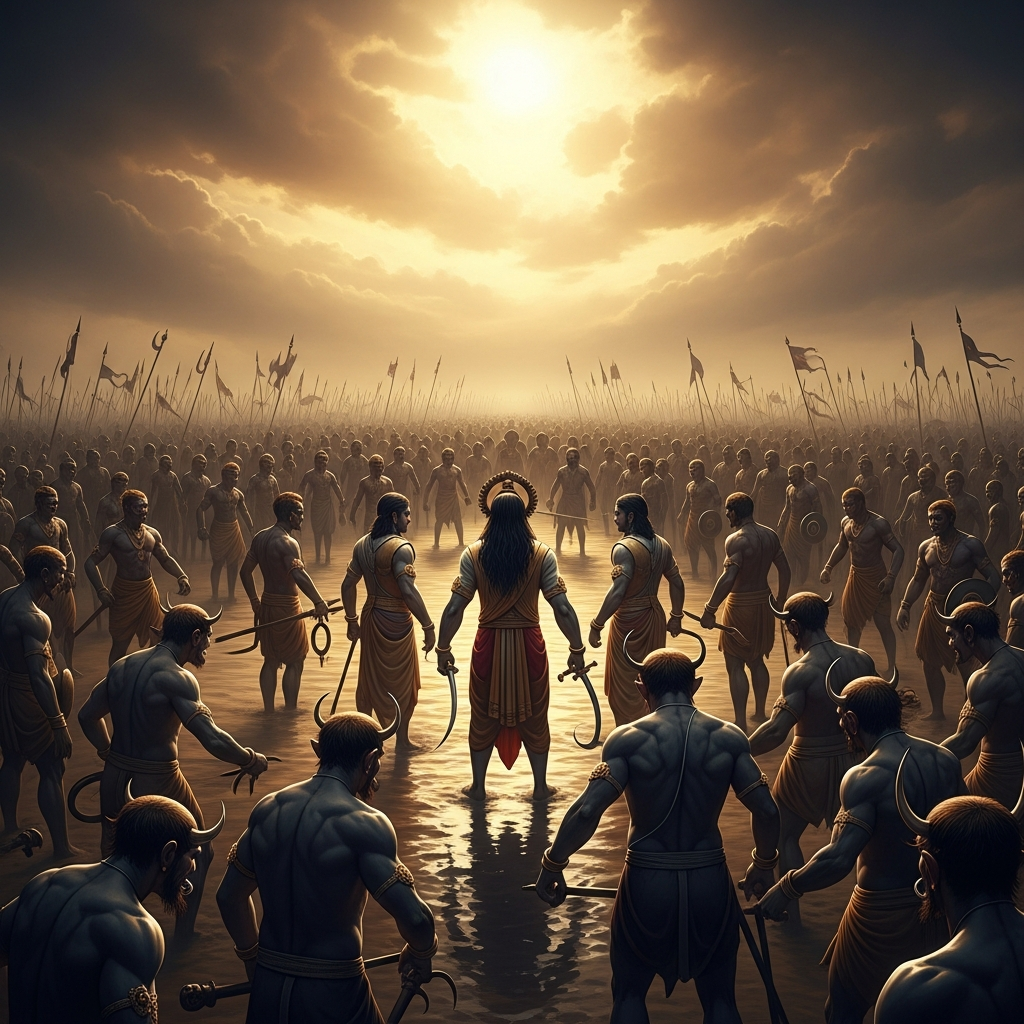
Kali and the Demon Who Bled Armies
The demon Raktabija possesses a boon that makes him impossible to kill: every drop of his blood that hits the ground spawns a full-grown demon identical to himself. The goddess Durga and her seven Matrika warrior-forms are losing the battle. From Durga's own brow Kali erupts — skeletal, black, beyond ferocity — and drinks every drop of Raktabija's blood before it can fall, swallowing his army back into herself until the demon stands alone, dry, and dies.
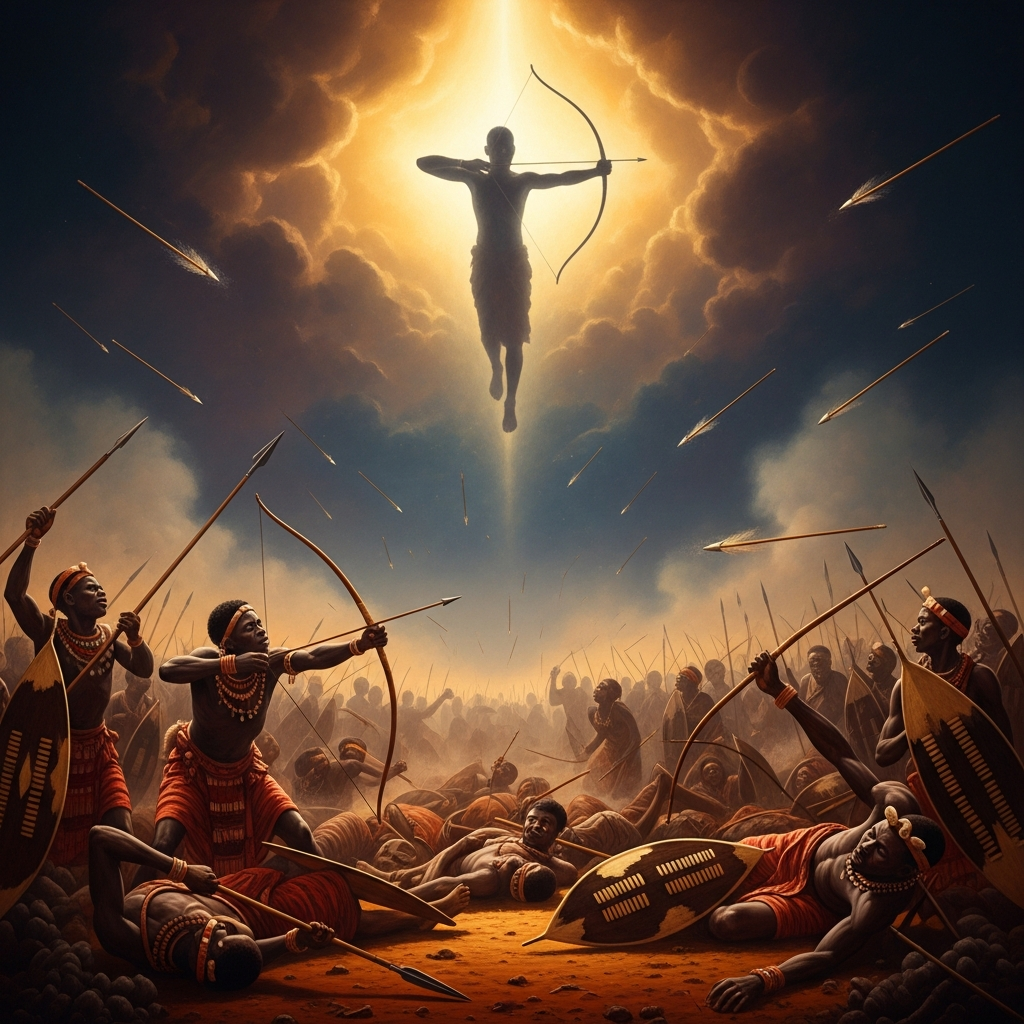
Kibuka Falls From the Trees
Kibuka, the war god of Buganda, is invincible as long as he stays above the battlefield. He is told never to sleep with a captive woman. He sleeps with a captive woman. She escapes and tells the enemy where he hides in the trees. The arrows find him.

Kisā Gotamī and the House With No Death
A mother carries her dead child through the city of Savatthi asking for medicine to revive him. She is sent to the Buddha. The Buddha sends her to find a mustard seed from a house where no one has died. She knocks on every door in the city. She cannot return. What she cannot return with teaches her what no medicine could.
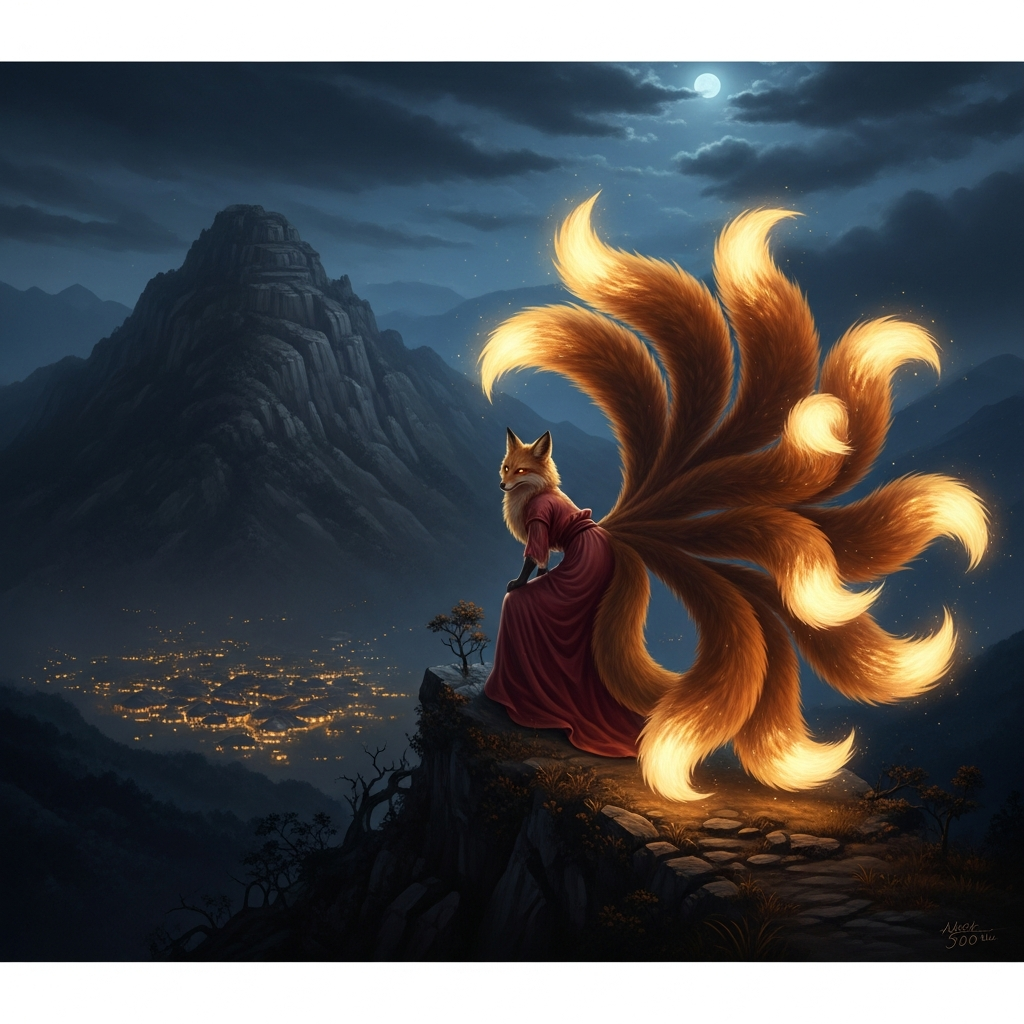
The Nine-Tailed Fox Chooses
The gumiho has lived a thousand years in the Korean mountains and is almost human. To become fully human she must eat one hundred human livers or hearts. She takes the form of a beautiful woman and finds a man she cannot bring herself to destroy. She spends a long season on the edge between becoming a demon and becoming a woman, and the story does not tell her which she chooses — only that she is still choosing.
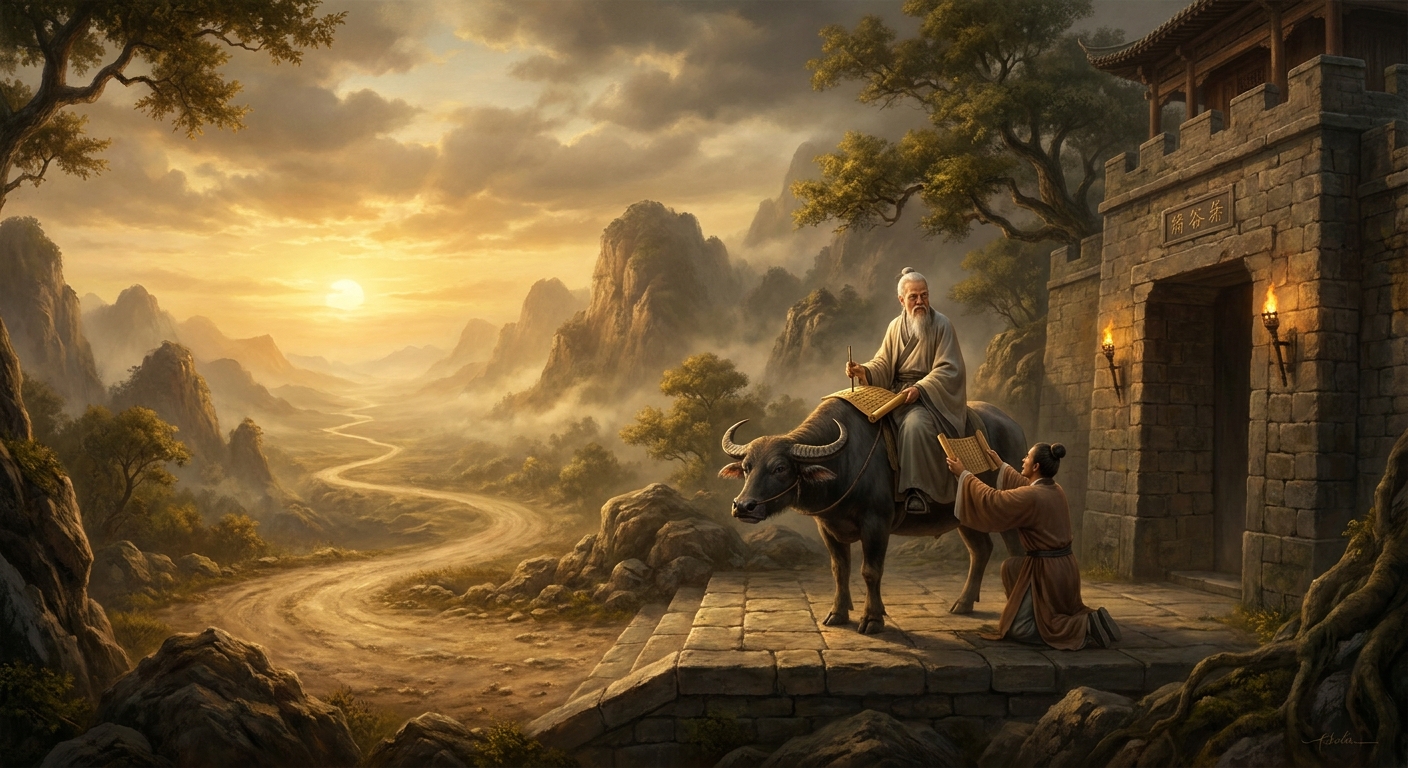
Lao Tzu at the Pass
The keeper of Zhou archives loads a water buffalo and rides west toward oblivion. A border guard stops him. Three days later the most-translated text after the Bible exists — because one man asked.
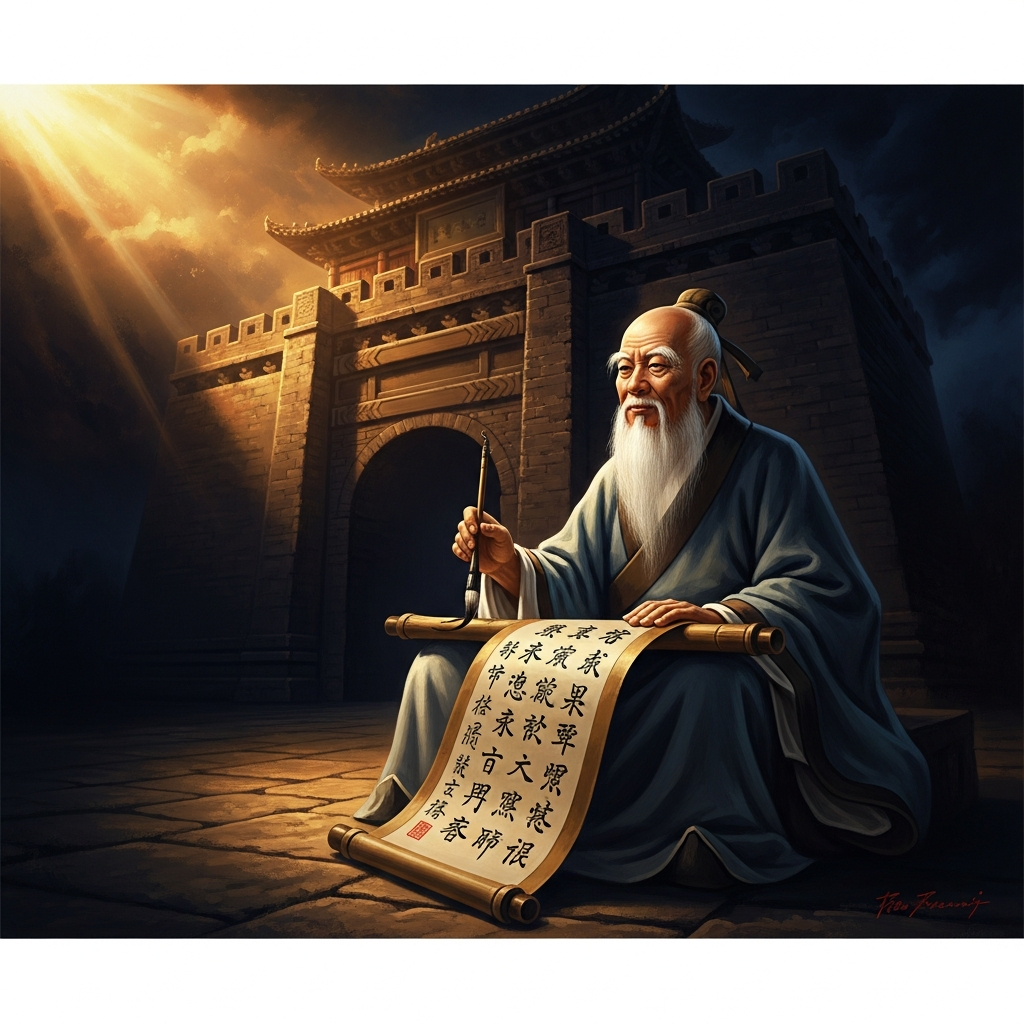
Laozi at the Western Pass
The keeper of the Zhou royal archives loads a water buffalo and rides west toward disappearance. A border guard at Hangu Pass sees a purple cloud coming from the east and knows a sage approaches. He begs Laozi to write something down. Three days later, the *Tao Te Ching* exists — 5,000 characters, the most-translated text after the Bible. Then Laozi rides on and is never seen again.
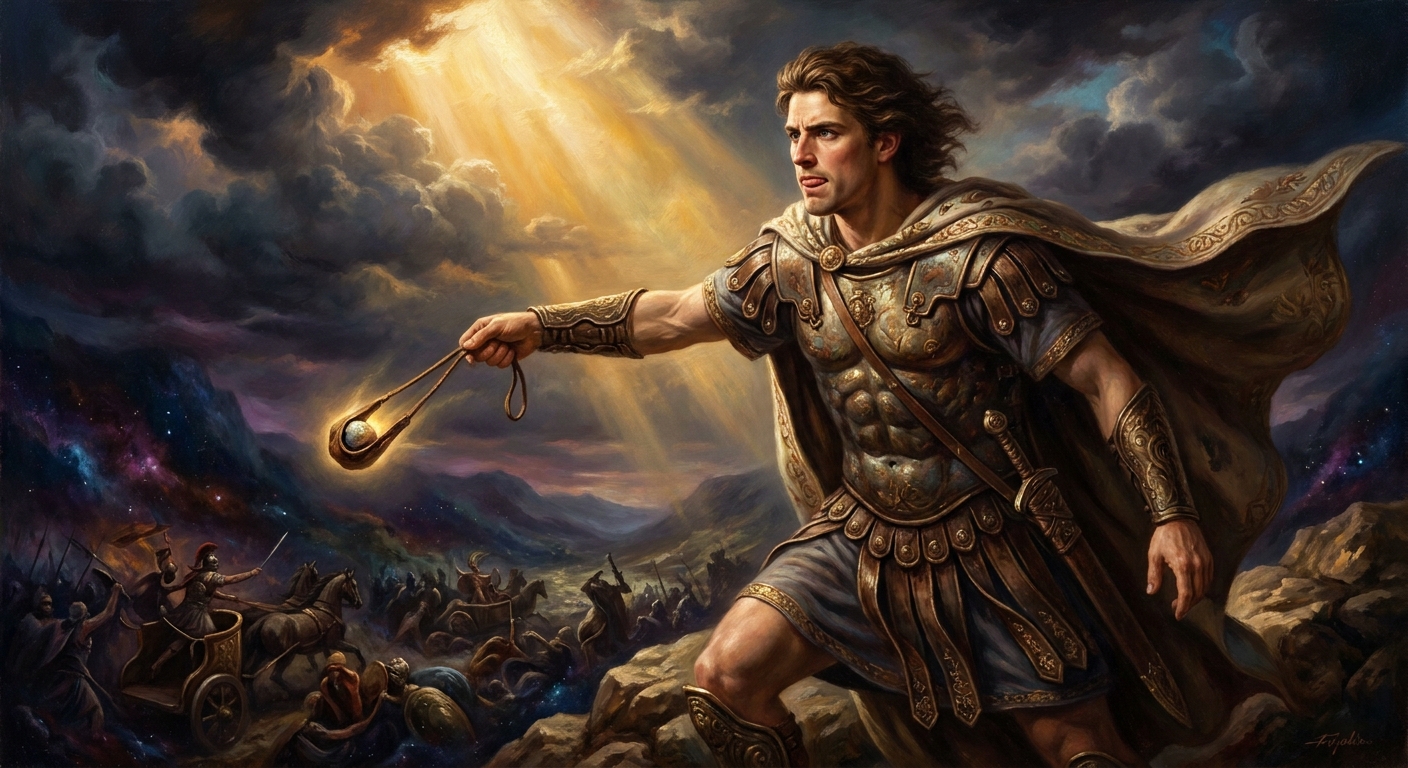
Lugh and the Eye of Balor
On the plain of Mag Tuired, a young god kills his own grandfather with a sling-stone, driving the death-eye out the back of his skull and onto the army that came to enslave Ireland.
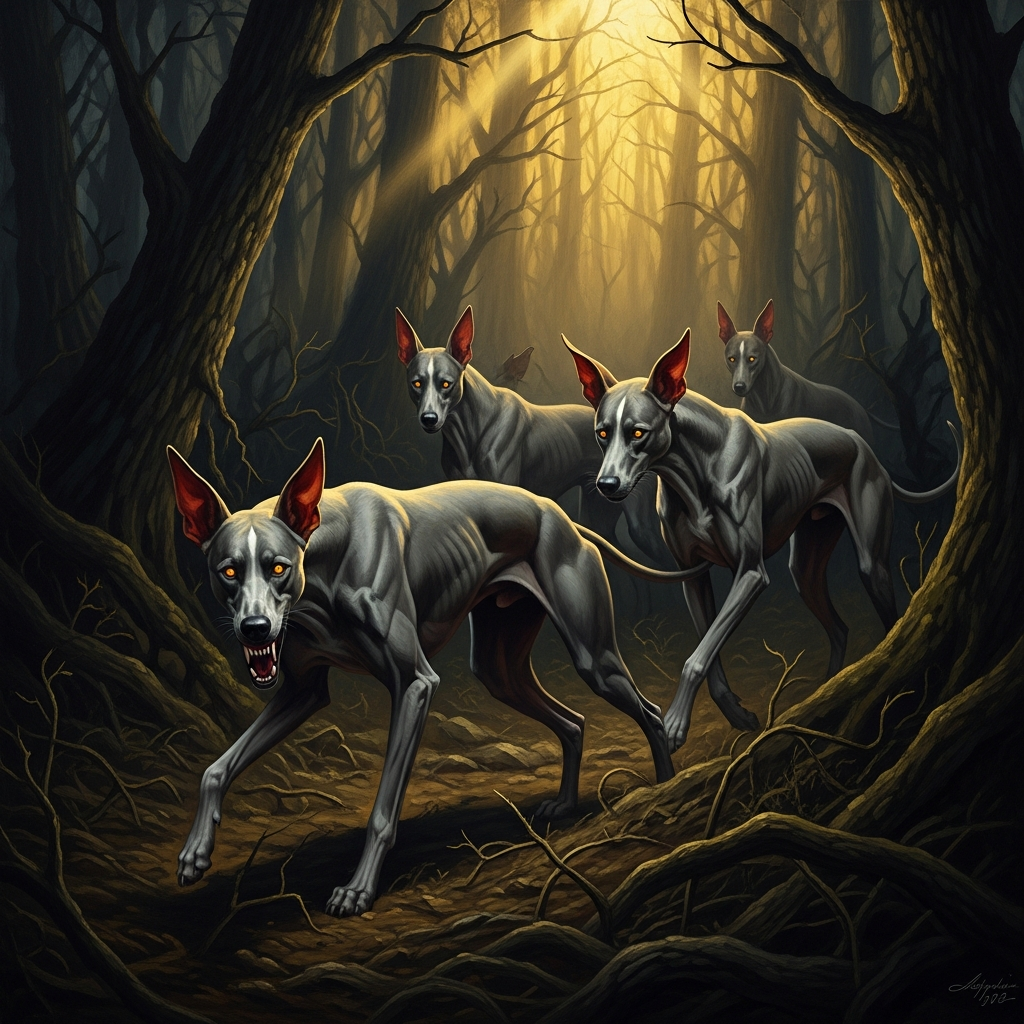
Pwyll, Prince of Dyfed, in the Underworld
Pwyll lets his hounds take a stag a stranger's pack has cornered. The stranger is Arawn, king of the Welsh Otherworld. The penalty is strange: the two men exchange lives for a year. Pwyll rules Annwn in Arawn's form. He fights Arawn's enemy with the rule of the single stroke. He returns to Dyfed transformed, a friend of the realm beyond the world.
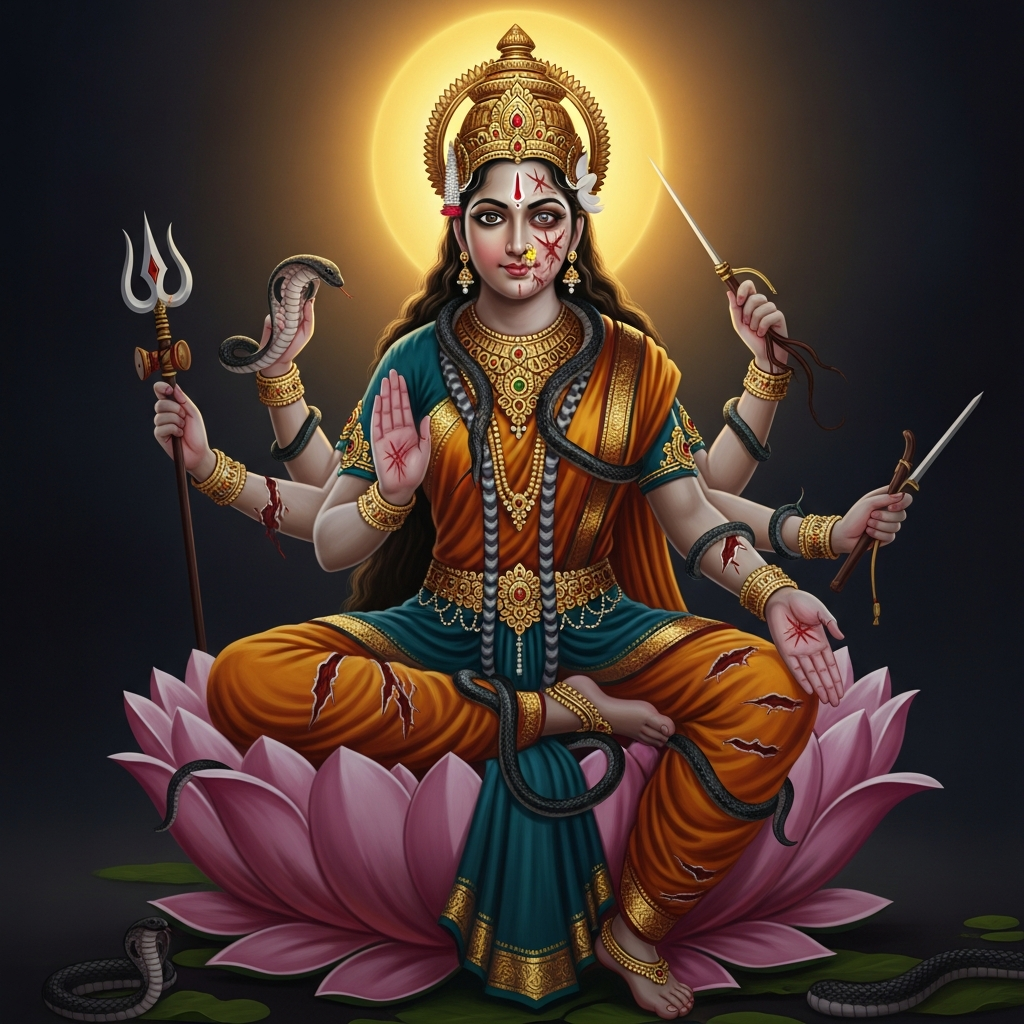
Manasa and the Merchant Who Would Not Bow
Manasa, the Bengali snake goddess, needs one more devotee to complete her divine legitimacy: Chand Saudagar, the greatest merchant in Bengal, who is devoted to Shiva and will not acknowledge her. She destroys his ships, kills his sons, kills his son-in-law Lakhindra on his wedding night. His daughter-in-law Behula floats Lakhindra's corpse to heaven on a raft and argues with the gods for his resurrection. She wins. The price is Chand's worship — given, finally, with his left hand in contempt. It is enough.
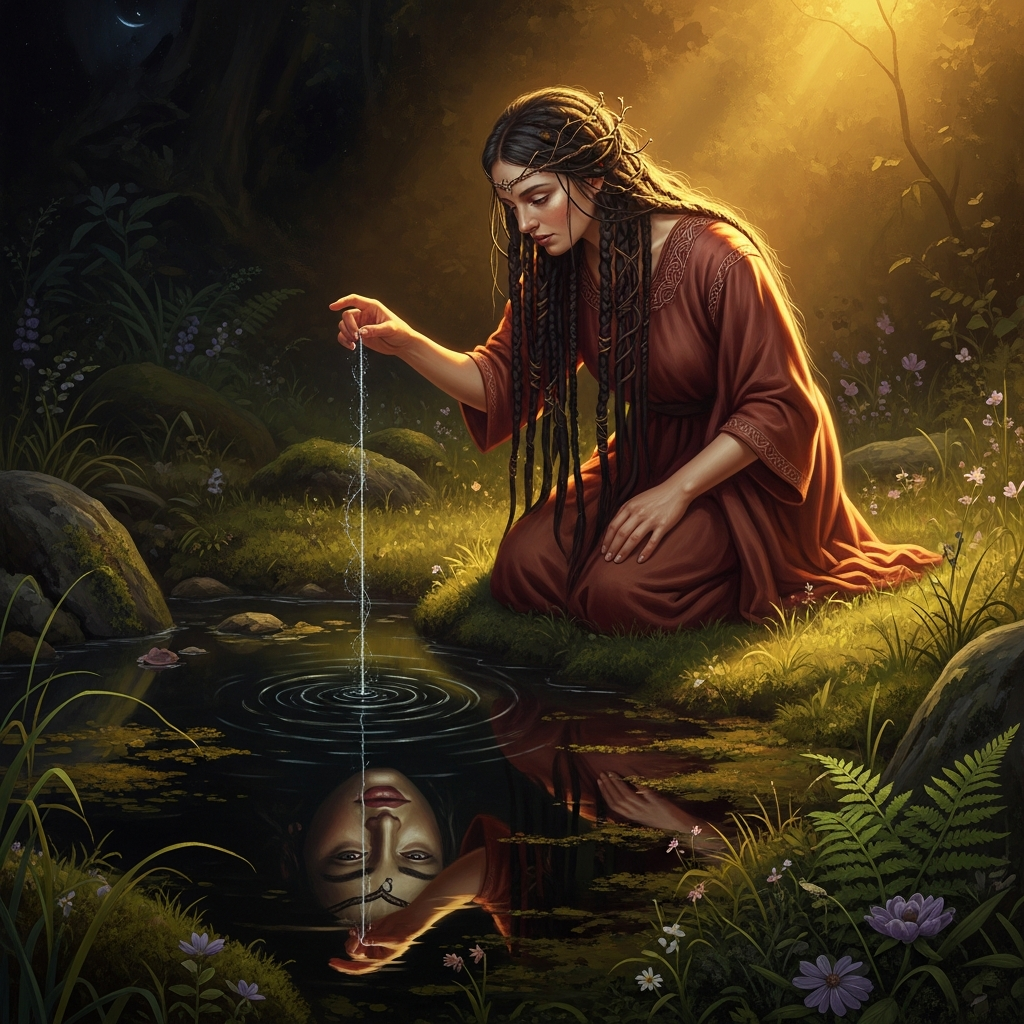
Mokosh: The Goddess Who Would Not Die
Mokosh is the only goddess recorded on Vladimir's hill of idols in Kiev before the 988 Christianization. When the idols burn, she does not. She retreats into the wells, the spindles, the springs at the forest's edge — and a thousand years of village women keep leaving thread and wool beside the water to appease her, long after the priest has said his morning prayers.
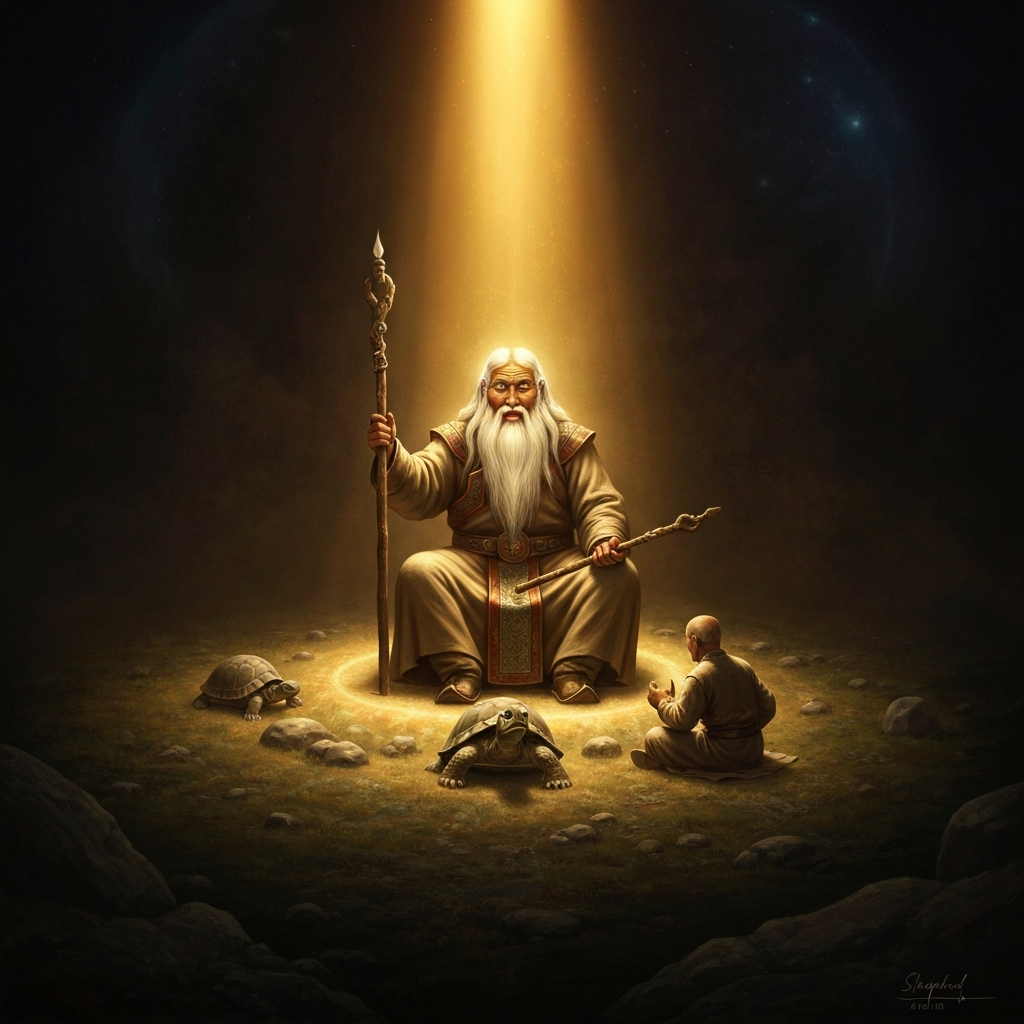
The White Old Man and the Measure of Years
Tsagaan Övgön — the White Old Man of Mongolian shamanism and cosmology — sits at the center of the world with his staff and turtle, the keeper of lifespans and natural order. A shepherd who has lived badly comes to him at the end of his counted years and must bargain for more time — or accept what the White Old Man already knows about him.
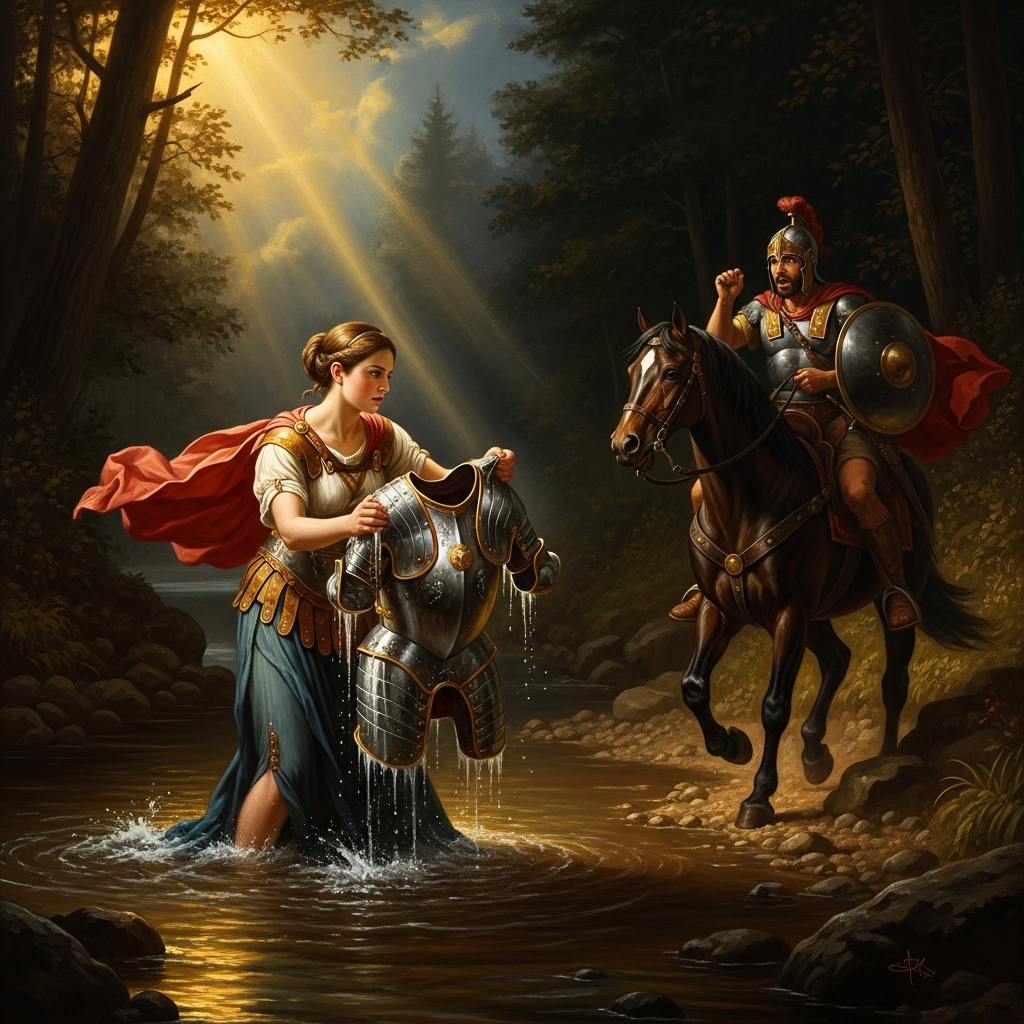
The Morrigan: Crow on the Shoulder
She is three goddesses in one body — Badb the crow, Macha of horses and sovereignty, Nemain of panic and frenzy. She washes armor at the ford before battles and the warrior who recognizes his own gear is the one who will die. She offers herself to Cú Chulainn and is refused. She lands on his shoulder when he is dead. She is not the goddess of evil. She is the goddess of the truth that was woven into every life from the first day.
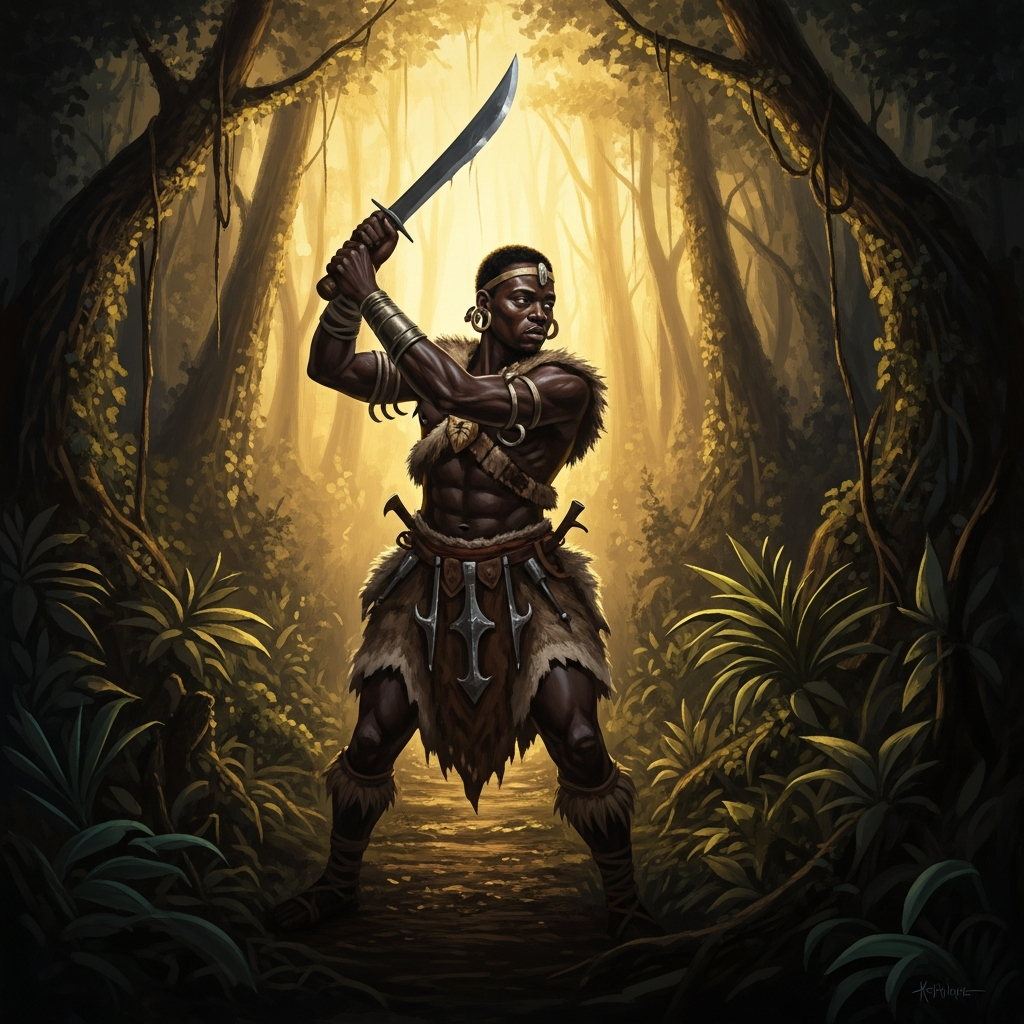
Ogun and the First Blade
Before any orisha could descend to earth, Ogun hacked through the primordial forest with iron tools. The first blacksmith repays that gift with blood.

Patacarā: What the Water Takes
In a single day a woman loses her husband to a snakebite, both children to the river and a hawk, and learns that her parents and brother died the same night in a collapsed house. She walks naked through the streets of Savatthi, mad with grief. The Buddha meets her at the gate. What happens at the river's edge, and what the practice that follows teaches about grief that has no bottom.
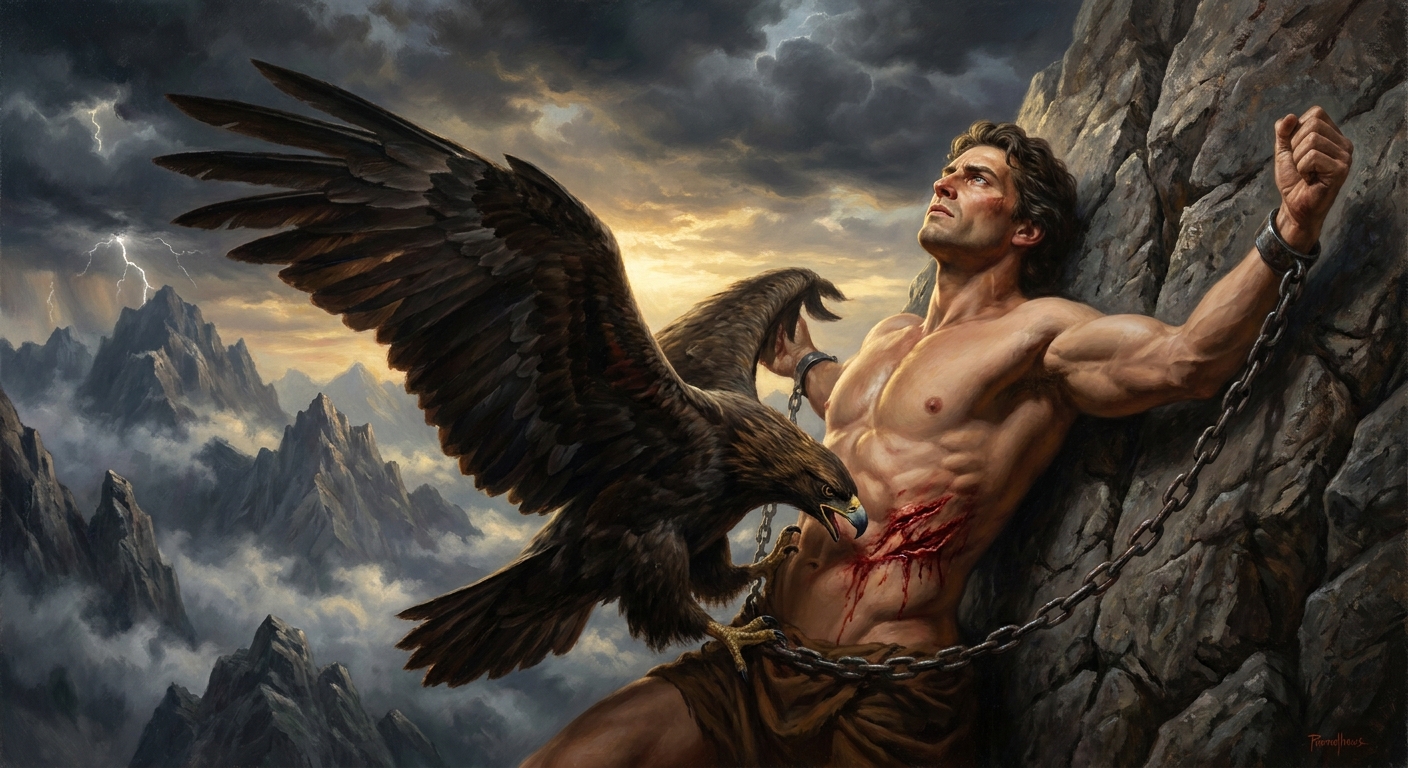
Prometheus Chained
The Titan stole fire from the gods and gave it to humanity. Zeus chained him to a rock in the Caucasus where an eagle devours his liver every day — the organ regenerates each night for eternal torment.
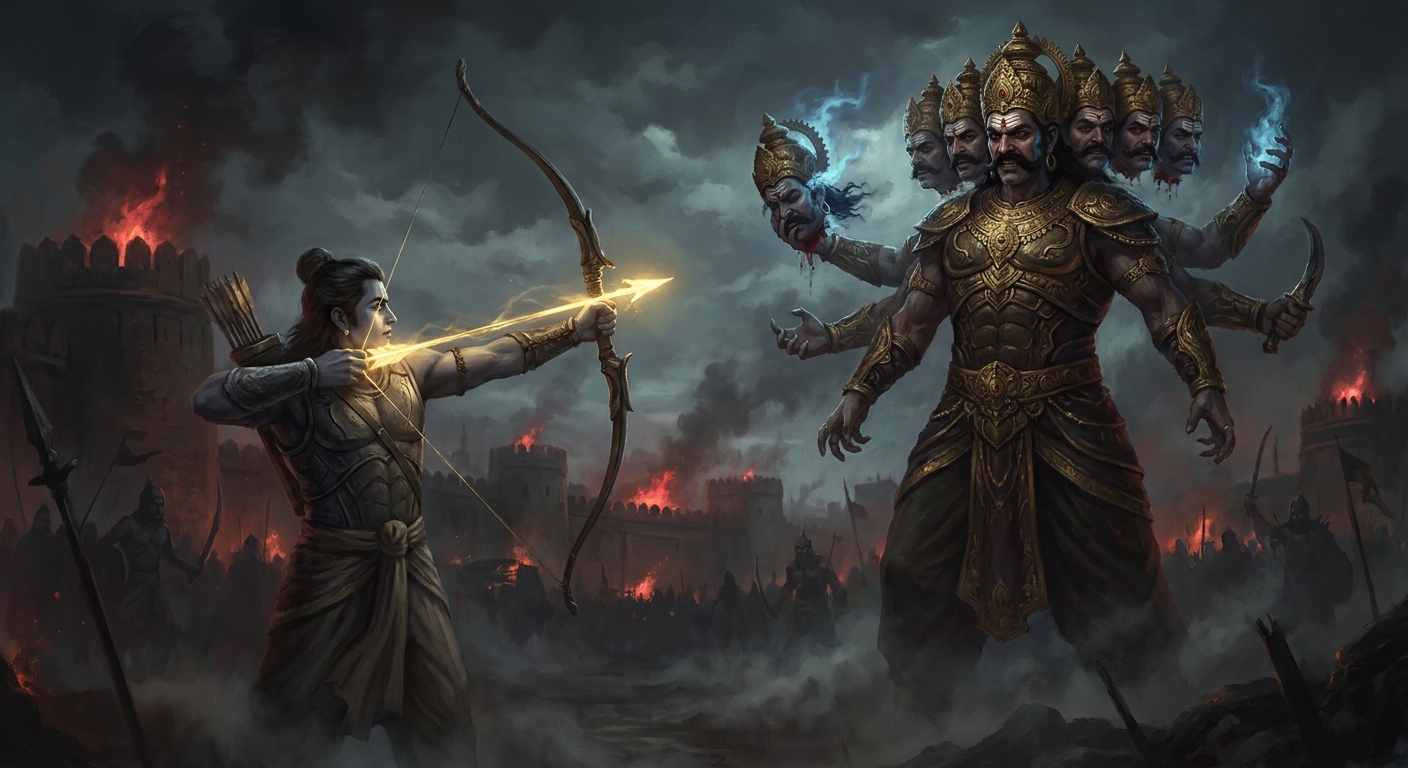
Rama Slays Ravana
The seventh avatar of Vishnu stands on the shore of Lanka. The demon king's ten heads will not stay severed. One arrow — the Brahmastra, given by the sage Agastya — must end it.
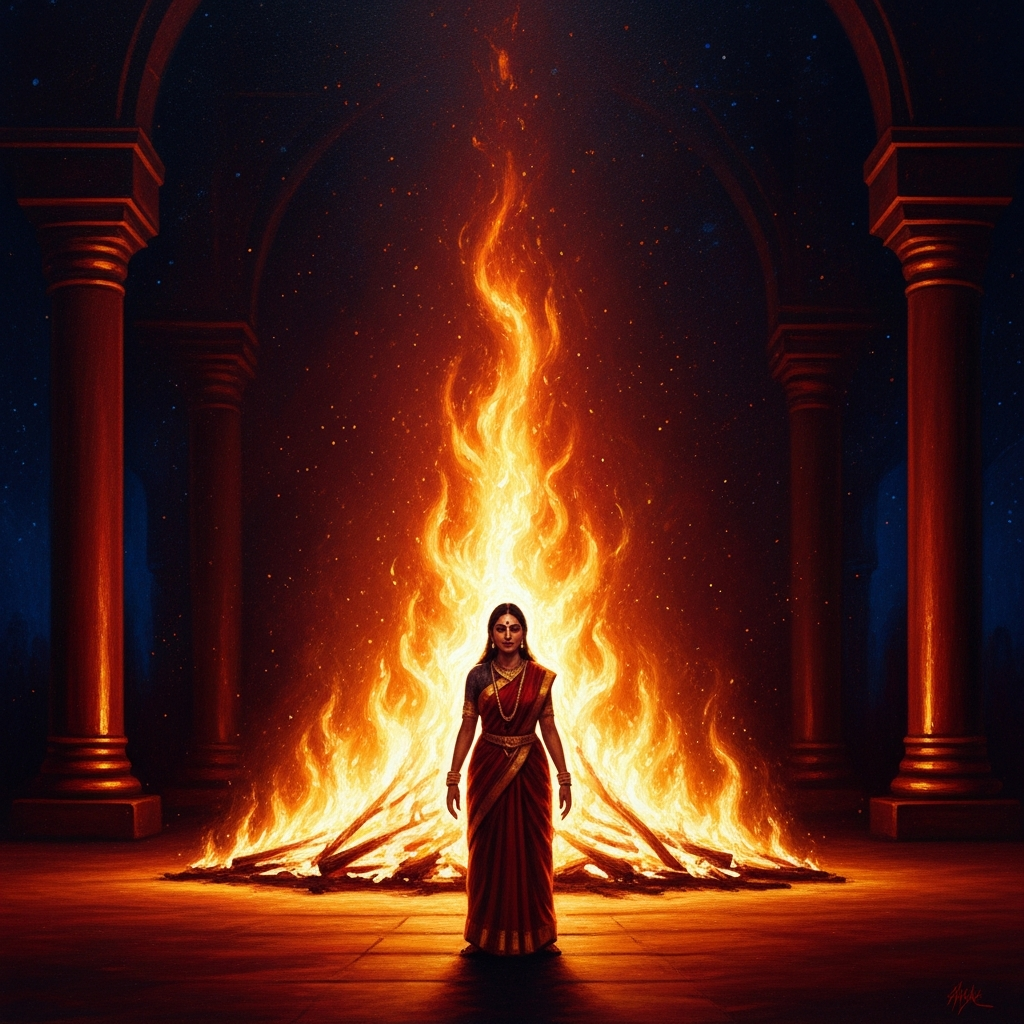
Sati Dies at Her Father's Sacrifice
Daksha, king of the gods and father of Sati, hosts a grand yagna and deliberately omits Shiva from the invitation. Sati attends uninvited; Daksha publicly humiliates her husband before the assembled devas. She immolates herself in the sacred fire. Shiva's grief becomes a catastrophe that reshapes the geography of the Indian subcontinent — the 51 Shakti Pithas, each sacred shrine marking where a piece of Sati's body fell.
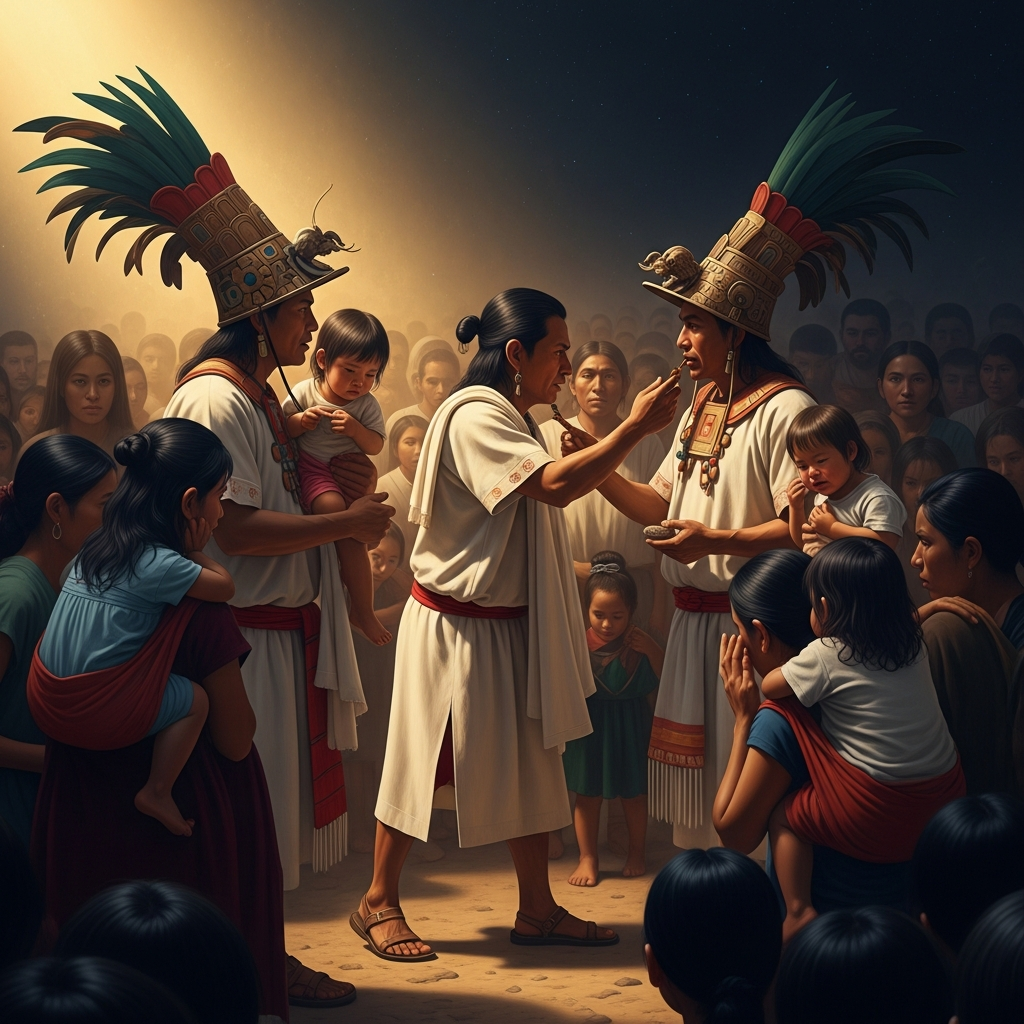
Tlaloc Demands Children
In the calendar of the Aztec sacred year, the rain god Tlaloc requires a specific offering: children, chosen for the abundance of their tears. The more they cry, the more the god is pleased, because their tears are rain in miniature. A family walks toward the moment the theology requires of them.
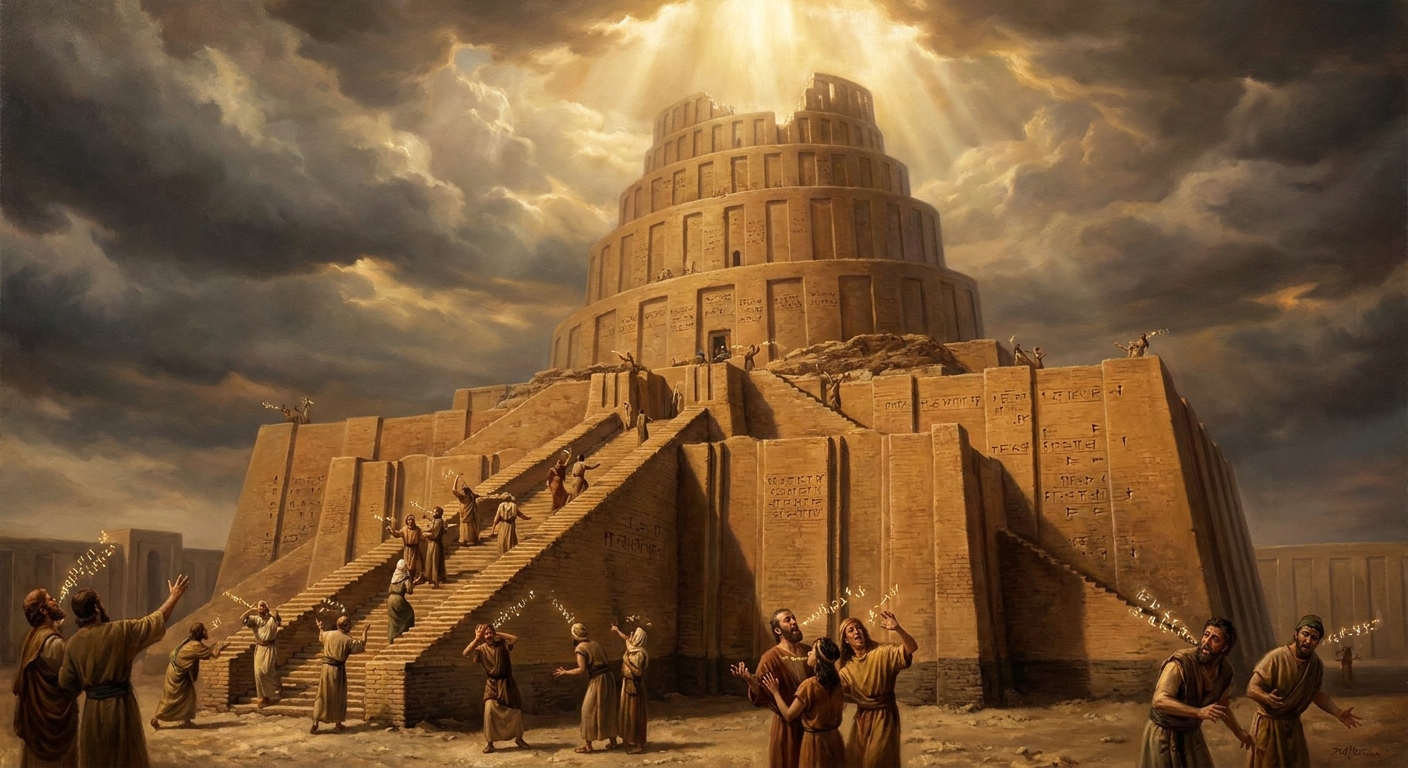
The Tower
After the flood, humanity builds a ziggurat to reach heaven. God descends, sees, and shatters human speech. The work stops. The builders scatter across the earth.
Tripura Sundari and the Geometry of the Universe
Tripura Sundari, the Beautiful Goddess of the Three Cities, is the universe — not a ruler of it, but identical with it, her body the diagram that precedes all bodies. A Tantric practitioner in Kerala meditates at midnight on the Sri Yantra, the nine interlocking triangles that constitute her form, and encounters the question at the center of the bindu: if the cosmos is a diagram of consciousness, what is the awareness looking at the diagram?
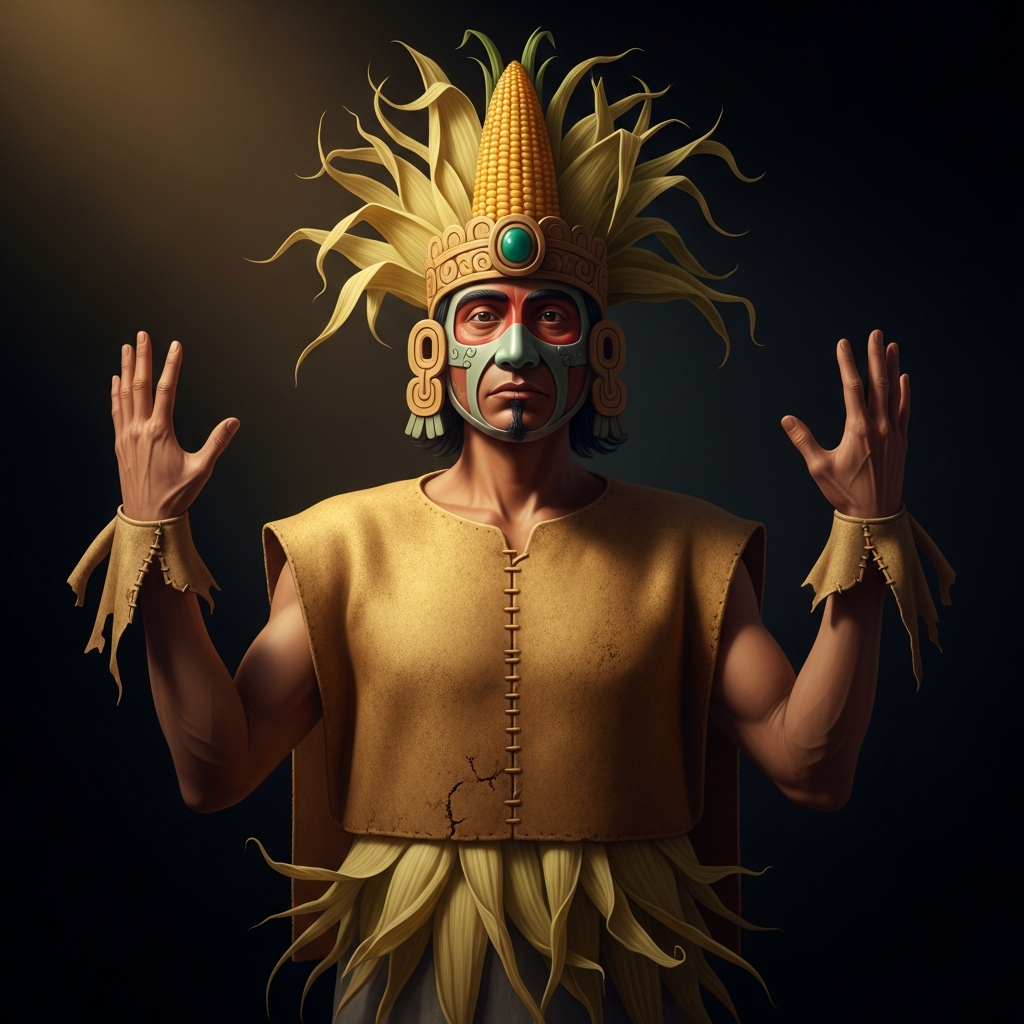
Xipe Totec and the Wearing of Skins
Our Lord the Flayed One is the god of seasonal renewal, and his festival requires that priests wear the skins of sacrificial victims for twenty days as they rot away. An old priest assigned to this duty for the first time understands, from the inside, what the festival has always been saying about seeds, death, and what must be shed before anything new can grow.
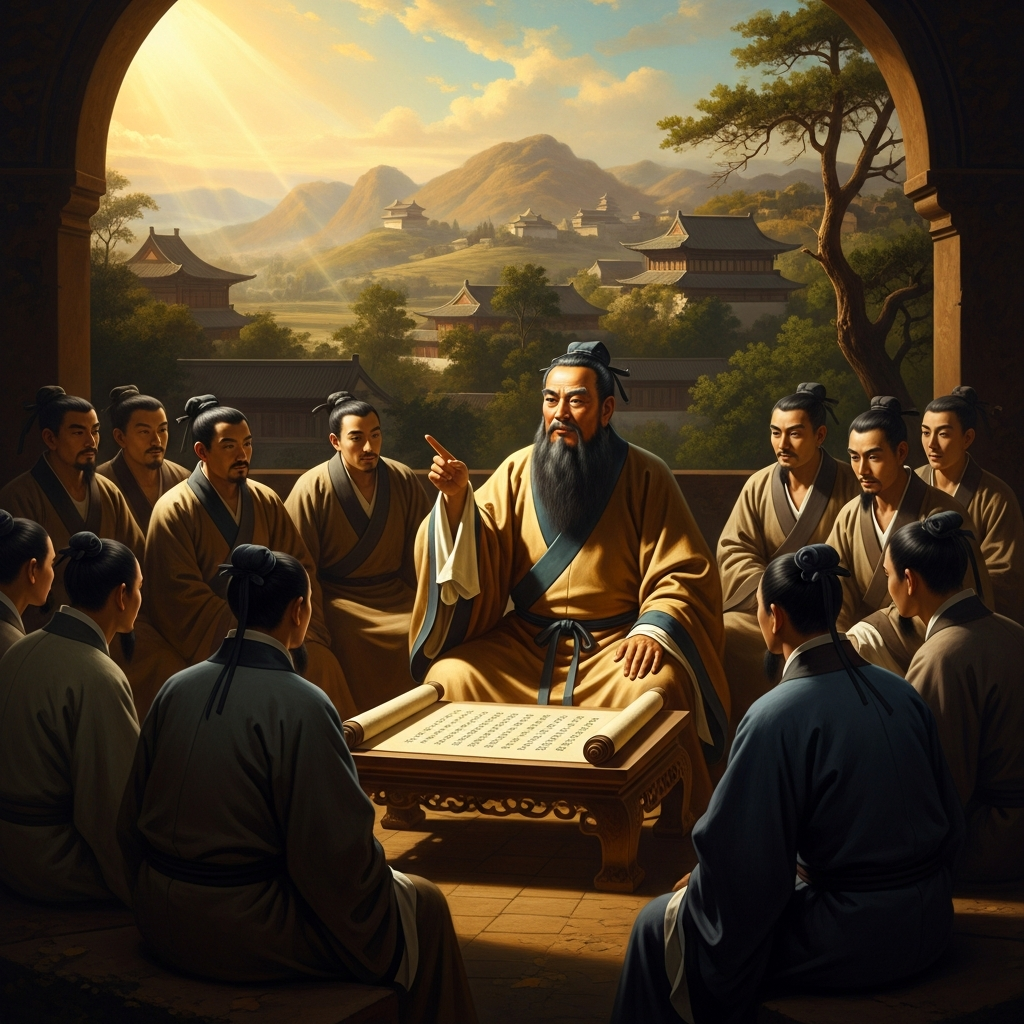
Confucius Teaches the Way
In his sixties, Confucius wanders thirteen years through the warring states, seeking one ruler willing to govern with virtue. None will listen. He returns to Lu and teaches instead — and each student gets a different answer, because the truth is fitted to the ear that hears it.
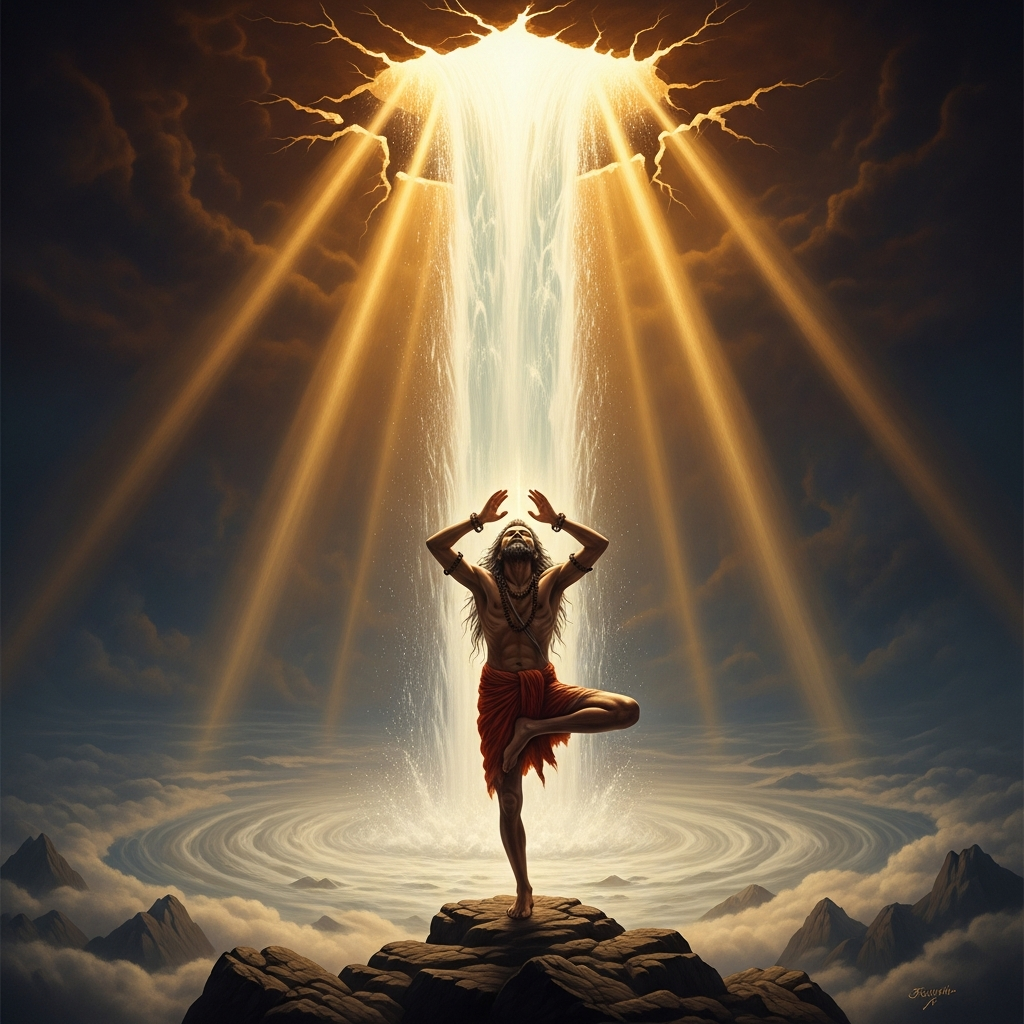
Bhagiratha's Thousand-Year Penance
Sixty thousand sons of King Sagara are reduced to ash by a sage's single glance. Generations later, their descendant Bhagiratha walks away from his throne to stand on one leg in the Himalayas — for a thousand years, then another thousand — until the gods agree that an ancestor's debt can be paid by a great-great-great-grandson who is willing to dissolve himself for it.
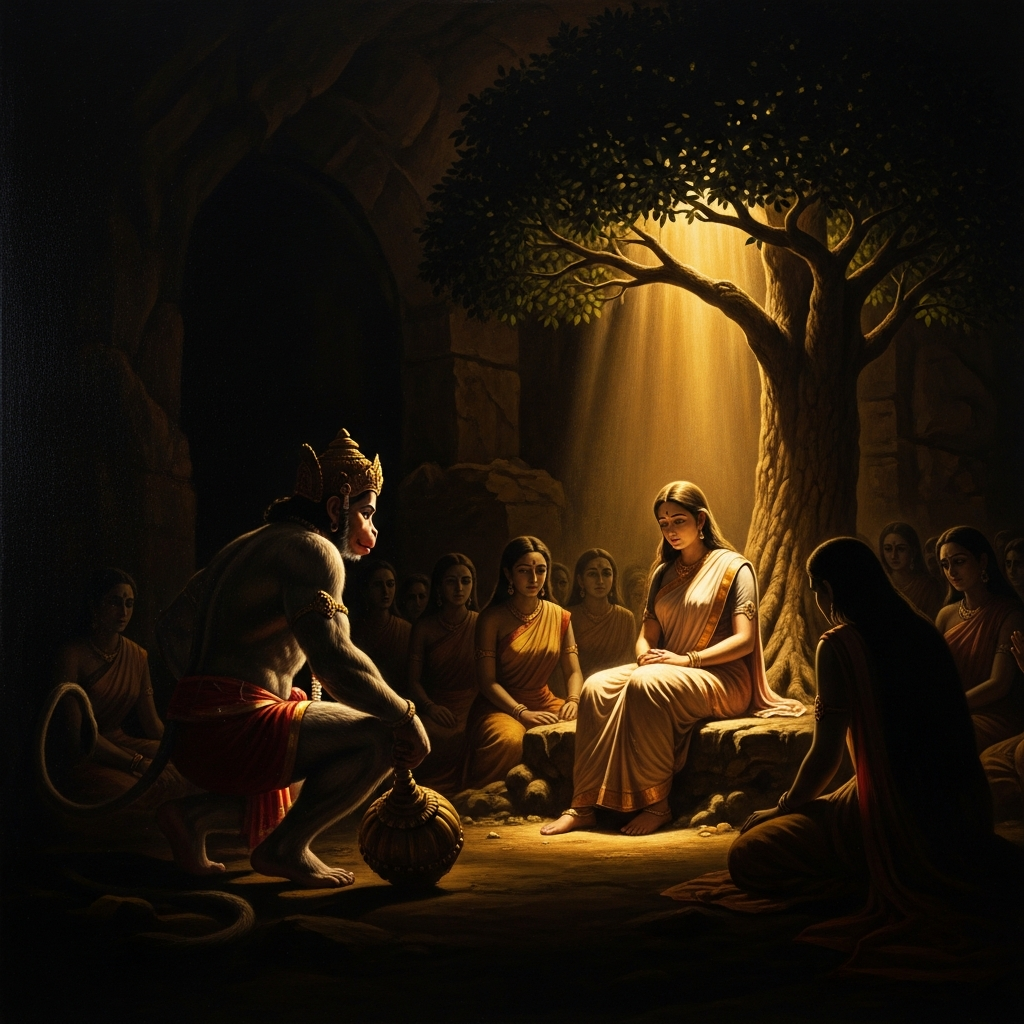
Hanuman Finds Sita in the Ashoka Grove
The monkey-god leaps an ocean to find a grieving queen beneath a shimshapa tree. He shrinks to the size of a cat, sings Rama's story softly in the branches above her head, and presses a signet ring into her palm. She refuses his offer to carry her home.
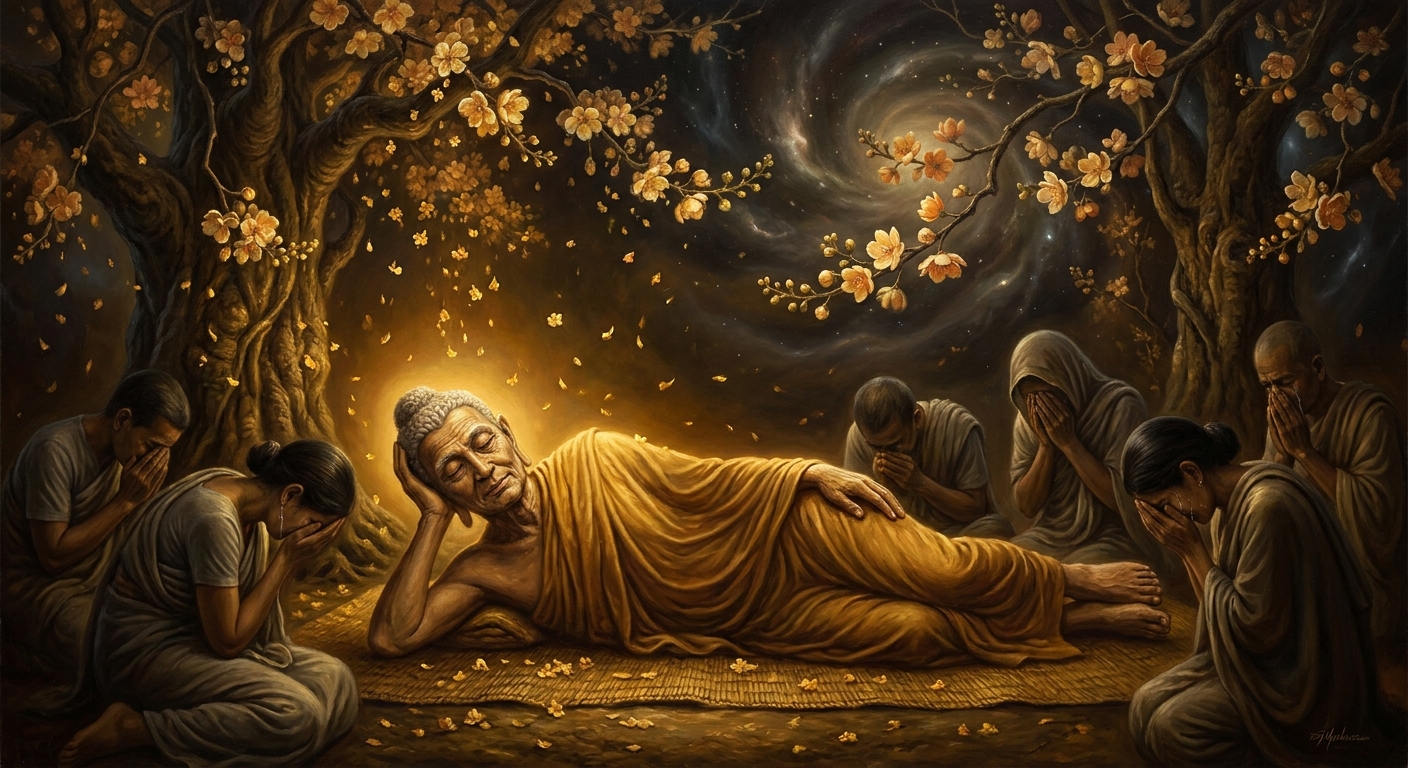
Buddha's Parinirvana
At eighty, after forty-five years of wandering and teaching, the Buddha accepts a final meal, lies down between two sal trees in Kushinagar, and enters the last nirvana — leaving behind only a method and the instruction to use it.
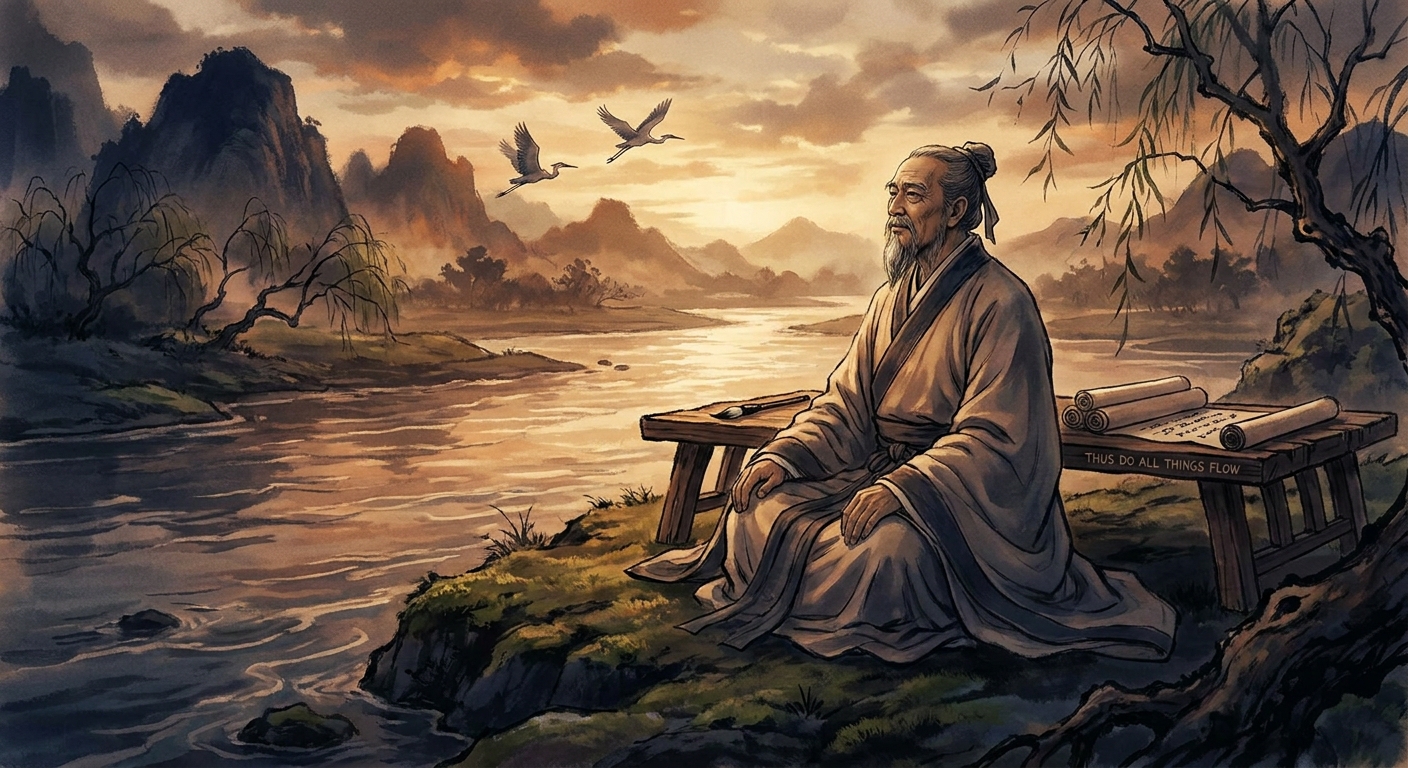
Confucius at the River
Seventy years old and rejected by every court in the warring states, Confucius sits by a river watching the water flow east and understands that civilization is preserved by the man who failed to fix it.
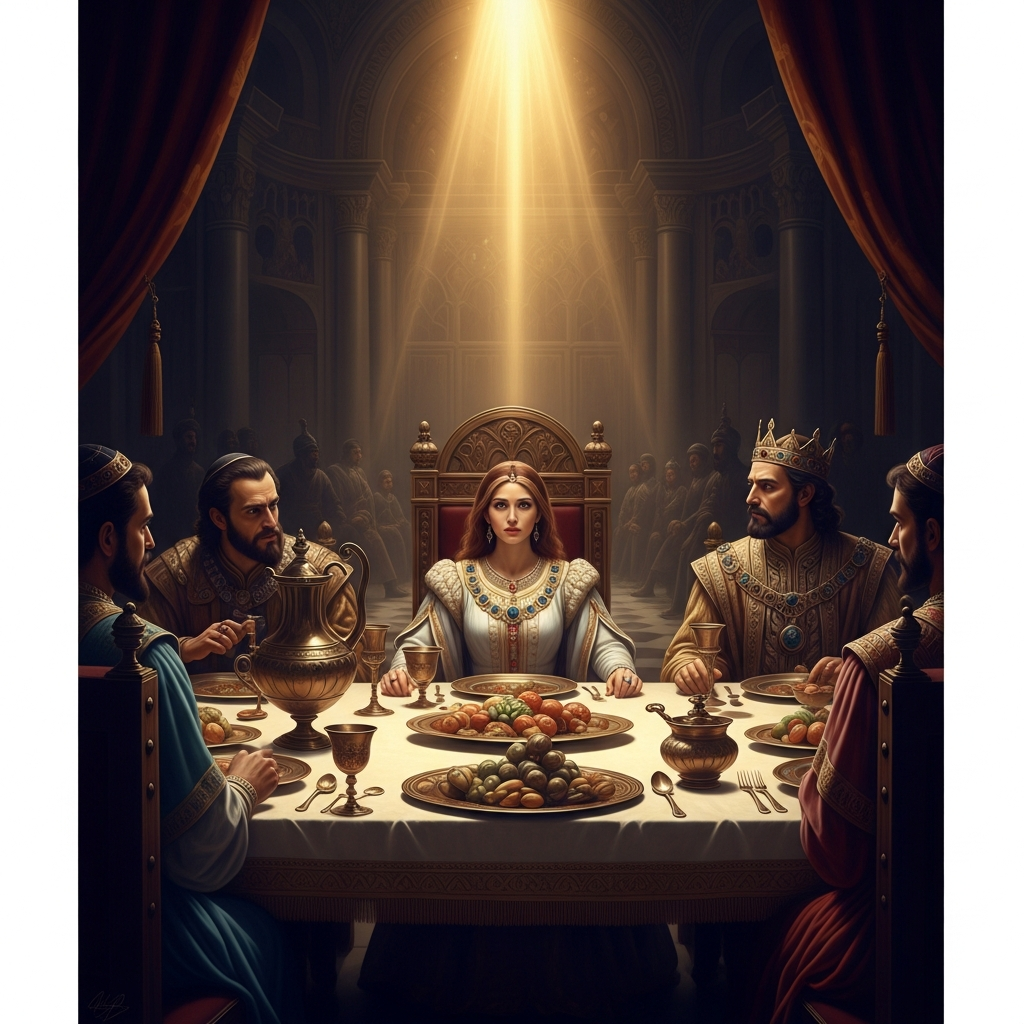
Esther's Two Banquets
A Jewish queen hides her people inside a Persian crown, sets two wine-banquets for the king and the man who has decreed her nation's slaughter, and waits for the right cup to name him.
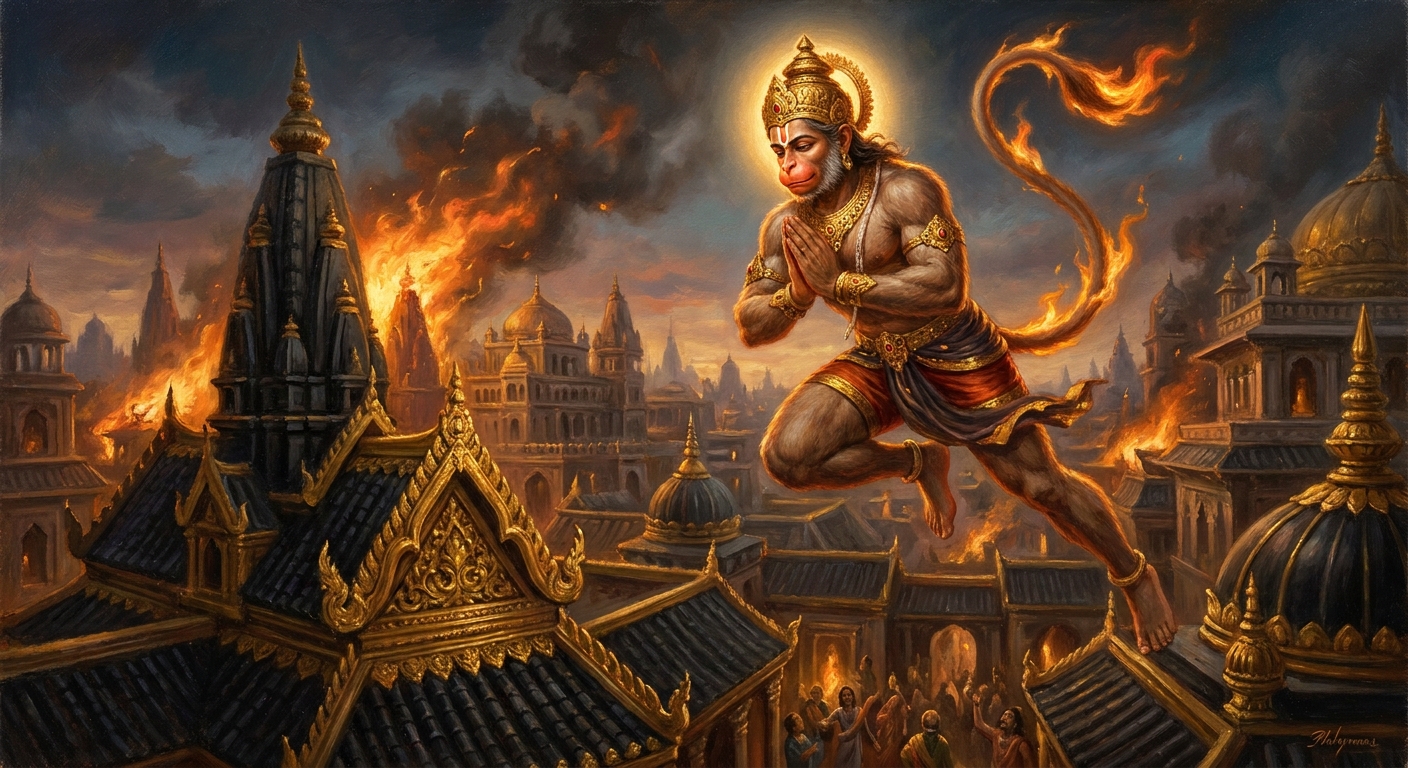
Hanuman Burns Lanka
The monkey-warrior Hanuman leaps the ocean, finds Sita captive in Ravana's ashoka grove, delivers Rama's ring — then lets himself be captured, wears a flaming tail across Ravana's golden city, and returns home across the sea.
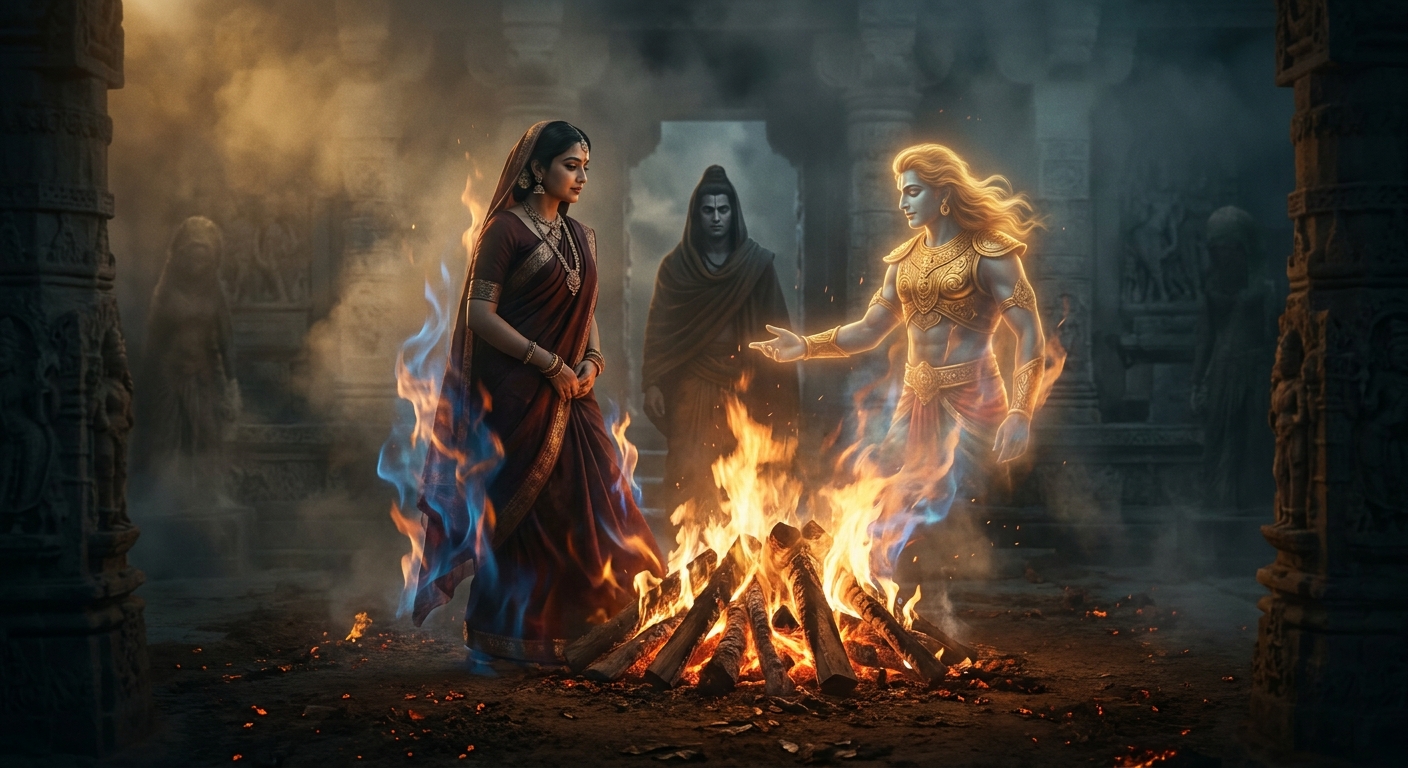
Sita's Fire Trial
After Rama defeats Ravana and rescues Sita from Lanka, he doubts her purity before his assembled armies. She walks into a pyre. Agni, the fire-god, rises and returns her unburned — the ordeal meant to shame her becomes the proof that shatters it.
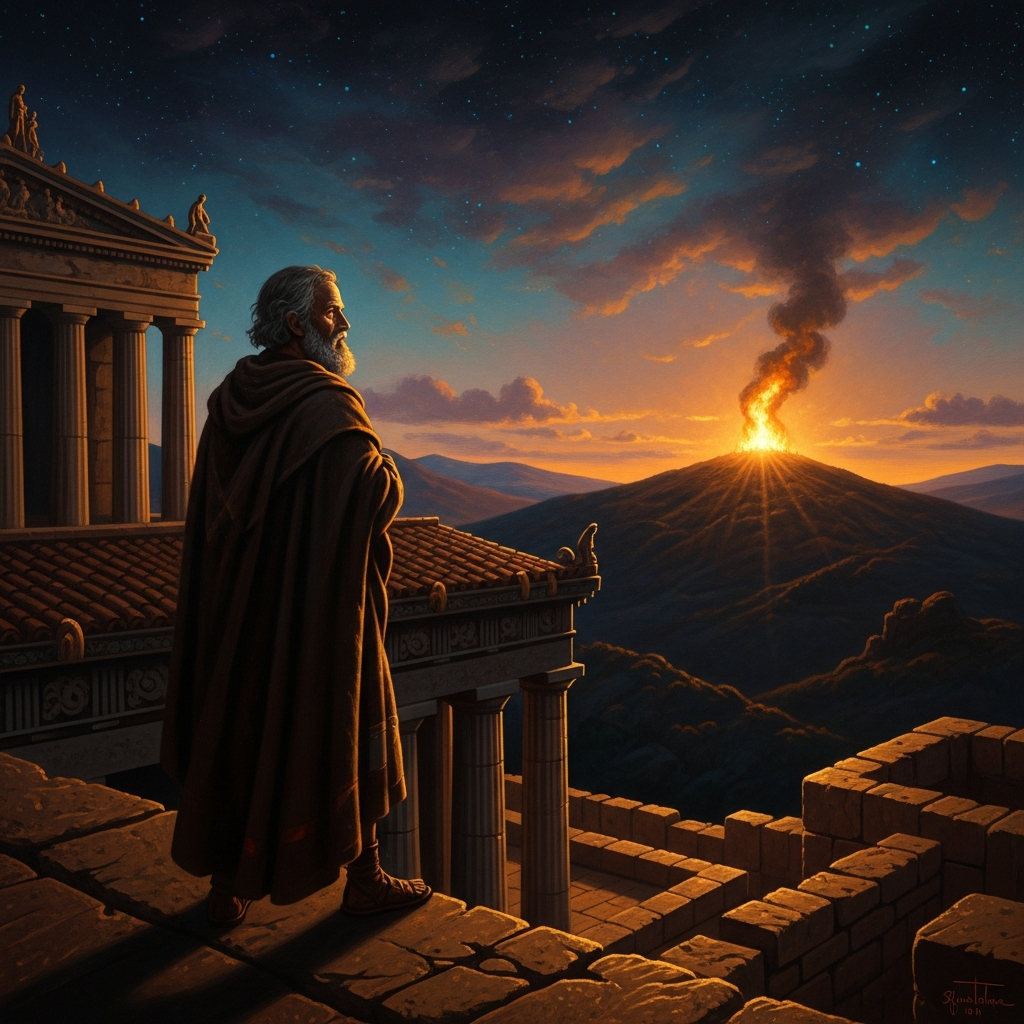
Agamemnon: Ten Years Abroad, One Night at Home
The Trojan War is over. The signal fires have run across the Aegean — Clytemnestra has watched for them every night for ten years. Now the final fire blazes on the final hill. Agamemnon is coming. He left behind a daughter — Iphigenia, sacrificed at Aulis to bring the wind. Clytemnestra has not forgotten. She has taken a lover, planned everything, and woven a robe with no sleeves. The king walks in on a red carpet, into his own bath, into the net.
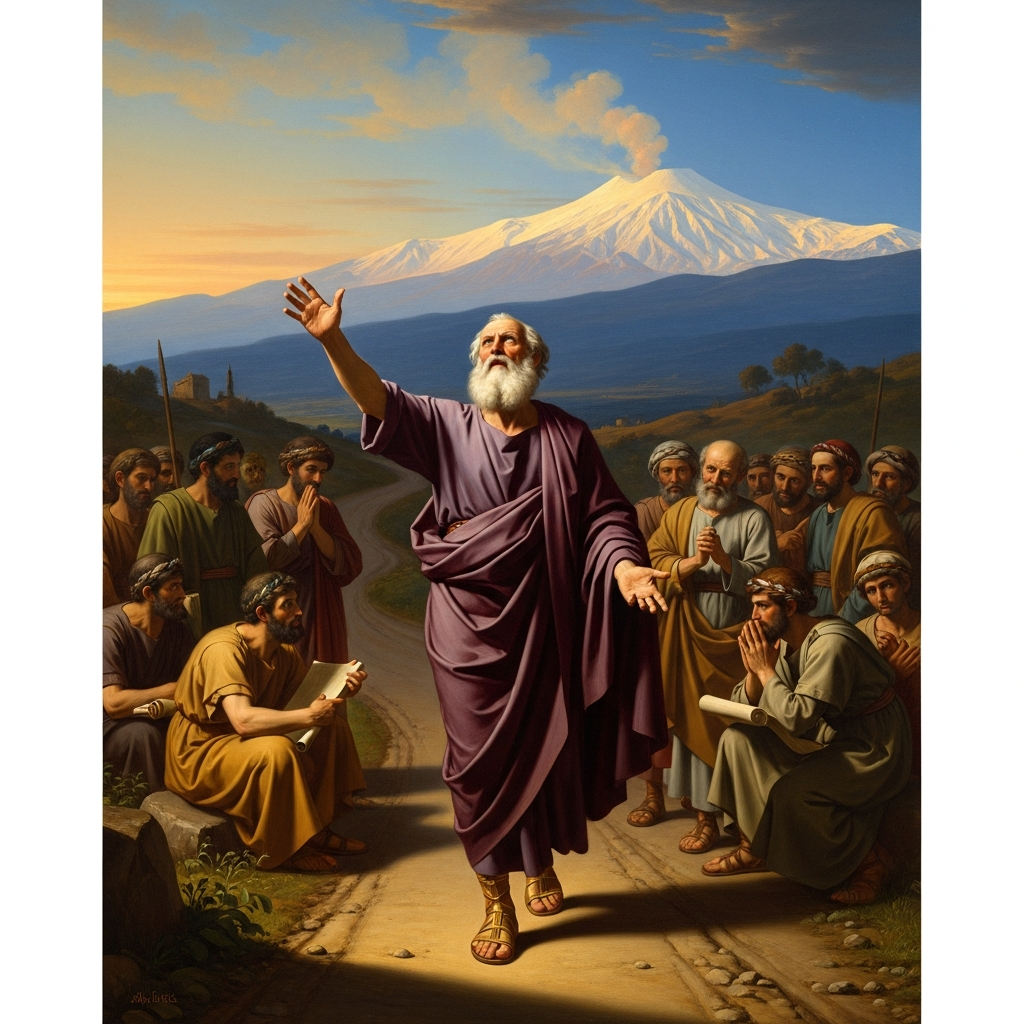
Empedocles at the Rim of Etna
Empedocles of Akragas declares himself a god, wears gold sandals and a purple robe, and performs miracles that his disciples believe implicitly. Then he walks to the lip of Mount Etna and steps in — or falls, or leaps, or performs a rite. One iron sandal is later found at the crater's rim. The legend is the philosophy.
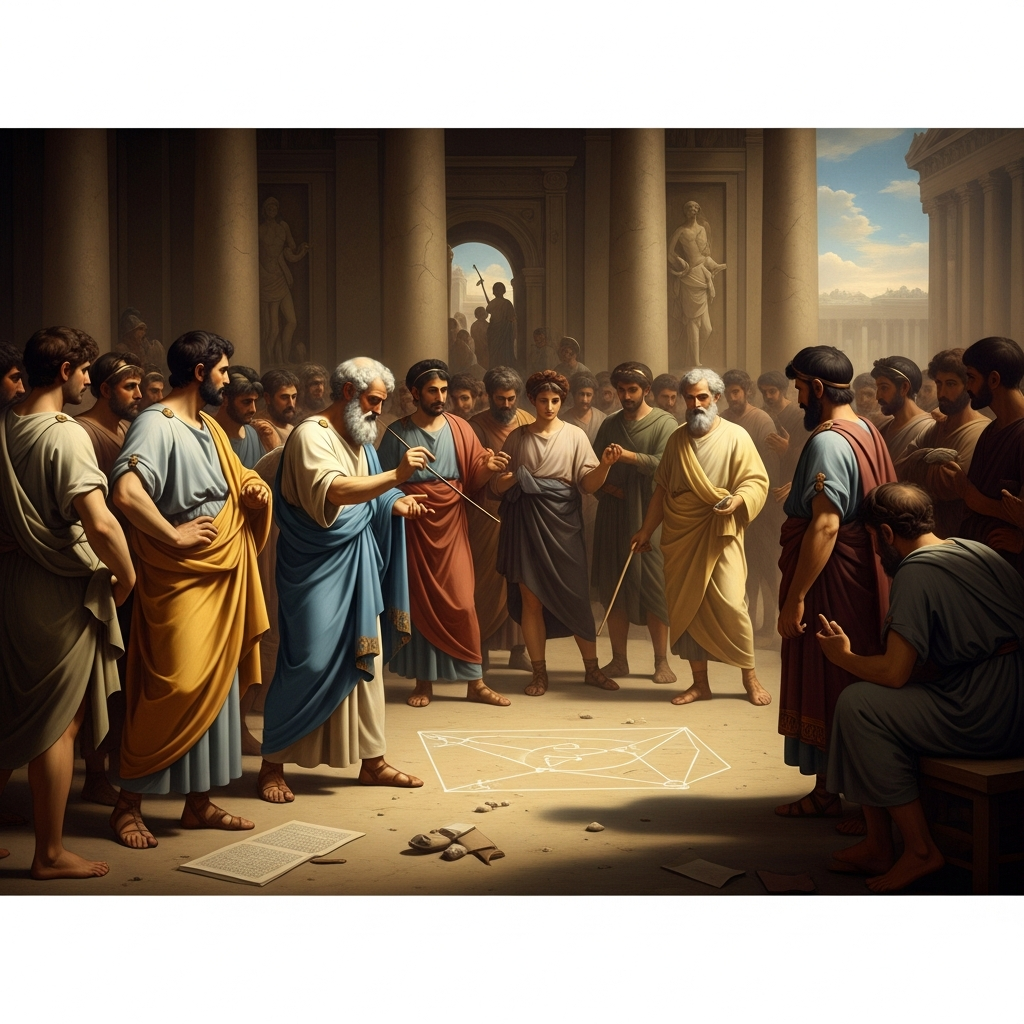
Zeno's Arrow in the Agora
Zeno of Elea arrives in Athens with his teacher Parmenides to defend the most radical claim in the history of philosophy: motion is an illusion, the senses lie, and the real world is a single eternal motionless One. The Athenians in the agora want to stone him. Pericles defends him. The mathematics holds.
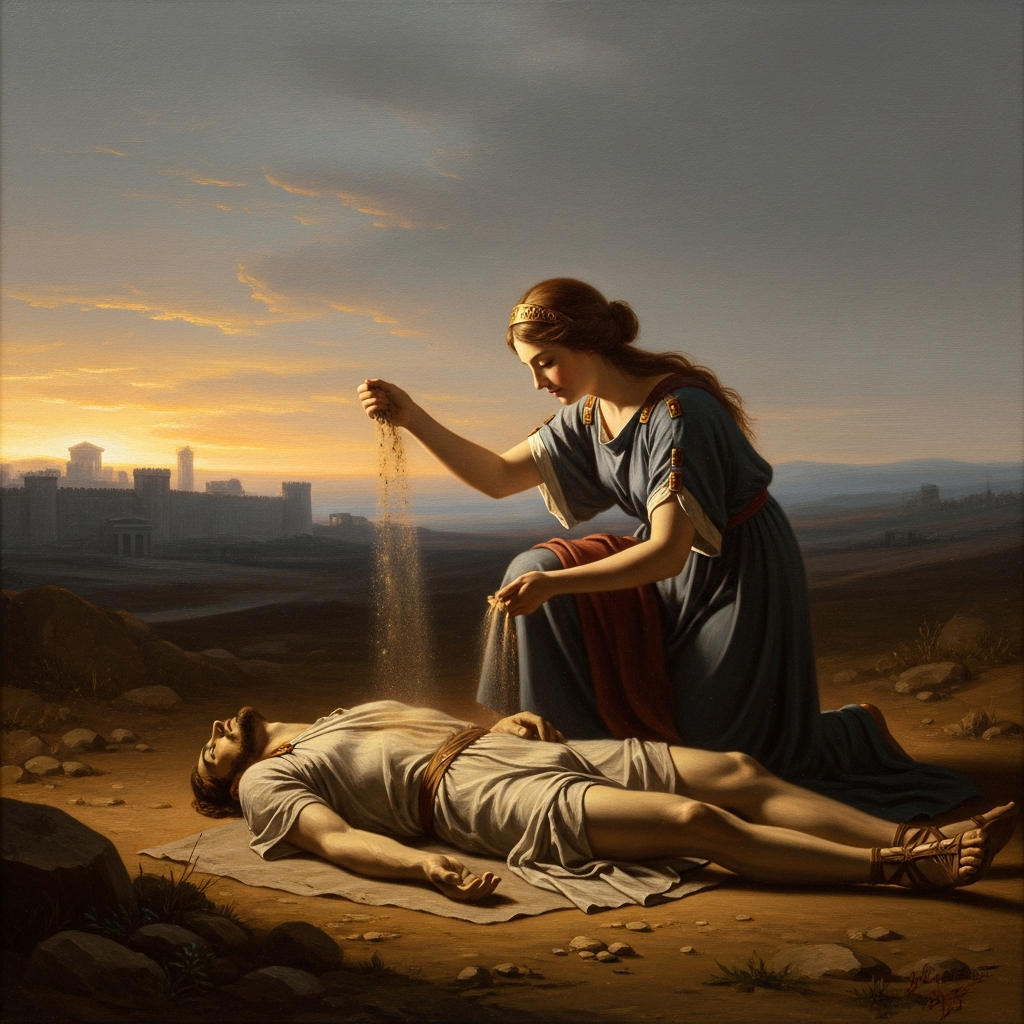
Antigone: The Unwritten Laws
The battle for Thebes is over. Both brothers are dead — Eteocles defending the city, Polynices attacking it. Creon, the new king, decrees: Eteocles will be buried with full honors; Polynices will lie unburied, exposed to dogs and birds, his soul barred from the underworld. Antigone, their sister, buries Polynices anyway. Caught, she stands before Creon and refuses to apologize. There are laws, she tells him, older than yours.
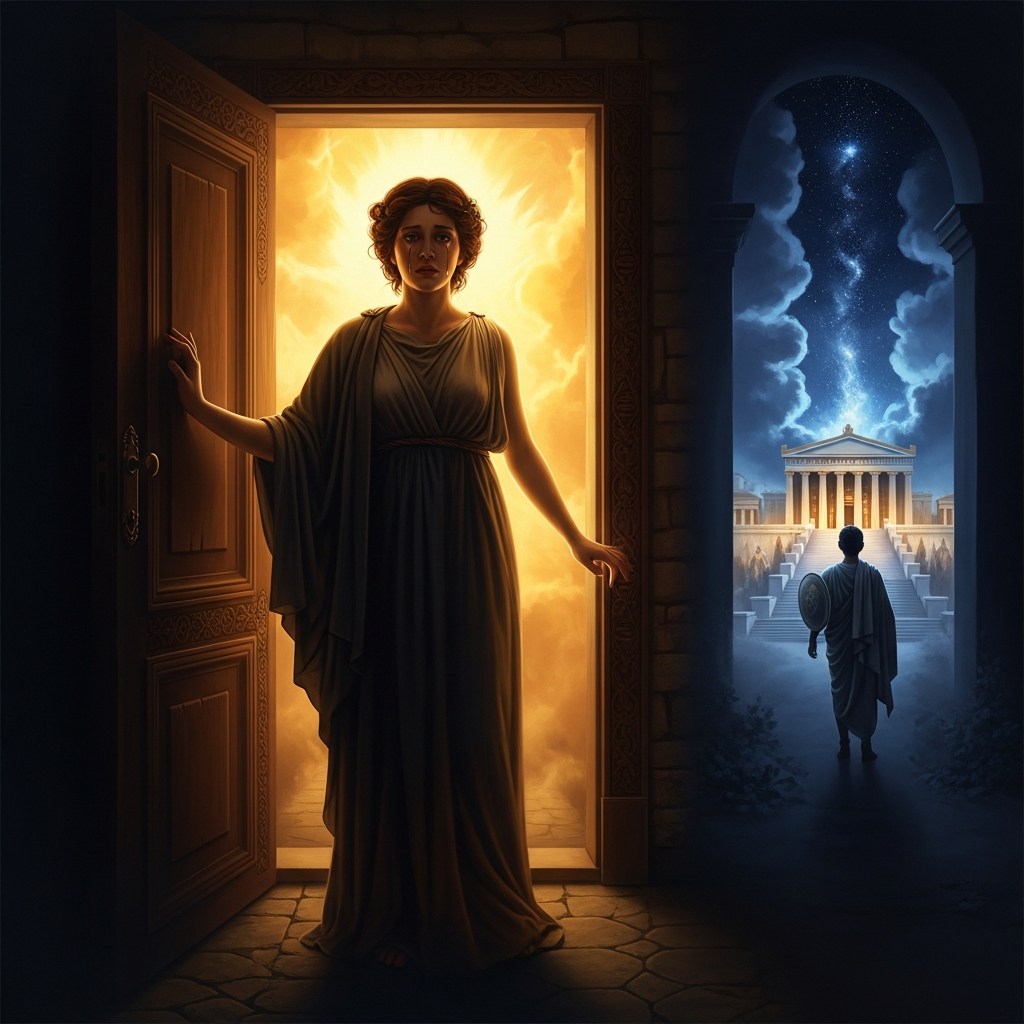
Medea: What Love Made and What Rage Unmade
Medea has given everything. She betrayed her father, killed her brother, used her witchcraft to win Jason the Golden Fleece. She bore him two sons in exile. Now Jason is divorcing her to marry the princess of Corinth — for political advantage, he says, for the children's future. Medea plans her revenge with the precision of a surgeon: a poisoned robe for the bride, a fire that burns the palace, and then the final unthinkable act, the only blow that will reach Jason where he lives.
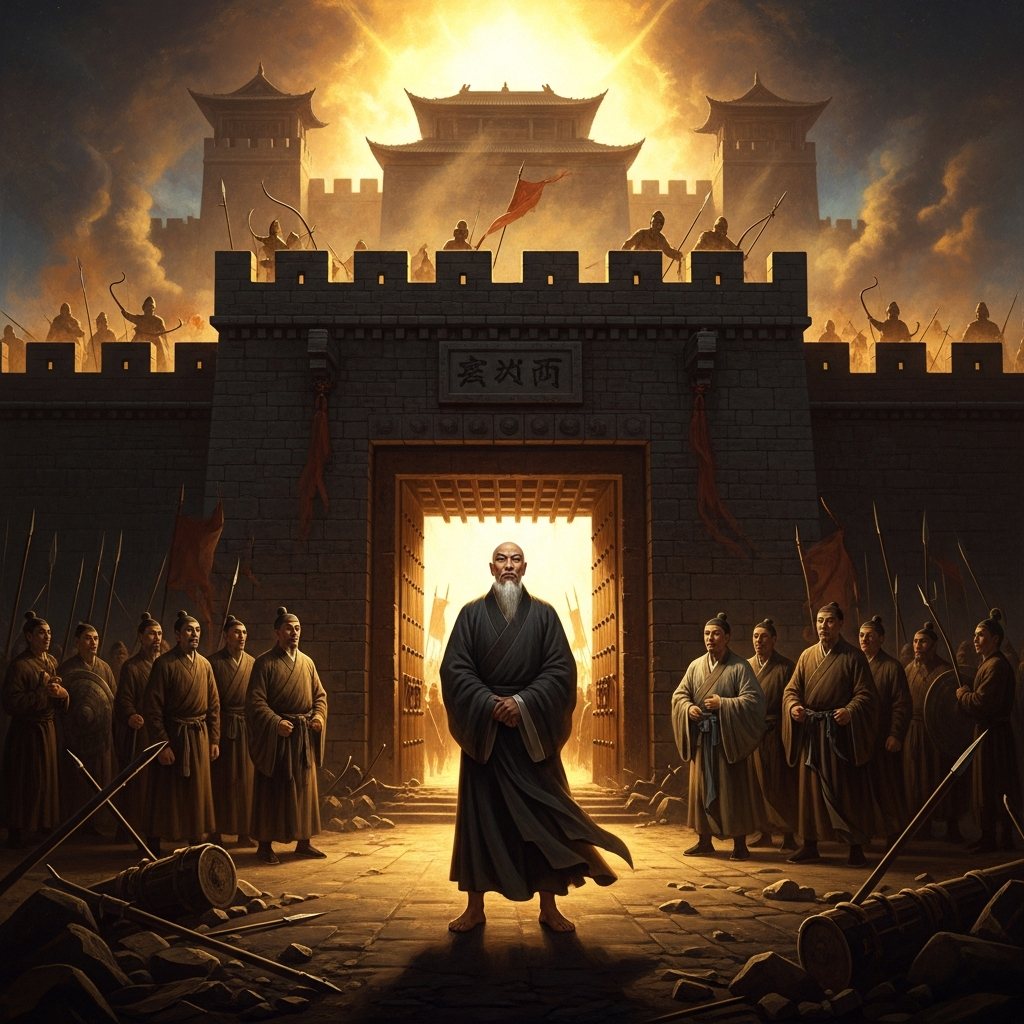
Mozi and the Doctrine of Universal Love
The philosopher Mozi confronts the Confucian hierarchy of care — more love for family than strangers, more for countrymen than foreigners — and names it the root of all war, theft, and suffering. His remedy is *jian ai*: impartial, universal love. He walks barefoot across the Central Plains, stopping wars personally, arriving at besieged cities to offer his disciples as defenders of the weaker side.
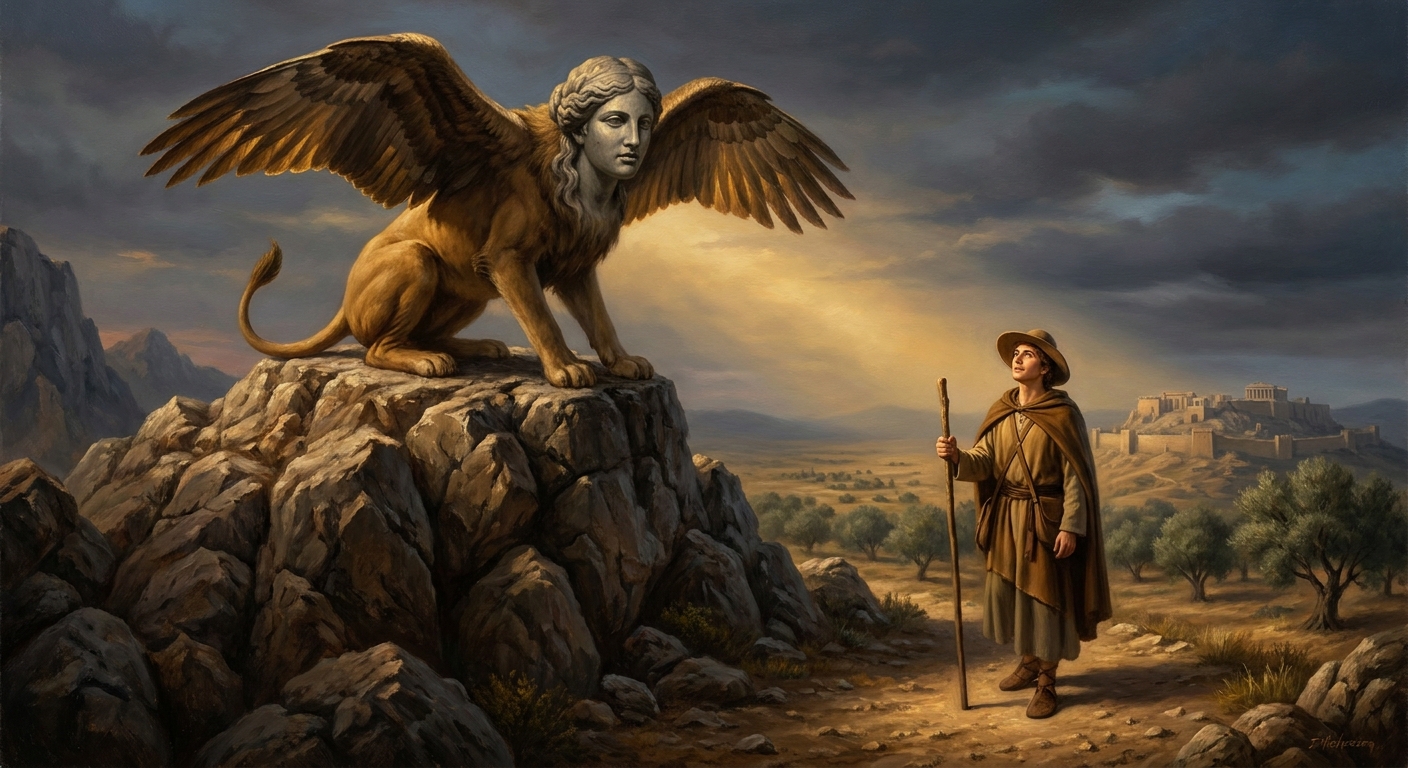
Oedipus at Thebes
A plague descends on Thebes. The king vows to find its cause and root it out. He investigates with the rigor of a prosecutor — and discovers, methodically, that he himself is the contagion: the killer of his father, the husband of his mother, the prophecy fulfilled. His wife hangs herself. He puts out his own eyes with the gold pins of her dress.
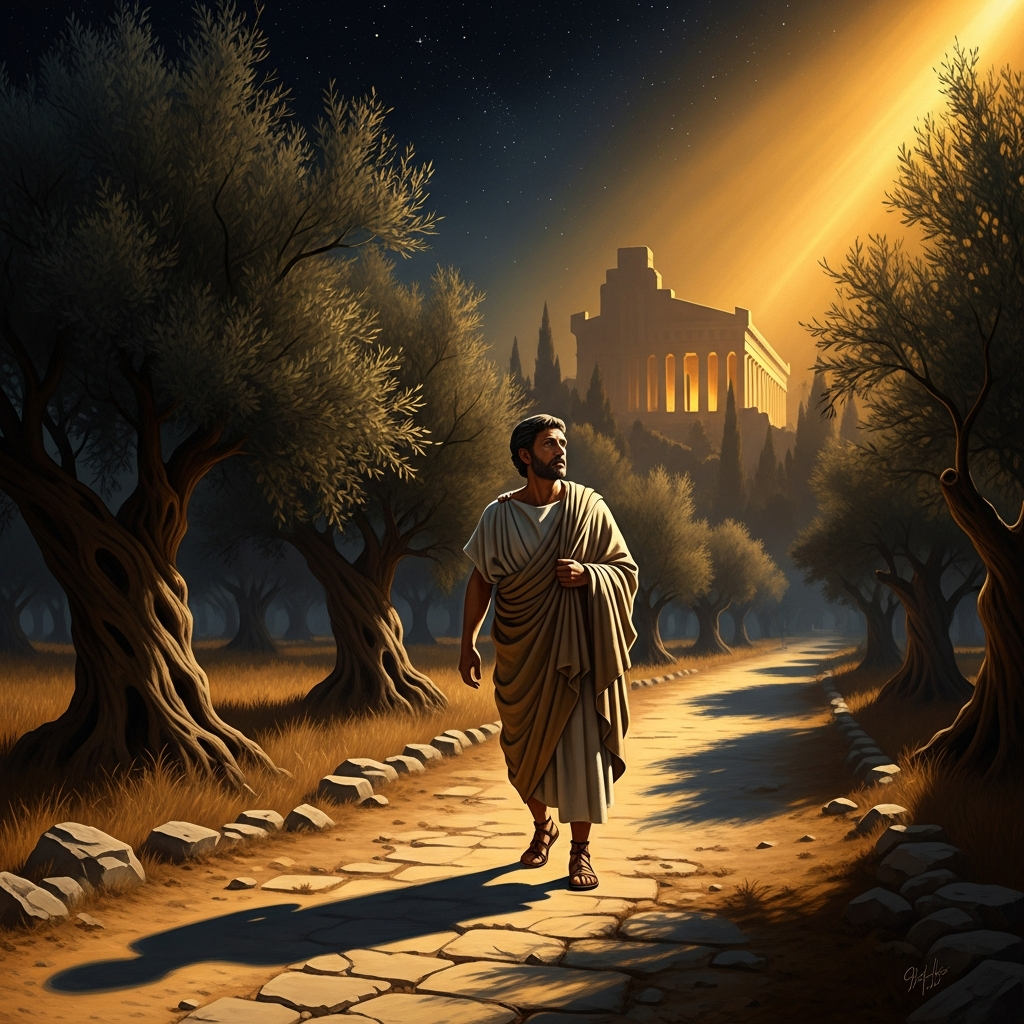
The Seeing
A year after his first initiation at Eleusis, a man from Athens returns for the epopteia — the second degree, the seeing. In total darkness inside the Telesterion, something is shown. No initiate ever told what it was.
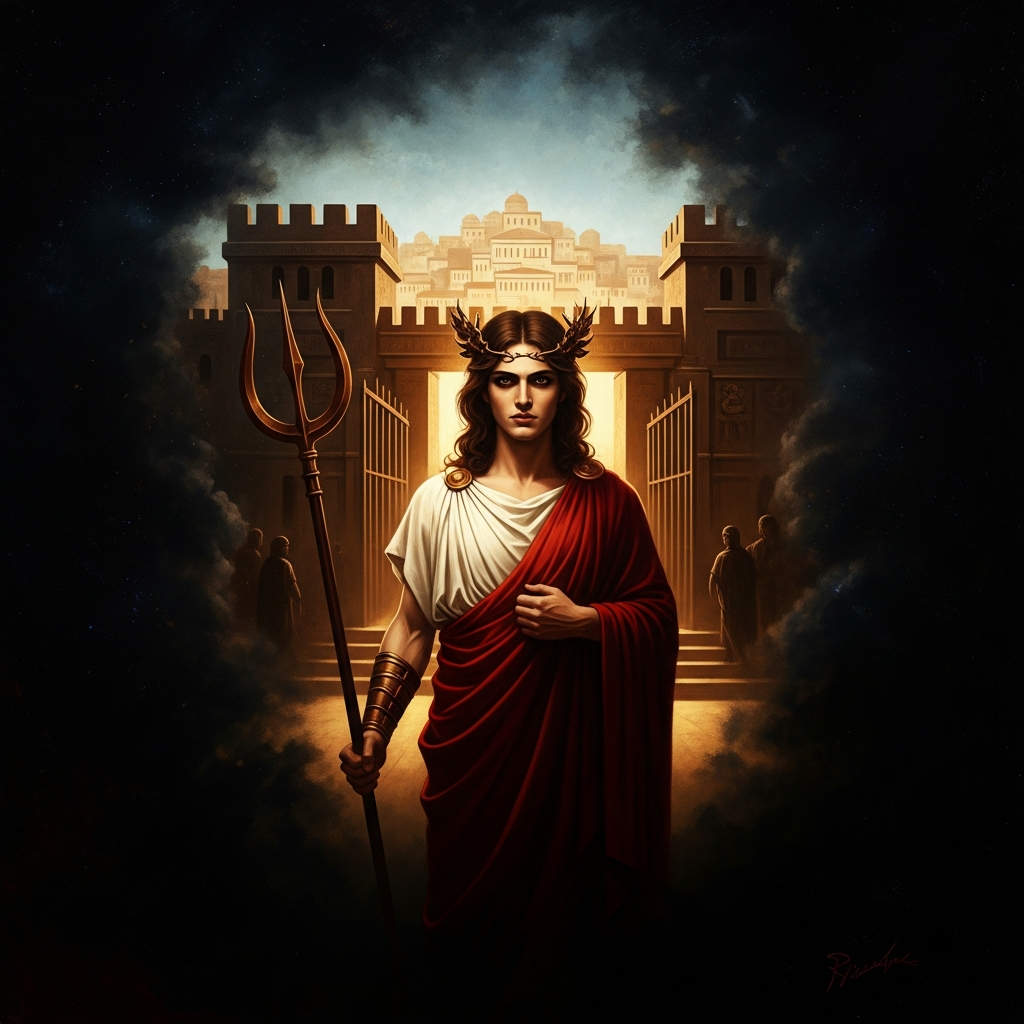
The God Who Cannot Be Refused
Dionysus has come to Thebes — his birthplace, the city of his mother Semele, who was destroyed by Zeus's lightning. He has come in disguise: a beautiful young stranger with long hair and wine-dark eyes. The king of Thebes, Pentheus, refuses to acknowledge him as a god. He arrests him. The god escapes from prison effortlessly. He whispers a suggestion to the king: dress as a woman and go up Mount Cithaeron to spy on the Maenads. Pentheus agrees. He goes. His own mother, in the grip of Dionysian madness, tears him apart with her bare hands.
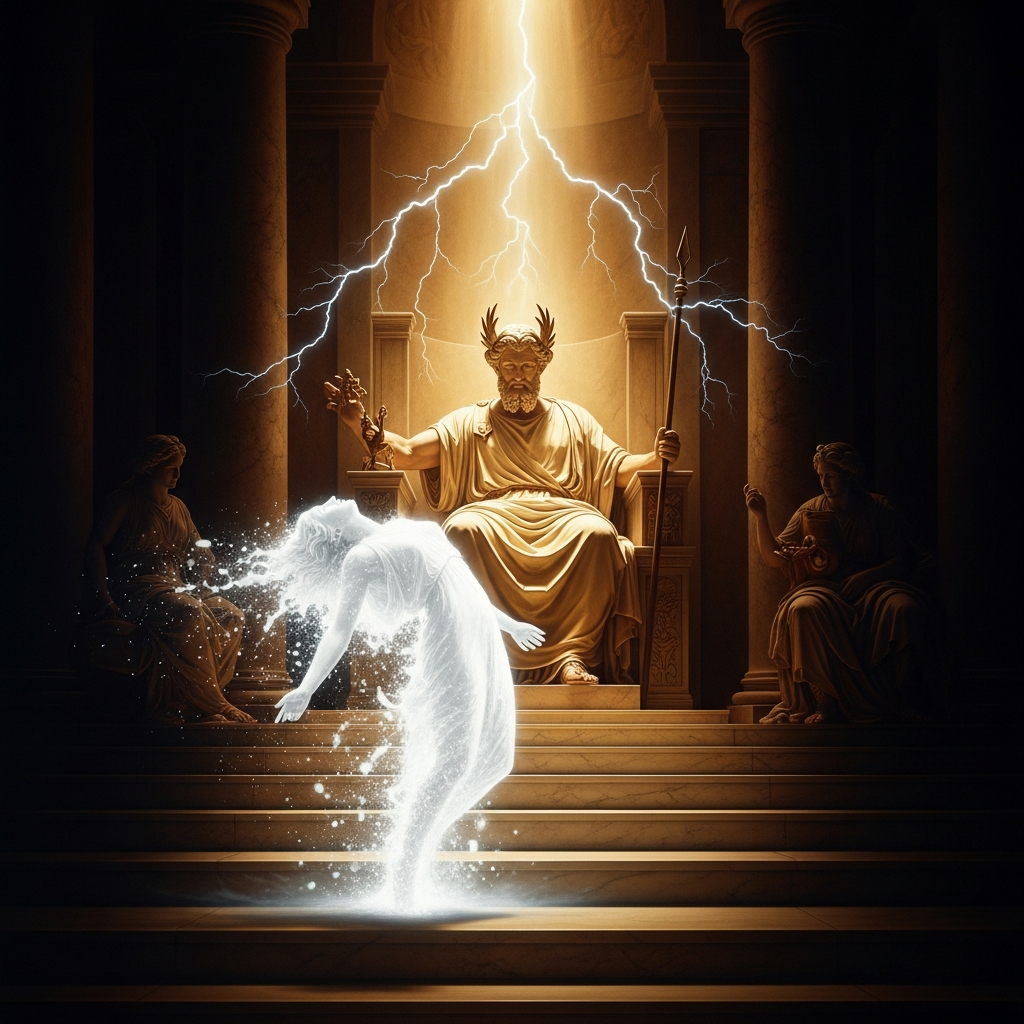
Born Twice
Semele asks to see Zeus in his full divine glory and is instantly incinerated. Zeus rescues the unborn fetus and sews it into his own thigh to gestate. Dionysus is born twice: once of a woman who died of divinity, once of a god who can survive it. The god of wine, ecstasy, and theater is also the god who teaches that suffering is not the end of the story.
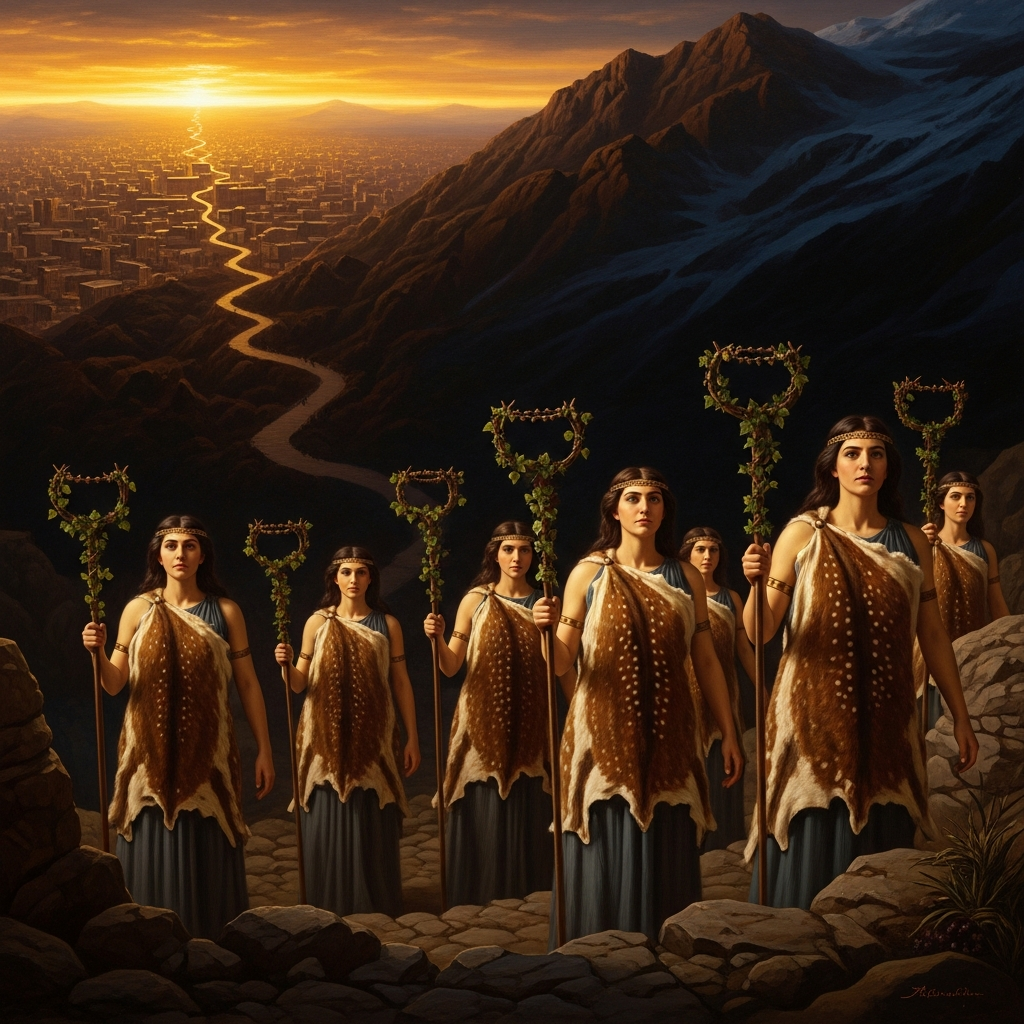
What the Mountain Gave Back
The Maenads run up the mountain in winter and the god enters them. Three days later they come down with pine needles in their hair, smelling of smoke and snow. The question the men in the city below never ask: what did it feel like from the inside?
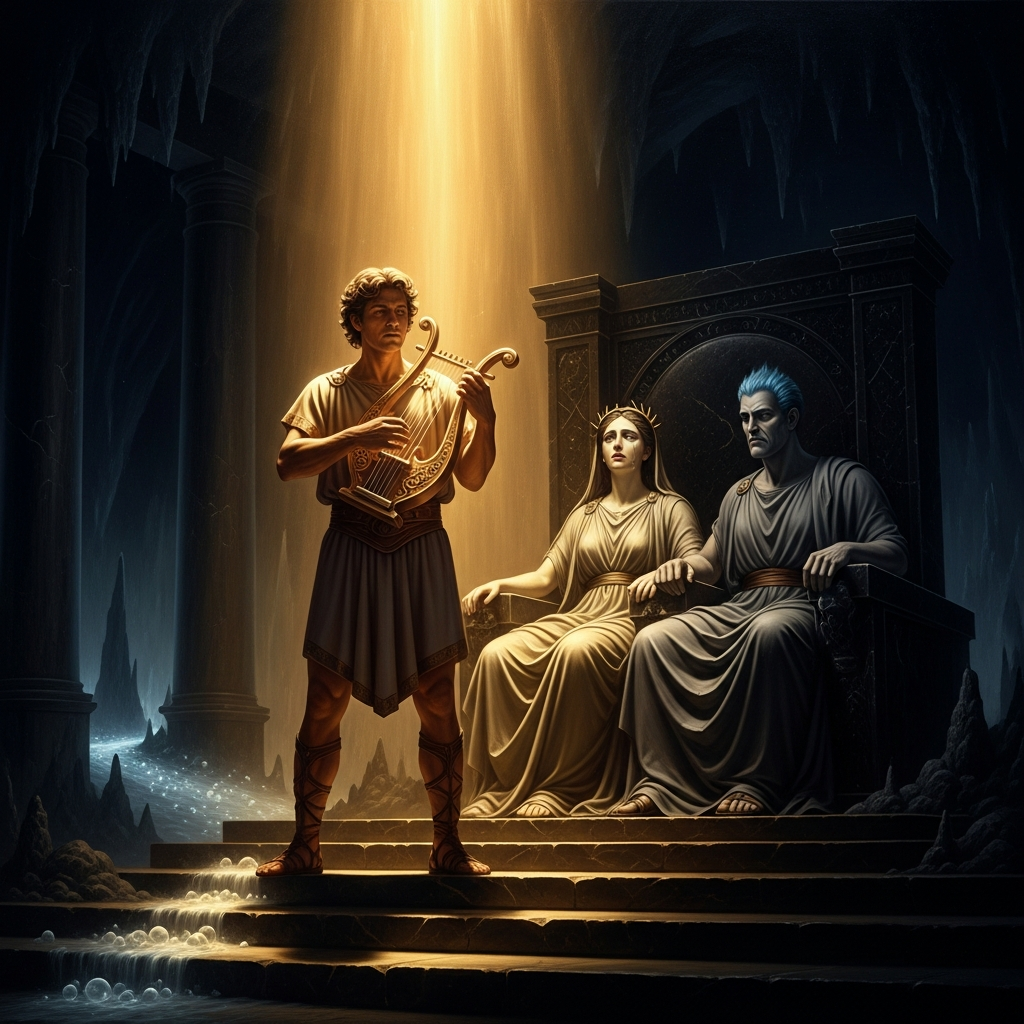
Orpheus: The Song That Almost Worked
Eurydice is dead. She stepped on a snake on the day of her wedding and died before nightfall. Orpheus — whose lyre stops rivers, whose singing makes stones weep — walks down to Hades to get her back. He plays for Charon, who weeps and rows him across. He plays for Cerberus, who sits. He plays for Hades and Persephone, who weep, and they grant his request on one condition: he must walk ahead, she must follow, and he must not look back until they reach the light. He walks. He cannot hear her. He turns. She is gone.
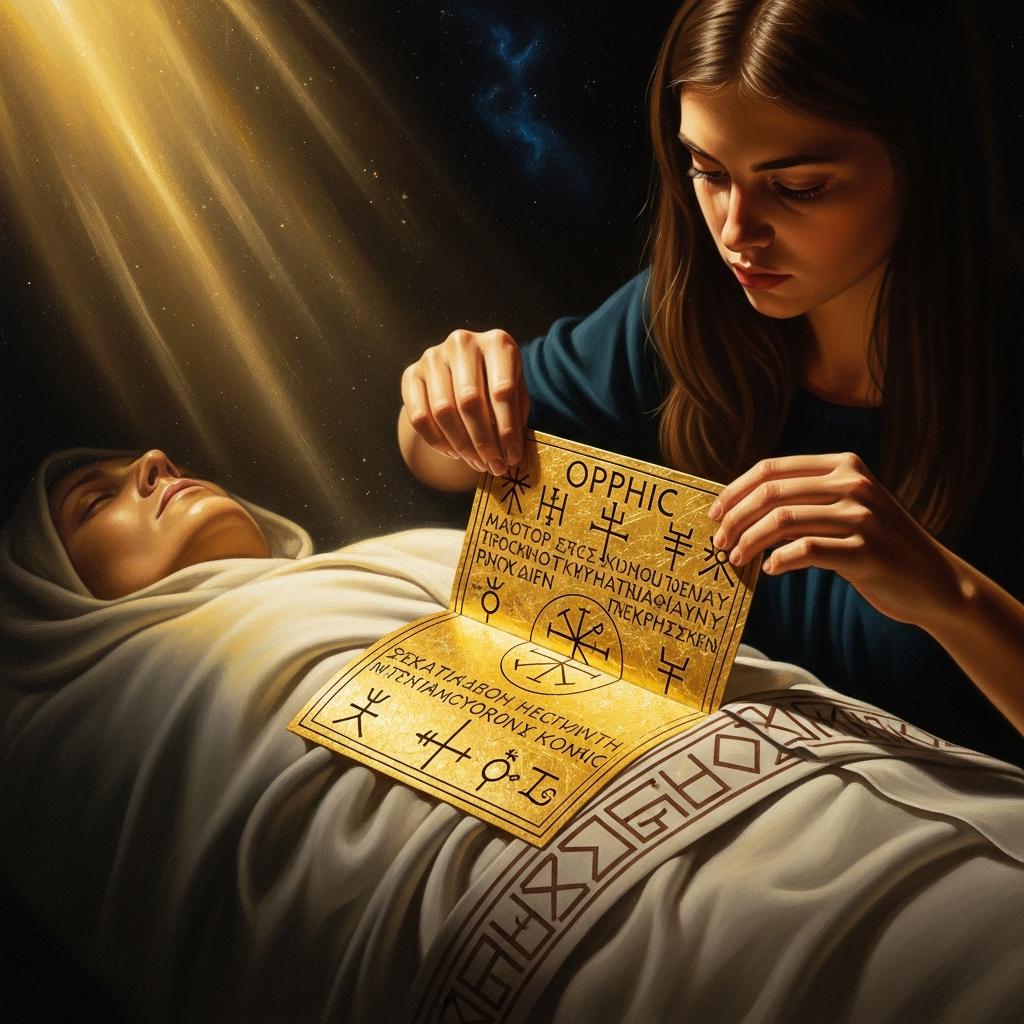
The Directions for the Dead
In the burial clothes of the dying, Orphic initiates placed thin gold tablets inscribed with instructions for navigating the underworld. The daughter knows what the tablet says. She reads it aloud, quietly, so her mother's departing soul can hear the way.
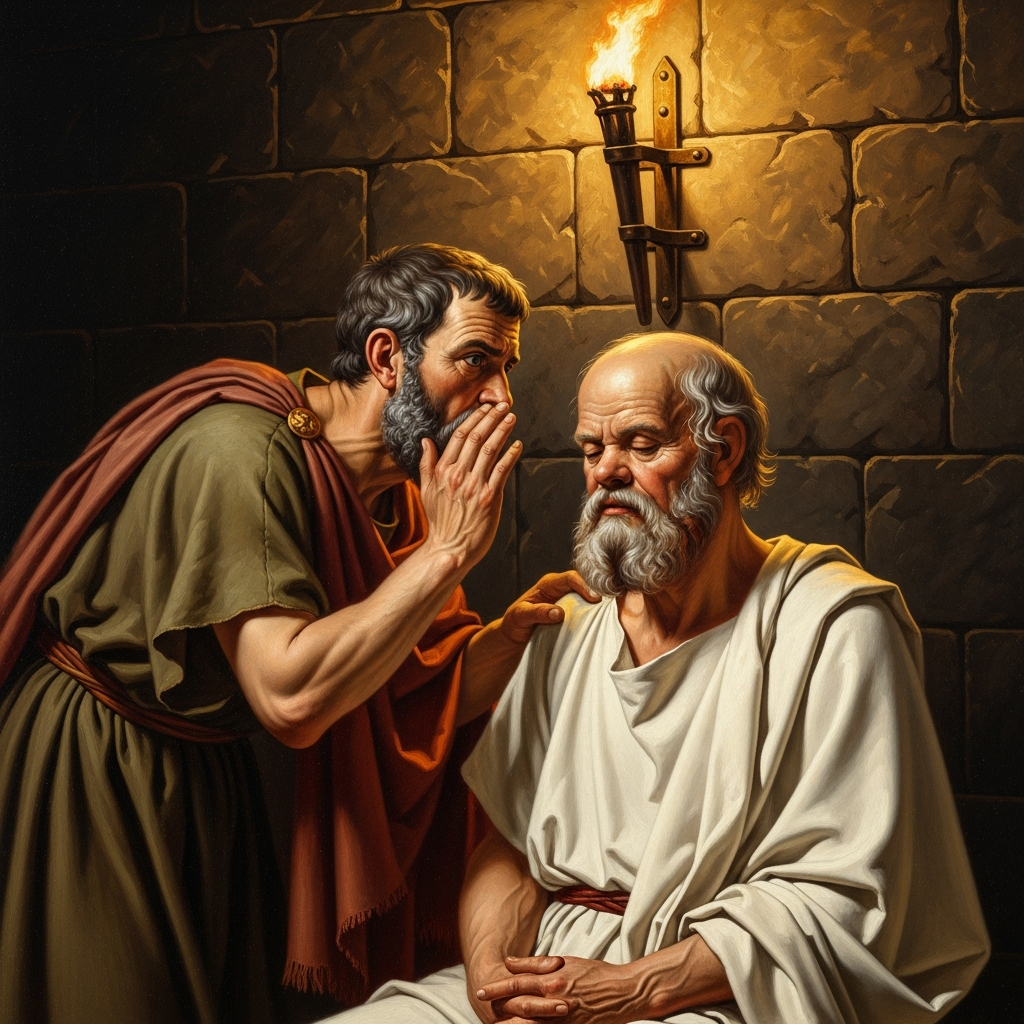
Socrates Drinks the Hemlock
Condemned to death for impiety and corrupting the youth of Athens, Socrates refuses his friends' plan of escape, argues for the immortality of the soul until his legs go numb, and dies asking that a debt to Asclepius be paid.
We Owe a Cock to Asclepius
Condemned to death for impiety, Socrates spends his last day in conversation about the immortality of the soul. He drinks the hemlock cheerfully. His last words are a debt he wants paid to Asclepius, the god of healing. What illness was cured? Plato does not say directly. But the tradition has been answering the question for twenty-four centuries.
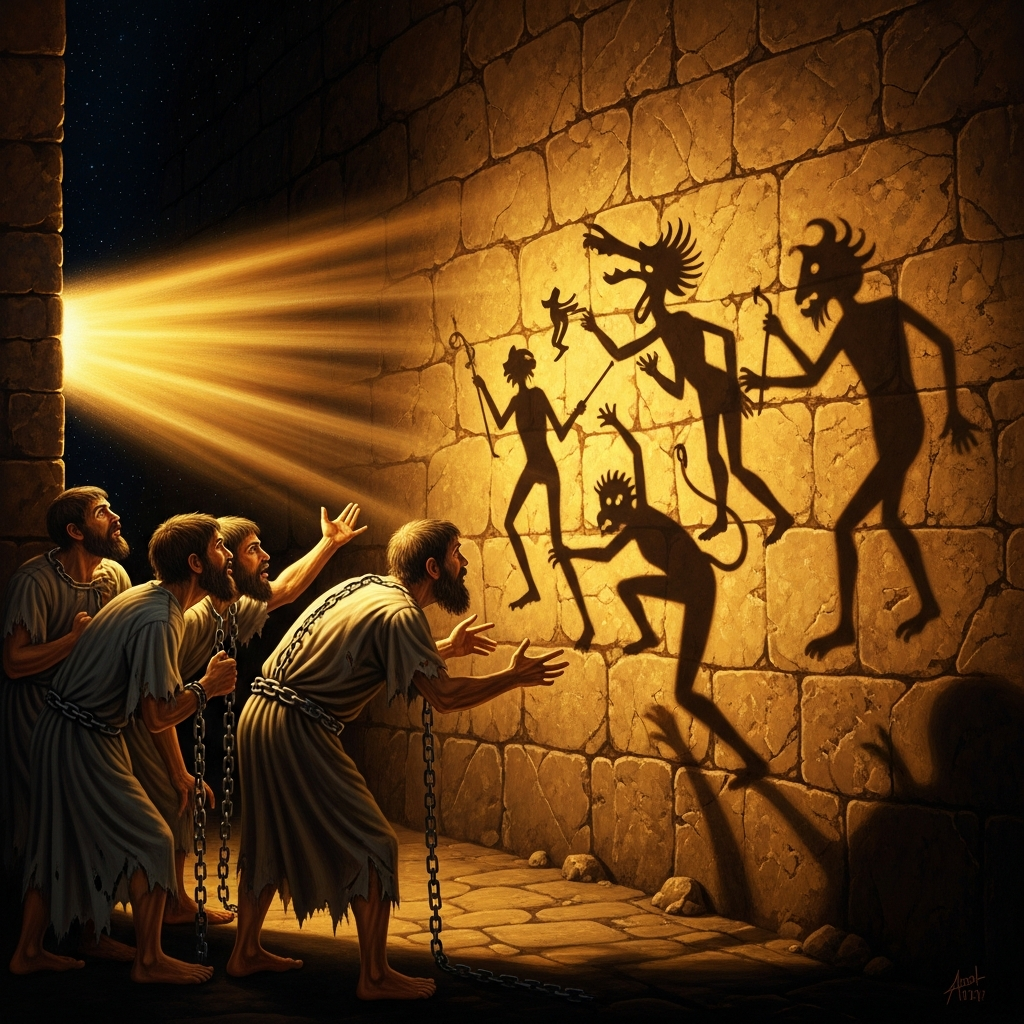
Plato's Allegory of the Cave
Socrates asks Glaucon to imagine prisoners chained in a cave, seeing only shadows. One escapes, sees the sun, and returns to free the others — who try to kill him. This, Plato says, is the life of the philosopher.
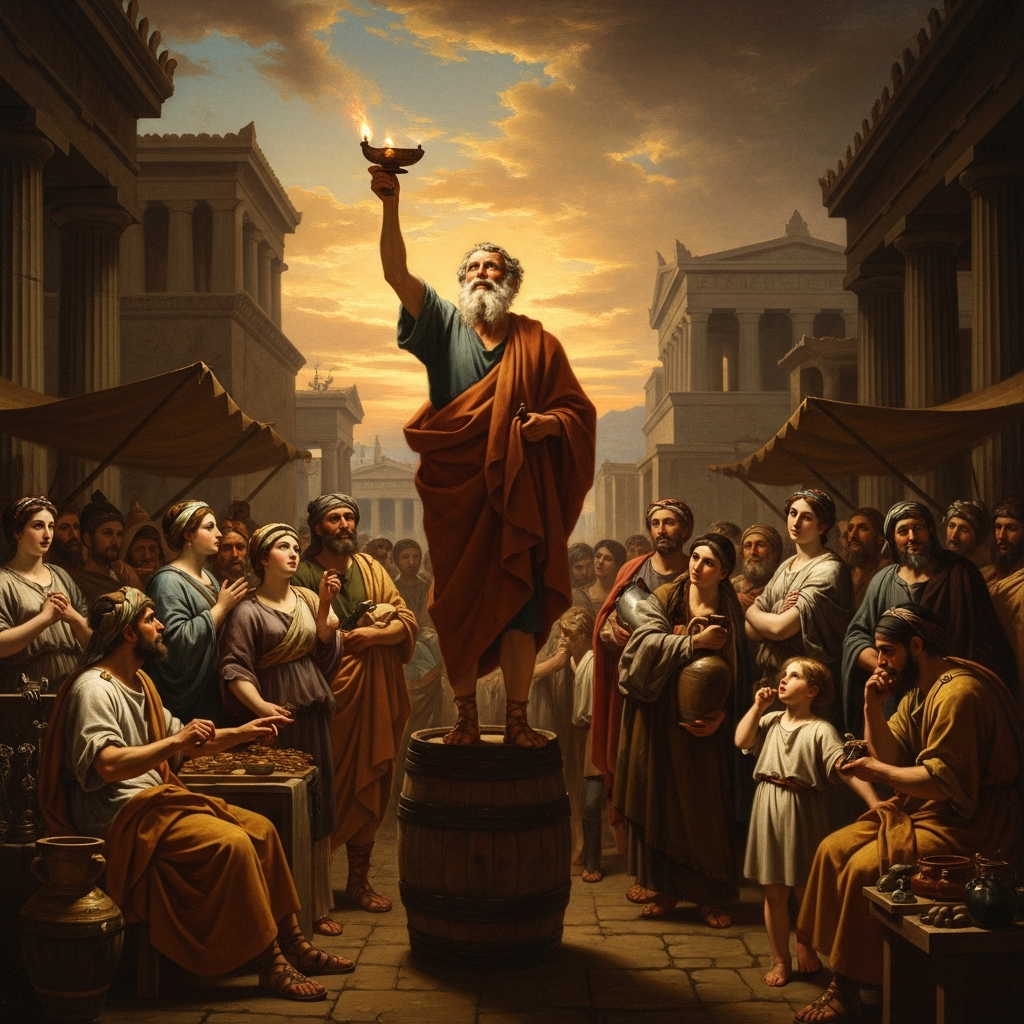
Diogenes and the Lamp
Diogenes the Cynic walks through the Athenian agora at noon carrying a lit lamp, looking for an honest man. He lives in a barrel, throws away his cup, tells Alexander the Great to move out of his sunlight. He is trying to demonstrate, by pure performance, the gap between philosophy as speech and philosophy as life.
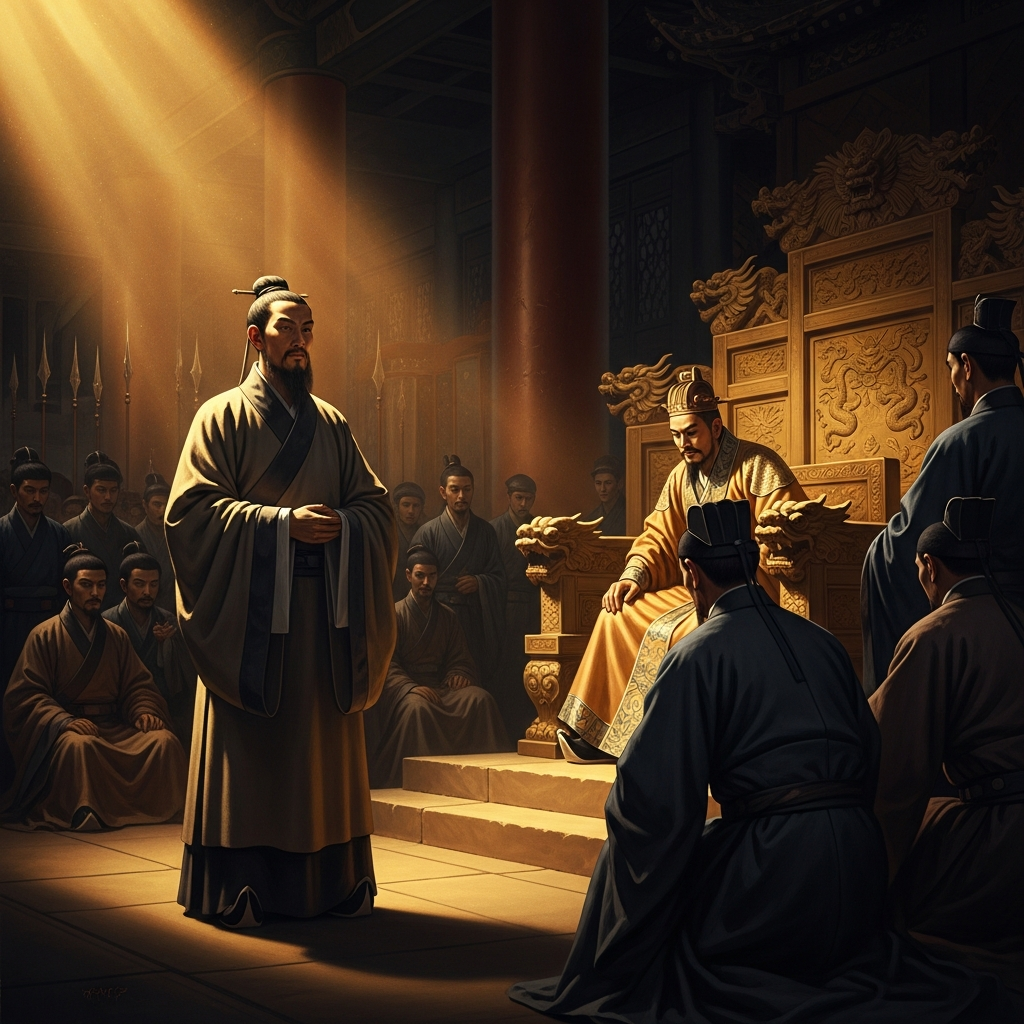
Mencius Before the King
King Hui of Liang asks what profit Mencius brings from his long journey. Mencius replies: only benevolence and righteousness. He then unfolds the most radical claim in Chinese philosophy — that human nature is fundamentally good, and that government's only task is to stop extinguishing it.
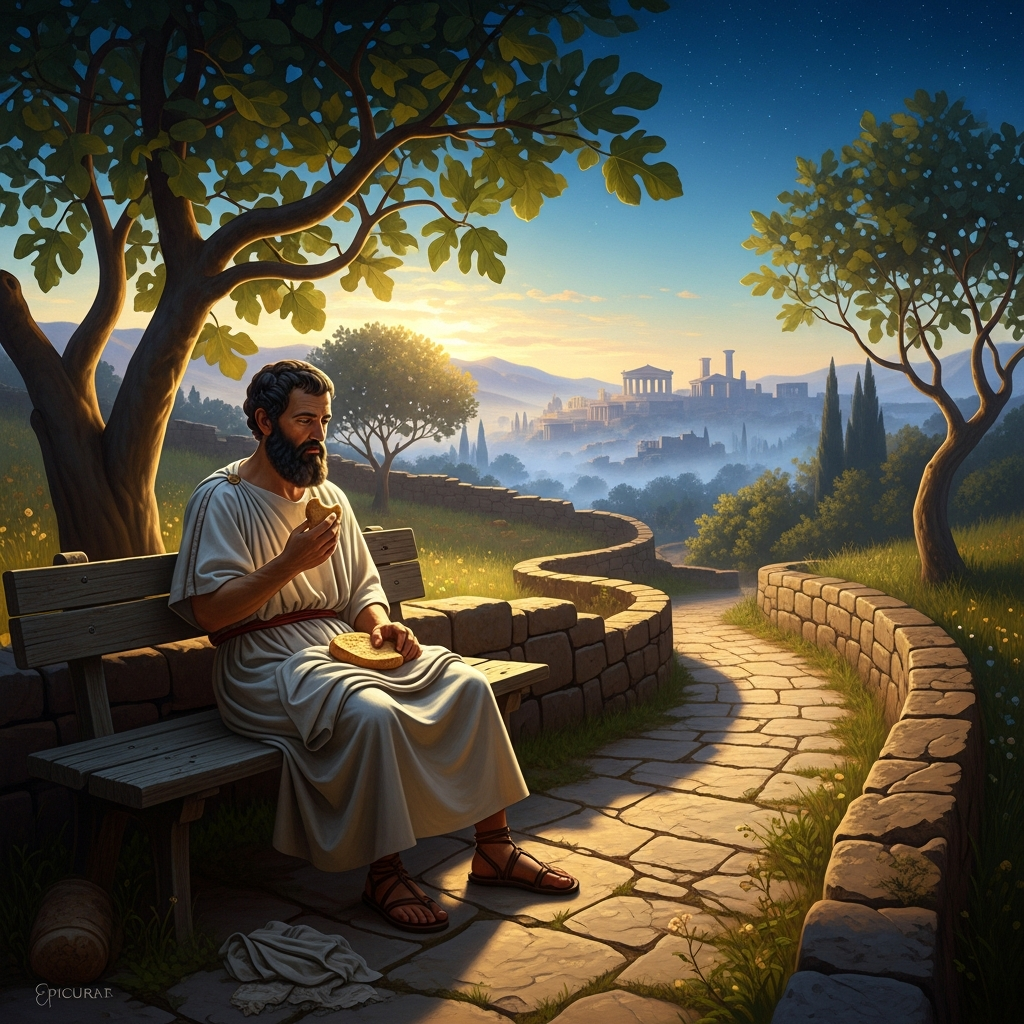
Epicurus and the Garden
In 306 BCE, Epicurus buys a garden outside Athens and builds a school where slaves and women sit beside free men as equals. He teaches that the gods don't care, death is nothing, and the highest pleasure is bread. A former slave named Mys asks him why.
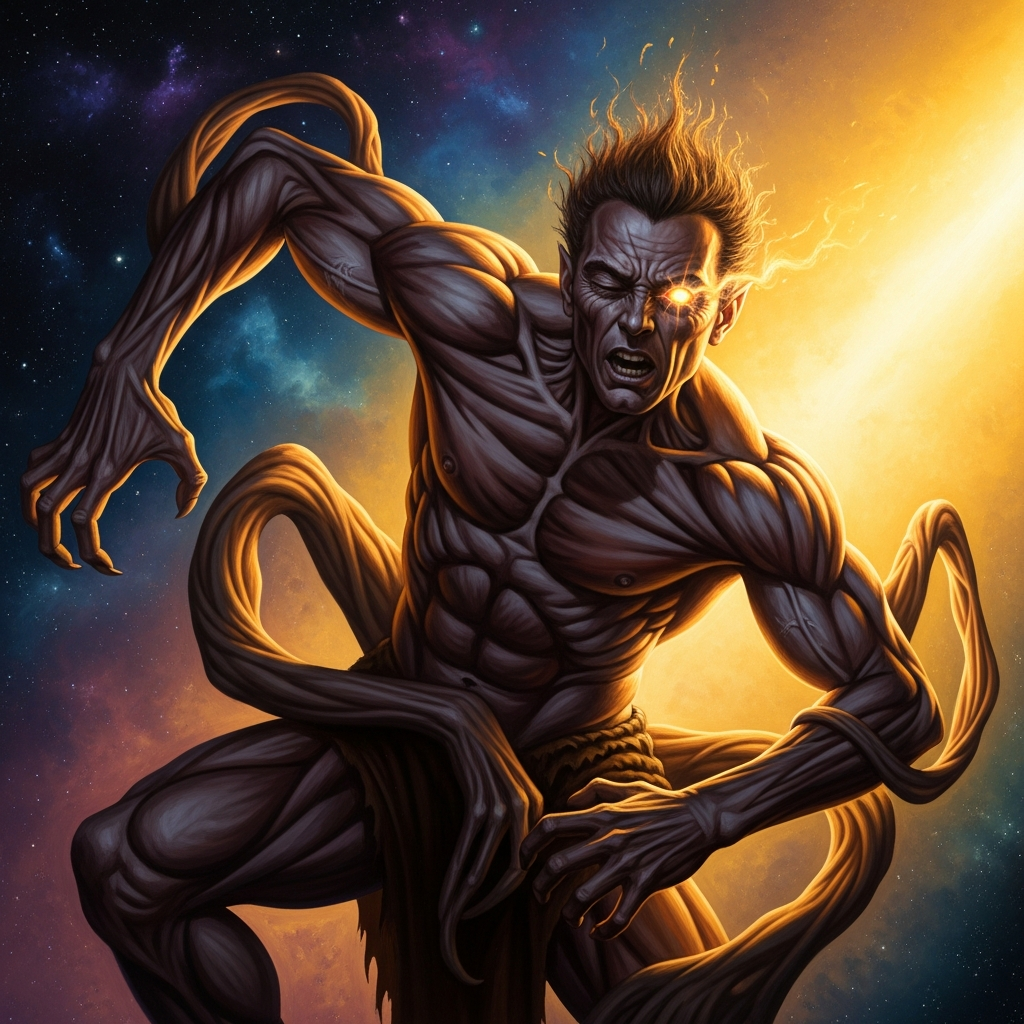
Cú Chulainn: The Distortion
Ulster's hero stands alone at the ford against the army of Connacht. The warp-spasm comes on him — one eye sinks, the other swells, his body unknots and reknots into the killing thing the gods made for war. He kills his foster-brother Ferdia in a combat that lasts three days. He dies tied to a standing stone, on his feet, with a raven on his shoulder.
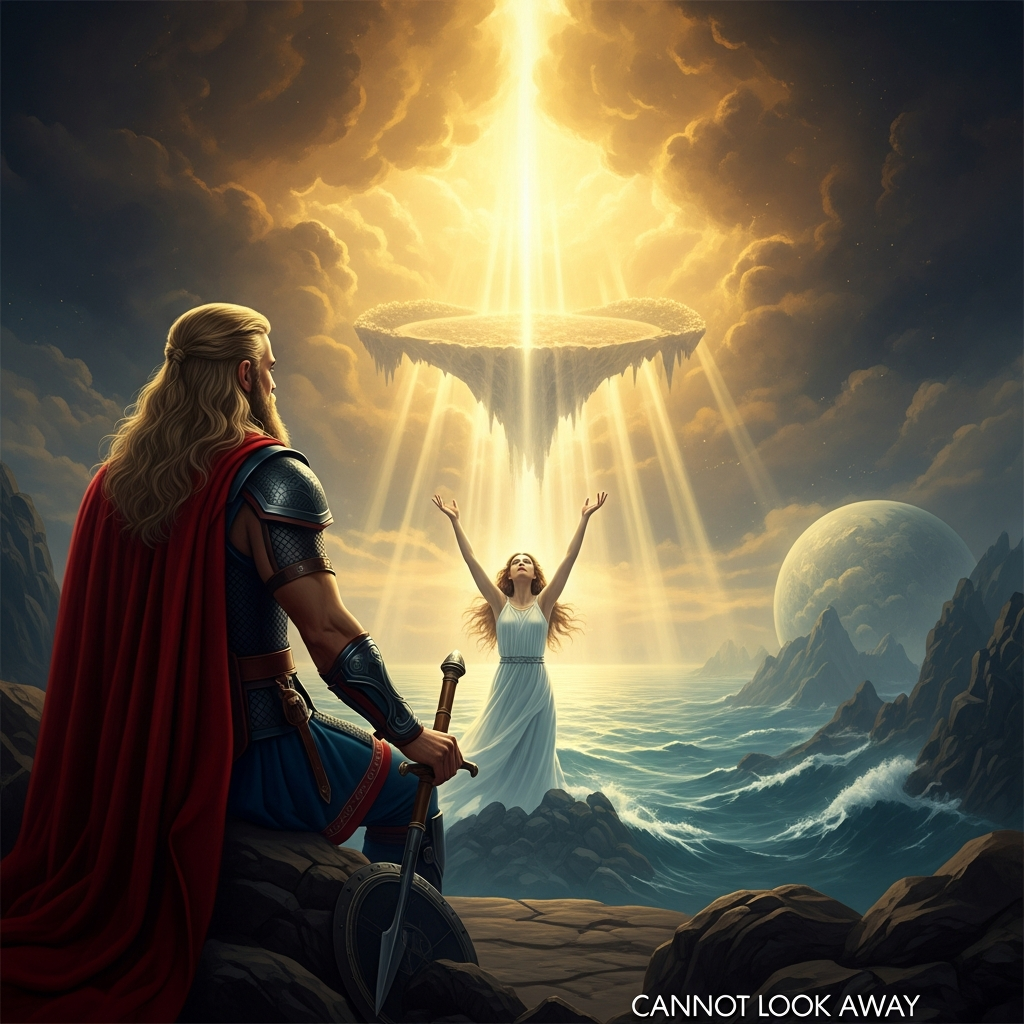
Freyr and Gerðr: The Price of Desire
Freyr, the god of sun and rain and harvest, sits in Odin's forbidden seat and sees a Jotun woman whose raised arms fill the sky with light. He gives away his magic sword to win her. At Ragnarök, he faces the fire-giant Surtr without it and dies. The trade was made with open eyes.
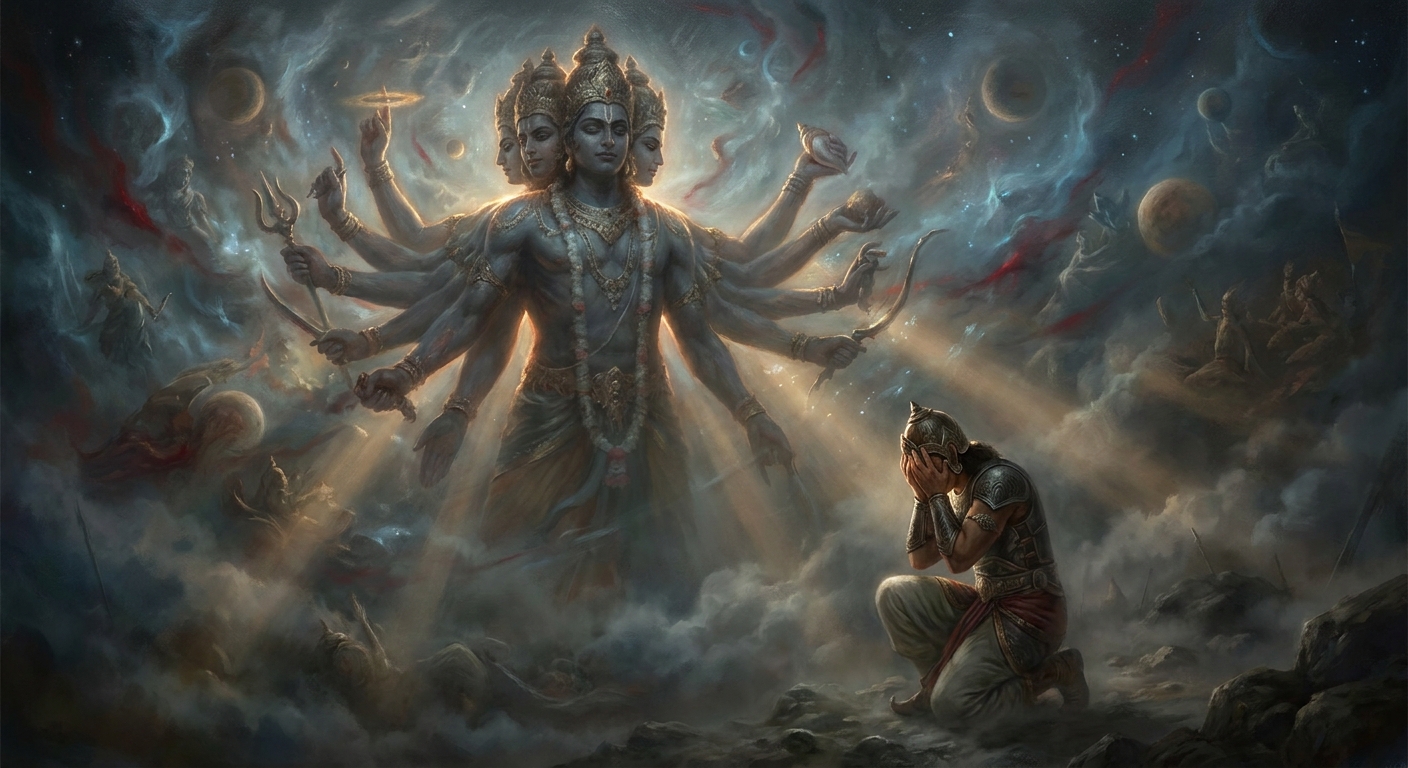
Krishna Reveals Himself
On the eve of the Kurukshetra battle, Arjuna begs his charioteer Krishna to show his true form. What opens before him is not a god but the architecture of existence itself — all creation, all destruction, time swallowing worlds — and the vision nearly breaks him.
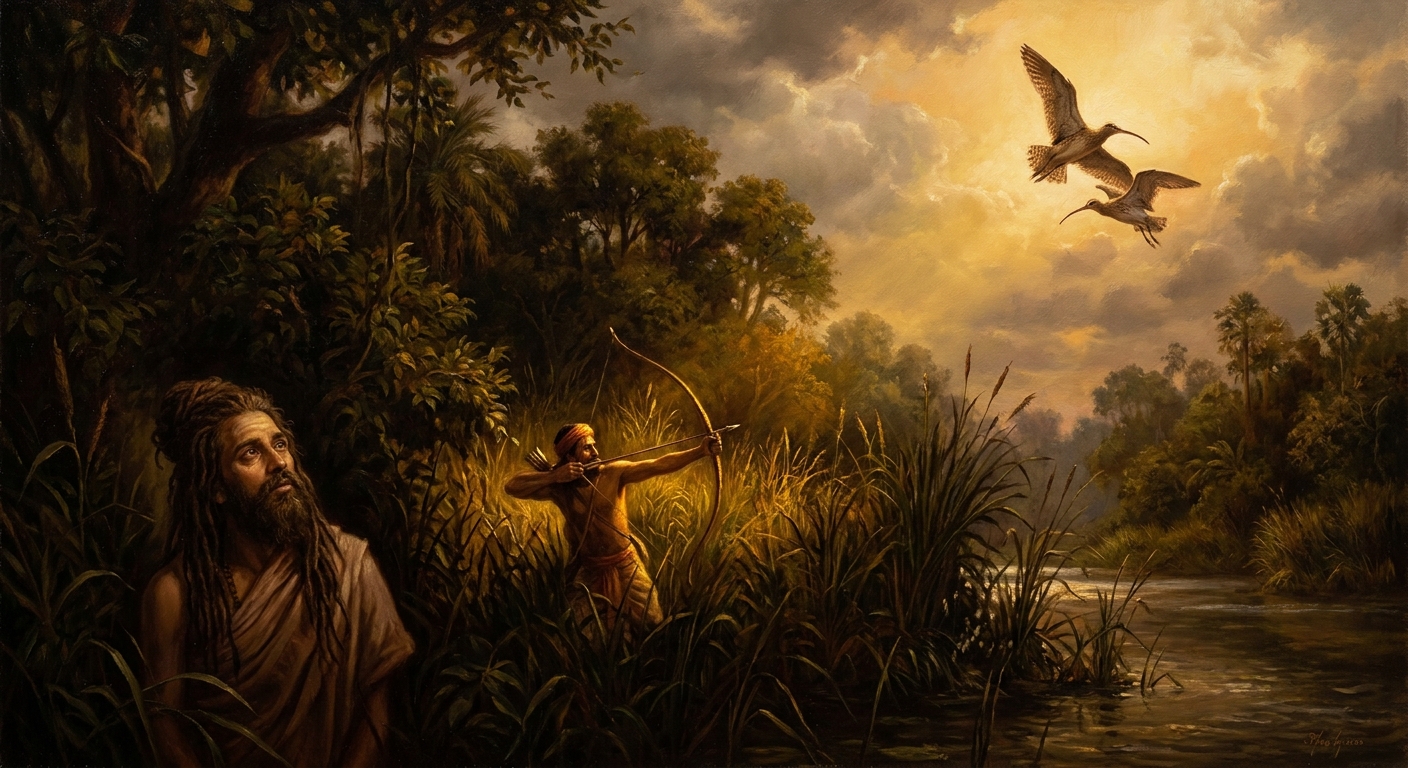
Valmiki Becomes the First Poet
A bandit named Ratnakara watches a hunter shoot a male krauncha bird mid-mating; grief tears a curse out of his mouth in perfect meter — the first shloka in Sanskrit. The bandit becomes the sage Valmiki, and from that single grieving line the Ramayana unspools.
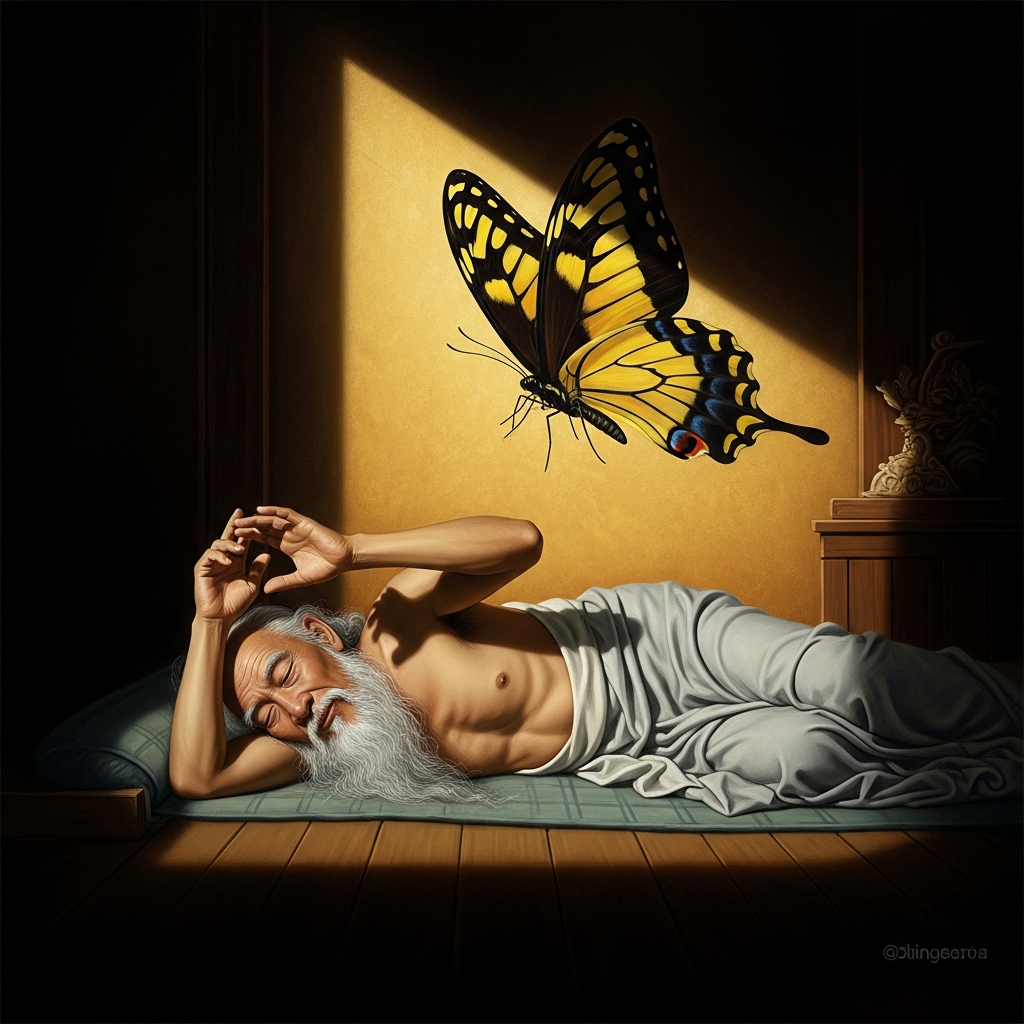
Zhuangzi Dreams He Is a Butterfly
The Daoist philosopher wakes from a dream in which he was a butterfly and cannot determine whether he is a man who dreamed of being a butterfly or a butterfly now dreaming of being a man. The question is not rhetorical. Zhuangzi offers it alongside the cook who butchers an ox by feel rather than sight, the cicada who cannot imagine the north sea, and the practice of finding the natural joints rather than hacking through resistance.
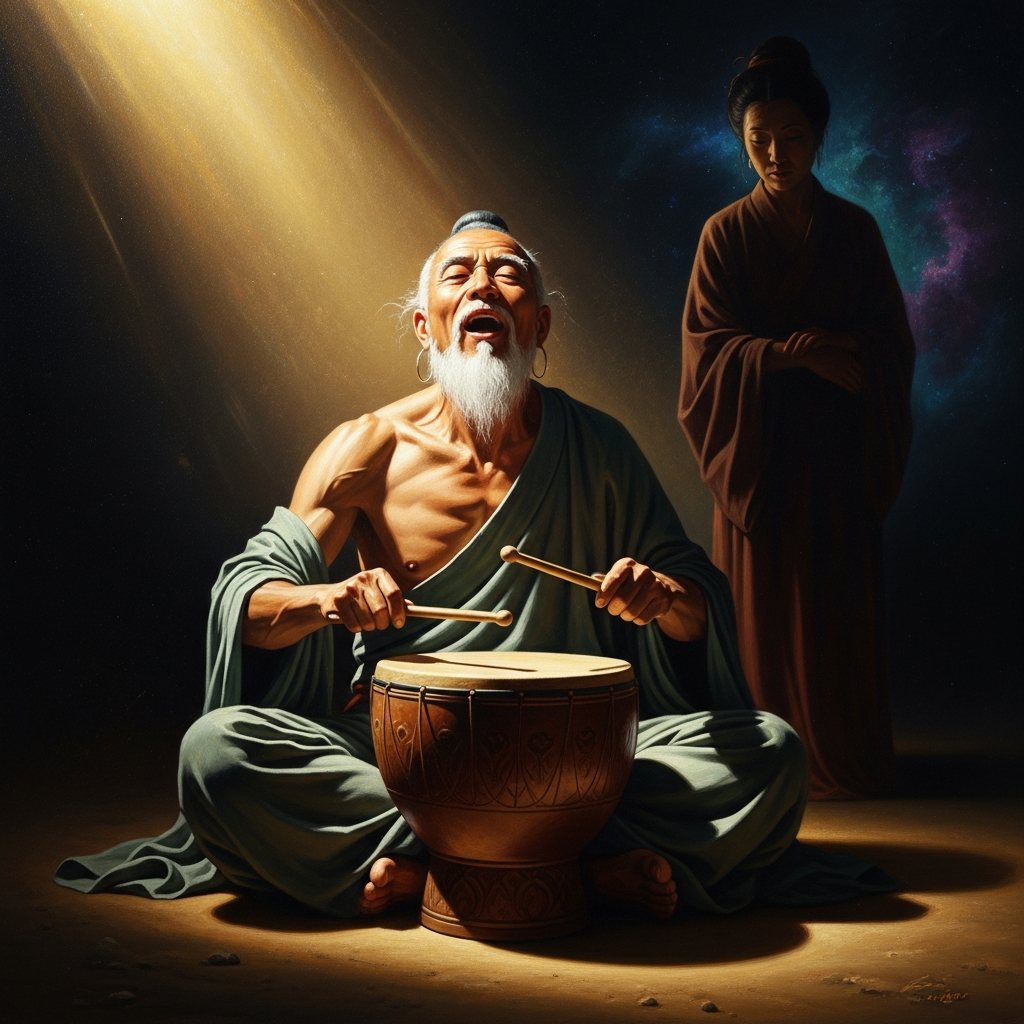
Zhuangzi Drums on a Bowl
Zhuangzi's wife dies. His friend Huizi arrives to mourn and finds Zhuangzi sitting on the ground, singing and drumming on a clay bowl. Huizi is outraged. Zhuangzi explains: at first he wept. Then he considered. She was nothing before she was born. She became something. She lived. Now she has returned to the great transformation. To weep for her return is to misunderstand what she was.
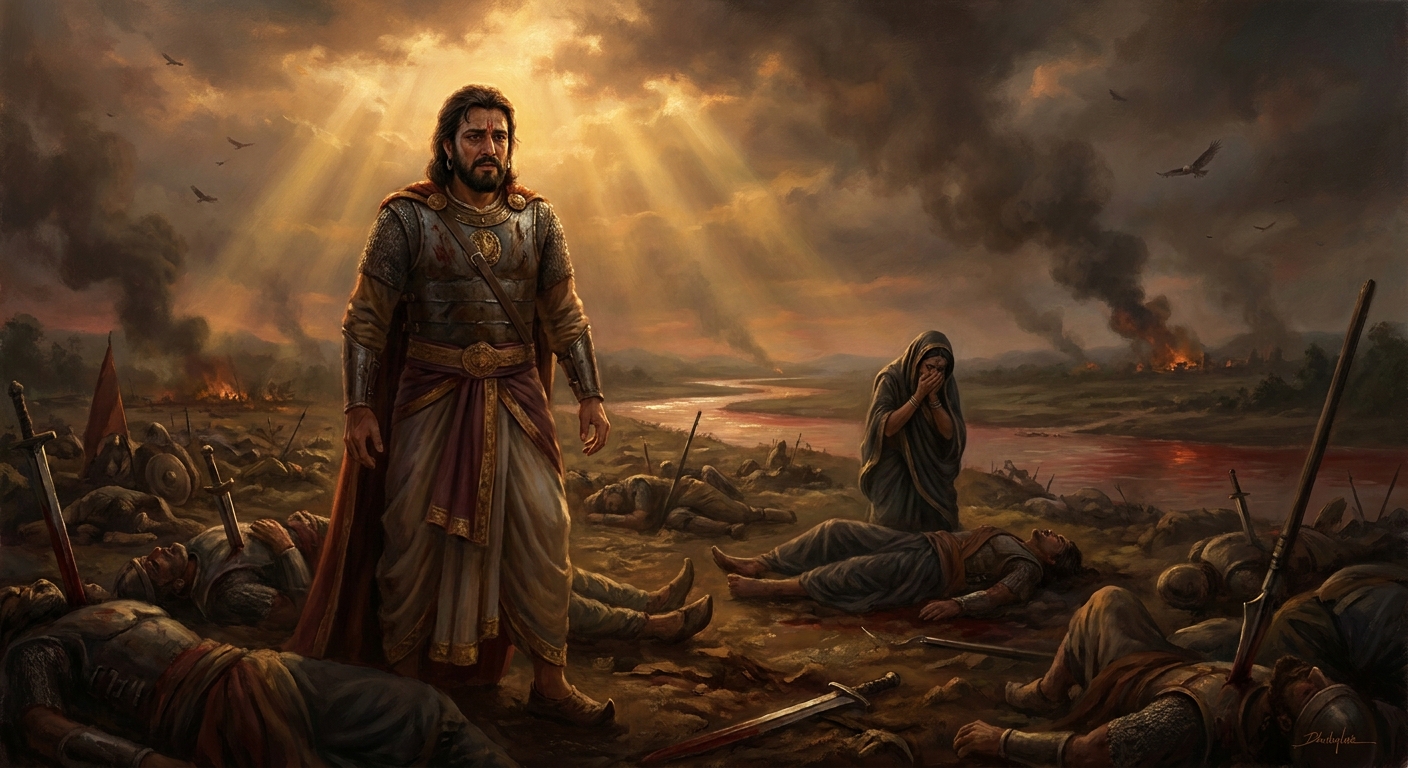
Ashoka After Kalinga
261 BCE. Ashoka, master of the greatest empire on earth, walks the field where 100,000 of his subjects lie dead. He weeps. He turns. What follows is the rarest thing in history — a conqueror who actually changes.
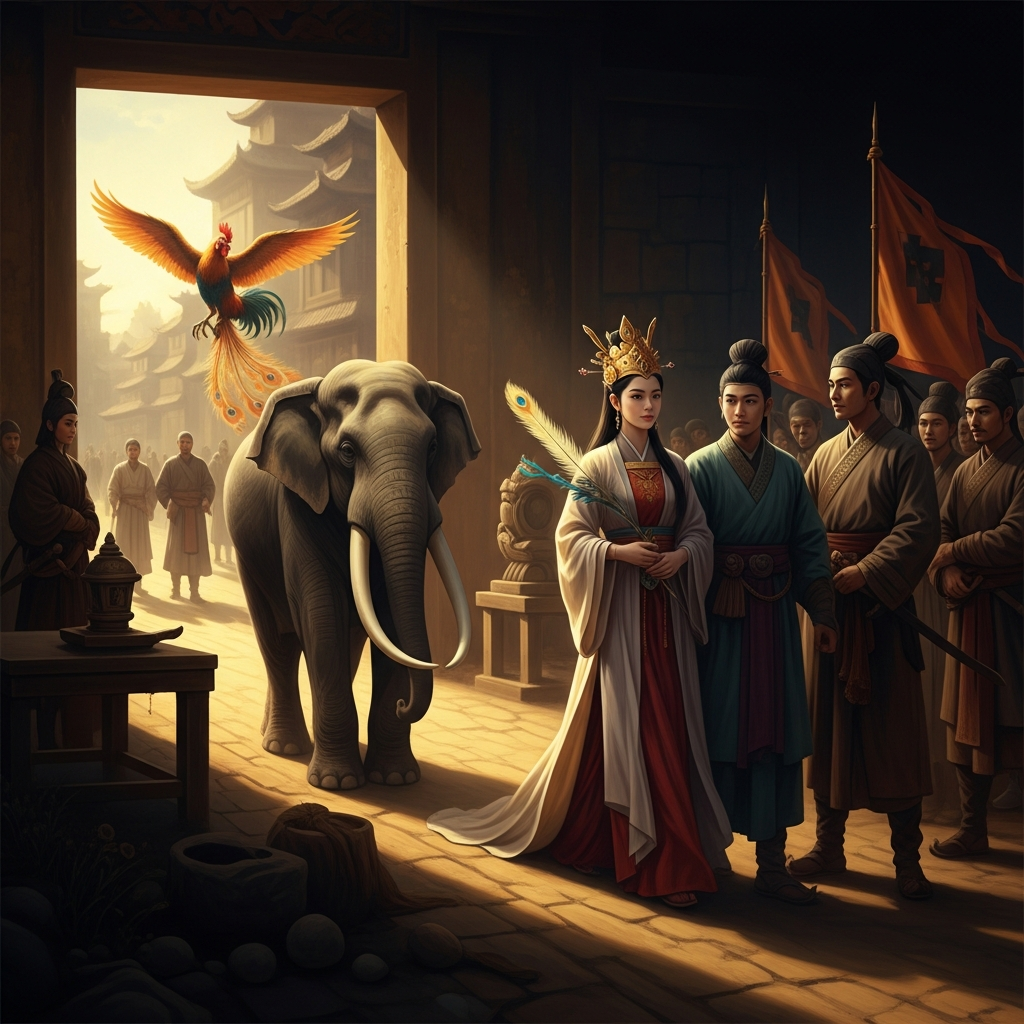
Sơn Tinh and Thủy Tinh: The War That Never Ends
Two gods court the same princess. One arrives at dawn; one arrives at noon. The man who arrives at noon has been losing the same war ever since — driving his floods up the mountain every year, every monsoon season, for five thousand years. The Mountain Spirit always raises the ground higher. The story is why Vietnamese rivers flood.
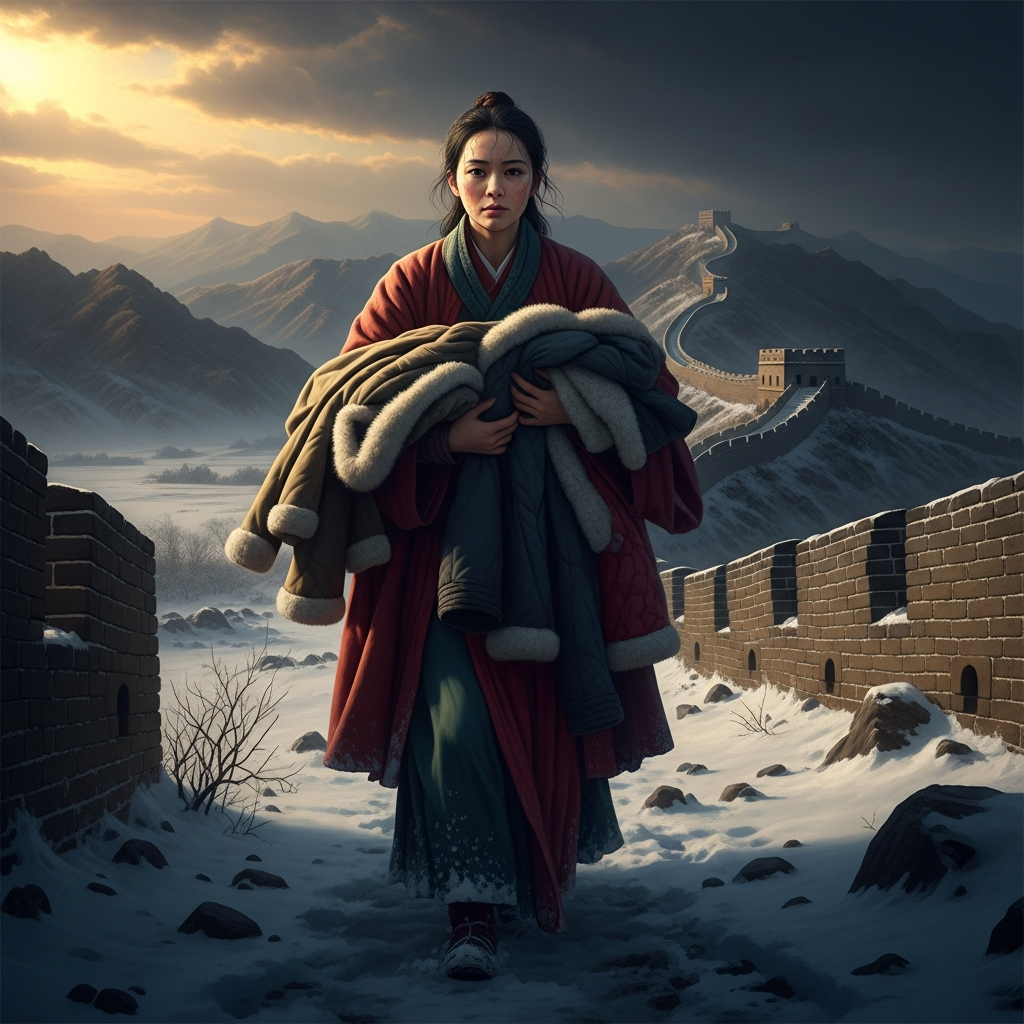
Lady Meng Jiang Weeps Down the Wall
Lady Meng Jiang's husband Fan Xiliang is conscripted to build the Great Wall and dies there, his body sealed inside the stone. She walks to the Wall in winter to bring him warm clothing. She weeps at its base. Her grief causes eight hundred li of Wall to collapse. The bones of the dead come tumbling out. She finds her husband among them by tasting his blood.
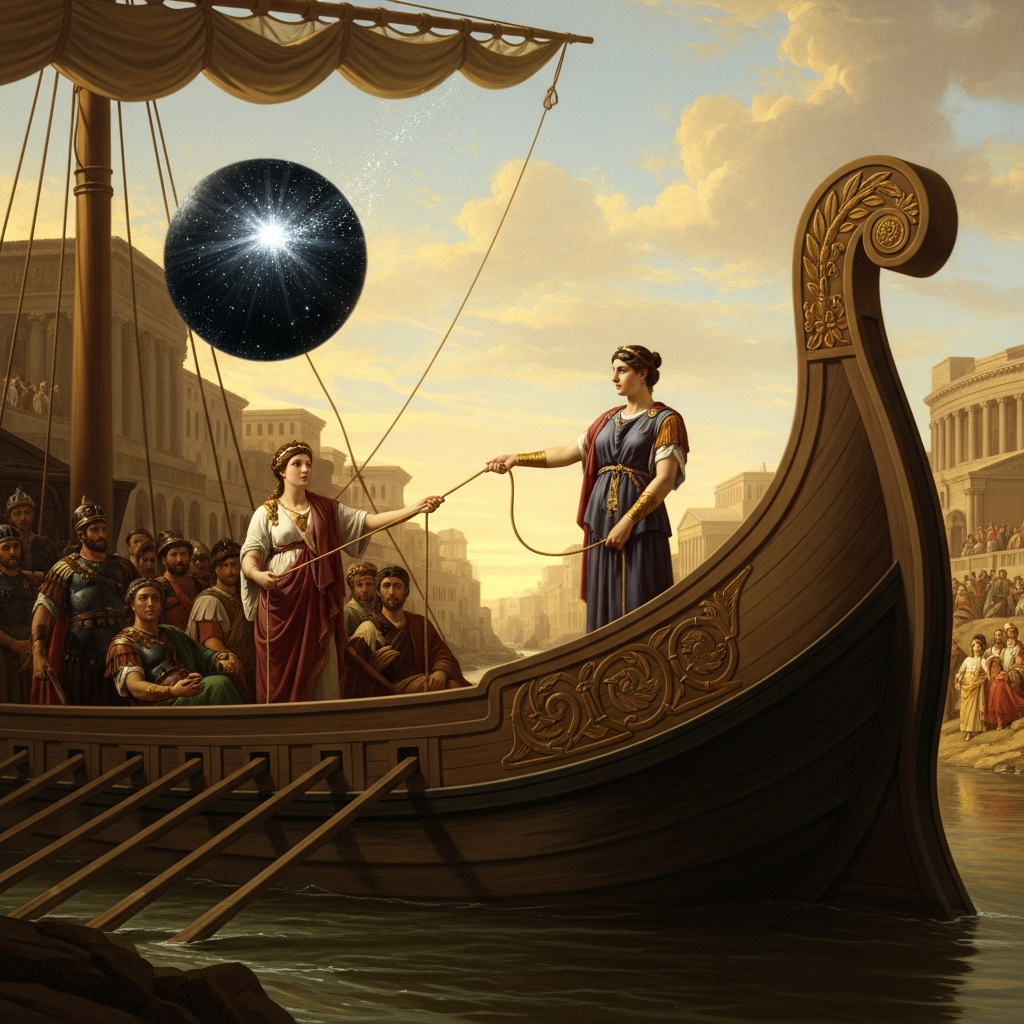
The Black Stone of the Great Mother
In 204 BCE, the Roman Senate sends its most virtuous citizen to receive a black stone from Pessinus — the body of Cybele, Great Mother of the Gods. Her priests, the Galli, castrate themselves in ecstatic devotion. Her lover Attis dies and rises in a three-day festival every March. The dates of his passion and Easter have never been satisfactorily explained.
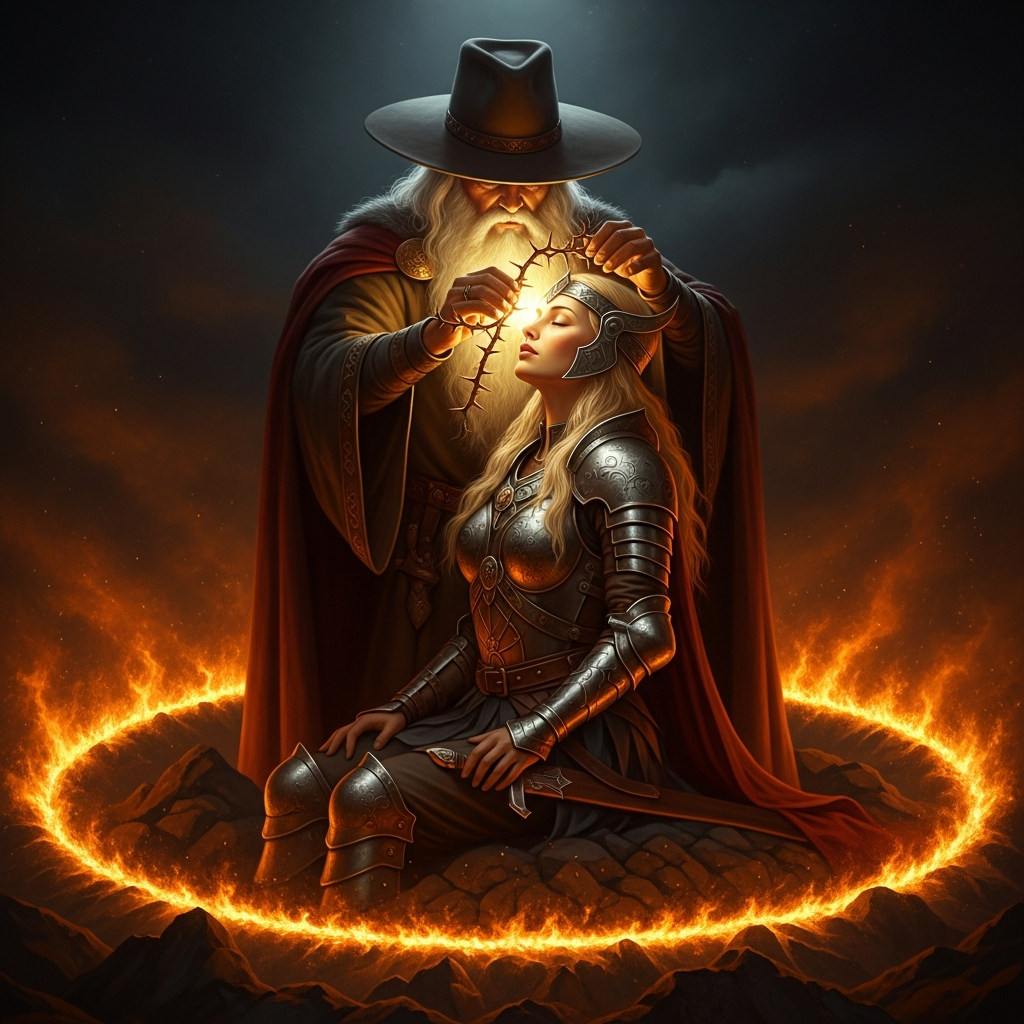
Brynhildr's Cursed Sleep
A Valkyrie defies Odin and is put to sleep with a thorn of enchantment on a mountain ringed by fire. The greatest warrior in the world wakes her. They fall in love. Then fate, a potion, and another woman's pride ensure that the only way this ends is fire.
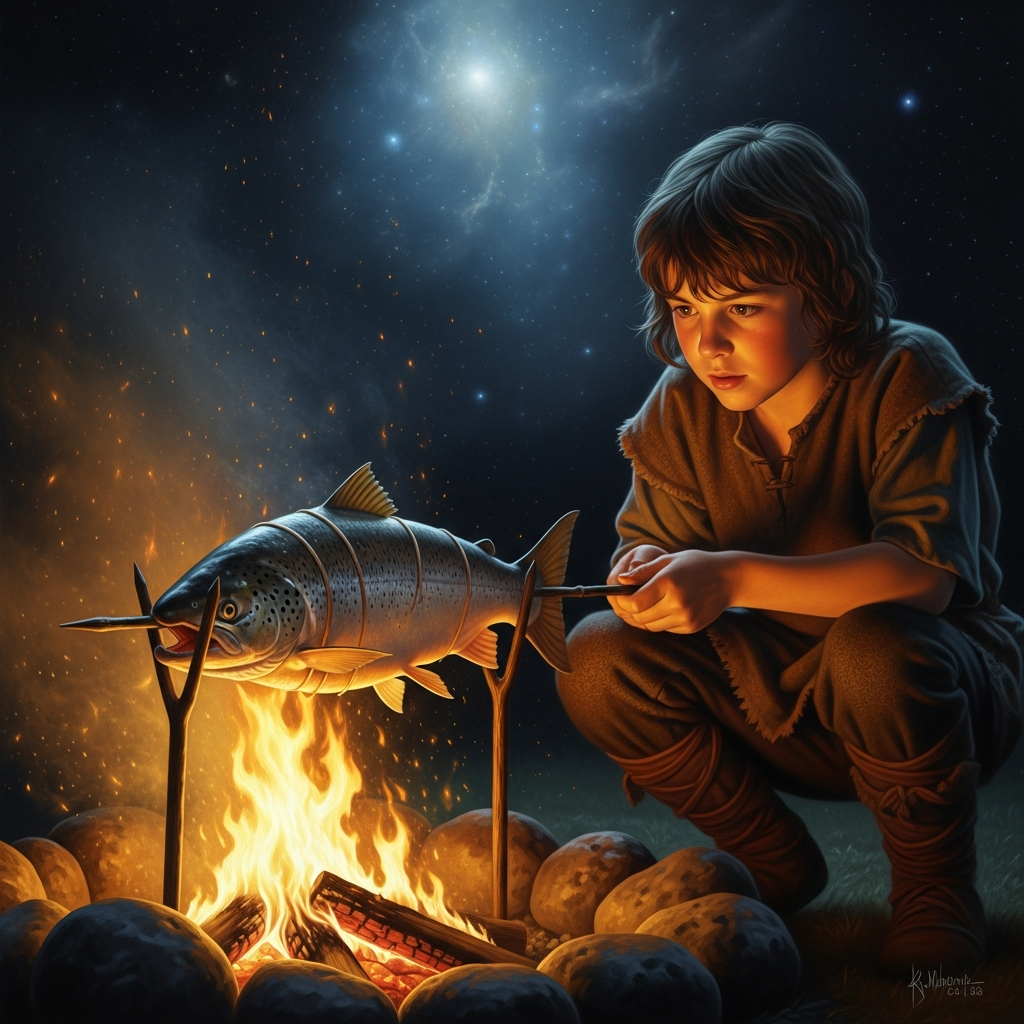
Fionn and the Salmon of Knowledge
The poet Finnegas has fished for the Salmon of Knowledge for seven years on the River Boyne. He catches it. He gives it to his student to cook with strict instructions: do not taste it. The boy burns his thumb on a blister of fat. He puts the thumb in his mouth. The wisdom of the world enters him sideways, through the burned skin of an accident, and the old poet looks at the boy and knows the salmon was never meant for him.
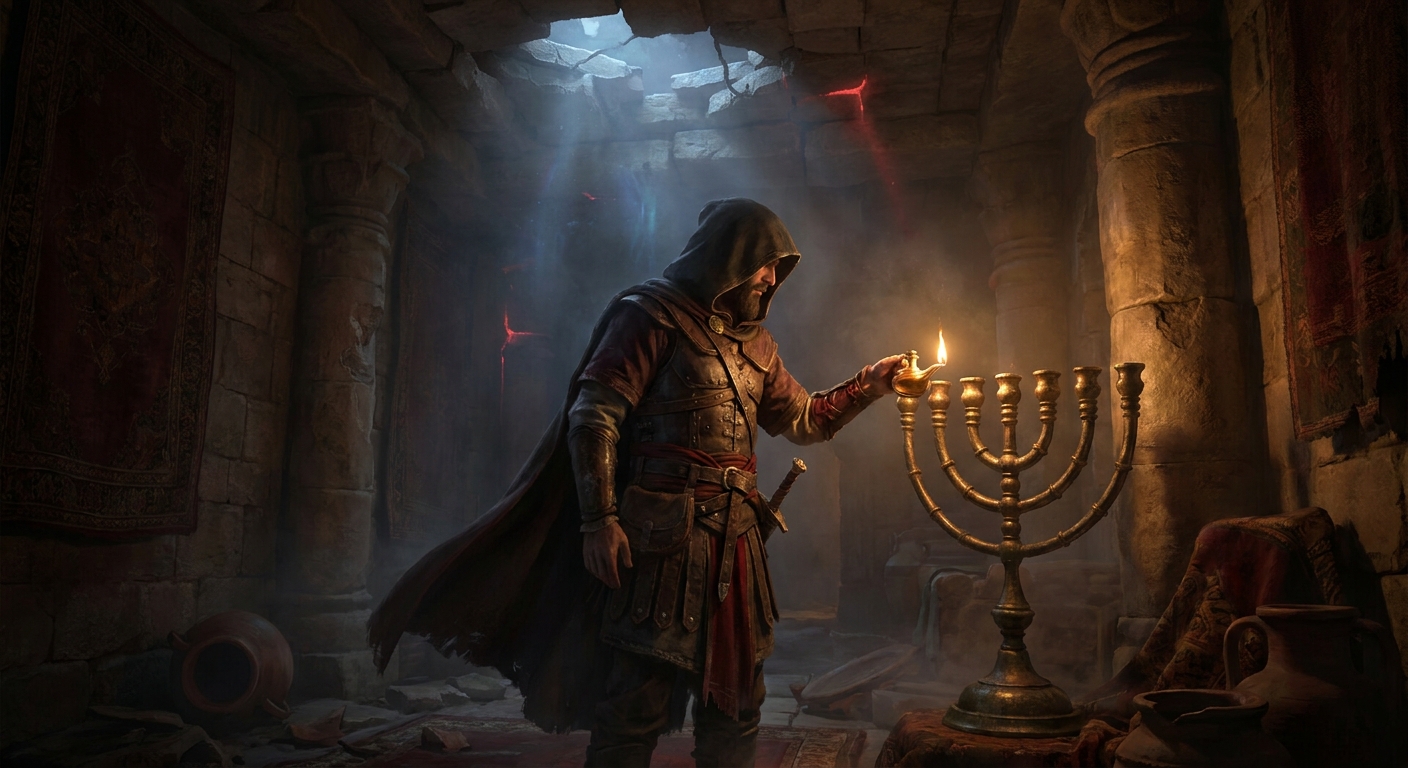
The Maccabean Revolt
167 BCE. Antiochus IV Epiphanes outlaws the Torah, defiles the Temple with pig's blood, and demands a priest bow to Zeus. Mattathias refuses. His son Judah leads a rebellion through the Judean hills. Three years later, they retake the Temple — and one day's oil burns for eight.
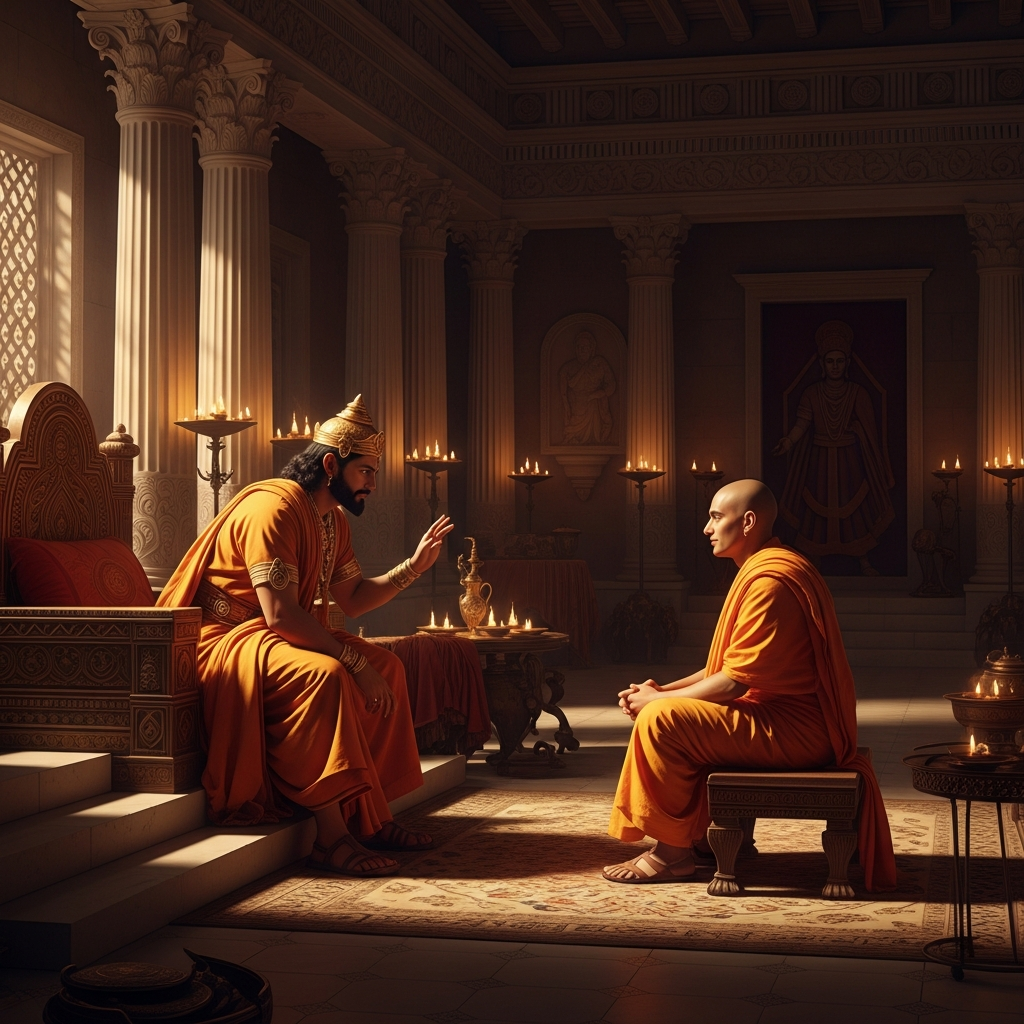
King Milinda and the Chariot That Has No Self
The Greek-Bactrian king Menander, who has defeated every philosopher in his kingdom in debate, summons the monk Nagasena. If there is no self, who is it that practices? If no one carries karma across lives, how does rebirth make sense? Nagasena answers with a chariot. The king, who has never lost an argument, concedes.
The Death of Baldr
Baldr, the most beloved of all gods, begins to dream of his own death. Frigg extracts oaths from every thing in creation — all except one. Loki finds the exception. The dart flies. And Odin, standing on the burning pyre, leans down and whispers something in his dead son's ear that no one has ever heard.
Ariadne on Naxos
She gives him the thread that saves his life and her promise of marriage. He kills the Minotaur — her half-brother — and sails her away from Crete. On the island of Naxos he leaves while she sleeps. She wakes alone on the shore. Then a god comes down the hillside, and her grief becomes a constellation.
Cernunnos at the Hinge of Winter
A Gaulish nobleman in 50 BCE prepares the winter hunt ritual at the threshold moment between seasons. What the antlered god Cernunnos represents: not death but transition, the liminal instant when the wild animals move between worlds and the boundary between human and animal is most permeable.
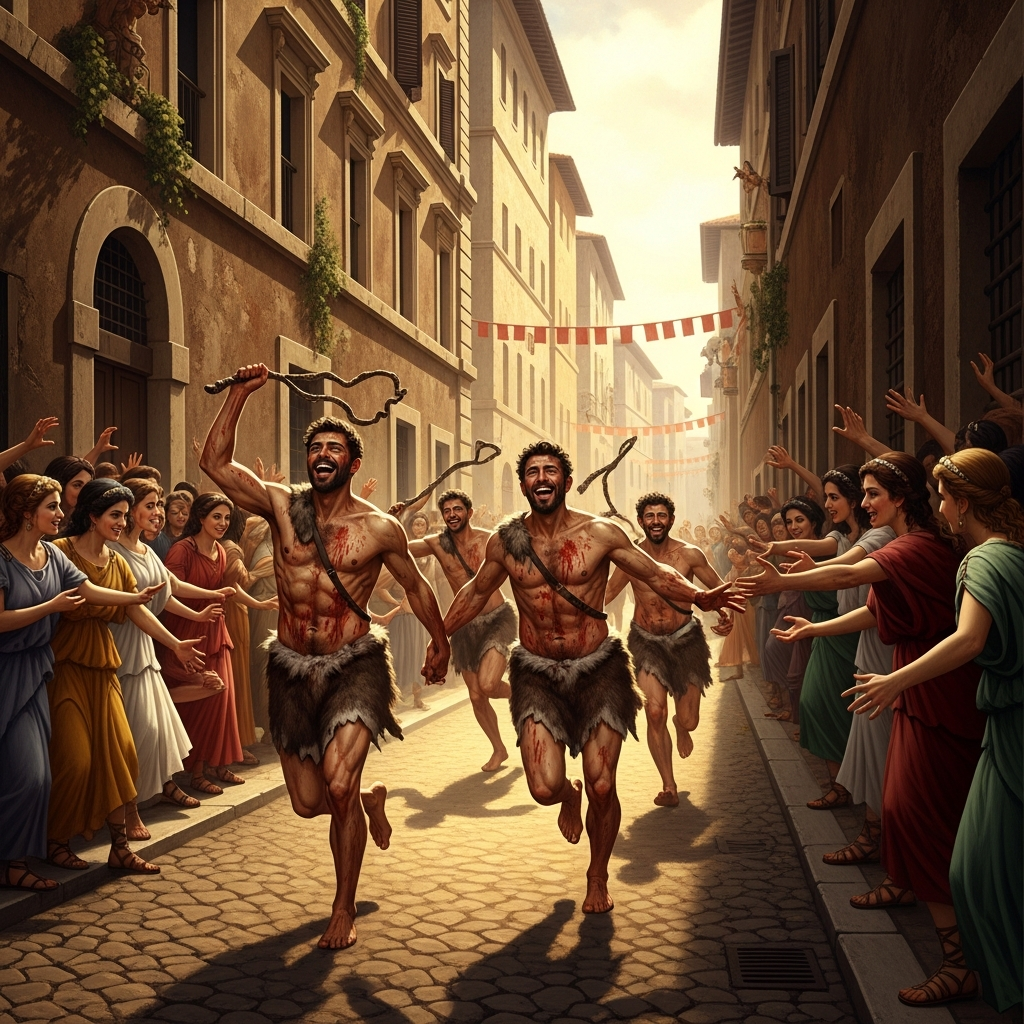
The Lupercalia and Caesar's Last Refusal
Every February 15th, Rome's oldest festival strips two noble young men naked, smears their foreheads with the blood of a sacrificed goat, and sends them running through the city's streets striking everyone they pass with strips of animal hide. The festival is older than Rome can remember. Julius Caesar attends his last Lupercalia in 44 BCE. Antony offers him a crown three times. He refuses it three times. Everyone in the Forum knows it is theater. The Senate will answer the real question one month later.
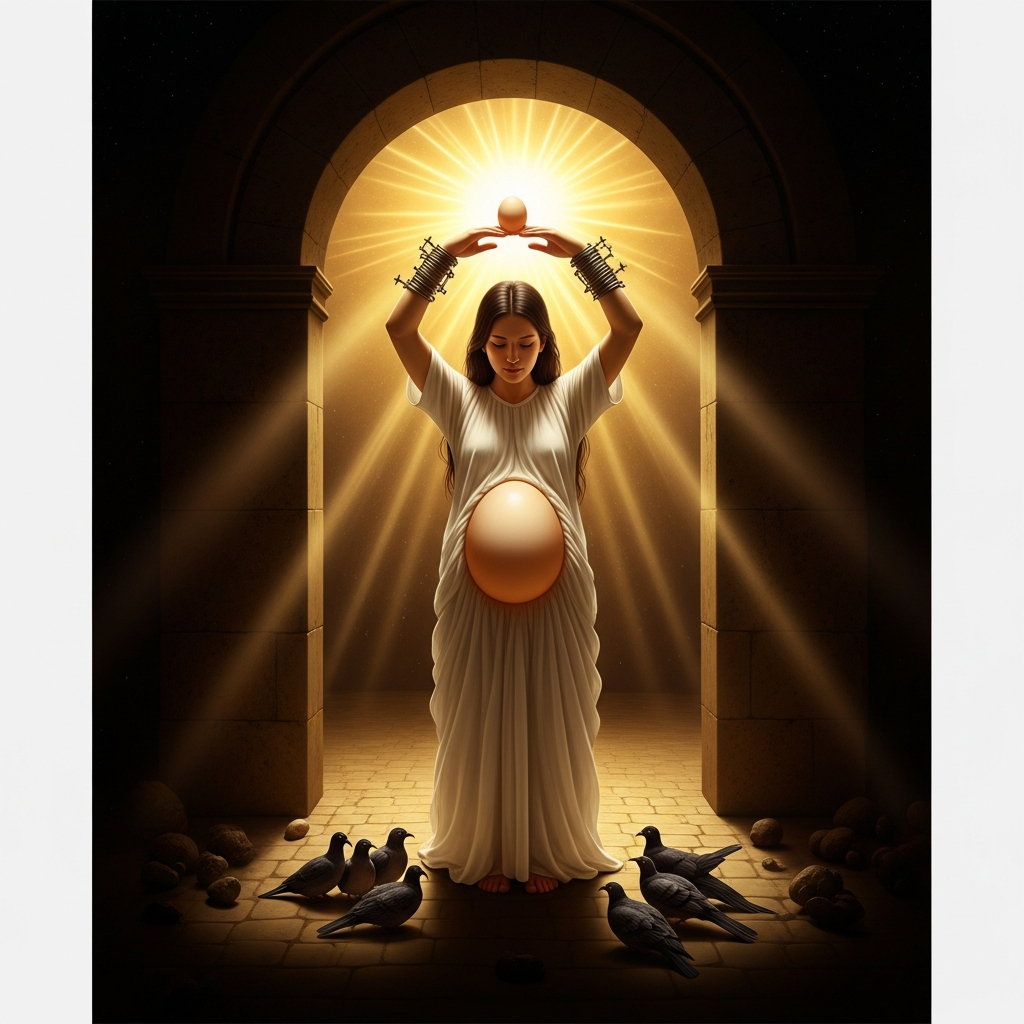
Jumong Founds Goguryeo
The son of a sun-god and a river goddess's daughter is born from an egg, grows into the greatest archer in the world, and is therefore hunted by every power that sees him. He escapes on horseback across a river that opens for him and founds one of the Three Kingdoms of Korea. The drama of the divine hero is not the founding. It is surviving long enough to found anything.
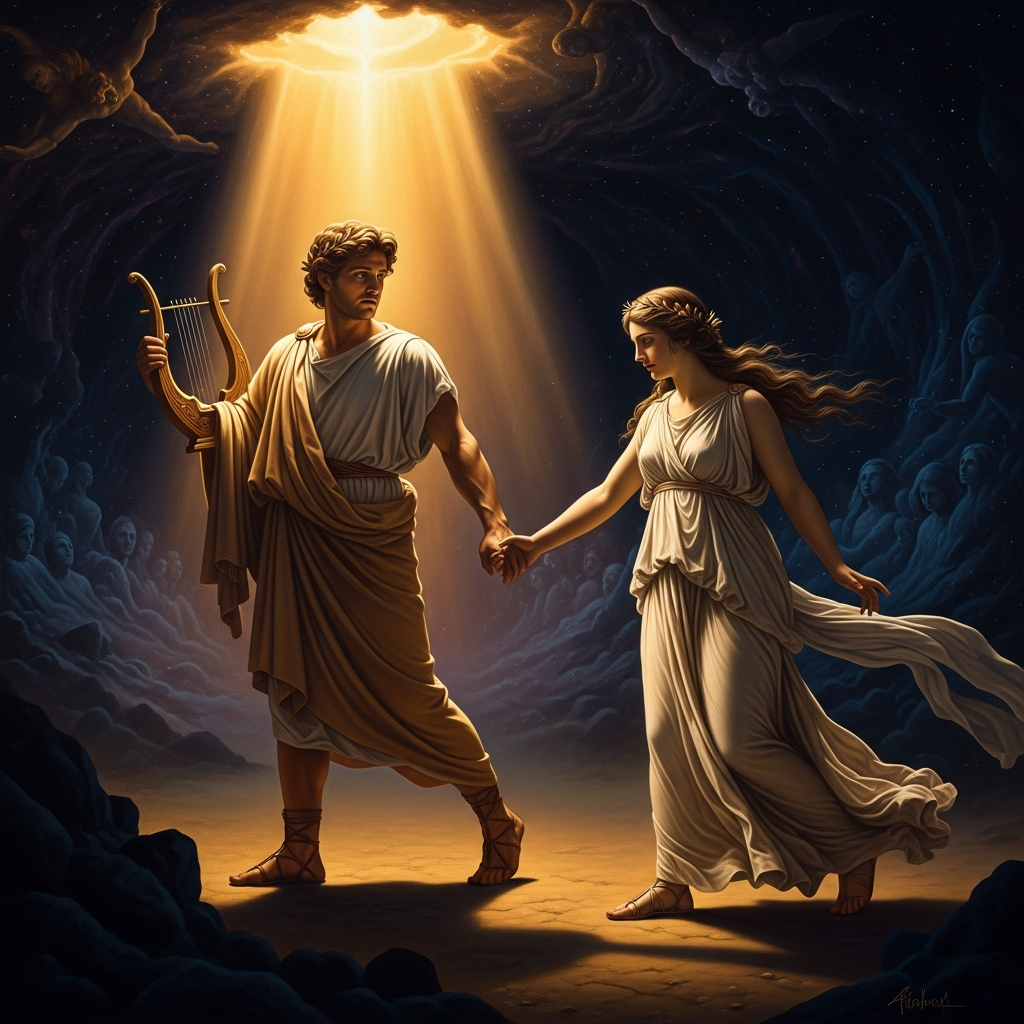
Orpheus and Eurydice
A serpent kills the bride on the wedding day. The poet descends into Hades with his lyre. He plays so beautifully that the ferryman crosses for free, the three-headed dog lies down, and the Furies weep. Hades and Persephone grant him his wife on one condition: do not look back. He looks back.
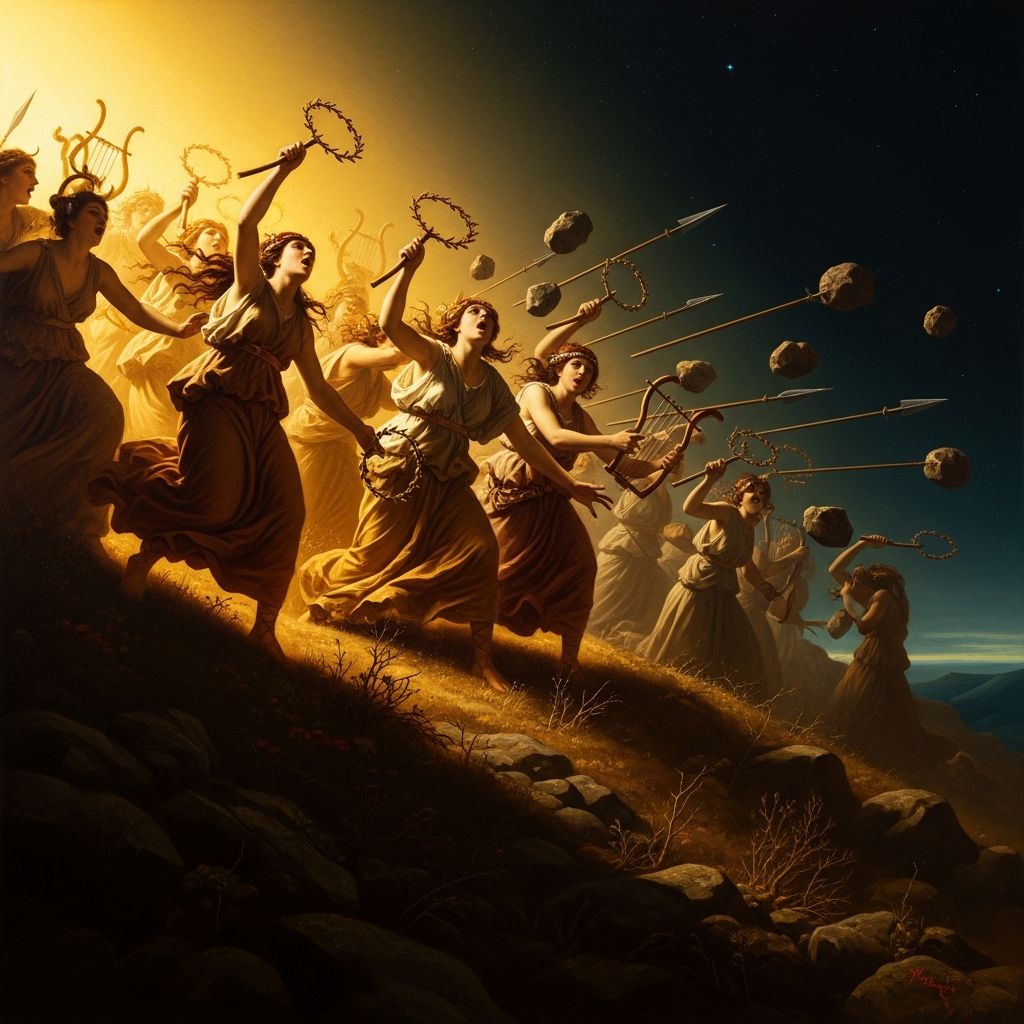
The Head That Would Not Stop Singing
Orpheus returns from the underworld without Eurydice and renounces women. The Maenads, drunk and enraged by his refusal, tear him apart on a hillside during a Bacchic rite. His head floats down the river Hebrus to Lesbos, still singing. The island becomes the birthplace of lyric poetry.
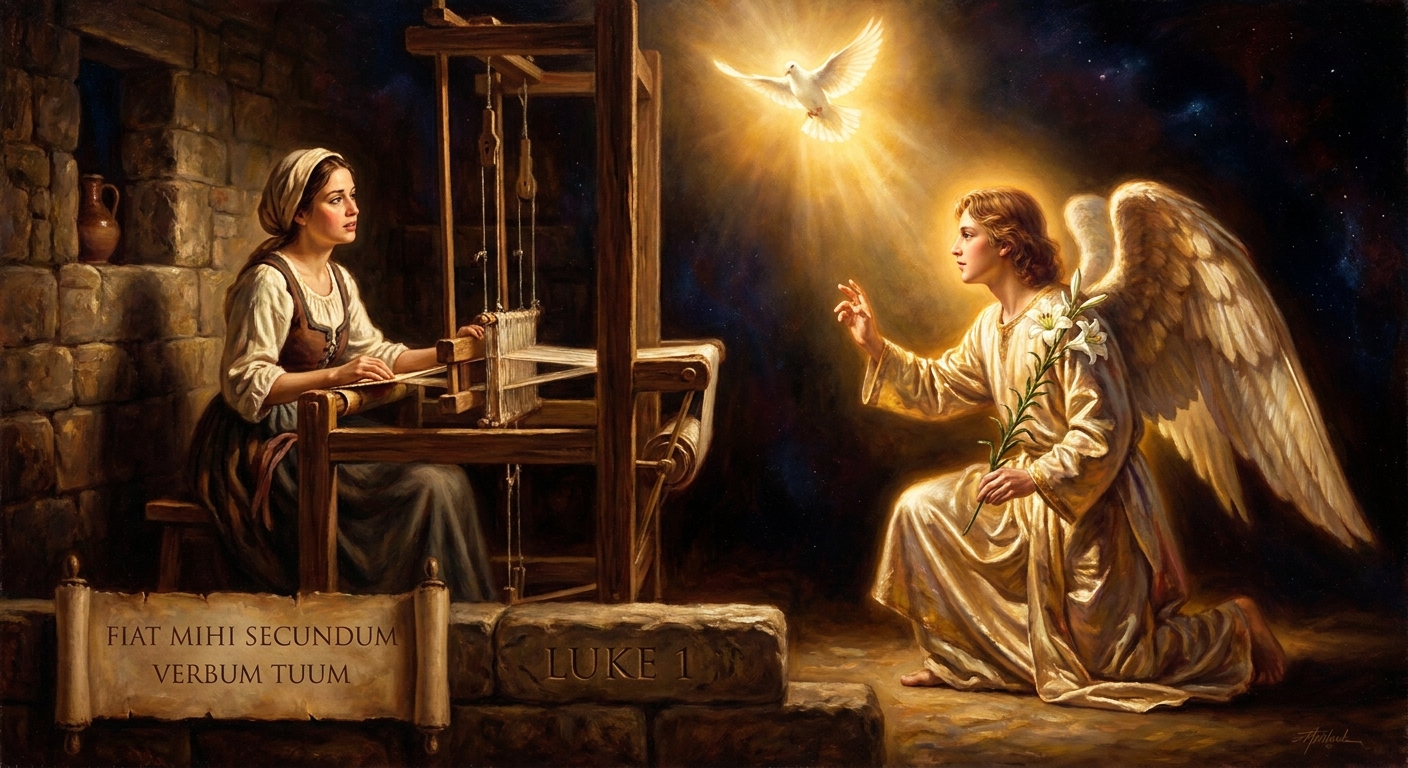
The Annunciation
A young woman in Nazareth, alone at her loom or her water jar, hears a greeting that will split history in two. Gabriel speaks. Mary answers. Two billion lives hinge on a single word.
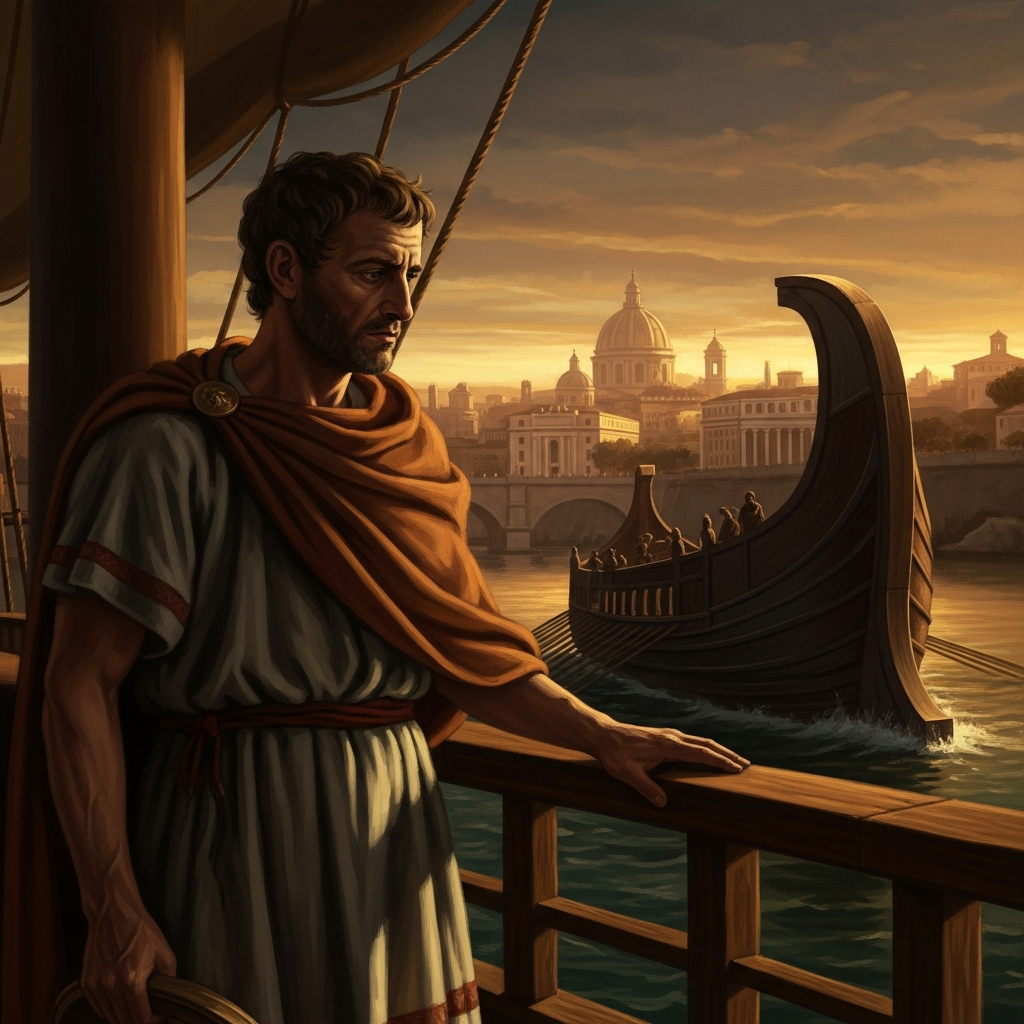
Ovid in Tomis
In 8 CE, Emperor Augustus banishes Ovid — Rome's most beloved living poet — to Tomis on the Black Sea, the edge of the known world, for a poem written a decade earlier and a mistake he refuses to name. He spends nine years writing letters to emperors who never answer. He reads his own book about transformation and finds it has transformed him into something he did not choose to be.
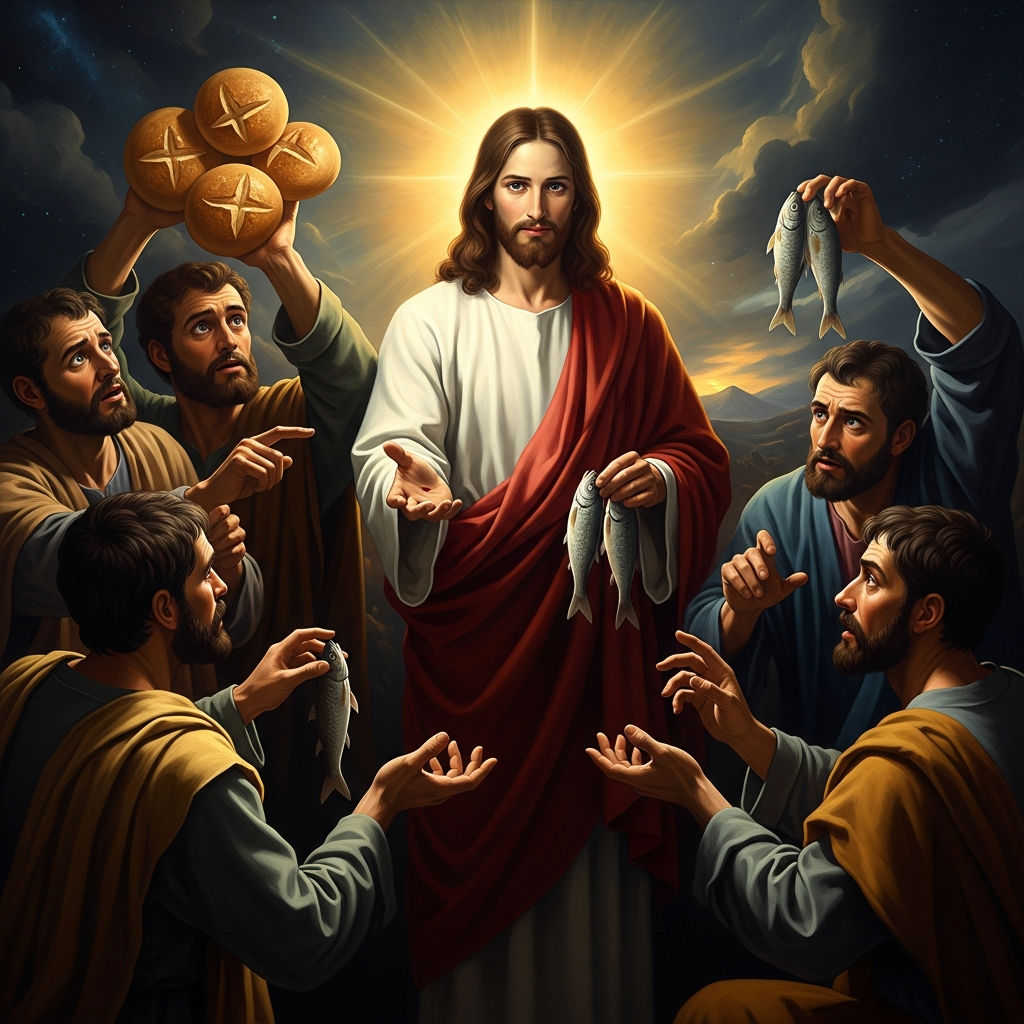
Feeding the Five Thousand: Twelve Baskets Left Over
A crowd of five thousand has followed Jesus to a deserted place and it is growing late. The disciples say: send them away. Jesus says: you feed them. They have five loaves and two fish. Jesus takes the bread, looks up, blesses it, breaks it, and gives it to the disciples to distribute. Everyone eats and is satisfied. Twelve baskets of fragments are collected. This is the only miracle recorded in all four Gospels.
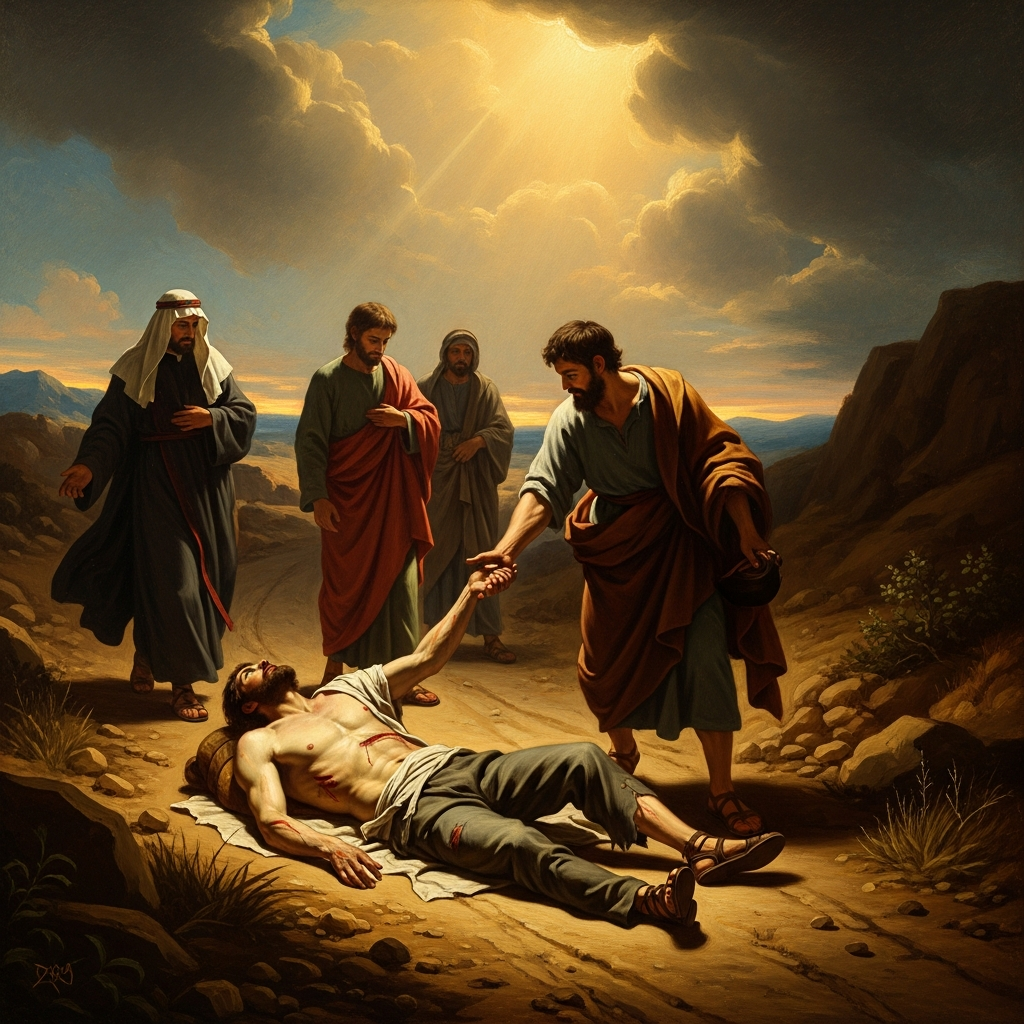
The Good Samaritan: Who Is My Neighbor?
A legal expert asks Jesus a trick question: who qualifies as a neighbor under the commandment to love your neighbor as yourself? Jesus answers with a story. A man is beaten half to death on the Jericho road. A priest passes. A Levite passes. A Samaritan — the despised outsider — stops, binds the wounds, and pays for the recovery. Jesus asks: which one was the neighbor? The expert cannot say the word Samaritan. He says: the one who showed mercy.
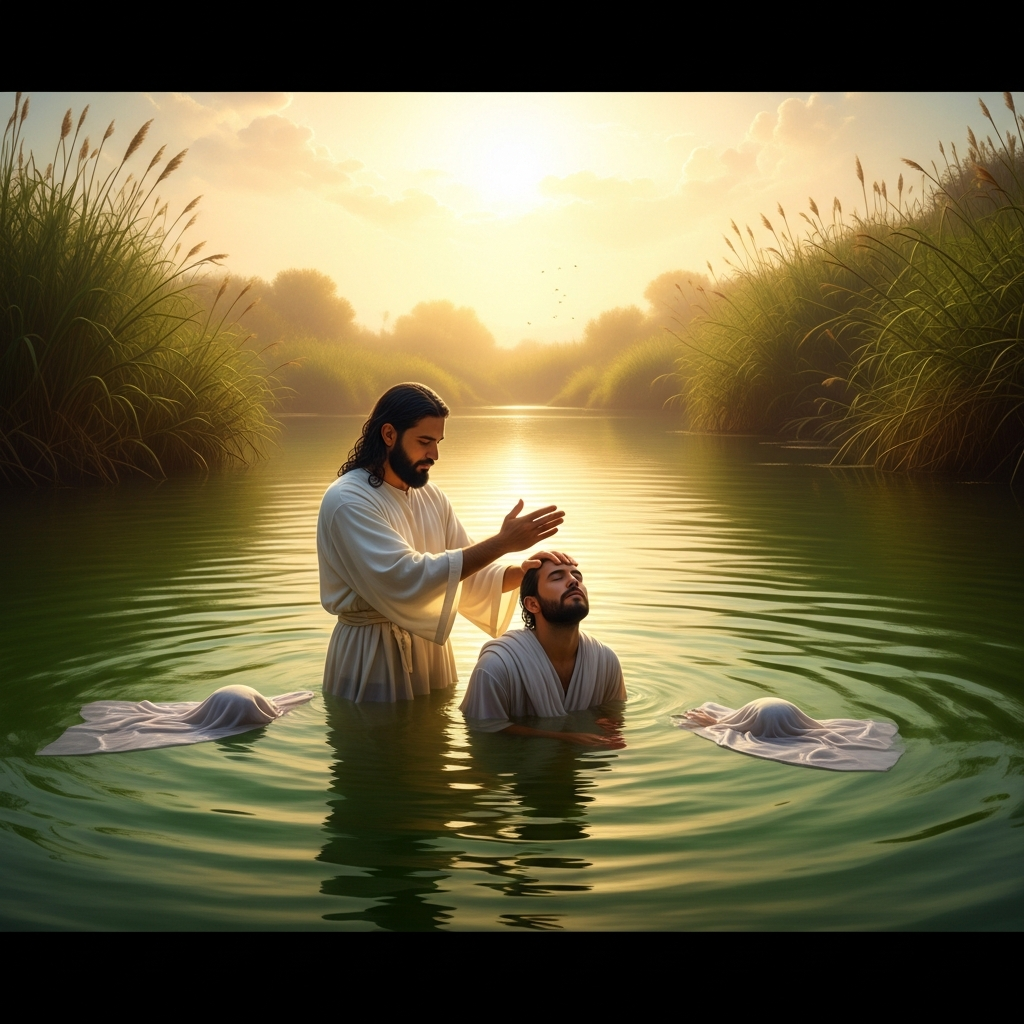
Yahia the True Prophet Baptizes in the Jordan
The Mandaeans remember John the Baptist not as the forerunner of Jesus but as the true prophet himself — the master of the living water who has been betrayed by a student who twisted his teachings into a new religion. For two thousand years, Mandaean priests have performed John's baptism continuously, the only unbroken initiatory tradition in the Western world.
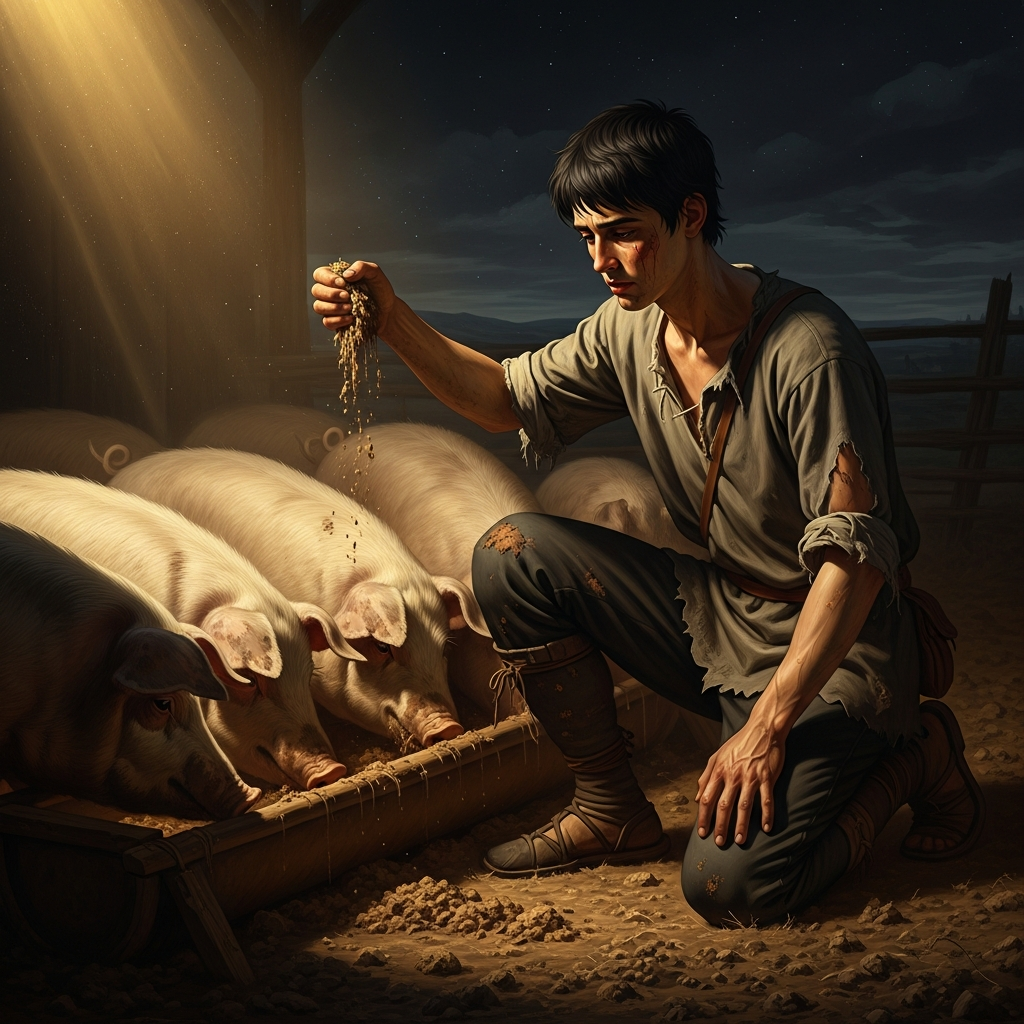
The Prodigal Son: The Father Who Ran
A younger son demands his inheritance before his father is dead, wastes every coin in a foreign country, and hits rock bottom shoveling slop for pigs. He walks home rehearsing a speech about being unworthy. While he is still far down the road, his father — who has been watching — starts running. The parable has three characters. It is unclear which one you are.
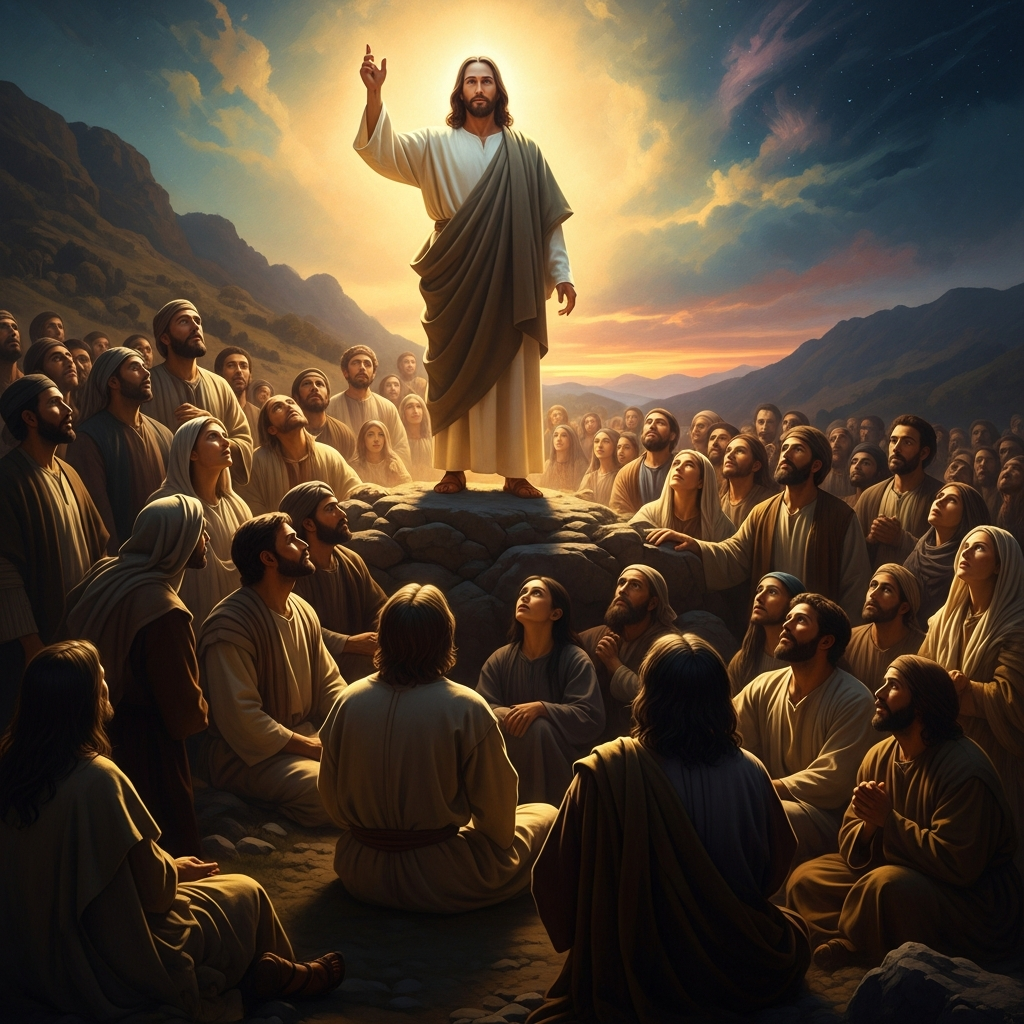
Sermon on the Mount
On a hillside above the Sea of Galilee, Jesus sits down and speaks. Peasants, fishermen, and tax collectors hear a teaching that dismantles every assumption they carry about virtue, wealth, piety, and the kind of God they live under.
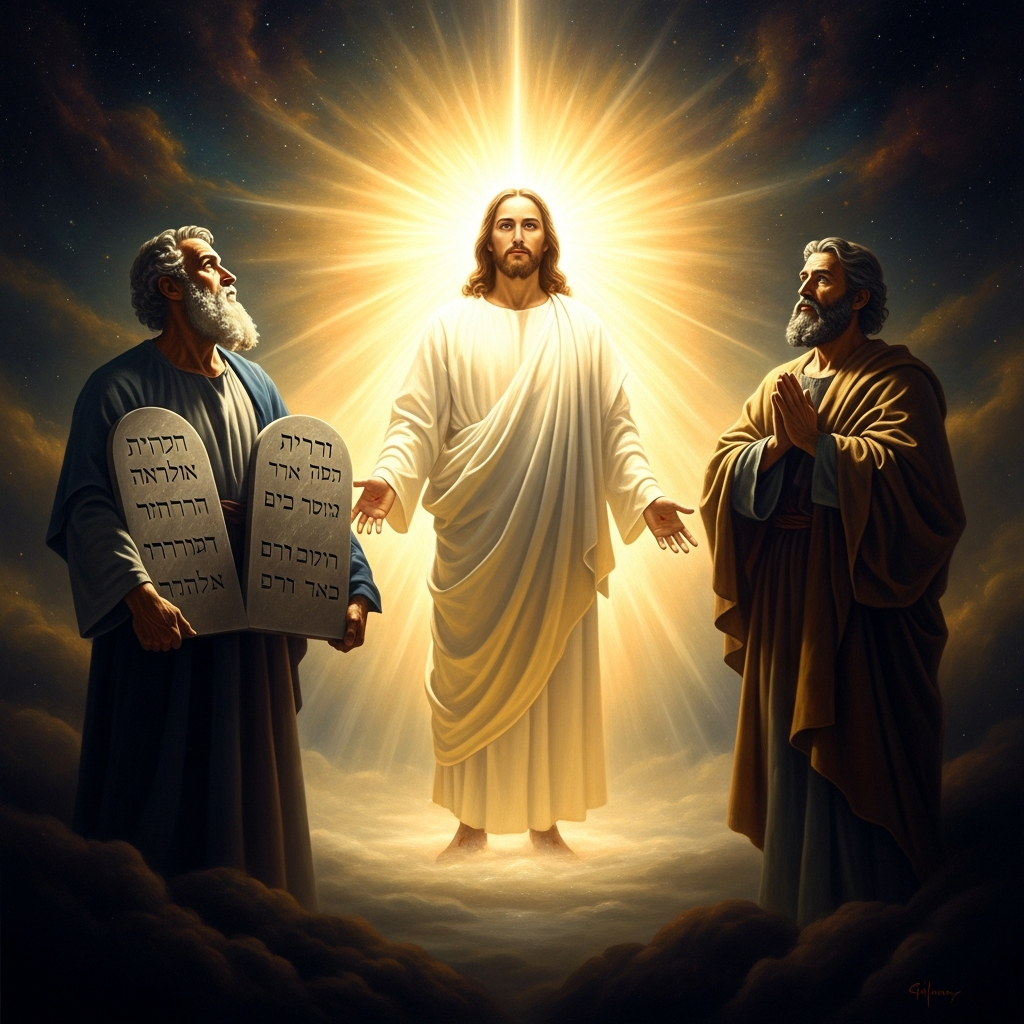
Transfiguration on the Mountain
Peter, James, and John follow Jesus up a high mountain. His face blazes like the sun. Moses and Elijah stand beside him. A cloud descends and God speaks. When the disciples dare to look again, only Jesus remains — and the world they understood is gone.
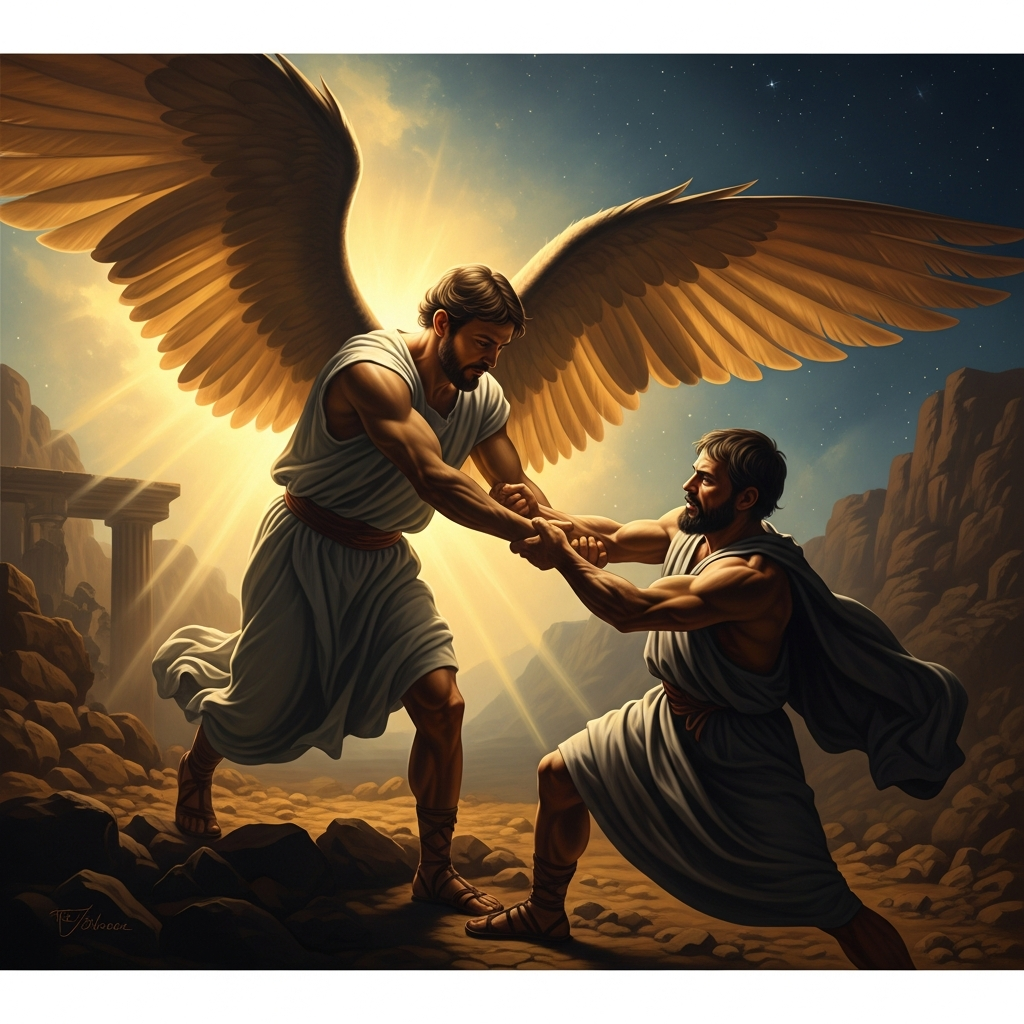
The Woman at the Well: Living Water
At noon, alone at Jacob's ancient well near Sychar, a Samaritan woman comes to draw water and finds a Jewish man sitting there who asks her for a drink. He breaks two rules at once — men do not speak alone with women, Jews do not share vessels with Samaritans. He offers her water that will never run out. She wants it. He tells her everything about her life. She goes back to her village and becomes the first evangelist in John's gospel.
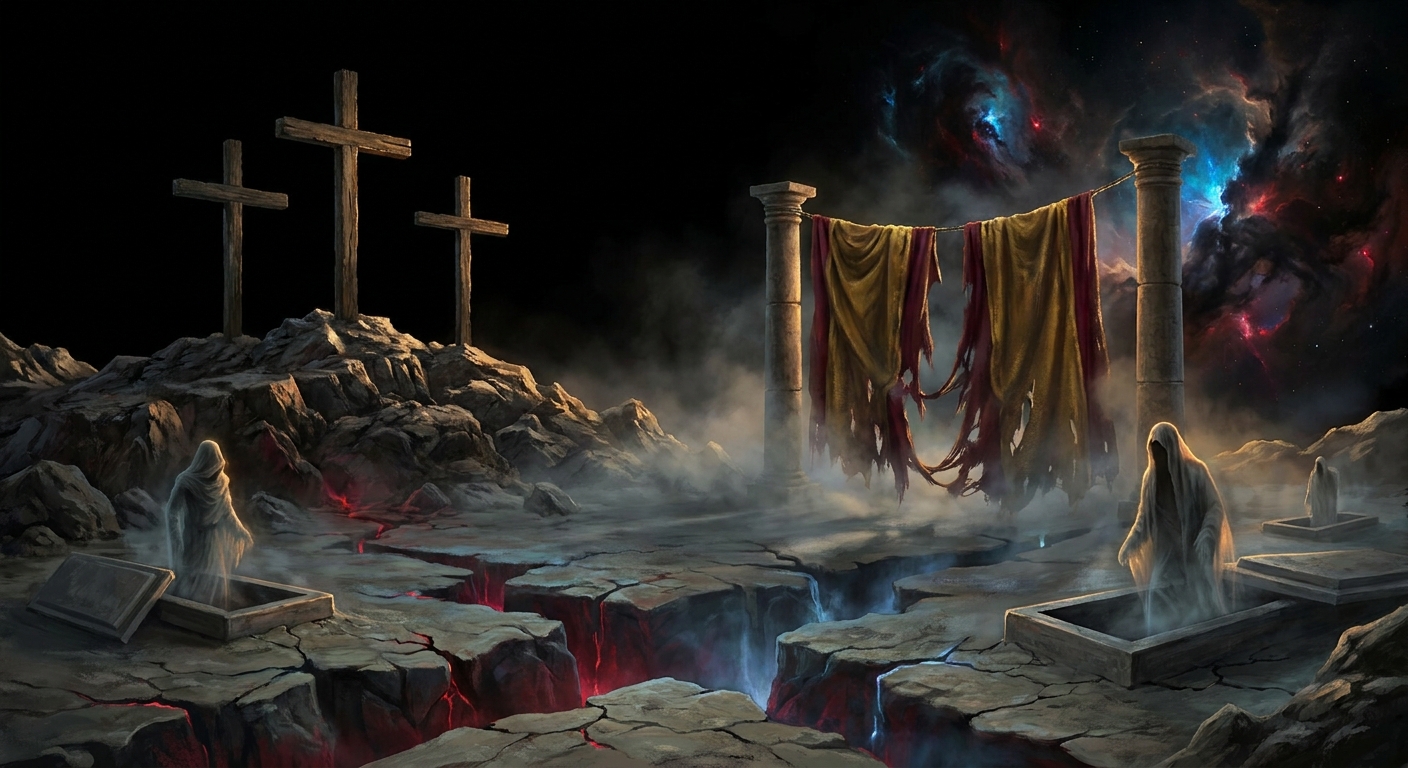
Christ on the Cross
The dying-and-rising god pierced and suspended on wood — Christ sacrificed on the cross for the salvation of the world, dead three days, then raised. The deliberate parallel to Odin-on-the-tree.
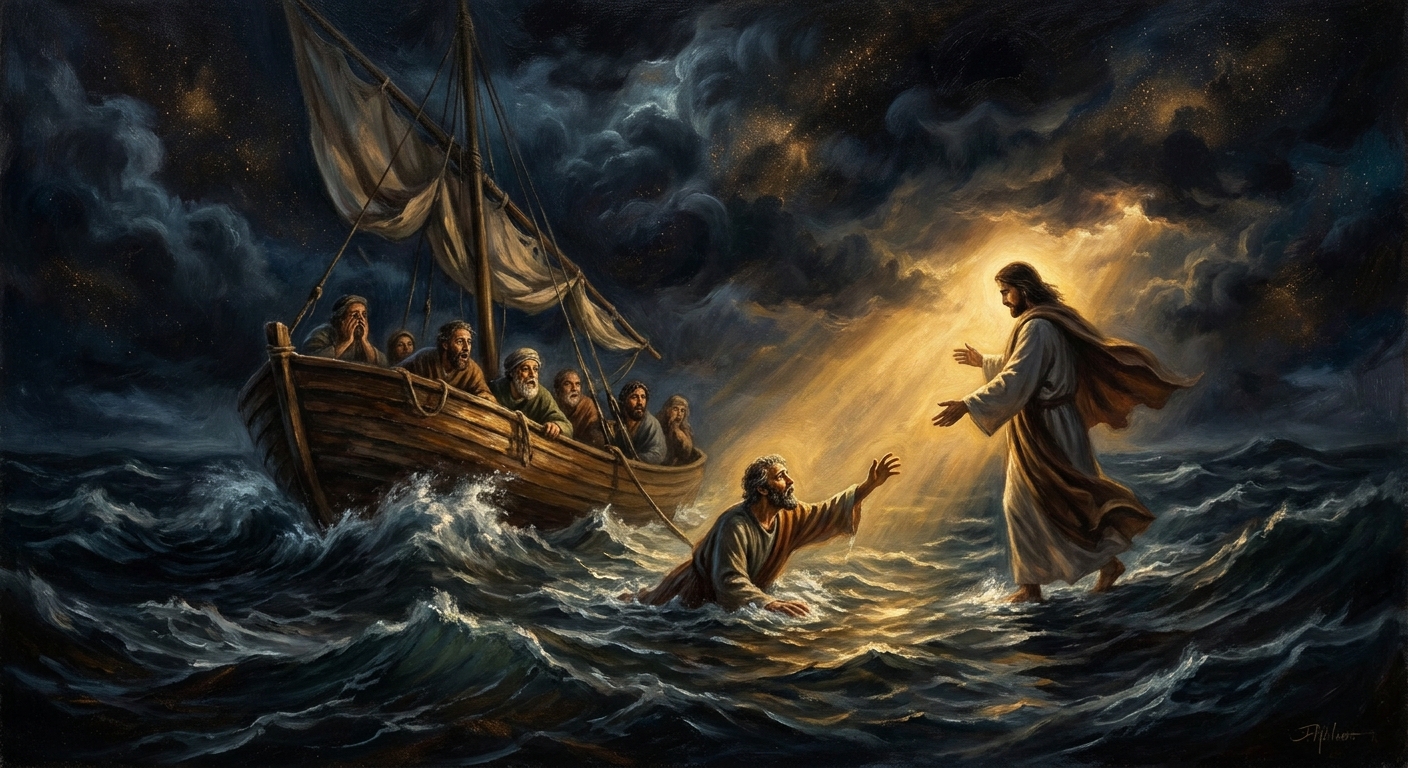
Walking on the Water
After feeding five thousand, Jesus sends the disciples ahead by boat across the Sea of Galilee, goes alone to a mountain to pray, and comes to them at three in the morning walking on the water. Peter steps out to meet him — and sinks.
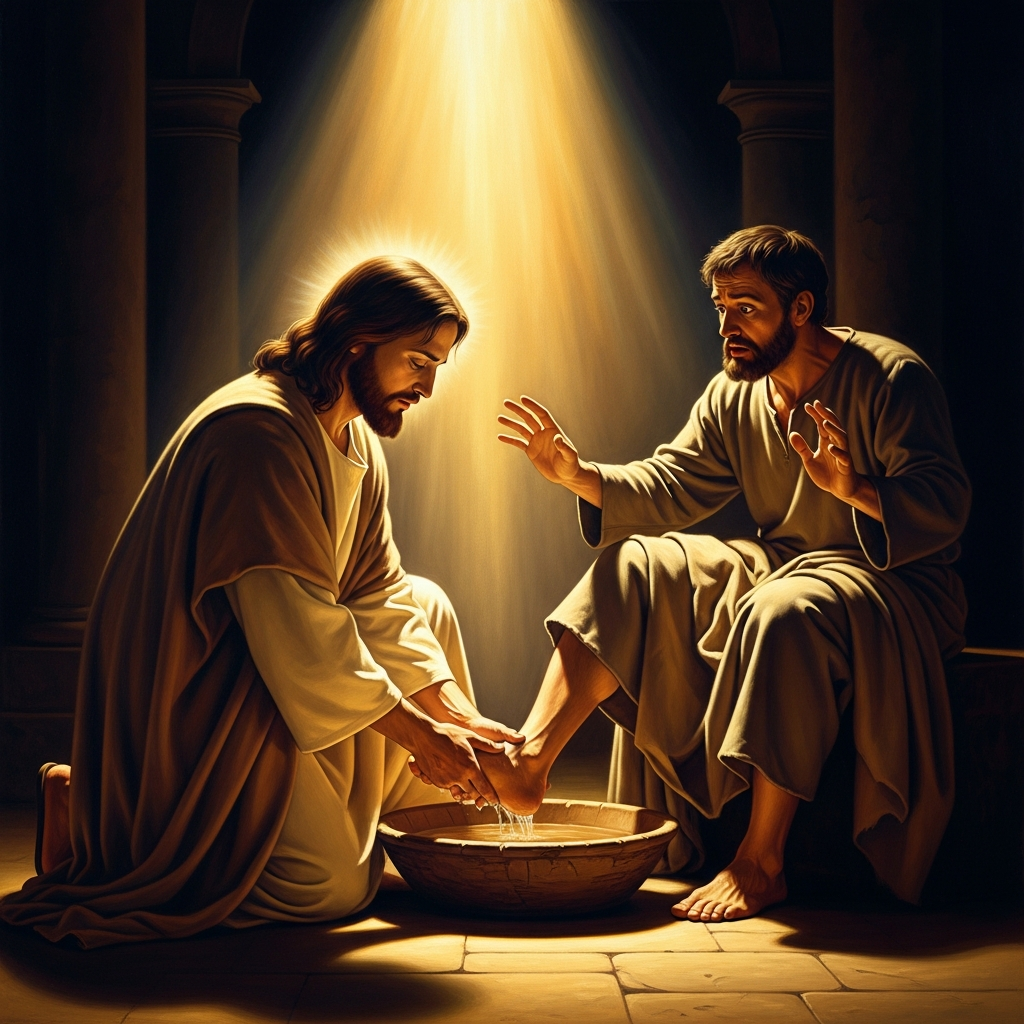
The Last Supper: Bread, Cup, and Betrayal
Jerusalem, Passover Eve. In a borrowed upper room, Jesus washes his disciples' feet, breaks bread and names it his body, pours wine and names it his blood, watches Judas walk into the dark, and gives eleven men something to do after he is gone. The meal that becomes the center of a religion.
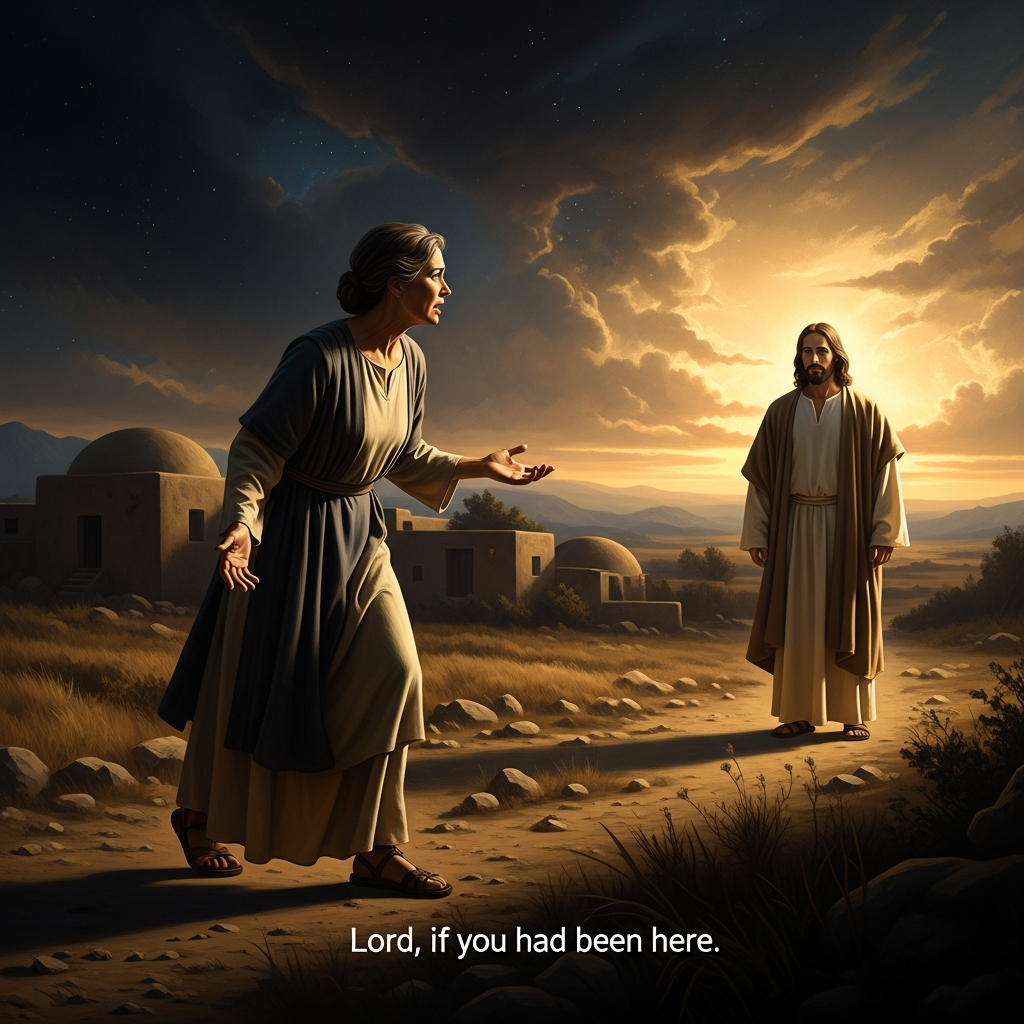
Lazarus: Come Out
Mary and Martha send word: the one you love is sick. Jesus waits two days before leaving. By the time he arrives at Bethany, Lazarus has been dead four days. Martha meets him on the road with the sentence every mourner has ever thought: Lord, if you had been here, my brother would not have died. Jesus weeps at the tomb. Then he calls Lazarus by name.
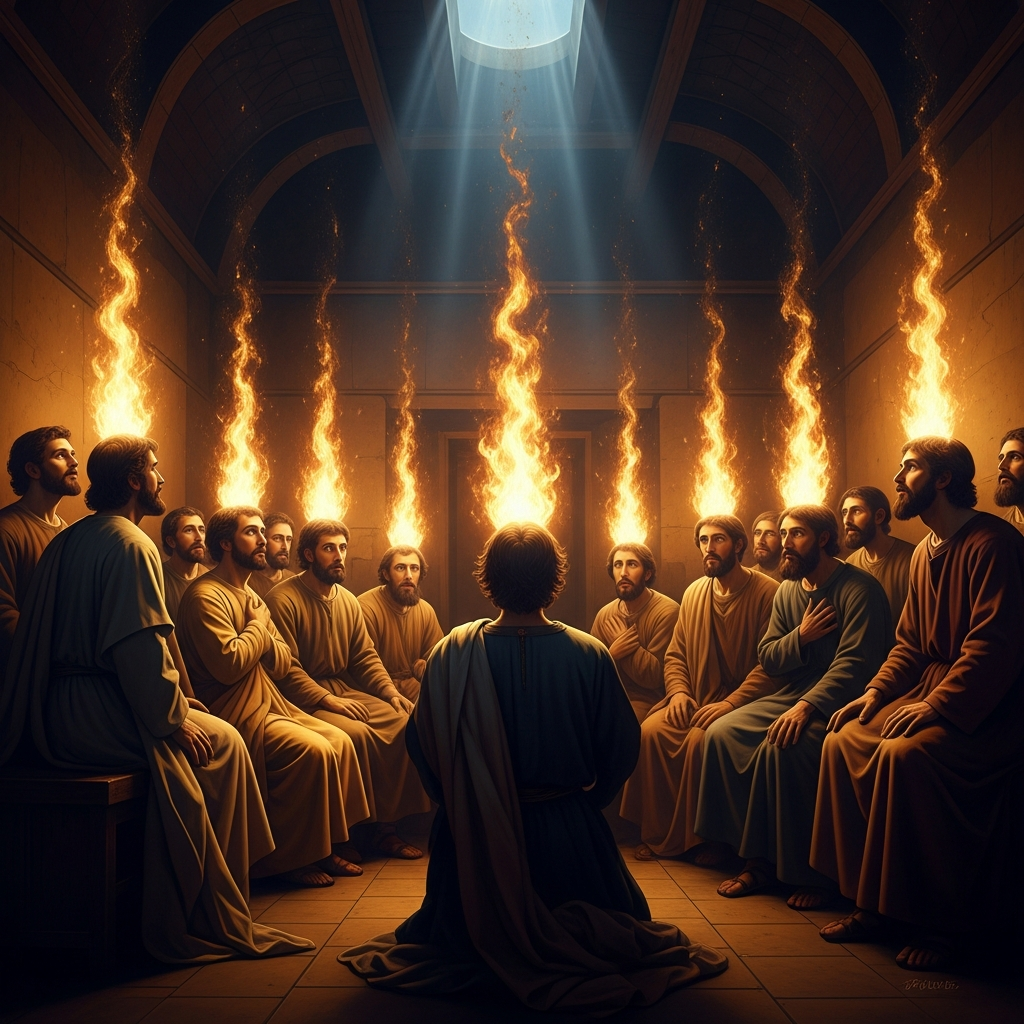
Pentecost in Jerusalem
Fifty days after the resurrection, the disciples gather in Jerusalem for Shavuot. A sound like a rushing wind fills the room. Tongues of fire descend on each head. They pour into the streets speaking every language in the known world. Three thousand are baptized by evening. The church begins.
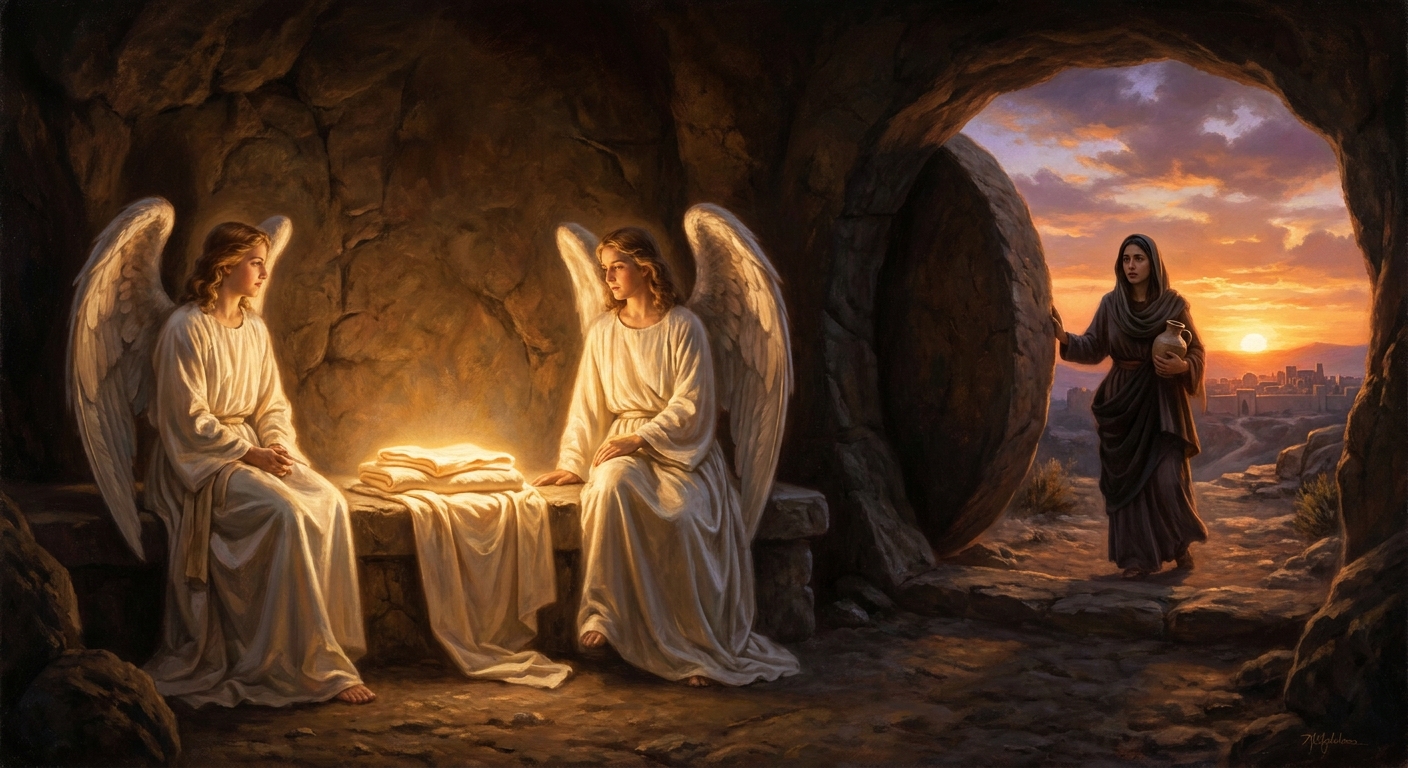
The Empty Tomb
On the Sunday after the crucifixion, three women carry spices to a sealed tomb to anoint a dead man — and find the stone rolled away, the body gone, and an angel's impossible announcement waiting in the dark.
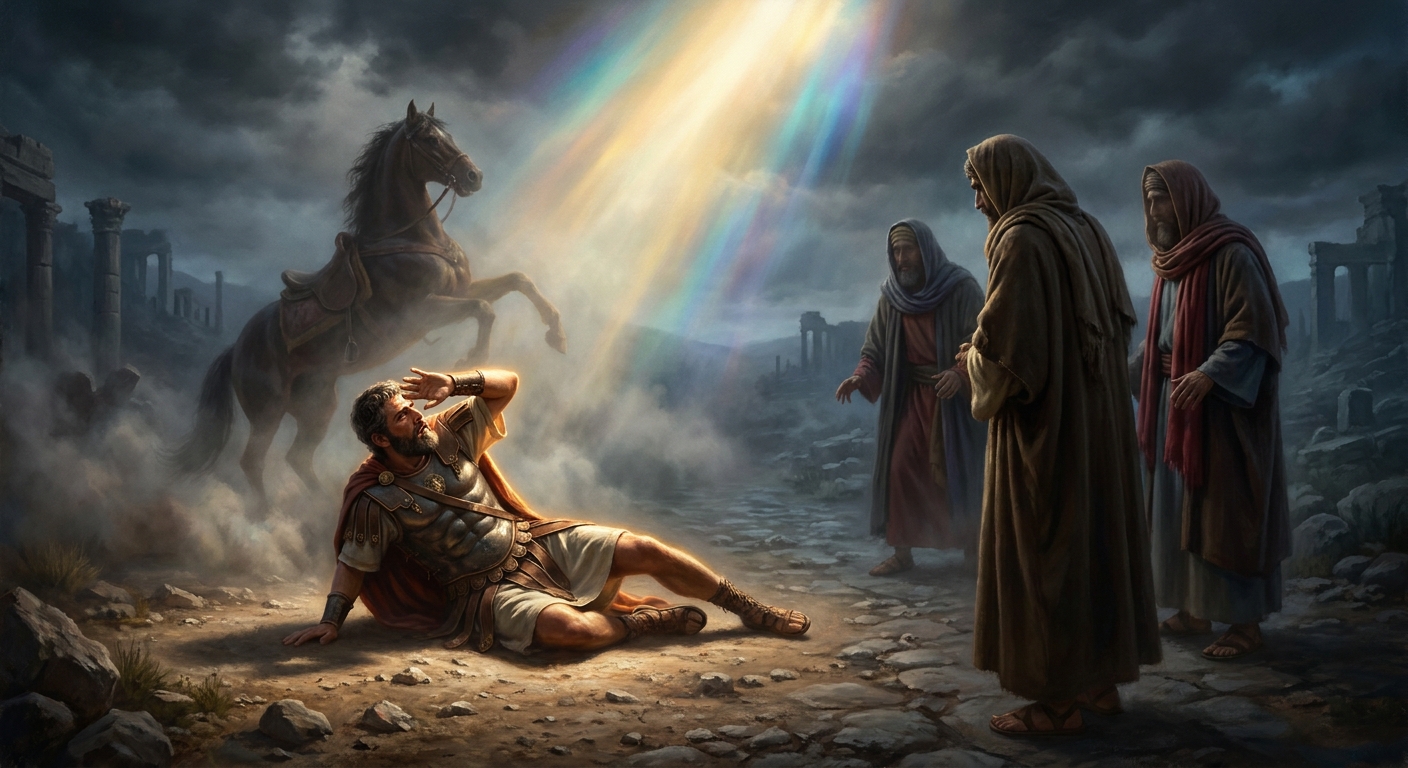
Saul on the Damascus Road
A Pharisee zealot rides north to arrest Christians in Damascus. Midway, a light from heaven drops him to the earth. Three days of blindness later, the persecutor rises as Paul — and Christianity escapes its borders forever.
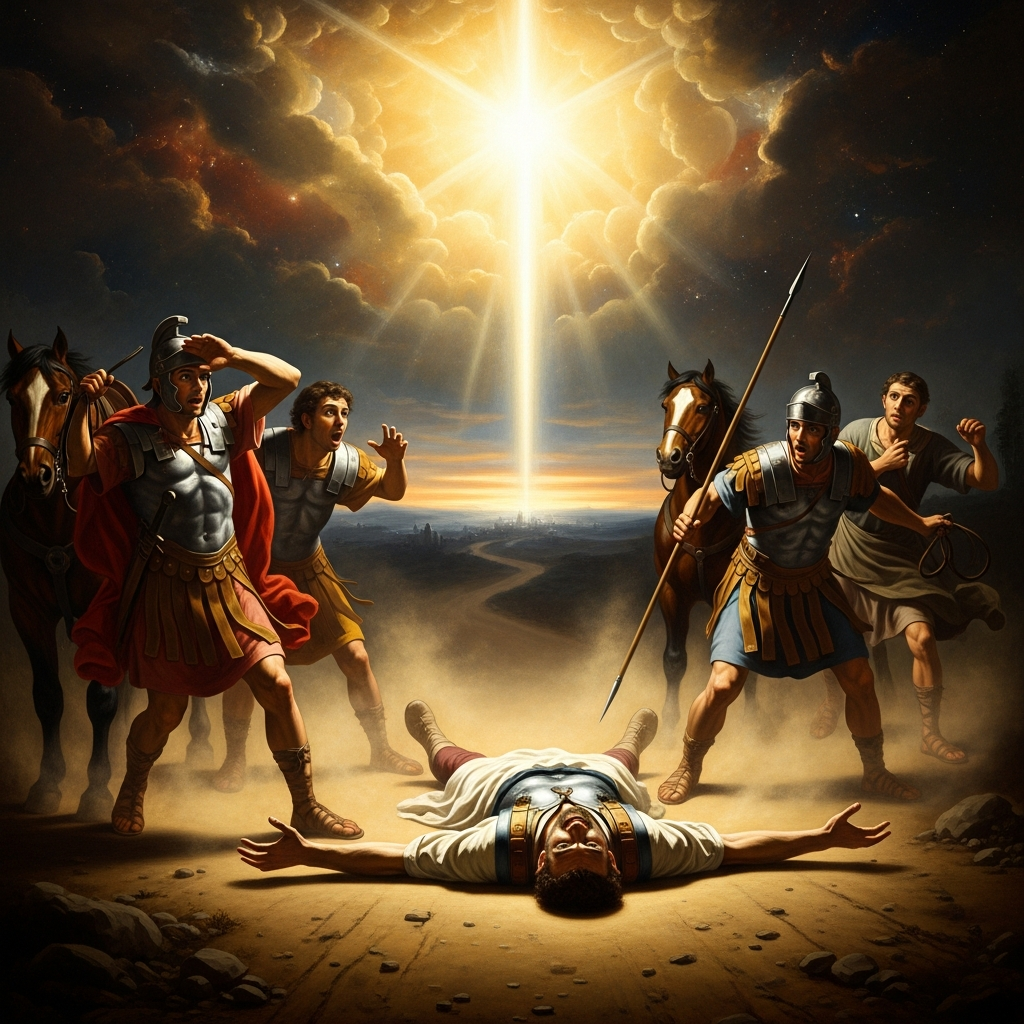
Paul on the Damascus Road
Saul of Tarsus rides north to Damascus with arrest warrants for Christians. At midday, a light brighter than the sun drops him from his horse. A voice speaks his name in Aramaic. Three days blind and without food, he rises as Paul — and Christianity escapes its borders forever.
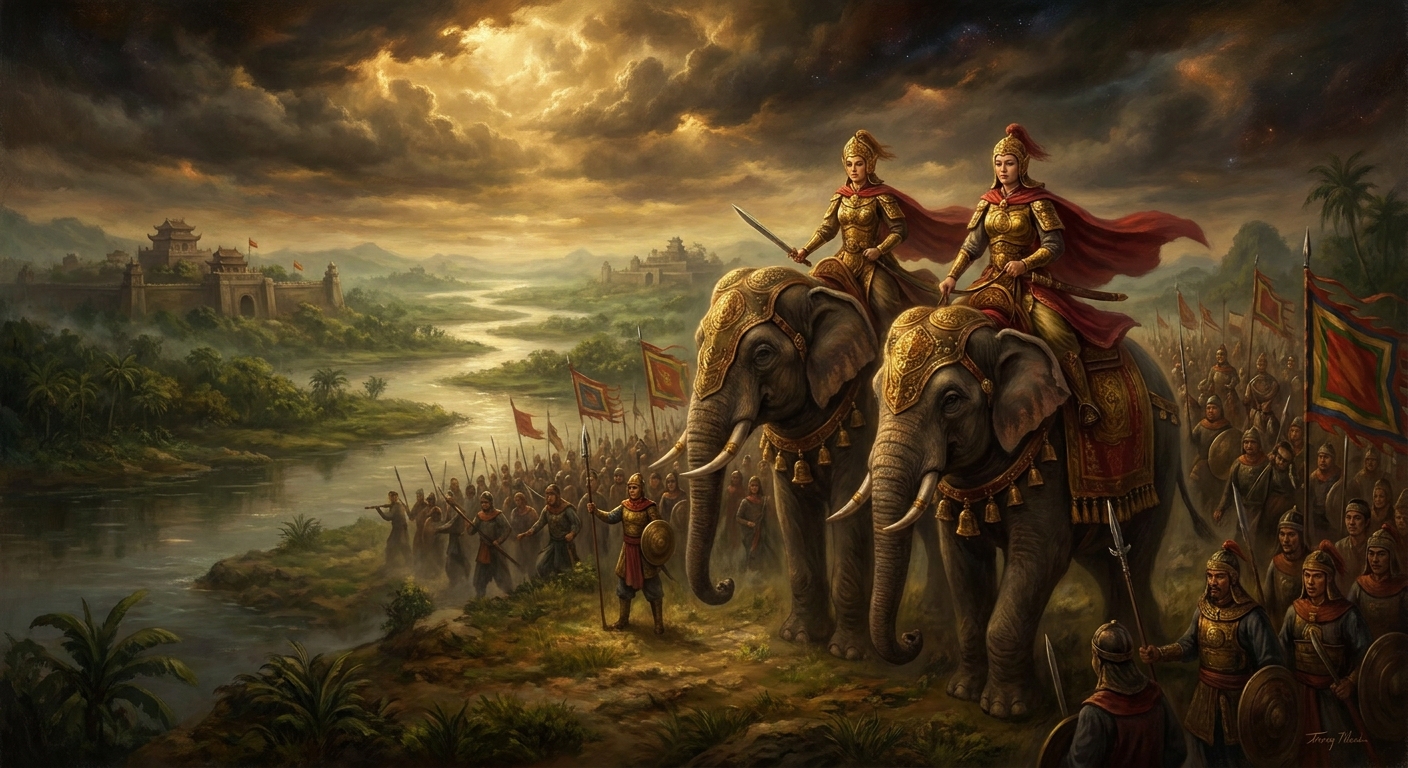
The Trung Sisters Ride
40 CE. Two sisters raise a Vietnamese revolt against the Han Empire, ride war elephants at the head of an army, hold their country for three years, and walk into the Hat Giang River when the cause is lost. They are still worshipped as goddesses in Vietnam.
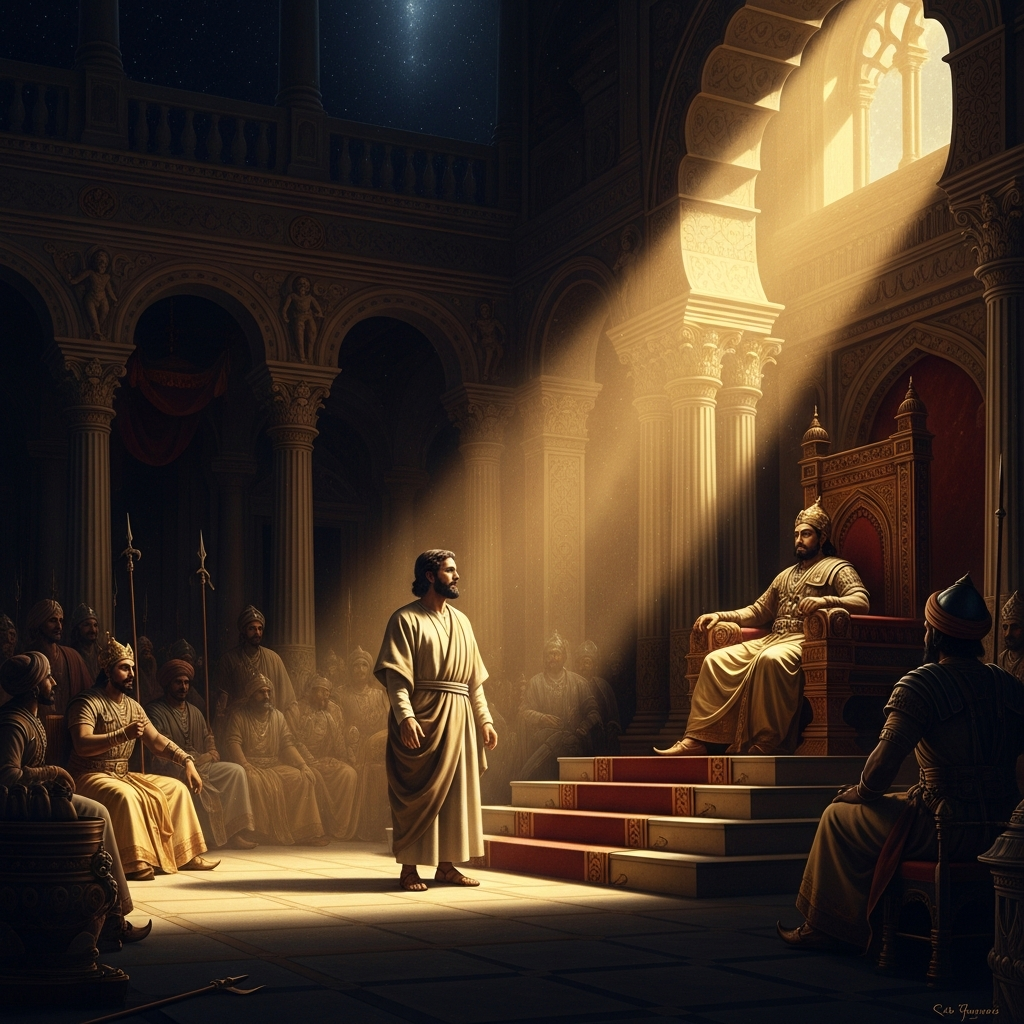
Thomas Sold into India
Christ sells the apostle Thomas as a slave to an Indian merchant. Thomas arrives in Taxila, receives royal commission to build a palace, gives all the money to the poor, and is nearly executed — until the king's dead brother returns from the afterlife to report that the palace in heaven is magnificent. The oldest Christian community in the world traces its founding to this man.
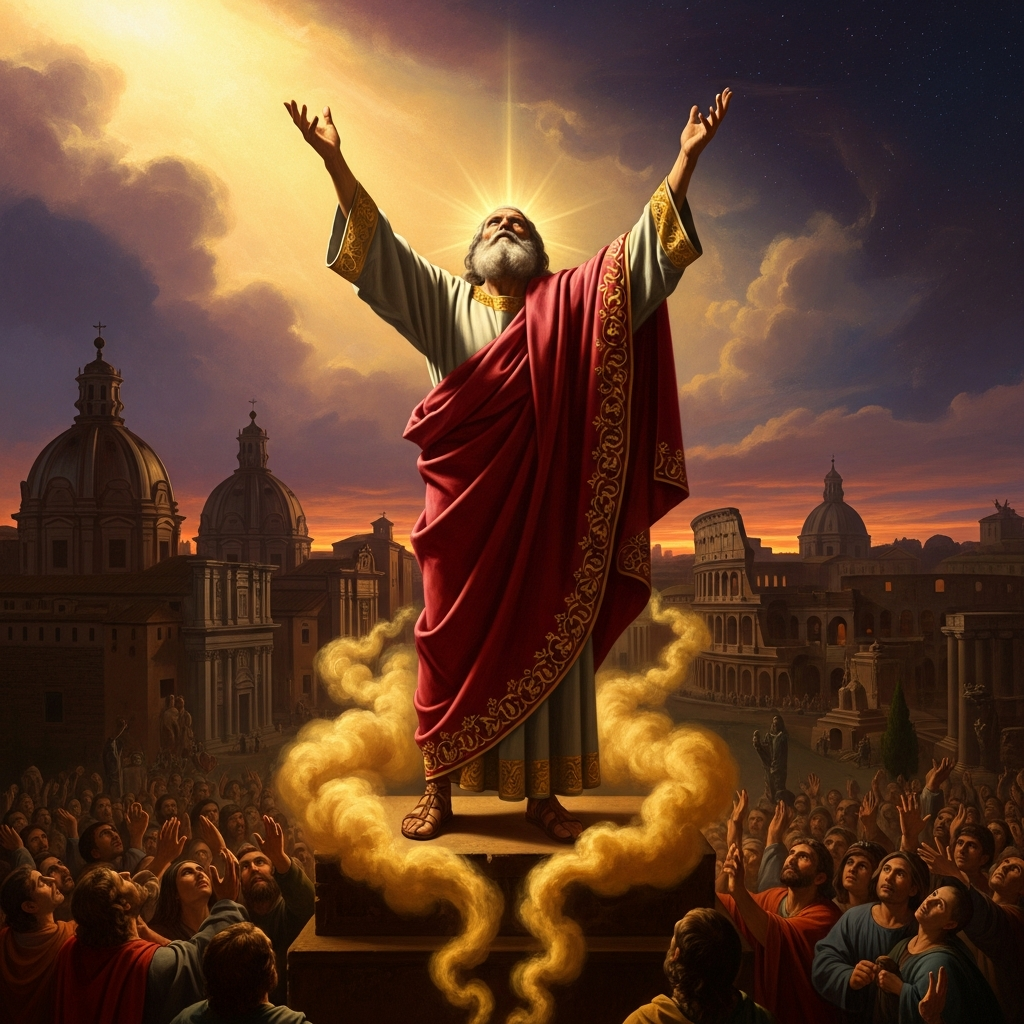
Simon Magus Prepares to Fly
Simon the Samaritan magician — the man Irenaeus will call the root of all heresies — arrives in Rome and challenges the Apostle Peter by promising to ascend through the air before the Emperor Nero. The confrontation that ends in Simon's death launches two thousand years of heresiological literature and becomes the template for every false prophet that follows.
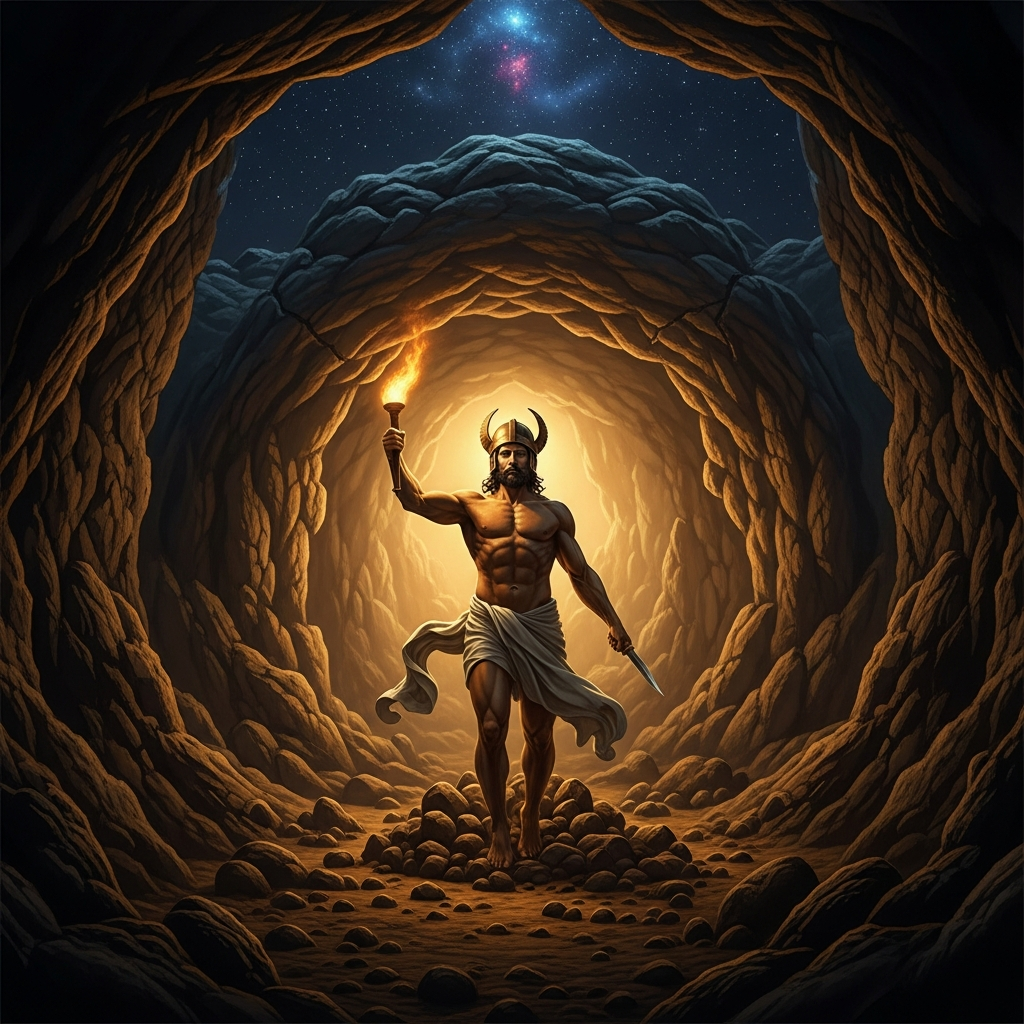
Mithras Kills the Bull and the World Is Born
Mithras, born from living rock in a cave at the dawn of the world, tracks the cosmic bull across the young earth, wrestles it into submission, and kills it in the sacred act from which all grain, grape, and living blood spring. The tauroctony — the bull-slaying — is the central image of the most geographically widespread mystery cult in Roman history.
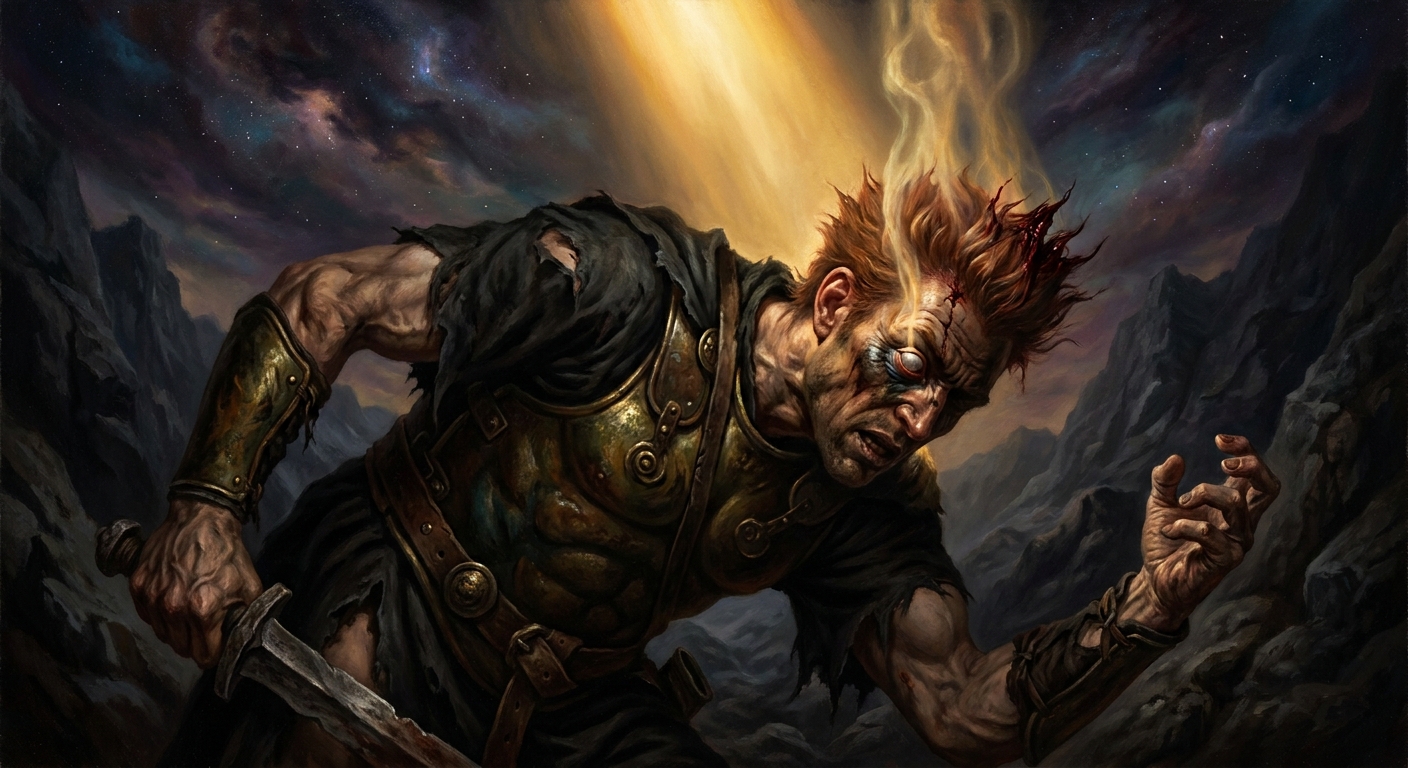
Cú Chulainn at the Ford
A boy of seventeen holds the gap of Ulster alone against an army, his body twisting itself into a monster, until the morning he must kill the brother he loves.
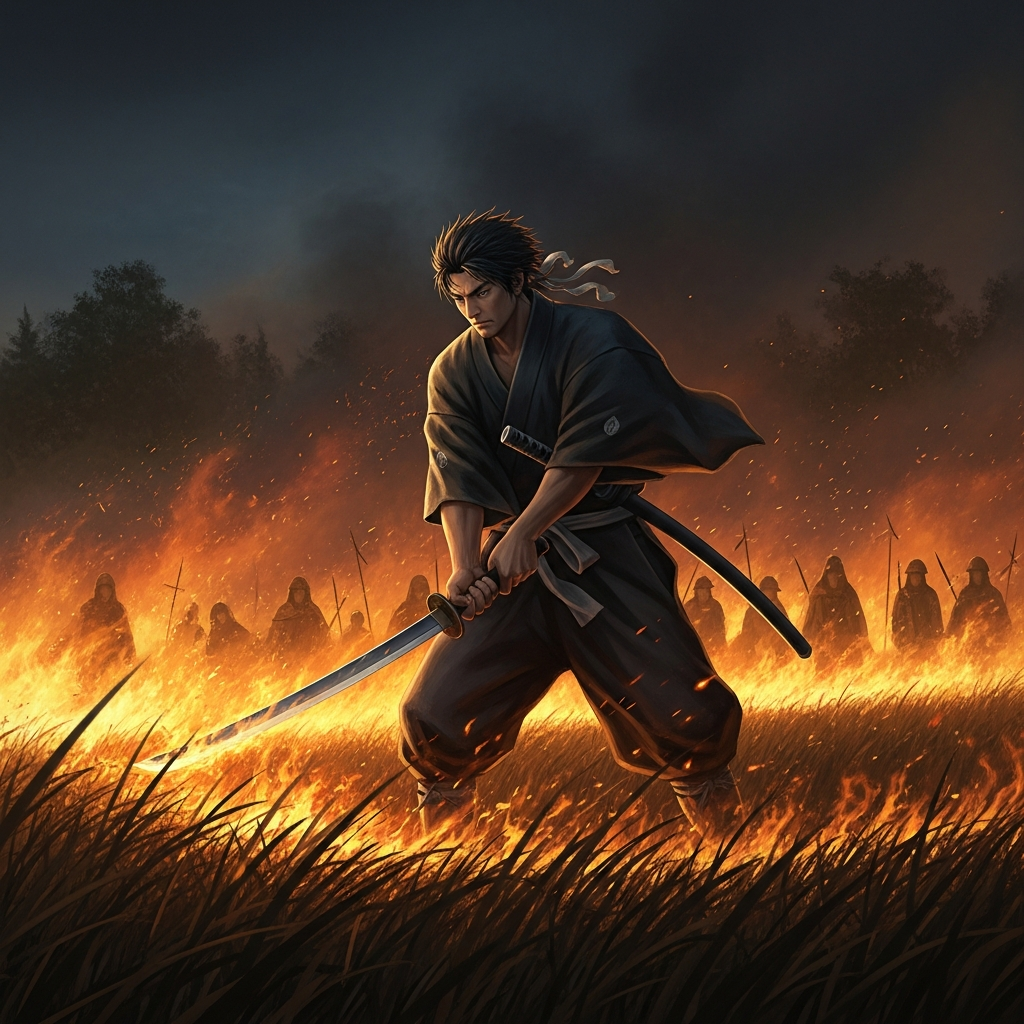
Yamato Takeru and the Grass-Cutting Sword
The imperial prince Yamato Takeru — too violent for his father to keep at court — is sent on mission after mission to die. The Kusanagi sword saves him when enemies set the grass afire. He conquers the east. Then he dies on Mount Ibuki, alone, stripped of divine protection. His soul becomes a white bird.
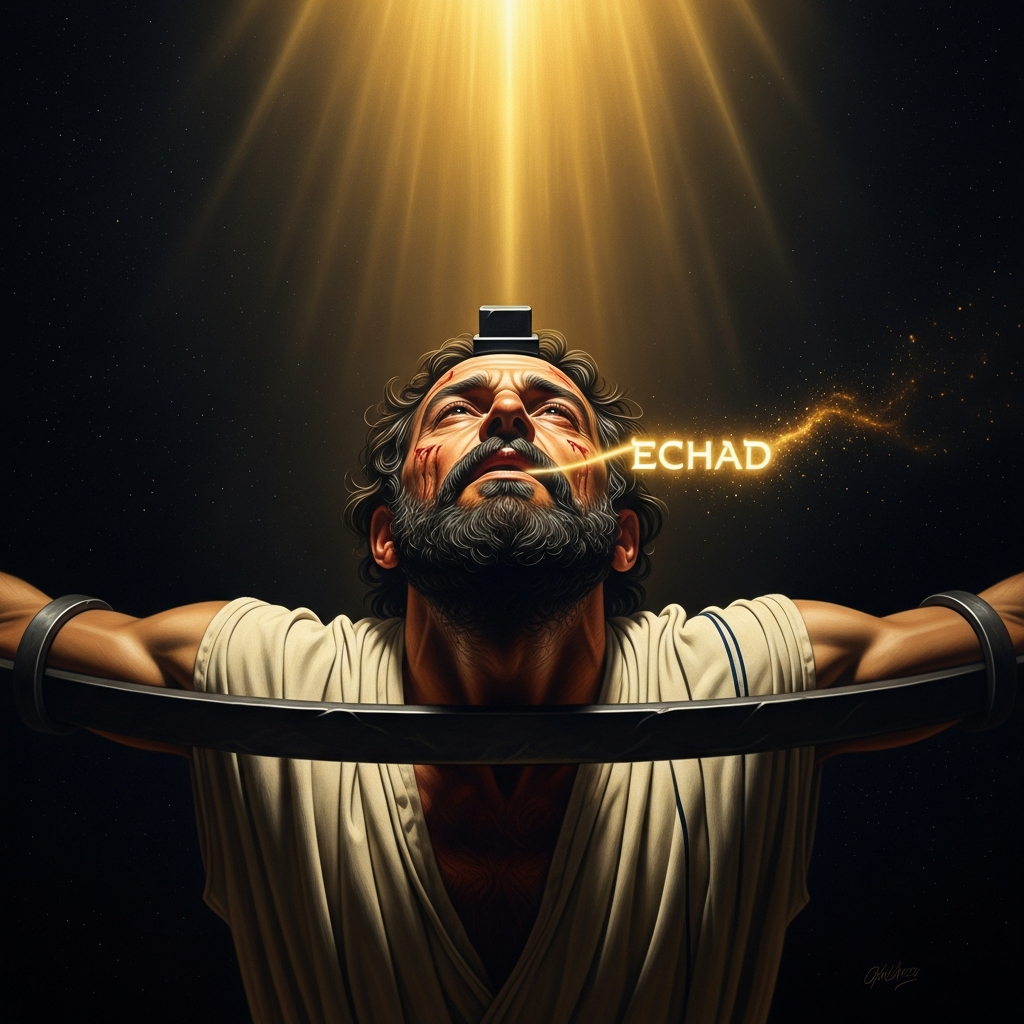
Rabbi Akiva and the Shema
On an iron comb in the Roman provincial capital, an old rabbi prolongs the word *One* until his soul leaves his mouth — turning his execution into the precise fulfillment of the verse he had spent fifty years trying to understand.
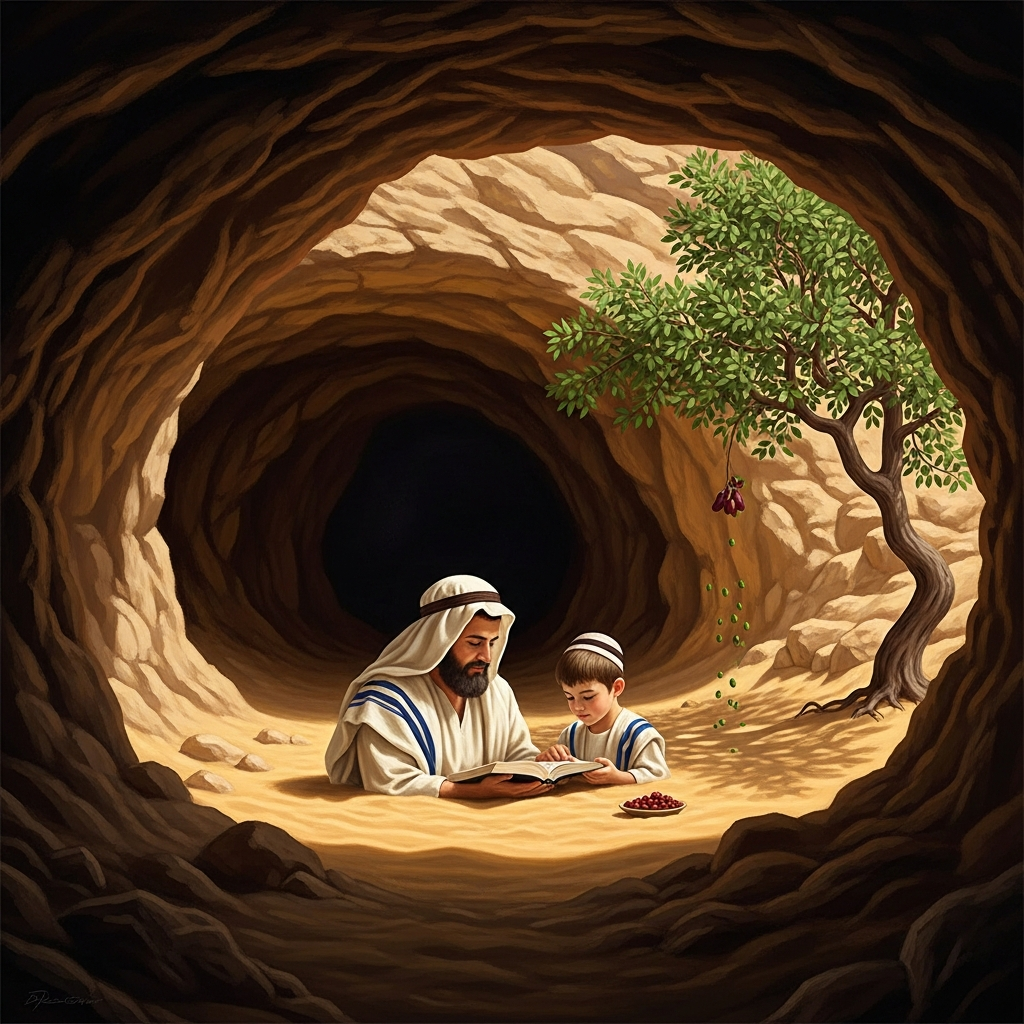
Simeon bar Yochai in the Cave
Sentenced to death for speaking against Rome, Rabbi Simeon bar Yochai and his son flee to a cave in the Galilean hills, bury themselves in sand for twelve years, and emerge so spiritually charged that whatever they look at bursts into flame — until a heavenly voice sends them back for one more year, to learn how to live in the world without burning it.
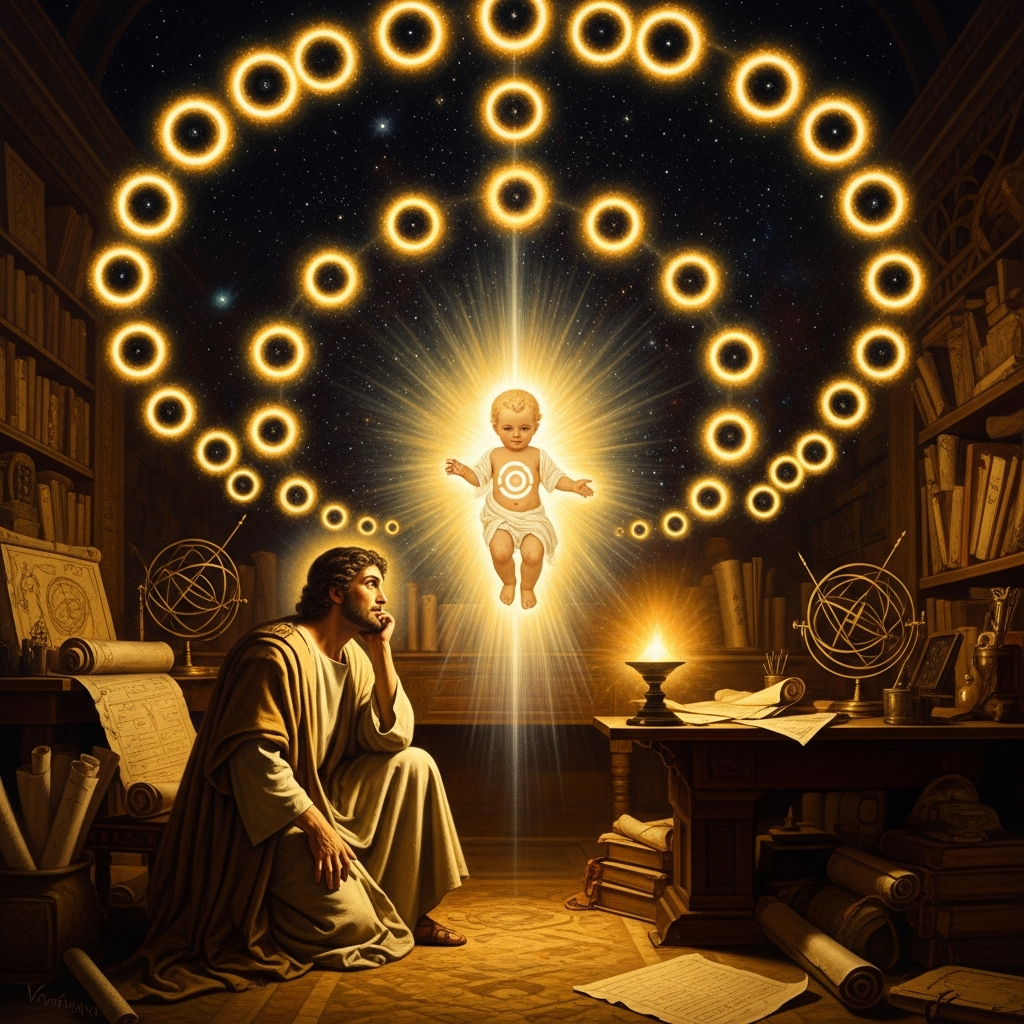
Valentinus Beholds the Logos
The philosopher Valentinus, meditating alone in Alexandria, receives a vision of the Logos as a newborn child — and in that luminous face reads the entire architecture of the Pleroma, the thirty divine Aeons, and Sophia's catastrophic fall. This is the moment Gnostic Christianity's most complete cosmology is born.
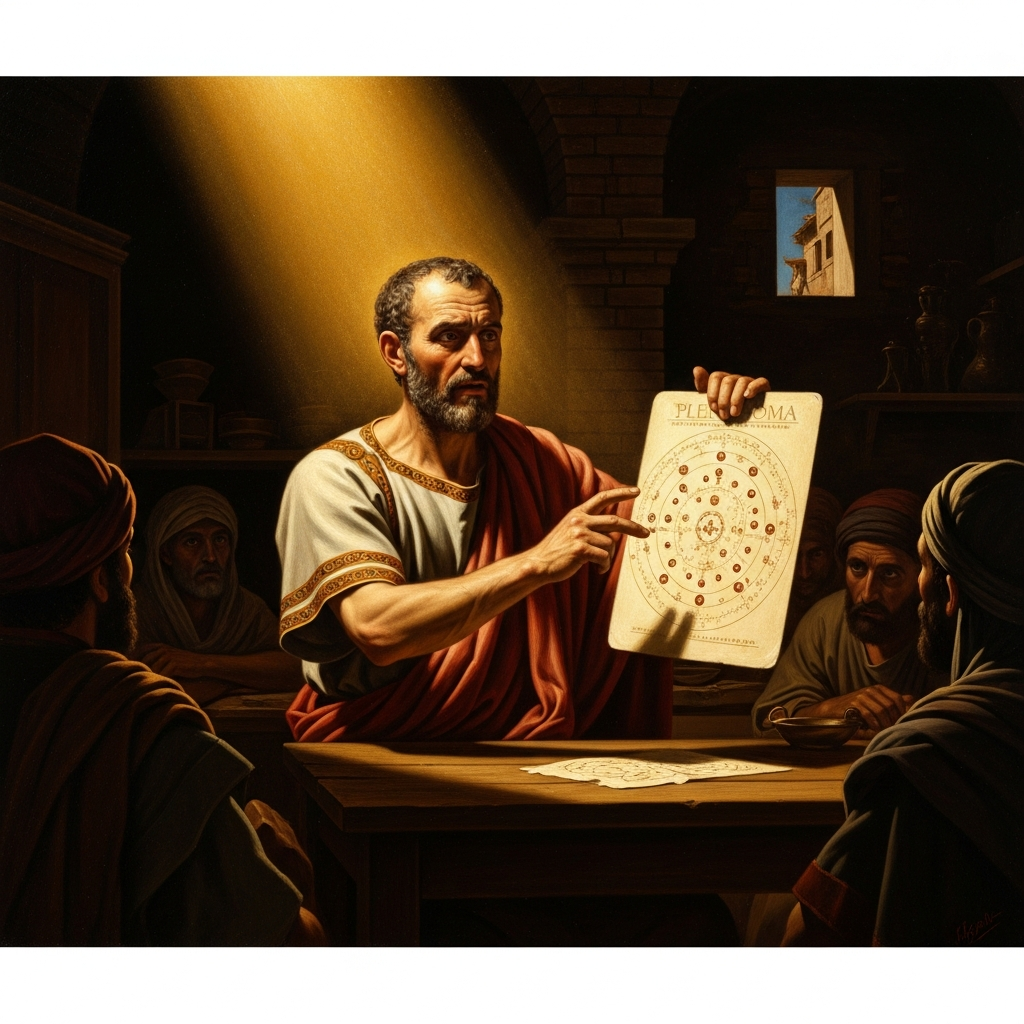
Valentinus Almost Becomes Bishop of Rome
An Egyptian teacher of extraordinary brilliance arrives in Rome around 136 CE and comes within a single election of becoming bishop of the city that will define Christianity for two thousand years. He loses. He teaches anyway — thirty divine aeons, Sophia's fall, the Demiurge, the spark of light in every human soul — and founds the largest and most sophisticated Gnostic school in history.
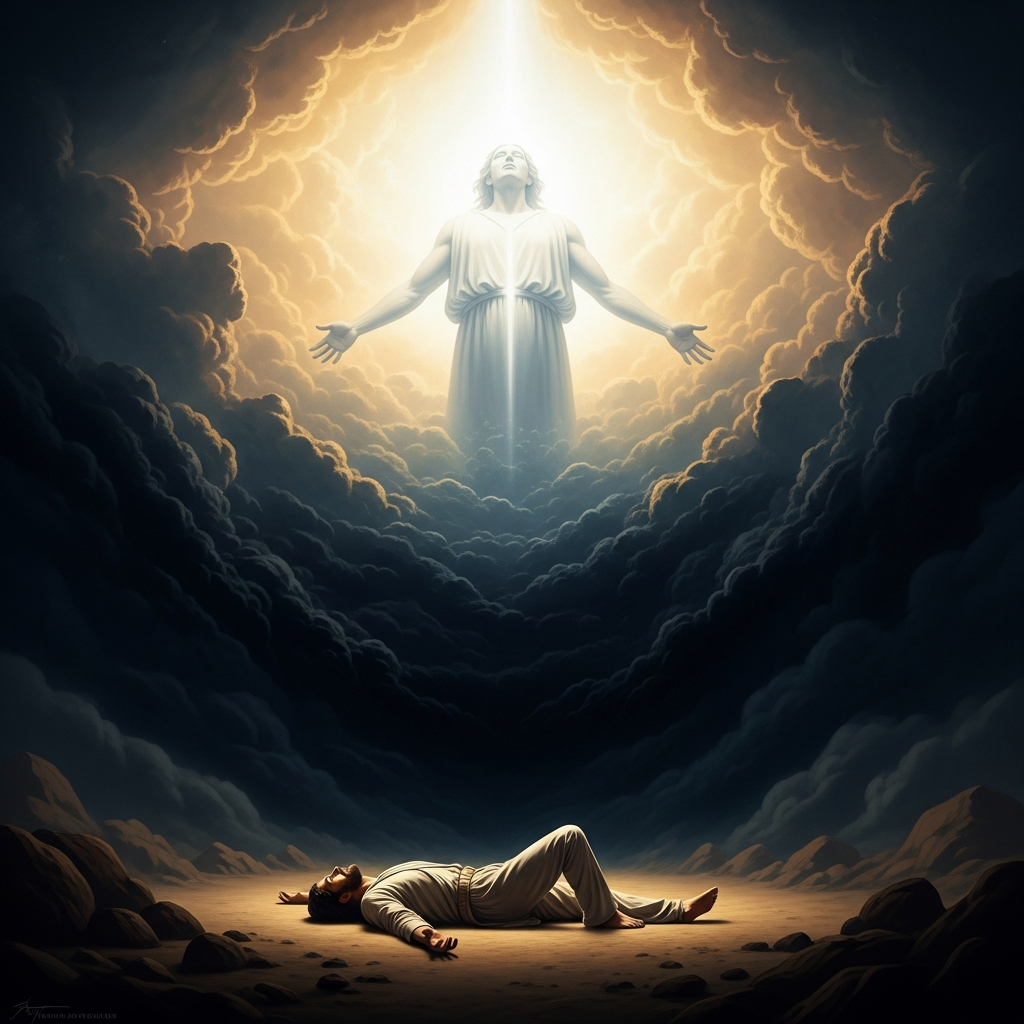
The Poimandres Speaks and the Cosmos Unfolds
The narrator of the Corpus Hermeticum sinks into a trance and is seized by a vast being who calls himself the Poimandres, the Mind of the Sovereign — who shows him the creation of the cosmos from divine light, the fall of the Primordial Man into matter, and the sevenfold path of ascent back through the planetary spheres to the Father. This vision becomes the foundational text of the Hermetic tradition.
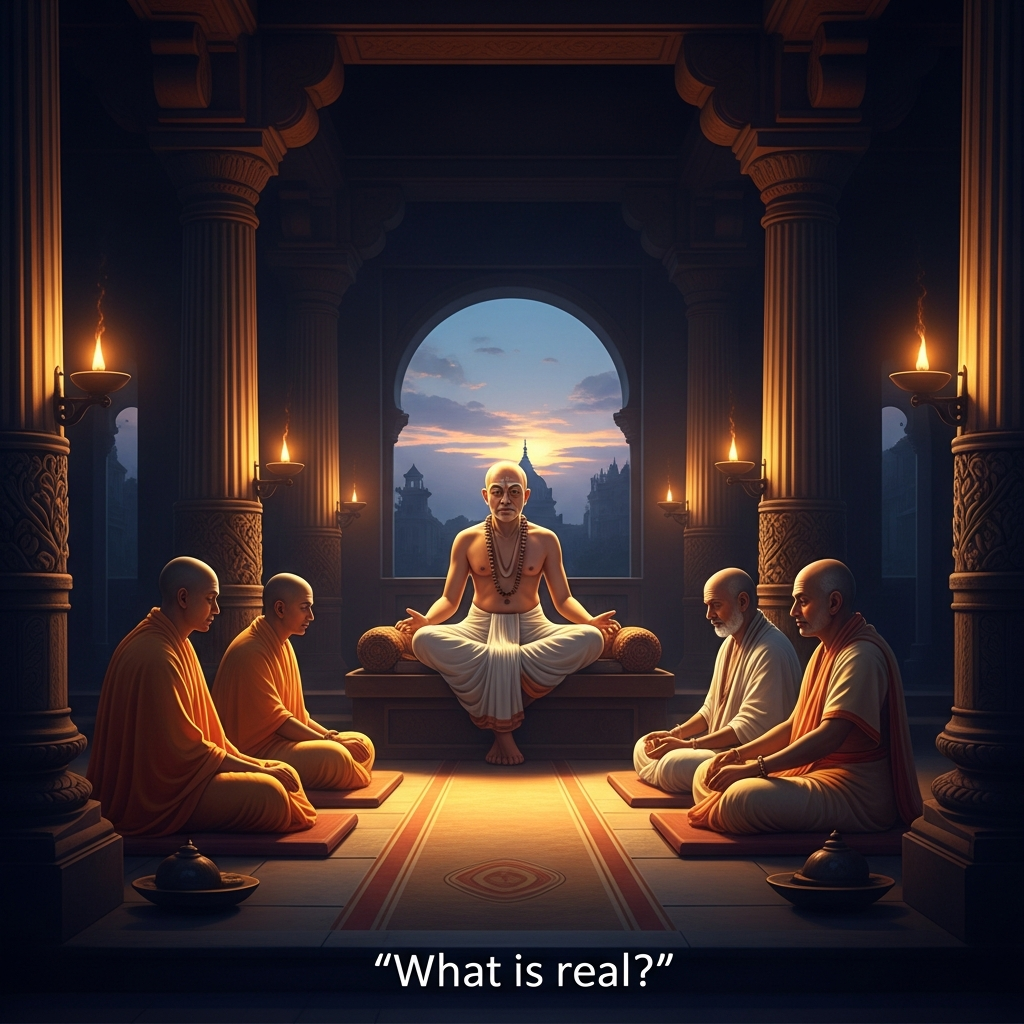
Seven Ways of Being True
In a Jain assembly hall in classical India, a Buddhist monk and a Hindu Vedantin have both made absolute claims about the nature of reality. The Jain acharya demonstrates, through the seven modes of *Syadvada*, that both are right and both are wrong — not as a compromise but as the most rigorous philosophical position available. The drama: the doctrine that no complete description of reality is possible from any single standpoint is not skepticism. It is precision.
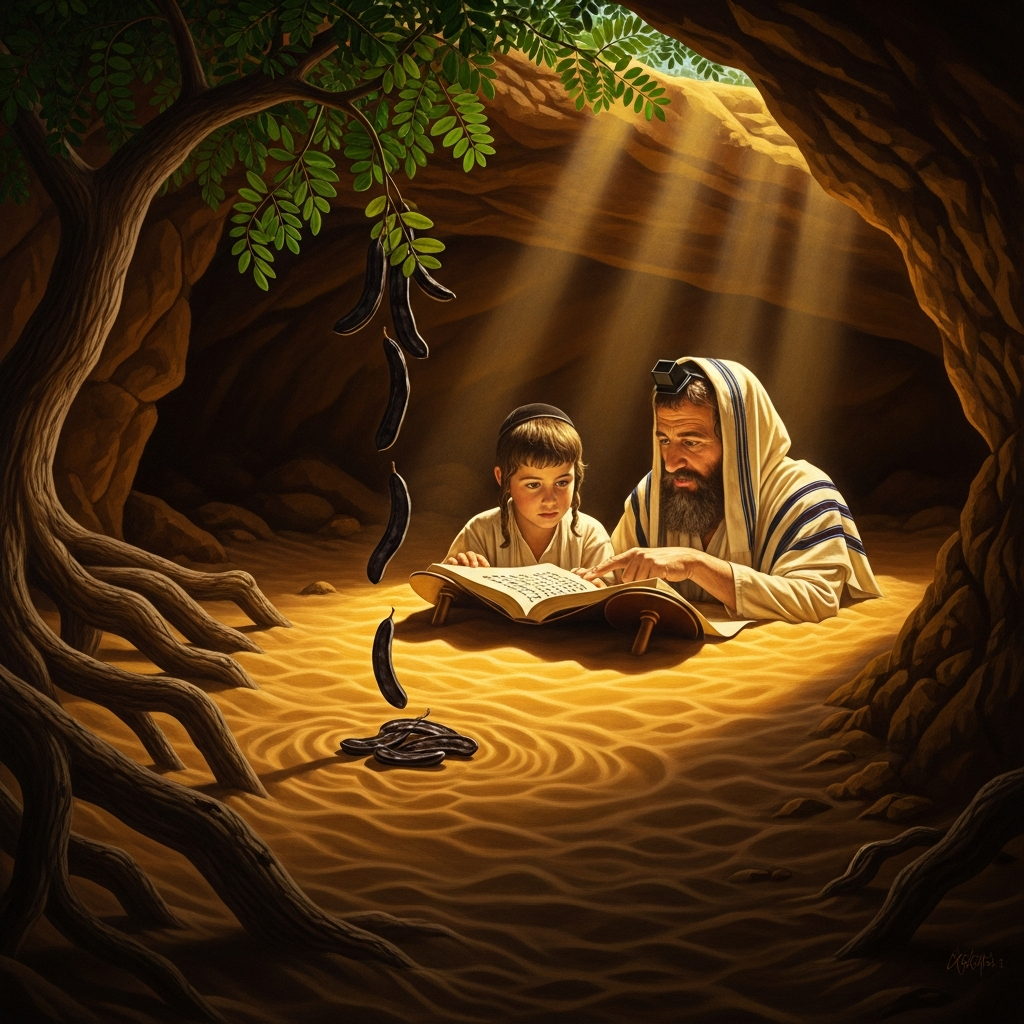
Shimon bar Yochai in the Cave
Condemned to death by Rome for a careless word against empire, Rabbi Shimon bar Yochai and his son Elazar bury themselves in sand for twelve years and emerge too holy for the world — burning everything they look at.
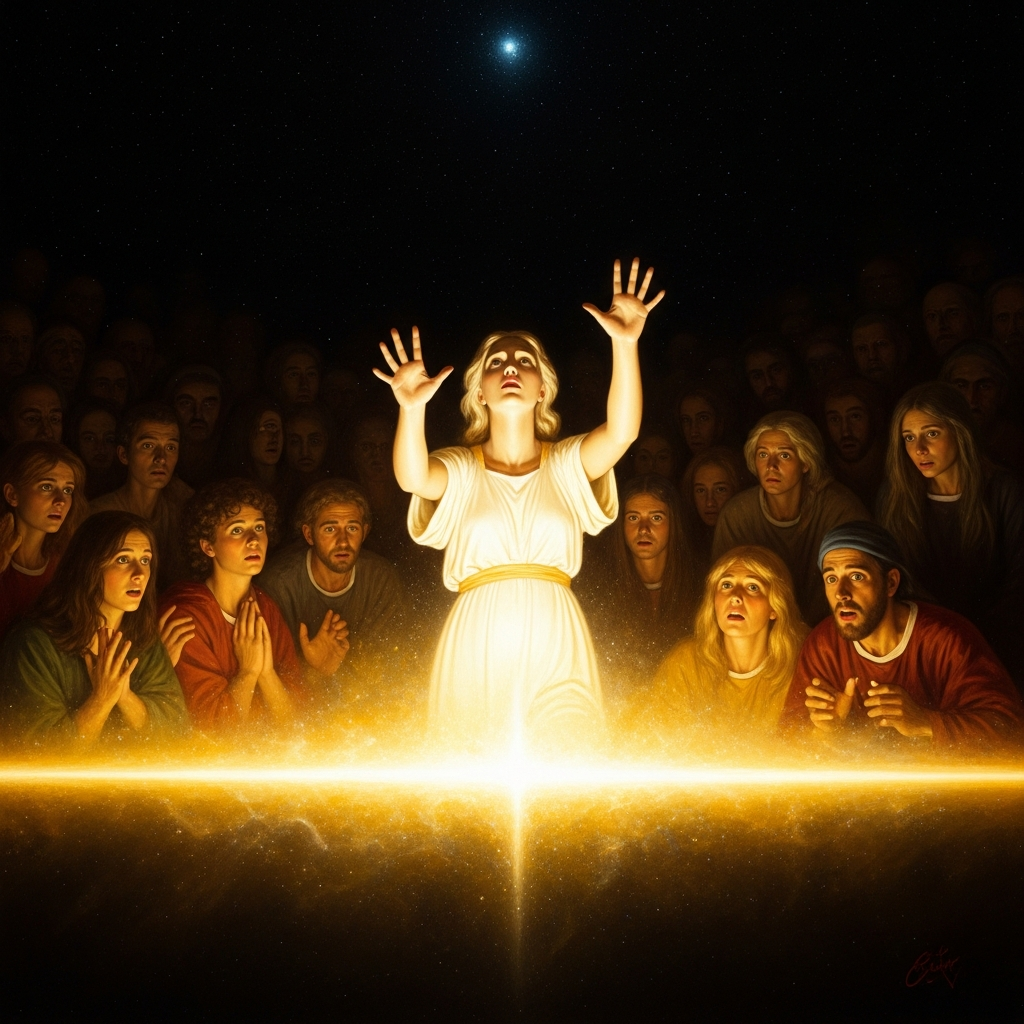
Sophia Falls and the Demiurge Is Born
Sophia, the youngest and most curious of the thirty divine Aeons, reaches past the boundary of the Pleroma in an unauthorized longing for the unknowable Father — and gives birth to the Demiurge, the blind lion-headed god who will mistake himself for the only God and build a prison called the world.
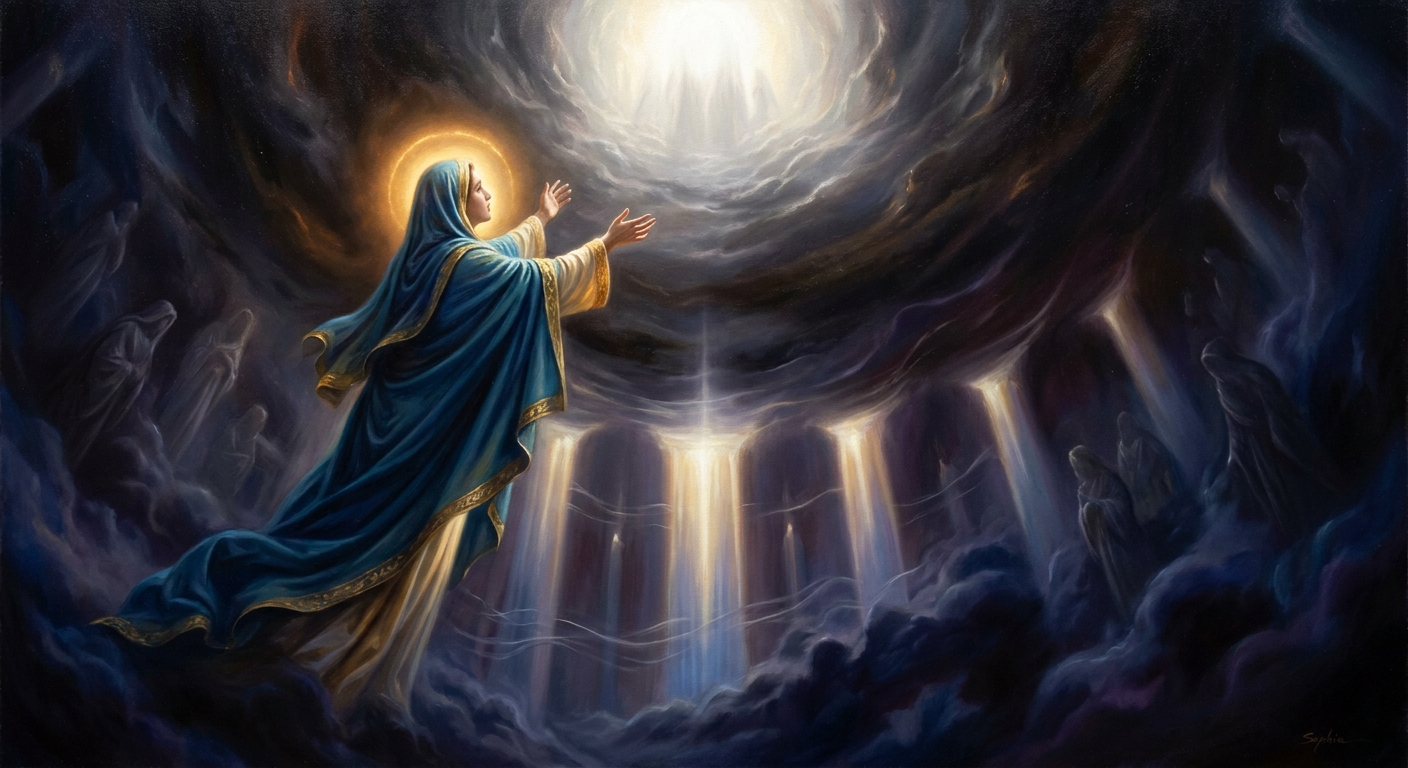
Sophia's Fall from the Pleroma
The youngest aeon of the divine fullness reaches alone for the unknowable Father — and births a blind, lion-headed god who mistakes himself for the only one.
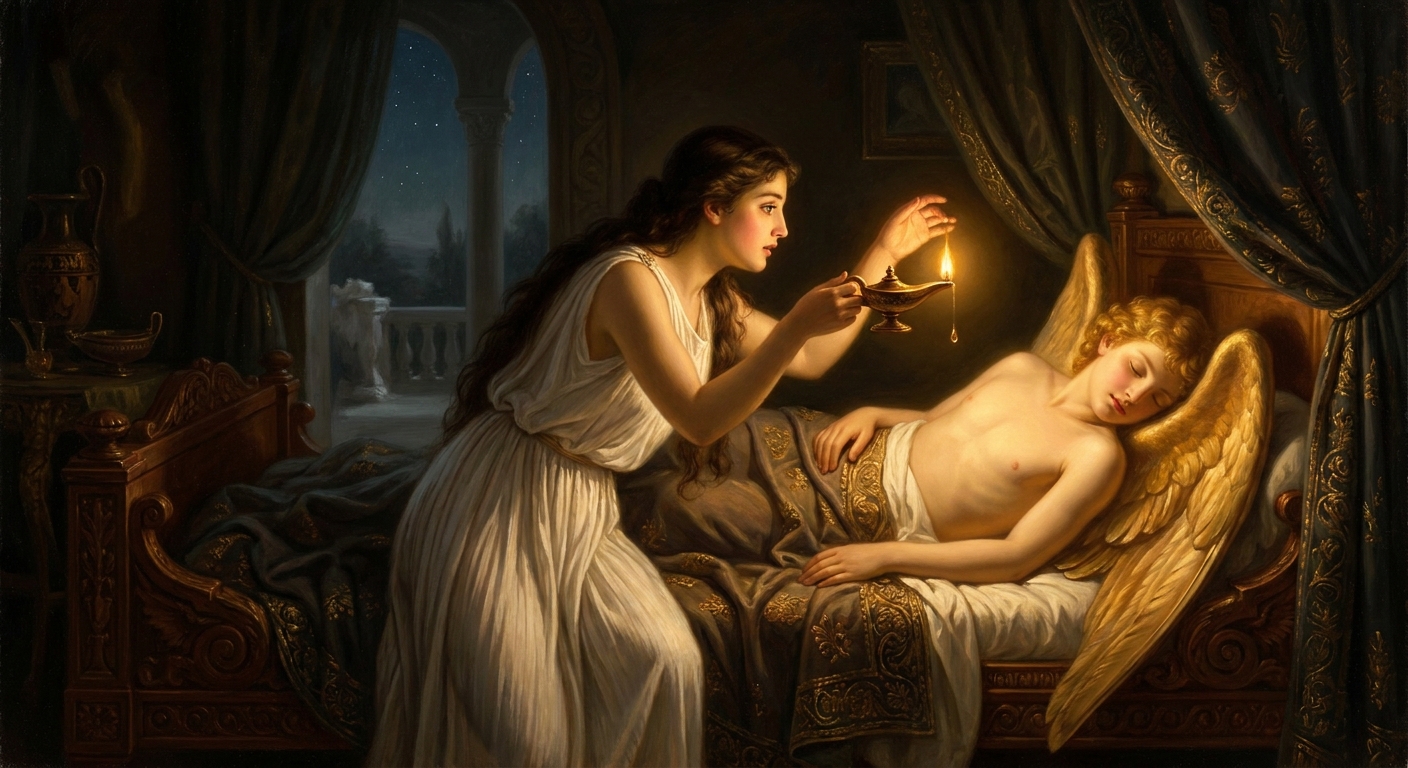
Eros and Psyche: The Impossible Tasks
A mortal princess so beautiful her worshippers abandoned Aphrodite. A jealous goddess who sent her son to ruin the girl, and the son fell in love instead. A lamp lit in the dark, a drop of oil on a sleeping shoulder, four impossible tasks, and the only mortal woman to be married among the gods.
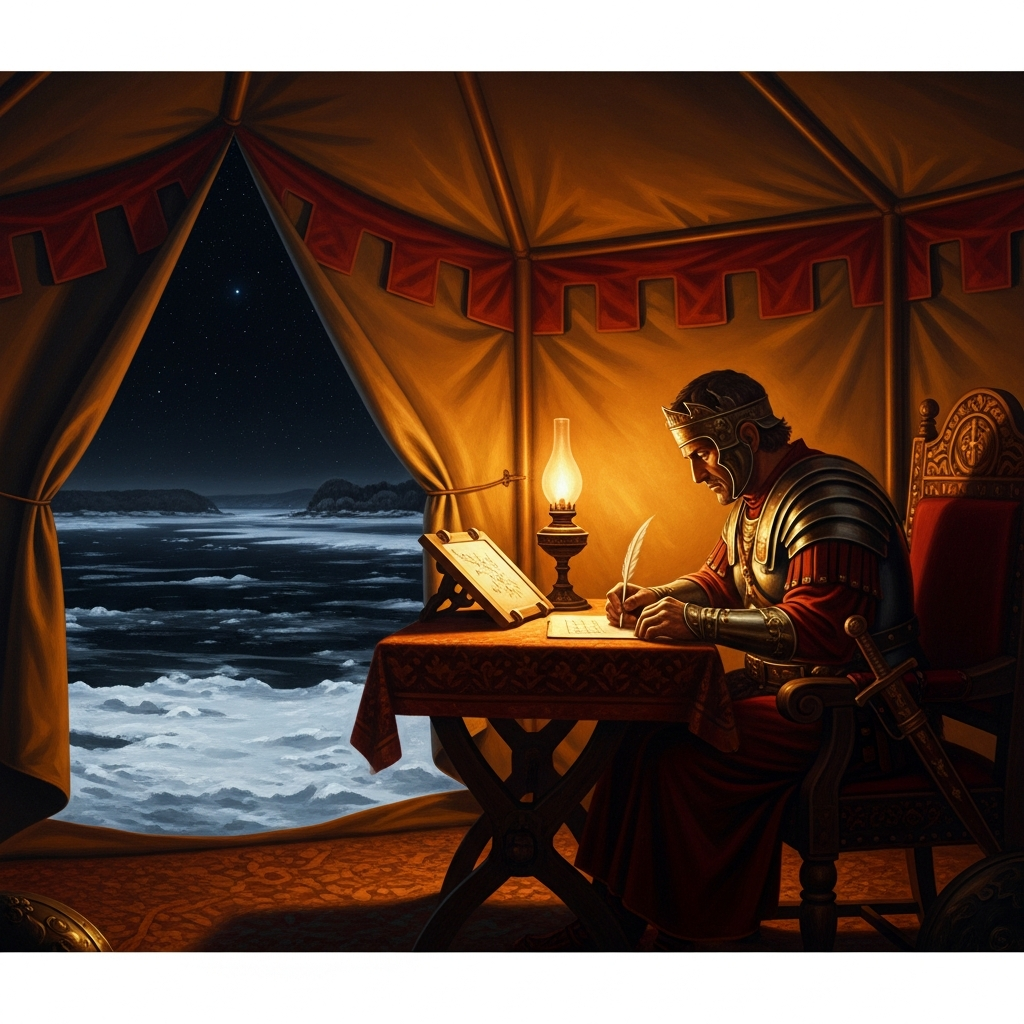
Marcus Aurelius on the Danube
On a winter night during the Marcomannic Wars, the emperor Marcus Aurelius opens his notebook beside the Danube and writes private instructions to himself about how to live. He is the most powerful man in the world. He writes as though he is barely holding himself together.
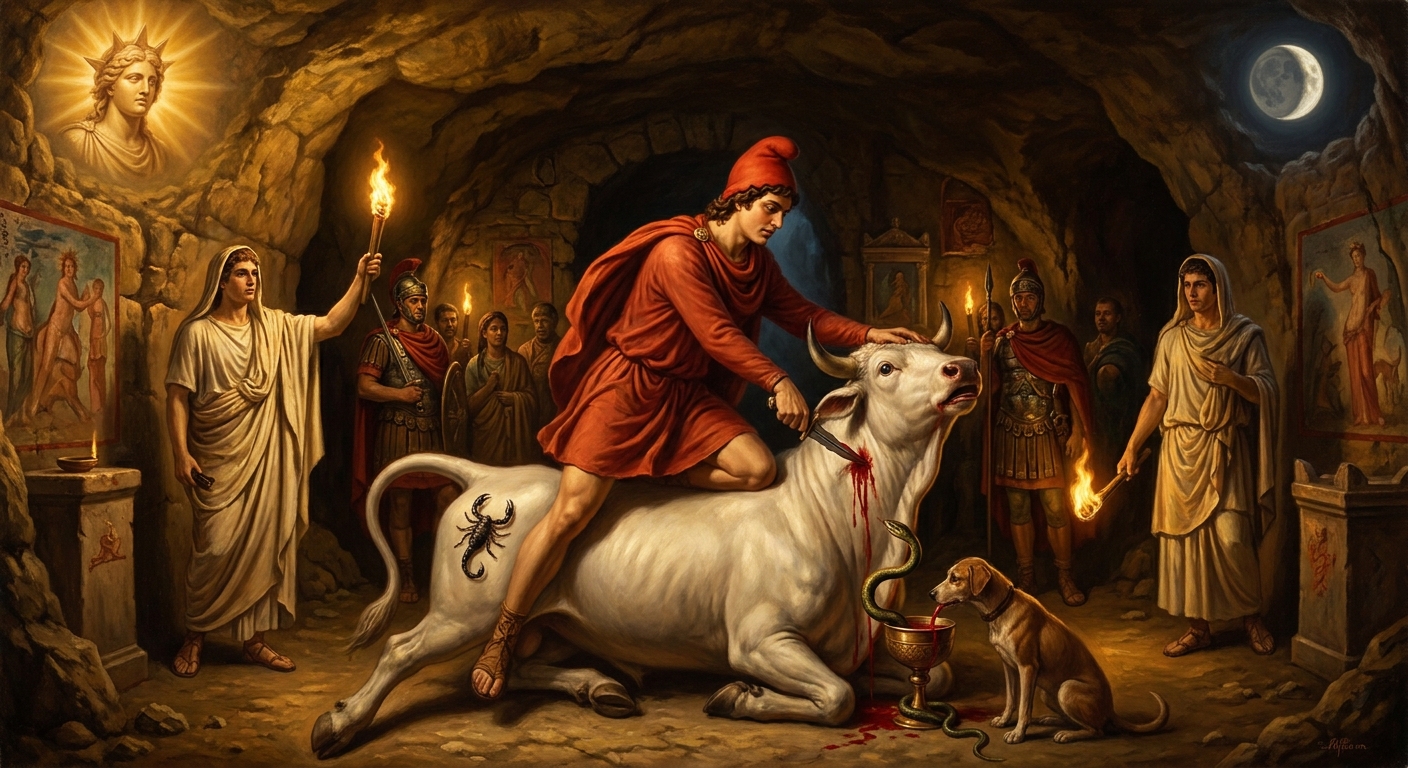
The Bull in the Cave
A Roman soldier descends a stone stair into a windowless cave-temple, kneels in torchlight beneath a god slaying a cosmic bull, and is reborn through seven grades into a mystery the empire never wrote down.
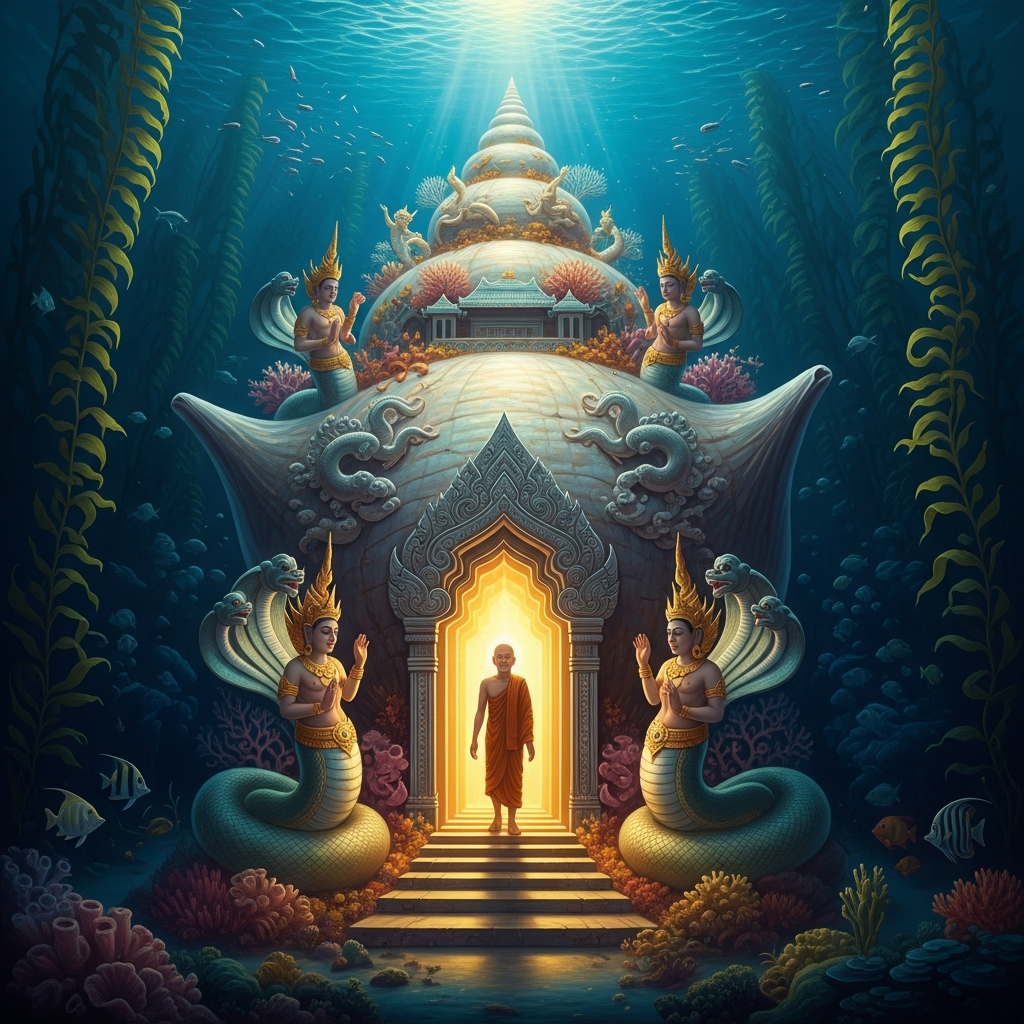
Nagarjuna and the Logic of Emptiness
A Brahmin philosopher walks into the underwater library of the serpent kings, returns with lost sutras, and writes the most rigorous philosophical proof in the Buddhist tradition: that nothing whatever has fixed existence — not even emptiness.

Sophia's Desire and the Birth of the World
Sophia, the last and youngest of the thirty divine aeons in the Pleroma, reaches alone toward the unknowable Father. Her desire, unsupported by its partner, spills out of her as an abortion — a lion-faced, serpent-bodied being who opens his eyes in the void and declares himself the only God. He builds the world from the tears of his mother's grief. Into his creation he breathes the last spark of light he stole from her. That spark is us.
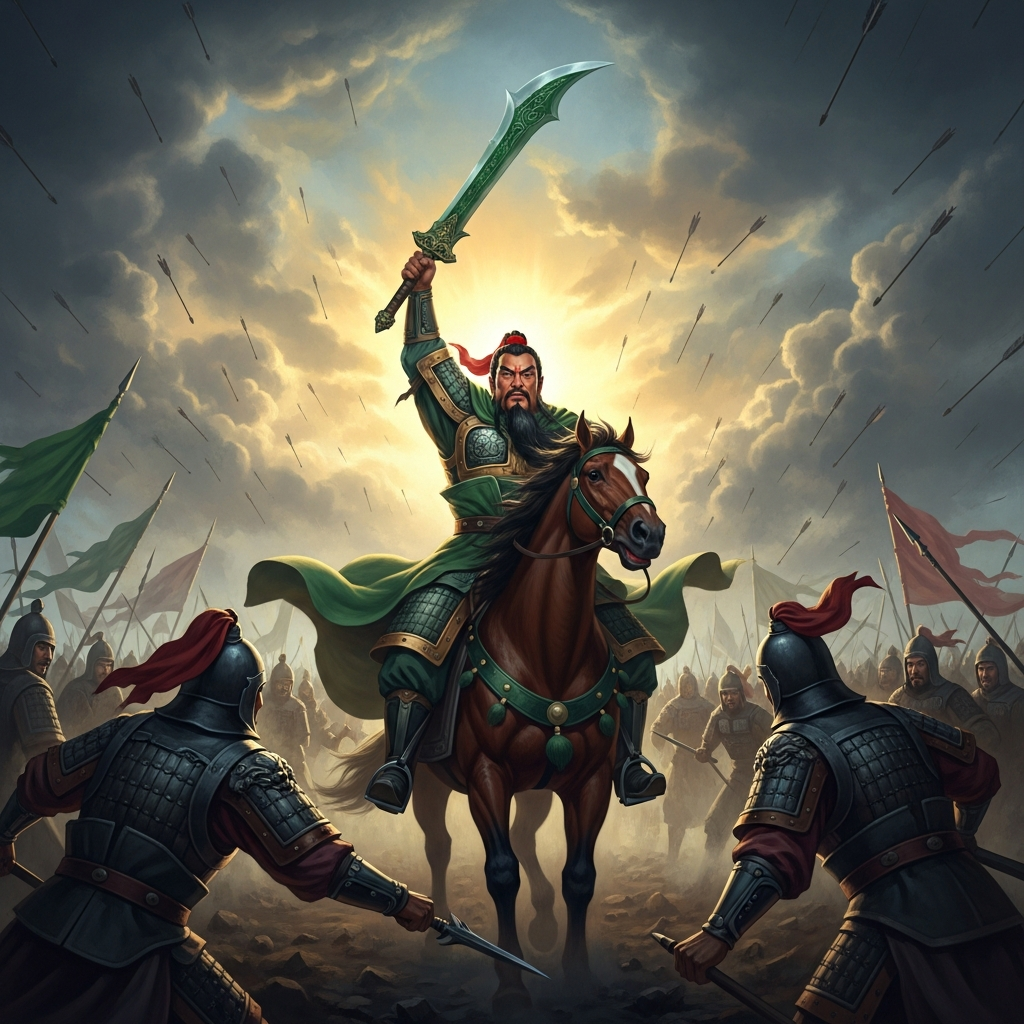
Guan Yu Becomes a God
Guan Yu, the Han dynasty general of the Three Kingdoms, is captured and beheaded in 219 CE — but his ghost refuses to leave because he died loyal, and loyalty in the Chinese cosmos is not a virtue but a force. Over a thousand years, he rises from local war god to the patron deity of soldiers, merchants, triads, and policemen simultaneously, a paradox the Chinese universe has no difficulty containing.
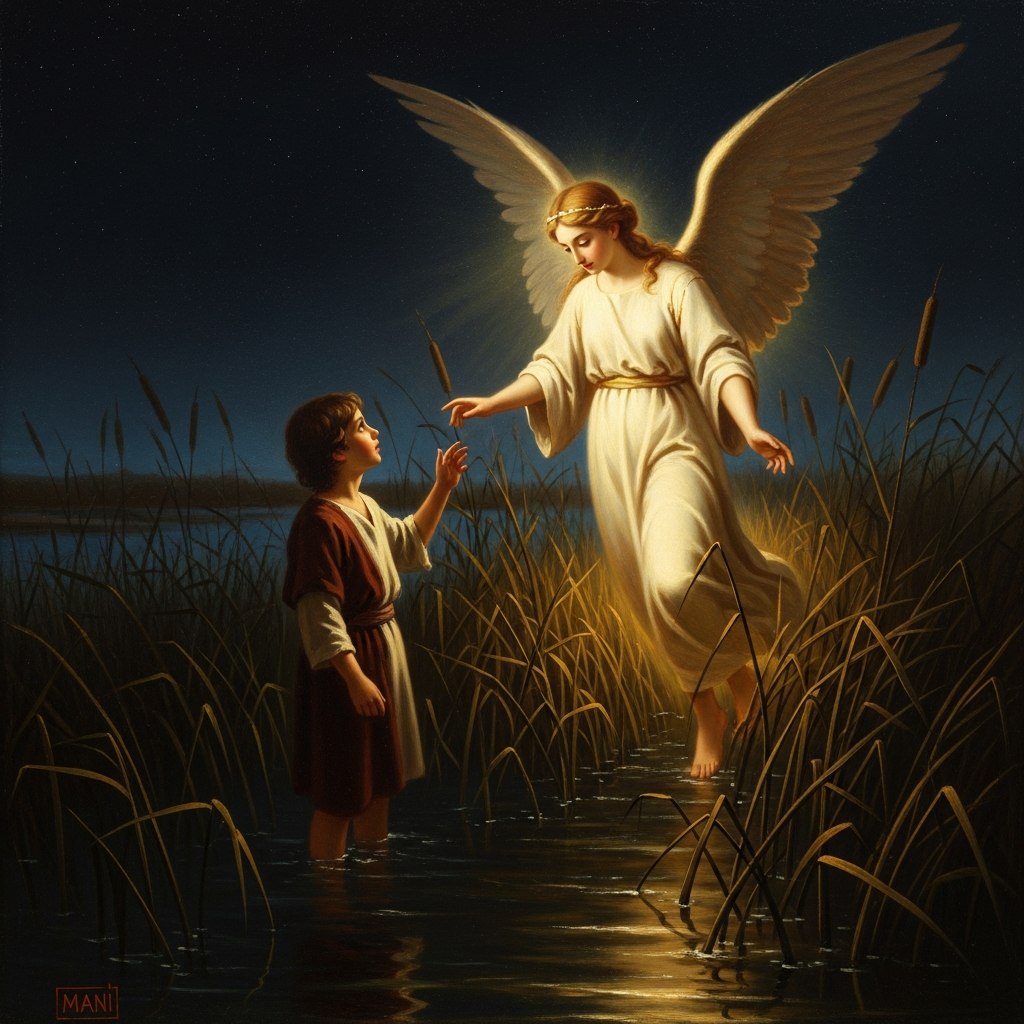
The Twin Appears to Mani
At twelve years old, Mani of Babylon receives a visitation from an angel he calls the Twin — his divine counterpart — who tells him he is the Paraclete, the final prophet. He spends the next sixty years building a religion of light and darkness that will outlast its own destruction by five hundred years.
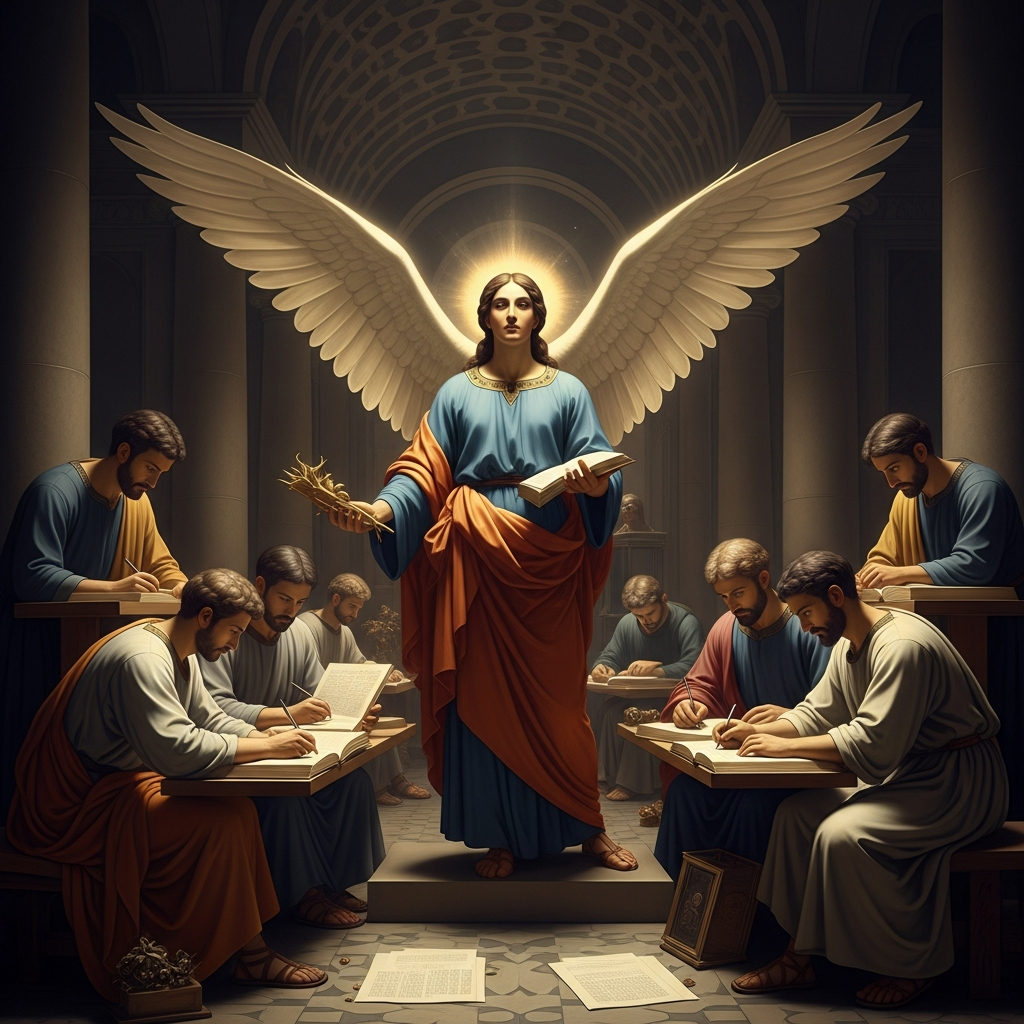
Origen: The Theologian Who Was Too Brilliant
Alexandria in the early third century. A teenager named Origen, his father just executed by the Romans, takes over the catechetical school of the most cosmopolitan city in the Mediterranean and begins to write. He will write more than any Christian who has ever lived. He will reconcile Plato and Paul. He will be tortured almost to death. Three centuries after he is buried, the Second Council of Constantinople will condemn him as a heretic — and most of his books will be deliberately destroyed.
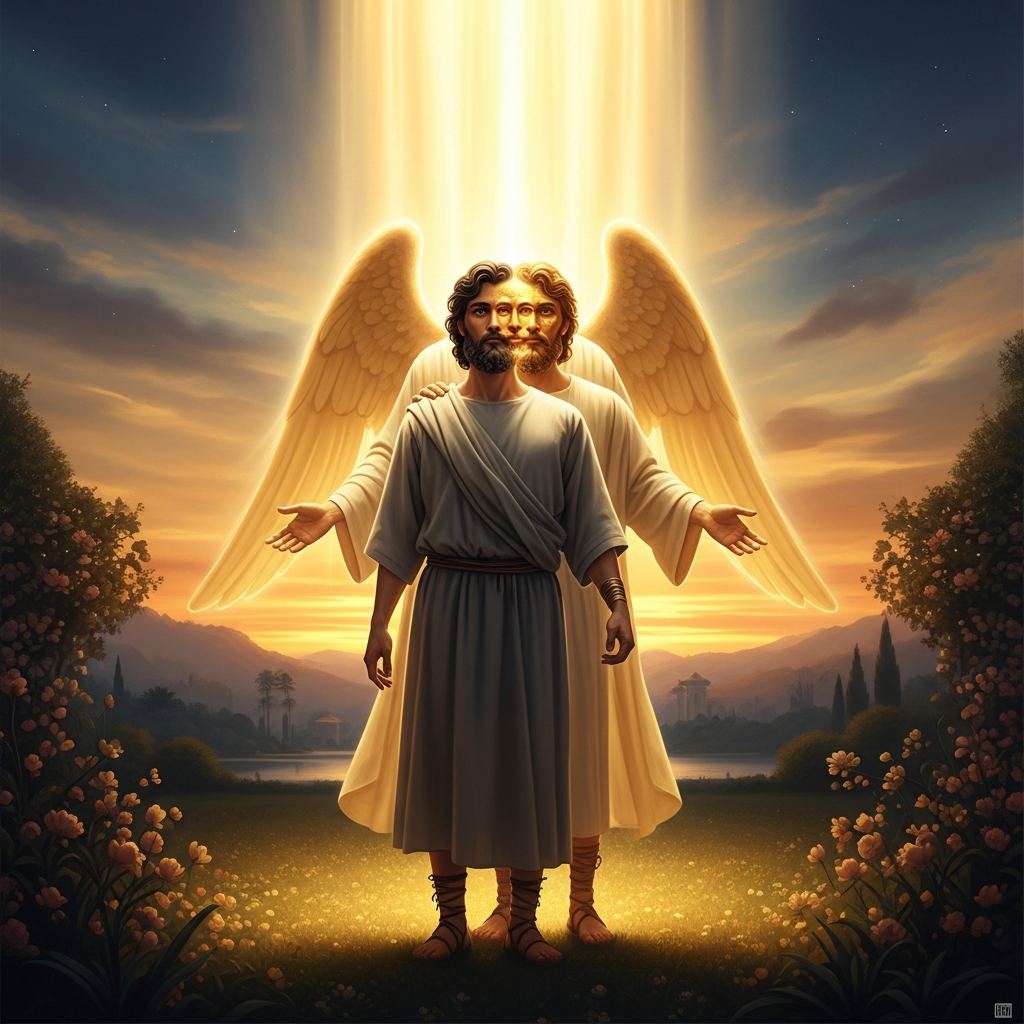
Mani Receives the Final Revelation
Mani of Babylon, twenty-four years old, receives his second visitation from the Angel of Light — his divine twin, his heavenly counterpart — and understands that he is the Paraclete, the Seal of the Prophets, the last messenger sent to synthesize Zoroaster, Buddha, and Jesus into one final, complete religion. He will spend forty years building it. He will be executed for it.
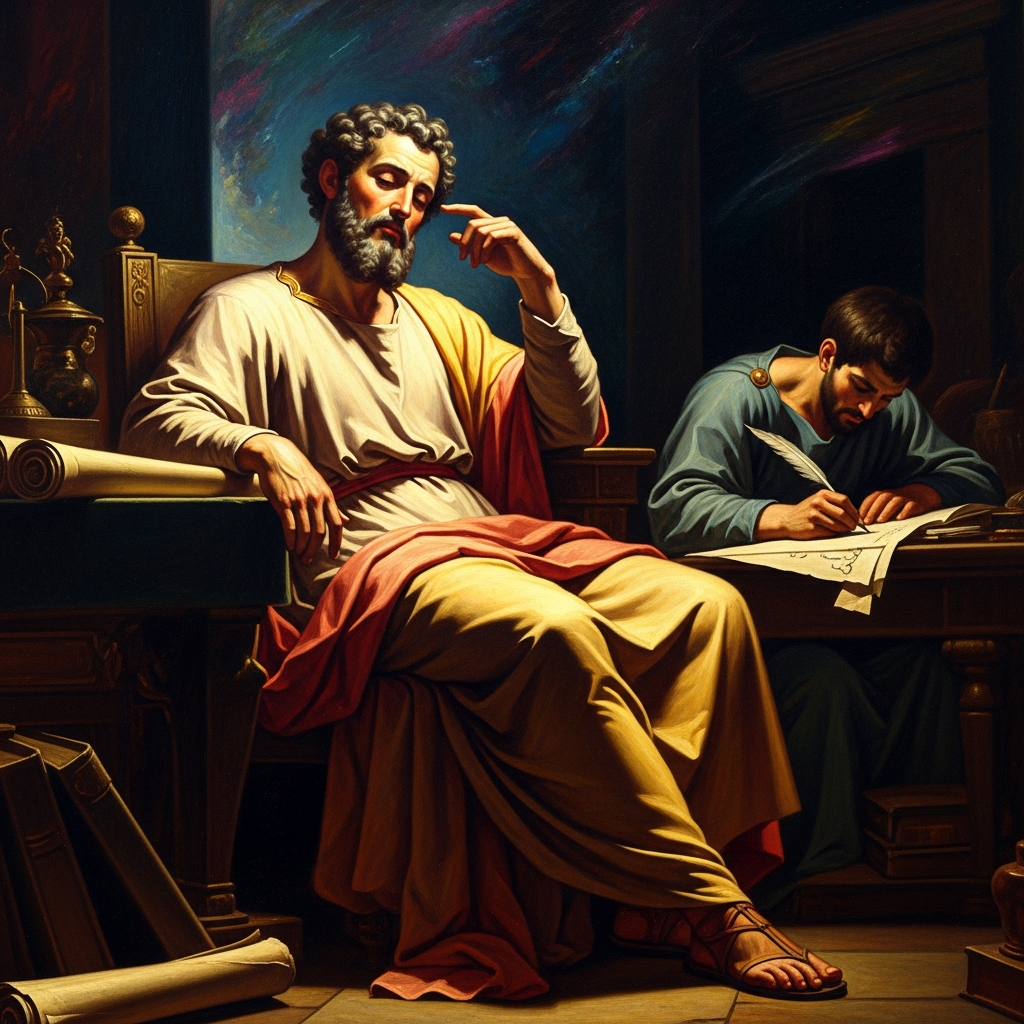
Plotinus and the One
Plotinus, the last great philosopher of antiquity, refuses to have his portrait painted and dictates the Enneads while nearly blind. In his final lecture, he describes the moment the soul stops being itself and pours back into the source of all being — not as metaphor, but as personal report.
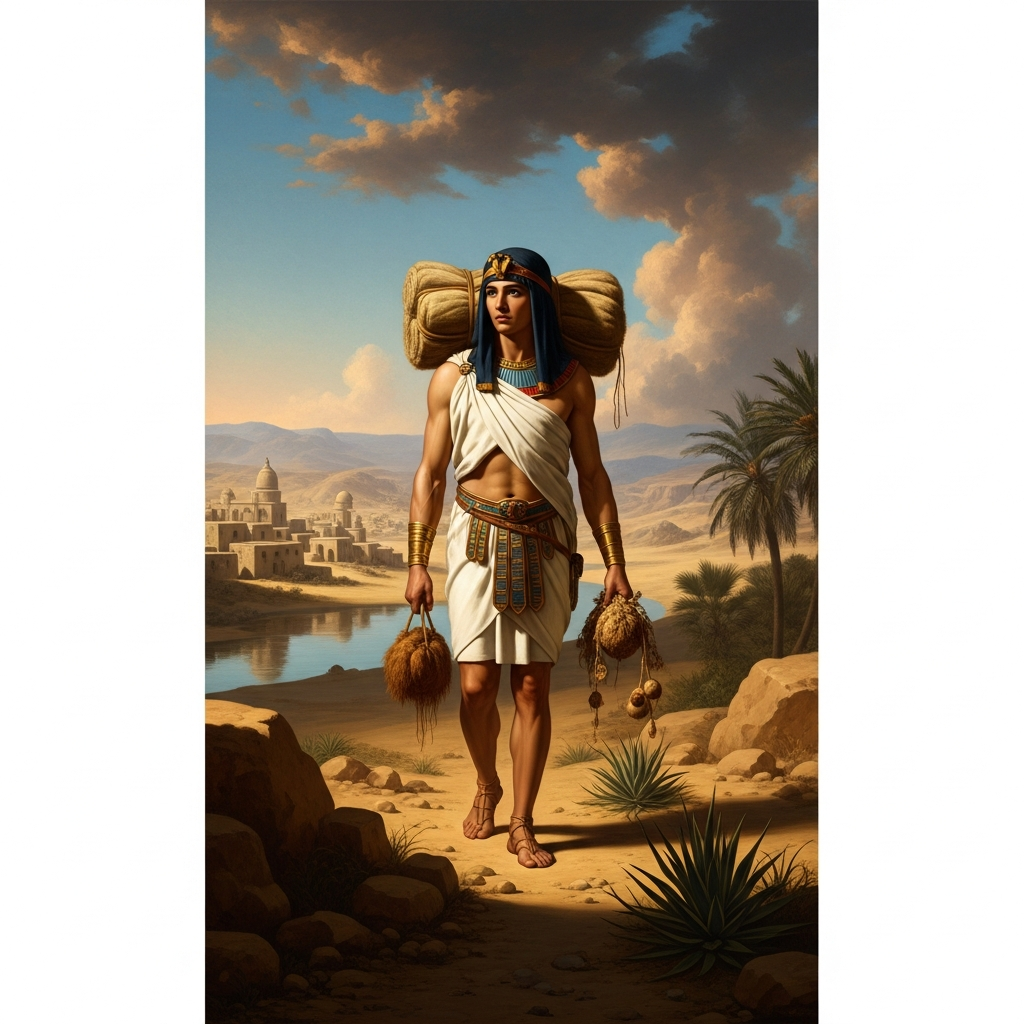
Antony in the Desert
A young Egyptian of moderate wealth walks into a church one Sunday morning in 270 CE and hears a single line of the gospel read aloud. He walks back out, sells his estate, hands his sister to a community of virgins, and walks into the desert. He does not come out for twenty years. When he finally emerges, the visitors who have come expecting a withered hermit find a man of extraordinary peace, and the template of Christian monasticism is set.
Late Antiquity
Empires fall, faiths rise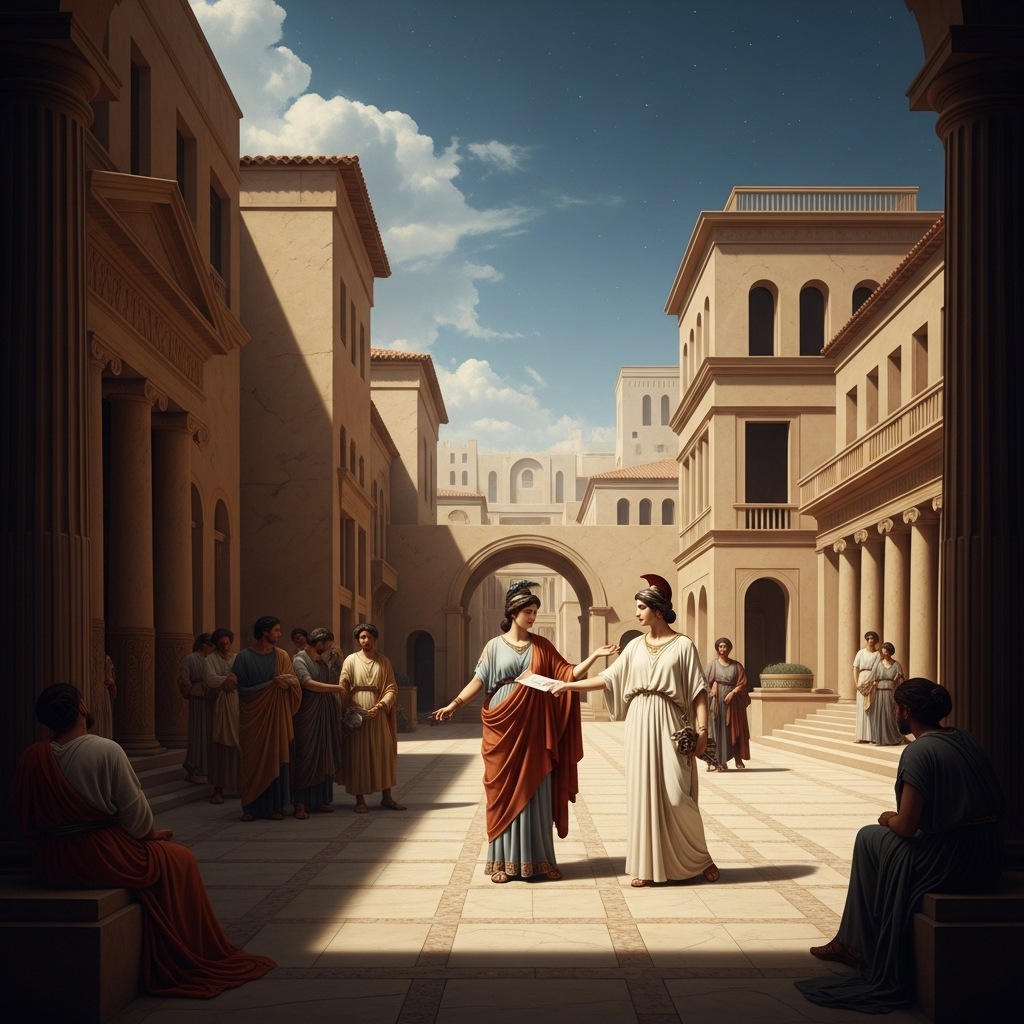
Amma Syncletica: The Desert Mothers
The Desert Fathers are famous. The Desert Mothers were always there too — the *ammas*, the women who walked into the same wilderness, sat under the same sun, fought the same demons, and gave the same hard counsel to the disciples who came looking for them. The most prominent is Syncletica of Alexandria, a wealthy woman who gives away her estate, takes her blind sister, moves into a tomb on the edge of the city, and starts speaking sentences that the desert tradition will be quoting for sixteen hundred years.
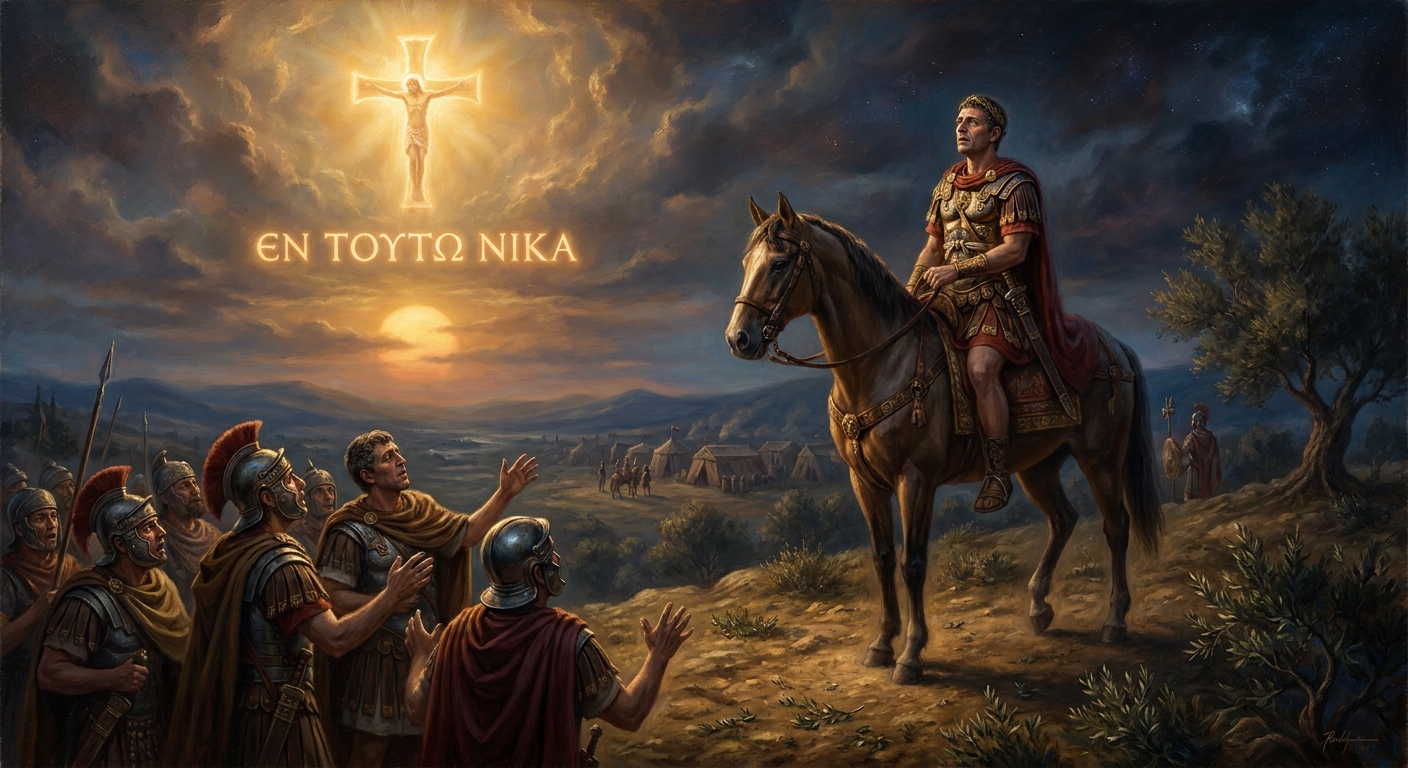
Constantine at the Milvian Bridge
On the eve of battle, Constantine sees a cross of light blazing over the sun. His soldiers paint the Chi-Rho on their shields. By nightfall the next day, Maxentius is face-down in the Tiber, and the Roman Empire belongs — for the first time — to a man who prays to Christ.
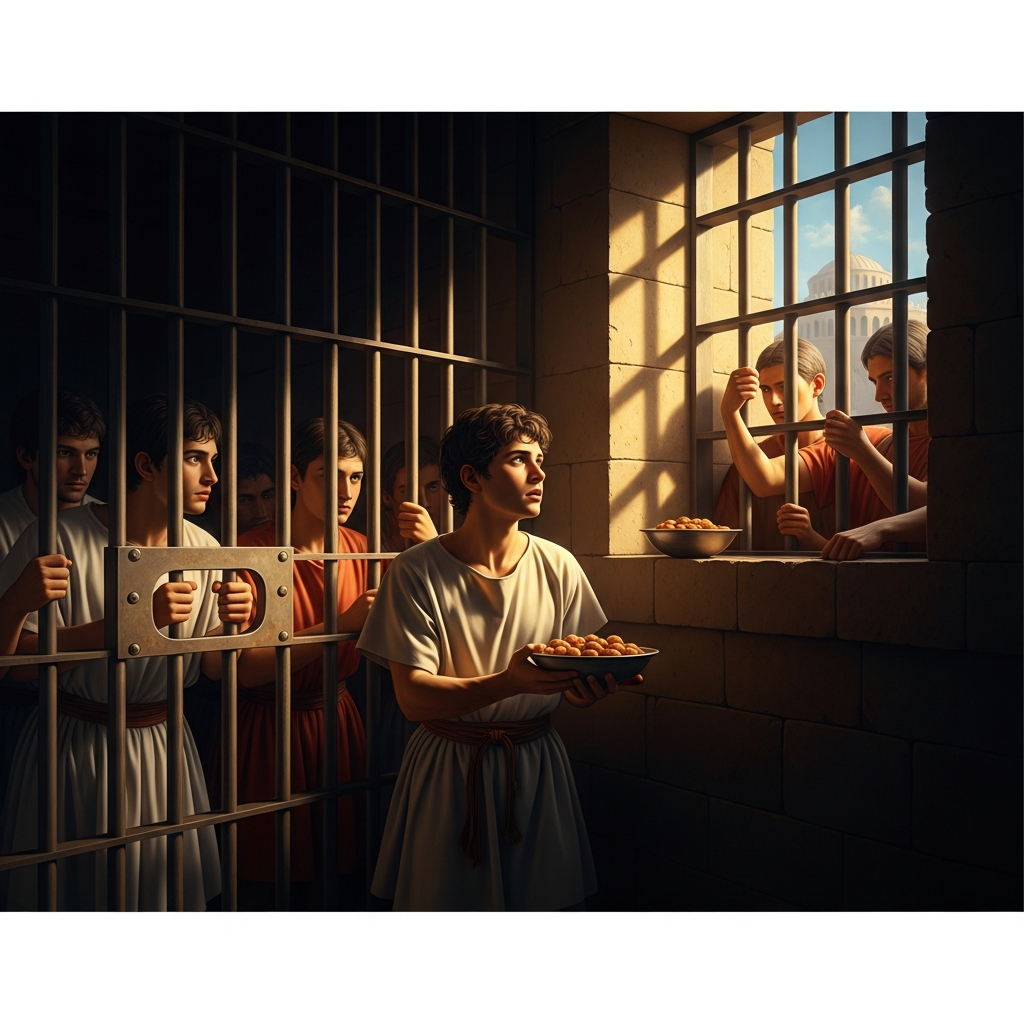
Pachomius and the Voice at Tabennisi
A former Roman soldier, recently baptized, is living as a hermit in the Egyptian Thebaid in 320 CE under the guidance of an old desert father named Palamon. One evening a voice comes to him in the silence — or a vision; the sources hesitate — and tells him to stay where he is and build a dwelling, because many will come to live with him for the saving of their souls. He builds the dwelling. The first monastery in human history begins.
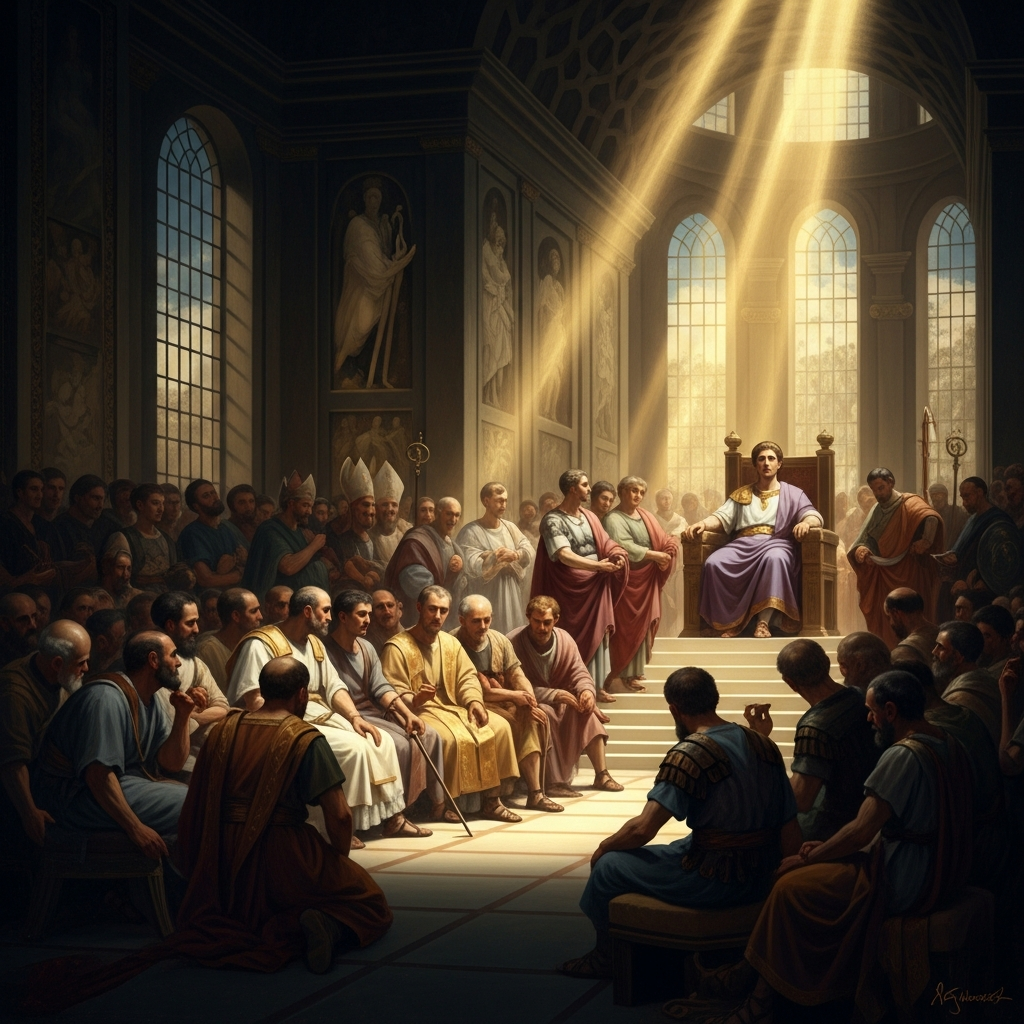
The Council of Nicaea: The Vote That Made Christ God
It is May 325. Three hundred bishops, many of them carrying scars and missing eyes from Diocletian's persecutions, sit under the roof of an emperor who has built them a palace. The question on the table is not academic. It is whether Christ is God or only the highest of God's creatures. The answer they vote will be recited by a billion people every Sunday for the next seventeen centuries.
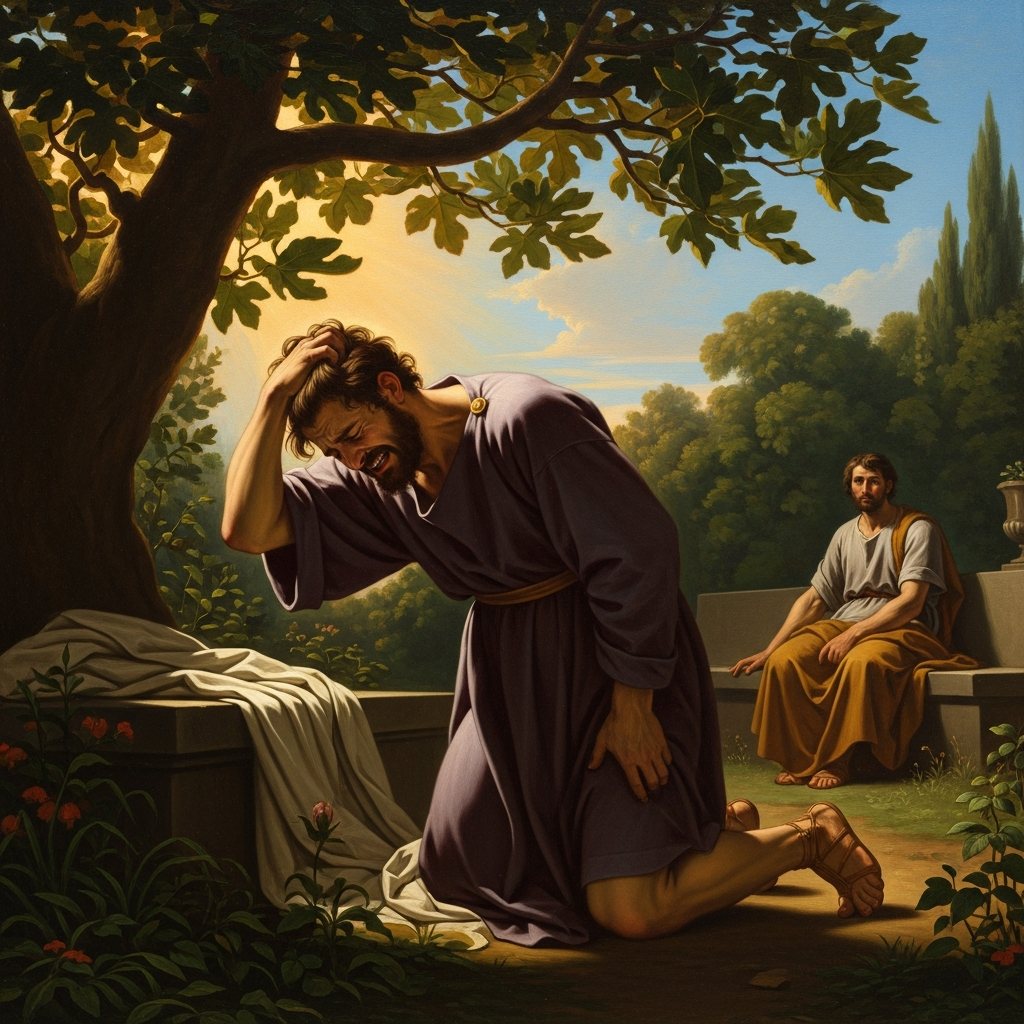
Augustine and the Voice in the Garden
A 31-year-old rhetoric professor sobs under a fig tree in Milan, hears a child's voice chanting 'tolle, lege,' and opens Paul's letter at random. The Roman Empire's most influential theologian is born in a single sentence.
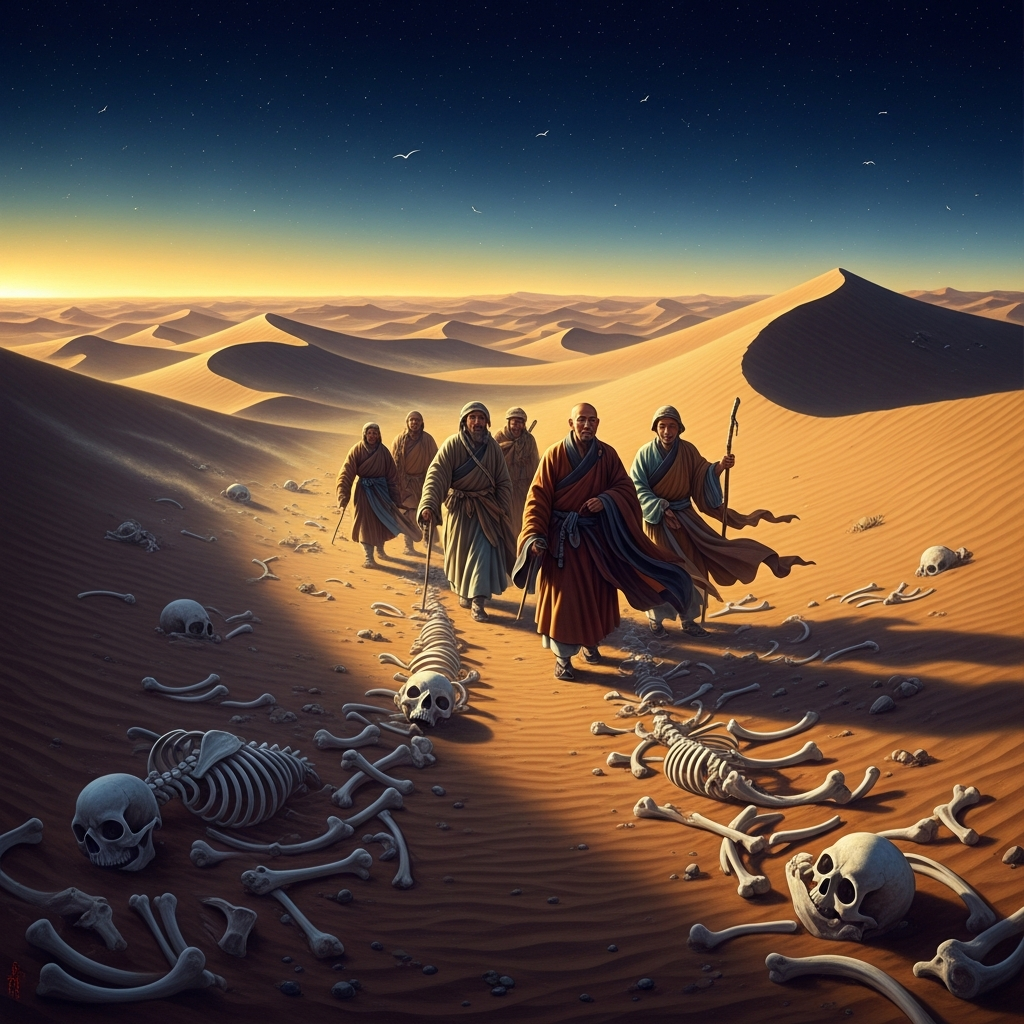
The Old Monk Who Walked to the Buddha's Homeland
At sixty years old, a Chinese monk decides his country's translations of the Buddhist texts have drifted from the originals. He sets out west, on foot, to bring back the source. He returns fourteen years later, the first of his people to have walked to the Buddha's birthplace and back.
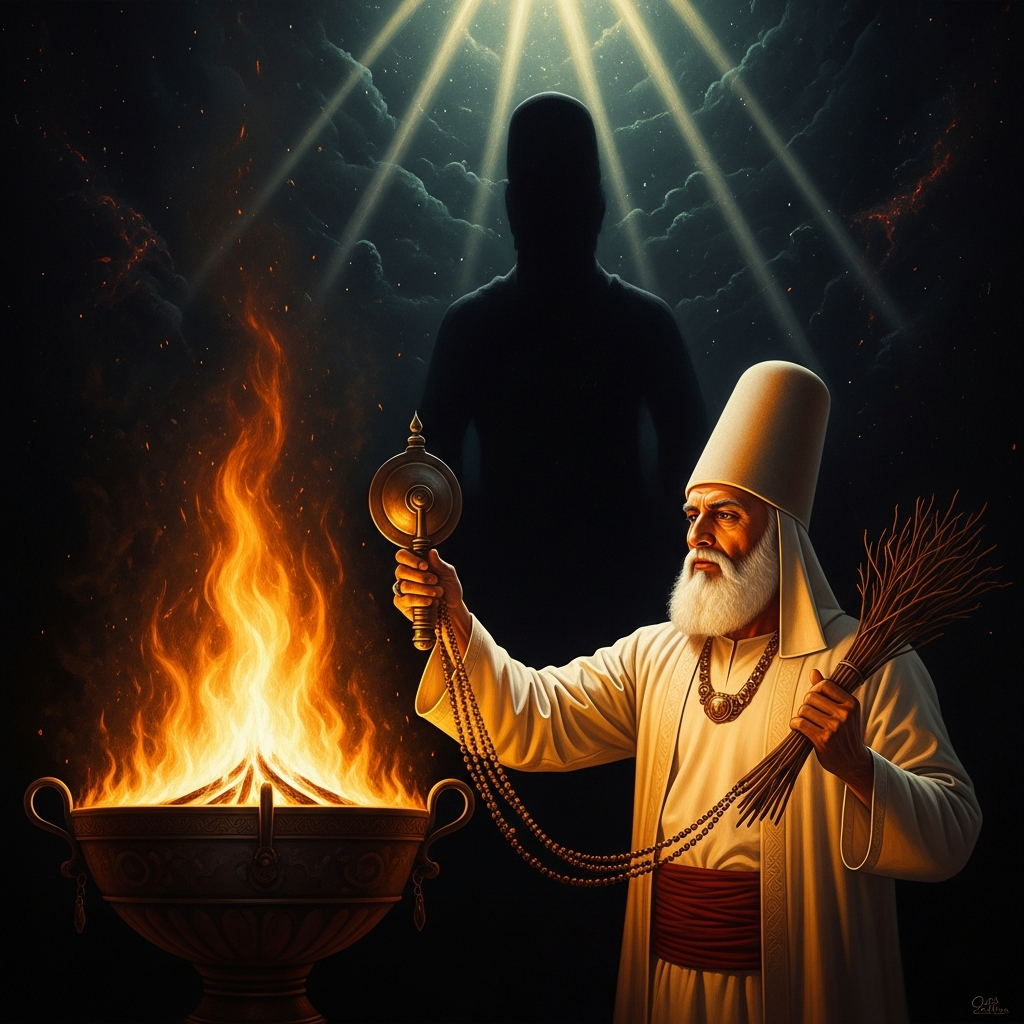
Frashokereti: The Making Wonderful
At the end of time the world will not be destroyed. It will be perfected. A Zoroastrian priest in Sassanid Persia performs the Yasna ceremony — the daily ritual that, according to the theology, actively holds back the darkness and keeps the world from ending before it is ready.
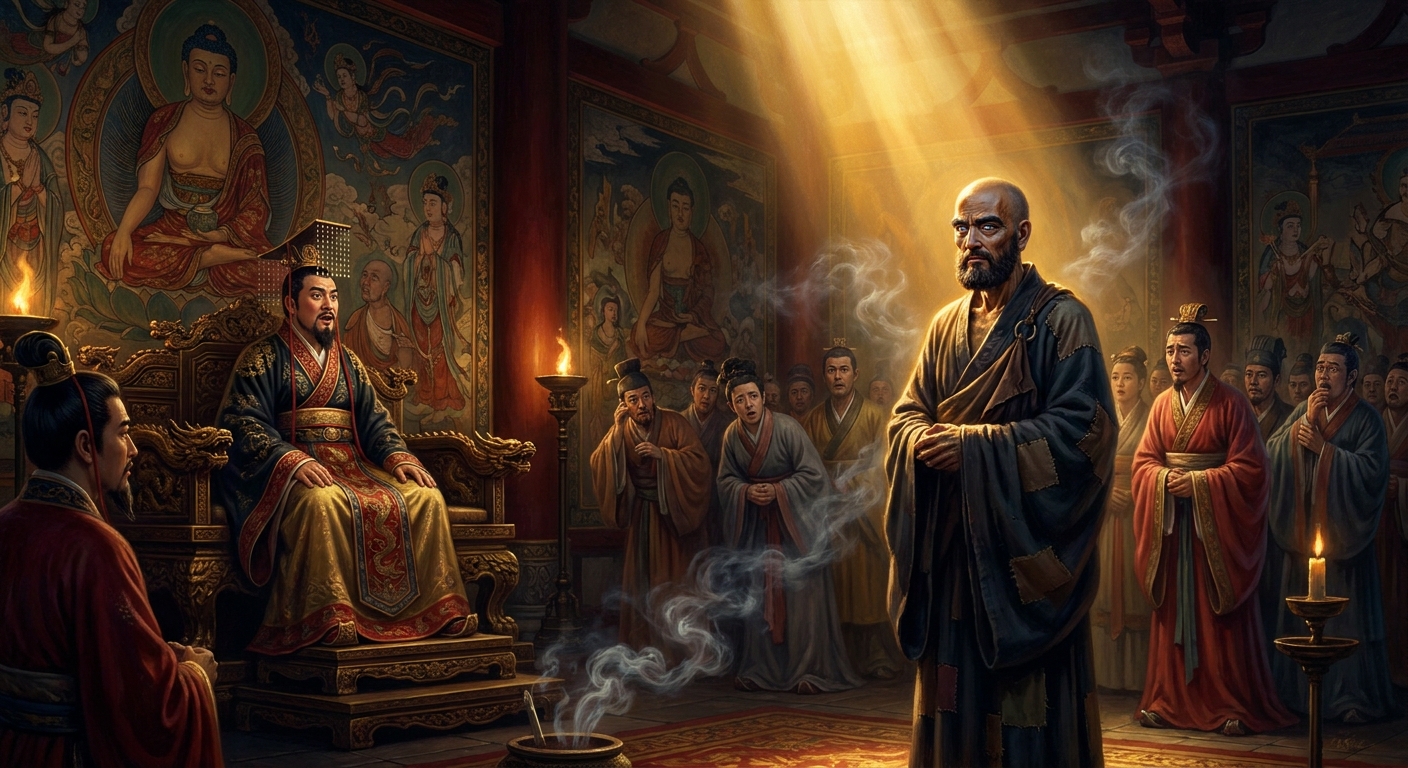
Bodhidharma Meets the Emperor
An Indian monk crosses the sea, walks into the throne room of the most pious emperor in China, and answers every question with a door slammed shut.
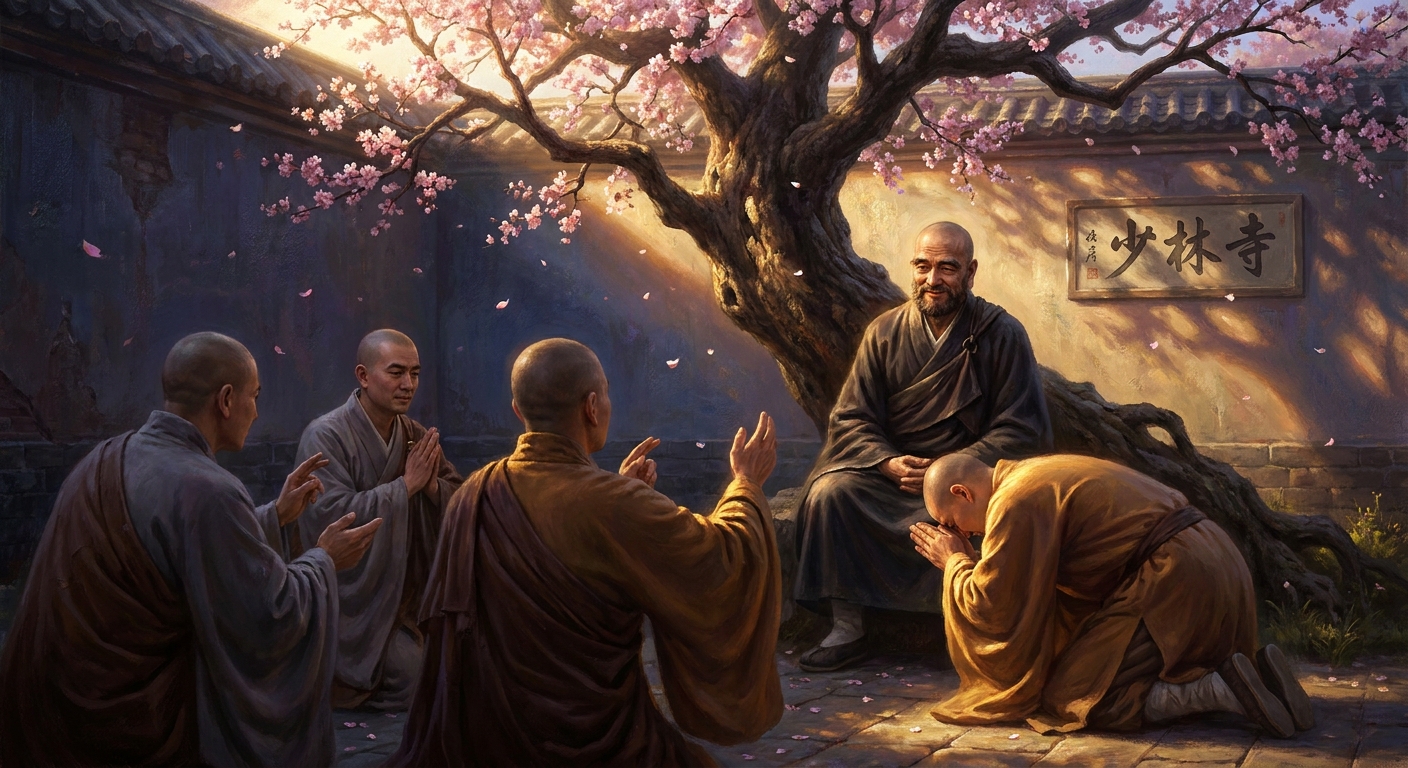
Skin, Flesh, Bone, Marrow
Bodhidharma assembles his four chief disciples and asks each what they have understood. Three speak. One bows. The deepest answer is the one that does not use any of the master's words.
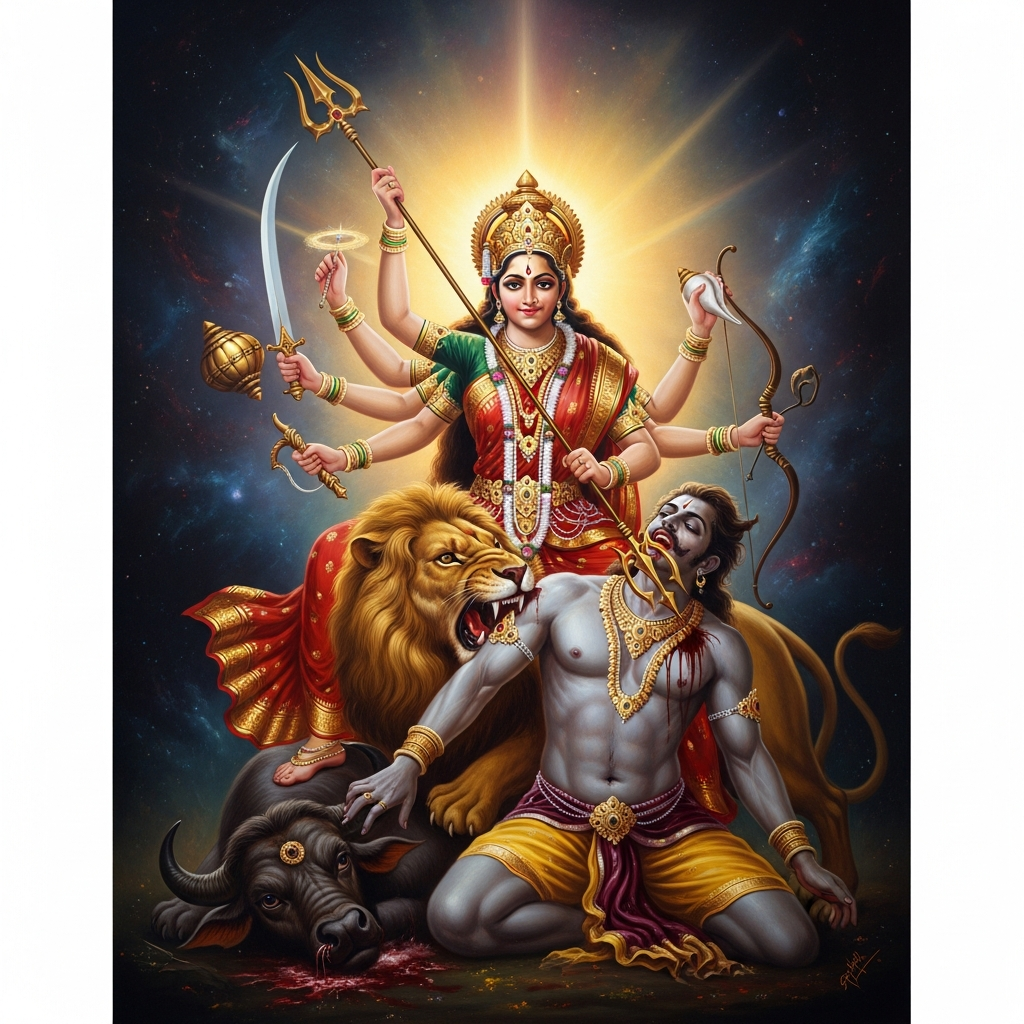
Durga Slays the Buffalo Demon
The buffalo-demon Mahishasura cannot be killed by any god. The gods pour their fury into a single point of light, and a goddess steps out — many-armed, lion-mounted, weapons in every hand. Nine days she fights him as he changes shape. On the tenth, she puts her foot on his throat.
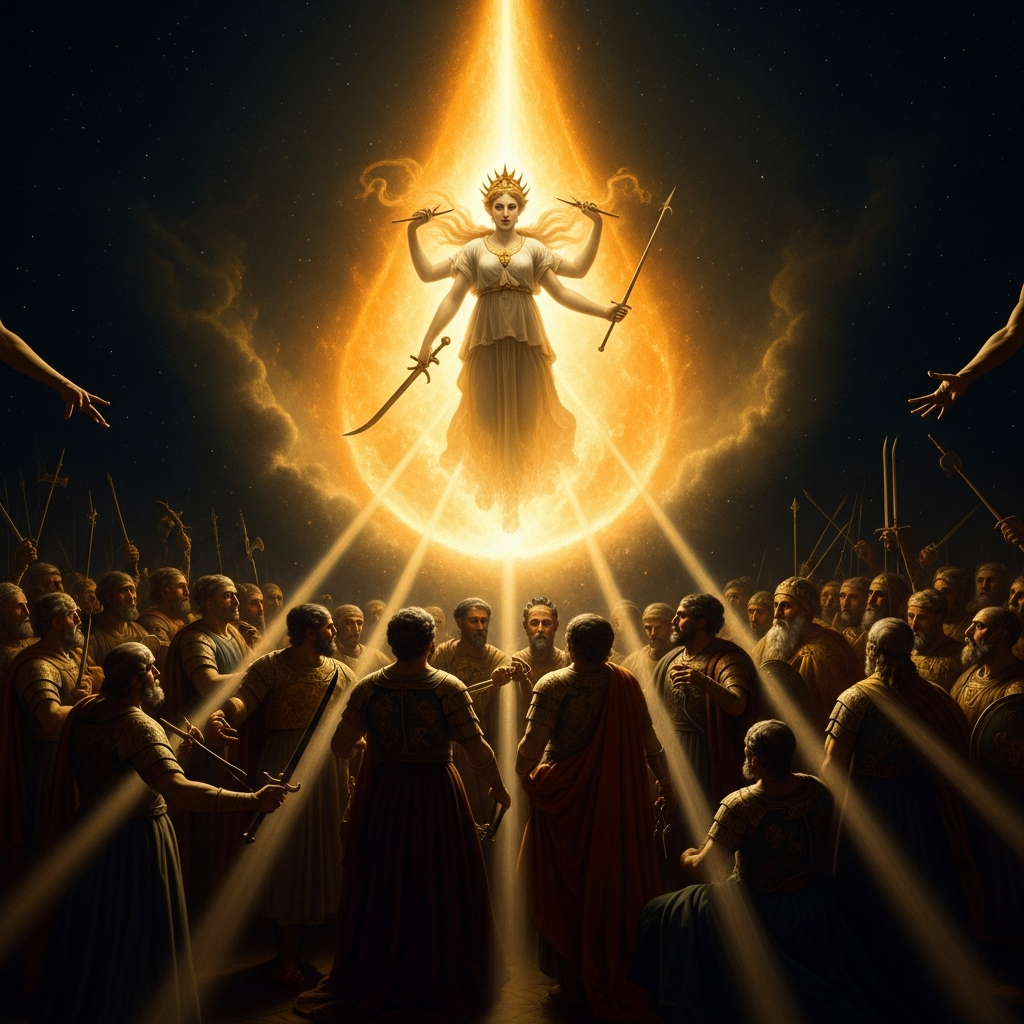
Durga Slays Mahishasura
The buffalo-demon Mahishasura has conquered heaven and the gods are helpless. They pool their divine fire into a single blazing point, and a goddess steps out — eighteen-armed, lion-mounted, the entire armory of heaven in her hands. Nine days she fights him as he shifts shape. On the tenth, she pins him under her foot and takes his final head.
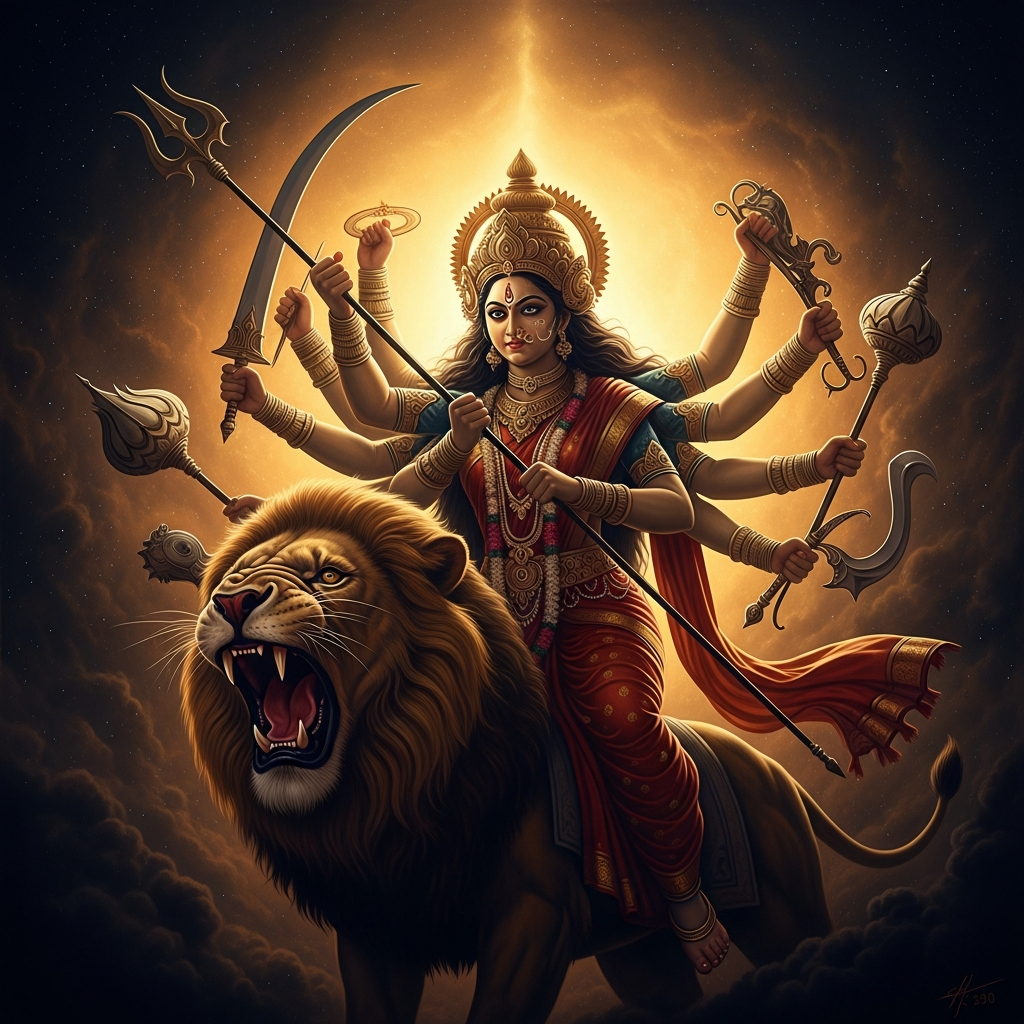
Kali on the Battlefield
Durga creates Kali from her third eye to fight the demon generals Chanda and Munda. Kali springs forth black-skinned and wild-haired, devouring armies so fast that every drop of demon blood that touches the ground births a thousand new demons. She cannot stop killing. Only Shiva, lying down in her path, arrests her — and when she realizes she has stepped on her husband, her tongue comes out in the gesture that defines her forever.
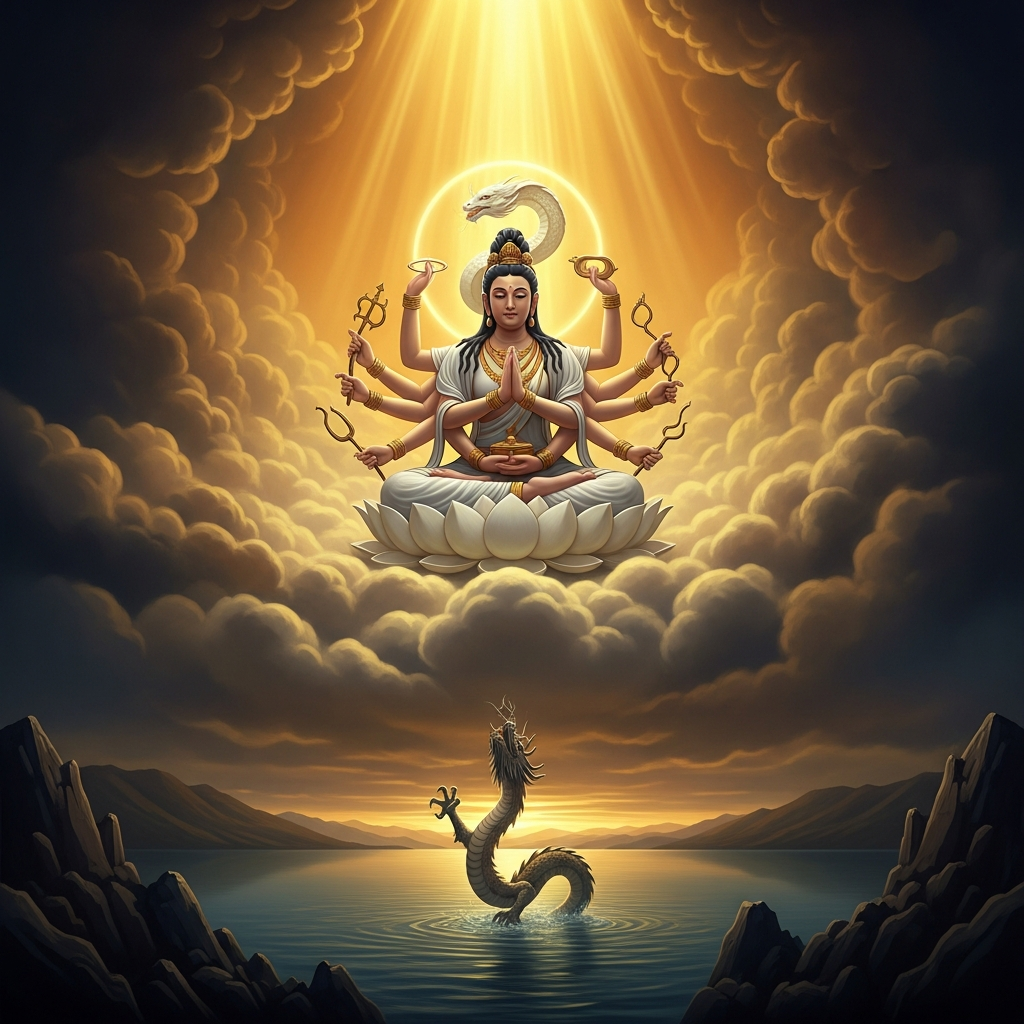
Benzaiten and the Dragon King
Benzaiten — the only female deity among the Seven Lucky Gods, originally the Hindu Saraswati — descends to Enoshima island to suppress a five-headed dragon who has been devouring children. She does not fight him. She marries him instead, and the marriage transforms his nature. The theology of beauty as the most effective form of power.
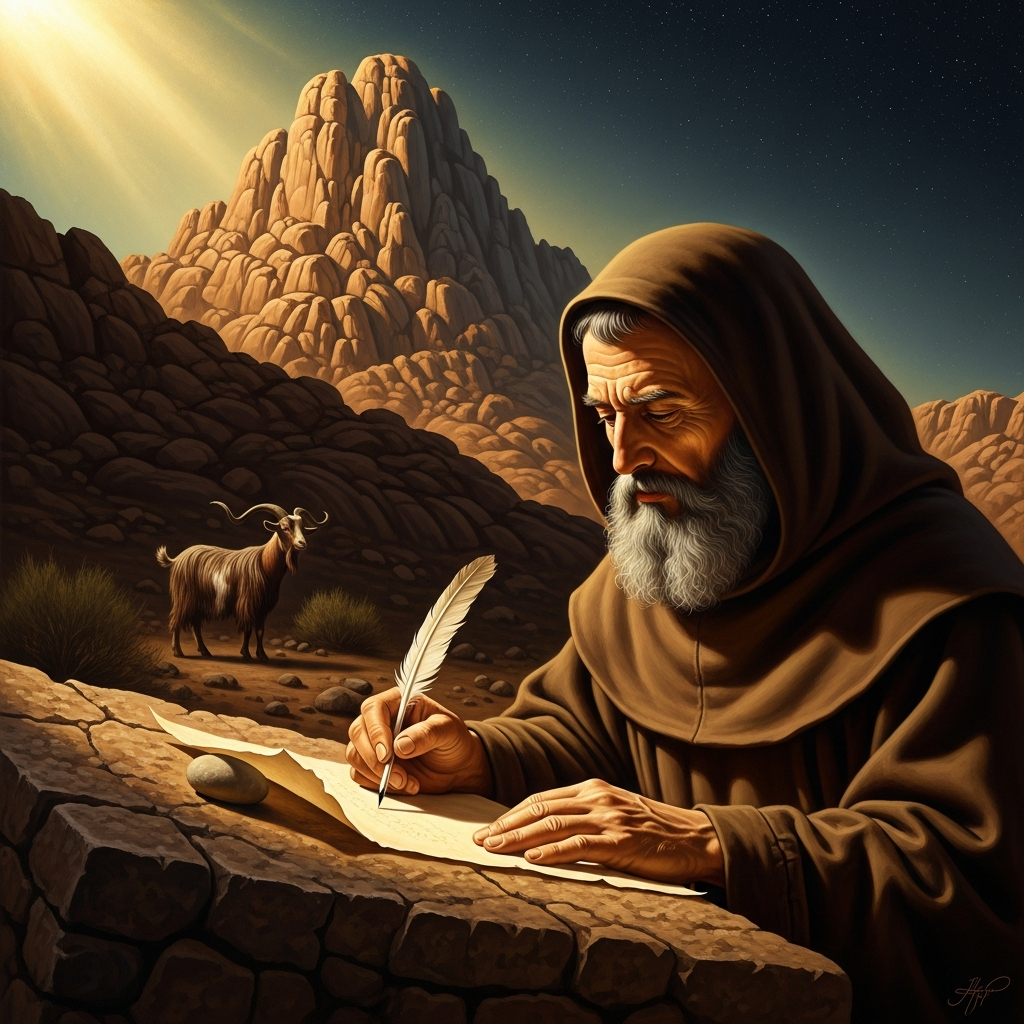
John of the Ladder
On Mount Sinai, beneath the same peak Moses climbed, an abbot named John writes thirty chapters describing thirty rungs from renunciation to perfect love. The icon shows monks climbing while demons drag them down. The book has been read every Lent for fourteen hundred years.
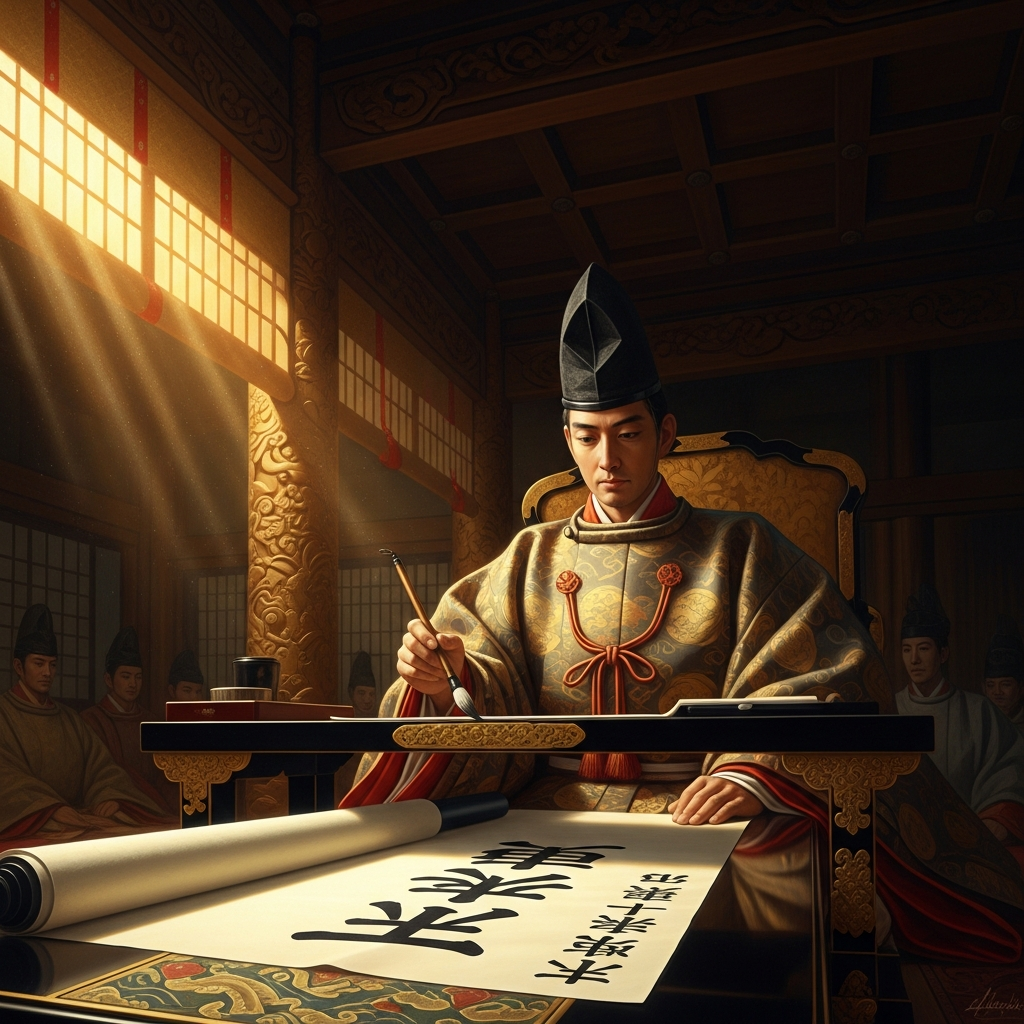
Prince Shōtoku and the Seventeen Articles
Japan, 604 CE. Prince Shōtoku Taishi, regent for Empress Suiko, writes the Seventeen-Article Constitution — the first document to frame Japanese governance through Buddhist and Confucian principles. Article 1: harmony above all. He builds Hōryū-ji, sends embassies to China, and founds the Buddhist state. He is said to have been born already reciting sutras.
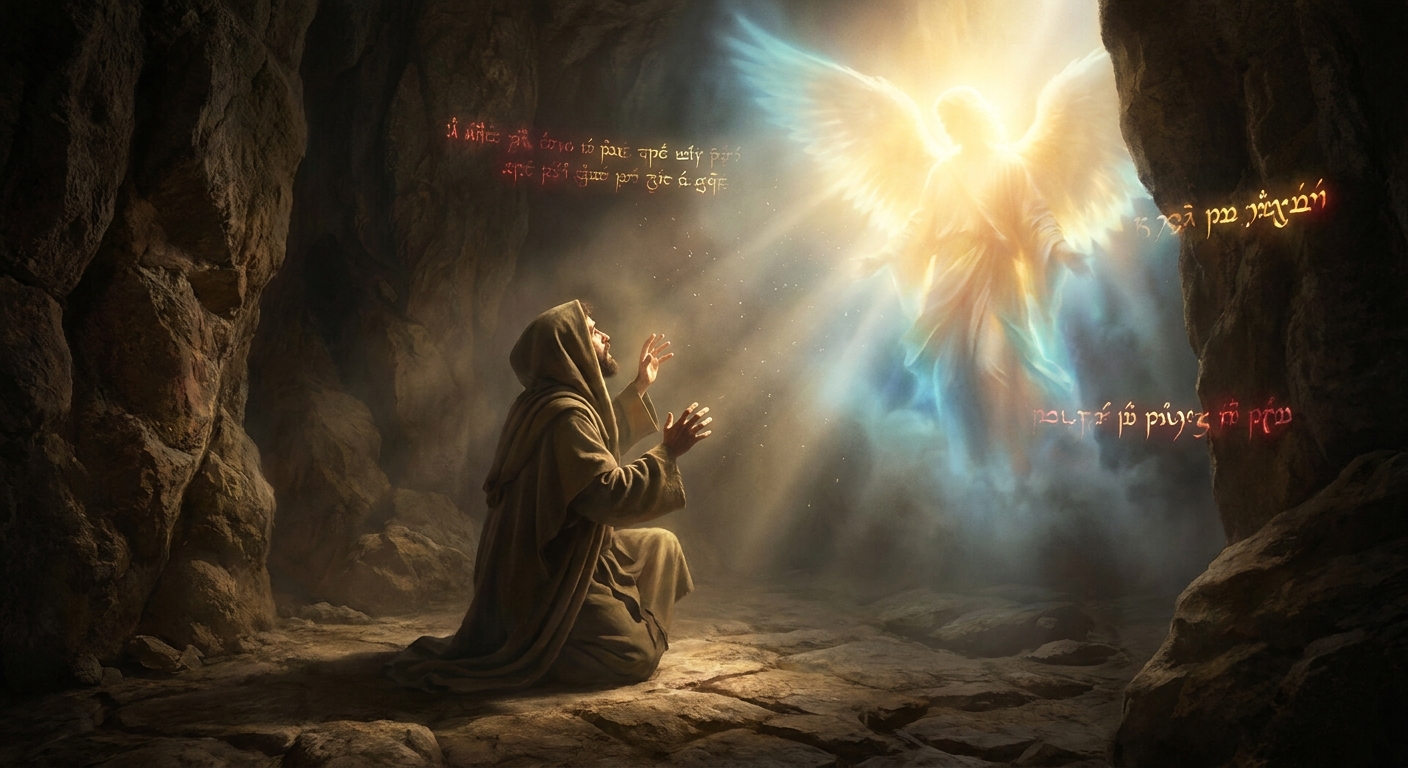
The Night of Power
In a cave on Mount Hira, 610 CE, a forty-year-old merchant named Muhammad is seized by the angel Jibril and commanded to recite — and the world is never the same.
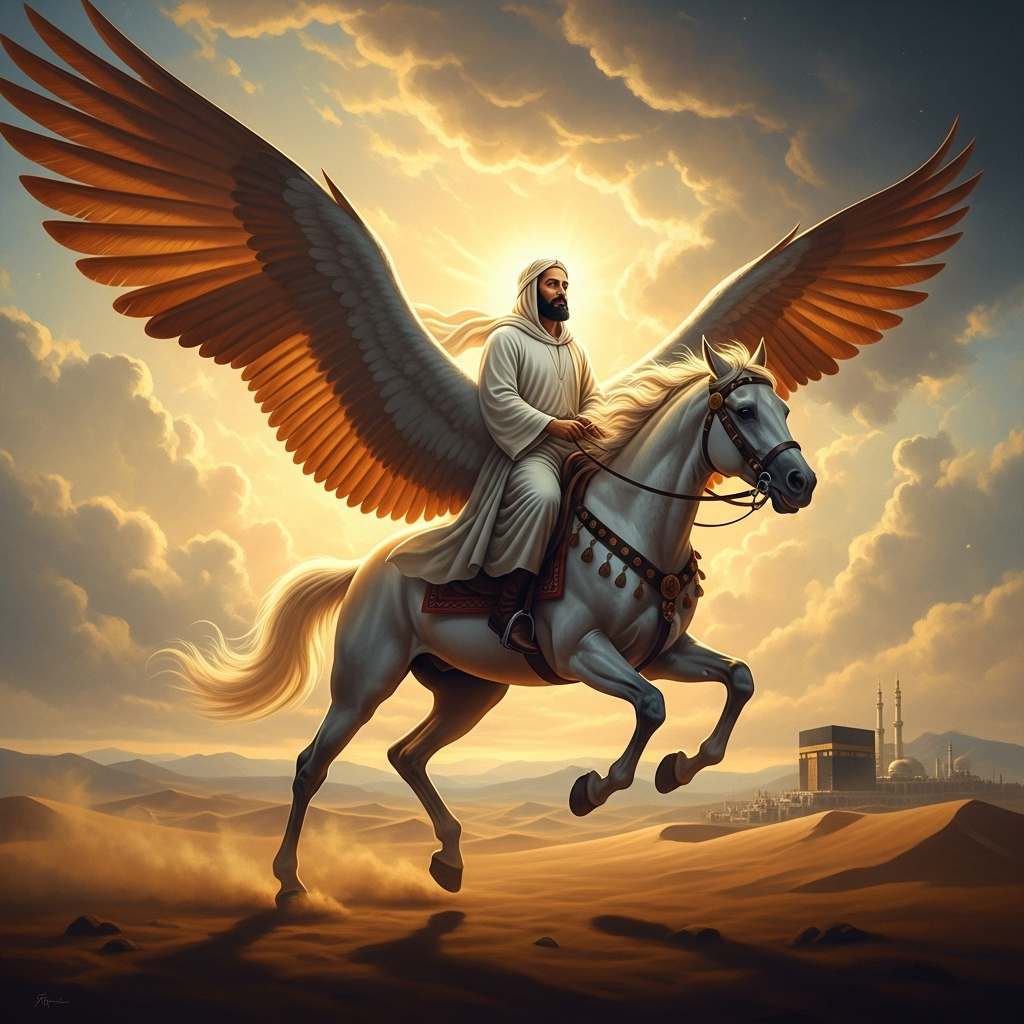
The Night Journey and the Ascent
In a single night, Muhammad is carried from the Masjid al-Haram to Jerusalem on the back of the Buraq, leads all the prophets in prayer on the Temple Mount, then ascends through seven heavens, meets Adam and Jesus and Moses, reaches the Lote Tree beyond which Gabriel cannot go, and returns with the five daily prayers — negotiated down from fifty on Moses's advice.
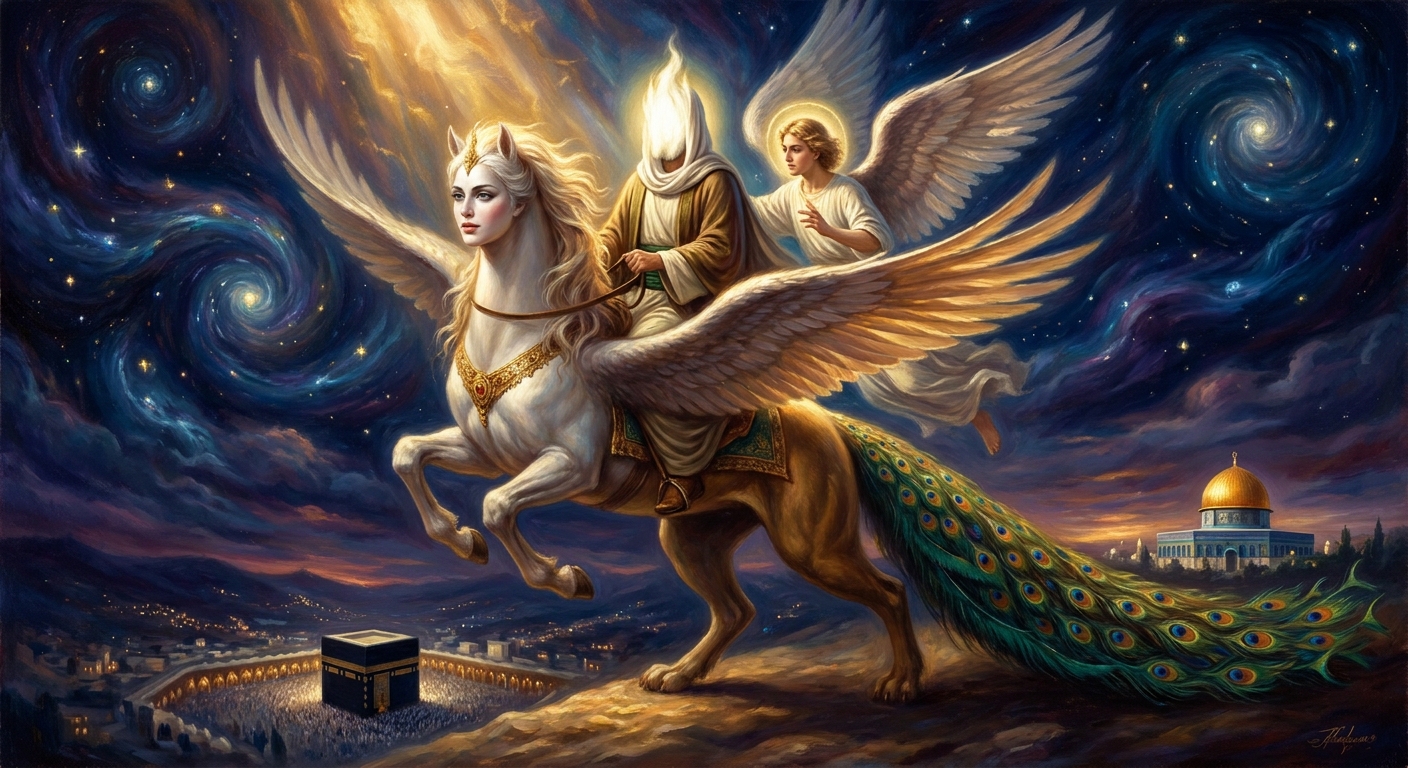
The Night Journey
A winged steed waits at the door of the Ka'ba — and Muhammad rides in a single night from Mecca to Jerusalem to the Throne, bargaining the prayers of his people down from fifty to five.
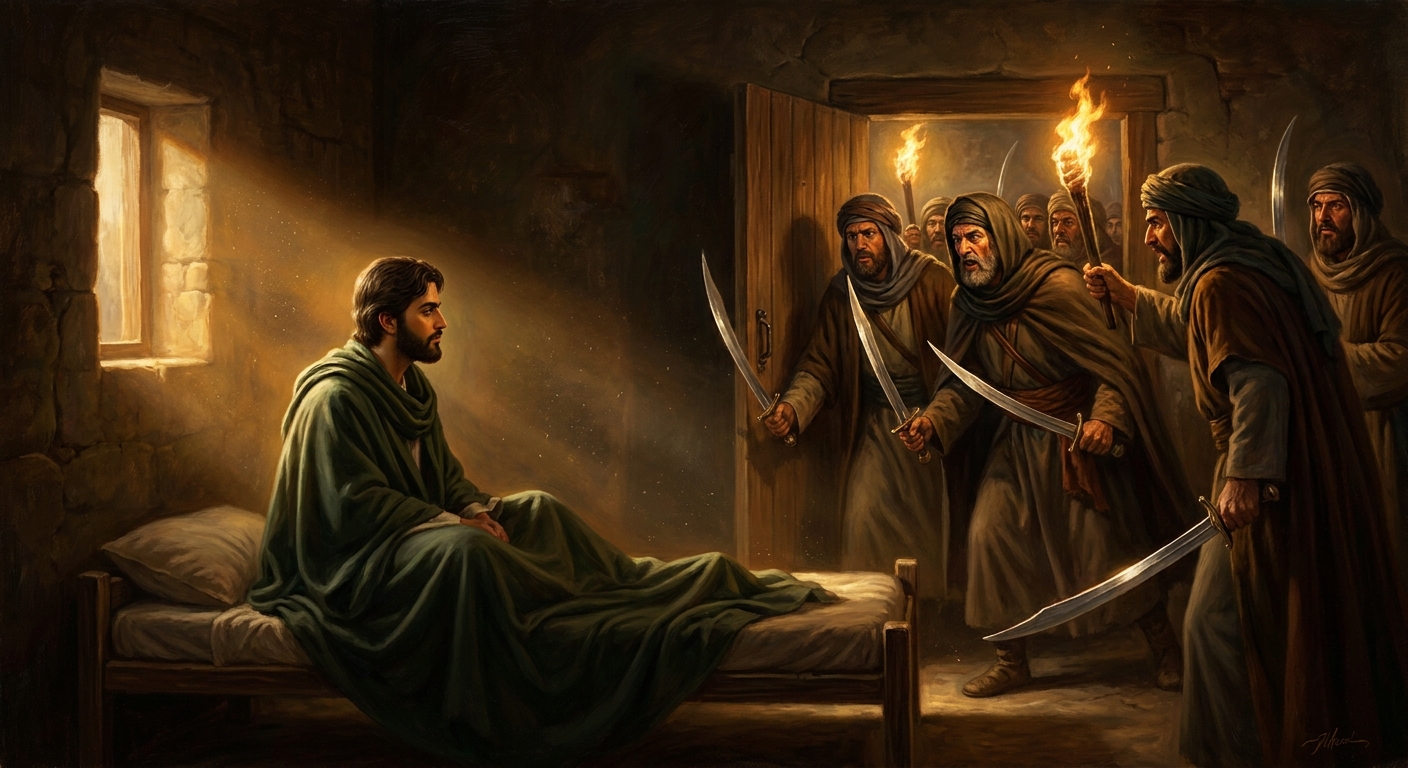
The Hijra
622 CE. Forty assassins ring the Prophet's house with swords drawn. He walks out invisible, meets Abu Bakr in the dark, and rides north toward a city that will become the first Islamic state. A spider and two doves guard the cave. The calendar begins.
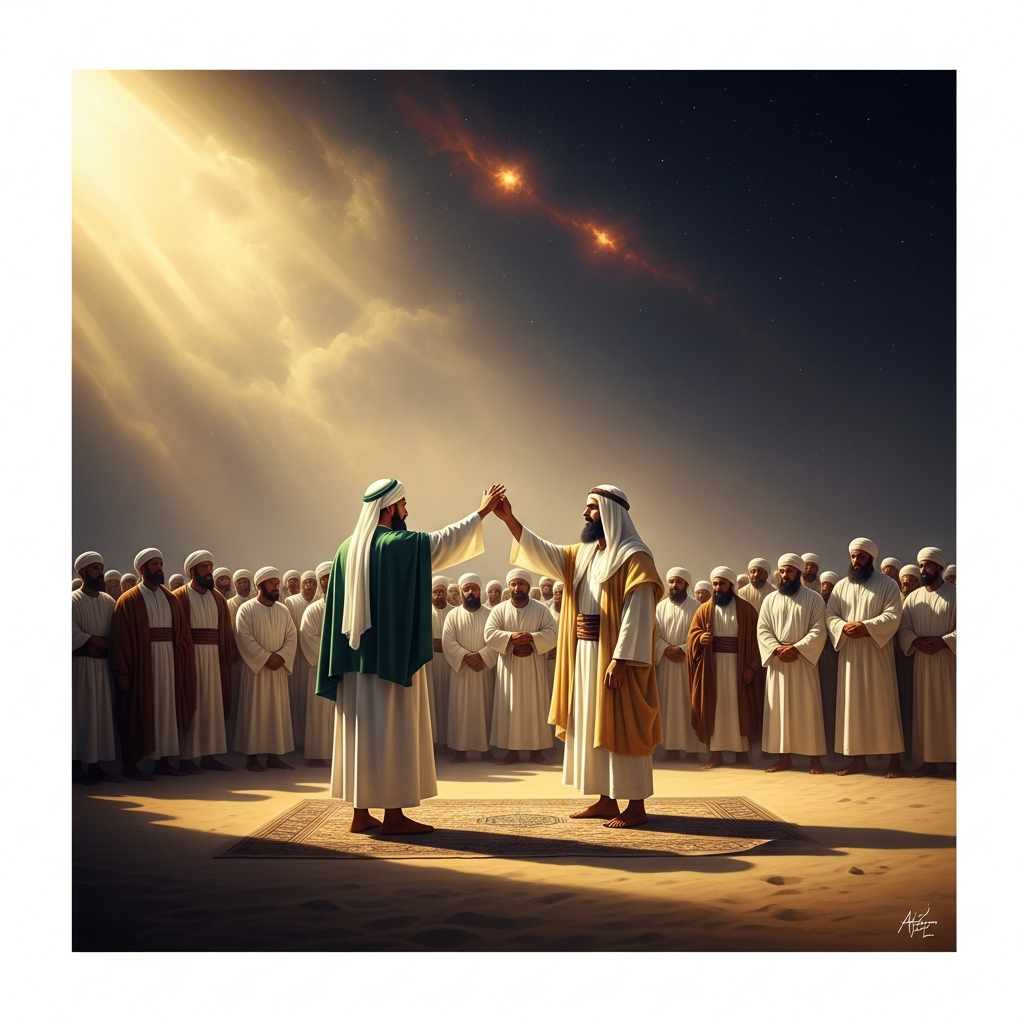
Ghadir Khumm: The Sermon That Split Islam
March 632 CE. Muhammad is returning from his Farewell Pilgrimage. The army halts at a pond called Ghadir Khumm in the desert heat. Muhammad takes Ali ibn Abi Talib — his cousin, his son-in-law, the husband of his daughter Fatima — by the hand and raises it: 'Of whomsoever I am the *mawla*, Ali is also the *mawla*.' Three months later Muhammad is dead. Abu Bakr is chosen caliph. Ali waits — through three caliphs and twenty-four years — and the argument about what was meant at Ghadir Khumm becomes the fault line that splits Islam in two.
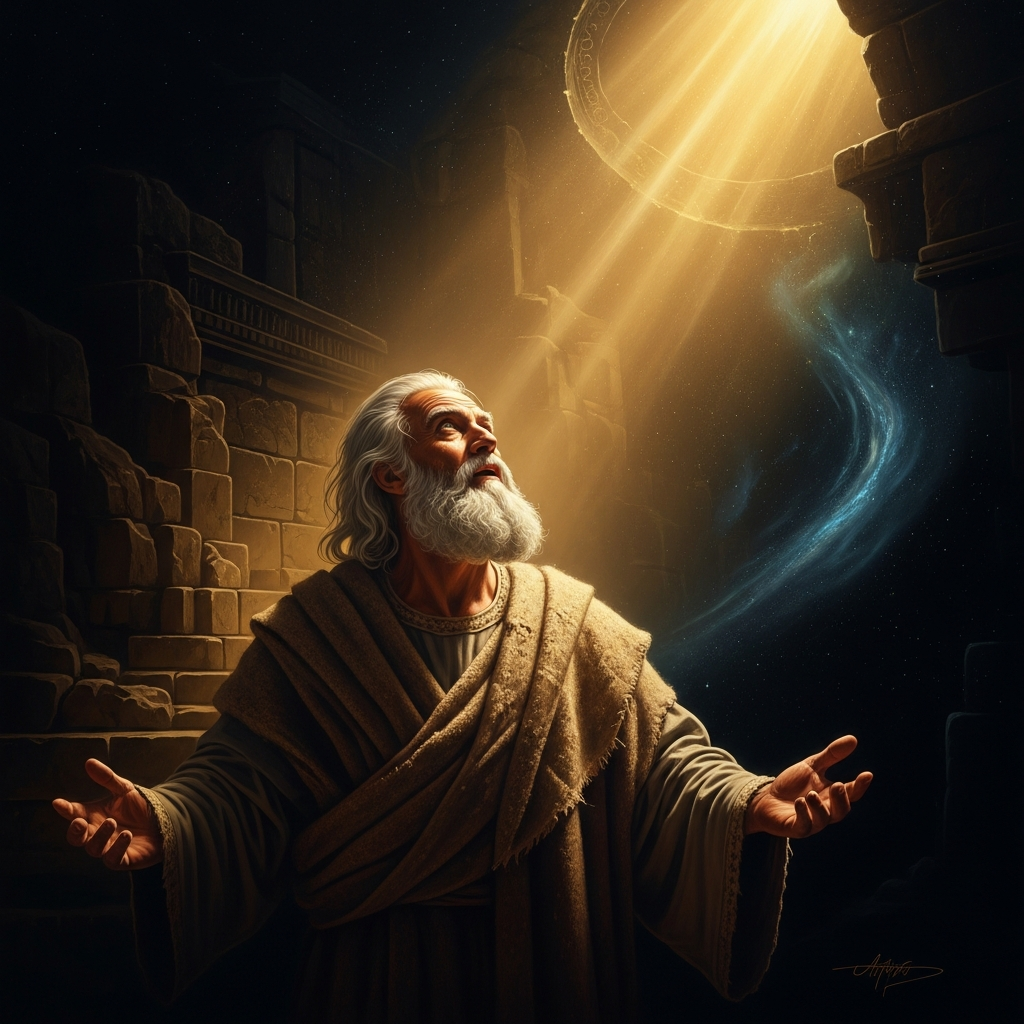
Fatima al-Zahra: The Grieving Lady
Fatima al-Zahra — daughter of Muhammad, wife of Ali, mother of Hasan and Husayn — is the pivot of the Shi'a tradition. Her grief at her father's death, her dispute with Abu Bakr over the garden of Fadak, and her death six months after Muhammad form the founding trauma of the Shi'a-Sunni split. Every Ashura procession mourns what began with her.
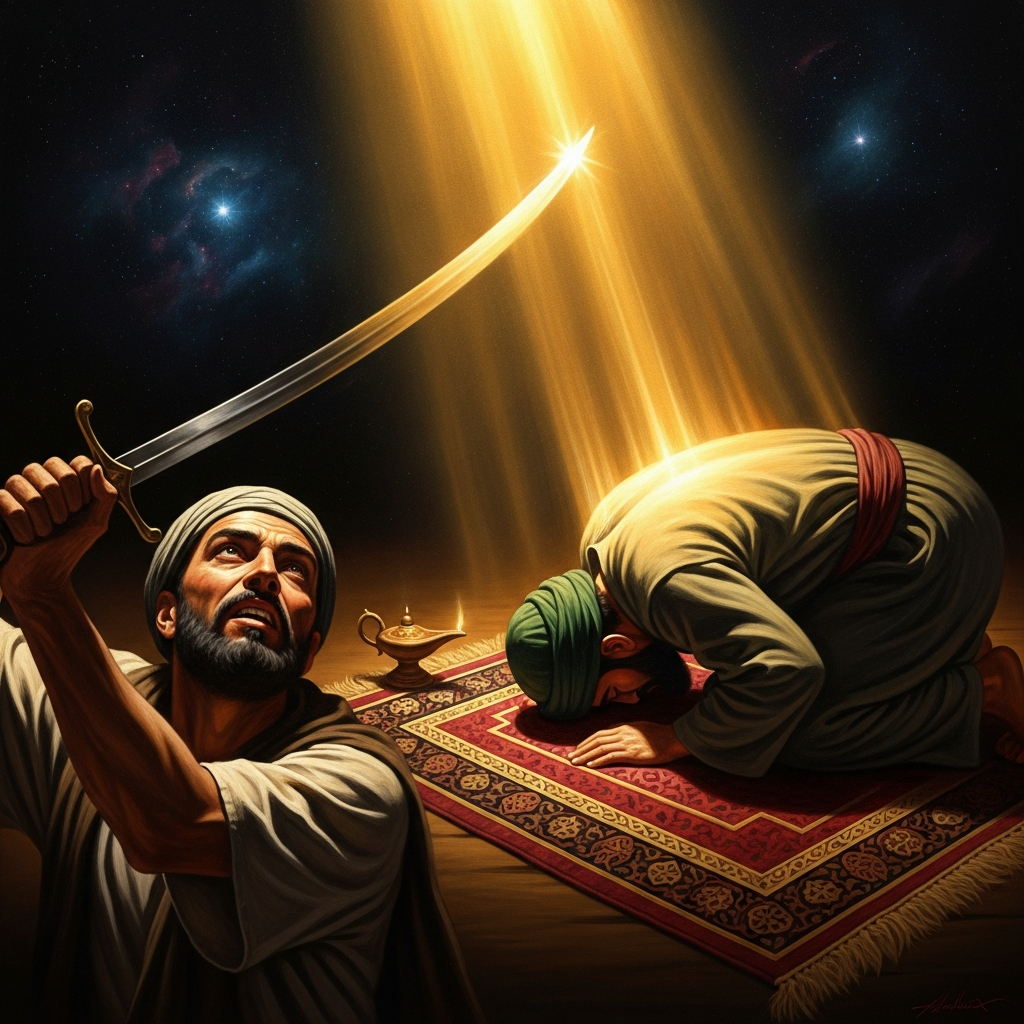
Ali at the Mosque of Kufa
Ali ibn Abi Talib — the Prophet's cousin, son-in-law, fourth caliph, and first Imam of Shia Islam — is struck with a poisoned sword during the dawn prayer and spends two days dying. He uses them to instruct his sons not to take revenge, and to ensure his assassin is treated justly.
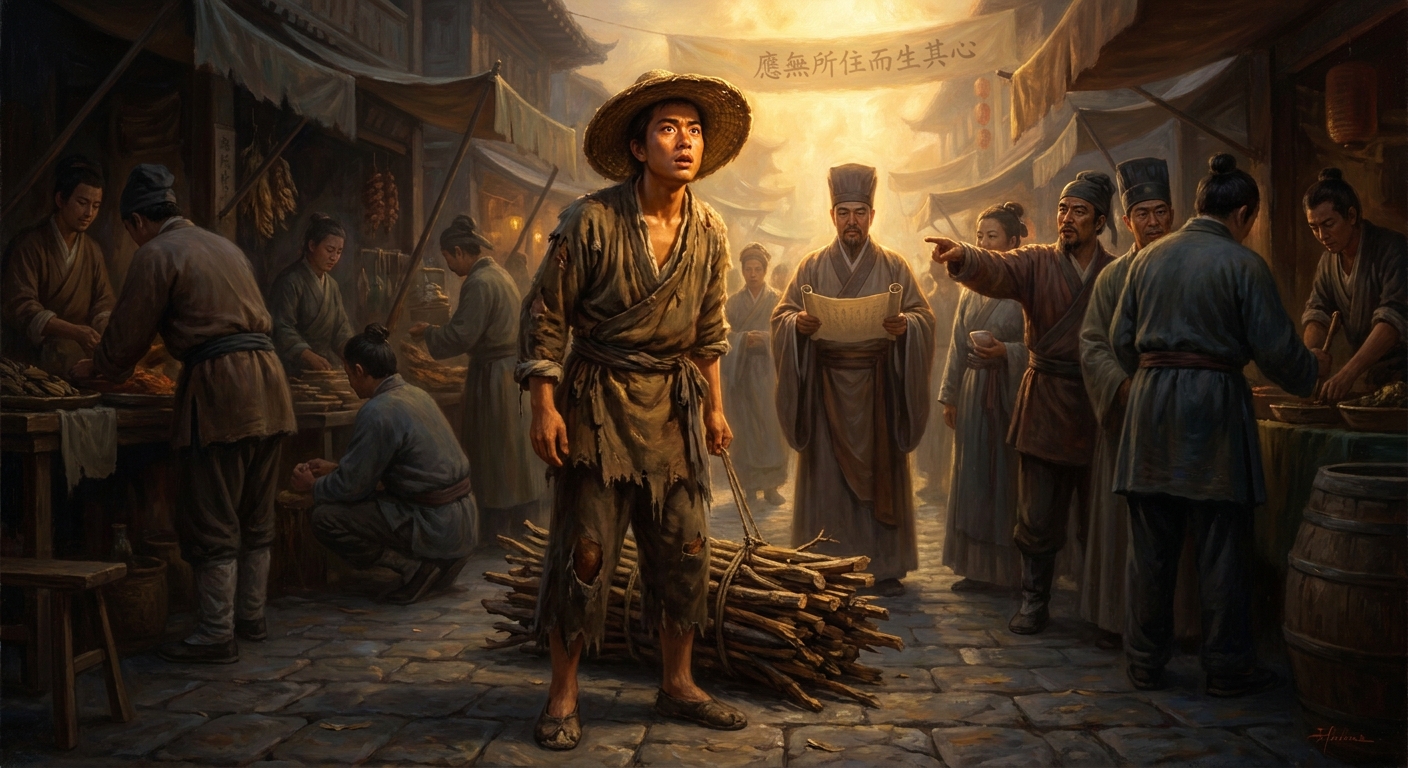
The Illiterate Patriarch
A woodcutter who cannot read the sutras hears one sentence at a market and walks north to inherit the robe of Chan — winning a midnight poem-contest he was never allowed to enter.
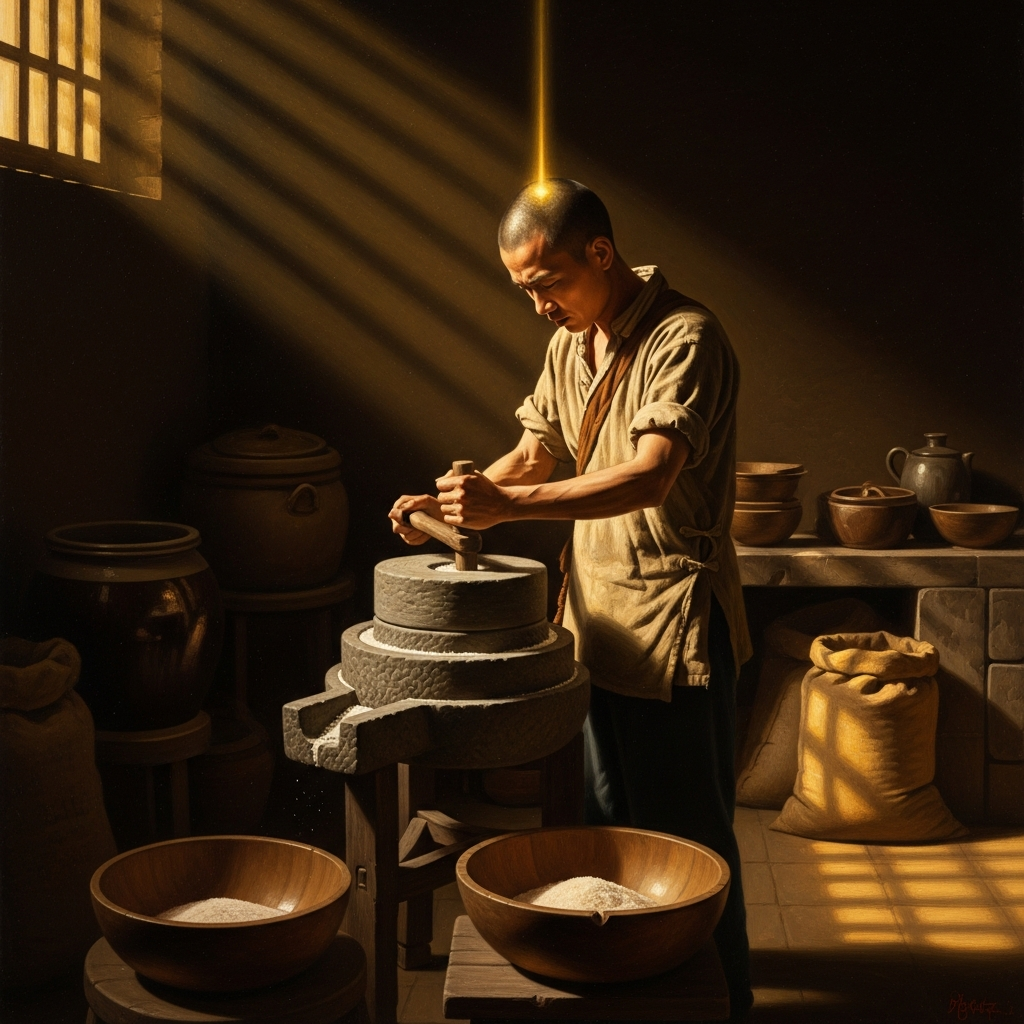
The Kitchen Worker Who Became the Sixth Patriarch
An illiterate wood-carrier in the kitchen of a Chinese monastery hears a poem read aloud, dictates a four-line answer, and walks out of the night with the robe and bowl of the patriarchs hidden under his shirt.
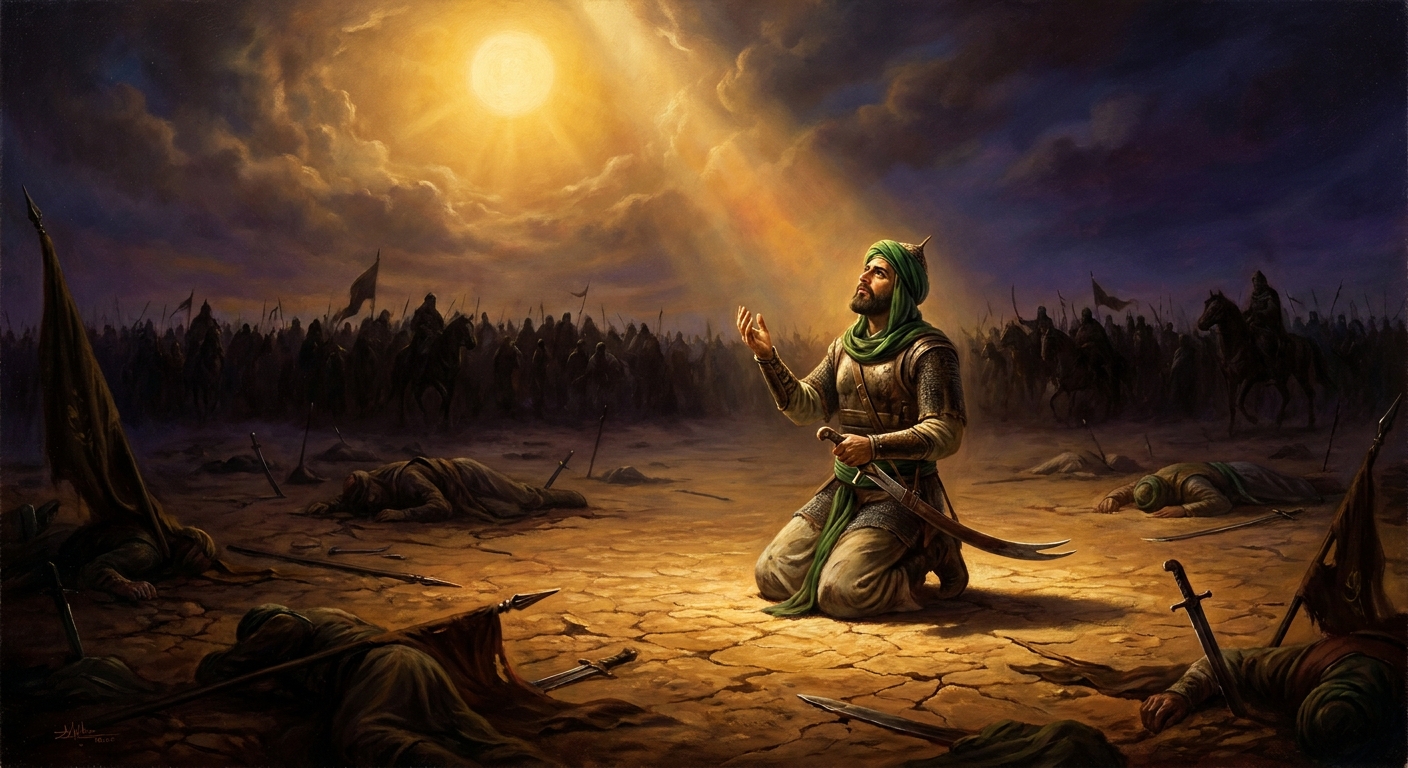
Husayn at Karbala
On the plain of Karbala, October 680 CE, Husayn ibn Ali — grandson of the Prophet — refuses to submit to Yazid's authority, watches his companions and sons die one by one, and is killed alone in the sand. His death does not end the argument. It becomes the argument.
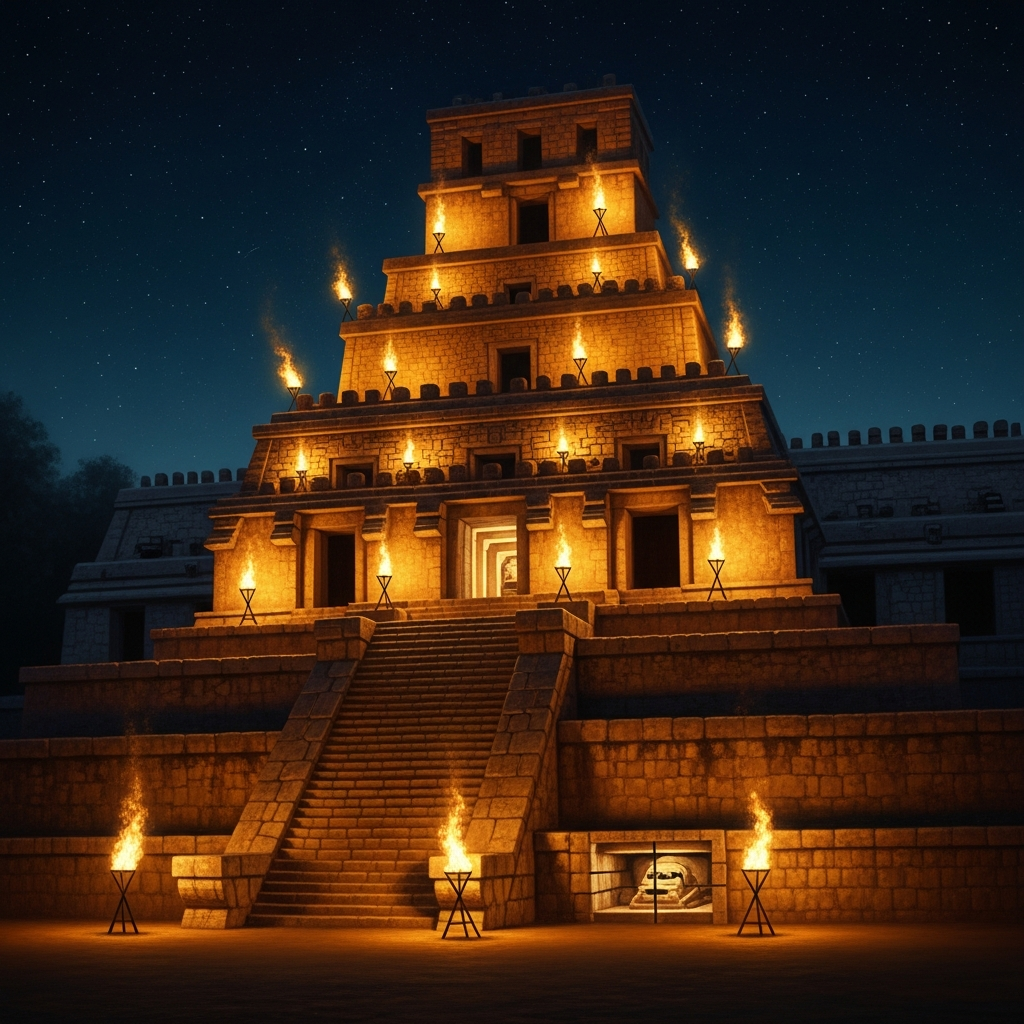
The Lid of Pakal's Sarcophagus
On the night of August 28, 683 CE, K'inich Janaab' Pakal I of Palenque dies after sixty-eight years on the throne — and is buried under five tons of carved limestone that shows him not dying but becoming the Maize God, falling into the earth to rise again. The burial was prepared decades before it was needed. The crypt was built around the sarcophagus because the lid could not be lowered in afterward.
Medieval
Saints, sages, and mystics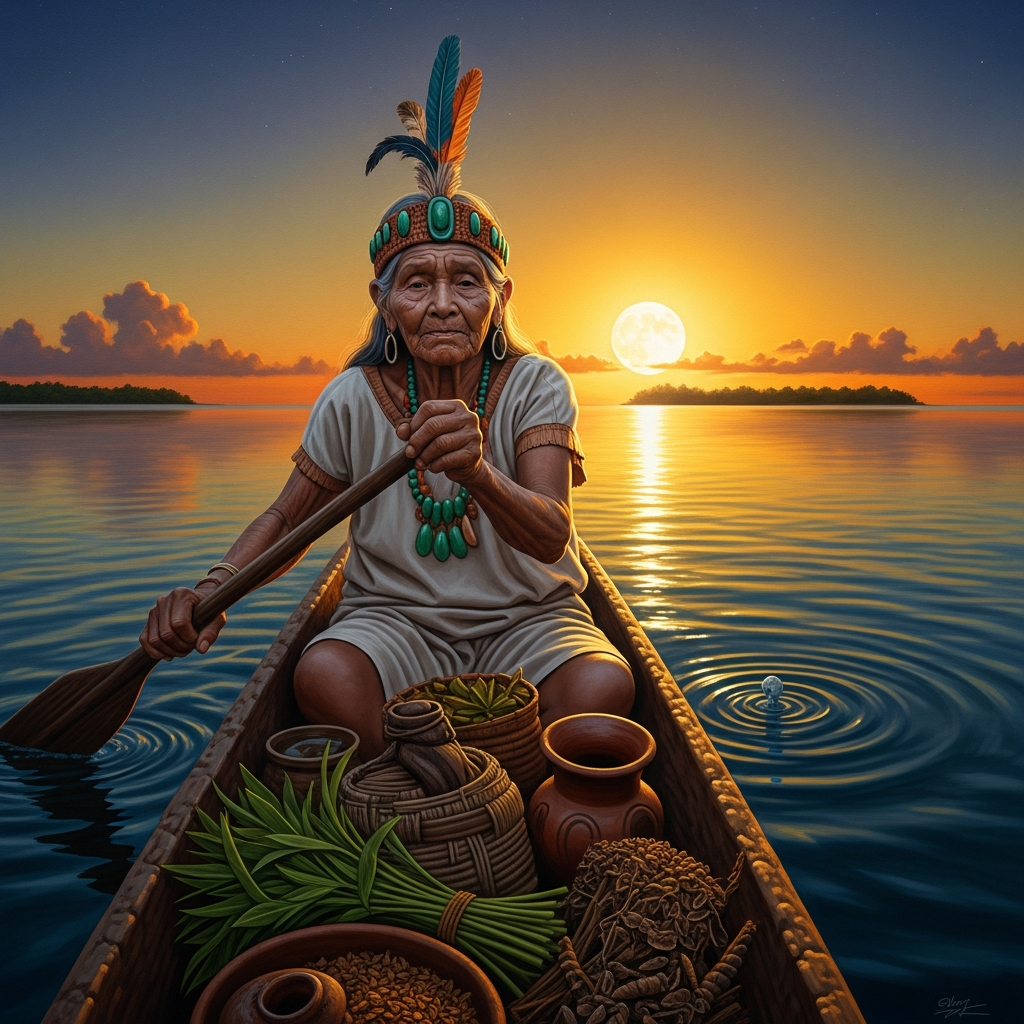
The Healer Crosses to Cozumel
A Maya healer-woman of the Classic period makes the sea crossing to Cozumel to consult the oracle of Ixchel, goddess of the moon and medicine, before a birth she fears she cannot manage alone. What the oracle tells her — and whether she can trust it — is the whole story.
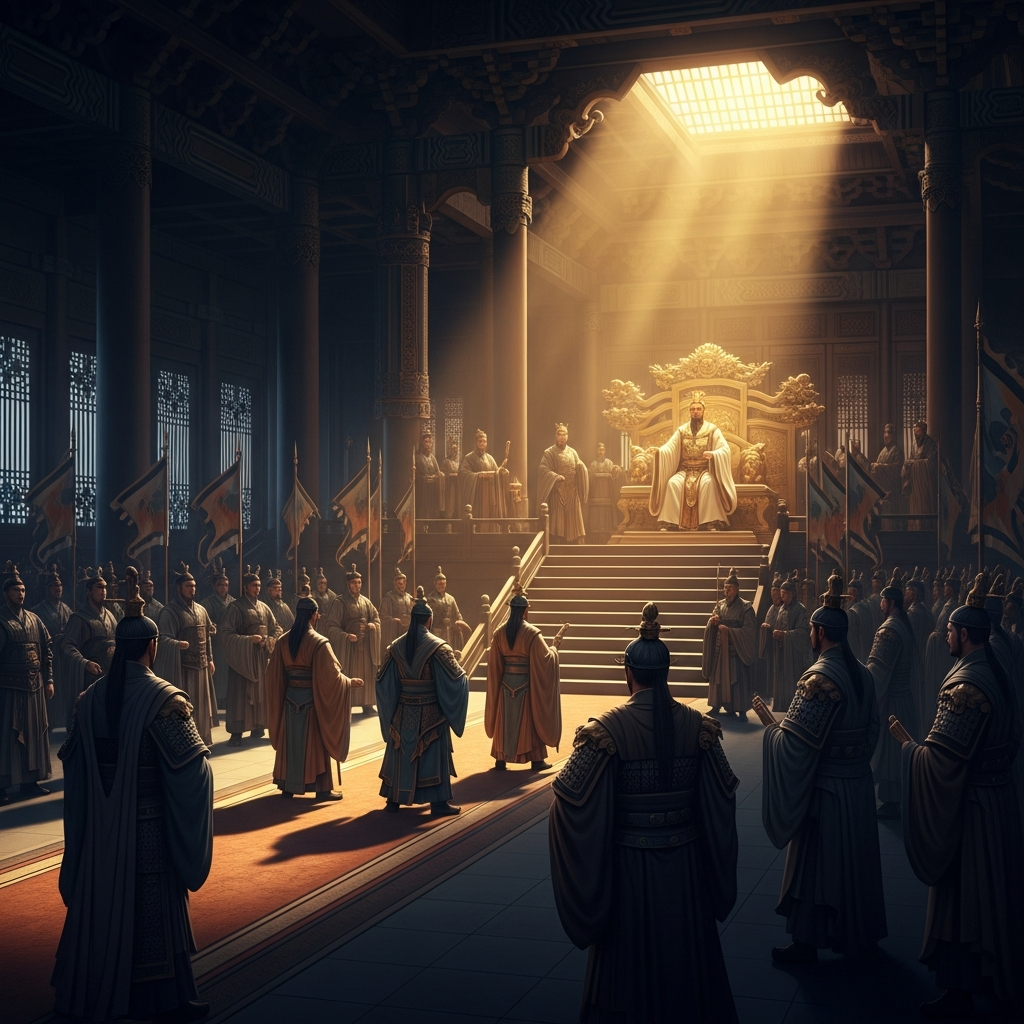
The Jade Emperor's Complaint Department
The heavenly court of Chinese popular religion mirrors the imperial bureaucracy exactly — with ministries, ranks, promotions, annual performance reviews, and a reporting system that reaches all the way down to the Kitchen God in every household. On New Year's Eve, Zao Jun rises to heaven to brief the Jade Emperor on the family's conduct for the year. The family, before he leaves, applies honey or sticky rice candy to his clay mouth to ensure the report is sweet.
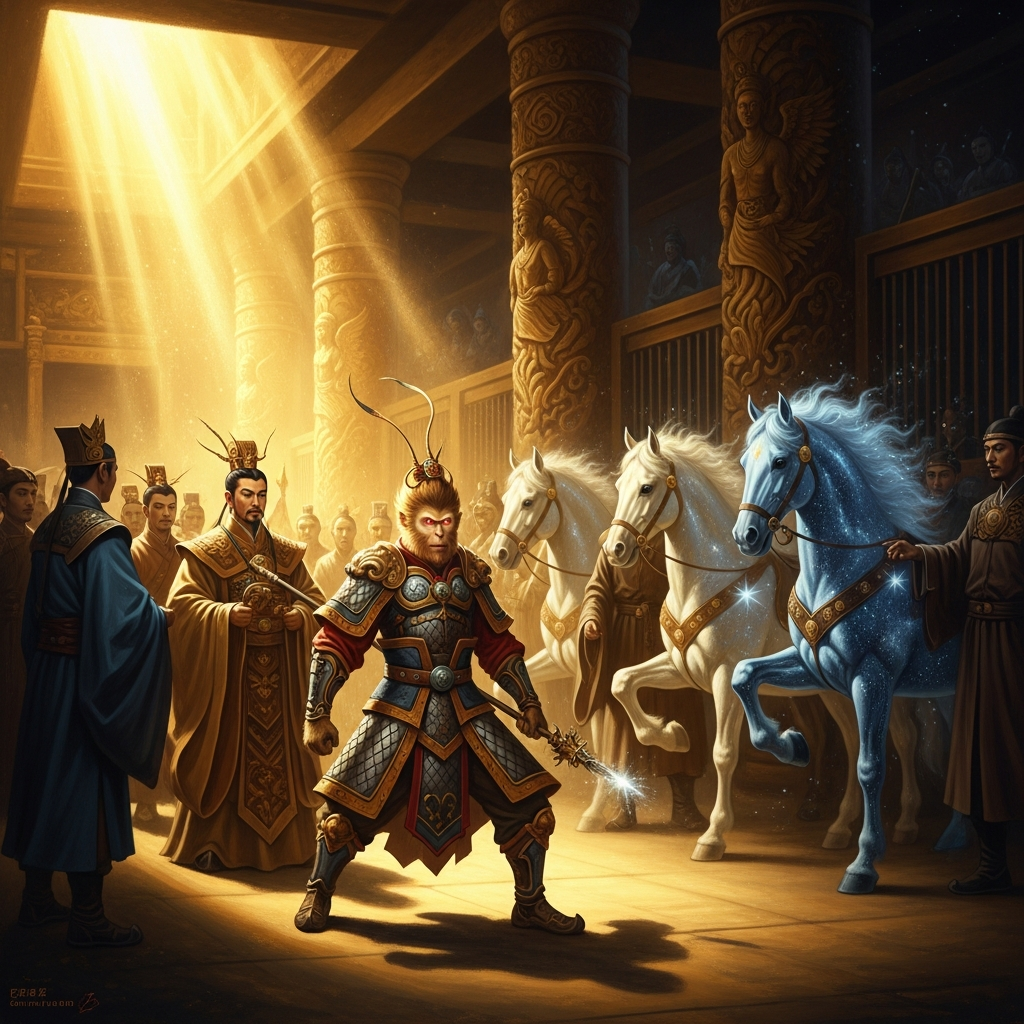
Sun Wukong Declares War on Heaven
The Monkey King accepts the Jade Emperor's appointment as Keeper of the Horses, discovers what the job actually is, and refuses it — demanding instead the title Great Sage Equal to Heaven. When the celestial army fails to subdue him, Laozi's divine furnace is used to try to incinerate him. It gives him eyes of gold instead. The Buddha then bets him that he cannot escape his open palm.
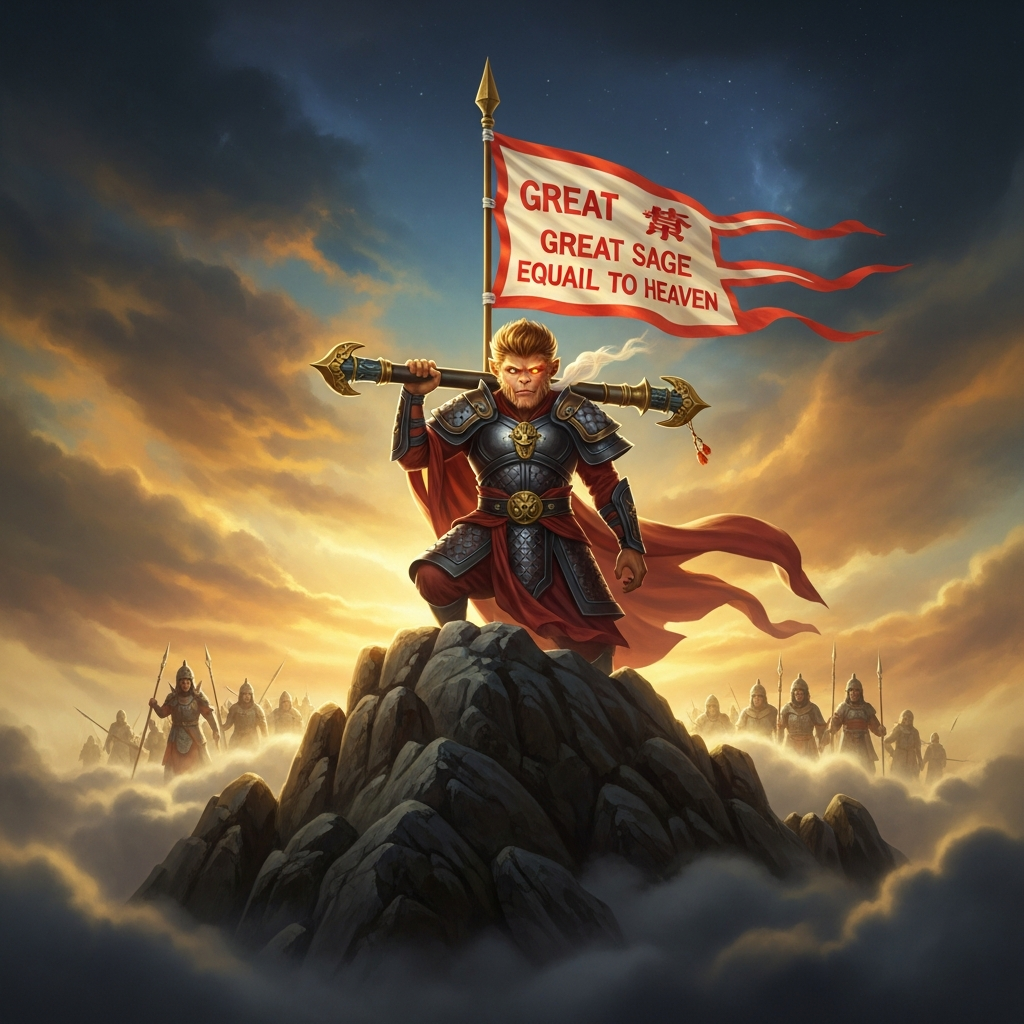
The Monkey King Demands Heaven's Acknowledgment
Sun Wukong, having already achieved immortality, mastered the seventy-two transformations, and erased his name from Death's ledger, decides he deserves the title Great Sage Equal to Heaven. Heaven disagrees. He wages war against the celestial army. Laozi's furnace gives him eyes of gold. It takes the Buddha himself to stop him — trapping him under a mountain with an open palm for five hundred years, from which the only release is agreeing to protect a monk walking west.
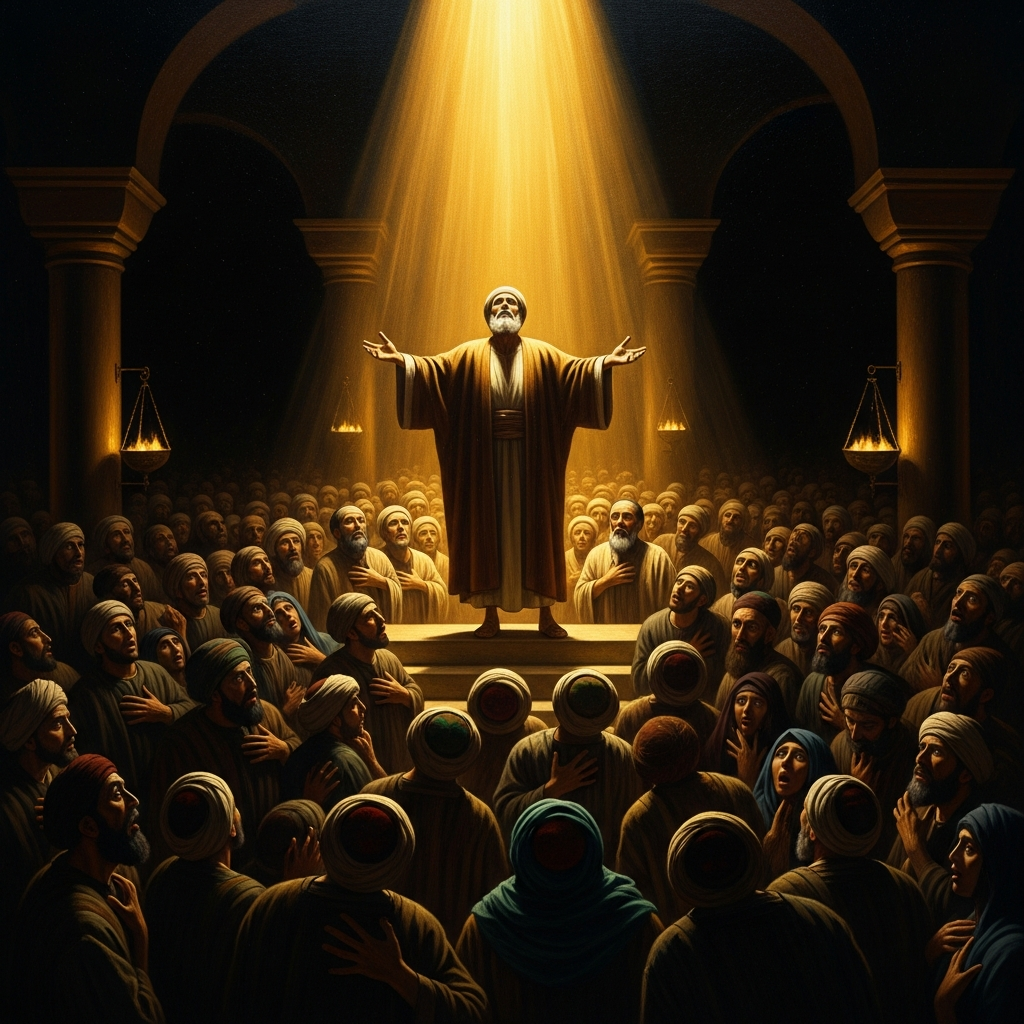
Hasan al-Basri and the Weeping Merchant
In a lamp-lit assembly in Basra, the great ascetic Hasan al-Basri preaches on the emptiness of worldly life and breaks a wealthy merchant who cannot stop weeping — and whose question after the sermon becomes the first systematic theology of Islamic voluntary poverty.
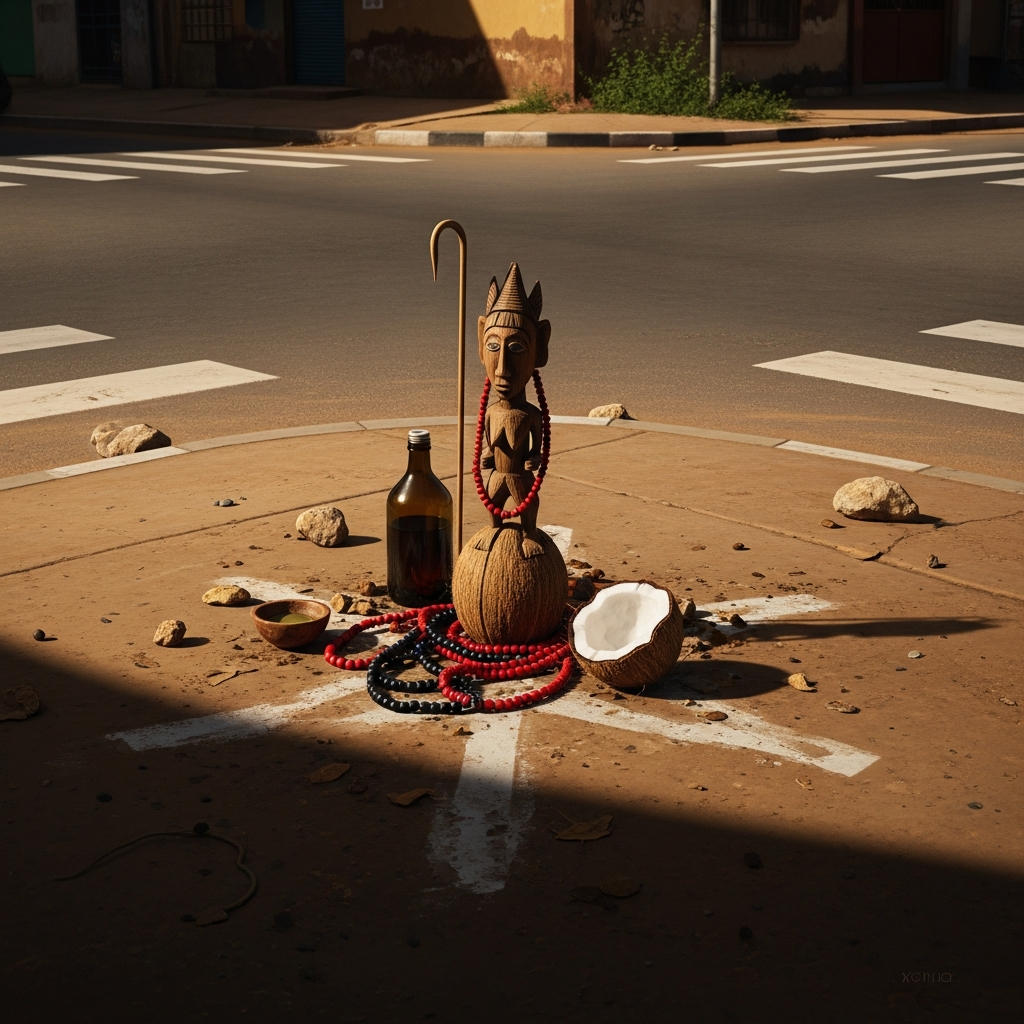
Elegba and the Road That Exists Only When He Walks It
Eshu/Elegba/Legba, the trickster orisha who opens and closes all roads, finds a devotee at a crossroads in Lagos who must choose between two futures and cannot choose either. Elegba offers not a solution but a reframe: the road is not the destination. The choice is not between roads. The choice is how you walk.
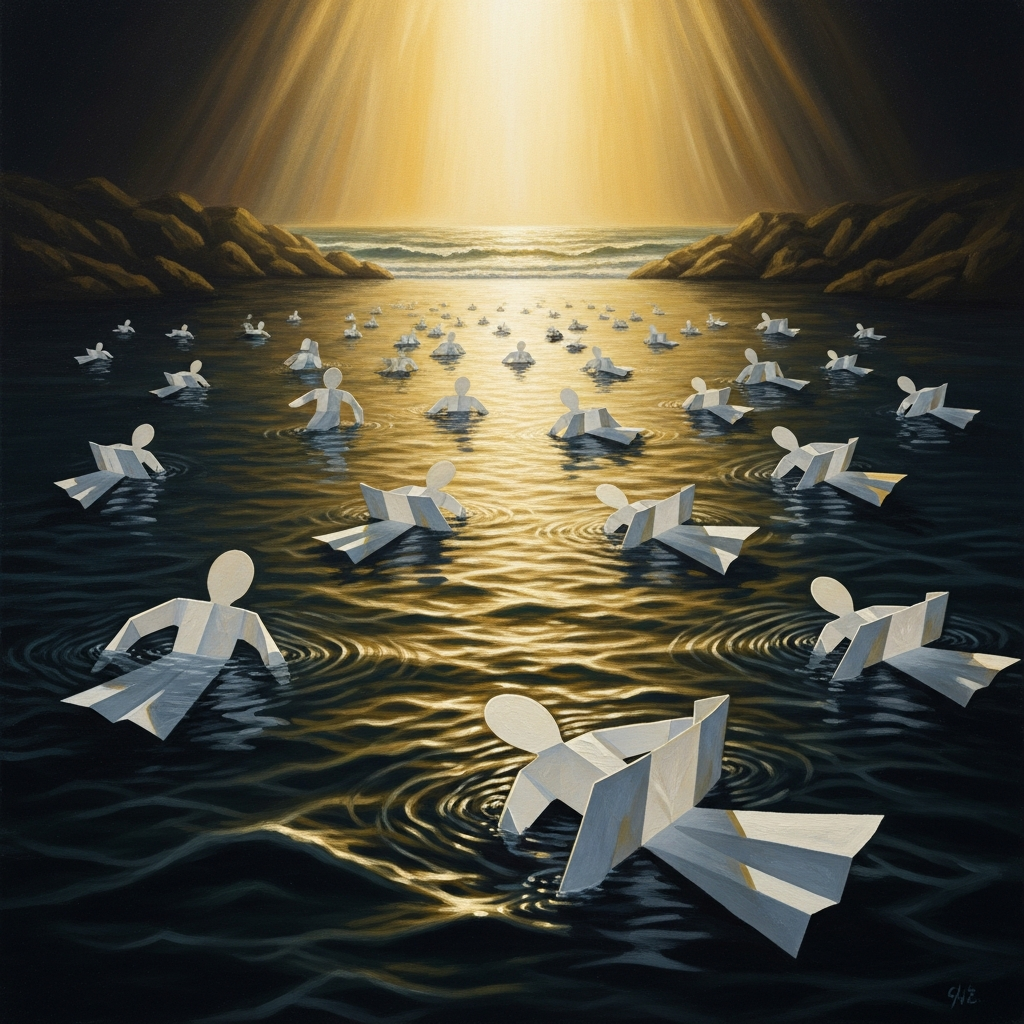
The Weight That Leaves the Body
The Great Purification — Oharae — is performed twice a year across Japan: paper dolls absorb ritual pollution, and a river carries them to the sea-swallowing god who dissolves them. A woman in 8th-century Nara carries the contamination of her husband's battlefield death and discovers, in a single ritual act, that pollution is real and its removal is mechanical. It does not require belief. It requires participation.
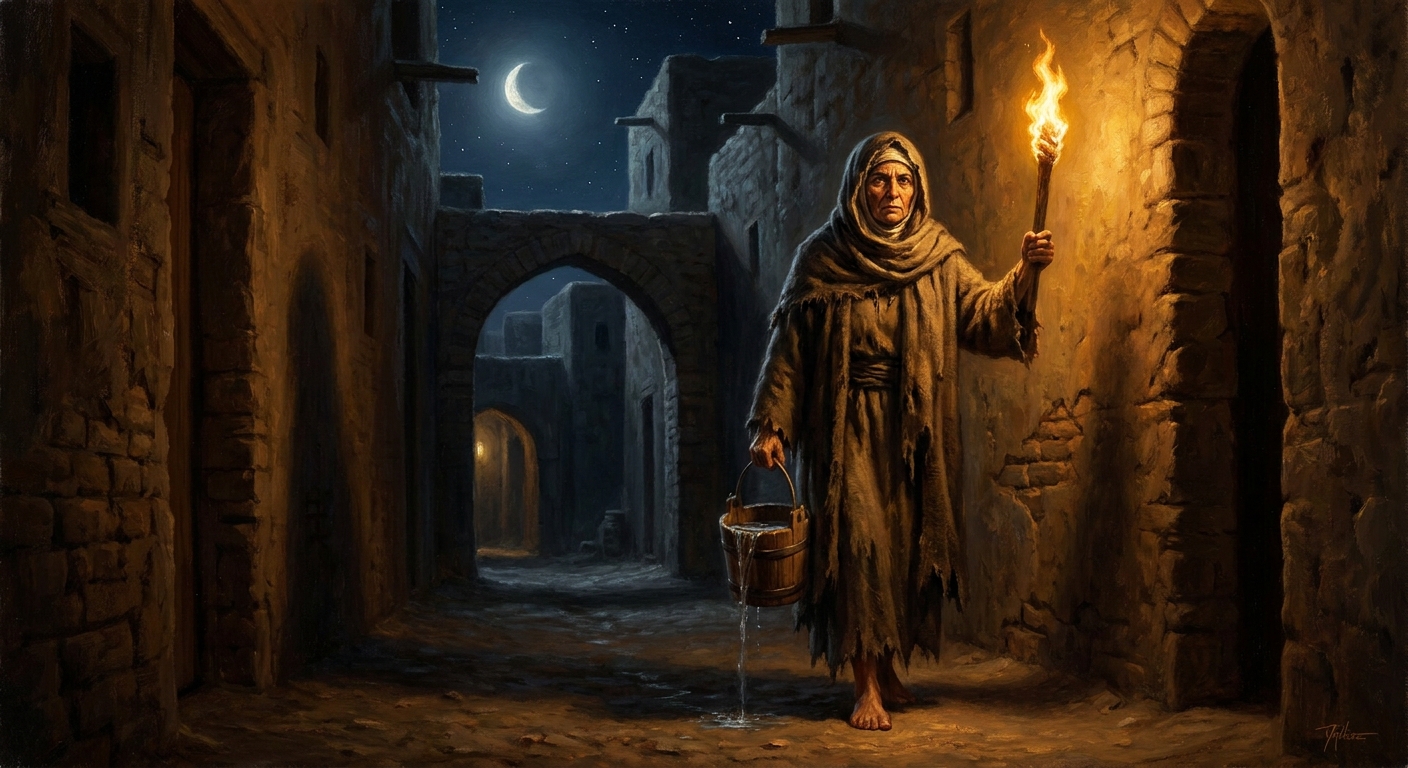
Rabia: The Woman Who Loved God Without Reason
A formerly enslaved woman of eighth-century Basra walks through the marketplace carrying a torch in one hand and a bucket of water in the other — to burn paradise and douse hell, so that human beings might finally love God for himself alone.
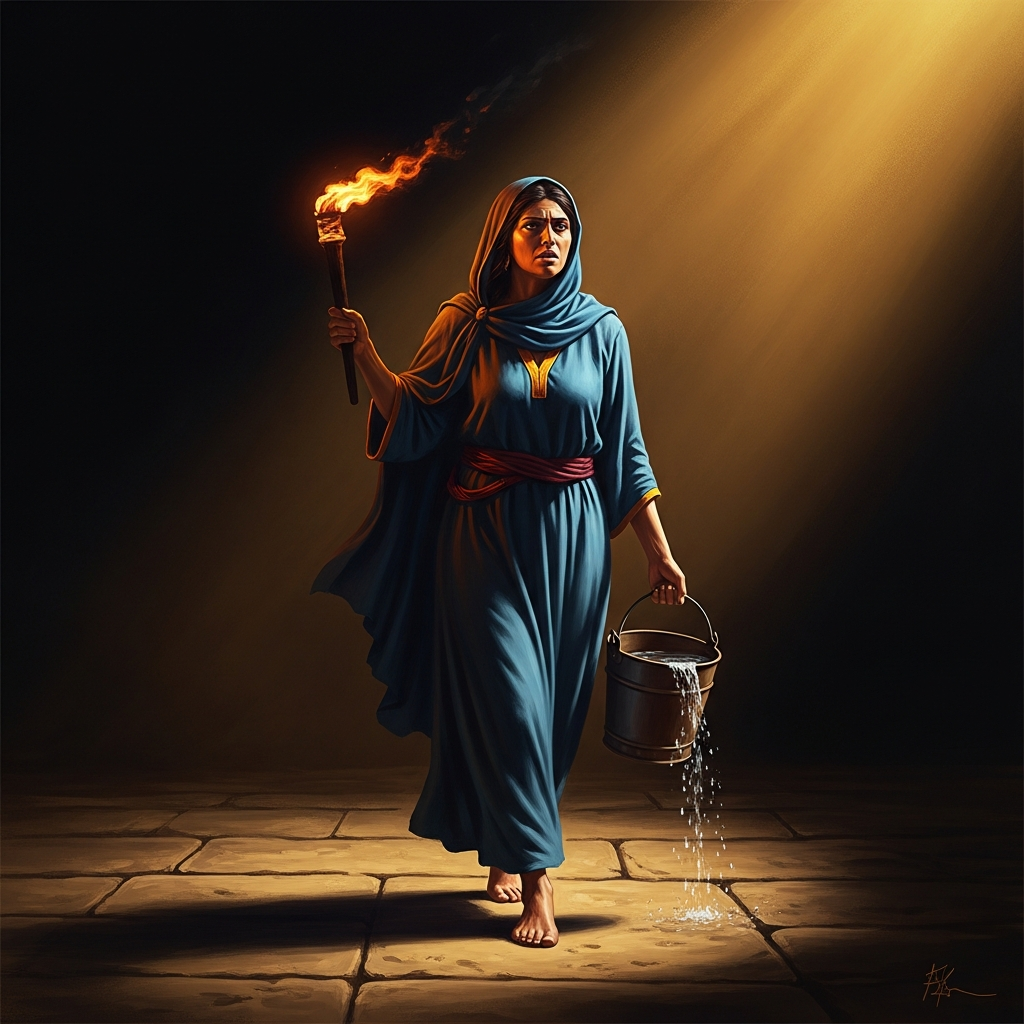
Rabia al-Adawiyya and the Two Buckets
Basra, 8th century. A woman walks the streets of the city with a bucket of water in one hand and a burning torch in the other. The water is to extinguish hellfire. The torch is to burn down paradise. What she is clearing away is the last impurity in religion: the motive.
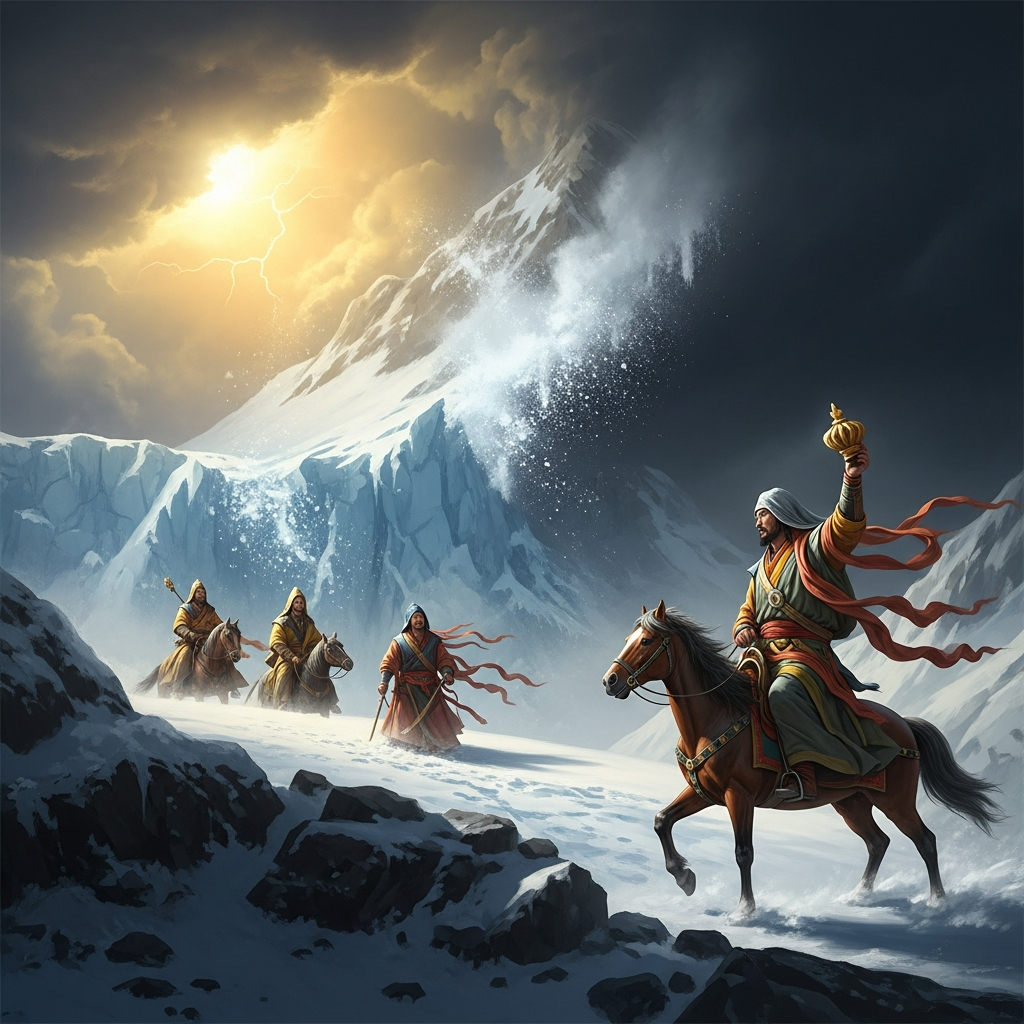
Padmasambhava Arrives in Tibet
King Trisong Detsen summons the tantric master Padmasambhava to Tibet because local spirits are destroying the construction of Samye Monastery. Padmasambhava subjugates 108 spirits, establishes the first Tibetan monastery, initiates the first monks, and hides treasure-teachings in the earth for future discoverers.
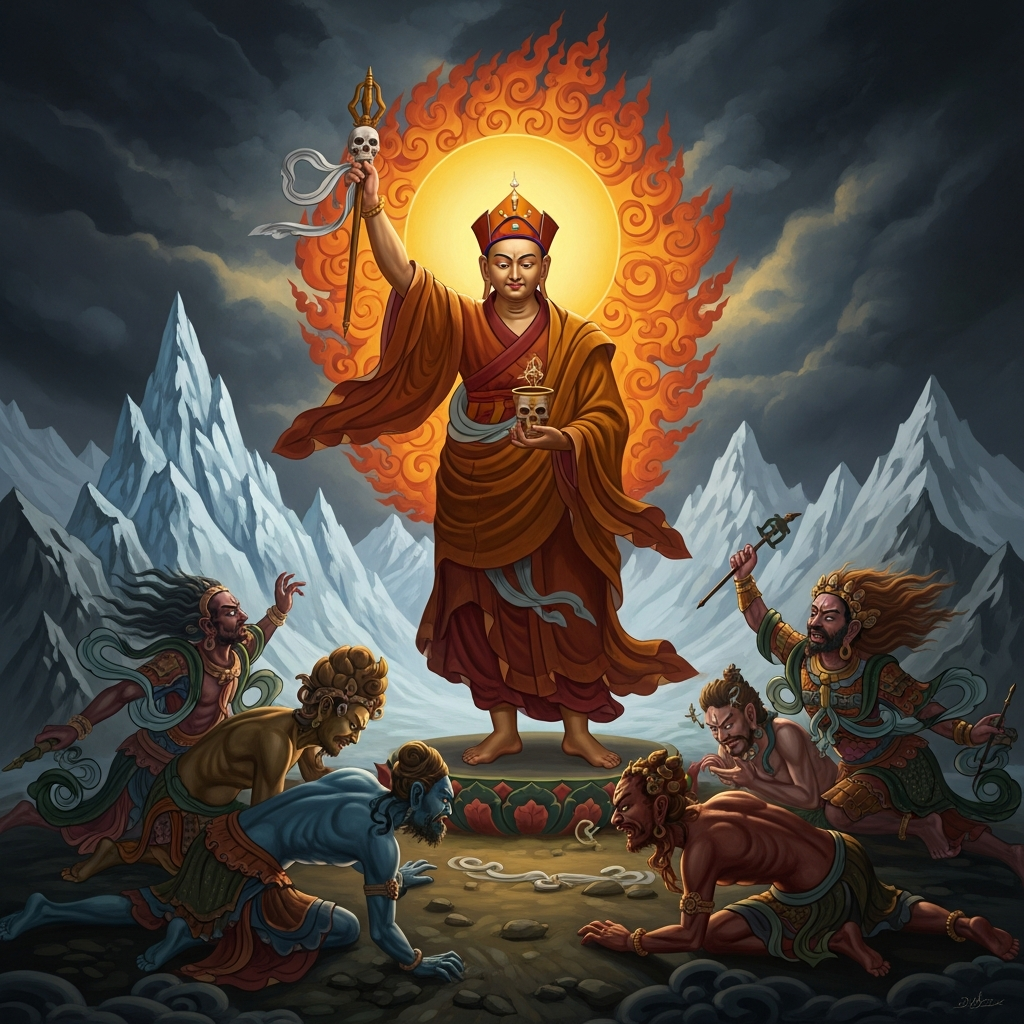
Padmasambhava Binds the Mountain
Padmasambhava arrives in Tibet around 775 CE at King Trisong Detsen's invitation and finds every pass, lake, and valley blocked by gods and demons who will not allow Buddhism to take root. He does not destroy them. He subjugates each one by name and binds it as a protector of the dharma — turning the indigenous spirit world into the guardian army of the new religion.
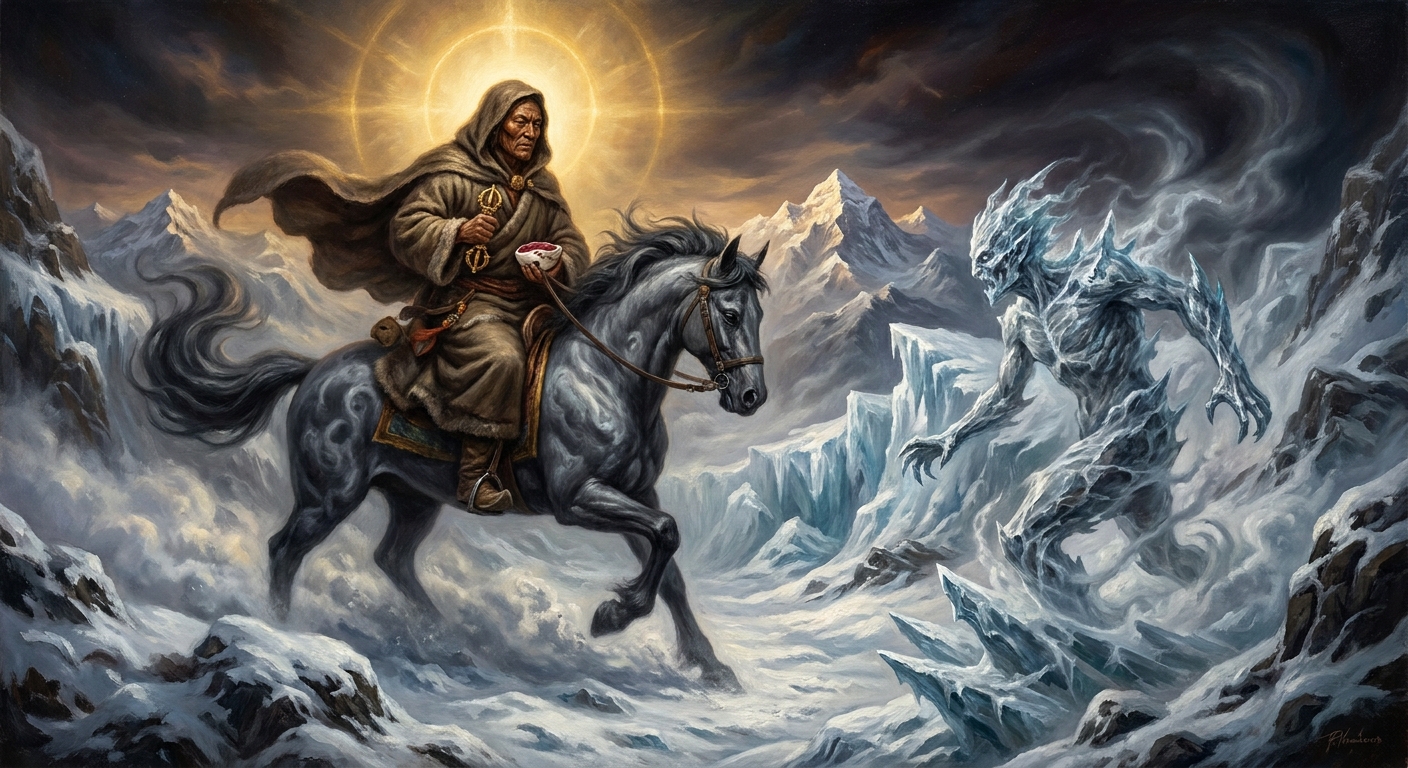
Padmasambhava on the Roof of the World
The Lotus-Born tantric master rides into Tibet at the king's invitation and, mountain by mountain, binds the indigenous demons by oath as protectors of a dharma that does not yet exist.
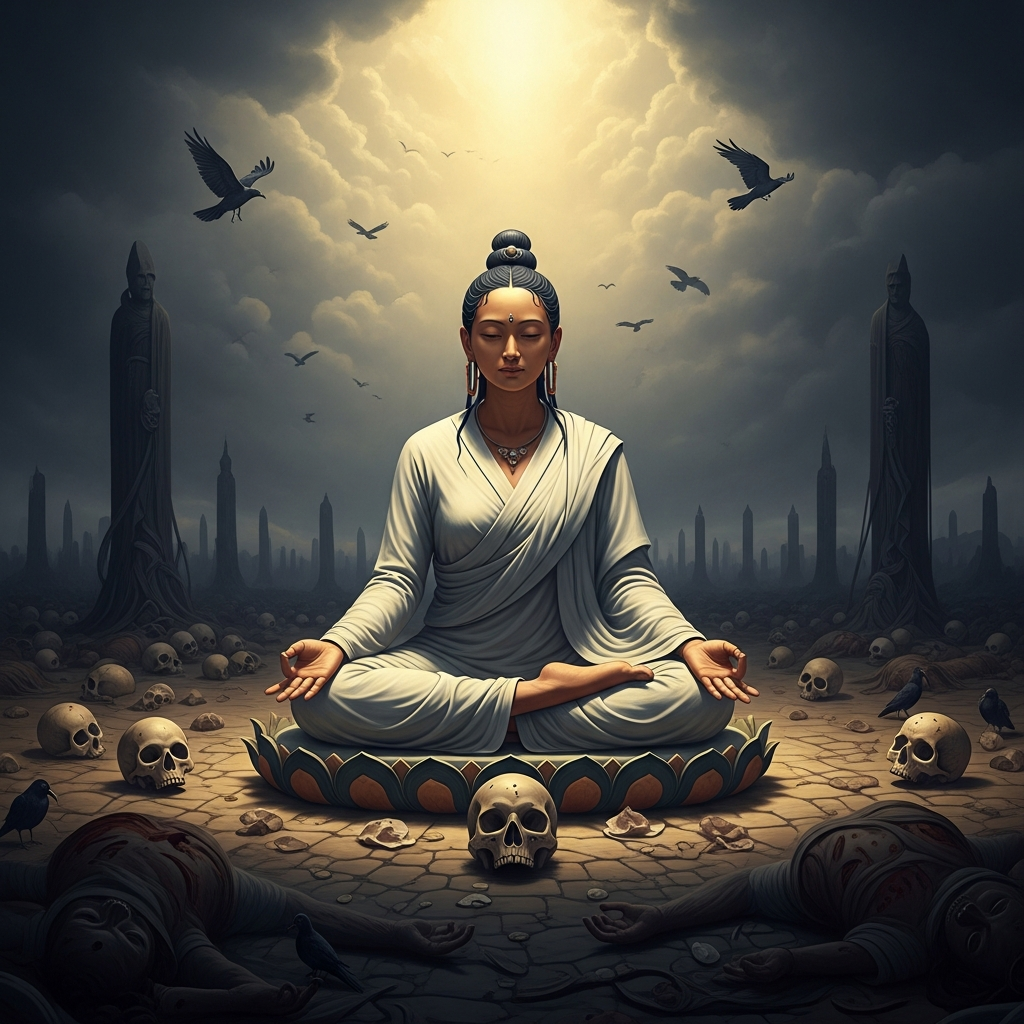
Yeshe Tsogyal Sits with the Dead
Yeshe Tsogyal — Padmasambhava's consort, the first Tibetan woman to achieve full enlightenment — undertakes years of practice alone in charnel grounds, meditating among corpses and offering her body to the spirits who come. She does not flee them. She masters fear itself, becoming the primary keeper of the hidden teachings that will sustain Tibetan Buddhism for centuries.
Rabi'a Extinguishes Hell
A freed slave walks the streets of Basra with a torch and a bucket of water — to burn down paradise and douse the fires of hell, so that God might at last be loved for His own sake.
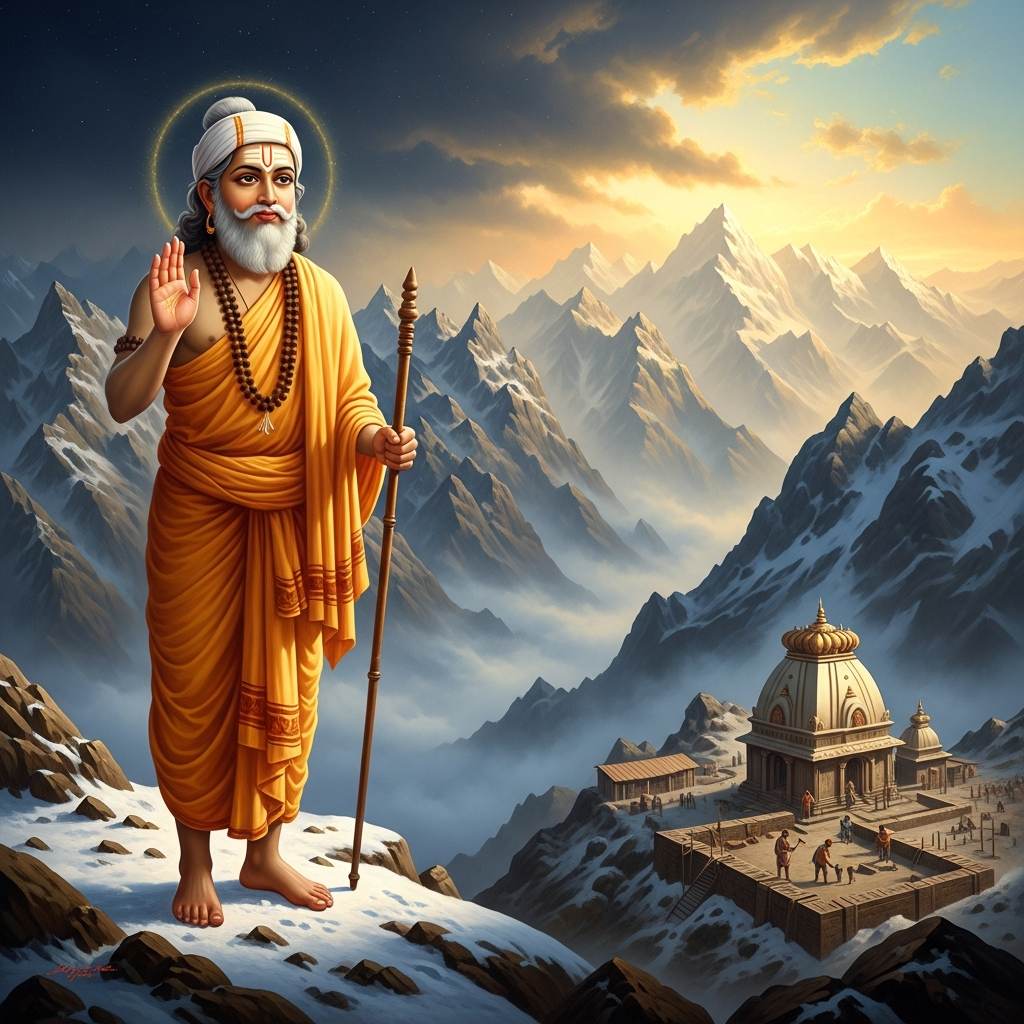
Shankara and the Cave of Non-Duality
He lives thirty-two years. In that time he walks the length of India, defeats every major school of philosophy on its own terms, writes the foundational commentaries on the Upanishads, the Brahma Sutras, and the Bhagavad Gita, and founds four cardinal monasteries at the four directions of the subcontinent. The doctrine he leaves behind is one sentence: the world is not two things. The rope is not the snake. Atman is Brahman. He disappears at thirty-two behind a temple in the Himalayas and the argument about where his body lies has not stopped.
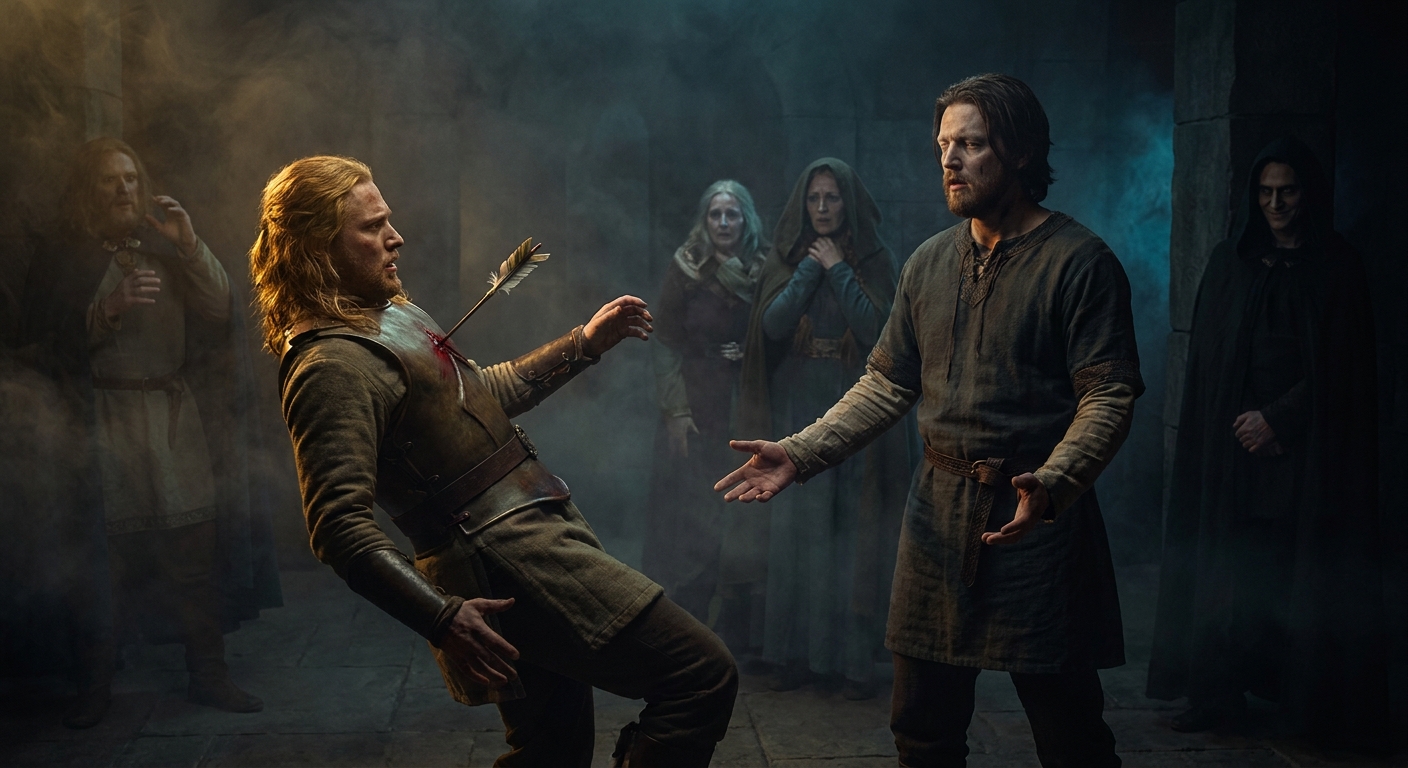
The Death of Baldur
Frigg makes all of creation swear not to harm her radiant son — all except the mistletoe, too small to matter. Loki finds the gap. The blind god Hodur throws. The world's most beloved god falls, and every road from that moment leads to Ragnarok.
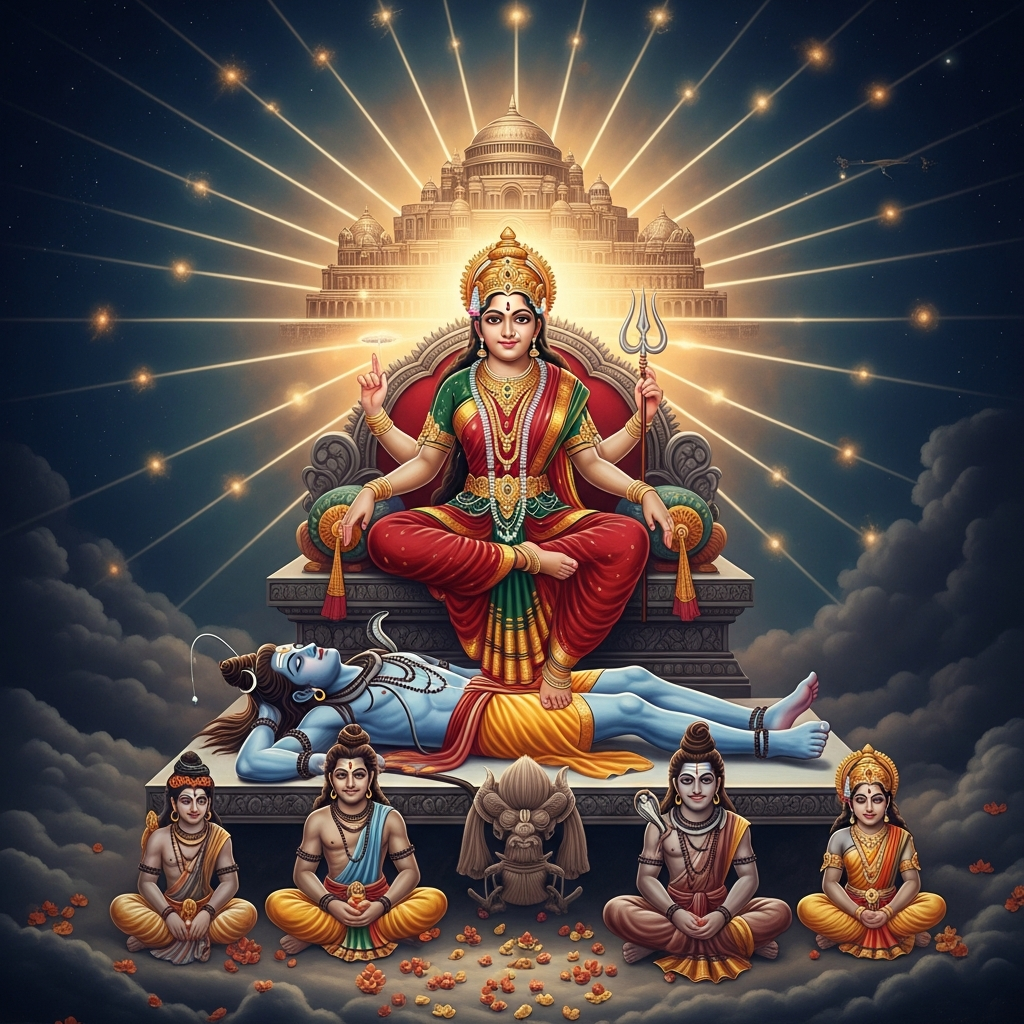
Lalita Tripura Sundari — She Who Plays
The supreme goddess Lalita Tripura Sundari sits in her Chintamani Palace on the Island of Gems in the Ocean of Nectar, radiating the universe from her own body. She holds a noose, a goad, a bow of sugarcane, and five flower-arrows of the senses. The Lalita Sahasranama names her a thousand times. Each name is a different face of the same truth: the goddess is the world, and the goddess is what lies beyond it.
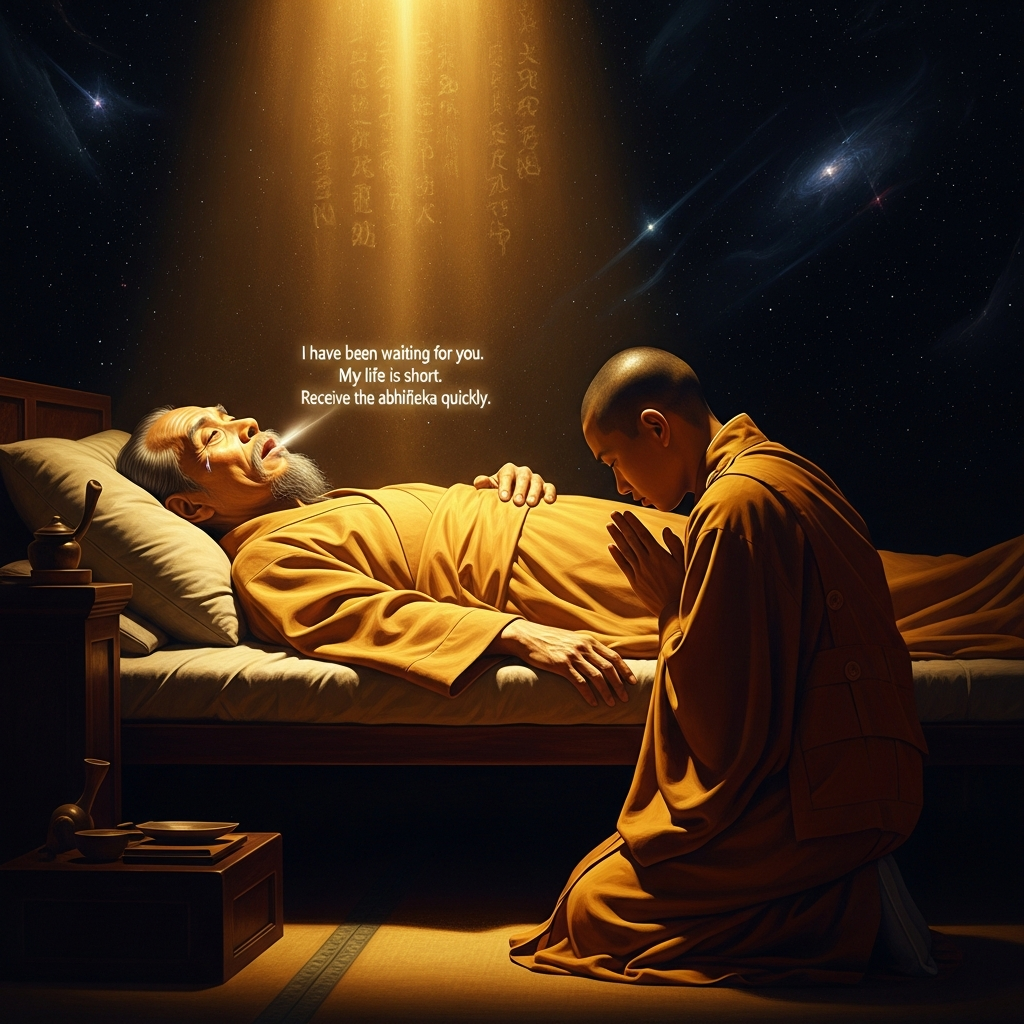
Kūkai Throws the Vajra Across the Sea
Kūkai returns from Tang China in 806 CE with the complete Shingon esoteric transmission. Denied imperial permission to teach, he throws a vajra across the sea — it lands in a pine on Mount Kōya. He climbs to the plateau, founds the monastery, and in 835 CE enters eternal samadhi. The monks still bring him meals twice a day.
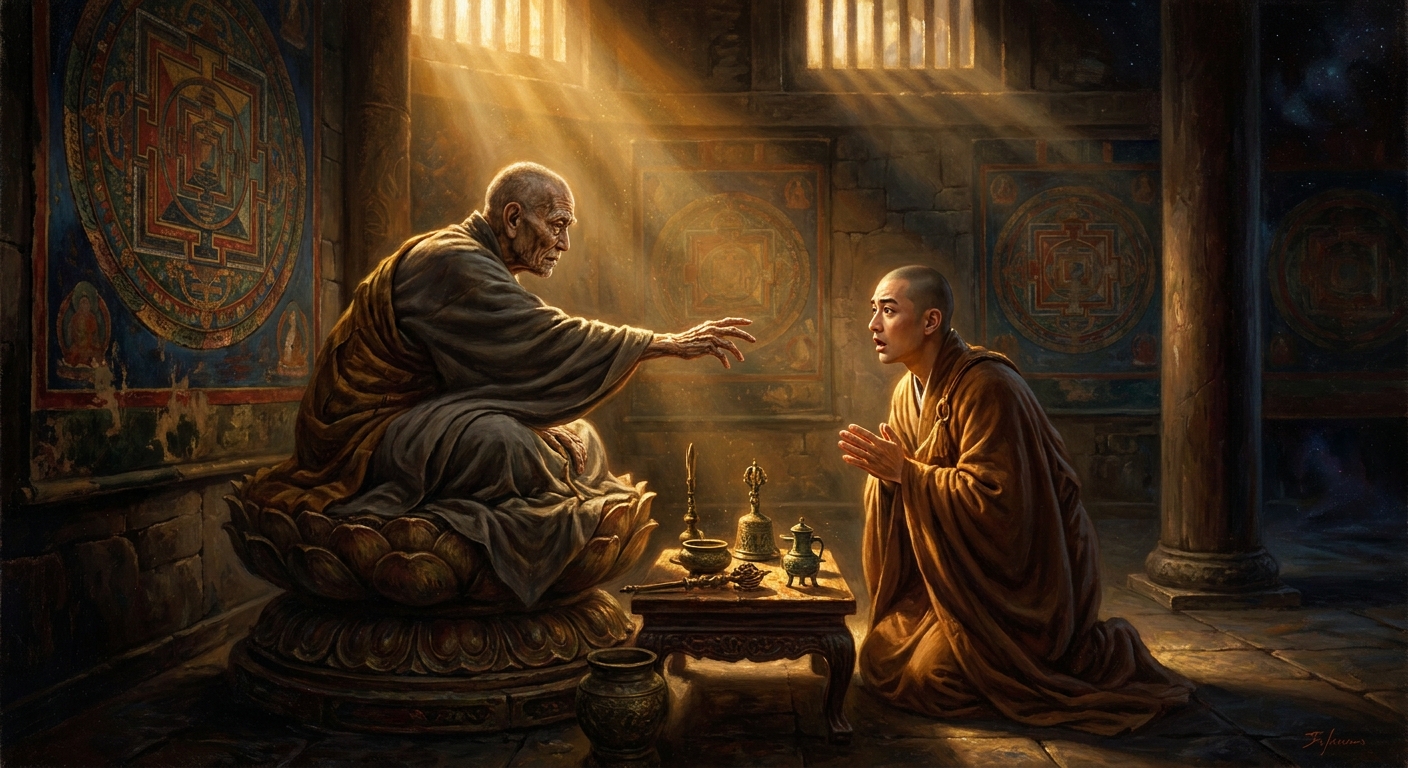
Kūkai and the Mountain
A young monk crosses to Tang China, returns with the secret tantric transmissions of an empire's last esoteric master, and walks into a cedar mountain in Japan to sit in living meditation until the next Buddha arrives.
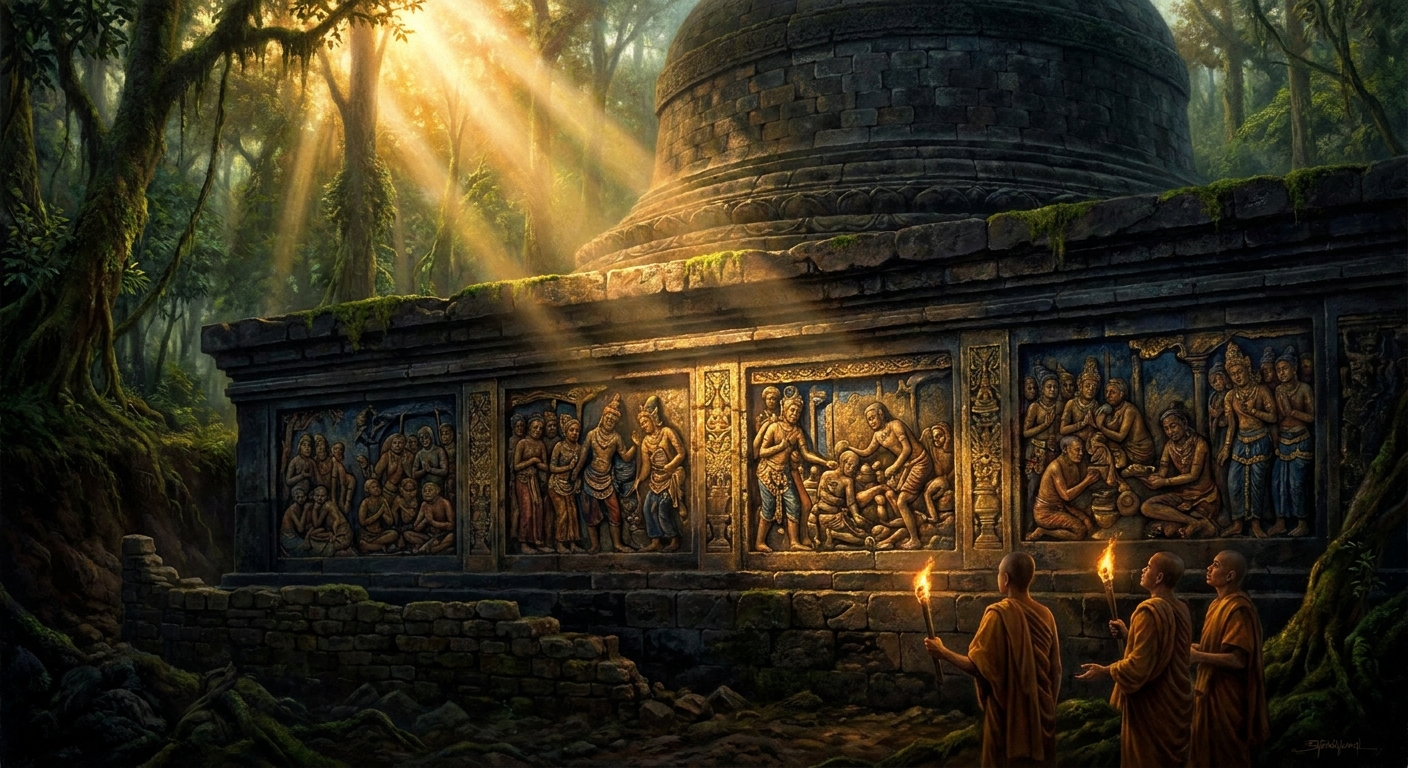
The Borobudur Ascent
A pilgrim climbs the largest Buddhist monument on earth — through hells of carved suffering, through galleries of the Buddha's previous lives, into the upper terraces where seventy-two stone bells house seated Buddhas — and finds at the summit a single empty stupa.
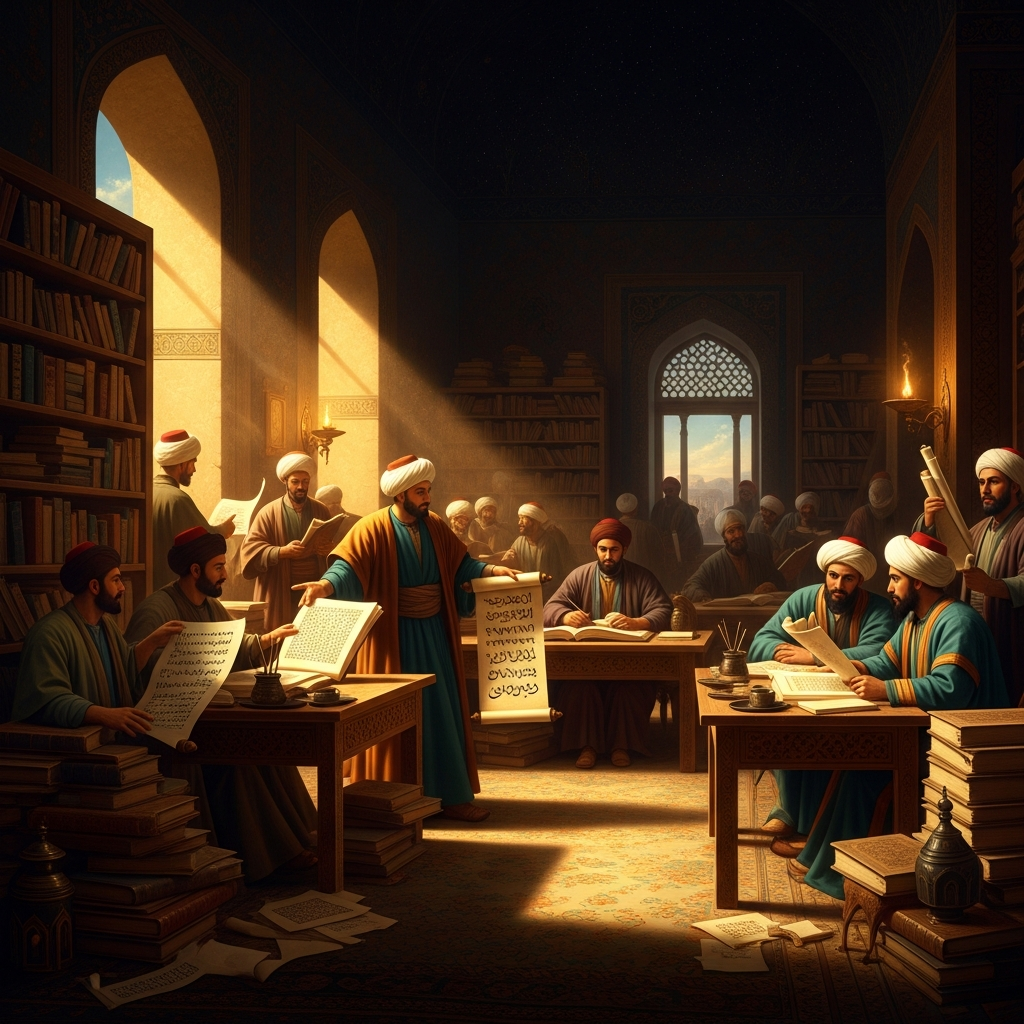
The Round City's Library
In the Abbasid Caliph al-Ma'mun's Baghdad — the largest city in the world — hundreds of scholars translate the entirety of Greek, Syriac, Persian, and Sanskrit learning into Arabic, inventing algebra in the margins, and preserve for the world what would otherwise have been lost forever.
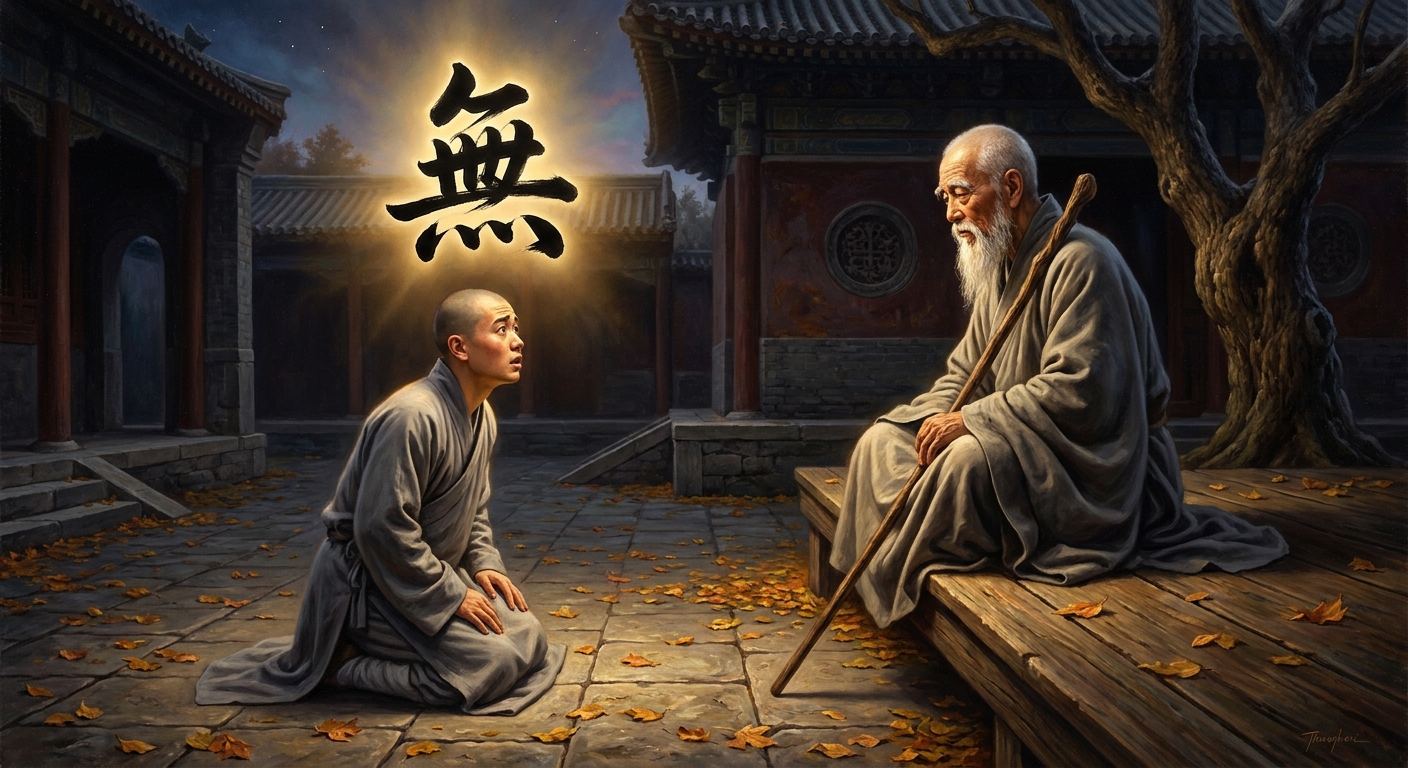
Joshu's Mu
A monk asks a Tang dynasty Zen master whether a dog has Buddha-nature. The master answers with a single syllable. A thousand years of students will break themselves on the sound and call the breaking enlightenment.
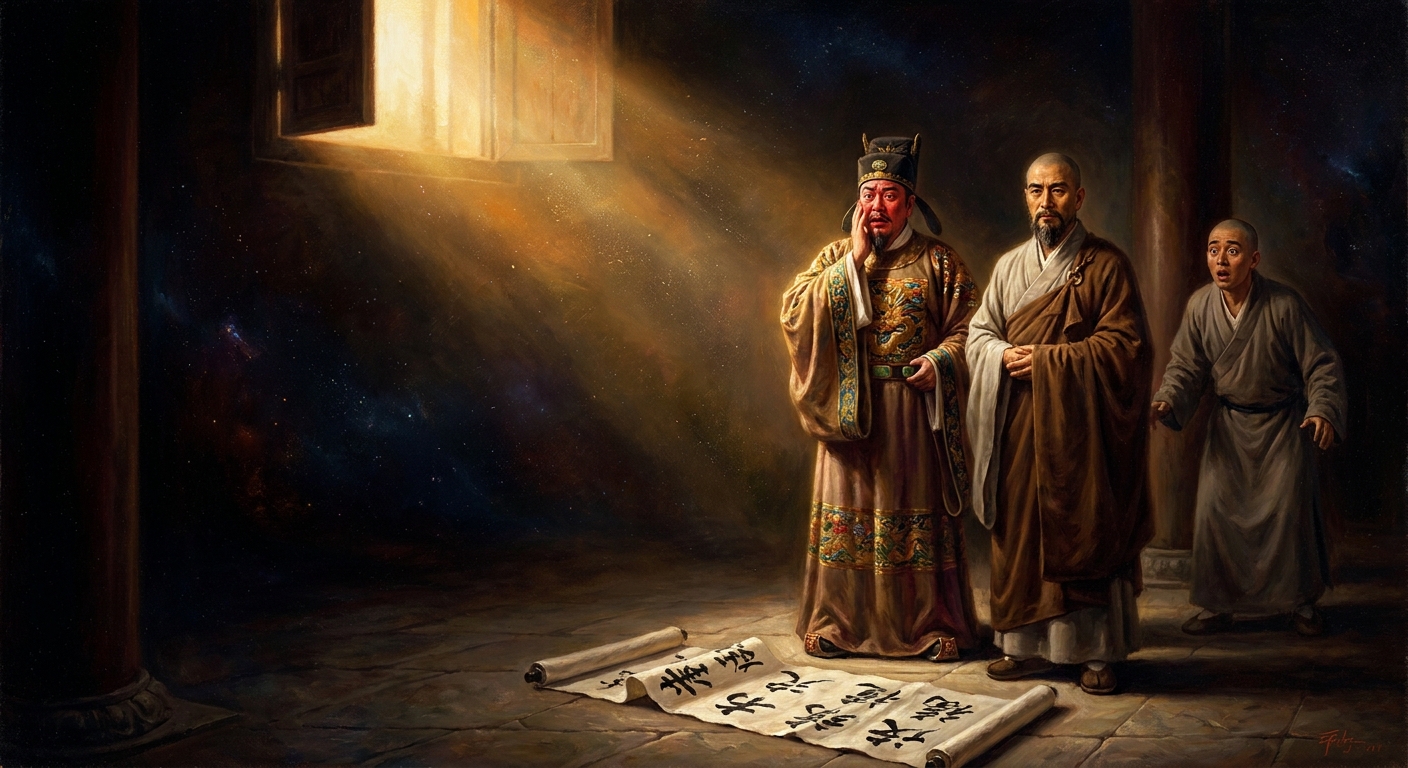
Huangbo Slaps the Emperor
A Chan master strikes the future Son of Heaven three times across the face. The future Son of Heaven laughs. The lineage of Linji Zen is sealed in the sound of an open hand against an imperial cheek.
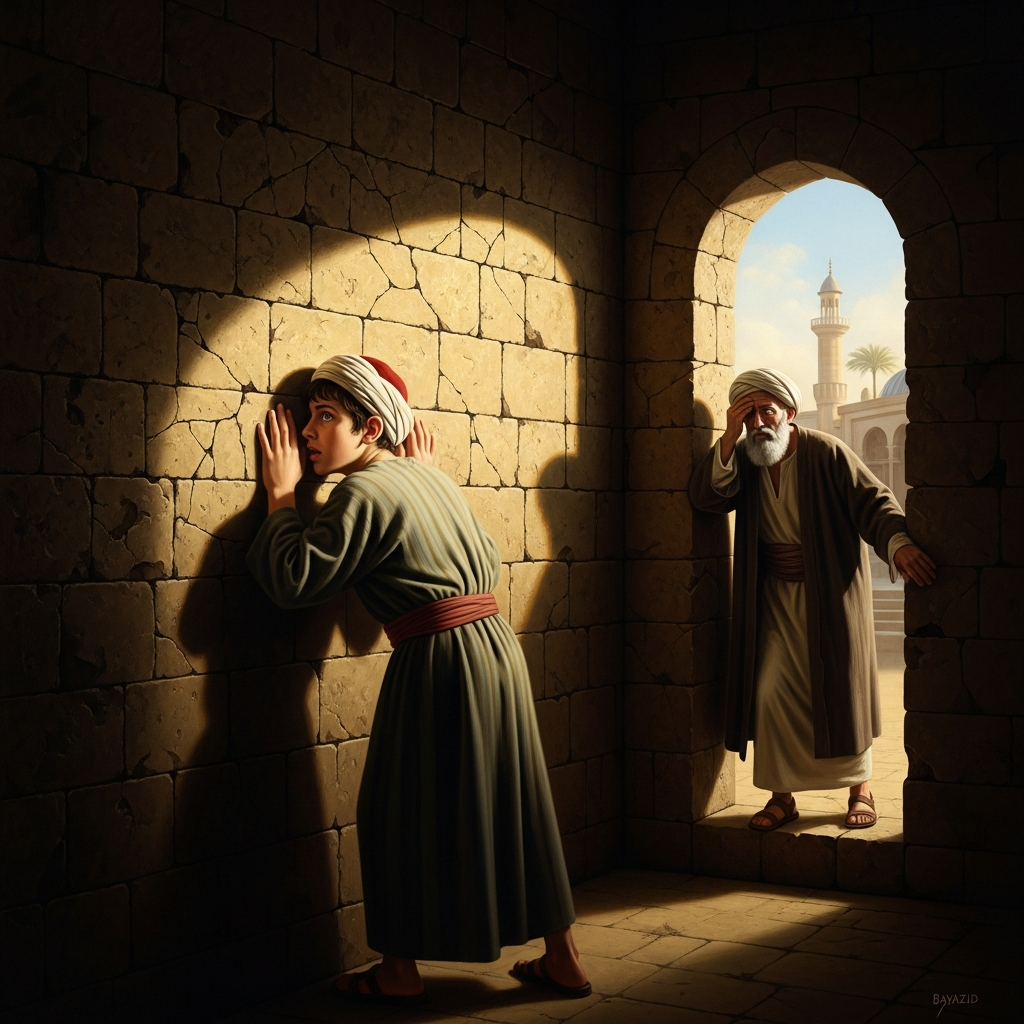
Bayazid Bastami and the Annihilation
Bayazid Bastami — the ninth-century Persian mystic who first articulated *fana*, the complete annihilation of the self in God — speaks the most scandalous sentence in Sufi history, and then explains what it means: the 'I' that spoke was not the 'I' that breathes.
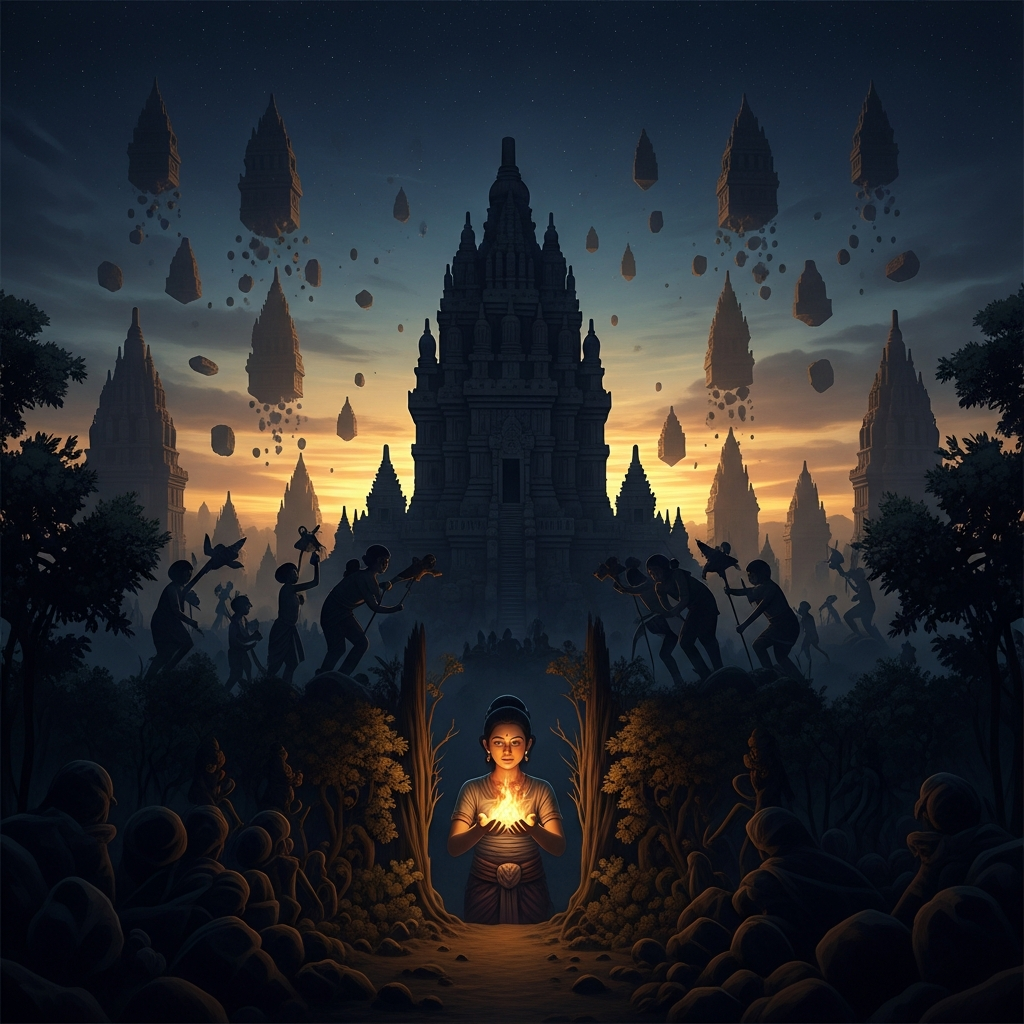
Roro Jonggrang and the Thousand Temples
The Javanese princess Roro Jonggrang agrees to marry the demon king Bandung Bondowoso only if he builds one thousand temples in a single night. He assembles an army of spirits and is about to succeed when she tricks the village women into pounding rice, making the roosters crow, convincing the spirits that dawn has come. He fails by one. He curses her to become the thousandth temple. She stands in Prambanan to this day.
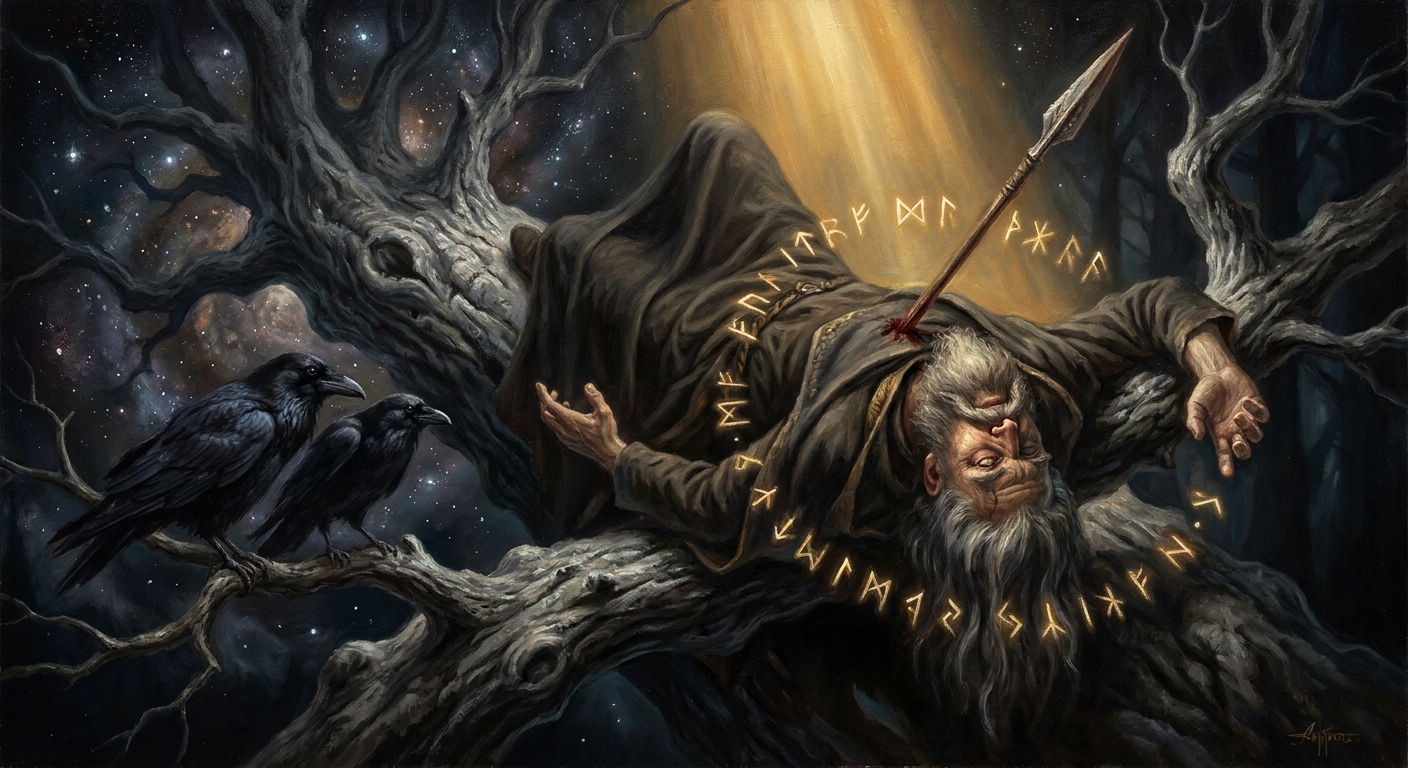
Odin on the Tree
The All-Father hangs himself on the World Tree for nine nights, pierced by his own spear, to wrest the runes from the dark beneath the roots.
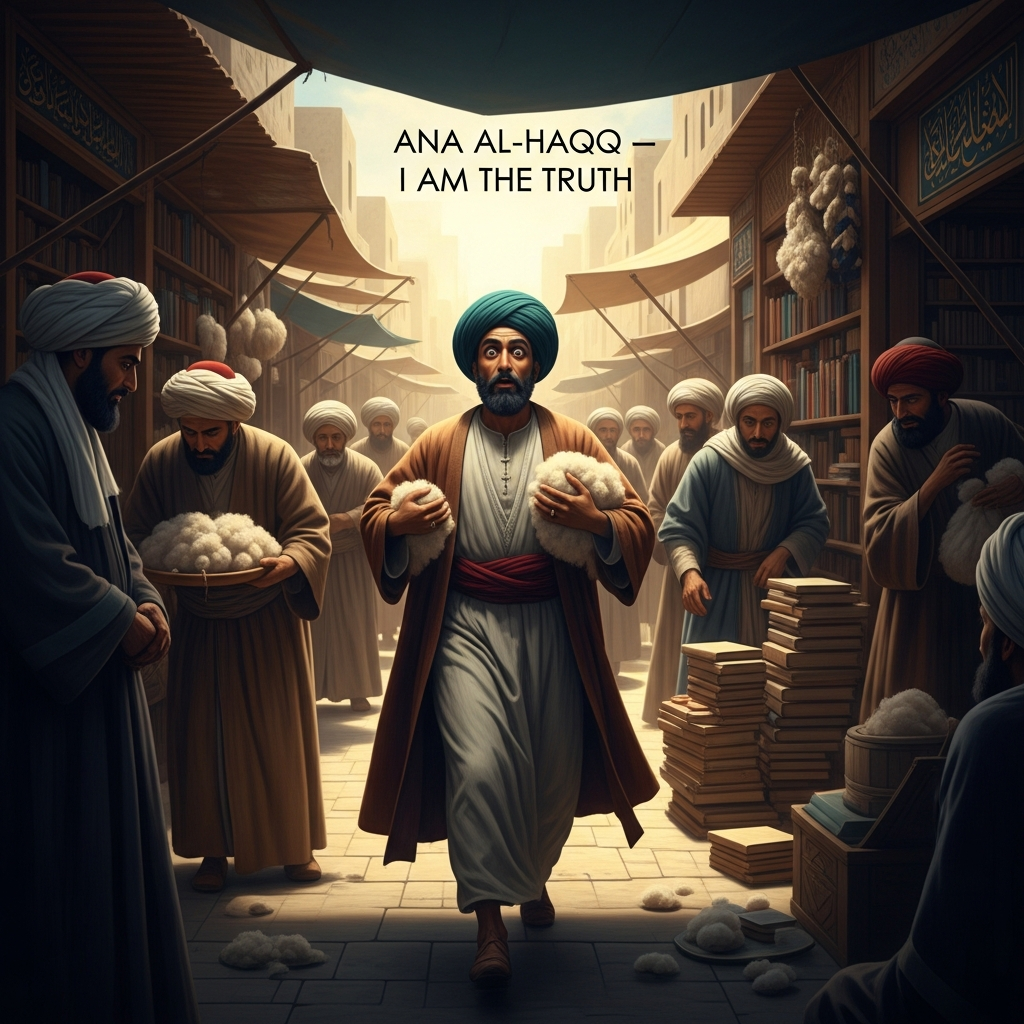
Ana al-Haqq: I Am the Truth
Al-Hallaj walks through the streets of Baghdad crying Ana al-Haqq — I am the Truth — which is one of the names of God. The lawyers call it blasphemy. The mystics call it the logical endpoint of union. After eleven years in prison, he is publicly flogged, mutilated, crucified, and his ashes scattered in the Tigris. He prays for his executioners. The question of whether he was right has not been settled.

Mansur al-Hallaj and the Gallows
Baghdad, 922 CE. The wool-carder who cried Ana al-Haqq — I am the Truth — goes to his execution calm as a man attending a wedding. The theologians call it heresy. The mystics call it the logical endpoint of fana. Both are right, and neither is.
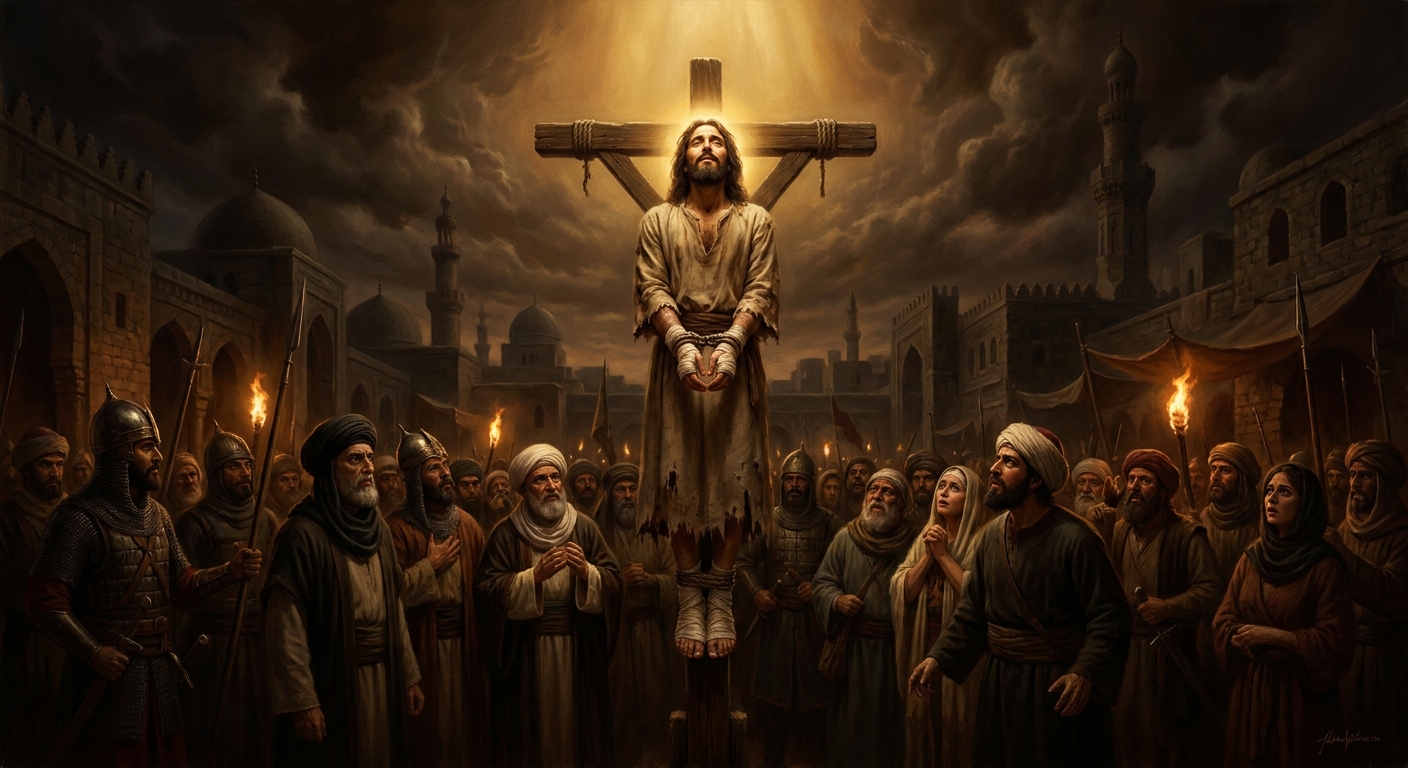
Al-Hallaj on the Gibbet
The wool-carder who said *I am the Truth* is brought to a Baghdad gibbet at dawn — and prays, with his hands cut off, for the men about to kill him.

Loki Bound in the Cave
After Baldur's death, the gods drag Loki to a cave under the mountains. They bind him to three sharp stones with the entrails of his own son, hardened to iron. A serpent drips venom onto his face. His wife Sigyn catches the drops in a bowl. When she empties it, the venom strikes him, and Midgard quakes. He waits there until Ragnarök.
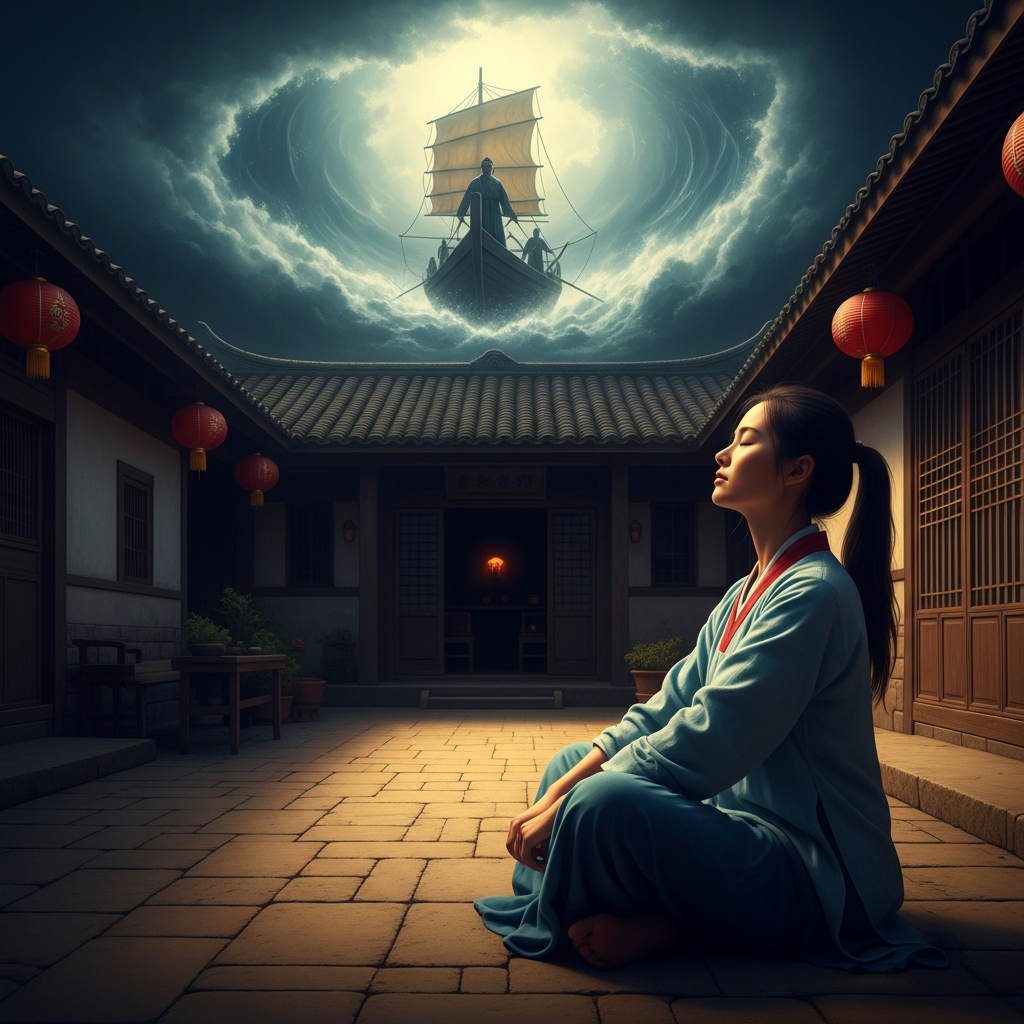
Mazu Enters the Storm
Lin Mo, born on Meizhou Island in 960 CE, is sixteen when she enters a trance during a storm and guides her father's fishing boat home with her mind while her body sits unconscious in the courtyard. She dies at twenty-seven, a virgin who refused all suitors because she had already given herself to the sea. Within a generation, sailors across the South China Sea call her Mazu — the Mother Ancestor — and build her temples on every coast from Fujian to Vietnam to Japan.
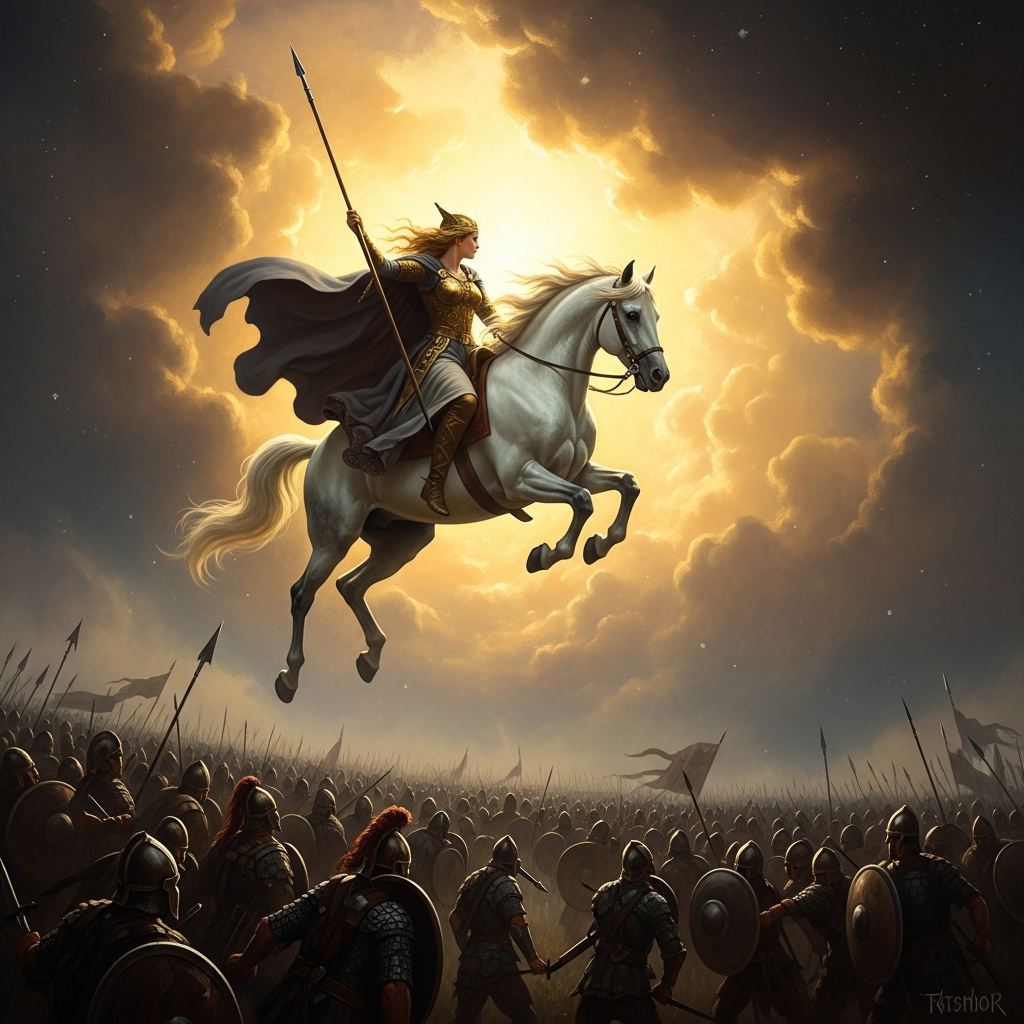
The Choosers of the Slain
A Valkyrie named Göndul rides above a battlefield in Viking-Age Norway and marks a young warrior named Hákon for death. She does not kill him. She identifies the death that Odin has already ordained. The story follows her perspective: the battle below, the moment of Hákon's choosing, and the ride to Valhalla that follows.
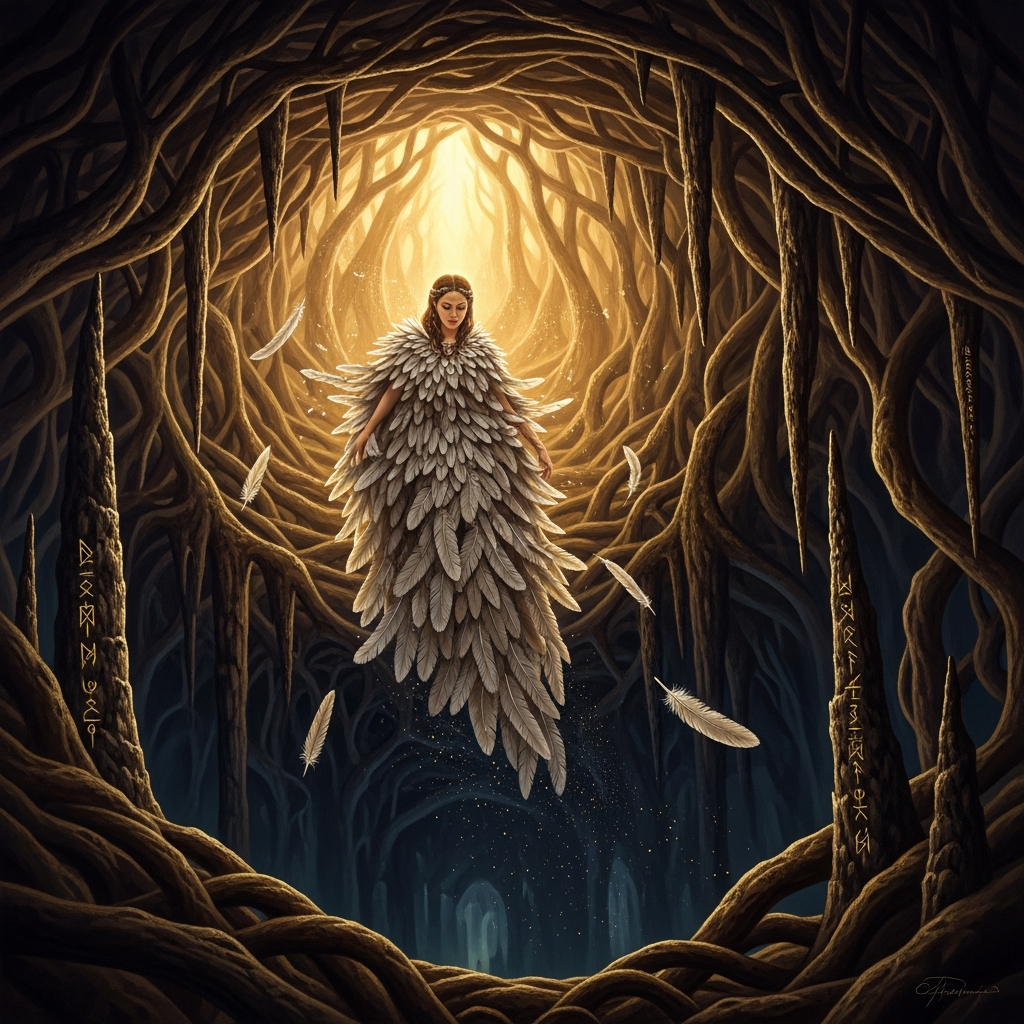
Freya and the Four Dwarves of Svartalfheim
Deep in the caves beneath the world, four dwarves are forging the most beautiful object in the nine realms — Brísingamen, a necklace of amber and fire. Freya descends into Svartalfheim to claim it. The dwarves name a price. Freya pays. Odin learns what she has done and demands his own price in return: a war that does not end. Both prices are paid in full.
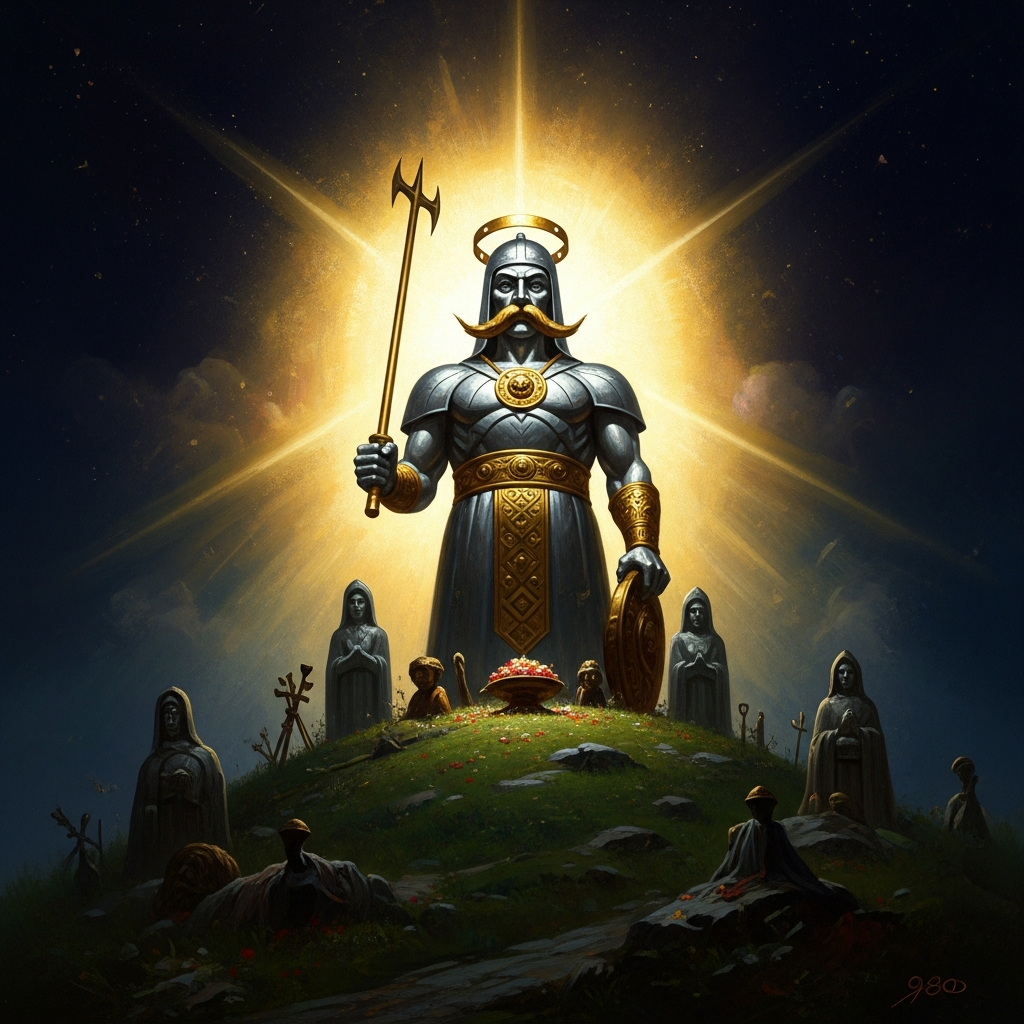
Vladimir Chooses a God
A pagan prince with eight hundred concubines and six bloodied idols on his hill sends ten men to inspect the religions of the world. They come back from Constantinople and tell him they did not know whether they were in heaven or on earth. He drags Perun behind a horse to the river, and the river fills with people.
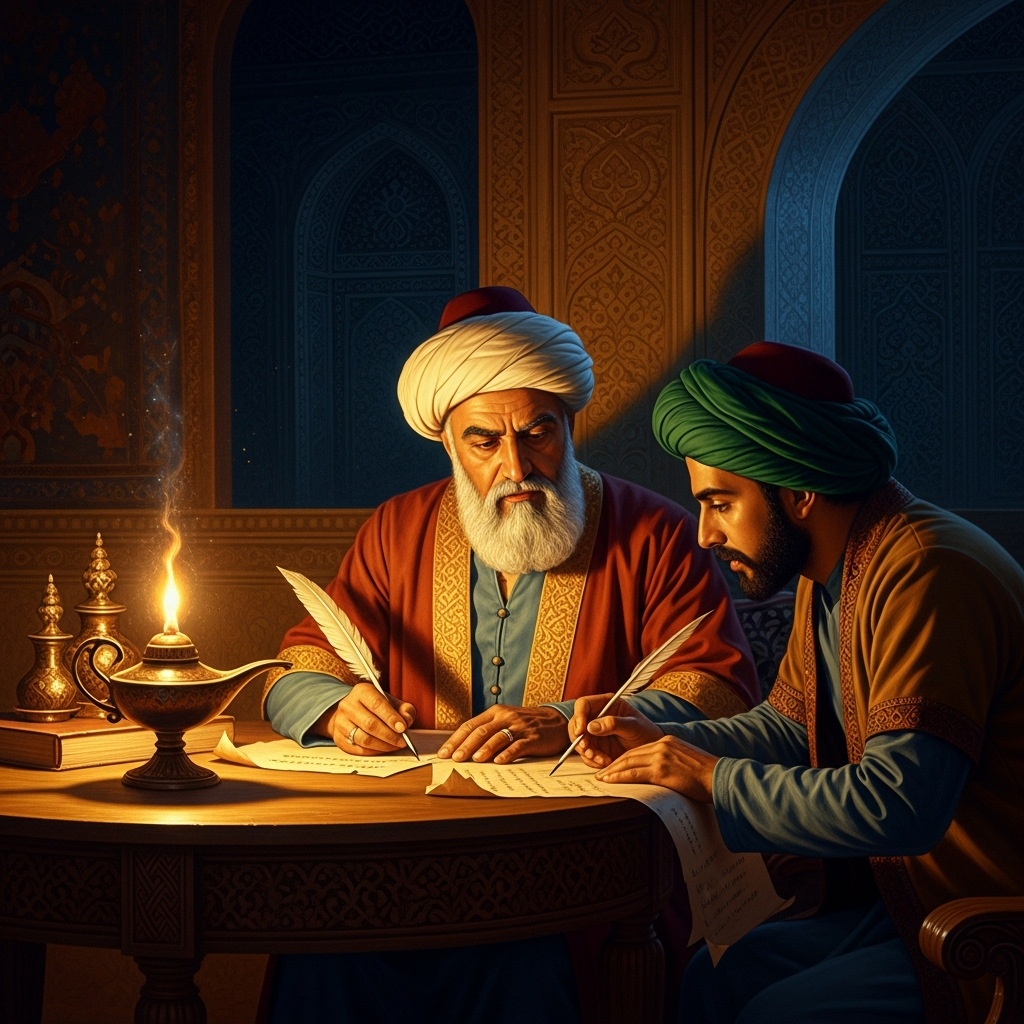
The Floating Man
A boy who has memorized the Qur'an by age ten treats princes by sixteen, composes philosophy while drunk and theology while sober, and writes the million-word synthesis of all medical knowledge that Europe will study for six hundred years — then proposes a thought experiment that anticipates Descartes by six centuries.

Dobrynya and the Serpent
Dobrynya Nikitich, bogatyr of Kievan Rus, disobeys his mother and swims the forbidden river. The Serpent of the Deep attacks. He beats it into the earth with his cap. He makes peace. The Serpent breaks the peace immediately. This time Dobrynya does not make mistakes — but the second fight is only possible because the first fight happened.
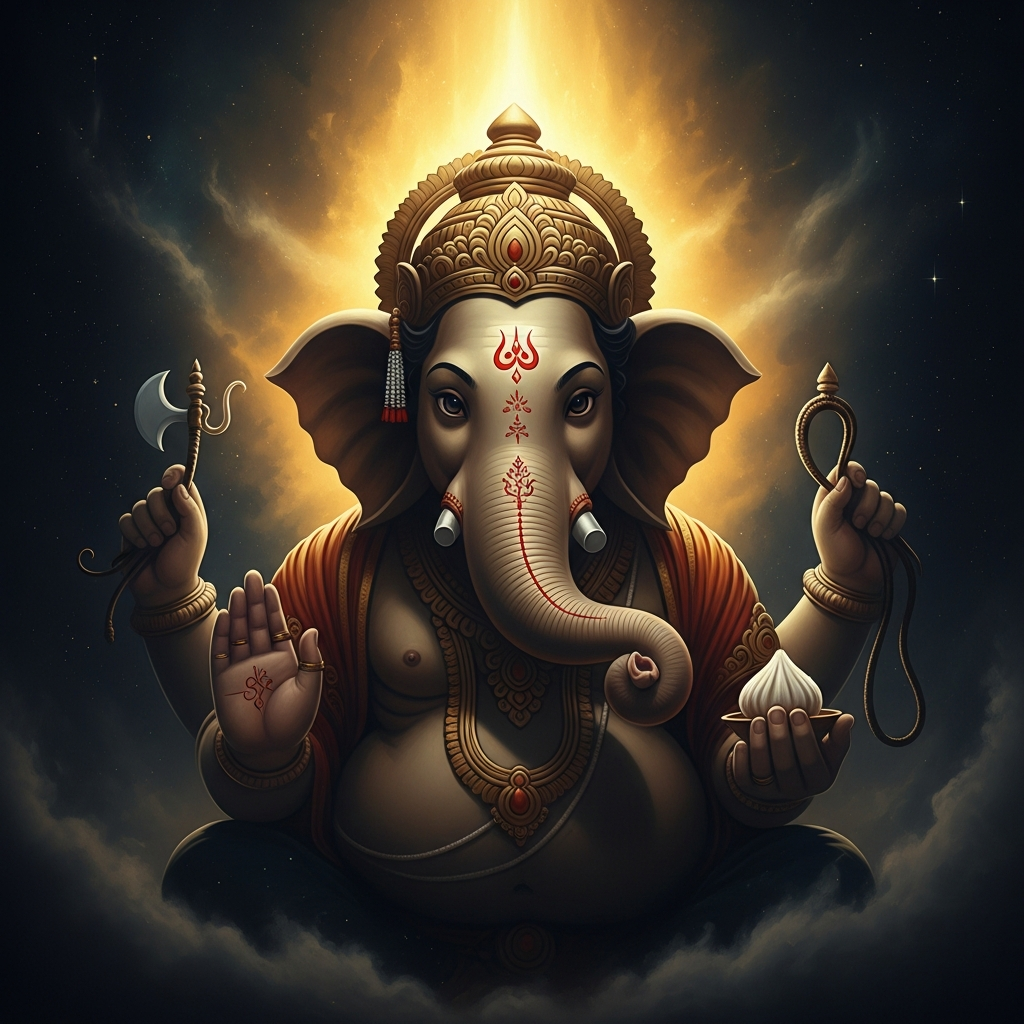
Ganesha and the Elephant Head
Parvati shapes a son from the dust of her own body to guard her bath. Shiva returns home, finds a stranger blocking his door, and beheads the boy. Parvati's grief reorders the cosmos. The first creature found in the forest gives up its head — an elephant.
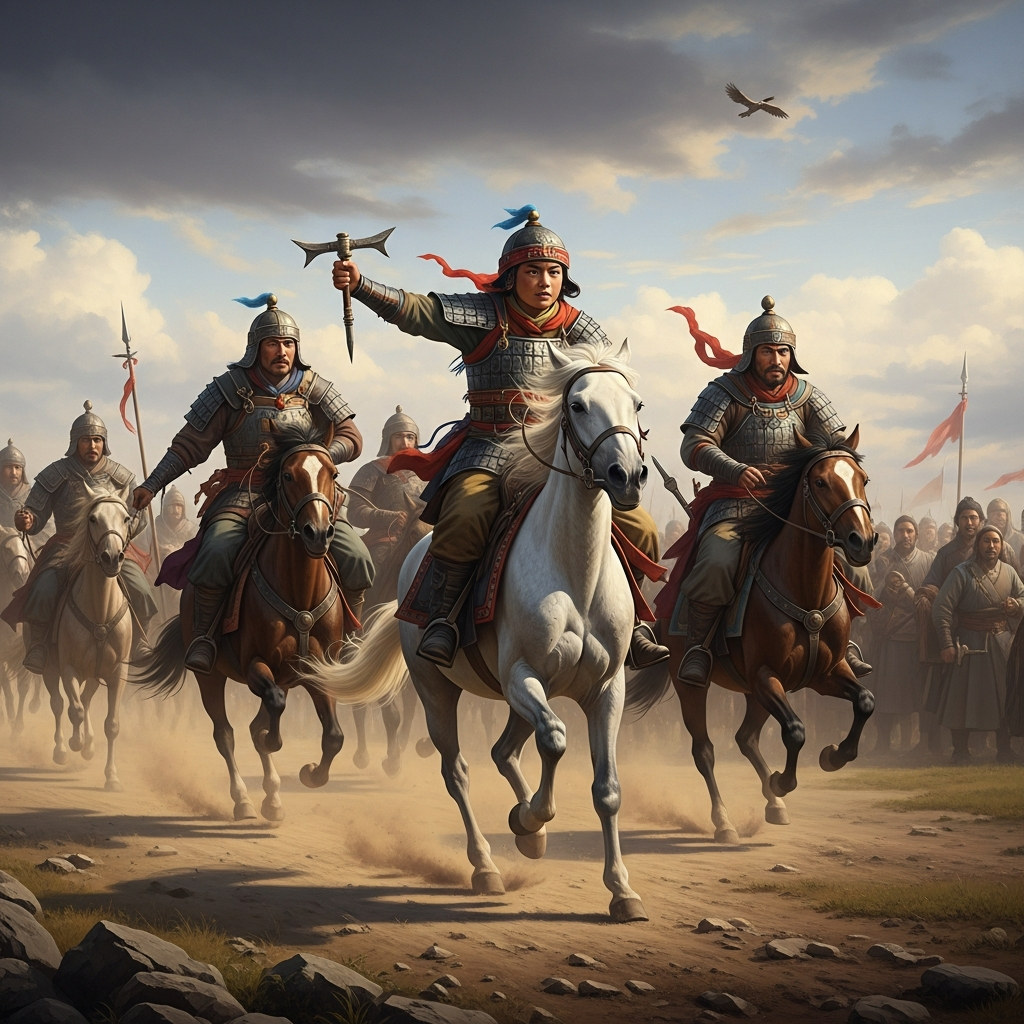
Gesar Rides the Wind Horse
Gesar of Ling, the divine warrior-king, is born supernatural into a marginalized family, humiliated, exiled, then called back by a great horse race to become king of Ling. He wages a lifetime of campaigns against the forces of evil and demonic kingdoms. The Gesar Epic is the longest epic poem in the world — still growing, still performed, still being revealed through living bards.
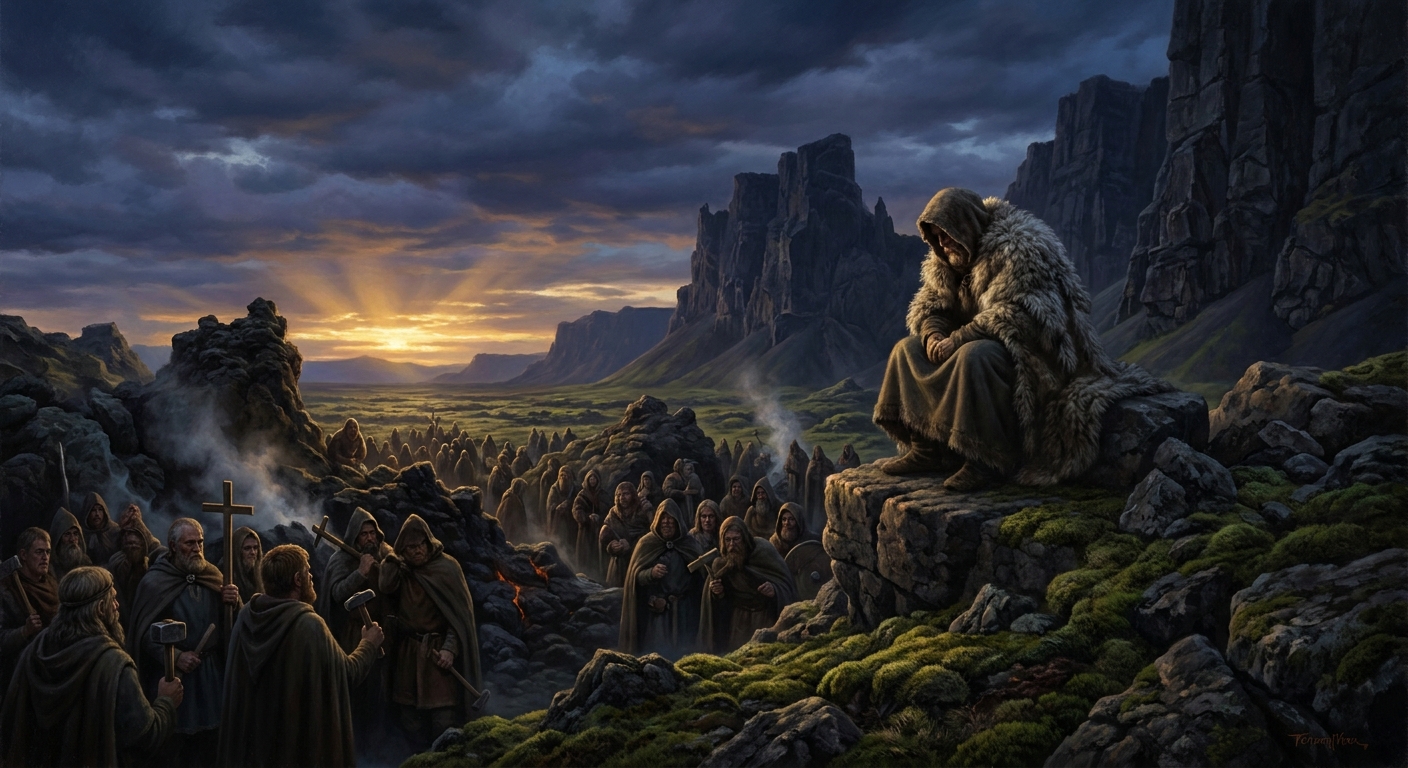
Iceland Converts by Vote
Year 1000. Iceland's pagan Lawspeaker retreats under his fur cloak for a day and a night, then rises to hand his nation to the Christian God — on conditions no bishop would have chosen.

The Ijiraq and the Child Who Walked Too Far
The ijiraq is an Inuit spirit that kidnaps children by stealing their sense of direction. When a child in Arctic Canada follows what looks like a caribou into the tundra, she walks into the spirit's territory and loses all knowledge of where she has come from. The community searches. The angakkuq descends. The child returns — but not quite the same child who left.

The Angakkuq Learns to See in the Dark
An Inuit shaman's initiation proceeds in stages no one outside the tradition fully survives describing: the period of isolation in darkness, the terrifying experience of the skeleton — seeing one's own bones from the inside — and the acquisition of the helping spirits called tarriassuit, the shadows. Grounded in Iglulik and Caribou Inuit ethnography recorded by Knud Rasmussen in the 1920s, this is what it costs to become a person who can see what others cannot.
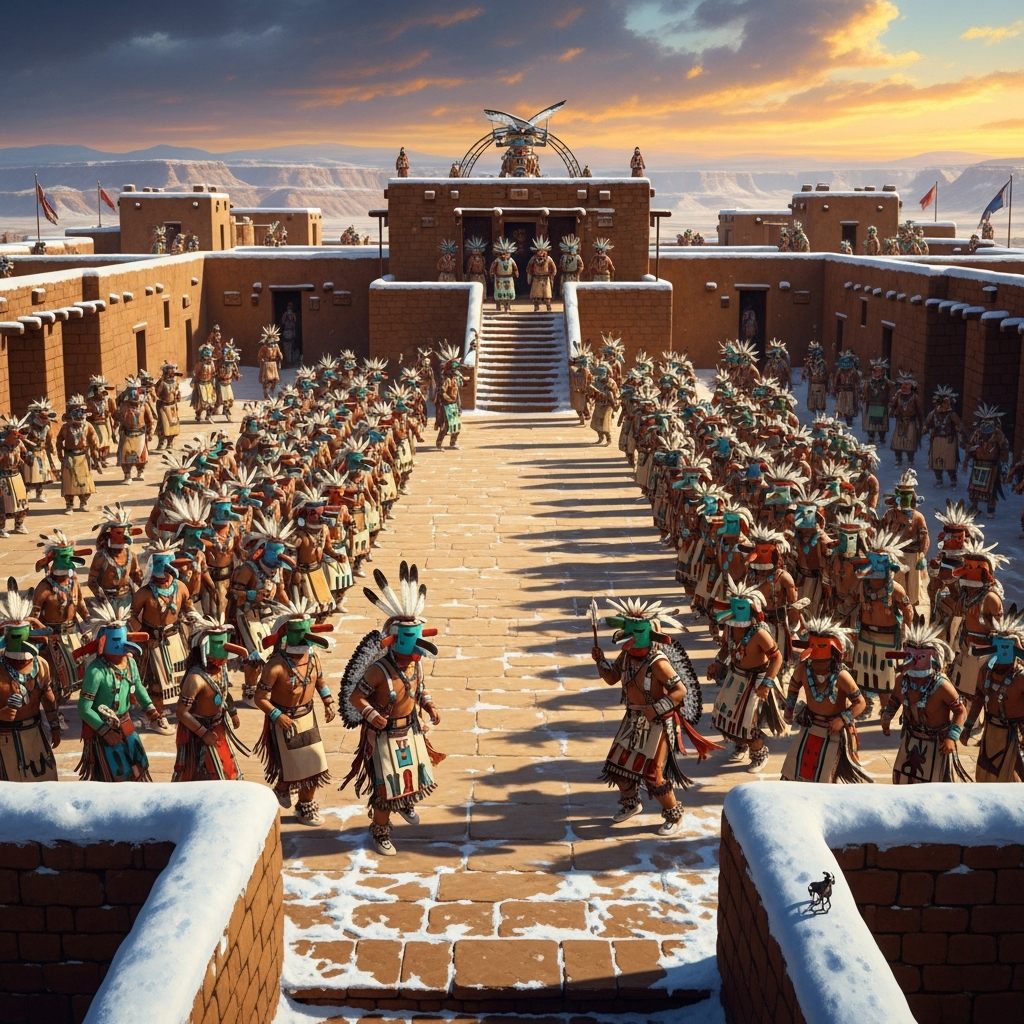
The Kachina Return to the San Francisco Peaks
From winter solstice until July, the kachinas — ancestral spirit beings — come down from their home in the San Francisco Peaks and live in the Hopi villages, bringing rain, participating in ceremony, giving dolls to the children. In the Niman ceremony of late July, they must leave. This is the story of what happens in those six months, and what the dolls are actually for.
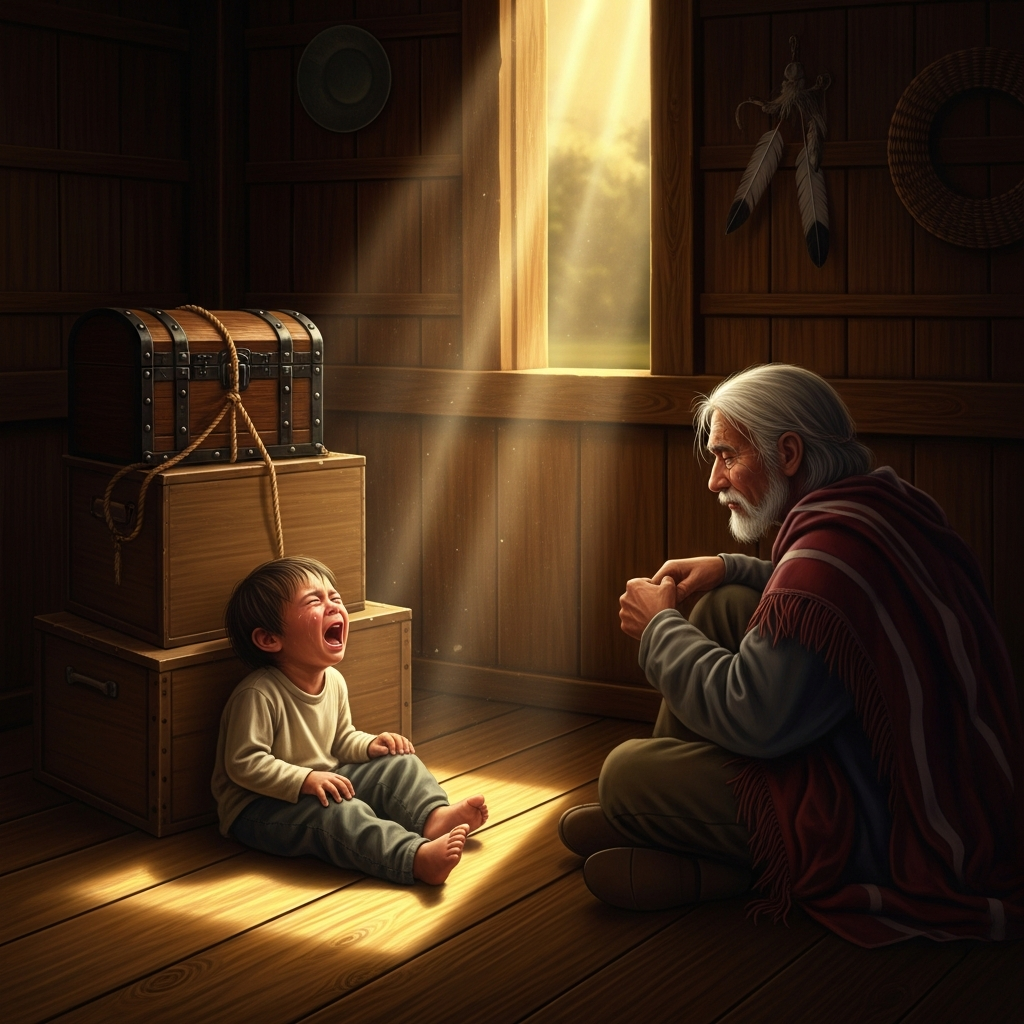
Raven Steals the Light from the Box
Before there is light, there is a box. The box belongs to a powerful man who keeps it sealed. Raven — transformer, trickster, necessity — shapeshifts into a human child, is born to the box-keeper's daughter, and cries without stopping until the man opens the box and light floods the world. The Haida, Tlingit, and Inuit versions of this circumpolar myth are compared: same logic, different cosmological stakes, different moral.
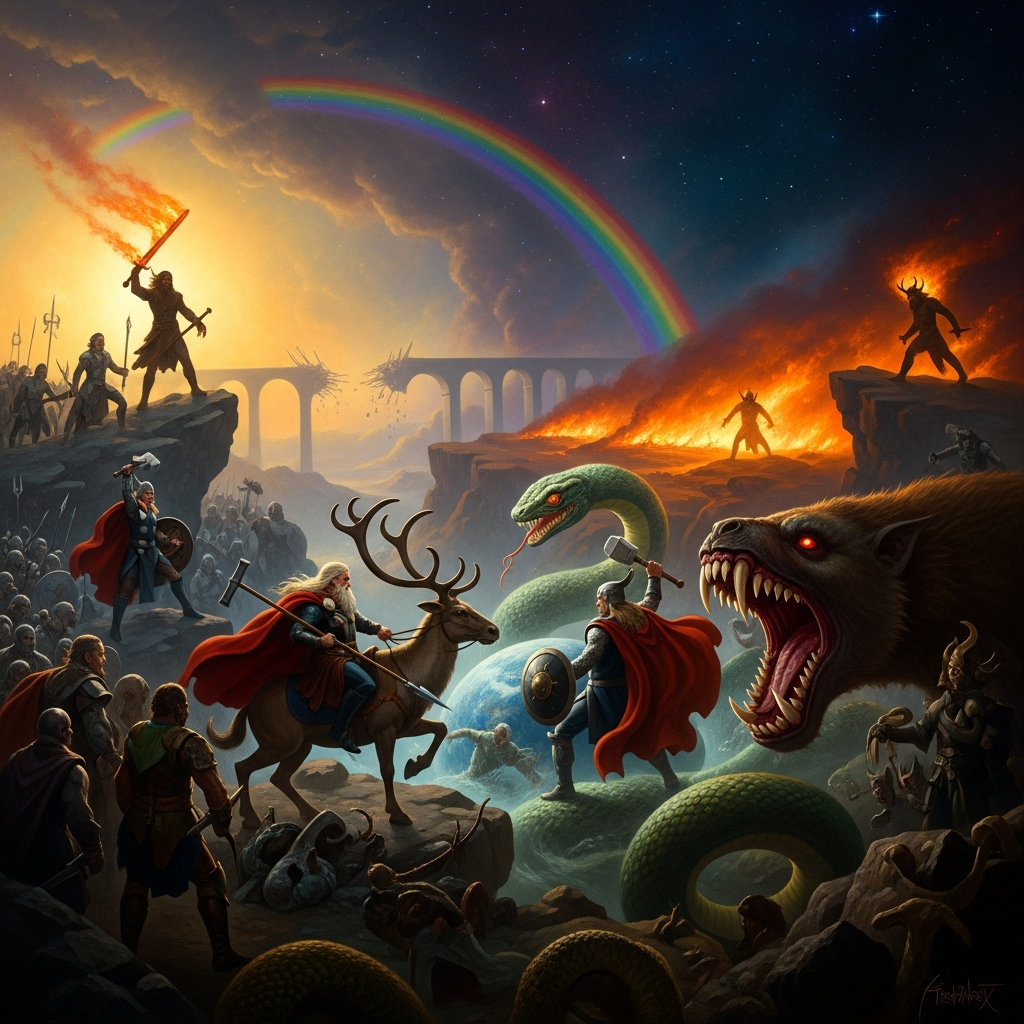
Ragnarök: The Twilight of the Gods
The wolf breaks his chain. The serpent rises from the sea. Heimdall lifts the Gjallarhorn and the rainbow bridge ignites under Surt's army of fire. Odin is swallowed; Thor dies of venom; the earth burns and sinks. Then a green shore rises from the water and the survivors gather at Idavoll.
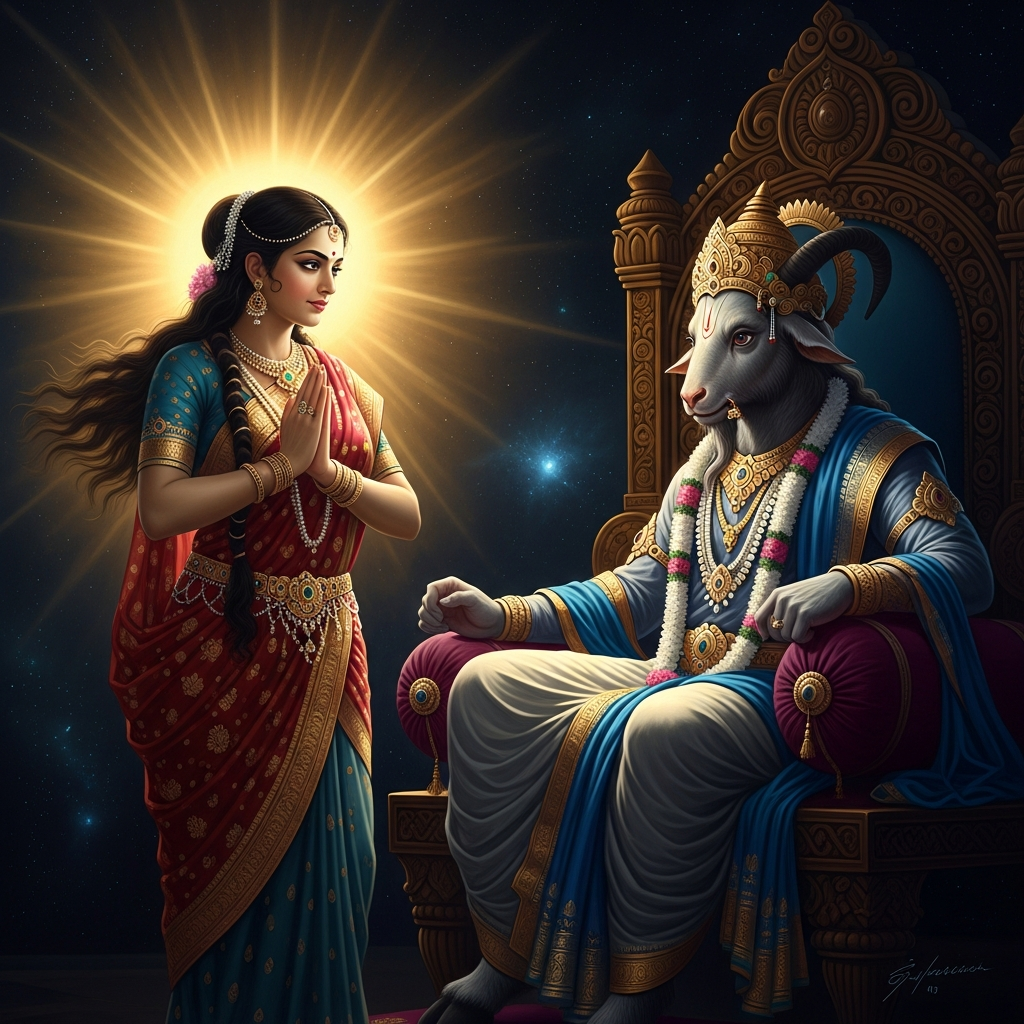
Sati and the Yajna of Daksha
The goddess Sati — daughter of Daksha, wife of Shiva — dies by her father's contempt. Daksha holds the great cosmic sacrifice and invites every god except Shiva. Sati goes uninvited and is humiliated before the assembly. She immolates herself in the sacred fire. Shiva wanders the three worlds carrying her body in cosmic grief until Vishnu cuts it into fifty-one pieces — each piece falling to earth becomes a Shakti Peetha, a goddess temple.
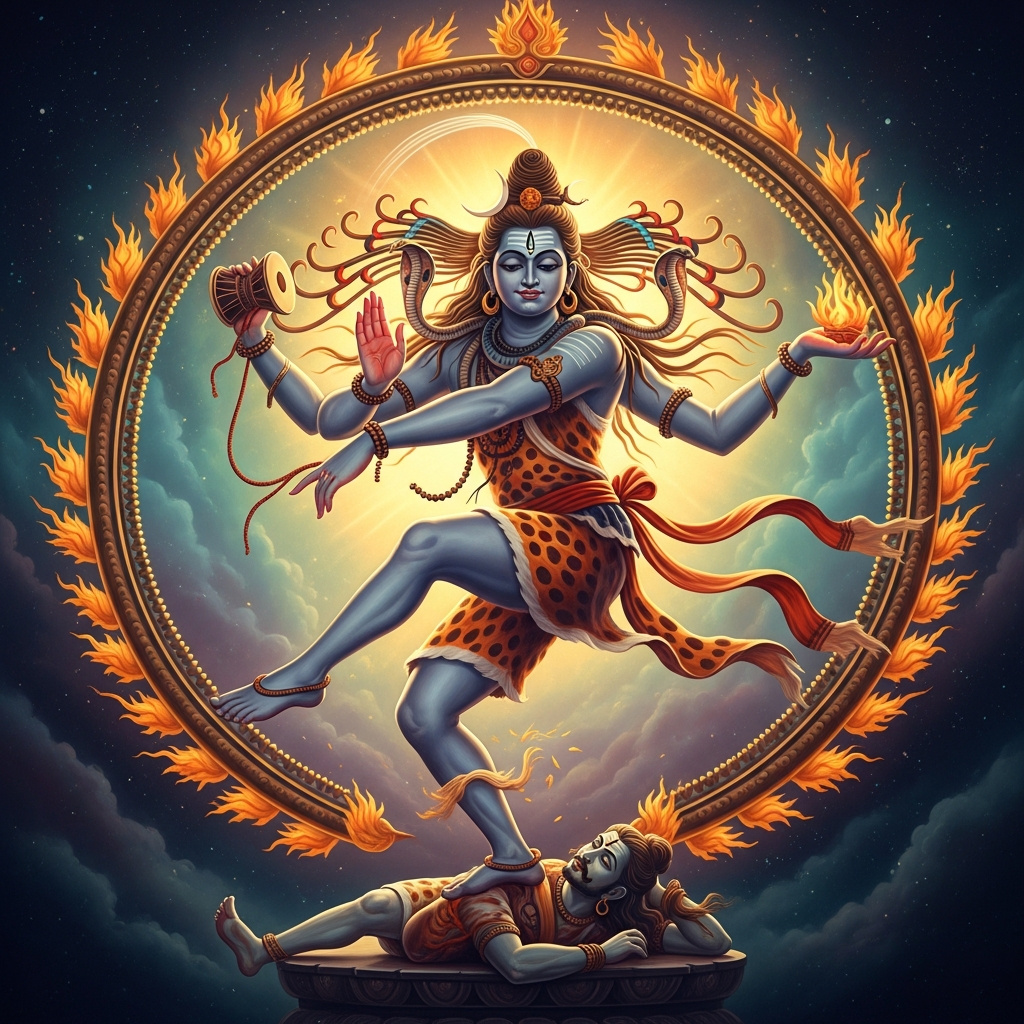
Shiva's Tandava — The Cosmic Dance
At the cremation grounds of Chidambaram, Shiva dances the cosmos into being and out again. Drum in one hand, flame in another, the dwarf of forgetfulness crushed beneath his right foot, his left foot raised in the gesture of liberation. Five activities in a single body. The whole universe is a step.

Sila: The Intelligence the Wind Is Made Of
Sila is the Inuit concept of the breath of the world — simultaneously weather, cosmic intelligence, and the animating force inside every living thing. Inua is the spirit-person that inhabits each entity: the seal has an inua, the rock has an inua, the wind has an inua. A hunter caught in a blizzard on the sea ice realizes he is not outside Sila but inside it — and that the intelligence of the storm is not opposed to his survival but indifferent to it in a way that is more philosophically demanding than hostility.
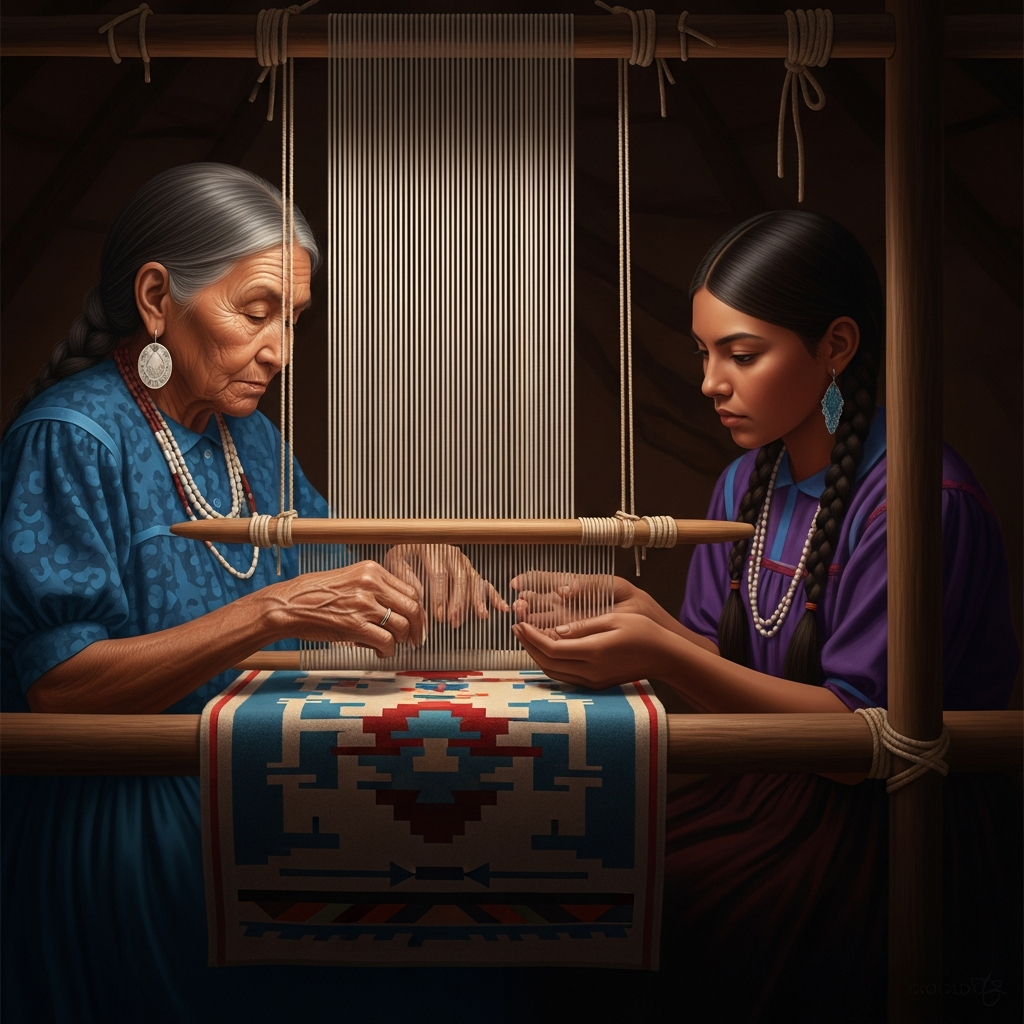
Spider Woman and the First Loom
Na'ashjé'ii Asdzáá — Spider Woman — teaches the Diné to weave. She gives them the first loom, whose structure is a map of the cosmos: the warp strings are rain, the heddles are sun rays, the batten is a white shell sword, the comb is a red shell comb. Every blanket woven on this loom is not a textile but a world made coherent.

The White Snake and the Monk Who Would Save Her
Bai Suzhen, the white snake spirit who achieves human form through centuries of cultivation on Mount Emei, descends to Hangzhou and falls in love with a pharmacist named Xu Xian. The monk Fahai, guardian of cosmic order, cannot allow a demon in human guise to live among mortals. The debate their confrontation opens has not closed: who was right, the snake-woman who loved, or the monk who enforced the boundary between kinds?
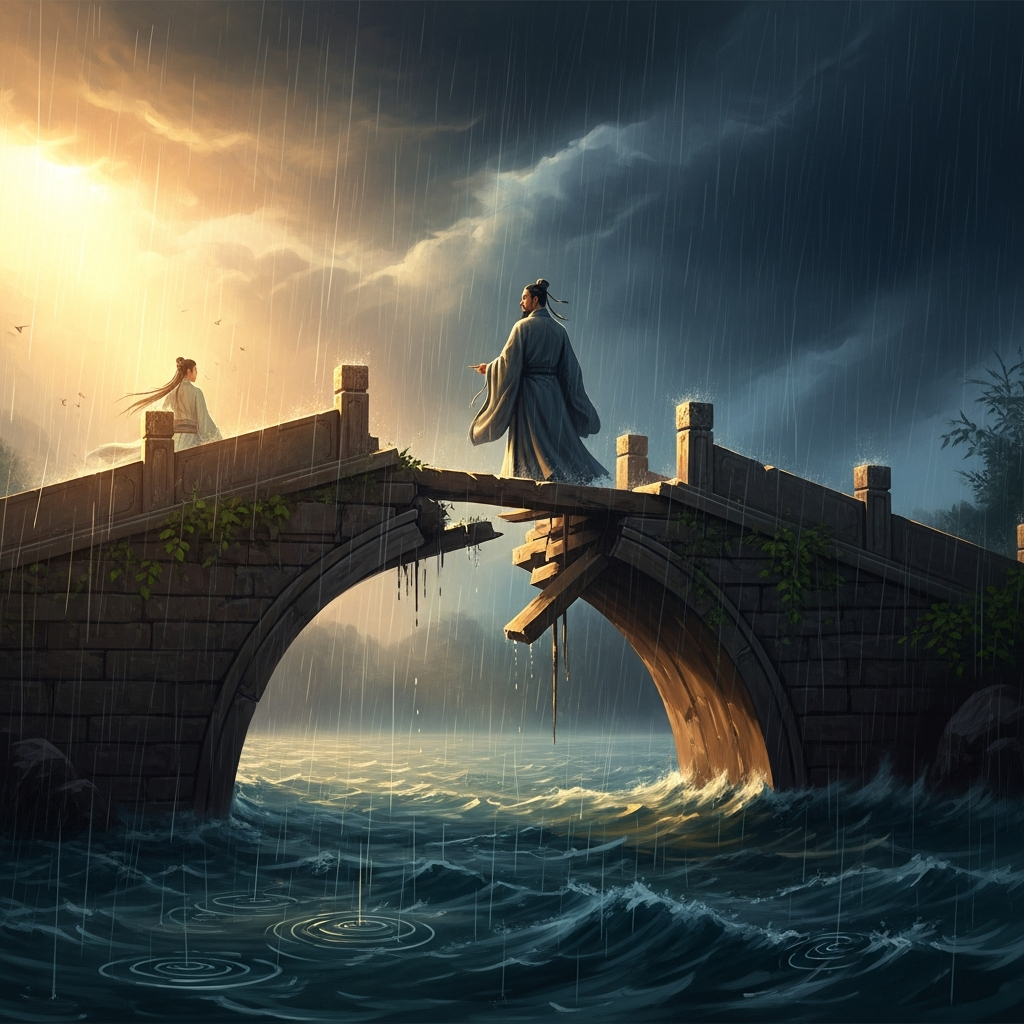
Madam White and the Monk Who Would Save the World from Her
Bai Suzhen, the White Snake spirit, has cultivated for a thousand years on Mount Emei. She descends to Hangzhou, disguises herself as a woman, and falls in love with a pharmacist named Xu Xian. The monk Fahai, knowing she is a demon, sets out to destroy the marriage. The story does not end with his triumph. It ends with a question: whether a thousand years of spiritual practice deserves love, and whether demon is the right word for something that loves this completely.
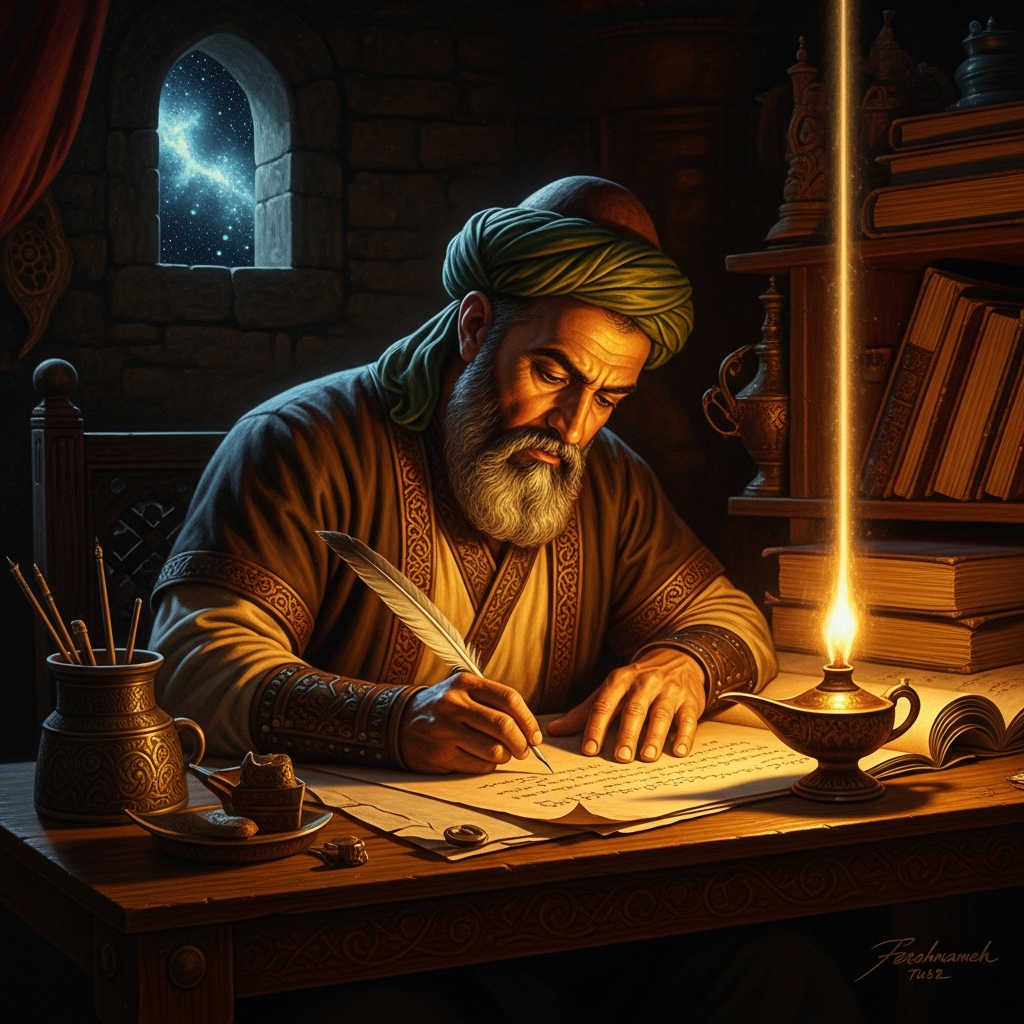
Ferdowsi and the Sultan's Silver
A poet spends thirty years preserving the Persian language in sixty thousand couplets, under the patronage of a sultan who promised gold and delivered silver. The gold arrives on the day of the funeral. It enters by one gate. The body exits by the other.
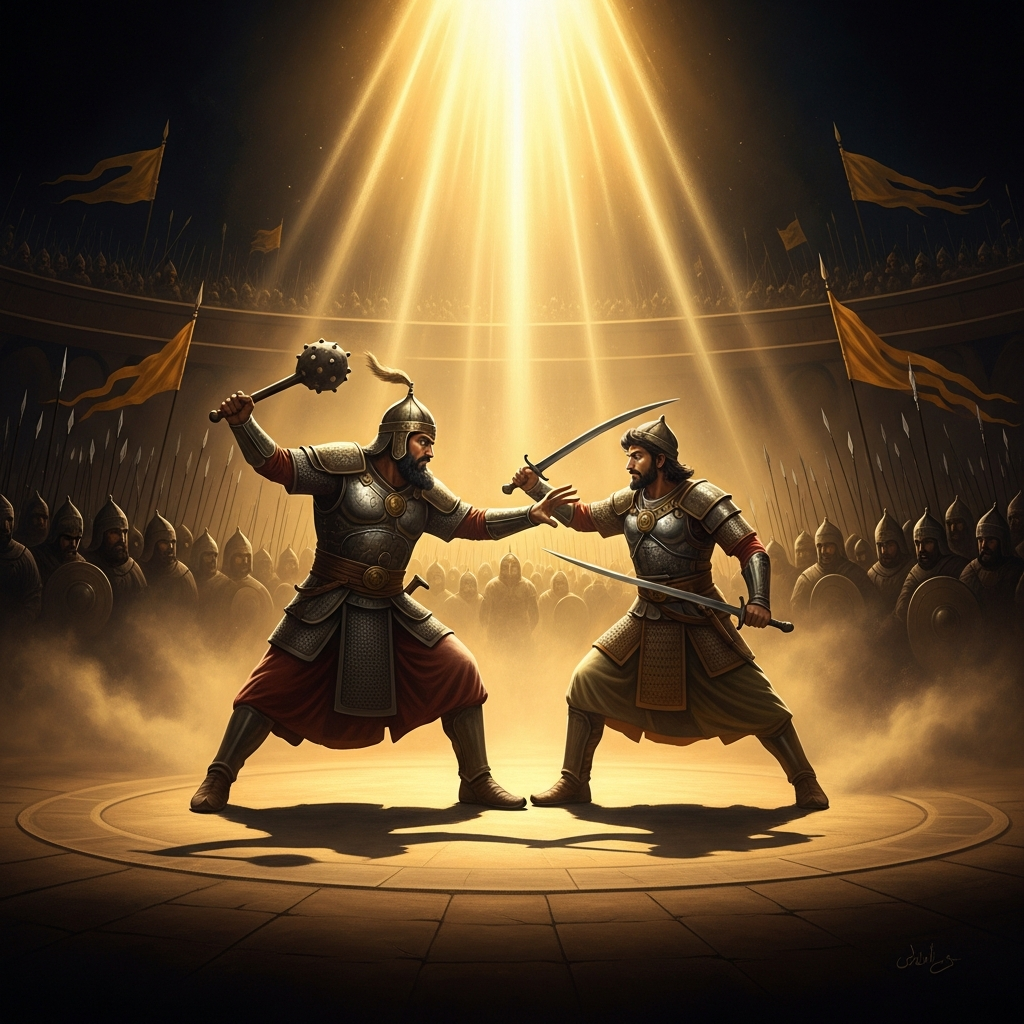
Rustam and Sohrab
The greatest hero of Iran spends two days in single combat with a young Turanian champion who has crossed the world looking for his father. On the third day, he wins. He has won his whole life. This time, winning kills his son.
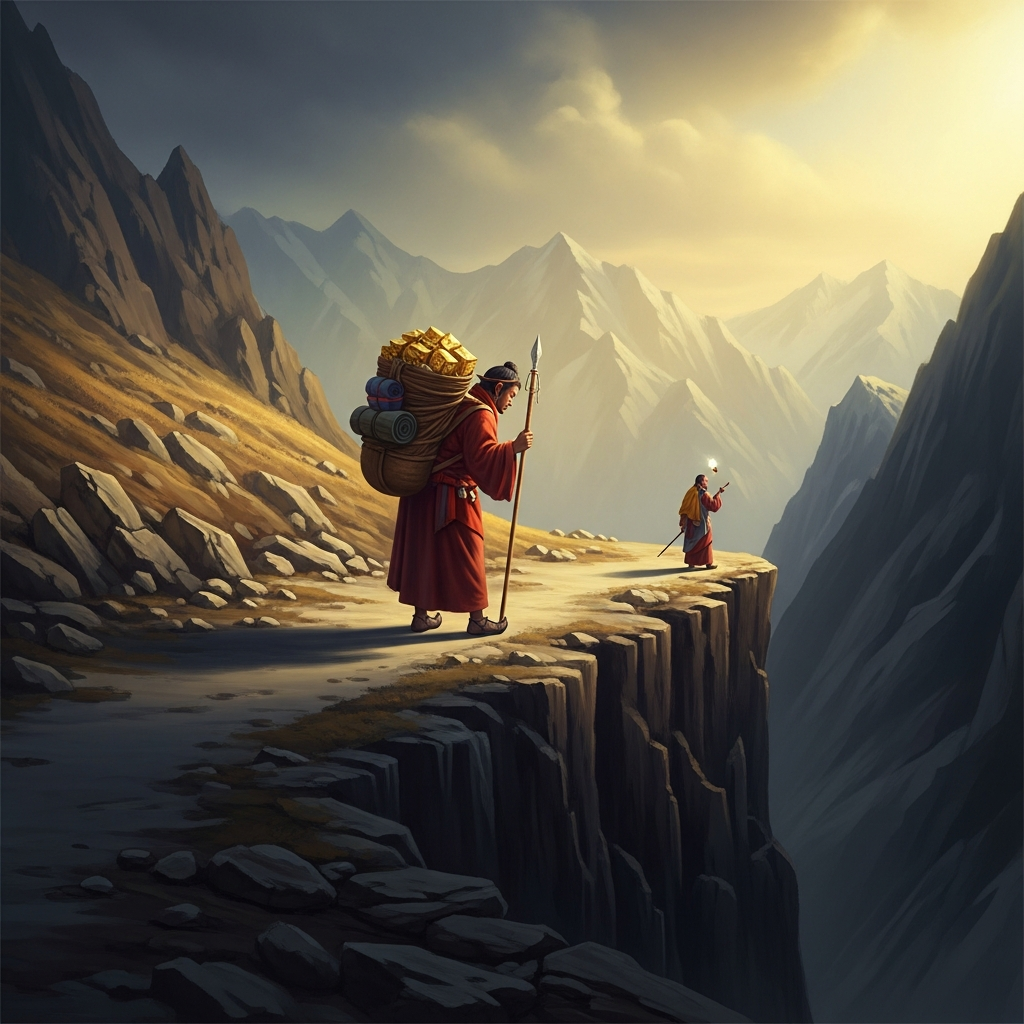
Marpa Throws the Gold into the Air
Marpa the Translator makes three brutal journeys from Tibet to India to receive teachings from Naropa, carrying gold each time to pay for the transmissions. On the third journey, Naropa tells him the gold is worthless — all the gold in the universe could not purchase the dharma. Marpa throws it into the air. This moment founds the Kagyu lineage.
Naropa Follows the Madman South
Naropa, brilliant scholar-abbot of Nalanda University, abandons his position after a vision and spends years searching for his teacher Tilopa. When he finds him, Tilopa tests him twelve times — each trial an apparent cruelty or absurdity. After the twelfth, Tilopa strikes Naropa with a sandal and Naropa awakens.
The Scholar in the Army
The polymath al-Biruni accompanies Mahmud of Ghazni's invasions of India not as a soldier but as a scholar — learning Sanskrit, interviewing Brahmin priests, reading the Vedas, and writing the most accurate account of another civilization composed by any medieval observer.
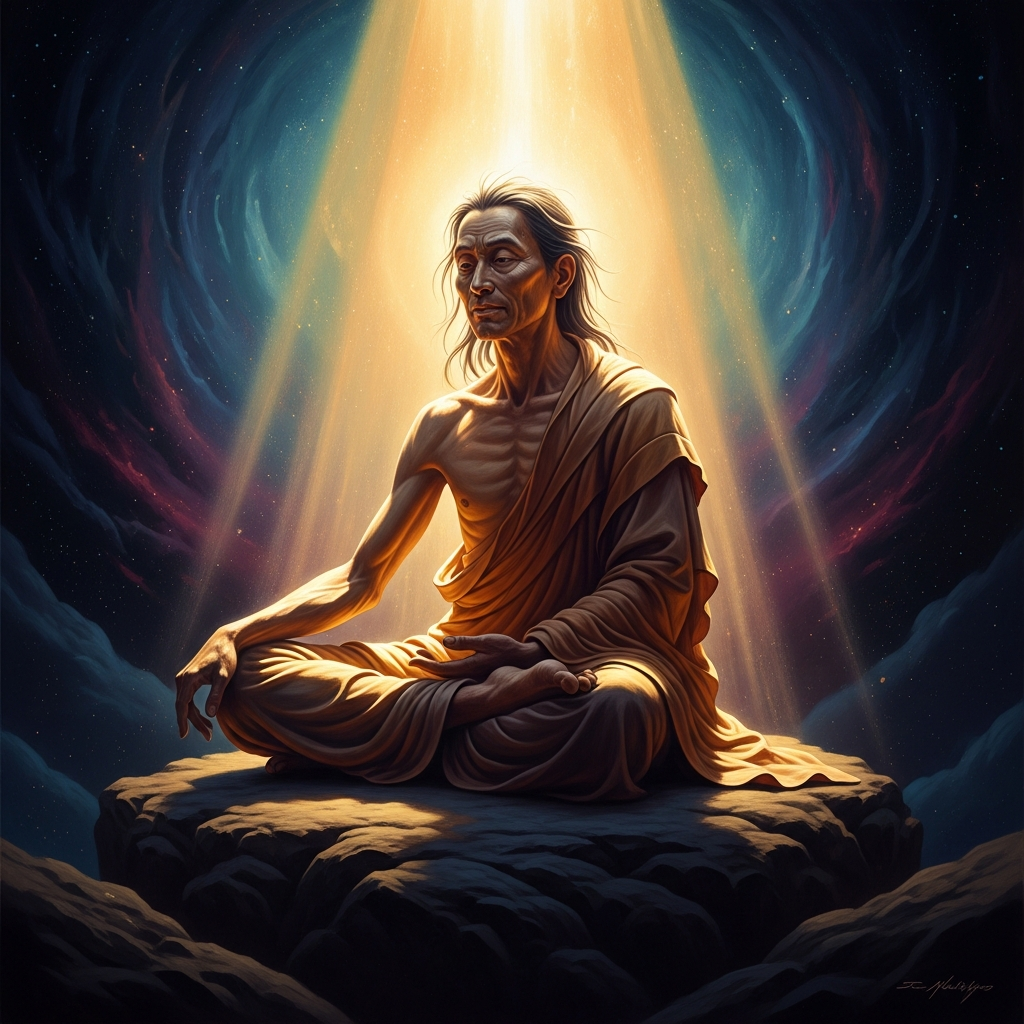
Milarepa Calls Down the Hailstorm
Before he becomes Tibet's greatest saint, Milarepa is a sorcerer. His aunt and uncle have stolen his inheritance. His mother sends him north to learn black magic. He returns and calls down a hailstorm that destroys the harvest, then conjures the collapse of his uncle's house during a wedding feast, killing 35 people. The horror of what he has done drives him to find Marpa.
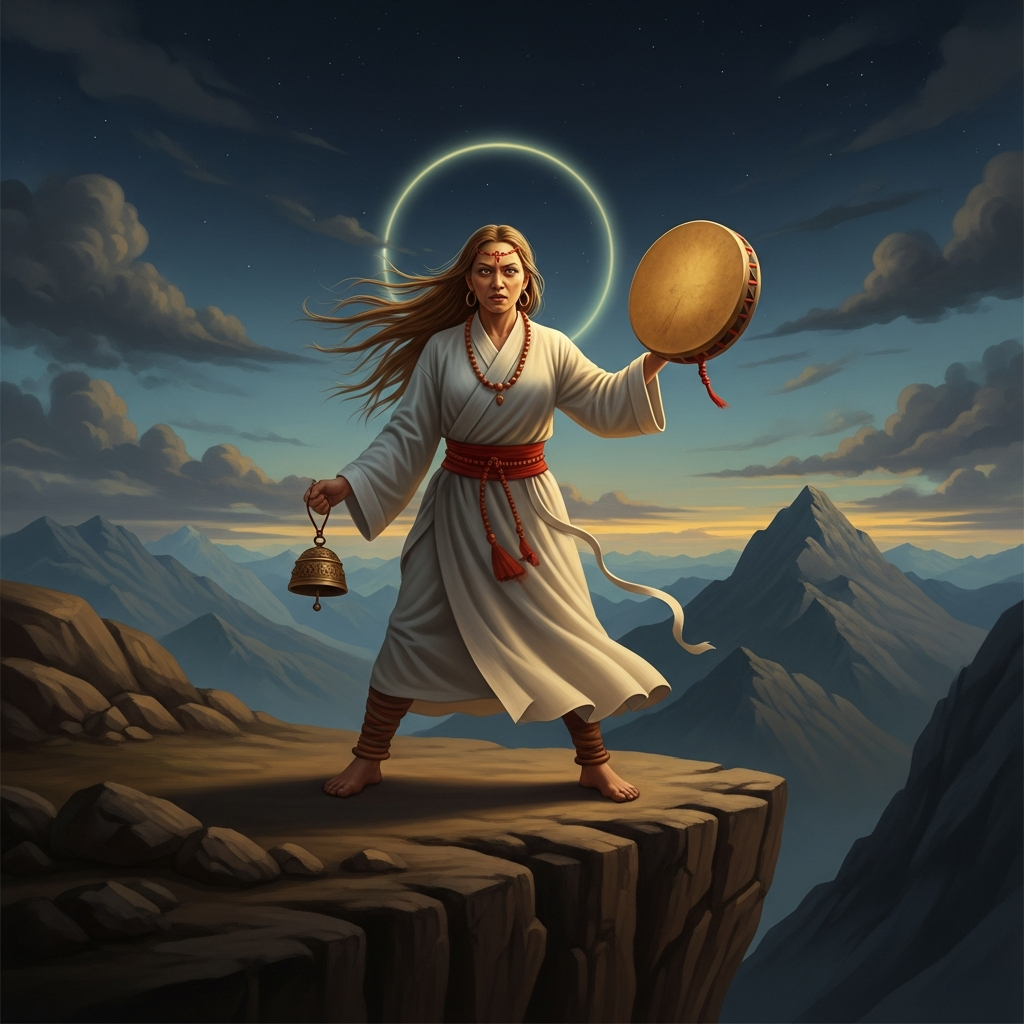
Machig Labdrön Cuts the Self
Machig Labdrön, born around 1055 CE reading sutras before she can walk, develops the chöd practice — offering your body as a feast to demons rather than fleeing them. She becomes the only Tibetan woman to found a major school of Buddhism that spread back to India, reversing the usual direction of transmission.
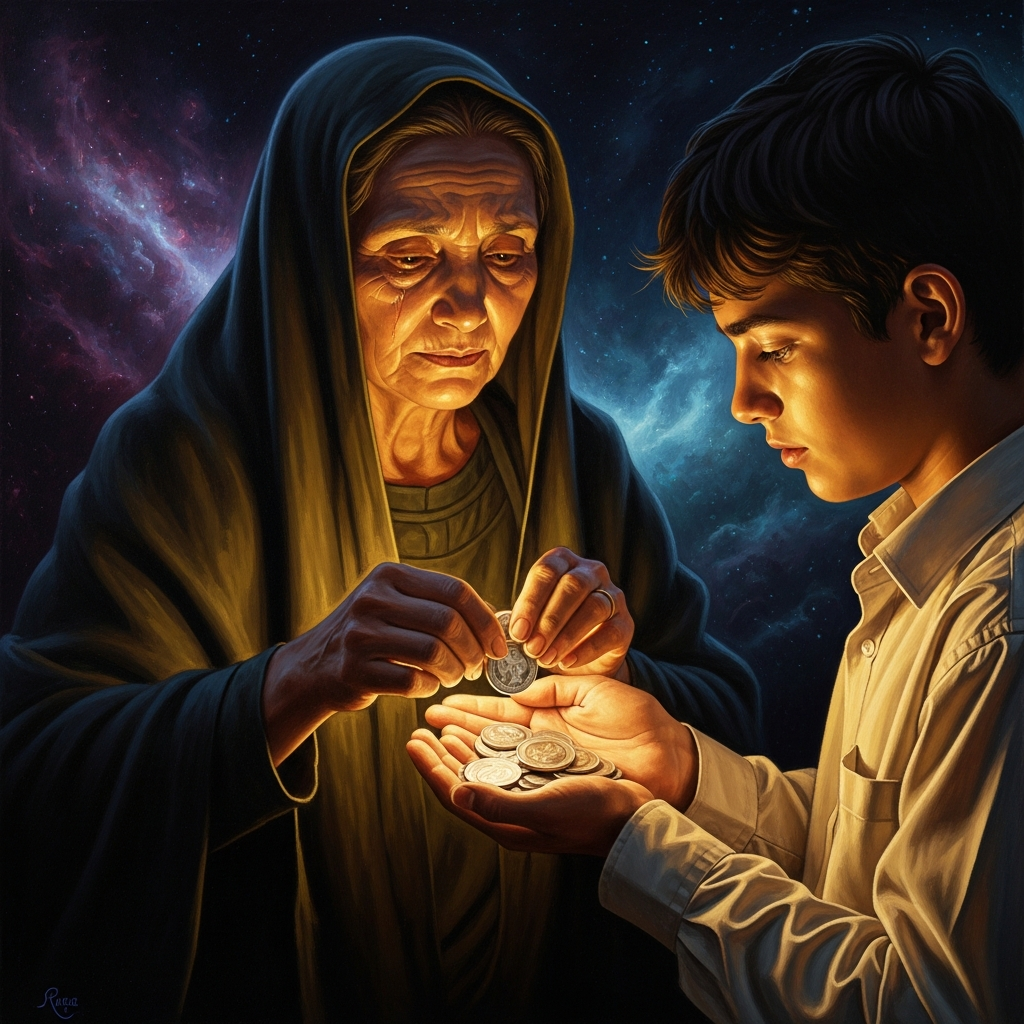
Milarepa and the Black Magic
A young Tibetan man, robbed of his inheritance and driven by his mother's grief, learns sorcery and kills thirty-five people at a wedding. Then he has to live with it.
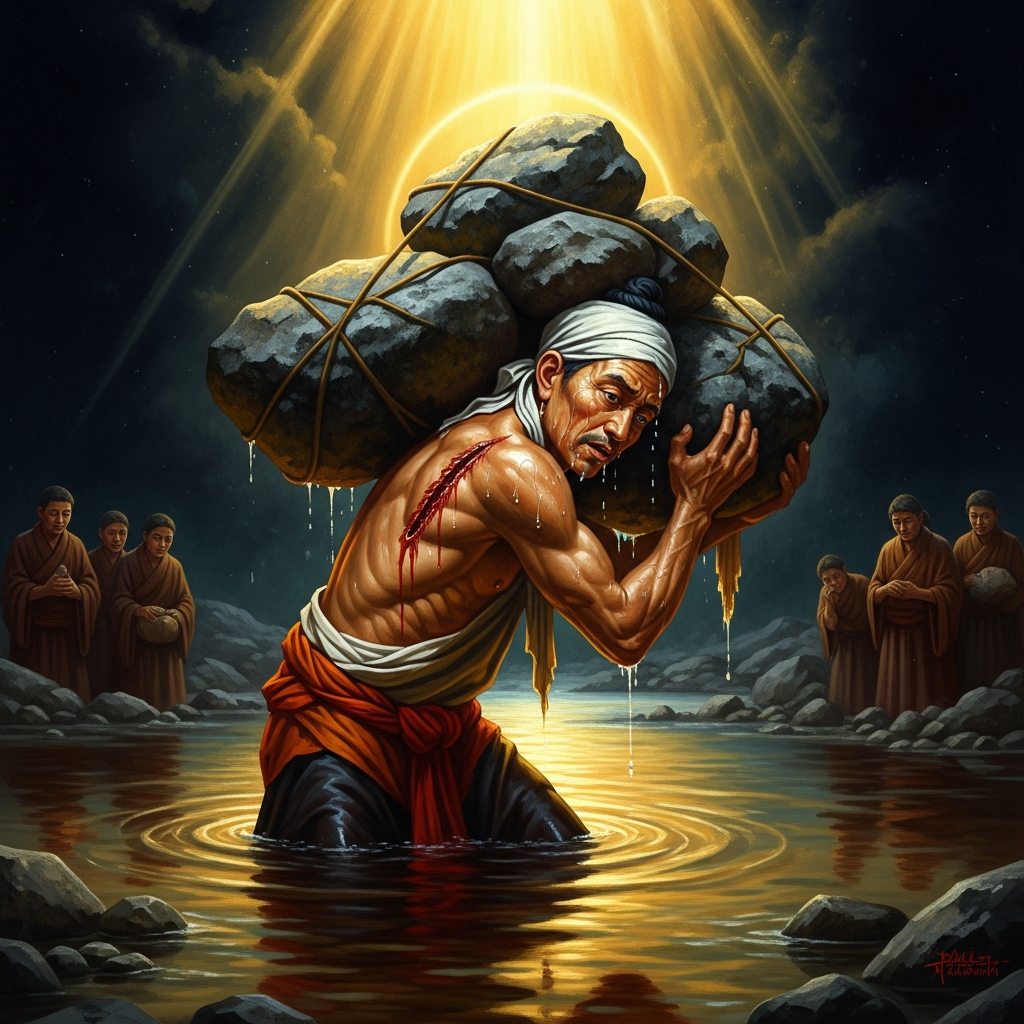
Milarepa and the Four Towers
Marpa the Translator makes Milarepa build a stone tower alone, tear it down, build it again, tear it down again — four towers over years of labor. Then, when Milarepa's back is raw and his hope is gone, Marpa weeps and initiates him.
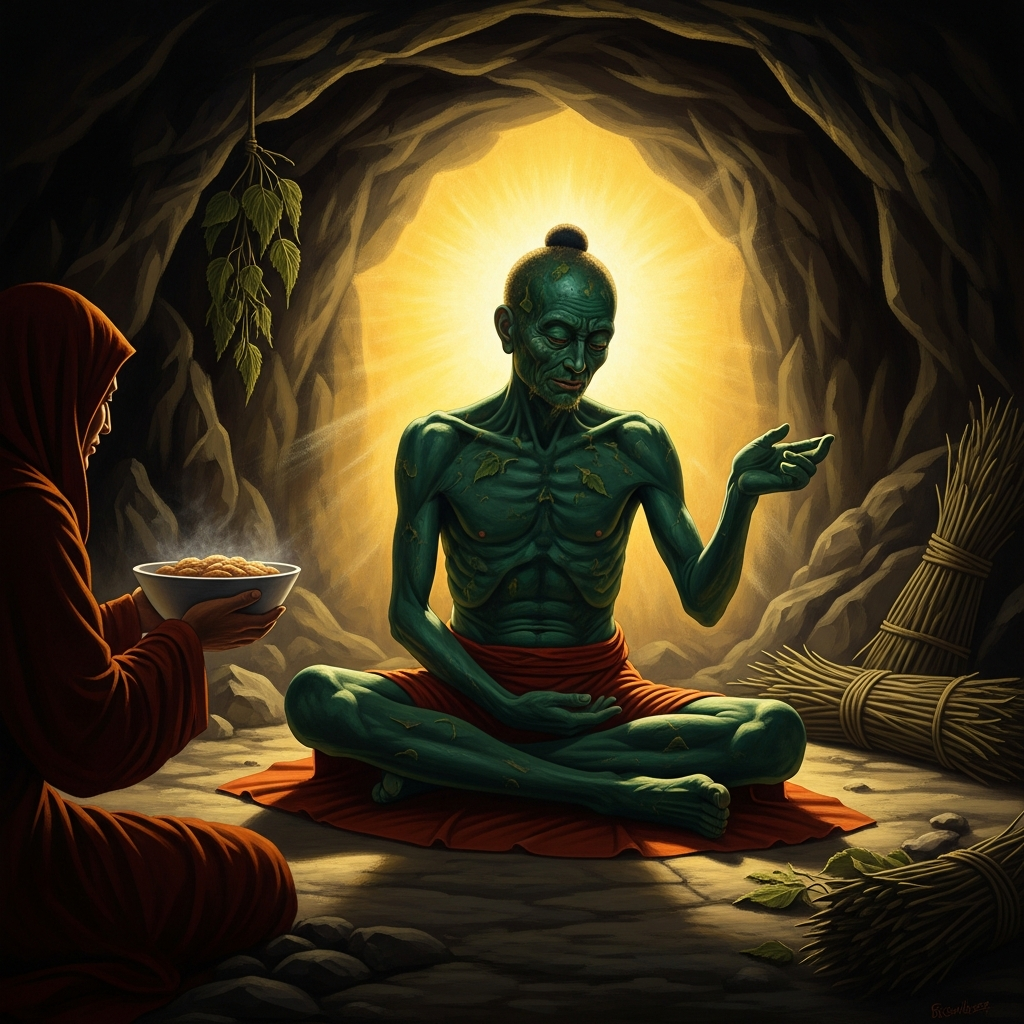
Milarepa in the Cave
After Marpa's initiation, Milarepa retreats to the Himalayan caves for years at a time — eating only nettles, generating yogic inner fire, composing the Hundred Thousand Songs in states of deep realization. Hunters find him and think he is a demon. He sings to them.
The Scholar Who Could Not Speak
The most famous Islamic scholar in the world stands before three hundred students in Baghdad and finds that his mouth will not open — not from illness but from a truth he has been refusing: he teaches for fame, not God. He slips out of the city disguised as a traveler and does not return for eleven years.
The City of God, Taken in Blood
July 15, 1099. After three years on the road and five weeks under the walls, the First Crusade breaches Jerusalem. Godfrey of Bouillon's siege tower bridges the northern wall at noon. Raymond of Toulouse's forces break in from the south. What follows is documented by every chronicler, Christian and Muslim and Jewish: the army kills everyone. Blood reaches the ankles in the streets near the Temple Mount. The synagogue burns with the Jewish community inside. The Aqsa Mosque becomes a slaughterhouse. The crusaders walk through the blood to the Holy Sepulchre and pray.
The Man Who Emptied Towns
Bernard of Clairvaux enters the monastery of Cîteaux in 1112 bringing thirty relatives and friends he has personally recruited over the winter. Mothers hid their sons from him. He founds Clairvaux, justifies the Knights Templar, preaches the Second Crusade, and dictates eighty-six sermons on the first two chapters of the Song of Songs. He never gets further. On his deathbed, he is dictating the eighty-sixth.
Nestor and the Tale of Bygone Years
In a candlelit cell beneath Kiev, a monk named Nestor writes down the sentence that will define a civilization: *We knew not whether we were in heaven or on earth*. Russia is born inside that sentence.
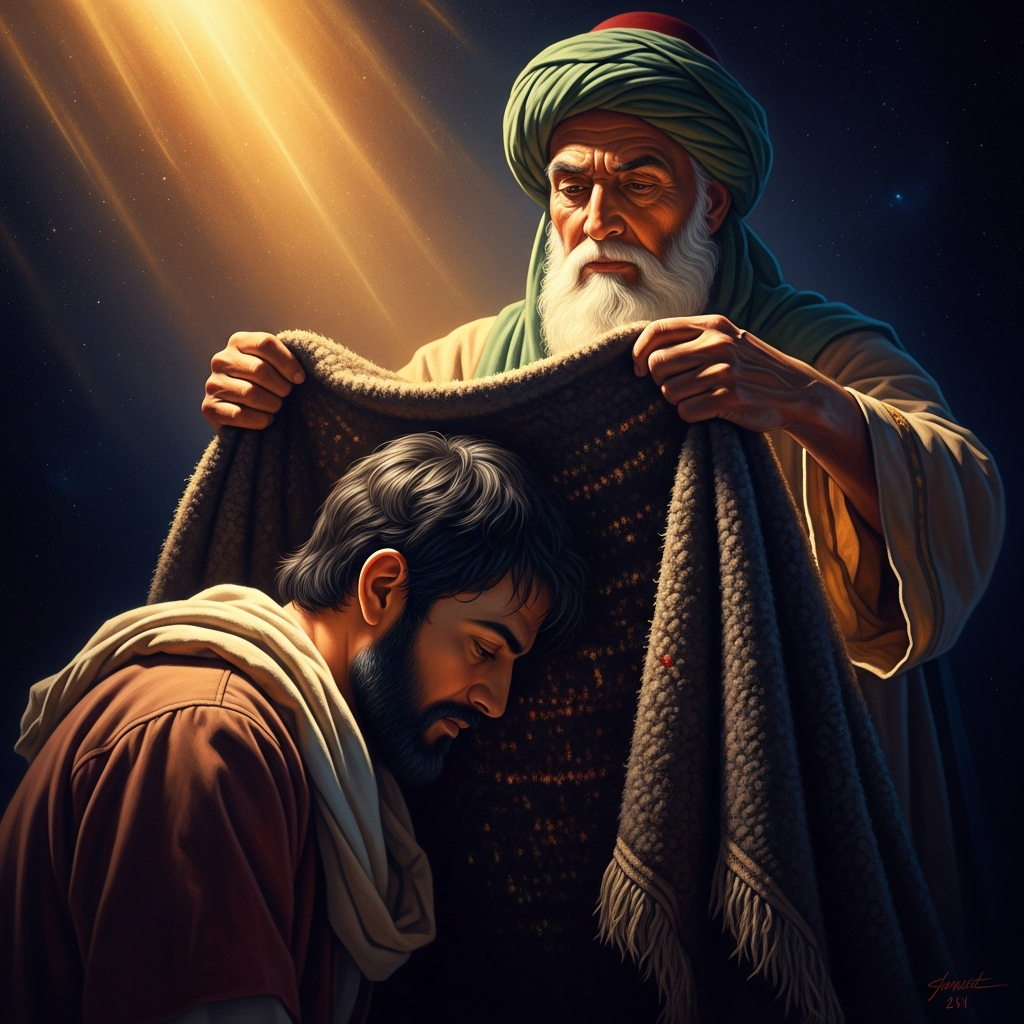
Abd al-Qadir al-Gilani and the Cloak
The 'Rose of Baghdad' — already the most famous preacher in the Islamic world — receives the initiatic cloak that transforms his personal path into a transmissible tradition, founding the Qadiriyya: the oldest and most widespread Sufi order on earth.
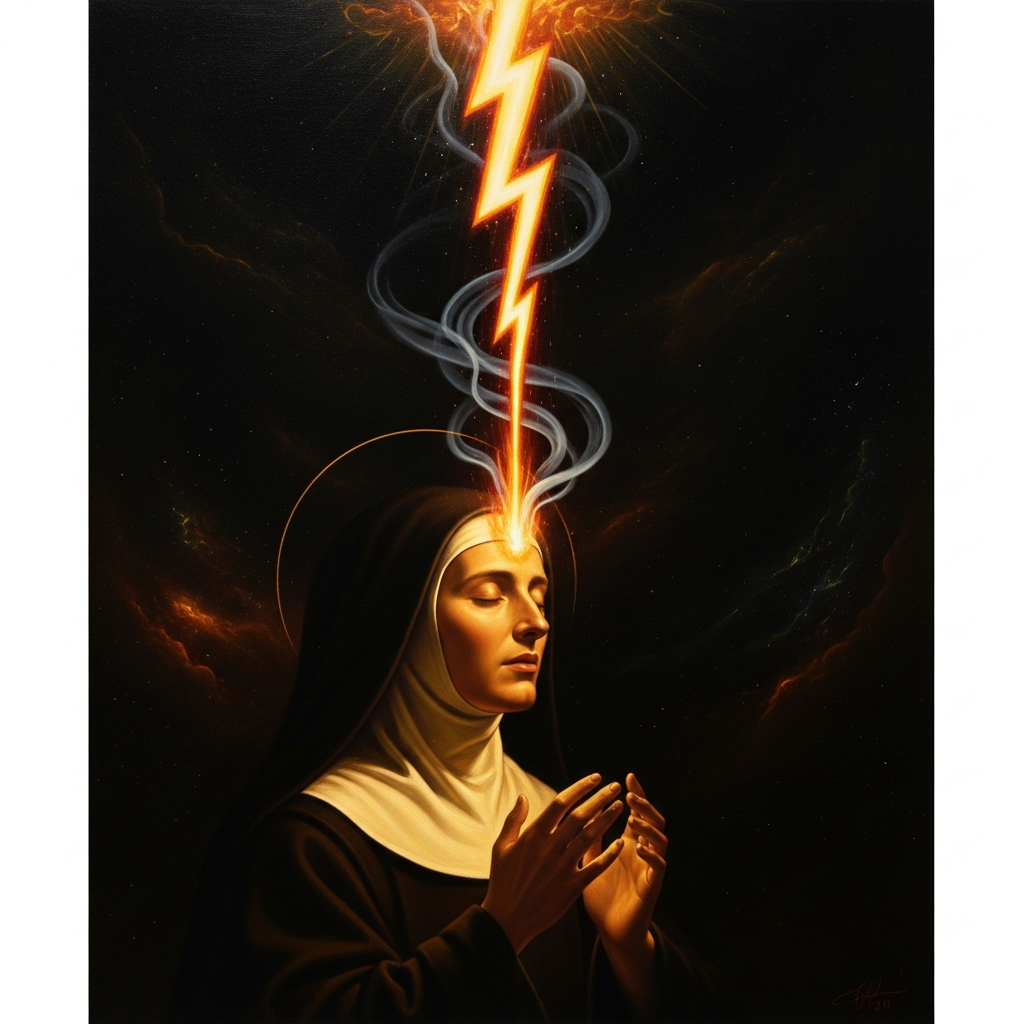
A Feather on the Breath of God
A forty-two-year-old German abbess has been carrying secret visions since childhood. Then a tongue of living flame descends into her brain and she hears the command she has dreaded and longed for: write what you see. Over ten years, Hildegard of Bingen pours out the first theology a woman is authorized to publish in the Western church.
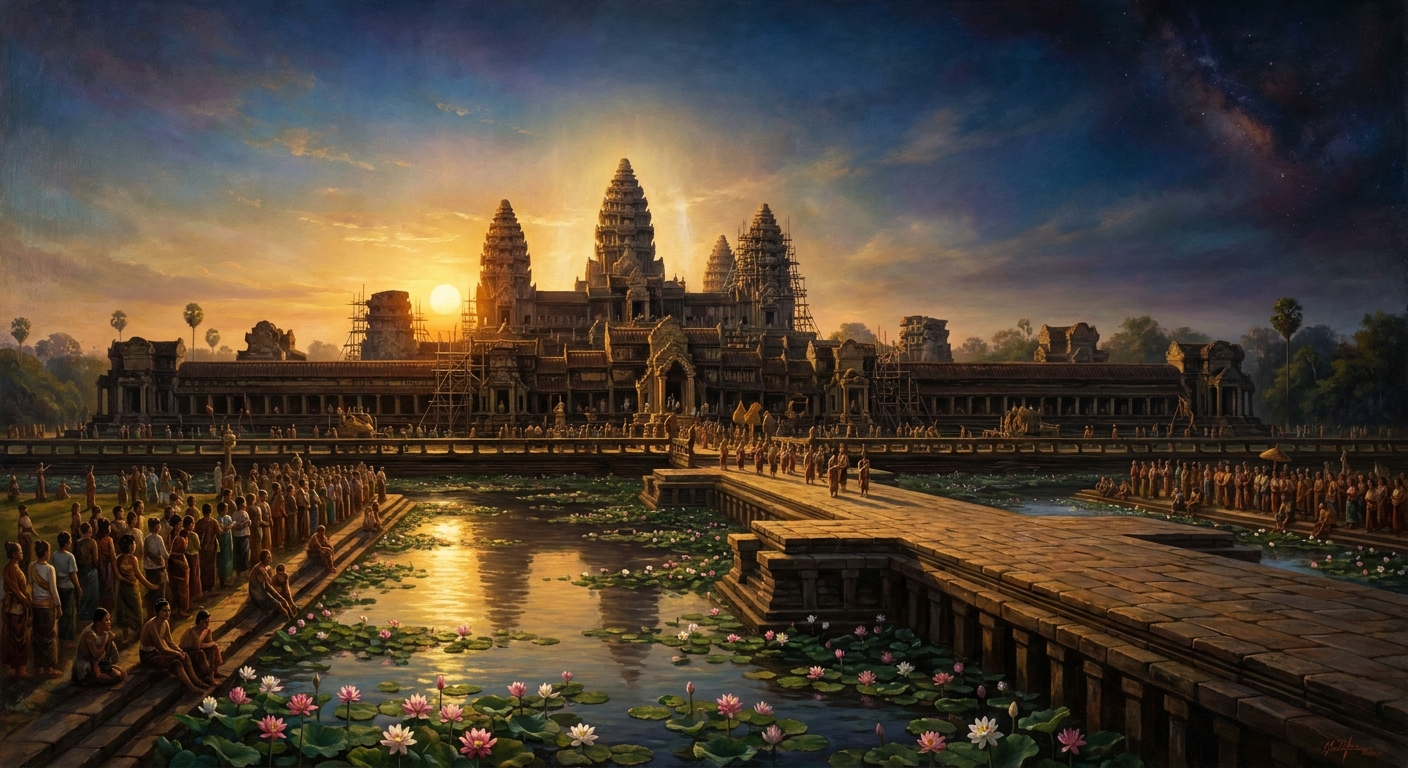
Suryavarman Dedicates Angkor Wat
c. 1150 CE. King Suryavarman II raises the largest religious structure ever built — a stone Mount Meru with five towers, a moat the size of a lake, and a half-mile gallery carved with the gods churning the ocean for the elixir of immortality.
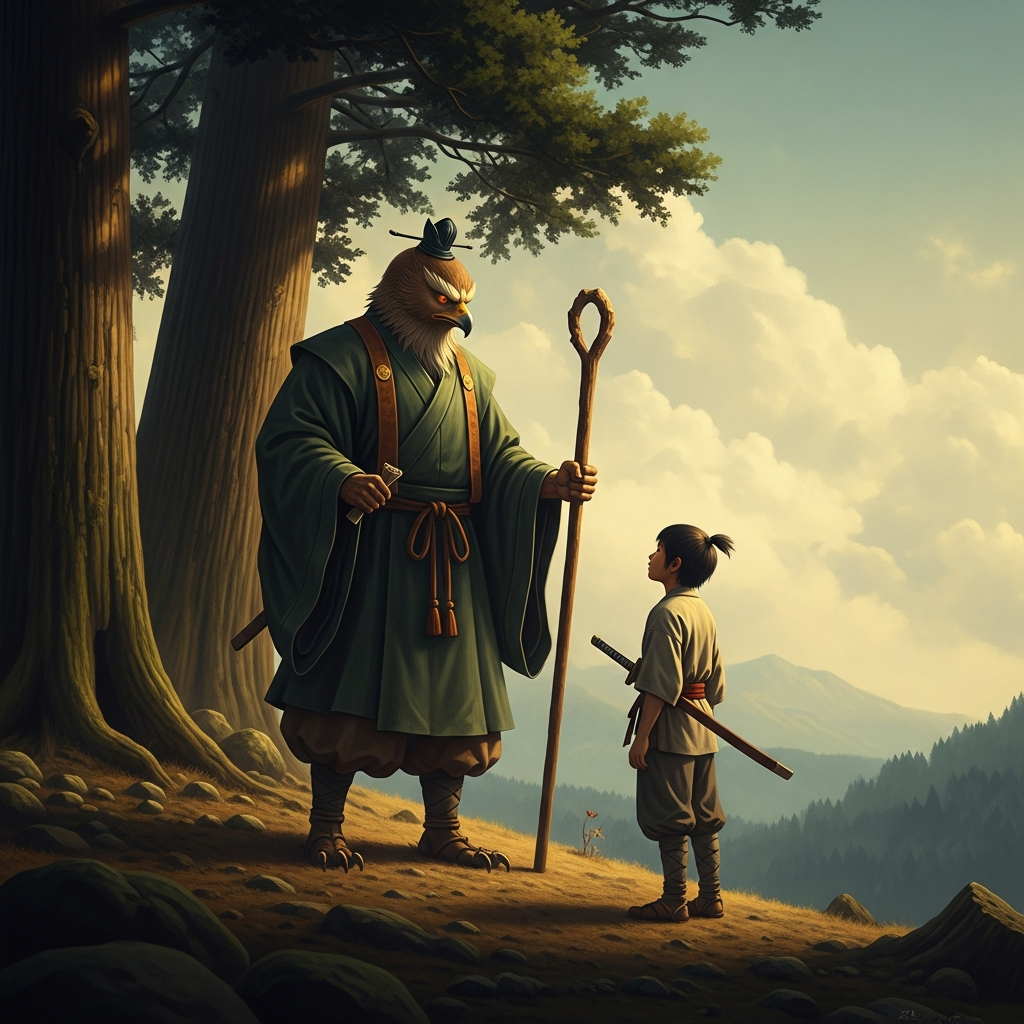
What the Tengu Teach on the Mountain
A young warrior in Heian-period Japan climbs into the mountain seeking a master among the tengu — the half-human, half-bird spirits who are said to have taught Yoshitsune his swordsmanship. He finds something on the mountain, but it does not teach him the way he expected to be taught, and he does not learn what he thought he came to learn.
The Commentator
A royal physician and judge in Córdoba is commissioned by a caliph to explain Aristotle clearly — and produces the three-tiered commentary that sparks the intellectual revolution in Christian Europe called Scholasticism. Thomas Aquinas will call him simply 'the Commentator,' without a name, as though there could be no other.
Becket in the Cathedral
December 29, 1170. Four knights ride to Canterbury through the winter dusk with swords beneath their cloaks. Henry II of England has spoken in rage about a turbulent priest, and they have heard him. They find Archbishop Thomas Becket at vespers. He refuses to flee. He turns toward the altar and receives the blows on the cathedral floor — four swords, his skull split open before his monks. Within three years he is a saint. The king walks barefoot to his tomb.
The Border Between Waking and Dreaming
Myōe Shōnin keeps a dream diary for over forty years, argues with the Buddha in his sleep, receives corrections to his daytime understanding from nighttime sources, and cuts off his ear as an offering — and wakes to find it gone. The story asks: if waking life is itself a dream, what did he actually do?
Honen and the Name That Saves Everyone
A monk who has memorized the entire Buddhist canon reads one sentence in a Chinese commentary, leaves Mount Hiei, and goes down to the farmers and the prostitutes and the soldiers with a four-word prayer that he says is enough.
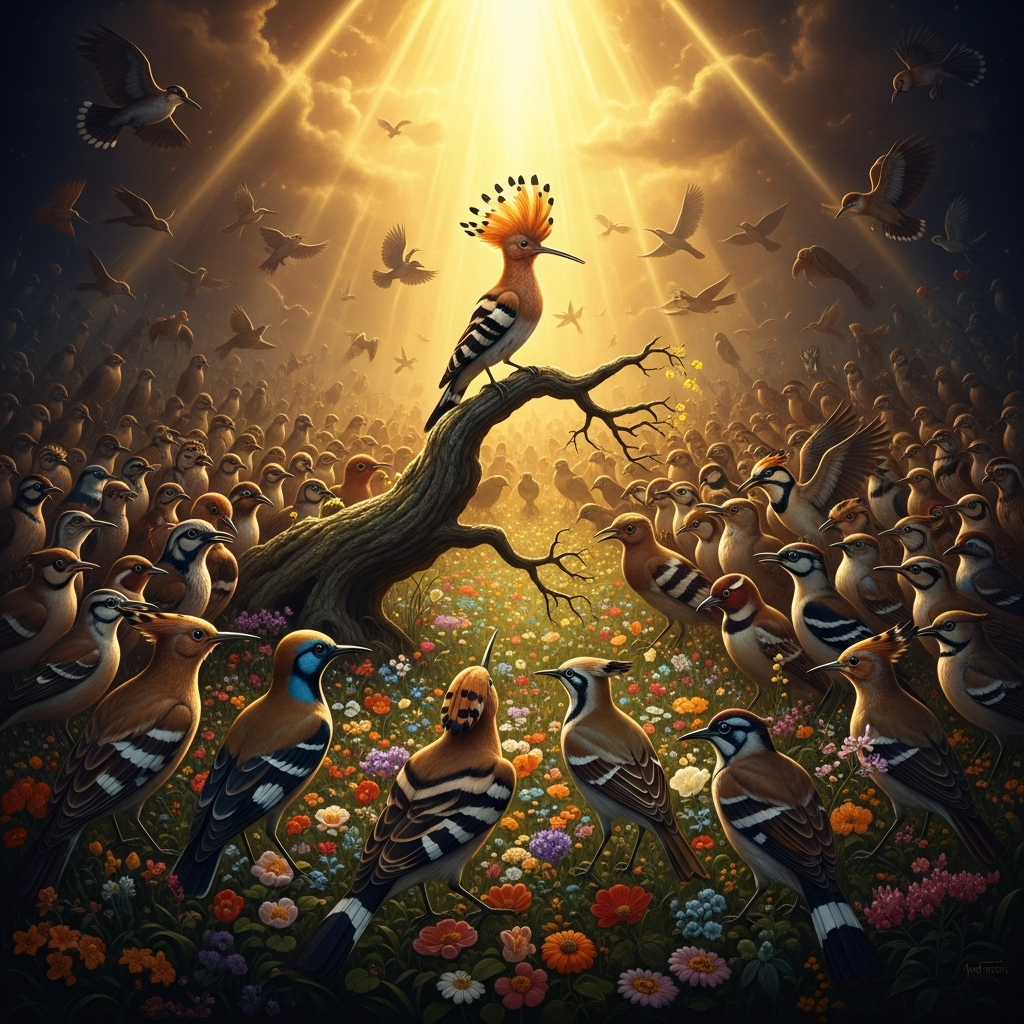
The Conference of the Birds
Thirty thousand birds set out across seven impossible valleys to find the Simurgh, the mythical king of birds. Only thirty survive. When they arrive at the Simurgh's court, they discover that the word for what they sought has been their own name the entire time.
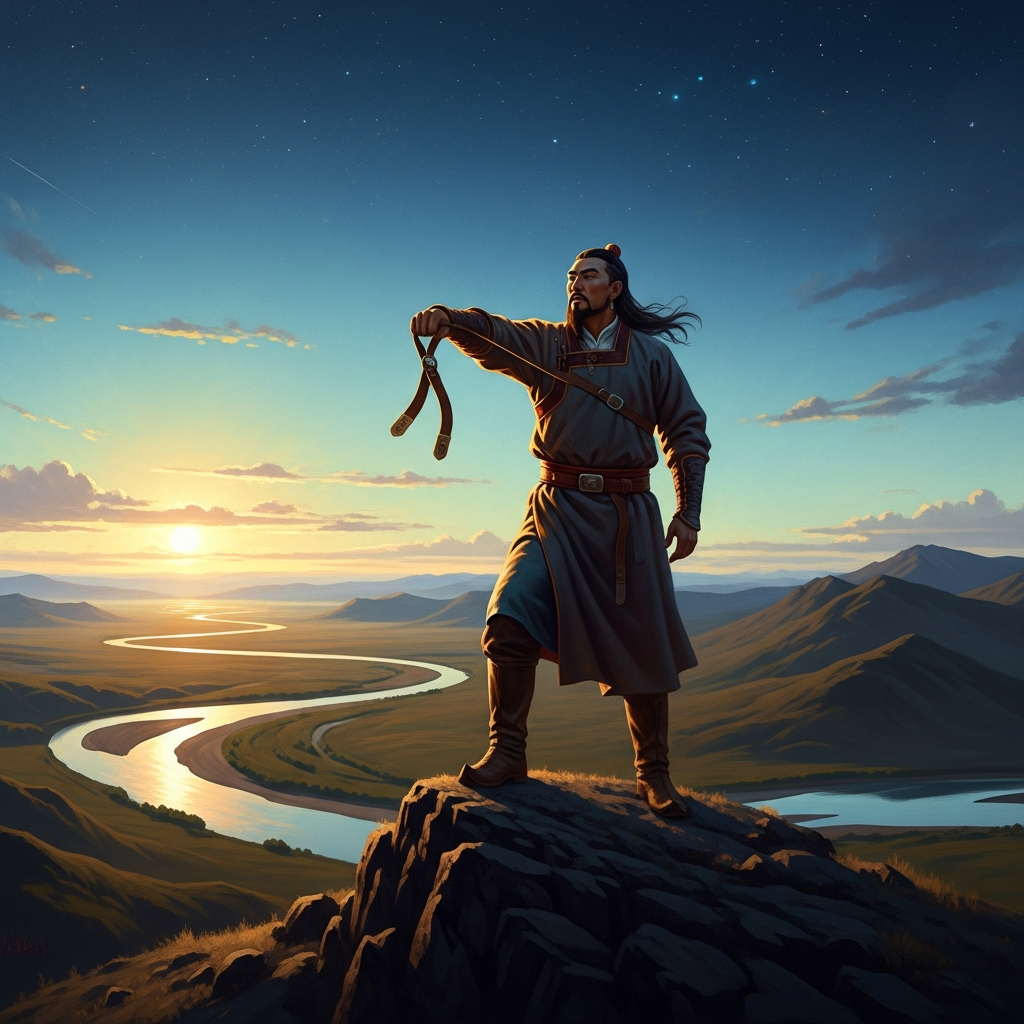
Temüjin Prays to the Eternal Blue Sky
Temüjin — not yet Genghis Khan — climbs alone to the summit of Burkhan Khaldun and prostrates himself nine times before Tengri. He has survived slavery and the abduction of his wife. Now he asks the sky whether the mandate belongs to him.
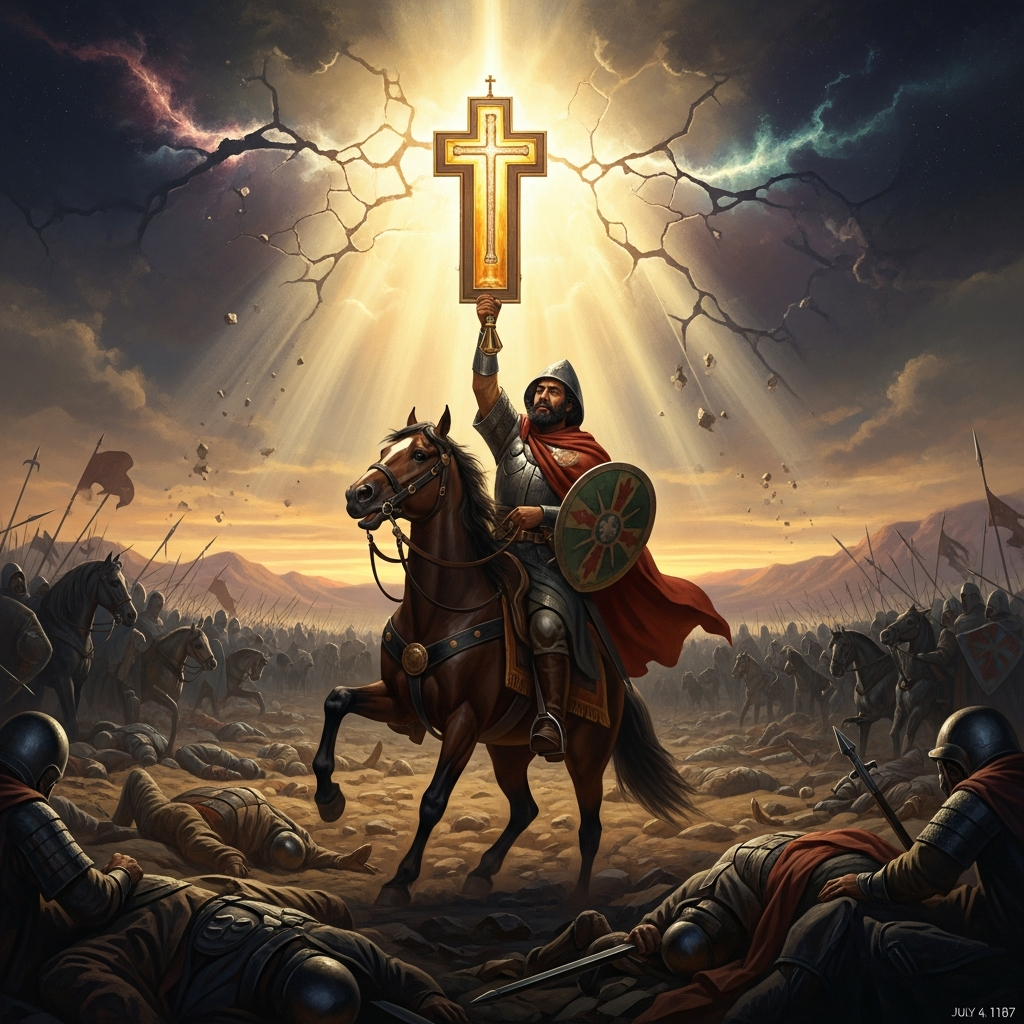
Saladin at the Gates of Jerusalem
October 2, 1187. Saladin's army stands at the walls of Jerusalem after eighty-eight years of Crusader rule. The terms are exact: ransom or slavery. When the ransoms fall short, Saladin frees ten thousand captives without payment. He does not sack the city. He washes the Dome of the Rock with rosewater. The contrast with 1099 — when the Crusaders waded through blood to the Holy Sepulchre — is total.
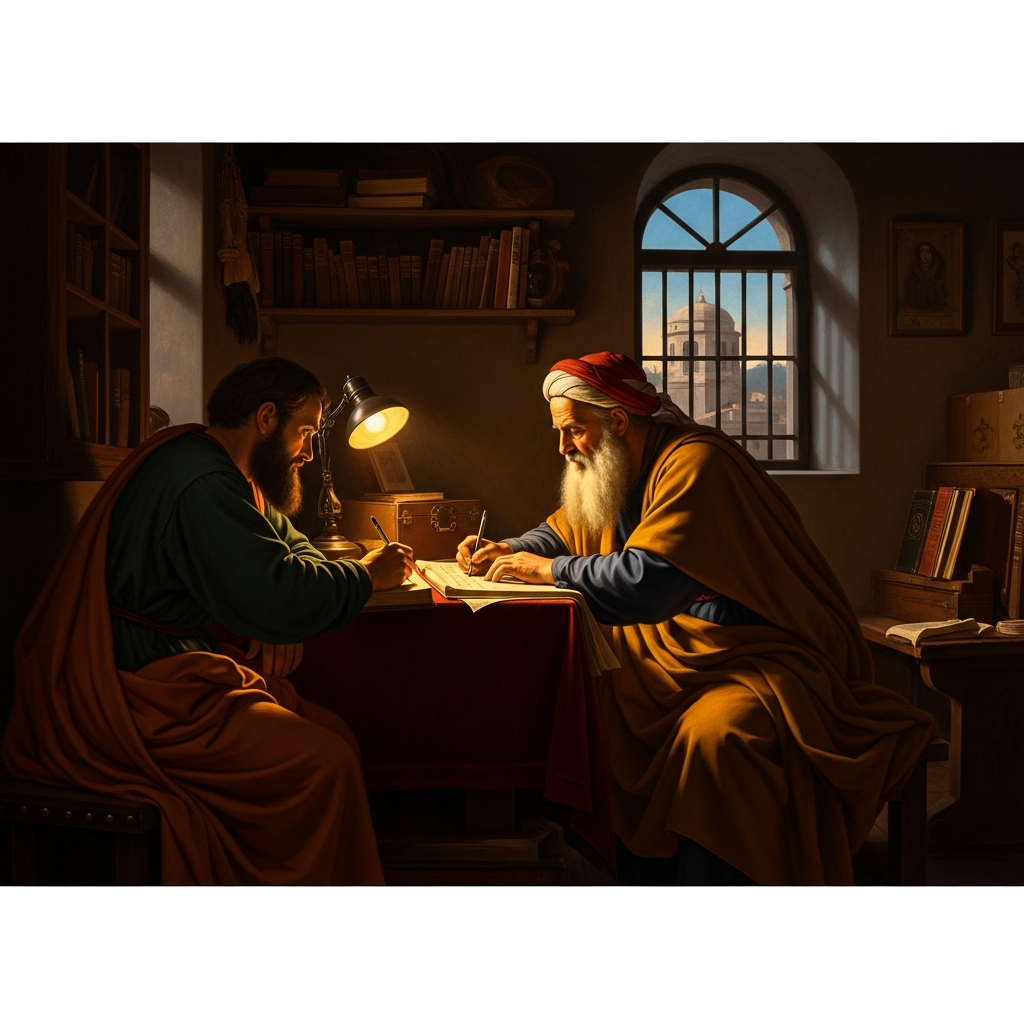
Maimonides and the God Who Cannot Be Described
In Cairo, in the spare hours between consultations as court physician to Saladin's vizier, Moses ben Maimon writes a book for Jews who have studied Aristotle and cannot reconcile him with their Scripture — and arrives at a God who has no attributes, of whom every positive statement is false.
The Philosopher of Light, Killed at Thirty-Eight
In four years at Aleppo, Suhrawardi writes twenty books proving that the universe is a hierarchy of luminous angels descending from the Light of Lights — and the orthodox jurists, reading him in horror, persuade Saladin's son to execute him in the citadel before he turns forty.
Averroes and the Burning
In 1195 CE, the Almohad caliph burns the philosophical works of Ibn Rushd — the man whose commentaries on Aristotle had made him the most important philosopher in the medieval world — and exiles their author to house arrest at seventy-one. Ibn Rushd continues writing. The books survive him in Hebrew and Latin.
Hine-nui-te-po and the Death of Maui
Maui, the trickster who lassoed the sun and fished up islands, attempts his final act: crawling through the sleeping body of Hine-nui-te-po, the Great Woman of Night and goddess of death, to win immortality for all of humanity. His companions — a company of birds — wait in silence. A fantail cannot contain its laughter. Hine-nui-te-po wakes. Maui is crushed. This is why humans die.
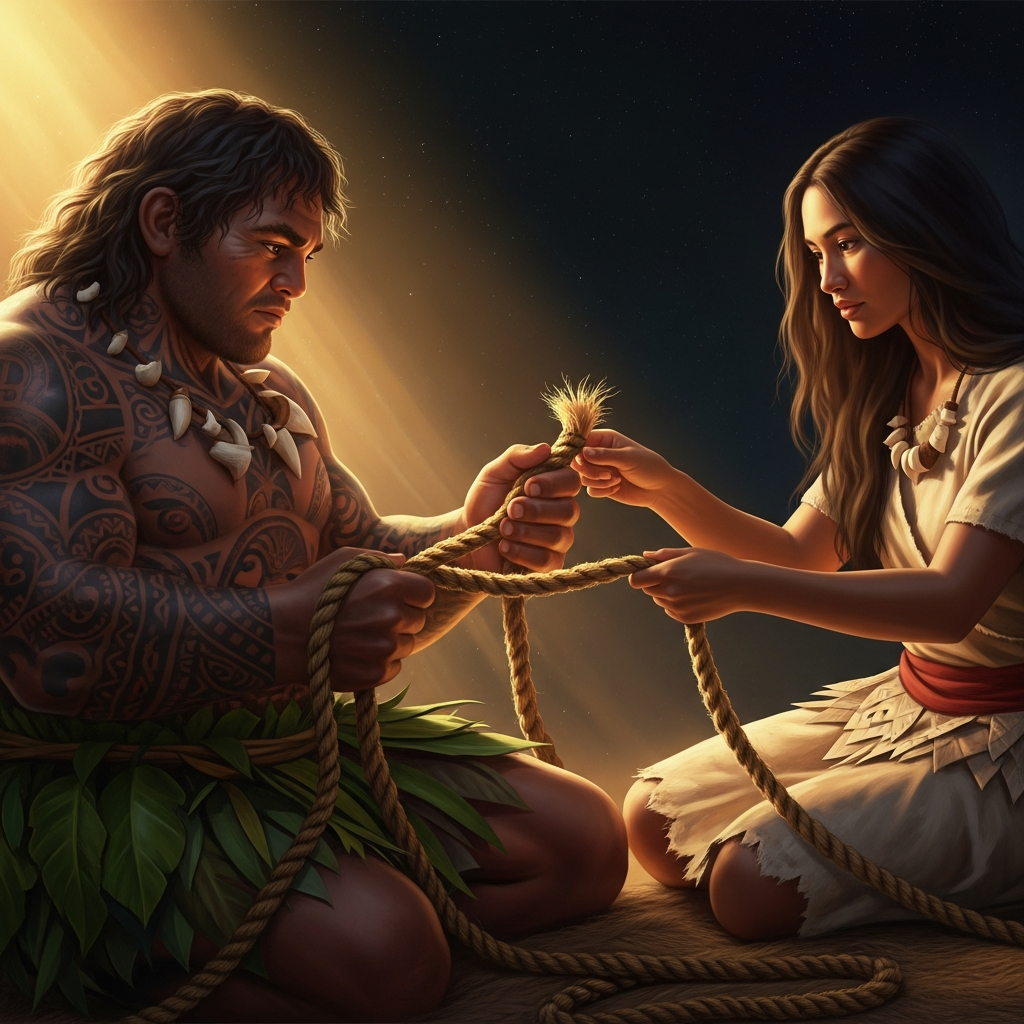
Maui Lassoes the Sun
The days are too short. Maui's mother cannot finish her weaving before dark falls. Maui braids a rope from his sister Hina's sacred hair, walks to the place where the sun rises, and waits in the dark. When La climbs out of his pit at dawn, Maui lassoes him with the rope of hair and beats him with his grandmother's jawbone until La agrees to travel slowly across the sky. The sun's crippled gait through the Hawaiian summer is the result of that morning's negotiation.
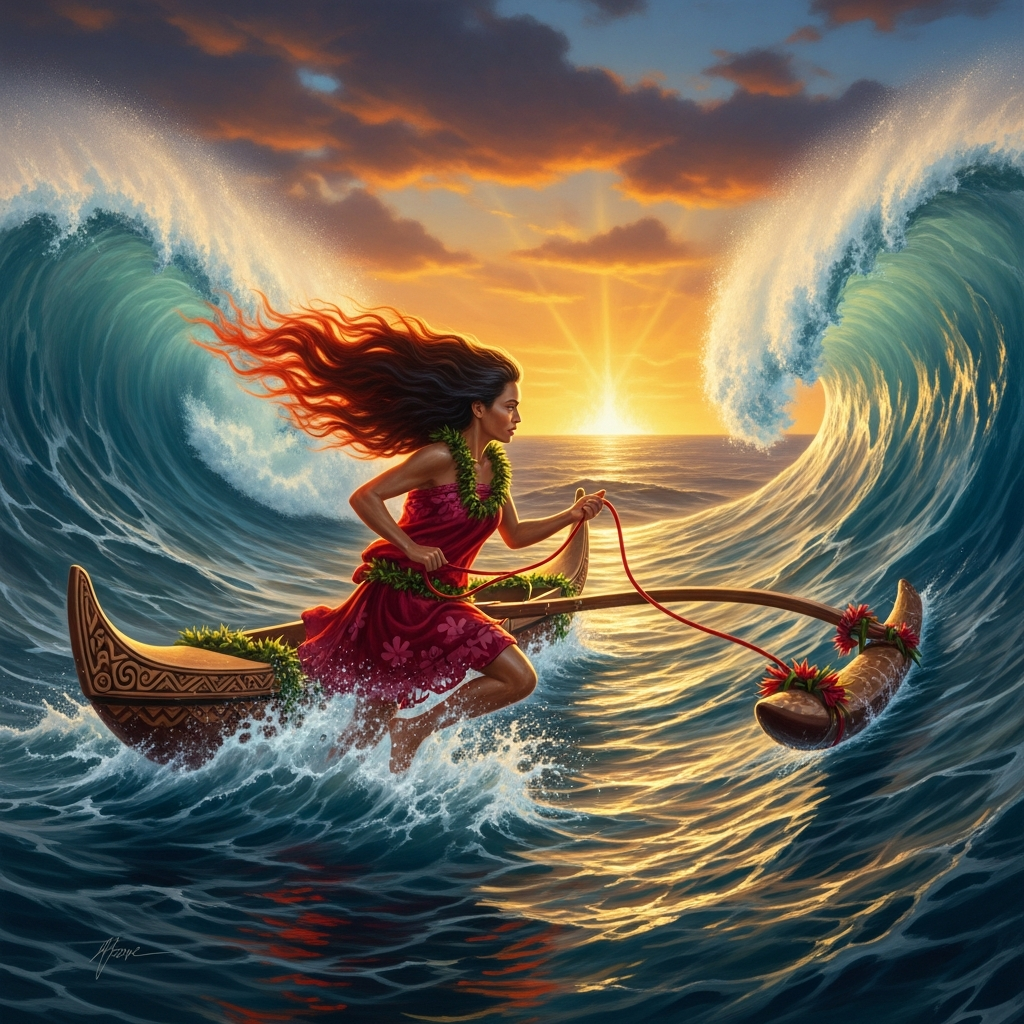
Pele Flees Namaka Across the Pacific
Pele, goddess of volcanic fire, flees her elder sister Namaka, goddess of the sea, across the breadth of the Pacific. Each island where Pele digs a fire-pit, Namaka floods and destroys. The chase moves steadily northwest — Kahoolawe, Maui, Molokai, Oahu, Kauai — and the geological sequence of the Hawaiian island chain is the record of every place Namaka won and every place Pele could not yet hold the ground.
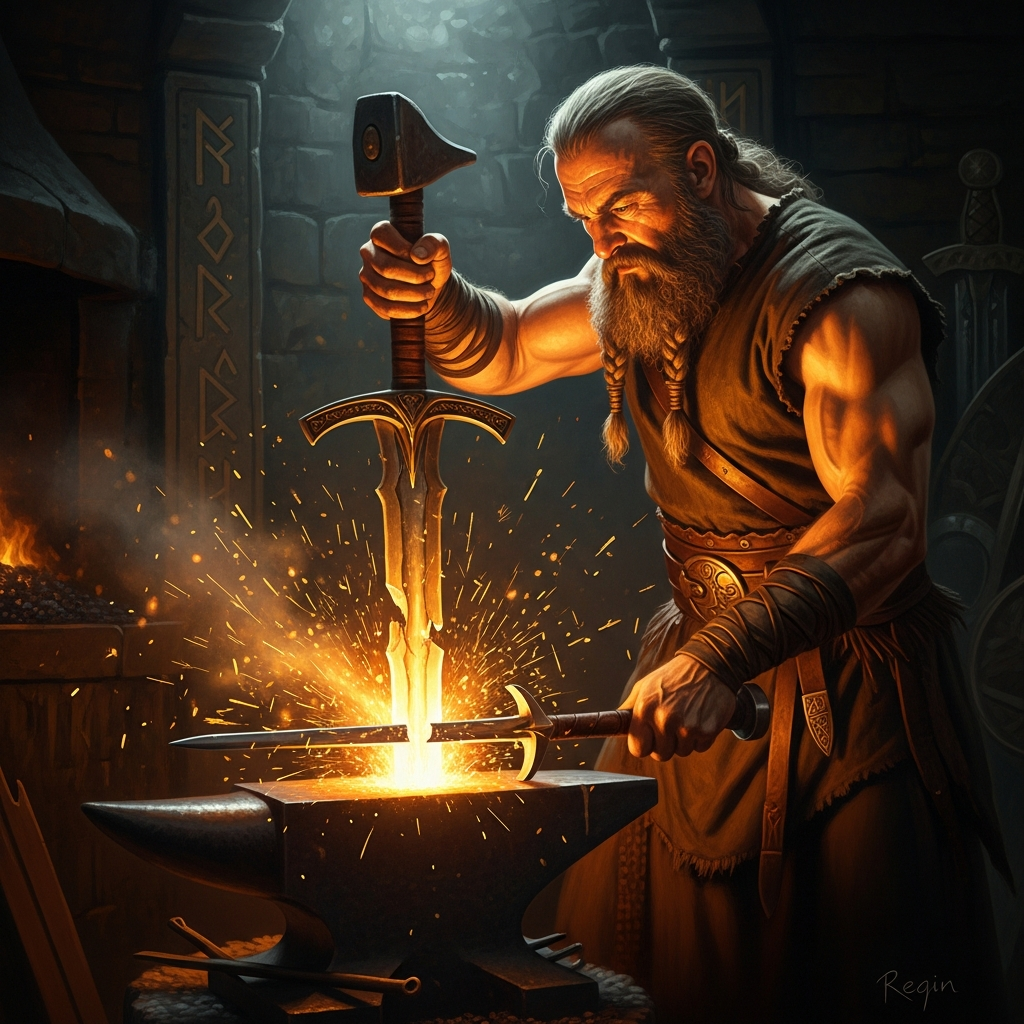
Sigurd Kills the Dragon and Learns to Hear the Birds
Sigurd, raised by the smith Regin to be the instrument of Regin's revenge, digs a pit on the Gnita-heath and waits beneath the path of the dragon Fáfnir. He drives the sword Gram up through the soft belly. Dying, the dragon tells him the gold is cursed and will be his death. Sigurd ignores the warning. He tastes the dragon's blood and suddenly hears the birds — and the birds are telling him that Regin is about to kill him for the gold. He kills Regin. He takes the gold. The doom the dragon named is already moving.
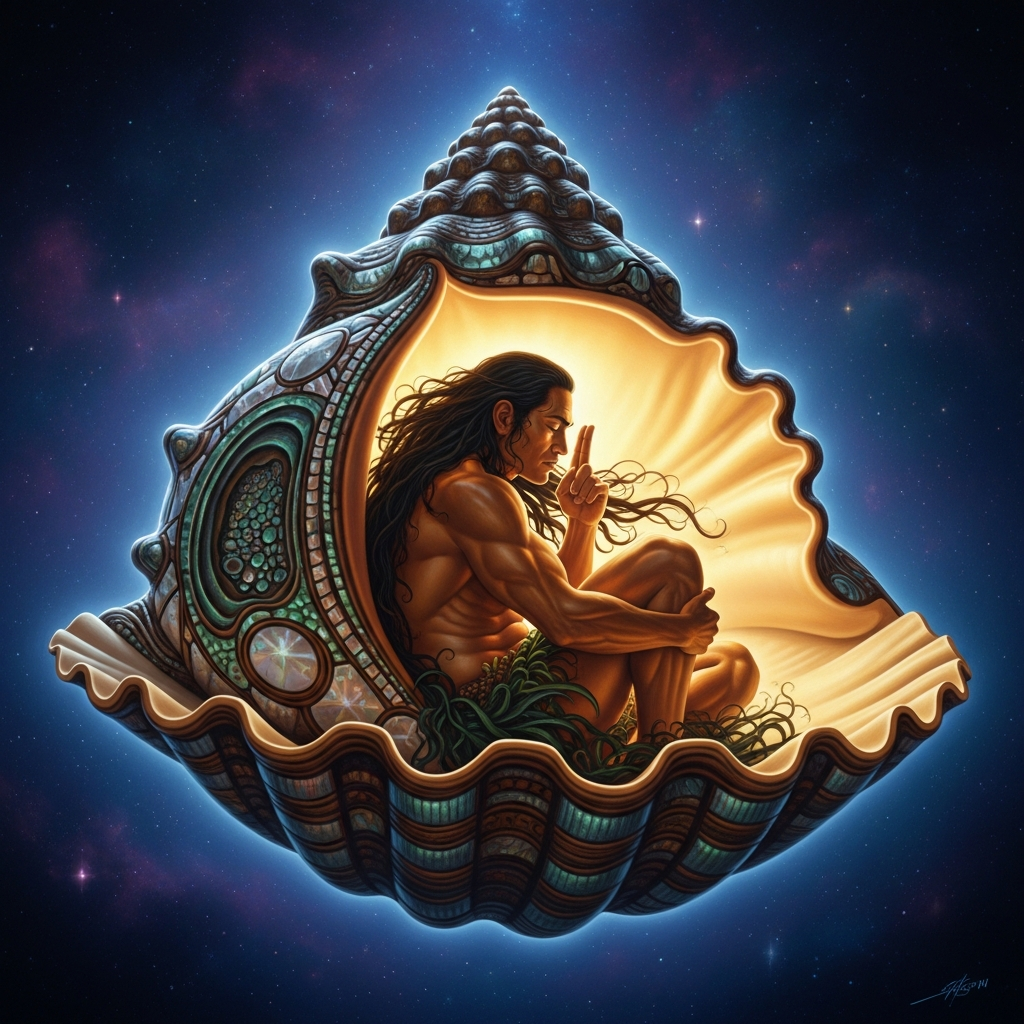
Tangaroa Expands Himself into the World
In the absolute void before time, Tangaroa — the Polynesian god of the sea — exists alone inside a shell. He cracks it open from the inside and becomes the world: his shell becomes rock, his spine becomes the mountains, his flesh becomes earth and forest and the bodies of living things. The Samoan, Tongan, and Tahitian traditions each preserve a different account of what was inside the shell and what came out first.
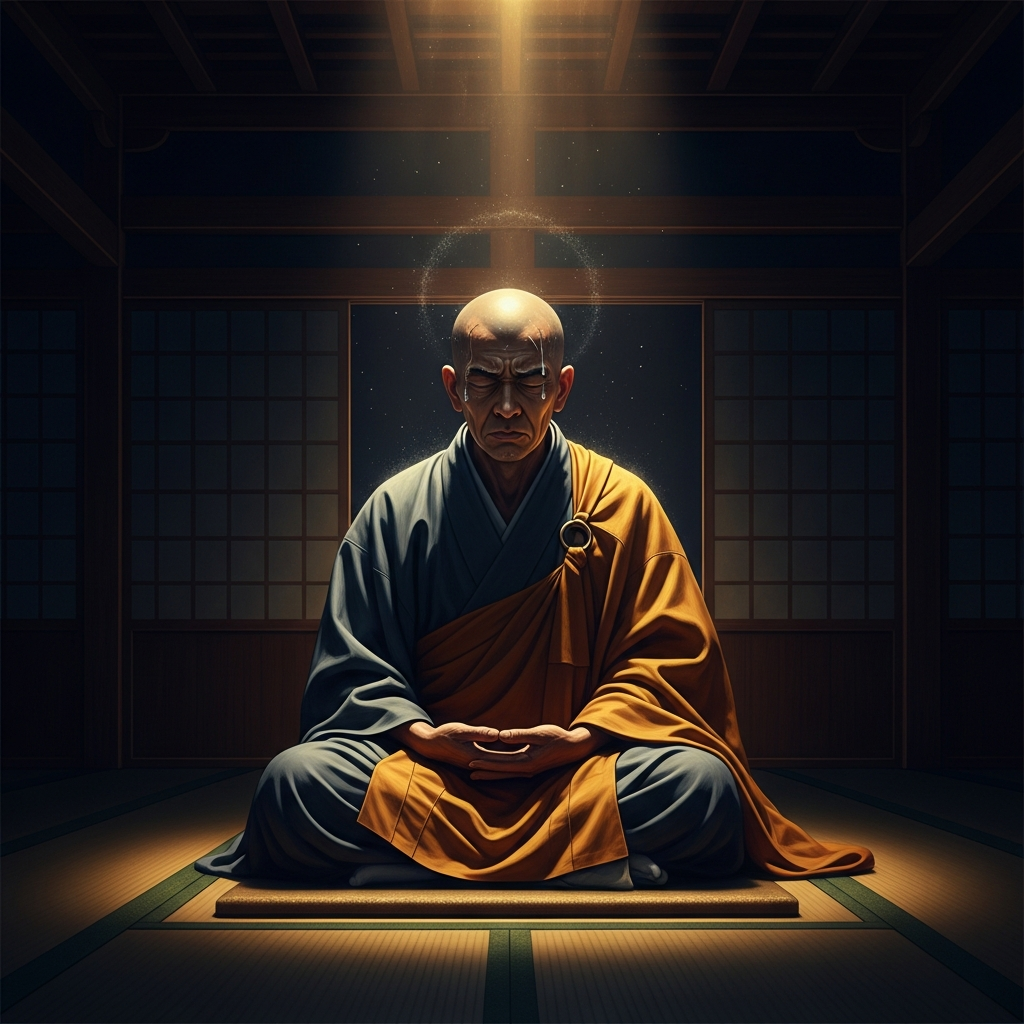
The Descent from Mount Hiei
A monk who has spent twenty years keeping the precepts perfectly walks down Mount Hiei at forty, admits he has failed at enlightenment, and finds a teacher who tells him that failure is the prerequisite. Shinran founds the largest Buddhist denomination in Japan on this admission.
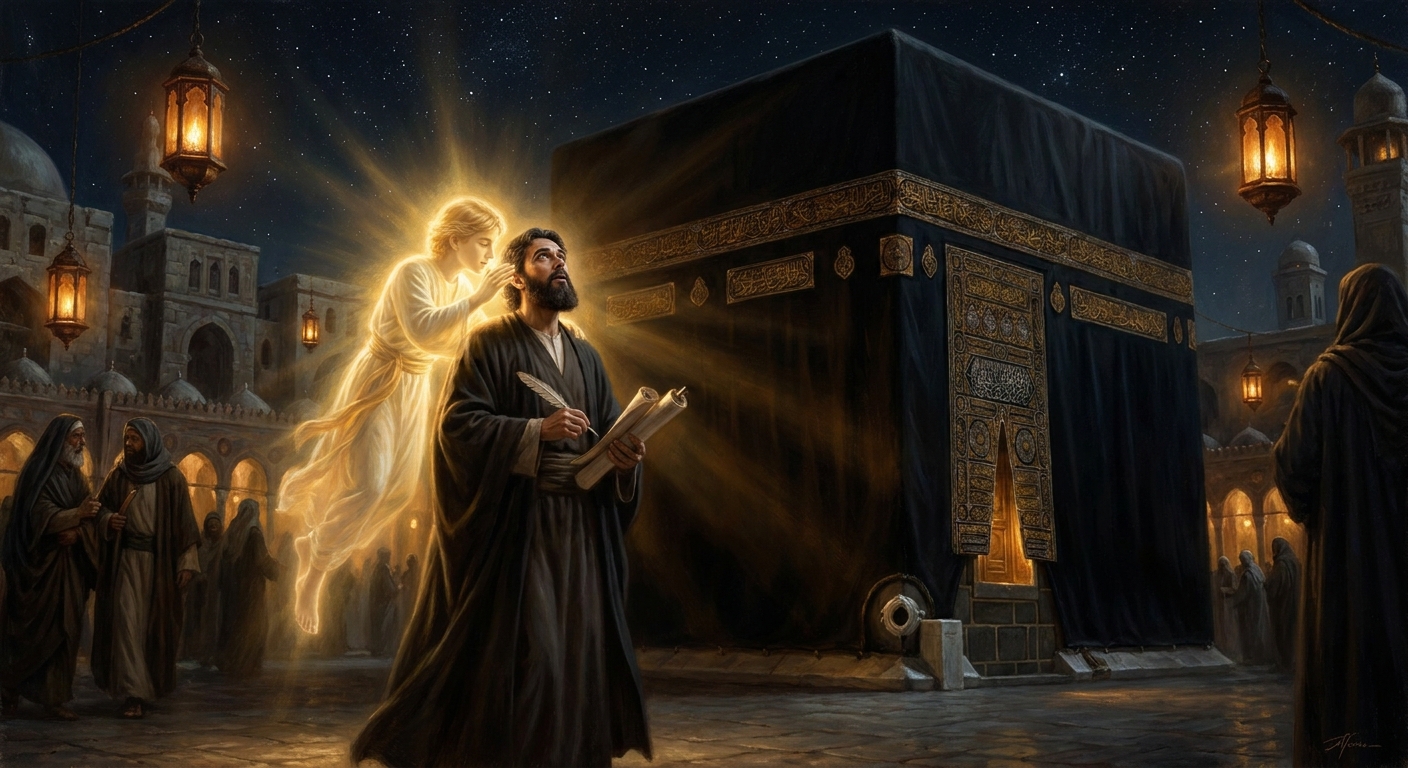
The Youth at the Ka'ba
Circumambulating the House at midnight, an Andalusian pilgrim meets a luminous Youth who has been waiting for him since before the world was made — and dictates the book that becomes Sufism's metaphysical spine.
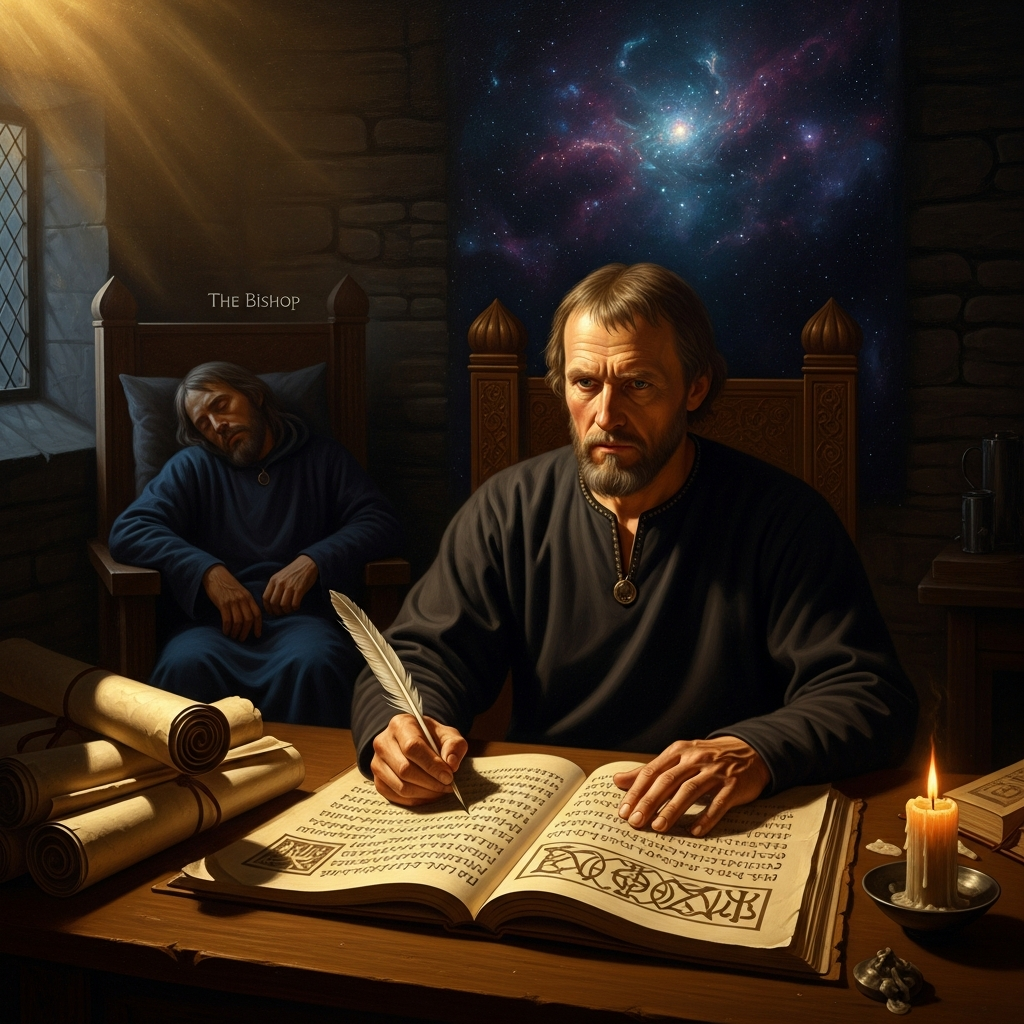
The Historian Who Saved the Gods
It is 1220 CE and Iceland has been Christian for two centuries. The old gods survive only in skaldic poetry that no one can read anymore, because the kennings require knowing the myths and the myths are dying. Snorri Sturluson — chieftain, lawyer, the most powerful man in Iceland — sits down at Reykholt to write a manual for young poets. He frames the whole project as a deception. Under cover of euhemerism, he writes everything: creation, the death of Baldur, the binding of Loki, Ragnarok. He saves the Norse religion by pretending it is history. Twenty years later he is murdered in his own cellar by men sent by the Norwegian king.
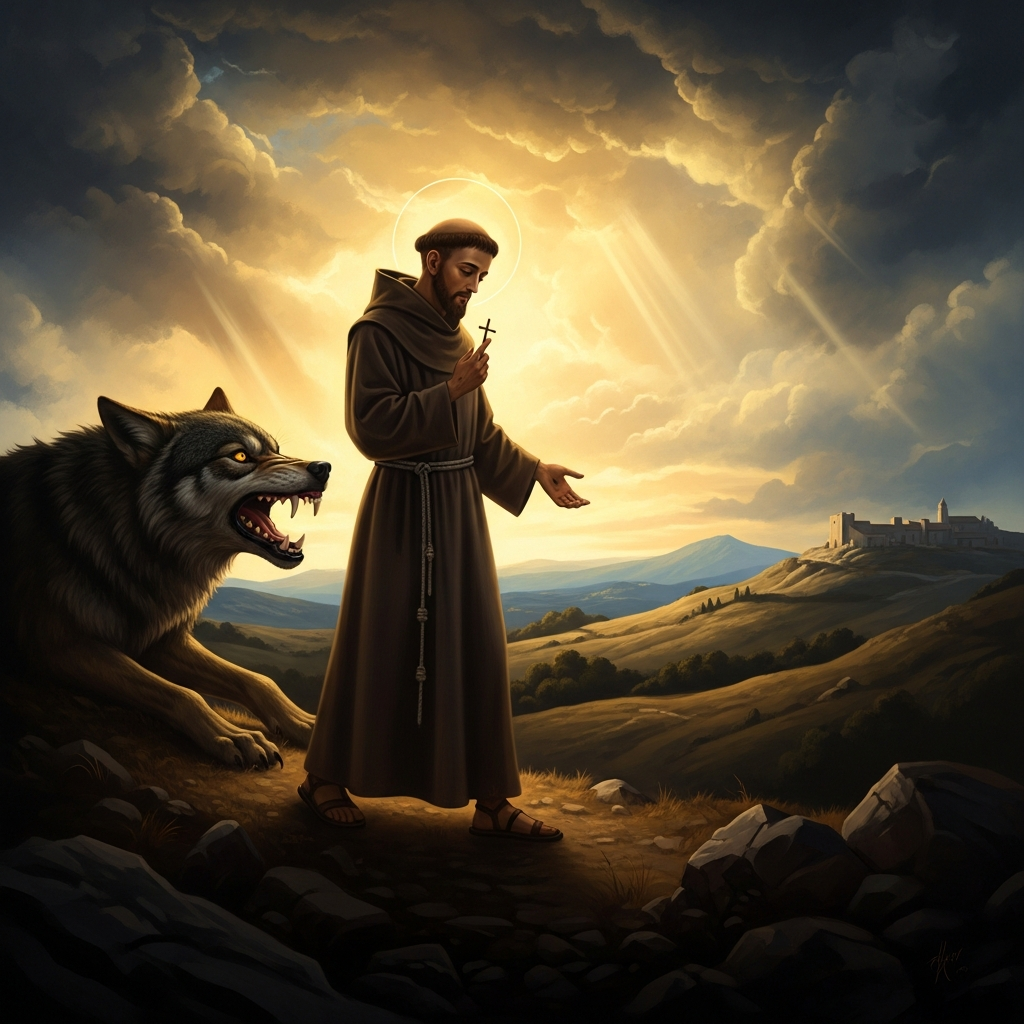
Francis and the Wolf of Gubbio
A wolf has been killing the people of Gubbio for months. The townspeople are afraid to leave the walls. Francis of Assisi walks out the gate alone, into the hills, and finds the wolf in a clearing. He makes the sign of the cross. He calls it *Brother Wolf*. He negotiates a contract: if the town will feed the wolf, the wolf will stop killing. They walk back through the gate together, the wolf placing its paw in Francis's hand to seal the agreement. The wolf lives in Gubbio for two years, going door to door for food, and when it dies of old age the townspeople weep.
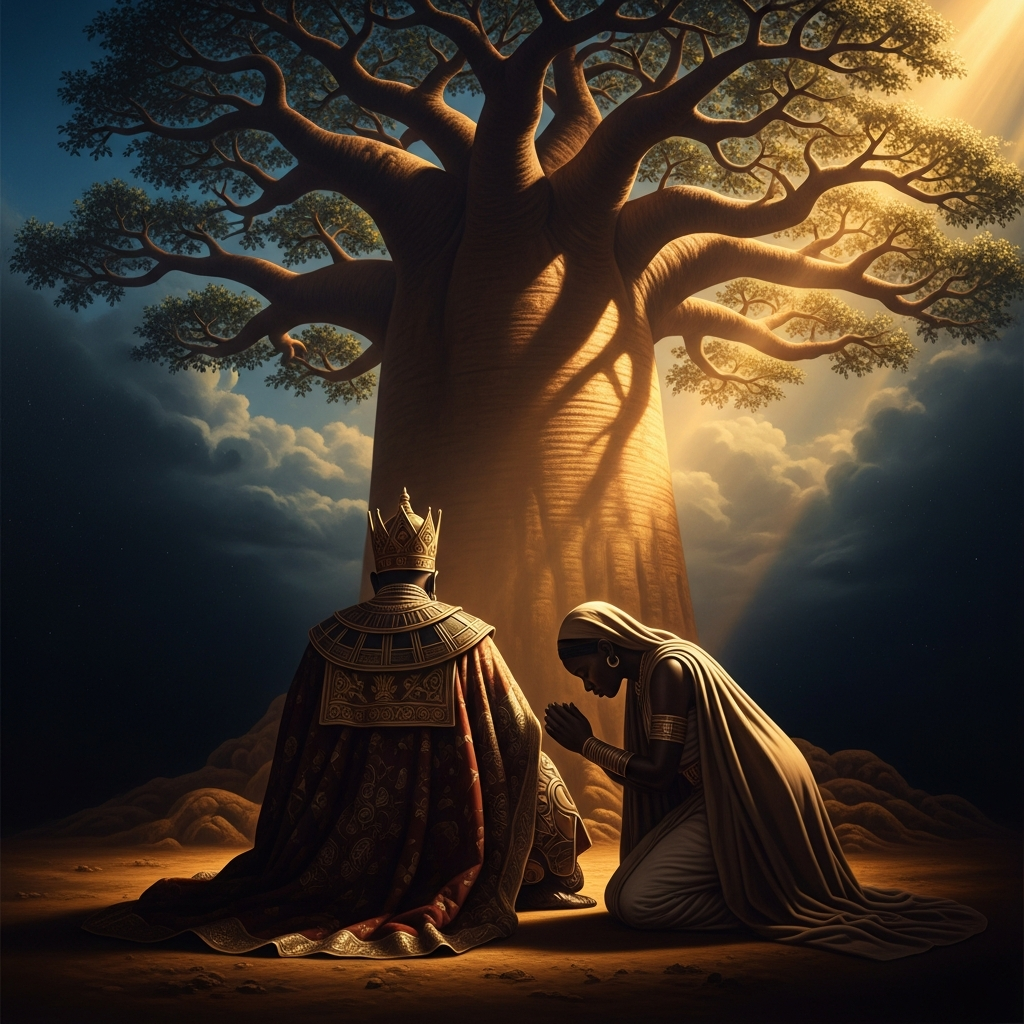
The Cripple's Mother and the Baobab
Sogolon weeps at the foot of the baobab. Her seven-year-old son still cannot walk. The other wives mock her. Then a neighbour insults her over a leaf she cannot reach — and her son drags himself to a heavy iron rod, takes hold of it, and stands.
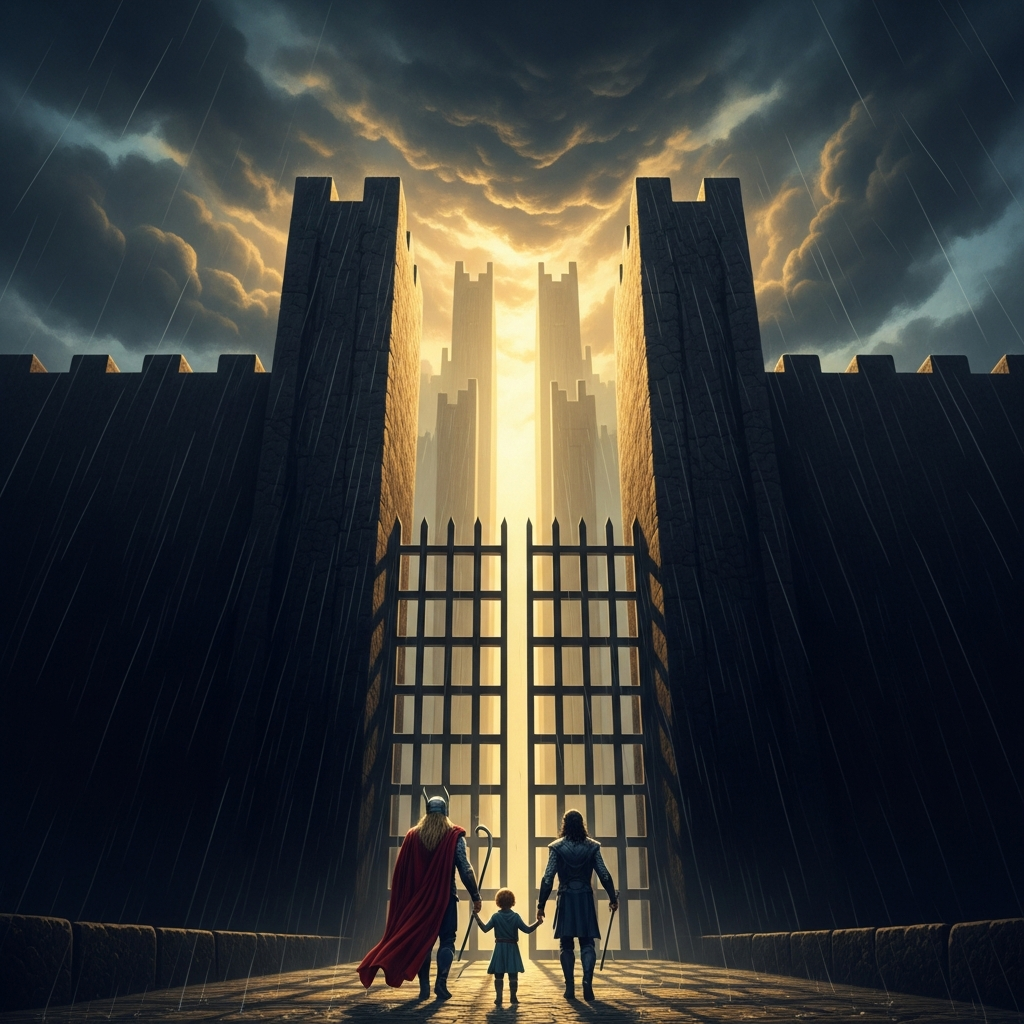
Thor at the Court of Utgard-Loki
Thor and Loki journey east into Jötunheimr and arrive at the impossible hall of Útgarðaloki, where Thor is humiliated in three contests — a drinking horn he cannot empty, a cat he cannot lift, an old woman he cannot throw down. Only on the road home does the giant reveal what each contest really was.
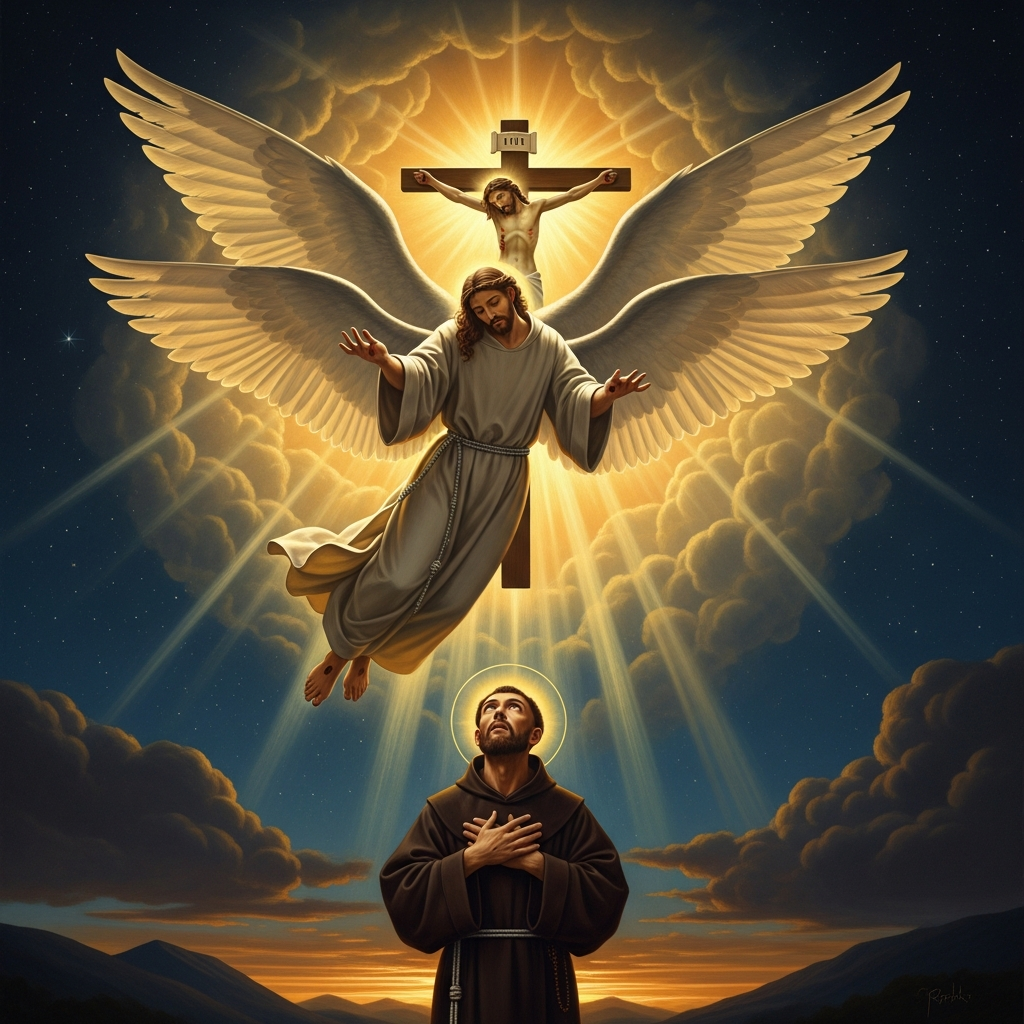
The Wounds of La Verna
Francis of Assisi, forty-two, nearly blind, fasting alone on a Tuscan mountain, sees a six-winged seraph descending — crucified. The vision wounds him with love so intense it leaves physical marks. He carries the stigmata for two years, hides them until his death, and asks to die naked on bare earth. He calls it Sister Death.
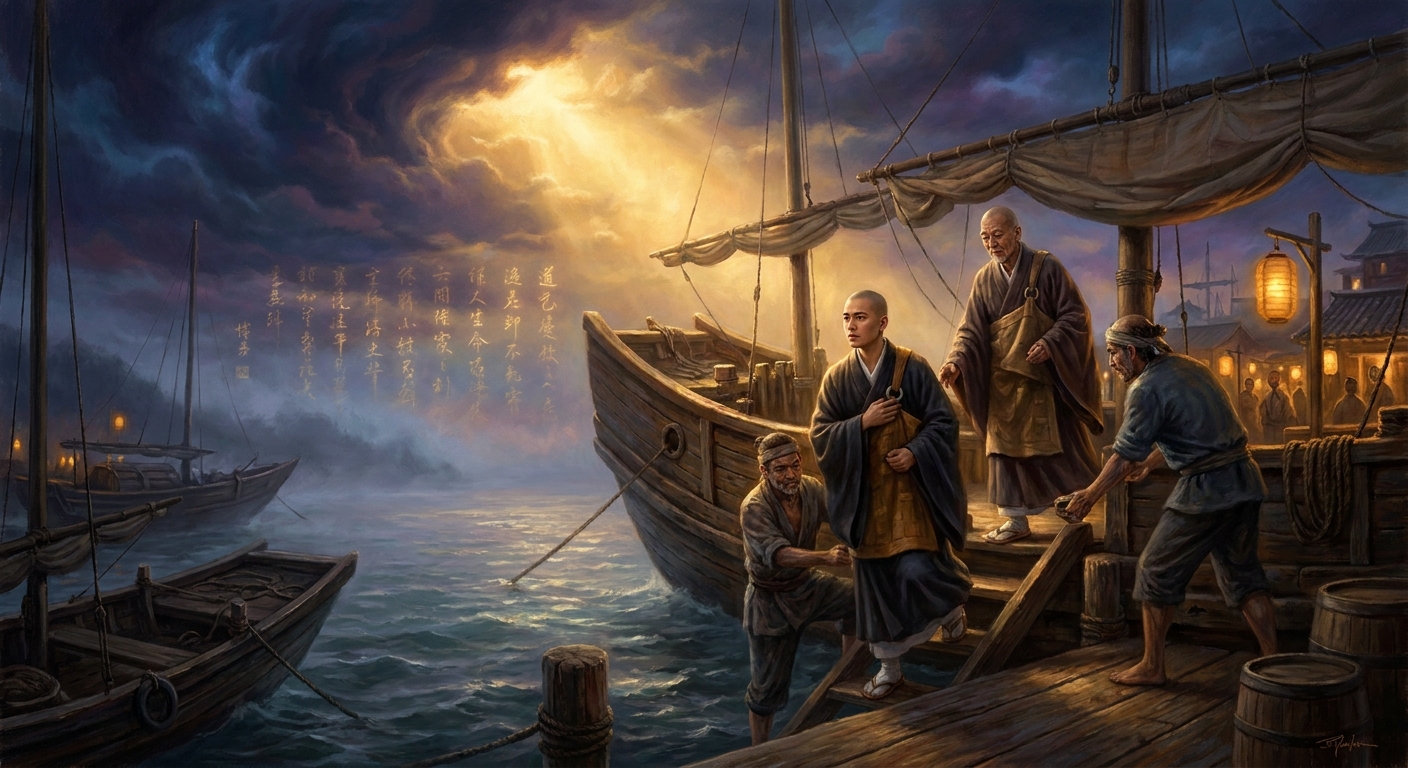
Eyes Horizontal, Nose Vertical
A Japanese monk crosses to Song China searching for the true dharma, hears a master in the meditation hall snap one sentence at a sleeping student, and returns home empty-handed carrying nothing but the sky.
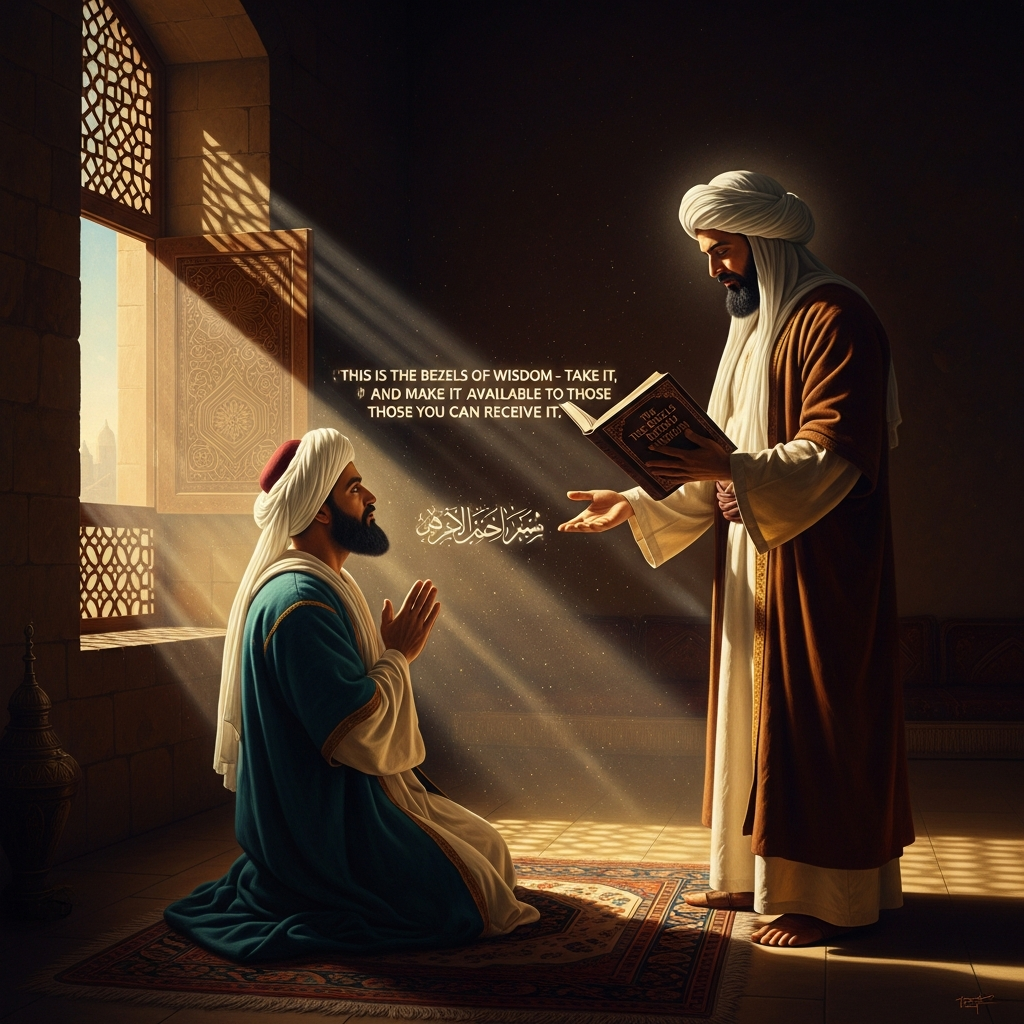
Ibn Arabi and the Ring of Solomon
Damascus, 1229. Ibn Arabi receives the Fusus al-Hikam in a vision from the Prophet — a book about rings. Each prophet is a bezel, a carved face of the divine ring, manifesting one name of God more completely than any other. A student in Damascus tries to understand why the ring has twenty-seven facets rather than one perfect face, and Ibn Arabi explains: the One needs many mirrors.
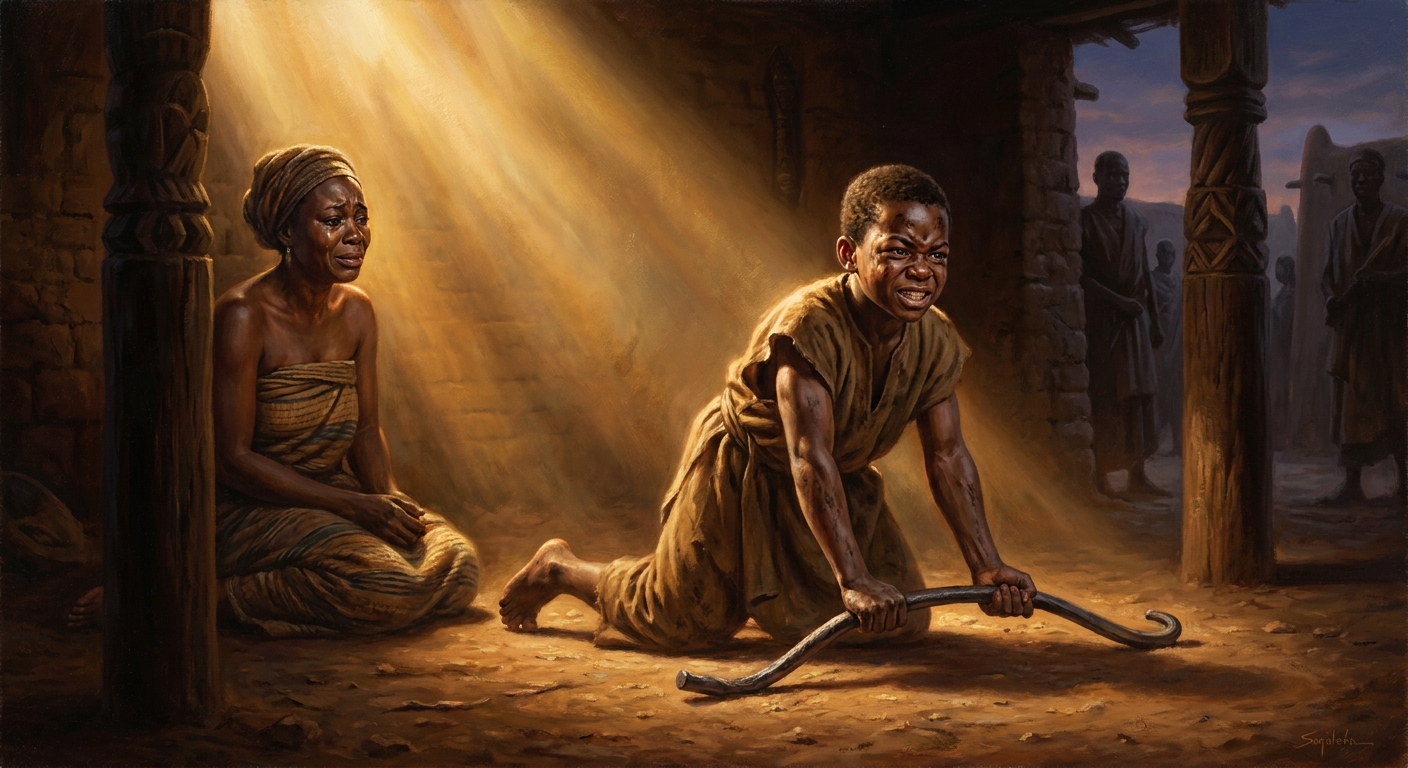
Sundiata Keita Rises
The prophesied lion of Mali cannot walk. The court laughs. Then his hands find an iron rod — and the rod bends.
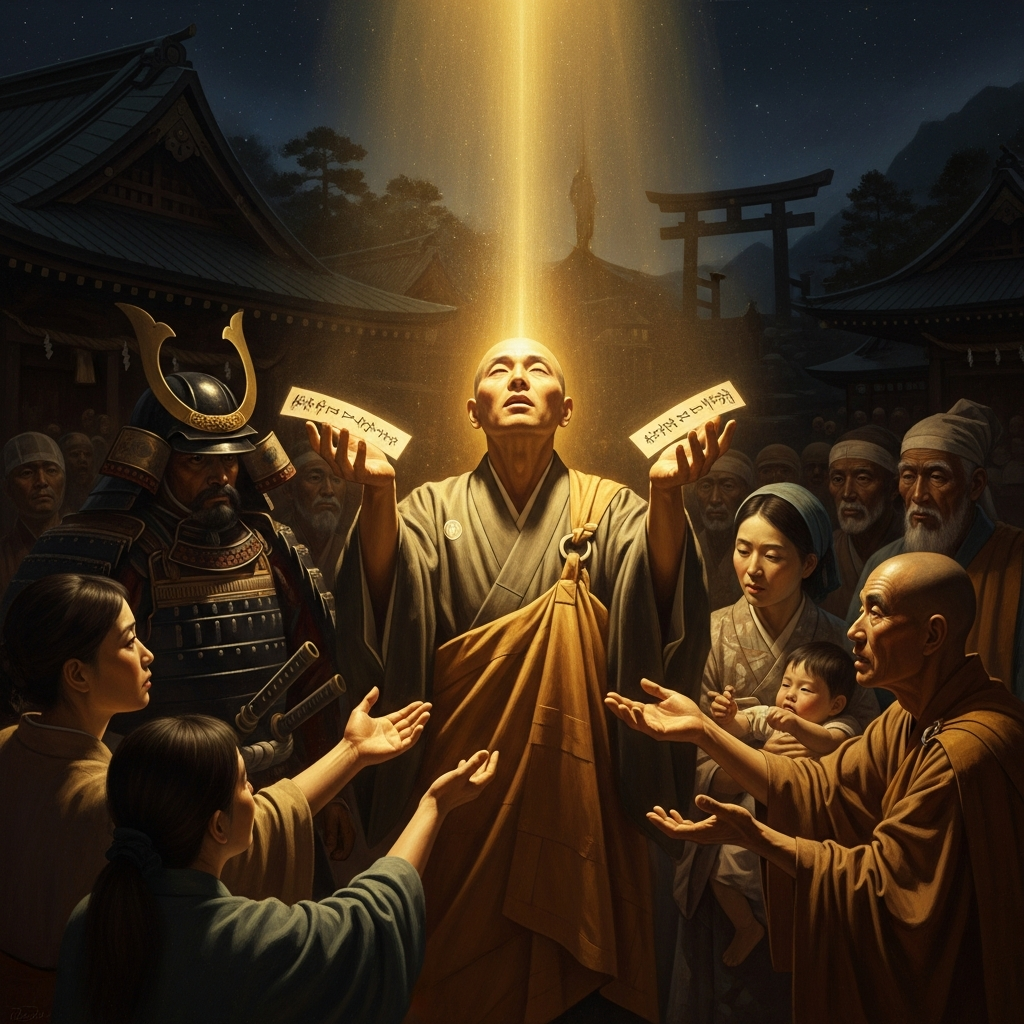
No Name, No Temple, No Destination
Ippen gives away his name, his disciples' names, his temple, and every sutra he owns, and walks Japan for twenty years distributing paper amulets inscribed with the nembutsu. Ten thousand people follow him to a riverbank in Hyōgo. He burns his books. He dies the next morning.
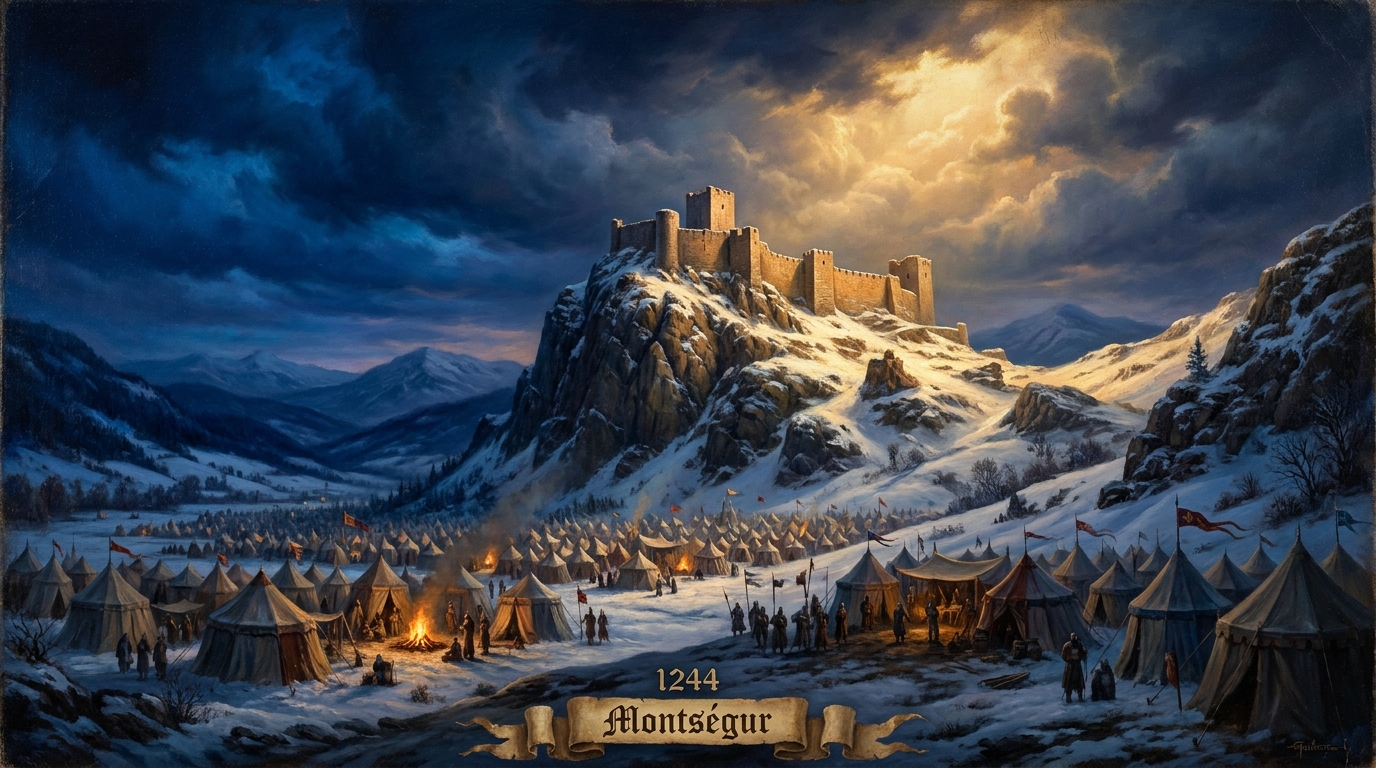
The Pyre at Montségur
After a nine-month siege, two hundred Cathar perfecti walk hand in hand down the mountain into a great fire at the foot of Montségur — refusing, to the last, to recant a heresy that called this world the work of an evil god.
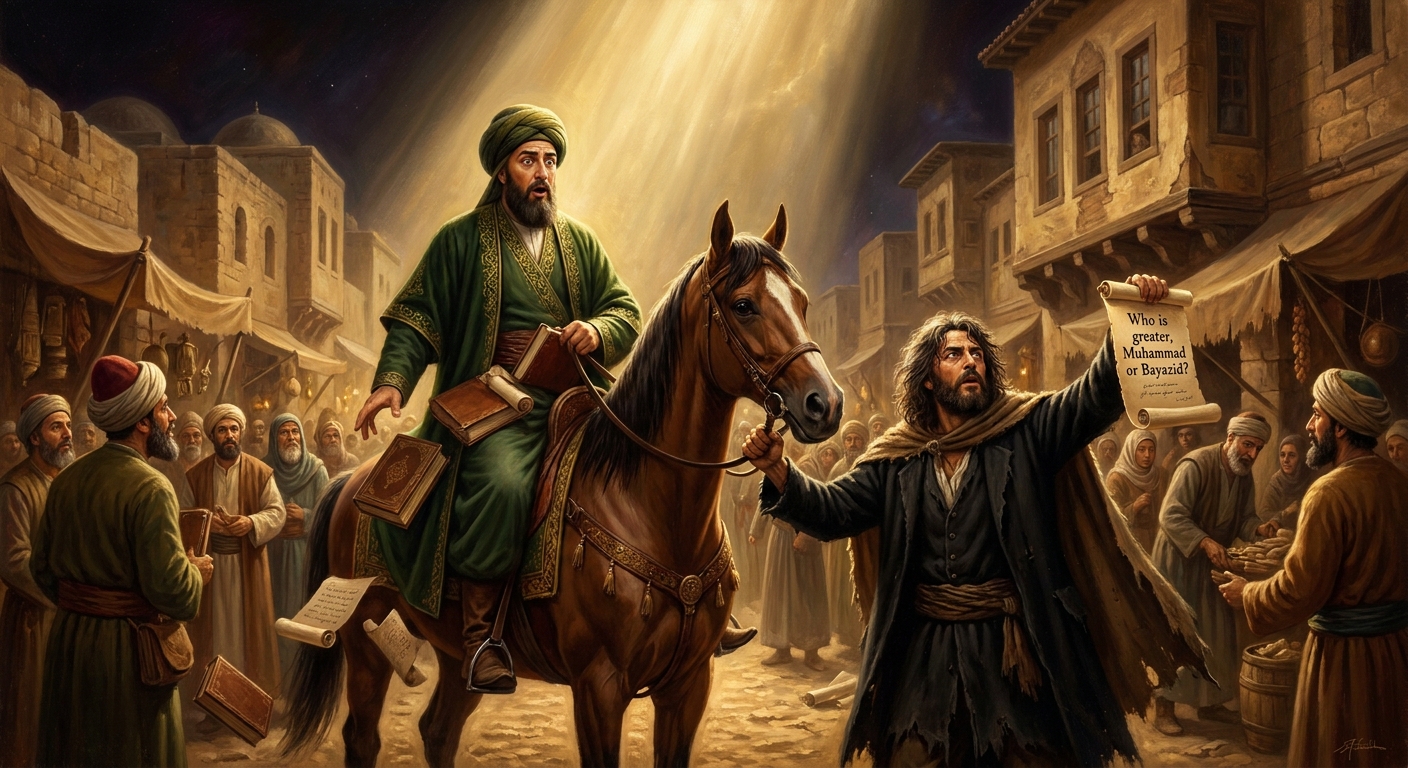
Rumi Meets Shams
A respectable jurist of Konya stops his mule in the street to answer a wandering dervish's impossible question — and never goes back to the man he was the moment before.
Rumi Loses Shams of Tabriz
One night in 1247, Shams-i-Tabrizi is called from Rumi's house in Konya and never returns. What follows is the strangest transformation in Persian literature: the wound becomes the work, and the most devastating loss in a mystic's life becomes the condition for the greatest poetry written in any language.
The Sword that Shattered at Tatsunokuchi
A Japanese monk kneels in the surf at midnight to be beheaded. The executioner raises his blade. A light comes down from the sky brighter than the moon, and the sword breaks in his hand.
Thomas Aquinas Puts Down the Pen
December 6, 1273. Thomas Aquinas is saying Mass at the Chapel of Saint Nicholas in Naples when something happens. He goes still. Afterward he will not write again. He has been working on the *Summa Theologica* for seven years — three thousand articles, ten thousand objections, the most systematic attempt in Christian history to unite Aristotelian reason with Christian faith — and he is in the middle of the third part, on the sacraments, when he stops. His secretary Brother Reginald begs him to continue. Aquinas says: *I cannot. All that I have written seems to me like straw compared to what I have seen.* He dies four months later. The *Summa* is left unfinished. It becomes the most influential theological text in Western Christianity.
Abulafia and the Letters of Fire
Abraham Abulafia meditates on the Hebrew alphabet until the divine name reorganizes his consciousness — then attempts to convert the Pope, survives the Pope's death, and sails west claiming the messianic age has begun.
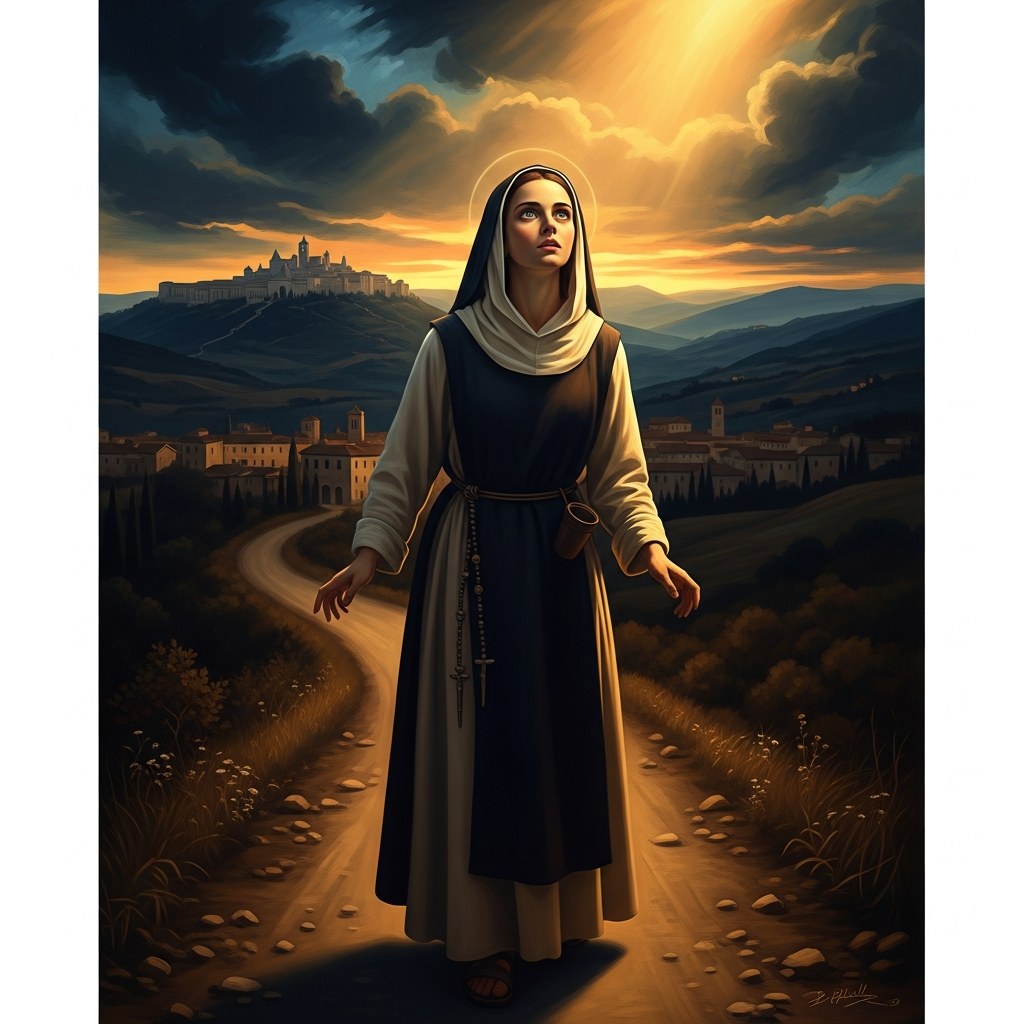
The Woman Who Corrected Her Scribe
Angela of Foligno stops in the middle of a road because the Holy Spirit has begun speaking to her. She arrives at the Portiuncula chapel and loses consciousness from the force of what meets her there. Later she dictates her visions to her confessor, and then insists, again and again, that he has gotten the details wrong.
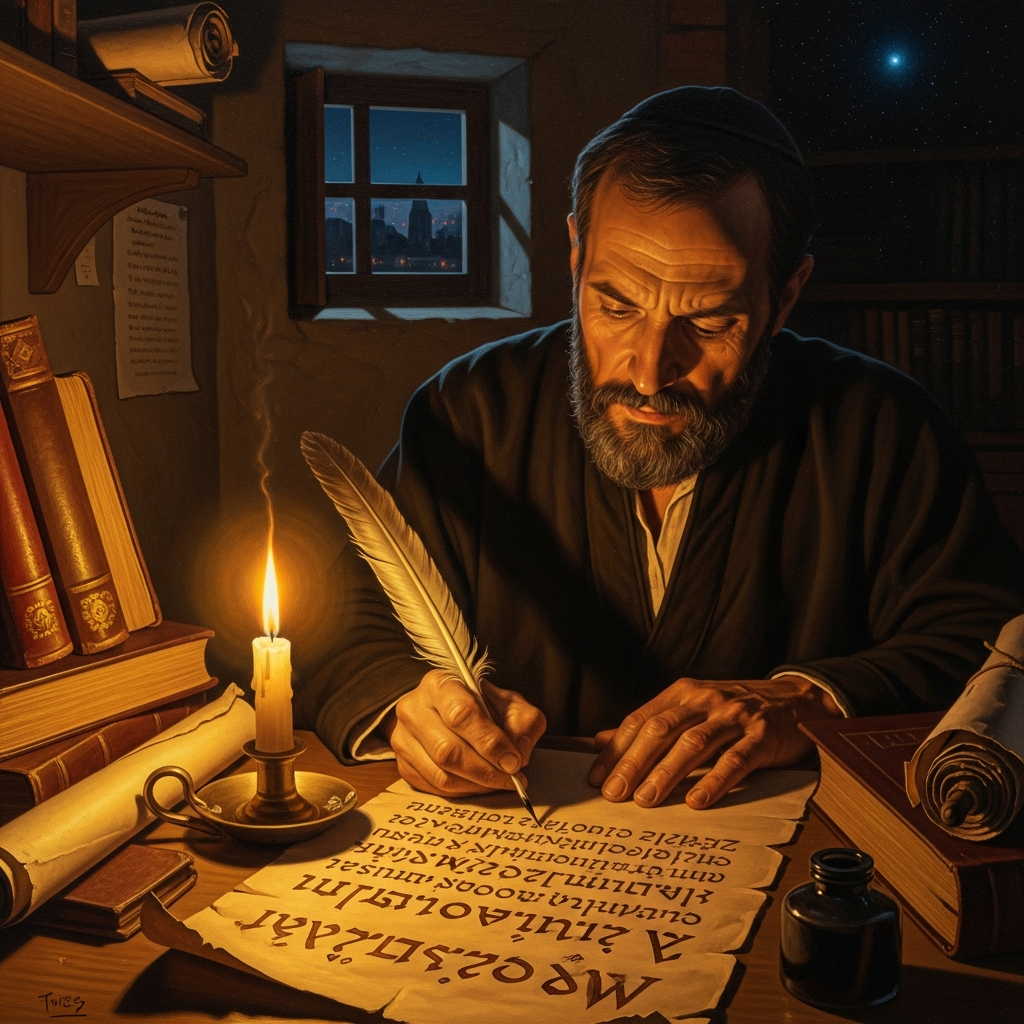
Moses de León and the Ancient Book
In Castile in 1280, a scholar of modest reputation begins selling manuscripts of an Aramaic mystical text he claims to have copied from a thirteen-hundred-year-old original. He dies insisting it is ancient. His widow, when asked, tells the truth.
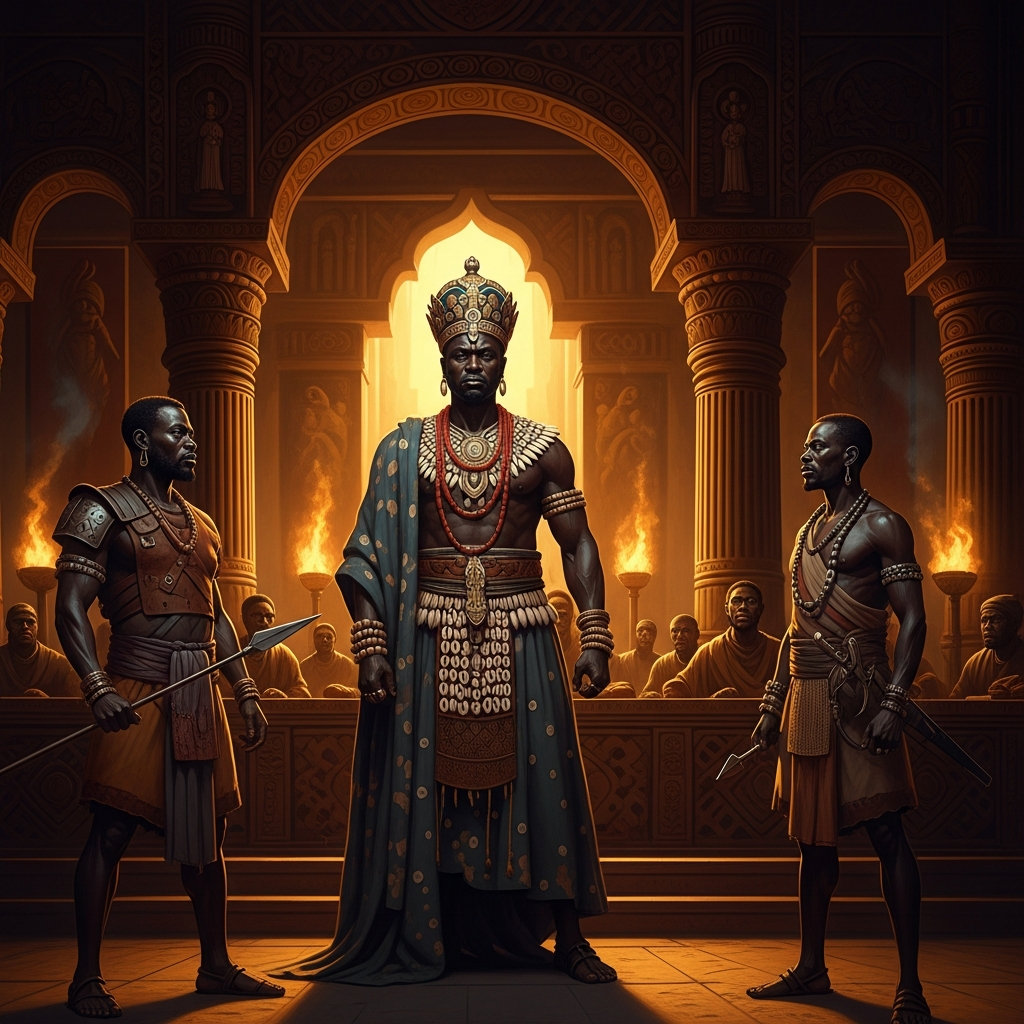
Sango Hangs Himself and Becomes the Storm
The fourth Alaafin of Oyo, betrayed by his generals and abandoned by his court, walks into the forest and ties a rope to the ayan tree. The Yoruba say: the king does not hang. He ascends. The thunder you hear tonight is his answer.
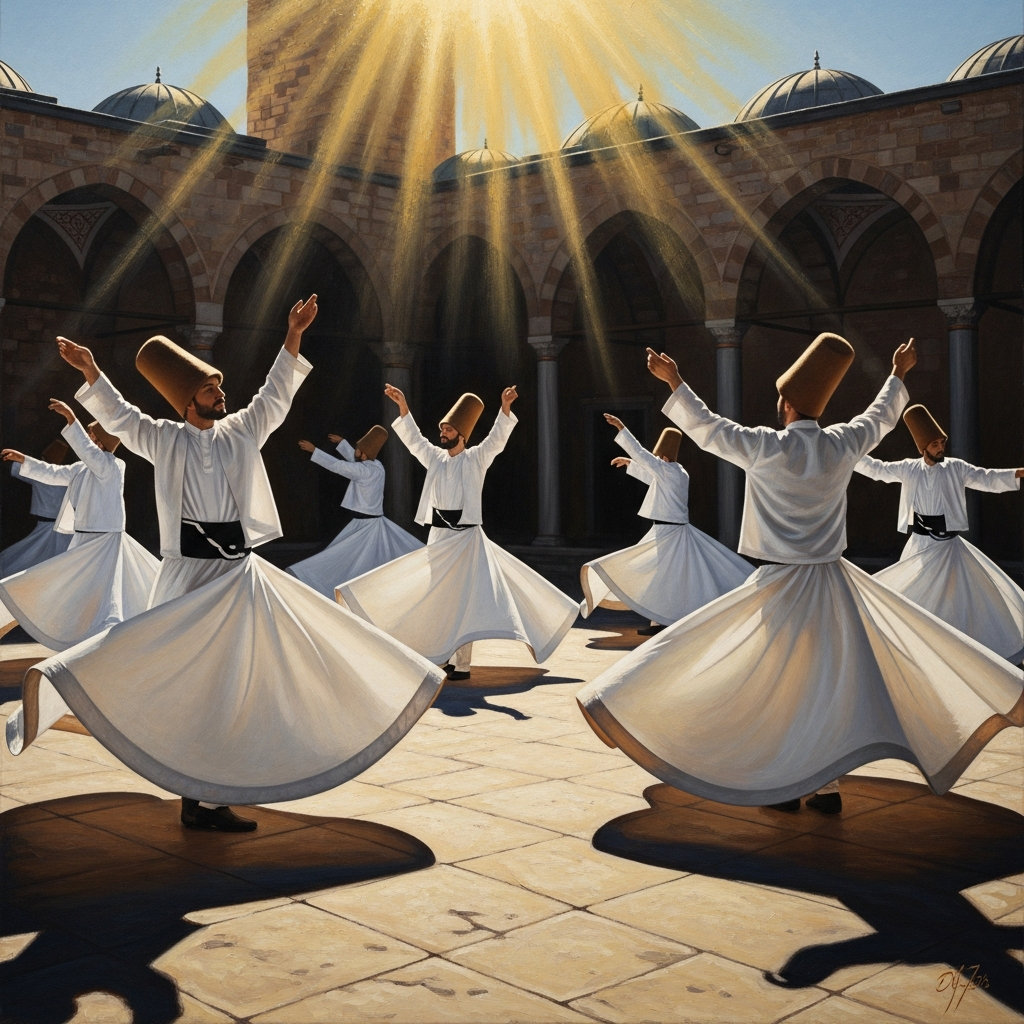
The Turn: How the Dervishes Learned to Spin
After Rumi's death in 1273, his son codifies the spinning grief his father improvised in the streets of Konya into a precise ceremony — white robes, tall felt hats, right hand to heaven, left hand to earth, the body itself as the technology of divine contact.
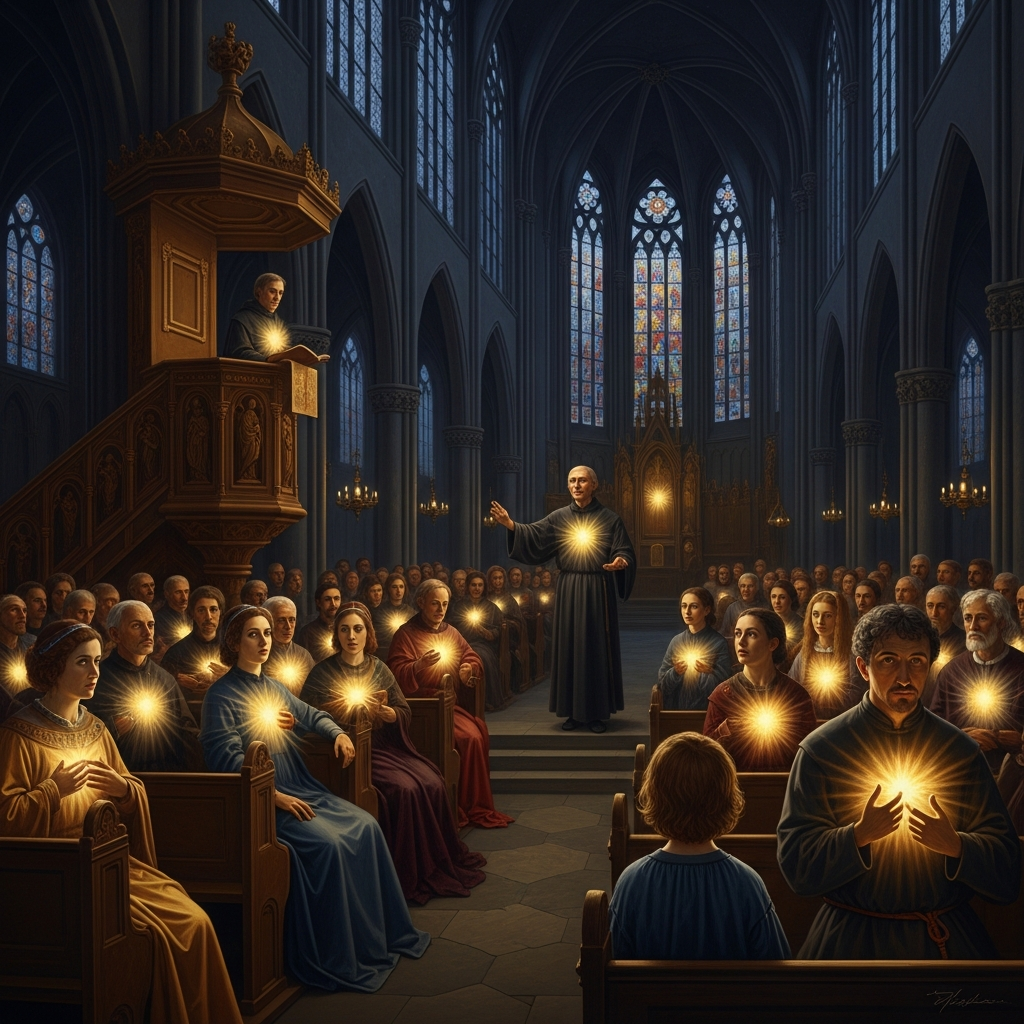
The Spark That Was Never Made
A Dominican friar preaches mystical theology in the German vernacular to weavers and merchants who have never heard it. Meister Eckhart tells them there is a spark in the soul — uncreated, identical with God — and that to reach it you must own nothing, know nothing, will nothing. In 1329, the Pope condemns him. He has already died.
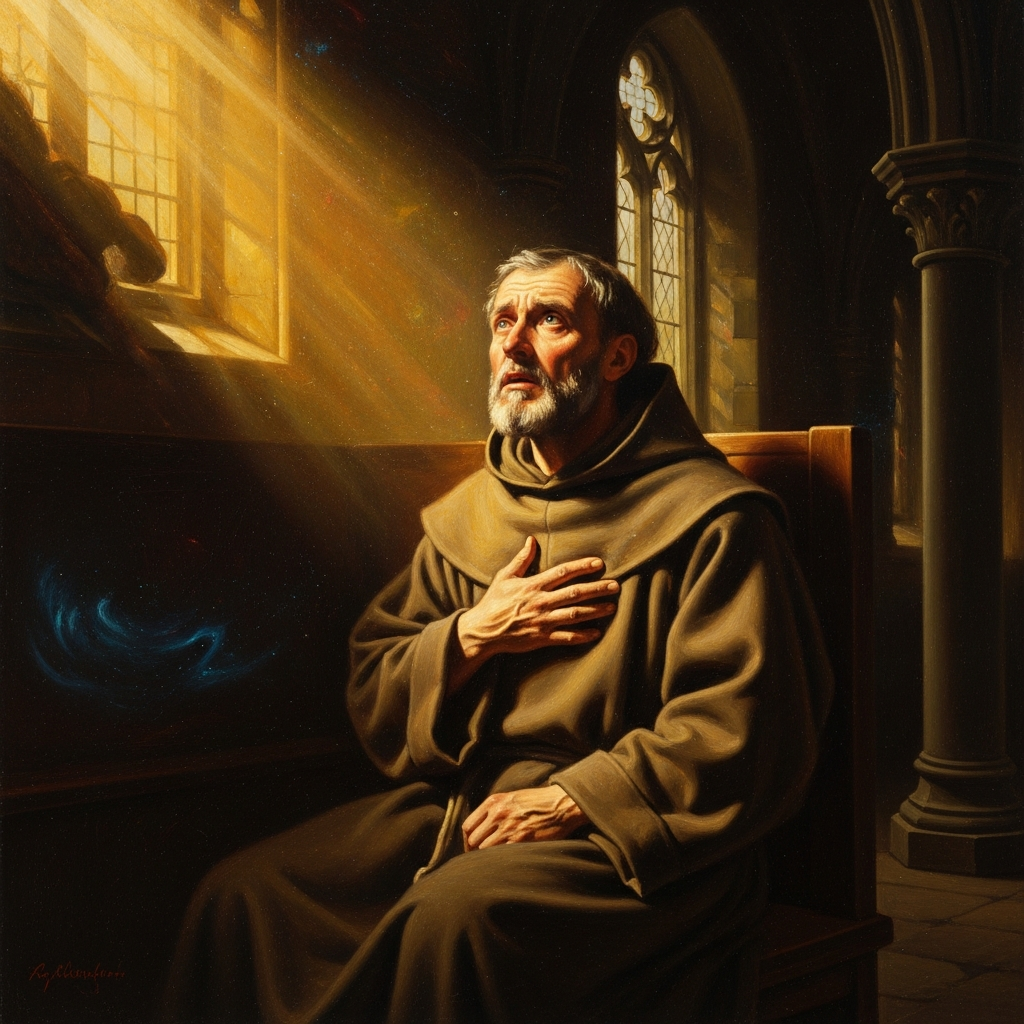
The Heat in the Chest
Richard Rolle abandons Oxford without a degree, retreats to a Yorkshire chapel, and one afternoon feels genuine physical heat spreading from his sternum. He puts his hand to his chest to check for flames. There are none. He spends the rest of his life writing about this sensation in English — becoming one of the first English-language mystics — until the Black Death reaches Hampole.
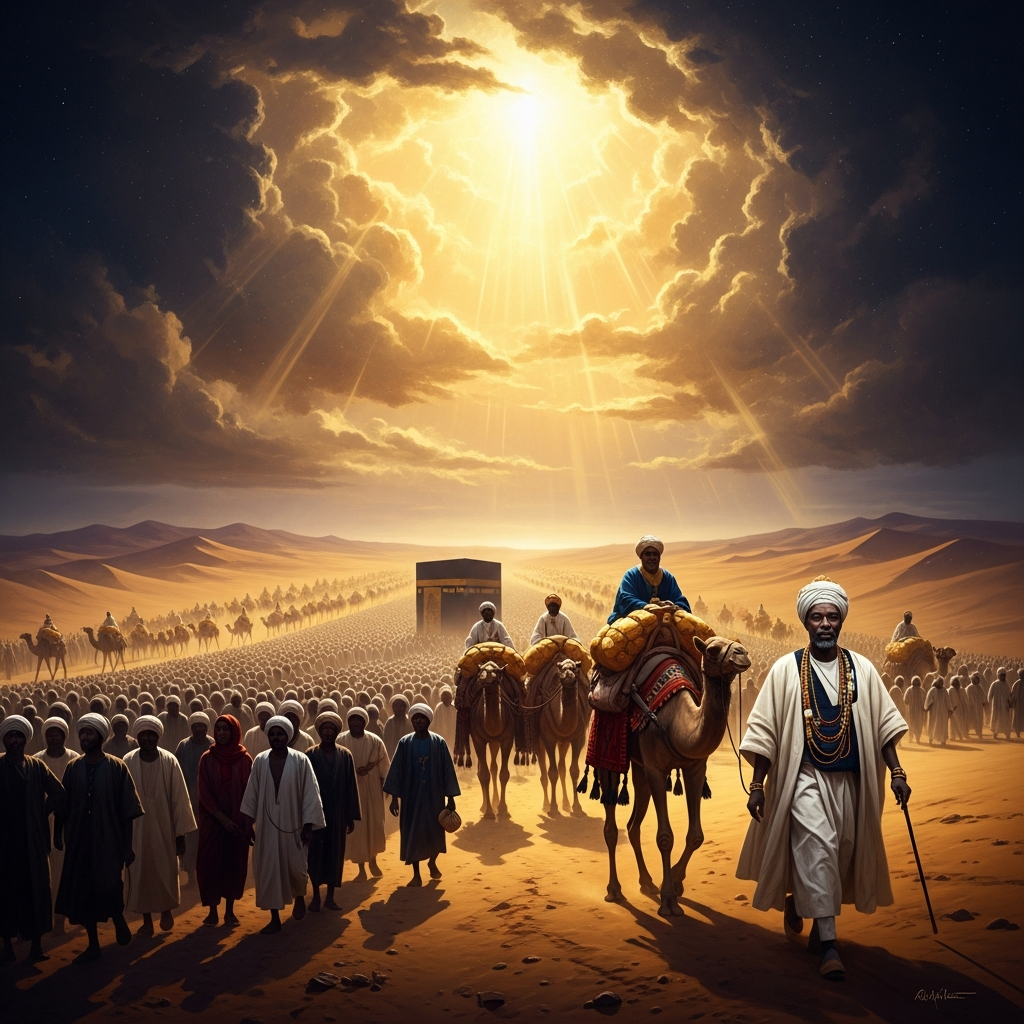
The Hajj That Crashed the Gold Market
In 1324 CE Mansa Musa I of Mali — controller of more than half the world's gold supply — sets out for Mecca with sixty thousand people, eighty camels carrying three hundred pounds of gold dust each, and five hundred servants bearing gold staffs. He stops in Cairo. He gives away so much gold he crashes the Egyptian market and depresses the regional economy for a decade. He returns with the architect who builds the first fired-brick mosques of the Sudan. On the 1375 Catalan Atlas his crowned figure dominates Africa: 'the richest and most noble lord in all this region.'
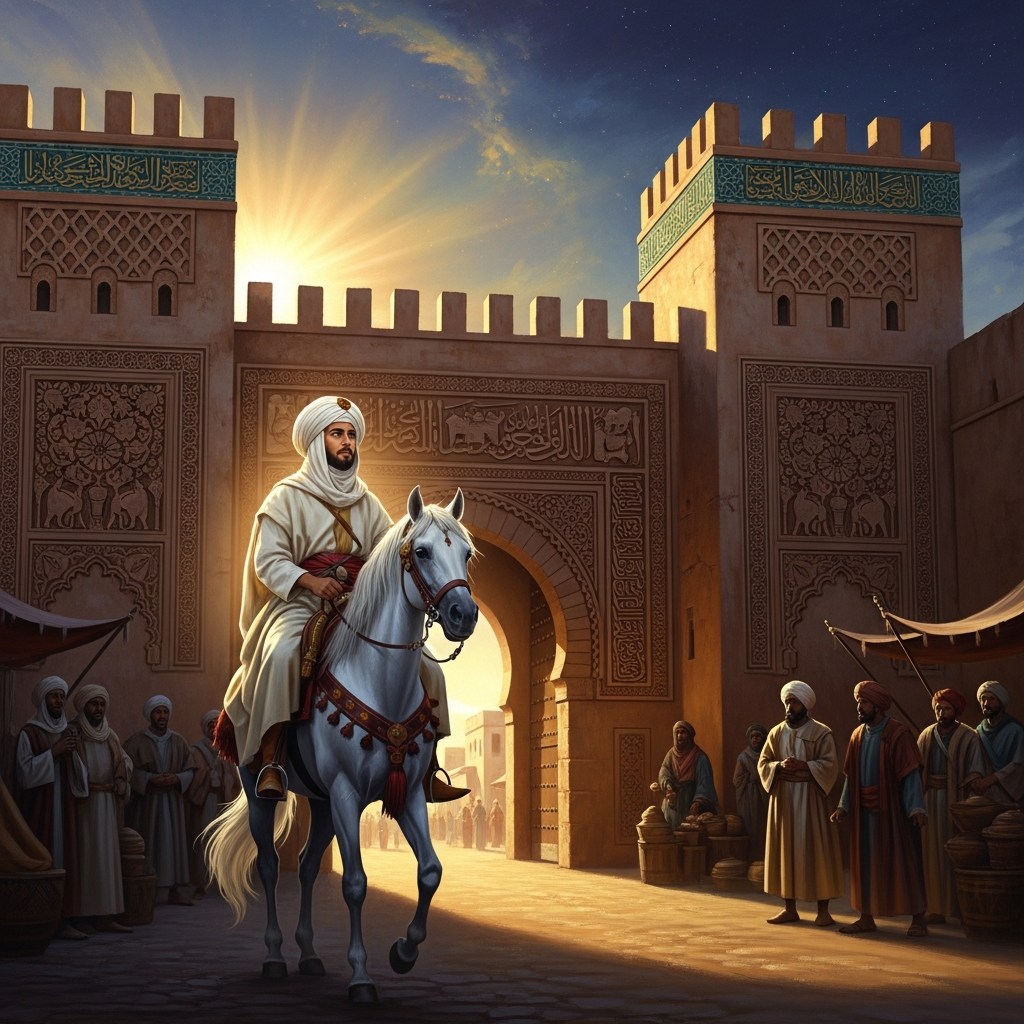
The Rihla: Twenty-Nine Years and 75,000 Miles
In 1325 CE a twenty-one-year-old judge from Tangier sets out on the hajj and does not come home for twenty-nine years. Ibn Battuta crosses the Sahara to Mali, sails to the Swahili coast, reaches India and China and the Crimea, and dictates the *Rihla* — 75,000 miles of the 14th-century Islamic world recorded by the man who could not stop traveling.
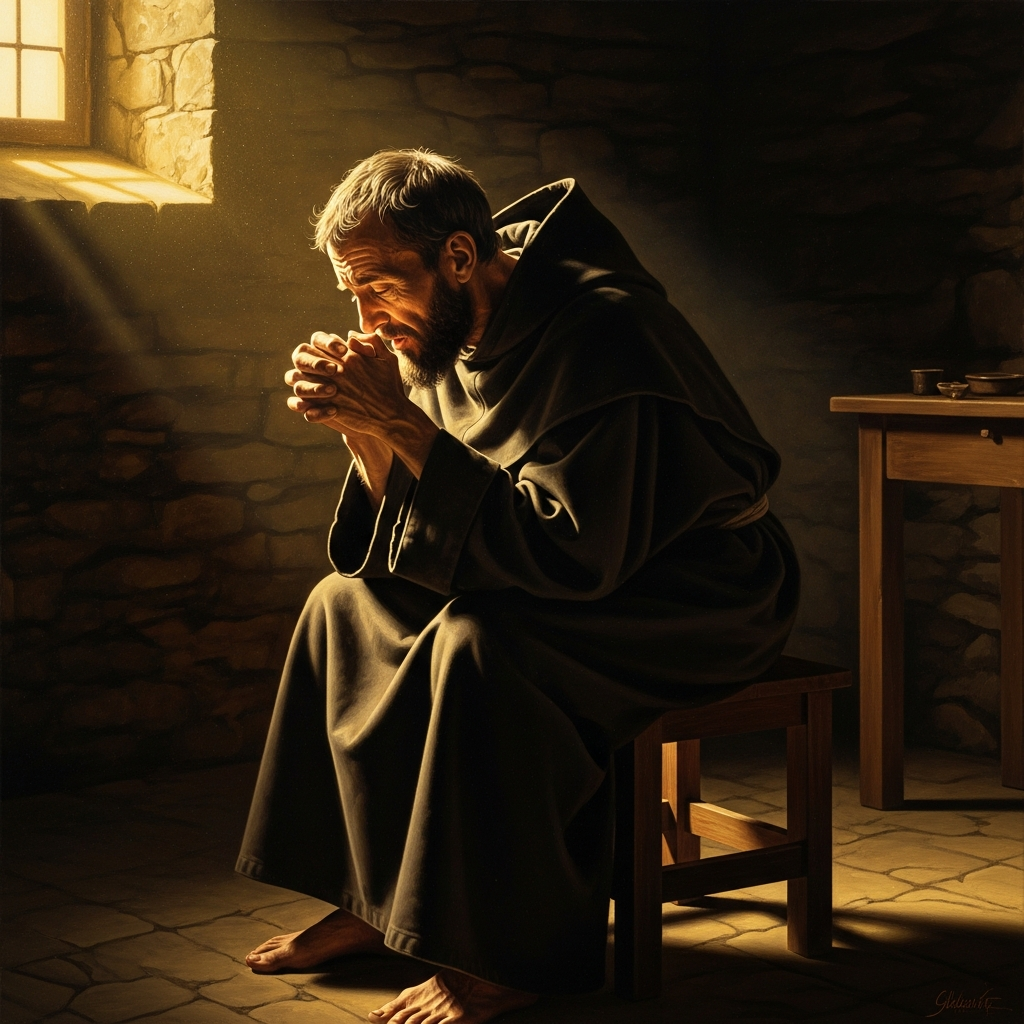
Gregory Palamas and the Uncreated Light
On Mount Athos, monks repeating a single sentence claim to see the light that shone on Tabor. A Calabrian philosopher calls it madness. Gregory Palamas defends them — and reshapes Orthodox theology forever.
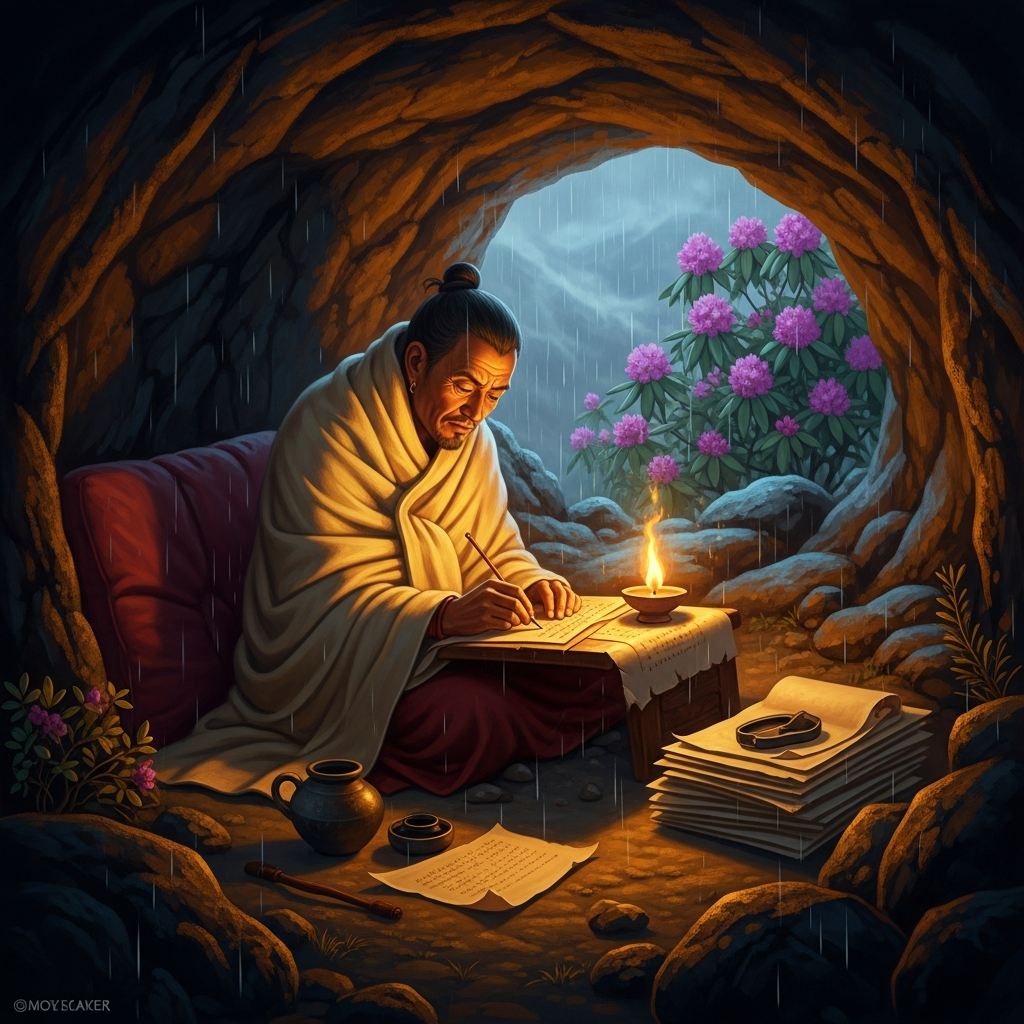
Longchenpa Writes the Treasury in Exile
Longchenpa (1308-1364 CE), the greatest systematizer of Dzogchen — the Great Perfection — is driven from Tibet by a jealous king and spends years in Bhutan in extreme poverty. In this forced destitution, living in a cave with no possessions, he writes the Seven Treasuries: the most comprehensive and brilliant treatment of Dzogchen ever produced.
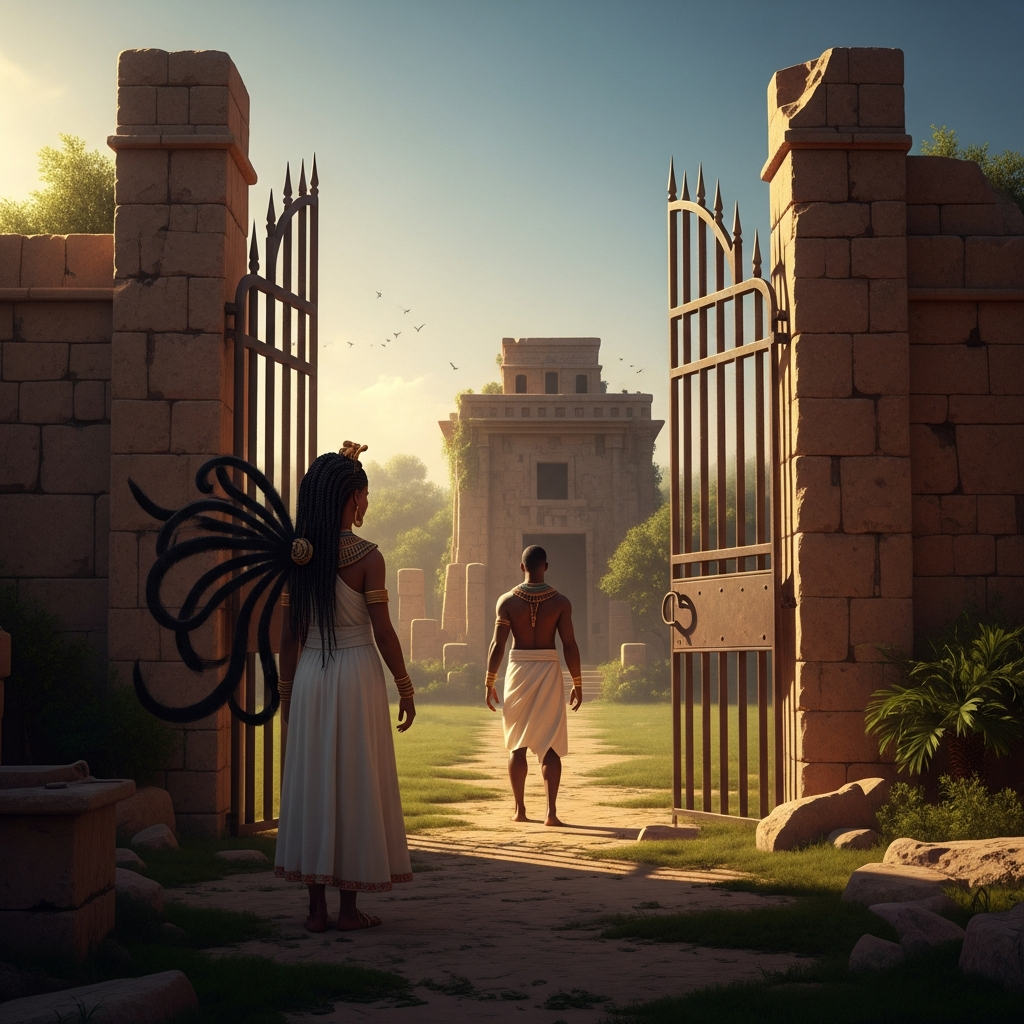
Oya Storms Over Niger
When Shango walks into the forest after his fall from the throne of Oyo, Oya follows him. What she finds at the ayan tree, and the choice she makes there, is why she now rules the boundary between the living and the dead.
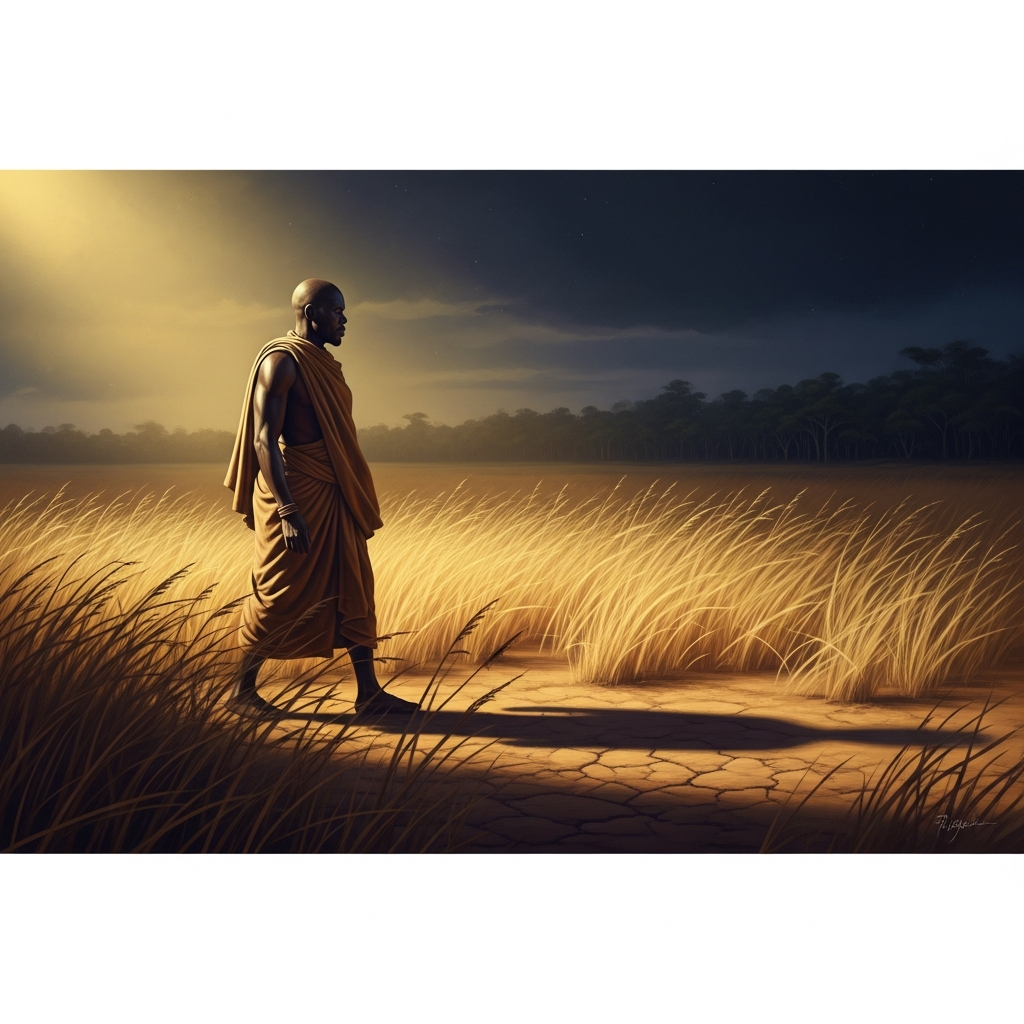
Shango Does Not Hang
Shango, the fourth Alafin of Oyo, is abandoned by his generals and walks into exile. He hangs himself from an ayan tree in the forest. His disciples find the rope empty and the ground bare. He has not died — he has ascended. The thunder is him walking.
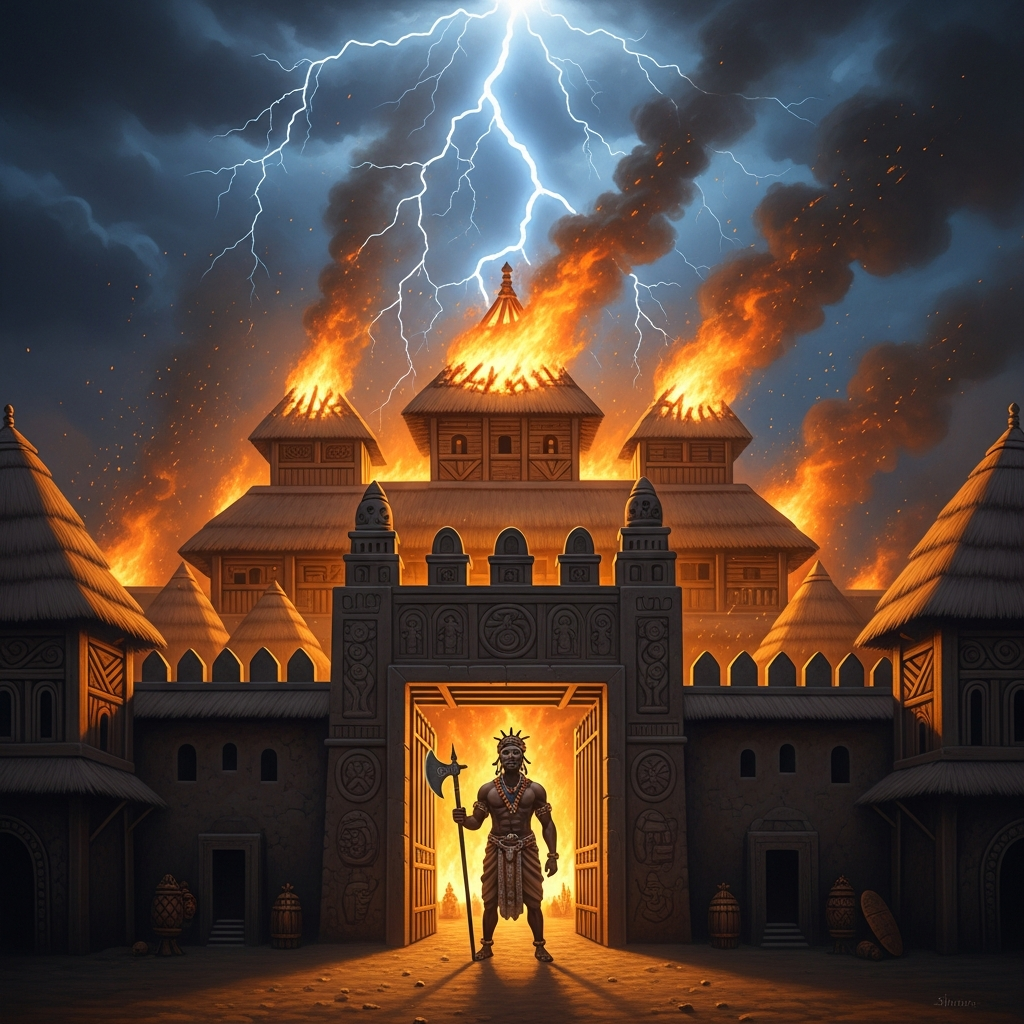
Shango: Thunder in Exile
The third Alafin of Oyo experiments with lightning — and burns his own palace. Consumed by grief, he walks into the forest. His disciples find the tree bare.
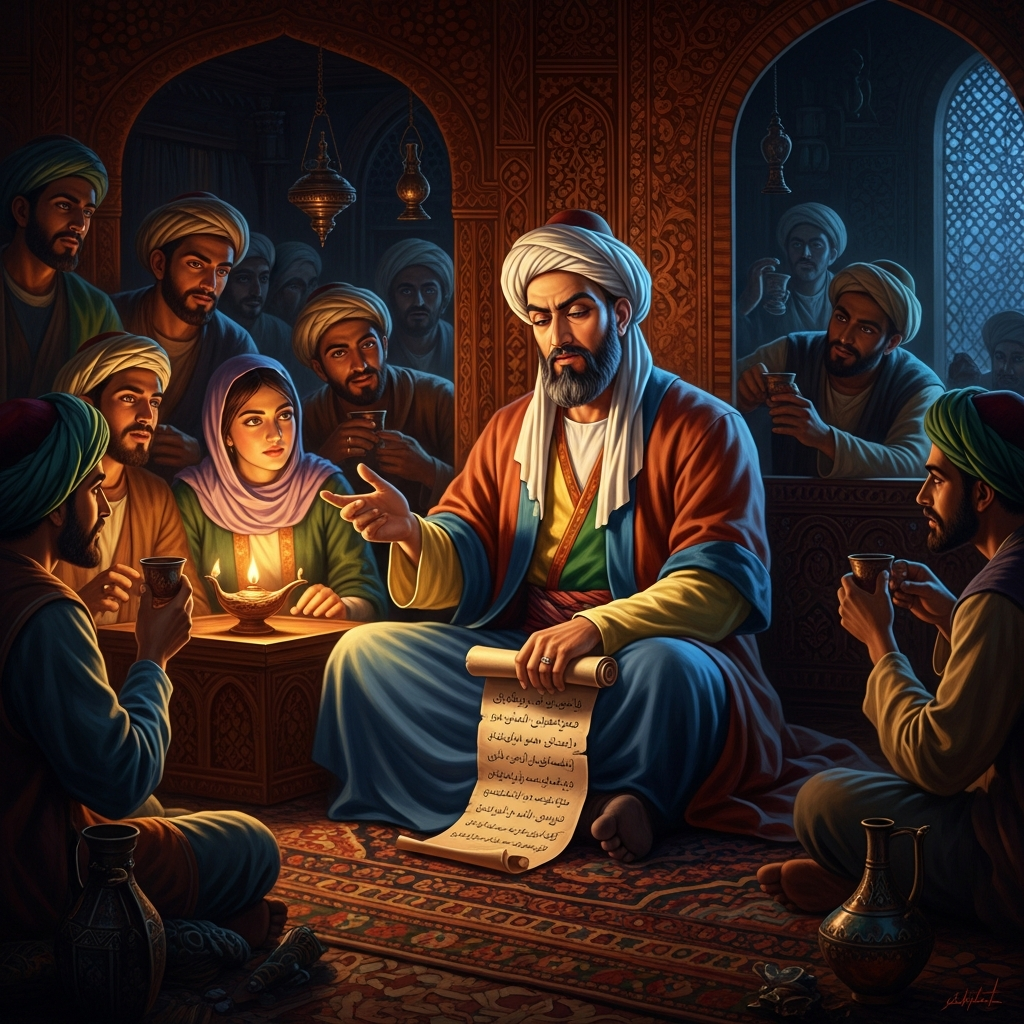
Hafiz and the Wine That Is Not Wine
In the rose gardens and taverns of fourteenth-century Shiraz, a court poet writes five hundred ghazals in which every cup of wine is also the cup of God, every beloved is also the divine, and every reader for seven centuries afterward will open the book at random to ask their fate.
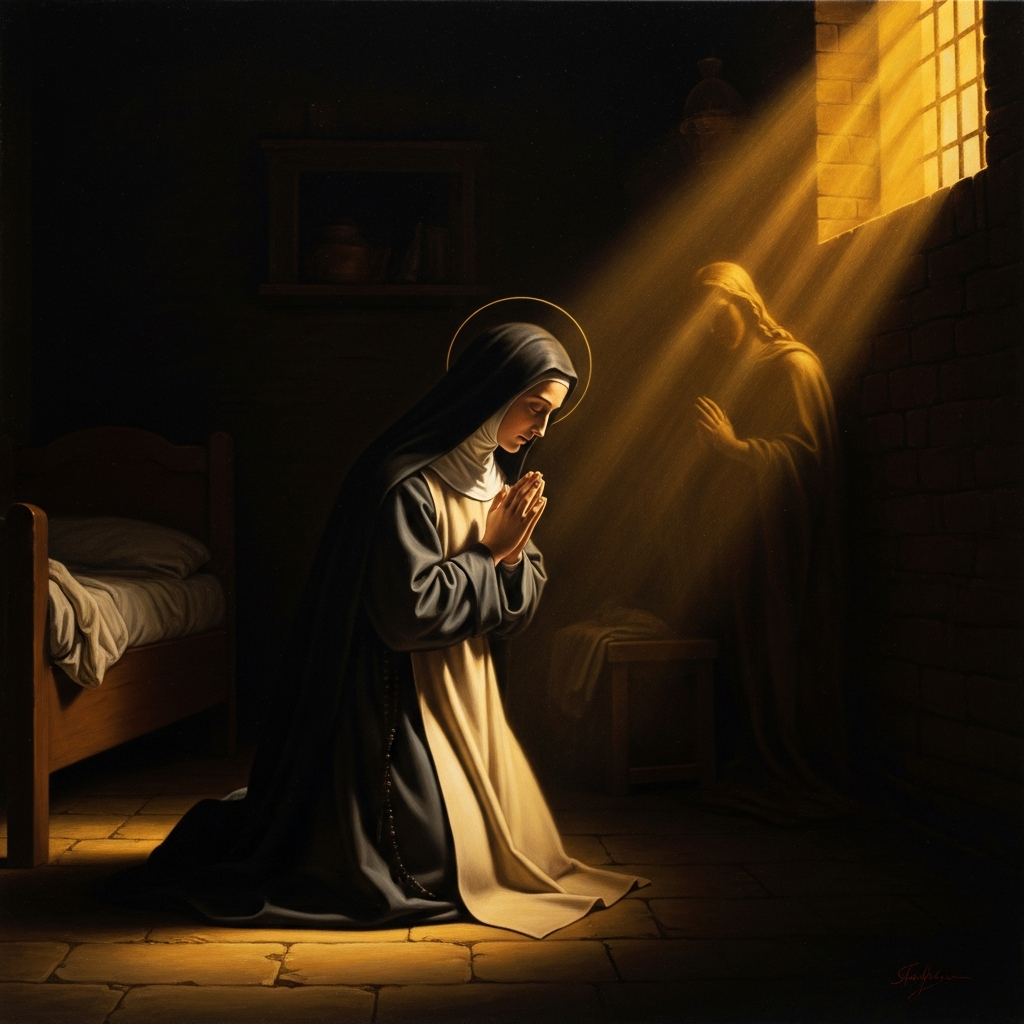
Catherine and the Wedding Ring of Flesh
A nineteen-year-old dyer's daughter in plague-haunted Siena receives Christ in mystical marriage. The ring he places on her finger is, by her own account, his own circumcised foreskin — visible only to her. She will go on to bend a pope back to Rome and die, exhausted, at thirty-three.
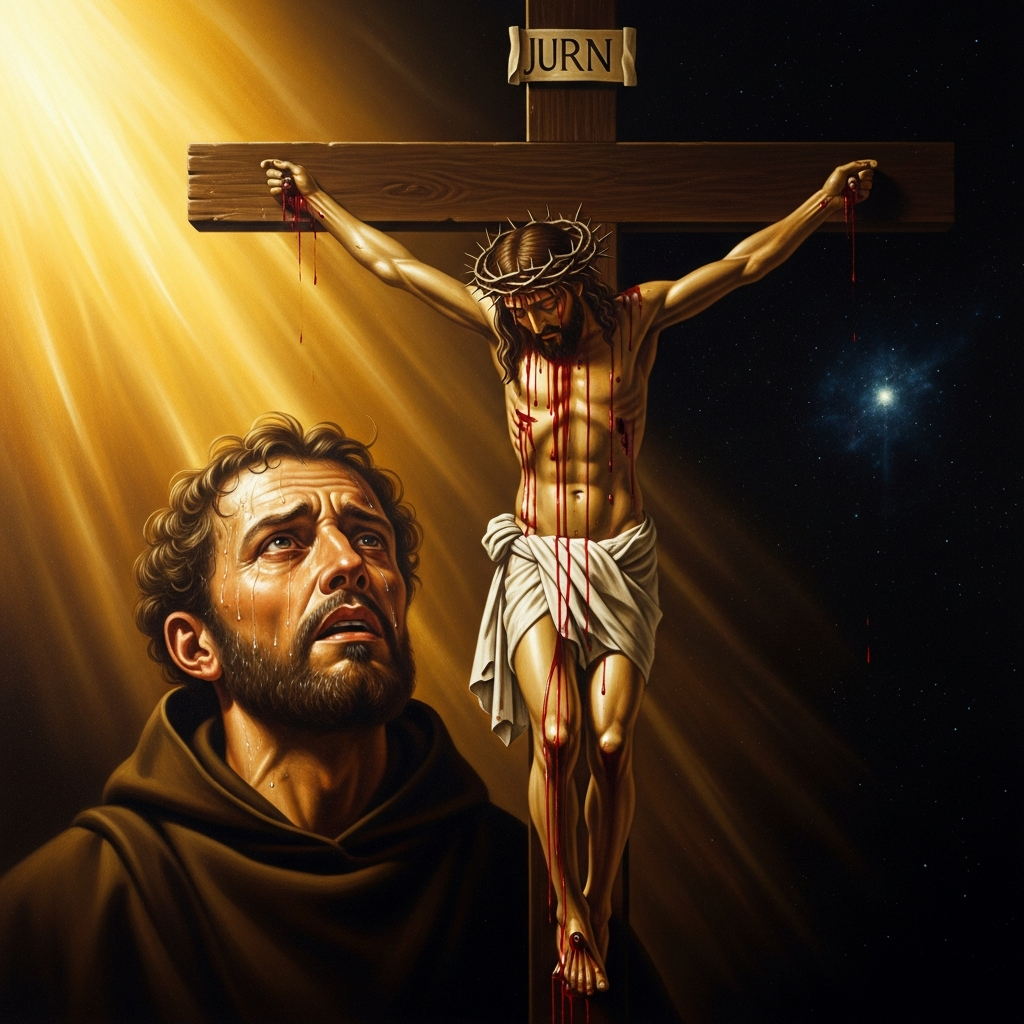
All Shall Be Well
In May 1373, a thirty-year-old Norwich woman lies dying and receives fifteen visions of Christ's Passion. She spends the next twenty years in a cell asking what they mean. Her answer — that God is love, not wrath; that sin is necessary and yet all shall be well — makes her the closest the medieval church comes to a non-dualist theology.
The Cloud Between You and God
An anonymous English mystic writes a manual for contemplative prayer addressed to a young man of twenty-four. Between you and God, he says, is a cloud of unknowing that no human thought can penetrate — not theology, not scripture, not the most accurate name you have for God. The only way through is love, and love cannot be directed at a concept.
Ibn Khaldun and the Science That Did Not Exist Yet
In a stone fortress in the Atlas Mountains, a fugitive jurist who has served and betrayed too many courts spends four years writing the first systematic theory of why civilizations rise and fall — and accidentally invents sociology, economics, and historiography four centuries before Europe gets to them.
Hafez Before Tamerlane
Tamerlane has conquered most of the known world and is personally offended by a single couplet. He summons the poet who wrote it. The poet's answer saves his life. The divine and the scandalous are inseparable in his mouth.
Early Modern
Reformation and revelation
Kapo and the Return from Death's House
Kapo, sister of Pele and goddess of healing and sorcery, is called on when a man in a Hawaiian village is found cold and unbreathing at dawn. The kahuna who performs the healing rite must find the man's soul before it crosses from the vestibule of Milu's underworld into the true dark where no soul returns. A prayer is spoken, an offering made, a physical intervention performed. The soul comes back across the boundary. The man breathes.
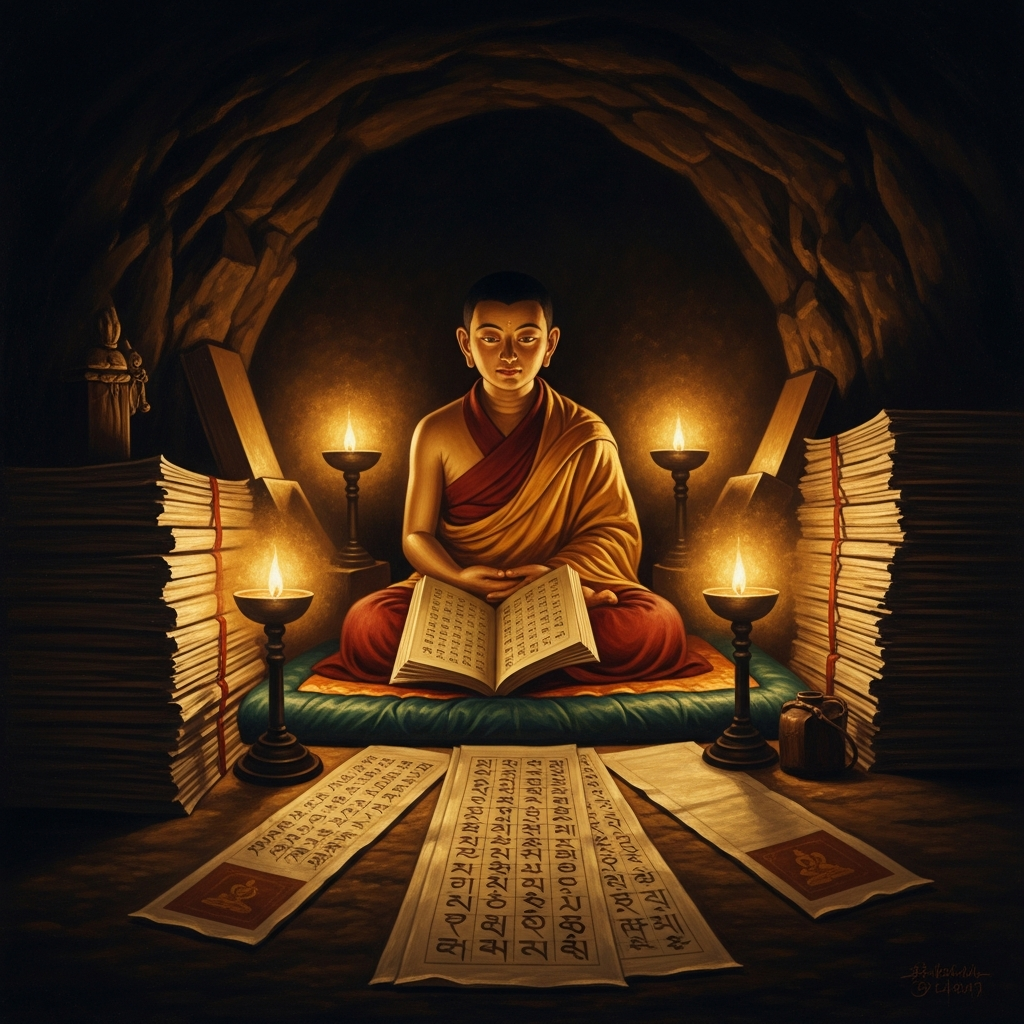
Tsongkhapa Reforms the Dharma
A boy from the high grasslands of Amdo studies under every available master, sees the bodhisattva of wisdom in vision, writes the most systematic treatise on the Buddhist path ever composed in Tibetan, and founds a monastery on a windswept mountain that will eventually govern Tibet.
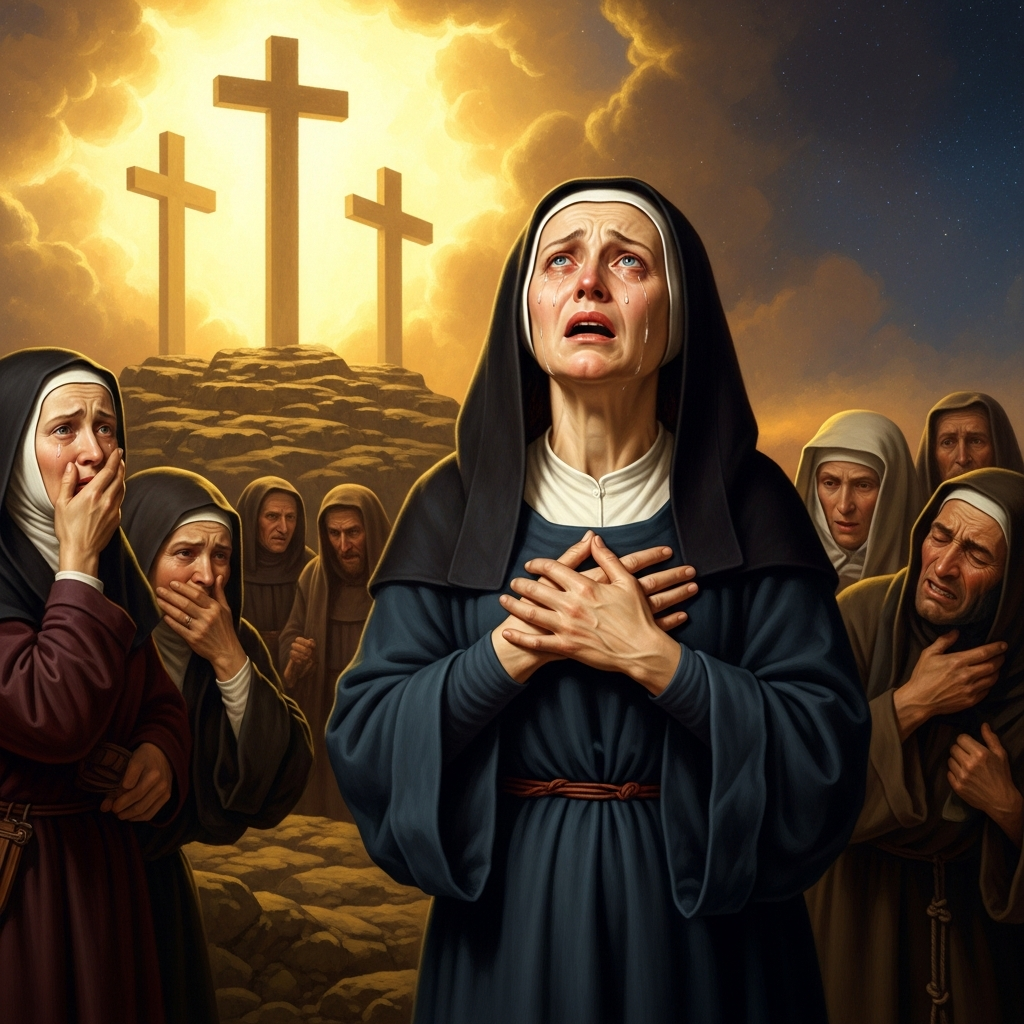
Margery Kempe and the Gift of Tears
Margery Kempe of Lynn cannot stop crying. She cries at sermons. She cries in churches. She cries in Jerusalem on the Mount of Calvary so violently that her fellow pilgrims abandon her on the road. She cries because Christ's Passion is happening inside her, every time, undiminished by repetition. She is a married woman with fourteen children, a failed brewer, an illiterate visionary, and the most disruptive English mystic of her century. In old age she dictates her experiences to a scribe. The result is the first autobiography in the English language.
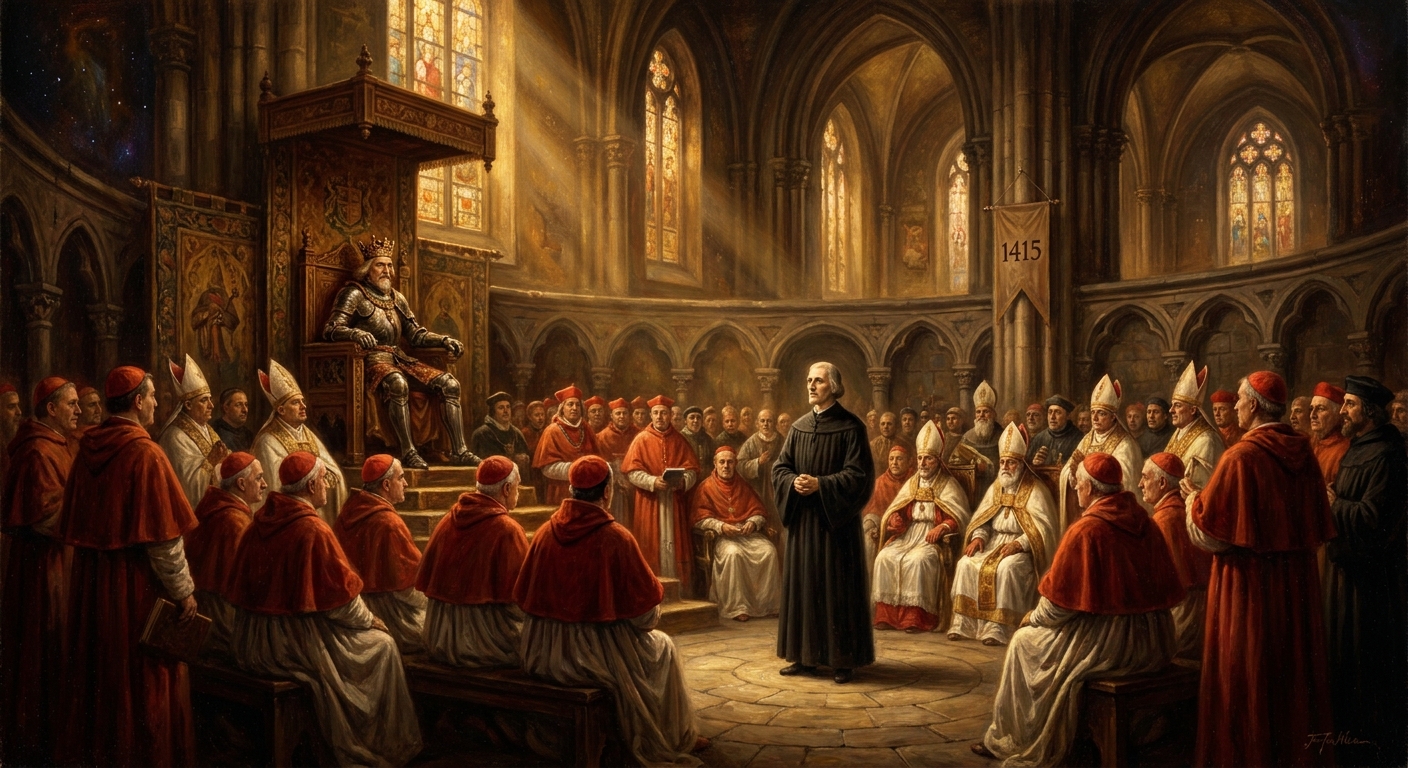
The Goose and the Swan
Jan Hus, lured to the Council of Constance under imperial safe-conduct, refuses to recant and is burned at the stake — leaving behind a prophecy that a swan will rise where the goose was roasted.
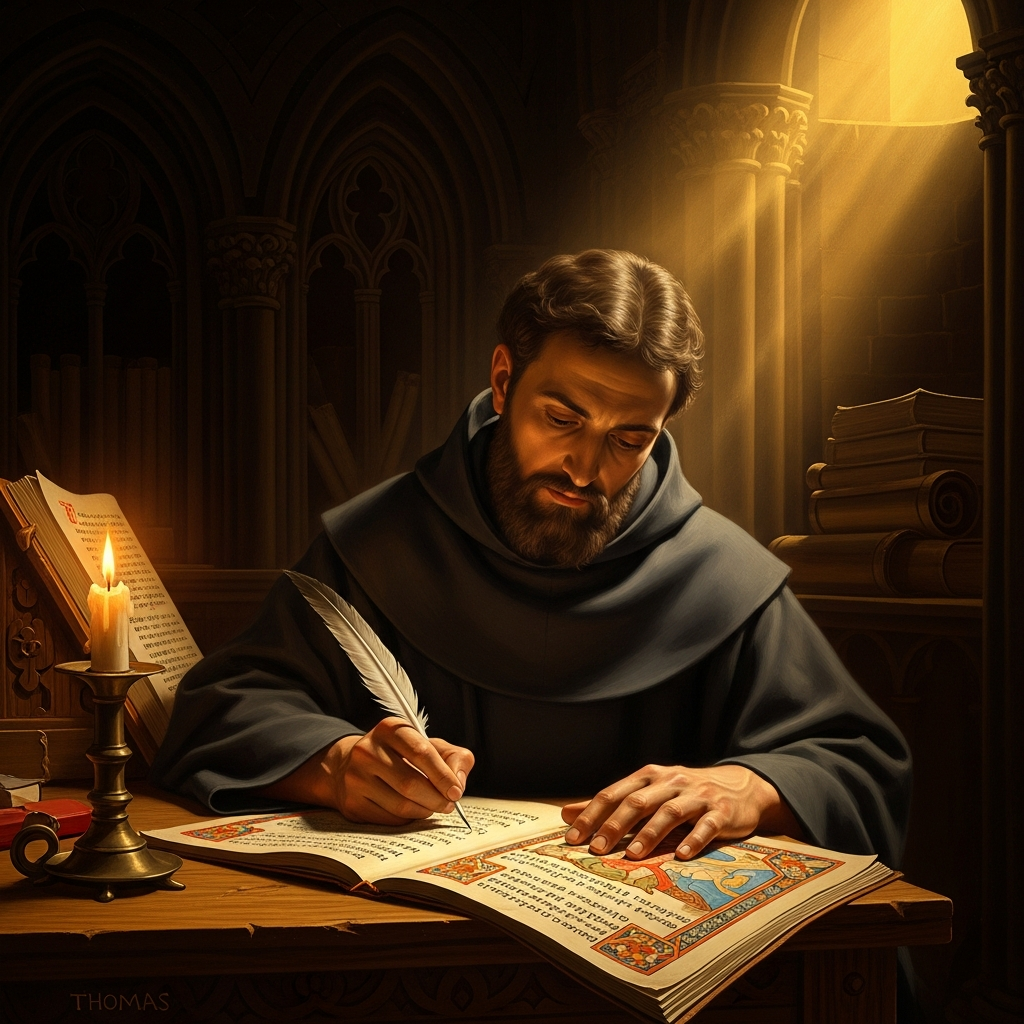
The Smallest Book
Thomas à Kempis, an Augustinian canon in the Netherlands, copies the Bible four times by hand and between the copying writes the most widely read Christian book after the Bible itself. Its central argument is a provocation aimed directly at the universities: knowledge without humility is nothing. The man who chose deliberate smallness writes the larger spiritual act.
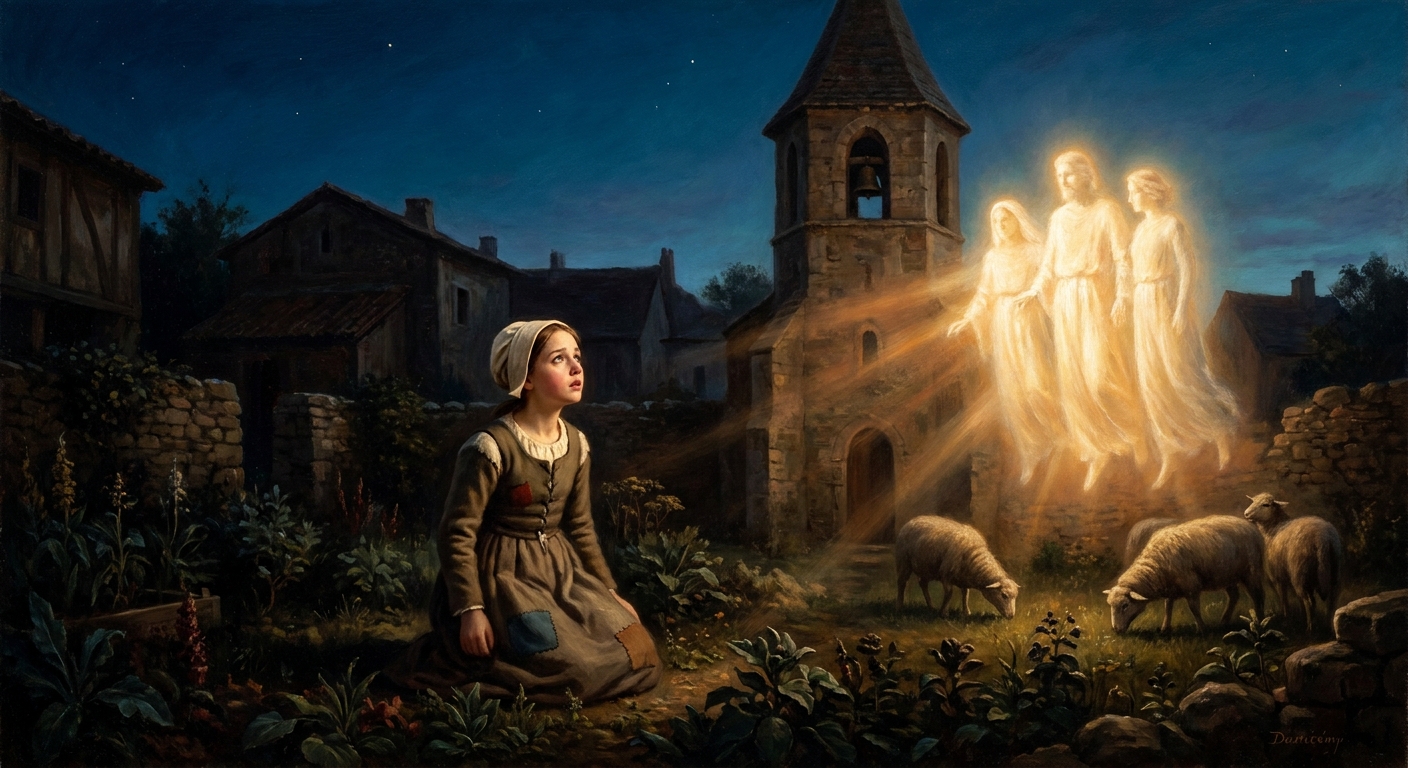
Joan of Arc
A teenage peasant girl in Domrémy hears the voices of saints, leads an army to relieve Orléans, crowns a king at Reims, and is burned alive at nineteen by the Church she will later be made a saint of.
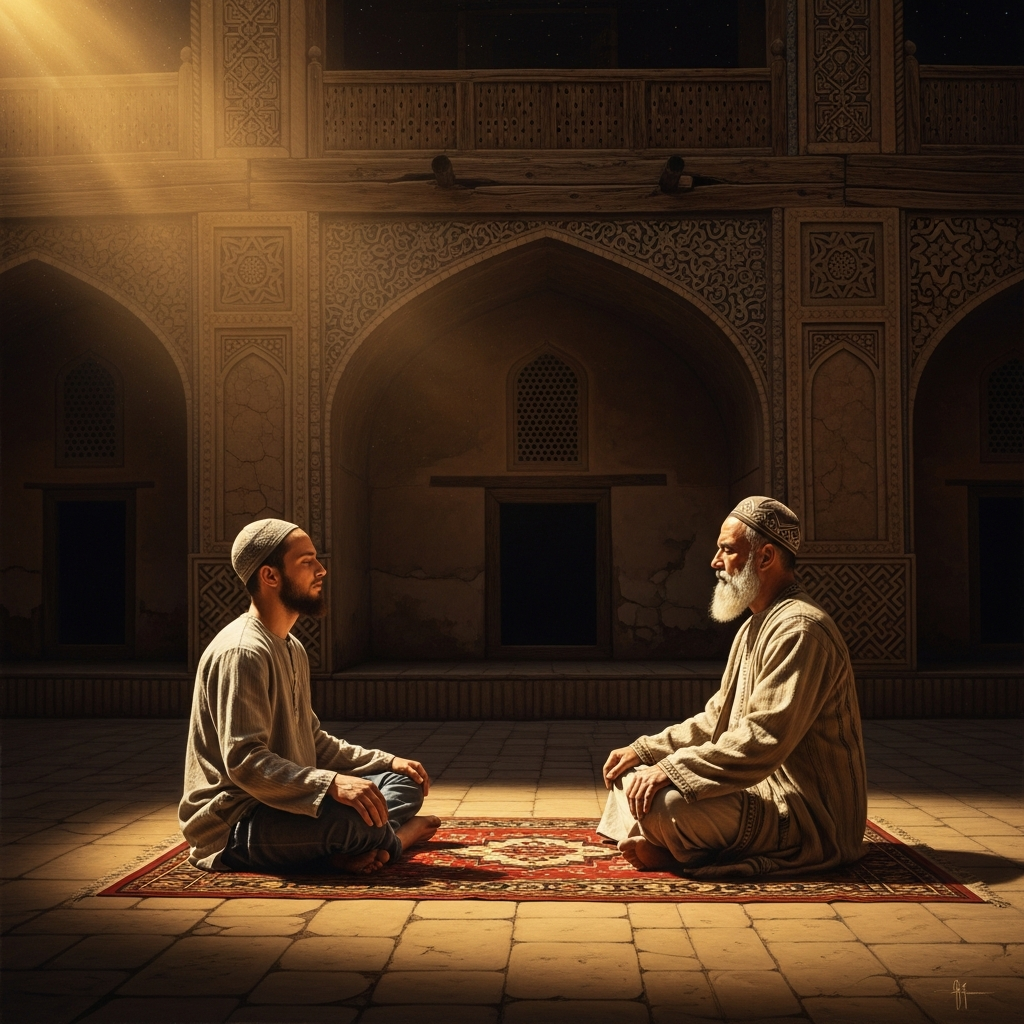
The Brotherhood of Silent Breath
Bukhara, 15th century. A Naqshbandi master teaches his student the practice of dhikr khafi — silent remembrance, the repetition of God's name in the heart rather than the tongue. The difference between the prayer that stops when you stop praying and the prayer that continues while you sleep.
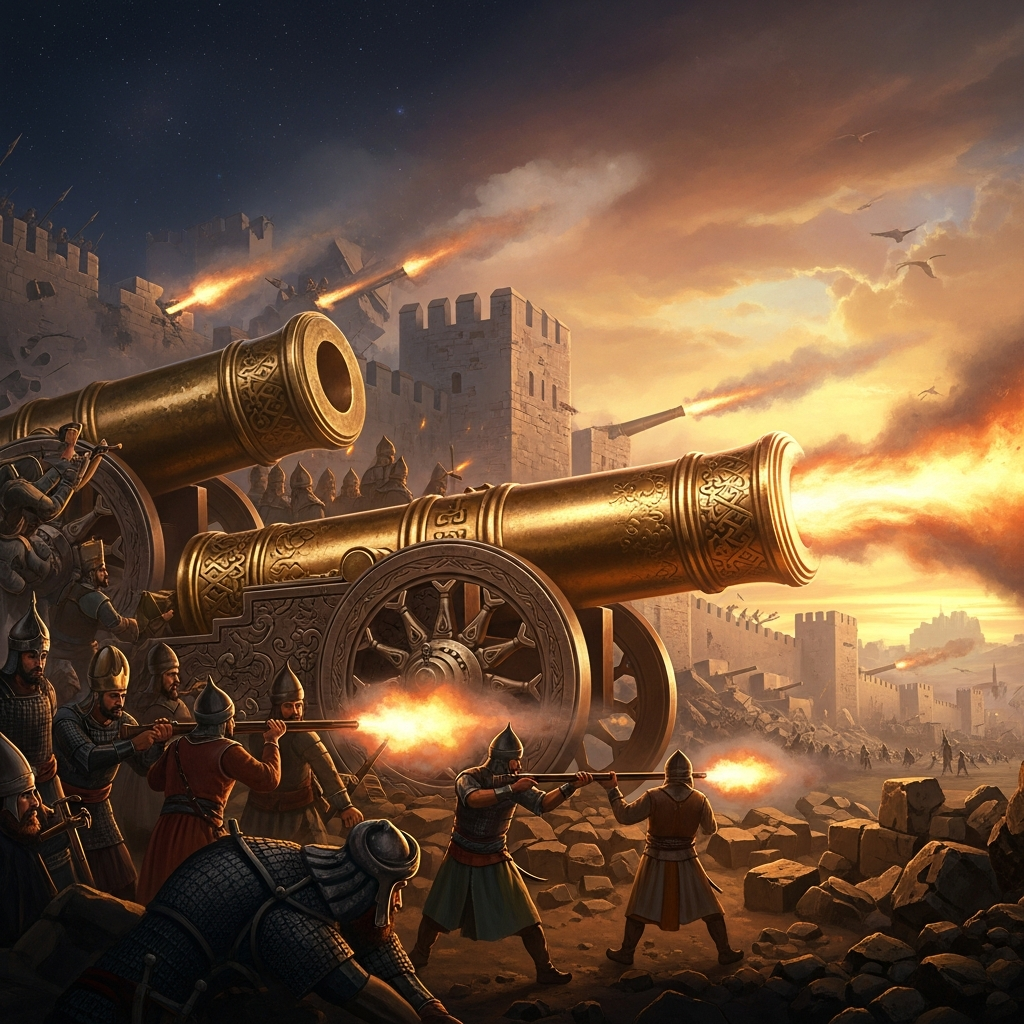
The Last Emperor Walks into the Battle
May 29, 1453. Twenty-one-year-old Sultan Mehmed II has besieged Constantinople for fifty-three days. The city that has not fallen in a thousand years is held by eight thousand against eighty thousand. At dawn the artillery breaches the Theodosian Wall. Constantine XI tears off his imperial insignia and charges into the breach on foot. No one finds his body. Mehmed enters at noon, rides to the Hagia Sophia, dismounts, pours a handful of earth over his turban — and orders the church converted to a mosque.
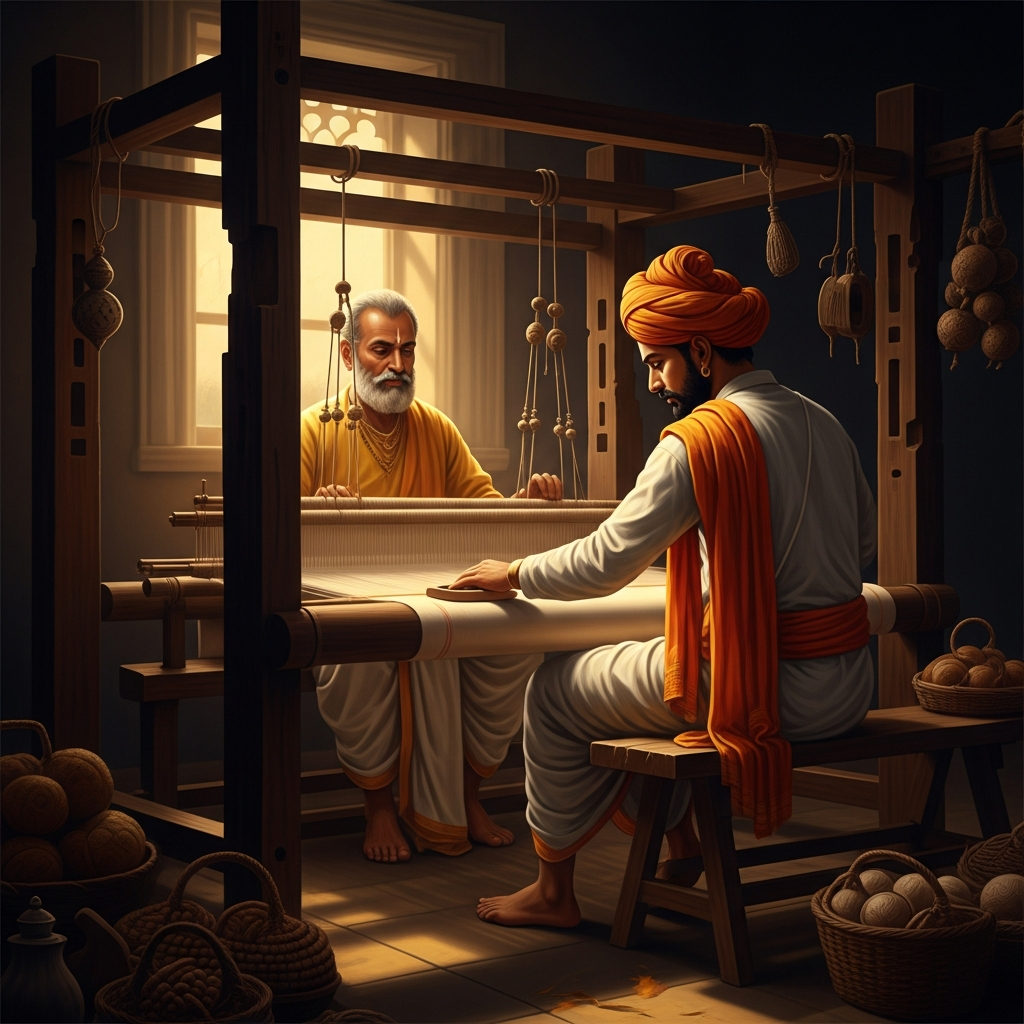
Kabir: Neither Hindu Nor Muslim
He is a Muslim weaver in Varanasi — low-caste, practicing a lowly trade, living in the city most sacred to Hindus. He is also a poet of such devastating clarity that both Hindu and Muslim traditions claim him after his death and neither one fully owns him during his life. His couplets attack idol worship, caste hierarchy, the Quran recited without understanding, the Vedas memorized without comprehension, the pilgrimage performed as a substitute for practice, the pandits, the mullahs, the renunciants who have left their families to look for what they could have found at the simple loom. He says that Ram and Allah are the same name for the same truth. He says that neither temple nor mosque contains what he has found. He is the most quoted vernacular poet in north Indian religious culture and no tradition fully owns him.
The Dedication of the Templo Mayor
1487 CE. Ahuitzotl's priests open twenty thousand chests on the pyramid summit over four days, feeding the sun god Huitzilopochtli so the Fifth Sun does not fail. The blood runs down channels into Tenochtitlan. The Spanish arrive thirty-two years later.
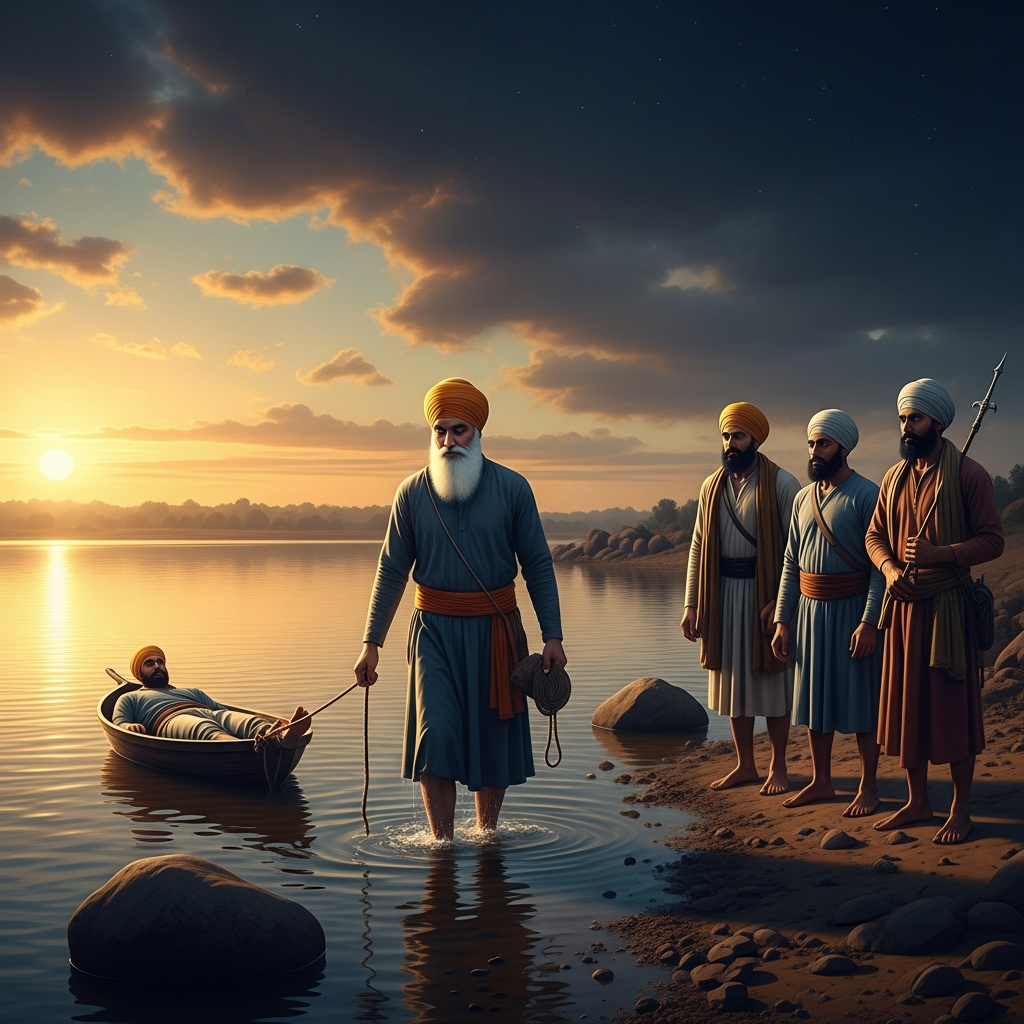
The Accountant Who Did Not Return
Nanak, thirty years old and employed as a grain accountant for the Sultan of Sultanpur, walks to the Bein river at dawn for his morning bath and vanishes. Three days later he climbs out of the water and speaks a sentence that neither the Mughal Empire nor the Hindu priesthood has a category for.
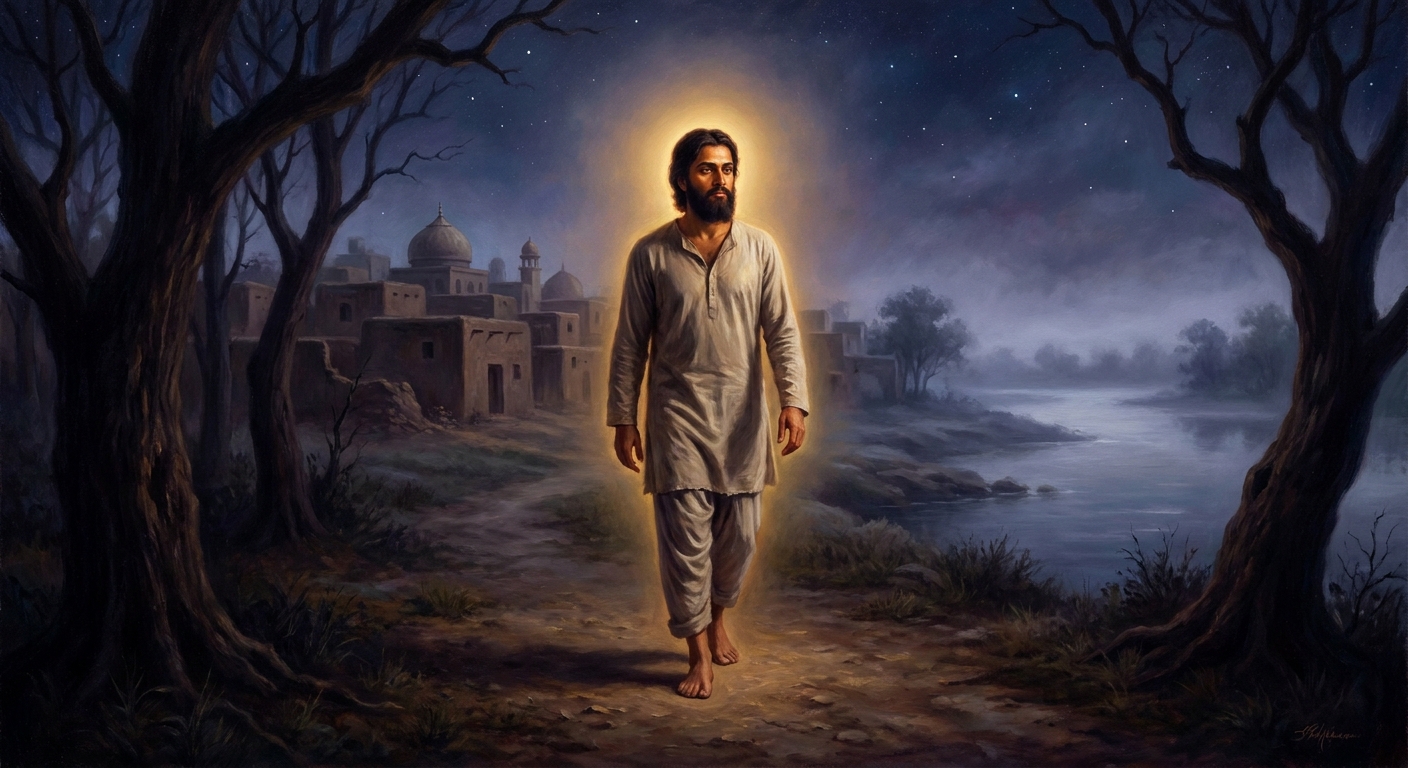
Three Days in the Bein
A thirty-year-old grain accountant walks into a Punjabi river at dawn for his morning bath and does not come out for three days. When he finally surfaces, he has stopped being a Hindu, stopped being a Muslim, and started being something the subcontinent has not seen before.
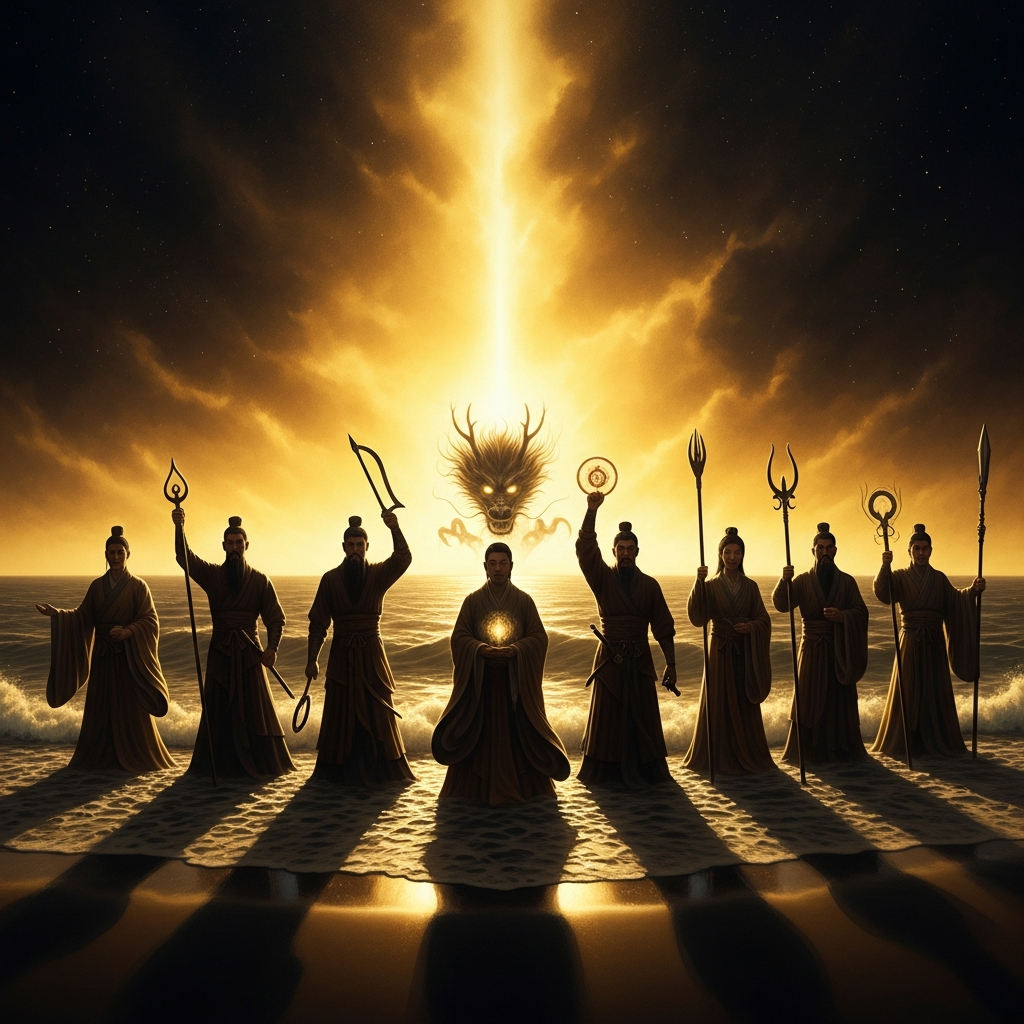
Eight Immortals Crossing the Sea
The Eight Immortals refuse the Dragon King's boats and cross the Eastern Sea on their own magical objects — sword, gourd, lotus, paper donkey, flower basket, flute, fan, jade tablets — each one a different path to the same transcendence. The Dragon King tries to stop them and learns what Taoism has always known: the Way cannot be blocked.
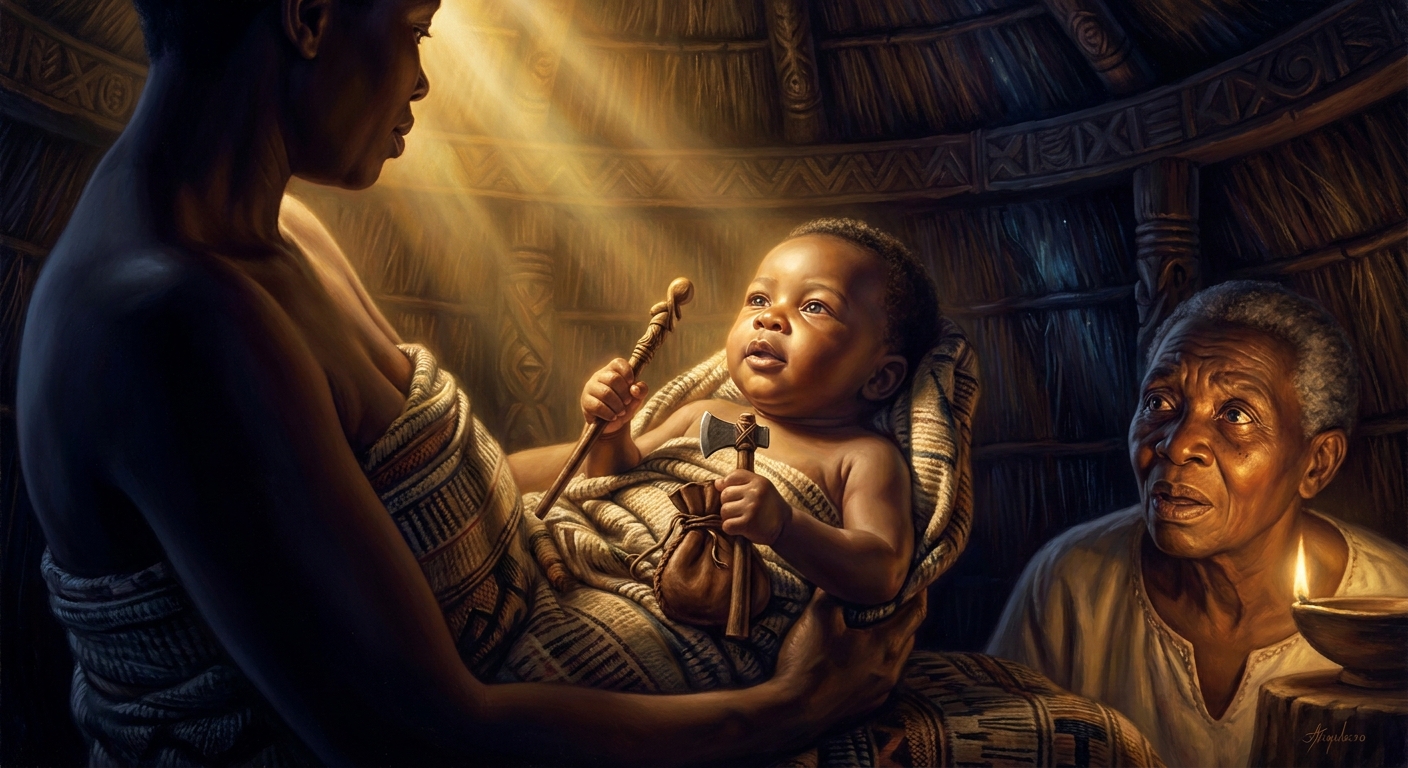
Mwindo and the Cave Beneath the World
A hero born speaking, banished by his own father, descends through a cave into the underworld to wrest cosmic order from the man who tried to kill him.
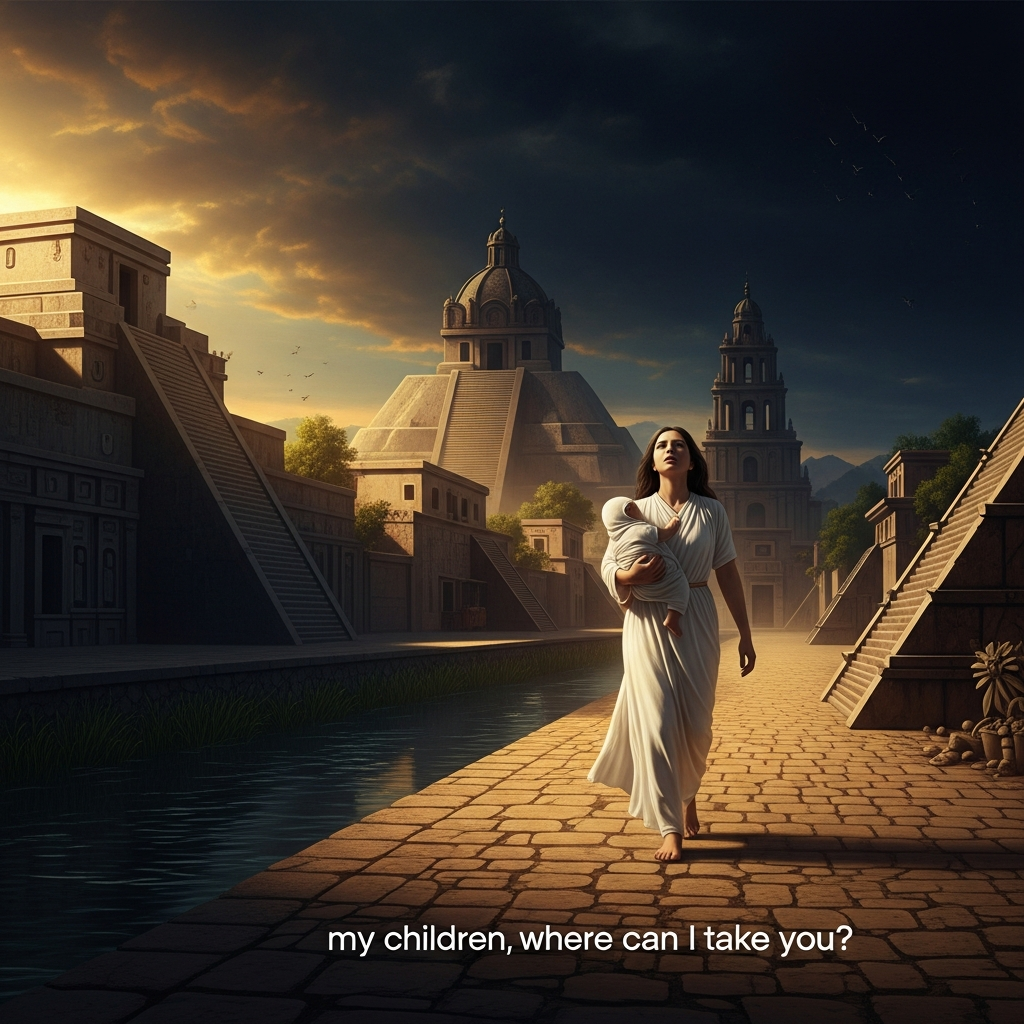
Cihuacoatl Weeping Through Tenochtitlan
In the nights before the Spanish conquest, a woman dressed in white walks the streets of Tenochtitlan crying out: my children, we must flee — where can I take you? She is Cihuacoatl, the Woman Serpent, the divine midwife, the goddess who is present at every birth and every death. She can see what is coming. She cannot say it in words. She can only cry.
Luther at Wittenberg
October 31, 1517. An Augustinian friar drives a nail into a church door and, without meaning to, splits Christendom in two.
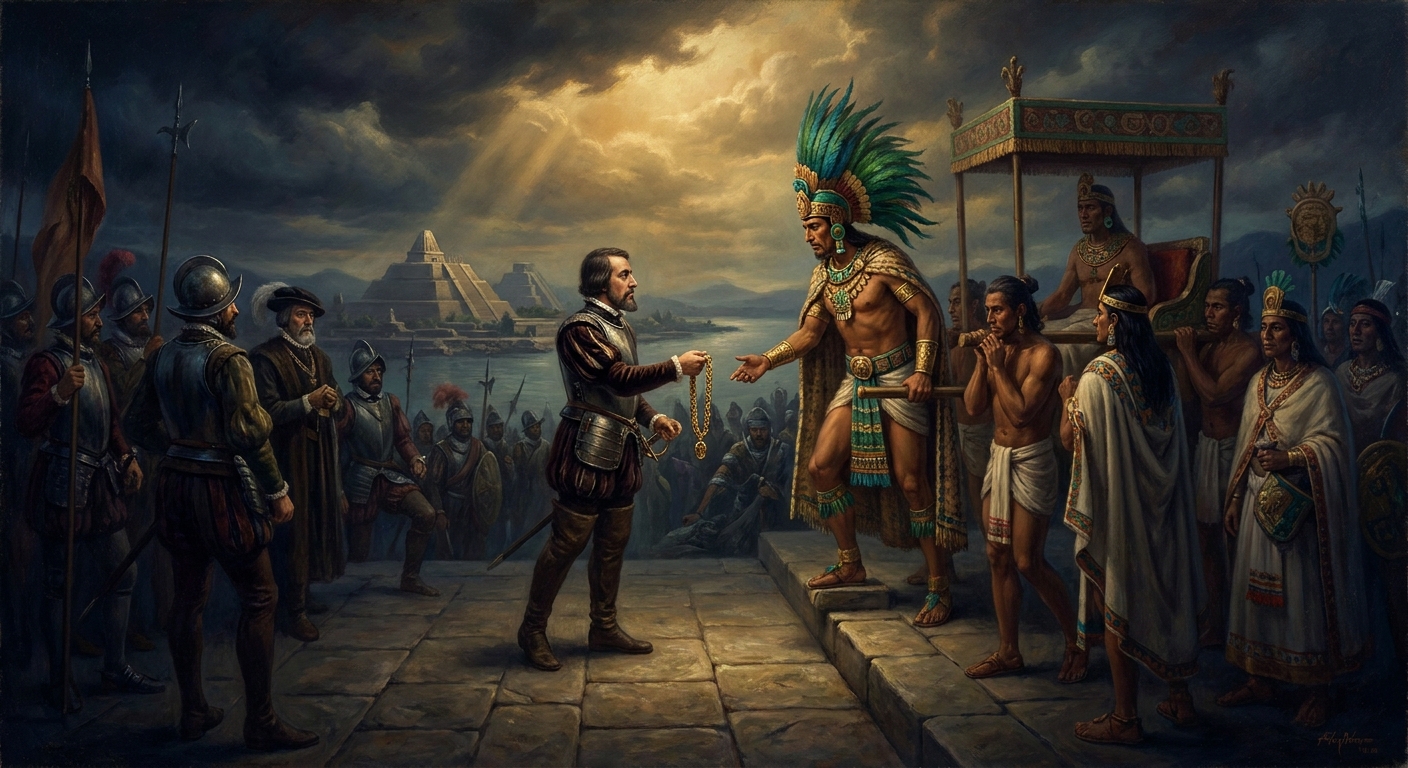
Cortés Meets Moctezuma
November 8, 1519. The emperor Moctezuma II reads every omen correctly and draws the wrong conclusion. He greets Hernán Cortés as the returning god Quetzalcoatl. It is the most catastrophic case of mistaken identity in human history.

Mirabai Walks Out of the Palace
Mirabai (c. 1498-1547), Rajput princess and bride of Krishna, is married off to a prince but refuses the marriage bed — she already belongs to the god. Her in-laws try to kill her three times. The poison becomes nectar. The cobras become garlands. The bed of nails holds no nails for her. She walks out of the palace, joins the wandering devotees, and sings until her body dissolves into the image of Krishna at Dwarka. Her bhajans are sung across India today.
Luther at the Diet of Worms
April 18, 1521: Martin Luther stands before the Holy Roman Emperor Charles V and a hall full of princes, bishops, and papal legates. The books are on the table. The demand is simple: recant. Luther asks for a day to think. He returns the next evening and gives the speech that breaks the medieval church in half.

William Tyndale and the English Bible
William Tyndale translates the New Testament into English in secret, fleeing from city to city across northern Europe. Bishop Tunstall buys up copies to burn them and inadvertently funds the next print run. Fifteen years of exile end at Vilvorde in 1536 with a strangling and a fire. Eighty-three percent of his words survive in the King James Bible.
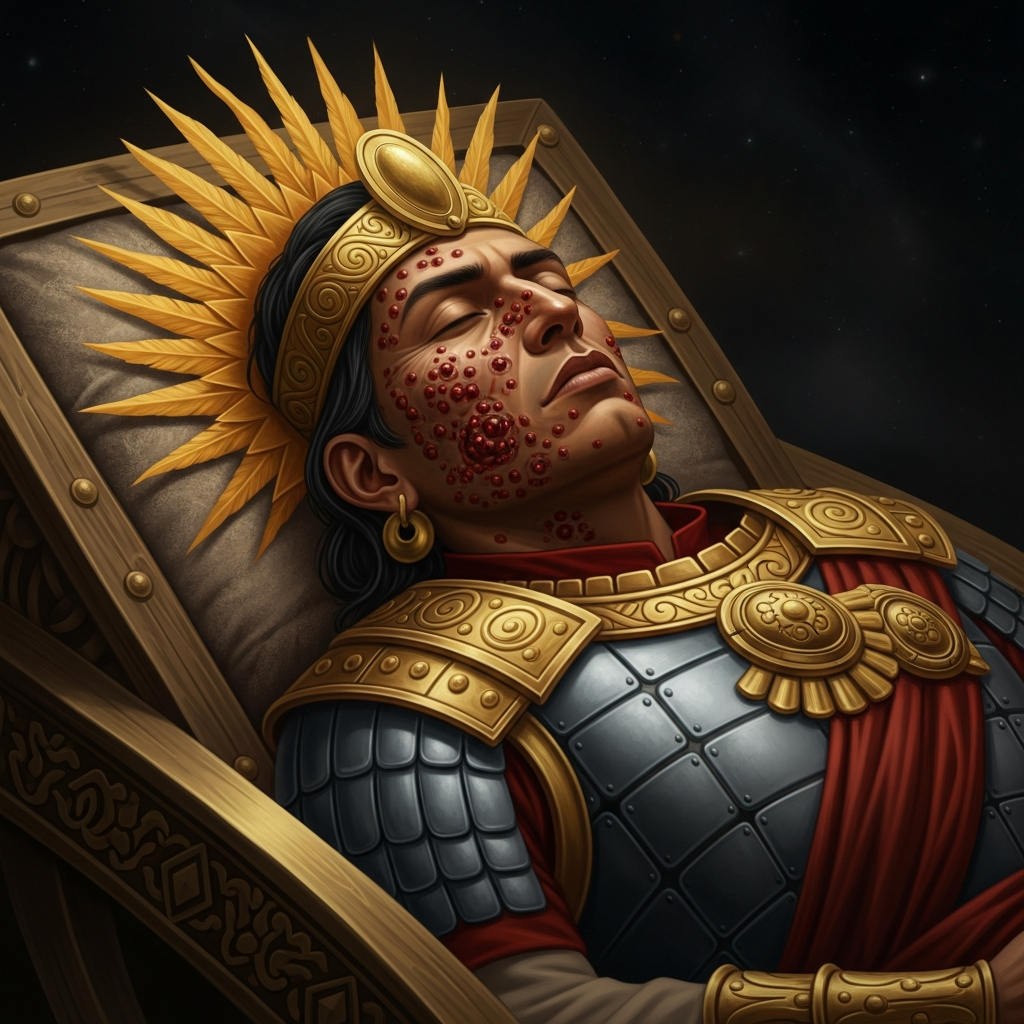
Huayna Cápac and the Prophecy of the Sea
The last great Inca emperor dies in 1527 of a plague that runs ahead of the men who brought it. Before dying, he hears the oracles: strangers are coming from the sea, armed with weapons the empire cannot match. He divides the Tawantinsuyu between his two sons — the worst decision in the history of the Americas. The civil war that follows delivers the empire to Francisco Pizarro's 168 soldiers.

Inkarri's Head Is Still Growing
The Spanish executed the last Inca king and scattered his body across the empire to prevent resurrection. But the head was buried in Cusco, and underground it is growing a body back. When the body is complete, Inkarri will return, the Spanish order will be overturned, and the Andean world will be remade. This myth — collected from Quechua communities in the 1950s and still alive — is South America's most powerful messianic tradition.
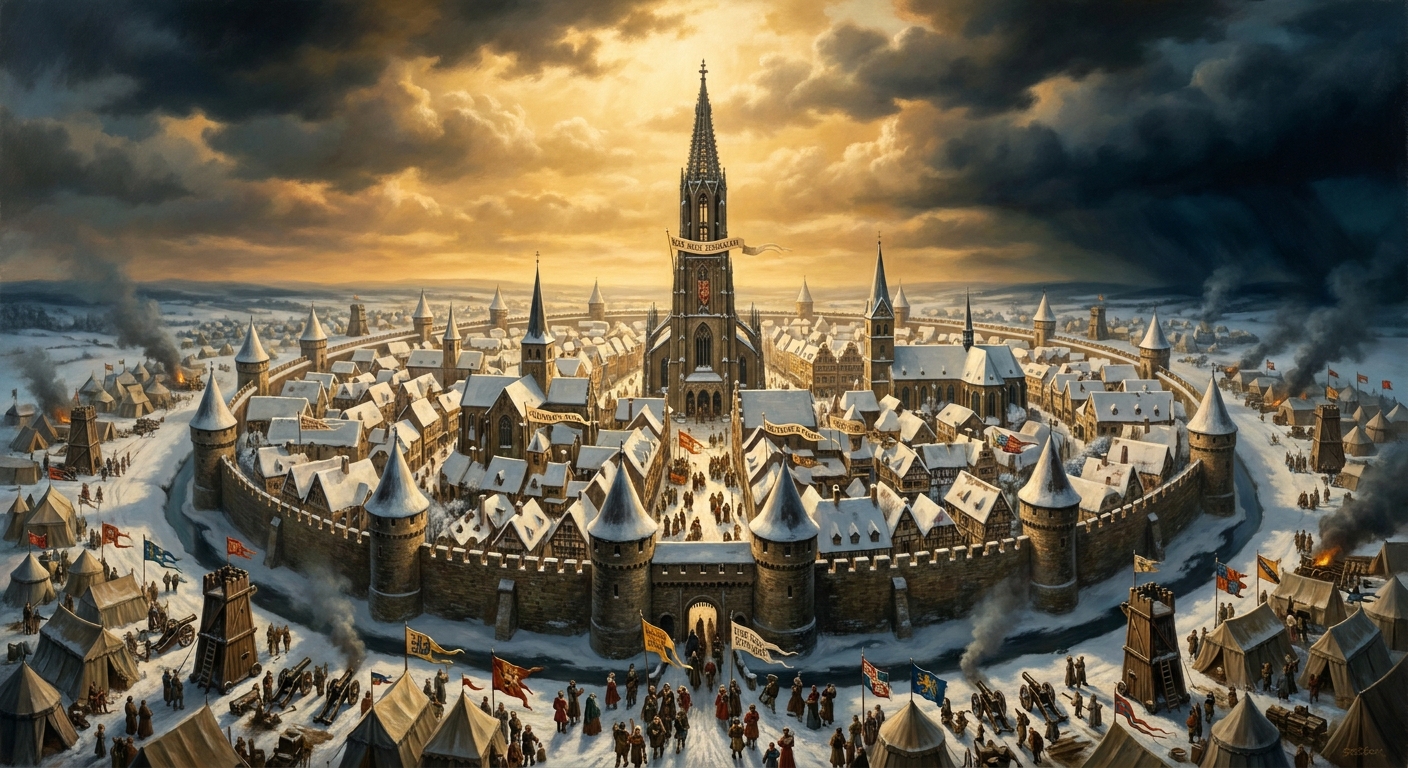
The New Jerusalem at Münster
Anabaptist millennialists seize the Westphalian city of Münster, abolish private property, institute polygamy, and crown Jan van Leiden king of the New Zion — until a sixteen-month siege ends with the leaders' bodies hung in iron cages from the tower of St. Lambert's, where the cages still hang today.
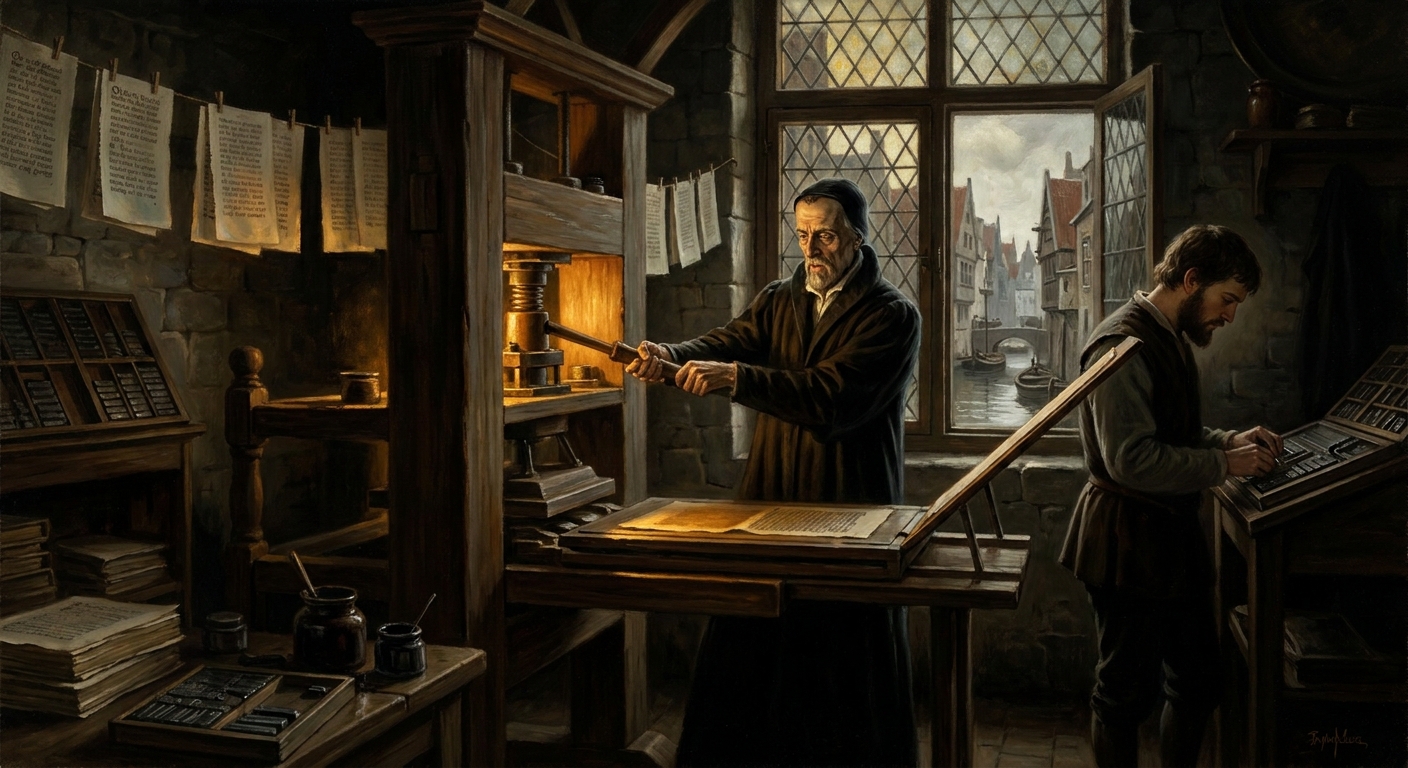
Lord, Open the King of England's Eyes
William Tyndale, betrayed at Antwerp and imprisoned at Vilvoorde, is strangled and burned for translating the Bible into English — three years before Henry VIII authorizes the Great Bible, largely from Tyndale's own text.
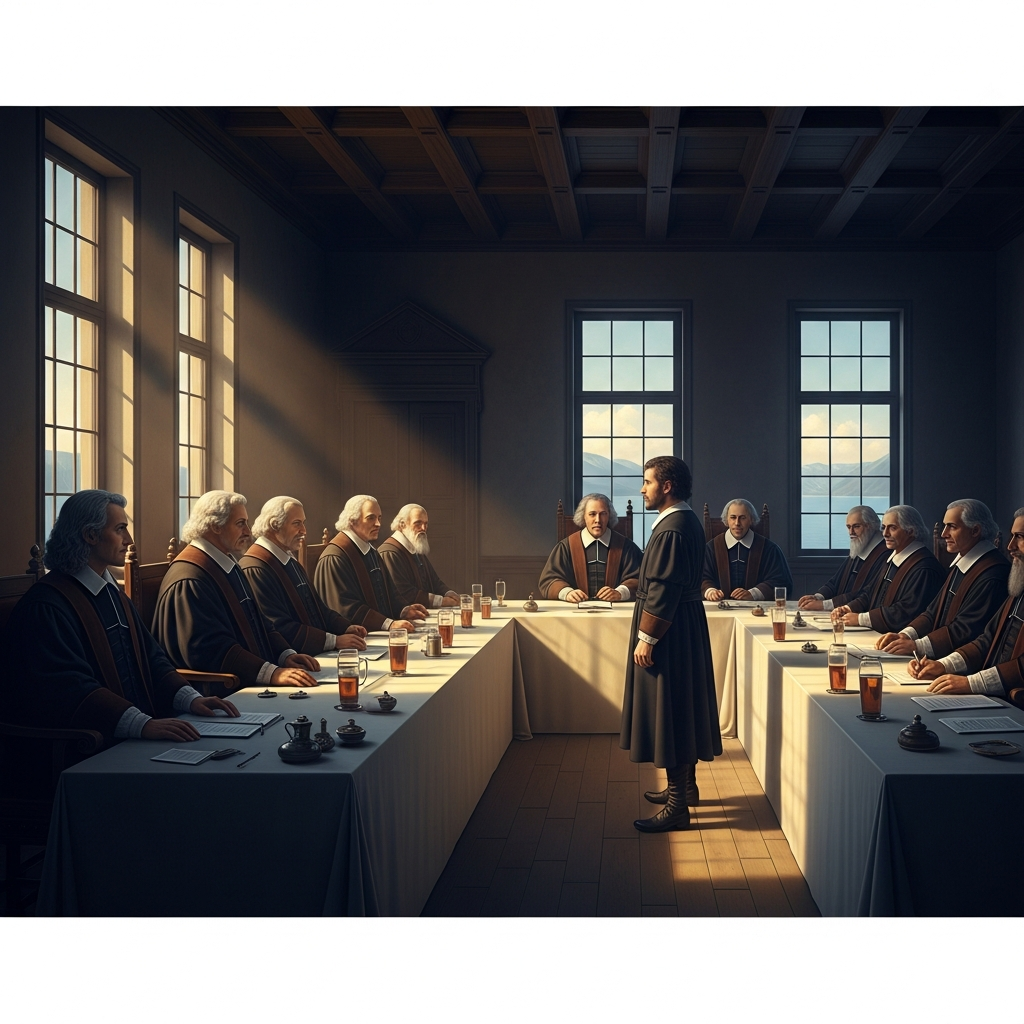
Calvin's Geneva
John Calvin remakes Geneva into a theological experiment: the Consistory, sumptuary laws, and total discipline of morals. In 1553, the Spanish physician Michael Servetus arrives in Geneva, attends a Calvin sermon, is recognized, arrested, and burned at the stake for denying the Trinity. Calvin later expresses regret only about the method, not the execution.
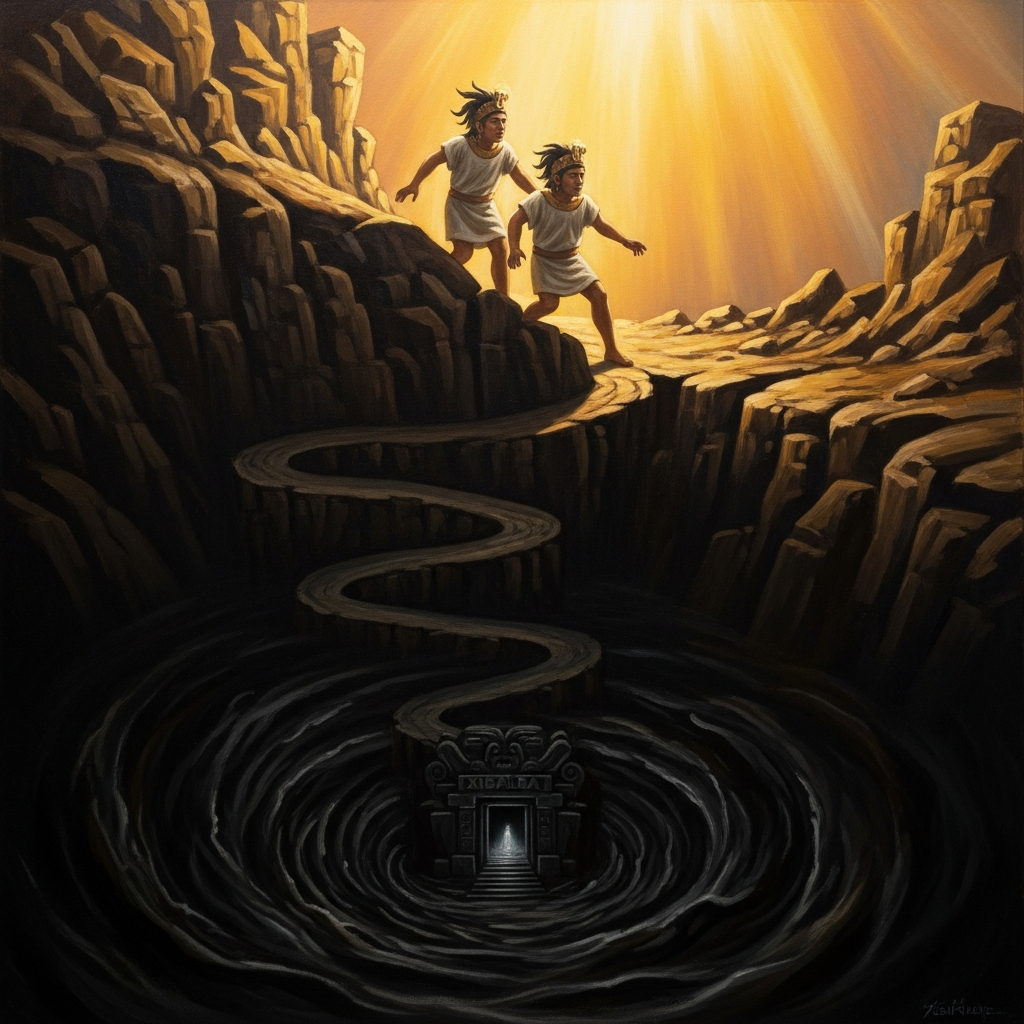
The Hero Twins in Xibalba
Hunahpú and Xbalanqué descend into the underworld to play ball with the Lords of Death, endure the Houses of Knives and Cold and Jaguars and Fire, defeat the gods of decay through trickery and resurrection, and rise into the sky as the Sun and the Moon.
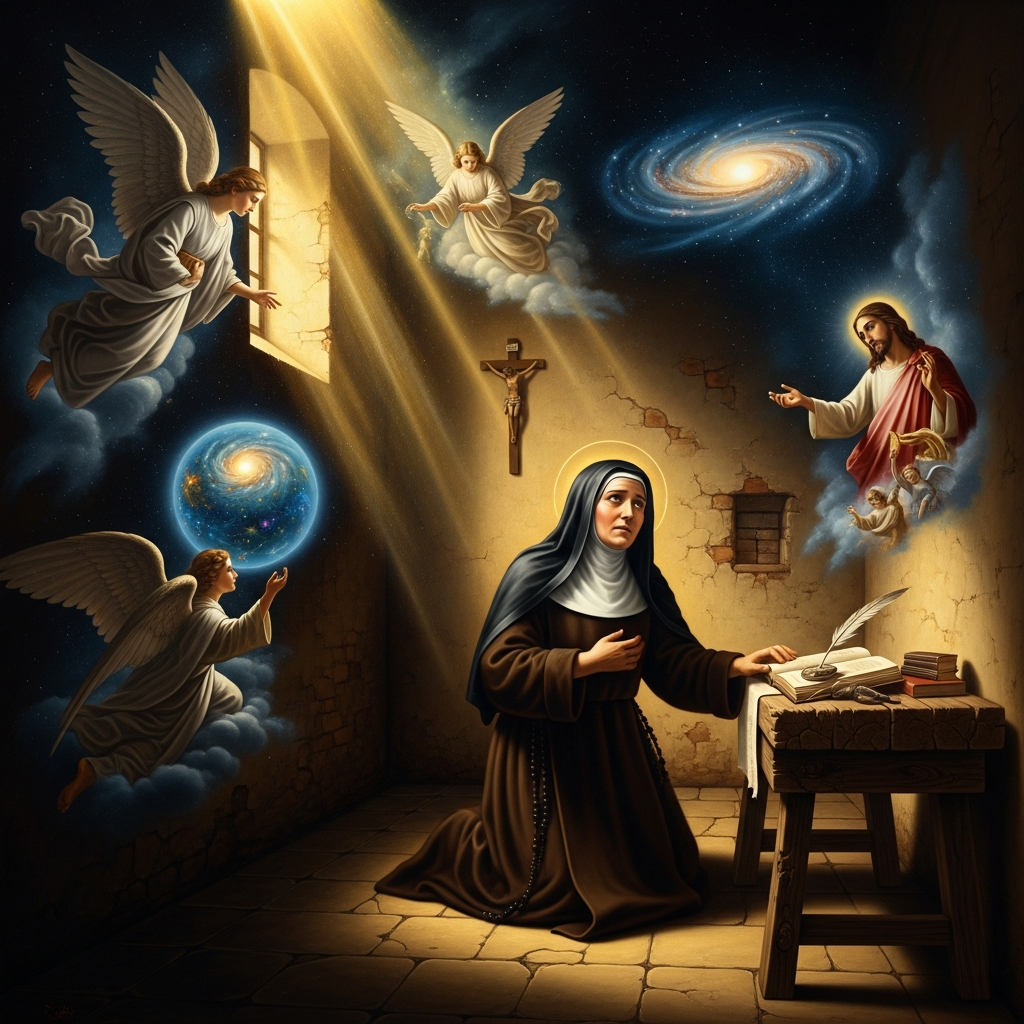
Teresa and the Golden Spear
A Carmelite nun in sixteenth-century Castile sees an angel beside her with a fire-tipped spear of gold, who plunges it through her heart again and again. The pain is so great she moans aloud — and the sweetness so great she would not lose it for anything in creation.
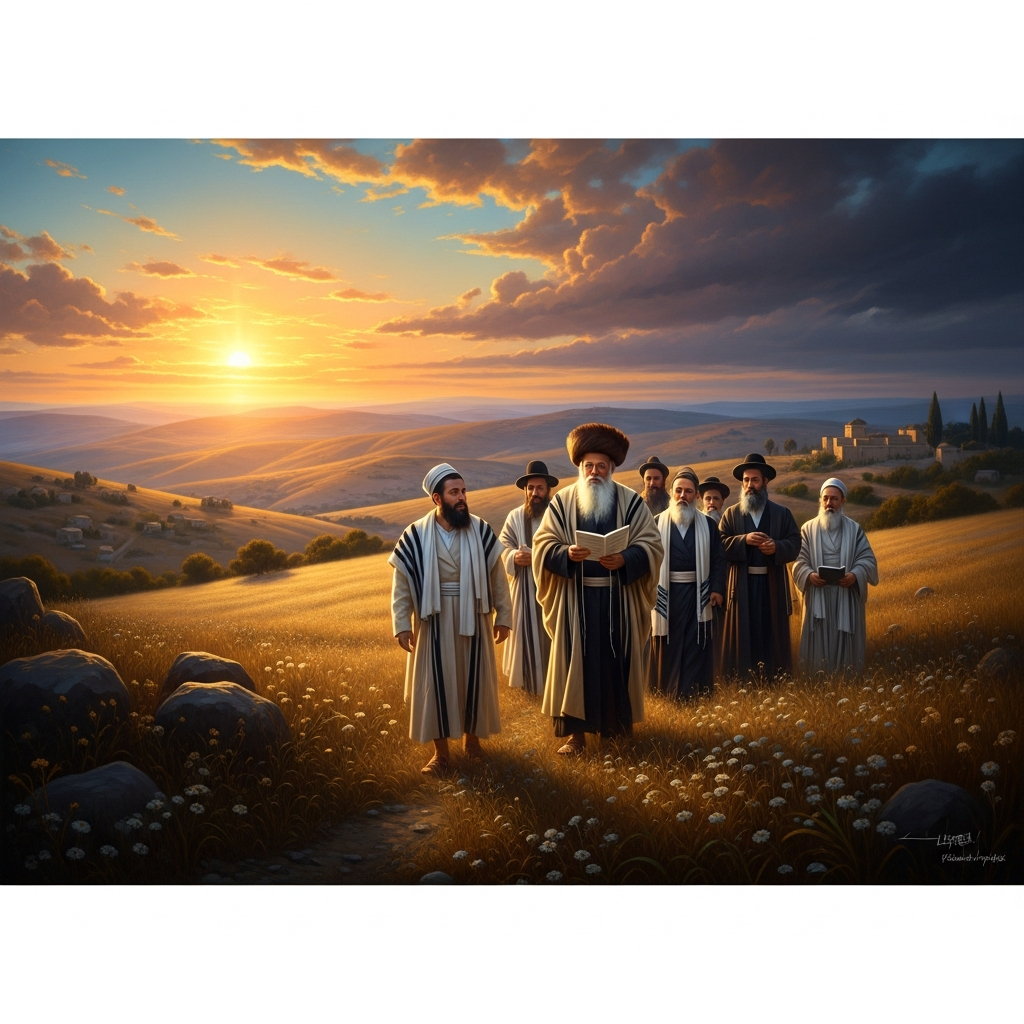
The Ari in Safed
Isaac Luria arrives in the mystical city of Safed, transforms the whole of Jewish mysticism in two years, and dies at thirty-eight — leaving behind teachings he never wrote, a universe he had re-explained, and a student who spent the rest of his life trying to get it all down.
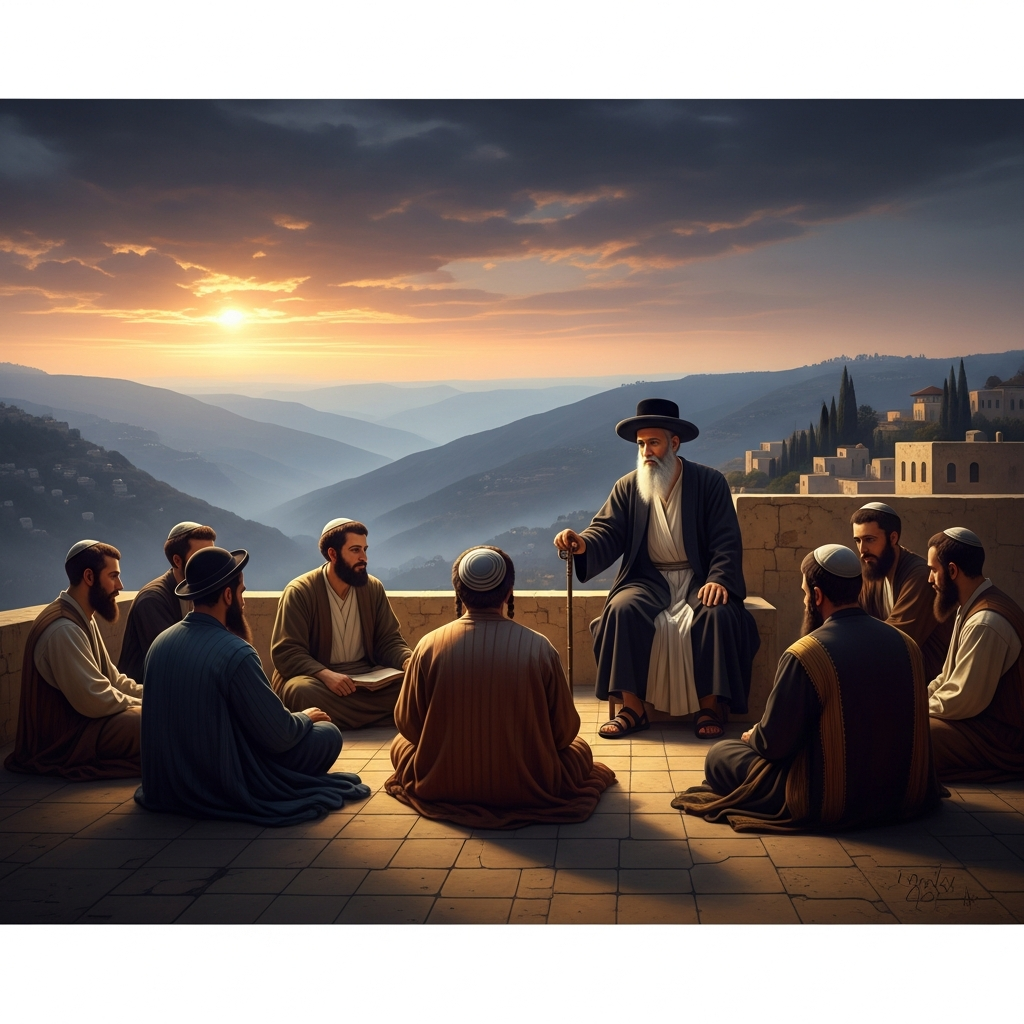
The Contraction: Isaac Luria and the Space God Made
In Safed in 1570, the Ari — Isaac Luria — teaches his disciples a cosmology so radical it reverses every prior assumption: God did not expand to fill the universe. God contracted. The infinite pulled back into itself to make room for something other than itself. A student tries to understand why the infinite would need to hide from itself, and what it means that the vessels shattered.
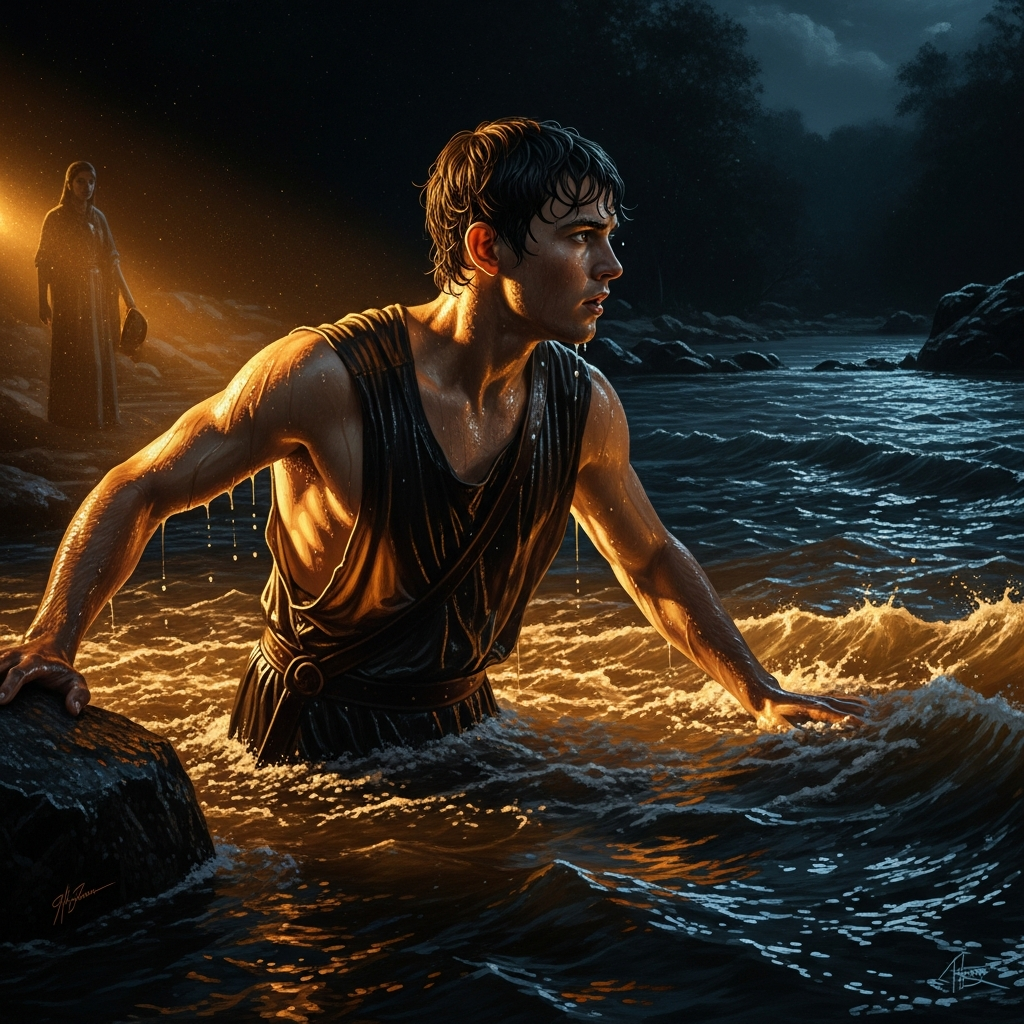
Tulsidas and the Poem That Became Scripture
He is a Sanskrit scholar in Varanasi, a householder whose wife has just humiliated him for following her to her father's house when she expected him in the temple. The taunt is the inciting line: *if you loved Ram half as much as you love this body of mine, you would have been free already*. He leaves the marriage that night. He goes to Ayodhya. He sees Ram in vision. He is commanded to write the story in the language his neighbours actually speak — Awadhi, the dialect of north Indian villages, not the Sanskrit of the Brahmins. He writes for three years. The Brahmin scholars of Varanasi are furious. The poem is finished in 1577. It becomes, over the next four centuries, the most widely read and memorized text in north India — the *Ramcharitmanas*, the people's Ramayana, the Bible of Hindi-speaking Hinduism.
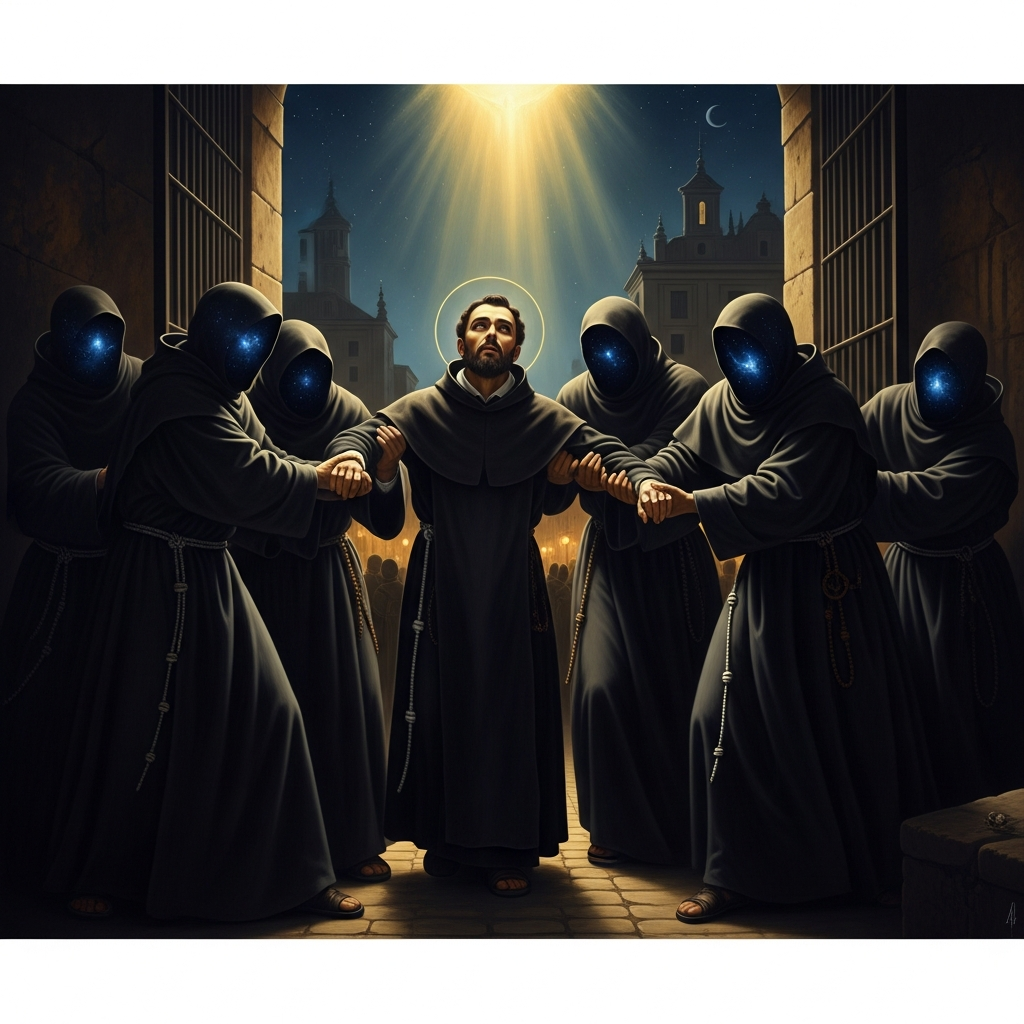
John of the Cross in the Toledo Closet
A small Carmelite friar is kidnapped by his own brothers in religion and locked for nine months in a six-by-ten-foot closet in Toledo. He is beaten weekly and starved. In the dark, with no paper, he composes the *Spiritual Canticle* line by line in his head — and escapes through a window with knotted bedsheets.
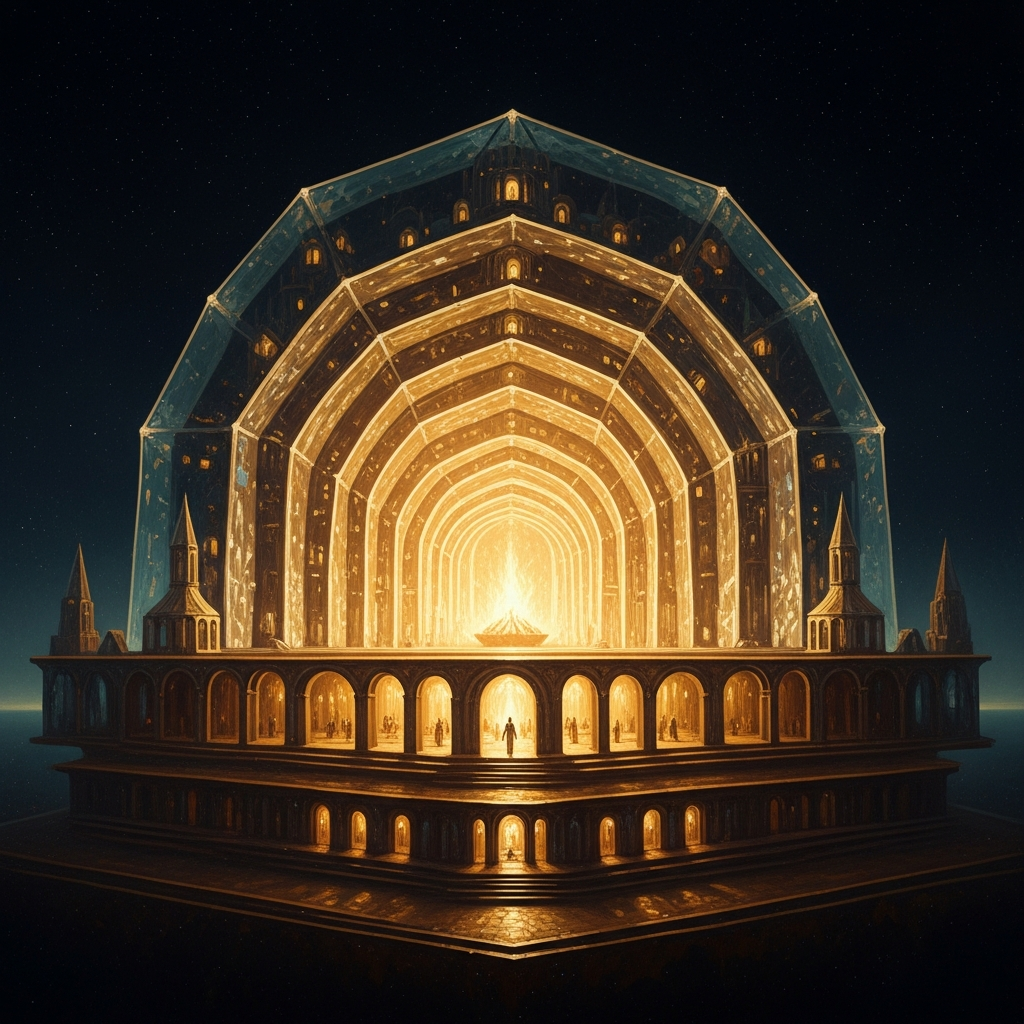
The Interior Castle
Teresa of Ávila is sixty-two, founding convents, fighting the Inquisition, and managing the reform of an entire religious order, when her confessor commands her to write a map of prayer. In five months she produces *The Interior Castle* — seven concentric dwelling places inside the soul, the innermost being the room where God lives. It is the most complete cartography of the Christian interior life ever written.
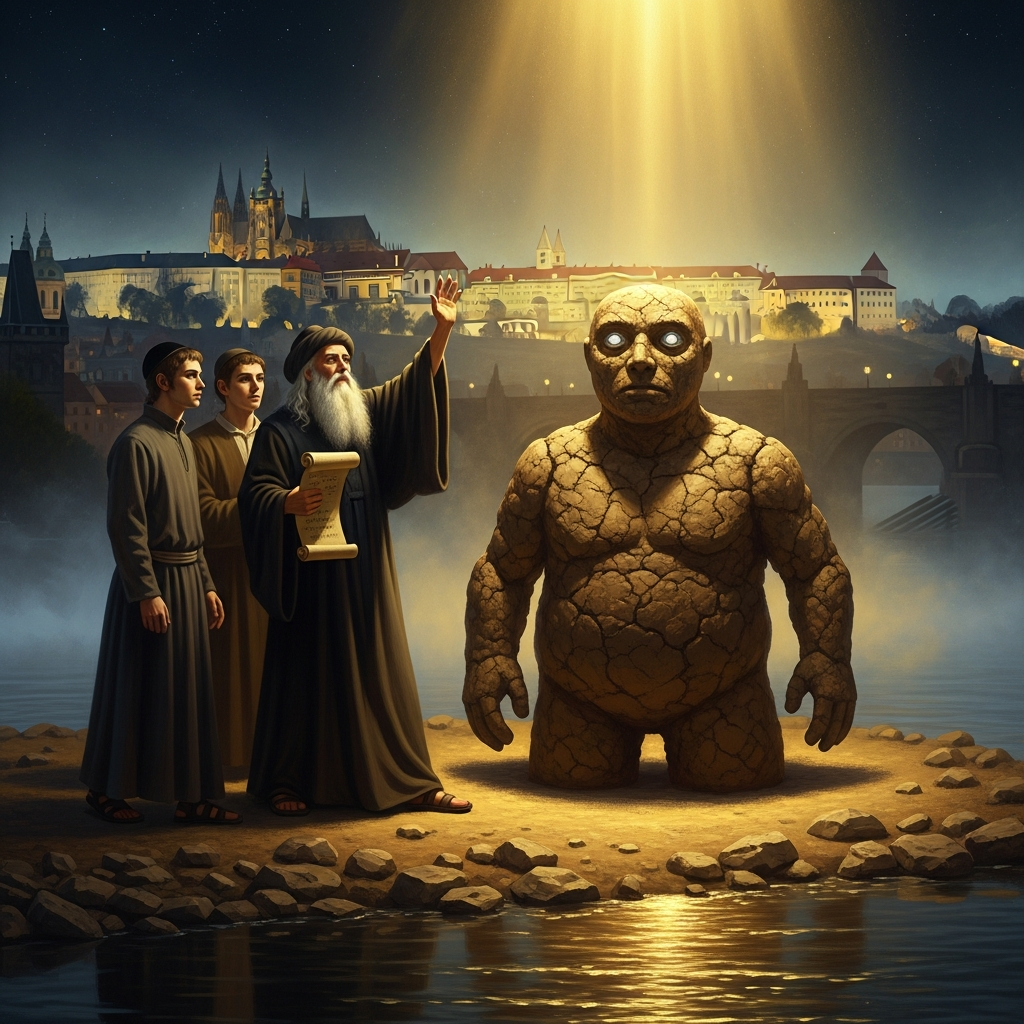
The Golem of Prague
Rabbi Judah Loew fashions a man from river clay and the letters of the divine name to protect Prague's Jews from Passover blood libels — but the creation grows beyond its maker's control, and on Shabbat eve the Rabbi must unmake what he made.
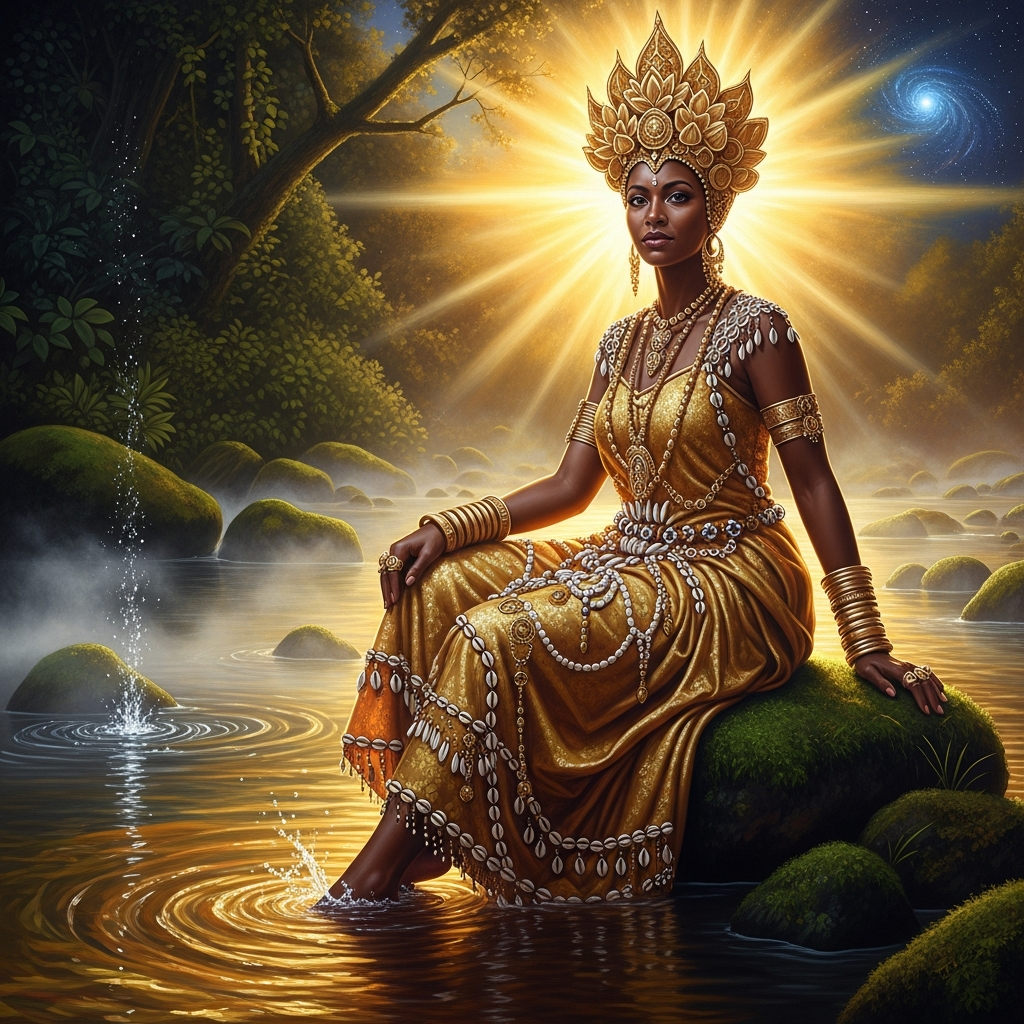
Oxum and the Mirror She Will Not Put Down
Oxum, the Candomblé orixá of fresh water, love, beauty, and vanity, teaches a young woman in Salvador preparing for her initiation that vanity and self-knowledge are the same thing. The mirror as sacred instrument. Why Oxum never puts it down.
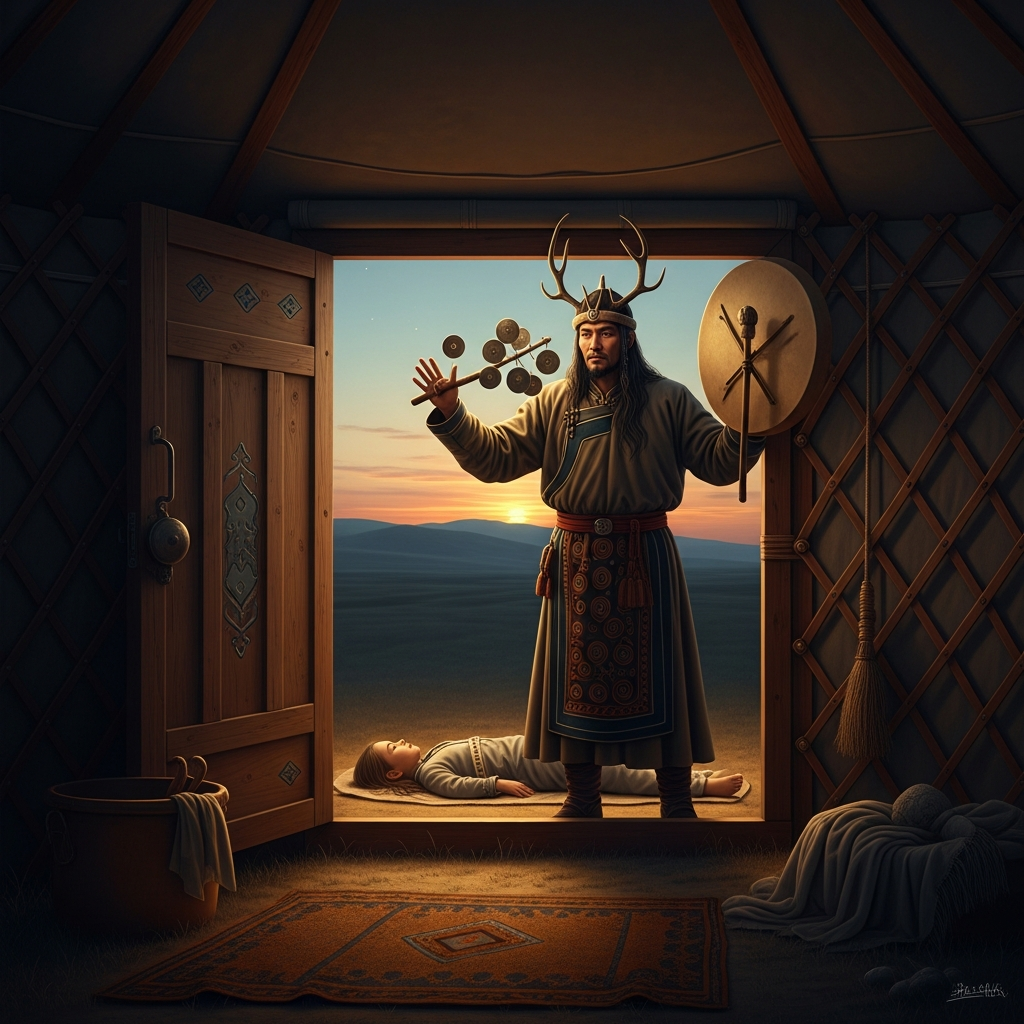
The Shaman Recovers the Child's Soul
A Buryat Mongolian child has been sick too long. The family summons the shaman at dusk. He drums himself into the spirit world, descends to Erlik's hall, and negotiates with the demon who has taken what does not belong to it.
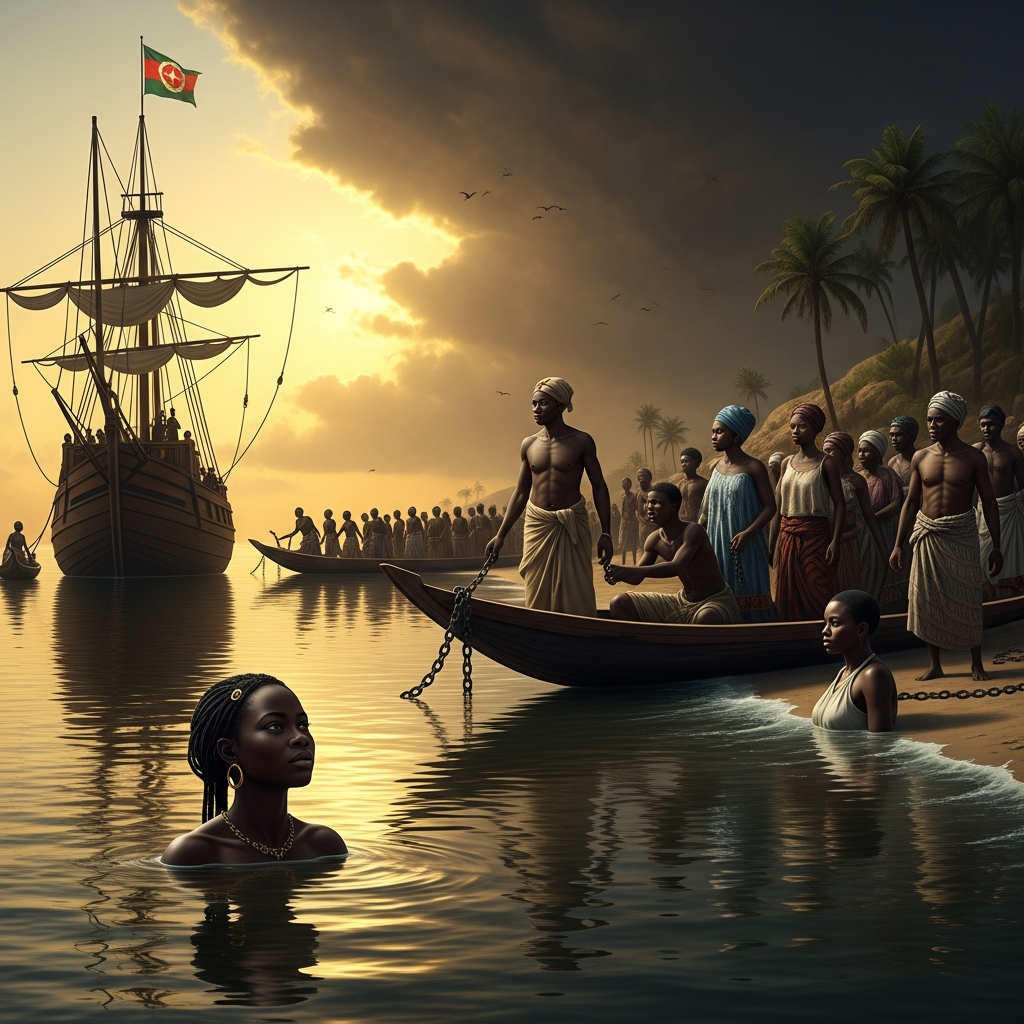
Yemoja and the Middle Passage
Yemoja, mother of all Orishas and guardian of the ocean, watches the first slave ship load its human cargo at the Niger Delta. She must choose whether to follow the chained women across the water — and in crossing with them, she arrives in a new world.
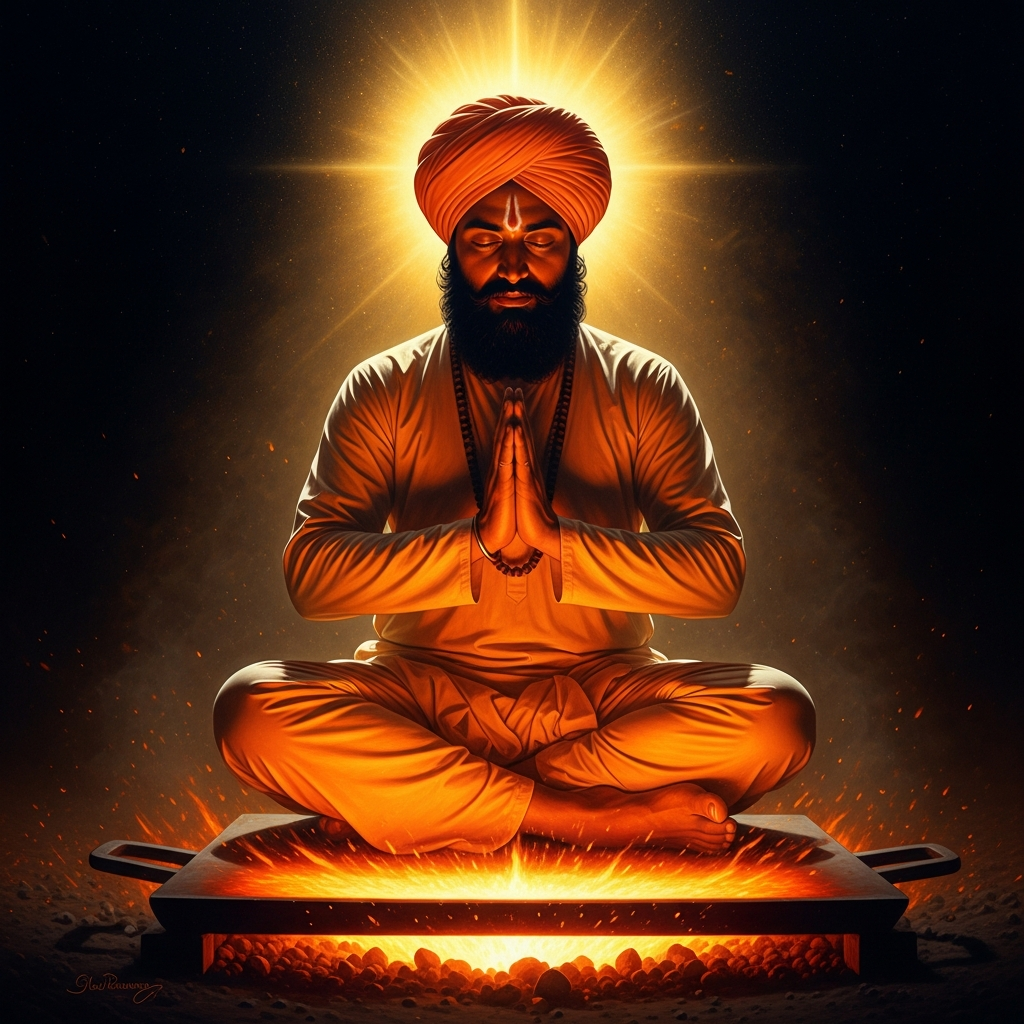
The Burning Plate
In Lahore, in the midsummer heat of 1606, the Mughal emperor Jahangir orders the fifth Sikh Guru tortured to death for allegedly supporting a rebel prince. Arjan Dev is made to sit on a burning iron plate while boiling sand is poured over him. He prays without ceasing. He is the first Sikh martyr — and the tradition will build every subsequent Guru around the fact of his death.
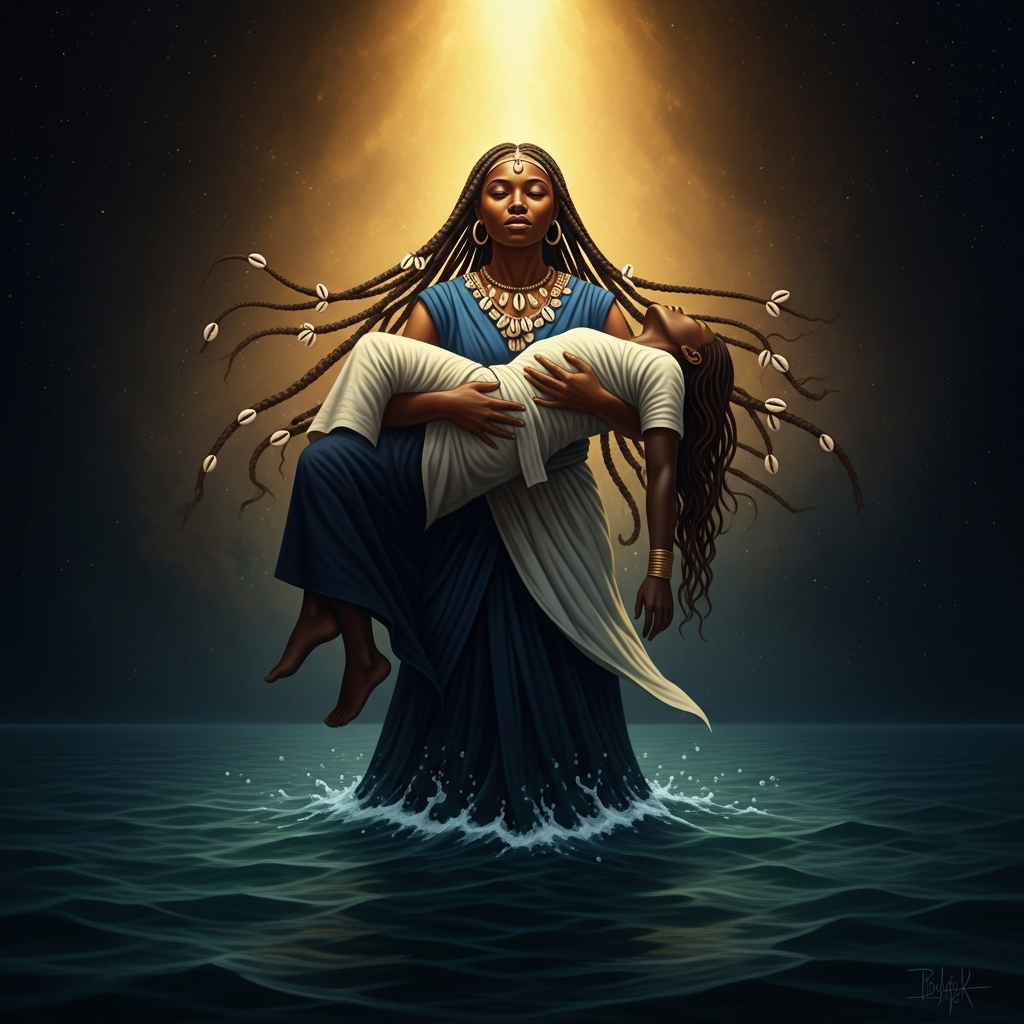
Yemoja at the Bottom of the Atlantic
Yemoja, the Yoruba orisha of rivers and fresh water, followed the enslaved across the Middle Passage and became the guardian of the dead beneath the Atlantic. A freshwater deity transformed by salt and grief — and what that transformation cost her, and what it gave the living who poured libations into the sea.
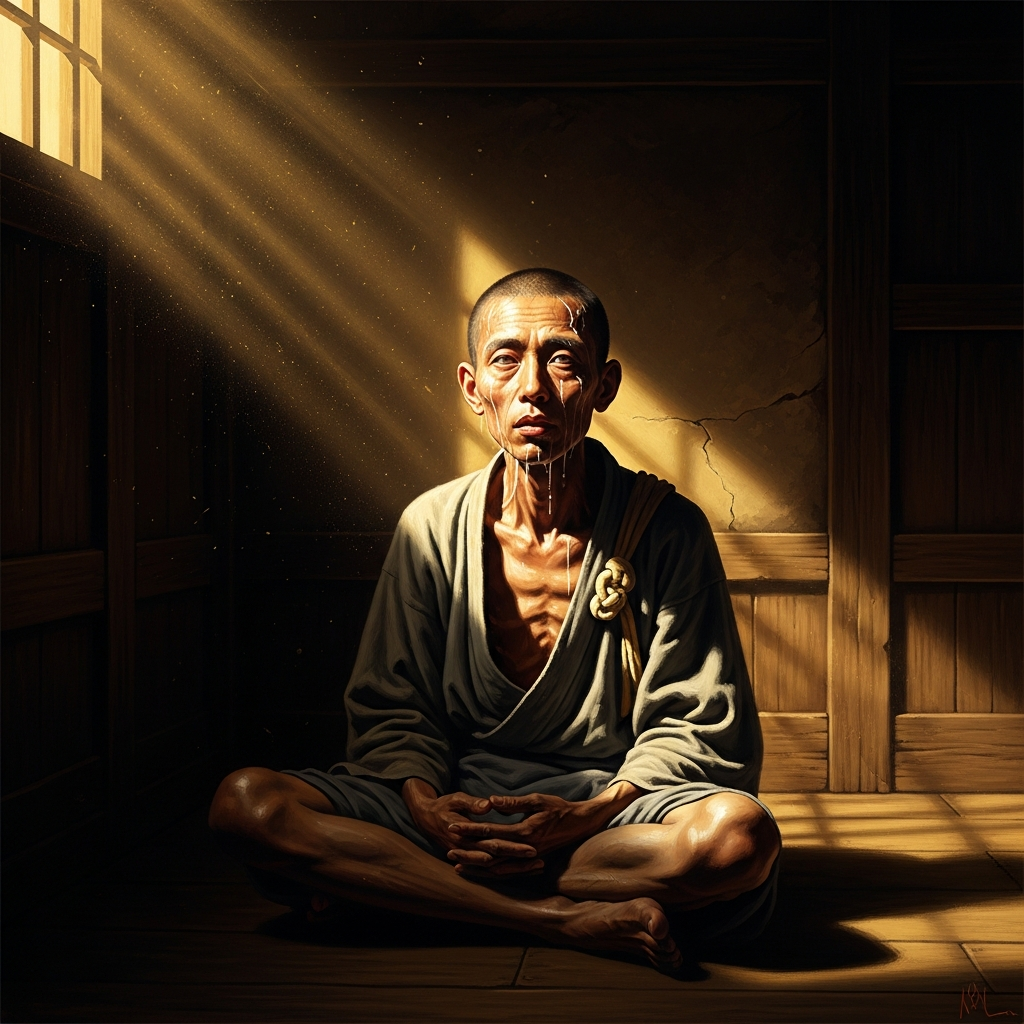
The Unborn Has No Name
Bankei Yōtaku has a breakthrough at twenty-six that requires no lineage, no technique, and no teacher to verify — the Unborn Mind is already here, was never lost. He spends the rest of his life telling this to anyone who will sit still, including a samurai sent to disrupt him.
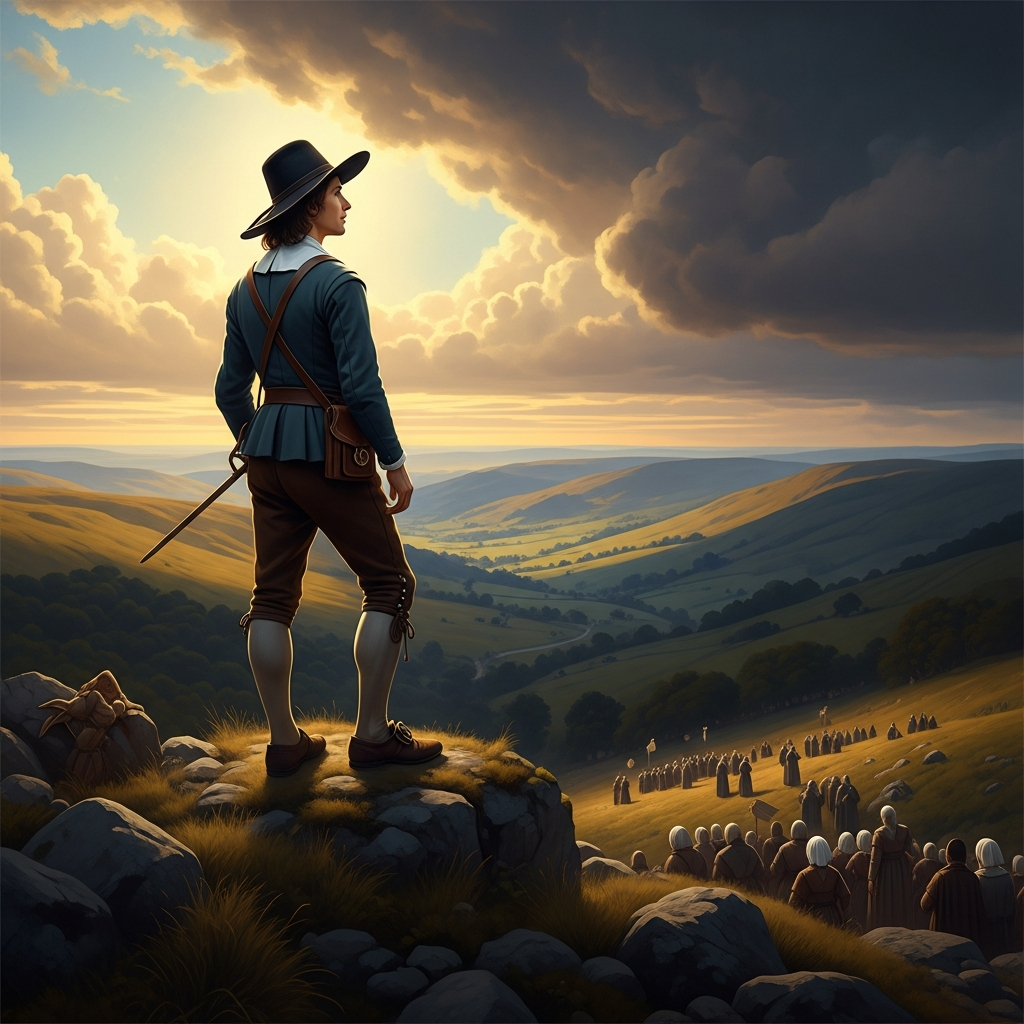
George Fox and the Inner Light
George Fox climbs Pendle Hill in 1652 and sees a vision of a great people to be gathered. He descends and gathers them — a thousand Seekers on Firbank Fell, four hours, no pulpit, no sacraments, no priest. The theology is radical: Christ has come to teach his people himself, without intermediaries, through the Inner Light present in every person.
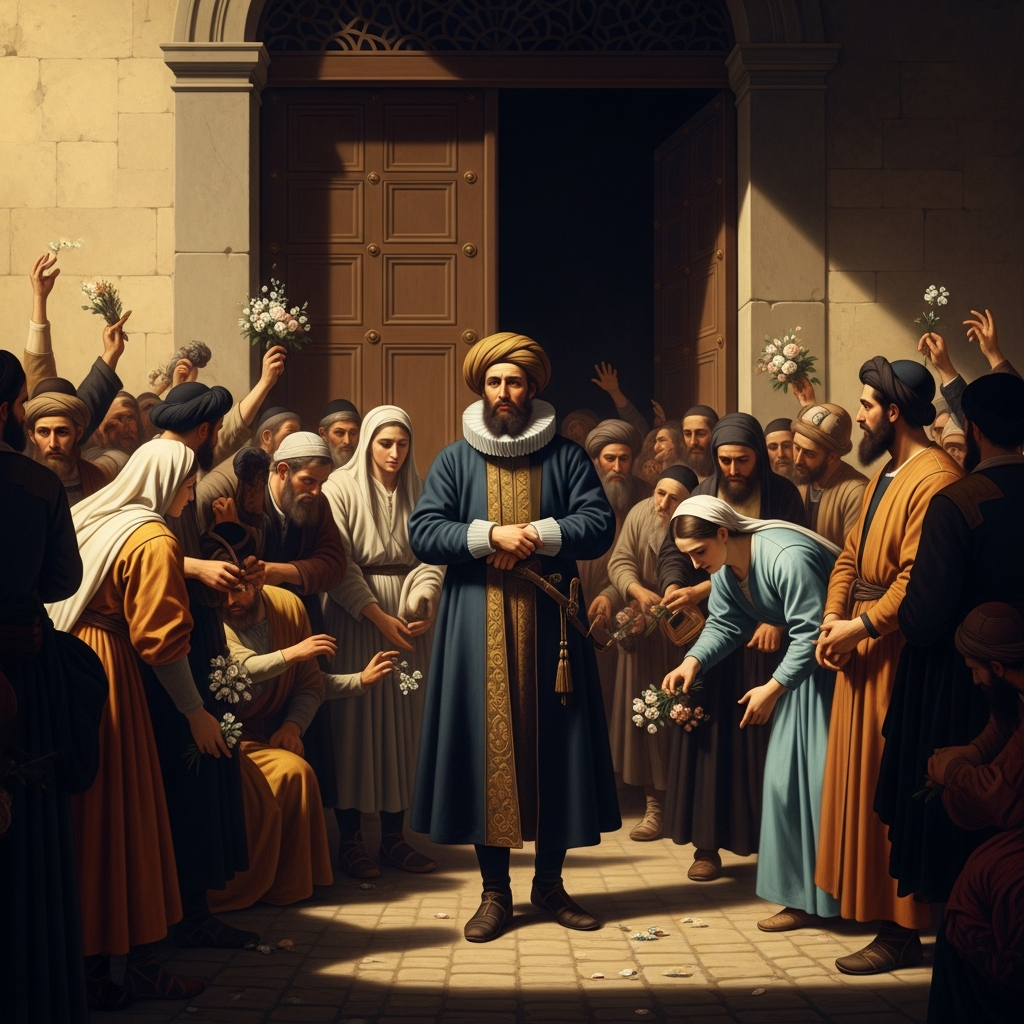
The Messiah Who Converted
In 1665, Nathan of Gaza proclaims the erratic Shabbetai Zevi the long-awaited Messiah, and the Jewish world erupts in the greatest messianic fever of the post-Temple era. In 1666, the Ottoman sultan gives Shabbetai Zevi a choice: the stake or Islam. He converts. His prophet Nathan reframes the catastrophe as theology: the Messiah had to descend into the kelipot — the husks of evil — to rescue the sparks imprisoned there. Some followers convert with him.
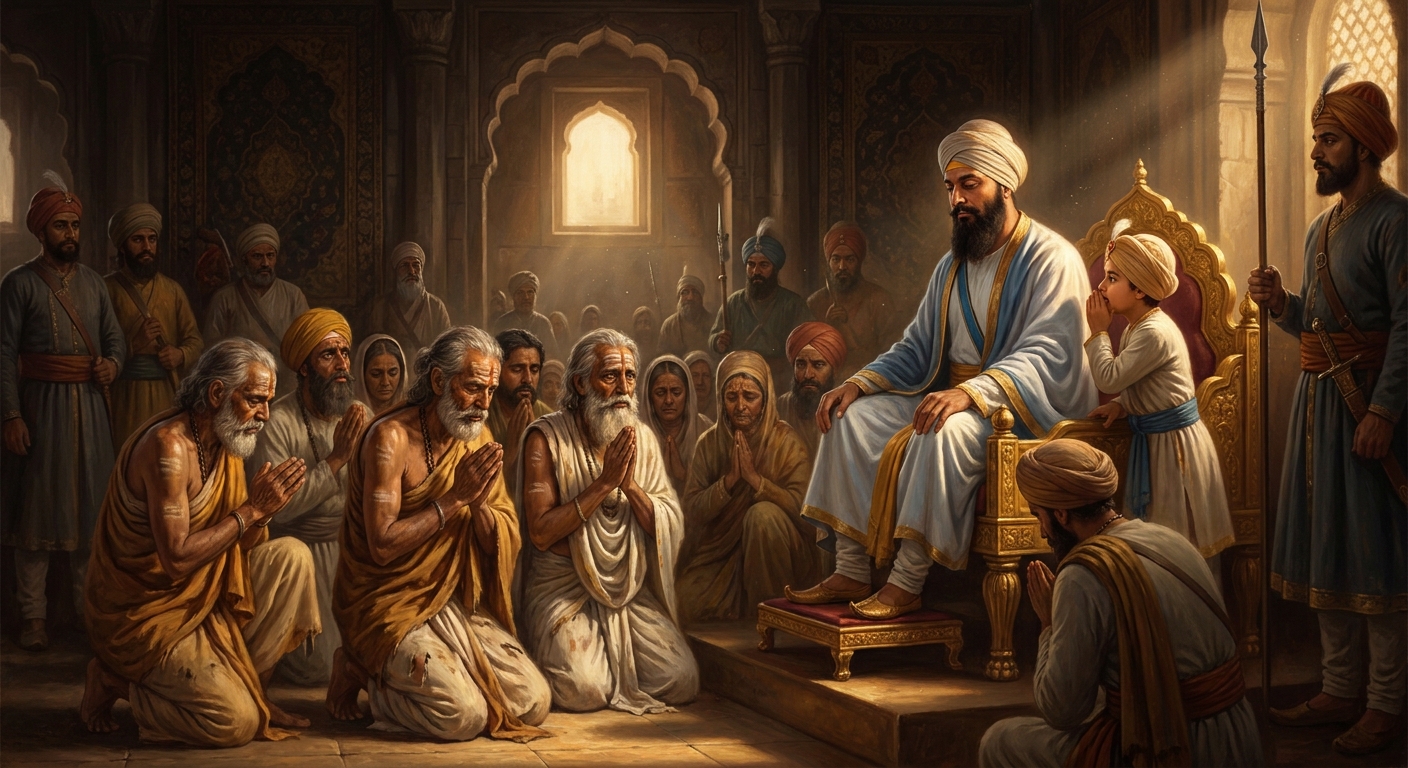
The Head That Bought Another Faith's Survival
The Ninth Guru is brought in chains to Chandni Chowk and given a final choice: convert to Islam, perform a miracle, or die. He chooses the third — not for his own faith, but to keep alive the faith of the Kashmiri Hindus who had asked him for help and the right of every conscience to refuse the empire's offer.
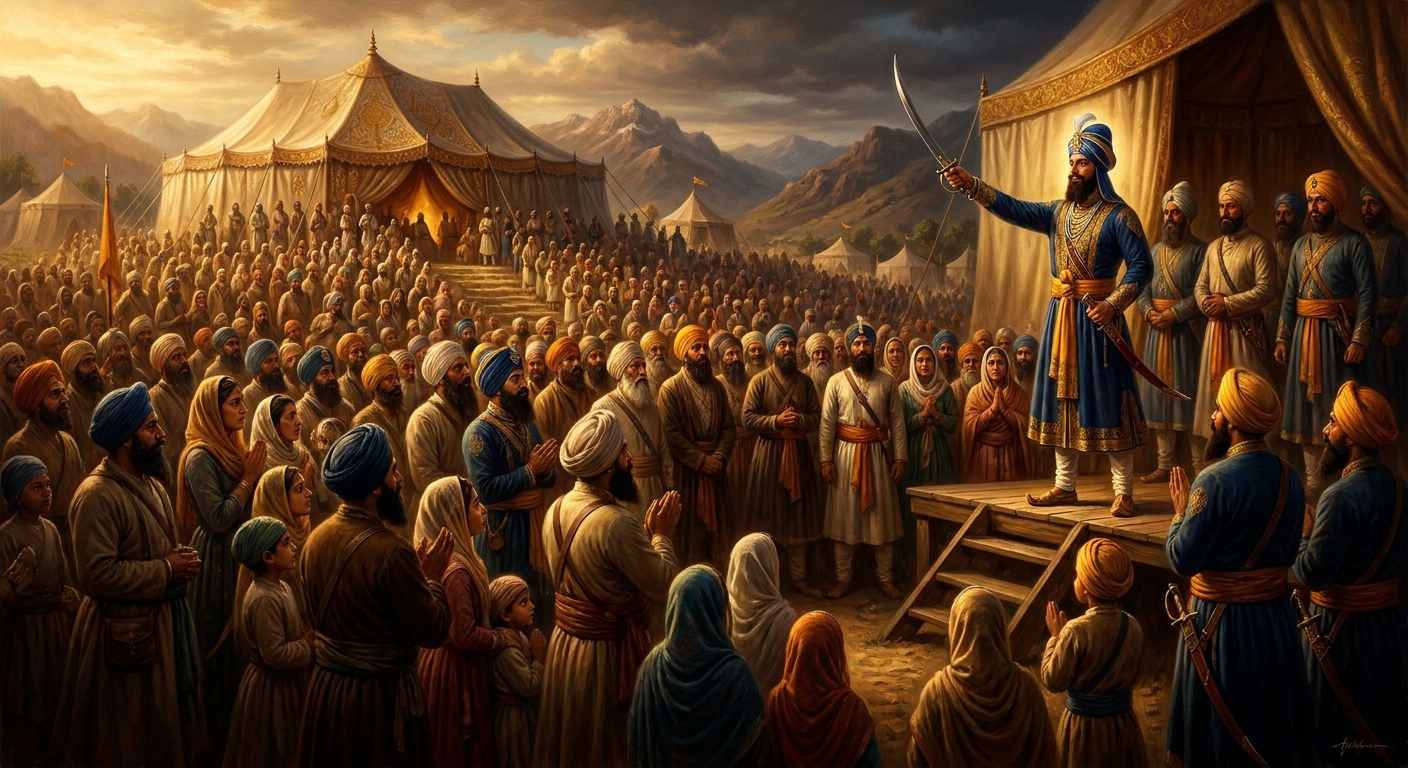
Five Heads, One Sword, the Khalsa
On the festival of Vaisakhi, with eighty thousand Sikhs assembled at Anandpur, the Tenth Guru draws his sword and asks for a head. Five men step forward. They walk into a tent one at a time and do not come out until the Guru himself does, with a steel bowl of sweetened water and a new kind of community on the other side of it.
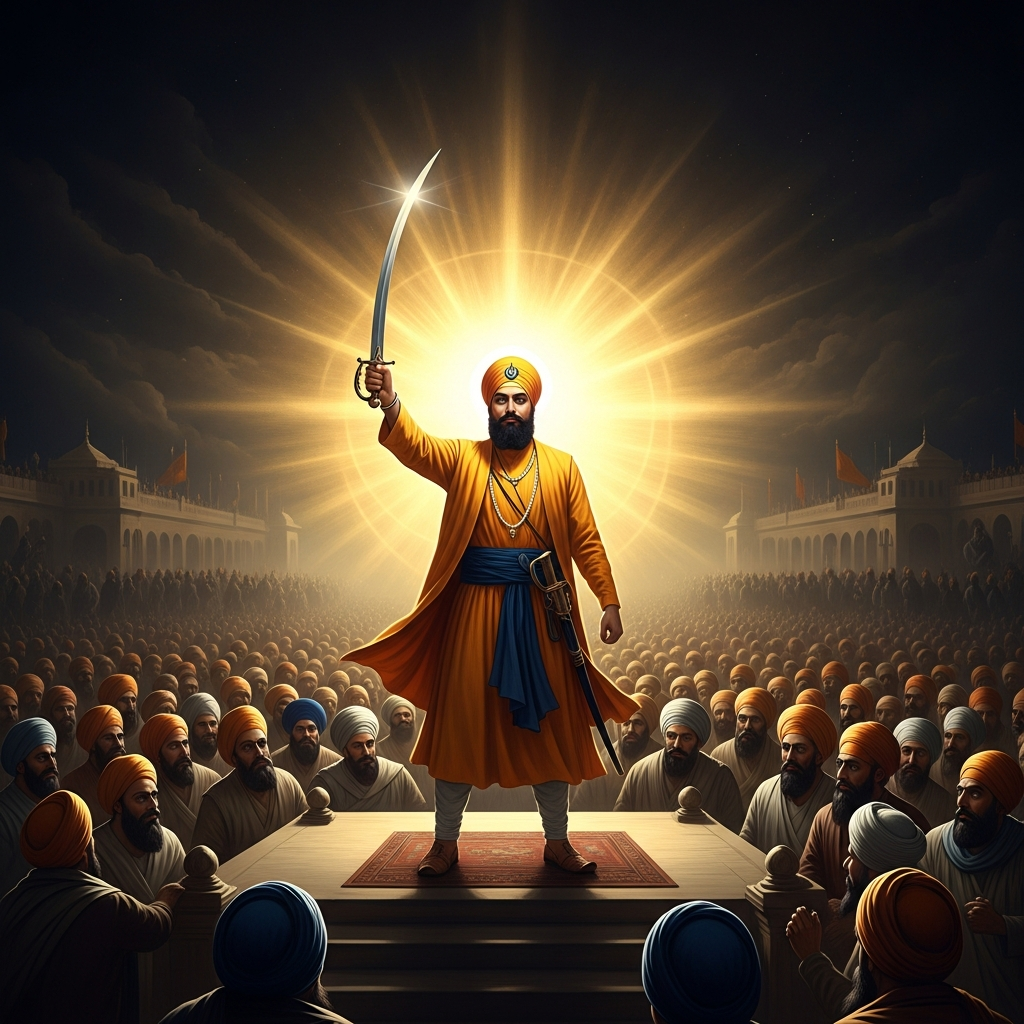
Who Will Give Me His Head
On Vaisakhi 1699, Guru Gobind Singh stands before eighty thousand Sikhs at Anandpur with a naked sword and asks for a volunteer to die. Five men step forward one by one. Each walks into a tent. Each time, the sword falls. Each time, the Guru comes out alone and asks again. Then all five walk out alive, and a new order begins.
Modern
The living traditions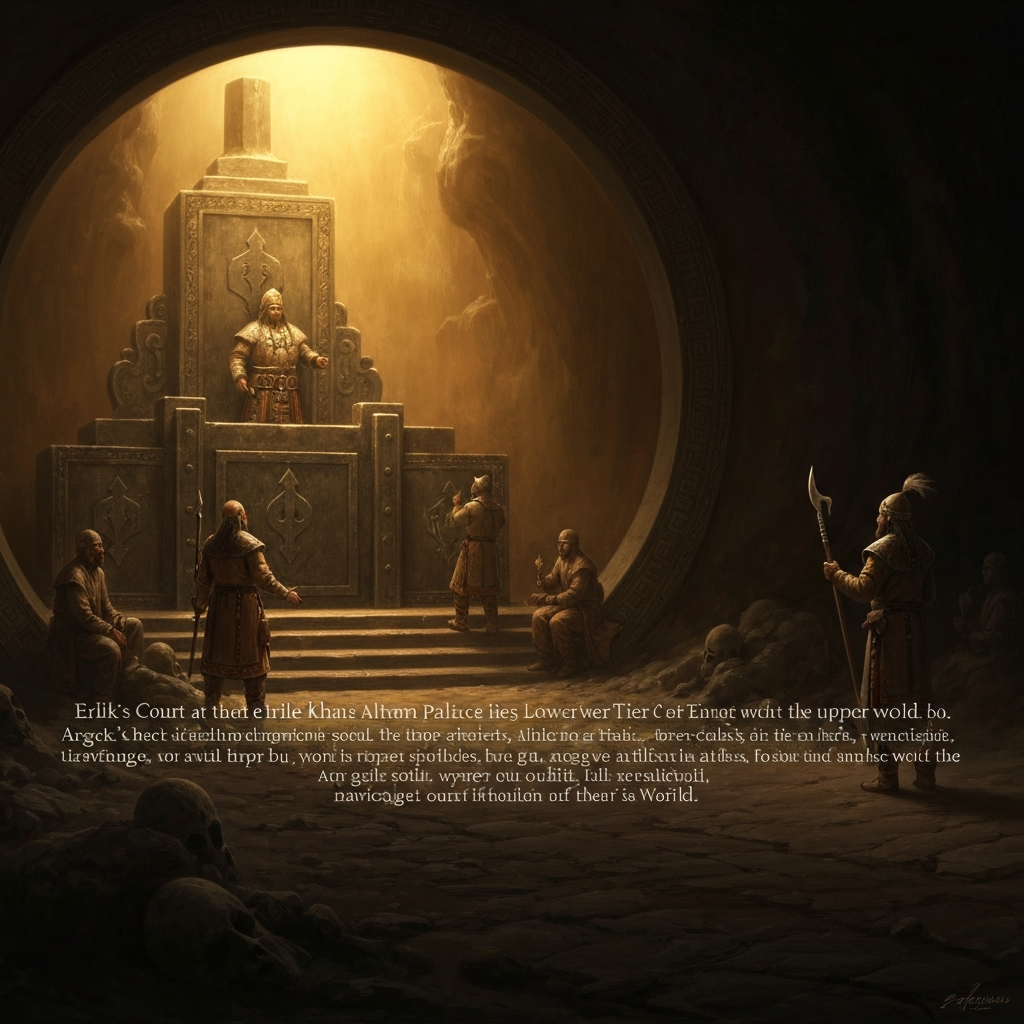
Erlik's Court at the Bottom of the World
Erlik Khan rules the Altaic underworld from an iron palace at the bottom of the nine lower tiers. A shaman accompanies a recently dead soul to Erlik's court, witnesses the weighing of acts, and attempts to argue the soul back to the upper world on a technicality — navigating a bureaucracy of demons that is as detailed and procedural as any human court of law.
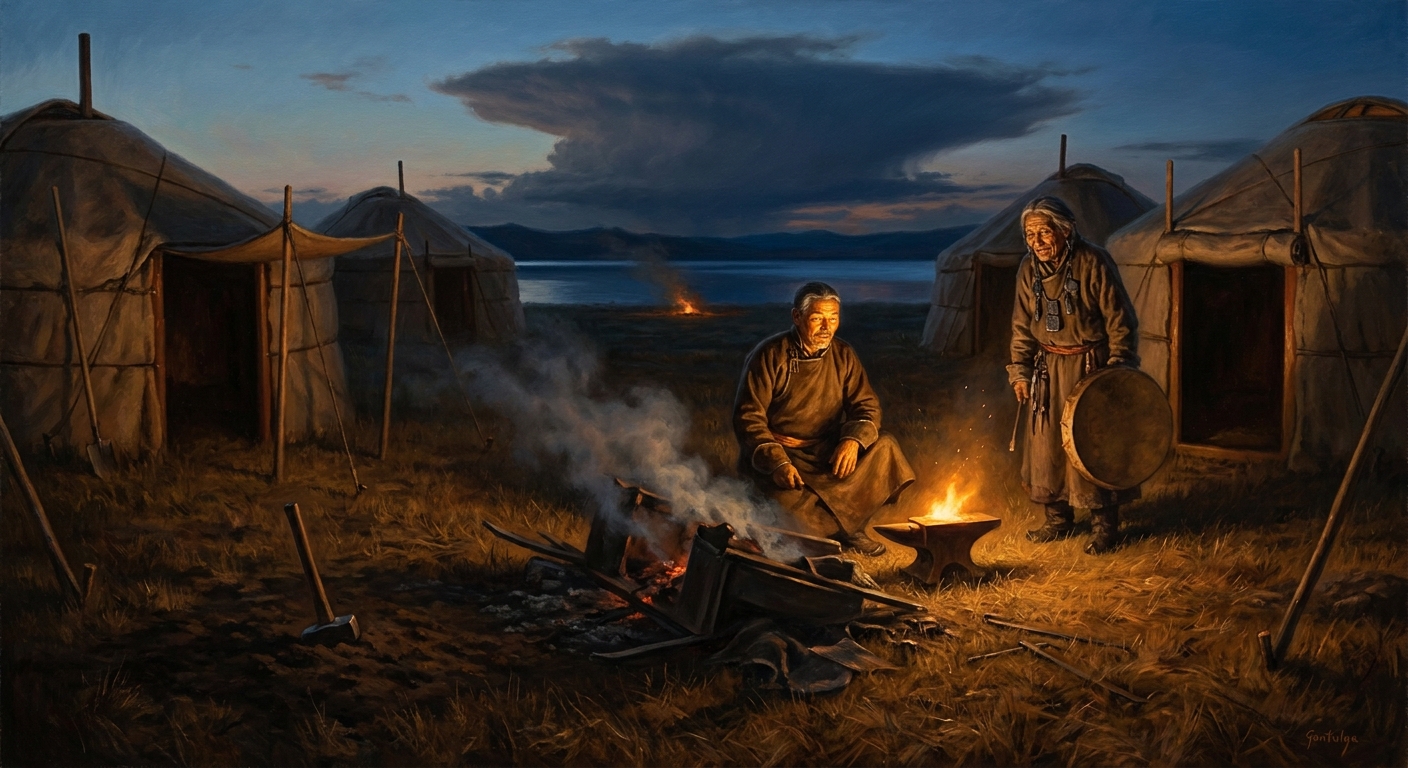
The Blacksmith Who Became a Shaman
Among the Buryat Mongols, blacksmiths and shamans are ancient rivals: iron defeats spirits, but the greatest shamans also master iron. A blacksmith is struck by lightning and must choose between his forge and the new power that has entered him — or discover there was never a choice at all.
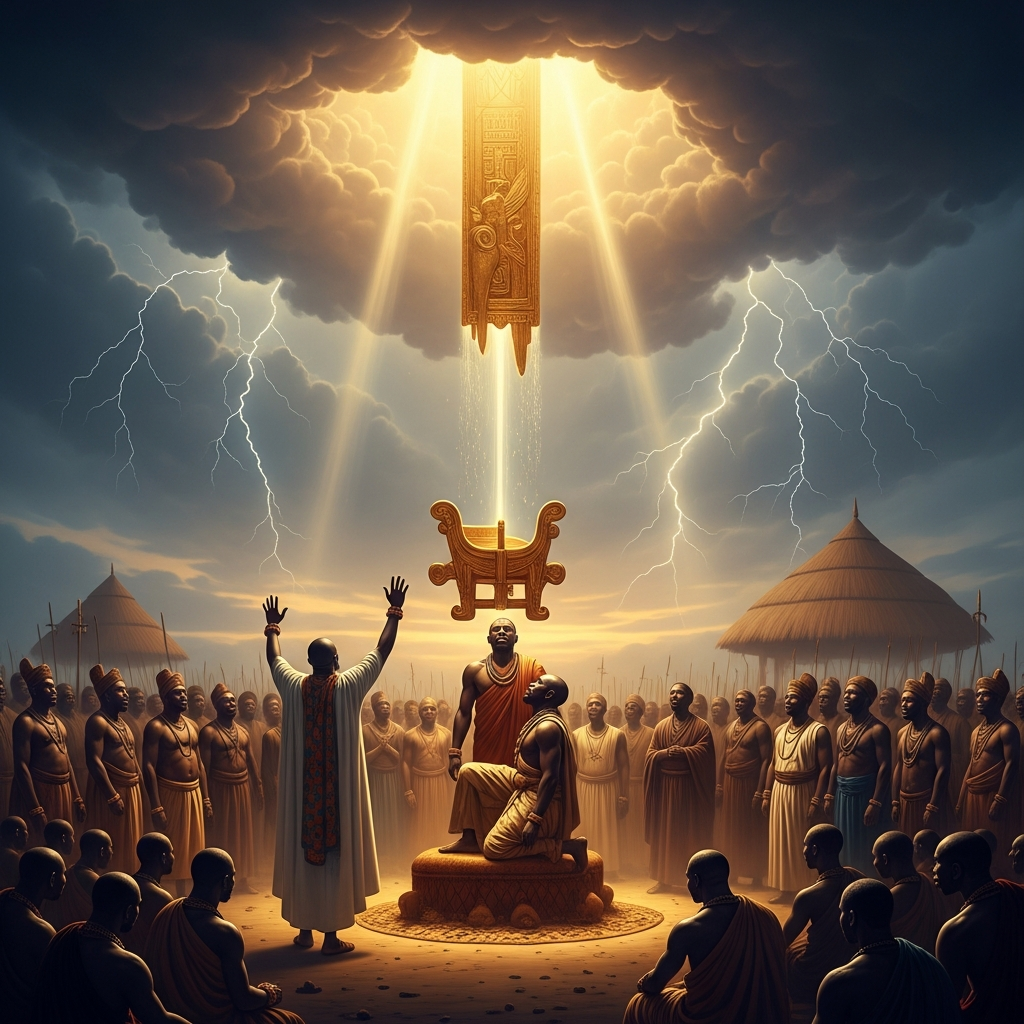
The Golden Stool Descends
At Kumase the chiefs are gathered, the union still fragile. The priest Okomfo Anokye lifts his hands, the sky cracks, and a stool of beaten gold descends through the thunder onto Osei Tutu's knees.
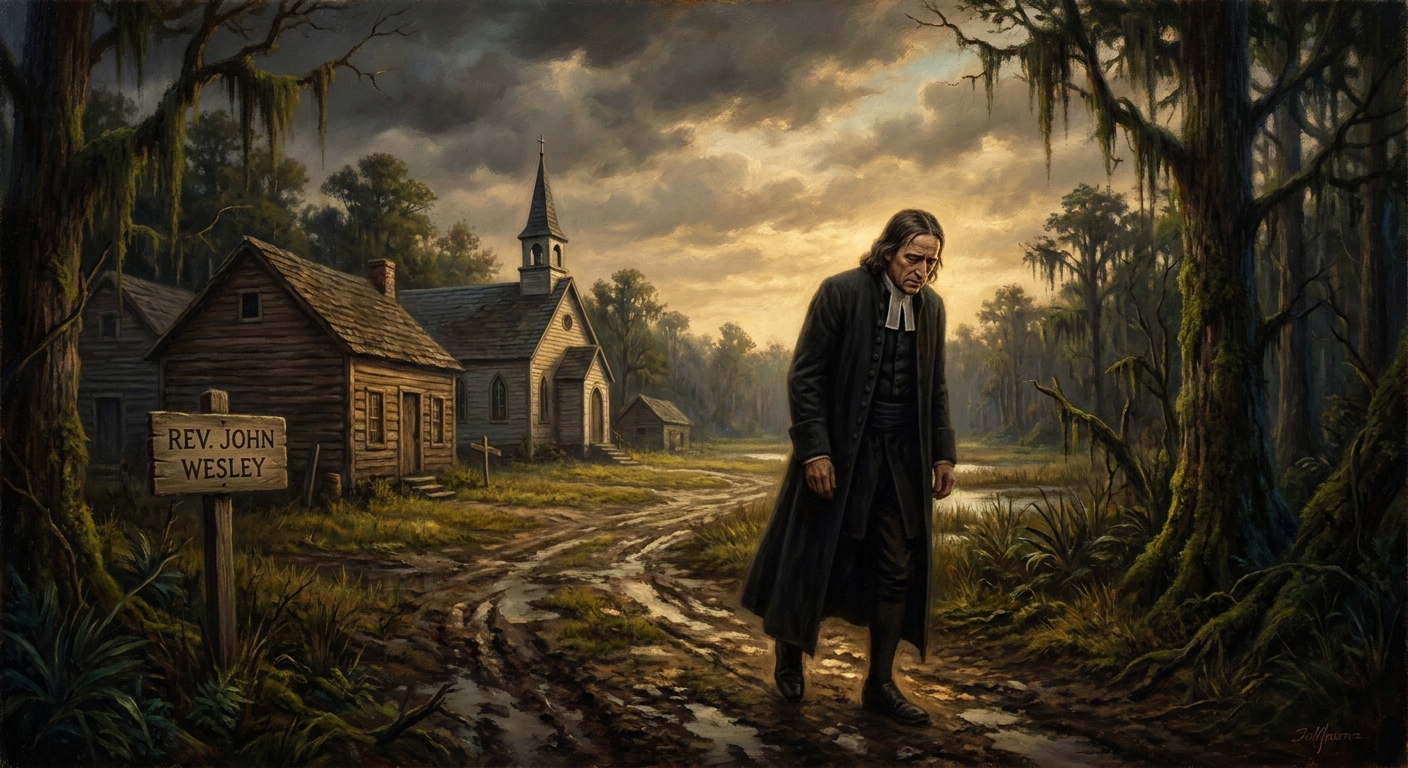
My Heart Strangely Warmed
John Wesley, an Oxford-educated Anglican priest in spiritual collapse after a failed mission to Georgia, walks unwillingly into a Moravian society meeting on Aldersgate Street and hears Luther's preface to Romans being read — and feels the assurance of salvation he has chased for fifteen years arrive at a quarter to nine.
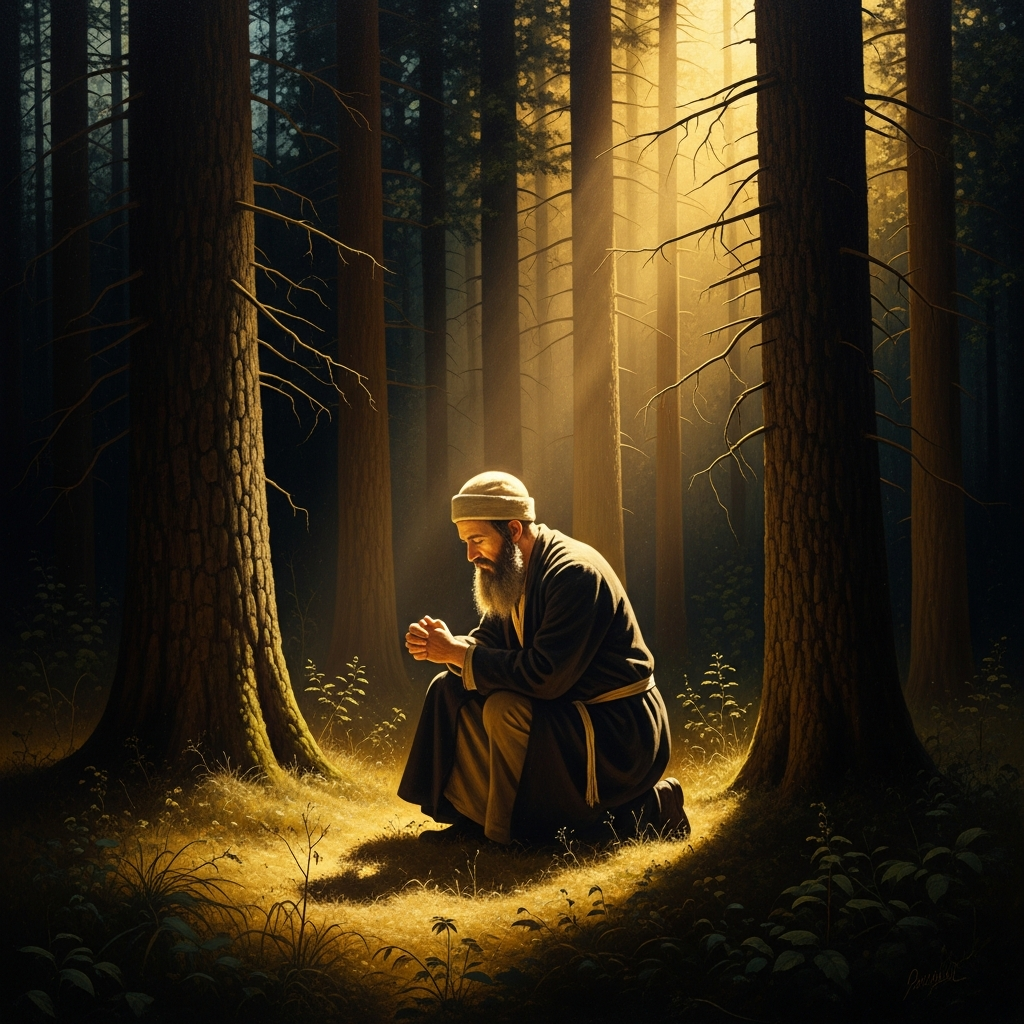
The Baal Shem Tov and the Sparks in Every Thing
In the Carpathian forests in the 1730s, a village healer named Israel ben Eliezer begins teaching that the divine sparks live in everything — in dirt, in drink, in the gesture of the hand — and that an unlettered peasant's ecstatic prayer reaches God before the rabbi's most precise grammatical parsing.
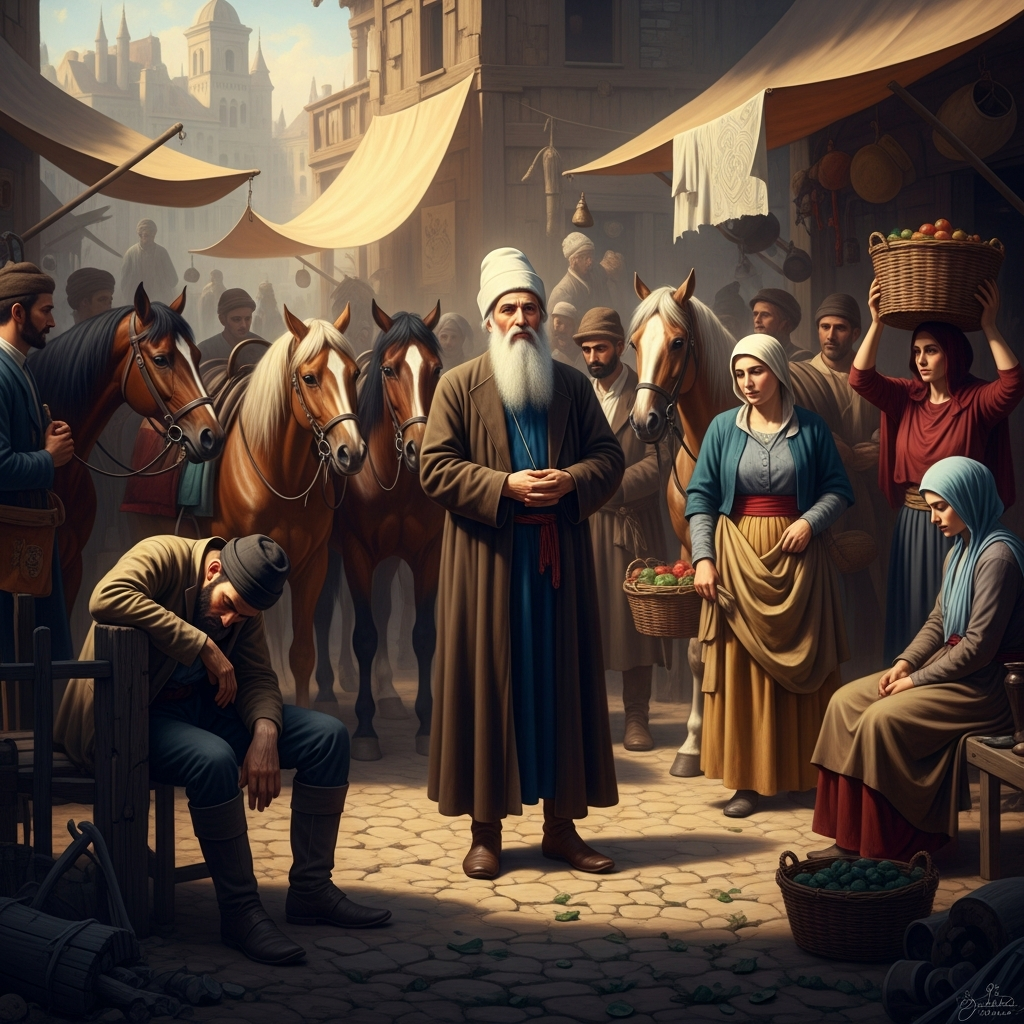
The Baal Shem Tov Finds the Sparks in the Market
Israel ben Eliezer, the Baal Shem Tov — Master of the Good Name — teaches Hasidism's foundational insight: the divine sparks scattered by the shevirat ha-kelim are not waiting in the study house or the synagogue. They are in the market, in the tavern, in the drunk singing to himself in the mud. The purpose of prayer is not to ascend to God but to raise the sparks where you are already standing.
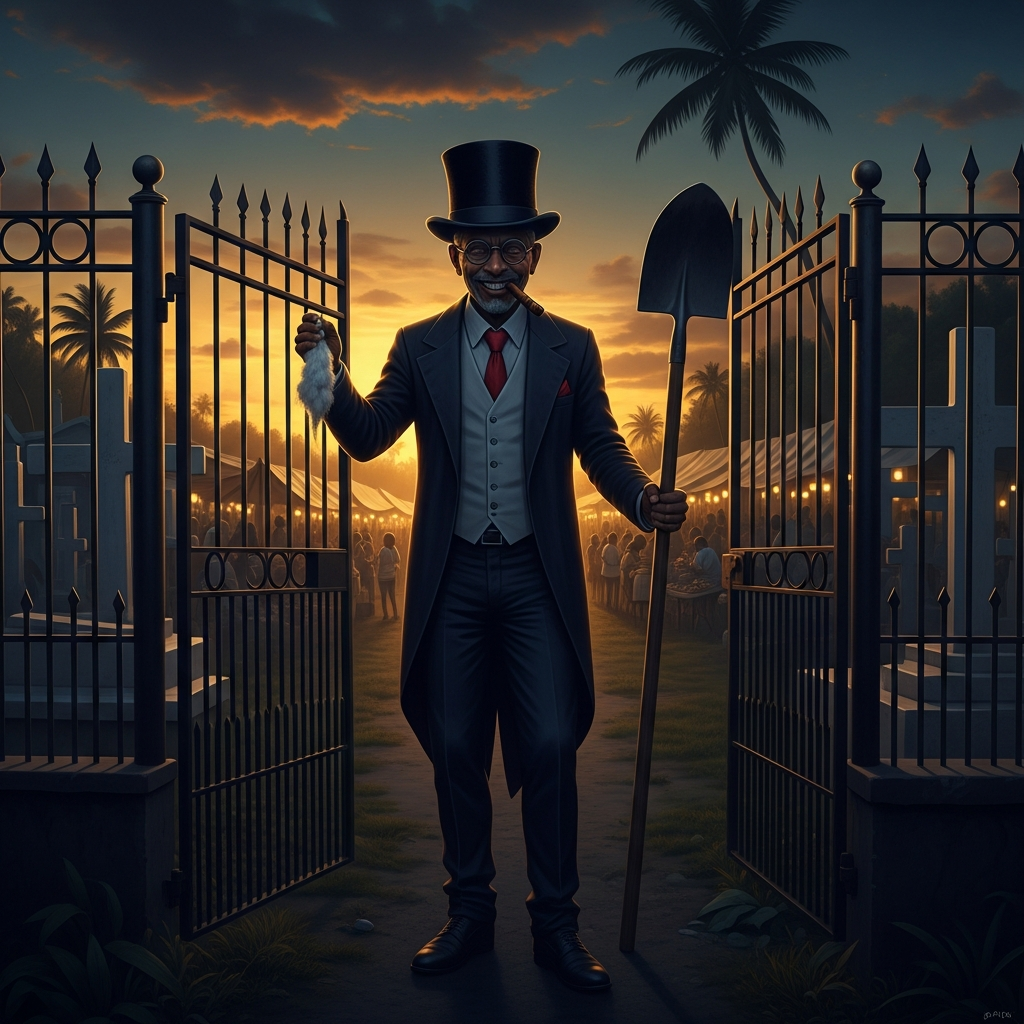
Baron Samedi at the Cemetery Gate
Baron Samedi, the Haitian Vodou lwa of death, resurrection, and obscene humor, stands at the gate between the cemetery and the market in Port-au-Prince. A gravedigger who has buried three children in a single month encounters him there. The theology of death as a clown who is also absolutely final.
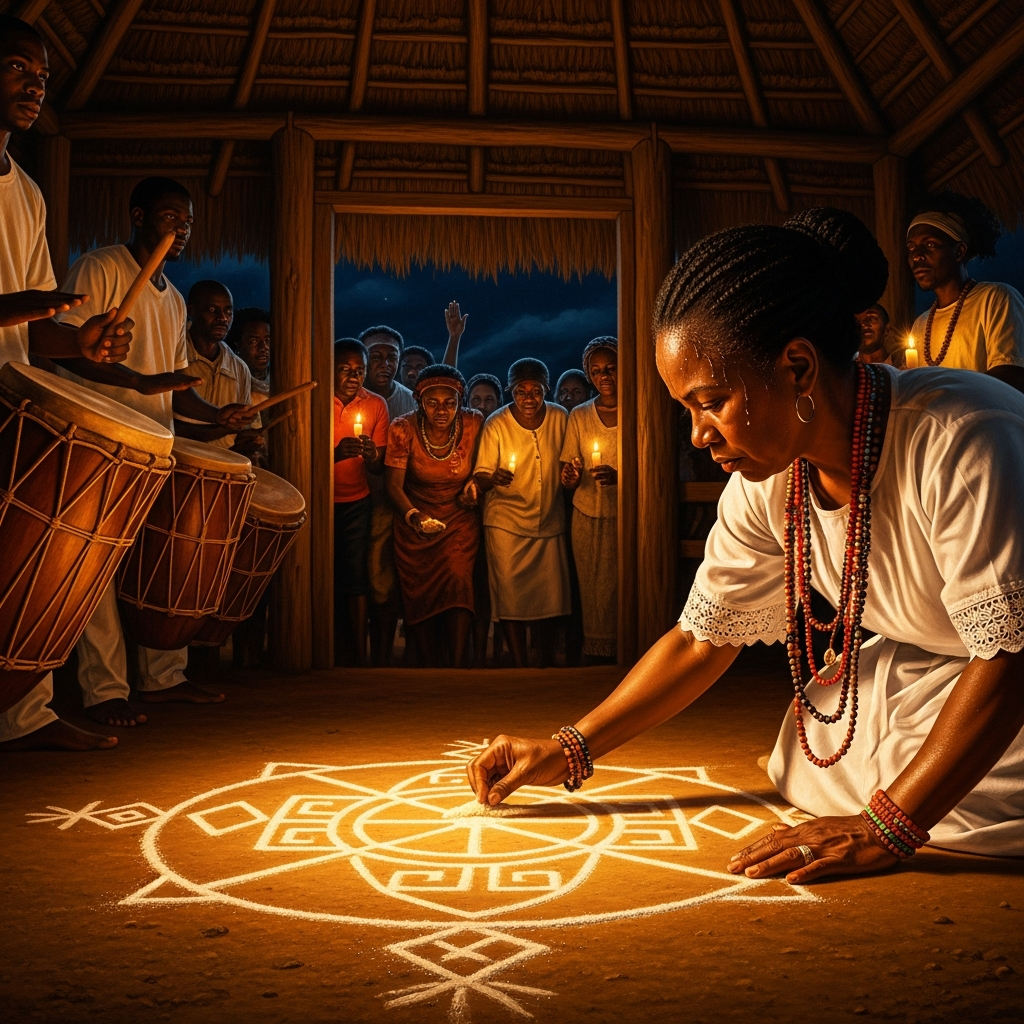
Damballah Mounts the Serviteur
In a peristil outside Port-au-Prince, the cornmeal veve of the cosmic serpent is drawn on the floor, the egg-and-flour libation is poured, the drums begin, and Damballah Wedo — the great rainbow loa whose other face is St. Patrick — descends and rides the serviteur.
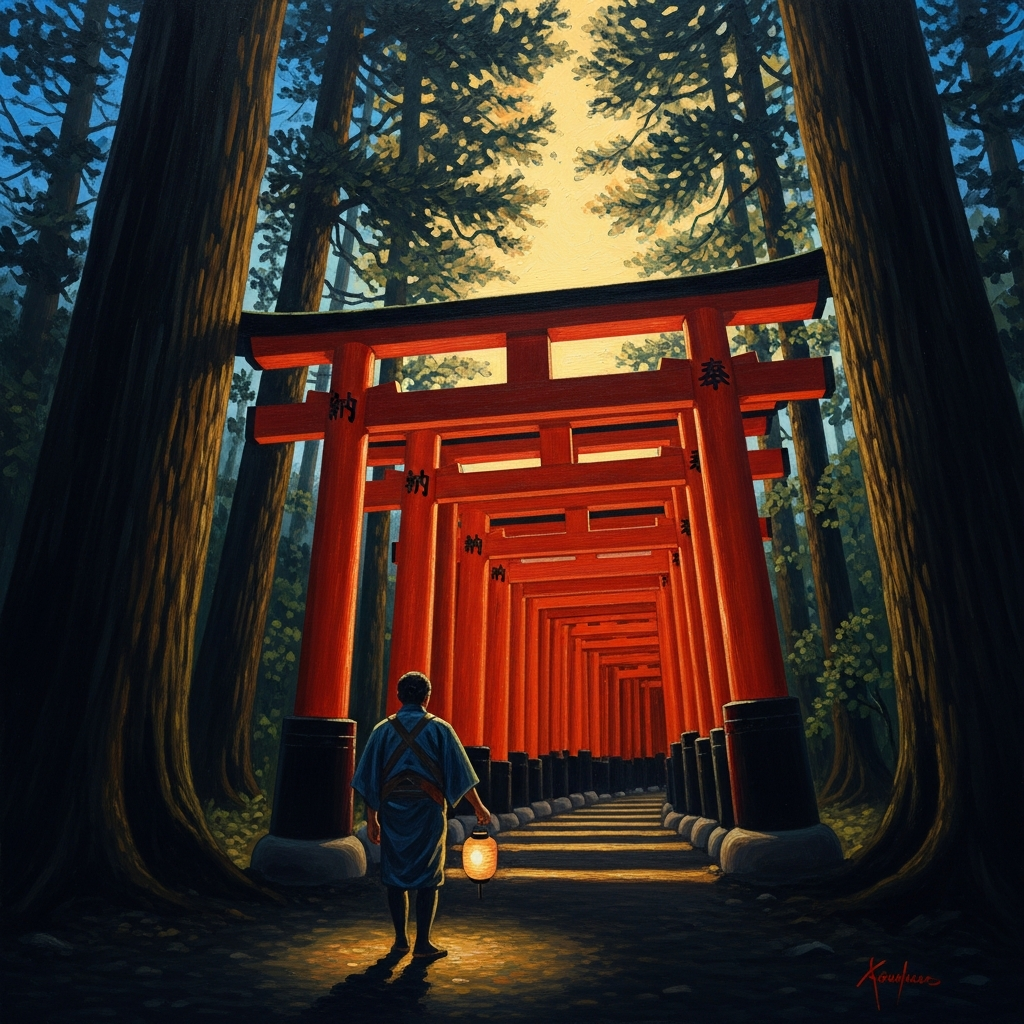
The Fox Who Keeps the Account
Inari Okami — kami of foxes, rice, fertility, and worldly success — is the most widely worshipped deity in Japan. A failing rice merchant in Edo comes to an Inari shrine in desperation and encounters the fox who lives there. The fox is not a miracle worker. It is a keeper of debts. The merchant learns that all abundance has a prior offering, and the fox has been counting.
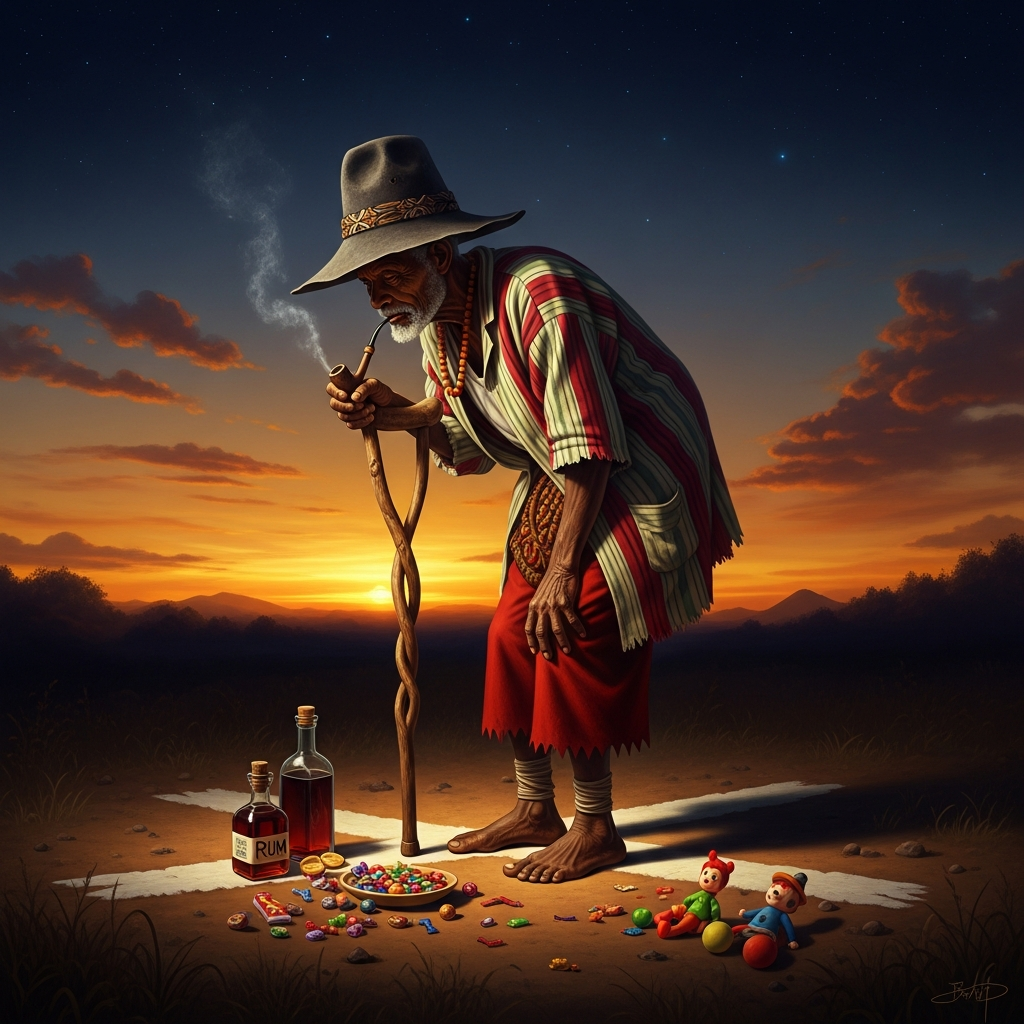
Papa Legba Opens the Gate
No ceremony begins in Haitian Vodou until Papa Legba — the old man at the crossroads, keeper of the gate between worlds — has been greeted, fed, and asked permission. He was carried across the Atlantic in the memory of enslaved West Africans. He is still there, leaning on his crutch, speaking every language at once.
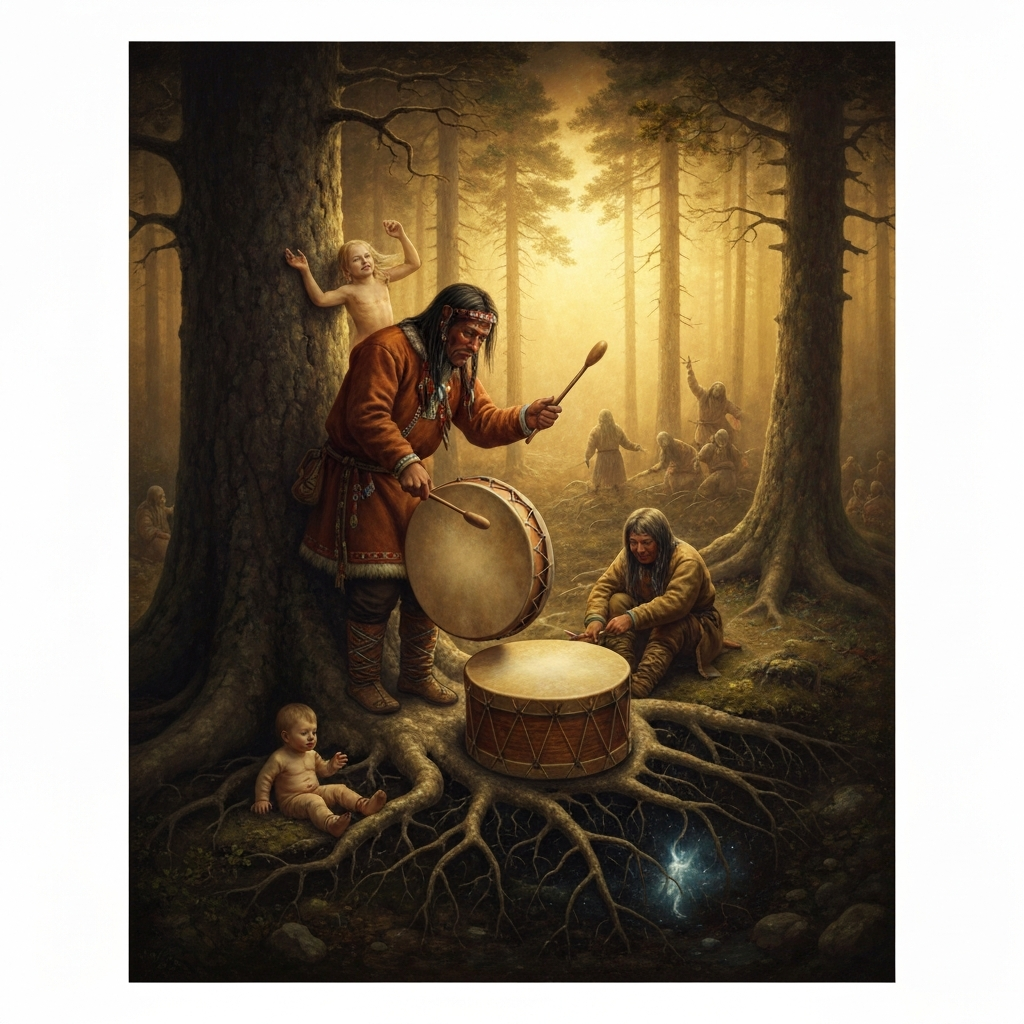
The Shaman Retrieves a Soul from the Lower World
An Evenki (Tungus) shaman performs soul retrieval for a dying child: the drum journey down through the tree-roots, negotiating with Lower World spirits, the soul's capture and return. Grounded in the ethnographic record Mircea Eliade collected from the forests east of the Yenisei.
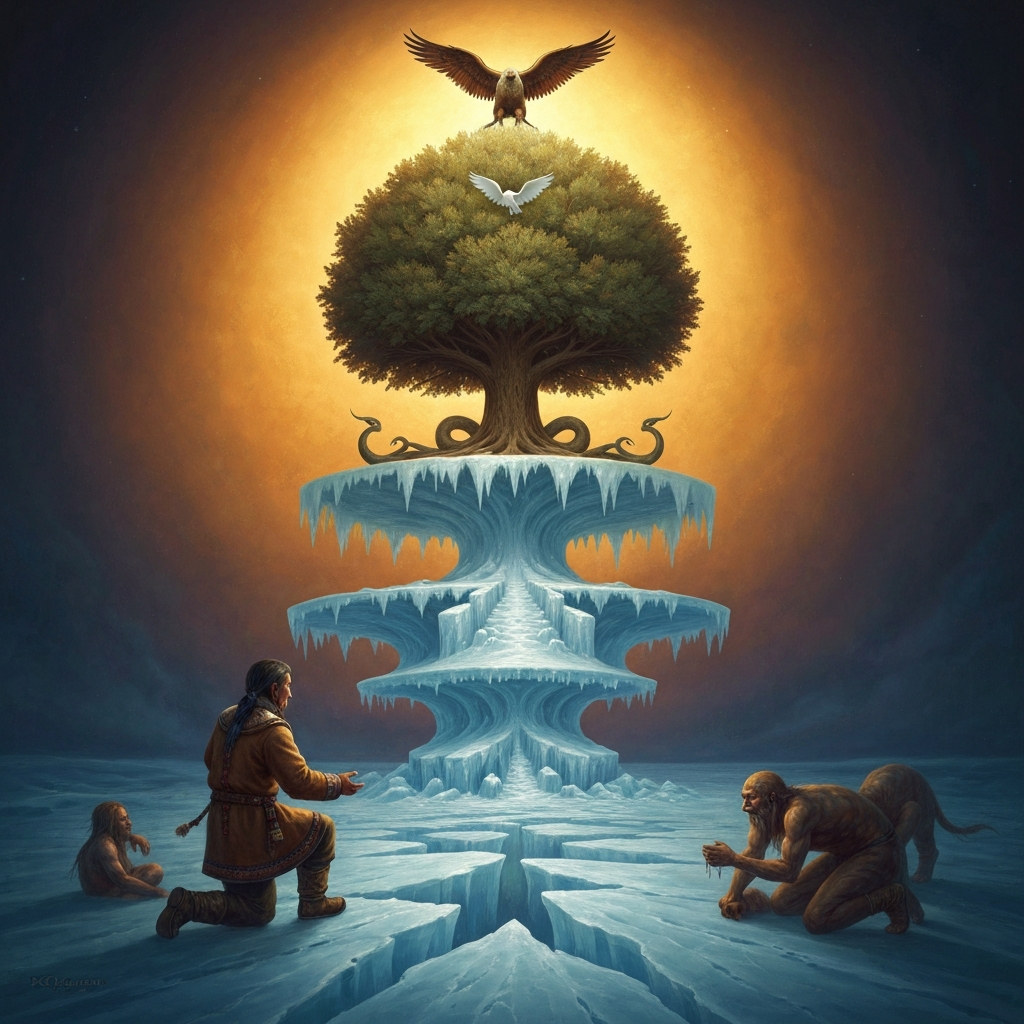
The Yakut Shaman Descends to Abasy
A Yakut (Sakha) shaman undergoes a nine-day trance to retrieve a man's shadow-soul from the Abasy demons. The specific cosmology: the three-tiered world, the world-tree whose eagle crown touches the upper sky and whose serpent roots drink from the lower sea, and the ice-road that descends through frozen darkness to the demon tiers.
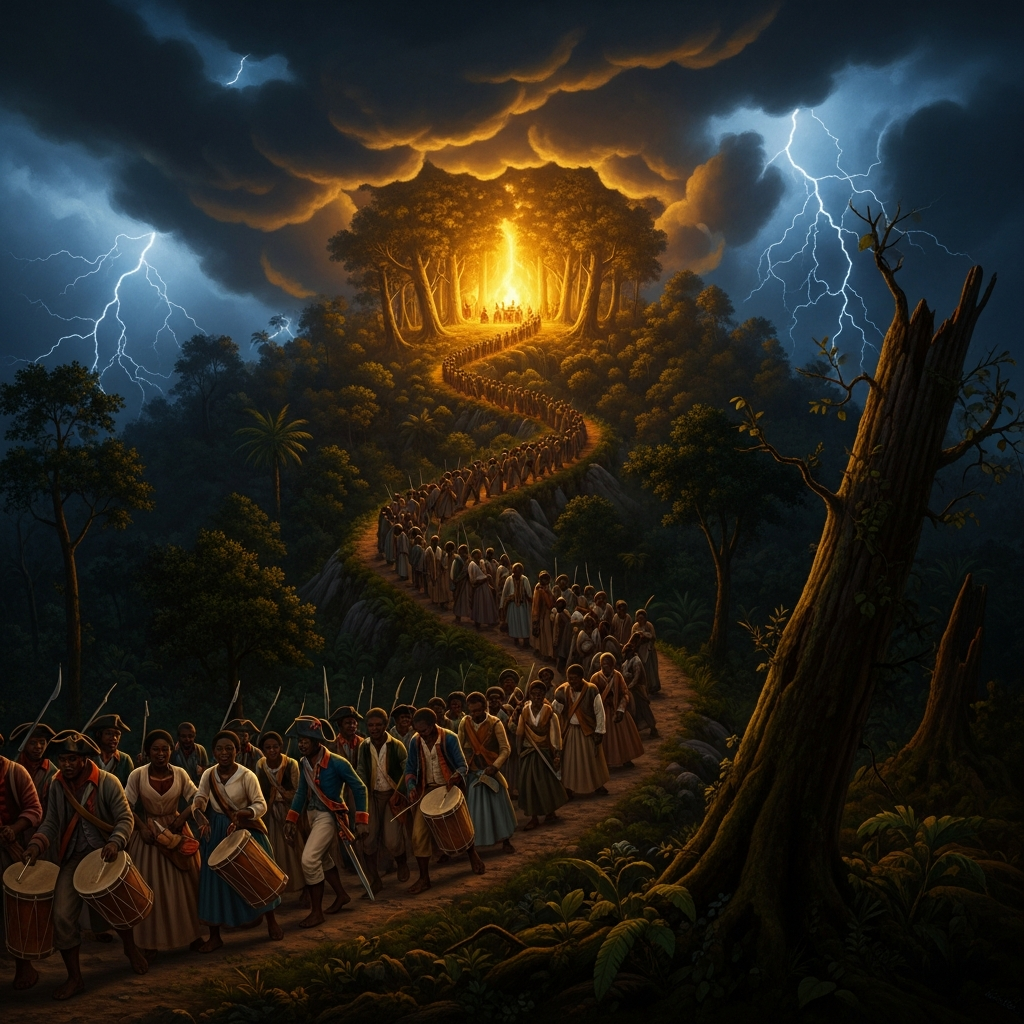
Bois Caïman: The Pact at the Alligator Wood
On the night of August 14, 1791, in a forest clearing in the mountains of northern Saint-Domingue, the houngan Dutty Boukman and the mambo Cécile Fatiman sacrifice a black pig to the loa Ezili Dantor, drink its blood, and swear an oath that lights the only successful slave revolt to found a nation.
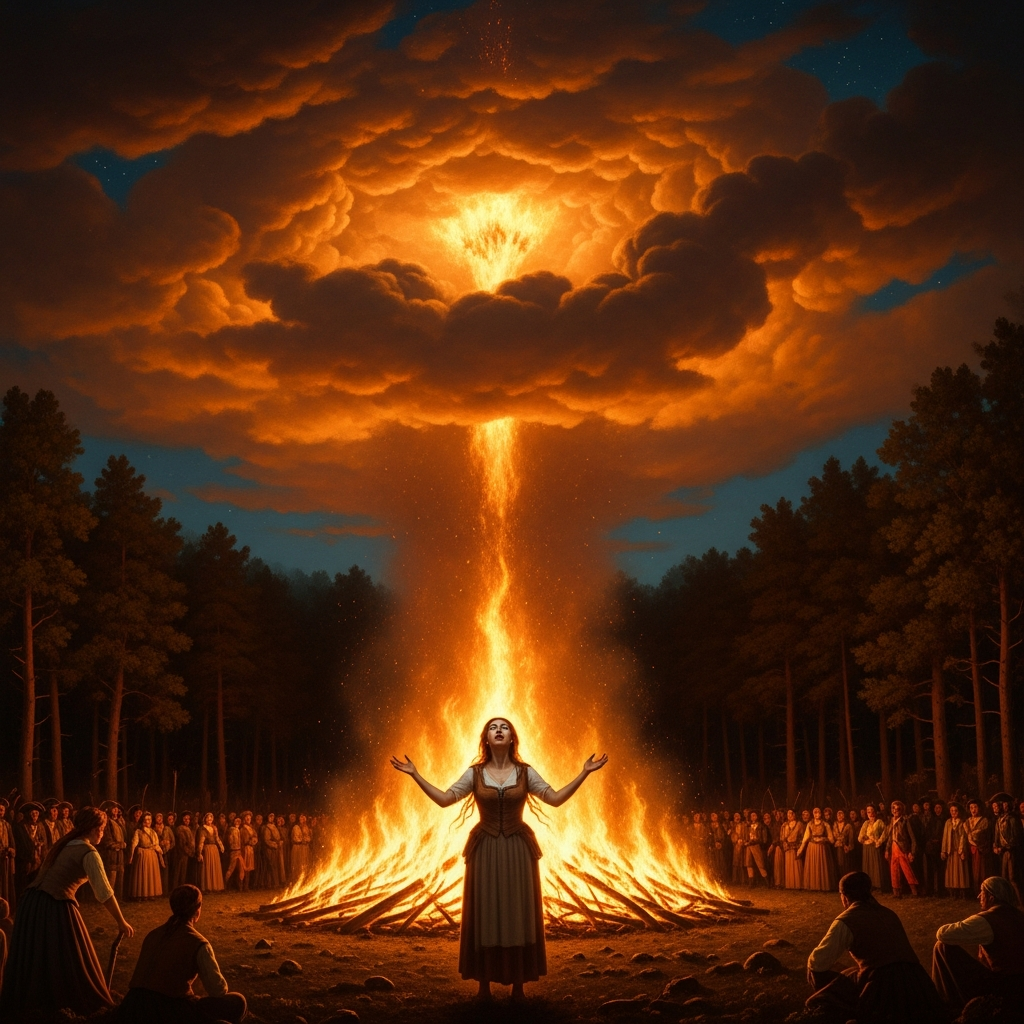
Marinette Bois-Chêche and the Night of August 22
Marinette Bois-Chêche, the fierce Haitian Petro lwa of bone and fire, is present at the ceremony at Bois Caïman on August 14, 1791, that precedes the Haitian Revolution. A pig is sacrificed. Blood is drunk. The fire is lit that will not go out for thirteen years. What Vodou asked of those who drank, and what it gave.
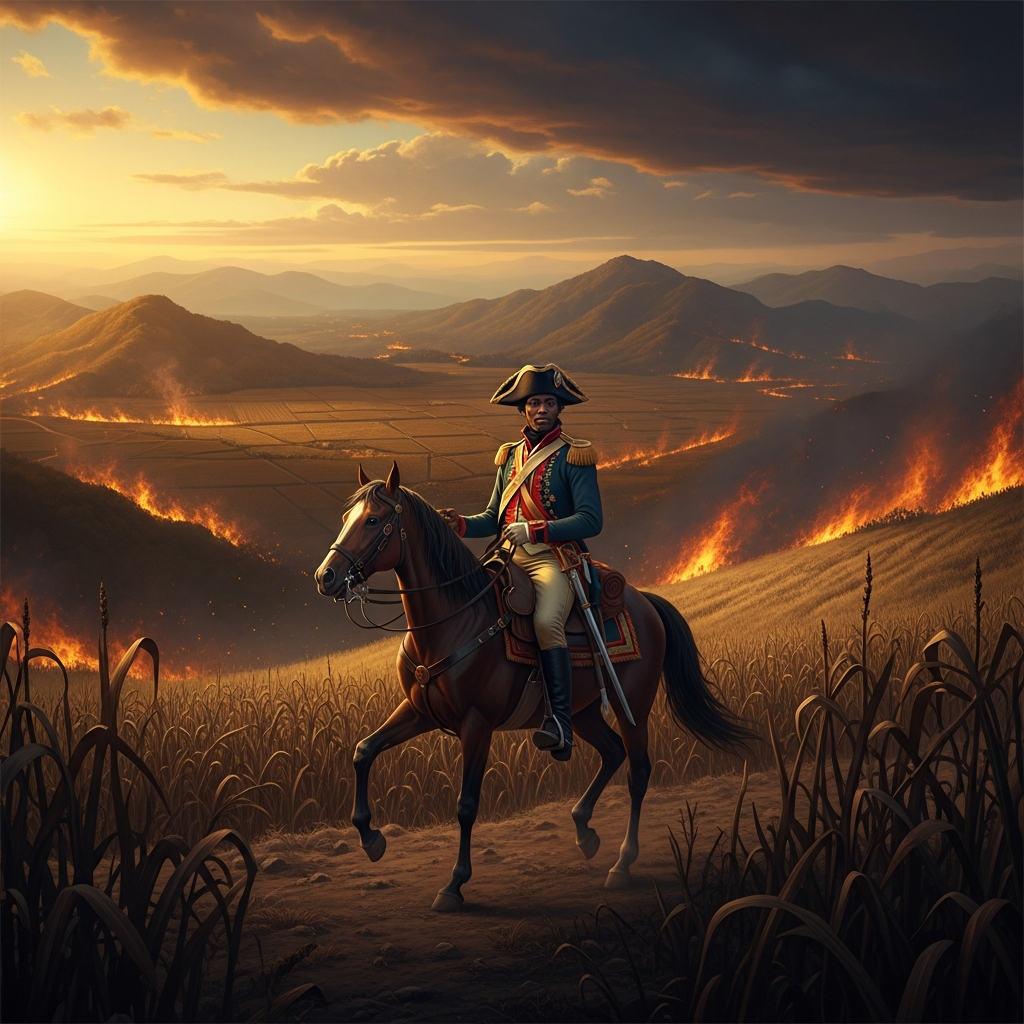
Toussaint Louverture: The Revolution He Did Not Start and Could Not Stop
Haiti, 1791. Toussaint Louverture — 48, literate, a former slave who has read Julius Caesar and Epictetus — hears that the north has risen. He has a vision, or a decision, and joins the only slave revolution in history to found a nation. He negotiates, fights, governs, is betrayed by Napoleon, and dies in a French prison in 1803. Haiti is free in 1804.

Baron Samedi Will Not Dig the Grave
Baron Samedi — top hat, dark glasses, rum and cigars, crude jokes at the cemetery gate — is the only lwa who decides whether a person truly dies. If he refuses to dig the grave, the dying live. He rules the Gede, the nation of the dead who speak through the living. He dances at the crossroads of every Haitian cemetery, and he is the most terrifying thing you have ever seen laugh.
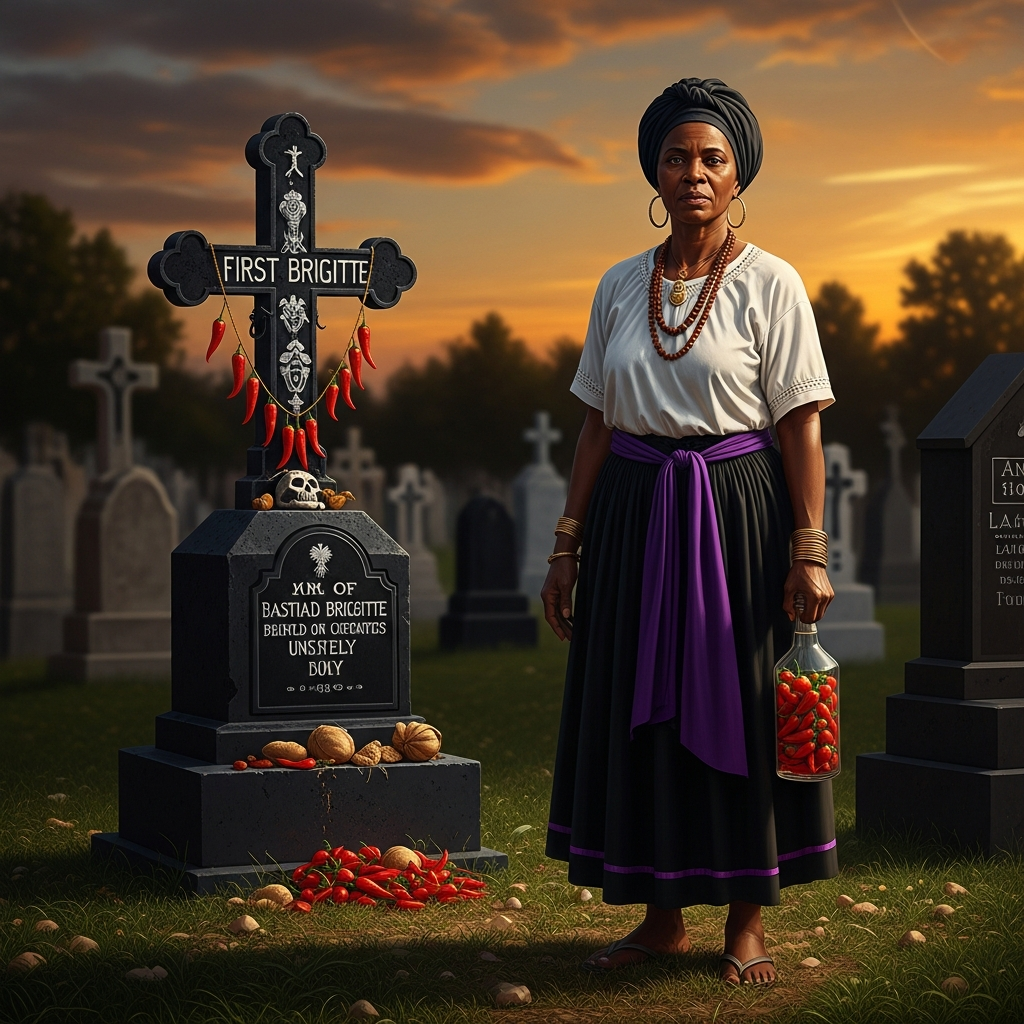
Maman Brigitte and the First Grave
Maman Brigitte — wife of Baron Samedi, lwa of the first grave, healer of the dying — is of Celtic origin, a European spirit absorbed into Haitian Vodou through colonial encounter. She drinks rum with hot peppers, dances with her husband at the cemetery gate, and speaks truth about death. She is the tradition's proof that spiritual encounter does not respect colonial borders.
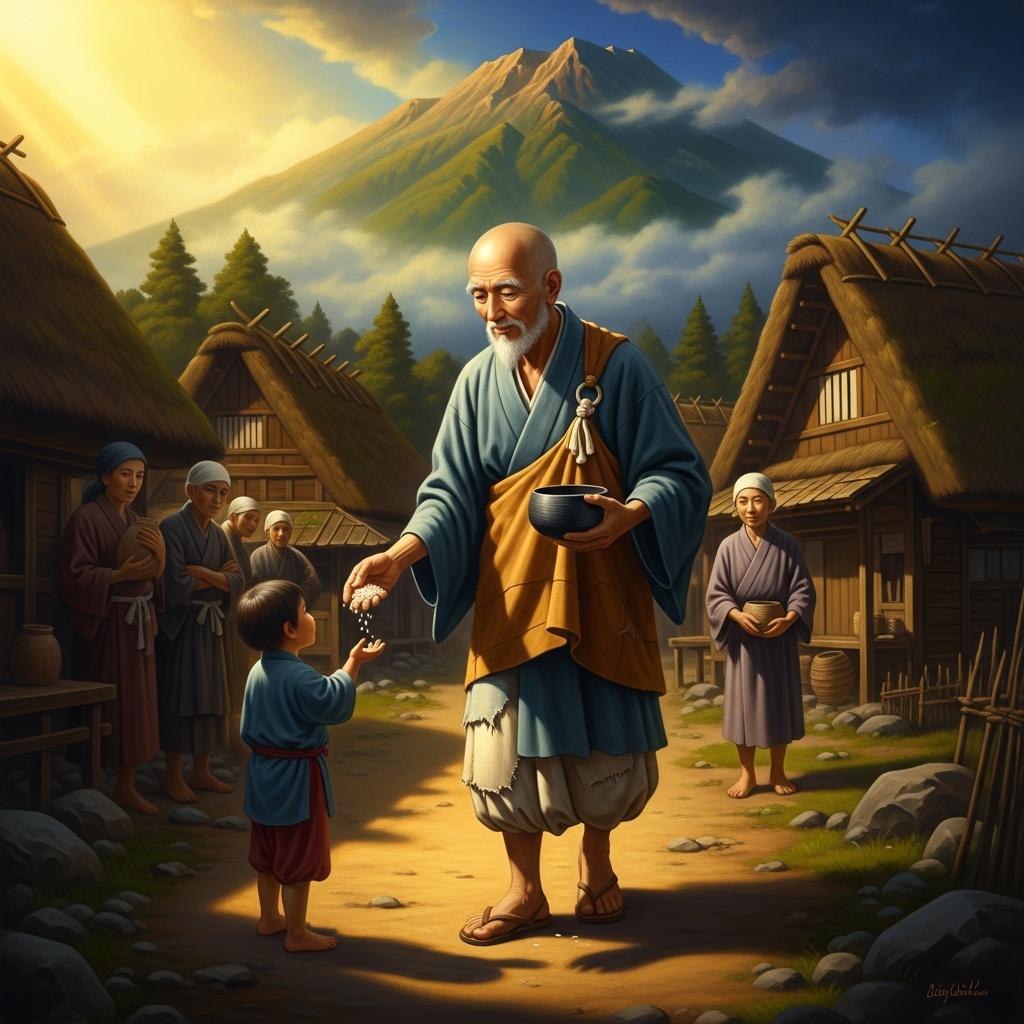
The Thief Left It Behind
Ryōkan, the Sōtō Zen monk who lives alone on Mount Kugami with nothing to steal, wakes to find a thief in his hut and gives the man his robe. Then he sits in the open doorway, watches the moon, and writes the poem that earns him his place in Japanese literature.
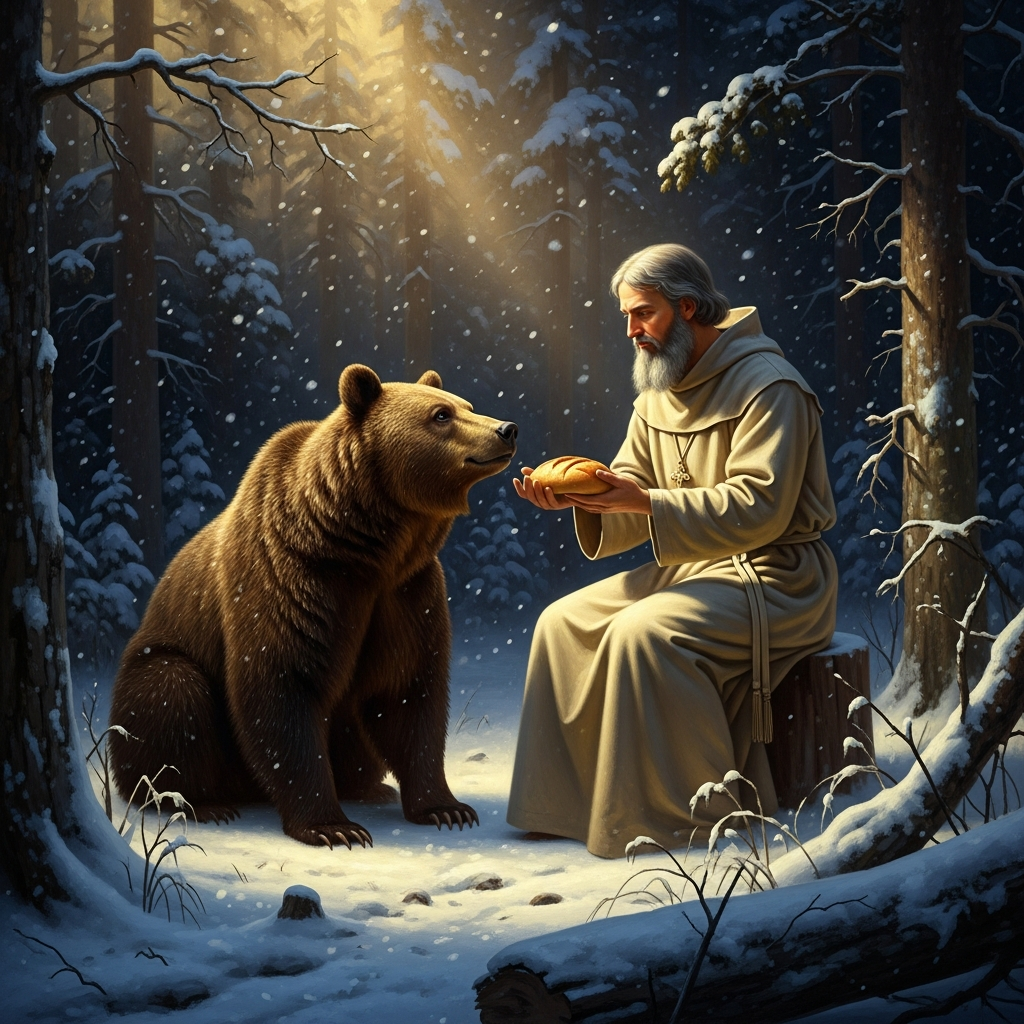
Seraphim of Sarov and the Bear
A Russian hermit feeds bears from his hand, prays a thousand nights on a stone, and one winter afternoon his face begins to shine with the same light Palamas defended — while a stunned landowner watches from three feet away.
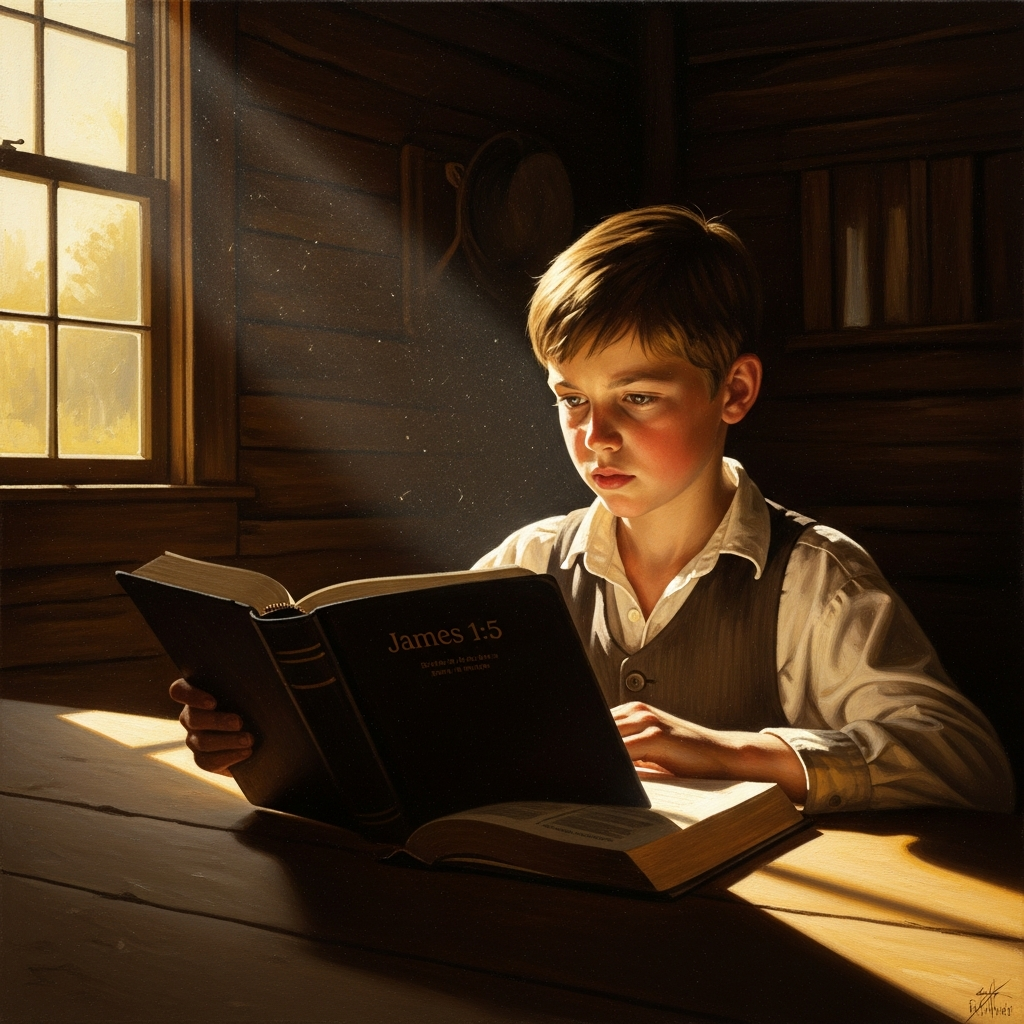
Joseph Smith and the Grove
A fourteen-year-old farm boy in upstate New York reads James 1:5, walks into a grove of trees to ask God which church is true, and reports seeing two personages of light descending in a pillar of fire at noon.

Kiều: A Hundred Years, Everything
Vietnam's national epic: Thúy Kiều, a woman of extraordinary talent, sells herself into servitude to save her father. Over fifteen years she is trafficked, exploited, and twice driven to attempt suicide. She survives. She finds her childhood love again. She refuses the full marriage because she considers herself beyond redemption. The refusal is the theology.
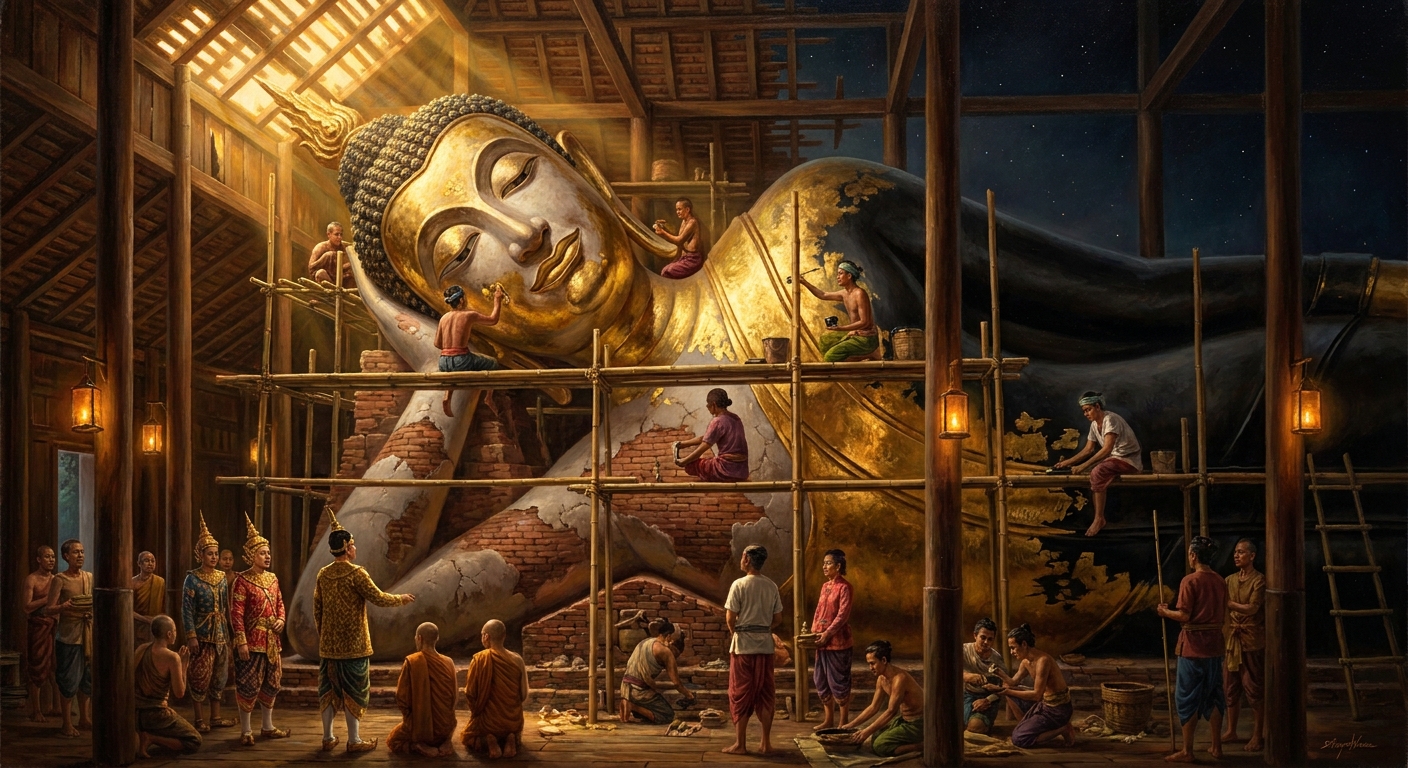
The Reclining Buddha of Wat Pho
1832, Bangkok. King Rama III commissions a forty-six-meter image of the Buddha entering parinirvana — gilded brick, mother-of-pearl soles inlaid with the 108 auspicious signs, an eyelid the size of a man. The largest reclining Buddha in Thailand, lying down to die without dying.
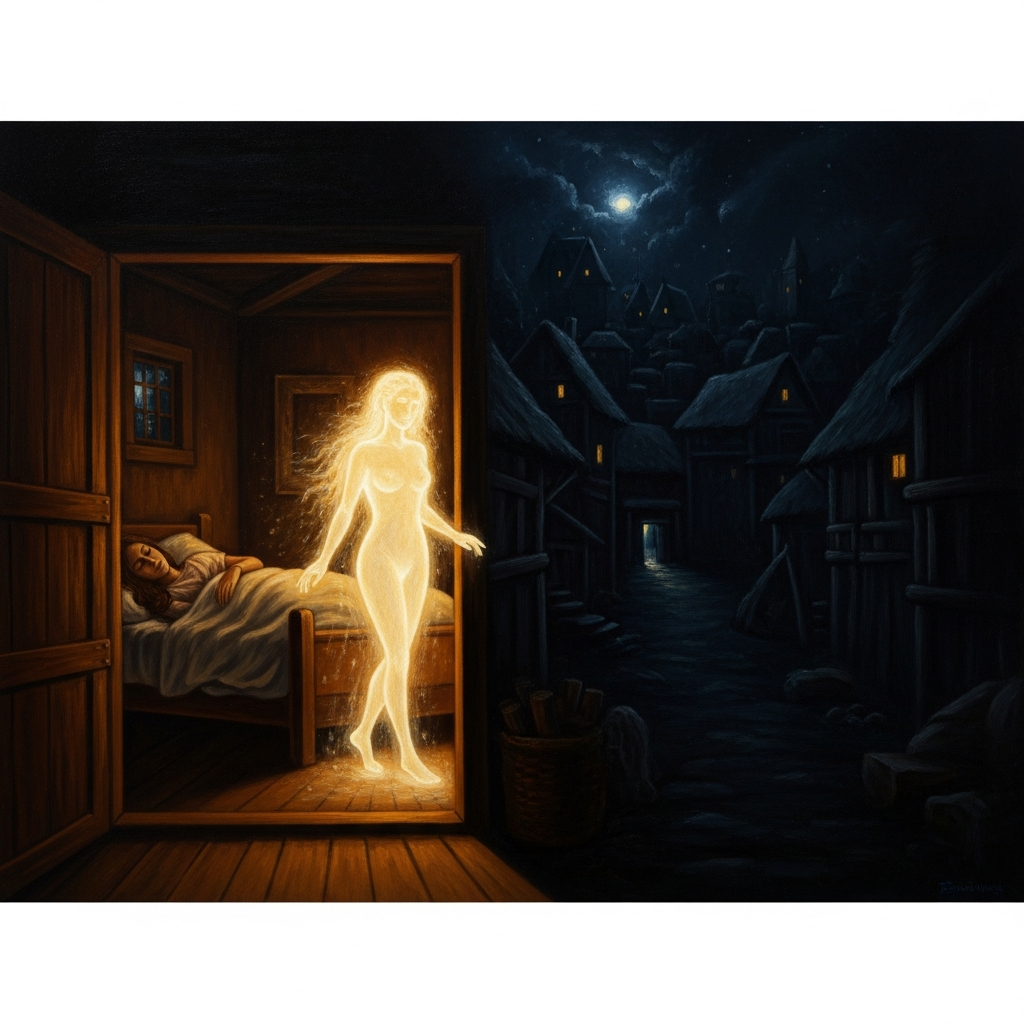
The Sunsum That Did Not Come Back
Among the Akan, sleep is a nightly journey the soul takes away from the body — and what wanders in the dark can be attacked, stolen, or lost. When Abena wakes from a terrible dream, the okomfo must find what the night took.
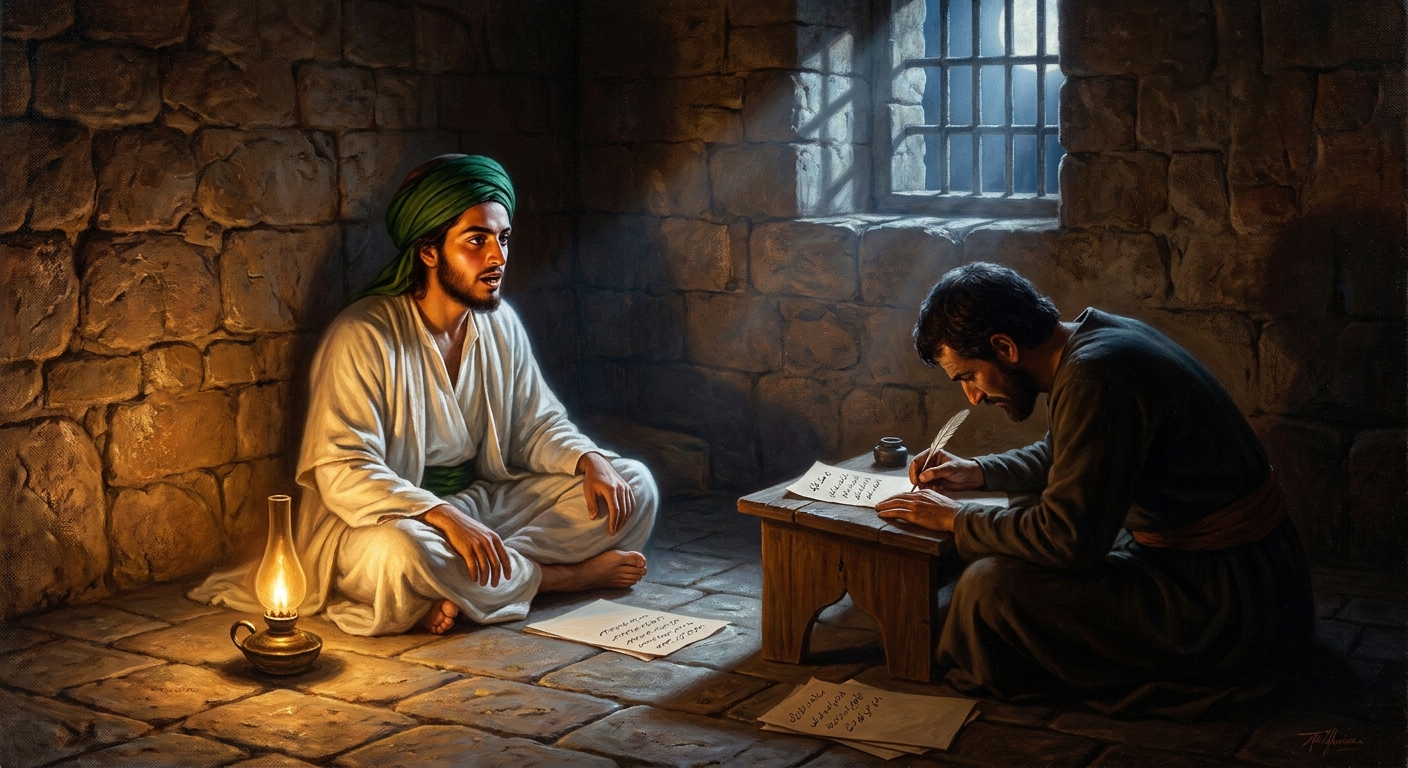
The Volley That Cut the Ropes
A thirty-year-old merchant from Shiraz is hung by ropes against a barrack wall in Tabriz. Seven hundred and fifty rifles fire. The smoke clears. The ropes are severed. The Báb is gone. They find him back in his cell, finishing the sentence he had been dictating to his secretary an hour earlier.
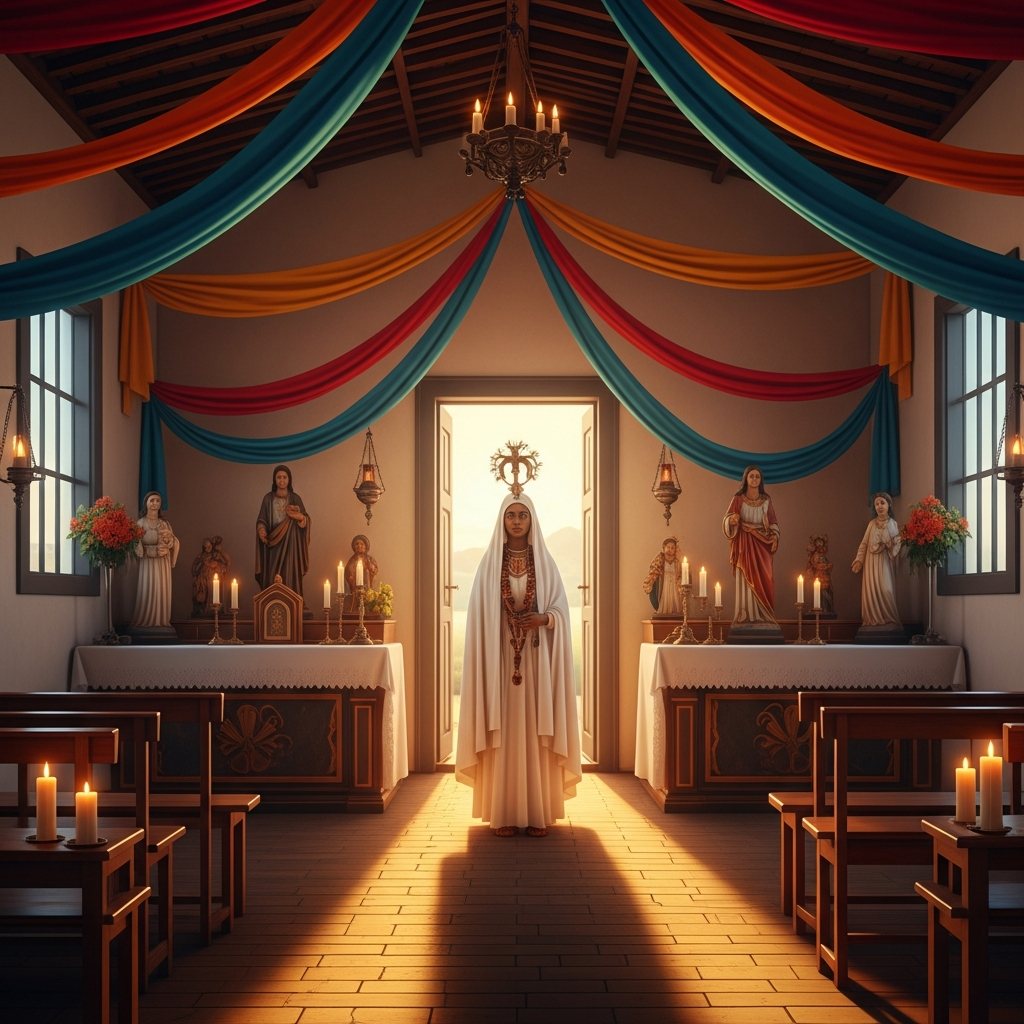
The Orishas Hidden in the Saints: Candomblé in Bahia
Salvador, Bahia, 19th century. The enslaved Yoruba people of Brazil preserve their orisha religion beneath the masks of Catholic saints — Oxum becomes the Virgin, Ogum becomes Saint George, Xango becomes Saint Jerome. In the terreiros, the mae de santo knows which orisha has chosen each initiate. When the drums begin, the orishas descend.
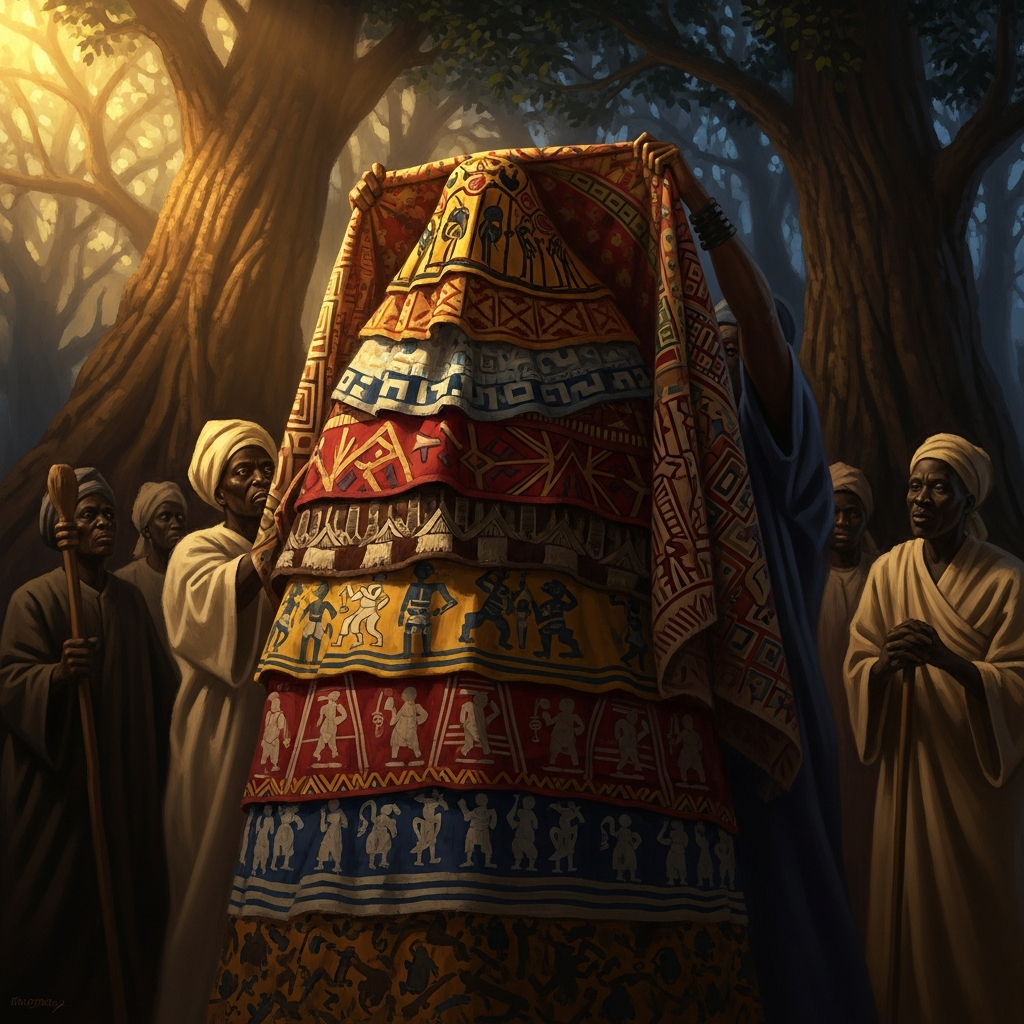
Egungun: When the Ancestors Return
In a Yoruba town gripped by drought, a disputed throne, and a false accusation that has destroyed a family, the Egungun masquerade emerges from the sacred grove. The dead have returned. They know things the living have hidden. What the ancestor says cannot be argued with.
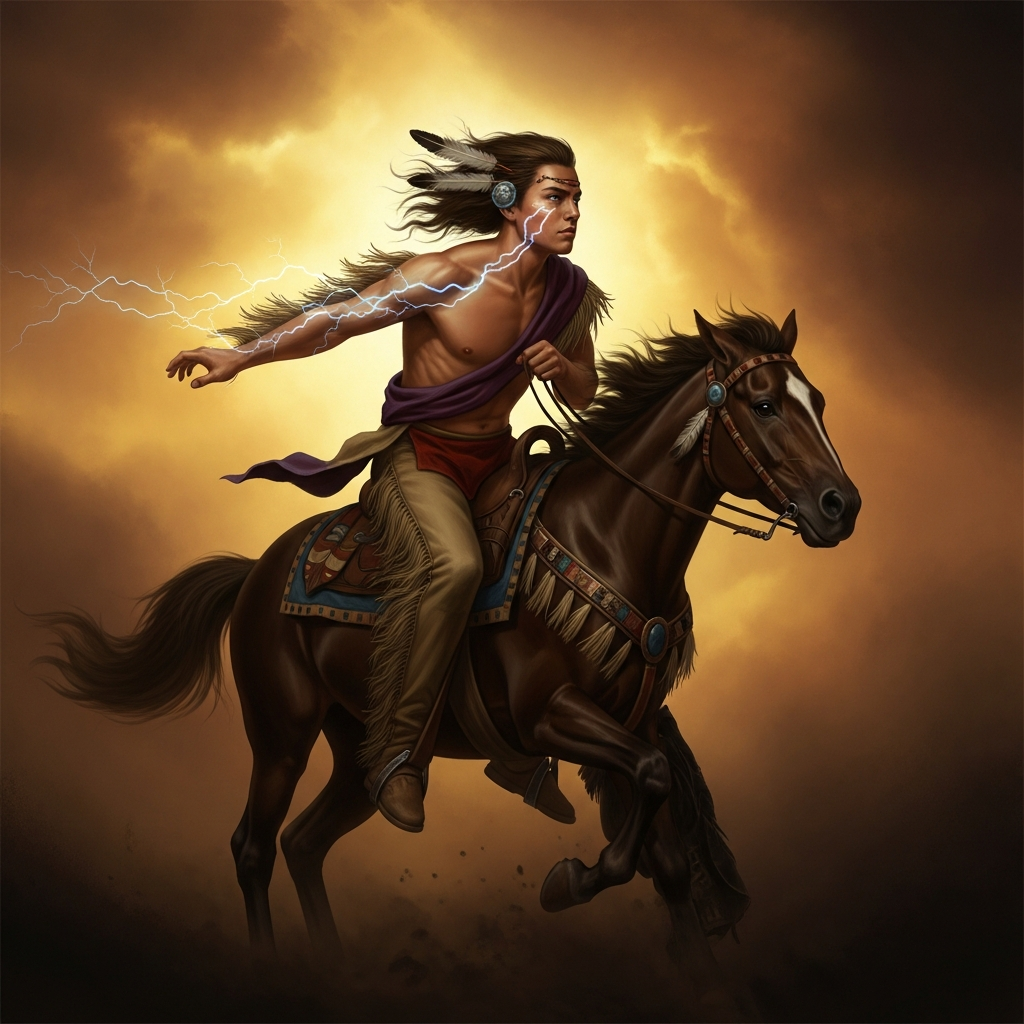
The Vision of Crazy Horse
In his youth, Tȟašúŋke Witko goes alone into the wilderness and sees a rider who cannot be touched by bullets, who has a small stone behind his ear and lightning on his cheek. He is given instructions: never wear a war bonnet, never take anything for himself after battle, always wash in running water. He becomes the vision. At Little Bighorn in 1876, bullets pass through him.

Ramakrishna Sees the Mother of the Universe
He has been the priest at the Dakshineswar Kali temple for weeks and the goddess has not come. The image is stone. The flowers are flowers. The food is food. He cannot bear it. One evening, standing before the image at the close of the worship, he picks up the sword used for animal sacrifice and raises it to his own throat. He has decided. In the moment before he would have struck, the temple fills with light. The image becomes a living presence. He falls unconscious. He will have the same vision for the rest of his life — for hours at a time, for days at a time, until his body becomes a public laboratory of mystical experience and his words become one of the most widely read spiritual texts of the twentieth century.
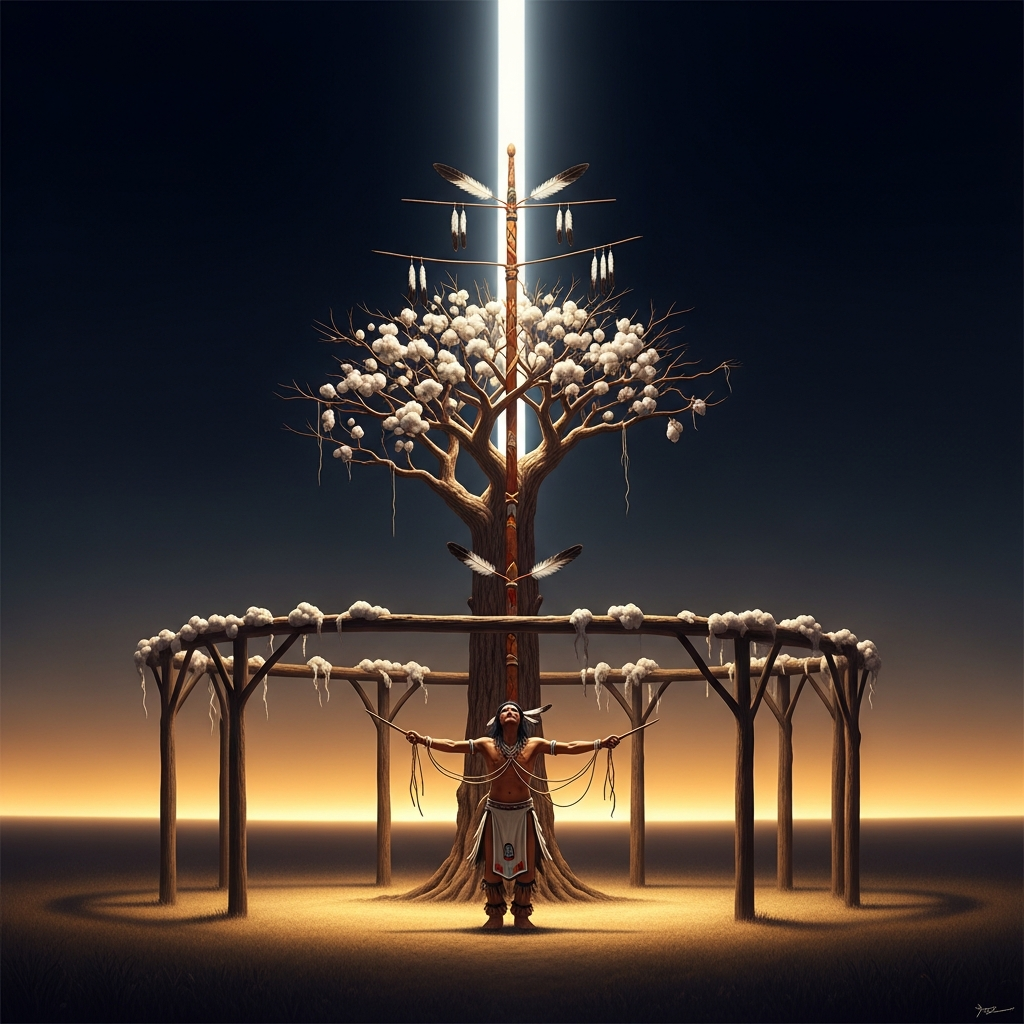
The Sun Dance: What It Costs to Ask
In 1862, a young Lakota man named Two Strikes watches his son die of fever in three days. In his grief, he makes a vow: if the people survive the winter, he will offer himself at the next Sun Dance. What follows is not torture but fulfillment — the body made into the bridge between the human and the sacred, the vow completed in the only coin that means anything.
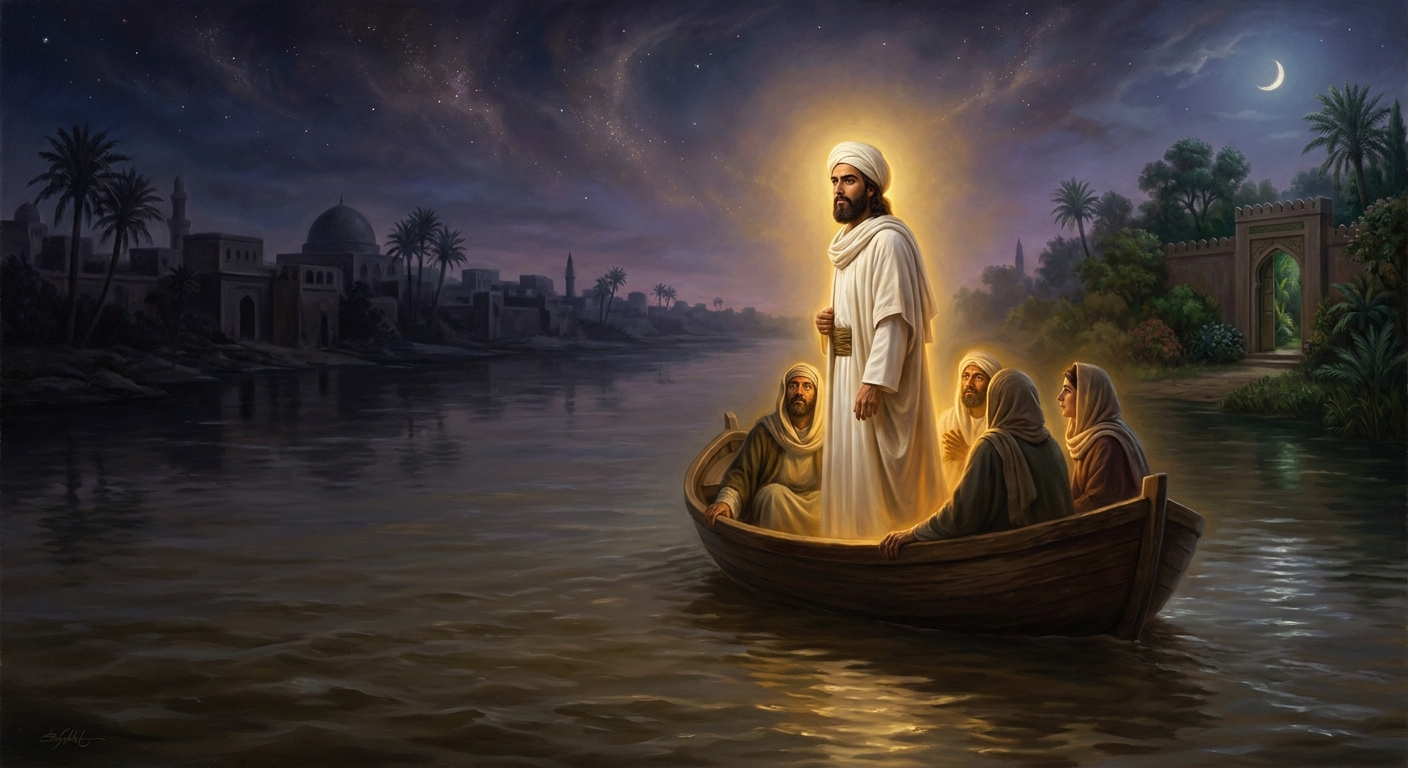
Twelve Days in the Garden of Ridván
Camped in a rose garden outside Baghdad on the eve of his exile to Constantinople, a Persian nobleman tells his closest followers that he is the one the Báb foretold — He Whom God Shall Make Manifest.
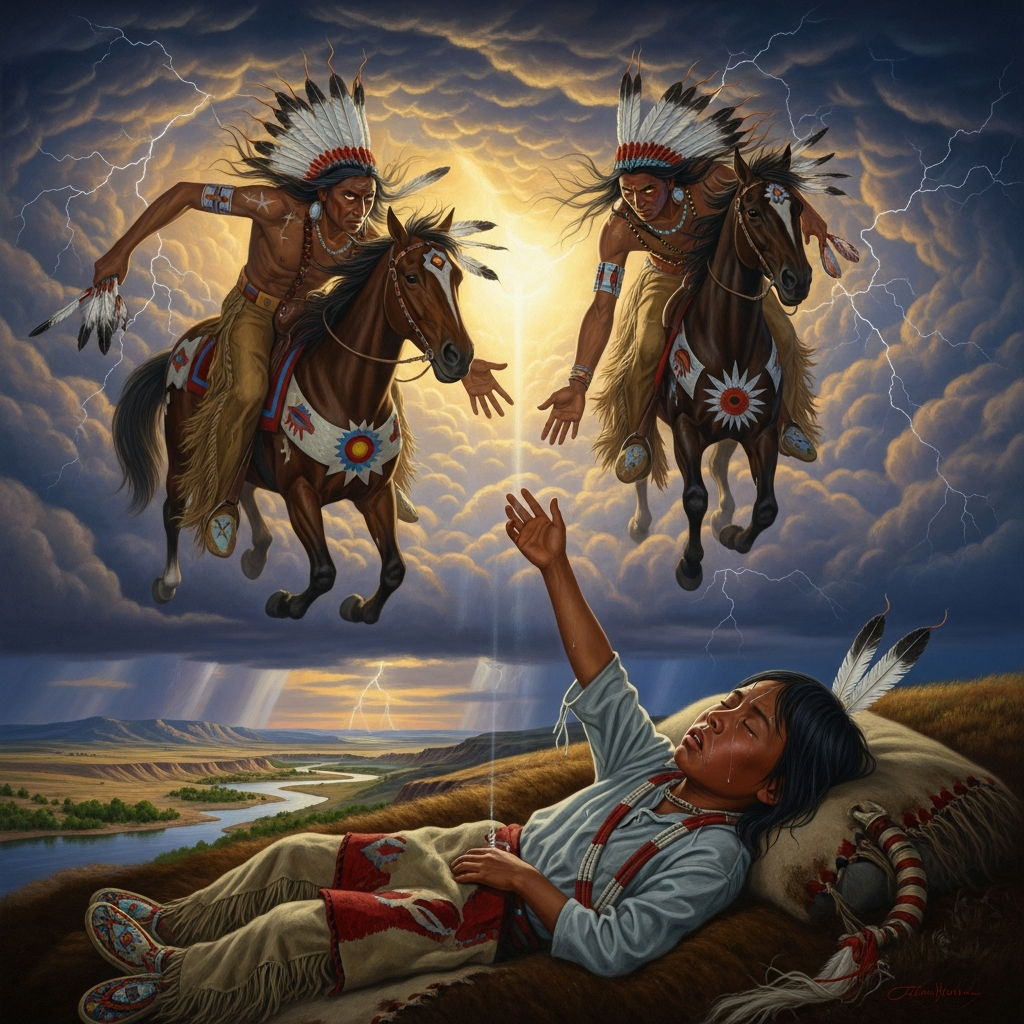
Black Elk's Great Vision
A nine-year-old Lakota boy lies dying of fever in 1872 and is carried up into the sky to meet the Six Grandfathers, who give him the sacred hoop of the nations and a flowering tree at its center — a vision he will spend seventy years believing he failed.
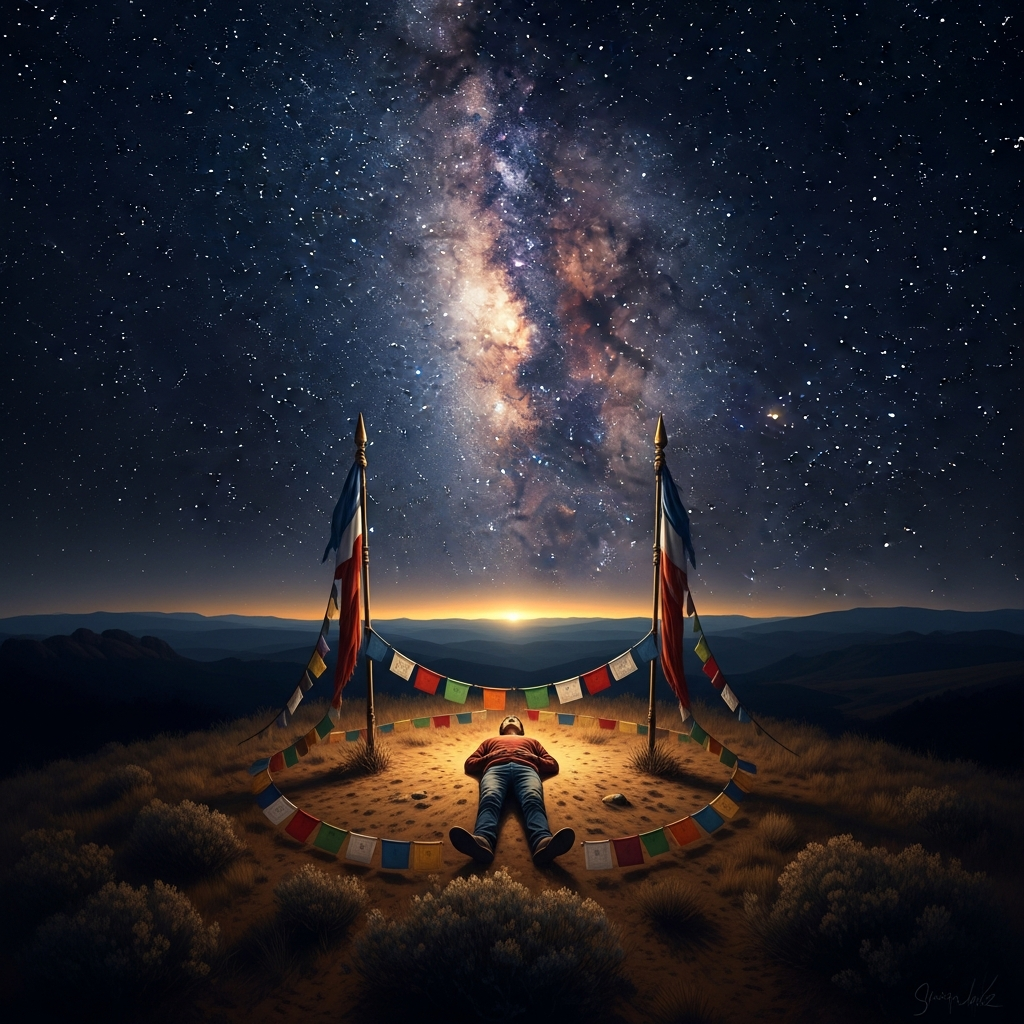
The Hanbleceya: Crying for a Vision
In 1872, a young Lakota man climbs alone to a hill in the Black Hills, lies down within a circle of sacred flags, and cries for a vision for four days and four nights without food or water. What arrives is not what he expected. Black Elk's account from Black Elk Speaks illuminates what the hanbleceya demands and what it gives back.
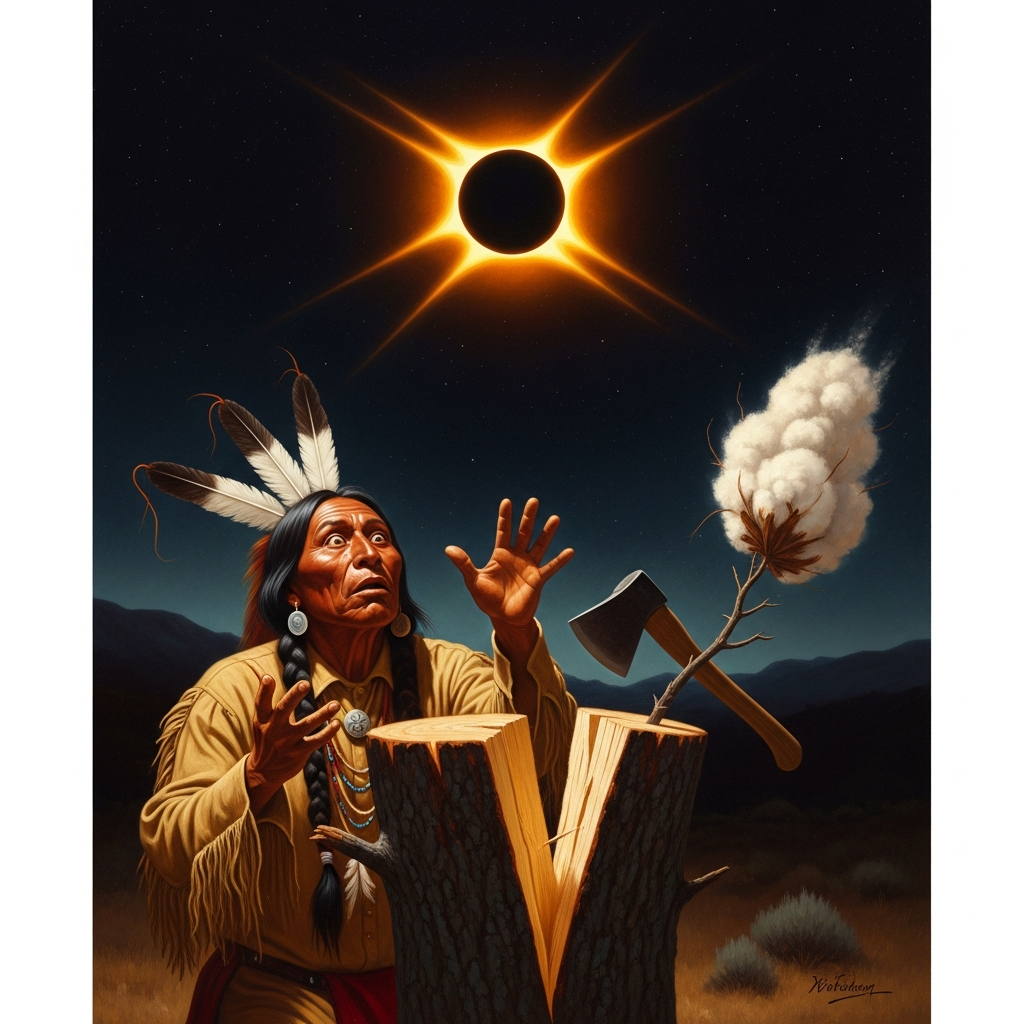
Wovoka and the Ghost Dance
On New Year's Day 1889, during a total solar eclipse over Walker Lake, a Northern Paiute prophet falls unconscious cutting wood, ascends to heaven, and returns with a vision that will sweep the Plains for two years and end in the snow at Wounded Knee.
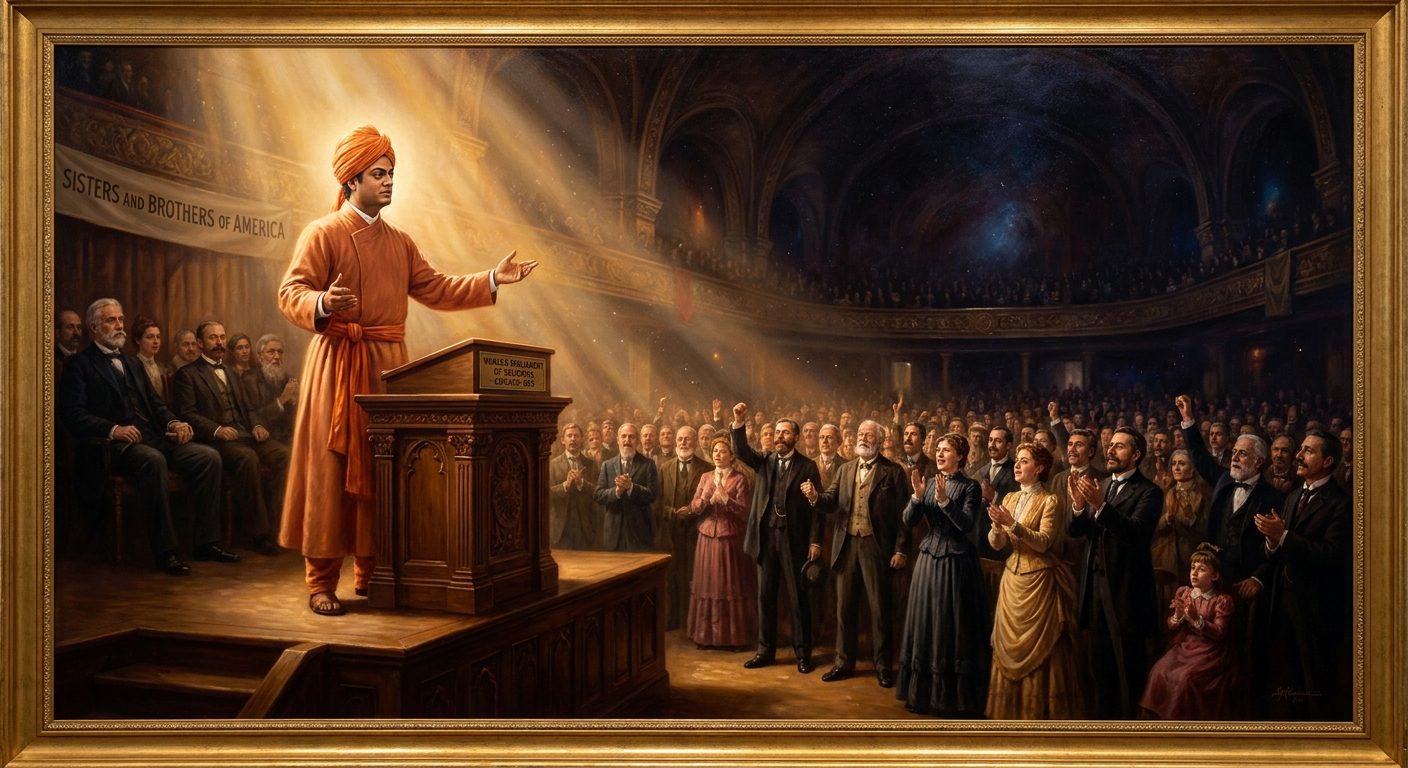
Vivekananda at the Parliament
A thirty-year-old monk from Calcutta walks into the Art Institute of Chicago and says 'Sisters and brothers of America.' The room stands. The West has never been the same since.
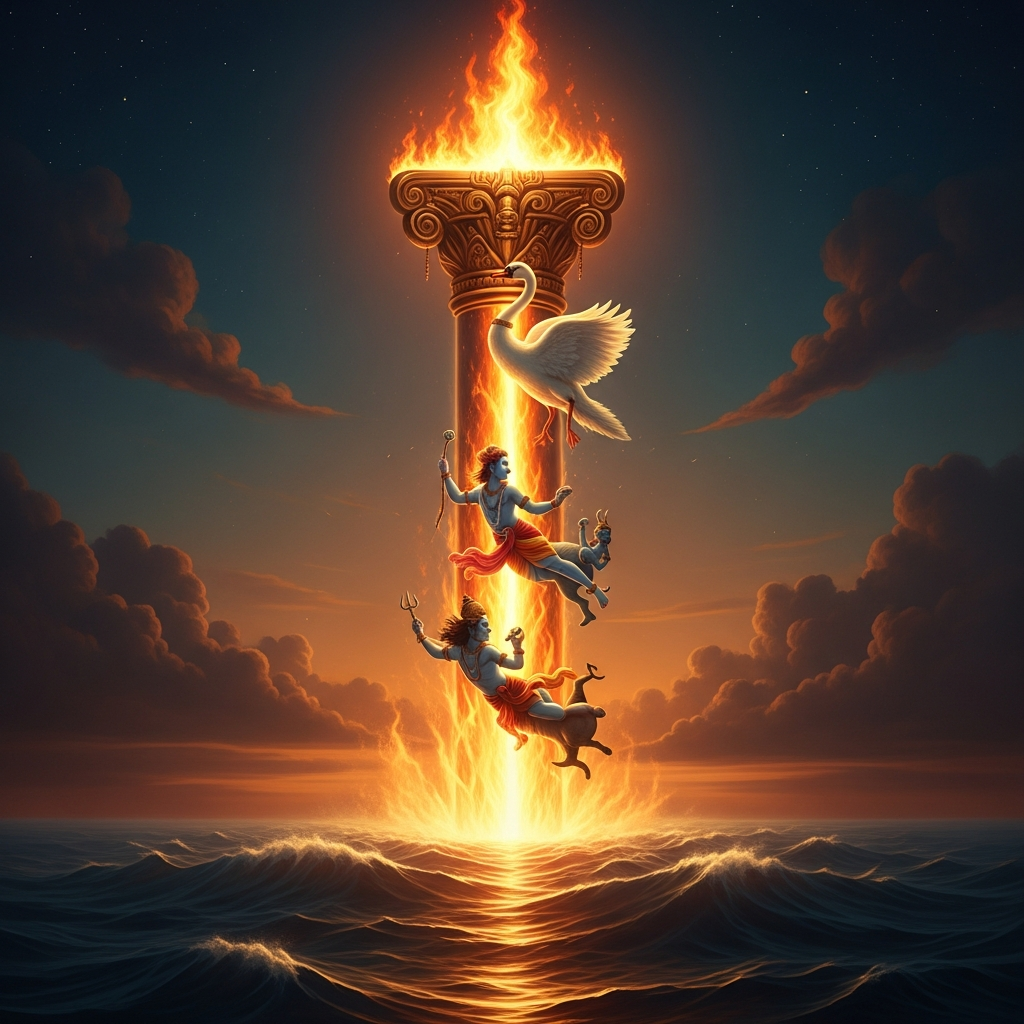
The Hill That Is Shiva's Body
Brahma and Vishnu argue over cosmic supremacy. Shiva interrupts the argument by manifesting as an infinite pillar of fire — a jyotirlinga without beginning or end. Brahma flies upward for a thousand years and cannot find the top; Vishnu dives downward for a thousand years and cannot find the bottom. Both concede. The pillar does not vanish: it becomes the hill of Arunachala in Tamil Nadu, where it waits as stone. In 1896 a sixteen-year-old from Madurai named Venkataraman arrives at the hill and never leaves.
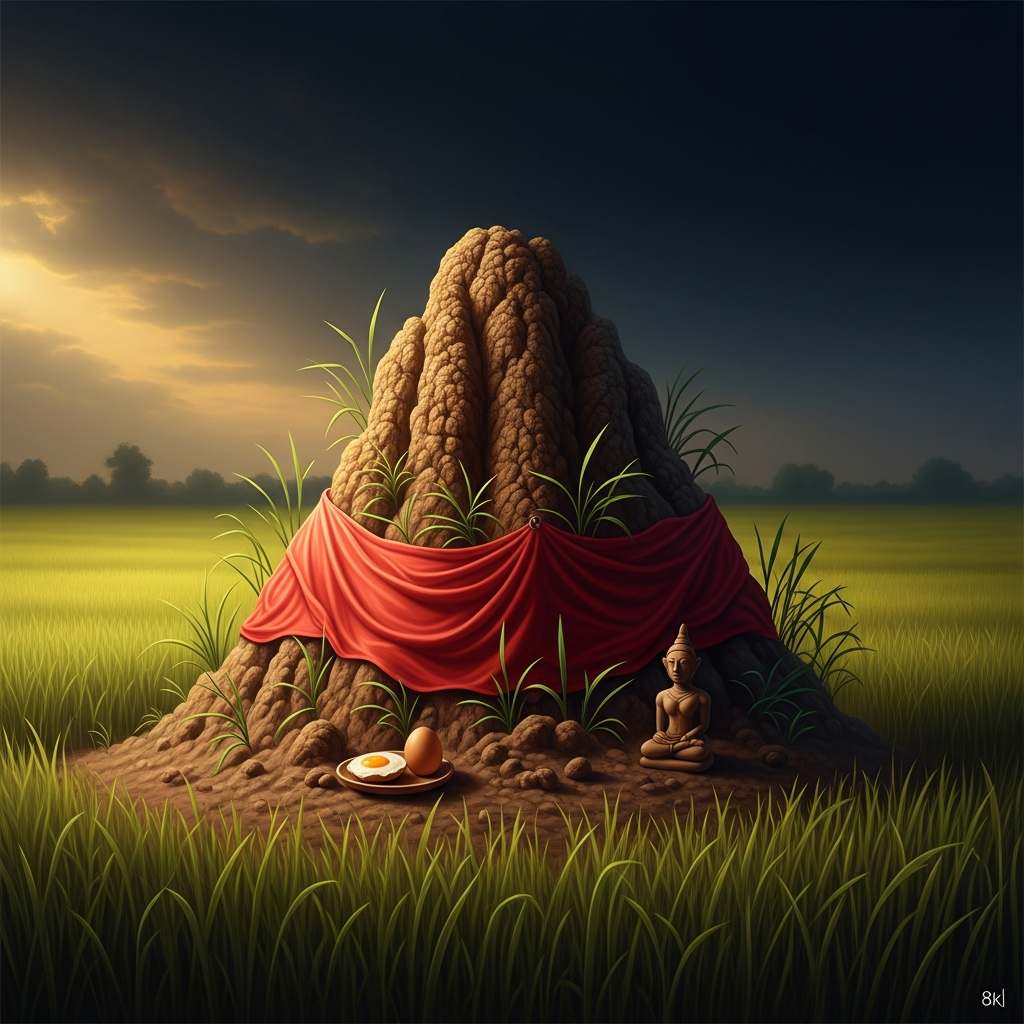
The Neak Ta Speaks: A Territory Remembers
The Neak Ta are Cambodia's ancestral earth spirits — neither gods nor demons but the accumulated spiritual weight of specific places. When a French colonial administrator plans to drain the sacred rice field of a Khmer village, the elder performs the ritual consultation. The spirit answers through an unexpected medium. The road is built. The rice fails.
Tagore and the Religion of Man
In 1901 Rabindranath Tagore opens an ashram school at Shantiniketan, in the West Bengal countryside, on land his father had set aside for meditation. He will spend the rest of his life there. In 1912, on a steamship to England, he translates 103 of his Bengali devotional poems into English. W.B. Yeats reads the manuscript in London and weeps. The collection — *Gitanjali*, the Song Offerings — wins the Nobel Prize in Literature in 1913. Tagore is the first non-European Nobel laureate. The poems are not exactly religious and not exactly secular. They are addressed to a God who is found in other people, in the earth, in music, and in the failure of the political projects Tagore both supports and critiques. He delivers the Hibbert Lectures at Oxford in 1930 under the title *The Religion of Man* and gives the most systematic account of Brahmo theology that anyone has produced — a religion without dogma, without institution, centered on the human person as the site of the divine encounter.
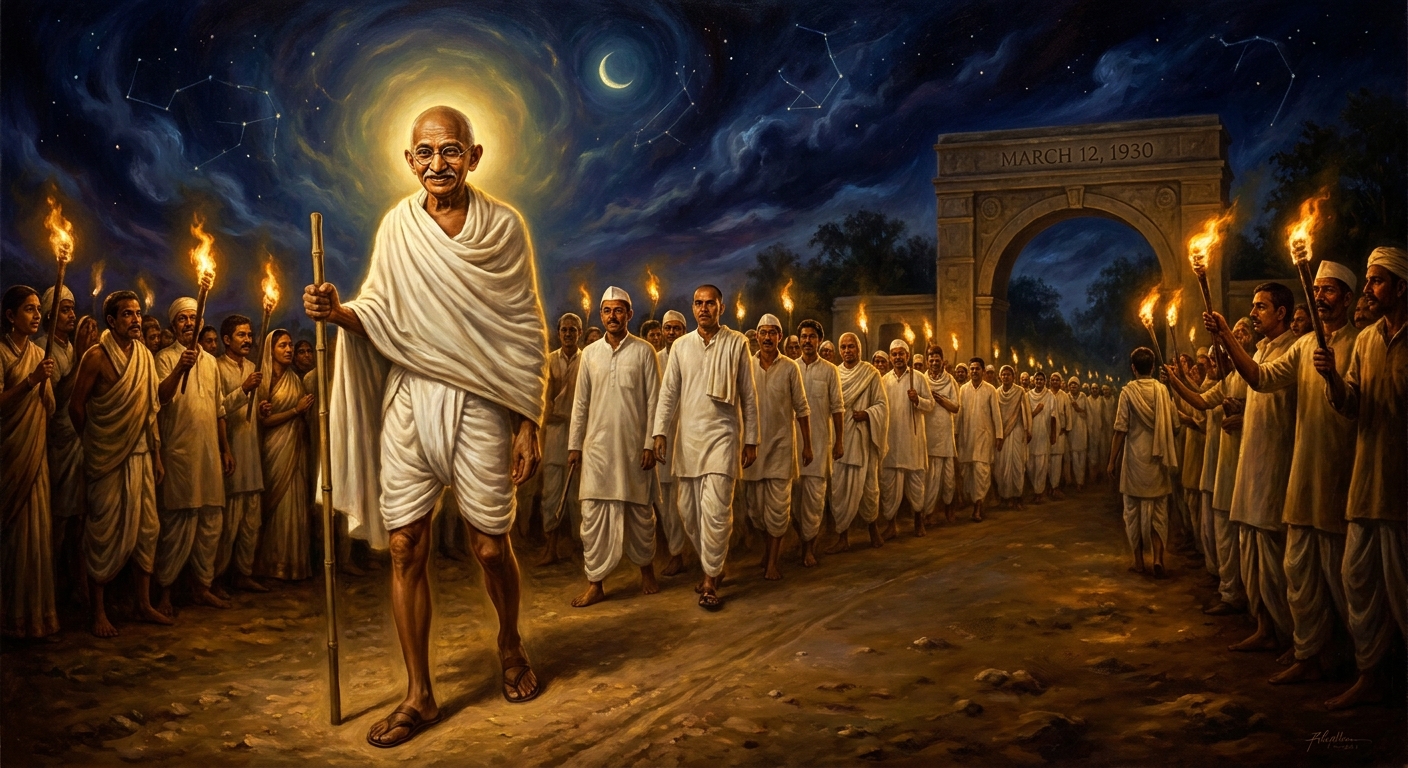
A Fistful of Salt
For twenty-four days a barefoot lawyer in a homespun loincloth walks two hundred and forty miles to a beach on the Arabian Sea, stoops, lifts a handful of crystallized salt, and breaks the British Empire's monopoly with a gesture a child could understand.
The Hammer and the Void
A philosophy professor with an elite French education and a gift for abstract thought walks into a Renault factory floor and submits herself to the most degrading, repetitive labor she can find — not as research, but as self-punishment, as a way to touch the suffering her intellect has only theorized.
The Cost of Conspiracy
A Lutheran pastor and theologian sits across from a German resistance operative in a Stockholm hotel room and passes intelligence to the Allies — fully aware that he has crossed the line his own theology demands he cross, fully aware that crossing it may cost him everything, and writing the theology of costly discipleship with the pen of a man who has just paid the deposit.
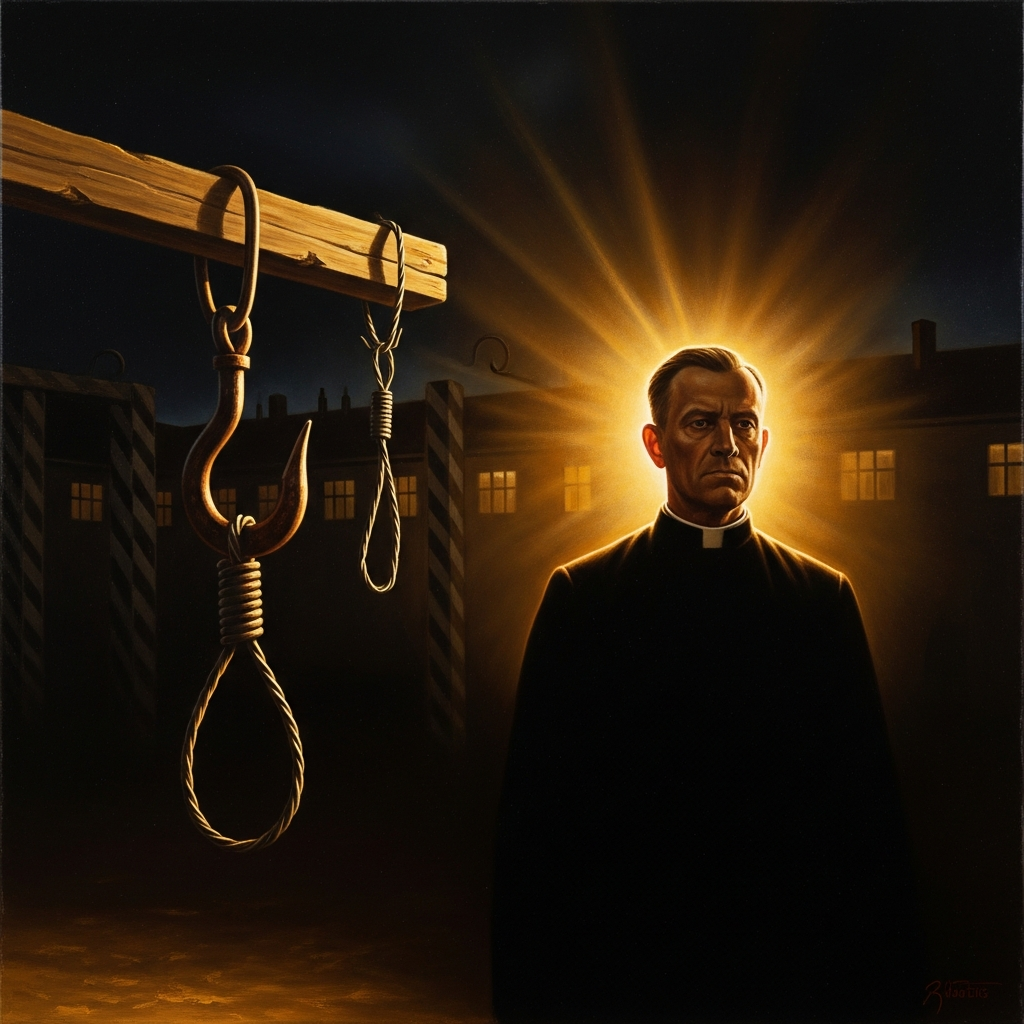
This Is the End — For Me the Beginning
On a clear April dawn at Flossenbürg, two weeks before the camp's liberation, Dietrich Bonhoeffer is stripped naked, walked to a meathook gallows, and hanged for a plot he helped plan against Adolf Hitler.
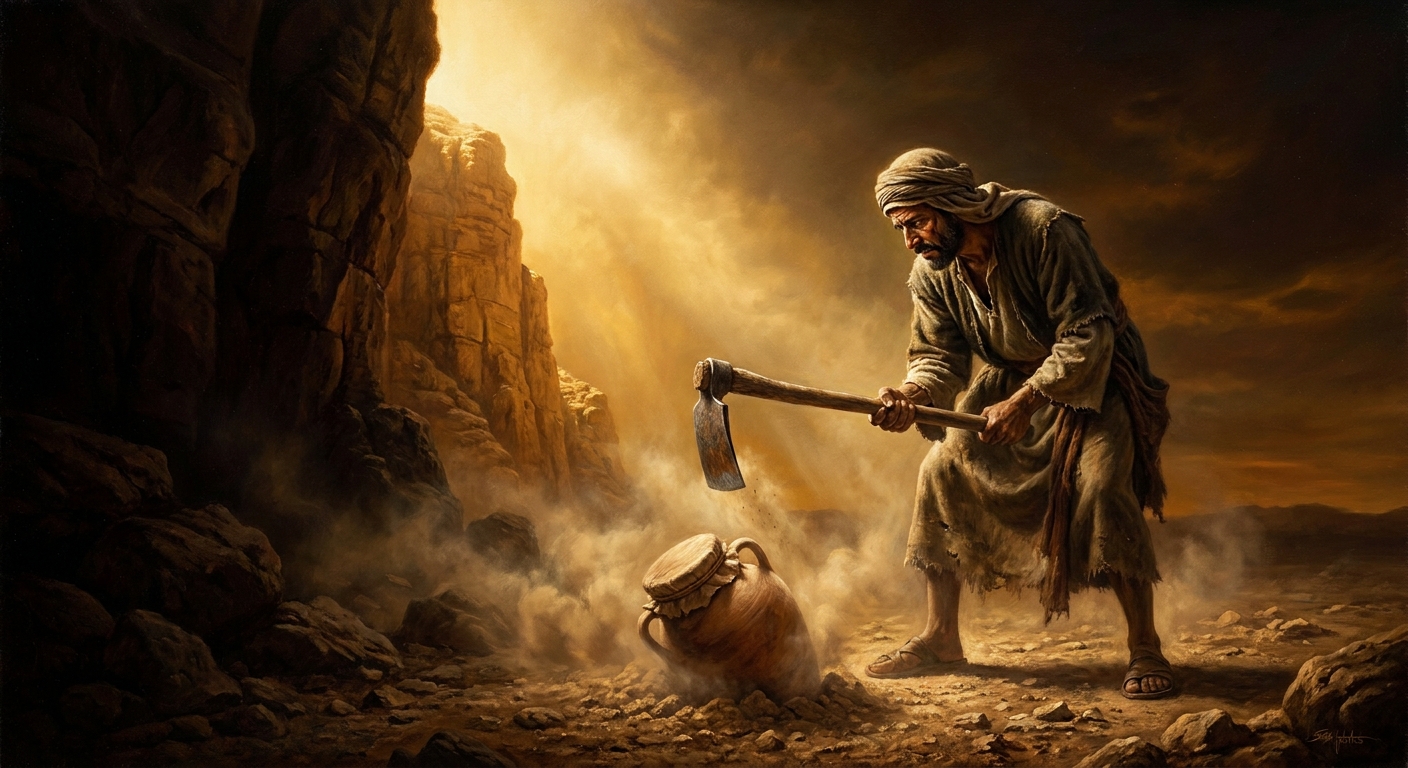
The Jar at Nag Hammadi
An Egyptian peasant digging for fertilizer in a cliff at the foot of the Jabal al-Tarif unearths a sealed clay jar — and rewrites the first three centuries of Christianity.
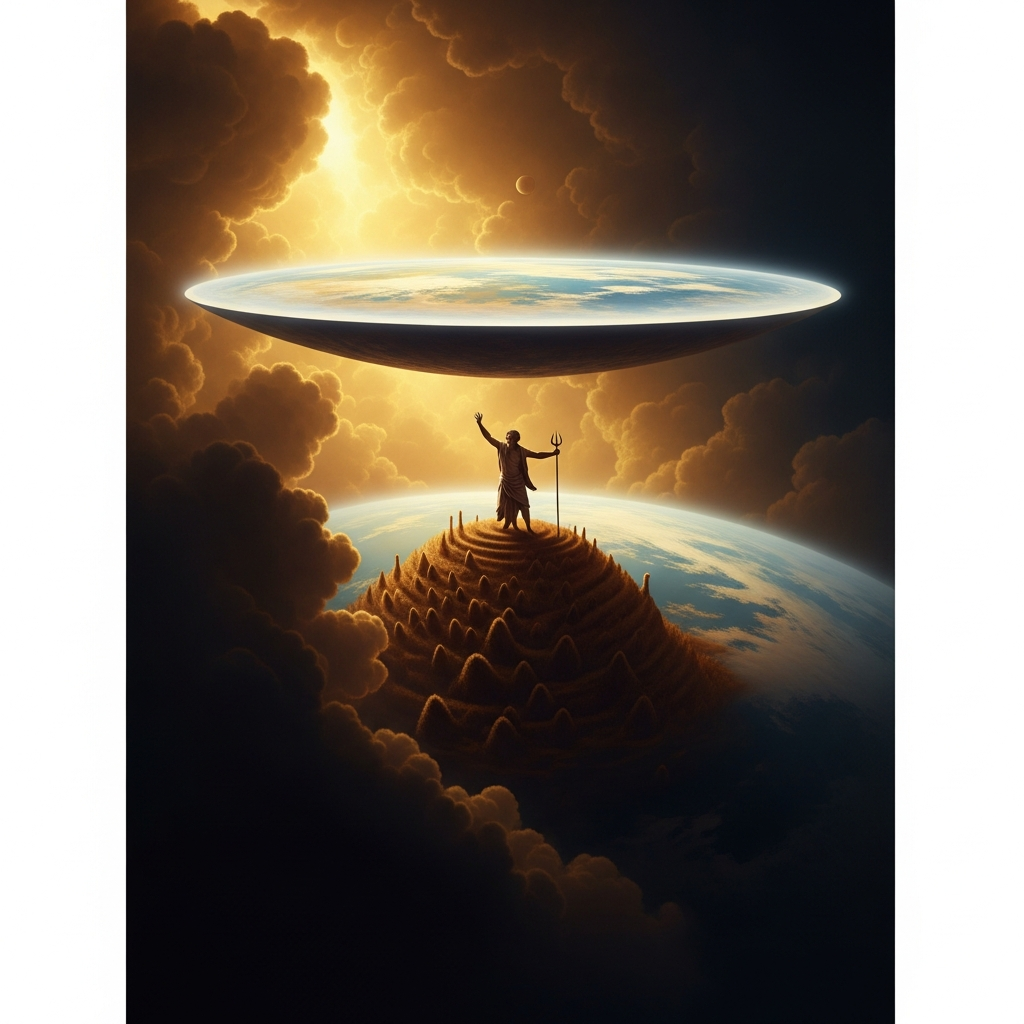
The Nommo Descend in an Ark of Fire
Amma fails his first creation and the jackal is born lame. He tries again, and twin fish-beings spiral down from Sirius in a turning ark of copper, bringing the first humans, the first crops, the sacred word.
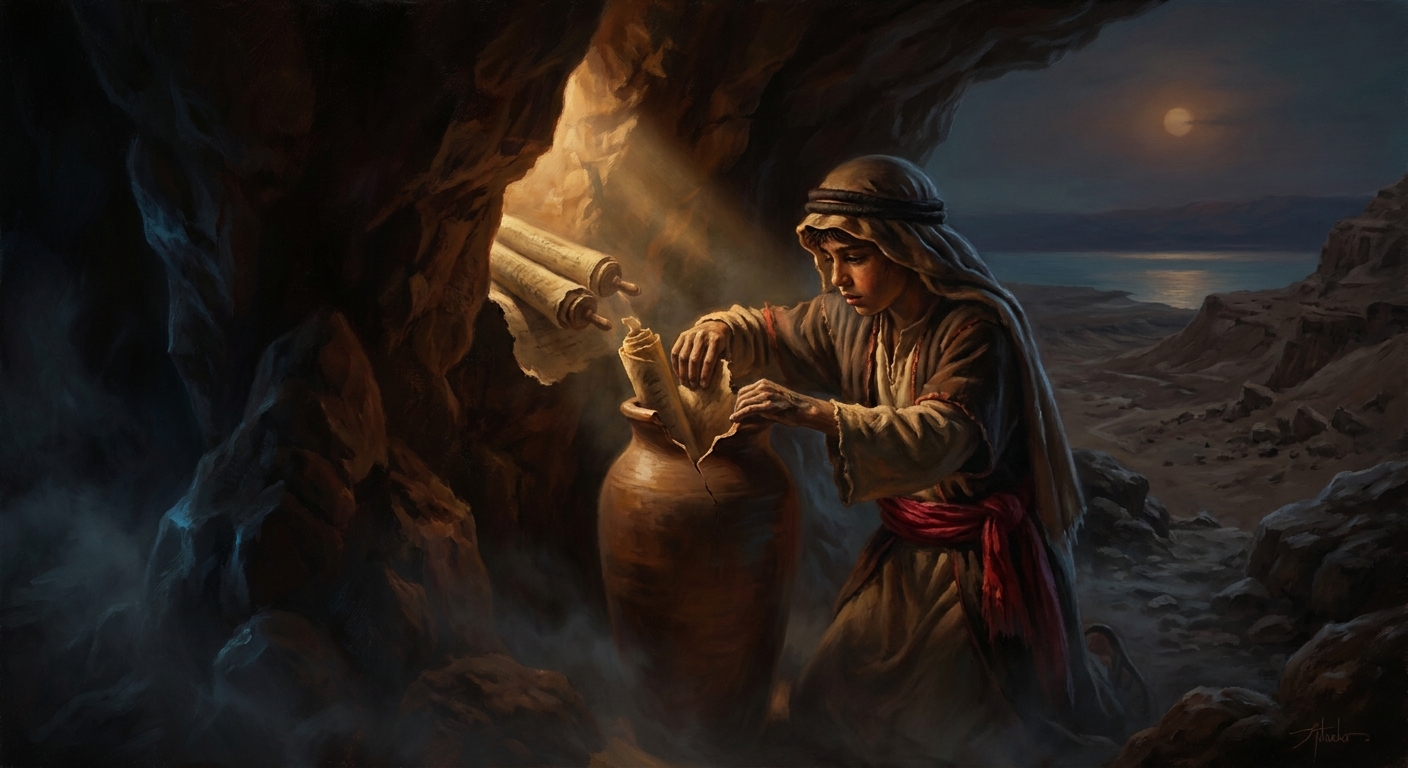
The Dead Sea Scrolls
A Bedouin boy throws a stone into a cave above the Dead Sea and hears something break. Inside: clay jars. Inside the jars: the oldest Hebrew Bible manuscripts ever found, hidden by a sect who did not survive the Romans but whose library did.
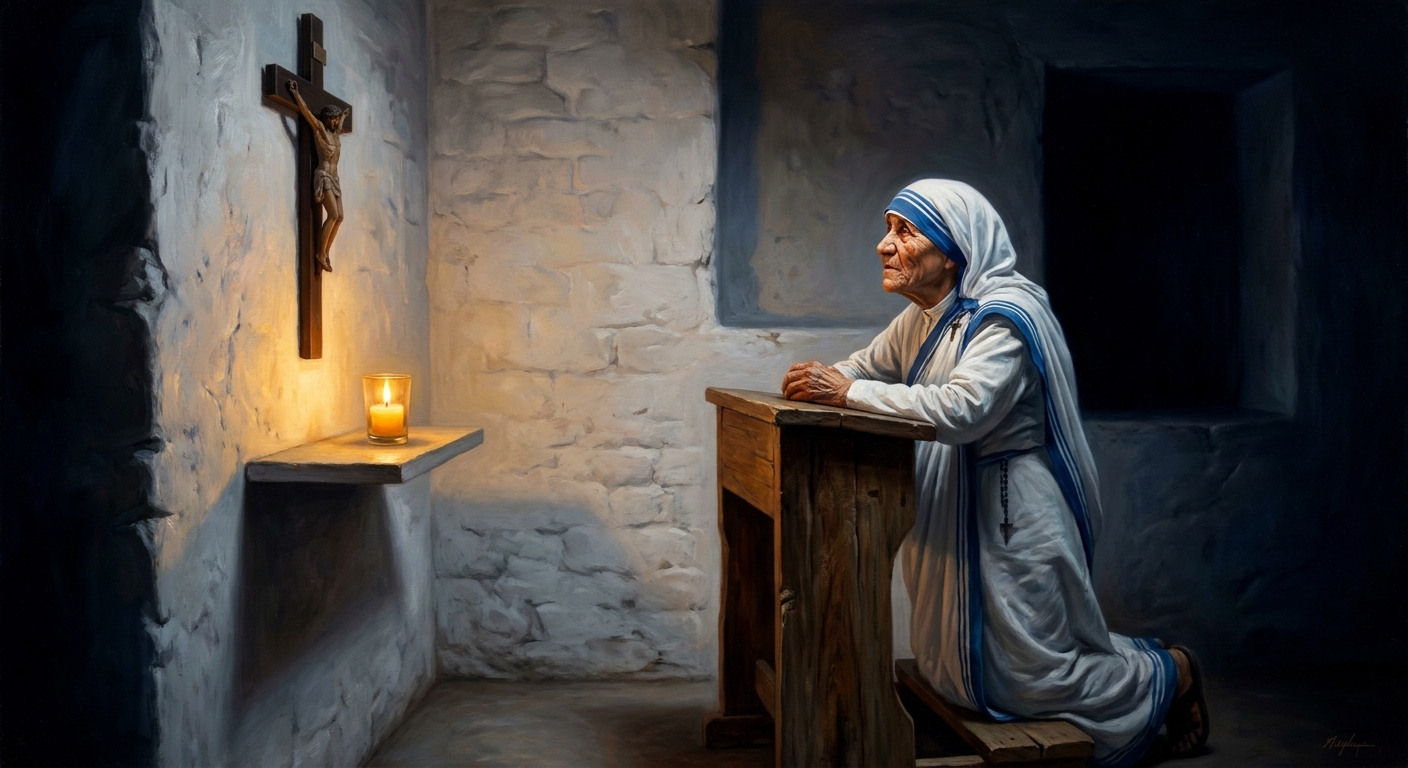
The Dark Night of Calcutta
For nearly fifty years the small Albanian nun the world calls a saint feels nothing — no presence, no consolation, no Jesus — and keeps walking the gutters of Calcutta anyway, lifting the dying onto cots, smiling for the cameras, and hiding her abandonment in letters her superiors are sworn to burn.
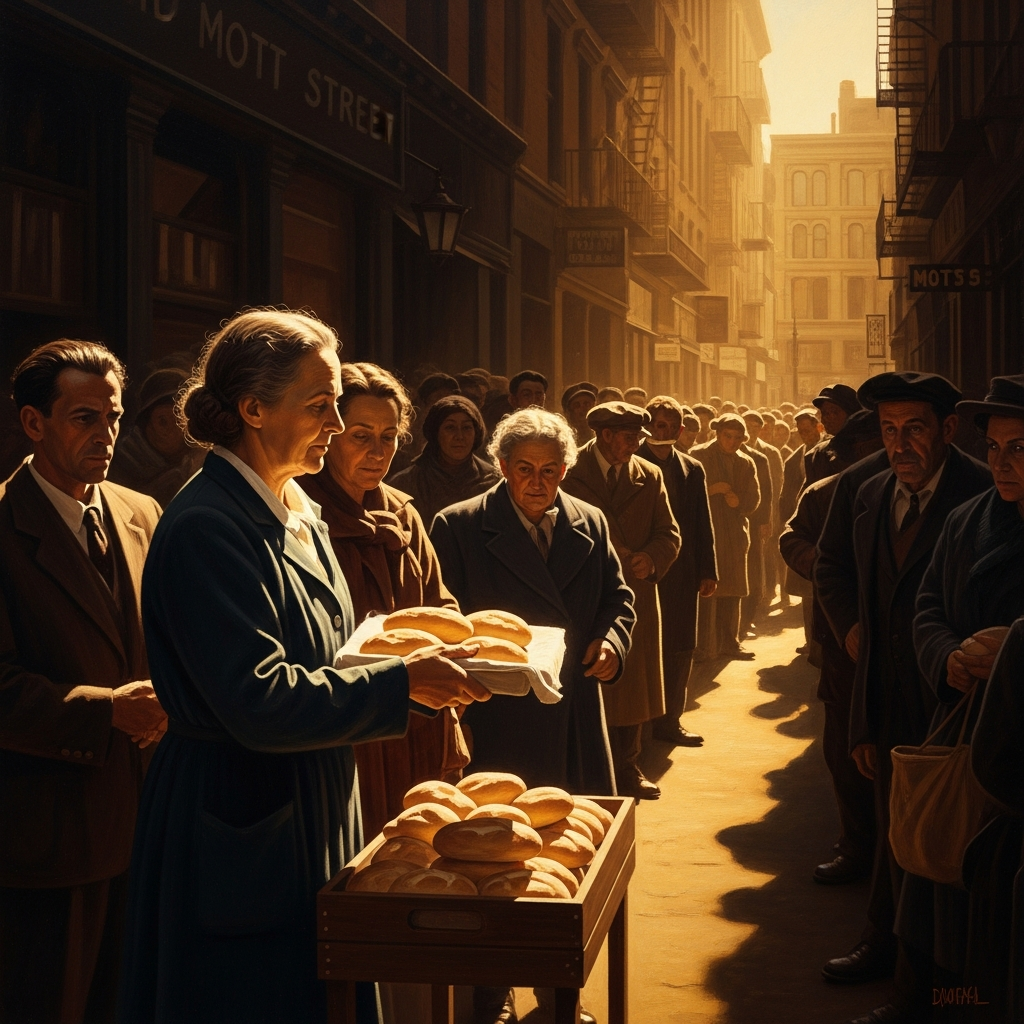
Don't Call Me a Saint
On Mott Street in lower Manhattan, a converted radical in a secondhand coat stands in the bread line she has been standing in for thirty years, ladling soup to men who smell of the street, running a newspaper that the FBI tracks and a house that the Archdiocese tolerates and calling both the practice of a single, embarrassing, irrefutable idea: the Gospel is about the poor and the poor are standing right here.
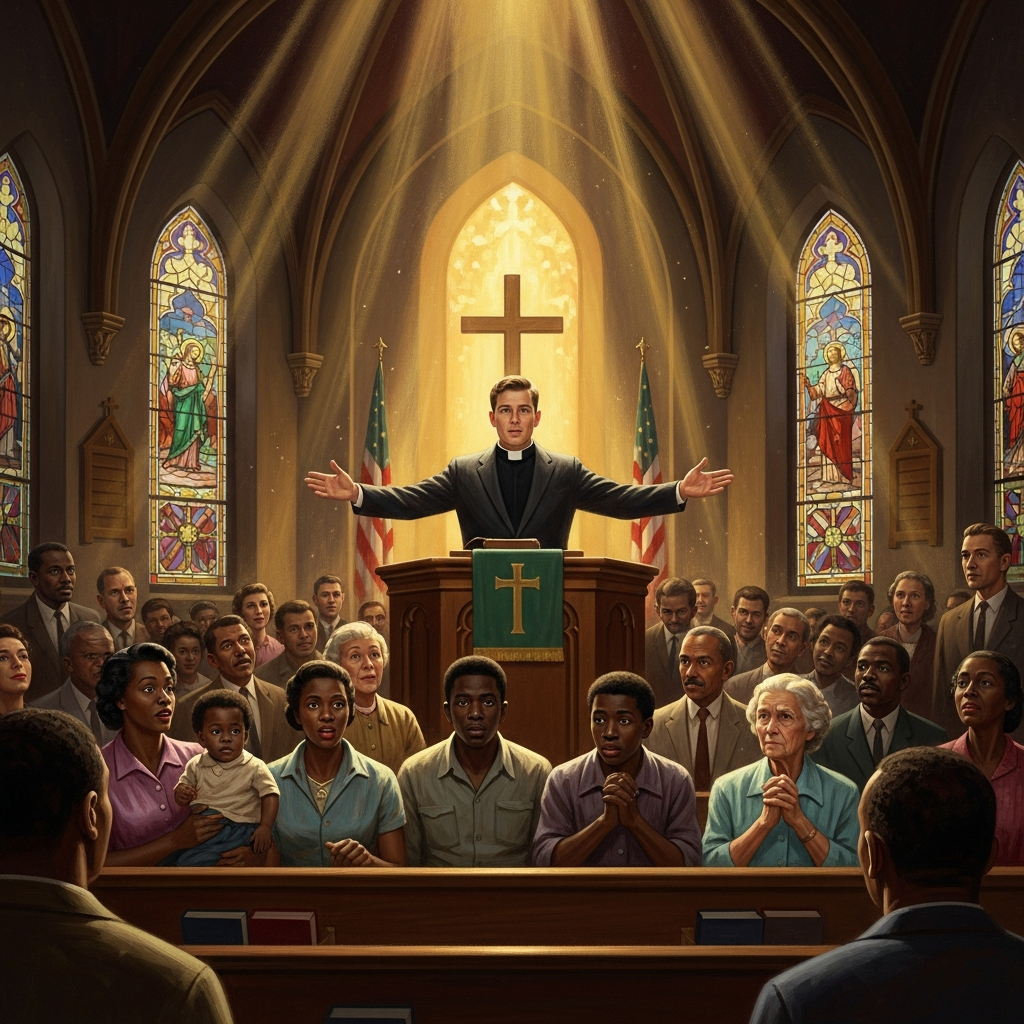
The Long Rise of Reverend Jones
Twenty-three years separate the young Methodist preacher integrating his Indianapolis storefront church in 1955 from the man with the microphone in the Guyanese pavilion. Both men were named Jim Jones. The slow descent between them is the American liberal Protestant tragedy.
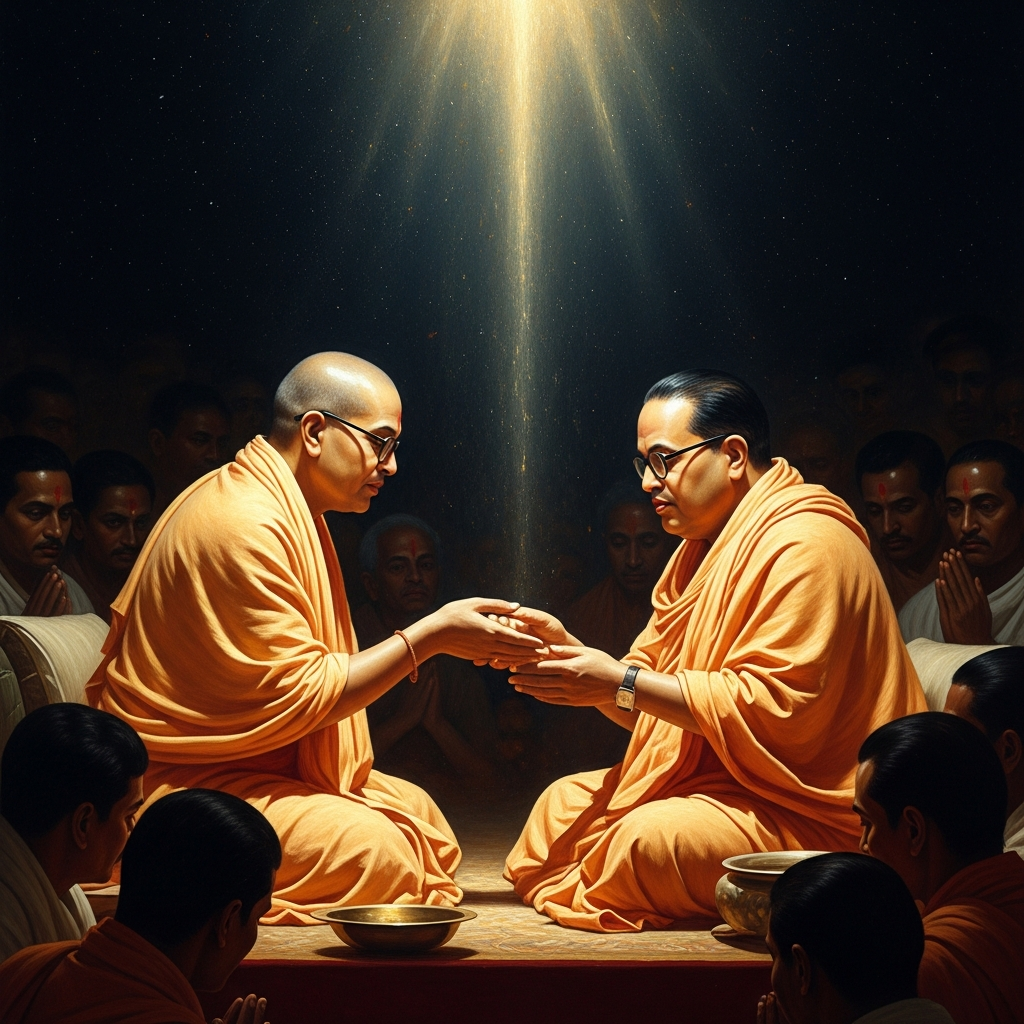
Ambedkar at Nagpur: Half a Million Conversions
On October 14, 1956, on a wide field outside Nagpur in central India, the man who has written the constitution of independent India — the most highly educated person in the cabinet of the new republic, born untouchable, who has spent fifty years in litigation and protest and parliamentary debate trying to break the caste order from inside — walks onto a temporary platform with his wife at his side, takes the Three Refuges and the Five Precepts from a Burmese monk, and at the moment he formally becomes a Buddhist, half a million Dalits behind him stand and become Buddhists with him, and the largest single religious conversion in modern history happens in approximately ninety seconds.
Phra Phrom and the Fulfilled Contract
Phra Phrom — the Thai form of the Hindu god Brahma — stands at the heart of the Erawan Shrine in Bangkok, receiving millions of petitioners who bargain with him for visas, babies, and business deals. A woman from Chiang Rai comes to pay her debt: her son recovered, as promised. She has brought the classical dancers she pledged. The dance is the payment. The theology is a fulfilled contract.
I Loved All Those People
On a bright March morning in Louisville, a Trappist monk steps off the monastery bus and onto a city corner — and is struck, without warning, by an overwhelming love for every stranger in front of him, a love that dissolves the wall he has spent fourteen years building between himself and the world.
The Dalai Lama Flees Lhasa
March 1959. The 23-year-old 14th Dalai Lama disguises himself as a soldier, slips out of the Norbulingka Palace on a moonless night, and crosses the Himalayas on foot in winter. Twenty thousand Tibetans have gathered in the streets to shield him. He will not return.
Ajahn Chah and the Snake That Was Always Going to Bite
A student at Wat Nong Pah Pong is bitten by a snake and in considerable pain. Ajahn Chah, the Thai forest master, comes to see him. He asks the student a question that has no good answer. The space between the question and the answer contains the teaching about suffering that the student has been sitting with for three years and has not yet understood.

The Letter from Birmingham Jail
On a Friday morning in April 1963, in a solitary-confinement cell in the Birmingham city jail, a thirty-four-year-old Baptist preacher sits on a steel cot with a smuggled copy of a newspaper folded around an open letter from eight white Alabama clergymen who have called his demonstrations *unwise and untimely* — and over the course of the next four days, on the margins of that newspaper and on scraps of paper that his lawyers will carry in and out of the cell hidden inside their suits, he composes the most complete theological defense of civil disobedience in American history, drawing on Augustine, Aquinas, Tillich, Niebuhr, Buber, the Hebrew prophets, and the specific, smoking, fire-hosed streets of Birmingham, Alabama, in the spring of the year of his life when the country he loves is asking him whether he is willing to die.

The Boat and the Shore
A Vietnamese Zen monk and poet is traveling the world in 1966 with a peace proposal that neither side of the Vietnam War wants — exiled by his own country for refusing to choose between two armies — and in the Geneva hotel room where he meets Martin Luther King Jr., he is naming what he calls engaged Buddhism: the idea that washing dishes mindfully and stopping a war mindfully are the same practice.
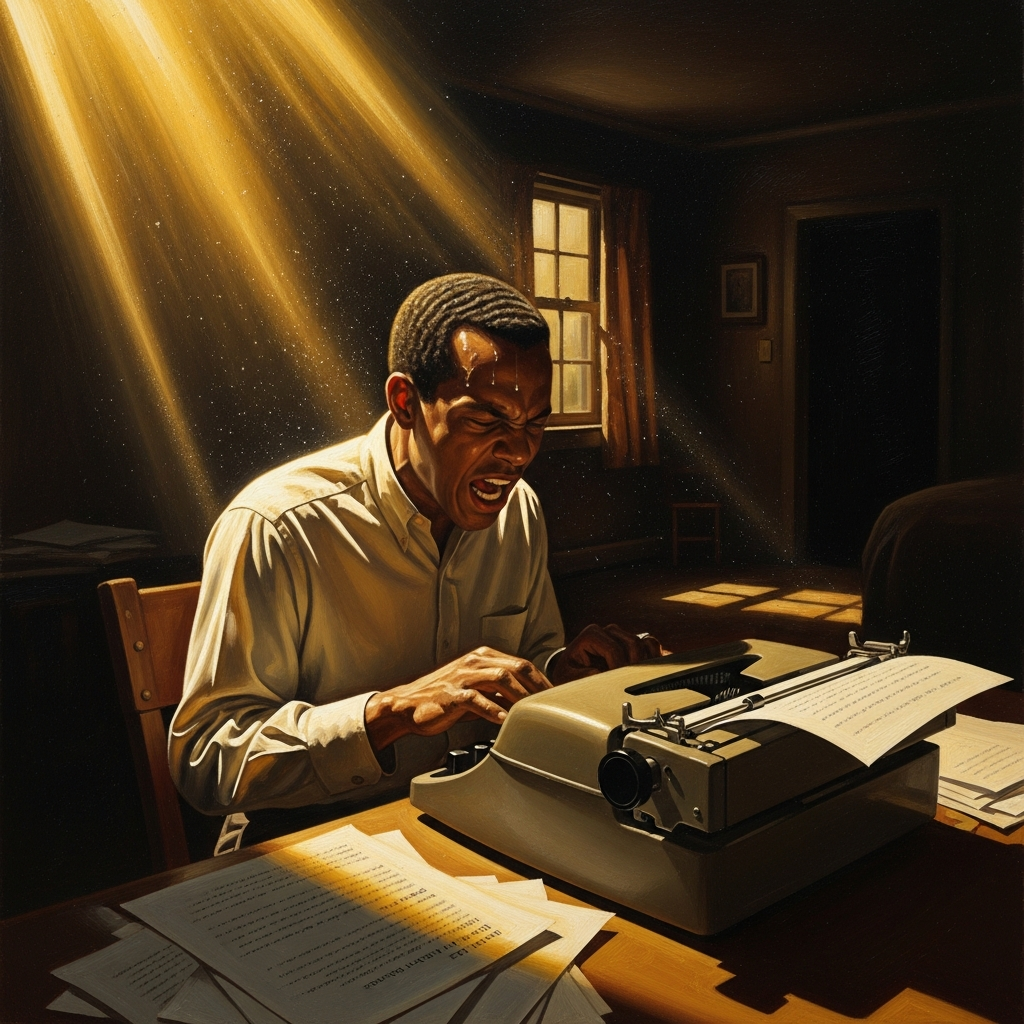
James Cone and the Theology of the Lynching Tree
Two months after Martin Luther King Jr. is shot dead on a balcony in Memphis, a twenty-eight-year-old theology professor in Adrian, Michigan sits down at a small typewriter in a small apartment and writes a book in three months that says the thing American Christianity has been avoiding for three centuries: that if the Christian God is on the side of the oppressed, then the Christian God in America today is Black, because Black people are the oppressed, and that this is not metaphor but the central theological claim of the Gospel applied finally to its actual context.
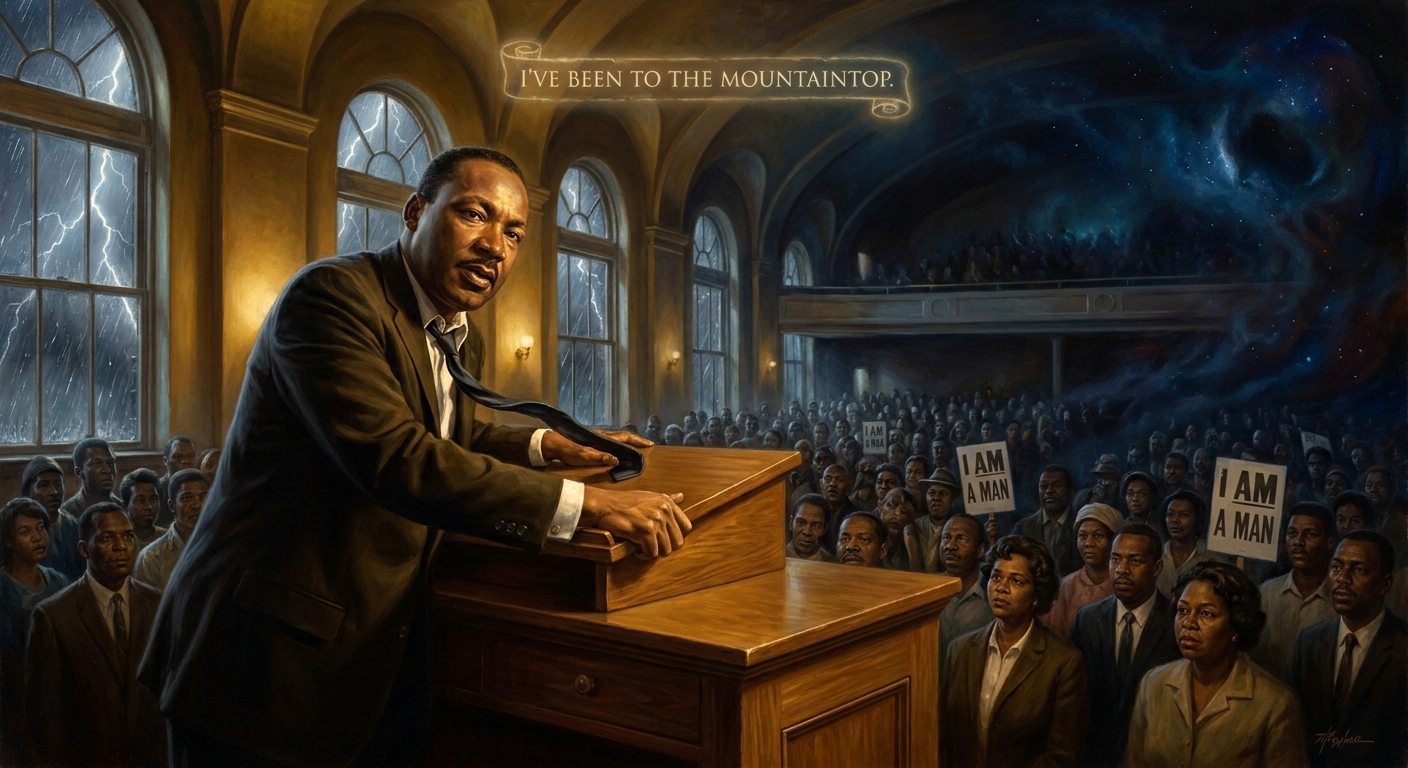
I've Been to the Mountaintop
On a stormy April night in Memphis, Martin Luther King Jr. preaches the funeral sermon for himself, climbs Pisgah in the cadence of a Black Baptist pulpit, and looks across into a country he will not enter.
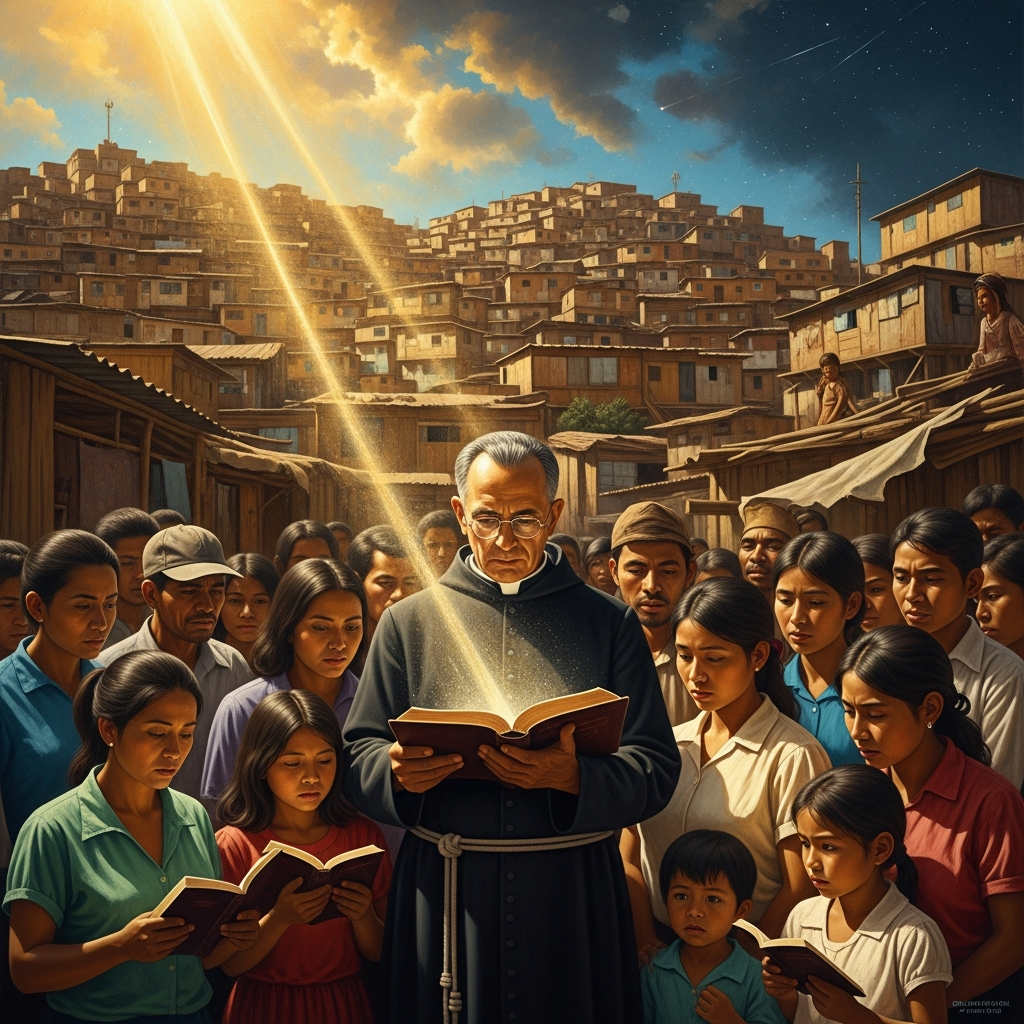
Gutiérrez and the Poor Who Read the Bible
In a hillside slum on the edge of Lima — one of the millions of squatter settlements that ring every South American city as the rural poor flood into them looking for work — a young Peruvian priest watches small groups of campesinos read the Hebrew Exodus together by lamplight and notice, slowly, that the same God who freed slaves from Pharaoh has something to say about their landlords and their wages, and in noticing this they are doing something the seminaries of Europe have not done in five hundred years: they are reading the Bible from underneath, and they are getting it right.

The Last Tape at Jonestown
On a Saturday afternoon in the Guyanese jungle, Jim Jones gathers nine hundred of his followers around a vat of cyanide-laced Flavor-Aid and calls it revolutionary suicide. The forty-minute reel that survives him is the most harrowing recording in American religious history.
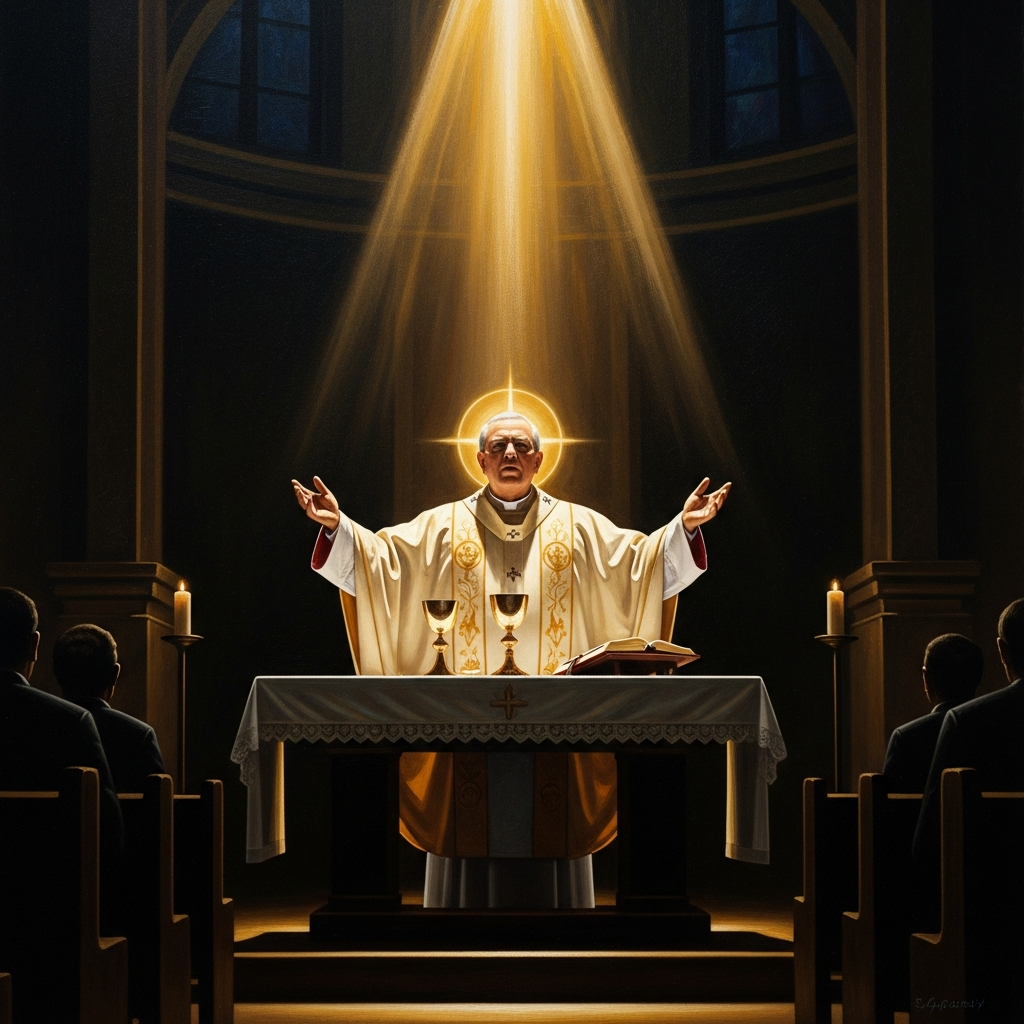
Romero at the Altar
On the morning of March 24, 1980, in a small chapel attached to a cancer hospital in San Salvador, the archbishop of a country at war with itself raises a chalice over a wafer and is killed by a single rifle shot fired through the open chapel door — and becomes, in that instant, the only archbishop in Catholic history murdered at the altar during Mass and the practical icon of the theology he had spent three years preaching: that to stand with the poor against the state is itself a religious act, and that to die for that standing is to die for the faith.
The Lamb at Mount Carmel
Fifty-one days outside Waco, Texas: a young preacher who believed he was the messianic Lamb of Revelation 5 facing down the federal government, four ATF agents and six Davidians dead at the opening raid, seventy-six dead in the fire that ended it.
No Future Without Forgiveness
For three years a small Anglican archbishop in a purple cassock sits at the front of a hearing room in Cape Town, listens to torturers describe what they did to mothers and sons, and offers the country a theology built on a Xhosa word: *Ubuntu* — I am because we are.

The Comet and the Gate
Thirty-nine members of an American UFO religion lay themselves down in a Rancho Santa Fe mansion in matching black uniforms and Nike sneakers, believing the tail of comet Hale-Bopp conceals a craft come to lift their souls to the next evolutionary level.